EP4485295A1 - Etikettierung von benutzeraktionsdaten in einer benutzerumgebung - Google Patents
Etikettierung von benutzeraktionsdaten in einer benutzerumgebung Download PDFInfo
- Publication number
- EP4485295A1 EP4485295A1 EP23182099.4A EP23182099A EP4485295A1 EP 4485295 A1 EP4485295 A1 EP 4485295A1 EP 23182099 A EP23182099 A EP 23182099A EP 4485295 A1 EP4485295 A1 EP 4485295A1
- Authority
- EP
- European Patent Office
- Prior art keywords
- user
- uac
- user action
- sequence
- sqc
- Prior art date
- Legal status (The legal status is an assumption and is not a legal conclusion. Google has not performed a legal analysis and makes no representation as to the accuracy of the status listed.)
- Granted
Links
Images
Classifications
-
- G—PHYSICS
- G06—COMPUTING OR CALCULATING; COUNTING
- G06N—COMPUTING ARRANGEMENTS BASED ON SPECIFIC COMPUTATIONAL MODELS
- G06N20/00—Machine learning
-
- G—PHYSICS
- G06—COMPUTING OR CALCULATING; COUNTING
- G06F—ELECTRIC DIGITAL DATA PROCESSING
- G06F9/00—Arrangements for program control, e.g. control units
- G06F9/06—Arrangements for program control, e.g. control units using stored programs, i.e. using an internal store of processing equipment to receive or retain programs
- G06F9/44—Arrangements for executing specific programs
- G06F9/451—Execution arrangements for user interfaces
- G06F9/453—Help systems
Definitions
- the invention relates to a computer-implemented method for labelling of user action data in a user environment, in particular wherein said user environment is a computer implemented user interactive environment. Furthermore, the invention relates to a system for labelling of user action data in a computer implemented user interactive environment.
- Autocomplete is a feature that suggests words or phrases to users as they type, based on previous input or commonly used phrases. This feature is commonly used in search engines, text messaging apps, and other applications where users enter text.
- autocomplete can be used to suggest commands or actions based on the user's current context or history of previous actions.
- an AI assistant could suggest common commands or actions based on the user's previous interactions with the system or based on the user's current task or goal.
- Intent recognition Another form of command prediction in user assistance technology is called “intent recognition” known e.g. from US2012/0016678 A1 .
- Intent recognition involves analyzing user input to determine the user's intended action or request. This can be used to suggest relevant commands or actions to the user, or to automate common tasks based on the user's input.
- command prediction is a powerful tool in user assistance technology, as it can help users navigate complex systems more quickly and efficiently.
- the training data may be gathered from manuals - on a low level - and from logging user actions - enabling high level training for the assistant.
- the typical user action data logging results in an unlabeled sequence of user interactions.
- the data is either locally stored in form of log-files, or gathered via telemetric business intelligence.
- Such data is diluted, hence almost useless, as only a tiny subset of user interactions represent a meaningful sequence of steps.
- Siemens NX CAD is a computer-aided design (CAD) software developed by Siemens Digital Industries Software. It is used for designing and developing products in various industries, such as automotive, aerospace, and industrial machinery.
- Siemens NX CAD includes a command prediction feature that suggests the next command or function to the user based on their current context and previous actions.
- the command prediction feature in Siemens NX CAD uses machine learning algorithms to analyze the user's input and predict the next command or function that the user is likely to use.
- the invention solves the problems realized by a method of the incipiently mentioned type comprising the additional features of claim 1. Further the invention proposes a system to solve the above explained issues.
- One reasoning of the invention is that the above explained drawbacks may be caused by the insufficient training of the assistance models.
- the assistance models are not trained on meaningful sequences or even sub-sequences of user actions.
- training data may be more efficient changing over time.
- the user may be tracked by the system but solely tracking the user over time does not increase the number of labelled data points. It appears that conventionally labels and context of the tracking are missing.
- the invention is based on the problem of improving the known computer-implemented method such that a further optimization regarding the named challenge is reached.
- Proposed is a computer-implemented method for labelling of user action data in a user environment, in particular wherein said user environment is a computer implemented user interactive environment.
- user action data labelling is the process of adding descriptive tags or annotations to that data to make it easier to understand and analyze. This involves assigning labels or tags to user action data. The labels are used to identify and classify the data into different categories, making it easier to search, sort, and analyze.
- the user action data labelling is a key step in training the pattern recognition model, which preferably is a machine learning model or artificial intelligence model. The labelling helps to train to recognize patterns and make accurate recognitions.
- the logging of user actions may include:
- the user action logging or tracking may refer to all inputs done by the user into the application.
- said user interaction is done using a natural-language-processing-model.
- a user actions reduction module is applied to the logged user action sequences, wherein the user actions re-duction module is designed to recognize and eliminate potential user actions from the user action sequence that have no effect in the user environment.
- Another teaching according to claim 4, which is of equal importance, relates to System for labelling of user action data in a computer implemented user inter-active environment.
- Another teaching which is of equal importance relates to a System for labelling of user action data in a computer implemented user interactive environment, in particular wherein said user environment is a computer implemented user environment.
- Another teaching which is of equal importance relates to a system comprising:
- a system for giving advice to a user of a computer implemented user interactive environment comprising:
- the computer systems referred to above can be a single computer or a computer system consisting of multiple computers that are connected to each other, such as through the World Wide Web or another network configuration.
- the simulation can be distributed across the computer system in such a way that the computational work is divided among several computers, processors.
- the invention is proposing a method and a system which tracks the user interactions during the operation of a machine a device or while using a software.
- the system historizes the user actions or interactions in a 'user action sequence database' which may also be called 'interaction sequence database'.
- a certain history of user interactions may continuously be analyzed preferably in memory of said system (e.g. the last 100 (inter-)actions) by a pattern recognition algorithm which is used to recognize repetitions or meaningful sequences.
- said user assistance method (claim 5) or said corresponding system will trigger an interaction with the user and ask for input from the user, e.g.
- a User Interaction Generation component defines the labeling workflows preferably using a template / rule-based approach.
- the user input for the specific pattern is preferably analyzed through Natural Language Processing (NLP), and the semantic information may be stored as a label to the sequence of user steps, now forming a high-quality data point.
- NLP Natural Language Processing
- the NLP algorithm may rely on a pre-trained language model and the labeled database may contain preferably all previously used labels. This approach ensures consistency and quality of the entered labels.
- One important objective is minimizing the user effort while receiving high quality input, namely context and reasoning for the user behavior.
- the method and system acquire the important information, why the customer repeats certain operations or why the user performs certain steps. This information is essential to train pattern recognition models on a higher function level of recognizing not only patterns but also on recognizing action sequences as belonging.
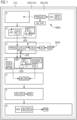
- Figure 1 shows a block diagram of a method according to the invention for a computer-implemented method for labelling of user action UAC data in a computer CMP implemented user interactive UIA environment ENV. Furthermore figure 1 illustrates a user assistance method and system SYS respectively applying the labelling method.
- the block diagram illustrates a step sequence of steps a) - g) .
- a pre-trained user action UAC pattern recognition model PRM is provided.
- This pattern recognition model PRM is designed and trained in such a way that it is capable to recognize from a part-sequence of user actions UAC a user action UAC pattern APT if the respective pattern is known to the pattern recognition model PRM.
- the pattern recognition model PRM outputs the stored user action UAC pattern APT or an identifier or label LBL associated with the user action UAC pattern APT.
- a second step b) the method provides logging or tracking of user actions UAC which user actions are performed by a user USR using the environment ENV.
- logged user actions UAC are then - during a step c) - analyzed by said user action UAC pattern recognition model PRM for user action UAC patterns APT known to the pattern recognition model PRM.
- a user interaction UIA is generated in step d).
- the user interaction UIA requests information INF about the past sequence SQC of user actions UAC. This request is done using a natural-language-processing-model NPL.
- the method provides for the generation of a user interaction UIA via said human machine interface HMI proposing at least one next user action UAC.
- this information is used for labelling the past sequence SQC of user actions UAC using the information INF received from the information INF request in step e).
- a user actions UAC reduction module RDM may optionally be applied to the logged user action UAC sequences SQC, wherein the user actions UAC reduction module RDM is designed to recognize and eliminate potential user actions UAC from the user action UAC sequence SQC that have no effect in the user environment ENV.
- step f) the labelled sequence SQC of user actions UAC is stored in a user action UAC sequence SQC database DBS which's entrees are used for training the pattern recognition model PRM (step g)).
- the system SYS for labelling of user action UAC data in a computer CMP implemented user interactive UIA environment ENV which may be part of an assistance system SYS (here, the "systems" are not differentiated since their respective hardware components may be identical), comprises a computer CMP with a processor CPU and a memory MEM coupled to the at least one processor CPU wherein the memory MEM stores a set of instructions SOI to be executed by the processor CPU wherein said set of instructions SOI, when executed by the processor CPU, cause the system to perform the method-steps according to the invention.
Landscapes
- Engineering & Computer Science (AREA)
- Software Systems (AREA)
- Theoretical Computer Science (AREA)
- Physics & Mathematics (AREA)
- General Engineering & Computer Science (AREA)
- General Physics & Mathematics (AREA)
- Human Computer Interaction (AREA)
- Artificial Intelligence (AREA)
- Computer Vision & Pattern Recognition (AREA)
- Data Mining & Analysis (AREA)
- Evolutionary Computation (AREA)
- Medical Informatics (AREA)
- Computing Systems (AREA)
- Mathematical Physics (AREA)
- User Interface Of Digital Computer (AREA)
Priority Applications (4)
| Application Number | Priority Date | Filing Date | Title |
|---|---|---|---|
| EP23182099.4A EP4485295B1 (de) | 2023-06-28 | 2023-06-28 | Etikettierung von benutzeraktionsdaten in einer benutzerumgebung |
| PCT/EP2024/067441 WO2025003005A1 (en) | 2023-06-28 | 2024-06-21 | Labelling of user action data in a user environment |
| CN202480043040.6A CN121605422A (zh) | 2023-06-28 | 2024-06-21 | 在用户环境中标记用户动作数据 |
| EP24740803.2A EP4716912A1 (de) | 2023-06-28 | 2024-06-21 | Etikettierung von benutzeraktionsdaten in einer benutzerumgebung |
Applications Claiming Priority (1)
| Application Number | Priority Date | Filing Date | Title |
|---|---|---|---|
| EP23182099.4A EP4485295B1 (de) | 2023-06-28 | 2023-06-28 | Etikettierung von benutzeraktionsdaten in einer benutzerumgebung |
Publications (2)
| Publication Number | Publication Date |
|---|---|
| EP4485295A1 true EP4485295A1 (de) | 2025-01-01 |
| EP4485295B1 EP4485295B1 (de) | 2026-04-29 |
Family
ID=87036560
Family Applications (2)
| Application Number | Title | Priority Date | Filing Date |
|---|---|---|---|
| EP23182099.4A Active EP4485295B1 (de) | 2023-06-28 | 2023-06-28 | Etikettierung von benutzeraktionsdaten in einer benutzerumgebung |
| EP24740803.2A Pending EP4716912A1 (de) | 2023-06-28 | 2024-06-21 | Etikettierung von benutzeraktionsdaten in einer benutzerumgebung |
Family Applications After (1)
| Application Number | Title | Priority Date | Filing Date |
|---|---|---|---|
| EP24740803.2A Pending EP4716912A1 (de) | 2023-06-28 | 2024-06-21 | Etikettierung von benutzeraktionsdaten in einer benutzerumgebung |
Country Status (3)
| Country | Link |
|---|---|
| EP (2) | EP4485295B1 (de) |
| CN (1) | CN121605422A (de) |
| WO (1) | WO2025003005A1 (de) |
Citations (5)
| Publication number | Priority date | Publication date | Assignee | Title |
|---|---|---|---|---|
| US6564213B1 (en) | 2000-04-18 | 2003-05-13 | Amazon.Com, Inc. | Search query autocompletion |
| US20120016678A1 (en) | 2010-01-18 | 2012-01-19 | Apple Inc. | Intelligent Automated Assistant |
| US8645825B1 (en) | 2011-08-31 | 2014-02-04 | Google Inc. | Providing autocomplete suggestions |
| US20180025071A1 (en) * | 2016-07-20 | 2018-01-25 | LogsHero Ltd. | Automatic event classification |
| US11550688B2 (en) * | 2015-10-29 | 2023-01-10 | Micro Focus Llc | User interaction logic classification |
-
2023
- 2023-06-28 EP EP23182099.4A patent/EP4485295B1/de active Active
-
2024
- 2024-06-21 WO PCT/EP2024/067441 patent/WO2025003005A1/en not_active Ceased
- 2024-06-21 CN CN202480043040.6A patent/CN121605422A/zh active Pending
- 2024-06-21 EP EP24740803.2A patent/EP4716912A1/de active Pending
Patent Citations (5)
| Publication number | Priority date | Publication date | Assignee | Title |
|---|---|---|---|---|
| US6564213B1 (en) | 2000-04-18 | 2003-05-13 | Amazon.Com, Inc. | Search query autocompletion |
| US20120016678A1 (en) | 2010-01-18 | 2012-01-19 | Apple Inc. | Intelligent Automated Assistant |
| US8645825B1 (en) | 2011-08-31 | 2014-02-04 | Google Inc. | Providing autocomplete suggestions |
| US11550688B2 (en) * | 2015-10-29 | 2023-01-10 | Micro Focus Llc | User interaction logic classification |
| US20180025071A1 (en) * | 2016-07-20 | 2018-01-25 | LogsHero Ltd. | Automatic event classification |
Also Published As
| Publication number | Publication date |
|---|---|
| EP4485295B1 (de) | 2026-04-29 |
| CN121605422A (zh) | 2026-03-03 |
| EP4716912A1 (de) | 2026-04-01 |
| WO2025003005A1 (en) | 2025-01-02 |
Similar Documents
| Publication | Publication Date | Title |
|---|---|---|
| US10904072B2 (en) | System and method for recommending automation solutions for technology infrastructure issues | |
| Jha et al. | A brief comparison on machine learning algorithms based on various applications: a comprehensive survey | |
| Udousoro | Machine learning: a review | |
| US12517762B2 (en) | Systems and methods for process mining using unsupervised learning and for automating orchestration of workflows | |
| EP3701403B1 (de) | Beschleunigter simulationseinstellungsprozess mit vorauswissensteuerung zum zusammenpassen von problems | |
| Costa et al. | A genetic algorithm-based approach to support forming multiple scrum project teams | |
| WO2021024145A1 (en) | Systems and methods for process mining using unsupervised learning and for automating orchestration of workflows | |
| Forell et al. | Modeling meets large language models | |
| Christianos et al. | Lightweight neural app control | |
| US20210142233A1 (en) | Systems and methods for process mining using unsupervised learning | |
| Zamani | A prediction model for software requirements change impact | |
| WO2021152883A1 (ja) | リコメンデーションシステム、その構成方法、およびリコメンデーション方法 | |
| Dave et al. | Management of implicit requirements data in large srs documents: taxonomy and techniques | |
| Klymovych et al. | The Diagnostics Methods for Modern Communication Tools in the Armed Forces of Ukraine Based on Neural Network Approach. | |
| AU2019229462B2 (en) | Monitoring an artificial intelligence (ai) based process | |
| Parashar et al. | Revolutionary transformations in twentieth century: making AI-assisted software development | |
| Reyna et al. | How to generate and import functional test cases into a project management software system using natural language processing | |
| CN114881313B (zh) | 基于人工智能的行为预测方法、装置及相关设备 | |
| EP4485295B1 (de) | Etikettierung von benutzeraktionsdaten in einer benutzerumgebung | |
| CN121920507A (zh) | 人工智能模型解决方案交付方法、设备和系统 | |
| Onukwugha et al. | Resume Optimization Model Using Machine Learning Techniques | |
| Silva et al. | An approach based on machine learning for predicting software design problems | |
| KR102553576B1 (ko) | 그룹웨어에 특화된 누적특성 데이터 기반 질의 보정 기술이 적용된 챗봇 시스템 및 이에 의한 검색 방법 | |
| Kruse et al. | Data mining applications in the automotive industry | |
| Almoqren et al. | A smart framework for optimizing user feedback prioritization in application development |
Legal Events
| Date | Code | Title | Description |
|---|---|---|---|
| PUAI | Public reference made under article 153(3) epc to a published international application that has entered the european phase |
Free format text: ORIGINAL CODE: 0009012 |
|
| STAA | Information on the status of an ep patent application or granted ep patent |
Free format text: STATUS: THE APPLICATION HAS BEEN PUBLISHED |
|
| AK | Designated contracting states |
Kind code of ref document: A1 Designated state(s): AL AT BE BG CH CY CZ DE DK EE ES FI FR GB GR HR HU IE IS IT LI LT LU LV MC ME MK MT NL NO PL PT RO RS SE SI SK SM TR |
|
| STAA | Information on the status of an ep patent application or granted ep patent |
Free format text: STATUS: REQUEST FOR EXAMINATION WAS MADE |
|
| 17P | Request for examination filed |
Effective date: 20250620 |
|
| GRAP | Despatch of communication of intention to grant a patent |
Free format text: ORIGINAL CODE: EPIDOSNIGR1 |
|
| STAA | Information on the status of an ep patent application or granted ep patent |
Free format text: STATUS: GRANT OF PATENT IS INTENDED |
|
| INTG | Intention to grant announced |
Effective date: 20260122 |
|
| GRAS | Grant fee paid |
Free format text: ORIGINAL CODE: EPIDOSNIGR3 |
|
| GRAA | (expected) grant |
Free format text: ORIGINAL CODE: 0009210 |
|
| STAA | Information on the status of an ep patent application or granted ep patent |
Free format text: STATUS: THE PATENT HAS BEEN GRANTED |
|
| AK | Designated contracting states |
Kind code of ref document: B1 Designated state(s): AL AT BE BG CH CY CZ DE DK EE ES FI FR GB GR HR HU IE IS IT LI LT LU LV MC ME MK MT NL NO PL PT RO RS SE SI SK SM TR |
|
| REG | Reference to a national code |
Ref country code: CH Ref legal event code: F10 Free format text: ST27 STATUS EVENT CODE: U-0-0-F10-F00 (AS PROVIDED BY THE NATIONAL OFFICE) Effective date: 20260429 |