EP4485907A1 - Procédé de communication et appareil de communication - Google Patents
Procédé de communication et appareil de communication Download PDFInfo
- Publication number
- EP4485907A1 EP4485907A1 EP23773614.5A EP23773614A EP4485907A1 EP 4485907 A1 EP4485907 A1 EP 4485907A1 EP 23773614 A EP23773614 A EP 23773614A EP 4485907 A1 EP4485907 A1 EP 4485907A1
- Authority
- EP
- European Patent Office
- Prior art keywords
- communication interface
- information
- indication information
- communication
- cps
- Prior art date
- Legal status (The legal status is an assumption and is not a legal conclusion. Google has not performed a legal analysis and makes no representation as to the accuracy of the status listed.)
- Pending
Links
Images


Classifications
-
- H—ELECTRICITY
- H04—ELECTRIC COMMUNICATION TECHNIQUE
- H04W—WIRELESS COMMUNICATION NETWORKS
- H04W24/00—Supervisory, monitoring or testing arrangements
- H04W24/04—Arrangements for maintaining operational condition
-
- H—ELECTRICITY
- H04—ELECTRIC COMMUNICATION TECHNIQUE
- H04W—WIRELESS COMMUNICATION NETWORKS
- H04W36/00—Hand-off or reselection arrangements
- H04W36/0005—Control or signalling for completing the hand-off
- H04W36/0011—Control or signalling for completing the hand-off for data sessions of end-to-end connection
- H04W36/0033—Control or signalling for completing the hand-off for data sessions of end-to-end connection with transfer of context information
-
- H—ELECTRICITY
- H04—ELECTRIC COMMUNICATION TECHNIQUE
- H04L—TRANSMISSION OF DIGITAL INFORMATION, e.g. TELEGRAPHIC COMMUNICATION
- H04L69/00—Network arrangements, protocols or services independent of the application payload and not provided for in the other groups of this subclass
- H04L69/30—Definitions, standards or architectural aspects of layered protocol stacks
- H04L69/32—Architecture of open systems interconnection [OSI] 7-layer type protocol stacks, e.g. the interfaces between the data link level and the physical level
- H04L69/322—Intralayer communication protocols among peer entities or protocol data unit [PDU] definitions
-
- H—ELECTRICITY
- H04—ELECTRIC COMMUNICATION TECHNIQUE
- H04W—WIRELESS COMMUNICATION NETWORKS
- H04W28/00—Network traffic management; Network resource management
- H04W28/02—Traffic management, e.g. flow control or congestion control
- H04W28/08—Load balancing or load distribution
-
- H—ELECTRICITY
- H04—ELECTRIC COMMUNICATION TECHNIQUE
- H04W—WIRELESS COMMUNICATION NETWORKS
- H04W28/00—Network traffic management; Network resource management
- H04W28/02—Traffic management, e.g. flow control or congestion control
- H04W28/08—Load balancing or load distribution
- H04W28/09—Management thereof
- H04W28/0958—Management thereof based on metrics or performance parameters
-
- H—ELECTRICITY
- H04—ELECTRIC COMMUNICATION TECHNIQUE
- H04W—WIRELESS COMMUNICATION NETWORKS
- H04W36/00—Hand-off or reselection arrangements
- H04W36/24—Reselection being triggered by specific parameters
- H04W36/30—Reselection being triggered by specific parameters by measured or perceived connection quality data
- H04W36/305—Handover due to radio link failure
-
- H—ELECTRICITY
- H04—ELECTRIC COMMUNICATION TECHNIQUE
- H04W—WIRELESS COMMUNICATION NETWORKS
- H04W76/00—Connection management
- H04W76/10—Connection setup
-
- H—ELECTRICITY
- H04—ELECTRIC COMMUNICATION TECHNIQUE
- H04L—TRANSMISSION OF DIGITAL INFORMATION, e.g. TELEGRAPHIC COMMUNICATION
- H04L67/00—Network arrangements or protocols for supporting network services or applications
- H04L67/50—Network services
- H04L67/60—Scheduling or organising the servicing of application requests, e.g. requests for application data transmissions using the analysis and optimisation of the required network resources
Definitions
- Embodiments of this application relate to the communication field, and more specifically, to a communication method and communication apparatus.
- a single base station may include a central unit (central unit, CU) and a distributed unit (distributed unit, DU), and multiple DUs share one CU. This can reduce costs and facilitate network expansion.
- the central unit CU may be further divided into a control plane (CU-control plane, CU-CP) and a user plane (CU-user plane, CU-UP).
- the CU-CP is responsible for a control plane function
- the CU-UP is responsible for a user plane function.
- a single base station may include a single CU-CP, multiple CU-UPs, and multiple DUs.
- a single CU-CP may be connected to multiple DUs and multiple CU-UPs.
- FIG. 1 is a diagram of an architecture for separation of a CU-CP and a CU-UP.
- the CU-CP communicates with the CU-UP through an E1 communication interface
- the CU-CP communicates with a DU through an F1-C communication interface
- the CU-UP communicates with the DU through an F1-U communication interface.
- the single-point failure of the CU-CP may cause traffic interruption of multiple CU-UPs and/or multiple DUs of the base station and disconnection of a terminal device served by the base station.
- Embodiments of this application provide a communication method and a communication apparatus.
- a backup is provided for a first CU-CP, and a DU and/or a first CU-UP can communicate, through a communication interface, with a second CU-CP acting as a backup of the first CU-CP in the case of being faulty, overloaded, or the like. This reduces service interruption and improves system robustness.
- a communication method is provided. The method is applied to a second CU-CP, a chip that performs a function of the second CU-CP, a processor that performs a function of the second CU-CP, software or a logical module that performs a function of the second CU-CP, or the like. This is not limited in this application.
- the method includes: receiving context information from a first CU-CP, where the context information includes a context of a DU and/or a context of a first CU-UP, and the context information is used by the second CU-CP to communicate with the DU and/or the first CU-UP; receiving a first message; and communicating with the DU and/or the first CU-UP based on the first message through a communication interface.
- the context information from the first CU-CP may be received before the second CU-CP communicates with the DU and/or the first CU-UP through the communication interface, or may be received after the second CU-CP communicates with the DU and/or the first CU-UP through the communication interface.
- a backup is provided for the first CU-CP.
- the DU and/or the first CU-UP can communicate, through the communication interface, with the second CU-CP acting as the backup of the first CU-CP.
- the second CU-CP receives the context information of the first CU-CP, and the second CU-CP can quickly use the context information to provide a service for the DU and/or the first CU-UP. This reduces a system fault delay.
- the receiving context information from a first CU-CP may be receiving the context information from the first CU-CP via an access and mobility management function network element AMF.
- the first CU-CP may send the context information to the AMF periodically or in real time, and may obtain the context information via the AMF when communicating with the DU and/or the first CU-UP through the communication interface.
- the context information includes identification information of the first CU-CP.
- the identification information of the first CU-CP may be sent to the AMF, and the AMF may send the context information of the first CU-CP to the second CU-CP.
- identification information of a terminal device served by the first CU-CP may alternatively be sent to the AMF, and the AMF may send context information related to the terminal device to the second CU-CP.
- the context information is sent to the AMF.
- the context information is obtained from the AMF. This ensures that when the second CU-CP that is not a backup of the first CU-CP serves the DU and/or the first CU-UP, work of the second CU-CP is not affected. This reduces overheads of receiving the context information by the second CU-CP.
- the first message includes state value information from the first CU-CP.
- beneficial effects include: Whether the first CU-CP is faulty can be determined in time based on the state value information. This reduces service interruption and improves system robustness.
- the communicating with the DU and/or the first CU-UP based on the first message through a communication interface includes: determining, based on the state value information, that the first CU-CP is overloaded or faulty; determining, based on that first CU-CP is overloaded or faulty, to communicate with the DU and/or the first CU-UP through the communication interface; and communicating, by the second CU-CP, with the DU and/or the first CU-UP through the communication interface.
- the state value information may be information reflecting a load value of the first CU-CP. For example, that the load value information is greater than a first threshold indicates that the first CU-CP is overloaded.
- the state value information may be information reflecting whether the first CU-CP is faulty.
- the state value information is an error value indicates that the first CU-CP is faulty.
- the state value information is null indicates that the first CU-CP is faulty.
- the first message includes first request information from the DU and/or the first CU-UP, and the first request information is for requesting to communicate with the second CU-CP through the communication interface.
- the first message includes first indication information from the first CU-CP, and the first indication information indicates that the first CU-CP is overloaded. It may be determined, based on that the first CU-CP is overloaded, to communicate with the DU and/or the first CU-CP through the communication interface.
- the first indication information may be sent by the first CU-CP after the first CU-CP determines that the first CU-CP is overloaded, or may be sent by the first CU-CP as indicated by another network element or unit after the another network element or unit determines that the first CU-CP is overloaded.
- the first message includes second indication information from the first CU-CP, and the second indication information indicates to communicate with the DU and/or the first CU-UP through the communication interface.
- the second indication information may be sent by the first CU-CP after the first CU-CP determines that the first CU-CP is overloaded and determines to indicate the second CU-CP to communicate with the DU and/or the first CU-UP through the communication interface, or may be sent by another network element or unit to the first CU-CP and forwarded by the first CU-CP after the another network element or unit determines that the first CU-CP is overloaded and determines to indicate the second CU-CP to communicate with the DU and/or the first CU-UP through the communication interface.
- performing communication through the communication interface may be establishing a communication interface and performing communication through the communication interface, or may be activating a standby communication interface and performing communication through the standby communication interface.
- the standby communication interface is established in advance.
- a party that uses the communication interface sends a piece of standby indication information to make the communication interface in a standby state or a cold backup state.
- a communication method is provided.
- the method is applied to a first CU-CP, a chip that performs a function of the first CU-CP, a processor that performs a function of the first CU-CP, software or a logical module that performs a function of the first CU-CP, or the like.
- the method includes: sending context information to a second CU-CP, where the context information includes a context of a distributed unit DU and/or a context of a first central unit user plane CU-UP, and the context information is used by the second CU-CP to communicate with the DU and/or the first CU-UP.
- a backup is provided for the first CU-CP.
- the DU and/or the first CU-UP can communicate, through a communication interface, with the second CU-CP acting as the backup of the first CU-CP.
- the second CU-CP receives the context information of the first CU-CP, so that the second CU-CP can quickly provide a service for the DU and/or the first CU-UP based on the context information. This reduces a system fault delay.
- the second CU-CP is determined by the first CU-CP from a set of first CU-CPs, the set of first CU-CPs also includes the first CU-CP, and any two CU-CPs in the set of first CU-CPs support mutual backup; and the first CU-CP sends third indication information to the DU and/or the first CU-UP, where the third indication information indicates the second CU-CP, so that the DU and/or the first CU-UP determine/determines the second CU-CP acting as the backup of the first CU-CP.
- the set of first CU-CPs may be understood as a set of CU-CPs that are used as backups of the first CU-CP, and properties or configurations of the CU-CPs included in the set may be similar.
- fourth indication information is sent to the DU and/or the first CU-UP, where the fourth indication information indicates a set of first CU-CPs, the set of first CU-CPs includes the first CU-CP and the second CU-CP, and any two CU-CPs in the set of first CU-CPs support mutual backup; and feedback information from the DU and/or the first CU-UP is received, where the feedback information indicates the second CU-CP.
- the first CU-CP receives the feedback information of the DU and/or the first CU-UP, and determines the second CU-CP, to subsequently interact with the second CU-CP.
- the first CU-CP indicates the set of first CU-CPs to the DU and/or the first CU-UP, so that the DU and/or the first CU-UP may determine the second CU-CP from the set of first CU-CPs as a backup.
- state value information of the first CU-CP is sent to the second CU-CP, where the state value information is for determining that the first CU-CP is overloaded or faulty.
- state value information of the first CU-CP is sent to the DU and/or the first CU-UP, where the state value information is for determining that the first CU-CP is overloaded or faulty.
- the state value information may be information reflecting a load value of the first CU-CP. For example, that the load value information is greater than a first threshold indicates that the first CU-CP is overloaded.
- the state value information may be information reflecting whether the first CU-CP is faulty.
- the state value information is an error value indicates that the first CU-CP is faulty.
- the state value information is null indicates that the first CU-CP is faulty.
- first indication information is sent to the second CU-CP, where the first indication information indicates that the first CU-CP is overloaded.
- fifth indication information is sent to the DU and/or the first CU-UP, where the fifth indication information indicates that the first CU-CP is overloaded.
- the first indication information or the fifth indication information may be sent after the first CU-CP determines, based on that a load value of the first CU-CP is greater than a first threshold, that the first CU-CP is overloaded, or the first indication information or the fifth indication information may be sent after the first CU-CP receives indication information that is from another network element or unit and that indicates that the first CU-CP is overloaded.
- the another network element or unit may be an AMF.
- second indication information is sent to the second CU-CP, where the second indication information indicates the second CU-CP to communicate with the DU and/or the first CU-UP through a communication interface.
- the first CU-CP sends sixth indication information to the DU and/or the first CU-UP, where the sixth indication information indicates the DU and/or the first CU-UP to communicate with the second CU-CP through the communication interface.
- the second indication information or the sixth indication information may be sent by the first CU-CP after the first CU-CP determines, based on that a load value of the first CU-CP is greater than a first threshold, that the first CU-CP is overloaded and determines to indicate the second CU-CP to communicate with the DU and/or the first CU-UP through the communication interface, or indicate the DU and/or the first CU-UP to communicate with the second CU-CP through the communication interface.
- the second indication information or the sixth indication information may be sent by another network element or unit to the first CU-CP and forwarded by the first CU-CP after the another network element or unit determines, based on that the load value of the first CU-CP is greater than the first threshold, that the first CU-CP is overloaded and determines to indicate the second CU-CP to communicate with the DU and/or the first CU-UP through the communication interface, or indicate the DU and/or the first CU-UP to communicate with the second CU-CP through the communication interface.
- performing communication through the communication interface may be establishing a communication interface and performing communication through the communication interface, or may be activating a standby communication interface and performing communication through the standby communication interface.
- the standby communication interface is established in advance.
- a party that uses the communication interface sends a piece of standby indication information to make the communication interface in a standby state or a cold backup state.
- a communication method is provided. The method is applied to a DU or a first CU-UP, a chip that performs a function of a DU or a first CU-UP, a processor that performs a function of a DU or a first CU-UP, or software or a logical module that performs a function of a DU or a first CU-UP.
- the method includes: determining a second CU-CP; receiving a second message; and sending first request information to the second CU-CP based on the second message, where the first request information is for requesting to communicate with the second CU-CP through a communication interface.
- the method includes: determining a second CU-CP; receiving, by the first CU-UP, a second message; and sending first request information to the second CU-CP based on the second message, where the first request information is for requesting to communicate with the second CU-CP through a communication interface.
- a backup is provided for a first CU-CP.
- a DU and/or a first CU-UP can communicate, through the communication interface, with the second CU-CP acting as the backup of the first CU-CP. This reduces service interruption and improves system robustness.
- the determining a second CU-CP includes: receiving third indication information of a first CU-CP, and determining the second CU-CP based on the third indication information, where the third indication information indicates the second CU-CP.
- the determining, by the first CU-UP, a second CU-CP includes: receiving third indication information of a first CU-CP, and determining the second CU-CP based on the third indication information, where the third indication information indicates the second CU-CP.
- the determining a second CU-CP includes: receiving fourth indication information sent by a first CU-CP, and determining the second CU-CP from a set of first CU-CPs, where the fourth indication information indicates the set of first CU-CPs, the set of first CU-CPs includes the first CU-CP, and any two CU-CPs in the set of first CU-CPs support mutual backup.
- the determining a second CU-CP includes: receiving fourth indication information sent by a first CU-CP, and determining the second CU-CP from a set of first CU-CPs, where the fourth indication information indicates the set of first CU-CPs, the set of first CU-CPs includes the first CU-CP, and any two CU-CPs in the set of first CU-CPs support mutual backup
- the second CU-CP is determined from the set of first CU-CPs
- feedback information is sent to the first CU-CP, where the feedback information indicates the second CU-CP.
- the second CU-CP is determined from the set of first CU-CPs
- feedback information is sent to the first CU-CP, where the feedback information indicates the second CU-CP.
- the second message includes state value information from the first CU-CP.
- the sending first request information to the second CU-CP based on the second message includes: determining, based on the state value information of the first CU-CP, that the first CU-CP is overloaded or faulty; determining, based on that the first CU-CP is overloaded or faulty, to communicate with the second CU-CP through the communication interface; and sending the first request information to the second CU-CP.
- the sending first request information to the second CU-CP based on the second message includes: determining, based on the state value information of the first CU-CP, that the first CU-CP is overloaded or faulty; determining, based on that the first CU-CP is overloaded or faulty, to communicate with the second CU-CP through the communication interface; and sending, by the first CU-UP, the first request information to the second CU-CP.
- the state value information may be information reflecting a load value of the first CU-CP. For example, that the load value information is greater than a first threshold indicates that the first CU-CP is overloaded.
- the state value information may be information reflecting whether the first CU-CP is faulty.
- the state value information is an error value indicates that the first CU-CP is faulty.
- the state value information is null indicates that the first CU-CP is faulty.
- the second message includes fifth indication information from the first CU-CP, and the fifth indication information indicates that the first CU-CP is overloaded.
- the second message includes sixth indication information from the first CU-CP, and the sixth indication information indicates the DU to communicate with the second CU-CP through the communication interface.
- the sixth indication information indicates the first CU-UP to communicate with the second CU-CP through the communication interface.
- another network element or unit may also indicate the DU and/or the first CU-UP to communicate with the first CU-CP through the communication interface.
- performing communication through the communication interface may be establishing a communication interface and performing communication through the communication interface, or may be activating a standby communication interface and performing communication through the standby communication interface.
- the standby communication interface is established in advance.
- a party that uses the communication interface sends a piece of standby indication information to make the communication interface in a standby state or a cold backup state.
- a communication apparatus includes units configured to perform the steps of the communication method in the first aspect and the implementations of the first aspect.
- the communication apparatus is a communication chip.
- the communication chip may include an input circuit or an interface configured to send information or data, and an output circuit or an interface configured to receive information or data.
- the communication apparatus is a communication device (for example, a second CU-CP), and the communication chip may include a transmitter configured to send information and a receiver configured to receive information or data.
- the communication chip may include a transmitter configured to send information and a receiver configured to receive information or data.
- a communication apparatus includes units configured to perform the steps of the communication method in the second aspect and the implementations of the second aspect.
- the communication apparatus is a communication chip.
- the communication chip may include an input circuit or an interface configured to send information or data, and an output circuit or an interface configured to receive information or data.
- the communication apparatus is a communication device (for example, a first CU-CP), and the communication chip may include a transmitter configured to send information and a receiver configured to receive information or data.
- the communication chip may include a transmitter configured to send information and a receiver configured to receive information or data.
- a communication apparatus includes units configured to perform the steps of the communication method in the third aspect and the implementations of the third aspect.
- the communication apparatus is a communication chip.
- the communication chip may include an input circuit or an interface configured to send information or data, and an output circuit or an interface configured to receive information or data.
- the communication apparatus is a communication device (for example, a DU or a first CU-UP), and the communication chip may include a transmitter configured to send information and a receiver configured to receive information or data.
- the communication chip may include a transmitter configured to send information and a receiver configured to receive information or data.
- a communication device includes a processor and a memory.
- the memory is configured to store a computer program
- the processor is configured to invoke the computer program from the memory and run the computer program, to enable the communication device to perform the communication method in the first aspect and the implementations of the first aspect.
- processors there are one or more processors, and there are one or more memories.
- the memory may be integrated with the processor, or the memory and the processor are separated.
- the communication device further includes a transmitter (transmitter) and a receiver (receiver).
- a communication device includes a processor and a memory.
- the memory is configured to store a computer program
- the processor is configured to invoke the computer program from the memory and run the computer program, to enable the communication device to perform the communication method in the second aspect and the implementations of the second aspect.
- processors there are one or more processors, and there are one or more memories.
- the memory may be integrated with the processor, or the memory and the processor are separated.
- the communication device further includes a transmitter (transmitter) and a receiver (receiver).
- a communication device includes a processor and a memory.
- the memory is configured to store a computer program
- the processor is configured to invoke the computer program from the memory and run the computer program, to enable the communication device to perform the communication method in the third aspect and the implementations of the third aspect.
- processors there are one or more processors, and there are one or more memories.
- the memory may be integrated with the processor, or the memory and the processor are separated.
- the communication device further includes a transmitter (transmitter) and a receiver (receiver).
- a computer program product includes a computer program (which may also be referred to as code or instructions).
- a computer program which may also be referred to as code or instructions.
- a communication system includes at least one apparatus configured to perform the method in the first aspect and the implementations of the first aspect.
- the communication system further includes at least one apparatus configured to perform the method in the second aspect and the implementations of the second aspect.
- the communication system further includes at least one apparatus configured to perform the method in the third aspect and the implementations of the third aspect.
- the communication system further includes at least one apparatus configured to perform the method in the first aspect and the implementations of the first aspect.
- the communication system further includes at least one apparatus configured to perform the method in the third aspect and the implementations of the third aspect.
- a communication system includes at least one apparatus configured to perform the method in the third aspect and the implementations of the third aspect.
- the communication system further includes at least one apparatus configured to perform the method in the first aspect and the implementations of the first aspect.
- a chip system includes a memory and a processor.
- the memory is configured to store a computer program
- the processor is configured to invoke the computer program from the memory and run the computer program, to enable a communication device in which the chip system is installed to perform the communication method in any one of the foregoing aspects and the implementations of the foregoing aspects.
- the chip system may include an input circuit or interface configured to send information or data, and an output circuit or interface configured to receive information or data.
- LTE long term evolution
- FDD frequency division duplex
- TDD time division duplex
- UMTS universal mobile telecommunications system
- WiMAX worldwide interoperability for microwave access
- 5G 5 th generation
- 5G new radio
- a terminal device in embodiments of this application may be user equipment, an access terminal, a subscriber unit, a subscriber station, a mobile station, a remote station, a remote terminal, a mobile device, a user terminal, a terminal, a wireless communication device, a user agent, or a user apparatus.
- the terminal device may alternatively be a cellular phone, a cordless phone, a session initiation protocol (session initiation protocol, SIP) phone, a wireless local loop (wireless local loop, WLL) station, a personal digital assistant (personal digital assistant, PDA), a handheld device having a wireless communication function, a computing device, another processing device connected to a wireless modem, a vehicle-mounted device, a wearable device, a terminal device in a 5G network, a terminal device in an evolved public land mobile network (public land mobile network, PLMN), or the like. This is not limited in embodiments of this application.
- a network device in embodiments of this application may be a device configured to communicate with a terminal device.
- the network device may be an evolved NodeB (evolved NodeB, eNB, or eNodeB) in an LTE system, or may be a wireless controller in a cloud radio access network (cloud radio access network, CRAN) scenario.
- the network device may be a relay node, an access point, a vehicle-mounted device, a wearable device, a network device in a 5G network, a network device in an evolved PLMN network, or the like. This is not limited in embodiments of this application.
- S310 Receive a first message, and communicate with a DU and/or a first CU-UP based on the first message through a communication interface.
- performing communication through the communication interface may include activating a standby communication interface and performing communication through the standby communication interface.
- the standby communication interface is established in advance. Specifically, before there is a communication requirement, the communication interface is established in advance, and the communication interface is enabled to be in a standby state based on standby indication information. When there is a communication requirement, the standby communication interface is activated first, and then communication is performed through the communication interface.
- two parties that communicate through the communication interface may be A and B.
- the standby communication interface may be requested to be established by A, and activated by B.
- the standby communication interface may be requested to be established by A, and activated by A.
- a process in which the CU-CP communicate with the DU through the communication interface may include an F1-C communication interface establishment process:
- the CU-CP sends F1-C communication interface establishment request information to the DU, and the DU receives the request information and sends, to the CU-CP, a response message corresponding to the request information.
- the CU-CP and the DU may communicate with each other through the F1-C interface.
- the F1-C communication interface establishment request information may alternatively be sent by the DU to the CU-CP, and the response message is adaptively modified.
- An initiator of a communication interface establishment request is not particularly limited in this embodiment of this application.
- the F1-C communication interface establishment process may be completed in advance, and then the CU-CP sends a standby instruction to the DU, to indicate that the F1-C communication interface is in the standby state.
- a process in which the CU-CP communicates with the DU through the communication interface may include an F1-C communication interface activation process: The CU-CP sends an activation instruction to the DU, to indicate that the F1-C communication interface is in an activated state. The CU-CP and the DU may communicate with each other through the activated F1-C interface.
- a process in which the CU-CP communicates with the CU-UP through an E1 communication interface a process in which the CU-UP communicates with the DU through an F1-U communication interface, a process in which the CU-CP communicates with the core network through the communication interface, and the like are similar to the processes in the foregoing examples. For details, refer to the foregoing processes. Details are not described again.
- the CU-CP, the CU-UP, and the like may be hardware devices that perform a user plane function or a control plane function; or the CU-CP, the CU-UP, and the like may be software modules that perform a user plane function or a control plane function.
- the CU-CP and the CU-UP may belong to a same hardware device. This is not limited in embodiments of this application.
- the second CU-CP belongs to a set of first CU-CPs. Any two CU-CPs in the set of first CU-CPs support mutual backup.
- the set of first CU-CPs includes the first CU-CP and the second CU-CP.
- the second CU-CP may be understood as a backup of the first CU-CP
- the first CU-CP may be understood as a source CU-CP that provides a service for the DU and/or the first CU-UP.
- a CU-CP other than the first CU-CP included in the set of first CU-CPs may be used only as the backup of the first CU-CP, or a CU-CP other than the first CU-CP in the set of first CU-CPs does not serve a terminal device other than the terminal device served by the first CU-CP.
- the terminal device served by the first CU-CP is a terminal device served by a base station to which the first CU-CP belongs.
- the terminal device served by the first CU-CP may alternatively be a terminal device served by all DUs and/or the first CU-UP served by the first CU-CP.
- the DU and/or the first CU-UP serve the terminal device
- the first CU-CP serves the DU and/or the first CU-UP.
- configuration information of the CU-CP other than the first CU-CP in the set of first CU-CPs may be consistent with configuration information of the first CU-CP.
- the CU-CP other than the first CU-CP included in the set of first CU-CPs may be not just the backup of the first CU-CP, or before the CU-CP other than the first CU-CP in the set of first CU-CPs acts as the backup of the first CU-CP, the CU-CP may further serve a terminal device other than the terminal device served by the first CU-CP.
- configuration information of the CU-CP other than the first CU-CP in the set of first CU-CPs may be inconsistent with configuration information of the first CU-CP.
- configuration information of multiple CU-CPs in the set of first CU-CPs may include one or more of the following: a global cell identifier (cell global identifier, CGI), and configurations related to encryption and integrity protection of user plane and control plane data (for example, KRRCint (RRC signaling integrity protection key), KRRCenc (RRC signaling encryption key), KUpint (user plane integrity protection key), and KUPenc (user plane encryption key)).
- a global cell identifier cell global identifier, CGI
- configurations related to encryption and integrity protection of user plane and control plane data for example, KRRCint (RRC signaling integrity protection key), KRRCenc (RRC signaling encryption key), KUpint (user plane integrity protection key), and KUPenc (user plane encryption key)
- the multiple CU-CPs in the set of first CU-CPs may share encryption and integrity protection keys for user plane data and control plane data.
- one of multiple network elements or units may determine the second CU-CP from the set of first CU-CPs.
- a backup CU-CP may be determined by one of multiple network elements, units, or the like.
- the second CU-CP may be determined by the OAM of the core network from the set of first CU-CPs and preconfigured for the first CU-CP.
- the second CU-CP may be determined by the OAM of the core network from the set of first CU-CPs and preconfigured for the DU or the first CU-UP through the first CU-CP.
- the one of the multiple network elements or units may obtain or autonomously configure related information of the set of first CU-CPs.
- the related information of the set of first CU-CPs may be preconfigured by the OAM or the AMF for the first CU-CP.
- the related information of the set of first CU-CPs may be sent by the first CU-CP to the AMF, the DU, or the first CU-UP.
- the related information of the set of first CU-CPs includes but is not limited to at least one of the following:
- the different network elements or units may indicate the second CU-CP to the another network element or unit, to facilitate subsequent interaction between the another network element or unit and the second CU-CP.
- the first CU-CP may obtain the related information of the set of first CU-CPs from the AMF, or may obtain the related information of the set of first CU-CPs through an OAM preconfiguration. After obtaining the related information of the set of first CU-CPs, the first CU-CP may determine the second CU-CP from the set of first CU-CPs based on the related information of the set of first CU-CPs.
- the first CU-CP may send third indication information to the DU and/or the first CU-UP, where the third indication information indicates the second CU-CP, to facilitate subsequent interaction between the DU and/or the first CU-UP and the second CU-CP.
- the third indication information indicates to the DU and/or the first CU-UP that the second CU-CP is a backup of the first CU-CP.
- the third indication information may indicate the second CU-CP in a form of an identifier of the second CU-CP, IP address information of the second CU-CP, name information of the second CU-CP, or the like.
- the first CU-CP may obtain the related information of the set of first CU-CPs from the AMF, or may obtain the related information of the set of first CU-CPs through the OAM preconfiguration.
- the first CU-CP may send fourth indication information to the DU and/or the first CU-UP, where the fourth indication information indicates the set of first CU-CPs.
- the fourth indication information indicates the related information of the set of first CU-CPs, so that the DU and/or the first CU-CP determine/determines the second CU-CP from the set of first CU-CPs.
- the DU and/or the first CU-UP may determine the second CU-CP from the set of first CU-CPs based on the related information of the set of first CU-CPs.
- the DU and/or the first CU-UP may send feedback information to the first CU-CP, where the feedback information indicates the second CU-CP, to facilitate subsequent interaction between the first CU-CP and the second CU-CP.
- the AMF may autonomously configure the related information of the set of first CU-CPs and determine the second CU-CP based on the related information of the set of first CU-CPs.
- the AMF may obtain, from the first CU-CP, the related information of the set of first CU-CPs preconfigured by the OAM and determine the second CU-CP based on the related information of the set of first CU-CPs.
- a CU-CP with a highest priority in the set of first CU-CPs may be determined as the second CU-CP based on priority information of the CU-CP in the related information of the set of first CU-CPs.
- a CU-CP with a second highest priority may be selected as the second CU-CP, and the second CU-CP is determined by analogy.
- a backup service request related to the DU and/or the first CU-UP may be sent to one or more CU-CPs in the set of first CU-CPs, to determine a CU-CP that can serve the DU and/or the first CU-UP as the second CU-CP.
- the backup service request may include related information of the DU and/or the first CU-UP, for example, identification information of the DU or the first CU-UP, list information of a cell served by the DU, or resource configuration information related to the DU and/or the first CU-UP.
- One or more CU-CPs in the set of first CU-CPs may determine, based on information, for example, the backup service request and load of the one or more CU-CPs, whether the one or more CU-CPs can serve as a backup of the first CU-CP to serve the DU and/or the first CU-UP.
- the one or more CU-CPs in the set of first CU-CPs determine, based on the information, for example, the backup service request and the load of the one or more CU-CPs, that the one or more CU-CPs may serve the DU and/or the first CU-UP
- the one or more CU-CPs may send acknowledgment information to the different network elements or units, to confirm that the one or more CU-CPs may be used as a backup of the first CU-CP, or confirm that the one or more CU-CPs may serve the DU and/or the first CU-UP.
- the process may be understood as a handover preparation procedure.
- the different network elements or units may select one CU-CP from the one or more CU-CPs as the second CU-CP based on the acknowledgment information.
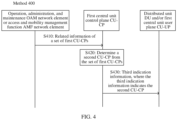
- FIG. 4 is a diagram of an embodiment in which a first CU-CP determines a second CU-CP from a set of first CU-CPs and notifies a DU and/or a first CU-UP according to this application.
- the method 400 is a case of the foregoing method steps listed for ease of understanding by a reader.
- the procedure 400 includes the following steps:
- a first CU-CP, a second CU-CP, a DU, or a first CU-UP is used as an execution body.
- the execution body may be the second CU-CP, a chip that performs a function of the second CU-CP, a processor that performs a function of the second CU-CP, or software or a logical module that performs a function of the second CU-CP. This is not limited in this application.
- the first CU-CP obtains related information of a set of first CU-CPs from an OAM or an AMF.
- the first CU-CP determines the second CU-CP from the set of first CU-CPs.
- the first CU-CP determines, based on the related information of the set of first CU-CPs, the second CU-CP from the set of first CU-CPs.
- the first CU-CP determines the second CU-CP from the set of first CU-CPs in S420 is determining the second CU-CP based on priority information.
- the first CU-CP determines the second CU-CP from the set of first CU-CPs in S420 may include a procedure in which the first CU-CP sends a backup service request to one or more CU-CPs in the set of first CU-CPs, and the like.
- the first CU-CP sends third indication information to the DU and/or the first CU-UP, where the third indication information indicates the second CU-CP.
- a procedure of determining, by the first CU-CP, the second CU-CP and notifying the DU and/or the first CU-UP may be completed before the DU and/or the first CU-CP have/has a requirement for establishing communication with the second CU-CP through a communication interface.
- the DU and/or the first CU-UP may send a communication interface establishment request to the second CU-CP in advance.
- the DU and/or the first CU-UP may send a standby indication to the second CU-CP, so that the communication interface is in a standby state.
- the standby communication interface may be activated by the DU and/or the first CU-UP, or may be activated by the second CU-CP.
- the DU and/or the first CU-UP may send a communication interface establishment request to the second CU-CP after having a requirement for establishing communication with the second CU-CP through the communication interface, and communicate with the second CU-CP through the communication interface after the communication interface is established.
- the procedure of determining, by the first CU-CP, the second CU-CP and notifying the DU and/or the first CU-UP may be completed when the DU and/or the first CU-CP have/has a requirement for establishing communication with the second CU-CP through the communication interface.
- the DU and/or the first CU-UP After receiving the third indication information, the DU and/or the first CU-UP send/sends a communication interface establishment request to the second CU-CP, and communicate/communicates with the second CU-CP through the communication interface after the communication interface is established.
- the first message received by the second CU-CP may include state value information from the first CU-CP.
- the state value information may be load value information of the first CU-CP.
- the second CU-CP may determine, based on a relationship between the load value information and a first threshold, whether the first CU-CP is overloaded. If the load value information is greater than or equal to the first threshold, the second CU-CP may determine that the first CU-CP is overloaded.
- the second CU-CP may communicate with the DU and/or the first CU-UP through the communication interface.
- the first CU-CP when the first CU-CP is overloaded, the first CU-CP may still communicate with another network element or unit through the communication interface.
- the state value information may be state value information for determining whether the first CU-CP is faulty.
- the second CU-CP determines that the first CU-CP is faulty.
- the second CU-CP may communicate with the DU and/or the first CU-UP through the communication interface.
- that the state value information is abnormal may be that the second CU-CP does not receive the state value information from the first CU-CP within a second periodicity or after a preset timer expires.
- that a state value is abnormal may be that the state value is an error value.
- the second CU-CP may determine, by detecting a transport layer state of the communication interface between the second CU-CP and the first CU-CP, whether the first CU-CP is faulty, without receiving the state value information.
- the second CU-CP determines that the first CU-CP is faulty.
- the second CU-CP may communicate with the DU and/or the first CU-UP through the communication interface.
- the first message received by the second CU-CP includes first indication information from the first CU-CP, and the first indication information indicates that the first CU-CP is overloaded.
- the second CU-CP may communicate with the DU and/or the first CU-UP based on the first indication information through the communication interface.
- the first CU-CP Before sending the first indication information, the first CU-CP may first determine that the first CU-CP is overloaded.
- that the first CU-CP determines that the first CU-CP is overloaded may be: the first CU-CP determines, based on that the load value information of the first CU-CP is greater than or equal to a first threshold, that the first CU-CP is overloaded.
- the first message received by the second CU-CP includes seventh indication information from the AMF, and the seventh indication information may indicate that the first CU-CP is overloaded or faulty, or the seventh indication information may indicate the second CU-CP to communicate with the DU and/or the first CU-UP through the communication interface.
- the AMF may first determine that the first CU-CP is overloaded or faulty.
- the AMF may obtain the state value information of the first CU-CP from the first CU-CP periodically or in real time.
- the state value information may reflect whether the first CU-CP is overloaded or faulty.
- the AMF determines, based on the state value information, whether the first CU-CP is overloaded or faulty. If the AMF determines that the first CU-CP is overloaded or faulty, the AMF sends the seventh indication information to the second CU-CP.
- determining whether the first CU-CP is overloaded by the first CU-CP can reduce signaling overheads caused by transmitting load value information and indication information.
- that the first CU-CP determines whether the first CU-CP is overloaded can reduce a determining error caused by a packet loss or the like, and improve stability and accuracy of a determining result.
- the first message received by the second CU-CP includes second indication information from the first CU-CP, and the second indication information indicates the second CU-CP to communicate with the DU and/or the first CU-UP through the communication interface.
- a cause for sending the second indication information by the first CU-CP may be that the first CU-CP determines that the first CU-CP is overloaded, or may be that the first CU-CP receives the indication information sent by the AMF, the DU, or the first CU-UP.
- the instruction information indicates the first CU-CP to migrate the DU and/or the first CU-UP, in other words, indicates the DU and/or the first CU-UP to communicate with a backup second CU-CP through the communication interface.
- a cause for sending the indication information by the AMF, the DU, or the first CU-UP may be that the AMF, the DU, or the first CU-UP determines that the first CU-CP is overloaded, or may be another cause. This is not limited in embodiments of this application.
- the first message received by the second CU-CP includes first request information from the DU and/or the first CU-UP, and the first request information is for requesting to communicate with the second CU-CP through the communication interface.
- the first request information may be a communication interface establishment request or a communication interface activation request.
- This embodiment of this application may further include: The DU and/or the first CU-UP receives a second message, and sends the first request information to the second CU-CP based on the second message.
- the second message received by the DU and/or the first CU-UP may include the state value information from the first CU-CP. Description of the state value information is similar to the foregoing description, and details are not described herein again. Specifically, the DU and/or the first CU-UP may determine, based on the state value information, that the first CU-CP is overloaded or faulty, and determine, based on that the first CU-CP is overloaded or faulty, to communicate with the second CU-CP through the communication interface, to send the first request information to the second CU-CP.
- the second message received by the DU and/or the first CU-UP includes fifth indication information from the first CU-CP, and the fifth indication information indicates that the first CU-CP is overloaded.
- the DU and/or the first CU-UP determine/determines, based on the fifth indication information, to communicate with the second CU-CP through the communication interface, to send the first request information to the second CU-CP.
- the first CU-CP Before sending the fifth indication information, the first CU-CP may first determine that the first CU-CP is overloaded.
- a procedure in which the first CU-CP determines that the first CU-CP is overloaded is similar to the foregoing procedure, and details are not described herein again.
- the first CU-CP determines that the first CU-CP is overloaded may also include: receiving indication information from the second CU-CP, where the indication information indicates that the first CU-CP is overloaded.
- a procedure in which the second CU-CP determines that the first CU-CP is overloaded is similar to a procedure in which the AMF determines that the first CU-CP is overloaded, and details are not described herein again.
- this solution in which the second CU-CP obtains the state value information of the first CU-CP, determines that the first CU-CP is overloaded, and communicates, through the communication interface, with the DU and/or the first CU-UP based on that the first CU-CP is overloaded can reduce more signaling overheads, simplify a procedure, reduce a probability of a packet loss error caused by sending the indication information for multiple times, and improve system stability.
- the second message received by the DU and/or the first CU-UP includes sixth indication information, and the sixth indication information indicates the DU and/or the first CU-UP to communicate with the second CU-CP through the communication interface.
- the DU and/or the first CU-UP determine/determines, based on the sixth indication information, to communicate with the second CU-CP through the communication interface, to send the first request information to the second CU-CP.
- the sixth indication information may be sent by the first CU-CP to the DU and/or the first CU-UP after the first CU-CP determines that the first CU-CP is overloaded.
- a procedure in which the first CU-CP determines that the first CU-CP is overloaded is similar to the foregoing procedure, and details are not described herein again.
- the first CU-CP may perform the following steps:
- the first CU-CP sends transport network layer association (Transport Network Layer Association, TNLA) release request (release request) information to the DU, where the information indicates to release TNLA of an F1-C interface between the first CU-CP and the DU.
- TNLA Transport Network Layer Association
- release request release request
- the first CU-CP sends the TNLA release request information to the first CU-UP, where the information indicates to release TNLA of an E1 interface between the first CU-CP and the first CU-UP.
- the first CU-UP releases the TNLA based on the indication.
- the first CU-CP sends the TNLA release request information to the AMF, where the information indicates to release TNLA of an NG (next generation) interface between the first CU-CP and the AMF.
- the AMF releases the TNLA according to instructions.
- the second CU-CP receives or sends a message (for example, receives the first message)
- the second CU-CP receives indication information, and the indication information indicates that the second CU-CP is a backup of the first CU-CP.
- the second CU-CP when the second CU-CP needs to determine whether the first CU-CP is overloaded or faulty, the second CU-CP needs to first determine that the second CU-CP is the backup of the first CU-CP.
- the indication information may be sent, to the second CU-CP, by a unit or a network element that determines the second CU-CP.
- the indication information may alternatively be forwarded, to the second CU-CP through another unit or network element, by the unit or network element that determines the second CU-CP.
- the DU and/or the first CU-UP may migrate, to the second CU-CP, services of some terminal devices served by the DU and/or the first CU-UP.
- the DU and/or the first CU-UP may communicate with both the first CU-CP and the second CU-CP through the communication interface.
- S320 Receive context information from the first CU-CP.
- an execution body may be the second CU-CP, a chip that performs a function of the second CU-CP, a processor that performs a function of the second CU-CP, software or a logical module that performs a function of the second CU-CP, or the like. This is not limited in this application. It should be noted that a sequence of steps S310 and S320 is not limited.
- the first CU-CP may directly send the context information to the second CU-CP.
- the first CU-CP may send the context information to the second CU-CP.
- the first CU-CP may send the context information to the second CU-CP every third periodicity.
- the first CU-CP may send the context information to the second CU-CP in real time when the context information changes.
- the second CU-CP may receive the context information from the first CU-CP through a core network element.
- the core network element may be the AMF.
- the core network element may be a newly introduced network element.
- the first CU-CP may send the context information to the core network element for storage.
- the first CU-CP may send the context information to the core network element every third periodicity.
- the first CU-CP may send the context information to the core network element in real time when the context information changes.
- the first CU-CP when sending the context information to the core network element for storage, may include an identifier of the first CU-CP and/or an identifier of a terminal device served by the first CU-CP in the context information, so that the AMF can mark the context information.
- the identifier of the first CU-CP is used to identify the context information related to the first CU-CP, that is, the context information of the DU and/or the first CU-UP.
- the identifier of the terminal device is used to identify context information related to a terminal device.
- the identifier of the first CU-CP may be a globally unique RAN node identifier (globally unique RAN node ID), and the identifier of the terminal device may be a RAN UE NGAP identifier (RAN UE NGAP (next generation application protocol, NG interface application protocol) ID).
- RAN UE NGAP next generation application protocol, NG interface application protocol
- the second CU-CP may obtain the context information from the core network element.
- the second CU-CP may send the identifier of the first CU-CP to the AMF, and the AMF determines the context information of the first CU-CP based on the identifier of the first CU-CP, and sends the context information of the first CU-CP to the second CU-CP.
- the second CU-CP may send an identifier of a terminal device to the AMF, and the AMF determines context information of the terminal device based on the identifier of the terminal device, and sends the context information of the terminal device to the second CU-CP.
- the AMF may actively send the context information to the second CU-CP.
- the AMF may send the context information to the second CU-CP.
- the context information may further include the identifier of the first CU-CP or the identifier of the terminal device, and is used by the AMF to mark the context information when the AMF sends a downlink NGAP message to the second CU-CP, so that the second CU-CP learns that the context information is a context of the first CU-CP and/or context information of a terminal device served by the first CU-CP.
- the context information may further include a newly allocated RAN UE NGAP ID, used for marking the terminal device when the second CU-CP or the AMF subsequently sends a message related to the terminal device on the NG interface.
- the method in which the first CU-CP stores the context information in the core network element can reduce impact on the second CU-CP before the first CU-CP is faulty or overloaded, so that a working state of the second CU-CP is not affected before the second CU-CP serves as a backup of the first CU-CP to communicate with the DU and/or the first CU-UP through the communication interface, and unnecessary signaling overheads of the first CU-CP or the second CU-CP are reduced.
- the second CU-CP may configure, for a terminal device served by the second CU-CP, a new UE F1AP ID (for example, a gNB-CU-CP UE F1AP ID) used in the second CU-CP.
- F1AP F1 application protocol, F1 interface application protocol
- the second CU-CP may configure, for a terminal device served by the second CU-CP, a new UE F1AP ID (for example, a gNB-CU-CP UE F1AP ID) used in the second CU-CP.
- the configuration process may be as follows:
- the F1AP message may carry an old UE F1AP ID used by the DU to send information to the first CU-CP through the F1 interface and a new UE F1AP ID used by the DU to send information to the second CU-CP through the F1 interface.
- the DU may replace the old UE F1AP ID with the new UE F1AP ID based on the F1AP message.
- the DU may determine, based on the new UE F1AP ID, which communication interface is used for sending the F1AP message or which communication interface is used for communicating with the second CU-CP. In other words, the DU may determine the second CU-CP through the new UE F1AP ID.
- the second CU-CP may configure, for a terminal device served by the second CU-CP, a new UE E1AP ID (for example, a gNB-CU-CP UE E1AP ID) used in the second CU-CP.
- E1AP E1 application protocol, E1 interface application protocol
- the first CU-UP may determine, based on the new UE E1AP ID, which communication interface is used for sending the E1AP message or which communication interface is used for communicating with the second CU-CP. In other words, the first CU-UP may determine the second CU-CP through the new UE E1AP ID.
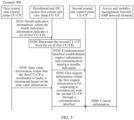
- FIG. 5 and FIG. 6 an example of a procedure of a communication method provided in embodiments of this application. It should be understood that the procedures shown in FIG. 5 and FIG. 6 are merely several specific examples of the foregoing method embodiments, and do not constitute any limitation on embodiments of this application.
- FIG. 5 shows an example communication method according to an embodiment of this application. As shown in FIG. 5 , the example 500 includes the following steps:
- a first CU-CP, a second CU-CP, a DU, or a first CU-UP is used as an execution body.
- the execution body may be the second CU-CP, a chip that performs a function of the second CU-CP, a processor that performs a function of the second CU-CP, or software or a logical module that performs a function of the second CU-CP.
- S510 The DU and/or the first CU-UP receive/receives fourth indication information from the first CU-CP, where the fourth indication information indicates a set of first CU-CPs.
- step S310 for obtaining and transferring related information of the set of first CU-CPs, refer to step S310. Details are not described herein again.
- S520 The DU and/or the first CU-UP determine/determines the second CU-CP from the set of first CU-CPs.
- step S310 for a method step of determining, by the DU and/or the first CU-UP, the second CU-CP from the first CU-CP, refer to step S310. Details are not described herein again.
- the DU and/or the first CU-UP after determining the second CU-CP from the set of first CU-CPs, send/sends feedback information to the first CU-CP, where the feedback information indicates the second CU-CP, so that the first CU-CP performs subsequent interaction after determining the second CU-CP.
- the DU and/or the first CU-UP send/sends communication interface establishment request information to the second CU-CP, and further send/sends a communication interface standby indication to the second CU-CP.
- the second CU-CP receives the communication interface establishment request information, and sends a response message of the communication interface establishment request information to the DU and/or the first CU-UP.
- the second CU-CP receives the communication interface standby indication, and temporarily does not communicate with the DU and/or the first CU-UP based on the standby indication through the communication interface.
- S540 The DU and/or the first CP-UP receive/receives state value information from the first CU-CP, and determine/determines, based on the state value information, that the first CU-CP is overloaded or faulty.
- step S310 for related descriptions of the state value information, refer to step S310. Details are not described herein again.
- S550 The DU and/or the first CU-UP send/sends first request information to the second CU-CP based on that the first CU-CP is overloaded or faulty.
- the first request information is for requesting to communicate with the second CU-CP through the communication interface.
- the communication interface used for communication is an activated standby communication interface.
- S560 The second CU-CP receives context information from an AMF.
- the context information may be context information of the DU and/or the first CU-UP, or may be context information of a terminal device served by the first CU-CP.
- the context information refer to step S320. Details are not described herein again.
- the AMF may determine, from indication information of another network element or unit, that the second CU-CP is a backup of the first CU-CP, or may determine by itself that the second CU-CP is a backup of the first CU-CP.
- step S560 may occur before any one of steps S510 to S550. This is not limited herein. For details, refer to related limitations in S320.
- the second CU-CP may also directly receive the context information from the first CU-CP.
- the description in step S320 refer to the description in step S320.
- the example 500 is merely an example, and constitutes no limitation on the method 300.
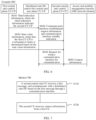
- FIG. 6 shows another example communication method according to an embodiment of this application.
- the example 600 includes the following steps:
- a first CU-CP, a second CU-CP, a DU, or a first CU-UP is used as an execution body.
- the execution body may be the second CU-CP, a chip that performs a function of the second CU-CP, a processor that performs a function of the second CU-CP, or software or a logical module that performs a function of the second CU-CP. This is not limited in this application.
- the DU and/or the first CU-UP receive/receives third indication information from the first CU-CP, and determines the second CU-CP based on the third indication information, where the third indication information indicates the second CU-CP.
- the second CU-CP is determined by the first CU-CP from a set of first CU-CPs.
- S620 The DU and/or the first CU-UP send/sends communication interface establishment request information to the second CU-CP, and further sends a communication interface standby indication to the second CU-CP.
- the second CU-CP receives the communication interface establishment request information, and sends a response message of the communication interface establishment request information to the DU and/or the first CU-UP.
- the second CU-CP receives the communication interface standby indication, and temporarily does not communicate with the DU and/or the first CU-UP based on the standby indication through the communication interface.
- the second CU-CP receives state value information from the first CU-CP, and determines, based on the state value information, that the first CU-CP is overloaded or faulty.
- step S310 for related descriptions of the state value information, refer to step S310. Details are not described herein again.
- the second CU-CP sends, to the DU and/or the first CU-UP based on that the first CU-CP is overloaded or faulty, a request for using a communication interface for communication.
- the request for using the communication interface for communication is to activate a standby communication interface.
- the second CU-CP receives context information from the AMF.
- the context information may be context information of the DU and/or the first CU-UP.
- the context information refer to step S320. Details are not described herein again.
- step S650 may occur before any one of steps S610 to S640. This is not limited herein. For details, refer to related limitations in S320.
- the second CU-CP may also directly receive the context information from the first CU-CP.
- the description in step S320 refer to the description in step S320.
- the example 600 is merely an example, and constitutes no limitation on the method 300.
- a backup is provided for the first CU-CP, so that when the first CU-CP is faulty, overloaded, or the like, the DU and/or the first CU-UP can communicate, through the communication interface, with the second CU-CP used as a backup. This reduces service interruption of a corresponding terminal device, and improve system robustness.
- FIG. 7 shows another example communication method according to an embodiment of this application. As shown in FIG. 7 , the method is applied to a CU-DU separated architecture, and the method 700 includes the following steps.
- S710 Receive a first message, and communicate with a DU based on the first message through a communication interface.
- an execution body may be a second CU, a chip that performs a function of the second CU, a processor that performs a function of the second CU, software or a logical module that performs a function of the second CU, or the like. This is not limited in this application.
- this step is similar to step S310 in the method 300, provided that a second CU-CP is replaced with the second CU, a first CU-CP is replaced with a first CU, and a DU and/or a first CU-UP are/is replaced with the DU.
- step S310 in the method 300 refers to step S310 in the method 300. Details are not described herein again.
- S720 Receive context information from the first CU.
- the execution body may be the second CU, the chip that performs the function of the second CU, the processor that performs the function of the second CU, the software or the logical module that performs the function of the second CU, or the like. This is not limited in this application.
- step S720 and step S710 may be replaced.
- step S320 in the method 300 is similar to step S320 in the method 300, provided that the second CU-CP is replaced with the second CU, the first CU-CP is replaced with the first CU, and the DU and/or the first CU-UP are/is replaced with the DU.
- step S320 in the method 300 refers to step S320 in the method 300. Details are not described herein again.
- FIG. 8 shows an example communication apparatus according to an embodiment of this application.
- the communication apparatus 800 includes a transceiver unit 810 and a processing unit 820.
- the communication apparatus 800 may be configured to implement a function of a second CU-CP in any one of the foregoing methods.
- the communication apparatus 800 may correspond to the second CU-CP.
- the communication apparatus 800 may be the second CU-CP, and performs the steps performed by the second CU-CP in the foregoing method embodiments.
- the transceiver unit 810 may be configured to support the communication apparatus 800 in performing communication, for example, performing a sending action and/or a receiving action performed by the second CU-CP in the foregoing method embodiments.
- the processing unit 820 may be configured to support the communication apparatus 800 in performing a processing action in the foregoing method embodiments, for example, performing a processing action performed by the second CU-CP in the foregoing method embodiments.
- the communication apparatus may further include a storage unit 830 (not shown in FIG. 8 ), configured to store program code and data of the communication apparatus.
- a storage unit 830 (not shown in FIG. 8 ), configured to store program code and data of the communication apparatus.
- the transceiver unit 810 is configured to receive context information from a first central unit control plane CU-CP, where the context information includes a context of a distributed unit DU and/or a context of a first central unit user plane CU-UP, and the context information is used by the second CU-CP to communicate with the DU and/or the first CU-UP.
- the transceiver unit 810 is further configured to receive a first message.
- the processing unit 820 is configured to communicate with the DU and/or the first CU-UP based on the first message through a communication interface.
- Receiving, by the transceiver unit 810, the context information from the first CU-CP may be receiving the context information from the first CU-CP via an access and mobility management function network element AMF.
- the first CU-CP may send the context information to the AMF periodically or in real time.
- the first message may include state value information from the first CU-CP. That the processing unit 820 communicates with the DU and/or the first CU-UP based on the first message through the communication interface includes: The processing unit 820 determines, based on the state value information, that the first CU-CP is overloaded or faulty; the processing unit 820 determines, based on that the first CU-CP is overloaded or faulty, to communicate with the DU and/or the first CU-UP through the communication interface; and the processing unit 820 communicates with the DU and/or the first CU-UP through the communication interface.
- the state value information may be information reflecting a load value of the first CU-CP. For example, that the load value information is greater than a first threshold indicates that the first CU-CP is overloaded.
- the state value information may be information reflecting whether the first CU-CP is faulty. For example, that the state value information is an error value indicates that the first CU-CP is faulty. For another example, that the state value information is null indicates that the first CU-CP is faulty.
- the first message may include first request information from the DU and/or the first CU-UP.
- the first request information is for requesting to communicate with the second CU-CP through the communication interface. That the processing unit 820 communicates with the DU and/or the first CU-UP based on the first message through the communication interface includes: The processing unit 820 communicates with the DU and/or the first CU-UP based on the first request information through the communication interface.
- the first message includes first indication information from the first CU-CP, and the first indication information indicates that the first CU-CP is overloaded. That the processing unit 820 communicates with the DU and/or the first CU-UP based on the first message through the communication interface includes: The processing unit 820 determines, based on the first indication information, to communicate with the DU and/or the first CU-UP through the communication interface; and the processing unit 820 communicates with the DU and/or the first CU-UP through the communication interface.
- the first indication information may be sent by the first CU-CP after the first CU-CP determines that the first CU-CP is overloaded, or may be sent by the first CU-CP as indicated by another network element or unit after the another network element or unit determines that the first CU-CP is overloaded.
- the first message includes second indication information from the first CU-CP, and the second indication information indicates the processing unit 820 to communicate with the DU and/or the first CU-UP through the communication interface. That the processing unit 820 communicates with the DU and/or the first CU-UP based on the first message through the communication interface includes: The processing unit 820 communicates with the DU and/or the first CU-UP based on the second indication information through the communication interface.
- the second indication information may be sent by the first CU-CP after the first CU-CP determines that the first CU-CP is overloaded and determines to indicate the processing unit 820 to communicate with the DU and/or the first CU-UP through the communication interface, or may be sent by another network element to the first CU-CP and forwarded by the first CU-CP after the another network element determines that the first CU-CP is overloaded and determines to indicate the processing unit 820 to communicate with the DU and/or the first CU-UP through the communication interface.
- performing communication through the communication interface may be establishing a communication interface and performing communication through the communication interface, or may be activating a standby communication interface.
- the communication apparatus 800 may be configured to implement a function of the first CU-CP in any one of the foregoing methods.
- the communication apparatus 800 may correspond to the first CU-CP.
- the communication apparatus 800 may be the first CU-CP, and performs the steps performed by the first CU-CP in the foregoing method embodiments.
- the transceiver unit 810 may be configured to support the communication apparatus 800 in performing communication, for example, performing a sending action and/or a receiving action performed by the first CU-CP in the foregoing method embodiments.
- the processing unit 820 may be configured to support the communication apparatus 800 in performing a processing action in the foregoing method embodiments, for example, performing a processing action performed by the first CU-CP in the foregoing method embodiments.
- the communication apparatus may further include a storage unit 830 (not shown in FIG. 8 ), configured to store program code and data of the communication apparatus.
- a storage unit 830 (not shown in FIG. 8 ), configured to store program code and data of the communication apparatus.
- the transceiver unit 810 is configured to send context information to a second central unit control plane CU-CP, where the context information includes a context of a distributed unit DU and a context of a first central unit user plane CU-CP, and the context information is used by the second CU-CP to communicate with the DU and/or the first CU-UP.
- the processing unit 820 is configured to determine the second CU-CP from a set of first CU-CPs, where the set of first CU-CPs includes the first CU-CP, and any two CU-CPs in the set of first CU-CPs support mutual backup.
- the transceiver unit 810 is further configured to send third indication information to the DU and/or the first CU-UP, where the third indication information indicates the second CU-CP.
- the transceiver unit 810 is further configured to send fourth indication information to the DU and/or the first CU-UP, where the fourth indication information indicates the set of first CU-CPs, the set of first CU-CPs includes the first CU-CP and the second CU-CP, and the any two CU-CPs in the set of first CU-CPs support mutual backup.
- the transceiver unit 810 is further configured to receive feedback information of the DU or the first CU-UP and determine the second CU-CP. The feedback information indicates the second CU-CP.
- the transceiver unit 810 is further configured to send state value information of the first CU-CP to the second CU-CP, where the state value information is for determining that the first CU-CP is overloaded or faulty.
- the transceiver unit 810 is further configured to send first indication information to the second CU-CP, where the first indication information indicates that the first CU-CP is overloaded.
- the transceiver unit 810 is further configured to send second indication information to the second CU-CP, where the second indication information indicates the second CU-CP to communicate with the DU and/or the first CU-UP through the communication interface.
- the processing unit 820 is further configured to determine, based on that a load value is greater than a first threshold, that the first CU-CP is overloaded.
- the transceiver unit 810 is further configured to send fifth indication information to the DU and/or the first CU-UP, where the fifth indication information indicates that the first CU-CP is overloaded.
- the transceiver unit 810 is further configured to send sixth indication information to the DU and/or the first CU-UP.
- the sixth indication information indicates the DU and/or the first CU-UP to communicate with the second CU-CP through the communication interface.
- performing communication through the communication interface may be establishing a communication interface and performing communication through the communication interface, or may be activating a standby communication interface.
- the communication apparatus 800 may be configured to implement functions of the DU and/or the first CU-UP in any one of the foregoing methods.
- the communication apparatus 800 may correspond to the DU and/or the first CU-UP.
- the communication apparatus 800 may be the DU and/or the first CU-UP, and performs the steps performed by the DU and/or the first CU-UP in the foregoing method embodiments.
- the transceiver unit 810 may be configured to support the communication apparatus 800 in performing communication, for example, performing a sending action and/or a receiving action performed by the DU and/or the first CU-UP in the foregoing method embodiments.
- the processing unit 820 may be configured to support the communication apparatus 800 in performing a processing action in the foregoing method embodiments, for example, performing a processing action performed by the DU and/or the first CU-UP in the foregoing method embodiments.
- the communication apparatus may further include a storage unit 830 (not shown in FIG. 8 ), configured to store program code and data of the communication apparatus.
- a storage unit 830 (not shown in FIG. 8 ), configured to store program code and data of the communication apparatus.
- the transceiver unit 810 is configured to receive a second message.
- the processing unit 820 is configured to determine a second CU-CP.
- the transceiver unit 810 is further configured to send first request information to the second CU-CP based on the second message, where the first request information is for requesting to communicate with second CU-CP through a communication interface.
- That the processing unit 820 is configured to determine a second CU-CP includes: The transceiver unit 810 is configured to receive third indication information sent by a first CU-CP, and the processing unit 820 is configured to determine the second CU-CP based on the third indication information, where the third indication information indicates the second CU-CP.
- the processing unit 820 is configured to determine a second CU-CP includes:
- the transceiver unit 810 is configured to receive the fourth indication information sent by the first CU-CP, and the processing unit 820 is configured to determine the second CU-CP from the set of first CU-CPs, where the fourth indication information indicates the set of first CU-CPs, the set of first CU-CPs includes the first CU-CP, and any two CU-CPs in the set of first CU-CPs support mutual backup
- the transceiver unit 810 is further configured to send feedback information to the first CU-CP, where the feedback information indicates the second CU-CP.
- the second message includes state value information from the first CU-CP, and that the transceiver unit 810 sends the first request information to the second CU-CP based on the second message includes:
- the processing unit 820 determines, based on the state value information of the first CU-CP, that the first CU-CP is overloaded or faulty; the processing unit 820 determines, based on that the first CU-CP is overloaded or faulty, to communicate with the second CU-CP through the communication interface; and the transceiver unit 810 sends the first request information to the second CU-CP.
- That the second message includes fifth indication information from the first CU-CP, the fifth indication information indicates that the first CU-CP is overloaded, and that the transceiver unit 810 sends the first request information to the second CU-CP based on the third message includes: The processing unit 820 determines, based on the fifth indication information, to communicate with the second CU-CP through the communication interface; and the transceiver unit 810 sends the first request information to the second CU-CP.
- the second message includes sixth indication information, the sixth indication information indicates the DU and/or the first CU-UP to communicate with the second CU-CP, and that the transceiver unit 810 sends the first request information to the second CU-CP based on the third message includes: The transceiver unit 810 sends the first request information to the second CU-CP based on the sixth indication information.
- performing communication through the communication interface may be establishing a communication interface and performing communication through the communication interface, or may be activating a standby communication interface.
- FIG. 9 shows an example signal transmission apparatus 900 according to an embodiment of this application.
- the apparatus 900 includes a transceiver 910, a processor 920, and a memory 930.
- the memory 930 is configured to store instructions.
- the processor 920 is coupled to the memory 930, and is configured to execute the instructions stored in the memory, to perform the method provided in the foregoing embodiments of this application.
- the transceiver 910 in the apparatus 900 may correspond to the transceiver unit 810 in the apparatus 800
- the processor 920 in the communication apparatus 900 may correspond to the processing unit 820 in the communication apparatus 800.
- the memory 930 and the processor 920 may be integrated into one processing apparatus, and the processor 920 is configured to execute program code stored in the memory 930 to implement the foregoing functions.
- the memory 930 may also be integrated into the processor 920, or may be independent of the processor 910.
- FIG. 10 is a diagram of still another example communication apparatus according to an embodiment of this application.
- the communication apparatus may be configured to perform the method performed by the first CU-CP, the second CU-CP, the DU, or the first CU-UP.
- the communication apparatus includes: at least one input interface (Input(s)) 1010, a logic circuit 1020, and at least one output interface (Output(s)) 1030.
- the logic circuit may be a chip or another integrated circuit that can implement the method in this application.
- the input interface 1010 is configured to input or receive data.
- the output interface 1030 is configured to output or send data.
- the logic circuit 1020 is configured to perform the foregoing possible methods shown in FIG. 3 to FIG. 7 .
- the disclosed system, apparatus and method may be implemented in other manners.
- the described apparatus embodiment is merely an example.
- division into the units is merely logical function division and may be other division in actual implementation.
- multiple units or components may be combined or integrated into another system, or some features may be ignored or not performed.
- displayed or discussed mutual couplings or direct couplings or communication connections may be implemented through some interfaces. Indirect couplings or communication connections between the apparatuses or the units may be implemented in electrical, mechanical, or other forms.
- the units described as separate parts may or may not be physically separate, and parts displayed as units may or may not be physical units, may be located in one location, or may be distributed on multiple network units. Some or all of the units may be selected based on actual requirements to achieve the objectives of the solutions of embodiments.
- functional units in embodiments of this application may be integrated into one processing unit, or each of the units may exist alone physically, or two or more units are integrated into one unit.
- the functions When the functions are implemented in the form of a software functional unit and sold or used as an independent product, the functions may be stored in a computer-readable storage medium. Based on such an understanding, the technical solutions of this application essentially, or a part contributing to the conventional technology, or some of the technical solutions may be implemented in a form of a software product.
- the computer software product is stored in a storage medium, and includes several instructions for instructing a computer device (which may be a personal computer, a server, or a network device) to perform all or some of the steps of the methods described in embodiments of this application.
- the foregoing storage medium includes: any medium that can store program code, for example, a USB flash drive, a removable hard disk, a read-only memory (Read-Only Memory, ROM), a random access memory (Random Access Memory, RAM), a magnetic disk, or an optical disc.
- a USB flash drive for example, a USB flash drive, a removable hard disk, a read-only memory (Read-Only Memory, ROM), a random access memory (Random Access Memory, RAM), a magnetic disk, or an optical disc.
Landscapes
- Engineering & Computer Science (AREA)
- Computer Networks & Wireless Communication (AREA)
- Signal Processing (AREA)
- Computer Security & Cryptography (AREA)
- Mobile Radio Communication Systems (AREA)
- Hardware Redundancy (AREA)
Applications Claiming Priority (2)
| Application Number | Priority Date | Filing Date | Title |
|---|---|---|---|
| CN202210289197.XA CN116847387A (zh) | 2022-03-22 | 2022-03-22 | 一种通信方法和通信装置 |
| PCT/CN2023/080319 WO2023179365A1 (fr) | 2022-03-22 | 2023-03-08 | Procédé de communication et appareil de communication |
Publications (2)
| Publication Number | Publication Date |
|---|---|
| EP4485907A1 true EP4485907A1 (fr) | 2025-01-01 |
| EP4485907A4 EP4485907A4 (fr) | 2025-05-28 |
Family
ID=88099803
Family Applications (1)
| Application Number | Title | Priority Date | Filing Date |
|---|---|---|---|
| EP23773614.5A Pending EP4485907A4 (fr) | 2022-03-22 | 2023-03-08 | Procédé de communication et appareil de communication |
Country Status (4)
| Country | Link |
|---|---|
| US (1) | US20250016631A1 (fr) |
| EP (1) | EP4485907A4 (fr) |
| CN (1) | CN116847387A (fr) |
| WO (1) | WO2023179365A1 (fr) |
Families Citing this family (2)
| Publication number | Priority date | Publication date | Assignee | Title |
|---|---|---|---|---|
| US12604237B2 (en) * | 2023-09-08 | 2026-04-14 | ISRD Sp. z o.o. | Flexible software-defined radio access network architecture and methods for use therewith |
| CN121013052A (zh) * | 2024-05-22 | 2025-11-25 | 华为技术有限公司 | 感知方法及相关装置 |
Family Cites Families (7)
| Publication number | Priority date | Publication date | Assignee | Title |
|---|---|---|---|---|
| RU2745330C1 (ru) * | 2017-11-16 | 2021-03-24 | Телефонактиеболагет Лм Эрикссон (Пабл) | ОБМЕН TEID МЕЖДУ DU И CP-UP В gNB |
| US10972932B2 (en) * | 2017-11-17 | 2021-04-06 | Telefonaktiebolaget Lm Ericsson (Publ) | Methods, apparatus and systems relating to data radio bearer inactivity |
| CN110035479B (zh) * | 2018-01-11 | 2023-08-08 | 北京三星通信技术研究有限公司 | 选择集中式单元用户平面的方法和基站 |
| GB2575033A (en) * | 2018-06-22 | 2020-01-01 | Nec Corp | Communication system |
| CN116669083A (zh) * | 2018-09-27 | 2023-08-29 | 中兴通讯股份有限公司 | 一种ue迁移方法、装置、系统及存储介质 |
| CN112788085B (zh) * | 2019-11-11 | 2022-08-09 | 华为技术有限公司 | 一种数据缓存方法和装置 |
| WO2022066070A1 (fr) * | 2020-09-22 | 2022-03-31 | Telefonaktiebolaget Lm Ericsson (Publ) | Fonction de plan de commande associant et réalisant des fonctions de plan de commande pour un ou plusieurs équipements utilisateurs |
-
2022
- 2022-03-22 CN CN202210289197.XA patent/CN116847387A/zh active Pending
-
2023
- 2023-03-08 WO PCT/CN2023/080319 patent/WO2023179365A1/fr not_active Ceased
- 2023-03-08 EP EP23773614.5A patent/EP4485907A4/fr active Pending
-
2024
- 2024-09-20 US US18/891,330 patent/US20250016631A1/en active Pending
Also Published As
| Publication number | Publication date |
|---|---|
| US20250016631A1 (en) | 2025-01-09 |
| EP4485907A4 (fr) | 2025-05-28 |
| CN116847387A (zh) | 2023-10-03 |
| WO2023179365A1 (fr) | 2023-09-28 |
Similar Documents
| Publication | Publication Date | Title |
|---|---|---|
| EP3576457B1 (fr) | Procédé de communication, dispositif de réseau d'accès et dispositif de réseau central | |
| EP3573356B1 (fr) | Procédé de contrôle d'états de dispositif terminal, dispositif terminal, et dispositif de réseau | |
| US20250016631A1 (en) | Communication method and communication apparatus | |
| EP4236424A1 (fr) | Procédé de commande de transmission de données, appareil, et support de stockage | |
| WO2019137471A1 (fr) | Procédé de communication, dispositif de réseau d'accès et dispositif terminal | |
| RU2019139392A (ru) | Способ связи и устройство связи | |
| US11419027B2 (en) | User plane link establishment method, base station, and mobility management device | |
| KR20190099308A (ko) | 통신 방법, 액세스 네트워크 장치, 및 단말기 | |
| US11483898B2 (en) | Session management method and session management network element | |
| WO2021203252A1 (fr) | Procédé et dispositif de transmission et de réception de données dans un état inactif, et équipement utilisateur | |
| EP3439269B1 (fr) | Procédé et appareil de transmission de données, et dispositif de gestion de session | |
| CN119054316A (zh) | 支持体验质量(QoE)测量收集的方法及设备 | |
| KR20210002717A (ko) | 통신 방법 및 장치 | |
| US11576097B2 (en) | Method and terminal for redirecting network | |
| CA3246190A1 (fr) | Procédés et appareil de prise en charge d'une commutation de trafic correspondant à une session de communication entre deux chemins d'accès non-3 gpp | |
| CN110519842B (zh) | 一种通信方法及装置 | |
| EP3614714B1 (fr) | Procédé pour acquérir des informations de configuration de contexte, dispositif terminal et dispositif de réseau d'accès | |
| US20240015606A1 (en) | Method and apparatus for handover | |
| EP3823387B1 (fr) | Procédé et appareil d'indication d'informations | |
| WO2019223478A1 (fr) | Procédé et appareil de traitement d'informations, élément de réseau, et support de stockage | |
| CN111565479A (zh) | 通信方法及其装置、系统 | |
| CN116113074A (zh) | 一种被用于无线通信的通信节点中的方法和装置 | |
| WO2023193240A1 (fr) | Procédés et appareils pour une préparation de transfert dans un cas de relais u2n l2 | |
| KR102402355B1 (ko) | 데이터 패킷 처리 장치의 장애 발생 시의 서비스 복구 방법 | |
| US20260052358A1 (en) | Method and apparatus of supporting multicast and broadcast services |
Legal Events
| Date | Code | Title | Description |
|---|---|---|---|
| STAA | Information on the status of an ep patent application or granted ep patent |
Free format text: STATUS: THE INTERNATIONAL PUBLICATION HAS BEEN MADE |
|
| PUAI | Public reference made under article 153(3) epc to a published international application that has entered the european phase |
Free format text: ORIGINAL CODE: 0009012 |
|
| STAA | Information on the status of an ep patent application or granted ep patent |
Free format text: STATUS: REQUEST FOR EXAMINATION WAS MADE |
|
| 17P | Request for examination filed |
Effective date: 20240924 |
|
| AK | Designated contracting states |
Kind code of ref document: A1 Designated state(s): AL AT BE BG CH CY CZ DE DK EE ES FI FR GB GR HR HU IE IS IT LI LT LU LV MC ME MK MT NL NO PL PT RO RS SE SI SK SM TR |
|
| A4 | Supplementary search report drawn up and despatched |
Effective date: 20250430 |
|
| RIC1 | Information provided on ipc code assigned before grant |
Ipc: H04L 69/40 20220101AFI20250424BHEP |
|
| DAV | Request for validation of the european patent (deleted) | ||
| DAX | Request for extension of the european patent (deleted) |