EP4488372A2 - Verfahren zur erhöhung der empfindlichkeit eines endotoxinmessmittels - Google Patents
Verfahren zur erhöhung der empfindlichkeit eines endotoxinmessmittels Download PDFInfo
- Publication number
- EP4488372A2 EP4488372A2 EP24211666.3A EP24211666A EP4488372A2 EP 4488372 A2 EP4488372 A2 EP 4488372A2 EP 24211666 A EP24211666 A EP 24211666A EP 4488372 A2 EP4488372 A2 EP 4488372A2
- Authority
- EP
- European Patent Office
- Prior art keywords
- endotoxin
- factor
- recombinant protein
- reagent
- measurement
- Prior art date
- Legal status (The legal status is an assumption and is not a legal conclusion. Google has not performed a legal analysis and makes no representation as to the accuracy of the status listed.)
- Withdrawn
Links
Images

Classifications
-
- G—PHYSICS
- G01—MEASURING; TESTING
- G01N—INVESTIGATING OR ANALYSING MATERIALS BY DETERMINING THEIR CHEMICAL OR PHYSICAL PROPERTIES
- G01N33/00—Investigating or analysing materials by specific methods not covered by groups G01N1/00 - G01N31/00
- G01N33/48—Biological material, e.g. blood, urine; Haemocytometers
- G01N33/50—Chemical analysis of biological material, e.g. blood, urine; Testing involving biospecific ligand binding methods; Immunological testing
- G01N33/53—Immunoassay; Biospecific binding assay; Materials therefor
- G01N33/569—Immunoassay; Biospecific binding assay; Materials therefor for microorganisms, e.g. protozoa, bacteria, viruses
- G01N33/56911—Bacteria
- G01N33/56922—Campylobacter
-
- C—CHEMISTRY; METALLURGY
- C07—ORGANIC CHEMISTRY
- C07K—PEPTIDES
- C07K14/00—Peptides having more than 20 amino acids; Gastrins; Somatostatins; Melanotropins; Derivatives thereof
- C07K14/195—Peptides having more than 20 amino acids; Gastrins; Somatostatins; Melanotropins; Derivatives thereof from bacteria
- C07K14/205—Peptides having more than 20 amino acids; Gastrins; Somatostatins; Melanotropins; Derivatives thereof from bacteria from Campylobacter (G)
-
- C—CHEMISTRY; METALLURGY
- C07—ORGANIC CHEMISTRY
- C07K—PEPTIDES
- C07K14/00—Peptides having more than 20 amino acids; Gastrins; Somatostatins; Melanotropins; Derivatives thereof
- C07K14/435—Peptides having more than 20 amino acids; Gastrins; Somatostatins; Melanotropins; Derivatives thereof from animals; from humans
- C07K14/43504—Peptides having more than 20 amino acids; Gastrins; Somatostatins; Melanotropins; Derivatives thereof from animals; from humans from invertebrates
-
- C—CHEMISTRY; METALLURGY
- C12—BIOCHEMISTRY; BEER; SPIRITS; WINE; VINEGAR; MICROBIOLOGY; ENZYMOLOGY; MUTATION OR GENETIC ENGINEERING
- C12N—MICROORGANISMS OR ENZYMES; COMPOSITIONS THEREOF; PROPAGATING, PRESERVING, OR MAINTAINING MICROORGANISMS; MUTATION OR GENETIC ENGINEERING; CULTURE MEDIA
- C12N9/00—Enzymes; Proenzymes; Compositions thereof; Processes for preparing, activating, inhibiting, separating or purifying enzymes
- C12N9/14—Hydrolases (3)
- C12N9/48—Hydrolases (3) acting on peptide bonds (3.4)
- C12N9/50—Proteinases, e.g. Endopeptidases (3.4.21-3.4.25)
- C12N9/64—Proteinases, e.g. Endopeptidases (3.4.21-3.4.25) derived from animal tissue
- C12N9/6402—Proteinases, e.g. Endopeptidases (3.4.21-3.4.25) derived from animal tissue from non-mammals
- C12N9/6405—Proteinases, e.g. Endopeptidases (3.4.21-3.4.25) derived from animal tissue from non-mammals not being snakes
- C12N9/6408—Serine endopeptidases (3.4.21)
-
- C—CHEMISTRY; METALLURGY
- C12—BIOCHEMISTRY; BEER; SPIRITS; WINE; VINEGAR; MICROBIOLOGY; ENZYMOLOGY; MUTATION OR GENETIC ENGINEERING
- C12Q—MEASURING OR TESTING PROCESSES INVOLVING ENZYMES, NUCLEIC ACIDS OR MICROORGANISMS; COMPOSITIONS OR TEST PAPERS THEREFOR; PROCESSES OF PREPARING SUCH COMPOSITIONS; CONDITION-RESPONSIVE CONTROL IN MICROBIOLOGICAL OR ENZYMOLOGICAL PROCESSES
- C12Q1/00—Measuring or testing processes involving enzymes, nucleic acids or microorganisms; Compositions therefor; Processes of preparing such compositions
- C12Q1/56—Measuring or testing processes involving enzymes, nucleic acids or microorganisms; Compositions therefor; Processes of preparing such compositions involving blood clotting factors, e.g. involving thrombin, thromboplastin, fibrinogen
-
- C—CHEMISTRY; METALLURGY
- C12—BIOCHEMISTRY; BEER; SPIRITS; WINE; VINEGAR; MICROBIOLOGY; ENZYMOLOGY; MUTATION OR GENETIC ENGINEERING
- C12Y—ENZYMES
- C12Y304/00—Hydrolases acting on peptide bonds, i.e. peptidases (3.4)
- C12Y304/21—Serine endopeptidases (3.4.21)
- C12Y304/21084—Serine endopeptidases (3.4.21) limulus clotting factor C (3.4.21.84)
-
- C—CHEMISTRY; METALLURGY
- C12—BIOCHEMISTRY; BEER; SPIRITS; WINE; VINEGAR; MICROBIOLOGY; ENZYMOLOGY; MUTATION OR GENETIC ENGINEERING
- C12Y—ENZYMES
- C12Y304/00—Hydrolases acting on peptide bonds, i.e. peptidases (3.4)
- C12Y304/21—Serine endopeptidases (3.4.21)
- C12Y304/21085—Limulus clotting factor B (3.4.21.85)
-
- G—PHYSICS
- G01—MEASURING; TESTING
- G01N—INVESTIGATING OR ANALYSING MATERIALS BY DETERMINING THEIR CHEMICAL OR PHYSICAL PROPERTIES
- G01N33/00—Investigating or analysing materials by specific methods not covered by groups G01N1/00 - G01N31/00
- G01N33/48—Biological material, e.g. blood, urine; Haemocytometers
- G01N33/50—Chemical analysis of biological material, e.g. blood, urine; Testing involving biospecific ligand binding methods; Immunological testing
- G01N33/53—Immunoassay; Biospecific binding assay; Materials therefor
- G01N33/569—Immunoassay; Biospecific binding assay; Materials therefor for microorganisms, e.g. protozoa, bacteria, viruses
-
- G—PHYSICS
- G01—MEASURING; TESTING
- G01N—INVESTIGATING OR ANALYSING MATERIALS BY DETERMINING THEIR CHEMICAL OR PHYSICAL PROPERTIES
- G01N33/00—Investigating or analysing materials by specific methods not covered by groups G01N1/00 - G01N31/00
- G01N33/48—Biological material, e.g. blood, urine; Haemocytometers
- G01N33/50—Chemical analysis of biological material, e.g. blood, urine; Testing involving biospecific ligand binding methods; Immunological testing
- G01N33/579—Chemical analysis of biological material, e.g. blood, urine; Testing involving biospecific ligand binding methods; Immunological testing involving limulus lysate
-
- G—PHYSICS
- G01—MEASURING; TESTING
- G01N—INVESTIGATING OR ANALYSING MATERIALS BY DETERMINING THEIR CHEMICAL OR PHYSICAL PROPERTIES
- G01N2333/00—Assays involving biological materials from specific organisms or of a specific nature
- G01N2333/195—Assays involving biological materials from specific organisms or of a specific nature from bacteria
- G01N2333/205—Assays involving biological materials from specific organisms or of a specific nature from bacteria from Campylobacter (G)
-
- G—PHYSICS
- G01—MEASURING; TESTING
- G01N—INVESTIGATING OR ANALYSING MATERIALS BY DETERMINING THEIR CHEMICAL OR PHYSICAL PROPERTIES
- G01N2400/00—Assays, e.g. immunoassays or enzyme assays, involving carbohydrates
- G01N2400/10—Polysaccharides, i.e. having more than five saccharide radicals attached to each other by glycosidic linkages; Derivatives thereof, e.g. ethers, esters
- G01N2400/50—Lipopolysaccharides; LPS
Definitions
- the present invention relates to a method for enhancing the sensitivity of an endotoxin measuring reagent to the endotoxin of Helicobacter pylori.
- amoebocyte lysate an extract of amoebocyte present in blood of a horseshoe crab coagulates when it contacts with an endotoxin.
- amoebocyte lysate is widely used, as a reagent for detecting an endotoxin at high sensitivity, for quality management of a pharmaceutical product or the like.
- the reagent is referred to as a "lysate reagent”. Furthermore, as the property of causing coagulation by an endotoxin is initially found in Limulus polyphemus, there are also cases in which the reagent is referred to as a “Limulus reagent” or a “Limulus amoebocyte lysate (LAL) reagent”.
- Patent Literatures 1 and 2 For the protection of a horseshoe crab, there is an idea of producing the reagent by artificially produced proteins in an amoebocyte lysate based on recombination techniques (Patent Literatures 1 and 2). In fact, by using recombinant proteins, products like PyroGene (registered trademark) (LONZA JAPAN), EndoZyme (registered trademark) II (bioMérieux Japan Ltd.), and PyroSmart (registered trademark) (SEIKAGAKU CORPORATION) have been launched onto the market.
- PyroGene registered trademark
- EndoZyme registered trademark
- SEIKAGAKU CORPORATION PyroSmart
- Non Patent Literature 1 by Tanamoto et al. and reports by Loverock et al. (Non Patent Literature 2), Grallert et al. (Non Patent Literature 3), and Bolden et al. (Non Patent Literature 4), it was considered that the performance of the "recombinant reagent", which is an endotoxin measuring reagent using recombinant proteins, is equivalent to the lysate reagent.
- an object of the present invention is to provide a method for enhancing the sensitivity of an endotoxin measuring reagent using a recombinant protein to the endotoxin of Helicobacter pylori.
- the inventors of the present invention found that, by increasing a content of a recombinant protein of factor C in an endotoxin measuring reagent employing a recombinant protein at the time of endotoxin measurement (namely, co-existing with the endotoxin of Helicobacter pylori), the sensitivity to the endotoxin of Helicobacter pylori can be enhanced. Based on these findings, the inventors of the present invention completed the present invention.
- the present invention relates to the followings.
- a method for enhancing the sensitivity of an endotoxin measuring reagent employing a recombinant protein to the endotoxin of Helicobacter pylori can be provided.
- the factor C, the factor B, and the pro-clotting enzyme may be also referred to as, either individually or together, a "Limulus factor”.
- One aspect of the present invention relates to a method for enhancing the sensitivity of an endotoxin measuring reagent to the endotoxin of Helicobacter pylori, in which the endotoxin measuring reagent contains a recombinant protein of factor C of horseshoe crab and the method includes increasing a content of the recombinant protein of factor C at the time of endotoxin measurement (hereinbelow, the method may be also referred to as an "enhancing method of the present invention").
- the content of the recombinant protein of factor C at the time of endotoxin measurement is increased to an amount that is sufficient for enhancing the sensitivity.
- Another aspect of the present invention relates to a method for improving the reactivity of an endotoxin measuring reagent to the endotoxin of Helicobacter pylori, in which the endotoxin measuring reagent contains a recombinant protein of horseshoe crab factor C, and the method includes increasing a content of the recombinant protein of factor C at the time of endotoxin measurement.
- Further aspect of the present invention relates to a method for imparting the reactivity of a recombinant protein of factor C of horseshoe crab to the endotoxin of Helicobacter pylori, the method including increasing an amount of the recombinant protein of factor C to co-exist with the endotoxin.
- the reactivity is expressed as relative potency of 200 EU/ ⁇ g or higher (for example, 250 EU/ ⁇ g or higher or 300 EU/ ⁇ g or higher).
- the inventors of the present invention recognized a problem that the sensitivity of a current endotoxin measuring reagent employing a recombinant protein to the endotoxin of Helicobacter pylori is significantly lower than that of a lysate reagent.
- the enhancing method of the present invention for measuring an endotoxin in which a recombinant reagent as an endotoxin measuring reagent employing a recombinant protein is used, by increasing the content of the recombinant protein of factor C at the time of endotoxin measurement, it is made possible to enhance the sensitivity of an endotoxin measuring reagent to the endotoxin of Helicobacter pylori. Namely, the relative potency of the endotoxin of Helicobacter pylori to Reference Standard Endotoxin can be enhanced.
- the sensitivity of an endotoxin measuring reagent to the endotoxin of Helicobacter pylori can be enhanced.
- the inventors of the present invention recognized that, even when the concentration of a Limulus factor other than the recombinant protein of factor C is increased in an endotoxin measurement sample, the relative potency of the endotoxin of Helicobacter pylori with reference to that of Reference Standard Endotoxin cannot be increased or a higher background is caused so that the sensitivity of an endotoxin measuring reagent to the endotoxin of Helicobacter pylori cannot be enhanced.
- the content of the recombinant protein of factor C that is sufficient for enhancing the sensitivity of an endotoxin measuring reagent at the time of endotoxin measurement can be varied depending on desired relative potency, measurement system, hosts of the recombinant protein of factor C, or the like, and, although not limited, the content of the recombinant protein of factor C can be increased such that the relative potency of the endotoxin of Helicobacter pylori relative to that of Reference Standard Endotoxin, which is measured by using an endotoxin measuring reagent employing a recombinant protein, is 0.1 times or more, 0.2 times or more, 0.3 times or more, 0.4 times or more, 0.5 times or more, 0.6 times or more, 0.7 times or more, 0.8 times or more, 0.9 times or more, or 1.0 times or more the relative potency measured by using a lysate reagent.
- the lysate reagent a hemocyte extract prepared from lymph fluid of horseshoe crab blood by a common method (see, J. Biochem., 80, 1011-1021 (1976 ), for example) can be mentioned. Furthermore, it is also possible to use the extract added with, if necessary, a divalent metal salt effective for factor C activation, a substrate of a clotting enzyme (for example, synthetic substrate described below), a pH adjusting reagent, and the like. Furthermore, as for the lysate reagent, commercially available products can be also used.
- the lysate reagent is not limited, and examples thereof include Endospecy (registered trademark) ES-50M (SEIKAGAKU CORPORATION).
- measurement of the relative potency of the endotoxin of Helicobacter pylori by using an endotoxin measuring reagent applying a recombinant protein can be achieved by referring Reference Standard Endotoxin, and, for example, the measurement can be carried out according to the method described in Examples using a compound for detection.
- the measurement method may be either end-point measurement or kinetics measurement.
- the relative potency for example, (i) absorbance of an endotoxin measurement sample is measured and an absorbance change ratio per unit time (mAbs/min) is calculated. (ii) Subsequently, from a calibration curve which has been established by using Reference Standard Endotoxin, the endotoxin activity (EU/mL) of an endotoxin measurement sample is calculated, and (iii) by dividing this value by the concentration ( ⁇ g/mL) of endotoxin contained in an endotoxin measurement sample, the relative potency (EU/ ⁇ g) of the endotoxin is calculated.
- EU/mL absorbance change ratio per unit time
- the method using a change in absorbance over time is particularly suitable for measurement of the relative potency of endotoxin in a three factor system (a reaction system including a factor C, a factor B, and a pro-clotting enzyme).
- a three factor system a reaction system including a factor C, a factor B, and a pro-clotting enzyme.
- the measurement of the relative potency of the endotoxin of Helicobacter pylori is carried out in a three factor system by the method using a change in absorbance over time.
- the measurement of the relative potency may be carried out by a method based on fluorescence intensity measurement. More specifically, (i) a change in relative fluorescence intensity of an endotoxin measurement sample during a cascade reaction is measured by using an endotoxin measuring reagent, (ii) an endotoxin activity (EU/mL) of the endotoxin measurement sample is calculated from a calibration curve which has been established by using Reference Standard Endotoxin, and (iii) this value is divided by the concentration ( ⁇ g/mL) of endotoxin contained in the endotoxin measurement sample to calculate the relative potency (EU/ ⁇ g) of endotoxin.
- EU/mL endotoxin activity
- a method using a change in fluorescence intensity over time is particularly suitable for measurement of the relative potency in a one factor system (a reaction system including a factor C and not including a factor B or a pro-clotting enzyme) and measurement of the relative potency in a two factor system (a reaction system including a factor C and a factor B and not including a pro-clotting enzyme).
- the measurement of the relative potency of the endotoxin of Helicobacter pylori is carried out in a one factor system or a two factor system by the method using a change in fluorescence intensity over time.
- the amount of the endotoxin of Helicobacter pylori used in measurement of the relative potency is not particularly limited as long as it is an amount with which the endotoxin activity (EU/mL) of an endotoxin measurement sample (namely, a sample containing the endotoxin of Helicobacter pylori) can be calculated from a calibration curve which has been established by using Reference Standard Endotoxin, and the amount thereof can be suitably set depending on various conditions such as the type of a method of measuring relative potency.
- EU/mL endotoxin activity
- an endotoxin measurement sample namely, a sample containing the endotoxin of Helicobacter pylori
- the amount of the endotoxin of Helicobacter pylori used in measurement of the relative potency may be, in terms of concentration in a measurement system, for example, 0.25 to 25 ng/mL, and may be specifically 0.25 ng/mL, 5 ng/mL, or 25 ng/mL.
- the amount of the endotoxin of Helicobacter pylori used in measurement of the relative potency may be, in terms of concentration in a measurement system, 0.25 to 25 ng/mL, and may be specifically 0.25 ng/mL, 5 ng/mL, or 25 ng/mL, particularly in the case of performing measurement of relative potency in a one factor system.
- the amount of the endotoxin of Helicobacter pylori used in measurement of the relative potency may be, in terms of concentration in a measurement system, 0.25 ng/mL particularly in the case of performing measurement of relative potency in a two factor system or a three factor system.
- Reference Standard of Endotoxin examples include a Reference Standard Endotoxin Japanese Pharmacopoeia, Reference Standard Endotoxin of US Pharmacopoeia, and Endotoxin Standard of European Pharmacopoeia.
- the relative potency of the endotoxin of Helicobacter pylori is 147.3 EU/ ⁇ g (Table 1).
- the relative potency of endotoxin of Helicobacter pylori is about 2,000 EU/ ⁇ g.
- the sensitivity of an endotoxin measuring reagent to the endotoxin of Helicobacter pylori can be enhanced.
- the content of the recombinant protein of factor C in a commercially available recombinant reagent A at the time of endotoxin measurement is less than 162 ng/mL.
- the content of the recombinant protein of factor C in the measurement sample at the time of endotoxin measurement can be varied depending on desired relative potency, measurement system, hosts of the recombinant protein of factor C, or the like.
- the content of the recombinant protein of factor C in the measurement sample at the time of endotoxin measurement can be set at 140 ng/mL or more, 162 ng/mL or more, 180 ng/mL or more, 200 ng/mL or more, 250 ng/mL or more, 300 ng/mL or more, 400 ng/mL or more, 500 ng/mL or more, 600 ng/mL or more, or 700 ng/mL or more.
- the content of the recombinant protein of factor C in the measurement sample at the time of endotoxin measurement can be set at 235 ng/mL or more, 250 ng/mL or more, 300 ng/mL or more, or 350 ng/mL or more.
- the content of the recombinant protein of factor C in the measurement sample at the time of endotoxin measurement can be set at 10 ng/mL or more, 20 ng/mL or more, 30 ng/mL or more, 40 ng/mL or more, 50 ng/mL or more, 60 ng/mL or more, 70 ng/mL or more, 100 ng/mL or more, 500 ng/mL or more, or 800 ng/mL or more.
- the upper limit of the content of the recombinant protein of factor C in the measurement sample at the time of endotoxin measurement is not particularly limited, and is, for example, 10 mg/mL or less and is preferably less than 10 ug/mL (for example, 5 ug/mL or less or 2 ug/mL or less) from the viewpoint of production efficiency.
- the content of the recombinant protein of factor C is a value calculated by ELISA method described in Examples.
- the method for measuring endotoxin using a Limulus reagent is a method utilizing a progress of cascade reaction in which a serine protease precursor (for example, factor C, factor B, and a pro-clotting enzyme) contained in amoebocyte lysate is gradually activated in contact with endotoxin.
- a serine protease precursor for example, factor C, factor B, and a pro-clotting enzyme
- the endotoxin measuring method to which the enhancing method of the present invention is applied can be also a method in which the measurement is carried out by utilizing the protease activity of an active form factor C which is self-catalytically converted from a factor C to the active form (active form factor C) in contact with endotoxin (one factor system).
- the endotoxin measuring method to be applied in the present invention may be a method of carrying out the measurement by utilizing the reaction of the conversion into an active form factor B as the factor B is cleaved off by the protease activity of the active form factor C which is a factor C self-catalytically converted to the active form in contact with endotoxin (two factor system).
- the endotoxin measuring method to be applied in the present invention may be a method of carrying out the measurement by utilizing, in addition to those series of reaction, a series of reaction which includes conversion into a clotting enzyme as a pro-clotting enzyme is cleaved off by the protease activity of the active form factor B (three factor system).
- the "cascade reaction" in the present specification includes the reactions of the one factor system, the two factor system, and the three factor system described above.
- the endotoxin measuring method to which the enhancing method of the present invention is applied can be applied without being particularly limited, as long as it is an endotoxin measuring method which utilizes a recombinant reagent as an endotoxin measuring reagent using a recombinant protein of factor C.
- the recombinant reagent may be either a commercially available recombinant reagent or a reagent composed of a Limulus factor which has been produced by a well-known method.
- the factor C is a recombinant protein of Limulus factor prepared by genetic engineering techniques.
- the factor B and a pro-clotting enzyme may be, each independently, either a natural Limulus factor obtained from a horseshoe crab, a recombinant protein of a Limulus factor which has been prepared by genetic engineering techniques, or a mixture containing, at an arbitrary ratio, a natural Limulus factor and a recombinant protein of Limulus factor.
- the factor B and the pro-clotting enzyme are recombinant proteins of Limulus factor.
- the natural Limulus factor may be those resulting from suitable purification and fractionation of a lysate which is obtained by a common method from hemocytes of a horseshoe crab as a raw material. Fractionation of Limulus factor can be carried out in view of the method described in the literature ( Nakamura, T., Horiuchi, T., Morita, T., Iwanaga, S. (1986) J. Biochem. 99, 847-57 ), for example.
- the recombinant protein of Limulus factor can be obtained by producing the Limulus factor in a cell to which a nucleic acid encoding the polypeptide of Limulus factor is introduced.
- the base sequence of the nucleic acid encoding Limulus factor can be obtained from a known database like NCBI (www.ncbi.nlm.nih.gov).
- the base sequence of the nucleic acid encoding Limulus factor can be also a variant of DNA of which codon combination is optimized for the expression in host cells.
- the type of the horseshoe crab to be an origin of each Limulus factor is not particularly limited.
- those belonging to genus Tachypleus, genus Limulus, or genus Carcinoscorpius can be exemplified. More specifically, four types, that is, Tachypleus tridentatus, Limulus polyphemus, Carcinoscorpius rotundicauda, and Tachypleus gigas, are known.
- These horseshoe crabs can be exemplified as a horseshoe crab to be an origin of Limulus factor.
- Tachypleus tridentatus, Carcinoscorpius rotundicauda, or Limulus polyphemus is preferred, and Tachypleus tridentatus.is more preferred.
- polypeptide of Limulus factor the polypeptides of (1) to (8) described in ⁇ Method for measuring endotoxin> described below are specifically exemplified.
- nucleic acid encoding Limulus factor base sequences encoding polypeptide of [1] to [7] described in ⁇ Method for measuring endotoxin> described below are specifically exemplified.
- Production of Limulus factor using cells can be carried out by a well-known technique, and specific examples thereof include a method using mammalian cells or non-mammalian cells described in ⁇ Example 2> or the like described below (for example, insect cells, yeasts, parasitic protozoan such as Leishmania, or the like). Furthermore, production of Limulus factor using cells can be also carried out in view of the method described in the literature, for example ( WO 2018/074498 A ).
- the method can be carried out under well-known conditions for measuring endotoxin except that the content of the recombinant protein of factor C at the time of endotoxin measurement is increased, for example, to an amount that is sufficient for the enhancement of sensitivity.
- the conditions for measurement are not limited, but, as for the pH of a reaction solution, the conditions with a pH of 5 to 10 and preferably 7 to 8.5 can be employed, for example.
- the reaction temperature the conditions with a reaction temperature of 10°C to 80°C, preferably 20°C to 50°C, and more preferably 30°C to 40°C can be employed.
- the reaction temperature 37°C is exemplified, for example.
- the reaction time is also not particularly limited, and may be suitably set depending on various conditions. The reaction time may be, for example, 5 minutes to 2 hours, preferably 15 minutes to 90 minutes, and more preferably 30 minutes to 40 minutes.
- Another aspect of the present invention is an endotoxin measuring method in which sensitivity of an endotoxin measuring reagent to the endotoxin of Helicobacter pylori is enhanced, in which the method includes preparing an endotoxin measurement sample containing the endotoxin measuring reagent and an analyte, the endotoxin measuring reagent contains a recombinant protein of horseshoe crab factor C, and enhancement of the sensitivity is achieved by increasing the concentration of the recombinant protein of factor C in the endotoxin measurement sample (hereinbelow, the endotoxin measuring method may be referred to as a "measurement method of the present invention").
- Another embodiment of the present invention is a method for measuring endotoxin in which the method includes preparing an endotoxin measurement sample containing an endotoxin measuring reagent and an analyte, the endotoxin measuring reagent contains a recombinant protein of horseshoe crab factor C, and the concentration of the recombinant protein of factor C in the endotoxin measurement sample is increased to an amount that is sufficient for enhancing the sensitivity of the endotoxin measuring reagent to the endotoxin of Helicobacter pylori.
- the measurement is used as a general description including detection, sensing, and quantification.
- the measurement method of the present invention may be a method for detecting endotoxin, a method for sensing endotoxin, or a method for quantifying endotoxin, for example.
- the measurement method of the present invention is an endotoxin measuring method in which sensitivity of an endotoxin measuring reagent to the endotoxin of Helicobacter pylori is enhanced, in which the sensitivity is enhanced by increasing the concentration of a recombinant protein of factor C in an endotoxin measurement sample.
- the method can be carried out under well-known conditions for measuring endotoxin except that the concentration of the recombinant protein of factor C is increased in an endotoxin measurement sample.
- the aspect of the concentration amount of the recombinant protein of factor C in an endotoxin measurement sample which is sufficient for enhancing the sensitivity of an endotoxin measuring reagent to the endotoxin of Helicobacter pylori, is the same as the aspect of the content of the recombinant protein of factor C described in ⁇ Method for enhancing sensitivity of endotoxin measuring reagent> above.
- the measurement method of the present invention is an endotoxin measuring method including the following steps (A) and (B):
- step (A) is a step of mixing a recombinant protein of horseshoe crab factor C and an analyte.
- the analyte is a sample containing endotoxin
- a factor C contacted with the endotoxin converts into an active form factor C.
- step (A) may further include an operation of mixing other materials.
- other materials include a factor B, a pro-clotting enzyme, and a compound for detection (substrate for detection).
- step (A) is a step of mixing a recombinant protein of factor C, a factor B, a pro-clotting enzyme, and an analyte and also the analyte is a sample containing endotoxin
- a cascade reaction by which a factor C brought into contact with the endotoxin converts into an active form factor C, a factor B converts into an active form factor B, and a pro-clotting enzyme converts into a clotting enzyme progresses.
- the "factor C” is not particularly limited as long as it is a factor C having the function of a horseshoe crab factor C.
- Definition of the "horseshoe crab” described herein is the same as the description given in ⁇ Method for enhancing sensitivity of endotoxin measuring reagent> described above.
- the expression of "function of a horseshoe crab factor C” means the function of a horseshoe crab factor C as a protease precursor.
- the expression “function of a horseshoe crab factor C” specifically means the function of conversion into an active form (active form factor C) in the co-existence of endotoxin and expression of the protease activity.
- the function of a horseshoe crab factor C is a function of conversion into an active form (active form factor C) in the co-existence of endotoxin and conversion into an active form (active form factor B) by cleaving off the factor B, for example.
- the function of a horseshoe crab factor C is a function of conversion into an active form (active form factor C) in the co-existence of endotoxin and release of a labeling material by cleaving off a compound for detection, which becomes a substrate of the active form factor C, for example.
- the compound for detection described herein the aspect described in the followings can be suitably used, for example.
- the "factor B” is not particularly limited as long as it is a factor B having the function of a horseshoe crab factor B.
- Definition of the "horseshoe crab” described herein is the same as the description given in ⁇ Method for enhancing sensitivity of endotoxin measuring reagent> described above.
- the expression of "function of a horseshoe crab factor B” specifically means the function of conversion into an active form (active form factor B) in accordance with a contact with an active form factor C and expression of the protease activity.
- the function of a horseshoe crab factor B is a function of conversion into an active form (active form factor B) in accordance with a contact with an active form factor C and conversion into a clotting enzyme by cleaving off a pro-clotting enzyme, for example. Furthermore, the function of a horseshoe crab factor B is a function of conversion into an active form (active form factor B) in accordance with a contact with an active form factor C and release of a labeling material by cleaving off a compound for detection, which becomes a substrate of the active form factor B, for example. As for the compound for detection described herein, the aspect described in the followings can be suitably used, for example.
- pro-clotting enzyme described in the present invention is not particularly limited as long as it is a pro-clotting enzyme having the function of a horseshoe crab pro-clotting enzyme.
- Description of the "horseshoe crab” described herein is the same as the description given in ⁇ Method for enhancing sensitivity of endotoxin measuring reagent> described above.
- the expression of "function of a horseshoe crab pro-clotting enzyme” means the function of a horseshoe crab pro-clotting enzyme as a protease precursor.
- function of "function of a horseshoe crab pro-clotting enzyme” specifically means the function of conversion into an active form (clotting enzyme) in the co-existence of an active form factor B and expression of the protease activity.
- the function of a horseshoe crab pro-clotting enzyme indicates a function of conversion into an active form (clotting enzyme) in the co-existence of an active form factor B and forming of coagulin gel by cleaving off coagulogen, for example. Furthermore, the function of a horseshoe crab pro-clotting enzyme is a function of conversion into an active form (clotting enzyme) in the co-existence of an active form factor B and release of a labeling material by cleaving off a compound for detection, which becomes a substrate of the clotting enzyme, for example. As for the compound for detection described herein, the aspect described in the followings can be suitably used, for example.
- the polypeptide expressed in any one of the following (1) to (4) is exemplified.
- pluri means the number (total number) of amino acid residues that are substituted, deleted, inserted, and/or added to the extent that allows no functional loss of the polypeptides as Limulus factor.
- the expression “plural” may be the number of preferably 10% or less, more preferably 5% or less, even more preferably 2% or less, particularly preferably 1% or less, and most preferably 0.5% or less relative to the total number of amino acid residues constituting the polypeptide, for example.
- the “plural” may be preferably 2 to 100, more preferably 2 to 50, even more preferably 2 to 20, particularly preferably 2 to 10, and most preferably 2 to 5.
- the expression “plural” described in the above (4), (6), and (8) may be, as a specific individual number, an integer of 2, 3, 4, 5, or the like.
- the expression "substituted, deleted, inserted, and/or added" described in the above (4), (6), and (8) indicates a conservative mutation, for example.
- Representative example of the conservative mutation is a conservative substitution.
- the conservative substitution means a mutation for having a substitution among Phe, Trp, and Tyr when an aromatic amino acid is present at the substitution site, a substitution among Leu, Ile, and Val when a hydrophobic amino acid is present at the substitution site, a substitution between Gln and Asn when a polar amino acid is present at the substitution site, a substitution among Lys, Arg, and His when a basic amino acid is present at the substitution site, a substitution between Asp and Glu when an acidic amino acid is present at the substitution site, or a substitution between Ser and Thr when an amino acid having hydroxyl group is present at the substitution site.
- substitution which is regarded as conservative mutation includes a substitution of Ser or Thr for Ala, a substitution of Gln, His, or Lys for Arg, a substitution of Glu, Gln, Lys, His, or Asp for Asn, a substitution of Asn, Glu, or Gln for Asp, a substitution of Ser or Ala for Cys, a substitution of Asn, Glu, Lys, His, Asp, or Arg for Gln, a substitution of Gly, Asn, Gln, Lys, or Asp for Glu, a substitution of Pro for Gly, a substitution of Asn, Lys, Gln, Arg, or Tyr for His, a substitution of Leu, Met, Val, or Phe for Ile, a substitution of Ile, Met, Val, or Phe for Leu, a substitution of Asn, Glu, Gln, His, or Arg for Lys, a substitution of Ile, Leu, Val, or Phe for Met, a
- Each of the polypeptides described in the above (4), (6), and (8) has similarity of preferably 85% or higher, more preferably 90% or higher, even more preferably 95% or higher, and particularly preferably 99% or higher to the amino acid sequences of the polypeptides described in the above (1), (2), (3), (5), and (7), for example, and each of the polypeptides may be also a polypeptide having the function of Limulus factor.
- the "similarity" described herein is a concept which includes "identity”, and thus an application can be made to a suitable aspect of the polypeptide by interchanging the similarity with identity.
- the above polypeptides can be prepared by a well-known method on the basis of the descriptions of the present specification.
- the above polypeptides can be prepared by genetic engineering techniques.
- the polypeptides can be obtained by artificially introducing a DNA encoding the above polypeptide to host cells and expressing the polypeptide therein.
- Examples of the DNA encoding the above polypeptides include the followings.
- the above polypeptides may be prepared as a culture solution itself obtained by culturing cells, or may be prepared as a fraction obtained by purifying the culture solution to desired extent, for example.
- the "compound for detection” described in the present invention is a substrate which is used for measuring the presence or absence or the amount of activated Limulus factor or progress of the cascade reaction.
- the compound for detection may be a substrate for measuring an active form factor C, a substrate for measuring an active form factor B, or a substrate for measuring a clotting enzyme.
- the compound for detection is not particularly limited as long as it is a substrate of activated Limulus factor.
- the compound for detection may be either a protein, a peptide, or a derivative thereof, for example.
- the protein may be either a natural protein or a recombinant protein.
- coagulogen as a substrate of the clotting enzyme is exemplified.
- the natural coagulogen can be prepared by fractionation from a lysate, for example.
- the recombinant coagulogen can be prepared in view of the method described in the literature ( Miyata et al., Separate Issue of Proteins, Nucleic acids, and Enzymes, No. 29; P30-43; 1986 ), for example.
- the peptide may be a synthetic substrate obtained by chemical synthesis, for example.
- the synthetic substrate is not particularly limited as long as it is a substrate suitable for measuring the presence or absence or the amount of activated Limulus factor or the progress of the cascade reaction.
- the synthetic substrate is preferably a peptide derivative.
- a substrate represented by the general formula Y-X-Z (in the formula, Y may or may not be present, and, when Y is present, Y is a protecting group (namely, Y is a hydrogen atom or a protecting group), X is a peptide, and Z is a labeling material) is exemplified. It is preferable that this synthetic substrate has a property of cleaving off the covalent bond between X and Z by activated Limulus factor and releasing the labeling material Z.
- Y is preferably a protecting group for the amino group at the N terminal of a peptide.
- the bond between Y and X is preferably an amide bond which is formed between the carboxy group of a protecting group and an ⁇ amino group at the N terminal of a peptide.
- the bond between X and Z is preferably an amide bond which is formed between the carboxy group at the C terminal of a peptide and an amino group of the labeling material Z.
- the protecting group as Y is not particularly limited, and a well-known protecting group which is applicable for peptide protection can be used.
- the protecting group include a tert-butoxycarbonyl group (Boc), a benzyloxycarbonyl group (Cbz), a benzyl group (Bzl), a benzoyl group (Bz), and an acetyl group (Ac).
- the peptide (X) is not particularly limited as long as it is a peptide having an amino acid sequence that is a substrate of activated Limulus factor.
- the peptide is preferably a substrate that is suitable for measuring serine protease, and is preferably a peptide having an Arg (R) residue at the C terminal.
- the peptide is preferably a peptide having an amino acid sequence represented by the general formula X-Pro-Arg (in the formula, X represents an arbitrary amino acid).
- the peptide is preferably a peptide having an amino acid sequence represented by Val-Pro-Arg (VPR) or Asp-Pro-Arg (DPR).
- the peptide is preferably a peptide having an amino acid sequence represented by the general formula X-Thr-Arg (in the formula, X represents an arbitrary amino acid).
- the peptide is preferably a peptide having an amino acid sequence represented by Leu-Thr-Arg (LTR) or Met-Thr-Arg (MTR).
- the peptide is preferably a peptide having an amino acid sequence represented by the general formula X-Gly-Arg (in the formula, X represents an arbitrary amino acid).
- the peptide is preferably a peptide having an amino acid sequence represented by Leu-Gly-Arg (LGR) or Glu-Gly-Arg (EGR) .
- the labeling material (Z) is not particularly limited, and a well-known labeling material applicable for measurement of protease activity can be used.
- a labeling material a compound allowing optical detection (of color, fluorescence, light emission, or the like) upon release from a peptide can be used, for example.
- Examples of such labeling material include para-nitroaniline (pNA), 7-methoxycoumarine-4-acetic acid, 2,4-dinitroaniline (DNP), 7-amino-4-methylcoumarin (AMC), and 7-amino-4-trifluoromethyl coumarin.
- a labeling material a compound allowing detection by an electrochemical measurement method (voltammetry, amperometry, or the like) upon release from a peptide can be used, for example.
- a labeling material include p-aminophenol (pAP), p-methoxyaniline (pMA), N-methyl-p-phenylenediamine (MPDD), and N,N'-dimethyl-p-phenylenediamine (DMPD).
- the Limulus factor, the analyte, the compound for detection, and other materials may be added at any order and mixed with one another.
- the analyte may be added to a mixture of the Limulus factor, the compound for detection, and other materials and mixed therein.
- a mixture of the Limulus factor, the compound for detection, and other materials may be added to the analyte and mixed therein.
- Mixing in the step (A) may be carried out inside of a vessel (in a vessel) having an opening on one end (test tube, vial, or the like), for example.
- the analyte is not particularly limited as long as it is a sample from which endotoxin detection is required, and examples thereof include, in addition to water for injection, pharmaceutical product, transfusion solution, blood preparation, medical device (medical instrument), quasi drug, cosmetic product or the like, food product, environmental sample such as water, air, river, or soil, natural protein, gene recombinant protein, nucleic acid, enzyme, carbohydrate, and electrolyte, components of a living body like blood, body fluid, and tissues.
- the above step (B) is a step of measuring protease activity of the polypeptide to be used in the present invention.
- This step is a step of measuring a labeling material released from a compound for detection, for example.
- the labeling material is released, in an amount (mole number) according to the protease activity (total activity) of an active form Limulus factor, from a compound for detection, and therefore protease activity of the polypeptide to be used in the present invention can be measured by measuring the labeling material released from a compound for detection.
- the labeling material released from a compound for detection can be measured, for example, by a photometric device such as a spectrophotometer or a fluorometer.
- the labeling material released from a compound for detection can be measured, for example, by an electrochemical measurement device such as a voltammetric device or an amperometric device.
- an electrochemical measurement device such as a voltammetric device or an amperometric device.
- the measurement method of the present invention may be a step for determining the presence or absence of endotoxin in an analyte by determining the presence or absence of gelation of a mixture solution, for example.
- the measurement method of the present invention may include another step in addition to the above steps (A) and (B).
- the measurement method of the present invention may include a step for determining the presence or absence of endotoxin in an analyte by comparing the measurement value obtained from the step (B) with a blank value.
- the measurement method of the present invention may include a step for converting the measurement value obtained from the step (B) into other value, for example.
- a step for converting the measurement value into other value a step of calculating the amount of endotoxin on the basis of measurement value is exemplified, for example.
- this step is a step of converting the measurement value that is obtained from measurement of an analyte into the amount of endotoxin on the basis of relationship (standard curve) between the measurement value obtained from measurement by replacing an analyte with a standard material with known concentration and the concentration of standard material, for example.
- the Limulus reaction in the measurement method of the present invention is preferably carried out in an aqueous solvent.
- an endotoxin measuring reagent containing a horseshoe crab factor C containing a horseshoe crab factor C.
- the horseshoe crab factor C contained in the endotoxin measuring reagent according to the present invention is the following (a) and may further contain (b) and/or (c), and the present invention may also include an aspect of the endotoxin measuring reagent in which relative potency of the endotoxin of Helicobacter pylori is 0.1 times or more relative potency measured by using a lysate reagent:
- the aspect of the recombinant protein of the Limulus factor of (a), (b), and (c) is the same as the aspect of ⁇ Method for measuring endotoxin> described above.
- the lysate reagent may be, for example, the lysate reagent mentioned above in ⁇ Method for enhancing sensitivity of endotoxin measuring reagent> described above.
- the endotoxin measuring reagent can be suitably used for carrying out the measurement method of the present invention.
- the relative potency of the endotoxin of Helicobacter pylori measured by using an endotoxin measuring reagent does not correspond to desired potency
- the relative potency of the endotoxin of Helicobacter pylori can be enhanced by increasing the content of the recombinant protein of factor C at the time of endotoxin measurement.
- the present invention includes at least the above (a) and may further include (b) and/or (c), and the endotoxin measuring reagent can be an endotoxin measuring reagent in which relative potency (measured by a colorimetric method, a fluorescence method, or the like) of the endotoxin of Helicobacter pylori is 200 (EU/ ⁇ g) or higher, preferably 250 (EU/ ⁇ g) or higher, and more preferably 300 (EU/ ⁇ g) or higher.
- relative potency measured by a colorimetric method, a fluorescence method, or the like
- the aspect of the recombinant protein of the Limulus factor of (a), (b), and (c) is the same as the aspect of ⁇ Method for measuring endotoxin> described above.
- the relative potency of the endotoxin of Helicobacter pylori may be, for example, 200 (EU/ug) or higher and 3,000 (EU/ ⁇ g) or lower, 250 (EU/ug) or higher and 2,500 (EU/ ⁇ g) or lower, or 300 (EU/ ⁇ g) or higher and 2,000 (EU/pg) or lower.
- the endotoxin measuring reagent contains a recombinant protein of factor C in an amount at which the relative activity is achieved.
- the relative potency of the endotoxin of Helicobacter pylori is a value measured using a measurement sample containing the endotoxin of Helicobacter pylori at a concentration equal to or more than the lower limit of quantitation.
- the present aspect may be a specific example of the aspect in which the relative potency of the endotoxin of Helicobacter pylori is 0.1 times or more the relative potency measured with the lysate reagent.
- the endotoxin measuring reagent may contain other configurations as long as the above components are contained as a constitutional component. Examples of other configurations described herein include a compound for detection, an instruction for use describing the product information or the like.
- the instruction for use may clearly describe that, when the relative potency of the endotoxin of Helicobacter pylori of an endotoxin measuring reagent does not correspond to the desired potency, the content of the recombinant protein of factor C at the time of endotoxin measurement is increased to an amount that is sufficient for enhancement of the sensitivity.
- the endotoxin measuring reagent is based on a three factor system and contains a compound for detection represented by the above general formula Y-X-Z (in the formula, Y is a hydrogen atom or a protecting group, X is a peptide containing the amino acid sequence, which is a substrate of a pro-clotting enzyme, and Z becomes a labeling material which is optically detectable when being released from X).
- Z may include para-nitroaniline, 7-methoxycoumarine-4-acetic acid, 7-amino-4-methylcoumarin, and 7-amino-4-trifluoromethyl coumarin.
- Z is a labeling material, which is detectable as coloring when being released from X, and is preferably para-nitroaniline.
- the endotoxin measuring reagent is based on a two factor system and contains a compound for detection represented by the above general formula Y-X-Z (in the formula, Y is a hydrogen atom or a protecting group, X is a peptide containing the amino acid sequence, which is a substrate of a factor B, and Z becomes a labeling material which is optically detectable when being released from X).
- Z may include para-nitroaniline, 7-methoxycoumarine-4-acetic acid, 7-amino-4-methylcoumarin, and 7-amino-4-trifluoromethyl coumarin.
- Z is a labeling material, which is detectable as fluorescence when being released from X, and is preferably 7-methoxycoumarine-4-acetic acid, 7-amino-4-methylcoumarin, or 7-amino-4-trifluoromethyl coumarin.
- the endotoxin measuring reagent is based on a one factor system and contains a compound for detection represented by the above general formula Y-X-Z (in the formula, Y is a hydrogen atom or a protecting group, X is a peptide containing the amino acid sequence, which is a substrate of a factor C, and Z becomes a labeling material which is optically detectable when being released from X).
- Z may include para-nitroaniline, 7-methoxycoumarine-4-acetic acid, 7-amino-4-methylcoumarin, and 7-amino-4-trifluoromethyl coumarin.
- Z is a labeling material, which is detectable as fluorescence when being released from X, and is preferably 7-methoxycoumarine-4-acetic acid, 7-amino-4-methylcoumarin, or 7-amino-4-trifluoromethyl coumarin.
- the relative potency of 200 EU/ ⁇ g or higher of the endotoxin of Helicobacter pylori can be achieved even with a small amount of the recombinant protein of factor C.
- the Limulus factor in the above endotoxin measuring reagent is preferably provided as a freeze-dried product.
- One aspect of the present invention relates to an endotoxin measuring reagent having enhanced sensitivity to the endotoxin of Helicobacter pylori.
- Another aspect of the present invention is a method for producing an endotoxin measuring reagent having enhanced sensitivity to the endotoxin of Helicobacter pylori, in which the endotoxin measuring reagent contains a recombinant protein of horseshoe crab factor C and includes increasing the content of the recombinant protein of factor C in the endotoxin measuring reagent (hereinbelow, the method may be referred to as a "production method of the present invention").
- the content of the recombinant protein of factor C in the endotoxin measuring reagent is increased to an amount that is sufficient for enhancing the sensitivity.
- the content can be set so as to be an aspect of the content of the recombinant protein factor C in a measurement sample at the time of endotoxin measurement described in ⁇ Method for enhancing sensitivity of endotoxin measuring reagent> above.
- the content can be varied depending on desired relative potency, measurement system, hosts of the recombinant protein of factor C, or the like.
- the content of the recombinant protein of factor C in an endotoxin measuring reagent can be set, in terms of the concentration in a measurement sample at the time of endotoxin measurement, at 140 ng/mL or more, 162 ng/mL or more, 180 ng/mL or more, 200 ng/mL or more, 250 ng/mL or more, 300 ng/mL or more, 400 ng/mL or more, 500 ng/mL or more, 600 ng/mL or more, or 700 ng/mL or more.
- the content of the recombinant protein of factor C in an endotoxin measuring reagent (in an amount of single use) can be set, in terms of the concentration in a measurement sample at the time of endotoxin measurement, at 235 ng/mL or more, 250 ng/mL or more, 300 ng/mL or more, or 350 ng/mL or more as the concentration at the time of endotoxin measurement.
- the content of the recombinant protein of factor C in an endotoxin measuring reagent (in an amount of single use) can be set, in terms of the concentration in a measurement sample at the time of endotoxin measurement, at 10 ng/mL or more, 20 ng/mL or more, 30 ng/mL or more, 40 ng/mL or more, 50 ng/mL or more, 60 ng/mL or more, 70 ng/mL or more, 100 ng/mL or more, 500 ng/mL or more, or 800 ng/mL or more.
- the upper limit of the content of the recombinant protein of factor C in the measurement sample at the time of endotoxin measurement is not particularly limited, and is, for example, 10 mg/mL or less and is preferably less than 10 ug/mL (for example, 5 ug/mL or less or 2 ug/mL or less) from the viewpoint of production efficiency.
- the measuring reagent of the present invention and the endotoxin measuring reagent produced by the production method of the present invention can be suitably used for carrying out the measurement method of the present invention.
- the relative potency of the endotoxin of Helicobacter pylori measured by using the endotoxin measuring reagent is enhanced.
- the measuring reagent of the present invention and the endotoxin measuring reagent produced by the production method of the present invention may further contain other configurations as long as a recombinant protein of factor C is contained therein as a constitutional component.
- examples of other configurations described herein include a factor B, a pro-clotting enzyme, a compound for detection, and an instruction for use describing the product information.
- the aspect of the recombinant protein of factor C and the above other constitutional components are the same as the aspect of the recombinant protein of factor C and other configurations that are described in ⁇ Method for enhancing sensitivity of endotoxin measuring reagent> and ⁇ Method for measuring endotoxin> above.
- the endotoxin measuring reagent does not substantially contain a surfactant.
- the production can be made by a well-known method for producing a recombinant reagent except that the content of the recombinant protein of factor C is increased in the endotoxin measuring reagent. Namely, by combining a recombinant protein of factor C with the above other constitutional components, the endotoxin measuring reagent can be produced.
- the present invention may also include an aspect of a kit for endotoxin measurement that is characterized by including the above endotoxin measuring reagent as a constitutional product.
- the kit can be suitably used for carrying out the measurement method of the present invention.
- the kit may further include other constitutional products as long as it includes the above endotoxin measuring reagent as a constitutional product.
- other constitutional products described herein include a compound for detection, a buffering reagent, distilled water, Reference Standard Endotoxin, a micro plate, and an instruction for use describing the product information.
- the kit may contain each constitutional product that is separately present, or may contain a mixture obtained by combining arbitrarily each constitutional product.
- the kit may contain each Limulus factor that is separately present, may contain Limulus factors according to an aspect in which Limulus factors have been mixed in advance, or may further contain a compound for detection according to an aspect in which the compound has been mixed in advance.
- the following endotoxin measuring reagents were prepared. Furthermore, the "recombinant reagent” indicates a preparation which contains a factor C produced by genetic recombination techniques, and the “lysate reagent” indicates a preparation which contains a natural factor C prepared from hemocyte extract components of a horseshoe crab.
- endotoxin As an endotoxin to be measured, endotoxins of two types, Helicobacter pylori CA2 (LPS Research Institute) and Salmonella minnesota R595Re (List Biological Laboratories, Inc.), were used. Furthermore, as Reference Standard Endotoxin(RSE) derived from Escherichia coli O113: H10, Reference Standard Endotoxin of Japanese Pharmacopoeia (Pharmaceutical and Medical Device Regulatory Science Society of Japan) or US Pharmacopoeia (SEIKAGAKU CORPORATION) was used.
- RSE Reference Standard Endotoxin
- Endotoxin of Helicobacter pylori CA2 was dissolved in water for injection (Otsuka Pharmaceutical Factory, Inc.) to have 1 mg/mL.
- Endotoxin of Salmonella minnesota R595Re was dissolved to have 1 mg/mL using 0.1% (v/v) triethylamine (FUJIFILM Wako Pure Chemical Corporation), and then neutralized with Tris buffer solution (FUJIFILM Wako Pure Chemical Corporation).
- the stock solution of those endotoxins was diluted with water for injection such that the endotoxin concentration falls within the quantification range described in the instruction for use for each reagent, and thus a diluted solution of endotoxin was obtained.
- a factor C is activated by endotoxin to produce an active form FC
- a factor B is activated by the active form FC to produce an active form FB
- a pro-clotting enzyme is activated by the active form FB to produce a clotting enzyme
- synthetic substrate Boc-LGR-pNA is cleaved off by the clotting enzyme to release para-nitroaniline.
- the relative potency of endotoxin of Helicobacter pylori CA2 which has been obtained from the commercially available recombinant reagents A, B, and C, was 147.3, 3.21, and 0.07 EU/ug, respectively. Those values were significantly lower than the relative potency obtained by using a lysate reagent (about 2,000 EU/ ⁇ g), and the difference was 14 times or more (Table 1). Namely, a huge difference was seen in terms of the sensitivity to endotoxin of Helicobacter pylori CA2 between the commercially available recombinant reagent and lysate reagent. On the other hand, the relative potency of endotoxin of Salmonella minnesota R595Re showed no huge difference between the commercially available recombinant reagent and lysate reagent (Table 1).
- SEQ ID NO: 1 was used as DNA encoding FC of T.t.
- SEQ ID NO: 5 or 9 was used as DNA encoding FB of T.t.
- SEQ ID NO: 7 was used as DNA encoding PCE of T.t.
- CHO DG44 cells Chinese hamster ovarian cell line (CHO DG44 cells) was used as a host, and an enzyme solution of rFC was prepared according to the following procedure.
- DNA (SEQ ID NO: 1) encoding FC of T.t. was inserted between the EcoRI and XbaI recognition sites of an expression vector (pCI-neo; manufactured by Promega Corporation) to produce a plasmid for FC expression.
- the plasmid for FC expression and a plasmid for expressing dehydrofolate reductase (dhfr) were introduced to CHO DG44 cells by using a lipofection reagent (Lipofectamine LTX; Life Technologies Corporation).
- the cells were subjected to static culture under supply of 5 (v/v)% CO 2 at 37°C, and the cells having the expression plasmid introduced onto the genome were selected with geneticin (Invitrogen) to obtain a cell line highly expressing rFC from the poly clones. From polyclonal cell group which has been acclimated in a medium containing 5 ⁇ M methotrexate (MTX), the cell line highly expressing rFC was monoclonized. The cell line (mono clone) was floated after undergoing acclimation in serum-free complete synthetic medium.
- MTX methotrexate
- culture supernatant was obtained by centrifugation (3,000 ⁇ g, for 30 minutes, 4°C) to prepare an enzyme solution of rFC.
- An enzyme solution of rFC was prepared according to the following procedure, by using insect cells (Sf9 cells) as host cells.
- DNA (SEQ ID NO: 1) encoding FC of T.t. was inserted between the EcoRV and MluI recognition sites of an expression vector (pIZ-V5; Life Technologies Corporation) to produce a plasmid for FC expression.
- the plasmid for FC expression was introduced to Sf9 cells by using a cellfectin reagent (Life Technologies Corporation). The cells were subjected to static culture at 28°C, and the cells having the expression plasmid introduced onto the genome were selected against zeocin (Invitrogen). After that, candidates in which the factor C gene is stably expressed were isolated by a cloning cylinder method, and Sf9 cell line highly expressing rFC was selected.
- the Sf9 cell line highly expressing rFC was then subjected to floating culture (28°C) to later stage of logarithmic growth phase (6 to 8 ⁇ 10 6 cells/mL) in Sf900III medium containing 1x penicillin/streptomycin (Life Technologies Corporation) and 50 ug/mL zeocin. Culture supernatant was obtained by centrifugation (3,000 ⁇ g, for 30 minutes, 4°C) of the culture solution to prepare an enzyme solution of rFC.
- Insect cells (Sf9 cells) were used as a host, and enzyme solutions of rFB and rPCE were prepared according to the following procedure.
- DNA (SEQ ID NO: 7, 9) encoding FB and PCE of T.t. was inserted between the EcoRV and MluI recognition sites of an expression vector (pIZ-V5; Life Technologies Corporation) to produce each of a plasmid for FB expression and a plasmid for PCE expression.
- the base sequence represented by SEQ ID NO: 9 is a base sequence in which the base sequence represented by SEQ ID NO: 5 is optimized for expression in insect cells.
- enzyme solutions of rFB and rPCE were prepared. The protein concentration in the enzyme solutions of rFB and rPCE was measured by using a protein assay kit (Bio-Rad Laboratories, Inc.).
- DNA (SEQ ID NO: 1) encoding FC of T.t. was inserted between the EcoRI and XbaI recognition sites of an expression vector (pCI-neo; manufactured by Promega Corporation) to produce a plasmid for FC expression.
- the plasmid for FC expression which has been mixed with ExpiFectamin CHO was introduced to Expi CHO-S cells in the co-existence of Expi CHO Expression medium.
- the cells were grown in serum-free complete synthetic medium under supply of 8 (v/v)% CO 2 at 37°C.
- the floating culture solution was subjected to centrifugation (3,000 ⁇ g, for 30 minutes, 4°C) to obtain culture supernatant, and thus an enzyme solution of rFC was prepared.
- the rFC concentration in a sample was calculated by ELISA method using anti FC antibody in view of Kobayashi Y, Shiga T, Shibata T, Sako M, Maenaka K, Koshiba T, Mizumura H, Oda T, Kawabata S. J Biol Chem. 2014 Sep 12; 289 (37): 25987-95 .
- 2C12 monoclonal antibody mouse
- anti FC polyclonal antibody rabbit
- horseradish peroxidase (HRP)-labeled anti rabbit IgG polyclonal antibody (goat) Bio-Rad Laboratories, Inc.
- the relative potency of the endotoxin of Helicobacter pylori CA2 was about 2,000 EU/ ⁇ g (Table 1).
- the relative potency of endotoxin of Helicobacter pylori CA2 is 200 EU/ ⁇ g or higher ( Yutaka Kikuchi et al., Pharmaceutical and Medical Device Regulatory Science, Vol. 48 (2017), No. 4, P252-260 ).
- the relative potency of endotoxin of Helicobacter pylori CA2 was obtained from a three factor system containing rFC, rFB, and rPCE that were produced with CHO DG44 cells.
- rFC, rFB, rPCE and a compound for detection were added to Tris buffer solution to prepare an endotoxin measuring reagent.
- the rFC concentration in each endotoxin measuring reagent was adjusted by varying an addition amount of the enzyme solution of rFC.
- the measurement reagent was mixed, in a micro plate, with water for injection (blank) or a diluted solution of endotoxin to prepare a measurement sample.
- the preparation was made such that the concentrations of RSE and endotoxin of Helicobacter pylori CA2 in a measurement sample were 0.025 EU/mL and 0.25 ng/mL, respectively. Measurement of the relative potency was carried out on the basis of Example 1 (commercially available recombinant reagent A). Furthermore, rFB and rPCE were prepared so as to have the same concentration in each measurement sample.
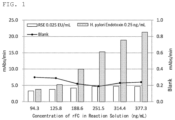
- the relative potency of the endotoxin of Helicobacter pylori CA2 was 200 EU/ ⁇ g or higher when the rFC concentration in the measurement sample was 162 ng/mL or more. Namely, it was found that the sensitivity was enhanced by increasing the rFC concentration in a measurement sample (Table 2 and FIG. 1 ). Furthermore, no increase in the absorbance change ratio was shown from the blank even when rFC concentration in the measurement sample was increased. Table 2 rFC produced with CHO DG44 cells (three factor system) rFC Absorbance change ratio (mAbs/min) Relative potency (EU/ ⁇ g) ng/mL Blank RSE H.
- the relative potency of endotoxin of Helicobacter pylori CA2 was obtained from a two factor system containing rFC and rFB that were produced with CHO DG44 cells (two factor system not containing rPCE).
- rFC, rFB, and a compound for detection were added to Tris buffer solution to prepare an endotoxin measuring reagent.
- the rFC concentration in each endotoxin measuring reagent was adjusted by varying an addition amount of the enzyme solution of rFC.
- the measurement reagent was mixed, in a micro plate, with water for injection (blank) or a diluted solution of endotoxin to prepare a measurement sample.
- the preparation was made such that the concentrations of RSE and endotoxin of Helicobacter pylori CA2 in a measurement sample were 0.025 EU/mL and 0.25 ng/mL, respectively. Furthermore, rFB was prepared to have the same concentration in each the measurement sample.
- the relative fluorescence intensity of a measurement sample (RFU 0 ) was measured (excitation wavelength of 380 nm, and fluorescence wavelength of 445 nm). After that, the measurement sample was incubated at 37°C for 90 minutes, and the relative fluorescence intensity (RFU 90 ) was measured again.
- RFU 0 background
- ⁇ RFU of each blank was subtracted to obtain corrected ⁇ RFU RSE (Blanked ⁇ RFU RSE ) and corrected ⁇ RFU blank (Blanked ⁇ RFU blank ). From two points between corrected ⁇ RFU blank (that is, 0) and corrected ⁇ RFU RSE of the blank, a calibration curve was established. Next, from ⁇ RFU of the endotoxin of Helicobacter pylori CA2, ⁇ RFU of the blank was subtracted to obtain corrected ⁇ RFU Hpy , and the endotoxin activity (EU/mL) was obtained from the calibration curve. The relative potency (EU/ ⁇ g) of endotoxin of Helicobacter pylori CA2 was obtained on the basis of Example 2C.(1) for the case of using each endotoxin measuring reagent.
- the relative potency of endotoxin of Helicobacter pylori CA2 was obtained from a one factor system containing rFC that is produced with CHO DG44 cells (one factor system not containing rFB or rPCE).
- rFC and a compound for detection were added to Tris buffer solution to prepare an endotoxin measuring reagent.
- the rFC concentration in each endotoxin measuring reagent was adjusted by varying an addition amount of the enzyme solution of rFC.
- the measurement reagent was mixed, in a micro plate, with water for injection (blank) or a diluted solution of endotoxin to prepare a measurement sample.
- the preparation was made such that the concentrations of RSE and endotoxin of Helicobacter pylori CA2 in a measurement sample were 5 EU/mL and 25 ng/mL, respectively.
- the relative potency (EU/ ⁇ g) of endotoxin of Helicobacter pylori CA2 was obtained on the basis of Example 2C.(2) for the case of using each endotoxin measuring reagent.
- the relative potency of the endotoxin of Helicobacter pylori CA2 was 200 EU/ ⁇ g or higher when rFC concentration in the measurement sample was 13 ng/mL or more. Namely, it was found that the sensitivity was enhanced by increasing the rFC concentration in a measurement sample (Table 4). Furthermore, ⁇ RFU of the blank was hardly increased even when rFC concentration in the measurement sample was increased. Table 4 rFC produced with CHO DG44 cells (one factor system) rFC Blanked delta RFU Relative potency (EU/ ⁇ g) ng/mL RSE H. pylori 5 EU/mL 25 ng/mL 6.3 453 122 54 9.4 656 399 122 12.6 832 754 181 15.7 1223 1606 263
- the relative potency of endotoxin of Helicobacter pylori CA2 was obtained from a three factor system containing rFC, rFB, and rPCE that were produced with Expi CHO Expression System (transient expression system).
- the relative potency of endotoxin of Helicobacter pylori CA2 was obtained on the basis of Example 2C.(1). As a result, the relative potency was 200 EU/ ⁇ g or higher when rFC concentration in the measurement sample was 743 ng/mL or more. Namely, it was found that the sensitivity was enhanced by increasing the rFC concentration in a measurement sample (Table 5). Furthermore, no increase in the absorbance change ratio was shown from the blank even when rFC concentration in the measurement sample was increased. Table 5 rFC produced with Expi CHO Expression System (three factor system) rFC Absorbance change ratio (mAbs/min) Relative potency (EU/ ⁇ g) ng/mL Blank RSE H. pylori 0.025 EU/mL 0.25 ng/mL 669.1 0.27 4.85 8.45 178 836.4 0.25 4.97 11.03 228 1003.7 0.24 4.84 12.23 261 1170.9 0.27 4.95 13.04 273
- the relative potency of endotoxin of Helicobacter pylori CA2 was obtained from a one factor system containing rFC that is produced with Expi CHO Expression System (transient expression system) (one factor system not containing rFB or rPCE).
- the relative potency of endotoxin of Helicobacter pylori CA2 was obtained on the basis of Example 2C.(3). As a result, the relative potency was 200 EU/ ⁇ g or higher when rFC concentration in the measurement sample was 77 ng/mL or more. Namely, it was found that the sensitivity was enhanced by increasing the rFC concentration in a measurement sample (Table 6). Furthermore, ⁇ RFU of the blank was hardly increased even when rFC concentration in the measurement sample was increased. Table 6 rFC produced with Expi CHO Expression system (one factor system) rFC Blanked delta RFU Relative potency (EU/ ⁇ g) ng/mL RSE H. pylori 5 EU/mL 25 ng/mL 16.7 653 39 12 20.9 1053 104 20 41.8 2374 731 62 83.6 4355 4925 226
- the relative potency of endotoxin of Helicobacter pylori CA2 was obtained from a three factor system containing rFC, rFB, and rPCE that were produced with Sf9 cells.
- the relative potency of endotoxin of Helicobacter pylori CA2 was obtained on the basis of Example 2C.(1). As a result, the relative potency was 200 EU/ ⁇ g or higher when rFC concentration in the measurement sample was 394 ng/mL or more. Namely, it was found that the sensitivity was enhanced by increasing the rFC concentration in a measurement sample (Table 7). Furthermore, no increase in the absorbance change ratio was shown from the blank even when rFC concentration in the measurement sample was increased. Table 7 rFC produced with Sf9 (three factor system) rFC Absorbance change ratio (mAbs/min) Relative potency (EU/ ⁇ g) ng/mL Blank RSE H.
- the relative potency of endotoxin of Helicobacter pylori CA2 was obtained from a one factor system containing rFC that is produced with Sf9 cells (one factor system neither containing rFB nor rPCE).
- the relative potency of endotoxin of Helicobacter pylori CA2 was obtained on the basis of Example 2C.(3).
- the preparation was made such that the concentrations of RSE and endotoxin of Helicobacter pylori CA2 in a measurement sample were 0.25 EU/mL and 0.25 ng/mL, respectively.
- the relative potency was 200 EU/ ⁇ g or higher when rFC concentration in the measurement sample was 93 ng/mL or more. Namely, it was found that the sensitivity was enhanced by increasing the rFC concentration in a measurement sample (Table 8). Furthermore, ⁇ RFU of the blank was hardly increased even when rFC concentration in the measurement sample was increased.
- rFC of Limulus Polyphemus, L.p. was expressed using Chinese hamster ovarian cell line (CHO DG44 cells) as a host to obtain an enzyme solution of L.p. rFC. Furthermore, SEQ ID NO: 11 was used as DNA encoding FC of L.p.
- the L.p. rFC concentration was measured on the basis of Example 2B.
- the L.p. rFC concentration in a sample was calculated by using a calibration curve which has been established in advance using purified L.p. rFC.
- the relative potency of endotoxin of Helicobacter pylori CA2 was obtained from a one factor system containing L.p. rFC that was produced with CHO DG44 cells (one factor system not containing rFB or rPCE). Furthermore, the preparation was made such that the concentrations of RSE and endotoxin of Helicobacter pylori CA2 in a measurement sample were 5 EU/mL and 25 ng/mL, respectively.
- the relative potency (EU/ ⁇ g) of endotoxin of Helicobacter pylori CA2 was obtained on the basis of Example 2C.(3).
- the L.p. rFC concentration in a reaction solution was gradually increased from 45.8 ng/mL to 457.9 ng/mL
- the relative potency (EU/ ⁇ g) of endotoxin of Helicobacter pylori CA2 was increased from 33 EU/ ⁇ g to 917 EU/ ⁇ g.
- the relative potency of the endotoxin of Helicobacter pylori CA2 was 200 EU/ ⁇ g or higher when the L.p.
- rFC concentration in the measurement sample was 133 ng/mL or more. Namely, also in measurement of one factor system using L.p. rFC, it was found that the sensitivity is enhanced by increasing the L.p. rFC concentration in a measurement sample.
- rFC Enzyme Solution contained in the commercially available recombinant reagent B (PyroGene, LONZA JAPAN) was used.
- the rFC concentration was measured on the basis of Example 2B.
- the rFC concentration in a sample was calculated by using a calibration curve which had been established in advance using purified Carcinoscorpius rotundicauda, C.r.) rFC.
- the relative potency of endotoxin of Helicobacter pylori CA2 was obtained from a one factor system using rFC Enzyme Solution (one factor system not containing rFB or rPCE). Furthermore, the preparation was made such that the concentrations of RSE and endotoxin of Helicobacter pylori CA2 in a measurement sample were 0.025 EU/mL and 5 ng/mL, respectively.
- the relative potency (EU/ ⁇ g) of endotoxin of Helicobacter pylori CA2 was obtained on the basis of Example 2C.(3).
- the relative potency (EU/ ⁇ g) of endotoxin of Helicobacter pylori CA2 was increased from 9.09 EU/ ⁇ g to 440 EU/ ⁇ g.
- the relative potency of the endotoxin of Helicobacter pylori CA2 was 200 EU/ ⁇ g or higher when the rFC concentration in the measurement sample was 858 ng/mL or more. Namely, it was found that the sensitivity was enhanced by increasing the rFC concentration in a measurement sample even in the case of using a commercially available recombinant reagent.
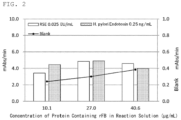
- a measurement sample having a different rFB content was prepared, and the relative potency of endotoxin of Helicobacter pylori CA2 was obtained on the basis of Example 2C.(1). Furthermore, the preparation was made such that rFC and rPCE had the same concentrations in each measurement sample.
- a measurement sample having a different rPCE content was prepared, and relative potency of endotoxin of Helicobacter pylori CA2 was obtained on the basis of Example 2C.(1). Furthermore, the preparation was made such that rFC and rFB had the same concentrations in each measurement sample.
- the present invention is to provide an endotoxin measuring method having reduced influence caused by a difference in origin of endotoxin in which an endotoxin measuring reagent employing a recombinant protein is used.
- the present invention relates to the following items:
Landscapes
- Health & Medical Sciences (AREA)
- Life Sciences & Earth Sciences (AREA)
- Chemical & Material Sciences (AREA)
- Engineering & Computer Science (AREA)
- Organic Chemistry (AREA)
- Molecular Biology (AREA)
- Biomedical Technology (AREA)
- Immunology (AREA)
- Biochemistry (AREA)
- General Health & Medical Sciences (AREA)
- Hematology (AREA)
- Zoology (AREA)
- Genetics & Genomics (AREA)
- Wood Science & Technology (AREA)
- Urology & Nephrology (AREA)
- Medicinal Chemistry (AREA)
- Bioinformatics & Cheminformatics (AREA)
- Biotechnology (AREA)
- Microbiology (AREA)
- General Engineering & Computer Science (AREA)
- Analytical Chemistry (AREA)
- Physics & Mathematics (AREA)
- Cell Biology (AREA)
- Pathology (AREA)
- General Physics & Mathematics (AREA)
- Food Science & Technology (AREA)
- Proteomics, Peptides & Aminoacids (AREA)
- Tropical Medicine & Parasitology (AREA)
- Biophysics (AREA)
- Virology (AREA)
- Gastroenterology & Hepatology (AREA)
- Neurosurgery (AREA)
- Toxicology (AREA)
- Measuring Or Testing Involving Enzymes Or Micro-Organisms (AREA)
- Peptides Or Proteins (AREA)
Applications Claiming Priority (3)
| Application Number | Priority Date | Filing Date | Title |
|---|---|---|---|
| JP2018188587 | 2018-10-03 | ||
| EP19869215.4A EP3862437A4 (de) | 2018-10-03 | 2019-09-26 | Verfahren zur erhöhung der empfindlichkeit eines endotoxinmessmittels |
| PCT/JP2019/037828 WO2020071229A1 (ja) | 2018-10-03 | 2019-09-26 | エンドトキシン測定剤の感度の増強方法 |
Related Parent Applications (1)
| Application Number | Title | Priority Date | Filing Date |
|---|---|---|---|
| EP19869215.4A Division EP3862437A4 (de) | 2018-10-03 | 2019-09-26 | Verfahren zur erhöhung der empfindlichkeit eines endotoxinmessmittels |
Publications (2)
| Publication Number | Publication Date |
|---|---|
| EP4488372A2 true EP4488372A2 (de) | 2025-01-08 |
| EP4488372A3 EP4488372A3 (de) | 2025-03-19 |
Family
ID=70055043
Family Applications (2)
| Application Number | Title | Priority Date | Filing Date |
|---|---|---|---|
| EP19869215.4A Ceased EP3862437A4 (de) | 2018-10-03 | 2019-09-26 | Verfahren zur erhöhung der empfindlichkeit eines endotoxinmessmittels |
| EP24211666.3A Withdrawn EP4488372A3 (de) | 2018-10-03 | 2019-09-26 | Verfahren zur erhöhung der empfindlichkeit eines endotoxinmessmittels |
Family Applications Before (1)
| Application Number | Title | Priority Date | Filing Date |
|---|---|---|---|
| EP19869215.4A Ceased EP3862437A4 (de) | 2018-10-03 | 2019-09-26 | Verfahren zur erhöhung der empfindlichkeit eines endotoxinmessmittels |
Country Status (5)
| Country | Link |
|---|---|
| US (1) | US20210215695A1 (de) |
| EP (2) | EP3862437A4 (de) |
| JP (1) | JP6785521B2 (de) |
| CN (1) | CN112639118A (de) |
| WO (1) | WO2020071229A1 (de) |
Families Citing this family (6)
| Publication number | Priority date | Publication date | Assignee | Title |
|---|---|---|---|---|
| CN117178055A (zh) * | 2021-02-12 | 2023-12-05 | 查尔斯河实验室公司 | 混合变形细胞裂解物及其用途 |
| JP7323816B2 (ja) * | 2021-06-21 | 2023-08-09 | 東亜ディーケーケー株式会社 | エンドトキシン測定方法 |
| CN114292896B (zh) * | 2021-12-24 | 2023-08-22 | 四川大学华西医院 | 一种幽门螺杆菌药敏检测方法 |
| US12158471B2 (en) | 2022-02-11 | 2024-12-03 | Charles River Laboratories, Inc. | Recombinant amebocyte lysate and uses thereof |
| CN116559456B (zh) * | 2022-11-07 | 2026-02-10 | 成都奇璞生物科技有限公司 | 胶原蛋白液的内毒素检测方法 |
| WO2024254215A1 (en) * | 2023-06-05 | 2024-12-12 | Charles River Laboratories, Inc. | Recombinant amebocyte clotting factors and uses thereof |
Citations (4)
| Publication number | Priority date | Publication date | Assignee | Title |
|---|---|---|---|---|
| WO2012118226A1 (en) | 2011-02-28 | 2012-09-07 | Seikagaku Corporation | An agent for measuring endotoxin |
| WO2014092079A1 (ja) | 2012-12-10 | 2014-06-19 | 生化学工業株式会社 | 新規組換えファクターc、その製造法、およびエンドトキシンの測定法 |
| WO2018074498A1 (ja) | 2016-10-18 | 2018-04-26 | 生化学工業株式会社 | リムルス属由来の組換え蛋白質及びこれをコードするdna |
| JP2018188587A (ja) | 2017-05-10 | 2018-11-29 | 横浜ゴム株式会社 | タイヤ用ゴム組成物 |
Family Cites Families (8)
| Publication number | Priority date | Publication date | Assignee | Title |
|---|---|---|---|---|
| US6645724B1 (en) * | 1997-09-19 | 2003-11-11 | National University Of Singapore | Assays for endotoxin |
| WO2001027289A2 (en) * | 1999-10-15 | 2001-04-19 | National University Of Singapore | Recombinant proteins and peptides for endotoxin biosensors, endotoxin removal, and anti-microbial and anti-endotoxin therapeutics |
| JP4054681B2 (ja) * | 2001-02-21 | 2008-02-27 | デンカ生研株式会社 | ヘリコバクター・ピロリを認識する抗体、およびヘリコバクター・ピロリを検出する方法 |
| WO2011011879A1 (en) * | 2009-07-31 | 2011-02-03 | National Research Council Of Canada | H. pylori lipopolysaccharide outer core epitope |
| US9205171B2 (en) | 2012-07-24 | 2015-12-08 | Zimmer, Inc. | Hydrogen out gas of porous metal scaffold |
| EP2740791A1 (de) * | 2012-12-05 | 2014-06-11 | MicroCoat Biotechnologie GmbH | Verfahren für die rekombinante Herstellung von Pfeilschwanzkrebs-Faktor-C-Protein in Protozoen |
| CN105866080B (zh) * | 2016-04-05 | 2019-11-12 | 中国科学院苏州生物医学工程技术研究所 | 重组鲎三因子试剂及其检测内毒素的方法 |
| US11499177B2 (en) * | 2017-03-01 | 2022-11-15 | Seikagaku Corporation | Horseshoe crab factor B variant |
-
2019
- 2019-09-26 US US17/272,805 patent/US20210215695A1/en not_active Abandoned
- 2019-09-26 CN CN201980056205.2A patent/CN112639118A/zh active Pending
- 2019-09-26 WO PCT/JP2019/037828 patent/WO2020071229A1/ja not_active Ceased
- 2019-09-26 JP JP2020508631A patent/JP6785521B2/ja active Active
- 2019-09-26 EP EP19869215.4A patent/EP3862437A4/de not_active Ceased
- 2019-09-26 EP EP24211666.3A patent/EP4488372A3/de not_active Withdrawn
Patent Citations (4)
| Publication number | Priority date | Publication date | Assignee | Title |
|---|---|---|---|---|
| WO2012118226A1 (en) | 2011-02-28 | 2012-09-07 | Seikagaku Corporation | An agent for measuring endotoxin |
| WO2014092079A1 (ja) | 2012-12-10 | 2014-06-19 | 生化学工業株式会社 | 新規組換えファクターc、その製造法、およびエンドトキシンの測定法 |
| WO2018074498A1 (ja) | 2016-10-18 | 2018-04-26 | 生化学工業株式会社 | リムルス属由来の組換え蛋白質及びこれをコードするdna |
| JP2018188587A (ja) | 2017-05-10 | 2018-11-29 | 横浜ゴム株式会社 | タイヤ用ゴム組成物 |
Non-Patent Citations (9)
| Title |
|---|
| BOLDEN, J ET AL.: "Application of Recombinant Factor C Reagent for the Detection of Bacteria Endotoxins in Pharmaceutical Products", PDA J PHARM SCI TECHNOL., vol. 71, no. 5, 2017, pages 405 - 412 |
| GRALLERT, H ET AL.: "EndoLISA: a novel and reliable method for endotoxin detection", NATURE METHODS, October 2011 (2011-10-01) |
| J. BIOCHEM., vol. 80, 1976, pages 1011 - 1021 |
| KOBAYASHI YSHIGA TSHIBATA TSAKO MMAENAKA KKOSHIBA TMIZUMURA HODA TKAWABATA S, J BIOL CHEM., vol. 289, no. 37, 12 September 2014 (2014-09-12), pages 25987 - 95 |
| LOVEROCK, B ET AL.: "A Recombinant Factor C Procedure for the Detection of Gram-Negative Bacteria Endotoxina", PHARMACOPEIAL FORUM, vol. 36, 2010, pages 321 - 29 |
| MIYATA ET AL., SEPARATE ISSUE OF PROTEINS, NUCLEIC ACIDS, AND ENZYMES, vol. 29, 1986, pages 30 - 43 |
| NAKAMURA, T.HORIUCHI, T.MORITA, T.IWANAGA, S, J. BIOCHEM, vol. 99, 1986, pages 847 - 57 |
| RECOMBINANT PROTEINS DERIVED FROM LIMULUS BACTERIUM, AND DNA MOLECULES ENCODING SAME |
| YUTAKA KIKUCHI ET AL., PHARMACEUTICAL AND MEDICAL DEVICE REGULATORY SCIENCE, vol. 48, no. 4, 2017, pages 252 - 260 |
Also Published As
| Publication number | Publication date |
|---|---|
| JPWO2020071229A1 (ja) | 2021-02-15 |
| US20210215695A1 (en) | 2021-07-15 |
| CN112639118A (zh) | 2021-04-09 |
| EP3862437A1 (de) | 2021-08-11 |
| EP3862437A4 (de) | 2022-07-06 |
| JP6785521B2 (ja) | 2020-11-18 |
| EP4488372A3 (de) | 2025-03-19 |
| WO2020071229A1 (ja) | 2020-04-09 |
Similar Documents
| Publication | Publication Date | Title |
|---|---|---|
| EP4488372A2 (de) | Verfahren zur erhöhung der empfindlichkeit eines endotoxinmessmittels | |
| Keck | The use of t-butyl hydroperoxide as a probe for methionine oxidation in proteins | |
| Tanaka et al. | Determination of the site of disulfide linkage between heavy and light chains of silk fibroin produced by Bombyx mori | |
| Allen | Sequencing of proteins and peptides | |
| Medzihradszky | In‐solution digestion of proteins for mass spectrometry | |
| EP2930241A1 (de) | Neuartiger rekombinanter faktor c und verfahren zur herstellung dafür sowie verfahren zur messung von endotoxin | |
| Datta | MAPs and POEP of the roads from prokaryotic to eukaryotic kingdoms | |
| Muhar et al. | C-terminal amides mark proteins for degradation via SCF–FBXO31 | |
| D'Ambrosio et al. | Probing the dimeric structure of porcine aminoacylase 1 by mass spectrometric and modeling procedures | |
| Dalzoppo et al. | Folding of thermolysin fragments: Identification of the minimum size of a carboxyl-terminal fragment that can fold into a stable native-like structure | |
| CN112611874B (zh) | 一种髓鞘少突胶质细胞糖蛋白抗体试剂盒及其检测方法 | |
| Anicetti et al. | Analytical considerations in the development of protein purification processes | |
| KR20070001874A (ko) | 시료의 전처리방법 및 이를 이용한 면역학적 측정방법 | |
| US20080145885A1 (en) | Proteome Standards for Mass Spectrometry | |
| CN109439643B (zh) | 一种新型赖氨酸特异性内切酶及其制备方法 | |
| Hisano et al. | The basic amino acid transporter (rBAT)-like immunoreactivity in paraventricular and supraoptic magnocellular neurons of the rat hypothalamus | |
| CN114437199B (zh) | 高稳定性重组降钙素原及其表达载体和应用 | |
| WO2024036099A1 (en) | Engineered proteases with enhanced autolysis resistance | |
| Ershov et al. | Biosensor analysis of the interaction of potential dimerization inhibitors with HIV-1 protease | |
| Niall et al. | The N-terminal amino acid sequence of two avian leukosis group specific antigens | |
| Long et al. | Nonenzymatic Posttranslational Modifications and Peptide Cleavages Observed in Peptide Epimers | |
| Yamasaki et al. | A radioisotope-free oligosaccharyltransferase assay method | |
| EP4382597A1 (de) | Reagenz zur messung von ?-glucan, verfahren zu dessen herstellung und verwendung davon | |
| Zuniga-Banuelos et al. | Immunoglobulin A carries sulfated N-glycans primarily at the tailpiece site–An oxonium-ion-guided approach for site-specific N-glycan identification | |
| US7419834B2 (en) | System for detection of nitrosylated proteins |
Legal Events
| Date | Code | Title | Description |
|---|---|---|---|
| PUAI | Public reference made under article 153(3) epc to a published international application that has entered the european phase |
Free format text: ORIGINAL CODE: 0009012 |
|
| STAA | Information on the status of an ep patent application or granted ep patent |
Free format text: STATUS: THE APPLICATION HAS BEEN PUBLISHED |
|
| AC | Divisional application: reference to earlier application |
Ref document number: 3862437 Country of ref document: EP Kind code of ref document: P |
|
| AK | Designated contracting states |
Kind code of ref document: A2 Designated state(s): AL AT BE BG CH CY CZ DE DK EE ES FI FR GB GR HR HU IE IS IT LI LT LU LV MC MK MT NL NO PL PT RO RS SE SI SK SM TR |
|
| REG | Reference to a national code |
Ref country code: DE Ref legal event code: R079 Free format text: PREVIOUS MAIN CLASS: C12N0015570000 Ipc: C12Q0001370000 |
|
| PUAL | Search report despatched |
Free format text: ORIGINAL CODE: 0009013 |
|
| AK | Designated contracting states |
Kind code of ref document: A3 Designated state(s): AL AT BE BG CH CY CZ DE DK EE ES FI FR GB GR HR HU IE IS IT LI LT LU LV MC MK MT NL NO PL PT RO RS SE SI SK SM TR |
|
| RIC1 | Information provided on ipc code assigned before grant |
Ipc: C12N 15/57 20060101ALI20250207BHEP Ipc: G01N 33/579 20060101ALI20250207BHEP Ipc: G01N 33/569 20060101ALI20250207BHEP Ipc: C12N 9/64 20060101ALI20250207BHEP Ipc: C12Q 1/37 20060101AFI20250207BHEP |
|
| STAA | Information on the status of an ep patent application or granted ep patent |
Free format text: STATUS: THE APPLICATION IS DEEMED TO BE WITHDRAWN |
|
| 18D | Application deemed to be withdrawn |
Effective date: 20250920 |