EP4488382A2 - Hydrogelperlen zur nukleotidsequenzierung - Google Patents
Hydrogelperlen zur nukleotidsequenzierung Download PDFInfo
- Publication number
- EP4488382A2 EP4488382A2 EP24208929.0A EP24208929A EP4488382A2 EP 4488382 A2 EP4488382 A2 EP 4488382A2 EP 24208929 A EP24208929 A EP 24208929A EP 4488382 A2 EP4488382 A2 EP 4488382A2
- Authority
- EP
- European Patent Office
- Prior art keywords
- hydrogel
- nucleic acid
- cell
- beads
- bead
- Prior art date
- Legal status (The legal status is an assumption and is not a legal conclusion. Google has not performed a legal analysis and makes no representation as to the accuracy of the status listed.)
- Withdrawn
Links
Images










Classifications
-
- C—CHEMISTRY; METALLURGY
- C12—BIOCHEMISTRY; BEER; SPIRITS; WINE; VINEGAR; MICROBIOLOGY; ENZYMOLOGY; MUTATION OR GENETIC ENGINEERING
- C12Q—MEASURING OR TESTING PROCESSES INVOLVING ENZYMES, NUCLEIC ACIDS OR MICROORGANISMS; COMPOSITIONS OR TEST PAPERS THEREFOR; PROCESSES OF PREPARING SUCH COMPOSITIONS; CONDITION-RESPONSIVE CONTROL IN MICROBIOLOGICAL OR ENZYMOLOGICAL PROCESSES
- C12Q1/00—Measuring or testing processes involving enzymes, nucleic acids or microorganisms; Compositions therefor; Processes of preparing such compositions
- C12Q1/68—Measuring or testing processes involving enzymes, nucleic acids or microorganisms; Compositions therefor; Processes of preparing such compositions involving nucleic acids
- C12Q1/6869—Methods for sequencing
-
- C—CHEMISTRY; METALLURGY
- C12—BIOCHEMISTRY; BEER; SPIRITS; WINE; VINEGAR; MICROBIOLOGY; ENZYMOLOGY; MUTATION OR GENETIC ENGINEERING
- C12N—MICROORGANISMS OR ENZYMES; COMPOSITIONS THEREOF; PROPAGATING, PRESERVING, OR MAINTAINING MICROORGANISMS; MUTATION OR GENETIC ENGINEERING; CULTURE MEDIA
- C12N15/00—Mutation or genetic engineering; DNA or RNA concerning genetic engineering, vectors, e.g. plasmids, or their isolation, preparation or purification; Use of hosts therefor
- C12N15/09—Recombinant DNA-technology
- C12N15/10—Processes for the isolation, preparation or purification of DNA or RNA
- C12N15/1003—Extracting or separating nucleic acids from biological samples, e.g. pure separation or isolation methods; Conditions, buffers or apparatuses therefor
- C12N15/1006—Extracting or separating nucleic acids from biological samples, e.g. pure separation or isolation methods; Conditions, buffers or apparatuses therefor by means of a solid support carrier, e.g. particles, polymers
-
- C—CHEMISTRY; METALLURGY
- C12—BIOCHEMISTRY; BEER; SPIRITS; WINE; VINEGAR; MICROBIOLOGY; ENZYMOLOGY; MUTATION OR GENETIC ENGINEERING
- C12N—MICROORGANISMS OR ENZYMES; COMPOSITIONS THEREOF; PROPAGATING, PRESERVING, OR MAINTAINING MICROORGANISMS; MUTATION OR GENETIC ENGINEERING; CULTURE MEDIA
- C12N15/00—Mutation or genetic engineering; DNA or RNA concerning genetic engineering, vectors, e.g. plasmids, or their isolation, preparation or purification; Use of hosts therefor
- C12N15/09—Recombinant DNA-technology
- C12N15/10—Processes for the isolation, preparation or purification of DNA or RNA
- C12N15/1034—Isolating an individual clone by screening libraries
- C12N15/1065—Preparation or screening of tagged libraries, e.g. tagged microorganisms by STM-mutagenesis, tagged polynucleotides, gene tags
-
- C—CHEMISTRY; METALLURGY
- C12—BIOCHEMISTRY; BEER; SPIRITS; WINE; VINEGAR; MICROBIOLOGY; ENZYMOLOGY; MUTATION OR GENETIC ENGINEERING
- C12N—MICROORGANISMS OR ENZYMES; COMPOSITIONS THEREOF; PROPAGATING, PRESERVING, OR MAINTAINING MICROORGANISMS; MUTATION OR GENETIC ENGINEERING; CULTURE MEDIA
- C12N5/00—Undifferentiated human, animal or plant cells, e.g. cell lines; Tissues; Cultivation or maintenance thereof; Culture media therefor
- C12N5/0012—Cell encapsulation
-
- C—CHEMISTRY; METALLURGY
- C12—BIOCHEMISTRY; BEER; SPIRITS; WINE; VINEGAR; MICROBIOLOGY; ENZYMOLOGY; MUTATION OR GENETIC ENGINEERING
- C12Q—MEASURING OR TESTING PROCESSES INVOLVING ENZYMES, NUCLEIC ACIDS OR MICROORGANISMS; COMPOSITIONS OR TEST PAPERS THEREFOR; PROCESSES OF PREPARING SUCH COMPOSITIONS; CONDITION-RESPONSIVE CONTROL IN MICROBIOLOGICAL OR ENZYMOLOGICAL PROCESSES
- C12Q1/00—Measuring or testing processes involving enzymes, nucleic acids or microorganisms; Compositions therefor; Processes of preparing such compositions
- C12Q1/68—Measuring or testing processes involving enzymes, nucleic acids or microorganisms; Compositions therefor; Processes of preparing such compositions involving nucleic acids
- C12Q1/6806—Preparing nucleic acids for analysis, e.g. for polymerase chain reaction [PCR] assay
-
- C—CHEMISTRY; METALLURGY
- C12—BIOCHEMISTRY; BEER; SPIRITS; WINE; VINEGAR; MICROBIOLOGY; ENZYMOLOGY; MUTATION OR GENETIC ENGINEERING
- C12Q—MEASURING OR TESTING PROCESSES INVOLVING ENZYMES, NUCLEIC ACIDS OR MICROORGANISMS; COMPOSITIONS OR TEST PAPERS THEREFOR; PROCESSES OF PREPARING SUCH COMPOSITIONS; CONDITION-RESPONSIVE CONTROL IN MICROBIOLOGICAL OR ENZYMOLOGICAL PROCESSES
- C12Q2527/00—Reactions demanding special reaction conditions
- C12Q2527/101—Temperature
-
- C—CHEMISTRY; METALLURGY
- C12—BIOCHEMISTRY; BEER; SPIRITS; WINE; VINEGAR; MICROBIOLOGY; ENZYMOLOGY; MUTATION OR GENETIC ENGINEERING
- C12Q—MEASURING OR TESTING PROCESSES INVOLVING ENZYMES, NUCLEIC ACIDS OR MICROORGANISMS; COMPOSITIONS OR TEST PAPERS THEREFOR; PROCESSES OF PREPARING SUCH COMPOSITIONS; CONDITION-RESPONSIVE CONTROL IN MICROBIOLOGICAL OR ENZYMOLOGICAL PROCESSES
- C12Q2535/00—Reactions characterised by the assay type for determining the identity of a nucleotide base or a sequence of oligonucleotides
- C12Q2535/122—Massive parallel sequencing
-
- C—CHEMISTRY; METALLURGY
- C12—BIOCHEMISTRY; BEER; SPIRITS; WINE; VINEGAR; MICROBIOLOGY; ENZYMOLOGY; MUTATION OR GENETIC ENGINEERING
- C12Q—MEASURING OR TESTING PROCESSES INVOLVING ENZYMES, NUCLEIC ACIDS OR MICROORGANISMS; COMPOSITIONS OR TEST PAPERS THEREFOR; PROCESSES OF PREPARING SUCH COMPOSITIONS; CONDITION-RESPONSIVE CONTROL IN MICROBIOLOGICAL OR ENZYMOLOGICAL PROCESSES
- C12Q2563/00—Nucleic acid detection characterized by the use of physical, structural and functional properties
- C12Q2563/149—Particles, e.g. beads
-
- C—CHEMISTRY; METALLURGY
- C12—BIOCHEMISTRY; BEER; SPIRITS; WINE; VINEGAR; MICROBIOLOGY; ENZYMOLOGY; MUTATION OR GENETIC ENGINEERING
- C12Q—MEASURING OR TESTING PROCESSES INVOLVING ENZYMES, NUCLEIC ACIDS OR MICROORGANISMS; COMPOSITIONS OR TEST PAPERS THEREFOR; PROCESSES OF PREPARING SUCH COMPOSITIONS; CONDITION-RESPONSIVE CONTROL IN MICROBIOLOGICAL OR ENZYMOLOGICAL PROCESSES
- C12Q2563/00—Nucleic acid detection characterized by the use of physical, structural and functional properties
- C12Q2563/159—Microreactors, e.g. emulsion PCR or sequencing, droplet PCR, microcapsules, i.e. non-liquid containers with a range of different permeability's for different reaction components
-
- C—CHEMISTRY; METALLURGY
- C12—BIOCHEMISTRY; BEER; SPIRITS; WINE; VINEGAR; MICROBIOLOGY; ENZYMOLOGY; MUTATION OR GENETIC ENGINEERING
- C12Q—MEASURING OR TESTING PROCESSES INVOLVING ENZYMES, NUCLEIC ACIDS OR MICROORGANISMS; COMPOSITIONS OR TEST PAPERS THEREFOR; PROCESSES OF PREPARING SUCH COMPOSITIONS; CONDITION-RESPONSIVE CONTROL IN MICROBIOLOGICAL OR ENZYMOLOGICAL PROCESSES
- C12Q2563/00—Nucleic acid detection characterized by the use of physical, structural and functional properties
- C12Q2563/179—Nucleic acid detection characterized by the use of physical, structural and functional properties the label being a nucleic acid
Definitions
- Systems, methods, and compositions provided herein relate to hydrogel beads, and methods of encapsulating material within hydrogel beads, for use in spatial index sequencing and nucleic acid library preparation.
- Next generation sequencers are powerful tools that generate large amounts of genomic data per sequencing run. Interpreting and analyzing this large amount of data can be challenging.
- Single cell DNA sequencing is emerging as one tool for studying genomic heterogeneity. Specifically, the microbiome, which carries multiple repeated genomic regions, can be sequenced by obtaining DNA sequences from only a single cell. This will largely simplify the downstream sequencing data alignment process.
- the bead includes a hydrogel polymer and genetic material disposed within the hydrogel polymer.
- the bead includes pores that allow diffusion of a reagent through the bead while retaining the genetic material.
- the bead has a diameter of about 2 ⁇ m to about 120 ⁇ m, such as, for example, 2, 3, 4, 5, 6, 7, 8, 9, 10, 15, 20, 25, 30, 35, 40, 45, 50, 60, 70, 80, 90, 100, 110, or 120 ⁇ m in diameter, or a diameter within a range defined by any two of the aforementioned values.
- the hydrogel polymer includes polyethylene glycol (PEG)-thiol, PEG-acrylate, acrylamide, N,N'-bis(acryloyl)cystamine (BACy), PEG, polypropylene oxide (PPO), polyacrylic acid, poly(hydroxyethyl methacrylate) (PHEMA), poly(methyl methacrylate) (PMMA), poly(N-isopropylacrylamide) (PNIPAAm), poly(lactic acid) (PLA), poly(lactic-co-glycolic acid) (PLGA), polycaprolactone (PCL), poly(vinylsulfonic acid) (PVSA), poly(L-aspartic acid), poly(L-glutamic acid), polylysine, agar, agarose, alginate, heparin, alginate sulfate, dextran sulfate, hyaluronan, pectin, carrageenan, gelatin, chitosan, cellulose
- the hydrogel polymer includes polyethylene glycol (PEG)-thiol/PEG-acrylate. In some embodiments, the hydrogel polymer includes acrylamide/N,N'-bis(acryloyl)cystamine (BACy). In some embodiments, the hydrogel polymer includes PEG/polypropylene oxide (PPO).
- the genetic material is a cell, a nucleic acid, or a microbiome. In some embodiments, the cell is a mammalian cell or bacterial cell. In some embodiments, the cell is an Escherichia coli cell, a Bacillus subtilis cell, an Aeromonas hydrophila cell, or a fibroblast cell.
- the nucleic acid is DNA or RNA of 300 base pairs or greater.
- the reagent includes enzymes, chemicals, and primers having a size of less than 50 base pairs.
- the reagent includes lysozyme, proteinase K, random hexamers, polymerase (for example, ⁇ 29 DNA polymerase, Taq polymerase, Bsu polymerase), transposase (for example, Tn5), primers (for example, P5 and P7 adaptor sequences), ligase, catalyzing enzyme, deoxynucleotide triphosphates, buffers, or divalent cations.
- Some embodiments provided herein relate to a method of encapsulating genetic material within a hydrogel bead.
- the method includes mixing genetic material with a hydrogel polymer in solution and mixing the solution with an immiscible fluid to form a hydrogel bead encapsulating the genetic material.
- the hydrogel bead includes pores that allow diffusion of a reagent through the hydrogel bead, while retaining the genetic material.
- the hydrogel bead has a diameter of about 2 ⁇ m to about 120 ⁇ m, such as, for example, 2, 3, 4, 5, 6, 7, 8, 9, 10, 15, 20, 25, 30, 35, 40, 45, 50, 60, 70, 80, 90, 100, 110, or 120 ⁇ m in diameter, or a diameter within a range defined by any two of the aforementioned values.
- the hydrogel polymer includes polyethylene glycol (PEG)-thiol, PEG-acrylate, acrylamide, N,N'-bis(acryloyl)cystamine (BACy), PEG, polypropylene oxide (PPO), polyacrylic acid, poly(hydroxyethyl methacrylate) (PHEMA), poly(methyl methacrylate) (PMMA), poly(N-isopropylacrylamide) (PNIPAAm), poly(lactic acid) (PLA), poly(lactic-co-glycolic acid) (PLGA), polycaprolactone (PCL), poly(vinylsulfonic acid) (PVSA), poly(L-aspartic acid), poly(L-glutamic acid), polylysine, agar, agarose, alginate, heparin, alginate sulfate, dextran sulfate, hyaluronan, pectin, carrageenan, gelatin, chitosan, cellulose
- the hydrogel polymer includes polyethylene glycol (PEG)-thiol/PEG-acrylate. In some embodiments, the hydrogel polymer includes acrylamide/N,N'-bis(acryloyl)cystamine (BACy). In some embodiments, the hydrogel polymer includes PEG/polypropylene oxide (PPO).
- the genetic material is a cell, a nucleic acid, or a microbiome. In some embodiments, the cell is a mammalian cell or bacterial cell. In some embodiments, the cell is an Escherichia coli cell, a Bacillus subtilis cell, an Aeromonas hydrophila cell, or a fibroblast cell.
- the nucleic acid is DNA or RNA of 300 base pairs or greater.
- the reagent includes enzymes, chemicals, and primers having a size of less than 50 base pairs.
- the reagent comprises lysozyme, proteinase K, random hexamers, polymerase (for example, ⁇ 29 DNA polymerase, Taq polymerase, Bsu polymerase), transposase (for example, Tn5), primers (for example, P5 and P7 adaptor sequences), ligase, catalyzing enzyme, deoxynucleotide triphosphates, buffers, or divalent cations.
- Some embodiments provided herein relate to a method of encapsulating genetic material within a hydrogel bead.
- the method includes mixing an aqueous solution including a hydrogel polymer and genetic material with an immiscible fluid, inputting the aqueous solution into a droplet generator, and generating a hydrogel bead encapsulating the genetic material.
- the hydrogel bead includes pores that allow diffusion of a reagent through the hydrogel bead while retaining the genetic material.
- the hydrogel bead has a diameter of about 2 ⁇ m to about 120 ⁇ m, such as, for example, 2, 3, 4, 5, 6, 7, 8, 9, 10, 15, 20, 25, 30, 35, 40, 45, 50, 60, 70, 80, 90, 100, 110, or 120 ⁇ m in diameter, or a diameter within a range defined by any two of the aforementioned values.
- the hydrogel polymer includes polyethylene glycol (PEG)-thiol, PEG-acrylate, acrylamide, N,N'-bis(acryloyl)cystamine (BACy), PEG, polypropylene oxide (PPO), polyacrylic acid, poly(hydroxyethyl methacrylate) (PHEMA), poly(methyl methacrylate) (PMMA), poly(N-isopropylacrylamide) (PNIPAAm), poly(lactic acid) (PLA), poly(lactic-co-glycolic acid) (PLGA), polycaprolactone (PCL), poly(vinylsulfonic acid) (PVSA), poly(L-aspartic acid), poly(L-glutamic acid), polylysine, agar, agarose, alginate, heparin, alginate sulfate, dextran sulfate, hyaluronan, pectin, carrageenan, gelatin, chitosan, cellulose
- the hydrogel polymer includes polyethylene glycol (PEG)-thiol/PEG-acrylate. In some embodiments, the hydrogel polymer includes acrylamide/N,N'-bis(acryloyl)cystamine (BACy). In some embodiments, the hydrogel polymer includes PEG/polypropylene oxide (PPO).
- the genetic material is a cell, a nucleic acid, or a microbiome. In some embodiments, the cell is a mammalian cell or bacterial cell. In some embodiments, the cell is an Escherichia coli cell, a Bacillus subtilis cell, an Aeromonas hydrophila cell, or a fibroblast cell.
- the nucleic acid is DNA or RNA of 300 base pairs or greater.
- the reagent includes enzymes, chemicals, and primers having a size of less than 50 base pairs.
- the reagent includes lysozyme, proteinase K, random hexamers, polymerase (for example, ⁇ 29 DNA polymerase, Taq polymerase, Bsu polymerase), transposase (for example, Tn5), primers (for example, P5 and P7 adaptor sequences), ligase, catalyzing enzyme, deoxynucleotide triphosphates, buffers, or divalent cations.
- Some embodiments provided herein relate to a method of preparing a nucleic acid library from genetic material encapsulated within a bead.
- the method includes obtaining a bead having genetic material disposed therein, as described herein, amplifying genetic material encapsulated within the bead, performing a tagmentation reaction on the genetic material encapsulated within the bead, and sequencing the genetic material, thereby generating a nucleic acid library encapsulated within the bead.
- the genetic material is a cell, and the method further includes lysing the cell and extracting nucleic acids.
- the cell is lysed with lysozyme and treated with proteinase K to extract nucleic acids.
- the tagmentation reaction includes contacting genetic material with a transposase mixture including adapter sequences and transposomes.
- the method further includes seeding the nucleic acid library on a solid support.
- seeding includes degrading the bead to release the nucleic acid library from the bead.
- the bead is degraded by contacting the bead with a cleavage mix or by heating the bead to about 90°C to release the nucleic acid library.
- the cleavage mix includes (DTT), tris(2-carboxyethyl)phosphine (TCEP), or tris(3-hydroxypropyl)phosphine (THP).
- the solid support is a flow cell device.
- Embodiments of the compositions, systems, and methods provided herein relate to beads encapsulating genetic materials.
- the beads may include hydrogel polymers and crosslinkers that are mixed in the presence of a genetic material, and which form hydrogel beads that encapsulate the genetic material.
- the genetic material includes nucleic acids, cells, microbiomes, or genomes.
- the hydrogel beads may include pores that allow diffusion of reagents through the hydrogel bead while retaining the genetic material within the bead, thereby allowing reactions to take place within the beads. Also provided are methods of using the beads encapsulating genetic materials to perform nucleic acid reactions.
- Some embodiments relate to methods of preparing a hydrogel bead that encapsulates an entire single cell.
- the hydrogel bead encapsulating a single cell can be used to process the cellular genome and perform whole DNA library preparation inside the bead.
- the hydrogel bead encapsulating a single cell can be used to process the cellular genomic DNA and mRNA simultaneously, and perform whole DNA library preparation inside the bead.
- the pore size of the hydrogel can be engineered to allow the diffusion of enzymes, chemicals, and smaller sized primers ( ⁇ 50bps), while retaining larger nucleic acids (>300bps) such that the intact whole genomic DNA, mRNA, and the produced DNA library may be retained inside the hydrogel beads during the whole process.
- specific primers can be chemically linked within the hydrogel bead matrix to hybridize and process specific genomic DNA or mRNA.
- the DNA library from a single cell can then be released to a specific area, for example, on flow cell surface for library seeding. Subsequently, this results in a spatial distribution of "DNA clusters" on the flow cell originating from individual cells, thus simplifying the read alignment during post processing.
- the hydrogel encapsulation approach can be used for other complex library preparation operations, such as for example, single cell genomics/transcriptomics applications, because the approach allows retention of the nucleic acid molecules inside the hydrogel while enabling exchange of reagents to perform various enzymatic/chemical operations on the DNA molecules.
- This approach was found to enhance the usefulness of single cell genomics for microbial species in comparison to current technology of FACS sorting of microbes into microwells to perform various lysis and library prep workflows and is low throughput (96 or 384 cells per plate).
- the approach described herein enables hundreds of thousands of microbes to be converted into a barcoded library in an efficient process.
- the term "reagent” describes an agent or a mixture of two or more agents useful for reacting with, interacting with, diluting, or adding to a sample, and may include agents used in nucleic acid amplification reactions, including, for example buffers, chemicals, enzymes, polymerase, primers having a size of less than 50 base pairs, template nucleic acids, nucleotides, labels, dyes, or nucleases.
- the reagent includes lysozyme, proteinase K, random hexamers, polymerase (for example, ⁇ 29 DNA polymerase, Taq polymerase, Bsu polymerase), transposase (for example, Tn5), primers (for example, P5 and P7 adaptor sequences), ligase, catalyzing enzyme, deoxynucleotide triphosphates, buffers, or divalent cations.
- hydrogel refers to a substance formed when an organic polymer (natural or synthetic) is cross-linked via covalent, ionic, or hydrogen bonds to create a three-dimensional open-lattice structure that entraps water molecules to form a gel.
- the hydrogel may be a biocompatible hydrogel.
- biocompatible hydrogel refers to a polymer that forms a gel that is not toxic to living cells and allows sufficient diffusion of oxygen and nutrients to entrapped cells to maintain viability.
- the hydrogel polymer includes 60-90% fluid, such as water, and 10-30% polymer. In certain embodiments, the water content of hydrogel is about 70-80%.
- Hydrogels may be prepared by cross-linking hydrophilic biopolymers or synthetic polymers.
- the hydrogel may include a crosslinker.
- crosslinker refers to a molecule that can form a three-dimensional network when reacted with the appropriate base monomers.
- hydrogel polymers which may include one or more crosslinkers, include but are not limited to, hyaluronans, chitosans, agar, heparin, sulfate, cellulose, alginates (including alginate sulfate), collagen, dextrans (including dextran sulfate), pectin, carrageenan, polylysine, gelatins (including gelatin type A), agarose, (meth)acrylate-oligolactide-PEO-oligolactide-(meth)acrylate, PEO-PPO-PEO copolymers (Pluronics), poly(phosphazene), poly(methacrylates), poly(N-vinylpyrrolidone), PL(G)A-PEO-PL(G)A copolymers, poly(ethylene imine), polyethylene glycol (PEG)-thiol, PEG-acrylate, acrylamide, N,N'-bis(acryloyl)cyst
- a combination may include a polymer and a crosslinker, for example polyethylene glycol (PEG)-thiol/PEG-acrylate, acrylamide/N,N'-bis(acryloyl)cystamine (BACy), or PEG/polypropylene oxide (PPO).
- PEG polyethylene glycol
- BACy acrylamide/N,N'-bis(acryloyl)cystamine
- PPO PEG/polypropylene oxide
- a crosslinker forms a disulfide bond in the hydrogel polymer.
- a crosslinker may form a disulfide bond, thereby linking hydrogel polymers.
- the hydrogel polymers form a hydrogel matrix having pores (for example, a porous hydrogel matrix). These pores are capable of retaining sufficiently large genetic material within the hydrogel bead, but allow small materials, such as reagents, to pass through the pores, thereby passing in and out of the hydrogel beads.
- the pore size is finely tuned by varying the ratio of the concentration of polymer to the concentration of crosslinker.
- the ratio of polymer to crosslinker is 30:1, 25:1, 20:1, 19:1, 18:1, 17:1, 16:1, 15:1, 14:1, 13:1, 12:1, 11:1, 10:1, 9:1, 8:1, 7:1, 6:1, 5:1, 4:1, 3:1, 2:1, 1:1, 1:2, 1:3, 1:4, 1:5, 1:6, 1:7, 1:8, 1:9, 1:10, 1:15, 1:20, or 1:30, or a ratio within a range defined by any two of the aforementioned ratios.
- additional functions such as DNA primer, or charged chemical groups can be grafted to polymer matrix to meet the requirements of different applications.
- porosity means the fractional volume (dimension-less) of a hydrogel that is composed of open space, for example, pores or other openings. Therefore, porosity measures void spaces in a material and is a fraction of volume of voids over the total volume, as a percentage between 0 and 100% (or between 0 and 1). Porosity of the hydrogel may range from 0.5 to 0.99, from about 0.75 to about 0.99, or from about 0.8 to about 0.95.
- the hydrogels can have any pore size.
- pore size refers to a diameter or an effective diameter of a cross-section of the pores.
- pore size can also refer to an average diameter or an average effective diameter of a cross-section of the pores, based on the measurements of a plurality of pores.
- the effective diameter of a cross-section that is not circular equals the diameter of a circular cross-section that has the same cross-sectional area as that of the non-circular cross-section.
- the hydrogel can be swollen when the hydrogel is hydrated. The sizes of the pores size can then change depending on the water content in the hydrogel.
- the pores of the hydrogel can have a pore of sufficient size to retain genetic material within the hydrogel but allow reagents to pass through.
- the crosslinker is a reversible crosslinker.
- a reversible crosslinker is capable of reversibly crosslinking the hydrogel polymer and is capable of being un-crosslinked in the presence of a cleaver.
- a crosslinker can be cleaved by the presence of a reducing agent, by elevated temperature, or by an electric field.
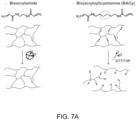
- the reversible crosslinker may be N,N'-bis(acryloyl)cystamine, a reversible crosslinker for polyacrylamide gels, wherein a disulfide linkage may be broken in the presence of a suitable reducing agent. As shown in FIGs.
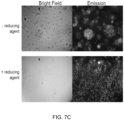
- contacting the crosslinker with a reducing agent cleaves the disulfide bonds of the crosslinker, breaking down the hydrogel beads.
- the hydrogel beads degrade, and release the contents, such as nucleic acids that were retained therein, as shown in FIG. 7C .
- the crosslinker is cleaved by increasing the temperature to greater than 50, 55, 60, 65, 70, 75, 80, 85, 90, 95, or 100°C.
- the crosslinker is cleaved by contacting the hydrogel beads with a reducing agent.
- the reducing agents include phosphine compounds, water soluble phosphines, nitrogen containing phosphines and salts and derivatives thereof, dithioerythritol (DTE), dithiothreitol (DTT) (cis and trans isomers, respectively, of 2,3-dihydroxy-1,4-dithiolbutane), 2-mercaptoethanol or ⁇ -mercaptoethanol (BME), 2-mercaptoethanol or aminoethanethiol, glutathione, thioglycolate or thioglycolic acid, 2,3-dimercaptopropanol, tris(2-carboxyethyl)phosphine (TCEP), tris(hydroxymethyl)phosphine (THP), or P-[tris(hydroxymethyl)phosphine] propionic acid (THPP).
- DTE dithioerythritol
- DTT dithiothreitol
- BME 2-mercaptoethanol or
- elevating the temperature to increase diffusion or contacting with a reducing agent degrades the crosslinker, thereby releasing encapsulated genetic material from the hydrogel bead.
- the crosslinking of the crosslinker establishes pores within the hydrogel bead.
- the size of the pores in the hydrogel beads are regulatable and are formulated to encapsulate genetic material, such as cells or nucleic acids of greater than about 300 base pairs, but to allow smaller particles, such as reagents, or smaller sized nucleic acids of less than about 50 base pairs, such as primers, to pass through the pores.
- the reagents including reagents for processing genetic material, such as reagents for isolating nucleic acids from a cell, for amplifying or sequencing nucleic acids, or for preparation of nucleic acid libraries.
- reagents include, for example, lysozyme, proteinase K, random hexamers, polymerase (for example, ⁇ 29 DNA polymerase, Taq polymerase, Bsu polymerase), transposase (for example, Tn5), primers (for example, P5 and P7 adaptor sequences), ligase, catalyzing enzyme, deoxynucleotide triphosphates, buffers, or divalent cations.
- polymerase for example, ⁇ 29 DNA polymerase, Taq polymerase, Bsu polymerase
- transposase for example, primers (for example, P5 and P7 adaptor sequences)
- ligase catalyzing enzyme
- deoxynucleotide triphosphates for example, P5 and P7 adaptor sequences
- the hydrogel beads include genetic material. Genetic material, as used herein, refers to cells, microbiomes, or nucleic acids.
- the cell is a single cell, including a prokaryotic or a eukaryotic cell.
- the cell is a mammalian cell.
- the cell is a human cell.
- the cell is a bacterial cell.
- the genetic material is a viral particle.
- the nucleic acid is a long DNA molecule, genomic DNA, viral nucleic acids, bacterial nucleic acids, or mammalian nucleic acids. Any genetic materials may be encapsulated within the hydrogel beads.
- a hydrogel bead is prepared by vortex assisted emulsion.
- vortex assisted emulsion refers to vortexing of a hydrogel polymer with genetic material in a container, such as in a tube, vial, or reaction vessel, as shown in FIGs. 1A and 1B .
- the components can be mixed, for example by manual or mechanical vortexing or shaking.
- manual mixing results in hydrogel beads that encapsulate genetic material having a size of 2, 3, 4, 5, 10, 15, 20, 25, 30, 35, 40, 45, 50, 55, 60, 65, 70, 75, 80, 85, 90, 95, 100, 110, 120, 130, 140, or 150 ⁇ m in diameter, or a size within a range defined by any two of the aforementioned values.
- the size of the beads is non-uniform, and thus, the size of the beads includes beads of various diameters.
- the beads are prepared by microfluidic flow techniques.
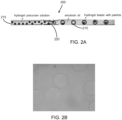
- Microfluidic flow includes use of a microfluidic device 200 for assisted gel emulsion generation, as shown in FIG. 2A .
- the microfluidic device 200 includes microchannels configured to produce a hydrogel bead 210 of a desired size and configured to encapsulate a selected amount of genetic material per bead.
- the microfluidic device 200 has a height of 50, 60, 70, 80, 90, 100, 110, 120, 130, 140, 150, 160, 170, 180, 190, or 200 ⁇ m, or a height within a range defined by any two of the aforementioned values.
- the microfluidic device 200 includes one or more channels. In some embodiments, the microfluidic device 200 includes a channel 215 for an aqueous stream and a channel 220 for an immiscible fluid. In some embodiments, the width of the one or more channels is identical. In some embodiments, the width of the one or more channels is different. In some embodiments, the width of the one or more channels is 20, 30, 40, 45, 50, 55, 60, 65, 70, 75, 80, 85, 90, 95, 100, 105, 110, 115, 120, 125, 130, 135, 140, 145, or 150 ⁇ m, or a width within a range defined by any two of the aforementioned values.
- the width of the aqueous channel is 75 ⁇ m. In some embodiments, the width of the immiscible fluid channel is 78 ⁇ m.
- the width can vary to finely tune the size of the bead 210. In addition to the size of the microfluidic device 200 and the width of the channels, the flow rate of the aqueous channel and the immiscible fluid channel may also affect the size of the hydrogel beads.
- the flow rate of the solution in the aqueous phase channel is 1, 2, 5, 10, 20, 30, 40, 50, 60, 70, 80, 90, 100, 110, 120, 130, 140, or 150 ⁇ L/min, or a rate within a range defined by any two of the aforementioned values.
- the flow rate of the immiscible fluid in the immiscible fluid channel is 20, 30, 50, 80, 100, 150, 160, 170, 180, 190, 200, 225, 250, 275, 300, 325, 350, 375, or 400 ⁇ L/min, or a rate within a range defined by any two of the aforementioned values.
- the solution in the aqueous phase includes a hydrogel polymer, a crosslinker, and genetic material, which flows through the aqueous channel 215 into an immiscible fluid, such as a carrier oil, at a flow rate less than the flow rate of the immiscible fluid, thereby forming droplets.
- an immiscible fluid such as a carrier oil
- the immiscible fluid is oil, such as mineral oil, a hydrocarbon oil, a silicon oil, or a polydimethylsiloxane oil, or mixtures thereof.
- the hydrogel droplets containing genetic material are formulated in a uniform size distribution.
- the size of the hydrogel beads is finely tuned by adjusting the size of the microfluidic device, the size of the one or more channels, or the flow rate of either or both of the aqueous solution or immiscible fluid.
- the resulting hydrogel bead has a diameter ranging from 2 to 150 ⁇ m, for example, 2, 3, 4, 5, 6, 7, 8, 9, 10, 15, 20, 25, 30, 35, 40, 45, 50, 55, 60, 65, 70, 75, 80, 85, 90, 95, 100, 110, 120, 130, 140, or 150 ⁇ m, or a diameter within a range defined by any two of the aforementioned values.
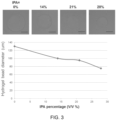
- the size and uniformity of the hydrogel bead encapsulating genetic material can be further controlled by contacting hydrogel polymer prior to bead formation with a fluidic modifier, such as with an alcohol, including isopropyl alcohol.
- a fluidic modifier such as with an alcohol, including isopropyl alcohol.
- an alcohol including isopropyl alcohol.
- FIG. 3 in the absence of isopropyl alcohol, beads form at a greater diameter than beads formed in the presence of isopropyl alcohol. Isopropyl alcohol influences the fluidic property of the hydrogel polymer, allowing modulation of the hydrogel beads.
- a hydrogel bead whether prepared by vortex assisted emulsion or microfluidic inertial flow assisted emulsion, encapsulate a single or distinct genetic material.
- the bead encapsulates a single cell.
- the amount of genetic material within a bead can be controlled by diluting or concentration the genetic material within the inputted sample. The sample including the genetic material is mixed with hydrogel polymer, and the hydrogel polymer containing the genetic material is submitted to vortex assisted emulsion or microfluidic flow assisted emulsion, as described herein.
- the hydrogel beads are functionalized with a nucleotide.
- the nucleotide is an oligonucleotide or polyT nucleotide.
- the nucleotide is bound to the hydrogel bead, and the functionalized bead can be used for targeted capture of a nucleotide of interest.
- Some embodiments provided herein relate to methods of processing genetic material within a bead.
- genetic material encapsulated within a hydrogel bead is contacted with one or more reagents for nucleic acid processing.
- the genetic material is retained within the hydrogel beads, and reagents are able to pass through the pores of the hydrogel beads.
- reagents can include lysis agents, nucleic acid purification agents, DNA amplification agents, tagmentation agents, PCR agents, or other agents used in processing of genetic materials.
- the hydrogel beads provide a microenvironment for controlled reactions of genetic materials within the hydrogel beads by allowing a barrier for reagents to pass in and out of the hydrogel beads, while retaining the genetic material itself within the beads.
- tagmentation refers to the modification of DNA by a transposome complex comprising transposase enzyme complexed with adaptors comprising transposon end sequence. Tagmentation results in the simultaneous fragmentation of the DNA and ligation of the adaptors to the 5' ends of both strands of duplex fragments. Following a purification step to remove the transposase enzyme, additional sequences can be added to the ends of the adapted fragments, for example by PCR, ligation, or any other suitable methodology known to those of skill in the art.
- entire DNA library preparation can be accomplished seamlessly inside the hydrogel beads with multiple reagent exchanges by passing through the porous hydrogel while retaining the gDNA and its library products within the hydrogel matrix.
- the hydrogel may be resistant to high temperatures up to 95°C for several hours to support different biochemical reactions.
- the hydrogel bead encapsulating a cell or viral particle is treated to purify and isolate nucleic acids from the cell or particle.
- the hydrogel bead is contacted with a lysis buffer.
- lysis means perturbation or alteration to a cell wall or viral particle facilitating access to or release of the cellular RNA or DNA. Neither complete disruption nor breakage of the cell wall is an essential requirement for lysis.
- lysis buffer is meant a buffer that contains at least one lysing agent.
- Typical enzymatic lysing agents include, but are not limited to, lysozyme, glucolase, zymolose, lyticase, proteinase K, proteinase E, and viral endolysins and exolysins.
- lysis of cells in the beads may be performed by introducing lysing agents, such as lysozyme and proteinase K into the hydrogel beads.
- lysing agents such as lysozyme and proteinase K into the hydrogel beads.
- the gDNA from the cells is now contained within the beads.
- isolated nucleic acid is retained within the hydrogel bead, and may be used for further processing.
- the terms “isolated,” “to isolate,” “isolation,” “purified,” “to purify,” “purification,” and grammatical equivalents thereof as used herein, unless specified otherwise, refer to the reduction in the amount of at least one contaminant (such as protein and/or nucleic acid sequence) from a sample or from a source (e.g., a cell) from which the material is isolated.
- a contaminant such as protein and/or nucleic acid sequence
- purification results in an “enrichment,” for example, an increase in the amount of a desirable protein and/or nucleic acid sequence in the sample.
- the encapsulated nucleic acids are amplified, sequenced, or used for the preparation of nucleic acid libraries.
- the terms "amplify” or “amplified” "amplifying” as used in reference to a nucleic acid or nucleic acid reactions refer to in vitro methods of making copies of a particular nucleic acid, such as a target nucleic acid, or a nucleic acid encapsulated within a bead, for example, by an embodiment of the present invention.
- amplification reactions include polymerase chain reactions, ligase chain reactions, strand displacement amplification reactions, rolling circle amplification reactions, multiple annealing and looping based amplification cycles (MALBAC), transcription-mediated amplification methods such as NASBA, loop mediated amplification methods (e.g., "LAMP" amplification using loop-forming sequences.
- the nucleic acid that is amplified can be DNA comprising, consisting of, or derived from DNA or RNA or a mixture of DNA and RNA, including modified DNA and/or RNA.
- the products resulting from amplification of a nucleic acid molecule or molecules can be either DNA or RNA, or a mixture of both DNA and RNA nucleosides or nucleotides, or they can comprise modified DNA or RNA nucleosides or nucleotides.
- a "copy” does not necessarily mean perfect sequence complementarity or identity to the target sequence.
- copies can include nucleotide analogs such as deoxyinosine or deoxyuridine, intentional sequence alterations (such as sequence alterations introduced through a primer comprising a sequence that is hybridizable, but not complementary, to the target sequence, and/or sequence errors that occur during amplification.
- the encapsulated nucleic acids that are isolated within the hydrogel beads can be amplified according to any suitable amplification methodology known in the art.
- the encapsulated nucleic acids are amplified within the bead.
- the bead is captured on a solid support and degraded, wherein the encapsulated nucleic acids are released onto the solid support, and the nucleic acids are amplified on the solid support.
- the encapsulated nucleic acids are amplified within the hydrogel beads.
- amplification primers and enzymes pass through the pores of the hydrogel beads and hybridize to the encapsulated nucleic acids.
- amplification methodologies described herein or generally known in the art can be utilized with universal or target-specific primers to amplify encapsulated nucleic acids.
- Suitable methods for amplification include, but are not limited to, the polymerase chain reaction (PCR), strand displacement amplification (SDA), transcription mediated amplification (TMA) and nucleic acid sequence based amplification (NASBA), as described in U.S. Pat. No. 8,003,354 , which is incorporated herein by reference in its entirety.
- PCR polymerase chain reaction
- SDA strand displacement amplification
- TMA transcription mediated amplification
- NASBA nucleic acid sequence based amplification
- the above amplification methods can be employed to amplify one or more nucleic acids of interest.
- PCR including multiplex PCR, SDA, TMA, NASBA and the like can be utilized to amplify encapsulated nucleic acids.
- primers directed specifically to the nucleic acid of interest are included in the amplification reaction.
- oligonucleotide extension and ligation can include oligonucleotide extension and ligation, rolling circle amplification (RCA) ( Lizardi et al., Nat. Genet. 19:225-232 (1998 ), which is incorporated herein by reference) and oligonucleotide ligation assay (OLA) technologies (See generally U.S. Pat. Nos.
- RCA rolling circle amplification
- OLA oligonucleotide ligation assay
- the amplification method can include ligation probe amplification or oligonucleotide ligation assay (OLA) reactions that contain primers directed specifically to the nucleic acid of interest.
- OLA oligonucleotide ligation assay
- the amplification method can include a primer extension-ligation reaction that contains primers directed specifically to the nucleic acid of interest, and which are capable of passing through the hydrogel pores.
- primer extension and ligation primers that can be specifically designed to amplify a nucleic acid of interest
- the amplification can include primers used for the GoldenGate assay (Illumina, Inc., San Diego, Calif.) as exemplified by U.S. Pat. Nos. 7,582,420 and 7,611,869 , each of which is incorporated herein by reference in its entirety.
- the reagents and components involved in the nucleic acid reaction are capable of passing through the pores of the hydrogel bead while retaining the nucleic acid itself within the bead.
- the encapsulated nucleic acids are amplified using cluster amplification methodologies as exemplified by the disclosures of U.S. Pat. Nos. 7,985,565 and 7,115,400 , the contents of each of which are incorporated herein by reference in their entirety.
- the incorporated materials of U.S. Pat. Nos. 7,985,565 and 7,115,400 describe methods of nucleic acid amplification which allow amplification products to be immobilized on a solid support in order to form arrays comprised of clusters or "colonies" of immobilized nucleic acid molecules.
- Each cluster or colony on such an array is formed from a plurality of identical immobilized polynucleotide strands and a plurality of identical immobilized complementary polynucleotide strands.
- the arrays so-formed are generally referred to herein as "clustered arrays".
- the products of solid-phase amplification reactions such as those described in U.S. Pat. Nos. 7,985,565 and 7,115,400 are so-called "bridged" structures formed by annealing of pairs of immobilized polynucleotide strands and immobilized complementary strands, both strands being immobilized on the solid support at the 5' end, preferably via a covalent attachment.
- Cluster amplification methodologies are examples of methods wherein an immobilized nucleic acid template is used to produce immobilized amplicons. Other suitable methodologies can also be used to produce immobilized amplicons from immobilized DNA fragments produced according to the methods provided herein. For example one or more clusters or colonies can be formed via solid-phase PCR whether one or both primers of each pair of amplification primers are immobilized.
- the encapsulated nucleic acids are amplified within the beads, and then deposited in an array or on a solid support in a cluster. For example, as shown in FIG. 12 , hydrogel beads encapsulating nucleic acids were processed and the nucleic acids contained therein were used to establish two different indexed DNA libraries.
- Additional amplification methods include isothermal amplification.
- Exemplary isothermal amplification methods that can be used include, but are not limited to, multiple displacement amplification (MDA) as exemplified by, for example Dean et al., Proc. Natl. Acad. Sci. USA 99:5261-66 (2002 ) or isothermal strand displacement nucleic acid amplification exemplified by, for example U.S. Pat. No. 6,214,587 , each of which is incorporated herein by reference in its entirety.
- MDA multiple displacement amplification
- U.S. Pat. No. 6,214,587 isothermal strand displacement nucleic acid amplification exemplified by, for example U.S. Pat. No. 6,214,587 , each of which is incorporated herein by reference in its entirety.
- Non-PCR-based methods include, for example, strand displacement amplification (SDA) which is described in, for example Walker et al., Molecular Methods for Virus Detection, Academic Press, Inc., 1995 ; U.S. Pat. Nos. 5,455,166 , and 5,130,238 , and Walker et al., Nucl. Acids Res. 20:1691-96 (1992 ) or hyperbranched strand displacement amplification which is described in, for example Lü et al., Genome Research 13:294-307 (2003 ), each of which is incorporated herein by reference in its entirety.
- SDA strand displacement amplification
- Isothermal amplification methods can be used with the strand-displacing Phi 29 polymerase or Bst DNA polymerase large fragment, 5'->3' exo- for random primer amplification of genomic DNA.
- the use of these polymerases takes advantage of their high processivity and strand displacing activity. High processivity allows the polymerases to produce fragments that are 10-20 kb in length. As set forth above, smaller fragments can be produced under isothermal conditions using polymerases having low processivity and strand-displacing activity such as Klenow polymerase. Additional description of amplification reactions, conditions and components are set forth in detail in the disclosure of U.S. Pat. No. 7,670,810 , which is incorporated herein by reference in its entirety.
- the polymerases, reagents, and components required to perform these amplification reactions are capable of passing through the pores of the hydrogel beads to interact with the encapsulated nucleic acids, thereby amplifying the nucleic acids within the hydrogel beads.
- random hexamers are annealed to the denatured DNA followed by strand displacement synthesis at a constant temperature in the presence of a catalyzing enzyme, Phi 29. This results in DNA amplification within the beads as confirmed by an increase in the fluorescence intensity (DNA was stained with SYTOX) after MDA ( FIG. 9 , panel a).
- Nextera based tagmentation after lysis and clean up and subsequent gDNA amplification via PCR as indicated by a substantial increase in fluorescence intensity within the beads after Nextera tagmentation and PCR may also be performed ( FIG. 9 , panel b).
- the gel beads may be heated to 80°C for 3 minutes to release the contents of the beads namely, the sequencing ready library products from single cells as shown in FIG. 9 , panel c.
- Tagged PCR which uses a population of two-domain primers having a constant 5' region followed by a random 3' region as described, for example, in Grothues et al. Nucleic Acids Res. 21(5):1321-2 (1993 ), incorporated herein by reference in its entirety.
- the first rounds of amplification are carried out to allow a multitude of initiations on heat denatured DNA based on individual hybridization from the randomly-synthesized 3' region. Due to the nature of the 3' region, the sites of initiation are contemplated to be random throughout the genome. Thereafter, the unbound primers can be removed and further replication can take place using primers complementary to the constant 5' region.
- the encapsulated nucleic acids are sequenced in full or in part within the hydrogel beads.
- the encapsulated nucleic acids can be sequenced according to any suitable sequencing methodology, such as direct sequencing, including sequencing by synthesis, sequencing by ligation, sequencing by hybridization, nanopore sequencing and the like.
- any suitable sequencing methodology such as direct sequencing, including sequencing by synthesis, sequencing by ligation, sequencing by hybridization, nanopore sequencing and the like.
- single cells encapsulated within a hydrogel bead may be processed for single cell sequencing.
- SBS sequencing-by-synthesis
- extension of a nucleic acid primer along a nucleic acid template e.g. a target nucleic acid or amplicon thereof
- the underlying chemical process can be polymerization (e.g. as catalyzed by a polymerase enzyme).
- fluorescently labeled nucleotides are added to a primer (thereby extending the primer) in a template dependent fashion such that detection of the order and type of nucleotides added to the primer can be used to determine the sequence of the template.
- One or more amplified encapsulated nucleic acids can be subjected to an SBS or other detection technique that involves repeated delivery of reagents in cycles.
- SBS SBS or other detection technique that involves repeated delivery of reagents in cycles.
- one or more labeled nucleotides, DNA polymerase, etc. can be flowed into/through a hydrogel bead that houses one or more amplified nucleic acid molecules. Those sites where primer extension causes a labeled nucleotide to be incorporated can be detected.
- the nucleotides can further include a reversible termination property that terminates further primer extension once a nucleotide has been added to a primer.
- a nucleotide analog having a reversible terminator moiety can be added to a primer such that subsequent extension cannot occur until a deblocking agent is delivered to remove the moiety.
- a deblocking reagent can be delivered to the flow cell (before or after detection occurs). Washes can be carried out between the various delivery steps. The cycle can then be repeated n times to extend the primer by n nucleotides, thereby detecting a sequence of length n.
- Pyrosequencing detects the release of inorganic pyrophosphate (PPi) as particular nucleotides are incorporated into a nascent nucleic acid strand ( Ronaghi, et al., Analytical Biochemistry 242(1), 84-9 (1996 ); Ronaghi, Genome Res. 11(1), 3-11 (2001 ); Ronaghi et al. Science 281(5375), 363 (1998 ); U.S. Pat. No. 6,210,891 ; U.S. Pat. No. 6,258,568 and U.S. Pat. No. 6,274,320 , each of which is incorporated herein by reference).
- PPi inorganic pyrophosphate
- pyrosequencing In pyrosequencing, released PPi can be detected by being immediately converted to adenosine triphosphate (ATP) by ATP sulfurylase, and the level of ATP generated can be detected via luciferase-produced photons. Thus, the sequencing reaction can be monitored via a luminescence detection system. Excitation radiation sources used for fluorescence based detection systems are not necessary for pyrosequencing procedures. Useful fluidic systems, detectors and procedures that can be adapted for application of pyrosequencing to amplicons produced according to the present disclosure are described, for example, in WIPO Pat. App. Ser. No. PCT/US11/57111 , US 2005/0191698 A1 , U.S. Pat. No. 7,595,883 , and U.S. Pat. No. 7,244,559 , each of which is incorporated herein by reference.
- Some embodiments can utilize methods involving the real-time monitoring of DNA polymerase activity.
- nucleotide incorporations can be detected through fluorescence resonance energy transfer (FRET) interactions between a fluorophore-bearing polymerase and ⁇ -phosphate-labeled nucleotides, or with zero mode waveguides (ZMWs).
- FRET fluorescence resonance energy transfer
- ZMWs zero mode waveguides
- Some SBS embodiments include detection of a proton released upon incorporation of a nucleotide into an extension product.
- sequencing based on detection of released protons can use an electrical detector and associated techniques that are commercially available. Examples of such sequencing systems are pyrosequencing (e.g. commercially available platform from 454 Life Sciences a subsidiary of Roche), sequencing using ⁇ -phosphate-labeled nucleotides (e.g. commercially available platform from Pacific Biosciences) and sequencing using proton detection (e.g.
- nanopore sequencing Another sequencing technique is nanopore sequencing (see, for example, Deamer et al. Trends Biotechnol. 18, 147-151 (2000 ); Deamer et al. Acc. Chem. Res. 35:817-825 (2002 ); Li et al. Nat. Mater. 2:611-615 (2003 ), the disclosures of which are incorporated herein by reference).
- the target nucleic acid or individual nucleotides removed from a target nucleic acid pass through a nanopore.
- each nucleotide type can be identified by measuring fluctuations in the electrical conductance of the pore.
- reagents are used for nucleic acid isolation and preparation.
- Such reagents may include, for example, lysozyme, proteinase K, random hexamers, polymerase (for example, ⁇ 29 DNA polymerase, Taq polymerase, Bsu polymerase), transposase (for example, Tn5), primers (for example, P5 and P7 adaptor sequences), ligase, catalyzing enzyme, deoxynucleotide triphosphates, buffers, or divalent cations.
- polymerase for example, ⁇ 29 DNA polymerase, Taq polymerase, Bsu polymerase
- transposase for example, Tn5
- primers for example, P5 and P7 adaptor sequences
- ligase catalyzing enzyme
- deoxynucleotide triphosphates buffers, or divalent cations.
- Adaptors can include sequencing primer sites, amplification primer sites, and indexes.
- an "index" can include a sequence of nucleotides that can be used as a molecular identifier and/or barcode to tag a nucleic acid, and/or to identify the source of a nucleic acid.
- an index can be used to identify a single nucleic acid, or a subpopulation of nucleic acids.
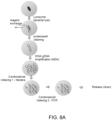
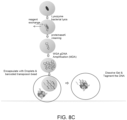
- nucleic acid libraries can be prepared within a hydrogel bead. As shown schematically in FIG.
- a single cell encapsulated within a hydrogel bead may be used for combinatorial indexing of the single cells, for example, using a contiguity preserving transposition (CPTSeq) approach.
- CPTSeq contiguity preserving transposition
- DNA from a single cell may be barcoded by encapsulation of single cells after WGA amplification with another bead carrying barcoded transposons and dissolving the gel matrix by contacting it with a reducing agent, for example, to release genomic DNA for barcoding.
- Embodiments of the "spatial indexing" methods and techniques described herein shortens data analysis and simplifies the process of library preparation from single cells and long DNA molecules.
- Existing protocols for single cell sequencing requires efficient physical separation of the cells and uniquely barcoding each isolated cell and pooling everything back together to do sequencing.
- Current protocols for synthetic long reads also requires cumbersome barcoding steps, and pooling each barcoded fragments together for sequencing and letting data analysis to distinguish genetic information coming from each barcoded cell. During these long processes there is also loss of genetic material which causes dropouts in the sequences.
- Embodiments described herein not only shorten the process but also increase data resolution for single cells. Furthermore, embodiments provided herein simplify the assembly of genomes of new organisms.
- Embodiments described herein may be used to reveal rare genetic variations and co-occurrence of mutations.
- DNA library confined in the hydrogel beads until release provide the opportunity to control the size of the fragments that is released on the surface by controlling the release process and hydrogel formulation.
- the library may be amplified using primer sites in the adaptor sequences, and sequenced using sequencing primer sites in the adaptor sequences.
- the adaptor sequences can include indexes to identify the source of the nucleic acids. The efficiency of subsequent amplification steps can be reduced by the formation of primer-dimers. To increase the efficiency of subsequent amplification steps, non-ligated single-stranded adaptors can be removed from ligation products.
- Adaptors can include sequencing primer binding sites, amplification primer binding sites, and indexes.
- an adaptor can include a P5 sequence, a P7 sequence, or a complement thereof.
- a P5 sequence comprises a sequence defined by SEQ ID NO: 1 (AATGATACGGCGACCACCGA) and a P7 sequence comprises a sequence defined by SEQ ID NO: 2 (CAAGCAGAAGACGGCATACGA).
- the P5 or P7 sequence can further include a spacer polynucleotide, which may be from 1 to 20, such as 1 to 15, or 1 to 10, nucleotides, such as 2, 3, 4, 5, 6, 7, 8, 9, or 10 nucleotides in length.
- the spacer includes 10 nucleotides.
- the spacer is a polyT spacer, such as a 10T spacer. Spacer nucleotides may be included at the 5' ends of polynucleotides, which may be attached to a suitable support via a linkage with the 5' end of the polynucleotide.
- Attachment can be achieved through a sulphur-containing nucleophile, such as phosphorothioate, present at the 5' end of the polynucleotide.
- the polynucleotide will include a polyT spacer and a 5' phosphorothioate group.
- the P5 sequence is 5'phosphorothioate-TTTTTTTTTTAATGATACGGCGACCACCGA-3', SEQ ID NO: 3
- the P7 sequence is 5'phosphorothioate-TTTTTTTTTTAATGATACGGCGACCACCGA-3', SEQ ID NO. 4.
- an adaptor can be modified to prevent the formation of concatemers, for example by the addition of blocking groups that prevent extension of the adaptor at one or both ends.
- blocking groups include a 3'-spacer C3, a dideoxynucleotide, and attachment to a substrate.
- 5' blocking groups include a dephosphorylated 5' nucleotide, and attachment to a substrate.
- Adaptors include nucleic acids, such as single-stranded nucleic acids. Adaptors can include short nucleic acids having a length less than, greater than, or equal to about 5 nucleotides, 10 nucleotides, 20 nucleotides, 30 nucleotides, 40 nucleotides, 50 nucleotides, 60 nucleotides, 70 nucleotides, 80 nucleotides, 90 nucleotides, 100 nucleotides, or a range between any two of the foregoing sizes. In some embodiments, the adaptors are of sufficient size to pass through the pores of the hydrogel beads.
- Target nucleic acids include DNA, such as genomic or cDNA; RNA, such as mRNA, sRNA or rRNA; or a hybrid of DNA and RNA.
- the nucleic acid can be isolated from a single cell encapsulated within a hydrogel bead.
- a nucleic acid can contain phosphodiester bonds, and can include other types of backbones, comprising, for example, phosphoramide, phosphorothioate, phosphorodithioate, O-methylphosphoroamidite and peptide nucleic acid backbones and linkages.
- a nucleic acid can contain any combination of deoxyribo- and ribonucleotides, and any combination of bases, including uracil, adenine, thymine, cytosine, guanine, inosine, xanthanine, hypoxanthanine, isocytosine, isoguanine, and base analogs such as nitropyrrole (including 3-nitropyrrole) and nitroindole (including 5-nitroindole).
- a nucleic acid can include at least one promiscuous base.
- a promiscuous base can base-pair with more than one different type of base and can be useful, for example, when included in oligonucleotide primers or inserts that are used for random hybridization in complex nucleic acid samples such as genomic DNA samples.
- An example of a promiscuous base includes inosine that may pair with adenine, thymine, or cytosine. Other examples include hypoxanthine, 5-nitroindole, acylic 5-nitroindole, 4-nitropyrazole, 4-nitroimidazole and 3-nitropyrrole.
- Promiscuous bases that can base-pair with at least two, three, four or more types of bases can be used.
- Target nucleic acids can include a sample in which the average size of a nucleic acid in the sample is less than, greater than, or equal to about 2 kb, 1 kb, 500 bp, 400 bp, 200 bp, 100 bp, 50 bp, or a range between any two of the foregoing sizes.
- the average size of a nucleic acid in the sample is less than, greater than, or equal to about 2000 nucleotides, 1000 nucleotides, 500 nucleotides, 400 nucleotides, 200 nucleotides, 100 nucleotides, 50 nucleotides, or a range between any two of the foregoing sizes.
- the nucleic acid is of sufficient size that the nucleic acid is entrapped within the hydrogel bead such that it cannot pass through the pores of the hydrogel bead.
- An example method includes dephosphorylating the 5' ends of target nucleic acids to prevent the formation of concatemers in subsequent ligation steps; ligating first adaptors to the 3' ends of the dephosphorylated targets using a ligase, in which the 3' ends of the first adaptors are blocked; re-phosphorylating of the 5' ends of the ligated targets; ligating a second adaptor to the 5' ends of the dephosphorylated targets using the single-stranded ligase, in which the 5' ends of the second adaptors are non-phosphorylated.
- Another example includes partial digestion of the nucleic acid with a 5' exonuclease to form a double-stranded nucleic acid with single-stranded 3' overhangs.
- An adaptor containing a 3' blocking group can be ligated to the 3' ends of double-stranded nucleic acid with 3' overhangs.
- the double-stranded nucleic acid with 3' overhangs with ligated adaptors can be dehybridized to form single-stranded nucleic acids.
- An adaptor containing a non-phosphorylated 5' end can be ligated to the 5' end of the single-stranded nucleic acid.
- Methods to dephosphorylate nucleic acids include contacting a nucleic acid with a phosphatase.
- phosphatases include calf intestinal phosphatase, shrimp alkaline phosphatase, antarctic phosphatase, and APEX alkaline phosphatase (Epicentre).
- Methods to ligate nucleic acids include contacting nucleic acids with a ligase.
- ligases include T4 RNA ligase 1, T4 RNA ligase 2, RtcB ligase, Methanobacterium RNA ligase, and TS2126 RNA ligase (CIRCLIGASE).
- Methods to phosphorylate nucleic acids include contacting a nucleic acid with a kinase.
- kinases include T4 polynucleotide kinase.
- Embodiments provided herein relate to preparing nucleic acids libraries in a hydrogel bead, such that the nucleic acid library is prepared in a single reaction volume.
- kits containing any one or more of the hydrogel polymers, crosslinkers, or microfluidic devices for preparing hydrogel beads that encapsulate genetic material, and further including components useful for processing of the genetic material, including reagents for cell lysis, and nucleic acid amplification and sequencing, or for nucleic acid library preparation, including lysozyme, proteinase K, random hexamers, polymerase (for example, ⁇ 29 DNA polymerase, Taq polymerase, Bsu polymerase), transposase (for example, Tn5), primers (for example, P5 and P7 adaptor sequences), ligase, catalyzing enzyme, deoxynucleotide triphosphates, buffers, or divalent cations as described herein, and as used for the respective processing of genetic material.
- polymerase for example, ⁇ 29 DNA polymerase, Taq polymerase, Bsu polymerase
- transposase for example, Tn5
- primers for example
- the following example demonstrates an embodiment of preparing hydrogel beads encapsulating microbial cells using manual vortexing and microfluidic droplet generators.
- Samples containing one or more of E. coli, B. subtilis, and A. hydrophila stored at -80°C were thawed at room temperature. 100 ⁇ L of each bacterial solution was transferred to a sterile 1.7 mL tube, and the sample was washed once with 1 mL 0.85% NaCl. The sample was pelleted and wash solution is removed. The bacteria pellet was saved for mixture with the hydrogel solution described as follows.
- a hydrogel solution of 12% was prepared from 40% acrylamide/bis 19:1 (BioRad 9161-0144) diluted with deionized water.
- BACy acrylamide/N,N'-bis(acryloyl)cystamine
- the dissolution of the monomers is endothermic, so heating the mixture slightly will help completely dissolve the monomers.
- the hydrogel solution was maintained at 4°C until use. 35 ⁇ L of saturated potassium persulfate solution (KPS; Sigma) was added to 200 ⁇ L of the 12% hydrogel solution and mixed well. The 235 ⁇ L hydrogel-KPS solution was added to each tube containing a bacteria cell pellet to resuspend the cells. The hydrogel-bacterial solution was then loaded into 600 ⁇ L mineral oil with surfactant (4.5% Span 80, 0.4% Tween 20, and 0.05% Triton X-100). The solution was vortexed for 30 seconds to generate droplet emulsion, and 25 ⁇ L of tetramethylethylenediamine (TEMED; Sigma) was immediately added, followed by another 30 seconds of vortexing.
- KPS saturated potassium persulfate solution
- TEMED tetramethylethylenediamine
- Hydrogel beads encapsulating bacterial cells were then generated. After incubation for 15 minutes to allow the hydrogel beads to fully cross-link, about 900 ⁇ L of petroleum ether was added to each tube. Tubes were vortexed to wash away the oil, and supernatant was removed. The hydrogel beads were washed by adding 1 mL of PR2 to each tube, followed by vortexing, and spinning down the beads. The supernatant was removed, and the beads were washed three times with 1 mL of PR2. The beads were resuspended in 1 mL PR2. Hydrogel beads in PR2 can be stored in 4°C for at least 3 weeks.
- the method described above using manual emulsion can be used to generate hydrogel beads having a size distribution of from about 2 ⁇ m to about 100 ⁇ m in diameter.
- microfluidic droplet generators can be used, such as the generators illustrated in FIG. 2 .
- an aqueous solution containing a hydrogel polymer and a bacterial cell was introduced into mineral oil in a microfluidic droplet generator.
- the microfluidic device had a height of 120 ⁇ m, with an aqueous channel width of 75 ⁇ m and a carrier oil channel width of 78 ⁇ m. With this chip, flow rates of 60 ⁇ L/min for the aqueous channel and 300 ⁇ L/min for the carrier oil channel were used. Using this device, hydrogel beads of approximately 90 ⁇ m in diameter were generated. The size of the beads can be finely tuned by adjusting the channel widths, the microfluidic device size, and the flow rates.
- the bead diameter can be finely tuned with the addition of isopropyl alcohol.
- isopropyl alcohol can be added to the hydrogel solution in a specified amount (ranging from 0% to about 30% v/v), to form hydrogel beads of a particular diameter.
- increasing the amount of isopropyl alcohol decreases the hydrogel bead diameter, from 130 ⁇ m (with 0% isopropyl alcohol) to about 75 ⁇ m in diameter (with 28% isopropyl alcohol).
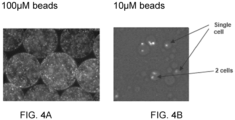
- Hydrogel beads can also be finely tuned to encapsulate a desired quantity of cells. As shown in FIGs. 4A and 4B , numerous stained bacterial cells were found to be present in each hydrogel bead of about 100 ⁇ m ( Fig 4A ), whereas only a single cell, or a few cells, were loaded in each hydrogel bead of about 10 ⁇ m ( Fig. 4B ).
- the rate of gelation of hydrogel beads can also determine the quantity of cells in each hydrogel bead.
- Hydrogel beads were prepared in the presence of NIH-3T3 mouse fibroblast cells. As shown in FIGs. 6A and 6B fast gelation of hydrogel beads resulted in a single cell per bead ( FIG. 6A ), whereas slow gelation results in a few cells per bead ( FIG. 6B ).
- DNA functionalized hydrogel beads were obtained using copper-catalyzed azide-alkyne cycloaddition (CuAAC) chemistry, by reacting azide functionalized hydrogel beads with alkyne functionalized DNA ( FIG. 5A ).
- CuAAC copper-catalyzed azide-alkyne cycloaddition
- hydrogel precursor mix including, monomers, crosslinkers, and radical generators were mixed and monodisperse hydrogel beads were generated with microfluidics.
- the hydrogel beads were doped with BrAPA in a concentration ranging from 0% to 8%.
- the bromides were subsequently azidified to convert the Br groups to azide groups (N3).
- the azidified hydrogels were then reacted with alkyne-modified oligonucleotides using CuAAC chemistry.
- hydrogel beads without azidification did not have any oligonucleotides grafted onto the beads ( FIG. 5B , "Original”).
- hydrogel beads that were azidified had oligonucleotides grafted onto the hydrogel beads ( FIG. 5B , "Azidified (N3)”).
- the density of the oligonucleotides grafted directly correlated to the percentage of BrAPA added in the hydrogel precursor mix.
- oligonucleotide functionalized beads were used to capture mRNA from cells.
- the hydrogel beads were functionalized with a polyT oligonucleotide ( FIG. 5C ).
- the polyT functionalized hydrogel beads were mixed with cells.
- the cells were subsequently lysed and the beads were collected and washed.
- Second strand synthesis was performed to make cDNA from the captured mRNA.
- FIG. 5D the electrochromatograms show the trace of the cDNA with its complement (right curve), and the cDNA duplex were then tagmented with Nextera.
- the tagmented DNA left curve
- the tagmented DNA left curve
- the following example demonstrates the ability of the hydrogel beads having genetic material encapsulated therein to release the contents upon reversible cleavage of the crosslinker.
- Hydrogel beads encapsulating bacterial cells were prepared according to Example 1.
- the hydrogel beads include bisacrylamide crosslinkers containing disulfide bonds.
- the beads were dye-stained for visualization of bacterial cells.
- FIG. 6C hydrogel beads in the absence of a reducing agent were capable of retaining bacterial cells.
- THP a reducing agent
- the following example demonstrates the process for sequencing nucleic acids from genetic material encapsulated within hydrogel beads.
- Hydrogel beads as prepared in Example 1 were obtained and nucleic acids were isolated as follows. 50 ⁇ L solution of the hydrogel bead encapsulating E. coli was transferred to a 200 ⁇ L tube (with an approximate 50 beads/ ⁇ L). The beads were spun down and supernatant removed. 100 ⁇ L of bacterial lysis reagent (Thermo Fisher Scientific, 0.5 mg lysozyme in 100 ⁇ L resuspension buffer from Charge Switch kit) was added to the tube, and incubated at 37°C for 10 minutes. 500 ⁇ L of proteinase K reagent was then added, and incubated at 55°C for 20 minutes to fully digest the proteins. At this step, the E.
- bacterial lysis reagent Thermo Fisher Scientific, 0.5 mg lysozyme in 100 ⁇ L resuspension buffer from Charge Switch kit
- coli gDNA was exposed but pinned inside the hydrogel matrix.
- the beads retaining bacterial gDNA were washed with PR2 and the hydrogel beads recollected.
- Tn5 transposome reagent (Nextera, Illumina, Inc.) was then added to the tube and incubated at 55°C for 5 minutes.
- the adaptors containing p5 and p7 ends were inserted to the DNA after this step.
- 50 ⁇ L of stop buffer is then loaded to knock out the Tn5 enzymes.
- An extension mix with Bsu polymerase and nucleotides for gap fill was added. After this step, the nucleic acid library was ready and pinned inside the hydrogel bead matrix.
- FIG. 10 hydrophila to lyse the bacterial cells and finish library preparation for the respective hydrogel beads.
- FIG. 10 hydrogel beads having DNA library produced therein were seeded to a surface, and the DNA libraries released.
- FIG. 10 , panel a) shows hydrogels with tagmented genome loaded onto a P5/P7 grafted surface.
- FIG. 10 , panel b) shows a single stranded DNA that is eluted, seeded, and isothermally bridge amplified and stained.
- FIG. 10 , panel c) depicts gradients of cluster density, from high density to lower density (left to right), with higher density indicating the location on the surface of where the hydrogel initially landed.
- This example demonstrates preparation of hydrogel beads encapsulating a single bacterial cell inside a hydrogel bead, which can be used to process the bacterial genome and perform whole DNA library preparation inside the bead.
- the pore size of the hydrogel was engineered to allow the diffusion of enzymes, chemicals and smaller sized primers ( ⁇ 50bps), but retained the larger sized DNA (>300bps) such that the intact whole genomic DNA and the produced DNA library was retained inside the gel microbeads during the whole process.
- the DNA library from the single bacterium can then be released to a specific area, for example, on flow cell surface for library seeding. Subsequently, this results in a spatial distribution of "DNA clusters" on the flow cell originating from individual bacterial cells, thus simplifying the read alignment during post processing.
- the following example demonstrates sequencing of DNA library from hydrogel beads encapsulating genetic material.
- the DNA library prepared from Example 4 was released from the hydrogel and deposited on a surface. Fragmented DNA was eluted out of the hydrogels. Control sample was saved without heat treatment. Both samples were enriched by 12-cycle PCR reaction and assayed on a Bioanalyzer to determine the fragment distribution. After double Ampure cleanup, the E.coli fragments were sequenced on the MiSeq platform (Illumina, Inc., San Diego, CA). As shown in FIG. 11A , DNA fragments that eluted out of hydrogel had a fragment size distribution with an average size of around 350 bp. In contrast, sample shown in Figure 11B that was not heat treated did not show any fragments even after 12-cycle PCR reaction, indicating that the fragments were not released from the hydrogel beads. The fragments were sequenced, and 98% of the sequences aligned to enterbacteriaceae, and 39% of those aligned to E. coli.
- the following example demonstrates spatial indexing of DNA libraries prepared within hydrogel beads.
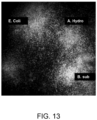
- E. coli, B. subtilis, and A. hydrophila were chosen as a model organism. Each microorganism was embedded in its own group of hydrogel beads. Each bead type containing a single type of microorganism was processed separately through lysis treatment, and each species had its own unique index added during the library preparation protocol. The three different hydrogel beads that carried the DNA library from E. coli, B. subtilis, and A. hydrophila were then mixed to the same tube. The hydrogel beads were spun down and supernatant removed.
- the seeded library was clustered, linearized, and 1st base sequenced, with the results shown in FIG. 13 .
- the DNA library within the hydrogel beads were able to diffuse out of the beads and bind to the MiSeq Flow cell, where amplification occurred on the flow cell in distinct clusters for each organism.
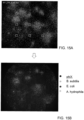
- FIGs. 15A-15C show the MiSeq sequencing result of flow cell seeding with hydrogel beads containing E. coli, B. subtilis, or A. Hydrophila bacteria, including the raw data from MiSeq image ( FIG. 15A ), the clusters that aligned to specific genome ( FIG. 15C ), and a summary table of the pass filter of three different bacterial species ( FIG. 15C ).
- compositions, methods, and systems for retaining genetic material in physically confined space during the process from lysis to library generation Some embodiments provide libraries originated from single long DNA molecule or a single cell to be released on a surface of a flow cell in confined space. Once the library from a single DNA molecule or single cell in the individual compartments are released to the surface of the flow cell, the library from each compartment gets seeded at close proximity to each other.
Landscapes
- Chemical & Material Sciences (AREA)
- Life Sciences & Earth Sciences (AREA)
- Organic Chemistry (AREA)
- Health & Medical Sciences (AREA)
- Engineering & Computer Science (AREA)
- Wood Science & Technology (AREA)
- Zoology (AREA)
- Genetics & Genomics (AREA)
- Proteomics, Peptides & Aminoacids (AREA)
- Biotechnology (AREA)
- Bioinformatics & Cheminformatics (AREA)
- General Engineering & Computer Science (AREA)
- Analytical Chemistry (AREA)
- Biochemistry (AREA)
- General Health & Medical Sciences (AREA)
- Microbiology (AREA)
- Molecular Biology (AREA)
- Physics & Mathematics (AREA)
- Biophysics (AREA)
- Biomedical Technology (AREA)
- Immunology (AREA)
- Chemical Kinetics & Catalysis (AREA)
- Plant Pathology (AREA)
- Crystallography & Structural Chemistry (AREA)
- Cell Biology (AREA)
- Bioinformatics & Computational Biology (AREA)
- Measuring Or Testing Involving Enzymes Or Micro-Organisms (AREA)
- Apparatus Associated With Microorganisms And Enzymes (AREA)
- Immobilizing And Processing Of Enzymes And Microorganisms (AREA)
- Preparation Of Compounds By Using Micro-Organisms (AREA)
- Micro-Organisms Or Cultivation Processes Thereof (AREA)
Applications Claiming Priority (3)
| Application Number | Priority Date | Filing Date | Title |
|---|---|---|---|
| US201762539956P | 2017-08-01 | 2017-08-01 | |
| PCT/US2018/044855 WO2019028166A1 (en) | 2017-08-01 | 2018-08-01 | Hydrogel beads for nucleotide sequencing |
| EP18755643.6A EP3662084B1 (de) | 2017-08-01 | 2018-08-01 | Hydrogelkügelchen für nukleotidsequenzierung |
Related Parent Applications (1)
| Application Number | Title | Priority Date | Filing Date |
|---|---|---|---|
| EP18755643.6A Division EP3662084B1 (de) | 2017-08-01 | 2018-08-01 | Hydrogelkügelchen für nukleotidsequenzierung |
Publications (2)
| Publication Number | Publication Date |
|---|---|
| EP4488382A2 true EP4488382A2 (de) | 2025-01-08 |
| EP4488382A3 EP4488382A3 (de) | 2025-01-22 |
Family
ID=63209709
Family Applications (2)
| Application Number | Title | Priority Date | Filing Date |
|---|---|---|---|
| EP24208929.0A Withdrawn EP4488382A3 (de) | 2017-08-01 | 2018-08-01 | Hydrogelperlen zur nukleotidsequenzierung |
| EP18755643.6A Active EP3662084B1 (de) | 2017-08-01 | 2018-08-01 | Hydrogelkügelchen für nukleotidsequenzierung |
Family Applications After (1)
| Application Number | Title | Priority Date | Filing Date |
|---|---|---|---|
| EP18755643.6A Active EP3662084B1 (de) | 2017-08-01 | 2018-08-01 | Hydrogelkügelchen für nukleotidsequenzierung |
Country Status (11)
| Country | Link |
|---|---|
| US (1) | US20220411859A1 (de) |
| EP (2) | EP4488382A3 (de) |
| JP (4) | JP7032452B2 (de) |
| KR (3) | KR102480894B1 (de) |
| CN (1) | CN111094585A (de) |
| AU (3) | AU2018312560B2 (de) |
| CA (1) | CA3067048C (de) |
| ES (1) | ES3006009T3 (de) |
| NZ (1) | NZ759924A (de) |
| SG (1) | SG11201911871TA (de) |
| WO (1) | WO2019028166A1 (de) |
Families Citing this family (102)
| Publication number | Priority date | Publication date | Assignee | Title |
|---|---|---|---|---|
| US9701998B2 (en) | 2012-12-14 | 2017-07-11 | 10X Genomics, Inc. | Methods and systems for processing polynucleotides |
| US11591637B2 (en) | 2012-08-14 | 2023-02-28 | 10X Genomics, Inc. | Compositions and methods for sample processing |
| US9951386B2 (en) | 2014-06-26 | 2018-04-24 | 10X Genomics, Inc. | Methods and systems for processing polynucleotides |
| US10323279B2 (en) | 2012-08-14 | 2019-06-18 | 10X Genomics, Inc. | Methods and systems for processing polynucleotides |
| JP6367196B2 (ja) | 2012-08-14 | 2018-08-01 | テンエックス・ジェノミクス・インコーポレイテッド | マイクロカプセル組成物および方法 |
| US10584381B2 (en) | 2012-08-14 | 2020-03-10 | 10X Genomics, Inc. | Methods and systems for processing polynucleotides |
| US10752949B2 (en) | 2012-08-14 | 2020-08-25 | 10X Genomics, Inc. | Methods and systems for processing polynucleotides |
| EP3567116A1 (de) | 2012-12-14 | 2019-11-13 | 10X Genomics, Inc. | Verfahren und systeme zur verarbeitung von polynukleotiden |
| US10533221B2 (en) | 2012-12-14 | 2020-01-14 | 10X Genomics, Inc. | Methods and systems for processing polynucleotides |
| KR102190198B1 (ko) | 2013-02-08 | 2020-12-14 | 10엑스 제노믹스, 인크. | 폴리뉴클레오티드 바코드 생성 |
| US10395758B2 (en) | 2013-08-30 | 2019-08-27 | 10X Genomics, Inc. | Sequencing methods |
| US9824068B2 (en) | 2013-12-16 | 2017-11-21 | 10X Genomics, Inc. | Methods and apparatus for sorting data |
| CA2943624A1 (en) | 2014-04-10 | 2015-10-15 | 10X Genomics, Inc. | Fluidic devices, systems, and methods for encapsulating and partitioning reagents, and applications of same |
| WO2015200869A1 (en) | 2014-06-26 | 2015-12-30 | 10X Genomics, Inc. | Analysis of nucleic acid sequences |
| EP4574974A3 (de) | 2014-06-26 | 2025-10-08 | 10x Genomics, Inc. | Verfahren zur analyse von nukleinsäuren aus einzelnen zellen oder zellpopulationen |
| US12312640B2 (en) | 2014-06-26 | 2025-05-27 | 10X Genomics, Inc. | Analysis of nucleic acid sequences |
| US9975122B2 (en) | 2014-11-05 | 2018-05-22 | 10X Genomics, Inc. | Instrument systems for integrated sample processing |
| CN107427808B (zh) | 2015-01-12 | 2020-10-23 | 10X基因组学有限公司 | 用于制备核酸测序文库的方法和系统以及用其制备的文库 |
| EP3262407B1 (de) | 2015-02-24 | 2023-08-30 | 10X Genomics, Inc. | Partitionsverarbeitungsverfahren und -systeme |
| US11371094B2 (en) | 2015-11-19 | 2022-06-28 | 10X Genomics, Inc. | Systems and methods for nucleic acid processing using degenerate nucleotides |
| SG11201806757XA (en) | 2016-02-11 | 2018-09-27 | 10X Genomics Inc | Systems, methods, and media for de novo assembly of whole genome sequence data |
| WO2017197343A2 (en) | 2016-05-12 | 2017-11-16 | 10X Genomics, Inc. | Microfluidic on-chip filters |
| WO2017197338A1 (en) | 2016-05-13 | 2017-11-16 | 10X Genomics, Inc. | Microfluidic systems and methods of use |
| US10550429B2 (en) | 2016-12-22 | 2020-02-04 | 10X Genomics, Inc. | Methods and systems for processing polynucleotides |
| US10815525B2 (en) | 2016-12-22 | 2020-10-27 | 10X Genomics, Inc. | Methods and systems for processing polynucleotides |
| EP4310183B1 (de) | 2017-01-30 | 2025-07-09 | 10X Genomics, Inc. | Verfahren und systeme zur tröpfchenbasierten einzelzellenbarcodierung |
| US12264411B2 (en) | 2017-01-30 | 2025-04-01 | 10X Genomics, Inc. | Methods and systems for analysis |
| US10995333B2 (en) | 2017-02-06 | 2021-05-04 | 10X Genomics, Inc. | Systems and methods for nucleic acid preparation |
| CN109526228B (zh) | 2017-05-26 | 2022-11-25 | 10X基因组学有限公司 | 转座酶可接近性染色质的单细胞分析 |
| US10844372B2 (en) | 2017-05-26 | 2020-11-24 | 10X Genomics, Inc. | Single cell analysis of transposase accessible chromatin |
| KR102480894B1 (ko) * | 2017-08-01 | 2022-12-23 | 일루미나, 인코포레이티드 | 뉴클레오티드 서열분석용 하이드로겔 비드 |
| US10837047B2 (en) | 2017-10-04 | 2020-11-17 | 10X Genomics, Inc. | Compositions, methods, and systems for bead formation using improved polymers |
| US10590244B2 (en) | 2017-10-04 | 2020-03-17 | 10X Genomics, Inc. | Compositions, methods, and systems for bead formation using improved polymers |
| WO2019084043A1 (en) | 2017-10-26 | 2019-05-02 | 10X Genomics, Inc. | METHODS AND SYSTEMS FOR NUCLEIC ACID PREPARATION AND CHROMATIN ANALYSIS |
| CN111479631B (zh) | 2017-10-27 | 2022-02-22 | 10X基因组学有限公司 | 用于样品制备和分析的方法和系统 |
| CN111051523B (zh) | 2017-11-15 | 2024-03-19 | 10X基因组学有限公司 | 功能化凝胶珠 |
| US10829815B2 (en) | 2017-11-17 | 2020-11-10 | 10X Genomics, Inc. | Methods and systems for associating physical and genetic properties of biological particles |
| WO2019108851A1 (en) | 2017-11-30 | 2019-06-06 | 10X Genomics, Inc. | Systems and methods for nucleic acid preparation and analysis |
| CN111699388B (zh) | 2017-12-12 | 2024-08-02 | 10X基因组学有限公司 | 用于单细胞处理的系统和方法 |
| CN111712579B (zh) | 2017-12-22 | 2024-10-15 | 10X基因组学有限公司 | 用于处理来自一个或多个细胞的核酸分子的系统和方法 |
| SG11202007686VA (en) | 2018-02-12 | 2020-09-29 | 10X Genomics Inc | Methods characterizing multiple analytes from individual cells or cell populations |
| EP4253562A3 (de) * | 2018-02-13 | 2023-10-25 | Illumina, Inc. | Dna-sequenzierung unter verwendung von hydrogelperlen |
| US11639928B2 (en) | 2018-02-22 | 2023-05-02 | 10X Genomics, Inc. | Methods and systems for characterizing analytes from individual cells or cell populations |
| WO2019169028A1 (en) | 2018-02-28 | 2019-09-06 | 10X Genomics, Inc. | Transcriptome sequencing through random ligation |
| WO2019195166A1 (en) | 2018-04-06 | 2019-10-10 | 10X Genomics, Inc. | Systems and methods for quality control in single cell processing |
| AU2019257320B2 (en) | 2018-04-20 | 2022-04-07 | Illumina, Inc. | Methods of encapsulating single cells, the encapsulated cells and uses thereof |
| WO2019217758A1 (en) | 2018-05-10 | 2019-11-14 | 10X Genomics, Inc. | Methods and systems for molecular library generation |
| US11932899B2 (en) | 2018-06-07 | 2024-03-19 | 10X Genomics, Inc. | Methods and systems for characterizing nucleic acid molecules |
| US11703427B2 (en) | 2018-06-25 | 2023-07-18 | 10X Genomics, Inc. | Methods and systems for cell and bead processing |
| US12188014B1 (en) | 2018-07-25 | 2025-01-07 | 10X Genomics, Inc. | Compositions and methods for nucleic acid processing using blocking agents |
| US20200032335A1 (en) | 2018-07-27 | 2020-01-30 | 10X Genomics, Inc. | Systems and methods for metabolome analysis |
| SG11202101164TA (en) | 2018-08-03 | 2021-03-30 | 10X Genomics Inc | Methods and systems to minimize barcode exchange |
| WO2020041148A1 (en) | 2018-08-20 | 2020-02-27 | 10X Genomics, Inc. | Methods and systems for detection of protein-dna interactions using proximity ligation |
| US12065688B2 (en) | 2018-08-20 | 2024-08-20 | 10X Genomics, Inc. | Compositions and methods for cellular processing |
| CA3113271A1 (en) * | 2018-10-26 | 2020-04-30 | Illumina, Inc. | Modulating polymer beads for dna processing |
| US11459607B1 (en) | 2018-12-10 | 2022-10-04 | 10X Genomics, Inc. | Systems and methods for processing-nucleic acid molecules from a single cell using sequential co-partitioning and composite barcodes |
| US12169198B2 (en) | 2019-01-08 | 2024-12-17 | 10X Genomics, Inc. | Systems and methods for sample analysis |
| US11845983B1 (en) | 2019-01-09 | 2023-12-19 | 10X Genomics, Inc. | Methods and systems for multiplexing of droplet based assays |
| EP3924505B1 (de) | 2019-02-12 | 2025-12-17 | 10X Genomics, Inc. | Verfahren zur verarbeitung von nukleinsäuremolekülen |
| US11851683B1 (en) | 2019-02-12 | 2023-12-26 | 10X Genomics, Inc. | Methods and systems for selective analysis of cellular samples |
| US12275993B2 (en) | 2019-02-12 | 2025-04-15 | 10X Genomics, Inc. | Analysis of nucleic acid sequences |
| US11467153B2 (en) | 2019-02-12 | 2022-10-11 | 10X Genomics, Inc. | Methods for processing nucleic acid molecules |
| WO2020167862A1 (en) | 2019-02-12 | 2020-08-20 | 10X Genomics, Inc. | Systems and methods for transfer of reagents between droplets |
| US12305239B2 (en) | 2019-02-12 | 2025-05-20 | 10X Genomics, Inc. | Analysis of nucleic acid sequences |
| WO2020167866A1 (en) | 2019-02-12 | 2020-08-20 | 10X Genomics, Inc. | Systems and methods for transposon loading |
| US11655499B1 (en) | 2019-02-25 | 2023-05-23 | 10X Genomics, Inc. | Detection of sequence elements in nucleic acid molecules |
| US11920183B2 (en) | 2019-03-11 | 2024-03-05 | 10X Genomics, Inc. | Systems and methods for processing optically tagged beads |
| EP3947722A1 (de) | 2019-03-27 | 2022-02-09 | 10X Genomics, Inc. | Systeme und verfahren zur verarbeitung von rna aus zellen |
| US11860076B2 (en) * | 2019-06-20 | 2024-01-02 | Vilnius University | Systems and methods for encapsulation and multi-step processing of biological samples |
| US12235262B1 (en) | 2019-09-09 | 2025-02-25 | 10X Genomics, Inc. | Methods and systems for single cell protein analysis |
| CN110452998A (zh) * | 2019-09-17 | 2019-11-15 | 浙江海洋大学 | 利用线粒体dna控制区进行黄鲫遗传学分析的方法 |
| NL2024528B1 (en) * | 2019-11-27 | 2021-08-30 | Illumina Inc | On-flow cell three-dimensional polymer structures having functionalized surfaces |
| PH12021552313A1 (en) | 2019-11-27 | 2022-06-27 | Illumina Inc | On-flow cell three-dimensional polymer structures |
| NL2024596B1 (en) * | 2019-11-27 | 2021-08-30 | Illumina Inc | On-flow cell three-dimensional sequencing matrices |
| EP3931358B1 (de) * | 2019-12-11 | 2025-07-23 | Illumina, Inc. | Immobilisierung in durchflusszellen |
| EP4073245A1 (de) * | 2019-12-12 | 2022-10-19 | Keygene N.V. | Halbfestkörper-nukleinsäuremanipulation |
| IL286668B1 (en) | 2019-12-16 | 2026-04-01 | Illumina Cambridge Ltd | Kits and flow cells |
| US12449419B1 (en) | 2020-02-12 | 2025-10-21 | 10X Genomics, Inc. | Methods for detecting binding of peptide-MHC monomers to T cells |
| US11851700B1 (en) | 2020-05-13 | 2023-12-26 | 10X Genomics, Inc. | Methods, kits, and compositions for processing extracellular molecules |
| BR112023000073A2 (pt) * | 2020-07-08 | 2023-04-11 | Illumina Inc | Microesferas como transportadores de transpossomos |
| CA3190588A1 (en) | 2020-08-06 | 2022-02-10 | Illumina, Inc. | Preparation of rna and dna sequencing libraries using bead-linked transposomes |
| US12084715B1 (en) | 2020-11-05 | 2024-09-10 | 10X Genomics, Inc. | Methods and systems for reducing artifactual antisense products |
| US12480158B1 (en) | 2020-11-05 | 2025-11-25 | 10X Genomics, Inc. | Methods and systems for processing polynucleotides |
| JP2024502618A (ja) | 2021-01-08 | 2024-01-22 | セラノーム, インコーポレイテッド | 生体試料を分析するためのデバイスおよび方法 |
| US12576400B2 (en) | 2021-01-08 | 2026-03-17 | Cellanome, Inc. | Methods for incubating and analyzing a cell in a compartment of a fluidic device |
| US12398262B1 (en) | 2021-01-22 | 2025-08-26 | 10X Genomics, Inc. | Triblock copolymer-based cell stabilization and fixation system and methods of use thereof |
| ES3015114T3 (en) * | 2021-02-04 | 2025-04-29 | Illumina Inc | Long indexed-linked read generation on transposome bound beads |
| CN120158497A (zh) | 2021-02-23 | 2025-06-17 | 10X基因组学有限公司 | 基于探针的核酸和蛋白质分析 |
| CA3220479A1 (en) * | 2021-05-18 | 2022-11-24 | Fluent Biosciences Inc. | Template particles with micropores and nanopores |
| KR102448191B1 (ko) * | 2021-08-10 | 2022-09-28 | 주식회사 에스엠엘제니트리 | 비드 결합체, 제조 방법, 이를 포함하는 생물학적 분석 시스템 및 분석 방법 |
| EP4422789A1 (de) * | 2021-10-29 | 2024-09-04 | Droplet Genomics, Uab | Mikrosphäroide mit unterscheidbaren mikropartikelmustern |
| CN118354843A (zh) | 2021-12-01 | 2024-07-16 | 液滴基因组学私人有限公司 | 核-壳微胶囊、制备工艺及用途 |
| CN119654676A (zh) | 2022-08-23 | 2025-03-18 | 徕卡显微系统Cms有限公司 | 连接物、标志物、捕获构建体和数据存储装置 |
| CN117987516A (zh) * | 2022-11-07 | 2024-05-07 | 深圳大学 | 一种核酸绝对定量检测体系及核酸绝对定量方法 |
| WO2024105001A1 (en) | 2022-11-18 | 2024-05-23 | Leica Microsystems Cms Gmbh | Method for sequencing |
| WO2024112703A1 (en) * | 2022-11-21 | 2024-05-30 | Illumina, Inc. | Reversibly cross-linked hydrogels, and methods of using the same for cluster amplification |
| EP4720328A1 (de) * | 2023-05-27 | 2026-04-08 | Droplet Genomics, Uab | Direktladung |
| US20250001542A1 (en) | 2023-06-09 | 2025-01-02 | Illumina, Inc. | Method for polishing a substrate |
| WO2025103022A1 (zh) * | 2023-11-15 | 2025-05-22 | 粤港澳大湾区精准医学研究院(广州) | 一种水凝胶、其制备方法及应用 |
| CN120005966B (zh) * | 2023-11-15 | 2026-04-17 | 粤港澳大湾区精准医学研究院(广州) | 一种水凝胶及其应用 |
| CN120005965B (zh) * | 2023-11-15 | 2026-04-17 | 粤港澳大湾区精准医学研究院(广州) | 嵌入有生物材料的水凝胶的应用 |
| CN118910237B (zh) * | 2024-07-24 | 2025-08-15 | 浙江大学 | 基于水凝胶微球的微生物单细胞转录组测序方法 |
Citations (42)
| Publication number | Priority date | Publication date | Assignee | Title |
|---|---|---|---|---|
| WO1989009835A1 (en) | 1988-04-08 | 1989-10-19 | The Salk Institute For Biological Studies | Ligase-based amplification method |
| WO1989012696A1 (en) | 1988-06-24 | 1989-12-28 | Amgen Inc. | Method and reagents for detecting nucleic acid sequences |
| WO1990001069A1 (en) | 1988-07-20 | 1990-02-08 | Segev Diagnostics, Inc. | Process for amplifying and detecting nucleic acid sequences |
| WO1991006678A1 (en) | 1989-10-26 | 1991-05-16 | Sri International | Dna sequencing |
| US5130238A (en) | 1988-06-24 | 1992-07-14 | Cangene Corporation | Enhanced nucleic acid amplification process |
| US5185243A (en) | 1988-08-25 | 1993-02-09 | Syntex (U.S.A.) Inc. | Method for detection of specific nucleic acid sequences |
| EP0320308B1 (de) | 1987-12-11 | 1993-11-03 | Abbott Laboratories | Verfahren zum Nachweis einer gezielten Nukleinsäure-Sequenz |
| EP0336731B1 (de) | 1988-04-06 | 1994-05-11 | City Of Hope | Verfahren zur Vermehrung und zum Nachweis von Nukleinsäuresequenzen |
| US5455166A (en) | 1991-01-31 | 1995-10-03 | Becton, Dickinson And Company | Strand displacement amplification |
| EP0439182B1 (de) | 1990-01-26 | 1996-04-24 | Abbott Laboratories | Verbessertes Verfahren zur Amplifikation von Nuklein säurezielsequenz, einsetzbar für die Polymerase und Ligasekettenreaktion |
| US5573907A (en) | 1990-01-26 | 1996-11-12 | Abbott Laboratories | Detecting and amplifying target nucleic acids using exonucleolytic activity |
| US5679524A (en) | 1994-02-07 | 1997-10-21 | Molecular Tool, Inc. | Ligase/polymerase mediated genetic bit analysis of single nucleotide polymorphisms and its use in genetic analysis |
| US6210891B1 (en) | 1996-09-27 | 2001-04-03 | Pyrosequencing Ab | Method of sequencing DNA |
| US6214587B1 (en) | 1994-03-16 | 2001-04-10 | Gen-Probe Incorporated | Isothermal strand displacement nucleic acid amplification |
| US6258568B1 (en) | 1996-12-23 | 2001-07-10 | Pyrosequencing Ab | Method of sequencing DNA based on the detection of the release of pyrophosphate and enzymatic nucleotide degradation |
| US6274320B1 (en) | 1999-09-16 | 2001-08-14 | Curagen Corporation | Method of sequencing a nucleic acid |
| US6355431B1 (en) | 1999-04-20 | 2002-03-12 | Illumina, Inc. | Detection of nucleic acid amplification reactions using bead arrays |
| WO2004018497A2 (en) | 2002-08-23 | 2004-03-04 | Solexa Limited | Modified nucleotides for polynucleotide sequencing |
| US20050053980A1 (en) | 2003-06-20 | 2005-03-10 | Illumina, Inc. | Methods and compositions for whole genome amplification and genotyping |
| US6890741B2 (en) | 2000-02-07 | 2005-05-10 | Illumina, Inc. | Multiplexed detection of analytes |
| US6913884B2 (en) | 2001-08-16 | 2005-07-05 | Illumina, Inc. | Compositions and methods for repetitive use of genomic DNA |
| US20050181440A1 (en) | 1999-04-20 | 2005-08-18 | Illumina, Inc. | Nucleic acid sequencing using microsphere arrays |
| US7001792B2 (en) | 2000-04-24 | 2006-02-21 | Eagle Research & Development, Llc | Ultra-fast nucleic acid sequencing device and a method for making and using the same |
| US7057026B2 (en) | 2001-12-04 | 2006-06-06 | Solexa Limited | Labelled nucleotides |
| US7115400B1 (en) | 1998-09-30 | 2006-10-03 | Solexa Ltd. | Methods of nucleic acid amplification and sequencing |
| US7211414B2 (en) | 2000-12-01 | 2007-05-01 | Visigen Biotechnologies, Inc. | Enzymatic nucleic acid synthesis: compositions and methods for altering monomer incorporation fidelity |
| US7244559B2 (en) | 1999-09-16 | 2007-07-17 | 454 Life Sciences Corporation | Method of sequencing a nucleic acid |
| WO2007123744A2 (en) | 2006-03-31 | 2007-11-01 | Solexa, Inc. | Systems and devices for sequence by synthesis analysis |
| US7315019B2 (en) | 2004-09-17 | 2008-01-01 | Pacific Biosciences Of California, Inc. | Arrays of optical confinements and uses thereof |
| US7329492B2 (en) | 2000-07-07 | 2008-02-12 | Visigen Biotechnologies, Inc. | Methods for real-time single molecule sequence determination |
| US20080108082A1 (en) | 2006-10-23 | 2008-05-08 | Pacific Biosciences Of California, Inc. | Polymerase enzymes and reagents for enhanced nucleic acid sequencing |
| US7405281B2 (en) | 2005-09-29 | 2008-07-29 | Pacific Biosciences Of California, Inc. | Fluorescent nucleotide analogs and uses therefor |
| US20090026082A1 (en) | 2006-12-14 | 2009-01-29 | Ion Torrent Systems Incorporated | Methods and apparatus for measuring analytes using large scale FET arrays |
| US20090127589A1 (en) | 2006-12-14 | 2009-05-21 | Ion Torrent Systems Incorporated | Methods and apparatus for measuring analytes using large scale FET arrays |
| US20090186349A1 (en) | 1999-04-20 | 2009-07-23 | Illumina, Inc. | Detection of nucleic acid reactions on bead arrays |
| US7582420B2 (en) | 2001-07-12 | 2009-09-01 | Illumina, Inc. | Multiplex nucleic acid reactions |
| US7595883B1 (en) | 2002-09-16 | 2009-09-29 | The Board Of Trustees Of The Leland Stanford Junior University | Biological analysis arrangement and approach therefor |
| US7611869B2 (en) | 2000-02-07 | 2009-11-03 | Illumina, Inc. | Multiplexed methylation detection methods |
| US20100137143A1 (en) | 2008-10-22 | 2010-06-03 | Ion Torrent Systems Incorporated | Methods and apparatus for measuring analytes |
| US20100282617A1 (en) | 2006-12-14 | 2010-11-11 | Ion Torrent Systems Incorporated | Methods and apparatus for detecting molecular interactions using fet arrays |
| US7985565B2 (en) | 1997-04-01 | 2011-07-26 | Illumina, Inc. | Method of nucleic acid amplification |
| US8003354B2 (en) | 2000-02-07 | 2011-08-23 | Illumina, Inc. | Multiplex nucleic acid reactions |
Family Cites Families (26)
| Publication number | Priority date | Publication date | Assignee | Title |
|---|---|---|---|---|
| WO2005103106A1 (en) | 2004-04-23 | 2005-11-03 | Eugenia Kumacheva | Method of producing polymeric particles with selected size, shape, morphology and composition |
| EP1835941A2 (de) | 2004-12-03 | 2007-09-26 | Stockhausen GmbH | Vernetzer für supersaugfähige polymere |
| US9029085B2 (en) | 2007-03-07 | 2015-05-12 | President And Fellows Of Harvard College | Assays and other reactions involving droplets |
| US20090061009A1 (en) * | 2007-08-29 | 2009-03-05 | Joseph Schwarz | Composition and Method of Treatment of Bacterial Infections |
| EP2222159B1 (de) * | 2007-11-20 | 2018-02-21 | Pioneer Surgical Orthobiologics, Inc. | Kryokonservierung von zellen mittels vernetzten bioaktiven hydrogel matrixteilchen |
| JP5586239B2 (ja) | 2010-01-08 | 2014-09-10 | 日立金属株式会社 | 炭素−炭素結合からなる骨格を有する架橋ポリマーの処理方法及び該処理方法により得られた生成物 |
| US20120208255A1 (en) * | 2011-02-14 | 2012-08-16 | Geosynfuels, Llc | Apparatus and process for production of an encapsulated cell product |
| JP6158185B2 (ja) | 2011-09-07 | 2017-07-05 | プロリンクス エルエルシー | 生分解性架橋を有するヒドロゲル |
| US20140378349A1 (en) * | 2012-08-14 | 2014-12-25 | 10X Technologies, Inc. | Compositions and methods for sample processing |
| US9951386B2 (en) * | 2014-06-26 | 2018-04-24 | 10X Genomics, Inc. | Methods and systems for processing polynucleotides |
| KR102190198B1 (ko) * | 2013-02-08 | 2020-12-14 | 10엑스 제노믹스, 인크. | 폴리뉴클레오티드 바코드 생성 |
| WO2014153071A1 (en) * | 2013-03-14 | 2014-09-25 | The Broad Institute, Inc. | Methods for quantitating dna using digital multiple displacement amplification |
| WO2014145555A1 (en) * | 2013-03-15 | 2014-09-18 | Lariat Biosciences, Inc. | Microfluidic methods for manipulating dna |
| WO2015088299A1 (en) * | 2013-12-09 | 2015-06-18 | Vilnius University | Method for production of biopolymer-based droplets and particles in a microfluidic system |
| WO2015147147A1 (ja) * | 2014-03-26 | 2015-10-01 | 国立大学法人北海道大学 | 生物学的試料をハイドロゲルで高速固定する方法及びそのための装置 |
| CA2943624A1 (en) * | 2014-04-10 | 2015-10-15 | 10X Genomics, Inc. | Fluidic devices, systems, and methods for encapsulating and partitioning reagents, and applications of same |
| US10975371B2 (en) * | 2014-04-29 | 2021-04-13 | Illumina, Inc. | Nucleic acid sequence analysis from single cells |
| EP4574974A3 (de) * | 2014-06-26 | 2025-10-08 | 10x Genomics, Inc. | Verfahren zur analyse von nukleinsäuren aus einzelnen zellen oder zellpopulationen |
| WO2016004068A1 (en) * | 2014-06-30 | 2016-01-07 | Jae-Won Shin | Hydrogel compositions comprising encapsulated cells and methods of use thereof |
| AU2016346332B2 (en) * | 2015-10-26 | 2022-03-03 | University Of Wyoming | Methods of generating microparticles and porous hydrogels using microfluidics |
| WO2017075265A1 (en) * | 2015-10-28 | 2017-05-04 | The Broad Institute, Inc. | Multiplex analysis of single cell constituents |
| KR20220153685A (ko) * | 2015-12-08 | 2022-11-18 | 버클리 라잇츠, 인크. | 미세유체 디바이스들 및 키트들 및 그것의 사용을 위한 방법들 |
| CN110462053A (zh) * | 2016-12-21 | 2019-11-15 | 加利福尼亚大学董事会 | 使用基于水凝胶的液滴进行单细胞基因组测序 |
| EP4310183B1 (de) * | 2017-01-30 | 2025-07-09 | 10X Genomics, Inc. | Verfahren und systeme zur tröpfchenbasierten einzelzellenbarcodierung |
| WO2018218226A1 (en) * | 2017-05-26 | 2018-11-29 | 10X Genomics, Inc. | Single cell analysis of transposase accessible chromatin |
| KR102480894B1 (ko) | 2017-08-01 | 2022-12-23 | 일루미나, 인코포레이티드 | 뉴클레오티드 서열분석용 하이드로겔 비드 |
-
2018
- 2018-08-01 KR KR1020217030768A patent/KR102480894B1/ko active Active
- 2018-08-01 AU AU2018312560A patent/AU2018312560B2/en not_active Ceased
- 2018-08-01 CN CN201880044292.5A patent/CN111094585A/zh active Pending
- 2018-08-01 JP JP2019568626A patent/JP7032452B2/ja active Active
- 2018-08-01 SG SG11201911871TA patent/SG11201911871TA/en unknown
- 2018-08-01 CA CA3067048A patent/CA3067048C/en active Active
- 2018-08-01 KR KR1020197039020A patent/KR102307473B1/ko not_active Expired - Fee Related
- 2018-08-01 WO PCT/US2018/044855 patent/WO2019028166A1/en not_active Ceased
- 2018-08-01 US US16/609,727 patent/US20220411859A1/en active Pending
- 2018-08-01 ES ES18755643T patent/ES3006009T3/es active Active
- 2018-08-01 EP EP24208929.0A patent/EP4488382A3/de not_active Withdrawn
- 2018-08-01 NZ NZ759924A patent/NZ759924A/en not_active IP Right Cessation
- 2018-08-01 EP EP18755643.6A patent/EP3662084B1/de active Active
- 2018-08-01 KR KR1020227044762A patent/KR102694654B1/ko active Active
-
2022
- 2022-02-24 JP JP2022026932A patent/JP7282942B2/ja active Active
- 2022-06-08 AU AU2022203968A patent/AU2022203968B2/en not_active Ceased
-
2023
- 2023-04-06 JP JP2023061984A patent/JP7600296B2/ja active Active
- 2023-07-24 AU AU2023208074A patent/AU2023208074A1/en not_active Abandoned
-
2024
- 2024-12-04 JP JP2024210882A patent/JP2025029115A/ja active Pending
Patent Citations (44)
| Publication number | Priority date | Publication date | Assignee | Title |
|---|---|---|---|---|
| EP0320308B1 (de) | 1987-12-11 | 1993-11-03 | Abbott Laboratories | Verfahren zum Nachweis einer gezielten Nukleinsäure-Sequenz |
| EP0336731B1 (de) | 1988-04-06 | 1994-05-11 | City Of Hope | Verfahren zur Vermehrung und zum Nachweis von Nukleinsäuresequenzen |
| WO1989009835A1 (en) | 1988-04-08 | 1989-10-19 | The Salk Institute For Biological Studies | Ligase-based amplification method |
| WO1989012696A1 (en) | 1988-06-24 | 1989-12-28 | Amgen Inc. | Method and reagents for detecting nucleic acid sequences |
| US5130238A (en) | 1988-06-24 | 1992-07-14 | Cangene Corporation | Enhanced nucleic acid amplification process |
| WO1990001069A1 (en) | 1988-07-20 | 1990-02-08 | Segev Diagnostics, Inc. | Process for amplifying and detecting nucleic acid sequences |
| US5185243A (en) | 1988-08-25 | 1993-02-09 | Syntex (U.S.A.) Inc. | Method for detection of specific nucleic acid sequences |
| WO1991006678A1 (en) | 1989-10-26 | 1991-05-16 | Sri International | Dna sequencing |
| US5573907A (en) | 1990-01-26 | 1996-11-12 | Abbott Laboratories | Detecting and amplifying target nucleic acids using exonucleolytic activity |
| EP0439182B1 (de) | 1990-01-26 | 1996-04-24 | Abbott Laboratories | Verbessertes Verfahren zur Amplifikation von Nuklein säurezielsequenz, einsetzbar für die Polymerase und Ligasekettenreaktion |
| US5455166A (en) | 1991-01-31 | 1995-10-03 | Becton, Dickinson And Company | Strand displacement amplification |
| US5679524A (en) | 1994-02-07 | 1997-10-21 | Molecular Tool, Inc. | Ligase/polymerase mediated genetic bit analysis of single nucleotide polymorphisms and its use in genetic analysis |
| US6214587B1 (en) | 1994-03-16 | 2001-04-10 | Gen-Probe Incorporated | Isothermal strand displacement nucleic acid amplification |
| US6210891B1 (en) | 1996-09-27 | 2001-04-03 | Pyrosequencing Ab | Method of sequencing DNA |
| US6258568B1 (en) | 1996-12-23 | 2001-07-10 | Pyrosequencing Ab | Method of sequencing DNA based on the detection of the release of pyrophosphate and enzymatic nucleotide degradation |
| US7985565B2 (en) | 1997-04-01 | 2011-07-26 | Illumina, Inc. | Method of nucleic acid amplification |
| US7115400B1 (en) | 1998-09-30 | 2006-10-03 | Solexa Ltd. | Methods of nucleic acid amplification and sequencing |
| US20050191698A1 (en) | 1999-04-20 | 2005-09-01 | Illumina, Inc. | Nucleic acid sequencing using microsphere arrays |
| US20050181440A1 (en) | 1999-04-20 | 2005-08-18 | Illumina, Inc. | Nucleic acid sequencing using microsphere arrays |
| US6355431B1 (en) | 1999-04-20 | 2002-03-12 | Illumina, Inc. | Detection of nucleic acid amplification reactions using bead arrays |
| US20090186349A1 (en) | 1999-04-20 | 2009-07-23 | Illumina, Inc. | Detection of nucleic acid reactions on bead arrays |
| US6274320B1 (en) | 1999-09-16 | 2001-08-14 | Curagen Corporation | Method of sequencing a nucleic acid |
| US7244559B2 (en) | 1999-09-16 | 2007-07-17 | 454 Life Sciences Corporation | Method of sequencing a nucleic acid |
| US6890741B2 (en) | 2000-02-07 | 2005-05-10 | Illumina, Inc. | Multiplexed detection of analytes |
| US8003354B2 (en) | 2000-02-07 | 2011-08-23 | Illumina, Inc. | Multiplex nucleic acid reactions |
| US7611869B2 (en) | 2000-02-07 | 2009-11-03 | Illumina, Inc. | Multiplexed methylation detection methods |
| US7001792B2 (en) | 2000-04-24 | 2006-02-21 | Eagle Research & Development, Llc | Ultra-fast nucleic acid sequencing device and a method for making and using the same |
| US7329492B2 (en) | 2000-07-07 | 2008-02-12 | Visigen Biotechnologies, Inc. | Methods for real-time single molecule sequence determination |
| US7211414B2 (en) | 2000-12-01 | 2007-05-01 | Visigen Biotechnologies, Inc. | Enzymatic nucleic acid synthesis: compositions and methods for altering monomer incorporation fidelity |
| US7582420B2 (en) | 2001-07-12 | 2009-09-01 | Illumina, Inc. | Multiplex nucleic acid reactions |
| US6913884B2 (en) | 2001-08-16 | 2005-07-05 | Illumina, Inc. | Compositions and methods for repetitive use of genomic DNA |
| US7057026B2 (en) | 2001-12-04 | 2006-06-06 | Solexa Limited | Labelled nucleotides |
| WO2004018497A2 (en) | 2002-08-23 | 2004-03-04 | Solexa Limited | Modified nucleotides for polynucleotide sequencing |
| US7595883B1 (en) | 2002-09-16 | 2009-09-29 | The Board Of Trustees Of The Leland Stanford Junior University | Biological analysis arrangement and approach therefor |
| US7670810B2 (en) | 2003-06-20 | 2010-03-02 | Illumina, Inc. | Methods and compositions for whole genome amplification and genotyping |
| US20050053980A1 (en) | 2003-06-20 | 2005-03-10 | Illumina, Inc. | Methods and compositions for whole genome amplification and genotyping |
| US7315019B2 (en) | 2004-09-17 | 2008-01-01 | Pacific Biosciences Of California, Inc. | Arrays of optical confinements and uses thereof |
| US7405281B2 (en) | 2005-09-29 | 2008-07-29 | Pacific Biosciences Of California, Inc. | Fluorescent nucleotide analogs and uses therefor |
| WO2007123744A2 (en) | 2006-03-31 | 2007-11-01 | Solexa, Inc. | Systems and devices for sequence by synthesis analysis |
| US20080108082A1 (en) | 2006-10-23 | 2008-05-08 | Pacific Biosciences Of California, Inc. | Polymerase enzymes and reagents for enhanced nucleic acid sequencing |
| US20090127589A1 (en) | 2006-12-14 | 2009-05-21 | Ion Torrent Systems Incorporated | Methods and apparatus for measuring analytes using large scale FET arrays |
| US20090026082A1 (en) | 2006-12-14 | 2009-01-29 | Ion Torrent Systems Incorporated | Methods and apparatus for measuring analytes using large scale FET arrays |
| US20100282617A1 (en) | 2006-12-14 | 2010-11-11 | Ion Torrent Systems Incorporated | Methods and apparatus for detecting molecular interactions using fet arrays |
| US20100137143A1 (en) | 2008-10-22 | 2010-06-03 | Ion Torrent Systems Incorporated | Methods and apparatus for measuring analytes |
Non-Patent Citations (19)
| Title |
|---|
| BENTLEY ET AL., NATURE, vol. 456, 2008, pages 53 - 59 |
| COCKROFT ET AL., J. AM. CHEM. SOC., vol. 130, 2008, pages 818 - 820 |
| DEAMER ET AL., ACC. CHEM. RES., vol. 35, 2002, pages 817 - 825 |
| DEAMER ET AL., TRENDS BIOTECHNOL., vol. 18, 2000, pages 147 - 151 |
| DEAN ET AL., PROC. NATL. ACAD. SCI. USA, vol. 99, 2002, pages 5261 - 66 |
| GROTHUES ET AL., NUCLEIC ACIDS RES., vol. 21, no. 5, 1993, pages 1321 - 2 |
| HEALY, NANOMED, vol. 2, 2007, pages 459 - 481 |
| KORLACH ET AL., PROC. NATL. ACAD. SCI. USA, vol. 105, 2008, pages 1176 - 1181 |
| LAGE ET AL., GENOME RESEARCH, vol. 13, 2003, pages 294 - 307 |
| LEVENE ET AL., SCIENCE, vol. 299, 2003, pages 682 - 686 |
| LI ET AL., NAT. MATER., vol. 2, 2003, pages 611 - 615 |
| LIZARDI ET AL., NAT. GENET., vol. 19, 1998, pages 225 - 232 |
| LUNDQUIST ET AL., OPT. LETT., vol. 33, 2008, pages 1026 - 1028 |
| RONAGHI ET AL., ANALYTICAL BIOCHEMISTRY, vol. 242, no. 1, 1996, pages 84 - 9 |
| RONAGHI ET AL., SCIENCE, vol. 281, no. 5375, 1998, pages 363 |
| RONAGHI, GENOME RES., vol. 11, no. 1, 2001, pages 3 - 11 |
| SONI ET AL., CLIN. CHEM., vol. 53, 2007, pages 1996 - 2001 |
| WALKER ET AL., NUCL. ACIDS RES., vol. 20, 1992, pages 1691 - 96 |
| WALKER ET AL.: "Molecular Methods for Virus Detection", 1995, ACADEMIC PRESS, INC. |
Also Published As
| Publication number | Publication date |
|---|---|
| KR102307473B1 (ko) | 2021-10-01 |
| JP2023085483A (ja) | 2023-06-20 |
| JP7032452B2 (ja) | 2022-03-08 |
| NZ759924A (en) | 2023-07-28 |
| CN111094585A (zh) | 2020-05-01 |
| KR20210121294A (ko) | 2021-10-07 |
| JP7600296B2 (ja) | 2024-12-16 |
| EP3662084A1 (de) | 2020-06-10 |
| WO2019028166A1 (en) | 2019-02-07 |
| AU2022203968B2 (en) | 2025-01-02 |
| SG11201911871TA (en) | 2020-01-30 |
| EP3662084B1 (de) | 2024-10-30 |
| AU2018312560A1 (en) | 2020-01-02 |
| US20220411859A1 (en) | 2022-12-29 |
| CA3067048C (en) | 2024-03-05 |
| CA3067048A1 (en) | 2019-02-07 |
| EP4488382A3 (de) | 2025-01-22 |
| AU2022203968A1 (en) | 2022-06-30 |
| AU2018312560B2 (en) | 2022-03-10 |
| AU2023208074A1 (en) | 2023-08-17 |
| JP7282942B2 (ja) | 2023-05-29 |
| ES3006009T3 (en) | 2025-03-17 |
| KR20200026218A (ko) | 2020-03-10 |
| JP2025029115A (ja) | 2025-03-05 |
| KR20230004943A (ko) | 2023-01-06 |
| JP2022071023A (ja) | 2022-05-13 |
| JP2020533950A (ja) | 2020-11-26 |
| KR102480894B1 (ko) | 2022-12-23 |
| KR102694654B1 (ko) | 2024-08-12 |
Similar Documents
| Publication | Publication Date | Title |
|---|---|---|
| AU2022203968B2 (en) | Hydrogel Beads For Nucleotide Sequencing | |
| AU2019364545B2 (en) | Modulating polymer beads for DNA processing | |
| EP3752634B1 (de) | Dna-sequenzierung unter verwendung von hydrogelperlen | |
| US12480090B2 (en) | Contiguity particle formation and methods of use | |
| HK40019988A (en) | Hydrogel beads for nucleotide sequencing | |
| HK40019988B (en) | Hydrogel beads for nucleotide sequencing | |
| HK40082688A (en) | Dna sequencing using hydrogel beads | |
| HK40032720A (en) | Dna sequencing using hydrogel beads | |
| HK40032720B (en) | Dna sequencing using hydrogel beads |
Legal Events
| Date | Code | Title | Description |
|---|---|---|---|
| PUAI | Public reference made under article 153(3) epc to a published international application that has entered the european phase |
Free format text: ORIGINAL CODE: 0009012 |
|
| STAA | Information on the status of an ep patent application or granted ep patent |
Free format text: STATUS: THE APPLICATION HAS BEEN PUBLISHED |
|
| PUAL | Search report despatched |
Free format text: ORIGINAL CODE: 0009013 |
|
| AC | Divisional application: reference to earlier application |
Ref document number: 3662084 Country of ref document: EP Kind code of ref document: P |
|
| AK | Designated contracting states |
Kind code of ref document: A2 Designated state(s): AL AT BE BG CH CY CZ DE DK EE ES FI FR GB GR HR HU IE IS IT LI LT LU LV MC MK MT NL NO PL PT RO RS SE SI SK SM TR |
|
| AK | Designated contracting states |
Kind code of ref document: A3 Designated state(s): AL AT BE BG CH CY CZ DE DK EE ES FI FR GB GR HR HU IE IS IT LI LT LU LV MC MK MT NL NO PL PT RO RS SE SI SK SM TR |
|
| RIC1 | Information provided on ipc code assigned before grant |
Ipc: C12Q 1/6806 20180101AFI20241217BHEP |
|
| STAA | Information on the status of an ep patent application or granted ep patent |
Free format text: STATUS: THE APPLICATION IS DEEMED TO BE WITHDRAWN |
|
| 18D | Application deemed to be withdrawn |
Effective date: 20250723 |