EP4488389A1 - Signature pour le pronostic de rechute de métastases cérébrales - Google Patents
Signature pour le pronostic de rechute de métastases cérébrales Download PDFInfo
- Publication number
- EP4488389A1 EP4488389A1 EP23382693.2A EP23382693A EP4488389A1 EP 4488389 A1 EP4488389 A1 EP 4488389A1 EP 23382693 A EP23382693 A EP 23382693A EP 4488389 A1 EP4488389 A1 EP 4488389A1
- Authority
- EP
- European Patent Office
- Prior art keywords
- gene
- relapse
- genes
- expression
- brain
- Prior art date
- Legal status (The legal status is an assumption and is not a legal conclusion. Google has not performed a legal analysis and makes no representation as to the accuracy of the status listed.)
- Withdrawn
Links
Images



Classifications
-
- C—CHEMISTRY; METALLURGY
- C12—BIOCHEMISTRY; BEER; SPIRITS; WINE; VINEGAR; MICROBIOLOGY; ENZYMOLOGY; MUTATION OR GENETIC ENGINEERING
- C12Q—MEASURING OR TESTING PROCESSES INVOLVING ENZYMES, NUCLEIC ACIDS OR MICROORGANISMS; COMPOSITIONS OR TEST PAPERS THEREFOR; PROCESSES OF PREPARING SUCH COMPOSITIONS; CONDITION-RESPONSIVE CONTROL IN MICROBIOLOGICAL OR ENZYMOLOGICAL PROCESSES
- C12Q1/00—Measuring or testing processes involving enzymes, nucleic acids or microorganisms; Compositions therefor; Processes of preparing such compositions
- C12Q1/68—Measuring or testing processes involving enzymes, nucleic acids or microorganisms; Compositions therefor; Processes of preparing such compositions involving nucleic acids
- C12Q1/6876—Nucleic acid products used in the analysis of nucleic acids, e.g. primers or probes
- C12Q1/6883—Nucleic acid products used in the analysis of nucleic acids, e.g. primers or probes for diseases caused by alterations of genetic material
- C12Q1/6886—Nucleic acid products used in the analysis of nucleic acids, e.g. primers or probes for diseases caused by alterations of genetic material for cancer
-
- G—PHYSICS
- G01—MEASURING; TESTING
- G01N—INVESTIGATING OR ANALYSING MATERIALS BY DETERMINING THEIR CHEMICAL OR PHYSICAL PROPERTIES
- G01N33/00—Investigating or analysing materials by specific methods not covered by groups G01N1/00 - G01N31/00
- G01N33/48—Biological material, e.g. blood, urine; Haemocytometers
- G01N33/50—Chemical analysis of biological material, e.g. blood, urine; Testing involving biospecific ligand binding methods; Immunological testing
- G01N33/53—Immunoassay; Biospecific binding assay; Materials therefor
- G01N33/575—Immunoassay; Biospecific binding assay; Materials therefor for cancer
- G01N33/57557—Immunoassay; Biospecific binding assay; Materials therefor for cancer of other specific parts of the body, e.g. brain
-
- C—CHEMISTRY; METALLURGY
- C12—BIOCHEMISTRY; BEER; SPIRITS; WINE; VINEGAR; MICROBIOLOGY; ENZYMOLOGY; MUTATION OR GENETIC ENGINEERING
- C12Q—MEASURING OR TESTING PROCESSES INVOLVING ENZYMES, NUCLEIC ACIDS OR MICROORGANISMS; COMPOSITIONS OR TEST PAPERS THEREFOR; PROCESSES OF PREPARING SUCH COMPOSITIONS; CONDITION-RESPONSIVE CONTROL IN MICROBIOLOGICAL OR ENZYMOLOGICAL PROCESSES
- C12Q2600/00—Oligonucleotides characterized by their use
- C12Q2600/118—Prognosis of disease development
-
- C—CHEMISTRY; METALLURGY
- C12—BIOCHEMISTRY; BEER; SPIRITS; WINE; VINEGAR; MICROBIOLOGY; ENZYMOLOGY; MUTATION OR GENETIC ENGINEERING
- C12Q—MEASURING OR TESTING PROCESSES INVOLVING ENZYMES, NUCLEIC ACIDS OR MICROORGANISMS; COMPOSITIONS OR TEST PAPERS THEREFOR; PROCESSES OF PREPARING SUCH COMPOSITIONS; CONDITION-RESPONSIVE CONTROL IN MICROBIOLOGICAL OR ENZYMOLOGICAL PROCESSES
- C12Q2600/00—Oligonucleotides characterized by their use
- C12Q2600/158—Expression markers
-
- G—PHYSICS
- G01—MEASURING; TESTING
- G01N—INVESTIGATING OR ANALYSING MATERIALS BY DETERMINING THEIR CHEMICAL OR PHYSICAL PROPERTIES
- G01N2800/00—Detection or diagnosis of diseases
- G01N2800/52—Predicting or monitoring the response to treatment, e.g. for selection of therapy based on assay results in personalised medicine; Prognosis
Definitions
- the present invention belongs to the field of medicine, particularly to the field of diagnosis or prognosis, more particularly, the present invention relates to a method for the prognosis of brain metastasis relapse and to a kit useful in said prognosis.
- Brain metastasis is the most common neurological complication of cancer. When metastatic cells reach the brain, prognosis is poor given that local therapies (i.e., surgery and radiation) have limited benefits for patients and the disease inevitably progresses.
- Surgical resection has a well-established role in the management of brain metastasis.
- US2021371932 provides a lengthy list of markers that might be related to the prognosis of brain metastasis in patients. However, no reference to prognosis of brain metastasis relapse after brain surgery is even suggested.
- WO2012031008 also displays a lengthy list of markers which might be relevant in the diagnosis, prognosis and monitoring of a disease or other medical condition. As in the example of above, no reference as to the relevance of the list of markers for the prognosis of brain metastasis relapse after brain surgery is mentioned.
- WO2011068839 discloses methods for predicting risk of metastasis and/or cancer recurrence based on gene expression profiling.
- WO2011068839 discloses gene DPYSL3 in Bladder Cancer Module, Breast Cancer Module 23, Pancreatic Cancer Module 2, Prostate Cancer Module 4, Sarcoma Module 2, Liver Cancer Module 2 and Lymphoma Module 7; and gene LMO7 in Brain Cancer Module 2 and Lung Cancer Module 9.
- WO2011068839 is silent about brain metastasis relapse.
- US2010029748 discloses two sets of genes, one set of 17 genes (table 1) and one set of 18 genes (table 2) that can be used in predicting the risk of cancer metastasis to the brain, and as a screening assay to identify the suitable treatments for brain metastases.
- the genes in table 1 are: overexpression of ANGPTL4, PLOD2, COL13A1, PTGS2, PELI1, MMP1, B4GALT6, HBEGF, CSF3, RGC32, LTBP1, FSCN1, and LAMA4 and underexpression of TNFSF10, RARRES3, SCNN1A and SEPP1 are indicative of an increased likelihood of brain metastases (17 genes set).
- genes of table 2 are PCDH7, ARHGDIB, ST6GALNAC5, ODZ3, SERPINI1, GJA1, GARNL4, PRSS3, SERPINE2, KTELC1, RGS2, IL1B, MMP3, TMEM156, FAM59A, IL1A, MOCS1, TLR4.
- gene CYP1B1 is listed in Table 4 as a gene which is differentially expressed by more than 2.5 fold between parental MDA231 and its brain metastatic derivatives, among other 178 genes.
- Table 3 of US2010029748 discloses another set of 271 genes differentially expressed by more than 2.5 fold between parental CN34 and brain metastatic derivatives.
- US201 0029748 does not relate to a signature for predicting the risk of relapse or recurrence of brain metastasis.
- Kamer et al. (Transl Lung Cancer Res 2020;9(3):682-692 ) discloses a 22 gene signature for predicting the risk of developing brain metastasis, not for brain metastasis relapse. None of the 22 genes are any of the genes of the signature of the present invention.
- the present invention provides a signature that allows the significant determination of the risk of relapse of brain metastasis after treatment and in particular, after surgery.
- the present invention is based on a gene signature for the prognosis of brain metastasis relapse in a patient.
- the core gene signature is composed of genes LMO7 and/or DPYSL3.
- the inventors have found that analyzing the expression levels of at least genes LMO7 and/or DPYSL3 in an isolated sample from a subject who underwent treatment, for example brain surgery, constitutes a reliable method for the prognosis of brain metastasis relapse in the subject.
- genes LMO7 and/or DPYSL3 are compared with those of reference populations with and/ or without relapse, an increased expression of gene LMO7 and/or a decreased expression of gene DPYSL3 with respect to a non-relapse reference population, is associated with a higher risk of relapse.
- Measurement of the expression levels of the core signature of genes LMO7 and/or DPYSL3 might be combined with measurement of expression levels of additional genes. In particular, with measurement of expression levels of JAGN1.
- the signature of the present invention is therefore the basis of a reliable method and kit for the prognosis of brain metastasis relapse after treatment, and more particularly, after brain surgery.
- the first aspect of the present invention relates to a method for the prognosis of brain metastasis relapse in a subject, wherein the method comprises analyzing the expression levels of at least genes LMO7 and/or DPYSL3 in an isolated sample from the subject.
- the method of the present invention is particularly useful for the prognosis of brain metastasis relapse after treatment in a subject, and in particular, after brain surgery.
- the second aspect of the present invention relates to a kit comprising means for analyzing the expression levels of genes LMO7 and/or DPYSL3 in a sample.
- a third aspect of the present invention relates to the use of the method or of the kit of the present invention for the prognosis of brain metastasis relapse in a subject. And in particular after subjecting the subject to treatment of such brain metastasis, and in particular by brain surgery.
- the expression levels of genes LMO7 and/or DPYSL3 are compared with those of reference populations with and/ or without relapse. And an increased expression of gene LMO7 and/or a decreased expression of gene DPYSL3 when compared with a non-relapse reference population, is associated with a higher risk of relapse.
- the method and kit further involve analysis of the expression levels of gene JAGN1.
- a decreased expression of gene JAGN1 when compared with a non-relapse reference population, is associated with a higher risk of relapse.
- detection of expresion levels of a gene it is meant detection of its mRNA levels, but also detection of any corresponding translation product issuing it (eg. the corresponding protein).
- the gene expression analysis may be performed in a sample by any possible means.
- detection of mRNA levels by qPCR, preferably by RT-qPCR, by in situ hybridization, preferably RNAscope, and/ or by protein detection preferably with antibodies.
- the method further comprises analyzing the expression of one or more additional genes, and/ or of one or more reference genes in the sample.
- the one or more additional genes can be selected from CYP1 B1 and EDARADD, and from any other set of genes considered to be relevant in relapse of brain metastasis.
- genes CYP1B1 and EDARADD their decreased expression when compared with a non-relapse reference population, is associated with a higher risk of relapse.
- Gene LMO7 (LIM domain only protein 7) has Gene ID: 4008, (updated on 8- May-2022) in the NCBI (National Center for Biotechnology Information) Entrez Gene Database.
- NCBI National Center for Biotechnology Information
- the reference for gene LMO7 in the Ensembl database is ENSG00000136153 and the reference in the Uniprot database is Q8WWI1.
- Gene DPYSL3 (dihydropyrimidinase like 3) has Gene ID: 1809, (updated on 24-Apr-2022) in the NCBI (National Center for Biotechnology Information) Entrez Gene Database.
- the reference for gene DPYSL3 in the Ensembl database is ENSG00000113657 and the reference in the Uniprot database is Q14195.
- Gene DPYSL3 is also known as TUC4.
- Gene JAGN1 (jagunal homolog 1) has Gene ID: 84522, (updated on 8- May-2022) in the NCBI (National Center for Biotechnology Information) Entrez Gene Database.
- NCBI National Center for Biotechnology Information
- the reference for gene JAGN1 in the Ensembl database is ENSG00000171135 and the reference in the Uniprot database is Q8N5M9.
- Gene CYP1B1 (cytochrome P450 family 1 subfamily B member 1) has Gene ID: 1545, (updated on 24-Apr-2022) in the NCBI (National Center for Biotechnology Information) Entrez Gene Database.
- NCBI National Center for Biotechnology Information
- the reference for gene CYP1B1 in the Ensembl database is ENSG00000138061 and the reference in the Uniprot database is Q16678.
- Gene EDARADD (EDAR associated death domain) has Gene ID: 128178, (updated on 24-Apr-2022) in the NCBI (National Center for Biotechnology Information) Entrez Gene Database.
- NCBI National Center for Biotechnology Information
- the reference for gene EDARADD in the Ensembl database is ENSG00000186197 and the reference in the Uniprot database is Q8WWZ3.
- the method and kit might comprise means for analyzing the expression levels of LMO7 and/or DPYSL3, of LMO7, DPYSL3 and JAGN1, of LMO7, DPYSL3, JAGN1 and/or one or both of genes CYP1B1 and EDARADD, of up to 6 genes, of up to 7 genes, of up to 8 genes, of up to 9 genes, of up to 10 genes, of up to 20 genes, of up to 30 genes, of up to 40 genes, of up to 50 genes, of up to 60 genes, of up to 70 genes, of up to 80 genes, of up to 90 genes, of up to 100 genes.
- the reference gene might be selected from actin, beta-2 microglobulin, cytochrome C1, EMG1 N1 -specific pseudouridine methyltransferase, glyceraldehyde-3-phosphate dehydrogenase, TATA-box binding protein, topoisomerase (DNA) I, tyrosine 3- monooxygenase/tryptophan 5-monooxygenase activation protein zeta and combinations thereof, preferably is actin, beta-2 microglobulin or both.
- reference population refers to either a population that has suffered brain metastasis and has not had any relapse after treatment and in particular after brain surgery (non-relapse reference population), or to a population that has suffered brain metastasis, which relapsed after treatment and in particular after brain surgery (relapse reference population).
- the sample may be a fluid sample, such as a blood sample or a cerebrospinal fluid sample, or a tissue sample, such as a biopsy, obtained when or after the subject is or has been subjected to treatment, and in particular, to brain metastasis surgery.
- the sample is a brain sample obtained by brain surgery of a brain metastasis.
- the sample is a cDNA sample (complementary DNA), preferably a cDNA obtained from an RNA sample.
- DNA is Deoxyribonucleic acid and RNA is Ribonucleic acid.
- the subject is human, preferably a human with brain metastasis from a primary cancer, for example, lung cancer, melanoma, colorectal cancer or breast cancer.
- a primary cancer for example, lung cancer, melanoma, colorectal cancer or breast cancer.
- the primary cancer is lung cancer, for example, non-small cell lung cancer, and in yet another example, lung adenocarcinoma.
- the primary cancer is breast cancer HER positive.
- the gene expression analysis is made by quantitative polymerase chain reaction (qPCR), preferably by RT-qPCR. In another preferred embodiment, the gene expression analysis is made using RNA probes and/or primers.
- qPCR quantitative polymerase chain reaction
- the means for analyzing the gene expression comprises a pair of primers for each one of the genes.
- the following primers can be used for LMO7 and DPYSL3: Gene Sense Sequence LMO7 Forward SEQ ID NO: 1 AGCTTGGACTCTTTGGGCTC Reverse SEQ ID NO: 2 GCAGTCTTTGGCTCAACAGC DPYSL3 Forward SEQ ID NO: 3 CAGCCAAACCAATTGCCCTC Reverse SEQ ID NO: 4 GGGGTGGGGATGTCACAAAT
- CYP1B1 and EDARADD Gene Sense Sequence JAGN1 Forward SEQ ID NO: 5 CACTGTGCCTTGTGTTTGGG Reverse SEQ ID NO: 6 GGCCACTGCTAGGTTTCTCA CYP1B1 Forward SEQ ID NO: 7 AACGTACCGGCCACTATCAC Reverse SEQ ID NO: 8 TGGTAGCCCAAGACAGAGGT EDARADD Forward SEQ ID NO: 9 CCTCCCCTTGTGTCAACTCC Reverse SEQ ID NO: 10 GTGGCTCCGGTGATTTGGG
- the means for analyzing the gene expression further comprises a pair of primers for at least one reference gene.
- the reference gene or genes is or are selected from actin, beta-2 microglobulin, cytochrome C1, EMG1 N1 - specific pseudouridine methyltransferase, glyceraldehyde-3-phosphate dehydrogenase, TATA-box binding protein, topoisomerase (DNA) I, tyrosine 3- monooxygenase/tryptophan 5-monooxygenase activation protein zeta and combinations thereof, more preferably the reference gene or genes is/ are actin, beta-2 microglobulin or both. Primers for analyzing the gene expression of these reference genes are well known by the skilled person and commercially available.
- the means for analyzing the gene expression further comprises a specific probe for each one of the genes.
- the probe is labeled, preferably duallabeled.
- labeled means that the probe is marked by means of a fluorescent reporter dye on the 5' base and a quencher located on the 3' base.
- the means further comprises at least one of the following: a DNA polymerase, a nucleotide mix, a buffer, DNase-free water, or any combination thereof.
- a master mix comprising a DNA-binding dye is comprised.
- the gene expression analysis is made by the quantification of the proteins encoded by the genes of the signature of the present invention, for example by using specific antibodies.
- the method might additionally include analyzing the expression levels of one or more of genes JAGN1, CYP1B1, EDARADD, wherein the decreased expression of these genes when compared with a non-relapse reference population, is associated with a higher risk of relapse.
- a preferred embodiment of the present invention corresponds to a kit comprising means for quantifying the expression of substantially only genes LMO7 and/or DPYSL3, and optionally additionally one or more of genes JAGN1, CYP1B1 and EDARADD.
- substantially only means that if any other gene is quantified, then said other gene or genes is or are reference genes, which are only quantified for serving as a reference for the quantification of the expression, as a reference for the sample load.
- an increased expression of gene LMO7 and a decreased expression of genes DPYSL3, JAGN1, CYP1B1 and EDARADD when compared with a relapse reference population, might be associated with a higher risk of relapse.
- the present invention also refers to the use of signature of the present invention for deciding or recommending a patient who has suffered from brain metastasis to perform (follow) a treatment to prevent brain metastasis relapse or recommending an alternative medical regime.
- the present invention also refers to a method for deciding or recommending a patient who has suffered from brain metastasis a medical regime to prevent brain metastasis relapse after treatment, and in particular after surgery, the method comprising:
- the present invention also refers to the use of the signature of the present invention for stratifying brain metastasis patients with regard to their likelihood to develop brain metastasis relapse.
- the method for stratifying brain metastasis patients with regard to their likelihood to develop brain metastasis relapse comprises:
- the present invention also refers to a combined use of an expression product of each one of at least genes LMO7 and/or DPYSL3, and optionally additionally of one or more of genes JAGN1, CYP1B1 and/or EDARADD genes as a marker of prediction of the risk of developing brain metastasis relapse in a subject after treatment and in particular after brain surgery; or of prognosis of brain metastasis relapse after treatment and in particular after brain surgery; or as a marker for deciding or recommending a patient who has suffered from brain metastasis to perform a medical regime to prevent brain metastasis relapse; or for stratifying brain metastasis patients with regard to their likelihood to develop brain metastasis relapse.
- Established H2030-BrM (Luciferase+/ GFP+ (Green Fluorescent Protein)) metastases were obtained from 6 individual mice (nude) previously implanted intracranially with the human cell line.
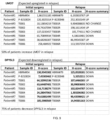
- the initial brain metastasis was obtained using neurosurgery and mice were followed over time until relapse was confirmed using bioluminescence imaging (Living Image software, version 4.5). Mice were sacrificed at endpoint (approximately 6 weeks post-surgery) and the relapsed tumor was microdissected. Both the initial brain metastasis and the relapsed one from the same mice (matched samples) were profiled with RNAseq.
- Brain colonization assays were performed by injecting 40,000 cancer cells intracranially (the right frontal cortex, approximately 1.5 mm lateral and 1 mm caudal flow bregma, and to a depth of 1 mm) by using a gas-tight Hamilton syringe and a stereotactic apparatus. Brain colonization was analyzed in vivo and ex vivo by BLI. Anesthetized mice (isoflurane) were injected retro-orbitally with Dluciferin (150 mg/kg; Syd Labs) and imaged with an IVIS machine (Perkin Elmer). Bioluminescence analysis was performed using Living Image software, version 4.5. Brain tumor resection was performed by adapting previously described procedures ( Morrissy et al., 2016.
- H2030-BrM3 (abbreviated as H2030-BrM) (Origin: Massague lab, Memorial Sloan Kettering Cancer Center) was cultured in RPMI1640 media supplemented with 10% FBS (fetal bovine serum), 2 mM L-glutamine, 100 IU/ml penicillin/ streptomycin, and 1 ⁇ g/ml amphotericin B.
- FBS fetal bovine serum
- 2 mM L-glutamine 100 IU/ml penicillin/ streptomycin
- 1 ⁇ g/ml amphotericin B 1 ⁇ g/ml amphotericin B.
- RNA Integrity numbers were 8.6 on average (range 5.9-9.5) when assayed on an Agilent 2100 Bioanalyzer. Sequencing libraries were prepared with the QuantSeq 3'mRNA-Seq Library Prep Kit (FWD) for Illumina (Lexogen, Cat. No. 015) by following manufacturer's instructions. Library generation was initiated by reverse transcription with oligodT priming, and a second strand synthesis was performed from random primers by a DNA polymerase. Primers from both steps contain Illumina-compatible sequences.
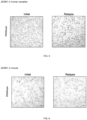
- RNA in situ hybridization Paraffin-embedded tissue from mouse brain metastases was sectioned and RNAscope 2.5 VS probes for Hs-DPYSL3 (540289, ACDbio), Hs- LMO7 (1169419-C1, ACDbio), Hs- JAGN1 (1169429-C1, ACDbio) were assayed on the Roche Ventana Discovery XT using the standardized automated protocols at the CNIO Histopathology Core Facility.
- Antibodies made use of were:
- Log2 Fold Change is the result of dividing the FPKM (Fragments per kilo base per million mapped reads) of the second value (relapsed metastasis) on the FPKM of the first value (initial brain metastasis) to get the Fold Change (FC). Then, the log2 fold change value from FPKM value is obtained.
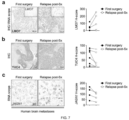
- the markers previously validated in mouse models i.e. LMO7, DPYSL3, JAGN1 were tested in matched human brain metastasis pre- and post-relapse.
- Results obtained are displayed in Figure 7 .
- LMO7 (a), DPYSL3 (also known as TUC4) (b) and JAGN1 (c) followed and reproduced the data on experimental models. I.e. LMO7 is upregulated in relapse, while DPYSL3 and JAGN1 are downregulated. While JAGN1 is only validated at RNA level (as corresponding antibodies were not functional), LMO7 and DPYSL3 have been validated at the protein level (as well as RNA).
- LMO7 is upregulated, as predicted from experimental models, in relapse samples in 50% of the cases. While DPYSL3 and JAGN1 are downregulated, as predicted from experimental models, in relapse samples in 75% of the cases.
Landscapes
- Health & Medical Sciences (AREA)
- Life Sciences & Earth Sciences (AREA)
- Chemical & Material Sciences (AREA)
- Immunology (AREA)
- Engineering & Computer Science (AREA)
- Organic Chemistry (AREA)
- Proteomics, Peptides & Aminoacids (AREA)
- Pathology (AREA)
- Analytical Chemistry (AREA)
- Molecular Biology (AREA)
- Physics & Mathematics (AREA)
- Wood Science & Technology (AREA)
- Zoology (AREA)
- Urology & Nephrology (AREA)
- Microbiology (AREA)
- Hematology (AREA)
- Biochemistry (AREA)
- General Health & Medical Sciences (AREA)
- Biomedical Technology (AREA)
- Biotechnology (AREA)
- Genetics & Genomics (AREA)
- Oncology (AREA)
- Hospice & Palliative Care (AREA)
- Cell Biology (AREA)
- Biophysics (AREA)
- General Physics & Mathematics (AREA)
- Medicinal Chemistry (AREA)
- Food Science & Technology (AREA)
- Bioinformatics & Cheminformatics (AREA)
- General Engineering & Computer Science (AREA)
- Measuring Or Testing Involving Enzymes Or Micro-Organisms (AREA)
Priority Applications (2)
| Application Number | Priority Date | Filing Date | Title |
|---|---|---|---|
| EP23382693.2A EP4488389A1 (fr) | 2023-07-05 | 2023-07-05 | Signature pour le pronostic de rechute de métastases cérébrales |
| PCT/EP2024/069048 WO2025008525A1 (fr) | 2023-07-05 | 2024-07-05 | Signature pour le prognostic des récidives de métastases cérébrales |
Applications Claiming Priority (1)
| Application Number | Priority Date | Filing Date | Title |
|---|---|---|---|
| EP23382693.2A EP4488389A1 (fr) | 2023-07-05 | 2023-07-05 | Signature pour le pronostic de rechute de métastases cérébrales |
Publications (1)
| Publication Number | Publication Date |
|---|---|
| EP4488389A1 true EP4488389A1 (fr) | 2025-01-08 |
Family
ID=87157878
Family Applications (1)
| Application Number | Title | Priority Date | Filing Date |
|---|---|---|---|
| EP23382693.2A Withdrawn EP4488389A1 (fr) | 2023-07-05 | 2023-07-05 | Signature pour le pronostic de rechute de métastases cérébrales |
Country Status (2)
| Country | Link |
|---|---|
| EP (1) | EP4488389A1 (fr) |
| WO (1) | WO2025008525A1 (fr) |
Citations (5)
| Publication number | Priority date | Publication date | Assignee | Title |
|---|---|---|---|---|
| US20100029748A1 (en) | 2008-08-04 | 2010-02-04 | Sloan-Kettering Institute For Cancer Research | Metastasis Promoting Genes and Proteins |
| CA2782620A1 (fr) * | 2009-12-01 | 2011-06-09 | Compendia Bioscience, Inc. | Classification des cancers |
| WO2012031008A2 (fr) | 2010-08-31 | 2012-03-08 | The General Hospital Corporation | Matières biologiques liées au cancer dans des microvésicules |
| US20210130903A1 (en) * | 2017-07-10 | 2021-05-06 | Cornell University | Targeting chromosomal instability and downstream cytosolic dna signaling for cancer treatment |
| US20210371932A1 (en) | 2018-06-01 | 2021-12-02 | Massachusetts Institute Of Technology | Methods and compositions for detecting and modulating microenvironment gene signatures from the csf of metastasis patients |
-
2023
- 2023-07-05 EP EP23382693.2A patent/EP4488389A1/fr not_active Withdrawn
-
2024
- 2024-07-05 WO PCT/EP2024/069048 patent/WO2025008525A1/fr not_active Ceased
Patent Citations (6)
| Publication number | Priority date | Publication date | Assignee | Title |
|---|---|---|---|---|
| US20100029748A1 (en) | 2008-08-04 | 2010-02-04 | Sloan-Kettering Institute For Cancer Research | Metastasis Promoting Genes and Proteins |
| CA2782620A1 (fr) * | 2009-12-01 | 2011-06-09 | Compendia Bioscience, Inc. | Classification des cancers |
| WO2011068839A1 (fr) | 2009-12-01 | 2011-06-09 | Compendia Bioscience, Inc. | Classification des cancers |
| WO2012031008A2 (fr) | 2010-08-31 | 2012-03-08 | The General Hospital Corporation | Matières biologiques liées au cancer dans des microvésicules |
| US20210130903A1 (en) * | 2017-07-10 | 2021-05-06 | Cornell University | Targeting chromosomal instability and downstream cytosolic dna signaling for cancer treatment |
| US20210371932A1 (en) | 2018-06-01 | 2021-12-02 | Massachusetts Institute Of Technology | Methods and compositions for detecting and modulating microenvironment gene signatures from the csf of metastasis patients |
Non-Patent Citations (6)
| Title |
|---|
| "Affymetrix GeneChip Human Genome U95 Set HG-U95A", GENBANK GEO, 11 March 2002 (2002-03-11), XP002293987 * |
| KAMER ET AL., TRANSL LUNG CANCER RES, vol. 9, no. 3, 2020, pages 682 - 692 |
| MORRISSY ET AL., NATURE, vol. 529, 2016, pages 351 - 357 |
| NGUYEN ET AL., CELL, vol. 138, 2009, pages 51 - 62 |
| SOIKE ET AL., SCIENTIFIC REPORTS, vol. 9, 2019, pages 14385 |
| SOIKE MICHAEL H. ET AL: "CD138 plasma cells may predict brain metastasis recurrence following resection and stereotactic radiosurgery", SCIENTIFIC REPORTS, vol. 9, no. 1, 7 October 2019 (2019-10-07), US, XP093113227, ISSN: 2045-2322, Retrieved from the Internet <URL:https://www.ncbi.nlm.nih.gov/pmc/articles/PMC6779906/pdf/41598_2019_Article_50298.pdf> DOI: 10.1038/s41598-019-50298-7 * |
Also Published As
| Publication number | Publication date |
|---|---|
| WO2025008525A1 (fr) | 2025-01-09 |
Similar Documents
| Publication | Publication Date | Title |
|---|---|---|
| Lee et al. | Human glioblastoma arises from subventricular zone cells with low-level driver mutations | |
| US20210222253A1 (en) | Identification of biomarkers of glioblastoma and methods of using the same | |
| CN108138209B (zh) | 通过原位扩增制备细胞游离核酸分子的方法 | |
| EP1756303B1 (fr) | Outil diagnostique permettant de diagnostiquer des lesions thyroidiennes benignes contre des lesions thyroidiennes malignes | |
| US10844436B2 (en) | Use of double-stranded DNA in exosomes: a novel biomarker in cancer detection | |
| CN109462996A (zh) | 通过rnaset2诊断炎性肠病的方法 | |
| CN102443627A (zh) | 用于乳腺癌的预后的方法和试剂盒 | |
| US20140073535A1 (en) | Molecular markers in prostate cancer | |
| CN101454668A (zh) | 癌症预测与预后以及监测癌症治疗的方法 | |
| Astolfi et al. | Targeted deep sequencing uncovers cryptic KIT mutations in KIT/PDGFRA/SDH/RAS-P wild-type GIST | |
| US20190276897A1 (en) | Egfr and pten gene alterations predicts survival in patients with brain tumor | |
| CN113166767A (zh) | 用于工程合成顺式调控dna的方法 | |
| JP2022528182A (ja) | 神経膠腫の診断用または予後予測用の組成物、及びそれに係わる情報を提供する方法 | |
| JP2006523456A (ja) | 分子細胞遺伝学的方法を用いる癌連鎖遺伝子および治療標的の確認 | |
| KR20220155178A (ko) | 방사선 치료 예후 예측용 또는 방사선 저항성 암 진단용 바이오마커 조성물 | |
| CN102471799B (zh) | Tivozanib应答预测 | |
| CN104011543B (zh) | 癌症的生物标记 | |
| EP4488389A1 (fr) | Signature pour le pronostic de rechute de métastases cérébrales | |
| CN104212884B (zh) | 胰腺神经内分泌肿瘤易感基因位点及检测方法和试剂盒 | |
| JP2006518031A (ja) | ガンの予測および予後、ならびにガン治療を監視するための方法 | |
| RU2812346C1 (ru) | Способ оценки детекции транслокаций гена alk в парафинизированных опухолевых образцах с помощью рнк-секвенирования | |
| EP2510113B1 (fr) | Altérations des gènes egfr et pten pour prédire la survie de patients atteints de tumeurs cérébrales | |
| EP4379064A1 (fr) | Procédés de diagnostic et dosage diagnostique comprenant la détection d'arnlnc | |
| EP2723896B1 (fr) | Mutations observées en cas de tumeurs pancréatiques | |
| KR102325356B1 (ko) | 유사유전자를 이용한 신경교종의 악성도 진단용 조성물 및 이의 이용 |
Legal Events
| Date | Code | Title | Description |
|---|---|---|---|
| PUAI | Public reference made under article 153(3) epc to a published international application that has entered the european phase |
Free format text: ORIGINAL CODE: 0009012 |
|
| STAA | Information on the status of an ep patent application or granted ep patent |
Free format text: STATUS: THE APPLICATION HAS BEEN PUBLISHED |
|
| AK | Designated contracting states |
Kind code of ref document: A1 Designated state(s): AL AT BE BG CH CY CZ DE DK EE ES FI FR GB GR HR HU IE IS IT LI LT LU LV MC ME MK MT NL NO PL PT RO RS SE SI SK SM TR |
|
| STAA | Information on the status of an ep patent application or granted ep patent |
Free format text: STATUS: THE APPLICATION IS DEEMED TO BE WITHDRAWN |
|
| 18D | Application deemed to be withdrawn |
Effective date: 20250709 |