EP4491024A1 - Landwirtschaftliche zusammensetzung und verfahren zur kultivierung von pflanzen damit - Google Patents
Landwirtschaftliche zusammensetzung und verfahren zur kultivierung von pflanzen damit Download PDFInfo
- Publication number
- EP4491024A1 EP4491024A1 EP23766815.7A EP23766815A EP4491024A1 EP 4491024 A1 EP4491024 A1 EP 4491024A1 EP 23766815 A EP23766815 A EP 23766815A EP 4491024 A1 EP4491024 A1 EP 4491024A1
- Authority
- EP
- European Patent Office
- Prior art keywords
- plants
- plant
- glutathione
- mass
- allantoin
- Prior art date
- Legal status (The legal status is an assumption and is not a legal conclusion. Google has not performed a legal analysis and makes no representation as to the accuracy of the status listed.)
- Pending
Links
Images


Classifications
-
- A—HUMAN NECESSITIES
- A01—AGRICULTURE; FORESTRY; ANIMAL HUSBANDRY; HUNTING; TRAPPING; FISHING
- A01N—PRESERVATION OF BODIES OF HUMANS OR ANIMALS OR PLANTS OR PARTS THEREOF; BIOCIDES, e.g. AS DISINFECTANTS, AS PESTICIDES OR AS HERBICIDES; PEST REPELLANTS OR ATTRACTANTS; PLANT GROWTH REGULATORS
- A01N47/00—Biocides, pest repellants or attractants, or plant growth regulators containing organic compounds containing a carbon atom not being member of a ring and having no bond to a carbon or hydrogen atom, e.g. derivatives of carbonic acid
- A01N47/08—Biocides, pest repellants or attractants, or plant growth regulators containing organic compounds containing a carbon atom not being member of a ring and having no bond to a carbon or hydrogen atom, e.g. derivatives of carbonic acid the carbon atom having one or more single bonds to nitrogen atoms
- A01N47/28—Ureas or thioureas containing the groups >N—CO—N< or >N—CS—N<
- A01N47/36—Ureas or thioureas containing the groups >N—CO—N< or >N—CS—N< containing the group >N—CO—N< directly attached to at least one heterocyclic ring; Thio analogues thereof
-
- A—HUMAN NECESSITIES
- A01—AGRICULTURE; FORESTRY; ANIMAL HUSBANDRY; HUNTING; TRAPPING; FISHING
- A01G—HORTICULTURE; CULTIVATION OF VEGETABLES, FLOWERS, RICE, FRUIT, VINES, HOPS OR SEAWEED; FORESTRY; WATERING
- A01G7/00—Botany in general
- A01G7/06—Treatment of growing trees or plants, e.g. for preventing decay of wood, for tingeing flowers or wood, for prolonging the life of plants
-
- A—HUMAN NECESSITIES
- A01—AGRICULTURE; FORESTRY; ANIMAL HUSBANDRY; HUNTING; TRAPPING; FISHING
- A01G—HORTICULTURE; CULTIVATION OF VEGETABLES, FLOWERS, RICE, FRUIT, VINES, HOPS OR SEAWEED; FORESTRY; WATERING
- A01G7/00—Botany in general
-
- A—HUMAN NECESSITIES
- A01—AGRICULTURE; FORESTRY; ANIMAL HUSBANDRY; HUNTING; TRAPPING; FISHING
- A01N—PRESERVATION OF BODIES OF HUMANS OR ANIMALS OR PLANTS OR PARTS THEREOF; BIOCIDES, e.g. AS DISINFECTANTS, AS PESTICIDES OR AS HERBICIDES; PEST REPELLANTS OR ATTRACTANTS; PLANT GROWTH REGULATORS
- A01N25/00—Biocides, pest repellants or attractants, or plant growth regulators, characterised by their forms, or by their non-active ingredients or by their methods of application, e.g. seed treatment or sequential application; Substances for reducing the noxious effect of the active ingredients to organisms other than pests
- A01N25/02—Biocides, pest repellants or attractants, or plant growth regulators, characterised by their forms, or by their non-active ingredients or by their methods of application, e.g. seed treatment or sequential application; Substances for reducing the noxious effect of the active ingredients to organisms other than pests containing liquids as carriers, diluents or solvents
-
- A—HUMAN NECESSITIES
- A01—AGRICULTURE; FORESTRY; ANIMAL HUSBANDRY; HUNTING; TRAPPING; FISHING
- A01N—PRESERVATION OF BODIES OF HUMANS OR ANIMALS OR PLANTS OR PARTS THEREOF; BIOCIDES, e.g. AS DISINFECTANTS, AS PESTICIDES OR AS HERBICIDES; PEST REPELLANTS OR ATTRACTANTS; PLANT GROWTH REGULATORS
- A01N41/00—Biocides, pest repellants or attractants, or plant growth regulators containing organic compounds containing a sulfur atom bound to a hetero atom
- A01N41/12—Biocides, pest repellants or attractants, or plant growth regulators containing organic compounds containing a sulfur atom bound to a hetero atom not containing sulfur-to-oxygen bonds, e.g. polysulfides
-
- A—HUMAN NECESSITIES
- A01—AGRICULTURE; FORESTRY; ANIMAL HUSBANDRY; HUNTING; TRAPPING; FISHING
- A01P—BIOCIDAL, PEST REPELLANT, PEST ATTRACTANT OR PLANT GROWTH REGULATORY ACTIVITY OF CHEMICAL COMPOUNDS OR PREPARATIONS
- A01P21/00—Plant growth regulators
Definitions
- the present invention relates to an agricultural composition and a method for cultivating a plant using the same.
- Glutathione which is a peptide composed of three amino acids, namely, L-cysteine, L-glutamic acid, and glycine, exists in many organisms including not only humans but also other animals, plants, and microorganisms, and is a compound important for an organism in terms of active oxygen elimination, detoxication, amino acid metabolism, and the like.
- glutathione exists in either of the following forms: reduced glutathione ( N -( N - ⁇ -L-glutamyl-L-cysteinyl)glycine, hereinafter referred to as "GSH” in some cases) in which the thiol group of an L-cysteine residue has a form of reduced SH; and oxidized glutathione (hereinafter referred to as "GSSG” in some cases) having a form in which the thiol groups of the L-cysteine residues of two GSH molecules are oxidized to form a disulfide bond between the two glutathione molecules.
- Glutathione is known to be useful in the fields of fertilizers, medicaments, cosmetics, and the like.
- allantoin (5-ureidohydantoin) is an intermediate product generated in a process of decomposition of a nucleobase (purine base).
- allantoin is generated from 5-hydroxyisouric acid by allantoin synthase (AS) and decomposed into allantoic acid by allantoinase (ALN).
- AS allantoin synthase
- ALN allantoinase
- Non-Patent Literature 1 discloses that an aln-1 variant strain of Arabidopsis thaliana produced by variation by destroying the ALN gene to allow allantoin accumulation in a plant has higher drought stress resistance than a wild-type strain.
- Patent Literature 1 discloses a fertilizer composition to be applied to a plant leaf and a method for facilitating the growth of a plant by applying the fertilizer composition to a plant, wherein the fertilizer composition is characterized by containing an oxidized glutathione and a fertilizer component.
- Patent Literature 2 discloses a method for facilitating the growth of a tuber or tuberous root of a plant, wherein oxidized glutathione is applied to a tuber-forming or tuberous root-forming plant in its flower bud-appearing stage.
- Patent Literature 3 discloses a high-temperature stress resistance improving agent containing allantoin as an active component, and aimed at improving the high-temperature stress resistance of a plant.
- Non-Patent Literature 1 Watanabe, S. et.al., Plant Cell Environ. 37: 1022-1036 (2014 )
- glutathione and allantoin are each known to have the effect of facilitating the growth of a plant and the effect of improving the stress resistance.
- An object herein is to provide a means that provides more enhanced advantageous effects, such as increased crop yield and improved stress resistance, than those achieved by applying each of glutathione and allantoin independently to a plant.
- the present inventors have discovered that applying a combination of glutathione and allantoin to a plant synergistically achieves advantageous effects, such as increasing crop yield and improving stress resistance. Specifically, the following are disclosed as means for solving the above-described problem.
- the present specification encompasses the disclosure of Japanese Patent Application Nos. 2022-034052 and 2023-015411 that serve as a basis for the priority of the present application.
- An agricultural composition and a method for cultivating a plant according to one or more embodiments of the present invention achieve advantageous synergistic effects, such as increasing crop yield and improving stress resistance.
- the glutathione may be reduced glutathione (GSH, N -( N - ⁇ -L-glutamyl-L-cysteinyl)glycine), oxidized glutathione (GSSG) in which two GSH molecules are bound via a disulfide bond, or a mixture of GSH and GSSG.
- the glutathione is preferably GSSG.
- the glutathione may encompass various forms of glutathione, such as free forms neither bound to another substance nor ionized, salts, hydrates, and mixtures of two or more thereof.
- GSSG When used as the glutathione, GSSG may be used in a mixture of GSSG and GSH, and the content of GSSG is preferably relatively larger than the content of GSH. More preferably, the total weight of GSSG (in terms of free forms) with respect to the total weight of GSSG and GSH (all in terms of free forms) is 70 mass% or more, more preferably 80 mass% or more, more preferably 90 mass% or more, still more preferably 95 mass% or more, still more preferably 98 mass% or more, most preferably 100 mass%.
- a salt of GSSG is not particularly limited, provided that it is one or more salts acceptable as fertilizers, such as ammonium salts, calcium salts, magnesium salts, sodium salts, or lithium salts, and is preferably one or more salts selected from the group consisting of ammonium salts, calcium salts, and magnesium salts.
- the GSSG salt include monoammonium salts of GSSG, hemicalcium salts or monocalcium salts of GSSG, and hemimagnesium salts or monomagnesium salts of GSSG.
- Allantoin is also called 5-ureidohydantoin, and a free form thereof has a structure represented by the following formula.
- Allantoin has one asymmetric carbon (represented by * in the formula), and is in the form of (R)-allantoin or (S)-allantoin.
- An allantoin to be used in one or more embodiments of the present invention may be (R)-allantoin, (S)-allantoin, or a mixture thereof.
- the allantoin can be synthesized, for example, from glyoxylic acid and urea. Alternatively, the allantoin may be derived or obtained from a plant or a microorganism.
- the allantoin may encompass various forms of allantoin, such as free forms neither bound to another substance nor ionized, salts, hydrates, and mixtures of two or more thereof.
- One or more embodiments of the present invention relate to an agricultural composition comprising glutathione and allantoin.
- Applying the agricultural composition to a plant such as a crop achieves advantageous effects, such as synergistically facilitating the growth of the plant, synergistically improving the resistance to high-temperature stress and/or drought stress, and enhancing the productivity of a harvest having a high commercial value.
- the agricultural composition comprises allantoin at preferably 40 parts by mass or more, more preferably 100 parts by mass or more, more preferably 200 parts by mass or more, more preferably 300 parts by mass or more, with respect to 100 parts by mass of glutathione.
- allantoin at preferably 40 parts by mass or more, more preferably 100 parts by mass or more, more preferably 200 parts by mass or more, more preferably 300 parts by mass or more, with respect to 100 parts by mass of glutathione.
- the plant growth facilitating effect and the high-temperature stress resistance and/or drought stress resistance improving effect of the glutathione and the allantoin are particularly high.
- the agricultural composition comprises allantoin at preferably 2000 parts by mass or less, more preferably 1800 parts by mass or less, more preferably 1600 parts by mass or less, more preferably 1000 parts by mass or less, still more preferably 800 parts by mass or less, particularly preferably 600 parts by mass or less, most preferably 400 parts by mass or less, with respect to 100 parts by mass of glutathione.
- the content of glutathione in the agricultural composition is not particularly limited, and is preferably 3 mass% or more, more preferably 5 mass% or more, preferably 40 mass% or less, more preferably 20 mass% or less, still more preferably 10 mass% or less.
- the content of allantoin in the agricultural composition is not particularly limited, and is preferably 5 mass% or more, more preferably 10 mass% or more, still more preferably 20 mass% or more, preferably 50 mass% or less, more preferably 40 mass% or less, still more preferably 30 mass% or less.
- the agricultural composition may be a solid composition or a liquid composition, and is preferably a solid composition from the viewpoint of storage stability.
- the agricultural composition may be a solid composition to be applied directly to an application site, such as soil for a plant, water, or the surface of a part of a plant (e.g., a surface of a leaf or a seed), or may be a solid composition that is diluted with water to form an aqueous solution prior to application, which is then applied to a plant.
- the form of the solid composition is not particularly limited, and may be an arbitrary form, such as a granular or powdery form.
- the agricultural composition in granular form can be produced, utilizing a granulation method such as agitation granulation or extrusion granulation.
- the agricultural composition when the agricultural composition is a liquid composition, the agricultural composition may be a liquid composition to be applied directly to an application site, such as soil for a plant, water, or the surface of a part of a plant (e.g., a surface of a leaf or a seed), or may be a liquid composition that is diluted with water to form a diluted solution prior to application, which is then applied to a plant.
- an application site such as soil for a plant, water, or the surface of a part of a plant (e.g., a surface of a leaf or a seed)
- the liquid composition include an aqueous solution.
- the content of glutathione may be 0.001 mass% or more and 2 mass% or less, and the content of allantoin may be 0.0015 mass% or more and 5 mass% or less.
- the dilution ratio may be, for example, 5 to 10000 times or 10 to 5000 times.
- the agricultural composition may comprise an inorganic salt, a binding agent, or the like in addition to glutathione and allantoin.
- the inorganic salt is preferably an inorganic salt containing an element useful as a fertilizer, such as potassium, nitrogen, phosphorus, calcium, or magnesium, and is particularly preferably one or more inorganic salts selected from the group consisting of nitrogen-containing inorganic salts, phosphorus-containing inorganic salts, and potassium-containing inorganic salts.
- an element useful as a fertilizer such as potassium, nitrogen, phosphorus, calcium, or magnesium
- inorganic salts selected from the group consisting of nitrogen-containing inorganic salts, phosphorus-containing inorganic salts, and potassium-containing inorganic salts.
- nitrogen-containing inorganic salt examples include ammonium sulfate and ammonium dihydrogenphosphate.
- examples of the phosphorus-containing inorganic salt include ammonium dihydrogenphosphate.
- examples of the potassium-containing inorganic salt include potassium sulfate.
- the agricultural composition comprises glutathione, allantoin, and one or more inorganic salts selected from the group consisting of nitrogen-containing inorganic salts, phosphorus-containing inorganic salts, and potassium-containing inorganic salts
- the agricultural composition comprises glutathione, allantoin, and the inorganic salt(s) in a total content of preferably 70 mass% or more, more preferably 80 mass% or more, more preferably 90 mass% or more, still more preferably 95 mass% or more, on a dry matter basis.
- binding agent examples include: carboxymethyl cellulose, methyl cellulose, ethyl cellulose, polyvinyl pyrrolidone, pullulan, acrylic acid-based polymer, polyvinyl alcohol, gelatin, agar, gum arabic, gum arabic powder, xanthan gum, trant gum, guar gum, gellan gum, locust bean gum, pregelatinized starch, macrogol, starch, soluble starch, dextrin, gum tragacanth, ⁇ -glucan, pectin, casein, soy protein, hydroxyethyl cellulose, acetyl cellulose, lignin sulfonic acid, carboxymethyl starch, hydroxyethyl starch, polyvinylmethyl ether, hydroxypropyl cellulose, hydroxypropylmethyl cellulose, polyethylene glycol, polyethylene oxide, polyvinyl pyrrolidone, shellac, rosin, tall oil, ester gum, polyvinyl acetate
- An example of a particularly preferable binding agent is a binding agent of a polymer compound. At least one selected from the group consisting of carboxymethyl cellulose and salts thereof, polyvinyl alcohol, starch, gum arabic, hydroxyethyl cellulose, lignin sulfonic acid and salts thereof, and polyethylene glycol is particularly preferable.
- the salt of carboxymethyl cellulose include: salts of alkali metals, such as sodium, potassium, and lithium; and salts of alkaline earth metals, such as magnesium and calcium. Carboxymethyl cellulose and salts thereof conceivably contribute to improving the storage stability of glutathione in the composition.
- a binding agent may achieve sustained release of glutathione when the agricultural composition, particularly the solid agricultural composition, is used for application to a plant.
- the content of the binding agent with respect to the total amount of the agricultural composition on a dry matter basis can be preferably 0.5 to 5 mass%, more preferably 1 to 3 mass%.
- a preferable binding agent is a nonpolymeric anionic surfactant, particularly a linear alkyl benzene sulfonic acid or a salt thereof.
- a nonpolymeric anionic surfactant is used as a binding agent, the content of the binding agent with respect to the total amount of the agricultural composition on a dry matter basis can be preferably 0.3 to 3 mass%, more preferably 0.5 to 2 mass%.
- the agricultural composition may further comprise water, an organic support, an excipient, or the like.
- organic support examples include: dry plant materials such as rice hulls, sawdust, soybean flour, corn stem, and vegetable fiber; and organic porous supports such as pulp flocs and activated carbon.
- excipient examples include lactose, trehalose, and cellulose.
- the agricultural composition may further comprise one or a plurality of the below-described additional additives, if desired.
- additional additives include, but are not limited to, humectants, colorants, defoamers, antifreezing agents, dispersants, preservatives, biological controlling agents, biocides, and emulsifiers.
- Another one or more embodiments of the present invention relate to a method for cultivating a plant, comprising:
- the cultivating method achieves advantageous effects, such as synergistically facilitating the growth of the plant, synergistically improving the resistance to high-temperature stress and/or drought stress, and enhancing the productivity of a harvest having a high commercial value.
- glutathione and allantoin are applied to a plant in such a manner that the amount of the allantoin is preferably 40 parts by mass or more, more preferably 100 parts by mass or more, more preferably 200 parts by mass or more, more preferably 300 parts by mass or more, with respect to 100 parts by mass of glutathione.
- the plant growth facilitating effect and the high-temperature stress resistance and/or drought stress resistance improving effect of the glutathione and the allantoin are particularly high.
- glutathione and allantoin are applied to a plant in such a manner that the amount of the allantoin is preferably 2000 parts by mass or less, more preferably 1800 parts by mass or less, more preferably 1600 parts by mass or less, more preferably 1000 parts by mass or less, still more preferably 800 parts by mass or less, particularly preferably 600 parts by mass or less, most preferably 400 parts by mass or less, with respect to 100 parts by mass of glutathione.
- an inorganic salt in addition to glutathione and allantoin is preferably applied to a plant.
- the inorganic salt is preferably an inorganic salt containing an element useful as a fertilizer, such as potassium, nitrogen, phosphorus, calcium, or magnesium, and is particularly preferably one or more inorganic salts selected from the group consisting of nitrogen-containing inorganic salts, phosphorus-containing inorganic salts, and potassium-containing inorganic salts.
- an element useful as a fertilizer such as potassium, nitrogen, phosphorus, calcium, or magnesium
- inorganic salts selected from the group consisting of nitrogen-containing inorganic salts, phosphorus-containing inorganic salts, and potassium-containing inorganic salts.
- nitrogen-containing inorganic salt examples include ammonium sulfate and ammonium dihydrogenphosphate.
- examples of the phosphorus-containing inorganic salt include ammonium dihydrogenphosphate.
- examples of the potassium-containing inorganic salt include potassium sulfate.
- glutathione and allantoin may be applied to a plant in separate periods, or glutathione and allantoin may be applied to a plant in the same period.
- glutathione and allantoin When glutathione and allantoin are applied to a plant in the same period, a composition comprising glutathione and allantoin may be applied to a plant, or a composition comprising glutathione and a composition comprising allantoin may be applied to a plant in the same period.
- glutathione and allantoin are applied to a plant preferably by applying, to the plant, an aqueous solution containing glutathione and allantoin or an aqueous solution containing glutathione and an aqueous solution containing allantoin.
- glutathione and allantoin to be applied to a plant are preferably in the form of an agricultural composition according to the above-described one or more embodiments of the present invention or in the form of an aqueous solution prepared by diluting the agricultural composition with water.
- a method for applying glutathione and allantoin to a plant is not particularly limited, provided that glutathione and allantoin can come into contact with a part of a plant, such as a seed, root, stem, or leaf of a plant. Glutathione and allantoin may be applied so as to come into direct contact with the part of a plant, or glutathione and allantoin may be applied to a cultivating support, such as soil where the part of a plant has taken root.
- glutathione and allantoin may be applied to a plant in amounts effective for achieving desired effects, such as facilitating the growth of a plant, improving the resistance to high-temperature stress and/or drought stress, and enhancing the productivity of a harvest having a high commercial value.
- the amounts of application thereof may be appropriately adjusted.
- a target plant in the cultivating method is not particularly limited, and may be any type of plant, such as a dicotyledon or a monocotyledon.
- Examples of the dicotyledon that may be a target of application include Pharbitis plants, Brassica plants, Solanum plants, Lactuca plants, Convolvulus plants, Ipomoea plants, Arabidopsis plants, Cuscuta plants, Dianthus plants, Stellaria plants, Minuartia plants, Cerastium plants, Sagina plants, Arenaria plants, Moehringia plants, Pseudostellaria plants, Honckenya plants, Spergula plants, Trifolium repens plants, Silene plants, Lychnis plants, Melandryum plants, Caryophyllaceae plants, Casuarinaceae plants, Saururaceae plants, Piperaceae plants, Chloranthaceae plants, Salicaceae plants, Myricaceae plants, Juglandaceae plants, Betulaceae plants, Fagaceae plants, Ulmaceae plants, Moraceae plants, Urticaceae plants, Podostemaceae plants, Proteace
- Examples of the monocotyledon that may be a target of application include Spirodela plants, Lemna plants, Cattleya plants, Cymbidium plants, Dendrobium plants, Allium plants, Phalaenopsis plants, Vanda plants, Paphiopedilum plants, Orchidaceae plants, Typhaceae plants, Sparganiaceae plants, Potamogetonaceae plants, Najadaceae plants, Scheuchzeriaceae plants, Alismataceae plants, Hydrocharitaceae plants, Triuridaceae plants, Cyperaceae plants, Arecaceae plants, Araceae plants, Eriocaulaceae plants, Commelinaceae plants, Pontederiaceae plants, Juncaceae plants, Stemonaceae plants, Liliaceae plants, Amaryllidaceae plants, Dioscoreaceae plants, Iridaceae plants, Musaceae plants, Zingiberaceae plants, Cannaceae plants, Burmanni
- a particularly preferable dicotyledon is an Asteraceae Lactuca plant, Brassicaceae Brassica plant, or Solanaceae Solanum plant.
- a particularly preferable Asteraceae Lactuca plant is lettuce, a particularly preferable Brassicaceae Brassica plant is broccoli, and a particularly preferable Solanaceae Solanum plant is a potato.
- Another particularly preferable dicotyledon is a Fabaceae plant or a Vitaceae plant.
- a particularly preferable Fabaceae plant is a soybean, and a particularly preferable Vitaceae plant is a grape.
- a particularly preferable monocotyledon is an Amaryllidaceae Allium plant.
- a particularly preferable Amaryllidaceae Allium plant is an onion.
- the target plant in the cultivating method is lettuce, broccoli, potato, onion, soybean, or grape in one of the preferable aspects, lettuce, broccoli, potato, or onion in one of the particularly preferable aspects, and soybean or grape in one of the particularly preferable aspects.
- the cultivating method can achieve effects such as facilitating the growth of a plant, improving the resistance to high-temperature stress and/or drought stress, and facilitating the enlargement of such a plant.
- the cultivating method can also achieve the effect of facilitating the coloration of a crop, that is, a quality-improving effect or the like.
- the cultivating method can achieve effects such as facilitating the growth of a plant and facilitating an increase in the diameter of the flower bud of a plant.
- the cultivating method can achieve effects such as facilitating the growth of a plant, and facilitating the enlargement of the tuber of a plant.
- the cultivating method can achieve effects such as facilitating the growth of a plant, and facilitating the enlargement of the bulb (onion bulb) of a plant.
- the cultivating method can achieve effects such as improving the stress resistance .
- the cultivating method can achieve the effect of facilitating the coloration of a crop, that is, a quality-improving effect or the like.
- the condition for cultivating a plant in the cultivating method is not particularly limited.
- the plant is preferably cultivated under a condition generally applicable depending on the plant, and may be cultivated under a high-temperature stress condition and/or a drought stress condition.
- a plant to which glutathione and allantoin have been applied possesses improved resistance to high-temperature stress and drought stress, and thus, can exhibit good viability even under a high-temperature stress condition and/or a drought stress condition.
- the high-temperature stress condition refers to a condition under which a part of a target plant is exposed to a temperature higher than a general growing temperature depending on the plant, for example, exposed to a temperature of 25°C or more, more specifically 30°C or more, still more preferably 50°C or less.
- the time per day during which a part of a plant is exposed to the high temperature is not particularly limited, and is, for example, 60 minutes or more, more specifically 90 minutes or more, more specifically 600 minutes or less.
- the drought stress condition refers to a condition under which water is applied to a target plant in an amount less than the general amount of water applied depending on the plant.
- Lettuce (the cultivar: Souther) was raised in a plant incubator. Three weeks after the seeding and four weeks after the seeding, a composition comprising 15 mass% oxidized glutathione (GSSG), 10 mass% allantoin (ALN), 5 mass% ferrous material, or 15 mass% seaweed extract, or a composition comprising a combination of 15 mass% GSSG and any of 10 mass% ALN, 5 mass% ferrous material, or 15 mass% seaweed extract was applied to the lettuce. Each composition was diluted 1000-fold, and each resulting solution was applied by bottom watering.
- the seedling was transplanted into a pot, grown in a glass greenhouse for two weeks, and then, evaluated (repeated 9 times).
- Lettuce (the cultivar: Souther) was raised in a plant incubator. Three weeks after the seeding and four weeks after the seeding, a fertilizer composition comprising 5 mass% GSSG, 10 mass% ALN, or 20 mass% ALN, a fertilizer composition comprising neither GSSG nor ALN, or a fertilizer composition comprising a combination of 5 mass% GSSG and each concentration of ALN was applied. Each fertilizer composition was diluted 1000-fold, and the resulting solution was applied by bottom watering.
- the seedling was transplanted into a pot, subjected to high-temperature stress at 40°C for two hours in a plant incubator, and grown for one week. Then, the seedling was transferred into a glass greenhouse, grown for one week, and then, evaluated (repeated 9 times).
- a GSSG ammonium salt at 5.7 mass%, allantoin at 22 mass%, inorganic salts (ammonium sulfate at 17.0 mass%, ammonium dihydrogenphosphate at 23.5 mass%, and potassium sulfate at 28.8 mass%), sodium linear alkyl benzene sulfonate at 1 mass%, and carboxymethyl cellulose at 2 mass% were mixed.
- a suitable amount (7.5 parts by mass) of water was added, and the resulting mixture was granulated using an agitation granulator (Model SPG-2, manufactured by Dalton Corporation) to obtain a granular composition.
- the ratio of nitrogen content, phosphoric acid content, and potassium content in the granular composition was 1/1/1 as nitrogen/phosphoric acid/potassium.
- the yield of the granular composition was 99%. Additionally, 94% of the particles that passed through a sieve having a 2 mm opening, which meant a good granulation property without a problem such as the formation of a large lump by granulation. In the following experiments, the granular composition was used.
- Broccoli (the cultivar: Ohayo) was cultivated under customary manuring practice and pest management, and the yield was determined.
- a 1000-fold diluted solution of a granular composition comprising GSSG and ALN was applied by irrigation one week before transplantation of a seedling into a cultivated field, and on the day of the transplantation.
- the ratio of nitrogen content, phosphoric acid content, and potassium content in the granular composition used in the nontreatment section was also 1/1/1 as nitrogen/phosphoric acid/potassium.
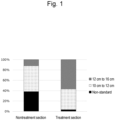
- Test 1 in Test 1, the heads of broccoli harvested in the treatment section and the nontreatment section on the above evaluation dates were classified into non-standard heads (each having a flower bud diameter of less than 10 cm), heads each having a flower bud diameter of 10 cm or more and less than 12 cm, and heads each having a flower bud diameter of 12 cm or more and 16 cm or less, and the percentage of the number of heads in each class was determined. The results of Test 1 are shown in Figure 1 . As shown in Figure 1 , the percentage of the non-standard heads was 38% in the nontreatment section, and 2% in the treatment section, which was much smaller.
- the percentage of the high-price standard heads i.e., the heads with a flower bud diameter of 12 cm or more and 16 cm or less, was 12% in the nontreatment section, and 57% in the treatment section, which was much larger.
- the results of Test 1 indicate that applying a combination of GSSG and ALN to broccoli has the effect of enhancing the productivity of broccoli having a flower bud of a high-price size.
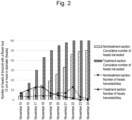
- Test 2 broccoli is harvested at the optimum time for harvesting, i.e., when the flower bud diameter has reached 12 cm. A shortened harvest period creates a high value. In addition, an earlier harvest date allows for a higher-price shipment, depending on the season. Accordingly, in Test 2, heads of broccoli were harvested individually in the treatment section and the nontreatment section when the flower bud diameter reached 12 cm, and the daily number and the cumulative number of heads of broccoli harvested were counted. The results of Test 2 are shown in Figure 2 . As shown in Figure 2 , for example, it took 10 days to harvest 50 heads in the nontreatment section, but only 5 days in the treatment section, reducing the harvest period by 5 days.
- Potatoes (the cultivar: Konahime) as a raw material for starch were cultivated under customary manuring practice and pest management, and the yield was determined.
- a 2000-fold diluted aqueous solution of a granular composition comprising GSSG and ALN (diluted with water) was sprayed on the leaves of potatoes at the stolon elongation stage, the flower-bud-appearing stage, the initial flowering stage, and the active flowering stage.
- water alone was applied to potatoes in the same manner as in the treatment section.
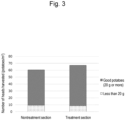
- the potatoes harvested in the treatment section and the nontreatment section on the above evaluation date were classified into potatoes weighing less than 20 g each (waste potatoes) and potatoes weighing 20 g or more each (good potatoes).
- the number of each class of potatoes harvested per m 2 of the cultivation area and the total number of potatoes harvested per m 2 of the cultivation area were determined. The results are shown in Figure 3 .
- the number of good potatoes harvested was 51.3 per m 2 in the nontreatment section, and 58.2 per m 2 in the treatment section, increasing the yield by 13%.
- the number of waste potatoes weighing less than 20 g each was 6% smaller in the treatment section than in the nontreatment section, while the number of good potatoes (weighing 20 g or more each) was 13% larger in the treatment section than in the nontreatment section, indicating that applying a combination of GSSG and ALN to potatoes has the effect of increasing the yield of potatoes within standards, which is directly related to value.
- Onions (the cultivar: Bullet bear) were cultivated under customary manuring practice and pest management, and the yield was determined.
- a 1000-fold diluted aqueous solution of a granular composition comprising GSSG and ALN (diluted with water) was sprayed on the leaves of onions in the initial swelling stage and the final swelling stage.
- water alone was applied to onions in the same manner as in the treatment section.
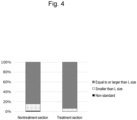
- the onions harvested in the treatment section and the nontreatment section on the above evaluation date were classified into non-standard onions (less than 5 cm), onions smaller than the L size (5 cm or more and less than 7 cm), and onions equal to or larger than the L size (7 cm or more), and the percentage of the number of onions in each class was determined.
- the results are shown in Figure 4 .
- the percentages of the non-standard onions and the onions smaller than the L size was lower, and the percentage of the onions equal to or larger than the L size, which was in a high-price range, was 9.5% higher in the treatment section than in the nontreatment section. This result indicates that applying a combination of GSSG and ALN to onions has the effect of increasing the yield of onions with high-price sizes.
- Lettuce (the cultivar: Cisco) was cultivated under customary manuring practice and pest management, and the yield was determined.
- a 1000-fold diluted aqueous solution of a granular composition comprising GSSG and ALN (diluted with water) was applied by irrigation one week before transplantation of a lettuce seedling into a cultivated field, and on the day of the transplantation.
- water alone was applied to lettuce in the same manner as in the treatment section.
- Test 1 after transplantation into the cultivated field, a high-temperature drought condition continued. Accordingly, the lettuce was intentionally allowed to be cultivated under the stress conditions, and the resistance to the high-temperature stress and the drought stress was evaluated. After the plantation, the lettuce was watered, then not watered, and then watered one hour before the evaluation. On the above evaluation date, the heads of lettuce were observed. Each head was rated, assuming that the head with 0 withered leaves had a rating of 4, 1 withered leaf had a rating of 3; 2 withered leaves had a rating of 2; 3 withered leaves had a rating of 1; and 4 withered leaves had a rating of 0. The percentages of the number of heads with each rating in the nontreatment section and the treatment section are shown in Figure 5 .
- Test 2 the heads from Test 1 continued to be grown until the optimum time for harvesting, and the yield was determined on the above evaluation date.
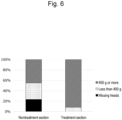
- the heads of lettuce in the treatment section and the nontreatment section on the above evaluation date were classified into missing heads (that withered and died during cultivation, and were not harvested), heads weighing less than 400 g each, and heads weighing 400 g or more each. The percentage of the number of heads in each class was determined.
- the results are shown in Figure 6 . As shown in Figure 6 , in the nontreatment section, there were many missing heads, and the percentage of high-priced heads weighing 400 g or more was 45%. In contrast, in the treatment section, there were no missing heads, and the percentage of heads weighing 400 g or more was 92%, which was significantly higher.
- the results of Test 2 indicate that applying a combination of GSSG and ALN to lettuce has the effect of keeping lettuce healthy even under stress after transplantation, and increasing the yield of a high-priced crop.
- ETR electron transfer rate
- the ETRs with a PAR set at 1488 are shown in Figure 7 .
- the ETR in T2 where water, which had no ROS (reactive oxygen species) reducing effect, was sprayed, was much lower than in T1 due to the paraquat application. It is known that paraquat application generates ROS, and therefore, the difference between T1 and T2 would be due to the paraquat application.
- T3 where the granular composition comprising GSSG and ALN was sprayed, showed a higher ETR than T2, indicating that the ROS in T3 were less than in T2.
- T4 to T6 where inorganic salts, ALN + inorganic salts, and GSSG + inorganic salts were sprayed, respectively, showed a higher ETR than T2, but the ROS reducing effect in T4 to T6 was not as remarkable as that in T3.
- a combination of GSSG and ALN has a high synergistic effect, i.e., a high ROS reducing effect. It is known that a plant generally generates ROS in its body when exposed to any type of stress, and that excessive ROS is harmful to the plant. Based on the reduction in ETR, it is considered that the application of a composition comprising GSSG and ALN, which has the ROS reducing effect, would improve the stress resistance of a plant.
- Treatment section Number Composition T1 Control section 2 strains - T2 4 strains Water T3 4 strains Composition comprising GSSG, ALN, and inorganic salts T4 4 strains Composition comprising inorganic salts T5 4 strains Composition comprising ALN and inorganic salts T6 4 strains Composition comprising GSSG and inorganic salts
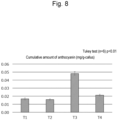
- a grape VR cell was cultured in an LS agar culture medium, and the cumulative amount of anthocyanin was measured.
- the solution for each treatment section as shown in Table 4 was delivered into the cell cluster by drops in an amount of 10 ⁇ L at the beginning of the culture, and in an amount of 100 ⁇ L on the 3rd day of culture.
- the amount of anthocyanin was measured on the 11th day of culture.
- the culture was performed at 27°C under light irradiation.
- Figure 8 shows the cumulative amounts of anthocyanin under the respective treatment conditions.
- a combination of GSSG and ALN resulted in a statistically significant increase in the cumulative amount of anthocyanin.
- Considering the fact that neither GSSG alone nor ALN alone affected the cumulative amount of anthocyanin it was revealed that a combination of GSSG and ALN achieved a noticeable synergistic effect to increase the cumulative amount of anthocyanin. Based on this result, it is expected that the application of a combination of GSSG and ALN would have an effect of facilitating the coloration of a crop, i.e., a quality-improving effect.
- any upper limit and any lower limit of the numerical ranges may be combined to define a preferred range.
- Any upper limits of the numerical ranges may be combined to define a preferred range.
- Any lower limits of the numerical ranges may be combined to define a preferred range.
- a numerical range described herein with the term "to” includes the values presented before and after the term "to" as a lower limit and an upper limit, respectively.
Landscapes
- Life Sciences & Earth Sciences (AREA)
- Environmental Sciences (AREA)
- Engineering & Computer Science (AREA)
- Wood Science & Technology (AREA)
- Zoology (AREA)
- Pest Control & Pesticides (AREA)
- Plant Pathology (AREA)
- Health & Medical Sciences (AREA)
- General Health & Medical Sciences (AREA)
- Botany (AREA)
- Biodiversity & Conservation Biology (AREA)
- Ecology (AREA)
- Forests & Forestry (AREA)
- Agronomy & Crop Science (AREA)
- Dentistry (AREA)
- Chemical & Material Sciences (AREA)
- Chemical Kinetics & Catalysis (AREA)
- General Chemical & Material Sciences (AREA)
- Toxicology (AREA)
- Agricultural Chemicals And Associated Chemicals (AREA)
Applications Claiming Priority (3)
| Application Number | Priority Date | Filing Date | Title |
|---|---|---|---|
| JP2022034052 | 2022-03-07 | ||
| JP2023015411 | 2023-02-03 | ||
| PCT/JP2023/008450 WO2023171639A1 (ja) | 2022-03-07 | 2023-03-07 | 農業用組成物及びそれを用いる植物の栽培方法 |
Publications (2)
| Publication Number | Publication Date |
|---|---|
| EP4491024A1 true EP4491024A1 (de) | 2025-01-15 |
| EP4491024A4 EP4491024A4 (de) | 2026-03-11 |
Family
ID=87935185
Family Applications (1)
| Application Number | Title | Priority Date | Filing Date |
|---|---|---|---|
| EP23766815.7A Pending EP4491024A4 (de) | 2022-03-07 | 2023-03-07 | Landwirtschaftliche zusammensetzung und verfahren zur kultivierung von pflanzen damit |
Country Status (4)
| Country | Link |
|---|---|
| US (1) | US20240423208A1 (de) |
| EP (1) | EP4491024A4 (de) |
| JP (1) | JPWO2023171639A1 (de) |
| WO (1) | WO2023171639A1 (de) |
Family Cites Families (15)
| Publication number | Priority date | Publication date | Assignee | Title |
|---|---|---|---|---|
| JP5452022B2 (ja) * | 2006-12-11 | 2014-03-26 | 独立行政法人科学技術振興機構 | 植物生長調整剤及びその利用 |
| CN103966021B (zh) * | 2014-05-16 | 2015-10-21 | 嘉兴市得百科新材料科技有限公司 | 一种烟用美拉德反应香料及其制备方法 |
| CN106305723A (zh) * | 2015-06-30 | 2017-01-11 | 陕西美邦农药有限公司 | 一种含尿囊素的复配植物生长调节组合物 |
| CN107922283B (zh) | 2015-07-03 | 2021-08-31 | 株式会社钟化 | 含有氧化型谷胱甘肽和肥料成分且用于对叶进行施用的肥料组合物 |
| MY191665A (en) | 2015-11-13 | 2022-07-06 | Tae Tech Inc | Systems and methods for frc plasma position stability |
| CN108882712B (zh) | 2016-01-29 | 2022-01-11 | 株式会社钟化 | 植物的高温胁迫抗性提高剂、提高高温胁迫抗性的方法、白化抑制剂、以及dreb2a基因表达促进剂 |
| JP2018115116A (ja) | 2017-01-16 | 2018-07-26 | 株式会社カネカ | 酸化型グルタチオンを用いて植物の生長を促進する方法 |
| EP3791714A4 (de) * | 2018-05-11 | 2022-01-26 | Kaneka Corporation | Verfahren zum kultivieren von pflanzen und farbbeschleuniger für traubenbeeren |
| JP6714233B2 (ja) * | 2018-11-20 | 2020-06-24 | 岡山県 | 葉物野菜の生産方法 |
| EP3949734A4 (de) * | 2019-03-29 | 2023-01-04 | Kaneka Corporation | Glutathion enthaltende zusammensetzung zur anwendung bei pflanzenblättern |
| CN111789781A (zh) * | 2019-04-09 | 2020-10-20 | 世堃堂(广东)生物科技有限公司 | 一种具有抗氧化美容养颜功效的复方肽乳液 |
| KR102277184B1 (ko) * | 2019-10-24 | 2021-07-14 | 주식회사 모드코스 | 화장료 조성물 |
| JP2023015411A (ja) | 2019-11-08 | 2023-02-01 | Nok株式会社 | 連結装置、及び、補助装置 |
| JP7454178B2 (ja) * | 2020-03-19 | 2024-03-22 | 国立大学法人神戸大学 | 結球性葉物野菜の結球促進方法及び結球促進剤 |
| CN111419755B (zh) * | 2020-04-30 | 2021-09-21 | 海口楠脂香业有限公司 | 一种沉香富勒烯精华液及其制备方法 |
-
2023
- 2023-03-07 EP EP23766815.7A patent/EP4491024A4/de active Pending
- 2023-03-07 JP JP2024506329A patent/JPWO2023171639A1/ja active Pending
- 2023-03-07 WO PCT/JP2023/008450 patent/WO2023171639A1/ja not_active Ceased
-
2024
- 2024-09-05 US US18/825,202 patent/US20240423208A1/en active Pending
Also Published As
| Publication number | Publication date |
|---|---|
| US20240423208A1 (en) | 2024-12-26 |
| WO2023171639A1 (ja) | 2023-09-14 |
| JPWO2023171639A1 (de) | 2023-09-14 |
| EP4491024A4 (de) | 2026-03-11 |
Similar Documents
| Publication | Publication Date | Title |
|---|---|---|
| US10662124B2 (en) | Fertilizer composition containing oxidized glutathione and fertilizer element for foliar application | |
| US9532519B2 (en) | Plant growth regulator and use thereof | |
| US10596221B2 (en) | Controlled-release fertilizer comprising oxidized glutathione | |
| US9930887B2 (en) | Compound for increasing amino acid content in plant, and use thereof | |
| US20080234133A1 (en) | Plant activator | |
| JP7508445B2 (ja) | グルタチオンを含む植物の葉に施用するための組成物 | |
| EP4491024A1 (de) | Landwirtschaftliche zusammensetzung und verfahren zur kultivierung von pflanzen damit | |
| US10182569B2 (en) | Composition comprising allantoin and method of applying allantoin to a plant | |
| CN113853114B (zh) | 用于对植物的叶施用的包含谷胱甘肽的组合物 |
Legal Events
| Date | Code | Title | Description |
|---|---|---|---|
| STAA | Information on the status of an ep patent application or granted ep patent |
Free format text: STATUS: THE INTERNATIONAL PUBLICATION HAS BEEN MADE |
|
| PUAI | Public reference made under article 153(3) epc to a published international application that has entered the european phase |
Free format text: ORIGINAL CODE: 0009012 |
|
| STAA | Information on the status of an ep patent application or granted ep patent |
Free format text: STATUS: REQUEST FOR EXAMINATION WAS MADE |
|
| 17P | Request for examination filed |
Effective date: 20240904 |
|
| AK | Designated contracting states |
Kind code of ref document: A1 Designated state(s): AL AT BE BG CH CY CZ DE DK EE ES FI FR GB GR HR HU IE IS IT LI LT LU LV MC ME MK MT NL NO PL PT RO RS SE SI SK SM TR |
|
| DAV | Request for validation of the european patent (deleted) | ||
| DAX | Request for extension of the european patent (deleted) | ||
| A4 | Supplementary search report drawn up and despatched |
Effective date: 20260209 |
|
| RIC1 | Information provided on ipc code assigned before grant |
Ipc: A01N 41/12 20060101AFI20260203BHEP Ipc: A01G 7/06 20060101ALI20260203BHEP Ipc: A01N 25/02 20060101ALI20260203BHEP Ipc: A01N 47/36 20060101ALI20260203BHEP Ipc: A01P 21/00 20060101ALI20260203BHEP |