EP4491025A1 - Procédé de réduction ou de prévention de l'effet de stress salin sur une plante - Google Patents
Procédé de réduction ou de prévention de l'effet de stress salin sur une plante Download PDFInfo
- Publication number
- EP4491025A1 EP4491025A1 EP23766769.6A EP23766769A EP4491025A1 EP 4491025 A1 EP4491025 A1 EP 4491025A1 EP 23766769 A EP23766769 A EP 23766769A EP 4491025 A1 EP4491025 A1 EP 4491025A1
- Authority
- EP
- European Patent Office
- Prior art keywords
- group
- plant
- formula
- salt stress
- compound
- Prior art date
- Legal status (The legal status is an assumption and is not a legal conclusion. Google has not performed a legal analysis and makes no representation as to the accuracy of the status listed.)
- Withdrawn
Links
Images



Classifications
-
- A—HUMAN NECESSITIES
- A01—AGRICULTURE; FORESTRY; ANIMAL HUSBANDRY; HUNTING; TRAPPING; FISHING
- A01N—PRESERVATION OF BODIES OF HUMANS OR ANIMALS OR PLANTS OR PARTS THEREOF; BIOCIDES, e.g. AS DISINFECTANTS, AS PESTICIDES OR AS HERBICIDES; PEST REPELLANTS OR ATTRACTANTS; PLANT GROWTH REGULATORS
- A01N43/00—Biocides, pest repellants or attractants, or plant growth regulators containing heterocyclic compounds
- A01N43/713—Biocides, pest repellants or attractants, or plant growth regulators containing heterocyclic compounds having rings with four or more nitrogen atoms as the only ring hetero atoms
-
- A—HUMAN NECESSITIES
- A01—AGRICULTURE; FORESTRY; ANIMAL HUSBANDRY; HUNTING; TRAPPING; FISHING
- A01P—BIOCIDAL, PEST REPELLANT, PEST ATTRACTANT OR PLANT GROWTH REGULATORY ACTIVITY OF CHEMICAL COMPOUNDS OR PREPARATIONS
- A01P21/00—Plant growth regulators
-
- A—HUMAN NECESSITIES
- A01—AGRICULTURE; FORESTRY; ANIMAL HUSBANDRY; HUNTING; TRAPPING; FISHING
- A01G—HORTICULTURE; CULTIVATION OF VEGETABLES, FLOWERS, RICE, FRUIT, VINES, HOPS OR SEAWEED; FORESTRY; WATERING
- A01G7/00—Botany in general
- A01G7/06—Treatment of growing trees or plants, e.g. for preventing decay of wood, for tingeing flowers or wood, for prolonging the life of plants
-
- Y—GENERAL TAGGING OF NEW TECHNOLOGICAL DEVELOPMENTS; GENERAL TAGGING OF CROSS-SECTIONAL TECHNOLOGIES SPANNING OVER SEVERAL SECTIONS OF THE IPC; TECHNICAL SUBJECTS COVERED BY FORMER USPC CROSS-REFERENCE ART COLLECTIONS [XRACs] AND DIGESTS
- Y02—TECHNOLOGIES OR APPLICATIONS FOR MITIGATION OR ADAPTATION AGAINST CLIMATE CHANGE
- Y02A—TECHNOLOGIES FOR ADAPTATION TO CLIMATE CHANGE
- Y02A40/00—Adaptation technologies in agriculture, forestry, livestock or agroalimentary production
- Y02A40/10—Adaptation technologies in agriculture, forestry, livestock or agroalimentary production in agriculture
Definitions
- the present invention relates to a method for reducing or preventing influence of salt stress on a plant.
- Salt stress is a state of cells and individuals under depression or tension, observed under environmental conditions in which soil salinity has shifted to the high concentration side from an optimum concentration for growth.
- Salt stress is caused by the accumulation of salts, typically sodium chloride, and is observed not only in coastal areas into which seawater can flood and penetrate, but also in arid areas and in salt-accumulated soils that are artificially created by improper irrigation.
- the influence of salt stress appears noticeably as stunted growth and reduced productivity. It is desired to reduce or prevent such influence of salt stress on plants.
- Patent Document 1 discloses a safener for crops, containing hydroxyisoxazole or the like as an active ingredient.
- the safener is a composition for reducing chemical injury to crops, used in combination with an agricultural material for weed and pest control or used alone before or after the use of the agricultural material, and is used when known or unknown undesirable chemical injury to crops, such as growth injury, growth inhibition, growth suppression, appearance of brown spots, tiller suppression, etiolation, leaf blight, withering and death, wilting, chlorosis, twisting, browning, and root growth inhibition, are supposed with use of the agricultural material.
- Patent Document 2 discloses a plant growth promoter containing a compound of formula (1-31) and a compound of formula (2-13) as active ingredients.
- Patent Document 3 discloses a plant disease prevention and control agent containing a compound of formula (1)-7 as an active ingredient.
- An object of the present invention is to provide a method for reducing or preventing influence of salt stress on a plant.
- the present invention includes the following embodiments.
- the present invention is expected to produce an effect of reducing or preventing influence of salt stress on plants.
- the present invention can improve the health of plant growth in soils in coastal areas into which seawater can flood and penetrate, or in salt-accumulated soils that are created in arid areas and that are artificially created by improper irrigation.
- the present invention can improve the quality and amount of crops even when subjected to salt stress.
- a method, according to the present invention, for reducing or preventing influence of salt stress on a plant includes applying at least one compound selected from the group consisting of compounds of formula (I) (hereinafter may be referred to as compound (I)) and salts thereof (hereinafter may be referred to as the salt of compound (I)) to a plant exposed to salt stress or a plant potentially exposed to salt stress. (wherein, in formula (I),
- the wavy line represents an undefined single stereo bond (see Non-patent Document 1).
- the compound of formula (I) may be the E isomer, the Z isomer, or a mixture of the E isomer and the Z isomer.
- the mixture of the E isomer and the Z isomer may be isolated into either the E isomer or the Z isomer by separation and purification.
- the compound of formula (I) is preferably the Z isomer from the viewpoint of being more effective in reducing or preventing influence of salt stress on plants.
- the E isomer can be converted into the Z isomer or the Z isomer into the E isomer by the action of light or other factors, and mixtures of the E isomer and the Z isomer tend to stabilize in a certain ratio.
- the ratio of the E isomer and the Z isomer for stabilization depends on the compound.
- a methyl group, an ethyl group, an n-propyl group, an isopropyl group, an n-butyl group, an isobutyl group, a s-butyl group, a t-butyl group, an amyl group, an isoamyl group, a s-amyl group, a t-amyl group, a hexyl group or the like may be exemplified.
- a methyl group is preferred.
- C1-C6 represents that the number of carbon atoms forming the group is 1 to 6.
- halogen group represented by X in formula (I) a chlorine group, a bromine group, an iodine group, a fluorine group or the like may be exemplified. Among these halogen groups, a chlorine group or a fluorine group is preferred.
- n represents the number of Xs and is an integer of 0 to 2. When n is 2 or more, Xs are the same as or different from each other. Preferably, n is 0.
- halogen group represented by Y in formula (I) a chlorine group, a bromine group, an iodine group, a fluorine group or the like may be exemplified. Among these halogens, a chlorine or fluorine group is preferred.
- m represents the number of Ys and is an integer of 0 to 3. When m is 2 or more, Ys are the same as or different from each other. Preferably, m is 0.
- a methyl group, an ethyl group, an n-propyl group, an isopropyl group, an n-butyl group, an isobutyl group, a s-butyl group, a t-butyl group, an amyl group, an isoamyl group, a s-amyl group, a t-amyl group, a hexyl group, a heptyl group, an octyl group or the like may be exemplified.
- a butyl group is preferred.
- C1-C8 represents that the number of carbon atoms forming the group is 1 to 8.
- a methoxy group, an ethoxy group, an n-propoxy group, an isopropoxy group, an n-butoxy group, an isobutoxy group, a s-butoxy group, a t-butoxy group, an n-amyloxy group, an isoamyloxy group, a s-amyloxy group, a t-amyloxy group, a hexyloxy group, a heptoxy group, an octyloxy group or the like may be exemplified.
- a butoxy group, particularly a t-butoxy group is preferred.
- compound (I) is one in which R is a methyl group, n is 0, m is 0, and Z is a t-butoxy group (compound of formula (I)-1).
- the salt of compound (I) is not particularly limited as long as it is agriculturally and horticulturally acceptable.
- examples include a salt of an inorganic acid, such as hydrochloric acid or sulfuric acid; a salt of an organic acid, such as acetic acid or lactic acid; a salt of an alkali metal, such as lithium, sodium, or potassium; a salt of an alkaline-earth metal, such as calcium or magnesium; a salt of a transition metal, such as iron or copper; a salt of an organic base, such as triethylamine, tributylamine, pyridine, and hydrazine; and an ammonium salt.
- an inorganic acid such as hydrochloric acid or sulfuric acid
- a salt of an organic acid such as acetic acid or lactic acid
- a salt of an alkali metal such as lithium, sodium, or potassium
- a salt of an alkaline-earth metal such as calcium or magnesium
- a salt of a transition metal such as iron
- Compound (I) or the salt of compound (I) is not particularly limited by its method for producing and may be obtained by using a known chemical reaction.
- the salt of compound (I) may be obtained from compound (I) using a known chemical reaction.
- Methods for producing compound (I) or a salt of compound (I) of the present invention include, for example, the method described in Patent Document 3.
- Compound (I) and/or a salt of compound (I) to be applied may be the compound (I) and/or salt of compound (I) as it is, or a composition containing the compound (I) and/or salt of compound (I) (a composition for reducing or preventing influence of salt stress on a plant).
- composition of the present invention contains as an active ingredient at least one compound selected from the group consisting of compounds of formula (I) and salts thereof.
- the composition of the present invention may contain other constituents in addition to the compound (I) and/or salt of compound (I).
- the amount of the compound (I) and/or salt of compound (I) in the composition of the present invention varies depending on the form of the formulation, the application method, and other conditions and is preferably 0.5% to 95% by mass, more preferably 2% to 70% by mass.
- composition of the present invention may contain, as other constituents, for example, a solid carrier, a liquid carrier, a dispersant, a diluent, an emulsifier, a spreader, a thickener, and an adjuvant that are conventionally used in the formulation.
- a solid carrier for example, a solid carrier, a liquid carrier, a dispersant, a diluent, an emulsifier, a spreader, a thickener, and an adjuvant that are conventionally used in the formulation.
- a wettable powder, a liquid formulation, an oil formulation, a powder formulation, a granular formulation, a suspension concentrate(flowable) or the like may be exemplified.
- solid carrier or liquid carrier talc, clay, bentonite, kaolin, siliceous earth, montmorillonite, mica, vermiculite, gypsum, calcium carbonate, white carbon, wood powder, starch, alumina, silicate, glycopolymer, a wax, water, an alcohol (methyl alcohol, ethyl alcohol, n-propyl alcohol, isopropyl alcohol, n-butyl alcohol, ethylene glycol, benzyl alcohol or the like), a petroleum fraction (petroleum ether, kerosene, solvent naphtha or the like), an aliphatic or alicyclic hydrocarbon (n-hexane, cyclohexane or the like), an aromatic hydrocarbon (benzene, toluene, xylene, ethylbenzene, chlorobenzene, cumene, methylnaphthalene or the like), a halogenated hydrocarbon (chloroform, dichloromethane,
- a nonionic surfactant polyoxyethylene alkyl ether, polyoxyethylene alkyl ester, polyoxyethylene alkyl phenyl ether, polyoxyethylene sorbitan alkyl ester, sorbitan alkyl ester or the like
- an anionic surfactant alkylbenzenesulfonate, alkyl sulfosuccinate, polyoxyethylene alkyl sulfate, arylsulfonate or the like
- a cationic surfactant an alkylamine, a polyoxyethylene alkylamine, a quaternary ammonium salt or the like
- an amphoteric surfactant alkylaminoethylglycine, alkyl dimethyl betaine or the like
- polyvinyl alcohol hydroxypropyl cellulose, carboxymethyl cellulose, gum arabic, tragacanth gum, xanthan gum, polyvinyl acetate, gelatin, casein, sodium alginate
- composition of the present invention may contain a known agricultural chemical, a known fertilizer, or the like as other constituents.
- a known agricultural chemical an agricultural and horticultural fungicide, a plant growth regulator, an insecticide, a miticide or the like may be exemplified.
- Sensitivity to salt stress varies among plant species and also varies among the individuals of the same species depending on their growth stage. Additionally, the sensitivity is affected by weather conditions, such as temperature, humidity, and illuminance, and physicochemical environmental conditions, such as the type of salt and the state of soil moisture.
- the plant to which the present invention is applied can be a plant exposed to salt stress or a plant potentially exposed to salt stress and is otherwise not particularly limited.
- a Poaceae cereal such as rice, barley, wheat, Japanese millet, corn, or foxtail millet
- a vegetable such as pumpkin, turnip, cabbage, radish, Chinese cabbage, spinach, sweet pepper, or tomato
- a flowering plant such as chrysanthemum, gerbera, pansy, orchid, peony, or tulip
- a bean such as azuki bean, common bean, soybean, peanut, broad bean, or pea
- a tuber crop such as potato, sweet potato, dasheen, yam, or taro
- an onion such as bunching onion, bulb onion, or rakkyo, or the like
- the application to a plant may be directly or indirectly performed on the plant.
- spray or application to a planted plant seeds, leaves, or the like
- spray or pouring over or mixing with the soil in which the plant is planted spray to seeds (seeds, bulbs, or the like) of the plant or coating seeds, spray or addition to the water medium in which the plant is planted, or the like
- spray or addition to the water medium in which the plant is planted, or the like may be exemplified.
- foliar spray is performed preferably by applying 50 L to 300 L of a solution per 10 ares with an active ingredient concentration of preferably 1 ppm to 10000 ppm, more preferably 10 ppm to 1000 ppm.
- Soil application and water-surface application are performed preferably by applying 0.1 g to 1000 g, particularly preferably 10 g to 100 g, of active ingredient per 10 ares.
- seed application is performed preferably by applying 0.001 g to 50 g of active ingredient per 1 kg of seeds. It is, therefore, preferable to dilute the composition of the present invention with water to a desired concentration when the composition is applied.
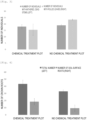
- a flowable agent containing 10% of the compound of formula (I)-1 was diluted 10 3 times and 10 4 times with water to obtain chemical solution 1a and chemical solution 1b, respectively.
- the recovery percentage was calculated from the following equation: X ⁇ Y / Z ⁇ Y ⁇ 100
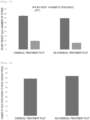
- a flowable agent containing 10% of the compound of formula (I)-1 was diluted 10 6 times with water to obtain chemical solution 2a.
- Example 2a which was subjected to salt stress using the compound of formula (I)-1 of the present invention, exhibited more recovery than Comparative Example 2a, which was subjected to salt stress without using the compound of formula (I)-1.
- a flowable agent containing 10% of the compound of formula (I)-1 was diluted 10 5 times and 10 7 times with water to obtain chemical solution 3a and chemical solution 3b, respectively.
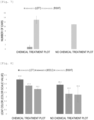
- Example 4a 10 g/L Sodium chloride aqueous solution a was prepared. Aqueous solution a was allowed to flow into the two pots to which chemical solution 4 had been dropped under submerged conditions and two pots to which chemical solution 4 was not dropped under submerged conditions on the 57th day after sowing (Example 4a and Comparative Example 4a).
- Tables 1 to 15 present the results of the above measurements.
- Example 4a which was subjected to salt stress using the compound of formula (I)-1 of the present invention, exhibited better values than Comparative Example 4a, which was subjected to salt stress without using the compound of formula (I)-1 in many measurements.
- Plastic pots were filled with Kannami soil, and seeds of edible corn (Idaho Sweet 88) and soybean (Enrei) were sowed in their respective pots, three seeds for each pot (3 cm in depth). Each test was repeated three times. The plants were grown with subirrigation in a greenhouse.
- a flowable agent containing 5% of the compound of formula (I)-1 was diluted 10 3 times with water to prepare chemical solution 5, and 17.3 mL of this chemical solution was poured for each pot on the 8th day after sowing (only Example 5a).
- tap water was misted from above on weekends and holidays, and 50 mL of tap water was poured over the soil for each pot every weekday.
- Example 5a which was subjected to salt stress using the compound of formula (I)-1 according to the present invention, corn and soybean each exhibited better values than those in Comparative Example 5a, which was subjected to salt stress without using the compound of formula (I)-1.
- the pots were allowed to stand in a growth chamber (20°C dark room) for 4 days and then moved to a greenhouse.
- a flowable agent containing 5% of a compound of formula (I)-1 was diluted 10 3 times with water to prepare chemical solution 6, and 17.3 mL of this chemical solution was poured for each pot on the 7th day after sowing (only Example 6a).
- Table 5 presents the results. [Table 5] Largest root length Number of rooted individuals Plant height Top dry weight Root dry weight Chemical name Salt treatme nt Wheat cm A Number A cm A g A g A Example 6a 8g/L NaCl 18.3 100 8.0 104 29.3 98 0.059 96 0.034 94 Comparativ e Example 6a 19.0 104 5.7 74 28.0 93 0.060 98 0.025 68 Comparativ e Example 6b None 18.3 100 7.7 100 30.0 100 0.062 100 0.036 100 A: number relative to 100 of Comparative Example 6b
- Example 6a which was subjected to salt stress using the compound of formula (I)-1 according to the present invention, the number of rooted individuals, the plant height, and the root dry weight were better than those in Comparative Example 6a, which was subjected to salt stress without using the compound of formula (I)-1.
Landscapes
- Life Sciences & Earth Sciences (AREA)
- Plant Pathology (AREA)
- Environmental Sciences (AREA)
- Zoology (AREA)
- Engineering & Computer Science (AREA)
- Wood Science & Technology (AREA)
- Pest Control & Pesticides (AREA)
- Chemical Kinetics & Catalysis (AREA)
- General Chemical & Material Sciences (AREA)
- Chemical & Material Sciences (AREA)
- Botany (AREA)
- Agronomy & Crop Science (AREA)
- Health & Medical Sciences (AREA)
- Dentistry (AREA)
- General Health & Medical Sciences (AREA)
- Agricultural Chemicals And Associated Chemicals (AREA)
- Organic Low-Molecular-Weight Compounds And Preparation Thereof (AREA)
Applications Claiming Priority (2)
| Application Number | Priority Date | Filing Date | Title |
|---|---|---|---|
| JP2022034791 | 2022-03-07 | ||
| PCT/JP2023/008219 WO2023171593A1 (fr) | 2022-03-07 | 2023-03-06 | Procédé de réduction ou de prévention de l'effet de stress salin sur une plante |
Publications (1)
| Publication Number | Publication Date |
|---|---|
| EP4491025A1 true EP4491025A1 (fr) | 2025-01-15 |
Family
ID=87935014
Family Applications (1)
| Application Number | Title | Priority Date | Filing Date |
|---|---|---|---|
| EP23766769.6A Withdrawn EP4491025A1 (fr) | 2022-03-07 | 2023-03-06 | Procédé de réduction ou de prévention de l'effet de stress salin sur une plante |
Country Status (5)
| Country | Link |
|---|---|
| US (1) | US20250151729A1 (fr) |
| EP (1) | EP4491025A1 (fr) |
| JP (1) | JP7792503B2 (fr) |
| CA (1) | CA3253360A1 (fr) |
| WO (1) | WO2023171593A1 (fr) |
Family Cites Families (8)
| Publication number | Priority date | Publication date | Assignee | Title |
|---|---|---|---|---|
| WO2003016303A1 (fr) | 2001-08-20 | 2003-02-27 | Dainippon Ink And Chemicals, Inc. | Derive de tetrazoyle oxime et produit chimique agricole contenant ledit derive comme principe actif |
| KR101309978B1 (ko) | 2008-07-02 | 2013-09-17 | 닛뽕소다 가부시키가이샤 | 식물 성장 촉진제 |
| CN106922695A (zh) * | 2015-12-30 | 2017-07-07 | 江苏龙灯化学有限公司 | 一种杀菌组合物 |
| EP3054014A3 (fr) * | 2016-05-10 | 2016-11-23 | BASF Plant Science Company GmbH | Utilisation d'un fongicide sur des plantes transgéniques. |
| JP6774575B2 (ja) | 2018-02-23 | 2020-10-28 | 三井化学アグロ株式会社 | 殺菌性化合物を有効成分とする薬害軽減剤、並びに該薬害軽減剤と除草性化合物を含む薬害軽減された除草性組成物 |
| GB201820729D0 (en) | 2018-12-19 | 2019-01-30 | Syngenta Participations Ag | Plant growth regulator compositions |
| GB2580073B (en) | 2018-12-20 | 2021-03-24 | Vanabot Ltd | Robotic system |
| JP7414665B2 (ja) | 2020-08-19 | 2024-01-16 | 株式会社東芝 | ガス分析装置 |
-
2023
- 2023-03-06 CA CA3253360A patent/CA3253360A1/fr active Pending
- 2023-03-06 WO PCT/JP2023/008219 patent/WO2023171593A1/fr not_active Ceased
- 2023-03-06 US US18/839,991 patent/US20250151729A1/en active Pending
- 2023-03-06 JP JP2024506300A patent/JP7792503B2/ja active Active
- 2023-03-06 EP EP23766769.6A patent/EP4491025A1/fr not_active Withdrawn
Also Published As
| Publication number | Publication date |
|---|---|
| JP7792503B2 (ja) | 2025-12-25 |
| CA3253360A1 (fr) | 2025-03-04 |
| WO2023171593A1 (fr) | 2023-09-14 |
| US20250151729A1 (en) | 2025-05-15 |
| JPWO2023171593A1 (fr) | 2023-09-14 |
Similar Documents
| Publication | Publication Date | Title |
|---|---|---|
| SU1788881A3 (ru) | Cпocoб peгулиpobahия pocta kульtуphыx pactehий | |
| JP4877679B2 (ja) | 植物成長調整剤 | |
| EA013074B1 (ru) | Синергетические фунгицидные композиции | |
| EA022116B1 (ru) | Пестицидные смеси, включающие изоксазолиновые производные и инсектицид | |
| EA019005B1 (ru) | Фунгицидная композиция | |
| EA030055B1 (ru) | Комбинации активных соединений, содержащие (тио)карбоксамидное производное и фунгицидное соединение | |
| RU2310328C2 (ru) | Фунгицидные комбинации биологически активных веществ | |
| SU1309909A3 (ru) | Способ получени производных @ -фенилпиразола | |
| WO2012043813A1 (fr) | Nouveau composé ayant une activité du type strigolactone et son utilisation | |
| JP2007269803A (ja) | 植物の成長を調節するためのn−アリールピラゾール又はn−ヘテロアリールピラゾール化合物の使用 | |
| EA016544B1 (ru) | Фунгицидные комбинации биологически активных веществ | |
| EA032177B1 (ru) | Комбинации активных соединений, которые содержат (тио)карбоксамидное производное и фунгицидные соединения | |
| CN112602718A (zh) | 一种含氟唑菌酰羟胺和Cyclobutrifluram的杀线虫农用组合物 | |
| CS215077B2 (en) | Means for regulation of the plant growth | |
| CA2940348A1 (fr) | Procede de lutte contre des nuisibles du soja | |
| CS219929B2 (en) | Means for destruction or/and profylaxy of infections brought about by fytopathogennous microorganisms and method of making the active substances | |
| US20250151729A1 (en) | Method for reducing or preventing effect of salt stress on plant | |
| CN109956904B (zh) | 吡唑酰胺类化合物及其应用和杀菌剂 | |
| WO2019134840A1 (fr) | Lutte contre les ravageurs de plants de soja avec des composés méso-ioniques | |
| KR20060115904A (ko) | 식물 성장 조절 | |
| JPS58210068A (ja) | 1−アゾリル−2−オキシイミノブタン誘導体類 | |
| CA1202192A (fr) | Methode d'accroissement de la biomasse des plantes | |
| JPS62249978A (ja) | トリアゾール化合物、その製造法及びそれを含有する植物生長調節組成物 | |
| JP6842082B2 (ja) | 植物成長調整剤 | |
| KR940011132B1 (ko) | 벤즈아미드 유도체 및 그를 함유하는 식물 성장 조절제 |
Legal Events
| Date | Code | Title | Description |
|---|---|---|---|
| STAA | Information on the status of an ep patent application or granted ep patent |
Free format text: STATUS: THE INTERNATIONAL PUBLICATION HAS BEEN MADE |
|
| PUAI | Public reference made under article 153(3) epc to a published international application that has entered the european phase |
Free format text: ORIGINAL CODE: 0009012 |
|
| STAA | Information on the status of an ep patent application or granted ep patent |
Free format text: STATUS: REQUEST FOR EXAMINATION WAS MADE |
|
| 17P | Request for examination filed |
Effective date: 20240819 |
|
| AK | Designated contracting states |
Kind code of ref document: A1 Designated state(s): AL AT BE BG CH CY CZ DE DK EE ES FI FR GB GR HR HU IE IS IT LI LT LU LV MC ME MK MT NL NO PL PT RO RS SE SI SK SM TR |
|
| STAA | Information on the status of an ep patent application or granted ep patent |
Free format text: STATUS: THE APPLICATION HAS BEEN WITHDRAWN |
|
| 18W | Application withdrawn |
Effective date: 20250312 |