EP4491027A1 - Sauerteigstarter mit verlängerter haltbarkeit - Google Patents
Sauerteigstarter mit verlängerter haltbarkeit Download PDFInfo
- Publication number
- EP4491027A1 EP4491027A1 EP24186192.1A EP24186192A EP4491027A1 EP 4491027 A1 EP4491027 A1 EP 4491027A1 EP 24186192 A EP24186192 A EP 24186192A EP 4491027 A1 EP4491027 A1 EP 4491027A1
- Authority
- EP
- European Patent Office
- Prior art keywords
- sourdough
- flour
- starter
- primer
- carrier
- Prior art date
- Legal status (The legal status is an assumption and is not a legal conclusion. Google has not performed a legal analysis and makes no representation as to the accuracy of the status listed.)
- Pending
Links
Images
Classifications
-
- A—HUMAN NECESSITIES
- A21—BAKING; EDIBLE DOUGHS
- A21D—TREATMENT OF FLOUR OR DOUGH FOR BAKING, e.g. BY ADDITION OF MATERIALS; BAKING; BAKERY PRODUCTS
- A21D2/00—Treatment of flour or dough by adding materials thereto before or during baking
-
- A—HUMAN NECESSITIES
- A21—BAKING; EDIBLE DOUGHS
- A21D—TREATMENT OF FLOUR OR DOUGH FOR BAKING, e.g. BY ADDITION OF MATERIALS; BAKING; BAKERY PRODUCTS
- A21D10/00—Batters, dough or mixtures before baking
-
- A—HUMAN NECESSITIES
- A21—BAKING; EDIBLE DOUGHS
- A21D—TREATMENT OF FLOUR OR DOUGH FOR BAKING, e.g. BY ADDITION OF MATERIALS; BAKING; BAKERY PRODUCTS
- A21D8/00—Methods for preparing or baking dough
- A21D8/02—Methods for preparing dough; Treating dough prior to baking
-
- A—HUMAN NECESSITIES
- A21—BAKING; EDIBLE DOUGHS
- A21D—TREATMENT OF FLOUR OR DOUGH FOR BAKING, e.g. BY ADDITION OF MATERIALS; BAKING; BAKERY PRODUCTS
- A21D8/00—Methods for preparing or baking dough
- A21D8/02—Methods for preparing dough; Treating dough prior to baking
- A21D8/04—Methods for preparing dough; Treating dough prior to baking treating dough with microorganisms or enzymes
- A21D8/042—Methods for preparing dough; Treating dough prior to baking treating dough with microorganisms or enzymes with enzymes
-
- A—HUMAN NECESSITIES
- A21—BAKING; EDIBLE DOUGHS
- A21D—TREATMENT OF FLOUR OR DOUGH FOR BAKING, e.g. BY ADDITION OF MATERIALS; BAKING; BAKERY PRODUCTS
- A21D8/00—Methods for preparing or baking dough
- A21D8/02—Methods for preparing dough; Treating dough prior to baking
- A21D8/04—Methods for preparing dough; Treating dough prior to baking treating dough with microorganisms or enzymes
- A21D8/045—Methods for preparing dough; Treating dough prior to baking treating dough with microorganisms or enzymes with a leaven or a composition containing acidifying bacteria
-
- A—HUMAN NECESSITIES
- A23—FOODS OR FOODSTUFFS; TREATMENT THEREOF, NOT COVERED BY OTHER CLASSES
- A23L—FOODS, FOODSTUFFS OR NON-ALCOHOLIC BEVERAGES, NOT OTHERWISE PROVIDED FOR; PREPARATION OR TREATMENT THEREOF
- A23L29/00—Foods or foodstuffs containing additives; Preparation or treatment thereof
- A23L29/06—Enzymes
-
- A—HUMAN NECESSITIES
- A23—FOODS OR FOODSTUFFS; TREATMENT THEREOF, NOT COVERED BY OTHER CLASSES
- A23L—FOODS, FOODSTUFFS OR NON-ALCOHOLIC BEVERAGES, NOT OTHERWISE PROVIDED FOR; PREPARATION OR TREATMENT THEREOF
- A23L29/00—Foods or foodstuffs containing additives; Preparation or treatment thereof
- A23L29/065—Microorganisms
-
- A—HUMAN NECESSITIES
- A23—FOODS OR FOODSTUFFS; TREATMENT THEREOF, NOT COVERED BY OTHER CLASSES
- A23L—FOODS, FOODSTUFFS OR NON-ALCOHOLIC BEVERAGES, NOT OTHERWISE PROVIDED FOR; PREPARATION OR TREATMENT THEREOF
- A23L7/00—Cereal-derived products; Malt products; Preparation or treatment thereof
- A23L7/10—Cereal-derived products
- A23L7/104—Fermentation of farinaceous cereal or cereal material; Addition of enzymes or microorganisms
Definitions
- the present invention relates to a sourdough starter having a prolonged shelf life for use in the production of sourdough.
- the present invention furthermore relates to a sourdough comprised of the sourdough starter and methods for providing the sourdough starter and methods for preparing a sourdough by kickstarting the sourdough using the sourdough starter, and use of the sourdough starter for providing bakery products.
- Sourdough is a type of bread that is made using a natural fermentation process. It is produced by using a sourdough starter. To create a sourdough starter, a mixture of flour and water is left fermented at room or chilled temperature for one day, mixed with new flour and fermented further. In general, this is repeated 3 to 5 times. This procedure is called back slopping. Over time, the mixture will start to ferment and develop a distinct sour smell and flavor, indicating that the sourdough starter is active and ready to use. The mixture will begin to ferment as naturally occurring yeast and bacteria present in the flour and environment will multiply and feed on the carbohydrates in the mixture. During fermentation the micro-organisms produce organic acids and carbon dioxide gas. The organic acids give sourdough its characteristic sour taste and act as a natural preservative, helping to extend the shelf life of the bread. As the fermentation process continues, the mixture will become bubbly and will develop a tangy, sour aroma and flavor.
- the shelf life of sourdough can vary depending on several factors, such as the ingredients used, the fermentation process, and the storage conditions. In general, if not fed with fresh flour, sourdough will become strongly acidic, and the micro-organisms will perish and the sourdough loses its fermentation ability and the acid profile becomes unpleasant when baked into a bread. Sourdough can be stabilized in several ways, e.g., by drum drying, freeze drying or additional acidification. With drying a substantial amount of flavors are lost and the sourdough loses its sensory benefits. With acidification and drum drying the fermentation activity is lost and additional yeast is needed to obtain a sufficient large volume to obtain an open crumb structure.
- freeze drying With freeze drying the viability of the micro-organisms may be retained, but whilst being expensive, part of the flavors will be lost.
- Another route for a longer shelf life is via freeze dried starters, composed of a mixture of micro-organisms. These starters are quite costly and still require back slopping.
- the above object is met, according to a first aspect, by the present invention by a sourdough starter having a prolonged shelf life for use in the production of sourdough, wherein the sourdough starter is comprised of
- the sourdough starter of present invention has an extended shelf life in comparison to the known and present available active sourdoughs on the market, having a shelf life of at least 10 weeks and more preferably at least 6 months.
- the sourdough starter of the present invention when used for the production of a sourdough bread, has comparable taste, look and feel (sensory properties, volume and open crumb structure).
- the aroma levels are comparable, the acetic acid levels in the bakery product are in general even reduced, providing an even more tasty product.
- the sweetness of the sour bread obtained using the starter of present invention is similar as well as the gumminess and texture of the product.
- the volume of the product seems to be slightly reduced (up to 10% volume reduction), but well within allowable parameters to provide for commercial products.
- the sourdough starter can be used directly (also due to its long shelf life) in the preparation of the sough dough itself, without the need for long processing times, as with known sourdough starters.
- the weight ratio of sourdough primer to flour carrier is essential to achieve optimal fermentation activity of the sourdough starter while at the same time obtain an optimal shelf life of at least 10 weeks, preferably at least 3 months, more preferably at least 6 months.
- a sourdough can be prepared and ready for human consumption within at most 2 days, preferably at most 24 hours.
- the present invention relates to the sourdough starter, wherein the sourdough primer comprises one or more bacterial cultures selected from the group consisting of lactic acid bacteria (LAB), bacillus cereus, acetic acid bacteria (AAB).
- the sourdough starter has a significant amount (at least 10 6 cfu/g) and constant level of LAB bacteria and much lower amounts of AAB, preferably below 1000 cfu/g.
- the present invention relates to the sourdough starter, wherein the sourdough primer comprises lactic acid bacteria (LAB) at a concentration of at least 10 5 cfu/g, preferably at least 10 6 cfu/g, more preferably at least 10 7 cfu/g.
- LAB lactic acid bacteria
- the present invention relates to the sourdough starter, wherein the flour of the sourdough primer and/or flour carrier is comprised of one or more flour(s) selected from the group consisting of wheat, durum wheat, rye, barley, emmer, einkorn, wheat flour, such as wheat flour T55 or T65, rye flour, whole meal and rye whole meal, or flours from other cereals or pseudo cereals, preferably wheat flour and wheat flour T55 or T65.
- T65 flour is used in the starter having a small % of ash included, which showed to have a positive effect on the shelf life of the product.
- the present invention relates to the sourdough starter, wherein the flour of the sourdough primer and of the flour carrier differ from each other or are the same.
- the present invention relates to the sourdough starter, wherein the sourdough primer comprises at most 0.6 wt%, preferably at most 0.5 wt%, more preferably at most 0.4 wt% added yeast, most preferably is free of added yeast.
- the sourdough primer may comprises yeast that is naturally occurring in the flours. However, apart from these naturally occurring yeast, the sourdough is preferably free of added yeast.
- the present invention relates to the sourdough starter, wherein the sourdough primer further comprises actively added yeast, preferably wherein said yeast is bakers yeast.
- the sourdough primer has enough fermentation power, so there is no need to add further yeast.
- experiments show that some active sour doughs have enough microbial activity, generating flavor, but not enough fermentation/gassing power. These sour doughs need some minimal support of added yeast.
- the present invention relates to the sourdough starter, wherein the sourdough primer or flour carrier further comprises one or more artificially added enzymes selected from the group of hemicellulases, cellulases, Beláse B400, Novamyl, Pentopan Mono, Fungamyl 2500sg, Novamyl 3D, Bakezyme Ara, preferably Beláse B400, Novamyl and Pentopan Mono, preferably hemicellulases and cellulases.
- the present invention relates to the sourdough starter, wherein the sourdough primer or flour carrier further comprises 0.01 to 1 wt%, preferably 0.1 and 0.3 wt% of malt or malt extract, preferably enzyme active malt or malt extract.
- the addition of malt or malt extract to the sourdough starter showed to further improve the shelf life of the product, meanwhile positively affecting the sensory (taste, aroma etc.) of the bakery product using the starter.
- the present invention relates to the sourdough starter, wherein the sourdough starter does not contain any added improvers or preservatives.
- the sourdough starter does not require any further additives or preservatives to obtain the long-lasting shelf life as was observed.
- the present invention relates to the sourdough starter, wherein the sourdough starter is free of mold for at least 2 months, preferably at least 3 months, more preferably at least 4 months, most preferably at least 6 months, when stored at a temperature below 7 °C.
- the present invention relates to the sourdough starter, wherein the sourdough starter is a semi dry product, preferably wherein said product has a dough or paste like consistency.
- the present invention relates to a sourdough comprised of a sourdough starter as disclosed herein.
- the present invention relates to the sourdough, wherein the sourdough can be prepared and ready for human consumption in at most 2 days, preferably at most 24 hours.
- the present invention relates to the sourdough, wherein the sourdough comprises
- the present invention relates to the sourdough obtained with a sourdough starter as disclosed herein.
- the present invention relates to a method for providing a sourdough starter as disclosed herein, wherein the method comprises the steps of
- the present invention relates to a method for preparing a sourdough, wherein the method comprises the step of kickstarting a sourdough by using a sourdough starter as disclosed herein, wherein between 20 to 50 wt% of the sourdough starter is mixed with 50% to 80% of a mixture of flour and water, wt% are based on the total weight of the sourdough, wherein the ratio flour to water in the mixture of flour and water is about 1 to 1.
- the present invention relates to the use of the sourdough starter for providing a sourdough.
- the present invention relates to the use of the sourdough starter for providing a bakery product, such as bread, tortillas, pizza, croissants, brioche and panettone, preferably bread, tortillas and pizza.
- Example 1 preparation of the sourdough primer and starter having a long shelf life
- a sourdough primer is prepared according to conventional methods; Briefly, 1 part of flour or whole meal flour (rye, wheat or other cereal based, preferentially with high enzyme activity e.g., amylolytic or hemicellulytic activity) was mixed with 2 parts of water and mixed.
- the sourdough primer comprised about 10 6 cfu/g lactic acid bacteria and 10-100 cfu/g acetic acid bacteria. This mixture was fermented for 4 hours in a proofer at 34°C and 80% R.H. Then the mixture was placed for 12 to 24 hours in a refrigerator at 6°C providing a sourdough.
- the prepared sourdough primer is then mixed on dry carrier material consisting of wheat flour.
- the mixture is in the ratio primary sourdough to carrier material 2:1.
- This long shelf-life sourdough starter when stored below 7°C has a shelf life of more than 10 weeks. After 6 months, the starter was still free of molds.
- Example 2 preparation of the sourdough starter of lower moisture contents
- Sourdough starters were prepared as described in example 1 with different flours as a carrier and at different sourdough primer to dry flour carrier ratios. The molding was followed over time in the samples stored at ambient temperature by visual inspection. The shelf life at ambient temperature depends on the moisture content, wherein it is to be expected that at higher moisture content results in a reduced shelf life as a consequence of increased molding, see Table 1. Table 1. Ambient shelf life of sourdough starters comprised of different flour carriers and ratios sourdough-carrier.
- shelf life of the sourdough starters significantly increased with increasing water content when sourdough/flour ratios are at least 1 to 3, i.e. comprising a higher % of water in the sourdough starter, see Table 2.
- the molding was measured (in log colony forming units (cfu)) and monitored over 2 months, stored at 4 or 22 °C. Table 2. Shelf life of sourdough starters comprised of different ratios sourdough-carrier and storage temperature on mold growth during storage.
- Example 3 preparation of sourdough bread using sourdough starter
- the sourdough starter prepared of example 1 is used in the preparation of sourdough bread. 2000 gr of flour was mixed with 36 gr salt, 600 gr sourdough starter and 1200 gr water. The mixture is then kneaded into a well-developed dough, at about 27-28°C. Next, a further 100 gr of water is added slowly to the mixture towards the end of the kneading. Then the dough is poured into a container with a lid and let it rest for 45 minutes. Fold and turn the dough and let it rest for another 45 minutes. Then weigh dough pieces of 600 grams and shape into pointed model. Dough rest for 20 minutes.
- example 2 The above procedure in example 2 is used to make sourdough breads from a sourdough starter.
- the preparations of the various sourdough starters are described in the following examples. The quality of the starters, sourdough samples and sourdough breads will be discussed.
- Sourdoughs were prepared as described above and mixed at different ratios with different carrier flours.
- sourdoughs were mixed at different ratios with different carrier flours stored at room temperature ( ⁇ 22 °C) and under cold conditions ( ⁇ 4°C). The shelf life at ambient temperature was assessed by microbial analyses, visually inspecting molding and assessing the sourdough bread making performance.
- Example 6 malt addition to sourdough starter on shelf life and taste
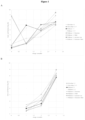
- Figure 1 shows the amount of lactobacilli during storage of different flour types and additions to the long shelf life sourdough starter (A) and the lactobacilli in the sourdough produced with this starter (B).
- the amount of lactobacilli are increasing during storage time and surprisingly the increase with enzyme active malt addition or with enzyme cocktail is even larger.
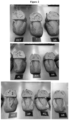
- bread was baked using the sourdough starter after 3 months of storage at 4°C.
- the resulting bread ( Figure 2 ) showed a nice gummy structure, volume within the need to use any yeast to be added.
- Flour carrier sourdough primer aroma sweetness acid gummy Pelikaan 1:1 (AM) 4 4 4 4 Pelikaan 1:1.5 (AN) 4,5 4 5 3,5 Pelikaan 1:1 Enzymes (AO) 5 4,5 4,5 3 Pelikaan 1:1 Malt (AP) 5,5 4 5 3,5 Pelikaan 1:1 Enzymes+asc (AQ) 5,5 4 5 3,5 Pelikaan 1:1 Enzymes+Malt (AR) 5,5 4,5 4,5 4
Landscapes
- Life Sciences & Earth Sciences (AREA)
- Engineering & Computer Science (AREA)
- Food Science & Technology (AREA)
- Microbiology (AREA)
- Health & Medical Sciences (AREA)
- Nutrition Science (AREA)
- Chemical & Material Sciences (AREA)
- Polymers & Plastics (AREA)
- Biotechnology (AREA)
- Bakery Products And Manufacturing Methods Therefor (AREA)
Applications Claiming Priority (1)
| Application Number | Priority Date | Filing Date | Title |
|---|---|---|---|
| NL2035390A NL2035390B1 (en) | 2023-07-14 | 2023-07-14 | Sourdough starter having a prolonged shelf life |
Publications (1)
| Publication Number | Publication Date |
|---|---|
| EP4491027A1 true EP4491027A1 (de) | 2025-01-15 |
Family
ID=87797814
Family Applications (1)
| Application Number | Title | Priority Date | Filing Date |
|---|---|---|---|
| EP24186192.1A Pending EP4491027A1 (de) | 2023-07-14 | 2024-07-03 | Sauerteigstarter mit verlängerter haltbarkeit |
Country Status (2)
| Country | Link |
|---|---|
| EP (1) | EP4491027A1 (de) |
| NL (1) | NL2035390B1 (de) |
Citations (4)
| Publication number | Priority date | Publication date | Assignee | Title |
|---|---|---|---|---|
| WO2000010395A1 (en) * | 1998-08-24 | 2000-03-02 | Clas Lönner Ab | Sourdough product |
| CN109439600A (zh) * | 2018-12-25 | 2019-03-08 | 华中农业大学 | 一种复合微生物馒头发酵剂及其制备方法 |
| WO2020249917A1 (fr) * | 2019-06-13 | 2020-12-17 | Lesaffre Et Compagnie | Bloc de levain vivant découpable |
| EP3888466A1 (de) * | 2018-12-11 | 2021-10-06 | Universidad de Granada | Herstellung von zutaten zur herstellung von brot mit reduziertem glykämischem index |
-
2023
- 2023-07-14 NL NL2035390A patent/NL2035390B1/en active
-
2024
- 2024-07-03 EP EP24186192.1A patent/EP4491027A1/de active Pending
Patent Citations (4)
| Publication number | Priority date | Publication date | Assignee | Title |
|---|---|---|---|---|
| WO2000010395A1 (en) * | 1998-08-24 | 2000-03-02 | Clas Lönner Ab | Sourdough product |
| EP3888466A1 (de) * | 2018-12-11 | 2021-10-06 | Universidad de Granada | Herstellung von zutaten zur herstellung von brot mit reduziertem glykämischem index |
| CN109439600A (zh) * | 2018-12-25 | 2019-03-08 | 华中农业大学 | 一种复合微生物馒头发酵剂及其制备方法 |
| WO2020249917A1 (fr) * | 2019-06-13 | 2020-12-17 | Lesaffre Et Compagnie | Bloc de levain vivant découpable |
Also Published As
| Publication number | Publication date |
|---|---|
| NL2035390B1 (en) | 2025-01-28 |
Similar Documents
| Publication | Publication Date | Title |
|---|---|---|
| US4666719A (en) | Admixture of a lactobacillus brevis and a saccharomyces dairensis for preparing leavening barm | |
| RU1837777C (ru) | Суха разрыхлительна закваска и способ приготовлени сухой разрыхлительной закваски | |
| Collar | Biochemical and technological assessment of the metabolism of pure and mixed cultures of yeast and lactic acid bacteria in breadmaking applications/revisión: aspectos bioquímicos y tecnológicos del metabolismo de cultivos puros y mixtos de levaduras y bacterias ácido lácticas en panificación | |
| JP2010042029A (ja) | サワードゥパン種 | |
| US6007850A (en) | Baking improver | |
| AU644810B2 (en) | A method of preparing a frozen yeast dough product | |
| KR20100112935A (ko) | 쌀빵 냉동반죽 및 그 제조 방법 | |
| RU2370038C2 (ru) | Усилитель вкуса, хлебное тесто, хлебопродукты и продукты из зерновых, его содержащие, его применение в качестве заменителя поваренной соли | |
| RU2769841C2 (ru) | Хлебопекарный улучшитель, содержащий микроорганизмы | |
| EP3908117B1 (de) | Methode zum erhalt eines sauerteigproduktes | |
| KR102898175B1 (ko) | 절단 가능한 생누룩 블록 | |
| EP4491027A1 (de) | Sauerteigstarter mit verlängerter haltbarkeit | |
| JPH04631B2 (de) | ||
| RU2109447C1 (ru) | Способ производства заварных хлебобулочных изделий | |
| EP2548946B1 (de) | Verfahren zur Herstellung körniger und mikrobiologisch aktiver, natürlicher Hefe | |
| JP3066587B2 (ja) | サワーブレッドの製造方法 | |
| RU2228036C2 (ru) | Способ приготовления хлеба | |
| JP7316825B2 (ja) | スクラッチ‐冷凍生地兼用改良剤及び当該剤を使用した加糖中種パンの製造方法 | |
| EP4403043A1 (de) | Triebmittelzusammensetzung für die industrielle herstellung von backwaren mit ausgezeichneten organoleptischen eigenschaften | |
| US20040191362A1 (en) | Synergistic improver mix | |
| TWI674847B (zh) | 發酵麵糰、發酵麵糰的製造方法及麵包的製造方法 | |
| JP2003079307A (ja) | 穀物乳酸菌類醗酵生成物添加冷凍パン類生地及び穀物乳酸菌類醗酵生成物添加冷凍パン類生地を用いるパン類の製造方法 | |
| KR20260051212A (ko) | 낮은 당의 농도에서 발효능이 우수한 사카로마이세스 세레비지에 Lepain 균주를 이용한 밤식빵 제조방법 | |
| Zabroda et al. | EXPANSION OF THE RANGE OF YEAST-FREE BAKERY PRODUCTS MADE USING FERMENTED DAIRY PRODUCTS. | |
| Rosell et al. | Commercial starters in Spain |
Legal Events
| Date | Code | Title | Description |
|---|---|---|---|
| PUAI | Public reference made under article 153(3) epc to a published international application that has entered the european phase |
Free format text: ORIGINAL CODE: 0009012 |
|
| STAA | Information on the status of an ep patent application or granted ep patent |
Free format text: STATUS: THE APPLICATION HAS BEEN PUBLISHED |
|
| AK | Designated contracting states |
Kind code of ref document: A1 Designated state(s): AL AT BE BG CH CY CZ DE DK EE ES FI FR GB GR HR HU IE IS IT LI LT LU LV MC ME MK MT NL NO PL PT RO RS SE SI SK SM TR |
|
| STAA | Information on the status of an ep patent application or granted ep patent |
Free format text: STATUS: REQUEST FOR EXAMINATION WAS MADE |
|
| 17P | Request for examination filed |
Effective date: 20250709 |
|
| GRAP | Despatch of communication of intention to grant a patent |
Free format text: ORIGINAL CODE: EPIDOSNIGR1 |
|
| STAA | Information on the status of an ep patent application or granted ep patent |
Free format text: STATUS: GRANT OF PATENT IS INTENDED |
|
| INTG | Intention to grant announced |
Effective date: 20251218 |