EP4491192A1 - Anticorps reconnaissant le pre-récepteur des lymphocytes t, conjugués anticorps-médicament et cellules car-t pour le traitement et/ou la prévention de la leucémie - Google Patents
Anticorps reconnaissant le pre-récepteur des lymphocytes t, conjugués anticorps-médicament et cellules car-t pour le traitement et/ou la prévention de la leucémie Download PDFInfo
- Publication number
- EP4491192A1 EP4491192A1 EP23382727.8A EP23382727A EP4491192A1 EP 4491192 A1 EP4491192 A1 EP 4491192A1 EP 23382727 A EP23382727 A EP 23382727A EP 4491192 A1 EP4491192 A1 EP 4491192A1
- Authority
- EP
- European Patent Office
- Prior art keywords
- cells
- cell
- antibody
- ptα
- car
- Prior art date
- Legal status (The legal status is an assumption and is not a legal conclusion. Google has not performed a legal analysis and makes no representation as to the accuracy of the status listed.)
- Withdrawn
Links
Images







Classifications
-
- C—CHEMISTRY; METALLURGY
- C07—ORGANIC CHEMISTRY
- C07K—PEPTIDES
- C07K16/00—Immunoglobulins [IG], e.g. monoclonal or polyclonal antibodies
- C07K16/18—Immunoglobulins [IG], e.g. monoclonal or polyclonal antibodies against material from animals or humans
- C07K16/28—Immunoglobulins [IG], e.g. monoclonal or polyclonal antibodies against material from animals or humans against receptors, cell surface antigens or cell surface determinants
- C07K16/2803—Immunoglobulins [IG], e.g. monoclonal or polyclonal antibodies against material from animals or humans against receptors, cell surface antigens or cell surface determinants against the immunoglobulin superfamily
- C07K16/2809—Immunoglobulins [IG], e.g. monoclonal or polyclonal antibodies against material from animals or humans against receptors, cell surface antigens or cell surface determinants against the immunoglobulin superfamily against the T-cell receptor (TcR)-CD3 complex
-
- A—HUMAN NECESSITIES
- A61—MEDICAL OR VETERINARY SCIENCE; HYGIENE
- A61K—PREPARATIONS FOR MEDICAL, DENTAL OR TOILETRY PURPOSES
- A61K40/00—Cellular immunotherapy
- A61K40/10—Cellular immunotherapy characterised by the cell type used
- A61K40/11—T-cells, e.g. tumour infiltrating lymphocytes [TIL] or regulatory T [Treg] cells; Lymphokine-activated killer [LAK] cells
-
- A—HUMAN NECESSITIES
- A61—MEDICAL OR VETERINARY SCIENCE; HYGIENE
- A61K—PREPARATIONS FOR MEDICAL, DENTAL OR TOILETRY PURPOSES
- A61K40/00—Cellular immunotherapy
- A61K40/40—Cellular immunotherapy characterised by antigens that are targeted or presented by cells of the immune system
- A61K40/41—Vertebrate antigens
- A61K40/42—Cancer antigens
- A61K40/4202—Receptors, cell surface antigens or cell surface determinants
-
- A—HUMAN NECESSITIES
- A61—MEDICAL OR VETERINARY SCIENCE; HYGIENE
- A61K—PREPARATIONS FOR MEDICAL, DENTAL OR TOILETRY PURPOSES
- A61K47/00—Medicinal preparations characterised by the non-active ingredients used, e.g. carriers or inert additives; Targeting or modifying agents chemically bound to the active ingredient
- A61K47/50—Medicinal preparations characterised by the non-active ingredients used, e.g. carriers or inert additives; Targeting or modifying agents chemically bound to the active ingredient the non-active ingredient being chemically bound to the active ingredient, e.g. polymer-drug conjugates
- A61K47/51—Medicinal preparations characterised by the non-active ingredients used, e.g. carriers or inert additives; Targeting or modifying agents chemically bound to the active ingredient the non-active ingredient being chemically bound to the active ingredient, e.g. polymer-drug conjugates the non-active ingredient being a modifying agent
- A61K47/62—Medicinal preparations characterised by the non-active ingredients used, e.g. carriers or inert additives; Targeting or modifying agents chemically bound to the active ingredient the non-active ingredient being chemically bound to the active ingredient, e.g. polymer-drug conjugates the non-active ingredient being a modifying agent the modifying agent being a protein, peptide or polyamino acid
- A61K47/65—Peptidic linkers, binders or spacers, e.g. peptidic enzyme-labile linkers
-
- A—HUMAN NECESSITIES
- A61—MEDICAL OR VETERINARY SCIENCE; HYGIENE
- A61K—PREPARATIONS FOR MEDICAL, DENTAL OR TOILETRY PURPOSES
- A61K47/00—Medicinal preparations characterised by the non-active ingredients used, e.g. carriers or inert additives; Targeting or modifying agents chemically bound to the active ingredient
- A61K47/50—Medicinal preparations characterised by the non-active ingredients used, e.g. carriers or inert additives; Targeting or modifying agents chemically bound to the active ingredient the non-active ingredient being chemically bound to the active ingredient, e.g. polymer-drug conjugates
- A61K47/51—Medicinal preparations characterised by the non-active ingredients used, e.g. carriers or inert additives; Targeting or modifying agents chemically bound to the active ingredient the non-active ingredient being chemically bound to the active ingredient, e.g. polymer-drug conjugates the non-active ingredient being a modifying agent
- A61K47/68—Medicinal preparations characterised by the non-active ingredients used, e.g. carriers or inert additives; Targeting or modifying agents chemically bound to the active ingredient the non-active ingredient being chemically bound to the active ingredient, e.g. polymer-drug conjugates the non-active ingredient being a modifying agent the modifying agent being an antibody, an immunoglobulin or a fragment thereof, e.g. an Fc-fragment
- A61K47/6801—Drug-antibody or immunoglobulin conjugates defined by the pharmacologically or therapeutically active agent
- A61K47/6803—Drugs conjugated to an antibody or immunoglobulin, e.g. cisplatin-antibody conjugates
- A61K47/68031—Drugs conjugated to an antibody or immunoglobulin, e.g. cisplatin-antibody conjugates the drug being an auristatin
-
- A—HUMAN NECESSITIES
- A61—MEDICAL OR VETERINARY SCIENCE; HYGIENE
- A61K—PREPARATIONS FOR MEDICAL, DENTAL OR TOILETRY PURPOSES
- A61K47/00—Medicinal preparations characterised by the non-active ingredients used, e.g. carriers or inert additives; Targeting or modifying agents chemically bound to the active ingredient
- A61K47/50—Medicinal preparations characterised by the non-active ingredients used, e.g. carriers or inert additives; Targeting or modifying agents chemically bound to the active ingredient the non-active ingredient being chemically bound to the active ingredient, e.g. polymer-drug conjugates
- A61K47/51—Medicinal preparations characterised by the non-active ingredients used, e.g. carriers or inert additives; Targeting or modifying agents chemically bound to the active ingredient the non-active ingredient being chemically bound to the active ingredient, e.g. polymer-drug conjugates the non-active ingredient being a modifying agent
- A61K47/68—Medicinal preparations characterised by the non-active ingredients used, e.g. carriers or inert additives; Targeting or modifying agents chemically bound to the active ingredient the non-active ingredient being chemically bound to the active ingredient, e.g. polymer-drug conjugates the non-active ingredient being a modifying agent the modifying agent being an antibody, an immunoglobulin or a fragment thereof, e.g. an Fc-fragment
- A61K47/6801—Drug-antibody or immunoglobulin conjugates defined by the pharmacologically or therapeutically active agent
- A61K47/6803—Drugs conjugated to an antibody or immunoglobulin, e.g. cisplatin-antibody conjugates
- A61K47/68033—Drugs conjugated to an antibody or immunoglobulin, e.g. cisplatin-antibody conjugates the drug being a maytansine
-
- A—HUMAN NECESSITIES
- A61—MEDICAL OR VETERINARY SCIENCE; HYGIENE
- A61K—PREPARATIONS FOR MEDICAL, DENTAL OR TOILETRY PURPOSES
- A61K47/00—Medicinal preparations characterised by the non-active ingredients used, e.g. carriers or inert additives; Targeting or modifying agents chemically bound to the active ingredient
- A61K47/50—Medicinal preparations characterised by the non-active ingredients used, e.g. carriers or inert additives; Targeting or modifying agents chemically bound to the active ingredient the non-active ingredient being chemically bound to the active ingredient, e.g. polymer-drug conjugates
- A61K47/51—Medicinal preparations characterised by the non-active ingredients used, e.g. carriers or inert additives; Targeting or modifying agents chemically bound to the active ingredient the non-active ingredient being chemically bound to the active ingredient, e.g. polymer-drug conjugates the non-active ingredient being a modifying agent
- A61K47/68—Medicinal preparations characterised by the non-active ingredients used, e.g. carriers or inert additives; Targeting or modifying agents chemically bound to the active ingredient the non-active ingredient being chemically bound to the active ingredient, e.g. polymer-drug conjugates the non-active ingredient being a modifying agent the modifying agent being an antibody, an immunoglobulin or a fragment thereof, e.g. an Fc-fragment
- A61K47/6835—Medicinal preparations characterised by the non-active ingredients used, e.g. carriers or inert additives; Targeting or modifying agents chemically bound to the active ingredient the non-active ingredient being chemically bound to the active ingredient, e.g. polymer-drug conjugates the non-active ingredient being a modifying agent the modifying agent being an antibody, an immunoglobulin or a fragment thereof, e.g. an Fc-fragment the modifying agent being an antibody or an immunoglobulin bearing at least one antigen-binding site
- A61K47/6849—Medicinal preparations characterised by the non-active ingredients used, e.g. carriers or inert additives; Targeting or modifying agents chemically bound to the active ingredient the non-active ingredient being chemically bound to the active ingredient, e.g. polymer-drug conjugates the non-active ingredient being a modifying agent the modifying agent being an antibody, an immunoglobulin or a fragment thereof, e.g. an Fc-fragment the modifying agent being an antibody or an immunoglobulin bearing at least one antigen-binding site the antibody targeting a receptor, a cell surface antigen or a cell surface determinant
-
- A—HUMAN NECESSITIES
- A61—MEDICAL OR VETERINARY SCIENCE; HYGIENE
- A61K—PREPARATIONS FOR MEDICAL, DENTAL OR TOILETRY PURPOSES
- A61K47/00—Medicinal preparations characterised by the non-active ingredients used, e.g. carriers or inert additives; Targeting or modifying agents chemically bound to the active ingredient
- A61K47/50—Medicinal preparations characterised by the non-active ingredients used, e.g. carriers or inert additives; Targeting or modifying agents chemically bound to the active ingredient the non-active ingredient being chemically bound to the active ingredient, e.g. polymer-drug conjugates
- A61K47/51—Medicinal preparations characterised by the non-active ingredients used, e.g. carriers or inert additives; Targeting or modifying agents chemically bound to the active ingredient the non-active ingredient being chemically bound to the active ingredient, e.g. polymer-drug conjugates the non-active ingredient being a modifying agent
- A61K47/68—Medicinal preparations characterised by the non-active ingredients used, e.g. carriers or inert additives; Targeting or modifying agents chemically bound to the active ingredient the non-active ingredient being chemically bound to the active ingredient, e.g. polymer-drug conjugates the non-active ingredient being a modifying agent the modifying agent being an antibody, an immunoglobulin or a fragment thereof, e.g. an Fc-fragment
- A61K47/6835—Medicinal preparations characterised by the non-active ingredients used, e.g. carriers or inert additives; Targeting or modifying agents chemically bound to the active ingredient the non-active ingredient being chemically bound to the active ingredient, e.g. polymer-drug conjugates the non-active ingredient being a modifying agent the modifying agent being an antibody, an immunoglobulin or a fragment thereof, e.g. an Fc-fragment the modifying agent being an antibody or an immunoglobulin bearing at least one antigen-binding site
- A61K47/6851—Medicinal preparations characterised by the non-active ingredients used, e.g. carriers or inert additives; Targeting or modifying agents chemically bound to the active ingredient the non-active ingredient being chemically bound to the active ingredient, e.g. polymer-drug conjugates the non-active ingredient being a modifying agent the modifying agent being an antibody, an immunoglobulin or a fragment thereof, e.g. an Fc-fragment the modifying agent being an antibody or an immunoglobulin bearing at least one antigen-binding site the antibody targeting a determinant of a tumour cell
- A61K47/6867—Medicinal preparations characterised by the non-active ingredients used, e.g. carriers or inert additives; Targeting or modifying agents chemically bound to the active ingredient the non-active ingredient being chemically bound to the active ingredient, e.g. polymer-drug conjugates the non-active ingredient being a modifying agent the modifying agent being an antibody, an immunoglobulin or a fragment thereof, e.g. an Fc-fragment the modifying agent being an antibody or an immunoglobulin bearing at least one antigen-binding site the antibody targeting a determinant of a tumour cell the tumour determinant being from a cell of a blood cancer
-
- A—HUMAN NECESSITIES
- A61—MEDICAL OR VETERINARY SCIENCE; HYGIENE
- A61K—PREPARATIONS FOR MEDICAL, DENTAL OR TOILETRY PURPOSES
- A61K47/00—Medicinal preparations characterised by the non-active ingredients used, e.g. carriers or inert additives; Targeting or modifying agents chemically bound to the active ingredient
- A61K47/50—Medicinal preparations characterised by the non-active ingredients used, e.g. carriers or inert additives; Targeting or modifying agents chemically bound to the active ingredient the non-active ingredient being chemically bound to the active ingredient, e.g. polymer-drug conjugates
- A61K47/51—Medicinal preparations characterised by the non-active ingredients used, e.g. carriers or inert additives; Targeting or modifying agents chemically bound to the active ingredient the non-active ingredient being chemically bound to the active ingredient, e.g. polymer-drug conjugates the non-active ingredient being a modifying agent
- A61K47/68—Medicinal preparations characterised by the non-active ingredients used, e.g. carriers or inert additives; Targeting or modifying agents chemically bound to the active ingredient the non-active ingredient being chemically bound to the active ingredient, e.g. polymer-drug conjugates the non-active ingredient being a modifying agent the modifying agent being an antibody, an immunoglobulin or a fragment thereof, e.g. an Fc-fragment
- A61K47/6889—Conjugates wherein the antibody being the modifying agent and wherein the linker, binder or spacer confers particular properties to the conjugates, e.g. peptidic enzyme-labile linkers or acid-labile linkers, providing for an acid-labile immuno conjugate wherein the drug may be released from its antibody conjugated part in an acidic, e.g. tumoural or environment
-
- A—HUMAN NECESSITIES
- A61—MEDICAL OR VETERINARY SCIENCE; HYGIENE
- A61P—SPECIFIC THERAPEUTIC ACTIVITY OF CHEMICAL COMPOUNDS OR MEDICINAL PREPARATIONS
- A61P35/00—Antineoplastic agents
- A61P35/02—Antineoplastic agents specific for leukemia
-
- A—HUMAN NECESSITIES
- A61—MEDICAL OR VETERINARY SCIENCE; HYGIENE
- A61K—PREPARATIONS FOR MEDICAL, DENTAL OR TOILETRY PURPOSES
- A61K2239/00—Indexing codes associated with cellular immunotherapy of group A61K40/00
- A61K2239/10—Indexing codes associated with cellular immunotherapy of group A61K40/00 characterized by the structure of the chimeric antigen receptor [CAR]
- A61K2239/11—Antigen recognition domain
- A61K2239/13—Antibody-based
-
- A—HUMAN NECESSITIES
- A61—MEDICAL OR VETERINARY SCIENCE; HYGIENE
- A61K—PREPARATIONS FOR MEDICAL, DENTAL OR TOILETRY PURPOSES
- A61K2239/00—Indexing codes associated with cellular immunotherapy of group A61K40/00
- A61K2239/46—Indexing codes associated with cellular immunotherapy of group A61K40/00 characterised by the cancer treated
- A61K2239/48—Blood cells, e.g. leukemia or lymphoma
-
- A—HUMAN NECESSITIES
- A61—MEDICAL OR VETERINARY SCIENCE; HYGIENE
- A61K—PREPARATIONS FOR MEDICAL, DENTAL OR TOILETRY PURPOSES
- A61K40/00—Cellular immunotherapy
- A61K40/30—Cellular immunotherapy characterised by the recombinant expression of specific molecules in the cells of the immune system
- A61K40/31—Chimeric antigen receptors [CAR]
Definitions
- the present invention provides compounds and compositions for use in the treatment/prevention of cancer, specifically human acute lymphoblastic leukemia (ALL) of the T-cells (T-ALL), as part of an antibody-Drug Conjugate or a Chimeric Antigen Receptor T-cell (CAR-T) therapy.
- ALL human acute lymphoblastic leukemia
- T-ALL T-cells
- CAR-T Chimeric Antigen Receptor T-cell
- ALL acute lymphoblastic leukemia
- T-ALL and B-ALL leukemia respectively
- T-ALL constitutes 10-15% of the cases in children and 20-25% in adults
- ALL particularly T-ALL
- the 5-year survival rate for T-ALL patients is over 70%. In cases of relapses, the survival rate of T-ALL patients drops drastically to as low as 20%.
- ALL relapses occur in early post-treatment phases and reflect the treatment resistance of a clonal population of cells that were already present at diagnosis ( Bailey et al., Lancet Oncol. 5 9: 873-883. 2008 ), and are responsible for the onset, spread, and persistence of leukemia, hence the name “leukemia-initiating cells” (LICs).
- LICs leukemia-initiating cells
- the success of ALL treatment will therefore depend on the efficient elimination of LICs. Although significant efforts have been made to design new treatments that fulfill this objective, the development of specific anti-LIC drugs which reduce the frequency of relapses is still in its initial phases. This work is complex, since LICs represent less than 1% of the total leukemic population and specific markers for these cells have not yet been found. Accordingly, the success of any new therapy depends on the development of strategies which allow the LICs of T-ALL and B-ALL to be identified and characterized, so as to promote the design of new tactics allowing their elimination.
- T-lymphocytes interact with antigens through the T-cell antigen receptor (TCR, for T-Cell Receptor) which recognizes its target antigen processed and presented in the form of peptides by major histocompatibility complex (MHC) molecules.
- TCR T-cell antigen receptor
- MHC major histocompatibility complex
- This TCR receptor is a specific heterodimer of each T-cell clone which is formed by a TCR ⁇ polypeptide chain and a TCR ⁇ polypeptide chain expressed on the surface associated with the CD3 complex (TCR ⁇ ).
- TCR ⁇ major histocompatibility complex
- Each of these TCR chains is different in each T-cell clone and is made up of a unique combination of domains referred to as variable (V), [diversity (D)], binding (J), and constant (C) domains.
- V variable
- D diversity
- J binding
- C constant
- the combination of the V, (D), and J domains in both ⁇ and ⁇ chains or in both ⁇ and ⁇ chains participates in antigen recognition in a specific manner through 3 complementary regions (CDR for Complementarity Determining Region), mainly through CDR3.
- TCR receptor genes consist of a series of regions encoding the V, D, J, and C domains that are rearranged during T-cell development in the thymus.
- Intrathymic progenitors of Ta ⁇ lymphocytes have to go through at least two selection processes mediated by signals through two different receptors, the pre-T cell receptor or pre-TCR, and the mature receptor or TCR ⁇ , that are expressed sequentially during intrathymic development ( Borst et al., Curr Opin Immunol 1996; 8: 181-90 ).
- genes encoding the TCR ⁇ chain are rearranged and expressed before those corresponding to the TCR ⁇ locus.
- Thymocytes that productively rearrange the TCR ⁇ locus first express a pre-TCR complex, independent of TCR ⁇ , made up of a TCR ⁇ chain covalently linked to an invariant pre-TCRa chain (pTa), which associates with the CD3 complex and promotes a quality control process generally known as " ⁇ -selection"( Groettrup et al., Cell 1993; 75: 283-94 ).
- ⁇ selection induces the survival and proliferative expansion of those thymocytes in which correct TCR ⁇ rearrangement takes place and simultaneously determines the inhibition of other rearrangements in this locus or allelic exclusion ( Dudley et al., Immunity 1994; 1: 83-93 ).
- mAb such as anti-CD20, anti-CD19, and anti-CD22 mAbs, among others.
- mAbs are directed against malignant B-cells, but they also recognize normal B-cells that are eliminated along with tumor cells, therefore, it is necessary to infuse patients with immunoglobulins.
- Adoptive T cell transfer is a new area of transfusion medicine involving the infusion of lymphocytes to mediate antitumor, antiviral, or anti-inflammatory effects.
- the field has rapidly advanced from a promising form of immuno-oncology in preclinical models to the recent commercial approvals of chimeric antigen receptor (CAR) T cells to treat leukemia and lymphoma.
- CAR-T cells are T-cells genetically modified to express on the surface a receptor which recognizes the tumor, and become activated to eliminate same.
- a CAR combines antigen-binding domains, most commonly, a single-chain variable fragment (scFv) derived from the variable domains of antibodies with the signaling domains of the CD3- ⁇ chain and additional costimulatory domains from receptors such as CD28, OX40, and CD137.
- scFv single-chain variable fragment
- scFv single chain Fv
- CDRs complementarity-determining regions
- the present invention relates to an isolated antibody, or an antigen binding fragment thereof, comprising a heavy chain (HC) immunoglobulin variable domain sequence and a light chain (LC) immunoglobulin variable domain sequence, hereinafter "antibody of the invention") wherein
- the HC immunoglobulin variable domain comprises, or consists of, the amino acid sequence SEQ ID NO: 7, or a functionally equivalent variant thereof, and/or LC immunoglobulin variable domain comprises, or consists of, the sequence SEQ ID NO: 8, or a functionally equivalent variant thereof.
- the term "functionally equivalent variant”, as used herein, means an amino acid sequence which is derived from a native sequence (SEQ ID NO: 1 to SEQ ID NO: 8 in the present invention) by one or more deletions, insertions and/or substitutions of one or more amino acids at site(s) within its amino acid sequence and performs the same activity, i.e. can act as antigen binding domain and specifically recognize and bind to a target antigen.
- Functionally equivalent variants can be prepared using any mutagenesis procedure known in the art, such as site-directed mutagenesis, synthetic gene construction, semi-synthetic gene construction, random mutagenesis, shuffling, etc.
- An assay to test if a given amino acid sequence is a functionally equivalent fragment of the sequences SEQ ID NO: 1 to SEQ ID NO: 8 is disclosed in the examples accompanying the present description.
- antibody refers to immunoglobulin molecules and immunologically active portions (or fragments) of immunoglobulin molecules (also called “antigen binding fragments”). That is, it refers to molecules that specifically bind (are immunoreactive) to an antigen, such as, for example, a peptide or a protein (also called an immunogen or epitope).
- epitope is a region of an antigen that is bound by an antigen binding protein, including antibodies.
- the antigen is the pre-T cell receptor alpha (pT alpha or pT ⁇ ), preferably human pT ⁇ , of the receptor expressed during the development of T-lymphocytes, known as pre-TCR (pre-T cell receptor).
- pre-T cell receptor alpha pT alpha or pT ⁇
- pre-TCR pre-T cell receptor
- an immunoglobulin has heavy (H) chains and light (L) chains interconnected by disulfide bonds.
- Each heavy and light chain contains a constant region and a variable region, (the regions are also known as "domains").
- the heavy and the light chain variable regions specifically bind the antigen.
- Light and heavy chain variable regions contain a "framework" region interrupted by three hypervariable regions, also called “complementarity-determining regions" or "CDRs".
- the CDRs are primarily responsible for binding to an epitope of an antigen.
- the CDRs of each chain are typically referred to as CDR1, CDR2, and CDR3, numbered sequentially starting from the N-terminus, and are also typically identified by the chain in which the particular CDR is located.
- a VH CDR3 is located in the variable domain of the heavy chain of the antibody in which it is found
- a VL CDR1 is the CDR1 from the variable domain of the light chain of the antibody in which it is found.
- An antibody that binds pTa will have a specific VH region and the VL region sequence, and thus specific CDR sequences.
- the term antibody encompasses both monoclonal and polyclonal antibodies.
- the antibody is monoclonal.
- “Monoclonal antibodies” are homogenous populations of identical antibodies, produced by a hybridoma, that is, a hybrid cell that is the product of the fusion of a clone of B lymphocytes descendant of a single and unique stem cell and a plasma cell tumor, which are directed against a specific site or antigenic determinant.
- the present invention also encompasses immunologically active portions (or fragments) of immunoglobulin molecules, also called herein "antigen binding fragments".
- antiigen binding fragments are selected from the group consisting of Fv, scFv (sc for single chain), Fab, F(ab')2, Fab', scFv-Fc fragments or diabodies, or any fragment of which the half-life time would have been increased by chemical modification, such as the addition of poly(alkylene) glycol such as poly(ethylene) glycol (“PEGylation") (pegylated fragments called Fv-PEG, scFv-PEG, Fab-PEG, F(ab')2-PEG or Fab'-PEG) ("PEG” for Poly(Ethylene) Glycol), or by incorporation into a liposome, wherein said fragments specifically comprises the six above-mentioned CDRs (SEQ ID NO: 1 to SEQ ID NO: 6).
- the "antigen binding fragments” will comprise a partial sequence of the heavy or light variable chain of the antibody from which they are derived, said partial sequence being sufficient to retain the same specificity of binding as the antibody from which it is descended and a sufficient affinity, preferably at least equal to 1/100, in a more preferred manner to at least 1/10, of the affinity of the antibody from which it is descended, with respect to the target.
- the antibody is selected from the group consisting of a monoclonal antibody, a chimeric antibody, a humanized antibody, or the "antigen binding domain" is selected from a Fab, a F(ab')2, a Fab', a scFv, and a Fv.
- the antibody of the invention is conjugated to a detectable marker.
- Said "conjugation” can be carried out by means of any method known in the art to functionally connect the domains of an antibody with a marker producing a signal which can be visually detected including, without limitation, the recombinant fusion with or without intermediate domains, antibody-mediated fusion, non-covalent association and covalent bonding, for example, the binding of the antibody to the disulfide, hydrogen bonding, electrostatic bonding, and conformational bonding, for example, biotin-avidin associations.
- Conjugation with a label can be by chemical or recombinant means. Chemical means refers to a reaction between the antibody and the label or marker such that a covalent bond is formed between the two molecules in order to form a single molecule.
- detectable marker or label refers to molecules that can generate a signal which is detectable by means of a method suitable for said detection.
- Marker detection methods include, among others, fluorescence, light, confocal and electron microscopy, magnetic resonance and spectroscopy; fluoroscopy, computerized tomography and positron emission tomography, enzyme-linked immunosorbent assays, size exclusion chromatography by fluorescence detection, lateral flow test, radioimmunoassay, radiolabeling, Western blot, immunohistochemistry, immunofluorescence, immunocytochemistry, flow cytometry, fluorescence-activated cell sorting, immunoprecipitation, and enzyme-type immunospot.
- Suitable markers include, among others, fluorescein, rhodamine, eosin and other fluorophores, radioisotopes, gold, gadolinium and other lanthanides, paramagnetic iron, fluorine-18 and other positron-emitting radionuclides.
- the probes or labels may be bi- or multifunctional and can be detected by means of more than one of the listed methods.
- the marker or label can be, for example, a chromogenic, fluorogenic, magnetic, electrodense, radioactive, and/or chemiluminescent compound.
- the detectable label or marker is selected from the list consisting of: fluorescein isothiocyanate (FITC), allophycocyanin (APC), or any other relevant fluorescent dye in flow cytometry, biotin, horseradish peroxidase (HRP), gold beads, and paramagnetic iron.
- therapies based on the use of monoclonal antibodies, or antigen binding fragments thereof, attached to toxins are particularly efficient in cases of internalization of the corresponding molecular targets.
- the antibody, or an antigen binding fragment thereof, of the invention is coupled to a toxin.
- Coupled refers to the fact that the antibody is functionally connected or conjugated to the toxin, including without limitation, the recombinant fusion with or without intermediate domains, antibody-mediated fusion, non-covalent association and covalent bonding, for example, the binding of the antibody to the disulfide, hydrogen bonding, electrostatic bonding, and conformational bonding, for example, biotin-avidin associations.
- Coupling with a toxin can be by chemical or recombinant means. Chemical means refers to a reaction between the antibody and the toxin such that a covalent bond is formed between the two molecules in order to form a single molecule.
- the antibody and the toxin can be conjugated by means of a linker or connector.
- the toxin coupled to the antibody can be selected, without limitations, from the list consisting of: cytotoxins or cytostatic agents, radioactive or radiolabeled molecules, chemotherapeutic drugs and agents, or any combination thereof.
- Particular examples of toxin that may be used in the present invention are Mertansine Toxin (DM1) o Monomethyl auristatin E toxin (MMAE).
- CAR T-cells are genetically engineered T-cells in which single chain antibody fragments (scFv) or ligands are attached to the T-cell signaling domains capable of facilitating T-cell activation.
- scFv single chain antibody fragments
- CARs combine HLA-independent targeting specificity of a monoclonal antibody with the cytolytic activity and homing properties of activated T-cells.
- the present invention relates to a chimeric antigen receptor (CAR), hereinafter "CAR of the invention”, comprising:
- the HC immunoglobulin variable domain sequence comprises, or consists of, the sequence SEQ ID NO: 7, or a functionally equivalent variant thereof
- the LC immunoglobulin variable domain sequence comprises, or consists of, the sequence SEQ ID NO: 8, or a functionally equivalent variant thereof.
- chimeric antigen receptor refers to a fused protein comprising an extracellular domain capable of binding to an antigen, a transmembrane domain derived from a polypeptide different from a polypeptide from which the extracellular domain is derived, and at least one intracellular domain (also called “endodomain” or "cytoplasmic signaling domain”).
- the CAR is sometimes called a “chimeric receptor", a “T-body”, or a “chimeric immune receptor (CIR).”
- extracellular domain capable of binding to an antigen means any oligopeptide or polypeptide that can bind to a certain antigen. In the context of the present invention, the antigen is pT ⁇ .
- the CAR of the invention also comprises a transmembrane domain.
- the "transmembrane domain” means any oligopeptide or polypeptide known to span the cell membrane, and linking the extracellular and signaling domains. Examples of transmembrane domains include, without limiting to, CD8 ⁇ transmembrane domain, CD28 transmembrane domain, ICOS transmembrane domain, CD3 ⁇ transmembrane domain, and DAP-12-KIR2DS2 multimeric transmembrane domain.
- the transmembrane domain is a CD8 ⁇ transmembrane domain.
- the CAR of the invention may comprise a hinge domain between the extracellular domain capable of binding to an antigen and the transmembrane domain.
- a "hinge domain” refers to the short peptide fragment between the scFv and the transmembrane domain that provides conformational freedom to facilitate binding to the target antigen on the tumor cell. It may be used alone or in conjunction with a spacer domain that projects the extracellular domain (e.g. a scFv) away from the T-cell surface. Hinge domains are widely known in the art and any of them can be used in the context of the present invention.
- hinge domains include, without limiting to, segments of immunoglobulins, CD8 ⁇ , CD28, CD4 or CD3 molecules.
- the hinge domain is a CD8 ⁇ hinge domain.
- CD8 ⁇ hinge domain refers to a specific protein fragment associated with the lymphocyte surface CD8 ⁇ antigen.
- the example sequences of CD8 ⁇ hinge domain for human, mouse, and other species are widely known in the state of the art.
- Non-limiting examples of CD8 ⁇ hinge domains include: human CD8 ⁇ hinge domain; mouse CD8 ⁇ hinge domain, and cat CD8 ⁇ hinge domain.
- the hinge domain is a human CD8 ⁇ hinge domain.
- the CAR of the invention also comprises, at least, one endodomain.
- the "endodomain” means any oligopeptide or polypeptide that transmits a signal to cause activation or inhibition of a biological process in a cell.
- the CAR of the invention comprises one, two, or three endodomains, more preferably, the CAR comprises two endodomains.
- Examples of endodomains include, without limiting to, CD3 ⁇ signaling domain, CD28 coestimulatory domain, 4-1BB (CD137) coestimulatory domain, OX40 coestimulatory domain, ICOS coestimulatory domain, and CD27 coestimulatory domain, alone or in tandem.
- the endodomain comprises a CD3 ⁇ signaling domain alone or in combination with a CD28 coestimulatory domain or a 4-1 BB coestimulatory domain.
- the present invention also encompasses the nucleotide sequences encoding the antibody, the antigen binding fragment thereof, or the CAR of the invention.
- the present invention relates to an isolated nucleotide sequence encoding the antibody or the CAR of the invention as defined in previous paragraphs.
- nucleotide sequence of the invention is defined in previous paragraphs.
- the nucleotide sequence encoding the antibody, or the antigen binding fragment thereof comprises, or consists of, the sequence SEQ ID NO: 9 and/or the sequence SEQ ID NO: 10.
- the nucleotide sequence of the invention may comprise other sequences useful in transcription/translation of the antibody, or the antigen binding fragment thereof, such as signal peptide, His tail, stop sequences etc.
- the nucleotide sequence encoding the antibody of the invention, or the antigen binding fragment thereof comprises, or consists of, a Kozak consensus sequence, a peptide signal sequence and/or an enhancer sequence, preferably, these sequences are located upstream of the sequence encoding the antigen binding domain of the antibody.
- the nucleotide sequence comprises the sequence SEQ ID NO: 11.
- This nucleotide sequence encodes the peptide comprising, or consisting of, the sequence SEQ ID NO: 12.
- the nucleotide sequence of the invention may be introduced in a vector in order to transfer foreign genetic material into a cell and produce the antibody, or the antigen binding fragment thereof, or the CAR of the invention.
- the present invention relates to a vector comprising, or consisting of, the isolated nucleotide sequence or the invention, hereinafter "vector of the invention”.
- the term "vector” or "plasmid” refers to any vehicle used to transfer foreign genetic material into a cell.
- Said vector can be a viral vector or a non-viral vector, such as a plasmid.
- said vectors can be viral vectors based on retroviruses, adenoviruses, alphaviruses, etc., or in case of non-viral vectors, the vectors can be DNA-liposome, DNA-polymer, DNA-polymer-liposome complexes, pSilencer 4.1-CMV (Ambion), pcDNA3, pcDNA3.1/hyg pHCMV/Zeo, pCR3.1, pEFI/His, pIND/GS, pRc/HCMV2, pSV40/Zeo2, pTRACER-HCMV, pUB6/V5-His, pVAXI, pZeoSV2, pCI,
- the vector is a plasmid, a retroviral vector, a lentiviral vector, an adenoviral vector, and an adeno-associated viral vector.
- the vector can contain, among others, multiple cloning sites, expression regulating sequences, suitable replication origins for the host cell in which the vector is introduced, selection markers, etc.
- the vector is an expression vector which allows the expression of the nucleotide sequence or polynucleotide in the target cell and generally has a promoter sequence (or expression regulating sequences) that drives expression thereof.
- the promoter sequence preceding the polynucleotide is operatively bound to the said polynucleotide.
- the expression "operatively bound” means that the polynucleotide is within the correct reading frame for their expression under the control of said regulating sequences.
- the regulating sequences useful for the present invention can be nuclear promoting sequences or, alternatively, enhancer sequences and/or other regulating sequences increasing the expression of the polynucleotide.
- the promoter can be constitutive or inducible. If the constant expression of the polynucleotide is desired, then a constitutive promoter is used. Examples of well-known constitutive promoters include the cytomegalovirus (CMV) immediate-early promoter, the Rous sarcoma virus promoter, and the like. A number of other examples of constitutive promoters are well known in the art and can be used in implementing the invention. If the controlled expression of the polynucleotide is desired, then an inducible promoter must be used.
- CMV cytomegalovirus
- the inducible promoter In a non-induced state, the inducible promoter must be "silent". "Silent” is understood to mean that in the absence of an inducer, little or no expression of the polynucleotide is detected; in the presence of an inducer, however, the expression of the polynucletide occurs.
- the expression level can frequently be controlled by varying the concentration of the inducer so that the inducible promoter is stimulated more strongly or weakly and consequently, the concentration of the polynucleotide transcribed product is affected.
- inducible promoters examples include: an androgen or estrogen-responsive promoter, a doxycicline-responsive promoter, a metallothionein promoter, or a promoter responding to ecdysone.
- Other various examples are well known in the art and can be used for implementing the invention.
- the nucleotide sequence encoding the antibody of the invention, or an antigen biding fragment thereof, o the CAR of the invention has to be introduced in an expression system such as a host cell. Taking this into account, the nucleotide sequence may be optimized for a proper expression in the chosen host cell.
- the present invention relates to a cell, hereinafter "cell of the invention", comprising or consisting of:
- host cell means any cell type that is susceptible to transformation, transfection, transduction, and the like with the nucleotide sequence or vector of the invention.
- the vector introduced into a host cell may be maintained as a chromosomal integrant or as a self-replicating extra-chromosomal vector.
- the term "host cell” also encompasses any progeny of a parent cell that is not identical to the parent cell due to mutations that occur during replication.
- the host cell may be any cell useful in the recombinant production of the antibody, or an antigen binding fragment, or the CAR of the present invention, e.g., a prokaryote or a eukaryote such as a mammalian, insect, plant, or fungal cell. Any method known in the art for introducing DNA into a host cell can be used in the context of the present invention.
- the prokaryotic host cell may be any Gram positive bacterium or Gram negative bacterium.
- Gram positive bacteria include, but not limited to, Bacillus, Streptococcus, Streptomyces, Staphylococcus, Enterococcus, Lactobacillus, Lactococcus, Clostridium, Geobacillus, and Oceanobacillus.
- Gram negative bacteria include, but not limited to, E. coli, Pseudomonas, Salmonella, Campylobacter, Helicobacter, Flavobacterium, Fusobacterium, Neisseria, and Ureaplasma.
- the host cell is E. coli. Examples of E.
- coli strains useful for vector propagation and cloning procedures include, without limiting to, E. coli DH10B (Invitrogen), DH5 ⁇ (ATCC, Invitrogene), DM1 (Invitrogen), GeneHogs (Invitrogen), HB101 (Bio-Rad, Invitrogene, Promega), INV110 (Invitrogen), JM109 (ATCC, Promega), JS5 (Bio-Rad), LE392 (ATCC), NM522 (AS), SCS110 (Stratagene), STBL4 (Invitrogen), SURE (ATCC, Stratagene), TG1 (Stratagene), XL10-Gold (Stratagene) and XL1-Blue MRF (Stratagene).
- insect cells include, without limiting to, Spodoptera frugiperda cells (such as SF9 cell or SF21 cell or Sf900+), a BTI-Tn-5B1-4 insect cell from Trichoplusia ni (High-five TM , Invitrogen, Carlsbad Calif.), expresSF+ ® , Drosophila Schneider 2 (S2) Cells, Se301, SelZD2109, SeUCR1, MG-1, Tn368, HzAm1, Ha2302, Hz2E5 and High Five from Invitrogen.
- Spodoptera frugiperda cells such as SF9 cell or SF21 cell or Sf900+
- BTI-Tn-5B1-4 insect cell from Trichoplusia ni High-five TM , Invitrogen, Carlsbad Calif.
- expresSF+ ® Drosophila Schneider 2 (S2) Cells, Se301, SelZD2109, SeUCR1, MG-1, Tn368, HzAm1, Ha2302,
- fungi host cells includes, without limiting to, Aspergillus (e.g. Aspergillus awamori, Aspergillus fumigatus, Aspergillus foetidus, Aspergillus japonicus, Aspergillus nidulans, Aspergillus niger or Aspergillus oryzae cell), Aureobasidium, Bjerkandera, Ceriporiopsis (e.g.
- Ceriporiopsis aneirina Ceriporiopsis aneirina, Ceriporiopsis aneirina, Ceriporiopsis caregiea, Ceriporiopsis gilvescens, Ceriporiopsis pannocinta, Ceriporiopsis rivulosa, Ceriporiopsis subrufa, Ceriporiopsis subvermispora), Chrysosporium (e.g.
- Fusarium bactridioides Fusarium cerealis, Fusarium crookwellense, Fusarium culmorum, Fusarium graminearum, Fusarium graminum, Fusarium heterosporum, Fusarium negundi, Fusarium oxysporum, Fusarium reticulatum, Fusarium roseum, Fusarium sambucinum, Fusarium sarcochroum, Fusarium sporotrichioides, Fusarium sulphureum, Fusarium torulosum, Fusarium trichothecioides, or Fusarium venenatum cell), Humicola (e.g.
- Trichoderma e.g. Trichoderma harzianum, Trichoderma koningii, Trichoderma longibrachiatum, Trichoderma reesei, or Trichoderma viride cell
- the host cell may also be a yeast cell.
- yeast as used herein includes ascosporogenous yeast (Endomycetales), basidiosporogenous yeast, and yeast belonging to the Fungi Imperfecti (Blastomycetes). More preferably, the yeast host cell is a Candida, Hansenula, Kluyveromyces (e.g. Kluyveromyces lactis), Pichia (e.g. Pichia pastoris), Saccharomyces (e.g.
- Saccharomyces carlsbergensis Saccharomyces cerevisiae, Saccharomyces diastaticus, Saccharomyces douglasii, Saccharomyces kluyveri, Saccharomyces norbensis, or Saccharomyces oviform is, etc.
- Schizosaccharomyces or Yarrowia cell (Yarrowia lipolytica).
- the host cell may also be microalgae.
- microalgae examples include, without limiting to, microalgae from the genera Chlamydomonas (e.g. Chlamydomonas reinhardtii ), Botryococcus, Neochloris, Nannochloropsis, Phorphyridium, Scenedesmus, Chlorella, Tetraselmis and Spirulina.
- Chlamydomonas e.g. Chlamydomonas reinhardtii
- Botryococcus Neochloris
- Nannochloropsis Phorphyridium
- Scenedesmus Chlorella
- Tetraselmis Tetraselmis
- Spirulina Spirulina.
- the chloroplast of these algae are particularly well suited to the production of bacterial proteins as it mimics the native bacterial expression environment of these proteins while being devoid of their cell wall target.
- the host cell may also be a plant cell, wherein the vacuolar deposition of recombinant proteins in plant vegetative organs is used to increase yields.
- the nucleotide sequence of the invention may be fused to sequence specific vacuolar sorting signals (ssVSS) typical of proteases or proteinase inhibitors and/or Ct-VSS representative of storage proteins or plant lectins. Both types of motifs were capable to increase accumulation. Importantly, the type of VSSs or position, either the N or C-terminus, did not alter protein stability, levels or post-translational modifications.
- Examples of plant cells include, without limiting to, Nicotiana sp. (e.g. N. tabacum, N. benthamiana, etc.) sugarcane, tomato (Solanum lycopersicum) and carrot (Daucus carota ) .
- mammal cells which can be used in the context of the present invention include, without limiting to, a T-cell, a B-cell, an NK cell, epithelial cell lines (porcine, human, etc.), osteosarcoma cell lines (human, etc.), neuroblastoma cell lines (human, etc.), epithelial carcinomas (human, etc.), glial cells (murine, human, etc.), liver cell lines (monkey, etc.), CHO cells (ChineseHamsterOvary), COS cells, BHK cells, HeLa, 911, AT1080, A549, 293 or PER cells.
- the cell is a T-cell.
- composition of the invention relates to a composition, hereinafter "composition of the invention", comprising
- the composition according to the present invention may be formulated with excipient and/or carrier.
- the composition of the invention comprises an excipient and/or carrier and/or adjuvant.
- the composition is a pharmaceutical composition and it may be formulated with a pharmaceutically acceptable excipient and/or carrier, and/or adjuvant.
- excipient refers to a substance which helps to absorb any of the components of the composition of the invention, stabilizes said components or helps in the preparation of the composition in the sense of giving it consistency or, if necessary, providing flavors which make them more pleasant.
- excipients could have the function of keeping the components bound together, such as for example starches, sugars or celluloses, a sweetening function, a colorant function, the function of protecting the medicament, such as for example isolating it from the air and/or moisture, a filler function for a tablet, capsule or any other form of formulation, such as for example dibasic calcium phosphate, a disintegrating function to facilitate the dissolution of the components and their absorption in the intestine, without excluding other types of excipients not mentioned in this paragraph.
- excipient is defined as any material included in the galenic forms which is added to the active ingredients or to its associations to enable its preparation and stability, modify its organoleptic properties or determine the physical/chemical properties of the composition and its bioavailability.
- pharmaceutically acceptable excipient should allow for the activity of the compounds of the pharmaceutical composition, that is to say, for it to be compatible with said components.
- excipients are agglutinants, fillers, disintegrators, lubricants, coaters, sweeteners, flavorings and colorants.
- Non-limiting, more specific examples of acceptable excipients are starches, sugars, xylitol, sorbitol, calcium phosphate, steroid fats, talc, silica or glycerin, amongst others.
- carrier refers to a compound which facilitates the incorporation of other compounds to allow a better dosing and administration or to give consistency and form to the composition. Therefore, the carrier is a substance which is used to dilute any of the components of the composition of the present invention to a determined volume or weight, or even without diluting said components, capable of allowing better dosing and administration or giving consistency.
- the carrier is the diluent.
- the carrier is pharmaceutically acceptable.
- composition of the present invention can also take the form of a sustained release drug formulation or any other conventional release system, such as, for example, nanoparticles, liposomes or nanospheres, polymeric material, biodegradable or non-biodegradable implant, or biodegradable microparticles, such as, for example, biodegradable microspheres.
- composition of the invention may be employed as a therapeutic agent to be administered to a subject.
- the composition provided by this invention is considered a pharmaceutical composition which may be administered by any appropriate administration route; to this end, said composition will be formulated in the suitable form for the selected administration route.
- galenic form or "pharmaceutical form” is the arrangement to which the active ingredients and excipients adapt in order to form a medicament. It is defined by the combination of the form in which the pharmaceutical composition is presented by the manufacturer and the form in which it is administered.
- compositions of the invention may also be administered topically to the skin or mucosa, that is, dermally or transdermally.
- Typical formulations for this purpose include gels, hydrogels, lotions, solutions, creams, ointments, dusting powders, dressings, foams, films, skin patches, wafers, implants, sponges, fibres, bandages and microemulsions.
- Liposomes may also be used.
- Typical carriers include alcohol, water, mineral oil, liquid petrolatum, white petrolatum, glycerin, polyethylene glycol and propylene glycol. Penetration enhancers may be incorporated.
- composition of the invention may also be administered directly into the blood stream, into muscle, or into an internal organ.
- suitable means for parenteral administration include intravenous, intra-arterial, intraperitoneal, intrathecal, intraventricular, intraurethral, intrasternal, intracranial, intramuscular and subcutaneous.
- Suitable devices for parenteral administration include needle (including microneedle) injectors, needle-free injectors and infusion techniques.
- composition of the invention may also be administered intranasally or orally.
- Dosage forms for oral administration include, without limiting to, tablets (e.g., coated or uncoated tablets), capsules (e.g., soft gelatin capsules, hard gelatin capsules, HPMC capsules, or HPMCP capsules), a capsule inside a capsule, lozenges, troches, ovules, solutions, emulsions, suspensions, syrups, elixirs, powders and granules for reconstitution, dispersible powders and granules, medicated gums, chewing tablets, effervescent tablets, and multiparticulate dosage forms.
- the pharmaceutical composition may also be provided in bandages or in sutures or the like.
- Biodegradable particles have been shown to be capable of delivering a variety of therapeutic agents including molecules such as polypeptides or proteins.
- composition of the invention may comprise, further to the antibody of the invention; and/or the CAR of the invention; and/or the isolated nucleotide sequence of the invention; and/or the vector of the invention; and/or the cell of the invention, other therapeutic agents such as antibiotics, painkillers, etc., or other therapeutic agents useful in the treatment of relapses of leukemia, preferably relapses of T-cell acute lymphoblastic leukemia (T-ALL), more preferably relapses of T-ALL pre-TCR+.
- T-ALL T-cell acute lymphoblastic leukemia
- kit of the invention comprising
- Kit refers to a product containing the different reagents necessary to carry out the method of the invention, which are packaged to enable them to be transported and stored.
- the kit may further include, without any limitation, buffers, agents to prevent contamination, inhibitors of protein degradation, etc. Suitable materials for packaging the components of the kit include glass, plastic (polyethylene, polypropylene, polycarbonate and the like), bottles, vials, paper, sachets and the like. Additionally, the kits of the invention may contain instructions for simultaneous, sequential or separate use of the different components in the kit.
- Said instructions may be in the form of printed material or in the form of an electronic medium capable of storing instructions so that they can be read by a subject, such as electronic storage media (magnetic disks, tapes and the like), optical media (CD-ROM, DVD) and the like.
- electronic storage media magnetic disks, tapes and the like
- optical media CD-ROM, DVD
- the present invention relates to the antibody, the CAR, the isolated nucleotide sequence, the vector, the cell, the composition and/or the kit of the invention, for use as a medicament, particularly, for use in the treatment and/or prevention of leukemia, preferably T-cell acute lymphoblastic leukemia (T-ALL), more preferably T-ALL pre-TCR+, in a subject.
- leukemia preferably T-cell acute lymphoblastic leukemia (T-ALL), more preferably T-ALL pre-TCR+
- medicament refers to any substance or combination of substances which has properties for the treatment or prevention of diseases in organisms, preferably in human beings, or which may be used or administered to organisms, preferably to human beings, in order to restore, correct, or modify physiological functions by exerting a pharmacological, immunological, or metabolic effect.
- the use of the antibody of the invention as a medicament can be carried out alone with the antibody or in combination with other medicaments or compositions by way of a combined therapy, and can be administered simultaneously or at different time intervals (sequentially).
- treating refers to processes involving a slowing, interrupting, arresting, controlling, stopping, reducing, or reversing the progression or severity of an existing symptom, disorder, condition, or disease, but does not necessarily involve a total elimination of all disease-related symptoms, conditions, or disorders.
- the treatment of a disorder or disease may, for example, lead to a halt in the progression of the disorder or disease (e.g., no deterioration of symptoms) or a delay in the progression of the disorder or disease (in case the halt in progression is of a transient nature only).
- the "treatment" of a disorder or disease may also lead to a partial response (e.g., amelioration of symptoms) or complete response (e.g., disappearance of symptoms) of the subject/patient suffering from the disorder or disease. It is to be understood that a subject/patient may experience a broad range of responses to a treatment (such as the exemplary responses as described herein above).
- prevention consists of preventing the onset or reappearance of the disease, that is, preventing the disease or disease state or relapse of the disease in a subject (preferably a mammal, and more preferably a human), particularly, when said subject is predisposed to the pathological condition but has not yet been diagnosed.
- leukemia refers to the accepted medical term for a cancer of the blood-forming tissues of the bone marrow. It is characterized by the growth of immature white blood cells. The disease can be classified based on which blood cells are abnormal. Lymphomas are cancers of the lymphoid tissue (lymph nodes, spleen, and other organs of the immune system).
- ALL acute lymphoblastic leukemia
- T-cell acute lymphoblastic leukemia refers to a hematologic cancer characterized by abnormal growth of T-cell progenitors (a type of white blood cell - leukocytes) which originate in the thymus and progress rapidly.
- pre-TCR+ leukemia-initiating cells refers to leukemia-initiating T-cells which express the pre-TCR receptor on their cell surface.
- the antibody, the CAR, the isolated nucleotide sequence, the vector, the cell, the composition and/or the kit of the invention is used in the diagnosis, treatment, and/or prevention of relapses of leukemia, preferably relapses of T-cell acute lymphoblastic leukemia (T-ALL), more preferably relapses of T-ALL pre-TCR+.
- T-ALL T-cell acute lymphoblastic leukemia
- relapse refers to leukemia which had shown a regression or plateau after treatment, resumes its development or progression, or develops metastases.
- the administration of the antibody of the invention or of the pharmaceutical composition of the invention will be carried out in a therapeutically effective dose which is sufficient to demonstrate a benefit for the patient, preferably in relation to a decrease in the number of LICs, more preferably T-ALL LICs, or in the replicative capacity of LICs in the patient.
- a benefit may involve improvement of at least one symptom related to acute lymphoblastic leukemia.
- Prescription of the treatment that is, decisions about dosages, frequency, duration, etc., will fall under the responsibility of the general practitioner or specialist who cares for the affected patient.
- therapeutically effective dose refers to an amount (or amount per unit mass of the individual to whom the dose is administered) of a drug or therapeutic agent which causes a detectable therapeutic effect in an individual or a group of individuals to whom the dose is administered, causing minimal side or toxic effects.
- the therapeutically effective amount useful for producing a therapeutic effect can be determined by means of conventional techniques well known to those skilled in the art.
- therapeutically effective dose-50 or “therapeutically effective dose-95” includes a statistical value in which the therapeutic effect must be detectable in 50% or 95% of the individuals to whom the dose is administered.
- the effective therapeutic dose does not cause any toxic effect. However, although toxic effects may occur in some cases, a compromise may be reached in which these effects are considered to be preferable to the normal development of the disease or sickness without administration of the drug or compound, and can in turn be treated by means of additional therapies.
- subject in the context of the present invention is a mammal, e.g., a primate, preferably a higher primate, e.g., a human.
- isolated will mean material removed from its original environment (e.g., the natural environment in which the material occurs), and thus it is “altered by the hand of man” from its natural environment.
- the present invention relates to a method of producing anti-pT ⁇ CAR T-cells, hereinafter "method of the invention", comprising:
- anti-pT ⁇ CAR T-cell refers to a T-cell that expresses in its surface a CAR which specifically recognizes pT ⁇ .
- the method of the invention comprises a first step comprising introducing a nucleotide sequence encoding the CAR of the invention in a T-cell or in a population of T-cells.
- the present invention also relates to an in vitro method for detecting a leukemia cell in a sample isolated from a subject, hereinafter "the in vitro method of the invention", comprising
- sample refers to a small part or quantity of something intended to show what the whole is like.
- the sample isolated from a subject is not from thymus.
- other biological samples include, without limiting to, cerebrospinal fluid (CSF), bone marrow, saliva, blood, plasma, urine or faeces.
- CSF cerebrospinal fluid
- the biological sample may come from a subject, both non-human animal and human.
- the in vitro method of the invention comprises a first step relating to analyze
- the expression “to analyze the levels of pT ⁇ ” refers to quantify the amount of pTa present in the biological sample.
- the expressions “to analyze the proportion of cells expressing on the surface the complex formed by the CAR of the invention, and pT ⁇ ” or “to analyze the proportion of cells expressing on the surface the complex formed by the T-cells which express on its surface the CAR of the invention and pT ⁇ ” refer to quantify the amount of cells in the biological sample which shows in their surface the complex form by the CAR of the invention, or the T-cell expressing the CAR of the invention, and pT ⁇ , i.e. to quantify the amount of pre-TCR+ cells.
- the in vitro method of the invention comprises step (b), i.e. comparing the levels of pTa or the proportions of pre-TCR+ cells detected with the corresponding ones in a control biological sample.
- control biological sample refers to the biological sample obtained from a subject who does not suffer from leukemia.
- step (b) After carrying out step (b), it can be concluded that a leukemia cell is detected when
- leukemia specifically, particularly, T-cell acute lymphoblastic leukemia (T-ALL), more particularly T-ALL pre-TCR+.
- T-ALL T-cell acute lymphoblastic leukemia
- the present invention may also be used as a diagnosing tool.
- the coding sequence for the anti-pT ⁇ scFv construct was commercially synthetised (GenScript).
- the construct comprised the following elements:
- This anti-pT ⁇ scFv construct shows the nucleotide sequence SEQ ID NO: 11, and it was cloned by restriction with Hindlll and BamHl enzymes into the pcDNA 3.1 expression vector (pcDNA 3.1-scFv).
- pcDNA 3.1-scFv pcDNA 3.1-scFv
- an IRES-GFP cassette from the pHRSIN-IRES-GFP lentiviral vector González-Garc ⁇ a et al., 2019 Blood, 134:2171-2182
- was then cloned 3' of the His tag by enzymatic digestion with BamHl and Notl and subsequent ligation pcDNA 3.1-scFv-IRES-GFP.
- the amino acid sequence coded by the anti-pT ⁇ scFv construct comprises the sequence SEQ ID NO: 12.
- PBMCs Peripheral blood mononuclear cells
- PBMCs peripheral blood mononuclear cells
- B cells dendritic cells
- NK cells granulocytes and erythroid cells
- linage-specific markers CD11b, CD13, CD14, CD19, CD25, CD33, CD56, CD123
- mice anti-human CD235a Glycophorin A
- Lentiviral particles were generated by co-transfection of HEK-293T-packaging cells using jetPEI reagent (Polyplus) and the following plasmids: the LV construct (either pCCL-GFP-Mock, pCCL-CARpT ⁇ .28 or pCCL-CARpT ⁇ .41BB), the pMD2.G plasmid (encoding the VSV-G envelope), the pMDLg/pRRE (encoding the gag/pol proteins) and the pRSV-Rev (encoding Rev protein), following manufacturer's instructions, and concentrated by ultracentrifugation.
- the LV construct either pCCL-GFP-Mock, pCCL-CARpT ⁇ .28 or pCCL-CARpT ⁇ .41BB
- the pMD2.G plasmid encoding the VSV-G envelope
- the pMDLg/pRRE encoding the gag/pol proteins
- pRSV-Rev
- Jurkat T cells (10 5 cells) were lentivirally transduced by spin centrifugation (1 h at 1,800 rpm) using 1 ml of LV supernatants (containing either GFP-Mock, CARpT ⁇ .41BB or CARpT ⁇ .28), in the presence of 8 ⁇ g/ml hexadimethrine bromide (Polybrene, Sigma Aldrich) in 24-well plates. After 24 h at 37 °C, viral particles were washed-off and cells were resuspended in fresh RPMI 10% FBS.
- LV supernatants containing either GFP-Mock, CARpT ⁇ .41BB or CARpT ⁇ .28
- 8 ⁇ g/ml hexadimethrine bromide Polybrene, Sigma Aldrich
- Human peripheral T cells were plated (10 6 cells/ml) in RPMI medium 10% fetal bovine serum (FBS), 2 mM glutamine, 1% penicillin/streptomycin, 10 mM Hepes, and stimulated with Dynabeads Human T-Activator CD3/CD28 (ThermoFisher) at a 3:1 bead:cell ratio at 37 °C. After 24 h, CD69 expression was analysed by flow cytometry to determine efficient cell activation and was compared with non-stimulated T cells.
- FBS fetal bovine serum
- CD3/CD28 Dynabeads Human T-Activator CD3/CD28
- activated T cells were transduced with LV supernatants (SNs) in the presence of recombinant human IL-7 (200 IU/ml) (National Institute for Biological Standards and Control, NIBSC) and IL-15 (20 IU/ml) (PreproTech) at a multiplicity of infection (MOI) of 10.
- virus SN was diluted with fresh medium supplemented with IL-17/15.
- Cells were expanded at 37°C for a maximum of 10-14 days in RPMI 10% plus IL-7/15. Beads were removed from culture on day 5 post-stimulation, following manufacturer's instructions. Transduction efficiency was determined by flow cytometry analysis of GFP expression, and CARpT ⁇ .41 BB surface expression was detected by flow cytometry as described above.
- CARpTa-transduced either CARpT ⁇ .28- or CARpT ⁇ .41BB-transduced
- NT non-transduced
- pre-TCR+ SupT1
- pre-TCR- (REH) target cells in 48-well plates at a final concentration of 1.2 x 10 6 cells/ml in RPMI 10% FBS for 16 h at 37 °C.
- E:T target cell ratios were set up in culture, using the following E:T cell numbers: 1:0 E:T ratio, 600,000 effector cells cultured in the absence of target cells to determine the basal activation status of the effector cells; 1:1 E:T ratio, 300,000 effector and 300,000 target cells; 1:5 E:T ratio, 100,000 effector and 500,000 target cells.
- E:T cell numbers 1:0 E:T ratio, 600,000 effector cells cultured in the absence of target cells to determine the basal activation status of the effector cells; 1:1 E:T ratio, 300,000 effector and 300,000 target cells; 1:5 E:T ratio, 100,000 effector and 500,000 target cells.
- CD3-APC, CD4-PeCy5 and CD8-PeCy7 or CD19-PeCy7 antibodies were used to discriminate between effector Jurkat cells and target cells (Table 2), and surface CARpTa expression was detected as indicated in Section 5.1.
- pre-TCR+ SupT1 target cells were pre-incubated with 5 ⁇ g/ml of either anti-human pTa mAb or isotype-matched control mAb (mouse lgG2a) for 30 min at 4 °C. Then, unbound antibody was washed out and 100,000 CARpT ⁇ .41BB-transduced Jurkat cells were co-cultured with 500,000 target cells (1:5 E:T ratio) in RPMI 10% supplemented with either 5 ⁇ g/ml anti-human pTa mAb or control mAb.
- pre-TCR+ SupT1 and JR-Mig pT ⁇
- pre-TCR- REH, JR-TCR ⁇ , JR-Mig R1, K562 and 721-22
- target cells were previously labelled with CellTrace TM Violet (ThermoFisher) following manufacturer's instructions.
- 20,000 CellTrace TM Violet-labelled target cells were plated in U-shape 96-well microplates in RPMI 10% FBS, and either CARpT ⁇ .41BB-transduced or GFP-Mock-transduced effector primary human T cells were added at the indicated E:T cell ratios (i.e.
- Cytotoxic activity was determined by flow cytometry by analysing the percentage of alive target cells (7-AAD-negative, CellTrace TM Violet-positive), and quantification of absolute cell counts of alive target cells was determined using AccuCheck Counting Beads (ThermoFisher).
- CARpT ⁇ .41 BB-T cells To assess the production of pro-inflammatory cytokines by CARpT ⁇ .41 BB-T cells upon pre-TCR recognition, 20,000 CARpT ⁇ .41BB- or GFP-Mock-transduced primary human T cells were co-cultured with 20,000 pre-TCR+ (SupT1 and JR-Mig pT ⁇ ) or 20,000 pre-TCR- (K562) target cells (1:1 E:T cell ratio) in U-shape 96-well microplates at 37 °C.
- IL-2 pro-inflammatory cytokines
- TNF ⁇ tumour necrosis factor ⁇
- IFN- ⁇ interferon ⁇
- the purified anti-pT ⁇ was conjugated to the cytotoxic agent Mertansine Toxin (DM1) via a non-cleavable MCC attachment group or to Monomethyl auristatin E toxin (MMAE) via valine-citruline protease-cleavable linker.
- DM1 cytotoxic agent Mertansine Toxin
- MMAE Monomethyl auristatin E toxin
- valine-citruline protease-cleavable linker Custom Antibody Services (CABS) from Institute for Advanced Chemistry of Catalonia was responsible for the development, production and purification of ADCs.
- CABS Custom Antibody Services
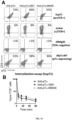
- SupT1 cells were pulsed with 20 ⁇ g/ml of anti-pT ⁇ mAb or anti-pT ⁇ ADCs (pT ⁇ -DM1 or pT ⁇ -MMAE) at 4°C for 30 min, then washed with ice-cold PBS to remove unbound antibody and chased for the indicated times at 37°C. Then, cells were washed with ice-cold PBS and the primary antibody was detected using FITC-conjugated goat anti-mouse (H+L) antibody (Invitrogen).
- H+L FITC-conjugated goat anti-mouse
- mice were kept under specific pathogen-free (SPF) conditions and used in accordance with the guidelines approved by the Animal Experimentation Ethics Committee of the Spanish National Research Council. Experiments were performed in a biosafety level 2 room (BSL-2) at the Animal Facility at Centro de Biologia Molecular Severo Ochoa (CBMSO, CSIC-UAM).
- SPF pathogen-free
- mice Sub-lethally irradiated (1.5 Gy) 6-10-week-old NOD.Cg- Prkdc scid ⁇ c -/- (NSG; The Jackson Laboratory) immunodeficient mice were subjected to intravenous (i.v.) injection with the pre-TCR+ SupT1 T-ALL cell line previously transduced with a lentiviral construct encoding luciferase and GFP reporter genes separated by an IRES (pHR-SIN-Luc-IRES-emGFP) ( Cuesta-Mateos, et al. 2020 Biomarker Research, 8:54 (1 x 10 6 cells per mice).
- IRES pHR-SIN-Luc-IRES-emGFP
- CARpT ⁇ .41 BB or GFP-Mock primary human T cells was i.v. administered (5 x 10 6 cells per mice) two days after leukaemia infusion. Mice were monitored visually on a daily basis for their general appearance, and weekly for tumour growth by non-invasive whole-body bioluminescence imaging (IVIS). Mice that showed clear signs of distress (cachexia) were sacrificed following humane endpoints guidelines. BM, spleen and PB were isolated from all sacrificed mice and processed for flow cytometry analysis, as described in section 7.3.
- mice were firstly anesthetised using Isoflutek ® (Laboratorios Karizoo, S.A) and subsequently intraperitoneally injected with 150 mg/kg of D-Luciferin (PerkinElmer) and monitored using the Xenogen IVIS Lumina II imaging system (Caliper Life Sciences). Photon flux emitted by luciferase-expressing cells was measured for 10 min as average radiance (photons/sec/cm 2 /sr). Imaging analysis was performed using the Living ImageTM software 3.2 (Caliper Life Sciences).
- mice Sub-lethally irradiated (1.5 Gy) 6-10-week-old NSG immunodeficient mice were i.v. injected with primary pre-TCR+ T-ALL blasts from patient samples (T-ALL 3: 0.5-1 x10 6 cells per mice or T-ALL 42: 2x10 6 cell per mice).
- T-ALL 3 0.5-1 x10 6 cells per mice or T-ALL 42: 2x10 6 cell per mice.
- Leukemia engraftment in PB was monitored weekly by flow cytometry using anti-human CD45-APC, CD7-PE and CD5-FITC antibodies. Animals were subjected to the corresponding therapy when PB leukemia engraftment was >1%.
- a single dose (2 x 10 6 cells per mice) of primary human CARpT ⁇ .41BB-armed or GFP-Mock-transduced T cells was i.v. injected in mice subjected to leukemia infusion at least two days before. Mice were then monitored visually on a daily basis for their general aspect and weekly for leukaemia expansion in PB by bleeding. Mice were sacrificed at week 11 post-leukemia infusion when signs of graft versus host disease (GvHD) were evident. Analysis of weekly PB samples, and BM and spleen at sacrifice was done by flow cytometry.
- mice injected with T-ALL primary samples were homogeneously divided into different groups that were treated with either vehicle (PBS), anti-pT ⁇ -DM1 (3 and 10 mg/Kg, twice per week) or VxL, as the standard patient treatment, consisting of Vincristine (0.15 mg/kg) once weekly for 3 weeks, dexamethasome (5 mg/Kg) and and L-asparaginase (1000 U/Kg) daily during 5 days for 3 weeks.
- PBS vehicle
- anti-pT ⁇ -DM1 3 and 10 mg/Kg, twice per week
- VxL as the standard patient treatment, consisting of Vincristine (0.15 mg/kg) once weekly for 3 weeks, dexamethasome (5 mg/Kg) and and L-asparaginase (1000 U/Kg) daily during 5 days for 3 weeks.
- anti-pT ⁇ -MMAE 3 and 6 mg/Kg
- anti-IgG2a-MMAE anti-IgG2a-MMAE
- BM cells were obtained by perfusion with PBS 1X of both femora and tibiae from mouse legs.
- Samples suspended in RBC lysis buffer B (9 vol. NH 4 Cl 0.83%; 1 vol. Tris-HCl 2.6% pH7.6) were incubated for 5 min at room temperature. Then, lysis reaction was neutralized by addition of RPMI 2% FBS, samples were filtered through 70 ⁇ m filters (Filcon, BD Biosciences) and subjected to centrifugation. Finally, cell pellets were washed twice in flow cytometry buffer and stained for flow cytometry analysis with specific antibodies (Table 2).
- CD28-based CARs usually induce a robust proliferative response and an effector memory phenotype of T cells, whereas 4-1BB-based CARs elicit a more progressive response, presenting enhanced persistence and central memory differentiation ( Kawalekar et al. 2016 Immunity. 16;44(2):380-90, doi: 10.1016/j.immuni.2016.01.021 .).
- CAR.41 BB and CAR.28 Two different second-generation CAR backbones (CAR.41 BB and CAR.28) ( Figure 2 ) by means of PCR amplification, enzyme digestion and Gibson assembly. After validating correct insertion and sequence of the CARpTa constructs generated, both CARpT ⁇ .41 BB and CARpT ⁇ .28 were cloned into the pCCI lentiviral vector. Lentiviral particles containing either each CARpTa LV vector or the pCCL-GFP-Mock LV vector, used as a negative control, were produced using HEK-293T cells.
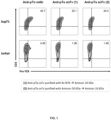
- LV particles were then used to transduce the Jurkat cell line and efficiency of transduction was evaluated by detection of GFP expression by flow cytometry at 48 h post-transduction. Results showed that Jurkat cells were efficiently transduced in all the cases, although better transduction efficiency was observed for CARpT ⁇ .41 BB LV particles (95.1%) compared to CARpT ⁇ .28 LV particles (78.2%) ( Figure 3A )
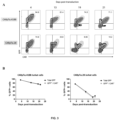
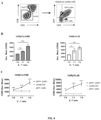
- CARpT ⁇ .28- or CARpT ⁇ .41 BB-expressing Jurkat cells were co-cultured with the human pre-TCR+ SupT1 T-ALL cell line at different E:T cell ratios.
- Cell activation was analysed after 16h of co-culture by assessing induction of the CD69 early activation marker in transduced Jurkat cells, which were gated by flow cytometry based on CD4 and CD8 expression levels, together with GFP and surface CARpT ⁇ expression ( Figure 4A ).
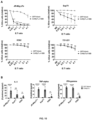
- CARpT ⁇ .41BB T cells To evaluate the anti-leukemic potential of CARpT ⁇ .41BB T cells, we next assessed their killing activity in vitro and their capacity to secrete pro-inflammatory cytokines against pre-TCR+ T-ALL cell lines (SupT1 and JR-Mig-pT ⁇ ) in comparison with pre-TCR- cell lines (K562 and 721-22), used as negative controls ( Figure 10A ). Compared to GFP-Mock T cells, CARpT ⁇ .41BB T cells showed robust cytotoxic activity against pre-TCR+ T-ALL cell lines, while no significant cytolysis of pre-TCR-cells was observed ( Figure 10A ). Cytotoxic potential of CARpT ⁇ .41BB-armed T cells was found dependent on the E:T cell ratio.
- Results showed that administration of CARpT ⁇ .41BB-armed T cells significantly hampered T-ALL progression and increased overall mouse survival, as compared to treatment with GFP-Mock-transduced T cells ( Figure 11B-D ). Moreover, flow cytometry analysis of SupT1 leukaemic cells infiltrating the BM revealed significant differences in CD3 expression levels between mice treated with either CARpT ⁇ .41BB-armed T cells or transduced with GFP-Mock ( Figure 11E-F ). In fact, SupT1 cells recovered from the GFP-Mock control group displayed surface CD3 expression levels equivalent to those recovered from untreated animals.
- mice given CARpT ⁇ .41BB-T cell therapy were leukemia-free even after 11-weeks of CARpT ⁇ .41BB-Tcell infusion ( Figure 12B ), providing proof-of-concept of the efficacy of our CARpTa-based immunotherapy for T-ALL.
- He insertado las figuras correspondientes a este ensayo como Figuras 14 a 17.
- ADCs pT ⁇ -specific antibody-drug conjugates
- CABS Custom Antibody Services
- DM1 Mertansine Toxin
- MMAE Monomethyl auristatin E toxin
- anti-pT ⁇ mAb was unable to bind to the surface pre-TCR negative Jurkat or JRMigR1 cell lines, neither anti-pT ⁇ -ADCs showed reactivity against these cells.
- both ADCs as well as the conventional anti-pT ⁇ mAb recognized a CD3-associated complex expressed at the surface of cell lines known to express the pre-TCR ( Figure 13A ), indicating that they bind to the pT ⁇ chain of the pCD3-associated pre-TCR.
- pT ⁇ -specific ADCs bind and rapidly internalize the human pre-TCR expressed at the cell surface.
- Anti-pT ⁇ ADCs specifically impair cell cycle progression and in vitro cell proliferation of pre-TCR-expressing T-ALL cells.
- mice sublethally irradiated NSG mice (1.5 Gy) were i.v. injected with primary patient-derived T-ALL xenografts previously expanded in NSG mice. Animals were examined at different days post-transplantation for the presence of human leukemic cells in peripheral blood (PB) and the disease was considered established when animals showed >1% leukemic cells in the PB (>8 weeks post-transplantation).
- PB peripheral blood
- CARpT ⁇ .41BB CARpT ⁇ .28 Antigen-binding domain anti-pT ⁇ scFv anti-pT ⁇ scFv Hinge domain Human CD8 ⁇ Human IgG4 hinge (with extra spacer IgG1 CH3) Transmembrane domain Human CD8 ⁇ Human CD28 Signalling domains Human 4-1BB and CD3 ⁇ Human CD28 and CD3 ⁇
Landscapes
- Health & Medical Sciences (AREA)
- Life Sciences & Earth Sciences (AREA)
- Bioinformatics & Cheminformatics (AREA)
- Engineering & Computer Science (AREA)
- Chemical & Material Sciences (AREA)
- General Health & Medical Sciences (AREA)
- Immunology (AREA)
- Veterinary Medicine (AREA)
- Animal Behavior & Ethology (AREA)
- Public Health (AREA)
- Epidemiology (AREA)
- Medicinal Chemistry (AREA)
- Pharmacology & Pharmacy (AREA)
- Cell Biology (AREA)
- Organic Chemistry (AREA)
- Proteomics, Peptides & Aminoacids (AREA)
- Hematology (AREA)
- Oncology (AREA)
- Nuclear Medicine, Radiotherapy & Molecular Imaging (AREA)
- General Chemical & Material Sciences (AREA)
- Chemical Kinetics & Catalysis (AREA)
- Biochemistry (AREA)
- Biophysics (AREA)
- Genetics & Genomics (AREA)
- Molecular Biology (AREA)
- Peptides Or Proteins (AREA)
Priority Applications (2)
| Application Number | Priority Date | Filing Date | Title |
|---|---|---|---|
| EP23382727.8A EP4491192A1 (fr) | 2023-07-14 | 2023-07-14 | Anticorps reconnaissant le pre-récepteur des lymphocytes t, conjugués anticorps-médicament et cellules car-t pour le traitement et/ou la prévention de la leucémie |
| PCT/EP2024/070011 WO2025016972A1 (fr) | 2023-07-14 | 2024-07-15 | Conjugués anticorps-médicament ou lymphocytes t car pour le traitement et/ou la prévention de la leucémie |
Applications Claiming Priority (1)
| Application Number | Priority Date | Filing Date | Title |
|---|---|---|---|
| EP23382727.8A EP4491192A1 (fr) | 2023-07-14 | 2023-07-14 | Anticorps reconnaissant le pre-récepteur des lymphocytes t, conjugués anticorps-médicament et cellules car-t pour le traitement et/ou la prévention de la leucémie |
Publications (1)
| Publication Number | Publication Date |
|---|---|
| EP4491192A1 true EP4491192A1 (fr) | 2025-01-15 |
Family
ID=87377743
Family Applications (1)
| Application Number | Title | Priority Date | Filing Date |
|---|---|---|---|
| EP23382727.8A Withdrawn EP4491192A1 (fr) | 2023-07-14 | 2023-07-14 | Anticorps reconnaissant le pre-récepteur des lymphocytes t, conjugués anticorps-médicament et cellules car-t pour le traitement et/ou la prévention de la leucémie |
Country Status (2)
| Country | Link |
|---|---|
| EP (1) | EP4491192A1 (fr) |
| WO (1) | WO2025016972A1 (fr) |
Citations (3)
| Publication number | Priority date | Publication date | Assignee | Title |
|---|---|---|---|---|
| US20190062430A1 (en) | 2016-04-01 | 2019-02-28 | Promab Biotechnologies, Inc. | Flag tagged cd19-car-t cells |
| US20200010555A1 (en) | 2018-09-20 | 2020-01-09 | Lentigen Technology, Inc. | Compositions and Methods for Treating Cancer with Anti-CD123 Immunotherapy |
| EP4137154A1 (fr) * | 2020-04-17 | 2023-02-22 | Consejo Superior De Investigaciones Científicas | Traitement thérapeutique de leucémies lymphoblastiques aiguës à lymphocytes t avec un anticorps monoclonal reconnaissant le récepteur pre-tcr |
-
2023
- 2023-07-14 EP EP23382727.8A patent/EP4491192A1/fr not_active Withdrawn
-
2024
- 2024-07-15 WO PCT/EP2024/070011 patent/WO2025016972A1/fr active Pending
Patent Citations (3)
| Publication number | Priority date | Publication date | Assignee | Title |
|---|---|---|---|---|
| US20190062430A1 (en) | 2016-04-01 | 2019-02-28 | Promab Biotechnologies, Inc. | Flag tagged cd19-car-t cells |
| US20200010555A1 (en) | 2018-09-20 | 2020-01-09 | Lentigen Technology, Inc. | Compositions and Methods for Treating Cancer with Anti-CD123 Immunotherapy |
| EP4137154A1 (fr) * | 2020-04-17 | 2023-02-22 | Consejo Superior De Investigaciones Científicas | Traitement thérapeutique de leucémies lymphoblastiques aiguës à lymphocytes t avec un anticorps monoclonal reconnaissant le récepteur pre-tcr |
Non-Patent Citations (17)
| Title |
|---|
| ANGIOLILLO ET AL., PEDIATR BLOOD CANCER, vol. 53, 2009, pages 978 - 83 |
| BAILEY ET AL., LANCET ONCOL, vol. 5, no. 9, 2008, pages 873 - 883 |
| BORST ET AL., CURR OPIN IMMUNOL, vol. 8, 1996, pages 181 - 90 |
| DUDLEY ET AL., IMMUNITY, vol. 1, 1994, pages 83 - 93 |
| F. KUHNERT: "PRE-T CELL RECEPTOR SIGNALING DRIVES LEUKEMOGENESIS AND IS A THERAPEUTIC TARGET IN T CELL ACUTE LYMPHOBLASTIC LEUKEMIA", HEMATOLOGICAL ONCOLOGY, vol. 37, 1 June 2019 (2019-06-01), US, pages 365 - 366, XP055756287, ISSN: 0278-0232, DOI: 10.1002/hon.30_2631 * |
| GANGOPADHYAY ET AL: "Bone marrow-derived CD8@a^+TCR^- cells that facilitate allogeneic bone marrow transplantation are a mixed population of lymphoid and myeloid progenitors", EXPERIMENTAL HEMATOLOGY, ELSEVIER INC, US, vol. 35, no. 12, 17 October 2007 (2007-10-17), pages 1847 - 1857, XP022356324, ISSN: 0301-472X, DOI: 10.1016/J.EXPHEM.2007.07.016 * |
| GONZALEZ-GARCIA ET AL., BLOOD, vol. 134, 2019, pages 2171 - 2182 |
| GROETTRUP ET AL., CELL, vol. 75, 1993, pages 283 - 94 |
| KARRMANJOHANSSON, GENES CHROMOSOMES CANCER, vol. 56, no. 2, February 2017 (2017-02-01), pages 89 - 116 |
| KAWALEKAR ET AL., IMMUNITY, vol. 44, no. 2, 2016, pages 380 - 90 |
| MAZINANIRAHBARIZADEH, REVIEW BIOMARK RES, vol. 10, no. 1, 2022, pages 70 |
| PEHLIVAN KATHERINE C ET AL: "CAR-T Cell Therapy for Acute Lymphoblastic Leukemia: Transforming the Treatment of Relapsed and Refractory Disease", CURRENT HEMATOLOGIC MALIGNANCY REPORTS, SPRINGER US, NEW YORK, vol. 13, no. 5, 17 August 2018 (2018-08-17), pages 396 - 406, XP036596042, ISSN: 1558-8211, [retrieved on 20180817], DOI: 10.1007/S11899-018-0470-X * |
| PETRY ET AL., EXP MED, vol. 178, 1993, pages 615 - 22 |
| RAMIRO ALMUDENA R. ET AL: "Differential Developmental Regulation and Functional Effects on Pre-TCR Surface Expression of Human pT[alpha] a and pT[alpha] b Spliced Isoforms", THE JOURNAL OF IMMUNOLOGY, vol. 167, no. 9, 1 November 2001 (2001-11-01), US, pages 5106 - 5114, XP055864558, ISSN: 0022-1767, Retrieved from the Internet <URL:https://www.jimmunol.org/content/jimmunol/167/9/5106.full.pdf> DOI: 10.4049/jimmunol.167.9.5106 * |
| SHEYKHHASAN MOHSEN ET AL: "Use of CAR T-cell for acute lymphoblastic leukemia (ALL) treatment: a review study", CANCER GENE THERAPY, vol. 29, no. 8-9, 5 January 2022 (2022-01-05), New York, pages 1080 - 1096, XP093072358, ISSN: 0929-1903, Retrieved from the Internet <URL:https://www.nature.com/articles/s41417-021-00418-1.pdf> DOI: 10.1038/s41417-021-00418-1 * |
| TANDONPUNNETT: "Advances in Hematologic Malignancies", INTECHOPEN, 23 October 2019 (2019-10-23) |
| YAMASAKI ET AL: "Molecular basis for pre-TCR-mediated autonomous signaling", TRENDS IN IMMUNOLOGY, ELSEVIER LTD. TRENDS JOURNALS, GB, vol. 28, no. 1, 22 December 2006 (2006-12-22), pages 39 - 43, XP005812934, ISSN: 1471-4906, DOI: 10.1016/J.IT.2006.11.006 * |
Also Published As
| Publication number | Publication date |
|---|---|
| WO2025016972A1 (fr) | 2025-01-23 |
Similar Documents
| Publication | Publication Date | Title |
|---|---|---|
| US20210269534A1 (en) | Flt3 directed car cells for immunotherapy | |
| TW202110895A (zh) | 一種抗ceacam5的單殖株抗體及其製備方法和用途 | |
| US20240139249A1 (en) | Car-t cells targeting il-1rap and their use | |
| US20240409643A1 (en) | Anti-nmdar2b antibodies, antibody-drug conjugates, and chimeric antigen receptors, and compositions and methods of use | |
| JP2022547220A (ja) | 二重特異性抗体car細胞免疫療法 | |
| JP7621278B2 (ja) | 急性骨髄性白血病(aml)における、il-1rapを標的とするcar-t細胞及びその使用 | |
| CA3255414A1 (fr) | Traitement de troubles myéloïdes et de leucémies aiguës ciblant de nouveaux antigènes spécifiques à une tumeur | |
| EP4288081A1 (fr) | Car à base de ligands naturels modifiés : évolution dirigée du récepteur du stress nkp30 | |
| KR20250059415A (ko) | B7-h3 항원-결합 분자 | |
| CA3216175A1 (fr) | Diagnostic et traitement de troubles myeloides et de leucemies aigues a l'aide de nouveaux antigenes specifiques de tumeurs | |
| US20230405122A1 (en) | Compositions and uses of psca targeted chimeric antigen receptor modified cells | |
| EP4357365A1 (fr) | Anticorps ciblant la protéine axl et fragment de liaison à l'antigène de celui-ci, procédé de préparation correspondant et utilisation associée | |
| EP4491192A1 (fr) | Anticorps reconnaissant le pre-récepteur des lymphocytes t, conjugués anticorps-médicament et cellules car-t pour le traitement et/ou la prévention de la leucémie | |
| US20250333515A1 (en) | Binding agents and methods of use thereof | |
| Toribio et al. | Antibody-drug conjugates or car-t cells for the treatment and/or prevention of leukemia | |
| JP2022538092A (ja) | 抗-cd123抗体、抗-cd123キメラ抗原受容体および抗-cd123キメラ抗原受容体t細胞 | |
| KR20250042908A (ko) | 항-메소텔린 항체 및 이의 용도 | |
| EP4527407A1 (fr) | Anticorps anti-mésothéline et leurs utilisations | |
| EP4623931A1 (fr) | Anticorps contre le cancer hématologique | |
| WO2026037425A1 (fr) | Anticorps anti-cd9 modifiés et leur utilisation | |
| EP4737482A1 (fr) | Anticorps anti-myct1 humanisé et son utilisation | |
| KR20250085636A (ko) | 신규 항-myct1 인간항체 및 이의 용도 | |
| WO2025219870A1 (fr) | Lymphocyte t à récepteur antigénique chimérique (car) ciblant cd19 modifié et ses utilisations | |
| WO2024035341A1 (fr) | Molécules de liaison à l'antigène cd30 | |
| WO2021170146A1 (fr) | Préparation d'un anticorps anti-cd19 de type nouveau et d'une cellule cd19-car-t, et utilisation associée |
Legal Events
| Date | Code | Title | Description |
|---|---|---|---|
| PUAI | Public reference made under article 153(3) epc to a published international application that has entered the european phase |
Free format text: ORIGINAL CODE: 0009012 |
|
| STAA | Information on the status of an ep patent application or granted ep patent |
Free format text: STATUS: THE APPLICATION HAS BEEN PUBLISHED |
|
| AK | Designated contracting states |
Kind code of ref document: A1 Designated state(s): AL AT BE BG CH CY CZ DE DK EE ES FI FR GB GR HR HU IE IS IT LI LT LU LV MC ME MK MT NL NO PL PT RO RS SE SI SK SM TR |
|
| STAA | Information on the status of an ep patent application or granted ep patent |
Free format text: STATUS: THE APPLICATION IS DEEMED TO BE WITHDRAWN |
|
| 18D | Application deemed to be withdrawn |
Effective date: 20250716 |