EP4491301A1 - Eingekapselte legierungskatalysatoren und verfahren zu ihrer herstellung - Google Patents
Eingekapselte legierungskatalysatoren und verfahren zu ihrer herstellung Download PDFInfo
- Publication number
- EP4491301A1 EP4491301A1 EP23185650.1A EP23185650A EP4491301A1 EP 4491301 A1 EP4491301 A1 EP 4491301A1 EP 23185650 A EP23185650 A EP 23185650A EP 4491301 A1 EP4491301 A1 EP 4491301A1
- Authority
- EP
- European Patent Office
- Prior art keywords
- catalyst
- alloy
- metal
- oxide
- encapsulant
- Prior art date
- Legal status (The legal status is an assumption and is not a legal conclusion. Google has not performed a legal analysis and makes no representation as to the accuracy of the status listed.)
- Withdrawn
Links
Images



Classifications
-
- B—PERFORMING OPERATIONS; TRANSPORTING
- B22—CASTING; POWDER METALLURGY
- B22F—WORKING METALLIC POWDER; MANUFACTURE OF ARTICLES FROM METALLIC POWDER; MAKING METALLIC POWDER; APPARATUS OR DEVICES SPECIALLY ADAPTED FOR METALLIC POWDER
- B22F1/00—Metallic powder; Treatment of metallic powder, e.g. to facilitate working or to improve properties
- B22F1/16—Metallic particles coated with a non-metal
-
- B—PERFORMING OPERATIONS; TRANSPORTING
- B01—PHYSICAL OR CHEMICAL PROCESSES OR APPARATUS IN GENERAL
- B01J—CHEMICAL OR PHYSICAL PROCESSES, e.g. CATALYSIS OR COLLOID CHEMISTRY; THEIR RELEVANT APPARATUS
- B01J23/00—Catalysts comprising metals or metal oxides or hydroxides, not provided for in group B01J21/00
- B01J23/002—Mixed oxides other than spinels, e.g. perovskite
-
- B—PERFORMING OPERATIONS; TRANSPORTING
- B01—PHYSICAL OR CHEMICAL PROCESSES OR APPARATUS IN GENERAL
- B01J—CHEMICAL OR PHYSICAL PROCESSES, e.g. CATALYSIS OR COLLOID CHEMISTRY; THEIR RELEVANT APPARATUS
- B01J23/00—Catalysts comprising metals or metal oxides or hydroxides, not provided for in group B01J21/00
- B01J23/70—Catalysts comprising metals or metal oxides or hydroxides, not provided for in group B01J21/00 of the iron group metals or copper
- B01J23/76—Catalysts comprising metals or metal oxides or hydroxides, not provided for in group B01J21/00 of the iron group metals or copper combined with metals, oxides or hydroxides provided for in groups B01J23/02 - B01J23/36
- B01J23/83—Catalysts comprising metals or metal oxides or hydroxides, not provided for in group B01J21/00 of the iron group metals or copper combined with metals, oxides or hydroxides provided for in groups B01J23/02 - B01J23/36 with rare earths or actinides
-
- B—PERFORMING OPERATIONS; TRANSPORTING
- B01—PHYSICAL OR CHEMICAL PROCESSES OR APPARATUS IN GENERAL
- B01J—CHEMICAL OR PHYSICAL PROCESSES, e.g. CATALYSIS OR COLLOID CHEMISTRY; THEIR RELEVANT APPARATUS
- B01J35/00—Catalysts, in general, characterised by their form or physical properties
- B01J35/20—Catalysts, in general, characterised by their form or physical properties characterised by their non-solid state
- B01J35/23—Catalysts, in general, characterised by their form or physical properties characterised by their non-solid state in a colloidal state
-
- B—PERFORMING OPERATIONS; TRANSPORTING
- B01—PHYSICAL OR CHEMICAL PROCESSES OR APPARATUS IN GENERAL
- B01J—CHEMICAL OR PHYSICAL PROCESSES, e.g. CATALYSIS OR COLLOID CHEMISTRY; THEIR RELEVANT APPARATUS
- B01J35/00—Catalysts, in general, characterised by their form or physical properties
- B01J35/30—Catalysts, in general, characterised by their form or physical properties characterised by their physical properties
-
- B—PERFORMING OPERATIONS; TRANSPORTING
- B01—PHYSICAL OR CHEMICAL PROCESSES OR APPARATUS IN GENERAL
- B01J—CHEMICAL OR PHYSICAL PROCESSES, e.g. CATALYSIS OR COLLOID CHEMISTRY; THEIR RELEVANT APPARATUS
- B01J35/00—Catalysts, in general, characterised by their form or physical properties
- B01J35/30—Catalysts, in general, characterised by their form or physical properties characterised by their physical properties
- B01J35/33—Electric or magnetic properties
-
- B—PERFORMING OPERATIONS; TRANSPORTING
- B01—PHYSICAL OR CHEMICAL PROCESSES OR APPARATUS IN GENERAL
- B01J—CHEMICAL OR PHYSICAL PROCESSES, e.g. CATALYSIS OR COLLOID CHEMISTRY; THEIR RELEVANT APPARATUS
- B01J37/00—Processes, in general, for preparing catalysts; Processes, in general, for activation of catalysts
- B01J37/0009—Use of binding agents; Moulding; Pressing; Powdering; Granulating; Addition of materials ameliorating the mechanical properties of the product catalyst
- B01J37/0018—Addition of a binding agent or of material, later completely removed among others as result of heat treatment, leaching or washing,(e.g. forming of pores; protective layer, desintegrating by heat)
-
- B—PERFORMING OPERATIONS; TRANSPORTING
- B01—PHYSICAL OR CHEMICAL PROCESSES OR APPARATUS IN GENERAL
- B01J—CHEMICAL OR PHYSICAL PROCESSES, e.g. CATALYSIS OR COLLOID CHEMISTRY; THEIR RELEVANT APPARATUS
- B01J37/00—Processes, in general, for preparing catalysts; Processes, in general, for activation of catalysts
- B01J37/02—Impregnation, coating or precipitation
- B01J37/03—Precipitation; Co-precipitation
- B01J37/036—Precipitation; Co-precipitation to form a gel or a cogel
-
- B—PERFORMING OPERATIONS; TRANSPORTING
- B01—PHYSICAL OR CHEMICAL PROCESSES OR APPARATUS IN GENERAL
- B01J—CHEMICAL OR PHYSICAL PROCESSES, e.g. CATALYSIS OR COLLOID CHEMISTRY; THEIR RELEVANT APPARATUS
- B01J37/00—Processes, in general, for preparing catalysts; Processes, in general, for activation of catalysts
- B01J37/16—Reducing
- B01J37/18—Reducing with gases containing free hydrogen
-
- B—PERFORMING OPERATIONS; TRANSPORTING
- B22—CASTING; POWDER METALLURGY
- B22F—WORKING METALLIC POWDER; MANUFACTURE OF ARTICLES FROM METALLIC POWDER; MAKING METALLIC POWDER; APPARATUS OR DEVICES SPECIALLY ADAPTED FOR METALLIC POWDER
- B22F9/00—Making metallic powder or suspensions thereof
- B22F9/16—Making metallic powder or suspensions thereof using chemical processes
- B22F9/18—Making metallic powder or suspensions thereof using chemical processes with reduction of metal compounds
- B22F9/24—Making metallic powder or suspensions thereof using chemical processes with reduction of metal compounds starting from liquid metal compounds, e.g. solutions
- B22F9/26—Making metallic powder or suspensions thereof using chemical processes with reduction of metal compounds starting from liquid metal compounds, e.g. solutions using gaseous reductors
-
- C—CHEMISTRY; METALLURGY
- C22—METALLURGY; FERROUS OR NON-FERROUS ALLOYS; TREATMENT OF ALLOYS OR NON-FERROUS METALS
- C22C—ALLOYS
- C22C1/00—Making non-ferrous alloys
- C22C1/04—Making non-ferrous alloys by powder metallurgy
- C22C1/0433—Nickel- or cobalt-based alloys
-
- C—CHEMISTRY; METALLURGY
- C22—METALLURGY; FERROUS OR NON-FERROUS ALLOYS; TREATMENT OF ALLOYS OR NON-FERROUS METALS
- C22C—ALLOYS
- C22C33/00—Making ferrous alloys
- C22C33/02—Making ferrous alloys by powder metallurgy
-
- C—CHEMISTRY; METALLURGY
- C25—ELECTROLYTIC OR ELECTROPHORETIC PROCESSES; APPARATUS THEREFOR
- C25B—ELECTROLYTIC OR ELECTROPHORETIC PROCESSES FOR THE PRODUCTION OF COMPOUNDS OR NON-METALS; APPARATUS THEREFOR
- C25B1/00—Electrolytic production of inorganic compounds or non-metals
- C25B1/01—Products
- C25B1/23—Carbon monoxide or syngas
-
- C—CHEMISTRY; METALLURGY
- C25—ELECTROLYTIC OR ELECTROPHORETIC PROCESSES; APPARATUS THEREFOR
- C25B—ELECTROLYTIC OR ELECTROPHORETIC PROCESSES FOR THE PRODUCTION OF COMPOUNDS OR NON-METALS; APPARATUS THEREFOR
- C25B11/00—Electrodes; Manufacture thereof not otherwise provided for
- C25B11/04—Electrodes; Manufacture thereof not otherwise provided for characterised by the material
- C25B11/051—Electrodes formed of electrocatalysts on a substrate or carrier
- C25B11/054—Electrodes comprising electrocatalysts supported on a carrier
-
- C—CHEMISTRY; METALLURGY
- C25—ELECTROLYTIC OR ELECTROPHORETIC PROCESSES; APPARATUS THEREFOR
- C25B—ELECTROLYTIC OR ELECTROPHORETIC PROCESSES FOR THE PRODUCTION OF COMPOUNDS OR NON-METALS; APPARATUS THEREFOR
- C25B11/00—Electrodes; Manufacture thereof not otherwise provided for
- C25B11/04—Electrodes; Manufacture thereof not otherwise provided for characterised by the material
- C25B11/051—Electrodes formed of electrocatalysts on a substrate or carrier
- C25B11/055—Electrodes formed of electrocatalysts on a substrate or carrier characterised by the substrate or carrier material
- C25B11/057—Electrodes formed of electrocatalysts on a substrate or carrier characterised by the substrate or carrier material consisting of a single element or compound
- C25B11/061—Metal or alloy
-
- C—CHEMISTRY; METALLURGY
- C25—ELECTROLYTIC OR ELECTROPHORETIC PROCESSES; APPARATUS THEREFOR
- C25B—ELECTROLYTIC OR ELECTROPHORETIC PROCESSES FOR THE PRODUCTION OF COMPOUNDS OR NON-METALS; APPARATUS THEREFOR
- C25B11/00—Electrodes; Manufacture thereof not otherwise provided for
- C25B11/04—Electrodes; Manufacture thereof not otherwise provided for characterised by the material
- C25B11/051—Electrodes formed of electrocatalysts on a substrate or carrier
- C25B11/073—Electrodes formed of electrocatalysts on a substrate or carrier characterised by the electrocatalyst material
- C25B11/075—Electrodes formed of electrocatalysts on a substrate or carrier characterised by the electrocatalyst material consisting of a single catalytic element or catalytic compound
- C25B11/077—Electrodes formed of electrocatalysts on a substrate or carrier characterised by the electrocatalyst material consisting of a single catalytic element or catalytic compound the compound being a non-noble metal oxide
-
- C—CHEMISTRY; METALLURGY
- C25—ELECTROLYTIC OR ELECTROPHORETIC PROCESSES; APPARATUS THEREFOR
- C25B—ELECTROLYTIC OR ELECTROPHORETIC PROCESSES FOR THE PRODUCTION OF COMPOUNDS OR NON-METALS; APPARATUS THEREFOR
- C25B11/00—Electrodes; Manufacture thereof not otherwise provided for
- C25B11/04—Electrodes; Manufacture thereof not otherwise provided for characterised by the material
- C25B11/051—Electrodes formed of electrocatalysts on a substrate or carrier
- C25B11/073—Electrodes formed of electrocatalysts on a substrate or carrier characterised by the electrocatalyst material
- C25B11/091—Electrodes formed of electrocatalysts on a substrate or carrier characterised by the electrocatalyst material consisting of at least one catalytic element and at least one catalytic compound; consisting of two or more catalytic elements or catalytic compounds
-
- C—CHEMISTRY; METALLURGY
- C25—ELECTROLYTIC OR ELECTROPHORETIC PROCESSES; APPARATUS THEREFOR
- C25B—ELECTROLYTIC OR ELECTROPHORETIC PROCESSES FOR THE PRODUCTION OF COMPOUNDS OR NON-METALS; APPARATUS THEREFOR
- C25B9/00—Cells or assemblies of cells; Constructional parts of cells; Assemblies of constructional parts, e.g. electrode-diaphragm assemblies; Process-related cell features
- C25B9/17—Cells comprising dimensionally-stable non-movable electrodes; Assemblies of constructional parts thereof
- C25B9/19—Cells comprising dimensionally-stable non-movable electrodes; Assemblies of constructional parts thereof with diaphragms
- C25B9/23—Cells comprising dimensionally-stable non-movable electrodes; Assemblies of constructional parts thereof with diaphragms comprising ion-exchange membranes in or on which electrode material is embedded
Definitions
- Wang et al. (1) disclosed a composite catalyst consisting of NiFe alloy and La(Sr)Fe(Mn)O 3 oxide for high-temperature CO 2 electroreduction to CO.
- This composite catalyst is a simple mixture of alloy and oxide.
- the disclosed catalyst however, has a stability of 100 h at 0.5 A/cm 2 , rendering it not suitable for use at industrial relevant current densities.
- the patent application CN 109860626 A (2) discloses a composite catalyst of FeNi alloy and La 2-2x B 2x M 2y Fe 1-2y O 4- ⁇ oxide, where B is selected from least one of Ca, Ba, Sr, Pb and Bi, and M is selected from least one of Al, Cr, Mn, Ni, Zr, Ti and Y, for high-temperature CO 2 electroreduction to CO.
- This composite catalyst is an oxide-supported alloy catalyst.
- the catalyst however, only has a limited energy efficiency of 61% at 0.6 A/cm 2 .
- Lv et al. (3) discloses a RuFe alloy catalyst for high-temperature CO 2 electroreduction to CO.
- the catalyst comprises precious metals and is further prepared on a Sr 2 Fe 1.4 Ru 0.1 Mo 0.5 O 6- ⁇ perovskite surface.
- Such a catalyst is delimited in its energy efficiency to under 70% and its stability at high current densities.
- Zhou et al. (4) discloses a Fe-decorated Sm-doped CeO 2 catalyst for high-temperature CO 2 electroreduction to CO.
- This composite catalyst is an oxide-supported single metal catalyst.
- Such a catalyst results in a low activity and stability of the catalyst, as well a limitation in its energy efficiency at high current densities.
- the patent US 9,306,221 B2 discloses a composite catalyst consisting of Al 2 O 3 or MgO-supported metal mixed with SDC/GDC.
- the catalyst is targeted at for use in high-temperature fuel cells which has different requirements on the catalyst than high-temperature CO 2 electroreduction, since the ladder requires high cell voltages and is prone to coke formation.
- the catalyst disclosed in US 9,306,221 B2 is mixed with SDC/GDC.
- aluminium and magnesium oxides have insulating properties themselves, even at higher temperatures. Thus this combination yields a catalyst, with very low conductivity and low activity and further being prone to particle agglomeration and coke formation at high temperatures.
- the catalyst claimed in US 9,306,221 B2 is further prepared using a solid-phase method which uses a high-speed rotary mixer. This method comes with the limitation of yielding inhomogeneous product and requiring significant energy.
- the objective of the present invention is to provide means and methods to the preparation of encapsulated alloy catalysts for use in high temperature CO 2 electroreduction with high efficiency and stability.
- a first aspect of the invention relates to a method for preparing a catalyst comprising the steps of
- a second aspect of the invention relates to a catalyst comprising two or more metal alloys, wherein the two or more metal alloys are encapsulated by a metal oxide.
- a third aspect of the invention relates to a catalyst obtained by the method according to the first aspect of the invention, wherein the catalyst is characterized in that the catalyst is stable for at least 200 h at a current density of 1.0 A/cm 2 .
- references to "about” a value or parameter herein includes (and describes) variations that are directed to that value or parameter per se. For example, description referring to "about X” includes description of "X.”
- non-precious metal in the context of the present specification relates to any metallic element that does not possess significant value or rarity in the context of financial or industrial applications.
- non-precious metals include but are not limited to Mn, Fe, Co, Ni, Cu, Zn, Mo, In and Sn.
- alloy in the context of the present specification relates to a mixture of chemical elements of which at least one is a metal, particularly of which at least two are a metal.
- the formed alloy retains the properties of the metal(s), particularly, the formed alloy retains the metals' conductivity.
- chelating agent in the context of the present specification relates to a ligand with the ability to bind metal ions via a coordinative bond forming a chelate complex with high stability.
- chelating agents include but are not limited to citric acid, ethylenediaminetetraacetic acid, ascorbic acid. The effect of chelating metal ions in water is to enhance solubility.
- stabilising agent in the context of the present specification relates to a solvent with the ability to control the gelation process and stabilize the resulting gel.
- stabilising agents include but are not limited to ethylene glycol, ethanol and propanol. The effect of stabilising gel is to prevent its rapid formation and thus limit the resulting catalyst particle sizes.
- encapsulant in the context of the present specification relates to a material or substance used to enclose or encapsulate another material or component, providing protection, insulation, or other desired properties.
- the encapsulant is chosen out of a selection of metal salts, wherein the metal has a redox potential that is high enough to not be reduced by the reduction agent, such as hydrogen or carbon monoxide, which is sufficient to reduce the metal alloy oxides, .
- encapsulating in the context of the present specification relates to a partial enclosure of a material, particularly alloy metal salts or metal alloys, by an encapsulant, particularly a metal oxide or doped metal oxide, wherein the partial enclosure takes place in such way that the encapsulant covers the alloy metal salts while still leaving gaps to allow access to the alloy metal salts for the reducing agent.
- a first aspect of the invention relates to a method for preparing a catalyst comprising the steps of
- the alloy metal salts are dissolved and at least one chelating agent and at least one stabilising agent are added to form a sol, wherein the chelating agent and stabilising agent enhance the dispersion of the dissolved metal salts by enhancing their solubility and create a higher surface tension in the solution.
- the encapsulant forms an encapsulating oxide structure and the alloy metal salts are converted to their respective oxides.
- a powder is formed which comprises oxide encapsulated alloy metal oxides, wherein the encapsulation is partial allowing the reducing agent to access the alloy metal oxides in reduction.
- the metals of the alloy metal oxides are reduced and a metal alloy is formed inside the encapsulation yielding a metal oxide encapsulated alloy catalyst.
- the metals of the two or more alloy metal salts are each a non-precious metal.
- the metals of the two or more alloy metal salts are selected from the group consisting of Mn, Fe, Co, Ni, Cu, Zn, Mo, In, and Sn.
- the metals of the two or more alloy metal salts are selected from the group consisting of Co, Ni, In, and Zn.
- the two or more alloy metal salts are metal nitrates or metal chlorides.
- the two or more alloy metal salts are metal nitrates.
- the two or more alloy metal salts are dissolved in water.
- the two or more alloy metal salts are dissolved at 80 to 200 °C.
- the two or more alloy metal salts are dissolved at 100 to 200 °C.
- the at least one chelating agent is a carboxylic acid.
- the at least one chelating agent is selected from the group consisting of citric acid, ethylenediaminetetraacetic acid and ascorbic acid.
- the at least one stabilising agent is an alcohol.
- the at least one stabilising agent is selected from the group consisting of ethylene glycol, ethanol and propanol.
- one chelating agent and one stabilising agent are added, forming a sol.
- citric acid and ethylene glycol are added, forming a sol.
- an encapsulant is added to said sol.
- the encapsulant is chosen out of a selection of metal salts, wherein the metal has a redox potential high enough to not be reduced by hydrogen or carbon monoxide.
- the encapsulant is a cerium (IV) salt or zirconium (IV) salt.
- the cerium (IV) salt or zirconium (IV) salt is cerium (IV) nitrate or zirconium (IV) nitrate.
- the encapsulant is a cerium (IV) salt.
- Cerium has a higher conductivity.
- the cerium (IV) salt is cerium (IV) nitrate.
- a doping agent is added to the sol.
- the doping agent is chosen out of a selection of metal salts, wherein the metal has a redox potential high enough to not be reduced by hydrogen or carbon monoxide.
- the doping agent is a samarium (III) salt or gadolinium (III) salt.
- the introduction of a doping agent increases the oxygen defects of the encapsulant, resulting in enhanced oxygen-ion conductivity and catalytic activity.
- the doping agent is samarium (III) nitrate or gadolinium (III) nitrate.
- the method comprises forming a metal oxide, particularly forming a doped metal oxide.
- the doped metal oxide is formed between the encapsulant and the doping agent.
- the doped metal oxide is Sm 2 O 3 -doped-CeO 2 (SDC) and Gd 2 O 3 -doped-CeOz (GDC).
- the sol is evaporated, yielding a gel.
- the sol is evaporated at 100°C.
- the water is evaporated from the sol, yielding a gel.
- the gel is dried in the presence of oxygen, yielding a powder.
- the alloy metal salts, particularly the metal nitrates are converted into their respective alloy metal oxides.
- the encapsulant containing cerium (IV) nitrate or zirconium (IV) nitrate, or the doped encapsulant containing cerium (IV) nitrate or zirconium (IV) nitrate doped with samarium (III) nitrate or gadolinium (III) is converted into the metal oxide, cerium (IV) oxide or zirconium (IV) oxide, or the doped metal oxide Sm 2 O 3 -doped-CeO 2 (SDC) or Gd 2 O 3 -doped-CeO 2 (GDC).
- the powder comprises the alloy metal oxides encapsulated by a metal oxide or doped metal oxide.
- the gel is dried at 600°C upon air exposure.
- the powder is reduced forming an alloy.
- the metals of the alloy metal oxides are reduced in this step forming a metal alloy, while the oxidation state of the metal of the metal oxide or the metals of the doped metal oxides, surrounding the metal alloy, are maintained.
- alloy based catalysts Compared to single metal catalysts, alloy based catalysts have richer active sites and suppressed surface reconstruction, thus exhibiting a higher activity and stability.
- the powder is reduced using hydrogen or carbon monoxide.
- the metals of the alloy metal salts are reduced, while the redox potential of the metals of the metal oxides or doped metal oxides, e.g. Ce, Zr, Sm or Gd, is too high for a reduction with hydrogen or carbon monoxide.
- the powder is reduced using hydrogen.
- the molar ratio of alloy to the doped encapsulant is 1:20 to 10:1.
- the molar ratio of alloy to the doped encapsulant is 1:9 to 9:1.
- the molar ratio of alloy to the doped encapsulant is 1:1 to 6:1.
- the weight percentage of each metal in the alloy is at least 2 wt%.
- the weight percentage of each metal in the alloy is at least 20 wt%.
- the weight percentage of each metal in the alloy is at least 30 wt%.
- the ratio of alloy to encapsulant is 5 wt%:95 wt% to 95 wt%:5 wt%.
- the encapsulant refers to the metal oxide or doped metal oxide, particularly the doped metal oxide.
- the ratio of alloy to encapsulant is 20 wt%:80 wt% to 80 wt%:20 wt%.
- the ratio of alloy to encapsulant is 30 wt%:70 wt% to 60 wt%: 40 wt%.
- the ratio of alloy to encapsulant is 50 wt%:50 wt% to 60 wt%:40 wt%.
- a second aspect of the invention relates to a catalyst comprising two or more metal alloys, wherein the two or more metal alloys are encapsulated by a metal oxide.
- High-temperature CO 2 electroreduction in a solid oxide electrolysis cell (SOEC) using the claimed catalyst avoids the particle agglomeration and the formation of coke, while at the same time exhibiting an enhanced energy efficiency.
- the weight percentage of the two or more metal alloys in the catalyst is higher than 20 wt%.
- the catalyst comprises two or more metal alloys, wherein the two or more metal alloys are encapsulated by a metal oxide and wherein the weight percentage of the two metal alloys in the catalyst is higher than 30 wt%.
- the catalyst comprises two or more metal alloys, wherein the two or more metal alloys are encapsulated by a metal oxide and wherein the weight percentage of the two metal alloys in the catalyst is higher than 40 wt%.
- the catalyst comprises two or more metal alloys, wherein the two or more metal alloys are encapsulated by a metal oxide and wherein the weight percentage of the two metal alloys is higher than 50 wt%.
- the catalyst comprises two metal alloys, wherein the two metal alloys are encapsulated by a metal oxide and wherein the weight percentage of the two metal alloys is higher than 20 wt%.
- the catalyst comprises two metal alloys, wherein the two metal alloys are encapsulated by a metal oxide and wherein the weight percentage of the two metal alloys is higher than 30 wt%.
- the catalyst shows a significantly higher current density at different electric potential.
- the catalyst further reaches an energy efficiency higher than 75% at 1.0 A/cm 2 and up to 90% at an industrial relevant current density of 1.0 A/cm 2 for CO 2 electroreduction.
- metals of the metal alloys are non-precious metals.
- the metals of the metal alloys are selected from the group consisting of Mn, Fe, Co, Ni, Cu, Zn, Mo, In and Sn.
- the metals of the metal alloys are selected from the group consisting of Co and Ni.
- the metal oxide is cerium (IV) oxide or zirconium (IV) oxide.
- the metal oxide is cerium (IV) oxide or zirconium (IV) oxide.
- the metal oxide is a doped metal oxide.
- the doped metal oxide is Sm 2 O 3 -doped-CeO 2 (SDC) or Gd 2 O 3 -doped-CeO 2 (GDC).
- a third aspect of the invention relates to a catalyst obtained by the method according to the first aspect of the invention, wherein the catalyst is characterized in that the catalyst is stable for at least 200 h at a current density of 1.0 A/cm 2 .
- the catalyst is characterized in that the catalyst is stable for at least 1000 h at a current density of 1.0 A/cm 2 .
- the catalyst has a higher stability at high current densities and can thus be used for example as catalyst for high temperature CO 2 electroreduction in a solid oxide electrolysis cell (SOEC).
- SOEC solid oxide electrolysis cell
- the catalyst has an energy efficiency higher than 75% at 1.0 A/cm 2 .
- the catalyst When used in high temperature CO 2 electroreduction, the catalyst provides an increased energy efficiency within this process allowing for more efficient carbon recycling and energy storage, even in industrial relevant settings.
- the remaining solvent was removed at 300 °C overnight in an oven, followed by heat treatment in air at 600 °C for 5 h with a ramping rate of 5 °C/min. Finally, the powders were reduced at hydrogen atmosphere at 800 °C for 10 min to obtain the encapsulated Fe-Co alloy by GDC.
- the resulting catalyst has an Fe-Co alloy content of 33 wt%.
- Example 2 Preparation of encapsulated Ni-In alloy by Sm 2 O 3 -doped-ZrO 2 (SDZ)
- the remaining solvent was removed at 300 °C overnight in an oven, followed by heat treatment in air at 600 °C for 5 h with a ramping rate of 5 °C/min. Finally, the powders were reduced at hydrogen atmosphere at 800 °C for 10 min to obtain the encapsulated Ni-In alloy by SDZ.
- the resulting catalyst has an Ni-In alloy content of 49 wt%.
- the remaining solvent was removed at 300 °C overnight in an oven, followed by heat treatment in air at 600 °C for 5 h with a ramping rate of 5 °C/min. Finally, the powders were reduced at hydrogen atmosphere at 800 °C for 10 min to obtain the encapsulated Co-Ni alloy by SDC.
- the resulting catalyst has a Co-Ni alloy content of 58 wt%.
- the remaining solvent was removed at 300 °C overnight in an oven, followed by heat treatment in air at 600 °C for 5 h with a ramping rate of 5 °C/min. Finally, the powders were reduced at hydrogen atmosphere at 800 °C for 10 min to obtain the encapsulated Fe-Ni-Zn alloy by GDC.
- the resulting catalyst has an Fe-Ni-Zn alloy content of 60 wt%.
- the encapsulated alloy catalysts were used as the cathode.
- La 0.8 Sr 0.2 Ga 0.2 Mg 0.2 O 3- ⁇ , La 0.6 Sr 0.4 Co 0.2 Fe 0.8 O 3- ⁇ , and SDC were used as electrolyte, anode, and buffer layer, respectively. All electrochemical measurements were conducted using a SOEC setup and were controlled by a potentiostat. The cell was heated to the targeted reaction temperature with a ramping rate of 5 °C/min under air. Next, a 20 vol% H 2 diluted by N 2 was fed to cathode compartment to reduce the catalyst for 10 min. Once the reduction process was complete, pure CO 2 and air were fed to the cathode and anode compartments, respectively.
- the encapsulated Fe-Co alloy by GDC (in example 1), In-Ni alloy by SDZ (in example 2), Co-Ni alloy by SDC (in example 3), Fe-Ni-Zn alloy by GDC (in example 4) catalysts gave an energy efficiency of 75%, 80%, 90%, and 85%, respectively, at a current density of 1 A/cm 2 . All these catalysts are stable for at least 200 h at a current density of 1.0 A/cm 2 .
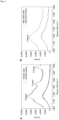
- Figure 1A shows that, for high-temperature CO 2 electroreduction, the encapsulated alloy catalyst has significantly higher current densities than single Ni catalyst at all investigated cell voltages. This reveals the promoting effect of alloy in CO 2 electroreduction compared to single metal.
- Figure 1B shows that, the energy efficiencies of our encapsulated alloy-SDC catalyst are much higher than state-of-the-art SOEC and membrane electrode assembly (MEA) systems for CO 2 electroreduction to CO at all investigated current densities.
- the energy efficiency of the encapsulated Co-Ni catalyst reaches 90% at an industrial relevant current density of 1 A/cm 2 , which is below 70% and 35% for state-of-the-art SOECs and MEAs, respectively.
- the encapsulated alloy catalyst of the present invention can maintain a stable operation for at least 1000 h at a current density of 1.0 A/cm 2 , which is below 200 h and 100 h for state-of-the-art SOECs and MEAs, respectively.
Landscapes
- Chemical & Material Sciences (AREA)
- Engineering & Computer Science (AREA)
- Materials Engineering (AREA)
- Organic Chemistry (AREA)
- Chemical Kinetics & Catalysis (AREA)
- Metallurgy (AREA)
- Electrochemistry (AREA)
- Mechanical Engineering (AREA)
- Inorganic Chemistry (AREA)
- General Chemical & Material Sciences (AREA)
- Dispersion Chemistry (AREA)
- Catalysts (AREA)
Priority Applications (3)
| Application Number | Priority Date | Filing Date | Title |
|---|---|---|---|
| EP23185650.1A EP4491301A1 (de) | 2023-07-14 | 2023-07-14 | Eingekapselte legierungskatalysatoren und verfahren zu ihrer herstellung |
| CN202480046878.0A CN121729300A (zh) | 2023-07-14 | 2024-07-11 | 包封的合金催化剂及其制备方法 |
| PCT/EP2024/069715 WO2025016880A1 (en) | 2023-07-14 | 2024-07-11 | Encapsulated alloy catalysts and their methods of preparation |
Applications Claiming Priority (1)
| Application Number | Priority Date | Filing Date | Title |
|---|---|---|---|
| EP23185650.1A EP4491301A1 (de) | 2023-07-14 | 2023-07-14 | Eingekapselte legierungskatalysatoren und verfahren zu ihrer herstellung |
Publications (1)
| Publication Number | Publication Date |
|---|---|
| EP4491301A1 true EP4491301A1 (de) | 2025-01-15 |
Family
ID=87340692
Family Applications (1)
| Application Number | Title | Priority Date | Filing Date |
|---|---|---|---|
| EP23185650.1A Withdrawn EP4491301A1 (de) | 2023-07-14 | 2023-07-14 | Eingekapselte legierungskatalysatoren und verfahren zu ihrer herstellung |
Country Status (3)
| Country | Link |
|---|---|
| EP (1) | EP4491301A1 (de) |
| CN (1) | CN121729300A (de) |
| WO (1) | WO2025016880A1 (de) |
Citations (11)
| Publication number | Priority date | Publication date | Assignee | Title |
|---|---|---|---|---|
| JP2002251993A (ja) * | 2001-02-23 | 2002-09-06 | Yuasa Corp | 水素吸蔵合金電極およびそれを用いたニッケル水素蓄電池 |
| US20060127749A1 (en) * | 2004-12-09 | 2006-06-15 | Christie Gervase M | Manufacturing method and current collector |
| US20140027667A1 (en) * | 2012-07-26 | 2014-01-30 | Toyota Motor Engineering & Manufacturing Na | Iron cobalt ternary alloy nanoparticles with silica shells |
| EP2926904A1 (de) * | 2014-04-01 | 2015-10-07 | Kemijski Institut | Katalytischer Träger, Verfahren zur dessen Herstellung, ein Katalysator enthaltend den Träger und Verfahren zur Umwandlung von Gasgemischen aus Methan und Kohlenstoffdioxid in Syngas unter Verwendung des Katalysators |
| US9306221B2 (en) | 2007-09-05 | 2016-04-05 | Kabushiki Kaisha Toshiba | Fuel electrodes for solid oxide electrochemical cell, processes for producing the same, and solid oxide electrochemical cells |
| JP6319278B2 (ja) * | 2015-11-27 | 2018-05-09 | トヨタ自動車株式会社 | 酸素吸蔵材料の製造方法 |
| CN109860626A (zh) | 2017-11-30 | 2019-06-07 | 中国科学院大连化学物理研究所 | 负载铁镍合金纳米粒子的rp结构的氧化物及其制备与应用 |
| US20190314893A1 (en) * | 2016-11-16 | 2019-10-17 | Shoei Chemical Inc. | Method for producing metal powder |
| CN111082070A (zh) * | 2019-12-23 | 2020-04-28 | 佛山科学技术学院 | 固体氧化物燃料电池的阳极 |
| US20210142933A1 (en) * | 2019-11-11 | 2021-05-13 | Carpenter Technology Corporation | Soft magnetic composite materials and methods and powders for producing the same |
| CN113948714A (zh) * | 2021-09-17 | 2022-01-18 | 华南理工大学 | 原位析出法自组装核壳结构纳米颗粒修饰钙钛矿氧化物电极材料及其制备方法与应用 |
-
2023
- 2023-07-14 EP EP23185650.1A patent/EP4491301A1/de not_active Withdrawn
-
2024
- 2024-07-11 WO PCT/EP2024/069715 patent/WO2025016880A1/en active Pending
- 2024-07-11 CN CN202480046878.0A patent/CN121729300A/zh active Pending
Patent Citations (11)
| Publication number | Priority date | Publication date | Assignee | Title |
|---|---|---|---|---|
| JP2002251993A (ja) * | 2001-02-23 | 2002-09-06 | Yuasa Corp | 水素吸蔵合金電極およびそれを用いたニッケル水素蓄電池 |
| US20060127749A1 (en) * | 2004-12-09 | 2006-06-15 | Christie Gervase M | Manufacturing method and current collector |
| US9306221B2 (en) | 2007-09-05 | 2016-04-05 | Kabushiki Kaisha Toshiba | Fuel electrodes for solid oxide electrochemical cell, processes for producing the same, and solid oxide electrochemical cells |
| US20140027667A1 (en) * | 2012-07-26 | 2014-01-30 | Toyota Motor Engineering & Manufacturing Na | Iron cobalt ternary alloy nanoparticles with silica shells |
| EP2926904A1 (de) * | 2014-04-01 | 2015-10-07 | Kemijski Institut | Katalytischer Träger, Verfahren zur dessen Herstellung, ein Katalysator enthaltend den Träger und Verfahren zur Umwandlung von Gasgemischen aus Methan und Kohlenstoffdioxid in Syngas unter Verwendung des Katalysators |
| JP6319278B2 (ja) * | 2015-11-27 | 2018-05-09 | トヨタ自動車株式会社 | 酸素吸蔵材料の製造方法 |
| US20190314893A1 (en) * | 2016-11-16 | 2019-10-17 | Shoei Chemical Inc. | Method for producing metal powder |
| CN109860626A (zh) | 2017-11-30 | 2019-06-07 | 中国科学院大连化学物理研究所 | 负载铁镍合金纳米粒子的rp结构的氧化物及其制备与应用 |
| US20210142933A1 (en) * | 2019-11-11 | 2021-05-13 | Carpenter Technology Corporation | Soft magnetic composite materials and methods and powders for producing the same |
| CN111082070A (zh) * | 2019-12-23 | 2020-04-28 | 佛山科学技术学院 | 固体氧化物燃料电池的阳极 |
| CN113948714A (zh) * | 2021-09-17 | 2022-01-18 | 华南理工大学 | 原位析出法自组装核壳结构纳米颗粒修饰钙钛矿氧化物电极材料及其制备方法与应用 |
Non-Patent Citations (4)
| Title |
|---|
| HOUFU LV ET AL: "Atomic-Scale Insight into Exsolution of CoFe Alloy Nanoparticles in La0.4Sr0.6Co0.2Fe0.7Mo0.1O3-[delta] with Efficient CO2 Electrolysis", ANGEWANDTE CHEMIE INTERNATIONAL EDITION, VERLAG CHEMIE, HOBOKEN, USA, vol. 59, no. 37, 25 June 2020 (2020-06-25), pages 15968 - 15973, XP072098585, ISSN: 1433-7851, DOI: 10.1002/ANIE.202006536 * |
| LV, H ET AL.: "Promoting exsolution of RuFe alloy nanoparticles on Sr2Fe1.4Ru0.1Mo0.506-δ via repeated redox manipulations for CO2 electrolysis [J", NATURE COMMUNICATIONS, vol. 12, 2021, pages 5665 |
| MA MINJIAN ET AL: "Constructing highly active alloy-perovskite interfaces for efficient electrochemical CO2 reduction reaction", SEPARATION AND PURIFICATION TECHNOLOGY, ELSEVIER SCIENCE, AMSTERDAM, NL, vol. 296, 3 June 2022 (2022-06-03), XP087099274, ISSN: 1383-5866, [retrieved on 20220603], DOI: 10.1016/J.SEPPUR.2022.121411 * |
| ZHOU, YWEI, FWU, H: "Fe-decorated on Sm-doped CeO2 as cathodes for high-temperature CO2 electrolysis in solid oxide electrolysis cells [J", ELECTROCHIMICA ACTA, vol. 419, 2022, pages 140434, XP087055549, DOI: 10.1016/j.electacta.2022.140434 |
Also Published As
| Publication number | Publication date |
|---|---|
| WO2025016880A1 (en) | 2025-01-23 |
| CN121729300A (zh) | 2026-03-24 |
Similar Documents
| Publication | Publication Date | Title |
|---|---|---|
| EP2958173B1 (de) | Katalysator für festpolymerbrennstoffzellen und verfahren zur herstellung davon | |
| US10903503B2 (en) | Catalyst for solid polymer fuel cell and method for producing same | |
| Xiao et al. | Durable hybrid electrocatalysts for proton exchange membrane fuel cells | |
| EP3525272B1 (de) | Katalysator für festpolymerbrennstoffzelle und verfahren zur herstellung desselben | |
| Corradini et al. | Structural and electrochemical characterization of carbon supported Pt–Pr catalysts for direct ethanol fuel cells prepared using a modified formic acid method in a CO atmosphere | |
| KR20200113333A (ko) | 산소 환원 반응용 백금계 합금 촉매, 이의 제조방법 및 이를 포함한 연료전지 | |
| Roh et al. | Preparation of carbon-supported Pt–Ru core-shell nanoparticles using carbonized polydopamine and ozone for a CO tolerant electrocatalyst | |
| JP2000003712A (ja) | 高分子固体電解質型燃料電池用触媒 | |
| Park et al. | Novel solution plasma synthesis of highly durable carbon shell encapsulated platinum-based cathode catalyst for polymer electrolyte membrane fuel cells | |
| KR100561169B1 (ko) | 산소 흡착 조촉매를 함유하는 연료 전지용 촉매, 이를이용하여 제조된 연료 전지용 전극, 및 그 전극을포함하는 연료 전지 | |
| RU2561711C2 (ru) | Способ изготовления каталитического электрода на основе гетерополисоединений для водородных и метанольных топливных элементов | |
| JP2007012284A (ja) | 電極触媒、燃料極用電極、燃料電池装置及び電極触媒製造方法 | |
| Lei et al. | Facile preparation of a methanol catalyst with ultra-high voltage efficiency and super-durability: Pt pollution introduction by composite electrodeposition | |
| Nasim et al. | Investigating the effect of CeO 2 on the radical scavenging activity of Pt@ CoO x/NC@ CeO 2 during the electrocatalytic oxygen reduction reaction in acidic and alkaline environments | |
| Mathur et al. | Enhanced electrocatalytic performance of perovskite supported iron oxide nanoparticles for oxygen reduction reaction | |
| EP4491301A1 (de) | Eingekapselte legierungskatalysatoren und verfahren zu ihrer herstellung | |
| Palma et al. | High catalytic activity for glycerol electrooxidation by binary Pd-based nanoparticles in alkaline media | |
| JP2008155111A (ja) | 耐酸性電極触媒 | |
| CN119133489A (zh) | 一种有序化铂合金催化剂及制备方法和燃料电池 | |
| CN121620612A (zh) | 用于将二氧化碳或一氧化碳电化学转化为c2+产物的铜催化剂 | |
| CN115188975B (zh) | 一种高活性抗积碳的固体氧化物燃料电池阳极材料及其制备方法和应用 | |
| Jiménez-Morales et al. | A comprehensive activity–stability correlation study of tantalum-doped tin oxide as a support for iridium oxide in low loading water electrolysis cell anodes | |
| JP2012164608A (ja) | Fe、Co及びNiを含む電極触媒及びその製造方法 | |
| Zhang et al. | Single-atom Ce synergizes icosahedral Pt 2 Ce nanoparticles to promote performance enhancement for zinc–air batteries | |
| Thippana et al. | Ultralow-overpotential non-noble metal oxide–doped g-C₃N₄ heterostructure for efficient bifunctional water splitting electrocatalyst across all pH conditions |
Legal Events
| Date | Code | Title | Description |
|---|---|---|---|
| PUAI | Public reference made under article 153(3) epc to a published international application that has entered the european phase |
Free format text: ORIGINAL CODE: 0009012 |
|
| STAA | Information on the status of an ep patent application or granted ep patent |
Free format text: STATUS: THE APPLICATION HAS BEEN PUBLISHED |
|
| AK | Designated contracting states |
Kind code of ref document: A1 Designated state(s): AL AT BE BG CH CY CZ DE DK EE ES FI FR GB GR HR HU IE IS IT LI LT LU LV MC ME MK MT NL NO PL PT RO RS SE SI SK SM TR |
|
| STAA | Information on the status of an ep patent application or granted ep patent |
Free format text: STATUS: THE APPLICATION IS DEEMED TO BE WITHDRAWN |
|
| 18D | Application deemed to be withdrawn |
Effective date: 20250716 |