EP4491733A2 - Modulation der transgenexpression eines aav-vektors - Google Patents
Modulation der transgenexpression eines aav-vektors Download PDFInfo
- Publication number
- EP4491733A2 EP4491733A2 EP24214639.7A EP24214639A EP4491733A2 EP 4491733 A2 EP4491733 A2 EP 4491733A2 EP 24214639 A EP24214639 A EP 24214639A EP 4491733 A2 EP4491733 A2 EP 4491733A2
- Authority
- EP
- European Patent Office
- Prior art keywords
- raav
- promoter
- βgal
- vector
- aav
- Prior art date
- Legal status (The legal status is an assumption and is not a legal conclusion. Google has not performed a legal analysis and makes no representation as to the accuracy of the status listed.)
- Pending
Links
Images
























Classifications
-
- A—HUMAN NECESSITIES
- A61—MEDICAL OR VETERINARY SCIENCE; HYGIENE
- A61K—PREPARATIONS FOR MEDICAL, DENTAL OR TOILETRY PURPOSES
- A61K35/00—Medicinal preparations containing materials or reaction products thereof with undetermined constitution
- A61K35/66—Microorganisms or materials therefrom
- A61K35/76—Viruses; Subviral particles; Bacteriophages
- A61K35/761—Adenovirus
-
- A—HUMAN NECESSITIES
- A61—MEDICAL OR VETERINARY SCIENCE; HYGIENE
- A61K—PREPARATIONS FOR MEDICAL, DENTAL OR TOILETRY PURPOSES
- A61K48/00—Medicinal preparations containing genetic material which is inserted into cells of the living body to treat genetic diseases; Gene therapy
-
- A—HUMAN NECESSITIES
- A61—MEDICAL OR VETERINARY SCIENCE; HYGIENE
- A61K—PREPARATIONS FOR MEDICAL, DENTAL OR TOILETRY PURPOSES
- A61K48/00—Medicinal preparations containing genetic material which is inserted into cells of the living body to treat genetic diseases; Gene therapy
- A61K48/005—Medicinal preparations containing genetic material which is inserted into cells of the living body to treat genetic diseases; Gene therapy characterised by an aspect of the 'active' part of the composition delivered, i.e. the nucleic acid delivered
- A61K48/0058—Nucleic acids adapted for tissue specific expression, e.g. having tissue specific promoters as part of a contruct
-
- A—HUMAN NECESSITIES
- A61—MEDICAL OR VETERINARY SCIENCE; HYGIENE
- A61K—PREPARATIONS FOR MEDICAL, DENTAL OR TOILETRY PURPOSES
- A61K48/00—Medicinal preparations containing genetic material which is inserted into cells of the living body to treat genetic diseases; Gene therapy
- A61K48/005—Medicinal preparations containing genetic material which is inserted into cells of the living body to treat genetic diseases; Gene therapy characterised by an aspect of the 'active' part of the composition delivered, i.e. the nucleic acid delivered
- A61K48/0066—Manipulation of the nucleic acid to modify its expression pattern, e.g. enhance its duration of expression, achieved by the presence of particular introns in the delivered nucleic acid
-
- A—HUMAN NECESSITIES
- A61—MEDICAL OR VETERINARY SCIENCE; HYGIENE
- A61P—SPECIFIC THERAPEUTIC ACTIVITY OF CHEMICAL COMPOUNDS OR MEDICINAL PREPARATIONS
- A61P25/00—Drugs for disorders of the nervous system
- A61P25/28—Drugs for disorders of the nervous system for treating neurodegenerative disorders of the central nervous system, e.g. nootropic agents, cognition enhancers, drugs for treating Alzheimer's disease or other forms of dementia
-
- A—HUMAN NECESSITIES
- A61—MEDICAL OR VETERINARY SCIENCE; HYGIENE
- A61P—SPECIFIC THERAPEUTIC ACTIVITY OF CHEMICAL COMPOUNDS OR MEDICINAL PREPARATIONS
- A61P43/00—Drugs for specific purposes, not provided for in groups A61P1/00-A61P41/00
-
- C—CHEMISTRY; METALLURGY
- C12—BIOCHEMISTRY; BEER; SPIRITS; WINE; VINEGAR; MICROBIOLOGY; ENZYMOLOGY; MUTATION OR GENETIC ENGINEERING
- C12N—MICROORGANISMS OR ENZYMES; COMPOSITIONS THEREOF; PROPAGATING, PRESERVING, OR MAINTAINING MICROORGANISMS; MUTATION OR GENETIC ENGINEERING; CULTURE MEDIA
- C12N15/00—Mutation or genetic engineering; DNA or RNA concerning genetic engineering, vectors, e.g. plasmids, or their isolation, preparation or purification; Use of hosts therefor
- C12N15/09—Recombinant DNA-technology
- C12N15/63—Introduction of foreign genetic material using vectors; Vectors; Use of hosts therefor; Regulation of expression
- C12N15/79—Vectors or expression systems specially adapted for eukaryotic hosts
- C12N15/85—Vectors or expression systems specially adapted for eukaryotic hosts for animal cells
- C12N15/86—Viral vectors
-
- C—CHEMISTRY; METALLURGY
- C12—BIOCHEMISTRY; BEER; SPIRITS; WINE; VINEGAR; MICROBIOLOGY; ENZYMOLOGY; MUTATION OR GENETIC ENGINEERING
- C12N—MICROORGANISMS OR ENZYMES; COMPOSITIONS THEREOF; PROPAGATING, PRESERVING, OR MAINTAINING MICROORGANISMS; MUTATION OR GENETIC ENGINEERING; CULTURE MEDIA
- C12N15/00—Mutation or genetic engineering; DNA or RNA concerning genetic engineering, vectors, e.g. plasmids, or their isolation, preparation or purification; Use of hosts therefor
- C12N15/09—Recombinant DNA-technology
- C12N15/63—Introduction of foreign genetic material using vectors; Vectors; Use of hosts therefor; Regulation of expression
- C12N15/79—Vectors or expression systems specially adapted for eukaryotic hosts
- C12N15/85—Vectors or expression systems specially adapted for eukaryotic hosts for animal cells
- C12N15/86—Viral vectors
- C12N15/861—Adenoviral vectors
-
- C—CHEMISTRY; METALLURGY
- C12—BIOCHEMISTRY; BEER; SPIRITS; WINE; VINEGAR; MICROBIOLOGY; ENZYMOLOGY; MUTATION OR GENETIC ENGINEERING
- C12N—MICROORGANISMS OR ENZYMES; COMPOSITIONS THEREOF; PROPAGATING, PRESERVING, OR MAINTAINING MICROORGANISMS; MUTATION OR GENETIC ENGINEERING; CULTURE MEDIA
- C12N9/00—Enzymes; Proenzymes; Compositions thereof; Processes for preparing, activating, inhibiting, separating or purifying enzymes
- C12N9/14—Hydrolases (3)
- C12N9/24—Hydrolases (3) acting on glycosyl compounds (3.2)
- C12N9/2402—Hydrolases (3) acting on glycosyl compounds (3.2) hydrolysing O- and S- glycosyl compounds (3.2.1)
-
- C—CHEMISTRY; METALLURGY
- C12—BIOCHEMISTRY; BEER; SPIRITS; WINE; VINEGAR; MICROBIOLOGY; ENZYMOLOGY; MUTATION OR GENETIC ENGINEERING
- C12N—MICROORGANISMS OR ENZYMES; COMPOSITIONS THEREOF; PROPAGATING, PRESERVING, OR MAINTAINING MICROORGANISMS; MUTATION OR GENETIC ENGINEERING; CULTURE MEDIA
- C12N9/00—Enzymes; Proenzymes; Compositions thereof; Processes for preparing, activating, inhibiting, separating or purifying enzymes
- C12N9/14—Hydrolases (3)
- C12N9/24—Hydrolases (3) acting on glycosyl compounds (3.2)
- C12N9/2402—Hydrolases (3) acting on glycosyl compounds (3.2) hydrolysing O- and S- glycosyl compounds (3.2.1)
- C12N9/2468—Hydrolases (3) acting on glycosyl compounds (3.2) hydrolysing O- and S- glycosyl compounds (3.2.1) acting on beta-galactose-glycoside bonds, e.g. carrageenases (3.2.1.83; 3.2.1.157); beta-agarase (3.2.1.81)
- C12N9/2471—Beta-galactosidase (3.2.1.23), i.e. exo-(1-->4)-beta-D-galactanase
-
- C—CHEMISTRY; METALLURGY
- C12—BIOCHEMISTRY; BEER; SPIRITS; WINE; VINEGAR; MICROBIOLOGY; ENZYMOLOGY; MUTATION OR GENETIC ENGINEERING
- C12N—MICROORGANISMS OR ENZYMES; COMPOSITIONS THEREOF; PROPAGATING, PRESERVING, OR MAINTAINING MICROORGANISMS; MUTATION OR GENETIC ENGINEERING; CULTURE MEDIA
- C12N2750/00—MICROORGANISMS OR ENZYMES; COMPOSITIONS THEREOF; PROPAGATING, PRESERVING, OR MAINTAINING MICROORGANISMS; MUTATION OR GENETIC ENGINEERING; CULTURE MEDIA ssDNA viruses
- C12N2750/00011—Details
- C12N2750/14011—Parvoviridae
- C12N2750/14111—Dependovirus, e.g. adenoassociated viruses
- C12N2750/14141—Use of virus, viral particle or viral elements as a vector
- C12N2750/14143—Use of virus, viral particle or viral elements as a vector viral genome or elements thereof as genetic vector
-
- C—CHEMISTRY; METALLURGY
- C12—BIOCHEMISTRY; BEER; SPIRITS; WINE; VINEGAR; MICROBIOLOGY; ENZYMOLOGY; MUTATION OR GENETIC ENGINEERING
- C12Y—ENZYMES
- C12Y302/00—Hydrolases acting on glycosyl compounds, i.e. glycosylases (3.2)
- C12Y302/01—Glycosidases, i.e. enzymes hydrolysing O- and S-glycosyl compounds (3.2.1)
- C12Y302/01023—Beta-galactosidase (3.2.1.23), i.e. exo-(1-->4)-beta-D-galactanase
-
- C—CHEMISTRY; METALLURGY
- C12—BIOCHEMISTRY; BEER; SPIRITS; WINE; VINEGAR; MICROBIOLOGY; ENZYMOLOGY; MUTATION OR GENETIC ENGINEERING
- C12Y—ENZYMES
- C12Y302/00—Hydrolases acting on glycosyl compounds, i.e. glycosylases (3.2)
- C12Y302/01—Glycosidases, i.e. enzymes hydrolysing O- and S-glycosyl compounds (3.2.1)
- C12Y302/01052—Beta-N-acetylhexosaminidase (3.2.1.52)
Definitions
- the disclosure in some aspects provides recombinant adeno-associated viruses (rAAVs), compositions and kits useful for the treatment of lysosomal storage disorders.
- rAAVs recombinant adeno-associated viruses
- the rAAVs comprise artificial genetic regulatory elements that modulate transgene expression.
- Adeno associated Virus is a small and helper dependent virus. It was discovered in the 1960s as a contaminant in adenovirus (a cold causing virus) preparations. Its growth in cells is dependent on the presence of adenovirus and, therefore, it was named as adeno-associated virus. AAV vectors have emerged as an effective platform for in vivo gene transfer. However, a need remains for new AAV vectors for gene delivery.
- aspects of the disclosure relate to recombinant AAV vectors for gene delivery.
- Some current AAV vectors deliver high levels of gene expression that result in adverse events (e.g., cytotoxicity) in a subject.
- the disclosure is based, in part, on the recognition that engineered regulatory elements can modulate transgene expression levels to provide therapeutic amounts of transgene without the induction of adverse events.
- the disclosure provides a recombinant AAV (rAAV) comprising a capsid containing a nucleic acid comprising a hybrid promoter operably linked to a transgene encoding a lysosomal storage disorder-associated protein.
- the hybrid promoter comprises a chicken beta-actin (CB) promoter.
- the hybrid promoter comprises a cytomegalovirus (CMV) enhancer element.
- the rAAV further comprises a woodchuck hepatitis virus posttranscriptional regulatory element (WPRE).
- the hybrid promoter comprises a CB promoter and a CMV enhancer element, wherein the CB promoter and the CMV element are fused together to form the hybrid promoter.
- the transgene is located in between the hybrid promoter and the WPRE.
- the hybrid promoter does not contain an intronic sequence.
- the disclosure provides a recombinant AAV (rAAV) comprising a capsid containing a nucleic acid comprising a promoter operably linked via a chimeric intron to a transgene encoding a lysosomal storage disorder-associated protein.
- the disclosure provides a recombinant AAV (rAAV) comprising a capsid containing nucleic acid comprising a promoter operably linked via a chimeric intron to a transgene, wherein the promoter and the transgene are separated by the chimeric intron, and wherein the nucleic acid does not contain an enhancer element, and wherein the transgene encodes a lysosomal storage disorder-associated protein.
- the promoter comprises a chicken beta-actin (CB) promoter.
- the chimeric intron comprises chicken beta actin intron and/or rabbit beta globin intron.
- the nucleic acid further comprises a woodchuck hepatitis virus posttranscriptional regulatory element (WPRE).
- WPRE woodchuck hepatitis virus posttranscriptional regulatory element
- the transgene is located in between the chimeric intron and the WPRE.
- the disclosure provides a recombinant AAV (rAAV) comprising a capsid containing a nucleic acid comprising an artificial transcription element operably linked to a transgene, wherein the artificial transcription element is represented by SEQ ID NO: 2, and wherein the transgene encodes a lysosomal storage disorder-associated protein.
- the rAAV further comprises a woodchuck hepatitis virus posttranscriptional regulatory element (WPRE).
- WPRE woodchuck hepatitis virus posttranscriptional regulatory element
- the transgene is located in between the transcription element and the WPRE.
- rAAV described by the disclosure include a transgene that encodes acid beta-galactosidase ( ⁇ gal). In some embodiments, the transgene is GLB1. In some embodiments, the ⁇ gal is human ⁇ gal. In some embodiments, rAAV described by the disclosure include a transgene encodes a ⁇ -N-acetylhexosaminidase (HexA) and/or hexosaminidase B (HexB).
- HexA ⁇ -N-acetylhexosaminidase
- HexB hexosaminidase B
- At least one capsid protein of an rAAV described herein is AAV1, AAV2, AAV3, AAV4, AAV5, AAV6, AAV7, AAV8, AAVrh8, AAV9, AAV10, or AA Vrh10 capsid protein.
- at least one ITR of an rAAV described herein is selected from the group consisting of AAV1 ITR, AAV2 ITR, AAV3 ITR, AAV4 ITR, AAV5 ITR, or AAV6 ITR.
- at least one ITR is a full length ITR.
- an rAAV comprises two ITRs, wherein the hybrid promoter and transgene are located between the two ITRs.
- an rAAV described herein has one of the following serotypes: AAV1, AAV2, AAV3, AAV4, AAV5, AAV6, AAV7, AAV8, AAVrh8, AAV9, AAV10, or AAVrh10.
- disclosure relates to nucleic acids encoding components of rAAVs described herein.
- the disclosure provides an isolated nucleic acid comprising a sequence selected from SEQ ID NO: 1 to 6.
- nucleic acids encoding components of an rAAV are contained in a host cell.
- the host cell is a eukaryotic cell. In some embodiments, the host cell is a mammalian cell. In some embodiments, the host cell is a prokaryotic cell. In some embodiments, the host cell is a bacterial cell.
- host cells further comprise an isolated nucleic acid encoding an AAV capsid protein (e.g., AAV1, AAV2, AAV3, AAV4, AAV5, AAV6, AAV7, AAV8, AAVrh8, AAV9, AAV10, or AAVrh10 capsid protein).
- AAV capsid protein e.g., AAV1, AAV2, AAV3, AAV4, AAV5, AAV6, AAV7, AAV8, AAVrh8, AAV9, AAV10, or AAVrh10 capsid protein.
- the disclosure provides a method for treating a lysosomal storage disorder comprising administering a recombinant AAV (rAAV) as described herein to a subject having a lysosomal storage disorder.
- rAAV recombinant AAV
- the lysosomal storage disorder is GM1 gangliosidosis and the transgene is GLB1.
- the lysosomal storage disorder is Tay-Sachs disease or Sandhoff disease and the transgene is ⁇ -N-acetylhexosaminidase (HexA) and/or hexosaminidase B (HexB).
- the rAAV is administered by intracranial injection, intracerebral injection, or injection into the CSF via the cerebral ventricular system, cisterna magna, or intrathecal space.
- compositions comprising an rAAV as described herein.
- compositions comprise a host cell having a nucleic acid encoding an rAAV.
- compositions further comprise a pharmaceutically acceptable carrier.
- compositions comprising a host cell further comprise a sterile cell culture medium.
- compositions comprising a host cell comprise a cryopreservative.
- the disclosure provides a kit comprising: a container housing a recombinant AAV (rAAV) as described herein; or, a composition comprising a recombinant AAV (rAAV) as described herein.
- kits further comprise a container housing a pharmaceutically acceptable carrier.
- the rAAV or composition comprising the rAAV and the pharmaceutically acceptable carrier are housed in the same container.
- the container is a syringe.
- the disclosure relates to the discovery that rAAV vectors comprising multiple ( e.g., 2, 3, 4, or more) promoters allow for simultaneous, tissue-specific expression of transgenes of interest.
- rAAV vectors comprising multiple promoters target multiple cell types (e.g., CNS cell types) while avoiding off-target and safety (e.g., toxicity) issues associated with the use of ubiquitous promoters, such as pol III promoters (e.g., U6 promoter, H1 promoter, etc.).
- ubiquitous promoters such as pol III promoters (e.g., U6 promoter, H1 promoter, etc.).
- the disclosure provides an rAAV comprising a capsid containing a nucleic acid having a first cell-type-specific promoter operably linked to a first transgene and a second cell-type-specific promoter linked to a second transgene, wherein the first promoter and the second promoter are not specific for the same cell-type.
- the first promoter and the second promoter are specific for the same tissue (e.g., CNS tissue).
- the first promoter is specific for neurons and optionally is a Synapsin 1 promoter (Synl promoter).
- a Syn1 promoter is represented by SEQ ID NO: 13.
- the second promoter is specific for astrocytes, and optionally is a GfaABC 1 D (also referred to as GFAP) promoter.
- a GFAP promoter is represented by SEQ ID NO: 14.
- the first transgene encodes a CNS disease-associated gene (e.g., protein, interfering RNA, etc.).
- the second transgene encodes a CNS disease-associated gene (e.g., protein, interfering RNA, etc.).
- an interfering RNA is a dsRNA, siRNA, shRNA, miRNA, or amiRNA.
- the nucleic acid comprises one or more ITRs.
- the capsid is an AAV9 capsid.
- the disclosure provides a method for treating a CNS-associated disease comprising administering an recombinant AAV (rAAV) comprising a capsid containing a nucleic acid having a first cell-type-specific promoter operably linked to a first transgene and a second cell-type-specific promoter linked to a second transgene, wherein the first promoter and the second promoter are not specific for the same cell-type.
- rAAV recombinant AAV
- the first and/or second promoter are specific for cells of the CNS tissue.
- Lysosomal storage disorders are a class of >50 disorders associated with malfunction of a resident enzyme which leads to accumulation of un-degraded substrates in lysosomes. Over time, this accumulation can lead to lysosomal malfunction which results in a cascade of events often resulting in cell death.
- LSDs with central nervous system (CNS) involvement require the intended therapy to cross or bypass the blood brain barrier in order to deliver functional enzyme to target cells to achieve disease resolution.
- One therapeutic delivery approach has been AAV-mediated target gene delivery.
- transgenes with current rAAV vectors causes accumulation of un-degraded substrates or dysregulation of the lysosomal compartment, which leads to responses that upregulate lysosomal biogenesis, substrate reduction or exocytosis. Furthermore, introduction of supra-physiological levels of a therapeutic protein via rAAV vector-driven transgene expression can also trigger deleterious protection cascades which may be associated with unfolded protein response common in these disorders. New rAAV vectors capable of safe and efficient expression of lysosomal enzymes in the CNS are therefore needed.
- the instant disclosure provides rAAVs and rAAV vectors that have been modified to be useful for the expression of lysosomal enzymes in tissues such as the CNS.
- the invention relates to the use of modified rAAVs for the treatment of lysosomal storage disorders, such as GM1 gangliosidosis, Tay-Sachs disease and/or Sandhoff disease.
- lysosomal storage disorders such as GM1 gangliosidosis, Tay-Sachs disease and/or Sandhoff disease.
- the disclosure is based, in part, on the discovery that certain regulatory sequences and elements, for example promoter regions, can be for use in rAAVs to provide levels of transgene expression that are therapeutically effective yet do not cause the vector-mediated genotoxicity associated with previously used rAAVs.
- the disclosure relates to the discovery that rAAV vectors comprising multiple (e.g., 2, 3, 4, or more) promoters allow for simultaneous, tissue-specific expression of transgenes of interest.
- certain diseases e.g., amyotrophic lateral sclerosis; ALS
- ALS amyotrophic lateral sclerosis
- a broad population of cell-types e.g., neurons, astrocytes, etc.,
- a particular tissue e.g., CNS tissue.
- Promoters of currently utilized therapeutic constructs in some embodiments, are not sufficiently universal to drive adequate transgene (e.g., therapeutic transgene) expression in the variety of affected cell-types to halt disease progression.
- rAAV constructs having multiple cell-type-specific promoters as described by the disclosure offer an improved transduction profile over currently utilized rAAV vectors having ubiquitous promoters.
- the disclosure provides an rAAV comprising a capsid containing a nucleic acid having a first cell-type-specific promoter operably linked to a first transgene and a second cell-type-specific promoter linked to a second transgene, wherein the first promoter and the second promoter are not specific for the same cell-type.
- tissue-specific promoter refers to a promoter that preferentially regulates (e.g., drives or up-regulates) gene expression in a particular cell type relative to other cell types.
- a cell-type-specific promoter can be specific for any cell type, such as central nervous system (CNS) cells, liver cells (e.g., hepatocytes), heart cells, kidney cells, eye cells, muscle cells, etc.
- CNS central nervous system
- liver cells e.g., hepatocytes
- heart cells e.g., kidney cells, eye cells, muscle cells, etc.
- the human synapsin 1 promoter (Synl promoter) preferentially drives gene expression in neurons
- GfaABC 1 D also referred to as GFAP) promoter preferentially drives expression in astrocytes.
- central nervous system tissue comprises neuronal cells and non-neuronal cells (e.g., glial cells, astrocytes, etc.).
- non-neuronal cells e.g., glial cells, astrocytes, etc.
- the first promoter and the second promoter of an rAAV described by the disclosure are not specific for the same cell-type but are specific for the same tissue type.
- the first promoter is specific for neurons and optionally is a Synapsin 1 promoter (Synl promoter).
- a Syn1 promoter is represented by SEQ ID NO: 13.
- the second promoter is specific for astrocytes, and optionally is a GFAP promoter.
- a GFAP promoter is represented by SEQ ID NO: 14.
- tissue-specific promoters include but are not limited to a liver-specific thyroxin binding globulin (TBG) promoter, an insulin promoter, a glucagon promoter, a somatostatin promoter, a pancreatic polypeptide (PPY) promoter, a synapsin-1 (Synl) promoter, a creatine kinase (MCK) promoter, a mammalian desmin (DES) promoter, a ⁇ -myosin heavy chain (a-MHC) promoter, or a cardiac Troponin T (cTnT) promoter.
- Beta-actin promoter hepatitis B virus core promoter, Sandig et al., Gene Ther., 3:1002-9 (1996 ); alpha-fetoprotein (AFP) promoter, Arbuthnot et al., Hum. Gene Ther., 7:1503-14 (1996 )), bone osteocalcin promoter ( Stein et al., Mol. Biol. Rep., 24:185-96 (1997 )); bone sialoprotein promoter ( Chen et al., J. Bone Miner. Res., 11:654-64 (1996 )), CD2 promoter ( Hansal et al., J.
- NSE neuron-specific enolase
- the disclosure provides isolated AAVs.
- isolated refers to an AAV that has been artificially obtained or produced. Isolated AAVs may be produced using recombinant methods. Such AAVs are referred to herein as "recombinant AAVs".
- Recombinant AAVs preferably have tissue-specific targeting capabilities, such that a transgene of the rAAV will be delivered specifically to one or more predetermined tissue(s).
- the AAV capsid is an important element in determining these tissue-specific targeting capabilities. Thus, an rAAV having a capsid appropriate for the tissue being targeted can be selected.
- the rAAV comprises an AAV1, AAV2, AAV3, AAV4, AAV5, AAV6, AAV7, AAV8, AAVrh8, AAV9, AAV10 or AAVrh10 capsid protein, or a protein having substantial homology thereto.
- the rAAVs of the disclosure are pseudotyped rAAVs.
- Pseudotyping is the process of producing viruses or viral vectors in combination with foreign viral envelope proteins. The result is a pseudotyped virus particle.
- the foreign viral envelope proteins can be used to alter host tropism or an increased/decreased stability of the virus particles.
- a pseudotyped rAAV comprises nucleic acids from two or more different AAVs, wherein the nucleic acid from one AAV encodes a capsid protein and the nucleic acid of at least one other AAV encodes other viral proteins and/or the viral genome.
- a pseudotyped rAAV refers to an AAV comprising an inverted terminal repeats (ITRs) of one AAV serotype and an capsid protein of a different AAV serotype.
- ITRs inverted terminal repeats
- a pseudotyped AAV vector containing the ITRs of serotype X encapsidated with the proteins of Y will be designated as AAVX/Y (e.g., AAV2/1 has the ITRs of AAV2 and the capsid of AAV1).
- pseudotyped rAAVs may be useful for combining the tissue-specific targeting capabilities of a capsid protein from one AAV serotype with the viral DNA from another AAV serotype, thereby allowing targeted delivery of a transgene to a target tissue.
- Methods for obtaining recombinant AAVs having a desired capsid protein are well known in the art. (See, for example, US Patent Application Publication Number US 2003/0138772 , the contents of which are incorporated herein by reference in their entirety).
- the methods involve culturing a host cell which contains a nucleic acid sequence encoding an AAV capsid protein or fragment thereof; a functional rep gene; a recombinant AAV vector composed of, AAV inverted terminal repeats (ITRs) and a transgene; and sufficient helper functions to permit packaging of the recombinant AAV vector into the AAV capsid proteins.
- capsid proteins are structural proteins encoded by the cap gene of an AAV.
- AAVs comprise three capsid proteins, virion proteins 1 to 3 (named VP1, VP2 and VP3), all of which are transcribed from a single cap gene via alternative splicing.
- the molecular weights of VP1, VP2 and VP3 are respectively about 87 kDa, about 72 kDa and about 62 kDa.
- capsid proteins upon translation, form a spherical 60-mer protein shell around the viral genome.
- capsid proteins protect a viral genome, deliver a genome and/or interact with a host cell. In some aspects, capsid proteins deliver the viral genome to a host in a tissue specific manner.
- the AAV capsid protein is of an AAV serotype selected from the group consisting of AAV3, AAV4, AAV5, AAV6, AAV8, AAVrh8 AAV9, AAV10 and AAVrh10. In some embodiments, the AAV capsid protein is of an AAVrh8 or AA Vrh10 serotype.
- components to be cultured in the host cell to package a rAAV vector in an AAV capsid may be provided to the host cell in trans.
- any one or more of the required components e.g., recombinant AAV vector, rep sequences, cap sequences, and/or helper functions
- a stable host cell which has been engineered to contain one or more of the required components using methods known to those of skill in the art.
- a stable host cell will contain the required component(s) under the control of an inducible promoter.
- the required component(s) may be under the control of a constitutive promoter.
- a selected stable host cell may contain selected component(s) under the control of a constitutive promoter and other selected component(s) under the control of one or more inducible promoters.
- a stable host cell may be generated which is derived from 293 cells (which contain E1 helper functions under the control of a constitutive promoter), but which contain the rep and/or cap proteins under the control of inducible promoters. Still other stable host cells may be generated by one of skill in the art.
- the disclosure relates to a host cell containing a nucleic acid that comprises a coding sequence selected from the group consisting of: SEQ ID NOs: 1-6 that is operably linked to a promoter.
- the disclosure relates to a composition comprising the host cell described above.
- the composition comprising the host cell above further comprises a cryopreservative.
- the recombinant AAV vector, rep sequences, cap sequences, and helper functions useful for producing the rAAV of the disclosure may be delivered to the packaging host cell using any appropriate genetic element (vector).
- the selected genetic element may be delivered by any suitable method, including those described herein.
- the methods used to construct any embodiment of this disclosure are known to those with skill in nucleic acid manipulation and include genetic engineering, recombinant engineering, and synthetic techniques. See, e . g ., Sambrook et al, Molecular Cloning: A Laboratory Manual, Cold Spring Harbor Press, Cold Spring Harbor, N.Y .
- methods of generating rAAV virions are well known and the selection of a suitable method is not a limitation on the present disclosure. See, e.g., K. Fisher et al, J. Virol., 70:520-532 (1993 ) and U.S. Pat. No. 5,478,745 .
- recombinant AAVs may be produced using the triple transfection method (described in detail in U.S. Pat. No. 6,001,650 ).
- the recombinant AAVs are produced by transfecting a host cell with an recombinant AAV vector (comprising a transgene) to be packaged into AAV particles, an AAV helper function vector, and an accessory function vector.
- An AAV helper function vector encodes the "AAV helper function" sequences ( i . e ., rep and cap), which function in trans for productive AAV replication and encapsidation.
- the AAV helper function vector supports efficient AAV vector production without generating any detectable wild-type AAV virions (i . e ., AAV virions containing functional rep and cap genes).
- vectors suitable for use with the present disclosure include pHLP19, described in U.S. Pat. No. 6,001,650 and pRep6cap6 vector, described in U.S. Pat. No. 6,156,303 , the entirety of both incorporated by reference herein.
- the accessory function vector encodes nucleotide sequences for non-AAV derived viral and/or cellular functions upon which AAV is dependent for replication ( i . e ., "accessory functions").
- the accessory functions include those functions required for AAV replication, including, without limitation, those moieties involved in activation of AAV gene transcription, stage specific AAV mRNA splicing, AAV DNA replication, synthesis of cap expression products, and AAV capsid assembly.
- Viral-based accessory functions can be derived from any of the known helper viruses such as adenovirus, herpesvirus (other than herpes simplex virus type-1), and vaccinia virus.
- the disclosure provides transfected host cells.
- transfection is used to refer to the uptake of foreign DNA by a cell, and a cell has been "transfected" when exogenous DNA has been introduced through the cell membrane.
- a number of transfection techniques are generally known in the art. See, e.g., Graham et al. (1973) Virology, 52:456 , Sambrook et al. (1989) Molecular Cloning, a laboratory manual, Cold Spring Harbor Laboratories, New York , Davis et al. (1986) Basic Methods in Molecular Biology, Elsevier , and Chu et al. (1981) Gene 13:197 .
- Such techniques can be used to introduce one or more exogenous nucleic acids, such as a nucleotide integration vector and other nucleic acid molecules, into suitable host cells.
- a “host cell” refers to any cell that harbors, or is capable of harboring, a substance of interest. Often a host cell is a mammalian cell. A host cell may be used as a recipient of an AAV helper construct, an AAV minigene plasmid, an accessory function vector, or other transfer DNA associated with the production of recombinant AAVs. The term includes the progeny of the original cell which has been transfected. Thus, a "host cell” as used herein may refer to a cell which has been transfected with an exogenous DNA sequence. It is understood that the progeny of a single parental cell may not necessarily be completely identical in morphology or in genomic or total DNA complement as the original parent, due to natural, accidental, or deliberate mutation.
- cell line refers to a population of cells capable of continuous or prolonged growth and division in vitro. Often, cell lines are clonal populations derived from a single progenitor cell. It is further known in the art that spontaneous or induced changes can occur in karyotype during storage or transfer of such clonal populations. Therefore, cells derived from the cell line referred to may not be precisely identical to the ancestral cells or cultures, and the cell line referred to includes such variants.
- the term "recombinant cell” refers to a cell into which an exogenous DNA segment, such as DNA segment that leads to the transcription of a biologically-active polypeptide or production of a biologically active nucleic acid such as an RNA, has been introduced.
- vector includes any genetic element, such as a plasmid, phage, transposon, cosmid, chromosome, artificial chromosome, virus, virion, etc., which is capable of replication when associated with the proper control elements and which can transfer gene sequences between cells.
- the term includes cloning and expression vehicles, as well as viral vectors.
- useful vectors are contemplated to be those vectors in which the nucleic acid segment to be transcribed is positioned under the transcriptional control of a promoter.
- a “promoter” refers to a DNA sequence recognized by the synthetic machinery of the cell, or introduced synthetic machinery, required to initiate the specific transcription of a gene.
- expression vector or construct means any type construct containing a nucleic acid in which part or all of the nucleic acid encoding is capable of being transcribed.
- expression includes the nucleic acid, for example, to generate a biologically-active polypeptide product or inhibitory RNA (e.g., shRNA, miRNA, miRNA inhibitor) from a transcribed gene.
- inhibitory RNA e.g., shRNA, miRNA, miRNA inhibitor
- Recombinant AAV (rAAV) vectors are typically composed of, at a minimum, a transgene and its regulatory sequences, and 5' and 3' AAV inverted terminal repeats (ITRs). It is this recombinant AAV vector which is packaged into a capsid protein and delivered to a selected target cell.
- the transgene is a nucleic acid sequence, heterologous to the vector sequences, which encodes a polypeptide, protein, functional RNA molecule (e.g., miRNA, miRNA inhibitor) or other gene product, of interest.
- the nucleic acid coding sequence is operatively linked to regulatory components in a manner which permits transgene transcription, translation, and/or expression in a cell of a target tissue.
- aspects of the disclosure relate to the discovery that modifying the regulatory sequences of rAAVs provides levels of transgene expression that are therapeutically effective yet do not cause the vector-mediated toxicity associated with previously used rAAVs. Accordingly, in some embodiments, the disclosure relates to a recombinant AAV (rAAV) comprising modified genetic regulatory elements. In some embodiments, the modified genetic regulatory element is a hybrid promoter.
- hybrid promoter refers to a regulatory construct driving transcription an RNA transcript (e . g ., a transcript comprising encoded by a in which the construct comprises two or more regulatory elements artificially
- a hybrid promoter comprises at least one element that is a minimal least one element having an enhancer sequence or an intronic, exonic, or UTR comprising one or more transcriptional regulatory elements.
- hybrid promoter comprises an exonic, intronic, or UTR sequence, such sequence(s) encode upstream portions of the RNA transcript ( e.g., as depicted in FIG.
- two or more elements of a hybrid promoter are from sources relative to one another. In some embodiments, two or more elements of a promoter are from heterologous sources relative to the transgene. In some or more elements of a hybrid promoter are from different genetic loci. In some two or more elements of a hybrid promoter are from the same genetic locus but are in a manner not found at the genetic locus. In some embodiments, the hybrid comprise a first nucleic acid sequence from one promoter fused to one or more sequences comprises promoter or enhancer elements of a difference source.
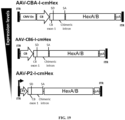
- a hybrid promoter comprises a first sequence from the chicken beta-promoter and a second sequence of the CMV enhancer.
- a promoter comprises a first sequence from a chicken beta-actin promoter and a sequence from an intron of a chicken-beta actin gene.
- a promoter comprises a first sequence from the chicken beta-actin promoter fused to a enhancer sequence and a sequence from an intron of the chicken-beta actin gene.
- the rAAV comprises an enhancer element.
- enhancer element refers to a nucleic acid sequence that when bound by an activator protein, activates or increases transcription of a gene or genes. Enhancer sequences can be upstream ( i . e ., 5') or downstream ( i . e ., 3') relative to the genes they regulate. Examples of enhancer sequences include cytomegalovirus (CMV) enhancer sequence and the Simian vacuolating virus 40 (SV40) enhancer sequence. In some embodiments, rAAVs comprise a CMV enhancer element or a portion thereof.
- CMV cytomegalovirus
- SV40 Simian vacuolating virus 40
- a portion thereof' refers to a fragment of a nucleotide or amino acid sequence that retains the desired functional characteristic of the entire nucleotide or amino acid sequence from which it is derived.
- a "CMV enhancer sequence or a portion thereof' refers to a nucleotide sequence derived from wild-type CMV enhancer that is capable of increasing transcription of a transgene.
- the rAAV comprises a posttranscriptional response element.
- posttranscriptional response element refers to a nucleic acid sequence that, when transcribed, adopts a tertiary structure that enhances expression of a gene.
- posttranscriptional regulatory elements include, but are not limited to, woodchuck hepatitis virus posttranscriptional regulatory element (WPRE), mouse RNA transport element (RTE), constitutive transport element (CTE) of the simian retrovirus type 1 (SRV-1), the CTE from the Mason-Pfizer monkey virus (MPMV), and the 5' untranslated region of the human heat shock protein 70 (Hsp70 5'UTR).
- WPRE woodchuck hepatitis virus posttranscriptional regulatory element
- RTE mouse RNA transport element
- CTE constitutive transport element
- SCTE constitutive transport element
- Hsp70 5'UTR the rAAV vector comprises a woodchuck hepatitis virus posttranscriptional regulatory element (WPRE).
- the disclosure provides rAAV vectors comprising a hybrid or chimeric intron.
- a chimeric intron refers an intron having sequences from two or more different sources.
- a chimeric intron comprises a nucleic acid encoding a splice donor site from a first source (e.g., organism or species) and a splice acceptor site from a second source (e.g., organism or species).
- a chimeric intron comprise one or more transcriptional regulatory elements and/or enhancer sequences.
- a chimeric intron is positioned between an exon of a hybrid promoter and transgene.
- the disclosure relates to rAAV vectors comprising artificial transcription elements.
- artificial transcription element refers, in some embodiments, to a synthetic sequence enabling the controlled transcription of DNA by an RNA polymerase to produce an RNA transcript.
- Transcriptionally active elements of the present invention are generally smaller than 500 bp, preferably smaller than 200 bp, more preferably smaller than 100, most preferably smaller than 50 bp.
- an artificial transcription element comprises two or more nucleic acid sequences from transcriptionally active elements.
- Transcriptionally active elements are generally recognized in the art and include, for example, promoter, enhancer sequence, TATA box, G/C box, CCAAT box, specificity protein 1 (Sp1) binding site, Inr region, CRE (cAMP regulatory element), activating transcription factor 1 (ATF1) binding site, ATF1-CRE binding site, APB ⁇ box, APB ⁇ box, CArG box, CCAC box and those disclosed by US Patent No. 6,346,415 . Combinations of the foregoing transcriptionally active elements are also contemplated.
- the artificial transcription element comprises promoter sequence. In some embodiments, the artificial transcription element comprises enhancer sequence. In some embodiments, the artificial transcription element comprises ATF1-CRE binding site. In some embodiments, the artificial transcription element comprises SP1 binding site. In some embodiments, the artificial transcription element comprises C box. In some embodiments, the artificial transcription element comprises TATA box. In some embodiments, the artificial transcription element comprises ATF1-CRE binding site, SP1 binding site and TATA box. In some embodiments, the artificial transcription element is represented by SEQ ID NO: 2.
- Expression control sequences include appropriate transcription initiation, termination, promoter and enhancer sequences; efficient RNA processing signals such as splicing and polyadenylation (polyA) signals; sequences that stabilize cytoplasmic mRNA; sequences that enhance translation efficiency (i . e ., Kozak consensus sequence); sequences that enhance protein stability; and when desired, sequences that enhance secretion of the encoded product.
- RNA processing signals such as splicing and polyadenylation (polyA) signals
- sequences that stabilize cytoplasmic mRNA sequences that enhance translation efficiency (i . e ., Kozak consensus sequence); sequences that enhance protein stability; and when desired, sequences that enhance secretion of the encoded product.
- polyA polyadenylation
- a great number of expression control sequences including promoters which are native, constitutive, inducible and/or tissue-specific, are known in the art and may be utilized.
- nucleic acid sequence e.g., coding sequence
- regulatory sequences are said to be "operably” linked when they are covalently linked in such a way as to place the expression or transcription of the nucleic acid sequence under the influence or control of the regulatory sequences.
- nucleic acid sequences be translated into a functional protein
- two DNA sequences are said to be operably linked if induction of a promoter in the 5' regulatory sequences results in the transcription of the coding sequence and if the nature of the linkage between the two DNA sequences does not (1) result in the introduction of a frame-shift mutation, (2) interfere with the ability of the promoter region to direct the transcription of the coding sequences, or (3) interfere with the ability of the corresponding RNA transcript to be translated into a protein.
- a promoter region would be operably linked to a nucleic acid sequence if the promoter region were capable of effecting transcription of that DNA sequence such that the resulting transcript might be translated into the desired protein or polypeptide.
- operably linked coding sequences yield a fusion protein.
- operably linked coding sequences yield a functional RNA (e.g., shRNA, miRNA, miRNA inhibitor).
- a polyadenylation sequence generally is inserted following the transgene sequences and before the 3' AAV ITR sequence.
- a rAAV construct useful in the present disclosure may also contain an intron, desirably located between the promoter/enhancer sequence and the transgene.
- One possible intron sequence is derived from SV-40, and is referred to as the SV-40 T intron sequence.
- IRES internal ribosome entry site
- An IRES sequence is used to produce more than one polypeptide from a single gene transcript.
- An IRES sequence would be used to produce a protein that contain more than one polypeptide chains. Selection of these and other common vector elements are conventional and many such sequences are available [see, e . g ., Sambrook et al, and references cited therein at, for example, pages 3.18 3.26 and 16.17 16.27 and Ausubel et al., Current Protocols in Molecular Biology, John Wiley & Sons, New York, 1989 ].
- a Foot and Mouth Disease Virus 2A sequence is included in polyprotein; this is a small peptide (approximately 18 amino acids in length) that has been shown to mediate the cleavage of polyproteins ( Ryan, M D et al., EMBO, 1994; 4: 928-933 ; Mattion, N M et al., J Virology, November 1996; p. 8124-8127 ; Furler, S et al., Gene Therapy, 2001; 8: 864-873 ; and Halpin, C et al., The Plant Journal, 1999; 4: 453-459 ).
- the cleavage activity of the 2A sequence has previously been demonstrated in artificial systems including plasmids and gene therapy vectors (AAV and retroviruses) ( Ryan, M D et al., EMBO, 1994; 4: 928-933 ; Mattion, N M et al., J Virology, November 1996; p.
- the precise nature of the regulatory sequences needed for gene expression in host cells may vary between species, tissues or cell types, but shall in general include, as necessary, 5' non-transcribed and 5' non-translated sequences involved with the initiation of transcription and translation respectively, such as a TATA box, capping sequence, CAAT sequence, enhancer elements, and the like.
- 5' non-transcribed regulatory sequences will include a promoter region that includes a promoter sequence for transcriptional control of the operably joined gene.
- Regulatory sequences may also include enhancer sequences or upstream activator sequences as desired.
- the vectors of the disclosure may optionally include 5' leader or signal sequences.
- constitutive promoters include, without limitation, the retroviral Rous sarcoma virus (RSV) LTR promoter (optionally with the RSV enhancer), the cytomegalovirus (CMV) promoter (optionally with the CMV enhancer) [see, e . g ., Boshart et al, Cell, 41:521-530 (1985 )], the SV40 promoter, the dihydrofolate reductase promoter, the ⁇ -actin promoter, the phosphoglycerol kinase (PGK) promoter, and the EF1 ⁇ promoter [Invitrogen].
- RSV Rous sarcoma virus
- CMV cytomegalovirus
- PGK phosphoglycerol kinase
- Inducible promoters allow regulation of gene expression and can be regulated by exogenously supplied compounds, environmental factors such as temperature, or the presence of a specific physiological state, e.g., acute phase, a particular differentiation state of the cell, or in replicating cells only.
- Inducible promoters and inducible systems are available from a variety of commercial sources, including, without limitation, Invitrogen, Clontech and Ariad. Many other systems have been described and can be readily selected by one of skill in the art.
- inducible promoters regulated by exogenously supplied promoters include the zinc-inducible sheep metallothionine (MT) promoter, the dexamethasone (Dex)-inducible mouse mammary tumor virus (MMTV) promoter, the T7 polymerase promoter system ( WO 98/10088 ); the ecdysone insect promoter ( No et al, Proc. Natl. Acad. Sci. USA, 93:3346-3351 (1996 )), the tetracycline-repressible system ( Gossen et al, Proc. Natl. Acad. Sci.
- MT zinc-inducible sheep metallothionine
- Dex dexamethasone
- MMTV mouse mammary tumor virus
- T7 polymerase promoter system WO 98/10088
- ecdysone insect promoter No et al, Proc. Natl. Acad. Sci. USA, 93:3346-3351
- inducible promoters which may be useful in this context are those which are regulated by a specific physiological state, e . g ., temperature, acute phase, a particular differentiation state of the cell, or in replicating cells only.
- the AAV sequences of the vector typically comprise the cis-acting 5' and 3' inverted terminal repeat sequences (See, e.g., B. J. Carter, in “Handbook of Parvoviruses", ed., P. Tijsser, CRC Press, pp. 155 168 (1990 )).
- the ITR sequences are about 145 bp in length. Preferably, substantially the entire sequences encoding the ITRs are used in the although some degree of minor modification of these sequences is permissible. The modify these ITR sequences is within the skill of the art. (See, e.g., texts such as al, " Molecular Cloning. A Laboratory Manual", 2d ed., Cold Spring Harbor York (1989 ); and K.
- AAV ITR sequences may be from any known AAV, including presently identified mammalian AAV types.
- the rAAVs of the disclosure are pseudotyped rAAVs.
- a pseudotyped AAV vector containing the ITRs of serotype X encapsidated with the proteins of Y will be designated as AAVX/Y ( e.g., AAV2/1 has the ITRs of AAV2 and the capsid of AAV1).
- pseudotyped rAAVs may be useful for combining the tissue-specific targeting capabilities of a capsid protein from one AAV serotype with the viral DNA from another AAV serotype, thereby allowing targeted delivery of a transgene to a target tissue.
- the vector also includes conventional control elements necessary which are operably linked to the transgene in a manner which permits its transcription, translation and/or expression in a cell transfected with the plasmid vector or infected with the virus produced by the disclosure.
- "operably linked" sequences include both expression control sequences that are contiguous with the gene of interest and expression control sequences that act in trans or at a distance to control the gene of interest.
- the composition of the transgene sequence of the rAAV vector will depend use to which the resulting vector will be put.
- one type of transgene includes a reporter sequence, which upon expression produces a detectable signal.
- the transgene encodes a therapeutic protein or therapeutic functional RNA.
- the transgene encodes a protein or functional RNA that is intended used for research purposes, e . g ., to create a somatic transgenic animal model transgene, e . g ., to study the function of the transgene product.
- transgene encodes a protein or functional RNA that is intended to be used to create model of disease. Appropriate transgene coding sequences will be apparent to the artisan.
- the invention relates to rAAV vectors useful for the treatment of lysosomal storage disorders.
- Lysosomal storage disorders also referred to as Lysosomal storage diseases
- Lysosomal storage diseases are a group of inherited metabolic disorders that result from defects in lysosomal function.
- lysosomal storage diseases are characterized by impaired function of a single protein (e.g., enzyme) involved in lysosomal metabolism.
- HEXA hexosaminidase A
- lysosomal storage diseases and their associated proteins include but are not limited to Aspartylglucosaminuria (Aspartylglucosamininidase), Infantile Batten disease (Palmitoyl protein thioesterase), Late infantile Batten disease (tripeptidyl peptidase), Fabry disease ( ⁇ -Galactosidase), Fucosidosis ( ⁇ -Fucosidase), Galactosialidosis (Protective protein/ cathepsin A), Gaucher disease ( ⁇ -Glucosidase), Galactosialidosis (Protective Protein/Cathepsin A), Globoid-cell leukodystrophy (Galactosylceramidase), GM1 gangliosidosis ( ⁇ -Galactosidase), ⁇ -Mannosidosis ( ⁇ -Mannosidase), Metachromatic leukodystrophy (Arylsulfatase A), Mucop
- the disclosure provides an rAAV comprising a transgene encoding a lysosomal storage disease-related protein.
- the lysosomal storage disease-related protein is selected from the group consisting of HEXA, HEXB, and GLB1.
- the lysosomal storage disease-related protein is HEXA.
- the lysosomal storage disease-related protein is HEXB.
- the lysosomal storage disease-related protein is GLB1.
- the disclosure relates to a method for treating a lysosomal storage disease, the method comprising administering a rAAV to a subject.
- the rAAV comprises a hybrid promoter.
- the rAAV comprises a chimeric intron.
- the rAAV comprises an artificial transcription element.
- the artificial transcription element comprises ATF1-CRE binding site, SP1 binding site and TATA box.
- the promoter, chimeric intron or artificial transcription element is operably linked to a transgene.
- the transgene is a lysosomal storage disease related transgene.
- the transgene is selected from the group consisting of HEXA, HEXB and GLB1.
- the lysosomal storage disease is GM2 gangliosidosis (Sandhoff Disease and Tay-Sachs Disease) and rAAV comprises a transgene encoding HEXA and HEXB.
- the lysosomal storage disease is GM1 gangliosidosis and the transgene encodes GLB 1.
- the disclosure provides an rAAV comprising a capsid containing a nucleic acid having a first cell-type-specific promoter operably linked to a first transgene and a second cell-type-specific promoter linked to a second transgene, wherein the first promoter and the second promoter are not specific for the same cell-type.
- rAAV vectors are useful, in some embodiments for the treatment of diseases that affect multiple cell types within a given tissue (e.g., CNS tissue).
- CNS-associated disease refers to a disease or condition of the central nervous system.
- a CNS-associated disorder may affect the spinal cord (e.g., a myelopathy), brain (e.g., a encephalopathy) or tissues surrounding the brain and spinal cord.
- a CNS-related disorder may be of a genetic origin, either inherited or through a somatic mutation.
- a CNS-related disorder may be a psychological disorder, e . g ., Attention Deficient Hyperactivity Disorder, Autism Spectrum Disorder, Disorder, Schizophrenia, Depression, Rhett Syndrome, etc.
- a CNS-related disorder an autoimmune disorder.
- a CNS-related disorder may also be a cancer of the CNS, brain cancer.
- a CNS-related disorder that is a cancer may be a primary cancer of e.g., an astrocytoma, glioblastomas, etc., or may be a cancer that has metastasized tissue, e . g ., a lung cancer that has metastasized to the brain.
- CNS-related disorders include Huntington's disease, Parkinson's Disease, Storage Disease, Ischemia, Neuropathic Pain, Amyotrophic lateral sclerosis (ALS), Sclerosis (MS), Canavan disease (CD), frontotemporal lobar degeneration (FTLD), spinocerebellar ataxias, spinal and bulbar muscular atrophy, atrophy, and Freiderich's ataxia.
- ALS Amyotrophic lateral sclerosis
- MS Sclerosis
- CD Canavan disease
- FTLD frontotemporal lobar degeneration
- spinocerebellar ataxias spinal and bulbar muscular atrophy, atrophy, and Freiderich's ataxia.
- an rAAV vector described by the disclosure comprises transgene encoding a CNS disease-associated gene.
- a encoding a CNS disease-associated gene encodes a protein or interfering RNA.
- interfering RNA include but are not limited to dsRNA, siRNA, shRNA, miRNA, and artificial miRNA (amiRNA).
- genes associated with CNS disease include not limited to DRD2, GRIA1, GRIA2,GRIN1, SLC1A1, SYP, SYT1, CHRNA7, 3Rtau/4rTUS, APP, BAX, BCL-2, GRIK1, GFAP, IL-1, AGER, associated with Disease; UCH-L1, SKP1, EGLN1, Nurr-1, BDNF, TrkB,gstm1, S106 ⁇ , associated Parkinson's Disease; huntingtin (Htt), IT15, PRNP, JPH3, TBP, ATXN1, ATXN2, Atrophin 1, FTL, TITF-1, Xbpls, CRAG, associated with Huntington's Disease; FXN, associated with Freidrich's ataxia; ASPA, associated with Canavan's Disease; DMD, associated with muscular dystrophy; SMN1, UBE1, DYNC1H1 associated with spinal muscular atrophy; ALS2, ANG, ATXN2, C9orf72, DCTN1, FIG.
- Useful transgene products also include miRNAs.
- miRNAs and other small interfering nucleic acids regulate gene expression via target RNA transcript cleavage/degradation or translational repression of the target messenger RNA (mRNA).
- miRNAs are natively expressed, typically as final 19-25 non-translated RNA products. miRNAs exhibit their activity through sequence-specific interactions with the 3' untranslated regions (UTR) of target mRNAs. These endogenously expressed miRNAs form hairpin precursors which are subsequently processed into a miRNA duplex, and further into a "mature" single stranded miRNA molecule.
- an inhibitory RNA is a miRNA.
- an rAAV described by the disclosure comprises a transgene encoding an inhibitory RNA targeting human SOD1 ( e.g., SOD1 G93A ) and comprises SEQ ID NO: 15.
- the rAAVs may be delivered to a subject in compositions according to any appropriate methods known in the art.
- the rAAV preferably suspended in a physiologically compatible carrier (i . e ., in a composition)
- a physiologically compatible carrier i . e ., in a composition
- a subject i.e., host animal, such as a human, mouse, rat, cat, dog, sheep, rabbit, horse, cow, goat, pig, guinea pig, hamster, chicken, turkey, or a non-human primate (e.g., Macaque).
- a host animal does not include a human.
- Delivery of the rAAVs to a mammalian subject may be by, for example, intramuscular injection or by administration into the bloodstream of the mammalian subject. Administration into the bloodstream may be by injection into a vein, an artery, or any other vascular conduit.
- the rAAVs are administered into the bloodstream by way of isolated limb perfusion, a technique well known in the surgical arts, the method essentially enabling the artisan to isolate a limb from the systemic circulation prior to administration of the rAAV virions.
- isolated limb perfusion technique described in U.S. Pat. No.
- CNS all cells and tissue of the brain and spinal cord of a vertebrate.
- the term includes, but is not limited to, neuronal cells, glial cells, astrocytes, cerebrospinal fluid (CSF), interstitial spaces, bone, cartilage and the like.
- Recombinant AAVs may be delivered directly to the CNS or brain by injection into, e.g., the ventricular region, as well as to the striatum (e.g., the caudate nucleus or putamen of the striatum), spinal cord and neuromuscular junction, or cerebellar lobule, with a needle, catheter or related device, using neurosurgical techniques known in the art, such as by stereotactic injection (see, e.g., Stein et al., J Virol 73:3424-3429, 1999 ; Davidson et al., PNAS 97:3428-3432, 2000 ; Davidson et al., Nat. Genet.
- rAAV as described in the disclosure are administered by intravenous injection.
- the rAAV are administered by intracerebral injection.
- the rAAV are administered by intrathecal injection.
- the rAAV are delivered by intracranial injection.
- the rAAV are delivered by cisterna magna injection.
- the rAAV are delivered by cerebral lateral ventricle injection.
- compositions comprising a recombinant AAV comprising at least one modified genetic regulatory sequence or element.
- the composition further comprises a pharmaceutically acceptable carrier.
- compositions of the disclosure may comprise an rAAV alone, or in combination with one or more other viruses (e.g., a second rAAV encoding having one or more different transgenes).
- a composition comprises 1, 2, 3, 4, 5, 6, 7, 8, 9, 10, or more different rAAVs each having one or more different transgenes.
- Suitable carriers may be readily selected by one of skill in the art in view of the indication for which the rAAV is directed.
- one suitable carrier includes saline, which may be formulated with a variety of buffering solutions (e.g., phosphate buffered saline).
- Other exemplary carriers include sterile saline, lactose, sucrose, calcium phosphate, gelatin, dextran, agar, pectin, peanut oil, sesame oil, and water. The selection of the carrier is not a limitation of the present disclosure.
- compositions of the disclosure may contain, in addition to the rAAV and carrier(s), other conventional pharmaceutical ingredients, such as preservatives, or chemical stabilizers.
- suitable exemplary preservatives include chlorobutanol, potassium sorbate, sorbic acid, sulfur dioxide, propyl gallate, the parabens, ethyl vanillin, glycerin, phenol, and parachlorophenol.
- Suitable chemical stabilizers include gelatin and albumin.
- rAAVs are administered in sufficient amounts to transfect the cells of a desired tissue and to provide sufficient levels of gene transfer and expression without undue adverse effects.
- Conventional and pharmaceutically acceptable routes of administration include, but are not limited to, direct delivery to the selected organ (e.g., intraportal delivery to the liver), oral, inhalation (including intranasal and intratracheal delivery), intraocular, intravenous, intramuscular, subcutaneous, intradermal, intratumoral, and other parental routes of administration. Routes of administration may be combined, if desired.
- the dose of rAAV virions required to achieve a particular "therapeutic effect,” e.g., the units of dose in genome copies/per kilogram of body weight (GC/kg), will vary based on several factors including, but not limited to: the route of rAAV virion administration, the level of gene or RNA expression required to achieve a therapeutic effect, the specific disease or disorder being treated, and the stability of the gene or RNA product.
- a rAAV virion dose range to treat a patient having a particular disease or disorder based on the aforementioned factors, as well as other factors that are well known in the art.
- an effective amount of an rAAV is an amount sufficient to target infect an animal, target a desired tissue.
- an effective amount of an rAAV is an amount sufficient to produce a stable somatic transgenic animal model.
- the effective amount will depend primarily on factors such as the species, age, weight, health of the subject, and the tissue to be targeted, and may thus vary among animal and tissue.
- an effective amount of the rAAV is generally in the range from about 1 ml to about 100 ml of solution containing from about 10 9 to 10 16 genome copies. In some cases, a dosage between about 10 11 to 10 12 rAAV genome copies is appropriate.
- 10 12 - 10 13 rAAV genome copies is effective to target tissues associated with lysosomal storage diseases, for example brain tissue or CNS tissue.
- stable transgenic animals are produced by multiple doses of an rAAV.
- rAAV compositions are formulated to reduce aggregation of AAV particles in the composition, particularly where high rAAV concentrations are present (e.g., ⁇ 10 13 GC/ml or more).
- high rAAV concentrations e.g., ⁇ 10 13 GC/ml or more.
- Methods for reducing aggregation of rAAVs are well known in the art and, include, for example, addition of surfactants, pH adjustment, salt concentration adjustment, etc. (See, e.g., Wright FR, et al., Molecular Therapy (2005) 12, 171-178 , the contents of which are incorporated herein by reference.)
- Formulation of pharmaceutically-acceptable excipients and carrier solutions is well-known to those of skill in the art, as is the development of suitable dosing and treatment regimens for using the particular compositions described herein in a variety of treatment regimens.
- these formulations may contain at least about 0.1% of the active compound or more, although the percentage of the active ingredient(s) may, of course, be varied and may conveniently be between about 1 or 2% and about 70% or 80% or more of the weight or volume of the total formulation.
- the amount of active compound in each therapeutically-useful composition may be prepared is such a way that a suitable dosage will be obtained in any given unit dose of the compound.
- Factors such as solubility, bioavailability, biological half-life, route of administration, product shelf life, as well as other pharmacological considerations will be contemplated by one skilled in the art of preparing such pharmaceutical formulations, and as such, a variety of dosages and treatment regimens may be desirable.
- rAAV-based therapeutic constructs in suitably formulated pharmaceutical compositions disclosed herein either subcutaneously, intrapancreatically, intranasally, parenterally, intravenously, intramuscularly, intrathecally, or orally, intraperitoneally, or by inhalation.
- the administration modalities as described in U.S. Pat. Nos. 5,543,158 ; 5,641,515 and 5,399,363 may be used to deliver rAAVs.
- a preferred mode of administration is by portal vein injection.
- the pharmaceutical forms suitable for injectable use include sterile aqueous solutions or dispersions and sterile powders for the extemporaneous preparation of sterile injectable solutions or dispersions.
- Dispersions may also be prepared in glycerol, liquid polyethylene glycols, and mixtures thereof and in oils. Under ordinary conditions of storage and use, these preparations contain a preservative to prevent the growth of microorganisms. In many cases the form is sterile and fluid to the extent that easy syringability exists. It must be stable under the conditions of manufacture and storage and must be preserved against the contaminating action of microorganisms, such as bacteria and fungi.
- the carrier can be a solvent or dispersion medium containing, for example, water, ethanol, polyol (e.g., glycerol, propylene glycol, and liquid polyethylene glycol, and the like), suitable mixtures thereof, and/or vegetable oils.
- polyol e.g., glycerol, propylene glycol, and liquid polyethylene glycol, and the like
- suitable mixtures thereof e.g., vegetable oils
- vegetable oils e.g., glycerol, propylene glycol, and liquid polyethylene glycol, and the like
- Proper fluidity may be maintained, for example, by the use of a coating, such as lecithin, by the maintenance of the required particle size in the case of dispersion and by the use of surfactants.
- the prevention of the action of microorganisms can be brought about by various antibacterial and antifungal agents, for example, parabens, chlorobutanol, phenol, sorbic acid, thimerosal, and
- isotonic agents for example, sugars or sodium chloride.
- Prolonged absorption of the injectable compositions can be brought about by the use in the compositions of agents delaying absorption, for example, aluminum monostearate and gelatin.
- the solution may be suitably buffered, if necessary, and the liquid diluent first rendered isotonic with sufficient saline or glucose.
- a sterile aqueous medium that can be employed will be known to those of skill in the art.
- one dosage may be dissolved in 1 ml of isotonic NaCl solution and either added to 1000 ml of hypodermoclysis fluid or injected at the proposed site of infusion, (see for example, " Remington's Pharmaceutical Sciences” 15th Edition, pages 1035-1038 and 1570-1580 ).
- Some variation in dosage will necessarily occur depending on the condition of the host. The person responsible for administration will, in any event, determine the appropriate dose for the individual host.
- Sterile injectable solutions are prepared by incorporating the active rAAV in the required amount in the appropriate solvent with various of the other ingredients enumerated herein, as required, followed by filtered sterilization.
- dispersions are prepared by incorporating the various sterilized active ingredients into a sterile vehicle which contains the basic dispersion medium and the required other ingredients from those enumerated above.
- the preferred methods of preparation are vacuum-drying and freeze-drying techniques which yield a powder of the active ingredient plus any additional desired ingredient from a previously sterile-filtered solution thereof.
- the rAAV compositions disclosed herein may also be formulated in a neutral or salt form.
- Pharmaceutically-acceptable salts include the acid addition salts (formed with the free amino groups of the protein) and which are formed with inorganic acids such as, for example, hydrochloric or phosphoric acids, or such organic acids as acetic, oxalic, tartaric, mandelic, and the like. Salts formed with the free carboxyl groups can also be derived from inorganic bases such as, for example, sodium, potassium, ammonium, calcium, or ferric hydroxides, and such organic bases as isopropylamine, trimethylamine, histidine, procaine and the like.
- solutions will be administered in a manner compatible with the dosage formulation and in such amount as is therapeutically effective.
- the formulations are easily administered in a variety of dosage forms such as injectable solutions, drug-release capsules, and the like.
- carrier includes any and all solvents, dispersion media, vehicles, coatings, diluents, antibacterial and antifungal agents, isotonic and absorption delaying agents, buffers, carrier solutions, suspensions, colloids, and the like.
- carrier includes any and all solvents, dispersion media, vehicles, coatings, diluents, antibacterial and antifungal agents, isotonic and absorption delaying agents, buffers, carrier solutions, suspensions, colloids, and the like.
- Supplementary active ingredients can also be incorporated into the compositions.
- pharmaceutically-acceptable refers to molecular entities and compositions that do not produce an allergic or similar untoward reaction when administered to a host.
- Delivery vehicles such as liposomes, nanocapsules, microparticles, microspheres, lipid particles, vesicles, and the like, may be used for the introduction of the compositions of the present disclosure into suitable host cells.
- the rAAV vector delivered transgenes may be formulated for delivery either encapsulated in a lipid particle, a liposome, a vesicle, a nanosphere, or a nanoparticle or the like.
- Such formulations may be preferred for the introduction of pharmaceutically acceptable formulations of the nucleic acids or the rAAV constructs disclosed herein.
- the formation and use of liposomes is generally known to those of skill in the art. Recently, liposomes were developed with improved serum stability and circulation half-times ( U.S. Pat. No. 5,741,516 ). Further, various methods of liposome and liposome like preparations as potential drug carriers have been described ( U.S. Pat. Nos. 5,567,434 ; 5,552,157 ; 5,565,213 ; 5,738,868 and 5,795,587 ).
- Liposomes have been used successfully with a number of cell types that are normally resistant to transfection by other procedures. In addition, liposomes are free of the DNA length constraints that are typical of viral-based delivery systems. Liposomes have been used effectively to introduce genes, drugs, radiotherapeutic agents, viruses, transcription factors and allosteric effectors into a variety of cultured cell lines and animals. In addition, several successful clinical trials examining the effectiveness of liposome-mediated drug delivery have been completed.
- Liposomes are formed from phospholipids that are dispersed in an aqueous medium and spontaneously form multilamellar concentric bilayer vesicles (also termed multilamellar vesicles (MLVs).
- MLVs generally have diameters of from 25 nm to 4 ⁇ m. Sonication of MLVs results in the formation of small unilamellar vesicles (SUVs) with diameters in the range of 200 to 500 .ANG., containing an aqueous solution in the core.
- SUVs small unilamellar vesicles
- Nanocapsule formulations of the rAAV may be used.
- Nanocapsules can generally entrap substances in a stable and reproducible way.
- ultrafine particles sized around 0.1 ⁇ m
- Biodegradable polyalkylcyanoacrylate nanoparticles that meet these requirements are contemplated for use.
- Sonophoresis e.g., ultrasound
- U.S. Pat. No. 5,656,016 has been used and described in U.S. Pat. No. 5,656,016 as a device for enhancing the rate and efficacy of drug permeation into and through the circulatory system.
- Other drug delivery alternatives contemplated are intraosseous injection ( U.S. Pat. No. 5,779,708 ), microchip devices ( U.S. Pat. No. 5,797,898 ), ophthalmic formulations (Bourlais et al., 1998), transdermal matrices ( U.S. Pat. Nos. 5,770,219 and 5,783,208 ) and feedback-controlled delivery ( U.S. Pat. No. 5,697,899 ).
- kits may include one or more containers housing the components of the disclosure and instructions for use.
- kits may include one or more agents described herein, along with instructions describing the intended application and the proper use of these agents.
- agents in a kit may be in a pharmaceutical formulation and dosage suitable for a particular application and for a method of administration of the agents.
- Kits for research purposes may contain the components in appropriate concentrations or quantities for running various experiments.
- the disclosure relates to a kit for producing a rAAV, the kit comprising a container housing an isolated nucleic acid having a sequence of any one of SEQ ID NOs: 1-6.
- the kit further comprises instructions for producing the rAAV.
- the kit further comprises at least one container housing a recombinant AAV vector, wherein the recombinant AAV vector comprises a transgene.
- the disclosure relates to a kit comprising a container housing a recombinant AAV as described supra.
- the kit further comprises a container housing a pharmaceutically acceptable carrier.
- a kit may comprise one container housing a rAAV and a second container housing a buffer suitable for injection of the rAAV into a subject.
- the container is a syringe.
- the kit may be designed to facilitate use of the methods described herein by researchers and can take many forms.
- Each of the compositions of the kit may be provided in liquid form (e.g., in solution), or in solid form, (e.g., a dry powder).
- some of the compositions may be constitutable or otherwise processable (e.g., to an active form), for example, by the addition of a suitable solvent or other species (for example, water or a cell culture medium), which may or may not be provided with the kit.
- a suitable solvent or other species for example, water or a cell culture medium
- Instructions also can include any oral or electronic instructions provided in any manner such that a user will clearly recognize that the instructions are to be associated with the kit, for example, audiovisual (e.g., videotape, DVD, etc.), Internet, and/or web-based communications, etc.
- the written instructions may be in a form prescribed by a governmental agency regulating the manufacture, use or sale of pharmaceuticals or biological products, which instructions can also reflects approval by the agency of manufacture, use or sale for animal administration.
- the kit may contain any one or more of the components described herein in one or more containers.
- the kit may include instructions for mixing one or more components of the kit and/or isolating and mixing a sample and applying to a subject.
- the kit may include a container housing agents described herein.
- the agents may be in the form of a liquid, gel or solid (powder).
- the agents may be prepared sterilely, packaged in syringe and shipped refrigerated. Alternatively it may be housed in a vial or other container for storage. A second container may have other agents prepared sterilely.
- the kit may include the active agents premixed and shipped in a syringe, vial, tube, or other container.
- the kit may have one or more or all of the components required to administer the agents to an animal, such as a syringe, topical application devices, or iv needle tubing and bag, particularly in the case of the kits for producing specific somatic animal models.
- the methods involve transfecting cells with total cellular DNAs isolated from the tissues that potentially harbor proviral AAV genomes at very low abundance and supplementing with helper virus function (e.g., adenovirus) to trigger and/or boost AAV rep and cap gene transcription in the transfected cell.
- helper virus function e.g., adenovirus
- RNA from the transfected cells provides a template for RT-PCR amplification of cDNA and the detection of novel AAVs.
- the cells may also be infected with a helper virus, such as an Adenovirus or a Herpes Virus.
- a helper virus such as an Adenovirus or a Herpes Virus.
- the helper functions are provided by an adenovirus.
- the adenovirus may be a wild-type adenovirus, and may be of human or non-human origin, preferably non-human primate (NHP) origin.
- NHLP non-human primate
- adenoviruses known to infect non-human animals e.g., chimpanzees, mouse
- may also be employed in the methods of the disclosure See, e.g., U.S. Pat. No. 6,083,716 ).
- recombinant viruses or non-viral vectors e.g., plasmids, episomes, etc.
- Such recombinant viruses are known in the art and may be prepared according to published techniques. See, e.g., U.S. Pat. No. 5,871,982 and U.S. Pat. No. 6,251,677 , which describe a hybrid Ad/AAV virus.
- a variety of adenovirus strains are available from the American Type Culture Collection, Manassas, Va., or available by request from a variety of commercial and institutional sources. Further, the sequences of many such strains are available from a variety of databases including, e . g ., PubMed and GenBank.
- Cells may also be transfected with a vector (e.g., helper vector) which provides helper functions to the AAV.
- the vector providing helper functions may provide adenovirus functions, including, e . g ., E1a, E1b, E2a, E4ORF6.
- the sequences of adenovirus gene providing these functions may be obtained from any known adenovirus serotype, such as serotypes 2, 3, 4, 7, 12 and 40, and further including any of the presently identified human types known in the art.
- the methods involve transfecting the cell with a vector expressing one or more genes necessary for AAV replication, AAV gene transcription, and/or AAV packaging.
- a novel isolated capsid gene can be used to construct and package recombinant AAV vectors, using methods well known in the art, to determine functional characteristics associated with the novel capsid protein encoded by the gene.
- novel isolated capsid genes can be used to construct and package recombinant AAV (rAAV) vectors comprising a reporter gene (e.g., B-Galactosidase, GFP, Luciferase, etc.).
- the rAAV vector can then be delivered to an animal (e.g., mouse) and the tissue targeting properties of the novel isolated capsid gene can be determined by examining the expression of the reporter gene in various tissues (e.g., heart, liver, kidneys) of the animal.
- Other methods for characterizing the novel isolated capsid genes are disclosed herein and still others are well known in the art.
- the kit may have a variety of forms, such as a blister pouch, a shrink wrapped pouch, a vacuum sealable pouch, a sealable thermoformed tray, or a similar pouch or tray form, with the accessories loosely packed within the pouch, one or more tubes, containers, a box or a bag.
- the kit may be sterilized after the accessories are added, thereby allowing the individual accessories in the container to be otherwise unwrapped.
- the kits can be sterilized using any appropriate sterilization techniques, such as radiation sterilization, heat sterilization, or other sterilization methods known in the art.
- the kit may also include other components, depending on the specific application, for example, containers, cell media, salts, buffers, reagents, syringes, needles, a fabric, such as gauze, for applying or removing a disinfecting agent, disposable gloves, a support for the agents prior to administration etc.
- other components for example, containers, cell media, salts, buffers, reagents, syringes, needles, a fabric, such as gauze, for applying or removing a disinfecting agent, disposable gloves, a support for the agents prior to administration etc.
- kits of the disclosure may involve methods for detecting a latent AAV in a cell.
- kits of the disclosure may include, instructions, a negative and/or positive control, containers, diluents and buffers for the sample, sample preparation tubes and a printed or electronic table of reference AAV sequence for sequence comparisons.
- the original AAV vector (SEQ ID NO: 3) was constructed and carries an expression cassette driven by a promoter composed of cytomegalovirus immediate early enhancer (CMV) fused to the chicken beta-actin promoter followed by a chimeric chicken beta-actin/rabbit beta globin intron (CBA), the mouse lysosomal acid ⁇ -galactosidase cDNA (m ⁇ gal), a woodchuck hepatitis virus post-transcriptional regulatory element (WPRE), and two polyA signals in tandem derived from the bovine growth hormone (BGH) and SV40.
- CBA cytomegalovirus immediate early enhancer
- CBA chimeric chicken beta-actin/rabbit beta globin intron
- WPRE woodchuck hepatitis virus post-transcriptional regulatory element
- BGH bovine growth hormone
- AAV-CBA-m ⁇ galE269Q-WPRE was generated by PCR mutagenesis with of the following primers: For 1: AAA CGT CTC ACT AGT CCG CGG AAT TC (SEQ ID NO: 7), Rev1: AAA CGT CTC ACT GAG AAT TGA TCA AA (SEQ ID NO: 8), For2: AAA GGT CTC CGG CCG CTA GCG TCA G (SEQ ID NO: 9), Rev2: AAA GGT CTC ATC AGT TCT ATA CTG GC (SEQ ID NO: 10). The resulting PCR product was digested with SpeI and Not I restriction enzymes and cloned in place of the wild type ⁇ gal cDNA. All other AAV vectors were generated by removal of different elements from AAV-CBA-m ⁇ gal-WPRE vector (SEQ ID NO: 3). All AAVrh8 vector stocks were produced by standard methods.
- GM1-gangliosidosis mice ( ⁇ gal -/- ), a knock out version created by insertion of a neomycin cassette in exon 6 of the ⁇ -galactosidase gene, GLB1.
- ⁇ gal -/- , ⁇ gal +/- , and ⁇ gal +/+ mice are generated by mating of male ⁇ gal -/- and female ⁇ gal +/- mice or ⁇ gal +/- males and females.
- mice Six to eight week-old ⁇ gal -/- or ⁇ gal +/- mice were anesthetized by intraperitoneal injection of ketamine (125 mg/kg) and xylazine (12.5 mg/kg) in 0.9% saline and placed in a rodent stereotaxic frame. The fur around the incision site was clipped, and the skin scrubbed with povidine-iodine pads and 70% EtOH. The skull was exposed by a small longitudinal incision ( ⁇ 1 cm) along the midline. The periosteum was removed from the surgical area with sterile cotton tipped applicators. Small burr holes ( ⁇ 1 mm) were made using a high-speed drill at the appropriate stereotaxic coordinates.
- AAV vectors, or PBS were infused in ⁇ gal -/- or ⁇ gal +/- mice with 1 ⁇ l bilaterally into the thalamus (stereotaxic coordinates: AP -2.0 mm, ML ⁇ 1.5 mm from bregma; DV -3.5 mm from brain surface) and in ⁇ gal -/- mice with 0.3 or 1 ⁇ l into the deep cerebellar nuclei (AP -6.0 mm, ML ⁇ 1.5 mm from bregma; DV -3.5 mm from brain surface) at a rate of 0.2 ⁇ l/min using an Ultramicro Pump to drive a 10 ⁇ l gastight glass syringe fitted with a 33G needle. Infusions were started 1 min after placement of the needle in the target structures and slowly withdrawn 2.5 min after conclusion of the infusion. The scalp was closed with sterile wound clips (9 mm).
- Rotarod testing was conducted on a Rotarod apparatus accelerating from 4 to over 5 minutes, with latency to fall recorded. Testing was conducted with one 1 minute accelerating from 2 to 20 rpm at the beginning of the session followed by 3 with 15-20 minute resting in between. Latency to fall for each mouse in a testing session was recorded, and the longest time on the rotarod among the 3 trials was reported.
- the brain was removed and sliced into 2 mm coronal blocks using a brain matrix, and immediately frozen on dry ice.
- the block containing the thalamus was identified by morphology and the presence of needle entry points on the dorsal brain surface.
- a 2 mm diameter biopsy punch was used to sample the thalamus and the tissue plug placed in the appropriate buffer for analysis.
- the brain and spinal cord were removed and placed in Neg 50 freezing medium and frozen in a dry ice/2-methylbutane bath.
- cerebrum, cerebellum + brainstem, and spinal cord were removed and immediately frozen on dry ice.
- Brain and spinal cord sections were stained with Filipin to assess lysosomal storage as described previously, with modifications. Briefly, slides were fixed in 4% paraformaldehyde in phosphate buffered saline (PBS), washed with PBS, incubated with 1.5% glycine in water, washed with PBS, incubated with 100 ⁇ g/ml of Filipin and 1 ⁇ g/ml of ToPro3 Iodide (Life Technologies, Grand Island, NY) for 1-2 hours, washed with PBS and mounted with fluorescence mounting media, PermaFluor.
- PBS phosphate buffered saline
- PBS phosphate buffered saline
- Enzymatic activity was normalized to protein content as determined by Bradford assay and reported as nmol (of substrate converted)/hour/mg protein.
- For immunobloting injection site biopsy punches were homogenized in T-PER buffer supplemented with Complete Mini protease inhibitor cocktail, incubated on ice for 10 min and then centrifuged at 10,000 x g for 5 min. The supernatant was collected and protein concentration determined using a Bradford assay. Total protein (20 ⁇ g) was separated by polyacrylamide gel electrophoresis using Mini-PROTEAN TGX precast gels, and protein transferred to NitroPure nitrocellulose membrane.
- Genomic DNA from injection site biopsy punches was isolated using Qiagen DNeasy Blood and Tissue Kit, and concentration determined using a Nanodrop spectrophotometer.
- the number of AAV vector genome copies in 100 ng of genomic DNA were determined by qPCR using the following primers and Taqman probe specific for BGH polyA in the vector genome: (TaqMan Probe, 6FAM- AGC ATT TTT TTC ACT GCA TTC TAG TTG TGG TTT GTC -TAMRA SEQ ID NO: 11). Samples with ⁇ 100 vg genome copies per ⁇ g of DNA were deemed positive for vector genomes.
- RNA integrity number (RINs) values were 8.7-9.5, which indicates high quality RNA.
- Sample preparation and microarray hybridization was performed using Affymetrix Mouse Gene 2.0ST Arrays. Three independent samples were analyzed per group. Resulting data was processed and P values ⁇ 0.05 and 1.5-fold change in relation to PBS controls were considered differentially expressed genes.
- m/z mass/charge ratio
- GM1 content was determined by calculating the ratio of the sum of all species over d 3 -GM1, and plotted against the ratio of purified GM1/ d 3 -GM1 from a standard curve. Samples were normalized for protein content in the initial lysate determined by Bradford assay and were reported as ng GM1/ ⁇ g protein.
- AAVrh8-CBA-m ⁇ gal-WPRE vector ( Figs. 1 and 20 ) was infused into the brain of 6-8 week old GM1 gangliosidosis mice ( ⁇ gal -/- ) by bilateral injections in the thalamus and deep cerebellar nuclei at total doses of 4e10vg, 2.6e10vg and 2.6e9vg.
- Animals in the highest dose cohort received bilateral injections of 1 ⁇ l in thalamus and DCN, while animals in the other two cohorts received 1 ⁇ l in thalamus and 0.3 ⁇ l in DCN.
- the ⁇ gal distribution pattern in brain at 3 months post-injection appeared to be dose dependent with the highest intensity of ⁇ gal activity at the injection site ( Fig.
- AAV treated animals retain motor function in a dose dependent manner
- AAV treatment extends lifespan
- the lifespan of AAVrh8-treated ⁇ gal -/- mice was significantly increased compared to naive ⁇ gal -/- controls ( Fig. 4 ).
- GM1-ganglioside storage persists at the injection site and in the spinal cord of long-lived AAV treated animals
- ⁇ gal -/- + AAV 2e10vg at 3 months post-treatment thalamic alterations were also seen with vascular cuffing and inflammation ( Fig. 7E, 7F , thick and thin arrows, respectively).
- ⁇ gal -/- + AAV 2e10vg dose in the DCN had less vascular cuffing only ( Fig. 8E , thick arrow).
- ⁇ gal -/- + AAV 2e9vg at 3 months post injection only very minimal inflammation was seen in the thalamus ( Fig. 7J , thin arrow) and this effect was absent in the DCN ( Fig. 8I, 8J ).
- the paradoxical presence of Filipin-positive cells at the injection sites may be the result of an unexpected response to AAV gene transfer in ⁇ gal -/- mice.
- normal, unaffected ⁇ gal +/- littermates were injected intracranially with AAVrh8 vector.
- large numbers of Filipin-positive cells were present in brain regions with the highest ⁇ gal staining intensity ( Fig. 9A, 9B ) in AAVrh8-injected ⁇ gal +/- mice ( Fig. 9D , 9G, 9J ). This result indicates that the presence of Filipin-positive cells in the targeted brain structures is an unexpected adverse response to an aspect of AAV gene transfer.
- a series of AAVrh8 vectors were designed to study the nature of the unexpected response at the injection sites (Table 1). Additional vectors that were designed are shown in FIG. 19 .
- This series of AAVrh8 consisted in sequential removal of elements that influence transgene expression levels in the original vector, AAVrh8-CBA-m ⁇ gal-WPRE, which will be referred to as ⁇ CBA-WPRE' from here on.
- ⁇ CBA-WPRE' the woodchuck hepatitis virus post-transcriptional regulatory element (WPRE) was removed.
- Vector 3 ⁇ CBA-EI-WPRE' has the exact same backbone as vector 1 but encodes a ⁇ gal protein carrying an E269Q mutation in the putative active site.
- Vector 4 'CB6' contained m ⁇ gal cDNA, but did not carry WPRE or the chimeric intron present in the other vectors. This vector was tested at two doses, ⁇ CB6 Low' (same dose as all other vectors), and ⁇ CB6 High' (2.0e10vg).
- Vector 5 ⁇ transgene empty' or ⁇ T. Empty' contained all components of vector 1, but lacked the m ⁇ gal cDNA.
- the newly constructed AAVrh8 vectors were injected bilaterally into the thalamus of normal ⁇ gal +/- mice (1 ⁇ l/site for total dose of 3.4e9vg), except the CB6 vector, which was also injected at a higher dose (1 ⁇ l/site for total dose of 2.0e10vg).
- Controls were ⁇ gal +/- mice injected with phosphate buffered saline (PBS), and naive ⁇ gal +/- mice.
- Enzyme activity and protein production in the thalamus were measured by 4-methylumbelliferyl (4-MU) biochemical assay and western blot 6 weeks after injection ( Fig. 10 ).
- the CBA-WPRE vector generated the highest enzyme activity at 686 fold above that in thalamus of naive ⁇ gal +/- mice ( Fig. 10A ), and corresponding elevation in protein ( Fig. 10B , lane 1).
- Fig. 10A thalami of mice injected with CBA-EI-WPRE vector the ⁇ gal activity was comparable to that in naive control mice ( Fig.
- the brains of AAVrh8-injected and control ⁇ gal +/- mice were analyzed for ⁇ gal enzymatic activity by Xgal staining ( FIG. 12A,12D, 12G, 12J , 12M, 12P, 12S ) and for presence or absence of Filipin-positive cells in the thalamus ( Fig. 12B, 12E, 12H, 12K , 12N, 12Q, 12T ).
- the thalamic regions with the most intense ⁇ gal staining (Fig. 11A, 11D) also contained Filipin-positive cells in CBA-WPRE and CBA injected animals, albeit at apparently lower numbers in the latter cohort (Fig. 11B, 11E).
- the thalami in the CBA-EI-WPRE cohort had large numbers of Filipin-positive cells, but no active ⁇ gal enzyme (Fig. 11K, 11J, respectively). Similar Filipin staining was apparent in the thalami of T-empty and CB6-low cohorts (Fig. 11K, 11Q), but it appeared as small puncta distinct from the pattern observed in the CBA-WPRE and CBA-EI-WPRE cohorts. Filipin staining was also observed in the thalami of CB6-High cohort and the pattern appeared a mix of that observed in the CBA-WPRE and CB6-Low cohorts (Fig. 11H). These results suggest the abnormal Filipin accumulation at the injection site is related to protein expression levels and not enzyme activity.
- thalami was isolated from CBA-m ⁇ gal-WPRE, CB6-Low, T.Empty and PBS-injected cohorts. Transcriptomic changes (fold change > 1.8-fold, p ⁇ 0.05) for all samples analyzed are represented in a heat map (Fig. 13A). CB6-low and T.Empty samples cluster together with PBS, and are different from CBA-WPRE samples. The number of genes with >2-fold change in expression levels (p ⁇ 0.05) is considerably larger in CBA-WPRE samples compared to CB6 and T.Empty with a few overlapping genes (Fig. 13B).
- Study cohorts were ⁇ gal-/- mice injected with CBA-WPRE, CB6 (CB6-Low), and Transgene Empty vectors administered at a total dose of 4.4e9vg.
- CB6 was injected at a total dose of 2.6e10vg (CB6-High).
- Naive untreated ⁇ gal-/- and ⁇ gal+/+ animals were used as controls.
- Evaluation of ⁇ gal activity by 4-MU assay of the CNS ( Fig. 14 ) showed that in the cerebrum CBA-WPRE was 45-fold higher than wild type level ( Fig. 14 ), where CB6 Low was 9-fold higher ( Fig. 14 ) and CB6 High was 30-fold higher ( Fig. 14 ).
- FIG. 16 Histological analysis of lysosomal storage in brain and spinal cord using Filipin staining ( FIG. 16 ) correlated with the ⁇ gal activities ( Fig. 14 ) and distribution patterns ( Fig. 15 ) described above.
- CBA-WPRE injected animals there was nearly complete clearance of storage throughout the brain ( Fig. 16 ), except at the injection site and track with Filipin-positive cells in ventral hippocampus and throughout the thalamus ( Fig. 16 ; 1 st row, 4 th column).
- Storage clearance in the CB6-Low cohort appeared less efficient ( Fig. 16 ; 2 nd row) as Filipin-positive cells were still present in anterior cortex, striatum and brainstem ( Fig.
- the spinal cords of AAV-treated animals were also evaluated for storage content by Filipin staining.
- Spinal cords in CBA-WPRE animals had almost no remaining storage in the cervical region however, the thoracic region only showed minimal reduction ( Fig. 17A-17B , respectively, arrows).
- Spinal cords in CB6-Low animals had almost no distinguishable reduction in storage compared to untreated controls ( Fig. 17C-17D ).
- Spinal cords in CB6-High animals were nearly devoid of lysosomal storage in cervical and thoracic regions ( Fig. 17E-17F , arrows).
- the spinal cords of T.Empty animals showed no change in lysosomal storage compared to untreated ⁇ gal -/- control. ( Fig. 17G-17H; 17I-17J , respectively).
- GM1 ganglioside level in CNS was quantified by LC-MS/MS ( Fig. 18 ).
- the CB6-High cohort the GM1 ganglioside level was normalized in all CNS areas investigated cerebrum, cerebellum + brainstem, and spinal cord ( Fig.
- NHPs injected with the AAVrh8 formulation developed moderate to severe neurological symptoms within 28 days post-injection. NHPs were euthanized and histological assessment of the CNS revealed large areas of necrosis and myelin loss in the thalamus along what appears to be the injection track ( Fig. 22A-22D ). In contrast, an NHP injected with saline showed no symptoms and there was no evidence of neuropathology at necropsy (>90 days post-injection) ( Fig. 22F ). In addition to histopathological assessment of the brain, Hexosaminidase activity was measured 6- to 48-fold above normal activity ( Fig. 24 ).
- neuropathological assessment of the brain revealed extensive areas of necrosis, neuronal loss and vascular cuffing in all 4 NHPs in the lower dose cohorts ( Fig. 22E ).
- Hexosaminidase activity in brain was also elevated in these NHPs compared to that in saline-injected animals ( Fig. 23 ). Increased Hex expression was also found in the spinal cord, which was more pronounced in the 1x dose animals ( Fig. 23 , bottom row).
- New AAV vector plasmids ( Fig. 26 ) were tested for the level of hexosaminidase (Hex) enzyme expression upon transient transfection of 293T cells. Two examples are shown in Figs. 27 and 28 .
- the original AAV vector plasmid pair (pAAV-CBA-CI-Wdelta6ATGs) generated the highest levels of Hex activity, and the AAV vector plasmids without a promoter (pAAV-NoP) or transgene (transgene empty) did not yield any detectable increase in Hex activity over naive non-transfected 293T cells ( Fig. 29 ).
- the other AAV vector plasmid pairs generated a gradient of Hex activities.
- Six experimental AAV vector pairs were chosen for further testing in nude mice along with two AAV vector controls (no promoter and no transgene). A total of 15 vector stocks were produced for in vivo testing (Table 4).
- AAV vectors were injected bilaterally into the thalamus and left cerebral lateral ventricle of 10-12 week-old male athymic nude mice (Charles River Labs) at a total dose of 1.32 ⁇ 10 10 vector genomes (vg).
- the dose used in the current experiment (1.32 ⁇ 10 10 vg) was determined by lowest titer of one of the vector pairs in order to normalize the total vector dose for all test articles and controls.
- the original AAV vector pair (Group 1) generated Hex activities 400-1,700 fold above normal. Similar to the results in cell culture other AAV vector pairs generated Hex activities in the brain 3-fold (Group 2), 20-30-fold (Group 4), and 50-100-fold (Group 6) lower than the original AAV vector formulation (Group 1), providing with the anticipated range of 1-2 log of activities in AAV-mediated Hex expression in brain.
- Other AAV vectors pairs (Groups 3 and 5) did not generate Hex activity above normal levels present in athymic nude mouse brain.
- the control groups (Groups 7, 8, and 9) did not show significant changes in Hex activity.
- Immunofluorescence staining with an antibody to alpha-subunit of HexA revealed numerous cells expressing the enzyme in the hippocampus and thalamus of animals in Groups 1 ( Figs. 31A , 31K ), 2 ( Figs. 31B , 31L ), 4 ( Figs. 31D , 31N ), and 6 ( Figs. 31F , 31P ). There was no evidence of Hex-alpha subunit expression in control groups, possibly because the species specificity of the antibody used in this study which detects human and cynomolgus macaque enzyme, but not the mouse protein.
- Fig. 34 The brain was also analyzed for evidence of reactive astrogliosis using GFAP immunostaining.
- Fig. 34A evidence of reactive astrogliosis was only found in animals injected with the original AAV vector formulation (group 1) ( Fig. 34A ). All others were indistinguishable from controls.
- Figs. 34K-34M the original AAV vector formulation
- Figs. 34N-Q mild or indistinguishable levels from the controls in groups 4-7
- the new AAV-CBA-I-cmHex vector ( Fig. 35 ) where the wpre element was removed from the original AAV vector, but the expression elements (promoter and artificial intron) remain the same was also tested.
- This AAV vector (group 2) showed ⁇ 3-fold lower Hex activity levels compared to the original AAV vector and decreased microgliosis compared to the original AAV vector.
- the expression elements are the same as in the AAV vectors used in long-term experiments in Sandhoff mice and cats, it is thought that the AAV vector may also mediate long-term expression. Given the reduction in Hex expression level and milder activation of microglia, this new AAV vector is unlikely to significantly impact the behavior of NHPs at the dose (3E11 vg) and duration of the experiment in Example 9.
- AAVrh8 vectors were injected into NHPs (Table 5) screened for absence or very low titers of neutralizing antibodies to AAVrh8 capsid.
- a total dose of 3.2 ⁇ 10 11 vg was infused bilaterally into the thalamus (50% 2x150 ⁇ l) and left cerebral lateral ventricle (50% dose in 300 ⁇ l).
- the vector also contained 2 mM gadolinium to determine targeting accuracy and distribution by MRI immediately following injection ( Fig. 38A ). All NHP tolerated the surgical procedure well with no complications.
- the average volume of gadolinium distribution (Vd) in the thalamus was 1.47 ⁇ 0.48 mL ( Fig. 38B ), which corresponds to a Vd/Vi ratio of 4.9, since the injected volume in the thalamus (Vi) was 0.3 mL.
- the brain was cut into 4 mm coronal blocks and used to map hexosaminidase (Hex) activity and assess neuropathology.
- Biopsy punches (3 mm diameter) were used to sample the brain to generate a map of enzyme distribution ( Fig. 41 ).
- Total Hex activity (HexA, HexB, and HexS) above normal was detected only in punches of the thalamus in all cohorts (Table 6).
- the total Hex activity in thalamic punches was highest in cohort 1 (up to 87-fold above normal), and similar in cohorts 2 and 3 (up to 9-fold above normal).
- Total Hex activity in most other sampled brain regions were similar to that in non-injected control monkeys.
- a small pilot study was carried out to determine the effectiveness of the new AAVrh8-CBA-cmHex ( Fig 19 ) and AAVrh8-CB-I-cmHex ( Fig. 19 ) to reduce the GM2 content in the CNS of Sandhoff disease (SD) after intracranial delivery.
- the original AAVrh8-CBA-cmHex-W ⁇ 6ATG vector was used as an efficacy reference since all studies in SD mice and cats were carried out with this vector.
- AAV vectors were 6 week old SD mice bilaterally into the thalamus and left cerebral lateral ventricle at dose/mouse of 4.68 ⁇ 10 9 vg.
- mice were sacrificed at 1 month injection and the brain divided in 4 coronal blocks ⁇ 2 mm to measure Hex activity as GM2 ganglioside content ( Fig. 48 ).
- Hexosaminidase was not detectable in 1/3 SD injected with AAVrh8-CBA-cmHex-W ⁇ 6ATG (green bars, Fig. 48 ) and AAVrh8-CBA-vectors (orange bars, Fig. 48 ).
- mice injected with AAVrh8-CB-I-cmHex vector in Fig. 12 we were unable to detect Hex activity in 3/3 and 2/4 animals in the 1x and cohorts respectively.
- the vector referred to as Syn1-GFP-2xmiR SOD1 /GFAP-2xmiR SOD1 -mCherry, contains GFP driven by the neuronal Synapsin1 promoter, and mCherry driven by the astrocytic GFAP promoter; two anti-human SOD1encoding miRNA are located between the last codon and polyadenylation signal of each of GFP and mCherry ( FIG. 50 ).
- the vector was packaged using AAV9 capsid protein ( FIG. 50 ).
- the vector Syn1-GFP-2xmiR SOD1 /GFAP-2xmiR SOD1 -mCherry is represented by SEQ ID NO: 12.
- the transduction profile of the dual promoter vector was examined.
- AAV9-Syn1-GFP-2xmiR SOD1 /GFAP-2xmiR SOD1 -mCherry was intrastriatally injected into SOD1 G93A adult mice and fluorescence microscopy was performed. Data indicate that the morphology of GFP (green) and mCherry (red) expressing cells is consistent with neurons and astrocytes, respectively ( FIG. 51 ).
- SOD1 mRNA expression was measured. Data indicate that human SOD1 mRNA levels are reduced in adult SOD1 G93A mice after injection of a dual promoter AAV9-Syn1-GFP-2xmiRSOD1/GFAP-2xmiRSOD1-mCherry vector ( FIG. 52 ). A decrease in human SOD1 mRNA expression of up to 25% in the spinal cord was observed after an intravenous injection of 1 ⁇ 10 12 total vector genomes. A decrease in human SOD1 mRNA expression of up to 55% in the striatum was observed after a direct intra-striatal injection of 8 ⁇ 10 9 total vector genomes.
Landscapes
- Health & Medical Sciences (AREA)
- Life Sciences & Earth Sciences (AREA)
- Chemical & Material Sciences (AREA)
- Engineering & Computer Science (AREA)
- Genetics & Genomics (AREA)
- Bioinformatics & Cheminformatics (AREA)
- Organic Chemistry (AREA)
- General Health & Medical Sciences (AREA)
- Biomedical Technology (AREA)
- Biotechnology (AREA)
- Medicinal Chemistry (AREA)
- Wood Science & Technology (AREA)
- Zoology (AREA)
- Molecular Biology (AREA)
- Pharmacology & Pharmacy (AREA)
- Animal Behavior & Ethology (AREA)
- Public Health (AREA)
- Veterinary Medicine (AREA)
- General Engineering & Computer Science (AREA)
- Biochemistry (AREA)
- Microbiology (AREA)
- Virology (AREA)
- Epidemiology (AREA)
- Neurosurgery (AREA)
- Neurology (AREA)
- Nuclear Medicine, Radiotherapy & Molecular Imaging (AREA)
- Chemical Kinetics & Catalysis (AREA)
- General Chemical & Material Sciences (AREA)
- Biophysics (AREA)
- Physics & Mathematics (AREA)
- Plant Pathology (AREA)
- Hospice & Palliative Care (AREA)
- Psychiatry (AREA)
- Mycology (AREA)
- Medicines Containing Material From Animals Or Micro-Organisms (AREA)
- Micro-Organisms Or Cultivation Processes Thereof (AREA)
- Medicines That Contain Protein Lipid Enzymes And Other Medicines (AREA)
Applications Claiming Priority (3)
| Application Number | Priority Date | Filing Date | Title |
|---|---|---|---|
| US201562151988P | 2015-04-23 | 2015-04-23 | |
| PCT/US2016/028367 WO2016172155A1 (en) | 2015-04-23 | 2016-04-20 | Modulation of aav vector transgene expression |
| EP16783726.9A EP3285788B1 (de) | 2015-04-23 | 2016-04-20 | Modulation der transgenexpression eines aav-vektors |
Related Parent Applications (1)
| Application Number | Title | Priority Date | Filing Date |
|---|---|---|---|
| EP16783726.9A Division EP3285788B1 (de) | 2015-04-23 | 2016-04-20 | Modulation der transgenexpression eines aav-vektors |
Publications (2)
| Publication Number | Publication Date |
|---|---|
| EP4491733A2 true EP4491733A2 (de) | 2025-01-15 |
| EP4491733A3 EP4491733A3 (de) | 2025-03-26 |
Family
ID=57143416
Family Applications (2)
| Application Number | Title | Priority Date | Filing Date |
|---|---|---|---|
| EP16783726.9A Active EP3285788B1 (de) | 2015-04-23 | 2016-04-20 | Modulation der transgenexpression eines aav-vektors |
| EP24214639.7A Pending EP4491733A3 (de) | 2015-04-23 | 2016-04-20 | Modulation der transgenexpression eines aav-vektors |
Family Applications Before (1)
| Application Number | Title | Priority Date | Filing Date |
|---|---|---|---|
| EP16783726.9A Active EP3285788B1 (de) | 2015-04-23 | 2016-04-20 | Modulation der transgenexpression eines aav-vektors |
Country Status (4)
| Country | Link |
|---|---|
| US (2) | US11020443B2 (de) |
| EP (2) | EP3285788B1 (de) |
| CA (1) | CA3019315A1 (de) |
| WO (1) | WO2016172155A1 (de) |
Families Citing this family (62)
| Publication number | Priority date | Publication date | Assignee | Title |
|---|---|---|---|---|
| CA2942515C (en) | 2014-03-18 | 2025-12-09 | University Of Massachusetts | Raav-based compositions and methods for treating amyotrophic lateral sclerosis |
| EP3151866B1 (de) | 2014-06-09 | 2023-03-08 | Voyager Therapeutics, Inc. | Chimäre kapside |
| RU2716991C2 (ru) | 2014-11-05 | 2020-03-17 | Вояджер Терапьютикс, Инк. | Полинуклеотиды aadc для лечения болезни паркинсона |
| WO2016077687A1 (en) | 2014-11-14 | 2016-05-19 | Voyager Therapeutics, Inc. | Compositions and methods of treating amyotrophic lateral sclerosis (als) |
| KR20230145206A (ko) | 2014-11-14 | 2023-10-17 | 보이저 테라퓨틱스, 인크. | 조절성 폴리뉴클레오티드 |
| US11697825B2 (en) | 2014-12-12 | 2023-07-11 | Voyager Therapeutics, Inc. | Compositions and methods for the production of scAAV |
| EP3285788B1 (de) | 2015-04-23 | 2024-12-18 | University of Massachusetts | Modulation der transgenexpression eines aav-vektors |
| GB201508026D0 (en) | 2015-05-11 | 2015-06-24 | Ucl Business Plc | Capsid |
| GB201508025D0 (en) | 2015-05-11 | 2015-06-24 | Ucl Business Plc | Fabry disease gene therapy |
| US11299751B2 (en) | 2016-04-29 | 2022-04-12 | Voyager Therapeutics, Inc. | Compositions for the treatment of disease |
| EP3448874A4 (de) | 2016-04-29 | 2020-04-22 | Voyager Therapeutics, Inc. | Zusammensetzungen zur behandlung einer erkrankung |
| KR20240056729A (ko) | 2016-05-18 | 2024-04-30 | 보이저 테라퓨틱스, 인크. | 조절성 폴리뉴클레오티드 |
| KR102427379B1 (ko) | 2016-05-18 | 2022-08-02 | 보이저 테라퓨틱스, 인크. | 헌팅톤 질환을 치료하기 위한 조성물 및 방법 |
| WO2017205739A1 (en) | 2016-05-26 | 2017-11-30 | University Of Iowa Research Foundation | cis AND trans REQUIREMENTS FOR TERMINAL RESOLUTION OF HUMAN BOCAVIRUS 1 |
| WO2018044933A1 (en) | 2016-08-30 | 2018-03-08 | The Regents Of The University Of California | Methods for biomedical targeting and delivery and devices and systems for practicing the same |
| MX2019011772A (es) | 2017-04-03 | 2020-01-09 | Encoded Therapeutics Inc | Expresion transgenica selectiva de tejidos. |
| JP2020518259A (ja) * | 2017-05-05 | 2020-06-25 | ボイジャー セラピューティクス インコーポレイテッドVoyager Therapeutics,Inc. | ハンチントン病治療組成物および方法 |
| JP2020518258A (ja) | 2017-05-05 | 2020-06-25 | ボイジャー セラピューティクス インコーポレイテッドVoyager Therapeutics,Inc. | 筋萎縮性側索硬化症(als)治療組成物および方法 |
| US11859179B2 (en) | 2017-05-09 | 2024-01-02 | University Of Massachusetts | Methods of treating amyotrophic lateral sclerosis (ALS) |
| JOP20190269A1 (ar) | 2017-06-15 | 2019-11-20 | Voyager Therapeutics Inc | بولي نوكليوتيدات aadc لعلاج مرض باركنسون |
| CA3070087A1 (en) | 2017-07-17 | 2019-01-24 | Voyager Therapeutics, Inc. | Trajectory array guide system |
| EP3808849A1 (de) | 2017-08-03 | 2021-04-21 | Voyager Therapeutics, Inc. | Zusammensetzungen und verfahren zur aav-freisetzung |
| CN111448321A (zh) | 2017-09-22 | 2020-07-24 | 马萨诸塞大学 | Sod1双表达载体及其用途 |
| AU2018338728B2 (en) | 2017-09-29 | 2025-01-02 | Centre National De La Recherche Scientifique (Cnrs) | Rescue of central and peripheral neurological phenotype of Friedreich's Ataxia by intravenous delivery |
| BR112020006661A2 (pt) * | 2017-10-03 | 2020-10-13 | Prevail Therapeutics, Inc. | terapias de genes para distúrbios lipossomais |
| CN112501208A (zh) | 2017-10-03 | 2021-03-16 | 普利维尔治疗公司 | 用于溶酶体障碍的基因疗法 |
| TW202413649A (zh) | 2017-10-16 | 2024-04-01 | 美商航海家醫療公司 | 肌萎縮性脊髓側索硬化症(als)之治療 |
| EP3697908A1 (de) | 2017-10-16 | 2020-08-26 | Voyager Therapeutics, Inc. | Behandlung von amyotropher lateralsklerose (als) |
| BR112020008033A2 (pt) * | 2017-10-23 | 2020-10-27 | Prevail Therapeutics, Inc. | terapias gênicas para doença neurodegenerativa |
| JP7385282B2 (ja) | 2017-11-07 | 2023-11-22 | ザ・ユニヴァーシティ・オヴ・ノース・キャロライナ・アト・チャペル・ヒル | 環状rna分子のための方法及び組成物 |
| EP3717505A4 (de) | 2017-12-01 | 2021-12-01 | Encoded Therapeutics, Inc. | Gentechnisch veränderte dna-bindende proteine |
| CN111936621B (zh) * | 2018-02-05 | 2025-05-13 | 奥登茨治疗公司 | 转录调控元件和它的用途 |
| CN111902539B (zh) * | 2018-02-07 | 2025-05-16 | 吉尼松公司 | 杂合调控元件 |
| MX2020010465A (es) | 2018-04-03 | 2021-01-08 | Vectores de virus para direccionamiento a tejidos oftalmicos. | |
| EP3774852A1 (de) | 2018-04-03 | 2021-02-17 | Stridebio, Inc. | Antikörpermeidende virale vektoren |
| AU2019247748A1 (en) | 2018-04-03 | 2020-10-08 | Ginkgo Bioworks, Inc. | Antibody-evading virus vectors |
| CN112203697A (zh) | 2018-04-13 | 2021-01-08 | 马萨诸塞大学 | 编码氨基己糖苷酶alpha和beta亚基的双顺反子AAV载体及其用途 |
| KR20210019996A (ko) | 2018-05-15 | 2021-02-23 | 보이저 테라퓨틱스, 인크. | 파킨슨병의 치료를 위한 조성물 및 방법 |
| BR112020025268A2 (pt) * | 2018-06-28 | 2021-03-09 | The University Of North Carolina At Chapel Hill | Cassetes de expressão e genes cln5 otimizados e seu uso |
| IL280300B2 (en) * | 2018-08-10 | 2025-06-01 | Univ North Carolina Chapel Hill | Optimized cln7 genes and expression cassettes and their use |
| EP3856762A1 (de) | 2018-09-28 | 2021-08-04 | Voyager Therapeutics, Inc. | Frataxin-expressionskonstrukte mit gentechnisch veränderten promotoren und verfahren zu deren verwendung |
| CA3114175A1 (en) * | 2018-10-01 | 2020-04-09 | The Trustees Of The University Of Pennsylvania | Beta-galactosidase based aav for treating gm1 gangliosidosis |
| US12448629B2 (en) | 2018-10-05 | 2025-10-21 | University Of Massachusetts | rAAV vectors for the treatment of GM1 and GM2 gangliosidosis |
| CN113423419A (zh) * | 2019-01-04 | 2021-09-21 | 桑格摩生物治疗股份有限公司 | 用于治疗法布里病的方法和组合物 |
| AR118465A1 (es) | 2019-03-21 | 2021-10-06 | Stridebio Inc | Vectores de virus adenoasociados recombinantes |
| PL3976798T3 (pl) | 2019-05-29 | 2026-04-07 | Encoded Therapeutics, Inc. | Kompozycje i sposoby selektywnej regulacji genów |
| US12611436B2 (en) * | 2019-10-17 | 2026-04-28 | Sarepta Therapeutics, Inc. | AAV transfer cassette |
| JP2022551739A (ja) | 2019-10-17 | 2022-12-13 | ストライドバイオ,インコーポレイテッド | ニーマン・ピック病c型の治療のためのアデノ随伴ウイルスベクター |
| CA3162020A1 (en) | 2019-12-19 | 2021-06-24 | James M. Wilson | Compositions for treating friedreich's ataxia |
| WO2021138559A1 (en) * | 2019-12-31 | 2021-07-08 | Swanbio Therapeutics Limited | Improved aav-abcd1 constructs and use for treatment or prevention of adrenoleukodystrophy (ald) and/or adrenomyeloneuropathy (amn) |
| WO2021216975A1 (en) * | 2020-04-23 | 2021-10-28 | Aav Gene Therapeutics, Inc. | Aav native-neuro platform and use for neuronal disease gene therapy |
| EP4149430A4 (de) * | 2020-05-14 | 2024-12-04 | Decibel Therapeutics, Inc. | Zusammensetzungen und verfahren zur förderung der haarzellregeneration |
| CA3189657A1 (en) * | 2020-07-17 | 2022-01-20 | Children's Hospital Medical Center | Methods and compositions for treatment of fragile x syndrome |
| WO2022017630A1 (en) * | 2020-07-23 | 2022-01-27 | Ucl Business Ltd | GENE THERAPY VECTOR FOR eEF1A2 AND USES THEREOF |
| AU2021328475A1 (en) | 2020-08-19 | 2023-03-16 | Sarepta Therapeutics, Inc. | Adeno-associated virus vectors for treatment of Rett syndrome |
| EP4222270A4 (de) * | 2020-09-29 | 2025-02-26 | Neuexcell Therapeutics Inc. | Neurod1-vektor |
| WO2022072325A1 (en) * | 2020-09-29 | 2022-04-07 | NeuExcell Therapeutics Inc. | Neurod1 combination vector |
| US20240075167A1 (en) * | 2021-02-03 | 2024-03-07 | The Board Of Trustees Of The Leland Stanford Junior University | Method of gene delivery to retinal astrocytes |
| CN118475373A (zh) * | 2021-12-31 | 2024-08-09 | 九天生物医药(上海)有限公司 | 用于法布雷病的基因治疗的重组aav |
| WO2023198828A1 (en) | 2022-04-13 | 2023-10-19 | Universitat Autònoma De Barcelona | Treatment of neuromuscular diseases via gene therapy that expresses klotho protein |
| US20240167056A1 (en) * | 2022-05-09 | 2024-05-23 | Akouos, Inc. | Cell specific gene therapy delivery compositions and methods for treating hearing loss |
| WO2024035649A1 (en) * | 2022-08-08 | 2024-02-15 | Shape Therapeutics Inc. | Compositions for progranulin expression and methods of use thereof |
Citations (25)
| Publication number | Priority date | Publication date | Assignee | Title |
|---|---|---|---|---|
| US5399363A (en) | 1991-01-25 | 1995-03-21 | Eastman Kodak Company | Surface modified anticancer nanoparticles |
| US5478745A (en) | 1992-12-04 | 1995-12-26 | University Of Pittsburgh | Recombinant viral vector system |
| US5543158A (en) | 1993-07-23 | 1996-08-06 | Massachusetts Institute Of Technology | Biodegradable injectable nanoparticles |
| US5552157A (en) | 1990-08-27 | 1996-09-03 | Kabushiki Kaisha Vitamin Kenkyusya | Liposome for entrapping gene, liposomal preparation and process for the manufacture of the preparation |
| US5565213A (en) | 1990-07-26 | 1996-10-15 | Taisho Pharmaceutical Co., Ltd. | Stable liposome aqueous suspension |
| US5567434A (en) | 1989-03-31 | 1996-10-22 | The Regents Of The University Of California | Preparation of liposome and lipid complex compositions |
| US5641515A (en) | 1995-04-04 | 1997-06-24 | Elan Corporation, Plc | Controlled release biodegradable nanoparticles containing insulin |
| US5656016A (en) | 1996-03-18 | 1997-08-12 | Abbott Laboratories | Sonophoretic drug delivery system |
| US5697899A (en) | 1995-02-07 | 1997-12-16 | Gensia | Feedback controlled drug delivery system |
| WO1998010088A1 (en) | 1996-09-06 | 1998-03-12 | Trustees Of The University Of Pennsylvania | An inducible method for production of recombinant adeno-associated viruses utilizing t7 polymerase |
| US5738868A (en) | 1995-07-18 | 1998-04-14 | Lipogenics Ltd. | Liposome compositions and kits therefor |
| US5741516A (en) | 1994-06-20 | 1998-04-21 | Inex Pharmaceuticals Corporation | Sphingosomes for enhanced drug delivery |
| US5770219A (en) | 1989-09-08 | 1998-06-23 | Cygnus Inc. | Solid matrix system for transdermal drug delivery |
| US5779708A (en) | 1996-08-15 | 1998-07-14 | Cyberdent, Inc. | Intraosseous drug delivery device and method |
| US5783208A (en) | 1996-07-19 | 1998-07-21 | Theratech, Inc. | Transdermal drug delivery matrix for coadministering estradiol and another steroid |
| US5795587A (en) | 1995-01-23 | 1998-08-18 | University Of Pittsburgh | Stable lipid-comprising drug delivery complexes and methods for their production |
| US5797898A (en) | 1996-07-02 | 1998-08-25 | Massachusetts Institute Of Technology | Microchip drug delivery devices |
| US5871982A (en) | 1994-10-28 | 1999-02-16 | The Trustees Of The University Of Pennsylvania | Hybrid adenovirus-AAV virus and methods of use thereof |
| US6001650A (en) | 1995-08-03 | 1999-12-14 | Avigen, Inc. | High-efficiency wild-type-free AAV helper functions |
| US6083716A (en) | 1996-09-06 | 2000-07-04 | The Trustees Of The University Of Pennsylvania | Chimpanzee adenovirus vectors |
| US6156303A (en) | 1997-06-11 | 2000-12-05 | University Of Washington | Adeno-associated virus (AAV) isolates and AAV vectors derived therefrom |
| US6177403B1 (en) | 1996-10-21 | 2001-01-23 | The Trustees Of The University Of Pennsylvania | Compositions, methods, and apparatus for delivery of a macromolecular assembly to an extravascular tissue of an animal |
| US6251677B1 (en) | 1997-08-25 | 2001-06-26 | The Trustees Of The University Of Pennsylvania | Hybrid adenovirus-AAV virus and methods of use thereof |
| US6346415B1 (en) | 1997-10-21 | 2002-02-12 | Targeted Genetics Corporation | Transcriptionally-activated AAV inverted terminal repeats (ITRS) for use with recombinant AAV vectors |
| US20030138772A1 (en) | 2001-11-13 | 2003-07-24 | Guangping Gao | Method of detecting and/or identifying adeno-associated virus (AAV) sequences and isolating novel sequences identified thereby |
Family Cites Families (19)
| Publication number | Priority date | Publication date | Assignee | Title |
|---|---|---|---|---|
| US5217865A (en) | 1986-07-25 | 1993-06-08 | The United States Of America As Represented By The Department Of Health And Human Services | Screening for Tay-Sachs disease with cloned DNA for beta-hexosaminidase |
| ATE404683T1 (de) | 1992-09-25 | 2008-08-15 | Aventis Pharma Sa | Adenovirus vektoren für die übertragung fremder gene in zellen des zentralen nervensystems, insbesondere im gehirn |
| WO2000012740A2 (en) | 1998-08-28 | 2000-03-09 | Duke University | ADENOVIRUSES DELETED IN THE IVa2, 100K AND/OR PRETERMINAL PROTEIN SEQUENCES |
| AU2013202568B2 (en) * | 2001-11-13 | 2015-09-17 | The Trustees Of The University Of Pennsylvania | Adeno-associated virus rh.8 (AAVrh.8) sequences and recombinant AAVs comprising same |
| CN1429905A (zh) | 2002-01-04 | 2003-07-16 | 北京大学 | 治疗帕金森病的可调控双基因表达的重组腺病毒伴随病毒载体 |
| US7858367B2 (en) | 2002-04-30 | 2010-12-28 | Duke University | Viral vectors and methods for producing and using the same |
| CA2483915A1 (en) | 2002-05-02 | 2003-11-13 | University Of Rochester | Vectors having both isoforms of b-hexosaminidase |
| US20040192630A1 (en) | 2002-05-02 | 2004-09-30 | Stephanos Kyrkanides | Vectors having both isoforms of beta-hexosaminidase and uses of the same |
| EP1620133B1 (de) | 2003-05-01 | 2015-12-09 | Genzyme Corporation | Genetherapie für neuro-stoffwechsel krankheiten |
| ES2635726T3 (es) * | 2007-06-06 | 2017-10-04 | Genzyme Corporation | Terapia génica para enfermedades de almacenamiento lisosómico |
| AU2009288657A1 (en) * | 2008-09-04 | 2010-03-11 | Galenea Corp. | Synaptic vesicle cycling assays and systems |
| KR20120089743A (ko) | 2009-11-09 | 2012-08-13 | 제네포드 테라퓨틱스 에이비 | 생체 내에서 최적화된 뉴런 특이적 연속 도파 합성을 위한 신규한 바이러스 벡터 구성물 |
| CA2781332C (en) | 2009-11-19 | 2018-09-04 | National University Corporation Okayama University | System for increasing gene expression and vector comprising the system |
| US20130090374A1 (en) | 2011-04-20 | 2013-04-11 | Miguel Sena-Esteves | Methods for the treatment of tay-sachs disease, sandhoff disease, and gm1-gangliosidosis |
| CN115120746A (zh) | 2013-05-15 | 2022-09-30 | 明尼苏达大学董事会 | 腺相关病毒介导的基因向中枢神经系统转移 |
| CN105745326A (zh) | 2013-10-24 | 2016-07-06 | 优尼科Ip有限公司 | 用于基因治疗神经疾病的aav-5假型载体 |
| WO2015150922A2 (en) | 2014-03-17 | 2015-10-08 | The Hospital For Sick Children | β-HEXOSAMINIDASE PROTEIN VARIANTS AND ASSOCIATED METHODS FOR TREATING GM2 GANGLIOSIDOSES |
| CN107530447A (zh) | 2015-02-10 | 2018-01-02 | 建新公司 | 病毒颗粒至纹状体和皮质的增强递送 |
| EP3285788B1 (de) | 2015-04-23 | 2024-12-18 | University of Massachusetts | Modulation der transgenexpression eines aav-vektors |
-
2016
- 2016-04-20 EP EP16783726.9A patent/EP3285788B1/de active Active
- 2016-04-20 CA CA3019315A patent/CA3019315A1/en active Pending
- 2016-04-20 US US15/567,847 patent/US11020443B2/en active Active
- 2016-04-20 EP EP24214639.7A patent/EP4491733A3/de active Pending
- 2016-04-20 WO PCT/US2016/028367 patent/WO2016172155A1/en not_active Ceased
-
2021
- 2021-05-28 US US17/333,304 patent/US20210393714A1/en active Pending
Patent Citations (25)
| Publication number | Priority date | Publication date | Assignee | Title |
|---|---|---|---|---|
| US5567434A (en) | 1989-03-31 | 1996-10-22 | The Regents Of The University Of California | Preparation of liposome and lipid complex compositions |
| US5770219A (en) | 1989-09-08 | 1998-06-23 | Cygnus Inc. | Solid matrix system for transdermal drug delivery |
| US5565213A (en) | 1990-07-26 | 1996-10-15 | Taisho Pharmaceutical Co., Ltd. | Stable liposome aqueous suspension |
| US5552157A (en) | 1990-08-27 | 1996-09-03 | Kabushiki Kaisha Vitamin Kenkyusya | Liposome for entrapping gene, liposomal preparation and process for the manufacture of the preparation |
| US5399363A (en) | 1991-01-25 | 1995-03-21 | Eastman Kodak Company | Surface modified anticancer nanoparticles |
| US5478745A (en) | 1992-12-04 | 1995-12-26 | University Of Pittsburgh | Recombinant viral vector system |
| US5543158A (en) | 1993-07-23 | 1996-08-06 | Massachusetts Institute Of Technology | Biodegradable injectable nanoparticles |
| US5741516A (en) | 1994-06-20 | 1998-04-21 | Inex Pharmaceuticals Corporation | Sphingosomes for enhanced drug delivery |
| US5871982A (en) | 1994-10-28 | 1999-02-16 | The Trustees Of The University Of Pennsylvania | Hybrid adenovirus-AAV virus and methods of use thereof |
| US5795587A (en) | 1995-01-23 | 1998-08-18 | University Of Pittsburgh | Stable lipid-comprising drug delivery complexes and methods for their production |
| US5697899A (en) | 1995-02-07 | 1997-12-16 | Gensia | Feedback controlled drug delivery system |
| US5641515A (en) | 1995-04-04 | 1997-06-24 | Elan Corporation, Plc | Controlled release biodegradable nanoparticles containing insulin |
| US5738868A (en) | 1995-07-18 | 1998-04-14 | Lipogenics Ltd. | Liposome compositions and kits therefor |
| US6001650A (en) | 1995-08-03 | 1999-12-14 | Avigen, Inc. | High-efficiency wild-type-free AAV helper functions |
| US5656016A (en) | 1996-03-18 | 1997-08-12 | Abbott Laboratories | Sonophoretic drug delivery system |
| US5797898A (en) | 1996-07-02 | 1998-08-25 | Massachusetts Institute Of Technology | Microchip drug delivery devices |
| US5783208A (en) | 1996-07-19 | 1998-07-21 | Theratech, Inc. | Transdermal drug delivery matrix for coadministering estradiol and another steroid |
| US5779708A (en) | 1996-08-15 | 1998-07-14 | Cyberdent, Inc. | Intraosseous drug delivery device and method |
| WO1998010088A1 (en) | 1996-09-06 | 1998-03-12 | Trustees Of The University Of Pennsylvania | An inducible method for production of recombinant adeno-associated viruses utilizing t7 polymerase |
| US6083716A (en) | 1996-09-06 | 2000-07-04 | The Trustees Of The University Of Pennsylvania | Chimpanzee adenovirus vectors |
| US6177403B1 (en) | 1996-10-21 | 2001-01-23 | The Trustees Of The University Of Pennsylvania | Compositions, methods, and apparatus for delivery of a macromolecular assembly to an extravascular tissue of an animal |
| US6156303A (en) | 1997-06-11 | 2000-12-05 | University Of Washington | Adeno-associated virus (AAV) isolates and AAV vectors derived therefrom |
| US6251677B1 (en) | 1997-08-25 | 2001-06-26 | The Trustees Of The University Of Pennsylvania | Hybrid adenovirus-AAV virus and methods of use thereof |
| US6346415B1 (en) | 1997-10-21 | 2002-02-12 | Targeted Genetics Corporation | Transcriptionally-activated AAV inverted terminal repeats (ITRS) for use with recombinant AAV vectors |
| US20030138772A1 (en) | 2001-11-13 | 2003-07-24 | Guangping Gao | Method of detecting and/or identifying adeno-associated virus (AAV) sequences and isolating novel sequences identified thereby |
Non-Patent Citations (35)
| Title |
|---|
| "Remington's Pharmaceutical Sciences", pages: 1035 - 1038 |
| ALISKYDAVIDSON, HUM. GENE THER, vol. 11, 2000, pages 2315 - 2329 |
| ANDERSEN ET AL., CELL. MOL. NEUROBIOL., vol. 13, 1993, pages 503 - 15 |
| ARBUTHNOT ET AL., HUM. GENE THER, vol. 7, 1996, pages 1503 - 14 |
| B. J. CARTER: "Handbook of Parvoviruses", 1990, CRC PRESS, pages: 155 168 |
| BOSHART ET AL., CELL, vol. 41, 1985, pages 521 - 530 |
| CHEN ET AL., J. BONE MINER. RES, vol. 11, 1996, pages 654 - 64 |
| CHU ET AL., GENE, vol. 13, 1981, pages 197 |
| DAVIDSON ET AL., NAT. GENET, vol. 3, 1993, pages 219 - 223 |
| DAVIDSON ET AL., PNAS, vol. 97, 2000, pages 3428 - 3432 |
| DAVIS ET AL.: "Basic Methods in Molecular Biology", 1986, ELSEVIER |
| DE FELIPE, P ET AL., HUMAN GENE THERAPY, vol. 11, 2000, pages 1921 - 1931 |
| FELIPE, P ET AL., GENE THERAPY, vol. 6, 1999, pages 198 - 208 |
| FURLER, S ET AL., GENE THERAPY, vol. 8, 2001, pages 811 - 817 |
| GOSSEN ET AL., PROC. NATL. ACAD. SCI. USA, vol. 89, 1992, pages 5547 - 5551 |
| GOSSEN ET AL., SCIENCE, vol. 268, 1995, pages 1766 - 1769 |
| GRAHAM, VIROLOGY, vol. 52, 1973, pages 456 |
| HALPIN, C ET AL., THE PLANT JOURNAL, vol. 4, 1999, pages 453 - 459 |
| HANSAL ET AL., J. IMMUNOL., vol. 161, 1998, pages 1063 - 8 |
| HARVEY ET AL., CURR. OPIN. CHEM. BIOL., vol. 2, 1998, pages 512 - 518 |
| K. FISHER ET AL., J VIROL, vol. 70, 1996, pages 520 532 |
| K. FISHER ET AL., J. VIROL, vol. 70, 1993, pages 520 - 532 |
| MAGARI ET AL., J. CLIN. INVEST, vol. 100, 1997, pages 2865 - 2872 |
| MATTION, N M ET AL., J VIROLOGY, November 1996 (1996-11-01), pages 8124 - 8127 |
| NO ET AL., PROC. NATL. ACAD. SCI. USA, vol. 93, 1996, pages 3346 - 3351 |
| PICCIOLI ET AL., NEURON, vol. 15, 1995, pages 373 - 84 |
| PICCIOLI ET AL., PROC. NATL. ACAD. SCI. USA, vol. 88, 1991, pages 5611 - 5 |
| RYAN, M D ET AL., EMBO, vol. 4, 1994, pages 928 - 933 |
| SAMBROOK ET AL.: "Molecular Cloning. A Laboratory Manual", 1989, COLD SPRING HARBOR LABORATORIES |
| SANDIG ET AL., GENE THER, vol. 3, 1996, pages 1002 - 9 |
| STEIN ET AL., J VIROL, vol. 73, 1999, pages 3424 - 3429 |
| STEIN ET AL., MOL. BIOL. REP, vol. 24, 1997, pages 185 - 96 |
| WANG ET AL., GENE THER, vol. 4, 1997, pages 432 - 441 |
| WANG ET AL., NAT. BIOTECH, vol. 15, 1997, pages 239 - 243 |
| WRIGHT FR ET AL., MOLECULAR THERAPY, vol. 12, 2005, pages 171 - 178 |
Also Published As
| Publication number | Publication date |
|---|---|
| CA3019315A1 (en) | 2016-10-27 |
| EP4491733A3 (de) | 2025-03-26 |
| WO2016172155A9 (en) | 2018-11-01 |
| EP3285788A4 (de) | 2018-12-05 |
| WO2016172155A1 (en) | 2016-10-27 |
| EP3285788A1 (de) | 2018-02-28 |
| US20210393714A1 (en) | 2021-12-23 |
| US20180311290A1 (en) | 2018-11-01 |
| EP3285788B1 (de) | 2024-12-18 |
| US11020443B2 (en) | 2021-06-01 |
Similar Documents
| Publication | Publication Date | Title |
|---|---|---|
| US20210393714A1 (en) | Modulation of AAV Vector Transgene Expression | |
| US20260078407A1 (en) | RAAV Vectors for the Treatment of GM1 and GM2 Gangliosidosis | |
| US20230332179A1 (en) | Cns targeting aav vectors and methods of use thereof | |
| JP7397488B2 (ja) | Sod1二重発現ベクターおよびその使用 | |
| US20250135033A1 (en) | Compositions and methods for treating sialidosis | |
| HK40012157A (en) | Cns targeting aav vectors and methods of use thereof |
Legal Events
| Date | Code | Title | Description |
|---|---|---|---|
| PUAI | Public reference made under article 153(3) epc to a published international application that has entered the european phase |
Free format text: ORIGINAL CODE: 0009012 |
|
| STAA | Information on the status of an ep patent application or granted ep patent |
Free format text: STATUS: THE APPLICATION HAS BEEN PUBLISHED |
|
| AC | Divisional application: reference to earlier application |
Ref document number: 3285788 Country of ref document: EP Kind code of ref document: P |
|
| AK | Designated contracting states |
Kind code of ref document: A2 Designated state(s): AL AT BE BG CH CY CZ DE DK EE ES FI FR GB GR HR HU IE IS IT LI LT LU LV MC MK MT NL NO PL PT RO RS SE SI SK SM TR |
|
| REG | Reference to a national code |
Ref country code: DE Ref legal event code: R079 Free format text: PREVIOUS MAIN CLASS: C12N0015864000 Ipc: A61K0035760000 |
|
| PUAL | Search report despatched |
Free format text: ORIGINAL CODE: 0009013 |
|
| AK | Designated contracting states |
Kind code of ref document: A3 Designated state(s): AL AT BE BG CH CY CZ DE DK EE ES FI FR GB GR HR HU IE IS IT LI LT LU LV MC MK MT NL NO PL PT RO RS SE SI SK SM TR |
|
| RIC1 | Information provided on ipc code assigned before grant |
Ipc: C12N 15/864 20060101ALI20250214BHEP Ipc: C12N 15/86 20060101ALI20250214BHEP Ipc: C12N 15/35 20060101ALI20250214BHEP Ipc: C12N 9/38 20060101ALI20250214BHEP Ipc: A61K 48/00 20060101ALI20250214BHEP Ipc: A61K 35/76 20150101AFI20250214BHEP |
|
| STAA | Information on the status of an ep patent application or granted ep patent |
Free format text: STATUS: REQUEST FOR EXAMINATION WAS MADE |
|
| 17P | Request for examination filed |
Effective date: 20250925 |