EP4491735A2 - Hétérodimères e1/e2 du virus de l'hépatite c et leurs procédés de production - Google Patents
Hétérodimères e1/e2 du virus de l'hépatite c et leurs procédés de production Download PDFInfo
- Publication number
- EP4491735A2 EP4491735A2 EP24203732.3A EP24203732A EP4491735A2 EP 4491735 A2 EP4491735 A2 EP 4491735A2 EP 24203732 A EP24203732 A EP 24203732A EP 4491735 A2 EP4491735 A2 EP 4491735A2
- Authority
- EP
- European Patent Office
- Prior art keywords
- polypeptide
- hcv
- terminus
- affinity
- cases
- Prior art date
- Legal status (The legal status is an assumption and is not a legal conclusion. Google has not performed a legal analysis and makes no representation as to the accuracy of the status listed.)
- Pending
Links
Images










Classifications
-
- C—CHEMISTRY; METALLURGY
- C07—ORGANIC CHEMISTRY
- C07K—PEPTIDES
- C07K14/00—Peptides having more than 20 amino acids; Gastrins; Somatostatins; Melanotropins; Derivatives thereof
- C07K14/005—Peptides having more than 20 amino acids; Gastrins; Somatostatins; Melanotropins; Derivatives thereof from viruses
-
- A—HUMAN NECESSITIES
- A61—MEDICAL OR VETERINARY SCIENCE; HYGIENE
- A61K—PREPARATIONS FOR MEDICAL, DENTAL OR TOILETRY PURPOSES
- A61K39/00—Medicinal preparations containing antigens or antibodies
- A61K39/12—Viral antigens
-
- A—HUMAN NECESSITIES
- A61—MEDICAL OR VETERINARY SCIENCE; HYGIENE
- A61K—PREPARATIONS FOR MEDICAL, DENTAL OR TOILETRY PURPOSES
- A61K39/00—Medicinal preparations containing antigens or antibodies
- A61K39/12—Viral antigens
- A61K39/29—Hepatitis virus
-
- A—HUMAN NECESSITIES
- A61—MEDICAL OR VETERINARY SCIENCE; HYGIENE
- A61P—SPECIFIC THERAPEUTIC ACTIVITY OF CHEMICAL COMPOUNDS OR MEDICINAL PREPARATIONS
- A61P31/00—Antiinfectives, i.e. antibiotics, antiseptics, chemotherapeutics
- A61P31/12—Antivirals
- A61P31/14—Antivirals for RNA viruses
-
- C—CHEMISTRY; METALLURGY
- C07—ORGANIC CHEMISTRY
- C07K—PEPTIDES
- C07K1/00—General methods for the preparation of peptides, i.e. processes for the organic chemical preparation of peptides or proteins of any length
- C07K1/14—Extraction; Separation; Purification
- C07K1/16—Extraction; Separation; Purification by chromatography
- C07K1/22—Affinity chromatography or related techniques based upon selective absorption processes
-
- C—CHEMISTRY; METALLURGY
- C07—ORGANIC CHEMISTRY
- C07K—PEPTIDES
- C07K19/00—Hybrid peptides, i.e. peptides covalently bound to nucleic acids, or non-covalently bound protein-protein complexes
-
- C—CHEMISTRY; METALLURGY
- C12—BIOCHEMISTRY; BEER; SPIRITS; WINE; VINEGAR; MICROBIOLOGY; ENZYMOLOGY; MUTATION OR GENETIC ENGINEERING
- C12N—MICROORGANISMS OR ENZYMES; COMPOSITIONS THEREOF; PROPAGATING, PRESERVING, OR MAINTAINING MICROORGANISMS; MUTATION OR GENETIC ENGINEERING; CULTURE MEDIA
- C12N15/00—Mutation or genetic engineering; DNA or RNA concerning genetic engineering, vectors, e.g. plasmids, or their isolation, preparation or purification; Use of hosts therefor
- C12N15/09—Recombinant DNA-technology
- C12N15/11—DNA or RNA fragments; Modified forms thereof; Non-coding nucleic acids having a biological activity
- C12N15/62—DNA sequences coding for fusion proteins
-
- C—CHEMISTRY; METALLURGY
- C12—BIOCHEMISTRY; BEER; SPIRITS; WINE; VINEGAR; MICROBIOLOGY; ENZYMOLOGY; MUTATION OR GENETIC ENGINEERING
- C12N—MICROORGANISMS OR ENZYMES; COMPOSITIONS THEREOF; PROPAGATING, PRESERVING, OR MAINTAINING MICROORGANISMS; MUTATION OR GENETIC ENGINEERING; CULTURE MEDIA
- C12N7/00—Viruses; Bacteriophages; Compositions thereof; Preparation or purification thereof
-
- C—CHEMISTRY; METALLURGY
- C12—BIOCHEMISTRY; BEER; SPIRITS; WINE; VINEGAR; MICROBIOLOGY; ENZYMOLOGY; MUTATION OR GENETIC ENGINEERING
- C12P—FERMENTATION OR ENZYME-USING PROCESSES TO SYNTHESISE A DESIRED CHEMICAL COMPOUND OR COMPOSITION OR TO SEPARATE OPTICAL ISOMERS FROM A RACEMIC MIXTURE
- C12P21/00—Preparation of peptides or proteins
- C12P21/02—Preparation of peptides or proteins having a known sequence of two or more amino acids, e.g. glutathione
-
- A—HUMAN NECESSITIES
- A61—MEDICAL OR VETERINARY SCIENCE; HYGIENE
- A61K—PREPARATIONS FOR MEDICAL, DENTAL OR TOILETRY PURPOSES
- A61K39/00—Medicinal preparations containing antigens or antibodies
- A61K2039/54—Medicinal preparations containing antigens or antibodies characterised by the route of administration
-
- A—HUMAN NECESSITIES
- A61—MEDICAL OR VETERINARY SCIENCE; HYGIENE
- A61K—PREPARATIONS FOR MEDICAL, DENTAL OR TOILETRY PURPOSES
- A61K39/00—Medicinal preparations containing antigens or antibodies
- A61K2039/555—Medicinal preparations containing antigens or antibodies characterised by a specific combination antigen/adjuvant
- A61K2039/55505—Inorganic adjuvants
-
- A—HUMAN NECESSITIES
- A61—MEDICAL OR VETERINARY SCIENCE; HYGIENE
- A61K—PREPARATIONS FOR MEDICAL, DENTAL OR TOILETRY PURPOSES
- A61K39/00—Medicinal preparations containing antigens or antibodies
- A61K2039/555—Medicinal preparations containing antigens or antibodies characterised by a specific combination antigen/adjuvant
- A61K2039/55511—Organic adjuvants
- A61K2039/55572—Lipopolysaccharides; Lipid A; Monophosphoryl lipid A
-
- A—HUMAN NECESSITIES
- A61—MEDICAL OR VETERINARY SCIENCE; HYGIENE
- A61K—PREPARATIONS FOR MEDICAL, DENTAL OR TOILETRY PURPOSES
- A61K39/00—Medicinal preparations containing antigens or antibodies
- A61K2039/57—Medicinal preparations containing antigens or antibodies characterised by the type of response, e.g. Th1, Th2
- A61K2039/575—Medicinal preparations containing antigens or antibodies characterised by the type of response, e.g. Th1, Th2 humoral response
-
- C—CHEMISTRY; METALLURGY
- C07—ORGANIC CHEMISTRY
- C07K—PEPTIDES
- C07K2319/00—Fusion polypeptide
- C07K2319/30—Non-immunoglobulin-derived peptide or protein having an immunoglobulin constant or Fc region, or a fragment thereof, attached thereto
-
- C—CHEMISTRY; METALLURGY
- C07—ORGANIC CHEMISTRY
- C07K—PEPTIDES
- C07K2319/00—Fusion polypeptide
- C07K2319/50—Fusion polypeptide containing protease site
-
- C—CHEMISTRY; METALLURGY
- C12—BIOCHEMISTRY; BEER; SPIRITS; WINE; VINEGAR; MICROBIOLOGY; ENZYMOLOGY; MUTATION OR GENETIC ENGINEERING
- C12N—MICROORGANISMS OR ENZYMES; COMPOSITIONS THEREOF; PROPAGATING, PRESERVING, OR MAINTAINING MICROORGANISMS; MUTATION OR GENETIC ENGINEERING; CULTURE MEDIA
- C12N2770/00—MICROORGANISMS OR ENZYMES; COMPOSITIONS THEREOF; PROPAGATING, PRESERVING, OR MAINTAINING MICROORGANISMS; MUTATION OR GENETIC ENGINEERING; CULTURE MEDIA ssRNA viruses positive-sense
- C12N2770/00011—Details
- C12N2770/24011—Flaviviridae
- C12N2770/24211—Hepacivirus, e.g. hepatitis C virus, hepatitis G virus
- C12N2770/24222—New viral proteins or individual genes, new structural or functional aspects of known viral proteins or genes
-
- C—CHEMISTRY; METALLURGY
- C12—BIOCHEMISTRY; BEER; SPIRITS; WINE; VINEGAR; MICROBIOLOGY; ENZYMOLOGY; MUTATION OR GENETIC ENGINEERING
- C12N—MICROORGANISMS OR ENZYMES; COMPOSITIONS THEREOF; PROPAGATING, PRESERVING, OR MAINTAINING MICROORGANISMS; MUTATION OR GENETIC ENGINEERING; CULTURE MEDIA
- C12N2770/00—MICROORGANISMS OR ENZYMES; COMPOSITIONS THEREOF; PROPAGATING, PRESERVING, OR MAINTAINING MICROORGANISMS; MUTATION OR GENETIC ENGINEERING; CULTURE MEDIA ssRNA viruses positive-sense
- C12N2770/00011—Details
- C12N2770/24011—Flaviviridae
- C12N2770/24211—Hepacivirus, e.g. hepatitis C virus, hepatitis G virus
- C12N2770/24234—Use of virus or viral component as vaccine, e.g. live-attenuated or inactivated virus, VLP, viral protein
-
- C—CHEMISTRY; METALLURGY
- C12—BIOCHEMISTRY; BEER; SPIRITS; WINE; VINEGAR; MICROBIOLOGY; ENZYMOLOGY; MUTATION OR GENETIC ENGINEERING
- C12N—MICROORGANISMS OR ENZYMES; COMPOSITIONS THEREOF; PROPAGATING, PRESERVING, OR MAINTAINING MICROORGANISMS; MUTATION OR GENETIC ENGINEERING; CULTURE MEDIA
- C12N2770/00—MICROORGANISMS OR ENZYMES; COMPOSITIONS THEREOF; PROPAGATING, PRESERVING, OR MAINTAINING MICROORGANISMS; MUTATION OR GENETIC ENGINEERING; CULTURE MEDIA ssRNA viruses positive-sense
- C12N2770/00011—Details
- C12N2770/28011—Hepeviridae
- C12N2770/28111—Hepevirus, e.g. hepatitis E virus
- C12N2770/28122—New viral proteins or individual genes, new structural or functional aspects of known viral proteins or genes
Definitions
- HCV Hepatitis C virus
- the HCV virion contains a positive-sense single stranded RNA genome of about 9.5 kb.
- the genome encodes a single polyprotein of 3,010 to 3,030 amino acids.
- the structural proteins comprise a core protein forming the viral nucleocapsid and two envelope glycoproteins, E1 and E2.
- the present disclosure provides a method to facilitate large-scale purification of the hepatitis C virus (HCV) E1E2 glycoprotein heterodimer using affinity purification tags, for example the human fragment crystallizable region (Fc region) of immunoglobulins ( human or from other species ) fused to the N-terminus of E2.
- affinity purification tags for example the human fragment crystallizable region (Fc region) of immunoglobulins (human or from other species ) fused to the N-terminus of E2.
- Fc region human fragment crystallizable region
- the Fc domain can be removed from the E1E2 complex by digestion with a suitable protease at a proteolytic cleavage site placed downstream of the Fc domain.
- the large scale purification of E1E2 is challenging which limits its use as a HCV vaccine in humans.
- the present disclosure addresses this challenge.
- the present disclosure also provides various affinity purification- tagged heterodimeric polypeptides comprising an HCV E1 polypeptide and an HCV E2 polypeptide, where one or both of the E1 and E2 polypeptides comprises an affinity purification tag.
- the present disclosure provides a method of producing an affinity tagged E1/E2 heterodimer of the present disclosure.
- the present disclosure provides methods of producing untagged HCV E1/E2 heterodimers.
- the present disclosure provides an affinity tagged heterodimeric polypeptide comprising: a) a hepatitis C virus (HCV) E1 polypeptide; and b) an HCV E2 polypeptide, wherein at least one of the HCV E1 and HCV E2 polypeptides is a fusion polypeptide comprising an affinity tag polypeptide.
- the affinity tagged heterodimeric polypeptide comprises a proteolytically cleavable linker interposed between the affinity tag polypeptide and the HCV E1 or HCV E2 polypeptide.
- the proteolytically cleavable linker comprises the sequence LEVLFQGP (SEQ ID NO:1), wherein cleavage occurs between the glutamine and the glycine; b) the proteolytically cleavable linker comprises the sequence ENLYFQS (SEQ ID NO:2), wherein cleavage occurs between the glutamine and the serine; c) the proteolytically cleavable linker comprises the sequence DDDDK (SEQ ID NO:3), wherein cleavage occurs immediately C-terminal to the lysine residue; or d) the proteolytically cleavable linker comprises the sequence LVPR (SEQ ID NO:4) (e.g., where the proteolytically cleavable linker comprises the sequence LVPRGS (SEQ ID NO:5)).
- the affinity tag is an immunoglobulin (Ig) Fc polypeptide, Protein A, Protein G, a hybrid Protein A-Protein G polypeptide, a Protein L polypeptide, a polypeptide comprising a poly(histidine) tract, an immunoglobulin light chain, or glutathione-S-transferase.
- the affinity tagged heterodimeric polypeptide comprises: a) an HCV E1-affinity tag fusion polypeptide comprising an HCV E1 polypeptide and an affinity tag polypeptide; and b) an HCV E2 polypeptide.
- the affinity tagged heterodimeric polypeptide comprises: a) an HCV E1-Fc fusion polypeptide comprising an HCV E1 polypeptide and an Ig Fc polypeptide; and b) an HCV E2 polypeptide.
- the HCV E1-Fc fusion polypeptide comprises, in order from N-terminus to C-terminus: i) the HCV E1 polypeptide; and ii) the Ig Fc polypeptide.
- the HCV E1-Fc fusion polypeptide comprises, in order from N-terminus to C-terminus: i) the Ig Fc polypeptide; and ii) the HCV E1 polypeptide.
- the affinity tagged heterodimeric polypeptide comprises: a) an HCV E2-affinity tag fusion polypeptide comprising an HCV E2 polypeptide and an affinity tag polypeptide; and b) an HCV E1 polypeptide.
- the affinity tagged heterodimeric polypeptide comprises: a) an HCV E2-Fc fusion polypeptide comprising an HCV E2 polypeptide and an Ig Fc polypeptide; and b) an HCV E1 polypeptide.
- the HCV E2-Fc fusion polypeptide comprises, in order from N-terminus to C-terminus: i) the HCV E2 polypeptide; and ii) the Ig Fc polypeptide.
- the affinity tagged heterodimeric polypeptide comprises: a) an HCV E1-Fc fusion polypeptide comprising an HCV E1 polypeptide and an Ig Fc polypeptide; and b) an HCV E2-Fc fusion polypeptide comprising an HCV E2 polypeptide and an Ig Fc polypeptide.
- the HCV E1-Fc fusion polypeptide comprises, in order from N-terminus to C-terminus: i) the HCV E1 polypeptide; and ii) the Ig Fc polypeptide; and b) the HCV E2-Fc fusion polypeptide comprises, in order from N-terminus to C-terminus: i) the HCV E2 polypeptide; and ii) the Ig Fc polypeptide.
- the HCV E1-Fc fusion polypeptide comprises, in order from N-terminus to C-terminus: i) the Ig Fc polypeptide; and ii) the HCV E1 polypeptide; and b) the HCV E2-Fc fusion polypeptide comprises, in order from N-terminus to C-terminus: i) the Ig Fc polypeptide; and ii) the HCV E2 polypeptide.
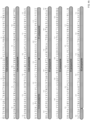
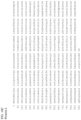
- the HCV E2 polypeptide comprises an amino acid sequence having at least 20% amino acid sequence identity to an E2 polypeptide depicted in one of FIG. 1A-1C , FIG. 2A-2C , FIG. 3A-3C , and FIG. 4A-4B .
- the HCV E1 polypeptide comprises an amino acid sequence having at least 20% amino acid sequence identity to an E1 polypeptide depicted in FIG. 1A-1C , FIG. 2A-2C , FIG. 3A-3C , and FIG. 4A-4B .
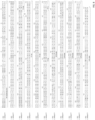
- the Ig Fc polypeptide comprises an amino acid sequence having at least 85% amino acid sequence identity to an amino acid sequence depicted in FIG. 5A-5C .
- an affinity tagged heterodimeric polypeptide of comprising an affinity tagged HCV E2 polypeptide wherein the HCV E2-affinity tag fusion polypeptide comprises, in order from N-terminus to C-terminus: i) from 2 to 15 amino acids of the N-terminus of an HCV E2 polypeptide; ii) the affinity tag polypeptide, iii) a proteolytically cleavable linker; and iv) an HCV E2 polypeptide.
- the from 2 to 15 amino acids of the N-terminus of an HCV E2 polypeptide is a dipeptide selected from QT, ET, HT, GT, TT, RH, NT, AY, VI, and ST.
- the proteolytically cleavable linker comprises the sequence LEVLFQGP (SEQ ID NO:1), wherein cleavage occurs between the glutamine and the glycine; b) the proteolytically cleavable linker comprises the sequence ENLYFQS (SEQ ID NO:2), wherein cleavage occurs between the glutamine and the serine; c) the proteolytically cleavable linker comprises the sequence DDDDK (SEQ ID NO:3), wherein cleavage occurs immediately C-terminal to the lysine residue; or d) the proteolytically cleavable linker comprises the sequence LVPR (SEQ ID NO:4) (e.g., where the proteolytically cleavable linker comprises the sequence LVPRGS (SEQ ID NO:5)).
- the HCV E2 polypeptide and the HCV E1 polypeptide are of the same genotype. In some cases, the HCV E2 polypeptide and the HCV E1 polypeptide are of different genotypes. In some cases, the HCV E2 polypeptide is of genotype 1, 2, 3, or 7. In some cases, the HCV E1 polypeptide is of genotype 1, 2, 3, or 7.
- the present disclosure provides a composition comprising: a) a heterodimeric polypeptide as described above or elsewhere herein; and b) a buffer.
- the composition can include a protease inhibitor.
- the present disclosure provides a nucleic acid comprising: a) a first nucleotide sequence encoding a hepatitis C virus (HCV) E1 polypeptide; and b) a second nucleotide sequence encoding an HCV E2 polypeptide, wherein at least one of the HCV E1 and HCV E2 polypeptides is a fusion polypeptide comprising an affinity tag polypeptide.
- HCV hepatitis C virus
- the nucleic acid comprises a nucleotide sequence encoding a polyprotein comprising, in order from N-terminus to C-terminus: a) an HCV E1 polypeptide; and b) an HCV E2-affinity tag fusion polypeptide comprising, in order from N-terminus to C-terminus: i) an affinity tag polypeptide; ii) a proteolytically cleavable linker; and iii) an HCV E2 polypeptide.
- a nucleotide sequence encoding from 2 amino acids to 15 amino acids from the N-terminus of an HCV E2 polypeptide is interposed between the HCV E1 polypeptide and the affinity tag polypeptide such that a wild-type signal protease E1/E2 junction cleavage site is generated between the HCV E1 polypeptide and the affinity tag polypeptide.
- the nucleic acid comprises a nucleotide sequence encoding a polyprotein comprising, in order from N-terminus to C-terminus: a) an HCV E1 polypeptide; and b) an HCV E2-affinity tag fusion polypeptide comprising, in order from N-terminus to C-terminus: i) an HCV E2 polypeptide; ii) a proteolytically cleavable linker; and iii) an affinity tag polypeptide.
- the nucleic acid comprises a nucleotide sequence encoding a polyprotein comprising, in order from N-terminus to C-terminus: a) an HCV E1-affinity tag fusion polypeptide comprising, in order from N-terminus to C-terminus: i) an affinity tag polypeptide; ii) a proteolytically cleavable linker; and iii) an HCV E1 polypeptide; and b) an HCV E2 polypeptide.
- the nucleic acid comprises a nucleotide sequence encoding a polyprotein comprising, in order from N-terminus to C-terminus: a) an HCV E1-affinity tag fusion polypeptide comprising, in order from N-terminus to C-terminus: i) an HCV E1 polypeptide; ii) a proteolytically cleavable linker; and iii) an affinity tag polypeptide; and b) an HCV E2 polypeptide.
- a nucleotide sequence encoding a signal peptide is interposed between the affinity tag polypeptide and the HCV E2 polypeptide such that signal protease cleavage site is generated between the affinity tag polypeptide and the HCV E2 polypeptide.
- the nucleic acid comprises a nucleotide sequence encoding a polyprotein comprising, in order from N-terminus to C-terminus: a) an HCV E1-affinity tag fusion polypeptide comprising, in order from N-terminus to C-terminus: i) an affinity tag polypeptide; ii) a proteolytically cleavable linker; and iii) an HCV E1 polypeptide; and b) an HCV E2-affinity tag fusion polypeptide comprising, in order from N-terminus to C-terminus: i) an affinity tag polypeptide; ii) a proteolytically cleavable linker; and iii) an HCV E2 polypeptide.
- a nucleotide sequence encoding from 2 amino acids to 15 amino acids from the N-terminus of an HCV E2 polypeptide is interposed between the HCV E1 polypeptide and the affinity tag polypeptide such that a wild-type signal protease E1/E2 junction cleavage site is generated between the HCV E1 polypeptide and the affinity tag polypeptide.
- the nucleic acid comprises a nucleotide sequence encoding a polyprotein comprising, in order from N-terminus to C-terminus: a) an HCV E1-affinity tag fusion polypeptide comprising, in order from N-terminus to C-terminus: i) an HCV E1 polypeptide; ii) a proteolytically cleavable linker; and iii) an affinity tag polypeptide; and b) an HCV E2-affinity tag fusion polypeptide comprising, in order from N-terminus to C-terminus: i) an HCV E2 polypeptide; ii) a proteolytically cleavable linker; and iii) an affinity tag polypeptide.
- a nucleotide sequence encoding a signal peptide is interposed between the affinity tag polypeptide and the HCV E2 polypeptide such that a signal protease cleavage site is generated between the affinity tag polypeptide and the HCV E2 polypeptide.
- the nucleotide sequence encoding the polyprotein is operably linked to a promoter.
- the affinity tag polypeptide is an Ig Fc polypeptide.
- the Ig Fc polypeptide comprises an amino acid sequence having at least 85% amino acid sequence identity to an amino acid sequence depicted in FIG. 5A-5C .
- the from 2 to 15 amino acids of the N-terminus of an HCV E2 polypeptide is a dipeptide selected from QT, ET, HT, GT, TT, RH, NT, AY, VI, and ST.
- the proteolytically cleavable linker comprises the sequence LEVLFQGP (SEQ ID NO:1), wherein cleavage occurs between the glutamine and the glycine;
- the proteolytically cleavable linker comprises the sequence ENLYFQS (SEQ ID NO:2, wherein cleavage occurs between the glutamine and the serine;
- the proteolytically cleavable linker comprises the sequence DDDDK (SEQ ID NO:3), wherein cleavage occurs immediately C-terminal to the lysine residue; or d) the proteolytically cleavable linker comprises the sequence LVPR (SEQ ID NO:4) (e.g., where the proteolytically cleav
- the HCV E2 polypeptide comprises an amino acid sequence having at least 20% amino acid sequence identity to an E2 polypeptide depicted in one of FIG. 1A-1C , FIG. 2A-2C , FIG. 3A-3C , and FIG. 4A-4B .
- the HCV E1 polypeptide comprises an amino acid sequence having at least 20% amino acid sequence identity to an E1 polypeptide depicted in FIG. 1A-1C , FIG. 2A-2C , FIG. 3A-3C , and FIG. 4A-4B .
- the present disclosure provides a recombinant expression vector comprising a nucleic acid as described above, or elsewhere herein.
- the present disclosure provides a genetically modified in vitro host cell comprising a nucleic acid as described above, or elsewhere herein.
- the present disclosure provides a genetically modified in vitro host cell comprising a recombinant expression vector as described above, or elsewhere herein.
- the host cell is a eukaryotic cell.
- the host cell is a mammalian cell.
- the present disclosure provides a method of making an affinity tagged heterodimeric polypeptide as described above, or elsewhere herein, the method comprising: a) culturing a genetically modified host cell as described above, or elsewhere herein, under conditions such that the affinity tagged HCV E1-E2 heterodimer is produced in the cell; and b) lysing the cell to generate a cell lysate comprising the affinity tagged HCV E1-E2 heterodimer.
- the present disclosure provides a method of producing an HCV E1/E2 heterodimer, the method comprising: a) contacting a lysate of the genetically modified host cell as described above, or elsewhere herein, with an affinity tag-binding polypeptide immobilized on an insoluble support, wherein the affinity tagged HCV E1-E2 heterodimer present in the lysate binds to the immobilized affinity tag-binding polypeptide, generating an immobilized affinity tagged HCV E1-E2 heterodimer; b) contacting the immobilized HCV E1-E2 heterodimer with a protease that cleaves the proteolytically cleavable linker present in the immobilized affinity tagged HCV E1-E2 heterodimer, thereby releasing the HCV E1-E2 heterodimer from the affinity tag; and c) collecting the released HCV E1-E2 heterodimer.
- the released HCV E1-E2 heterodimer is at least 50% pure.
- the affinity tag polypeptide is an Ig Fc polypeptide, and wherein the affinity tag-binding polypeptide is an Fc-binding polypeptide.
- the Fc-binding polypeptide is Protein A, Protein G, or a Protein A/G fusion.
- the present disclosure provides an affinity tagged heterodimeric polypeptide comprising: a) a hepatitis C virus (HCV) E1 polypeptide; and b) an affinity-tagged HCV E2 polypeptide, wherein the affinity-tagged HCV E2 polypeptide comprises, in order from N-terminus to C-terminus: i) an Ig Fc polypeptide; ii) a proteolytically cleavable linker having the amino acid sequence LEVLFQGP (SEQ ID NO:1); and iii) an HCV E2 polypeptide.
- HCV hepatitis C virus
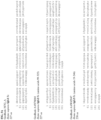
- the HCV E1 polypeptide is an AVI1a129 E1 polypeptide, an H77 E1 polypeptide, an S52 E1 polypeptide, or an AVI3a177 E1 polypeptide, where the AVI1a129 E1 polypeptide, the H77 E1 polypeptide, the S52 E1 polypeptide, and the AVI3a177 E1 polypeptide comprise amino acid sequences as depicted in FIG. 7 and FIG. 8 .
- the HCV E2 polypeptide is an AVI1a129 E2 polypeptide, an H77 E1 polypeptide, an S52 E2 polypeptide, or an AVI3a177 E2 polypeptide, where the AVI1a129 E2 polypeptide, the H77 E2 polypeptide, the S52 E2 polypeptide, and the AVI3a177 E2 polypeptide comprise amino acid sequences as depicted in FIG. 7 and FIG. 8 .
- the present disclosure provides a nucleic acid comprising a nucleotide sequence encoding an affinity tagged heterodimeric polypeptide, wherein the nucleotide sequence comprises, from 5' to 3' and in operable linkage: a) a nucleotide sequence encoding a tissue plasminogen signal sequence having the amino acid sequence MDAMKRGLCCVLLLCGAVFVSPS (SEQ ID NO:6); b) a nucleotide sequence encoding a hepatitis C virus (HCV) E1 polypeptide; c) a nucleotide sequence encoding a dipeptide selected from QT and ET; and d) a nucleotide sequence encoding an affinity-tagged HCV E2 polypeptide, wherein the affinity-tagged HCV E2 polypeptide comprises, in order from N-terminus to C-terminus: i) an Ig Fc polypeptide; ii) a proteolytically cleavable linker having the amino acid
- the HCV E1 polypeptide is an AVI1a129 E1 polypeptide, an H77 E1 polypeptide, an S52 E1 polypeptide, or an AVI3a177 E1 polypeptide, where the AVI1a129 E1 polypeptide, the H77 E1 polypeptide, the S52 E1 polypeptide, and the AVI3a177 E1 polypeptide comprise amino acid sequences as depicted in FIG. 7 and FIG. 8 .
- the HCV E2 polypeptide is an AVI1a129 E2 polypeptide, an H77 E1 polypeptide, an S52 E2 polypeptide, or an AVI3a177 E2 polypeptide, where the AVI1a129 E2 polypeptide, the H77 E2 polypeptide, the S52 E2 polypeptide, and the AVI3a177 E2 polypeptide comprise amino acid sequences as depicted in FIG. 7 and FIG. 8 .
- the nucleic acid comprises a nucleotide sequence encoding an amino acid sequence depicted in FIG. 7 or FIG. 8 .
- the present disclosure provides a recombinant expression vector comprising the nucleic acid.
- the present disclosure provides a mammalian host cell genetically modified with a recombinant expression vector comprising the nucleic acid.
- the present disclosure provides a method of producing an HCV E1/E2 heterodimer, the method comprising: a) contacting a lysate of the genetically modified host cell with a Protein A or Protein G polypeptide immobilized on an insoluble support, wherein the affinity tagged HCV E1-E2 heterodimer present in the lysate binds to the immobilized Protein A or Protein G, generating an immobilized affinity tagged HCV E1-E2 heterodimer; b) contacting the immobilized HCV E1-E2 heterodimer with a protease that cleaves the proteolytically cleavable linker present in the immobilized affinity tagged HCV E1-E2 heterodimer, thereby releasing the HCV E1-E2 heterodimer from the affinity tag; and c) collecting the released HCV E1
- the released HCV E1-E2 heterodimer is at least 50% pure. In some cases, the released HCV E1-E2 heterodimer is at least 75% pure. In some cases, the released HCV E1-E2 heterodimer is at least 90% pure. In some cases, the released HCV E1-E2 heterodimer is at least 95% pure.
- the present disclosure provides a heterodimeric polypeptide comprising: a) an HCV E1 polypeptide; and b) a modified E2 polypeptide comprising, in order from N-terminus to C-terminus: i) from 1 to 6 heterologous amino acids, wherein the from 1 to 6 heterologous amino acids are C-terminal to a site of proteolytic cleavage in a proteolytically cleavable linker; and ii) an HCV E2 polypeptide.
- the present disclosure provides a heterodimeric polypeptide comprising: a) an HCV E2 polypeptide; and b) a modified E1 polypeptide comprising, in order from N-terminus to C-terminus: i) from 1 to 6 heterologous amino acids, wherein the from 1 to 6 heterologous amino acids are C-terminal to a site of proteolytic cleavage in a proteolytically cleavable linker; and ii) an HCV E1 polypeptide.
- the from 1 to 6 heterologous amino acids are Gly-Pro.
- the from 1 to 6 heterologous amino acids is Ser or Gly.
- the from 1 to 6 heterologous amino acids are Gly-Ser.
- the present disclosure provides a composition comprising: a) the heterodimeric polypeptide; and b) a pharmaceutically acceptable excipient.
- the pharmaceutically acceptable excipient comprises an adjuvant.
- the adjuvant is MF59; alum; poly(DL-lactide co-glycolide); a CpG oligonucleotide; keyhole limpet hemocyanin; or a suspension of liposomes comprising 3'- O- desacyl-4'-monophosphoryl lipid A (MPL) and Quillaja saponaria 21 (QS21).
- the present disclosure provides a heterodimeric polypeptide comprising: a) an HCV E1 polypeptide; and b) a modified E2 polypeptide comprising, in order from N-terminus to C-terminus: i) an HCV E2 polypeptide; and ii) from 1 to 6 heterologous amino acids, wherein the from 1 to 6 heterologous amino acids are N-terminal to a site of proteolytic cleavage in a proteolytically cleavable linker.
- the present disclosure provides a heterodimeric polypeptide comprising: a) an HCV E2 polypeptide; and b) a modified E1 polypeptide comprising, in order from N-terminus to C-terminus: i) an HCV E1 polypeptide; and ii) from 1 to 6 heterologous amino acids, wherein the from 1 to 6 heterologous amino acids are N-terminal to a site of proteolytic cleavage in a proteolytically cleavable linker.
- the from 1 to 6 heterologous amino acids are DDDDK (SEQ ID NO:3).
- the from 1 to 6 heterologous amino acids are LEVLFQ (SEQ ID NO:7).
- the from 1 to 6 heterologous amino acids are ENLYFQ (SEQ ID NOG). In some cases, the from 1 to 6 heterologous amino acids are LVPR (SEQ ID NO:4).
- the present disclosure provides a composition comprising: a) the heterodimeric polypeptide; and b) a pharmaceutically acceptable excipient. In some cases, the pharmaceutically acceptable excipient comprises an adjuvant.
- the adjuvant is MF59; alum; poly(DL-lactide co-glycolide); a CpG oligonucleotide; keyhole limpet hemocyanin; or a suspension of liposomes comprising 3'-O-desacyl-4'-monophosphoryl lipid A (MPL) and Quillaja saponaria 21 (QS21).
- MPL 3'-O-desacyl-4'-monophosphoryl lipid A
- QS21 Quillaja saponaria 21
- the present disclosure provides a method of inducing an immune response in an individual to an HCV polypeptide, the method comprising administering to the individual an effective amount of a heterodimeric polypeptide as described above or elsewhere herein, or a composition comprising a heterodimeric polypeptide, as described above or elsewhere herein.
- said administering is by intramuscular administration.
- said administering is by subcutaneous administration.
- HCV hepatitis C virus
- HCV genotypes and isolates include: the "Chiron” isolate HCV-1, H77, J6, Con1, isolate 1, BK, EC1, EC10, HC-J2, HC-J5; HC-J6, HC-J7, HC-J8, HC-JT, HCT18, HCT27, HCV-476, HCV-KF, "Hunan", “Japanese”, “Taiwan”, TH, type 1, type 1a, H77 type 1b, type 1c, type 1d, type 1e, type 1f, type 10, type 2, type 2a, type 2b, type 2c, type 2d, type 2f, type 3, type 3a, type 3b, type 3g, type 4, type 4a, type 4c, type 4d, type 4f, type 4h, type 4k, type 5, type 5a, type 6 and type 6a.
- the terms “individual,” “host,” “subject,” and “patient” are used interchangeably herein, and refer to a mammal, including, but not limited to, non-human primates (e.g., simians), equines (e.g., horses), and humans.
- isolated in reference to a polypeptide, refers to a polypeptide that is in an environment different from that in which the polypeptide naturally occurs.
- An isolated polypeptide can be purified.
- purified is meant a compound of interest (e.g., a polypeptide) has been separated from components that accompany it in nature.
- Purified can also be used to refer to a polypeptide separated from components that can accompany it during production of the polypeptide (e.g., during synthesis in vitro, etc.).
- a polypeptide is substantially pure when the polypeptide (or mixture of polypeptides) is at least 60% or at least 75% by weight free from organic molecules with which it is naturally associated or with which it is associated during production. In some embodiments, the polypeptide is from 30% to 60% pure. In some embodiments, the polypeptide (or mixture of polypeptides) is at least 60%, at least 75%, at least 80%, at least 85%, at least 90%, at least 95%, or at least 99%, by weight, pure.
- an E1 polypeptide, an E1-Fc polypeptide, an E2 polypeptide, or an E2-Fc polypeptide (or a heterodimer comprising such polypeptides) is substantially pure when the E1, E1-Fc, E2, or E2-Fc polypeptide (or a heterodimer of such polypeptides) is at least 60% or at least 75% by weight free from organic molecules with which the polypeptide(s) is naturally associated or with which it is associated during production.
- polynucleotide and “nucleic acid,” used interchangeably herein, refer to a polymeric form of nucleotides of any length, either ribonucleotides or deoxyribonucleotides. Thus, this term includes, but is not limited to, single-, double-, or multi-stranded DNA or RNA, genomic DNA, cDNA, DNA-RNA hybrids, or a polymer comprising purine and pyrimidine bases or other natural, chemically or biochemically modified, non-natural, or derivatized nucleotide bases.
- a polynucleotide is RNA.
- a polynucleotide is DNA.
- a "polynucleotide” includes a nucleic acid that is incorporated into a viral vector or a bacterial vector.
- peptide refers to a polymeric form of amino acids of any length, which can include coded and non-coded amino acids, chemically or biochemically modified or derivatized amino acids, and polypeptides having modified peptide backbones.
- polypeptide includes glycosylated polypeptides.
- heterologous refers to two components that are defined by structures derived from different sources.
- heterologous is used in the context of a polypeptide, where the polypeptide includes operably linked amino acid sequences that can be derived from one or more different polypeptides, e.g., amino acid sequences that are not operably linked to the polypeptide in nature.
- the present disclosure provides a method to facilitate large-scale purification of the E1E2 glycoprotein heterodimer using affinity purification tags such as the human Fc immunoglobulin domain fused to the N-terminus of E2, for example.
- affinity purification tags such as the human Fc immunoglobulin domain fused to the N-terminus of E2, for example.
- the human Fc domain can be removed from the E1E2 complex by digestion with a suitable protease at a proteolytic cleavage site placed downstream of the Fc domain.
- the large scale purification of E1E2 is very challenging and severely limits its use as a HCV vaccine in humans.
- the present disclosure provides a method to address this challenge, and to produce HCV E1/E2 heterodimer suitable for use as a vaccine.
- the present disclosure also provides: a) an HCV E1-affinity tag fusion polypeptide and an HCV E2 polypeptide; b) an HCV E1 polypeptide and an HCV E2-affinity tag fusion polypeptide; or c) an HCV E1-affinity tag fusion polypeptide and an HCV E2-affinity tag fusion polypeptide.
- the affinity tag portion of an HCV E1-affinity tag fusion polypeptide can be at the N-terminus of the HCV E1 polypeptide, or at the C-terminus of the HCV E1 polypeptide.
- the affinity tag portion of an HCV E2-affinity tag fusion polypeptide can be at the N-terminus of the HCV E2 polypeptide, or at the C-terminus of the HCV E2 polypeptide.
- Suitable affinity tags include immunoglobulin (Ig) Fc polypeptides, Protein A, Protein G, Protein L, a hybrid Protein A-Protein G polypeptide, a polypeptide comprising a poly(histidine) tract, an immunoglobulin light chain, and glutathione-S-transferase (GST).
- immunoglobulin (Ig) Fc polypeptides Protein A, Protein G, Protein L, a hybrid Protein A-Protein G polypeptide, a polypeptide comprising a poly(histidine) tract, an immunoglobulin light chain, and glutathione-S-transferase (GST).
- heterodimeric polypeptides comprising: a) an HCV E1-Fc fusion polypeptide and an HCV E2 polypeptide; b) an HCV E1 polypeptide and an HCV E2-Fc fusion polypeptide; or c) an HCV E1-Fc fusion polypeptide and an HCV E2-Fc fusion polypeptide.
- the Fc portion of an HCV E1-Fc fusion polypeptide can be at the N-terminus of the HCV E1 polypeptide, or at the C-terminus of the HCV E2 polypeptide.
- the Fc portion of an HCV E2-Fc fusion polypeptide can be at the N-terminus of the HCV E2 polypeptide, or at the C-terminus of the HCV E2 polypeptide.
- HCV E1 and E2 polypeptides in an affinity tagged HCV E1/E2 heterodimer of the present disclosure can be of the same HCV genotype, or can be of different HCV genotypes.
- the HCV E1 and E2 polypeptides in an affinity tagged HCV E1/E2 heterodimer of the present disclosure are genotype 4 HCV E1 and E2 polypeptides. In some cases, the HCV E1 and E2 polypeptides in an affinity tagged HCV E1/E2 heterodimer of the present disclosure are genotype 5 HCV E1 and E2 polypeptides. In some cases, the HCV E1 and E2 polypeptides in an affinity tagged HCV E1/E2 heterodimer of the present disclosure are genotype 6 HCV E1 and E2 polypeptides. In some cases, the HCV E1 and E2 polypeptides in an affinity tagged HCV E1/E2 heterodimer of the present disclosure are genotype 7 HCV E1 and E2 polypeptides.
- the HCV E1 and E2 polypeptides in an affinity tagged HCV E1/E2 heterodimer of the present disclosure are in some embodiments full-length HCV E1 and E2 polypeptides.
- the HCV E1 and E2 polypeptides in an affinity tagged HCV E1/E2 heterodimer of the present disclosure are in some embodiments full-length HCV E1 and E2 polypeptides and, other than the affinity tag (Ig Fc polypeptide) and an optional linker, do not include any heterologous polypeptides.
- an affinity tag can replace the N-terminal 20 to 50 amino acids of an HCV E2 polypeptide.
- an affinity tag can replace the N-terminal 20 amino acids (aa) to 25 aa, from 25 aa to 30 aa, from 30 aa to 35 aa, from 35 aa to 40 aa, or from 40 aa to 50 aa, of an HCV E2 polypeptide.
- an affinity tag can replace the N-terminal 30 amino acids of an HCV E2 polypeptide.
- An E2 polypeptide suitable for inclusion in an affinity tagged HCV E1/E2 heterodimer of the present disclosure can have a length of from about 200 amino acids (aa) to about 250 aa, from about 250 aa to about 275 aa, from about 275 aa to about 300 aa, from about 300 aa to about 325 aa, from about 325 aa to about 350 aa, or from about 350 aa to about 365 aa.
- an HCV E2 polypeptide suitable for inclusion in an E1/E2 heterodimer of the present disclosure is an HCV E2 ectodomain polypeptide.
- an HCV E2 polypeptide suitable for inclusion in an affinity tagged HCV E1/E2 heterodimer of the present disclosure is a full-length HCV E2 polypeptide.
- an "E2 polypeptide” includes a precursor E2 protein, including the signal sequence; includes a mature E2 polypeptide which lacks this sequence; and includes an E2 polypeptide with a heterologous signal sequence.
- An E2 polypeptide can include a C-terminal membrane anchor sequence which occurs at approximately amino acid positions 715-730 and may extend as far as approximately amino acid residue 746 (see, Lin et al., J. Virol. (1994) 68:5063-5073 ).
- a E2 polypeptide suitable for inclusion in an affinity tagged HCV E1/E2 heterodimer of the present disclosure lacks a portion of its C-terminal region, e.g., from about amino acid 715 to the C-terminus; from about amino acid 625 to the C-terminus; from about amino acid 661 to the C-terminus; from about amino acid 655 to the C-terminus; from about amino acid 500 to the C-terminus, where the amino acid numbering is with reference to the numbering in FIG. 1A-1C . See, e.g., U.S. Patent No. 6,521,423 .
- An E2 polypeptide suitable for inclusion in an affinity tagged HCV E1/E2 heterodimer of the present disclosure can comprise an amino acid sequence having at least about 20%, at least about 25%, at least about 30%,at least about 35%, at least about 40%, at least about 45%, at least about 50%, at least about 60%, at least about 70%, at least about 75%, at least about 80%,at least about 85%, at least about 90%, at least about 95%, at least about 98%, at least about 99%, or 100%, amino acid sequence identity to an amino acid sequence of an E2 polypeptide depicted in FIG. 1A-1C , FIG. 2A-2C , FIG. 3A-3C , or FIG. 4A-4B .
- An E2 polypeptide suitable for inclusion in an E1/E2 heterodimer of the present disclosure can comprise an amino acid sequence having at least about 20%, at least about 25%, at least about 30%,at least about 35%, at least about 40%, at least about 45%, at least about 50%, at least about 60%, at least about 70%, or at least about 75%, amino acid sequence identity to an amino acid sequence of an E2 polypeptide depicted in FIG. 1A-1C , FIG. 2A-2C , FIG. 3A-3C , or FIG. 4A-4B .
- An E2 polypeptide suitable for inclusion in an affinity tagged HCV E1/E2 heterodimer of the present disclosure can comprise an amino acid sequence having at least about 20%, at least about 25%, at least about 30%,at least about 35%, at least about 40%, at least about 45%, at least about 50%, at least about 60%, at least about 70%, at least about 75%, at least about 80%, at least about 85%, at least about 90%, at least about 95%, at least about 98%, at least about 99%, or 100%, amino acid sequence identity to an amino acid sequence of an E2 polypeptide depicted in FIG. 1A-1C .
- an E2 polypeptide of genotype 1 can comprise an amino acid sequence having at least about 20%, at least about 25%, at least about 30%,at least about 35%, at least about 40%, at least about 45%, at least about 50%, at least about 60%, at least about 70%, at least about 75%, at least about 80%, at least about 85%, at least about 90%, at least about 95%, at least about 98%, at least about 99%, or 100%, amino acid sequence identity to amino acids 384-746 of an amino acid sequence depicted in FIG. 1A-1C .
- an E2 polypeptide of genotype 1A can comprise an amino acid sequence having at least about 20%, at least about 25%, at least about 30%,at least about 35%, at least about 40%, at least about 45%, at least about 50%, at least about 60%, at least about 70%, at least about 75%, at least about 80%, at least about 85%, at least about 90%, at least about 95%, at least about 98%, at least about 99%, or 100%, amino acid sequence identity to amino acids 384-746 of an amino acid sequence identified as 1A and depicted in FIG. 1A-1C .
- an E2 polypeptide of genotype 1B can comprise an amino acid sequence having at least about 20%, at least about 25%, at least about 30%,at least about 35%, at least about 40%, at least about 45%, at least about 50%, at least about 60%, at least about 70%, at least about 75%, at least about 80%, at least about 85%, at least about 90%, at least about 95%, at least about 98%, at least about 99%, or 100%, amino acid sequence identity to amino acids 384-746 of an amino acid sequence identified as 1B and depicted in FIG. 1A-1C .
- an E2 polypeptide of genotype 1C can comprise an amino acid sequence having at least about 20%, at least about 25%, at least about 30%,at least about 35%, at least about 40%, at least about 45%, at least about 50%, at least about 60%, at least about 70%, at least about 75%, at least about 80%, at least about 85%, at least about 90%, at least about 95%, at least about 98%, at least about 99%, or 100%, amino acid sequence identity to amino acids 384-746 of an amino acid sequence identified as 1C and depicted in FIG. 1A-1C .
- An E2 polypeptide suitable for inclusion in an affinity tagged HCV E1/E2 heterodimer of the present disclosure can comprise an amino acid sequence having at least about 20%, at least about 25%, at least about 30%,at least about 35%, at least about 40%, at least about 45%, at least about 50%, at least about 60%, at least about 70%, at least about 75%, at least about 80%, at least about 85%, at least about 90%, at least about 95%, at least about 98%, at least about 99%, or 100%, amino acid sequence identity to an amino acid sequence of an E2 polypeptide depicted in FIG. 2A-2C .
- an E2 polypeptide can comprise an amino acid sequence having at least about 20%, at least about 25%, at least about 30%,at least about 35%, at least about 40%, at least about 45%, at least about 50%, at least about 60%, at least about 70%, at least about 75%, at least about 80%, at least about 85%, at least about 90%, at least about 95%, at least about 98%, at least about 99%, or 100%, amino acid sequence identity to amino acids 384-751 of an amino acid sequence depicted in FIG. 2A-2C .
- an E2 polypeptide of genotype 2A can comprise an amino acid sequence having at least about 20%, at least about 25%, at least about 30%,at least about 35%, at least about 40%, at least about 45%, at least about 50%, at least about 60%, at least about 70%, at least about 75%, at least about 80%, at least about 85%, at least about 90%, at least about 95%, at least about 98%, at least about 99%, or 100%, amino acid sequence identity to amino acids 384-751 of the "consensus" amino acid sequence depicted in FIG. 2A-2C .
- an E2 polypeptide of genotype 2B can comprise an amino acid sequence having at least about 20%, at least about 25%, at least about 30%,at least about 35%, at least about 40%, at least about 45%, at least about 50%, at least about 60%, at least about 70%, at least about 75%, at least about 80%, at least about 85%, at least about 90%, at least about 95%, at least about 98%, at least about 99%, or 100%, amino acid sequence identity to amino acids 384-751 of the "consensus" amino acid sequence depicted in FIG. 2A-2C .
- An E2 polypeptide suitable for inclusion in an affinity tagged HCV E1/E2 heterodimer of the present disclosure can comprise an amino acid sequence having at least about 20%, at least about 25%, at least about 30%,at least about 35%, at least about 40%, at least about 45%, at least about 50%, at least about 60%, at least about 70%, at least about 75%, at least about 80%, at least about 85%, at least about 90%, at least about 95%, at least about 98%, at least about 99%, or 100%, amino acid sequence identity to an amino acid sequence of an E2 polypeptide depicted in FIG. 3A-3C .
- an E2 polypeptide of genotype 3 can comprise an amino acid sequence having at least about 20%, at least about 25%, at least about 30%,at least about 35%, at least about 40%, at least about 45%, at least about 50%, at least about 60%, at least about 70%, at least about 75%, at least about 80%, at least about 85%, at least about 90%, at least about 95%, at least about 98%, at least about 99%, or 100%, amino acid sequence identity to amino acids 385-754 of an amino acid sequence depicted in FIG. 3A-3C .
- an E2 polypeptide of genotype 3A can comprise an amino acid sequence having at least about 20%, at least about 25%, at least about 30%,at least about 35%, at least about 40%, at least about 45%, at least about 50%, at least about 60%, at least about 70%, at least about 75%, at least about 80%, at least about 85%, at least about 90%, at least about 95%, at least about 98%, at least about 99%, or 100%, amino acid sequence identity to amino acids 385-754 of an amino acid sequence identified as 3A and depicted in FIG. 3A-3C .
- an E2 polypeptide of genotype 3B can comprise an amino acid sequence having at least about 20%, at least about 25%, at least about 30%,at least about 35%, at least about 40%, at least about 45%, at least about 50%, at least about 60%, at least about 70%, at least about 75%, at least about 80%, at least about 85%, at least about 90%, at least about 95%, at least about 98%, at least about 99%, or 100%, amino acid sequence identity to amino acids 385-754 of the amino acid sequence identified as 3B and depicted in FIG. 3A-3C .
- an E2 polypeptide of genotype 3K can comprise an amino acid sequence having at least about 20%, at least about 25%, at least about 30%,at least about 35%, at least about 40%, at least about 45%, at least about 50%, at least about 60%, at least about 70%, at least about 75%, at least about 80%, at least about 85%, at least about 90%, at least about 95%, at least about 98%, at least about 99%, or 100%, amino acid sequence identity to amino acids 385-754 of the amino acid sequence identified as 3K and depicted in FIG. 3A-3C .
- An E2 polypeptide suitable for inclusion in an affinity tagged HCV E1/E2 heterodimer of the present disclosure can comprise an amino acid sequence having at least about 20%, at least about 25%, at least about 30%,at least about 35%, at least about 40%, at least about 45%, at least about 50%, at least about 60%, at least about 70%, at least about 75%, at least about 80%, at least about 85%, at least about 90%, at least about 95%, at least about 98%, at least about 99%, or 100%, amino acid sequence identity to the amino acid sequence of the E2 polypeptide depicted in FIG. 4A-4B .
- an E2 polypeptide of genotype 7A can comprise an amino acid sequence having at least about 20%, at least about 25%, at least about 30%,at least about 35%, at least about 40%, at least about 45%, at least about 50%, at least about 60%, at least about 70%, at least about 75%, at least about 80%, at least about 85%, at least about 90%, at least about 95%, at least about 98%, at least about 99%, or 100%, amino acid sequence identity to amino acids 384-750 of the amino acid sequence depicted in FIG. 4A-4B .
- An HCV E1 polypeptide suitable for inclusion in an affinity tagged HCV E1/E2 heterodimer of the present disclosure can have a length of from about 150 amino acids (aa) to about 175 aa, from about 175 aa to about 195 aa, from about 131 aa to about 175 aa, or from about 175 aa to about 193 aa.
- an HCV E1 polypeptide suitable for inclusion in an E1/E2 heterodimer of the present disclosure is an HCV E1 ectodomain polypeptide.
- an HCV E1 polypeptide suitable for inclusion in an E1/E2 heterodimer of the present disclosure is a full-length HCV E1 polypeptide.
- E1 polypeptide includes a precursor E1 protein, including the signal sequence; includes a mature E1 polypeptide which lacks this sequence; and includes an E1 polypeptide with a heterologous signal sequence.
- An E1 polypeptide can include a C-terminal membrane anchor sequence which occurs at approximately amino acid positions 360-383 (see, e.g., WO 96/04301 ).
- a suitable E1 polypeptide lacks a C-terminal portion that includes a transmembrane region.
- a suitable E1 polypeptide lacks the C-terminal portion from amino acid 330 to amino acid 384, or from amino acid 360 to amino acid 384.
- E1 polypeptides can be an E1 polypeptide of any genotype, subtype or isolate of HCV.
- E1 polypeptides of genotype 1 and E1 polypeptides of genotype 3 are included in an E1/E2 heterodimer of the present disclosure.
- An E1 polypeptide can comprise an amino acid sequence having at least about 20%, at least about 25%, at least about 30%,at least about 35%, at least about 40%, at least about 45%, at least about 50%, at least about 60%, at least about 70%, at least about 75%, at least about 80%, at least about 85%, at least about 90%, at least about 95%, at least about 98%, at least about 99%, or 100%, amino acid sequence identity to an amino acid sequence of an E1 polypeptide depicted in FIG. 1A-1C , FIG. 2A-2C , FIG. 3A-3C , or FIG. 4A-4B .
- An E1 polypeptide can comprise an amino acid sequence having at least about 20%, at least about 25%, at least about 30%,at least about 35%, at least about 40%, at least about 45%, at least about 50%, at least about 60%, at least about 70%, at least about 75%, at least about 80%, at least about 85%, at least about 90%, at least about 95%, at least about 98%, at least about 99%, or 100%, amino acid sequence identity to an amino acid sequence of an E1 polypeptide depicted in FIG. 1A-1C .
- an E1 polypeptide of genotype 1A can comprise an amino acid sequence having at least about 20%, at least about 25%, at least about 30%,at least about 35%, at least about 40%, at least about 45%, at least about 50%, at least about 60%, at least about 70%, at least about 75%, at least about 80%, at least about 85%, at least about 90%, at least about 95%, at least about 98%, at least about 99%, or 100%, amino acid sequence identity to amino acids 192-383 of an amino acid sequence identified as 1A and depicted in FIG. 1A-1C .
- an E1 polypeptide of genotype 1B can comprise an amino acid sequence having at least about 20%, at least about 25%, at least about 30%,at least about 35%, at least about 40%, at least about 45%, at least about 50%, at least about 60%, at least about 70%, at least about 75%, at least about 80%, at least about 85%, at least about 90%, at least about 95%, at least about 98%, at least about 99%, or 100%, amino acid sequence identity to amino acids 192-383 of an amino acid sequence identified as 1B and depicted in FIG. 1A-1C .
- an E1 polypeptide of genotype 1C can comprise an amino acid sequence having at least about 20%, at least about 25%, at least about 30%,at least about 35%, at least about 40%, at least about 45%, at least about 50%, at least about 60%, at least about 70%, at least about 75%, at least about 80%, at least about 85%, at least about 90%, at least about 95%, at least about 98%, at least about 99%, or 100%, amino acid sequence identity to amino acids 192-383 of an amino acid sequence identified as 1C and depicted in FIG. 1A-1C .
- An E1 polypeptide can comprise an amino acid sequence having at least about 20%, at least about 25%, at least about 30%,at least about 35%, at least about 40%, at least about 45%, at least about 50%, at least about 60%, at least about 70%, at least about 75%, at least about 80%, at least about 85%, at least about 90%, at least about 95%, at least about 98%, at least about 99%, or 100%, amino acid sequence identity to an amino acid sequence of an E1 polypeptide depicted in FIG. 2A-2C .
- an E1 polypeptide of genotype 2A can comprise an amino acid sequence having at least about 20%, at least about 25%, at least about 30%,at least about 35%, at least about 40%, at least about 45%, at least about 50%, at least about 60%, at least about 70%, at least about 75%, at least about 80%, at least about 85%, at least about 90%, at least about 95%, at least about 98%, at least about 99%, or 100%, amino acid sequence identity to amino acids 192-383 of an amino acid sequence identified as 2A and depicted in FIG. 2A-2C .
- an E1 polypeptide of genotype 2B can comprise an amino acid sequence having at least about 20%, at least about 25%, at least about 30%,at least about 35%, at least about 40%, at least about 45%, at least about 50%, at least about 60%, at least about 70%, at least about 75%, at least about 80%, at least about 85%, at least about 90%, at least about 95%, at least about 98%, at least about 99%, or 100%, amino acid sequence identity to amino acids 192-383 of an amino acid sequence identified as 2B and depicted in FIG. 2A-2C .
- An E1 polypeptide can comprise an amino acid sequence having at least about 20%, at least about 25%, at least about 30%,at least about 35%, at least about 40%, at least about 45%, at least about 50%, at least about 60%, at least about 70%, at least about 75%, at least about 80%, at least about 85%, at least about 90%, at least about 95%, at least about 98%, at least about 99%, or 100%, amino acid sequence identity to the consensus E1 polypeptide amino acid sequence depicted in FIG. 3A-3C .
- an E1 polypeptide of genotype 3A, 3B, or 3K can comprise an amino acid sequence having at least about 20%, at least about 25%, at least about 30%,at least about 35%, at least about 40%, at least about 45%, at least about 50%, at least about 60%, at least about 70%, at least about 75%, at least about 80%, at least about 85%, at least about 90%, at least about 95%, at least about 98%, at least about 99%, or 100%, amino acid sequence identity to amino 192-384 of an amino acid sequence of an amino acid sequence identified as 3A, 3B, or 3K, respectively, as depicted in FIG. 3A-3C .
- An E1 polypeptide can comprise an amino acid sequence having at least about 20%, at least about 25%, at least about 30%,at least about 35%, at least about 40%, at least about 45%, at least about 50%, at least about 60%, at least about 70%, at least about 75%, at least about 80%, at least about 85%, at least about 90%, at least about 95%, at least about 98%, at least about 99%, or 100%, amino acid sequence identity to an amino acid sequence of an E1 polypeptide depicted in FIG. 4A-4B .
- an E1 polypeptide of genotype 7A can comprise an amino acid sequence having at least about 20%, at least about 25%, at least about 30%,at least about 35%, at least about 40%, at least about 45%, at least about 50%, at least about 60%, at least about 70%, at least about 75%, at least about 80%, at least about 85%, at least about 90%, at least about 95%, at least about 98%, at least about 99%, or 100%, amino acid sequence identity to amino acids 192-383 of the amino acid sequence depicted in FIG. 4A-4B .
- Suitable affinity tags include immunoglobulin (Ig) Fc polypeptides, Protein A, Protein G, Protein L, a hybrid Protein A-Protein G polypeptide, a polypeptide comprising a poly(histidine) tract, an immunoglobulin light chain, and glutathione-S-transferase (GST).
- immunoglobulin (Ig) Fc polypeptides Protein A, Protein G, Protein L, a hybrid Protein A-Protein G polypeptide, a polypeptide comprising a poly(histidine) tract, an immunoglobulin light chain, and glutathione-S-transferase (GST).
- the Fc region can be a human IgG1 Fc, a human IgG2 Fc, a human IgG3 Fc, a human IgG4 Fc, etc.
- the Fc polypeptide can be an Fc polypeptide from a non-human species.
- the Fc region comprises an amino acid sequence having at least about 70%, at least about 75%, at least about 80%, at least about 85%, at least about 90%, at least about 95%, at least about 98%, at least about 99%, or 100%, amino acid sequence identity to an amino acid sequence of an Fc region depicted in FIG. 5A-5C .
- the Fc region comprises an amino acid sequence having at least about 70%, at least about 75%, at least about 80%, at least about 85%, at least about 90%, at least about 95%, at least about 98%, at least about 99%, or 100%, amino acid sequence identity to the human IgG1 Fc polypeptide depicted in FIG. 5A .
- the Fc region comprises an amino acid sequence having at least about 70%, at least about 75%, at least about 80%, at least about 85%, at least about 90%, at least about 95%, at least about 98%, at least about 99%, or 100%, amino acid sequence identity to the human IgG2 Fc polypeptide depicted in FIG. 5A ; e.g., the Fc region comprises an amino acid sequence having at least about 70%, at least about 75%, at least about 80%, at least about 85%, at least about 90%, at least about 95%, at least about 98%, at least about 99%, or 100%, amino acid sequence identity to amino acids 99-325 of the human IgG2 Fc polypeptide depicted in FIG. 5A .
- the Fc region comprises an amino acid sequence having at least about 70%, at least about 75%, at least about 80%, at least about 85%, at least about 90%, at least about 95%, at least about 98%, at least about 99%, or 100%, amino acid sequence identity to the human IgG3 Fc polypeptide depicted in FIG. 5A ; e.g., the Fc region comprises an amino acid sequence having at least about 70%, at least about 75%, at least about 80%, at least about 85%, at least about 90%, at least about 95%, at least about 98%, at least about 99%, or 100%, amino acid sequence identity to amino acids 19-246 of the human IgG3 Fc polypeptide depicted in FIG. 5A .
- the Fc region comprises an amino acid sequence having at least about 70%, at least about 75%, at least about 80%, at least about 85%, at least about 90%, at least about 95%, at least about 98%, at least about 99%, or 100%, amino acid sequence identity to the human IgG4 Fc polypeptide depicted in FIG. 5C ; e.g., the Fc region comprises an amino acid sequence having at least about 70%, at least about 75%, at least about 80%, at least about 85%, at least about 90%, at least about 95%, at least about 98%, at least about 99%, or 100%, amino acid sequence identity to amino acids 100-327 of the human IgG4 Fc polypeptide depicted in FIG. 5C .
- the affinity tag polypeptide included in an affinity tagged HCV E1/E2 heterodimer of the present disclosure is a Protein A polypeptide.
- a suitable Protein A polypeptide can comprises an amino acid sequence having at least 50%, at least 60%, at least 70%, at least 80%, at least 85%, at least 90%, at least 95%, at least 98%, or 100%, amino acid sequence identity to amino acids 27 to 227 the Protein A amino acid sequence depicted in FIG. 10A ; and can have a length of from 150 to 200 amino acids.
- a suitable Protein A polypeptide can comprises an amino acid sequence having at least 50%, at least 60%, at least 70%, at least 80%, at least 85%, at least 90%, at least 95%, at least 98%, or 100%, amino acid sequence identity to amino acids 27 to 227 the Protein A amino acid sequence depicted in FIG. 10A ; and can have a length of 200 amino acids.
- the affinity tag polypeptide included in an affinity tagged HCV E1/E2 heterodimer of the present disclosure is a Protein G polypeptide.
- a suitable Protein G polypeptide can comprises an amino acid sequence having at least 50%, at least 60%, at least 70%, at least 80%, at least 85%, at least 90%, at least 95%, at least 98%, or 100%, amino acid sequence identity to amino acids 37-448 the Protein G amino acid sequence depicted in FIG. 10B ; and can have a length of from 350 amino acids to 411 amino acids.
- a suitable Protein L binds antibody kappa light chains, single chain variable fragments (scFv), and Fab fragments.
- a suitable Protein L polypeptide can comprises an amino acid sequence having at least 50%, at least 60%, at least 70%, at least 80%, at least 85%, at least 90%, at least 95%, at least 98%, or 100%, amino acid sequence identity to amino acids 25-992 of the Protein L amino acid sequence depicted in FIG. 10C .
- a suitable Protein L polypeptide can comprises an amino acid sequence having at least 50%, at least 60%, at least 70%, at least 80%, at least 85%, at least 90%, at least 95%, at least 98%, or 100%, amino acid sequence identity to amino acids 25-992 of the Protein L amino acid sequence depicted in FIG. 10C ; and can have a length of from 800 amino acids to 968 amino acids.
- Polypeptides comprising a poly(histidine) tract
- the affinity tag polypeptide included in an affinity tagged HCV E1/E2 heterodimer of the present disclosure is a polypeptide that comprises a poly(histidine) tract.
- a suitable poly(histidine) tract-containing polypeptide can have a length of from about 25 amino acids to about 500 amino acids, e.g., from about 25 amino acids (aa) to 30 aa, from 30 aa to 35 aa, from 35 aa to 40 aa, from 40 aa to 50 aa, from 50 aa to 75 aa, from 75 aa to 100 aa, from 100 aa to 150 aa, from 150 aa to 200 aa, from 200 aa to 250 aa, from 250 aa to 300 aa, from 300 aa to 350 aa, from 350 aa to 400 aa, from 400 aa to 450 aa, or from 450 aa to 500 aa.
- the poly(histidine) tract can be from 4 to 20 consecutive histidines, e.g., from 4 to 6 consecutive histidines, from 6 to 10 consecutive histidines, from 10 to 15 consecutive histidines, or from 15 to 20 consecutive histidines.
- a suitable affinity tag polypeptide can have a length of about 50 amino acids, and can include a (His) 6 histidine tract.
- the affinity tag polypeptide included in an affinity tagged HCV E1/E2 heterodimer of the present disclosure is an immunoglobulin light chain, or an Ig light chain-containing polypeptide.
- an Ig light chain-containing polypeptide can be a single chain variable fragment (scFv), an Fab fragment, or any other Ig light chain-containing polypeptide.
- the Ig light chain-containing polypeptide comprises an Ig kappa light chain, e.g., a human Ig kappa light chain. Ig light chain amino acid sequences are known in the art.
- a linker can be interposed between the affinity tag (e.g., Ig Fc) and the HCV E1 or HCV E2 polypeptide.
- the linker peptide may have any of a variety of amino acid sequences.
- a linker can be a peptide of between about 6 and about 40 amino acids in length, or between about 6 and about 25 amino acids in length. These linkers can be produced by using synthetic, linker-encoding oligonucleotides to couple the proteins. Peptide linkers allowing a degree of flexibility can be used.
- the linking peptides may have virtually any amino acid sequence, bearing in mind that suitable linkers will have a sequence that results in a generally flexible peptide. The use of small amino acids, such as glycine and alanine, are of use in creating a flexible peptide. The creation of such sequences is routine to those of skill in the art.
- Suitable linkers can be readily selected and can be of any of a suitable of different lengths, such as from 1 amino acid (e.g., Gly, Ala, or Ser) to 20 amino acids, from 2 amino acids to 15 amino acids, from 3 amino acids to 12 amino acids, including 4 amino acids to 10 amino acids, 5 amino acids to 9 amino acids, 6 amino acids to 8 amino acids, or 7 amino acids to 8 amino acids, and may be 1, 2, 3, 4, 5, 6, or 7 amino acids.
- 1 amino acid e.g., Gly, Ala, or Ser
- Exemplary flexible linkers include glycine polymers (G) n , glycine-serine polymers (including, for example, (GS) n , (GSGGS) n (SEQ ID NO:9) and (GGGS) n (SEQ ID NO:10), where n is an integer of at least one), glycine-alanine polymers, alanine-serine polymers, and other flexible linkers known in the art. Glycine and glycine-serine polymers are of interest since both of these amino acids are relatively unstructured, and therefore may serve as a neutral tether between components.
- Glycine polymers are of particular interest since glycine accesses significantly more phi-psi space than even alanine, and is much less restricted than residues with longer side chains (see Scheraga, Rev. Computational Chem. 11173-142 (1992 )).
- Exemplary flexible linkers include, but are not limited to, GGSG (SEQ ID NO:11), GGSGG (SEQ ID NO:12), GSGSG (SEQ ID NO:13), GSGGG (SEQ ID NO:14), GGGSG (SEQ ID NO:15), GSSSG (SEQ ID NO:16), and the like.
- the ordinarily skilled artisan will recognize that design of a peptide conjugated to any elements described above can include linkers that are all or partially flexible, such that the linker can include a flexible linker as well as one or more portions that confer less flexible structure.
- an affinity tagged HCV E1/E2 heterodimer of the present disclosure comprises: a) an HCV E1-Fc fusion polypeptide; and b) an HCV E2 polypeptide.
- the Fc polypeptide can be attached, directly or via a linker, to the carboxyl terminus (C terminus) of an HCV E1 polypeptide.
- the HCV E1-Fc fusion polypeptide comprises, in order from N-terminus to C-terminus: i) an HCV E1 polypeptide; and ii) an Ig Fc polypeptide.
- the HCV E1-Fc fusion polypeptide comprises, in order from N-terminus to C-terminus: i) an HCV E1 polypeptide; ii) a linker; and iii) an Ig Fc polypeptide.
- the Fc polypeptide can be attached, directly or via a linker, to the amino terminus (N terminus) of the HCV E1 polypeptide.
- the HCV E1-Fc fusion polypeptide comprises, in order from N-terminus to C-terminus: i) an Ig Fc polypeptide; and ii) an HCV E1 polypeptide.
- the HCV E1-Fc fusion polypeptide comprises, in order from N-terminus to C-terminus: i) an Ig Fc polypeptide; ii) a linker; and iii) an HCV E1 polypeptide
- an affinity tagged HCV E1/E2 heterodimer of the present disclosure comprises: a) an HCV E2-Fc fusion polypeptide; and b) an HCV E1 polypeptide.
- the Fc polypeptide can be attached, directly or via a linker, to the C-terminus of an HCV E2 polypeptide.
- the HCV E2-Fc fusion polypeptide comprises, in order from N-terminus to C-terminus: i) an HCV E2 polypeptide; and ii) an Ig Fc polypeptide.
- the HCV E2-Fc fusion polypeptide comprises, in order from N-terminus to C-terminus: i) an HCV E2 polypeptide; ii) a linker; and iii) an Ig Fc polypeptide.
- the Fc polypeptide can be attached, directly or via a linker, to N-terminus of the HCV E2 polypeptide.
- the HCV E2-Fc fusion polypeptide comprises, in order from N-terminus to C-terminus: i) an Ig Fc polypeptide; and ii) an HCV E2 polypeptide.
- the HCV E2-Fc fusion polypeptide comprises, in order from N-terminus to C-terminus: i) an Ig Fc polypeptide; ii) a linker; and iii) an HCV E2 polypeptide.
- an affinity tagged HCV E1/E2 heterodimer of the present disclosure comprises: a) an HCV E1-Fc fusion polypeptide; and b) an HCV E2-Fc fusion polypeptide.
- an affinity tagged HCV E1/E2 heterodimer of the present disclosure comprises: a) an HCV E1-Fc fusion polypeptide, where the HCV E1-Fc fusion polypeptide comprises, in order from N-terminus to C-terminus: i) an Fc polypeptide; and ii) an HCV E1 polypeptide; and b) an HCV E2-Fc fusion polypeptide, where the HCV E2-Fc fusion polypeptide comprises, in order from N-terminus to C-terminus: i) an Fc polypeptide; and ii) an HCV E2 polypeptide.
- the affinity tag present in an affinity tagged HCV E1/E2 heterodimer of the present disclosure is cleaved off during purification, to generate an HCV E1/E2 heterodimer that does not include the affinity tag.
- a proteolytically cleavable linker can be positioned between an affinity tag and an HCV E1 and/or HCV E2 polypeptide.
- an affinity tagged HCV E1/E2 heterodimer of the present disclosure comprises an affinity tagged HCV E1 polypeptide, where the affinity tagged E1 polypeptide comprises, in order from N-terminus to C-terminus: i) an affinity tag (e.g., an Fc polypeptide); ii) a proteolytically cleavable linker; and ii) an HCV E1 polypeptide.
- an affinity tag e.g., an Fc polypeptide
- a proteolytically cleavable linker e.g., an HCV E1 polypeptide
- an affinity tagged HCV E1/E2 heterodimer of the present disclosure comprises an affinity tagged HCV E2 polypeptide, where the affinity tagged E2 polypeptide comprises, in order from N-terminus to C-terminus: i) an affinity tag (e.g., an Fc polypeptide); ii) a proteolytically cleavable linker; and ii) an HCV E2 polypeptide.
- an affinity tag e.g., an Fc polypeptide
- a proteolytically cleavable linker e.g., an HCV E2 polypeptide
- an affinity tagged HCV E1/E2 heterodimer of the present disclosure comprises an affinity tagged HCV E1 polypeptide and an affinity tagged HCV E2 polypeptide, where the affinity tagged E1 polypeptide comprises, in order from N-terminus to C-terminus: i) an affinity tag (e.g., an Fc polypeptide); ii) a proteolytically cleavable linker; and ii) an HCV E1 polypeptide; and where the affinity tagged E2 polypeptide comprises, in order from N-terminus to C-terminus: i) an affinity tag (e.g., an Fc polypeptide); ii) a proteolytically cleavable linker; and ii) an HCV E2 polypeptide.
- an affinity tag e.g., an Fc polypeptide
- a proteolytically cleavable linker e.g., an HCV E2 polypeptide
- the proteolytically cleavable linker can include a protease recognition sequence recognized by a protease selected from the group consisting of alanine carboxypeptidase, Armillaria mellea astacin, bacterial leucyl aminopeptidase, cancer procoagulant, cathepsin B, clostripain, cytosol alanyl aminopeptidase, elastase, endoproteinase Arg-C, enterokinase, gastricsin, gelatinase, Gly-X carboxypeptidase, glycyl endopeptidase, human rhinovirus 3C protease, hypodermin C, IgA-specific serine endopeptidase, leucyl aminopeptidase, leucyl endopeptidase, lysC, lysosomal pro-X carboxypeptidase, lysyl aminopeptidase, methionyl aminopeptid
- the proteolytically cleavable linker can comprise a matrix metalloproteinase (MMP) cleavage site, e.g., a cleavage site for a MMP selected from collagenase-1, -2, and -3 (MMP-1, -8, and -13), gelatinase A and B (MMP-2 and -9), stromelysin 1, 2, and 3 (MMP-3, - 10, and -11), matrilysin (MMP-7), and membrane metalloproteinases (MT1-MMP and MT2-MMP).
- MMP matrix metalloproteinase
- the cleavage sequence of MMP-9 is Pro-X-X-Hy (wherein, X represents an arbitrary residue; Hy, a hydrophobic residue), e.g., Pro-X-X-Hy-(Ser/Thr), e.g., Pro-Leu/Gln-Gly-Met-Thr-Ser (SEQ ID NO:17) or Pro-Leu/Gln-Gly-Met-Thr (SEQ ID NO:18).
- a protease cleavage site is a plasminogen activator cleavage site, e.g., a uPA or a tissue plasminogen activator (tPA) cleavage site.
- protease cleavage site is a prolactin cleavage site.
- cleavage sequences of uPA and tPA include sequences comprising Val-Gly-Arg.
- cleavage sequences of uPA and tPA include sequences comprising Val-Gly-Arg.
- a protease cleavage site that can be included in a proteolytically cleavable linker is a tobacco etch virus (TEV) protease cleavage site, e.g., ENLYFQS (SEQ ID NO:2), where the protease cleaves between the glutamine and the serine.
- TSV tobacco etch virus
- protease cleavage site that can be included in a proteolytically cleavable linker is an enterokinase cleavage site, e.g., DDDDK (SEQ ID NO:3), where cleavage occurs after the lysine residue.
- enterokinase cleavage site e.g., DDDDK (SEQ ID NO:3)
- a protease cleavage site that can be included in a proteolytically cleavable linker
- a thrombin cleavage site e.g., LVPR (SEQ ID NO:4) (e.g., where the proteolytically cleavable linker comprises the sequence LVPRGS (SEQ ID NO:5)).
- linkers comprising protease cleavage sites include linkers comprising one or more of the following amino acid sequences: LEVLFQGP (SEQ ID NO:1), cleaved by PreScission protease (a fusion protein comprising human rhinovirus 3C protease and glutathione-S-transferase; Walker et al. (1994) Biotechnol.
- a thrombin cleavage site e.g., CGLVPAGSGP (SEQ ID NO:19); SLLKSRMVPNFN (SEQ ID NO:20) or SLLIARRMPNFN (SEQ ID NO:21), cleaved by cathepsin B; SKLVQASASGVN (SEQ ID NO:22) or SSYLKASDAPDN (SEQ ID NO:23), cleaved by an Epstein-Barr virus protease; RPKPQQFFGLMN (SEQ ID NO:24) cleaved by MMP-3 (stromelysin); SLRPLALWRSFN (SEQ ID NO:25) cleaved by MMP-7 (matrilysin); SPQGIAGQRNFN (SEQ ID NO:26) cleaved by MMP-9; DVDERDVRGFASFL SEQ ID NO:27) cleaved by a thermolysin-like MMP;
- endogenous proteases cleave the E1 protein from the E2 protein; the endogenous proteases recognize the E1-E2 junction and cleave at the junction.
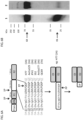
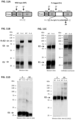
- the wild-type E1-E2 junction can be recapitulated, such that amino acids (e.g., from 2 to 15 amino acids (aa) (e.g., 2 aa, 3 aa, 4 aa, 5 aa, 6 aa, 7 aa, 8 aa, 9 aa, 10 aa, 11 aa, 12 aa, 13 aa, 14 aa, or 15 aa)) from the N-terminus of E2 are repeated at the N-terminus of the affinity tag, as depicted in FIG. 6A .
- amino acids e.g., from 2 to 15 amino acids (aa) (e.g., 2 aa, 3 aa, 4 aa, 5 aa, 6 aa, 7 aa, 8 aa, 9 aa, 10 aa, 11 aa, 12 aa, 13 aa, 14 aa, or 15 aa)
- amino acids e.g.,
- 2 amino acids from the N-terminus of an HCV E2 polypeptide are positioned at the N-terminus of the affinity tag.
- the dipeptide QT, ET, HT, GT, TT, RH, NT, AY, VI, or ST is positioned at the N-terminus of the affinity tag.
- duplication of the first two amino acids of E2 may result in an undesirable amino acid created at the N-terminus of E2 following processing by signal peptidase (SP) ( FIG. 6A ).
- SP signal peptidase
- Such amino acids at the amino terminus include asparagine (N), glutamine (Q) or cysteine (C).
- Such amino acids can target the protein for proteasome-mediated degradation via the N-end rule pathway (reviewed in: Tasaki T et al. 2012. Annu Rev Biochem 81 261-289 ).
- an alternative amino acid could be selected according to either the consensus sequence for the particular genotype or a particular genotype subclass would be selected.
- an affinity tagged HCV E1/E2 heterodimer of the present disclosure comprises an affinity tagged HCV E2 polypeptide that comprises, in order from N-terminus to C-terminus: i) from 2 to 15 amino acids (e.g., 2 amino acids (aa), 3 aa, 4 aa, 5 aa, 6 aa, 7 aa, 8 aa, 9 aa, 10 aa, 11 aa, 12 aa, 13 aa, 14 aa, or 15 aa) of the N-terminus of an E2 polypeptide; ii) an affinity tag polypeptide; iii) a proteolytically cleavable linker; and iv) an HCV E2 polypeptide.
- 2 amino acids e.g., 2 amino acids (aa), 3 aa, 4 aa, 5 aa, 6 aa, 7 aa, 8 aa, 9 aa, 10 aa, 11 aa
- an affinity tagged HCV E1/E2 heterodimer of the present disclosure comprises an affinity tagged HCV E2 polypeptide that comprises, in order from N-terminus to C-terminus: i) ET (Glu-Thr); ii) an affinity tag polypeptide; iii) a proteolytically cleavable linker; and iv) an HCV E2 polypeptide.
- an affinity tagged HCV E1/E2 heterodimer of the present disclosure comprises an affinity tagged HCV E2 polypeptide that comprises, in order from N-terminus to C-terminus: i) GT (Gly-Thr); ii) an affinity tag polypeptide; iii) a proteolytically cleavable linker; and iv) an HCV E2 polypeptide.
- an affinity tagged HCV E1/E2 heterodimer of the present disclosure comprises an affinity tagged HCV E2 polypeptide that comprises, in order from N-terminus to C-terminus: i) TT (Thr-Thr); ii) an affinity tag polypeptide; iii) a proteolytically cleavable linker; and iv) an HCV E2 polypeptide.
- an affinity tagged HCV E1/E2 heterodimer of the present disclosure comprises an affinity tagged HCV E2 polypeptide that comprises, in order from N-terminus to C-terminus: i) a QT, ET, HT, GT, TT, RH, NT, AY, VI, or ST dipeptide; ii) an affinity tag polypeptide; iii) the cleavable linker LEVLFQGP (SEQ ID NO:1); and iv) an HCV E2 polypeptide.
- an affinity tagged HCV E1/E2 heterodimer of the present disclosure comprises an affinity tagged HCV E2 polypeptide that comprises, in order from N-terminus to C-terminus: i) a QT, ET, HT, GT, TT, RH, NT, AY, VI, or ST dipeptide; ii) an Ig Fc polypeptide; iii) the cleavable linker LEVLFQGP (SEQ ID NO:1); and iv) an HCV E2 polypeptide.
- the present disclosure provides nucleic acids comprising nucleotide sequences encoding an affinity tagged HCV E1/E2 heterodimer of the present disclosure, and recombinant expression vectors comprising the nucleic acids.
- the present disclosure provides recombinant expression vectors comprising nucleotide sequences encoding an affinity tagged HCV E1/E2 heterodimer of the present disclosure.
- the present disclosure provides host cells genetically modified with a nucleic acid or a recombinant expression vector of the present disclosure.
- a nucleic acid of the present disclosure comprises a nucleotide sequence encoding: a) an HCV E1 polypeptide of an affinity tagged HCV E1/E2 heterodimer of the present disclosure; b) an HCV E1-affinity tag fusion polypeptide of an affinity tagged HCV E1/E2 heterodimer of the present disclosure; c) an HCV E2 polypeptide of an affinity tagged HCV E1/E2 heterodimer of the present disclosure; d) an HCV E2-affinity tag fusion polypeptide of an affinity tagged HCV E1/E2 heterodimer of the present disclosure; or e) an affinity tagged HCV E1/E2 heterodimer of the present disclosure (e.g., where both polypeptides of the heterodimer are encoded in a single nucleic acid).
- a nucleic acid of the present disclosure comprises a nucleotide sequence encoding one polypeptide chain of an affinity tagged HCV E1 heterodimer of the
- a nucleic acid of the present disclosure comprises a nucleotide sequence encoding: a) an HCV E1 polypeptide of an affinity tagged HCV E1/E2 heterodimer of the present disclosure; b) an HCV E1-Fc fusion polypeptide of an affinity tagged HCV E1/E2 heterodimer of the present disclosure; c) an HCV E2 polypeptide of an affinity tagged HCV E1/E2 heterodimer of the present disclosure; d) an HCV E2-Fc fusion polypeptide of an affinity tagged HCV E1/E2 heterodimer of the present disclosure; or e) an affinity tagged HCV E1/E2 heterodimer of the present disclosure (e.g., where both polypeptides of the heterodimer are encoded in a single nucleic acid).
- a nucleic acid of the present disclosure comprises a nucleotide sequence encoding one polypeptide chain of an affinity tagged HCV E1/E
- nucleic acid of the present disclosure comprises a nucleotide sequence encoding one polypeptide chain of an affinity tagged HCV E1/E2 heterodimer of the present disclosure
- the nucleotide sequence can be operably linked to a promoter, e.g., a promoter that is functional in a eukaryotic cell.
- a nucleic acid of the present disclosure comprises a nucleotide sequence encoding both polypeptide chains of an affinity tagged HCV E1/E2 heterodimer of the present disclosure; the nucleotide sequence can be operably linked to a promoter, e.g., a promoter that is functional in a eukaryotic cell.
- composition comprising: a) a first nucleic acid comprising a nucleotide sequence encoding an HCV E1 polypeptide; and b) a second nucleic acid comprising a nucleotide sequence encoding an HCV E2 polypeptide, where at least one of the HCV E1 and HCV E2 polypeptides is a fusion polypeptide comprising an affinity tag polypeptide.
- composition comprising: a) a first nucleic acid comprising a nucleotide sequence encoding an HCV E1 polypeptide; and b) a second nucleic acid comprising a nucleotide sequence encoding an HCV E2 polypeptide, where at least one of the HCV E1 and HCV E2 polypeptides is a fusion polypeptide comprising an Ig Fc polypeptide.
- nucleic acid of the present disclosure comprises a nucleotide sequence encoding both polypeptide chains of an HCV E1/E2 heterodimer of the present disclosure
- the nucleotide sequence can be operably linked to a promoter, e.g., a promoter that is functional in a eukaryotic cell.
- a nucleic acid of the present disclosure comprises a nucleotide sequence encoding both polypeptide chains of an HCV E1/E2 heterodimer of the present disclosure
- the nucleic acid can comprise a first nucleotide sequence encoding an HCV E1 polypeptide, and a second nucleotide sequence encoding an HCV E2 polypeptide, where one or both of the E1 and E2 polypeptides is a fusion polypeptide comprising an Fc polypeptide.
- the first nucleotide sequence and the second nucleotide sequence are separated by an internal ribosome entry site (IRES).
- the first nucleotide sequence and the second nucleotide sequence are separated by a ribosomal skipping sequence (e.g., a nucleotide sequence encoding a 2A peptide (e.g., VKQTLNFDLLKLAGDVESNPGP (SEQ ID NO:41); see, e.g., Radcliffe and Mitrophanous (2004) Gene Therapy 11:1673 ).
- a ribosomal skipping sequence e.g., a nucleotide sequence encoding a 2A peptide (e.g., VKQTLNFDLLKLAGDVESNPGP (SEQ ID NO:41); see, e.g., Radcliffe and Mitrophanous (2004) Gene Therapy 11:1673 ).
- a nucleic acid of the present disclosure is inserted into an expression vector, to generate a recombinant expression vector.
- the present disclosure provides a recombinant expression vector comprising a nucleic acid comprising a nucleotide sequence encoding: a) an HCV E1 polypeptide of an affinity tagged HCV E1/E2 heterodimer of the present disclosure; b) an HCV E1-Fc fusion polypeptide of an affinity tagged HCV E1/E2 heterodimer of the present disclosure; c) an HCV E2 polypeptide of an affinity tagged HCV E1/E2 heterodimer of the present disclosure; d) an HCV E2-Fc fusion polypeptide of an affinity tagged HCV E1/E2 heterodimer of the present disclosure; or e) an affinity tagged HCV E1/E2 heterodimer of the present disclosure (e.g., where both polypeptides of the heterodimer are encoded in a single nucleic acid
- the nucleotide sequence encoding a) an HCV E1 polypeptide of an affinity tagged HCV E1/E2 heterodimer of the present disclosure; b) an HCV E1-Fc fusion polypeptide of an affinity tagged HCV E1/E2 heterodimer of the present disclosure; c) an HCV E2 polypeptide of an affinity tagged HCV E1/E2 heterodimer of the present disclosure; d) an HCV E2-Fc fusion polypeptide of an affinity tagged HCV E1/E2 heterodimer of the present disclosure; or e) an affinity tagged HCV E1/E2 heterodimer of the present disclosure is operably linked to a transcriptional control element, e.g., a promoter, such as a promoter functional in a eukaryotic cell.
- a transcriptional control element e.g., a promoter, such as a promoter functional in a eukaryotic cell.
- a recombinant expression vector of the present disclosure comprises a nucleotide sequence encoding only one polypeptide chain of an affinity tagged HCV E1/E2 heterodimer of the present disclosure.
- the present disclosure provides a composition comprising: a) a first recombinant expression vector comprising a nucleotide sequence encoding an HCV E1 polypeptide; and b) a second recombinant expression vector comprising a nucleotide sequence encoding an HCV E2 polypeptide, where at least one of the HCV E1 and HCV E2 polypeptides is a fusion polypeptide comprising an Ig Fc polypeptide.
- the nucleotide sequence encoding the first polypeptide chain (HCV E1 polypeptide or HCV E1-Fc fusion polypeptide) or the second polypeptide chain (HCV E2 polypeptide or HCV E2-Fc fusion polypeptide) can be operably linked to a promoter, e.g., a promoter functional in a eukaryotic host cell.
- a recombinant expression vector of the present disclosure comprises a nucleotide sequence encoding both polypeptide chains of an affinity tagged HCV E1/E2 heterodimer of the present disclosure.
- the nucleotide sequence is operably linked to a promoter, e.g., a promoter that is functional in a eukaryotic cell.
- a recombinant expression vector of the present disclosure comprises a nucleotide sequence encoding both polypeptide chains of an affinity tagged HCV E1/E2 heterodimer of the present disclosure
- the recombinant expression vector can comprise a first nucleotide sequence encoding an HCV E1 polypeptide, and a second nucleotide sequence encoding an HCV E2 polypeptide, where one or both of the E1 and E2 polypeptides is a fusion polypeptide comprising an affinity tag (e.g., an Ig Fc polypeptide).
- the first nucleotide sequence and the second nucleotide sequence are separated by an internal ribosome entry site (IRES).
- the first nucleotide sequence and the second nucleotide sequence are separated by a ribosomal skipping sequence (e.g., a nucleotide sequence encoding a 2A peptide (e.g., VKQTLNFDLLKLAGDVESNPGP (SEQ ID NO:41); see, e.g., Radcliffe and Mitrophanous (2004) Gene Therapy 11:1673 ).
- a ribosomal skipping sequence e.g., a nucleotide sequence encoding a 2A peptide (e.g., VKQTLNFDLLKLAGDVESNPGP (SEQ ID NO:41); see, e.g., Radcliffe and Mitrophanous (2004) Gene Therapy 11:1673 ).
- the present disclosure provide a nucleic acid comprising a nucleotide sequence encoding an affinity tagged HCV E1/E2 heterodimer of the present disclosure, where the affinity tagged HCV E1/E2 heterodimer comprises: i) an E1 polypeptide and an E2-affinity tag fusion polypeptide; ii) an E2-affinity tag fusion polypeptide and an E1 polypeptide; or iii) an E1-affinity tag fusion polypeptide and an E2-affinity tag fusion polypeptide.
- a nucleotide sequence encoding a proteolytically cleavable linker is interposed between the nucleotide sequence encoding the HCV E1 or the HCV E2 polypeptide and the affinity tag.
- the proteolytically cleavable linker can include a protease recognition sequence recognized by a protease selected from the group consisting of alanine carboxypeptidase, Armillaria mellea astacin, bacterial leucyl aminopeptidase, cancer procoagulant, cathepsin B, clostripain, cytosol alanyl aminopeptidase, elastase, endoproteinase Arg-C, enterokinase, gastricsin, gelatinase, Gly-X carboxypeptidase, glycyl endopeptidase, human rhinovirus 3C protease, hypodermin C, IgA-specific serine endopeptidase, leucyl aminopeptidase, leucyl endopeptidase, lysC, lysosomal pro-X carboxypeptidase, lysyl aminopeptidase, methionyl aminopeptid
- the proteolytically cleavable linker can comprise a matrix metalloproteinase (MMP) cleavage site, e.g., a cleavage site for a MMP selected from collagenase-1, -2, and -3 (MMP-1, -8, and -13), gelatinase A and B (MMP-2 and -9), stromelysin 1, 2, and 3 (MMP-3, -10, and -11), matrilysin (MMP-7), and membrane metalloproteinases (MT1-MMP and MT2-MMP).
- MMP matrix metalloproteinase
- the cleavage sequence of MMP-9 is Pro-X-X-Hy (wherein, X represents an arbitrary residue; Hy, a hydrophobic residue), e.g., Pro-X-X-Hy-(Ser/Thr), e.g., Pro-Leu/Gln-Gly-Met-Thr-Ser (SEQ ID NO:17) or Pro-Leu/Gln-Gly-Met-Thr (SEQ ID NO:18).
- a protease cleavage site is a plasminogen activator cleavage site, e.g., a uPA or a tissue plasminogen activator (tPA) cleavage site.
- protease cleavage site is a prolactin cleavage site.
- cleavage sequences of uPA and tPA include sequences comprising Val-Gly-Arg.
- cleavage sequences of uPA and tPA include sequences comprising Val-Gly-Arg.
- a protease cleavage site that can be included in a proteolytically cleavable linker is a tobacco etch virus (TEV) protease cleavage site, e.g., ENLYFQS (SEQ ID NO:2), where the protease cleaves between the glutamine and the serine.
- TSV tobacco etch virus
- protease cleavage site that can be included in a proteolytically cleavable linker is an enterokinase cleavage site, e.g., DDDDK (SEQ ID NO:3), where cleavage occurs after the lysine residue.
- enterokinase cleavage site e.g., DDDDK (SEQ ID NO:3)
- a protease cleavage site that can be included in a proteolytically cleavable linker
- a thrombin cleavage site e.g., LVPR (SEQ ID NO:4) (e.g., where the proteolytically cleavable linker comprises the sequence LVPRGS (SEQ ID NO:5)).
- linkers comprising protease cleavage sites include linkers comprising one or more of the following amino acid sequences: LEVLFQGP (SEQ ID NO:1), cleaved by PreScission protease (a fusion protein comprising human rhinovirus 3C protease and glutathione-S-transferase; Walker et al. (1994) Biotechnol.
- a thrombin cleavage site e.g., CGLVPAGSGP (SEQ ID NO:19); SLLKSRMVPNFN (SEQ ID NO:20) or SLLIARRMPNFN (SEQ ID NO:21), cleaved by cathepsin B; SKLVQASASGVN (SEQ ID NO:22) or SSYLKASDAPDN (SEQ ID NO:23), cleaved by an Epstein-Barr virus protease; RPKPQQFFGLMN (SEQ ID NO:24) cleaved by MMP-3 (stromelysin); SLRPLALWRSFN (SEQ ID NO:25) cleaved by MMP-7 (matrilysin); SPQGIAGQRNFN (SEQ ID NO:26) cleaved by MMP-9; DVDERDVRGFASFL SEQ ID NO:27) cleaved by a thermolysin-like MMP; SLLKSRMVPNFN
- a nucleic acid encoding one or both polypeptides of an affinity tagged HCV E1/E2 heterodimer of the present disclosure can be present in an expression vector.
- Suitable expression vectors include, but are not limited to, baculovirus vectors, bacteriophage vectors, plasmids, phagemids, cosmids, fosmids, bacterial artificial chromosomes, viral vectors (e.g.
- viral vectors based on vaccinia virus, poliovirus, adenovirus, adeno-associated virus, SV40, herpes simplex virus, human immunodeficiency virus (HIV)-based lentivirus vectors, murine leukemia virus (MVL)-based gamma retrovirus vectors, and the like), P1-based artificial chromosomes, yeast plasmids, yeast artificial chromosomes, and any other vectors specific for specific hosts of interest (such as E. coli, mammalian cells, insect cells, or yeast cells).
- HIV human immunodeficiency virus
- MDL murine leukemia virus
- Suitable expression vectors include, but are not limited to, a replication-defective adenovirus vector; a replication-defective vaccinia virus vector; a lentivirus vector (e.g., a self-inactivating lentivirus vector); a retroviral vector (e.g., a self-inactivating retroviral vector); an adeno-associated virus vector; and the like.
- the vector is a modified vaccinia Ankara (MVA) vector, or an MVA-based vector (see, e.g., Verheust et al. (2012) Vaccine 30:2623 ).
- the present disclosure provides genetically modified host cells, where the genetically modified host cells are genetically modified with a nucleic acid(s) or recombinant expression vector(s) of the present disclosure.
- Suitable host cells include eukaryotic cells, such as yeast cells, insect cells, and mammalian cells.
- the host cell is a cell of a mammalian cell line.
- Suitable mammalian cell lines include human cell lines, non-human primate cell lines, rodent (e.g., mouse, rat) cell lines, and the like.
- Suitable mammalian cell lines include, but are not limited to, HeLa cells (e.g., American Type Culture Collection (ATCC) No. CCL-2), CHO cells (e.g., ATCC Nos. CRL9618, CCL61, CRL9096), 293 cells (e.g., ATCC No.
- Vero cells NIH 3T3 cells (e.g., ATCC No. CRL-1658), Huh-7 cells, BHK cells (e.g., ATCC No. CCL10), PC12 cells (ATCC No. CRL1721), COS cells, COS-7 cells (ATCC No. CRL1651), RAT1 cells, mouse L cells (ATCC No. CCLI.3), human embryonic kidney (HEK) cells (ATCC No. CRL1573), HLHepG2 cells, MRC4 fibroblast cells, and the like.
- Methods for introduction of nucleic acids into host cells include, for example, transformation, electroporation, conjugation, calcium phosphate methods and the like.
- the method for transfer can be selected so as to provide for stable expression of the introduced polypeptide-encoding nucleic acid.
- the polypeptide-encoding nucleic acid can be provided as an inheritable episomal element (e.g., a plasmid) or can be genomically integrated.
- a nucleic acid of the present disclosure comprises a nucleotide sequence encoding a polyprotein comprising, in order from N-terminus to C-terminus: i) an HCV E1 polypeptide; and ii) an HCV E2-affinity tag fusion polypeptide, where the HCV E2-affinity tag fusion polypeptide comprises, in order from N-terminus to C-terminus: i) an affinity tag polypeptide; and ii) an HCV E2 polypeptide.
- an affinity tagged HCV E1/E2 heterodimer Upon expression in a suitable host cell, an affinity tagged HCV E1/E2 heterodimer is produced, where the affinity tagged HCV E1/E2 heterodimer comprises an HCV E1 polypeptide and an HCV E2-affinity tag fusion polypeptide.
- the HCV E2-affinity tag fusion polypeptide so produced comprises, in order from N-terminus to C-terminus: i) an affinity tag polypeptide; and ii) an HCV E2 polypeptide.
- a nucleic acid of the present disclosure comprises a nucleotide sequence encoding a polyprotein comprising, in order from N-terminus to C-terminus: i) an HCV E1 polypeptide; and ii) an HCV E2-affinity tag fusion polypeptide, where the HCV E2-affinity tag fusion polypeptide comprises, in order from N-terminus to C-terminus: i) an affinity tag polypeptide; ii) a proteolytically cleavable linker; and iii) an HCV E2 polypeptide.
- an affinity tagged HCV E1/E2 heterodimer Upon expression in a suitable host cell, an affinity tagged HCV E1/E2 heterodimer is produced, where the affinity tagged HCV E1/E2 heterodimer comprises an HCV E1 polypeptide and an HCV E2-affinity tag fusion polypeptide.
- the HCV E2-affinity tag fusion polypeptide so produced comprises, in order from N-terminus to C-terminus: i) an affinity tag polypeptide; ii) a proteolytically cleavable linker; and iii) an HCV E2 polypeptide.
- a nucleic acid of the present disclosure comprises a nucleotide sequence encoding a polyprotein comprising, in order from N-terminus to C-terminus: i) an HCV E1 polypeptide; ii) from 2 amino acids to 15 amino acids (aa) (e.g., 2 aa, 3 aa, 4 aa, 5 aa, 6 aa, 7 aa, 8 aa, 9 aa, 10 aa, 11 aa, 12 aa, 13 aa, 14 aa, or 15 aa) from the N-terminus of an HCV E2 polypeptide; iii) an affinity tag; iv) a proteolytically cleavable linker; and v) an HCV E2 polypeptide.
- the nucleotide sequence encoding the polyprotein is operably linked to a transcription control element, e.g., a promoter that is functional in a eukaryotic cell. Suitable promoters include, e.g., a CMV promoter, an SV40 promoter, and the like, as described above.
- the nucleic acid is present in an expression vector (e.g., a lentivirus vector; an adenoassociated virus vector; an adenovirus vector; a retroviral vector; a non-viral vector; etc.).
- the affinity tag is an Ig Fc polypeptide.
- the affinity tag is Protein A, Protein G, a polypeptide comprising a poly(histidine) tract, or a GST polypeptide. Suitable proteolytically cleavable linkers are described above.
- an affinity tagged HCV E1/E2 heterodimer is produced, where the affinity tagged HCV E1/E2 heterodimer comprises an HCV E1 polypeptide and an HCV E2-affinity tag fusion polypeptide.
- the HCV E2-affinity tag fusion polypeptide so produced comprises, in order from N-terminus to C-terminus: i) an affinity tag polypeptide; and an HCV E2 polypeptide.
- a nucleic acid of the present disclosure comprises, in order from 5' to 3' and in operable linkage: a) a promoter that is functional in a eukaryotic cell; b) a nucleotide sequence encoding a polyprotein comprising, in order from N-terminus to C-terminus: i) an HCV E1 polypeptide; ii) from 2 amino acids to 15 amino acids (aa) (e.g., 2 aa, 3 aa, 4 aa, 5 aa, 6 aa, 7 aa, 8 aa, 9 aa, 10 aa, 11 aa, 12 aa, 13 aa, 14 aa, or 15 aa) from the N-terminus of an HCV E2 polypeptide; iii) an affinity tag; iv) a proteolytically cleavable linker; and v) an HCV E2 polypeptide.
- a promoter that is functional in a
- a nucleic acid of the present disclosure comprises, in order from 5' to 3' and in operable linkage: a) a promoter that is functional in a eukaryotic cell; b) a nucleotide sequence encoding a polyprotein comprising, in order from N-terminus to C-terminus: i) a signal peptide; ii) an HCV E1 polypeptide; iii) from 2 amino acids to 15 amino acids (aa) (e.g., 2 aa, 3 aa, 4 aa, 5 aa, 6 aa, 7 aa, 8 aa, 9 aa, 10 aa, 11 aa, 12 aa, 13 aa, 14 aa, or 15 aa) from the N-terminus of an HCV E2 polypeptide; iv) an affinity tag; v) a proteo
- Suitable promoters include, e.g., a CMV promoter, an SV40 promoter, and the like.
- the nucleic acid is present in an expression vector (e.g., a lentivirus vector; an adenoassociated virus vector; an adenovirus vector; a retroviral vector; a non-viral vector; etc.).
- the affinity tag is an Ig Fc polypeptide.
- the affinity tag is Protein A, Protein G, a polypeptide comprising a poly(histidine) tract, or a GST polypeptide.
- the amino acids from the N-terminus of an HCV E2 polypeptide are a QT, ET, HT, GT, TT, RH, NT, AY, VI, or ST dipeptide.
- Suitable signal peptides include, e.g., a tissue plasminogen activator (tPA) signal peptide; a prolactin signal peptide; an Ig kappa light chain precursor signal peptide; a serum albumin preproprotein signal peptide; an Immunoglobulin heavy chain signal peptide; an Immunoglobulin light chain signal peptide; an azuorcidin preproprotein signal peptide; a cystatin-S precursor signal peptide; a trypsinogen-2 precursor signal peptide; a chymotrypsinogen precursor signal peptide; and the like.
- tPA tissue plasminogen activator
- a suitable signal peptide includes a signalase cleavage site, such that a polyprotein comprising the signal peptide is cleaved, during intracellular processing, at the signalase cleavage site.
- a suitable signal peptide comprises the amino acid sequence MDAMKRGLCCVLLLCGAVFVSPSQEIHARFRRGARS (SEQ ID NO:42).
- a suitable signal peptide comprises the amino acid sequence MDAMKRGLCCVLLLCGAVFVSPS (SEQ ID NO:6).
- a nucleic acid of the present disclosure comprises, in order from 5' to 3' and in operable linkage: a) a CMV promoter; b) a nucleotide sequence encoding a polyprotein comprising, in order from N-terminus to C-terminus: i) an HCV E1 polypeptide; ii) from 2 amino acids to 15 amino acids (aa) (e.g., 2 aa, 3 aa, 4 aa, 5 aa, 6 aa, 7 aa, 8 aa, 9 aa, 10 aa, 11 aa, 12 aa, 13 aa, 14 aa, or 15 aa) from the N-terminus of an HCV E2 polypeptide; iii) an affinity tag; iv) a proteolytically cleavable linker; and v) an HCV E2 polypeptide.
- aa CMV promoter e.g., 2 aa, 3
- a nucleic acid of the present disclosure comprises, in order from 5' to 3' and in operable linkage: a) a CMV promoter; b) a nucleotide sequence encoding a polyprotein comprising, in order from N-terminus to C-terminus: i) a signal peptide; ii) an HCV E1 polypeptide; iii) from 2 amino acids to 15 amino acids (aa) (e.g., 2 aa, 3 aa, 4 aa, 5 aa, 6 aa, 7 aa, 8 aa, 9 aa, 10 aa, 11 aa, 12 aa, 13 aa, 14 aa, or 15 aa) from the N-terminus of an HCV E2 polypeptide; iv) an affinity tag; v) a proteolytically cleavable linker;
- the nucleic acid is present in an expression vector (e.g., a lentivirus vector; an adenoassociated virus vector; an adenovirus vector; a retroviral vector; a non-viral vector; etc.).
- the affinity tag is an Ig Fc polypeptide.
- the affinity tag is Protein A, Protein G, a polypeptide comprising a poly(histidine) tract, or a GST polypeptide.
- the amino acids from the N-terminus of an HCV E2 polypeptide are a QT, ET, HT, GT, TT, RH, NT, AY, VI, or ST dipeptide.
- a nucleic acid of the present disclosure comprises, in order from 5' to 3' and in operable linkage: a) a CMV promoter; b) a nucleotide sequence encoding a polyprotein comprising, in order from N-terminus to C-terminus: i) an HCV E1 polypeptide; ii) from 2 amino acids to 15 amino acids (aa) (e.g., 2 aa, 3 aa, 4 aa, 5 aa, 6 aa, 7 aa, 8 aa, 9 aa, 10 aa, 11 aa, 12 aa, 13 aa, 14 aa, or 15 aa) from the N-terminus of an HCV E2 polypeptide; iii) an Ig Fc polypeptide; iv) a proteolytically cleavable linker; and v) an HCV E2 polypeptide.
- aa CMV promoter e.g., 2
- a nucleic acid of the present disclosure comprises, in order from 5' to 3' and in operable linkage: a) a CMV promoter; b) a nucleotide sequence encoding a polyprotein comprising, in order from N-terminus to C-terminus: i) a signal peptide; ii) an HCV E1 polypeptide; iii) from 2 amino acids to 15 amino acids (aa) (e.g., 2 aa, 3 aa, 4 aa, 5 aa, 6 aa, 7 aa, 8 aa, 9 aa, 10 aa, 11 aa, 12 aa, 13 aa, 14 aa, or 15 aa) from the N-terminus of an HCV E2 polypeptide; iv) an Ig Fc polypeptide; v) a proteolytically clea
- the nucleic acid is present in an expression vector (e.g., a lentivirus vector; an adenoassociated virus vector; an adenovirus vector; a retroviral vector; a non-viral vector; etc.).
- an expression vector e.g., a lentivirus vector; an adenoassociated virus vector; an adenovirus vector; a retroviral vector; a non-viral vector; etc.
- the amino acids from the N-terminus of an HCV E2 polypeptide are a QT, ET, HT, GT, TT, RH, NT, AY, VI, or ST dipeptide.
- a nucleic acid of the present disclosure comprises, in order from 5' to 3' and in operable linkage: a) a CMV promoter; b) a nucleotide sequence encoding a polyprotein comprising, in order from N-terminus to C-terminus: i) an HCV E1 polypeptide; ii) an ET (Glu-Thr) dipeptide from the N-terminus of an HCV E2 polypeptide; iii) an Ig Fc polypeptide; iv) a proteolytically cleavable linker; and v) an HCV E2 polypeptide.
- the polyprotein comprises a signal peptide.
- a nucleic acid of the present disclosure comprises, in order from 5' to 3' and in operable linkage: a) a CMV promoter; b) a nucleotide sequence encoding a polyprotein comprising, in order from N-terminus to C-terminus: i) a signal peptide; ii) an HCV E1 polypeptide; iii) an ET (Glu-Thr) dipeptide from the N-terminus of an HCV E2 polypeptide; iv) an Ig Fc polypeptide; v) a proteolytically cleavable linker; and vi) an HCV E2 polypeptide.
- the nucleic acid is present in an expression vector (e.g., a lentivirus vector; an adenoassociated virus vector; an adenovirus vector; a retroviral vector; a non-viral vector; etc.).
- an expression vector e.g., a lentivirus vector; an adenoassociated virus vector; an adenovirus vector; a retroviral vector; a non-viral vector; etc.
- a nucleic acid of the present disclosure comprises, in order from 5' to 3' and in operable linkage: a) a CMV promoter; b) a nucleotide sequence encoding a polyprotein comprising, in order from N-terminus to C-terminus: i) an HCV E1 polypeptide; ii) a GT (Gly-Thr) dipeptide from the N-terminus of an HCV E2 polypeptide; iii) an Ig Fc polypeptide; iv) a proteolytically cleavable linker; and v) an HCV E2 polypeptide.
- the polyprotein comprises a signal peptide.
- a nucleic acid of the present disclosure comprises, in order from 5' to 3' and in operable linkage: a) a CMV promoter; b) a nucleotide sequence encoding a polyprotein comprising, in order from N-terminus to C-terminus: i) a signal peptide; ii) an HCV E1 polypeptide; iii) a GT (Gly-Thr) dipeptide from the N-terminus of an HCV E2 polypeptide; iv) an Ig Fc polypeptide; v) a proteolytically cleavable linker; and vi) an HCV E2 polypeptide.
- the nucleic acid is present in an expression vector (e.g., a lentivirus vector; an adenoassociated virus vector; an adenovirus vector; a retroviral vector; a non-viral vector; etc.).
- an expression vector e.g., a lentivirus vector; an adenoassociated virus vector; an adenovirus vector; a retroviral vector; a non-viral vector; etc.
- a nucleic acid of the present disclosure comprises, in order from 5' to 3' and in operable linkage: a) a CMV promoter; b) a nucleotide sequence encoding a polyprotein comprising, in order from N-terminus to C-terminus: i) an HCV E1 polypeptide; ii) a TT (Thr-Thr) dipeptide from the N-terminus of an HCV E2 polypeptide; iii) an Ig Fc polypeptide; iv) a proteolytically cleavable linker; and v) an HCV E2 polypeptide.
- the polyprotein comprises a signal peptide.
- a nucleic acid of the present disclosure comprises, in order from 5' to 3' and in operable linkage: a) a CMV promoter; b) a nucleotide sequence encoding a polyprotein comprising, in order from N-terminus to C-terminus: i) a signal peptide; ii) an HCV E1 polypeptide; iii) a TT (Thr-Thr) dipeptide from the N-terminus of an HCV E2 polypeptide; iv) an Ig Fc polypeptide; v) a proteolytically cleavable linker; and vi) an HCV E2 polypeptide.
- the nucleic acid is present in an expression vector (e.g., a lentivirus vector; an adenoassociated virus vector; an adenovirus vector; a retroviral vector; a non-viral vector; etc.).
- an expression vector e.g., a lentivirus vector; an adenoassociated virus vector; an adenovirus vector; a retroviral vector; a non-viral vector; etc.
- a nucleic acid of the present disclosure comprises, in order from 5' to 3' and in operable linkage: a) a CMV promoter; b) a nucleotide sequence encoding a polyprotein comprising, in order from N-terminus to C-terminus: i) an HCV E1 polypeptide; ii) from 2 amino acids to 15 amino acids (aa) (e.g., 2 aa, 3 aa, 4 aa, 5 aa, 6 aa, 7 aa, 8 aa, 9 aa, 10 aa, 11 aa, 12 aa, 13 aa, 14 aa, or 15 aa) from the N-terminus of an HCV E2 polypeptide; iii) an Ig Fc polypeptide; iv) a proteolytically cleavable linker comprising the amino acid sequence LEVLFQGP (SEQ ID NO:1); and v) an HCV E2
- a nucleic acid of the present disclosure comprises, in order from 5' to 3' and in operable linkage: a) a CMV promoter; b) a nucleotide sequence encoding a polyprotein comprising, in order from N-terminus to C-terminus: i) a signal peptide; ii) an HCV E1 polypeptide; iii) from 2 amino acids to 15 amino acids (aa) (e.g., 2 aa, 3 aa, 4 aa, 5 aa, 6 aa, 7 aa, 8 aa, 9 aa, 10 aa, 11 aa, 12 aa, 13 aa, 14 aa, or 15 aa) from the N-terminus of an HCV E2 polypeptide; iv) an Ig Fc polypeptide; v) a proteolytically clea
- the nucleic acid is present in an expression vector (e.g., a lentivirus vector; an adenoassociated virus vector; an adenovirus vector; a retroviral vector; a non-viral vector; etc.).
- an expression vector e.g., a lentivirus vector; an adenoassociated virus vector; an adenovirus vector; a retroviral vector; a non-viral vector; etc.
- the amino acids from the N-terminus of an HCV E2 polypeptide are a QT, ET, HT, GT, TT, RH, NT, AY, VI, or ST dipeptide.
- a nucleic acid of the present disclosure comprises, in order from 5' to 3' and in operable linkage: a) a promoter; b) a nucleotide sequence encoding a polyprotein comprising, in order from N-terminus to C-terminus: i) a signal peptide having the amino acid sequence MDAMKRGLCCVLLLCGAVFVSPS (SEQ ID NO:6); ii) an HCV E1 polypeptide; iii) the dipeptide QT or ET; iv) an Ig Fc polypeptide; v) a proteolytically cleavable linker having the amino acid sequence LEVLFQGP (SEQ ID NO:1); and vi) an HCV E2 polypeptide.
- a promoter a nucleotide sequence encoding a polyprotein comprising, in order from N-terminus to C-terminus: i) a signal peptide having the amino acid sequence MDAMKRGLCCVLLLCGAVFVSPS (S
- a nucleic acid of the present disclosure comprises, in order from 5' to 3' and in operable linkage: a) a CMV promoter; b) a nucleotide sequence encoding a polyprotein comprising, in order from N-terminus to C-terminus: i) a signal peptide having the amino acid sequence MDAMKRGLCCVLLLCGAVFVSPS (SEQ ID NO:6); ii) an HCV E1 polypeptide; iii) the dipeptide QT or ET; iv) an Ig Fc polypeptide; v) a proteolytically cleavable linker having the amino acid sequence LEVLFQGP (SEQ ID NO:1); and vi) an HCV E2 polypeptide.
- a nucleic acid of the present disclosure comprises, in order from 5' to 3' and in operable linkage and in operable linkage, a) a promoter; and b) a nucleotide sequence encoding an amino acid sequence having at least 80%, at least 85%, at least 90%, at least 95%, at least 98%, at least 99%, or 100%, amino acid sequence identity to an amino acid sequence depicted in FIG. 7 or FIG. 8 .
- a nucleic acid of the present disclosure comprises a nucleotide sequence encoding a polyprotein comprising, in order from N-terminus to C-terminus: i) an HCV E1 polypeptide; and ii) an HCV E2-affinity tag fusion polypeptide, where the HCV E2-affinity tag fusion polypeptide comprises, in order from N-terminus to C-terminus: i) an HCV E2 polypeptide; and ii) an affinity tag polypeptide.
- an affinity tagged HCV E1/E2 heterodimer Upon expression in a suitable host cell, an affinity tagged HCV E1/E2 heterodimer is produced, where the affinity tagged HCV E1/E2 heterodimer comprises an HCV E1 polypeptide and an HCV E2-affinity tag fusion polypeptide.
- the HCV E2-affinity tag fusion polypeptide so produced comprises, in order from N-terminus to C-terminus: i) an HCV E2 polypeptide; and ii) an affinity tag polypeptide.
- a nucleic acid of the present disclosure comprises a nucleotide sequence encoding a polyprotein comprising, in order from N-terminus to C-terminus: i) an HCV E1 polypeptide; ii) an HCV E2 polypeptide; iii) a proteolytically cleavable linker; and iv) an affinity tag polypeptide.
- a nucleic acid of the present disclosure comprises, in order from 5' to 3' and in operable linkage: a) a promoter that is functional in a eukaryotic cell; b) a nucleotide sequence encoding a polyprotein comprising, in order from N-terminus to C-terminus: i) an HCV E1 polypeptide; ii) an HCV E2 polypeptide; iii) a proteolytically cleavable linker; and iv) an affinity tag polypeptide.
- a nucleic acid of the present disclosure comprises, in order from 5' to 3' and in operable linkage: a) a promoter that is functional in a eukaryotic cell; b) a nucleotide sequence encoding a polyprotein comprising, in order from N-terminus to C-terminus: i) a signal peptide; ii) an HCV E1 polypeptide; iii) an HCV E2 polypeptide; iv) a proteolytically cleavable linker; and v) an affinity tag polypeptide.
- Suitable signal peptides include, e.g., a tissue plasminogen activator (tPA) signal peptide; an Ig kappa light chain precursor signal peptide; a serum albumin preproprotein signal peptide; an Immunoglobulin heavy chain signal peptide; an Immunoglobulin light chain signal peptide; an azuorcidin preproprotein signal peptide; a cystatin-S precursor signal peptide; a trypsinogen-2 precursor signal peptide; a chymotrypsinogen precursor signal peptide; and the like.
- tPA tissue plasminogen activator
- a suitable signal peptide includes a signalase cleavage site, such that a polyprotein comprising the signal peptide is cleaved, during intracellular processing, at the signalase cleavage site.
- a suitable signal peptide comprises the amino acid sequence MDAMKRGLCCVLLLCGAVFVSPSQEIHARFRRGARS (SEQ ID NO:42).
- a suitable signal peptide comprises the amino acid sequence MDAMKRGLCCVLLLCGAVFVSPS (SEQ ID NO:6).
- a nucleic acid of the present disclosure comprises, in order from 5' to 3' and in operable linkage: a) a CMV promoter; b) a nucleotide sequence encoding a polyprotein comprising, in order from N-terminus to C-terminus: : i) an HCV E1 polypeptide; ii) an HCV E2 polypeptide; iii) a proteolytically cleavable linker; and iv) an affinity tag polypeptide.
- a nucleic acid of the present disclosure comprises, in order from 5' to 3' and in operable linkage: a) a CMV promoter; b) a nucleotide sequence encoding a polyprotein comprising, in order from N-terminus to C-terminus: i) a signal peptide; ii) an HCV E1 polypeptide; iii) an HCV E2 polypeptide; iv) a proteolytically cleavable linker; and v) an affinity tag polypeptide.
- a nucleic acid of the present disclosure comprises, in order from 5' to 3' and in operable linkage: a) a promoter that is functional in a eukaryotic cell; b) a nucleotide sequence encoding a polyprotein comprising, in order from N-terminus to C-terminus: i) an HCV E1 polypeptide; ii) an HCV E2 polypeptide; iii) a proteolytically cleavable linker; and iv) an Ig Fc polypeptide.
- a nucleic acid of the present disclosure comprises, in order from 5' to 3' and in operable linkage: a) a promoter that is functional in a eukaryotic cell; b) a nucleotide sequence encoding a polyprotein comprising, in order from N-terminus to C-terminus: i) a signal peptide; ii) an HCV E1 polypeptide; iii) an HCV E2 polypeptide; iv) a proteolytically cleavable linker; and v) an Ig Fc polypeptide.
- a nucleic acid of the present disclosure comprises a nucleotide sequence encoding a polyprotein comprising, in order from N-terminus to C-terminus: i) an HCV E1-affinity tag fusion polypeptide; and iii) an HCV E2 polypeptide, where the HCV E1-affinity tag fusion polypeptide comprises, in order from N-terminus to C-terminus: i) an affinity tag polypeptide; and ii) an HCV E1 polypeptide.
- an affinity tagged HCV E1/E2 heterodimer Upon expression in a suitable host cell, an affinity tagged HCV E1/E2 heterodimer is produced, where the affinity tagged HCV E1/E2 heterodimer comprises an affinity tagged HCV E1 polypeptide and an HCV E2 polypeptide.
- the HCV E1-affinity tag fusion polypeptide so produced comprises, in order from N-terminus to C-terminus: i) an affinity tag polypeptide; and ii) an HCV E1 polypeptide.
- a nucleic acid of the present disclosure comprises a nucleotide sequence encoding a polyprotein comprising, in order from N-terminus to C-terminus: i) an affinity tag polypeptide; ii) a proteolytically cleavable linker; iii) an HCV E1 polypeptide; and iv) an HCV E2 polypeptide.
- a nucleic acid of the present disclosure comprises, in order from 5' to 3' and in operable linkage: a) a promoter that is functional in a eukaryotic cell; b) a nucleotide sequence encoding a polyprotein comprising, in order from N-terminus to C-terminus: i) an affinity tag polypeptide; ii) a proteolytically cleavable linker; iii) an HCV E1 polypeptide; and iv) an HCV E2 polypeptide.
- a nucleic acid of the present disclosure comprises, in order from 5' to 3' and in operable linkage: a) a promoter that is functional in a eukaryotic cell; b) a nucleotide sequence encoding a polyprotein comprising, in order from N-terminus to C-terminus: i) a signal peptide; ii) an affinity tag polypeptide; iii) a proteolytically cleavable linker; iv) an HCV E1 polypeptide; and v) an HCV E2 polypeptide.
- Suitable signal peptides include, e.g., a tissue plasminogen activator (tPA) signal peptide; an Ig kappa light chain precursor signal peptide; a serum albumin preproprotein signal peptide; an Immunoglobulin heavy chain signal peptide; an Immunoglobulin light chain signal peptide; an azuorcidin preproprotein signal peptide; a cystatin-S precursor signal peptide; a trypsinogen-2 precursor signal peptide; a chymotrypsinogen precursor signal peptide; and the like.
- tPA tissue plasminogen activator
- a suitable signal peptide includes a signalase cleavage site, such that a polyprotein comprising the signal peptide is cleaved, during intracellular processing, at the signalase cleavage site.
- a suitable signal peptide comprises the amino acid sequence MDAMKRGLCCVLLLCGAVFVSPSQEIHARFRRGARS (SEQ ID NO:42).
- a suitable signal peptide comprises the amino acid sequence MDAMKRGLCCVLLLCGAVFVSPS (SEQ ID NO:6).
- a nucleic acid of the present disclosure comprises, in order from 5' to 3' and in operable linkage: a) a CMV promoter; b) a nucleotide sequence encoding a polyprotein comprising, in order from N-terminus to C-terminus: i) an affinity tag polypeptide; ii) a proteolytically cleavable linker; iii) an HCV E1 polypeptide; and iv) an HCV E2 polypeptide.
- a nucleic acid of the present disclosure comprises, in order from 5' to 3' and in operable linkage: a) a CMV promoter; b) a nucleotide sequence encoding a polyprotein comprising, in order from N-terminus to C-terminus: i) a signal peptide; ii) an affinity tag polypeptide; iii) a proteolytically cleavable linker; iv) an HCV E1 polypeptide; and v) an HCV E2 polypeptide.
- a nucleic acid of the present disclosure comprises, in order from 5' to 3' and in operable linkage: a) a promoter that is functional in a eukaryotic cell; b) a nucleotide sequence encoding a polyprotein comprising, in order from N-terminus to C-terminus: i) an Ig Fc polypeptide; ii) a proteolytically cleavable linker; iii) an HCV E1 polypeptide; and iv) an HCV E2 polypeptide.
- a nucleic acid of the present disclosure comprises, in order from 5' to 3' and in operable linkage: a) a promoter that is functional in a eukaryotic cell; b) a nucleotide sequence encoding a polyprotein comprising, in order from N-terminus to C-terminus: i) a signal peptide; ii) an Ig Fc polypeptide; iii) a proteolytically cleavable linker; iv) an HCV E1 polypeptide; and v) an HCV E2 polypeptide.
- a nucleic acid of the present disclosure comprises a nucleotide sequence encoding a polyprotein comprising, in order from N-terminus to C-terminus: i) an HCV E1-affinity tag fusion polypeptide; and iii) an HCV E2 polypeptide, where the HCV E1-affinity tag fusion polypeptide comprises, in order from N-terminus to C-terminus: i) an HCV E1 polypeptide; and ii) an affinity tag polypeptide.
- an affinity tagged HCV E1/E2 heterodimer Upon expression in a suitable host cell, an affinity tagged HCV E1/E2 heterodimer is produced, where the affinity tagged HCV E1/E2 heterodimer comprises an affinity tagged HCV E1 polypeptide and an HCV E2 polypeptide.
- the HCV E1-affinity tag fusion polypeptide so produced comprises, in order from N-terminus to C-terminus: i) an HCV E1 polypeptide; and ii) an affinity tag polypeptide.
- a nucleic acid of the present disclosure comprises a nucleotide sequence encoding a polyprotein comprising, in order from N-terminus to C-terminus: i) an HCV E1 polypeptide; ii) a proteolytically cleavable linker; iii) an affinity tag polypeptide; and iv) an HCV E2 polypeptide.
- a signal peptide comprising a signalase cleavage site is interposed between the affinity tag polypeptide and the HCV E2 polypeptide.
- a nucleic acid of the present disclosure comprises, in order from 5' to 3' and in operable linkage: a) a promoter that is functional in a eukaryotic cell; b) a nucleotide sequence encoding a polyprotein comprising, in order from N-terminus to C-terminus: i) an HCV E1 polypeptide; ii) a proteolytically cleavable linker; iii) an affinity tag polypeptide; and iv) an HCV E2 polypeptide.
- a nucleic acid of the present disclosure comprises, in order from 5' to 3' and in operable linkage: a) a promoter that is functional in a eukaryotic cell; b) a nucleotide sequence encoding a polyprotein comprising, in order from N-terminus to C-terminus: i) a signal peptide; ii) an HCV E1 polypeptide; iii) a proteolytically cleavable linker; iii) an affinity tag polypeptide; and v) an HCV E2 polypeptide.
- a nucleic acid of the present disclosure comprises, in order from 5' to 3' and in operable linkage: a) a promoter that is functional in a eukaryotic cell; b) a nucleotide sequence encoding a polyprotein comprising, in order from N-terminus to C-terminus: i) an HCV E1 polypeptide; ii) a proteolytically cleavable linker; iii) an affinity tag polypeptide; iv) a signal peptide comprising a signalase cleavage site; and v) an HCV E2 polypeptide.
- a nucleic acid of the present disclosure comprises, in order from 5' to 3' and in operable linkage: a) a promoter that is functional in a eukaryotic cell; b) a nucleotide sequence encoding a polyprotein comprising, in order from N-terminus to C-terminus: i) a signal peptide; ii) an HCV E1 polypeptide; iii) a proteolytically cleavable linker; iv) an affinity tag polypeptide; v) a signal peptide comprising a signalase cleavage site; and vi) an HCV E2 polypeptide.
- Suitable signal peptides include, e.g., a tissue plasminogen activator (tPA) signal peptide; an Ig kappa light chain precursor signal peptide; a serum albumin preproprotein signal peptide; an Immunoglobulin heavy chain signal peptide; an Immunoglobulin light chain signal peptide; an azuorcidin preproprotein signal peptide; a cystatin-S precursor signal peptide; a trypsinogen-2 precursor signal peptide; a chymotrypsinogen precursor signal peptide; and the like.
- tPA tissue plasminogen activator
- a suitable signal peptide includes a signalase cleavage site, such that a polyprotein comprising the signal peptide is cleaved, during intracellular processing, at the signalase cleavage site.
- a suitable signal peptide comprises the amino acid sequence MDAMKRGLCCVLLLCGAVFVSPSQEIHARFRRGARS (SEQ ID NO:42).
- a suitable signal peptide comprises the amino acid sequence MDAMKRGLCCVLLLCGAVFVSPS (SEQ ID NO:6).
- a nucleic acid of the present disclosure comprises, in order from 5' to 3' and in operable linkage: a) a CMV promoter; b) a nucleotide sequence encoding a polyprotein comprising, in order from N-terminus to C-terminus: i) an HCV E1 polypeptide; ii) a proteolytically cleavable linker; iii) an affinity tag polypeptide; and iv) an HCV E2 polypeptide.
- a nucleic acid of the present disclosure comprises, in order from 5' to 3' and in operable linkage: a) a CMV promoter; b) a nucleotide sequence encoding a polyprotein comprising, in order from N-terminus to C-terminus: i) a signal peptide; ii) an HCV E1 polypeptide; iii) a proteolytically cleavable linker; iv) an affinity tag polypeptide; and v) an HCV E2 polypeptide.
- a nucleic acid of the present disclosure comprises, in order from 5' to 3' and in operable linkage: a) a promoter that is functional in a eukaryotic cell; b) a nucleotide sequence encoding a polyprotein comprising, in order from N-terminus to C-terminus: i) an HCV E1 polypeptide; ii) a proteolytically cleavable linker; iii) an Fc polypeptide; and iv) an HCV E2 polypeptide.
- a nucleic acid of the present disclosure comprises, in order from 5' to 3' and in operable linkage: a) a promoter that is functional in a eukaryotic cell; b) a nucleotide sequence encoding a polyprotein comprising, in order from N-terminus to C-terminus: i) a signal peptide; ii) an HCV E1 polypeptide; iii) a proteolytically cleavable linker; iv) an Fc polypeptide; and v) an HCV E2 polypeptide.
- the nucleotide sequence encodes two signal peptides
- the two signal peptides are two different signal peptides.
- a nucleic acid of the present disclosure comprises a nucleotide sequence encoding a polyprotein comprising, in order from N-terminus to C-terminus: i) an HCV E1-affinity tag fusion polypeptide; and iii) an HCV E2-affinity tag fusion polypeptide, where the HCV E1-affinity tag fusion polypeptide comprises, in order from N-terminus to C-terminus: i) an affinity tag polypeptide; and ii) an HCV E1 polypeptide, and where the HCV E2-affinity tag fusion polypeptide comprises, in order from N-terminus to C-terminus: i) an affinity tag polypeptide; and ii) an HCV E2 polypeptide.
- an affinity tagged HCV E1/E2 heterodimer is produced, where the affinity tagged HCV E1/E2 heterodimer comprises an affinity tagged HCV E2 polypeptide and an affinity tagged HCV E2 polypeptide.
- the HCV E1-affinity tag fusion polypeptide so produced comprises, in order from N-terminus to C-terminus: i) an affinity tag polypeptide; and ii) an HCV E1 polypeptide.
- the HCV E2-affinity tag fusion polypeptide so produced comprises, in order from N-terminus to C-terminus: i) an affinity tag polypeptide; and ii) an HCV E2 polypeptide.
- a nucleic acid of the present disclosure comprises a nucleotide sequence encoding a polyprotein comprising, in order from N-terminus to C-terminus: i) an affinity tag polypeptide; ii) a proteolytically cleavable linker; iii) an HCV E1 polypeptide; iv) from 2 amino acids to 15 amino acids (aa) (e.g., 2 aa, 3 aa, 4 aa, 5 aa, 6 aa, 7 aa, 8 aa, 9 aa, 10 aa, 11 aa, 12 aa, 13 aa, 14 aa, or 15 aa) from the N-terminus of an HCV E2 polypeptide; iv) an affinity tag; v) a proteolytically cleavable linker; and vi) an HCV E2 polypeptide.
- the nucleotide sequence encoding the polyprotein is operably linked to a transcription control element, e.g., a promoter that is functional in a eukaryotic cell. Suitable promoters include, e.g., a CMV promoter, an SV40 promoter, and the like, as described above.
- the nucleic acid is present in an expression vector (e.g., a lentivirus vector; an adenoassociated virus vector; an adenovirus vector; a retroviral vector; a non-viral vector; etc.).
- the affinity tag is an Ig Fc polypeptide.
- the affinity tag is Protein A, Protein G, a polypeptide comprising a poly(histidine) tract, or a GST polypeptide. Suitable proteolytically cleavable linkers are described above.
- an affinity tagged HCV E1/E2 heterodimer is produced, where the affinity tagged HCV E1/E2 heterodimer comprises an HCV E1-affinity tag fusion polypeptide and an HCV E2-affinity tag fusion polypeptide.
- the HCV E2-affinity tag fusion polypeptide so produced comprises, in order from N-terminus to C-terminus: i) an affinity tag polypeptide; and an HCV E2 polypeptide.
- the HCV E1-affinity tag fusion polypeptide so produced comprises, in order from N-terminus to C-terminus: i) an affinity tag polypeptide; and an HCV E1 polypeptide.
- a nucleic acid of the present disclosure comprises, in order from 5' to 3' and in operable linkage: a) a promoter that is functional in a eukaryotic cell; b) a nucleotide sequence encoding a polyprotein comprising, in order from N-terminus to C-terminus: i) an affinity tag polypeptide; ii) a proteolytically cleavable linker; iii) an HCV E1 polypeptide; iv) from 2 amino acids to 15 amino acids (aa) (e.g., 2 aa, 3 aa, 4 aa, 5 aa, 6 aa, 7 aa, 8 aa, 9 aa, 10 aa, 11 aa, 12 aa, 13 aa, 14 aa, or 15 aa) from the N-terminus of an HCV E2 polypeptide; v) an affinity tag polypeptide; vi) a proteolytically
- a nucleic acid of the present disclosure comprises, in order from 5' to 3' and in operable linkage: a) a promoter that is functional in a eukaryotic cell; b) a nucleotide sequence encoding a polyprotein comprising, in order from N-terminus to C-terminus: i) a signal peptide; ii) an affinity tag polypeptide; iii) a proteolytically cleavable linker; iv) an HCV E1 polypeptide; v) from 2 amino acids to 15 amino acids (aa) (e.g., 2 aa, 3 aa, 4 aa, 5 aa, 6 aa, 7 aa, 8 aa, 9 aa, 10 aa, 11 aa, 12 aa, 13 aa, 14 aa, or 15 aa) from the N-termin
- Suitable promoters include, e.g., a CMV promoter, an SV40 promoter, and the like.
- the nucleic acid is present in an expression vector (e.g., a lentivirus vector; an adenoassociated virus vector; an adenovirus vector; a retroviral vector; a non-viral vector; etc.).
- the affinity tag is an Ig Fc polypeptide.
- the affinity tag is Protein A, Protein G, a polypeptide comprising a poly(histidine) tract, or a GST polypeptide.
- the amino acids from the N-terminus of an HCV E2 polypeptide are a QT, ET, HT, GT, TT, RH, NT, AY, VI, or ST dipeptide.
- Suitable signal peptides include, e.g., a tissue plasminogen activator (tPA) signal peptide; an Ig kappa light chain precursor signal peptide; a serum albumin preproprotein signal peptide; an Immunoglobulin heavy chain signal peptide; an Immunoglobulin light chain signal peptide; an azuorcidin preproprotein signal peptide; a cystatin-S precursor signal peptide; a trypsinogen-2 precursor signal peptide; a chymotrypsinogen precursor signal peptide; and the like.
- tPA tissue plasminogen activator
- a nucleic acid of the present disclosure comprises, in order from 5' to 3' and in operable linkage: a) a CMV promoter; b) a nucleotide sequence encoding a polyprotein comprising, in order from N-terminus to C-terminus: i) an affinity tag polypeptide; ii) a proteolytically cleavable linker; iii) an HCV E1 polypeptide; iv) from 2 amino acids to 15 amino acids (aa) (e.g., 2 aa, 3 aa, 4 aa, 5 aa, 6 aa, 7 aa, 8 aa, 9 aa, 10 aa, 11 aa, 12 aa, 13 aa, 14 aa, or 15 aa) from the N-terminus of an HCV E2 polypeptide; v) an affinity tag; vi) a proteolytically cleavable linker; and vii) an H
- a nucleic acid of the present disclosure comprises, in order from 5' to 3' and in operable linkage: a) a CMV promoter; b) a nucleotide sequence encoding a polyprotein comprising, in order from N-terminus to C-terminus: i) an affinity tag polypeptide; ii) a proteolytically cleavable linker; iii) an HCV E1 polypeptide; iv) from 2 amino acids to 15 amino acids (aa) (e.g., 2 aa, 3 aa, 4 aa, 5 aa, 6 aa, 7 aa, 8 aa, 9 aa, 10 aa, 11 aa, 12 aa, 13 aa, 14 aa, or 15 aa) from the N-terminus of an HCV E2 polypeptide; v) an affinity tag;
- the nucleic acid is present in an expression vector (e.g., a lentivirus vector; an adenoassociated virus vector; an adenovirus vector; a retroviral vector; a non-viral vector; etc.).
- the affinity tag is an Ig Fc polypeptide.
- the affinity tag is Protein A, Protein G, a polypeptide comprising a poly(histidine) tract, or a GST polypeptide.
- the amino acids from the N-terminus of an HCV E2 polypeptide are a QT, ET, HT, GT, TT, RH, NT, AY, VI, or ST dipeptide.
- a nucleic acid of the present disclosure comprises, in order from 5' to 3' and in operable linkage: a) a CMV promoter; b) a nucleotide sequence encoding a polyprotein comprising, in order from N-terminus to C-terminus: i) an Ig Fc polypeptide; ii) a proteolytically cleavable linker; iii) an HCV E1 polypeptide; iv) from 2 amino acids to 15 amino acids (aa) (e.g., 2 aa, 3 aa, 4 aa, 5 aa, 6 aa, 7 aa, 8 aa, 9 aa, 10 aa, 11 aa, 12 aa, 13 aa, 14 aa, or 15 aa) from the N-terminus of an HCV E2 polypeptide; v) an Ig Fc polypeptide; vi) a proteolytically cleavable linker
- a nucleic acid of the present disclosure comprises, in order from 5' to 3' and in operable linkage: a) a CMV promoter; b) a nucleotide sequence encoding a polyprotein comprising, in order from N-terminus to C-terminus: i) a signal peptide; ii) an Ig Fc polypeptide; iii) a proteolytically cleavable linker; iv) an HCV E1 polypeptide; v) from 2 amino acids to 15 amino acids (aa) (e.g., 2 aa, 3 aa, 4 aa, 5 aa, 6 aa, 7 aa, 8 aa, 9 aa, 10 aa, 11 aa, 12 aa, 13 aa, 14 aa, or 15 aa) from the N-terminus of an HCV E
- a nucleic acid of the present disclosure comprises, in order from 5' to 3' and in oper
- the nucleic acid is present in an expression vector (e.g., a lentivirus vector; an adenoassociated virus vector; an adenovirus vector; a retroviral vector; a non-viral vector; etc.).
- an expression vector e.g., a lentivirus vector; an adenoassociated virus vector; an adenovirus vector; a retroviral vector; a non-viral vector; etc.
- the amino acids from the N-terminus of an HCV E2 polypeptide are a QT, ET, HT, GT, TT, RH, NT, AY, VI, or ST dipeptide.
- a nucleic acid of the present disclosure comprises, in order from 5' to 3' and in operable linkage: a) a CMV promoter; b) a nucleotide sequence encoding a polyprotein comprising, in order from N-terminus to C-terminus: i) an Ig Fc polypeptide; ii) a proteolytically cleavable linker; iii) an HCV E1 polypeptide; iv) an ET (Glu-Thr) dipeptide from the N-terminus of an HCV E2 polypeptide; v) an Ig Fc polypeptide; vi) a proteolytically cleavable linker; and vii) an HCV E2 polypeptide.
- a nucleic acid of the present disclosure comprises, in order from 5' to 3' and in operable linkage: a) a CMV promoter; b) a nucleotide sequence encoding a polyprotein comprising, in order from N-terminus to C-terminus: i) a signal peptide; ii) an Ig Fc polypeptide; iii) a proteolytically cleavable linker; iv) an HCV E1 polypeptide; v) an ET (Glu-Thr) dipeptide from the N-terminus of an HCV E2 polypeptide; vi) an Ig Fc polypeptide; vii) a proteolytically cleavable linker; and viii) an HCV E2 polypeptide.
- the nucleic acid is present in an expression vector (e.g., a lentivirus vector; an adenoassociated virus vector; an adenovirus vector; a retroviral vector; a non-viral vector; etc.).
- an expression vector e.g., a lentivirus vector; an adenoassociated virus vector; an adenovirus vector; a retroviral vector; a non-viral vector; etc.
- a nucleic acid of the present disclosure comprises, in order from 5' to 3' and in operable linkage: a) a CMV promoter; b) a nucleotide sequence encoding a polyprotein comprising, in order from N-terminus to C-terminus: i) an Ig Fc polypeptide; ii) a proteolytically cleavable linker; iii) an HCV E1 polypeptide; iv) a GT (Gly-Thr) dipeptide from the N-terminus of an HCV E2 polypeptide; v) an Ig Fc polypeptide; vi) a proteolytically cleavable linker; and vii) an HCV E2 polypeptide.
- a nucleic acid of the present disclosure comprises, in order from 5' to 3' and in operable linkage: a) a CMV promoter; b) a nucleotide sequence encoding a polyprotein comprising, in order from N-terminus to C-terminus: i) a signal peptide; ii) an Ig Fc polypeptide; iii) a proteolytically cleavable linker; iv) an HCV E1 polypeptide; v) a GT (Gly-Thr) dipeptide from the N-terminus of an HCV E2 polypeptide; vi) an Ig Fc polypeptide; vi) a proteolytically cleavable linker; and viii) an HCV E2 polypeptide.
- the nucleic acid is present in an expression vector (e.g., a lentivirus vector; an adenoassociated virus vector; an adenovirus vector; a retroviral vector; a non-viral vector; etc.).
- an expression vector e.g., a lentivirus vector; an adenoassociated virus vector; an adenovirus vector; a retroviral vector; a non-viral vector; etc.
- a nucleic acid of the present disclosure comprises, in order from 5' to 3' and in operable linkage: a) a CMV promoter; b) a nucleotide sequence encoding a polyprotein comprising, in order from N-terminus to C-terminus: i) an Ig Fc polypeptide; ii) a proteolytically cleavable linker; iii) an HCV E1 polypeptide; iv) a TT (Thr-Thr) dipeptide from the N-terminus of an HCV E2 polypeptide; v) an Ig Fc polypeptide; vi) a proteolytically cleavable linker; and vii) an HCV E2 polypeptide.
- a nucleic acid of the present disclosure comprises, in order from 5' to 3' and in operable linkage: a) a CMV promoter; b) a nucleotide sequence encoding a polyprotein comprising, in order from N-terminus to C-terminus: i) a signal peptide; ii) an Ig Fc polypeptide; iii) a proteolytically cleavable linker; iv) an HCV E1 polypeptide; v) a TT (Thr-Thr) dipeptide from the N-terminus of an HCV E2 polypeptide; vi) an Ig Fc polypeptide; vii) a proteolytically cleavable linker; and viii) an HCV E2 polypeptide.
- the nucleic acid is present in an expression vector (e.g., a lentivirus vector; an adenoassociated virus vector; an adenovirus vector; a retroviral vector; a non-viral vector; etc.).
- an expression vector e.g., a lentivirus vector; an adenoassociated virus vector; an adenovirus vector; a retroviral vector; a non-viral vector; etc.
- a nucleic acid of the present disclosure comprises, in order from 5' to 3' and in operable linkage: a) a CMV promoter; b) a nucleotide sequence encoding a polyprotein comprising, in order from N-terminus to C-terminus: i) an Ig Fc polypeptide; ii) a proteolytically cleavable linker; iii) an HCV E1 polypeptide; iv) from 2 amino acids to 15 amino acids (aa) (e.g., 2 aa, 3 aa, 4 aa, 5 aa, 6 aa, 7 aa, 8 aa, 9 aa, 10 aa, 11 aa, 12 aa, 13 aa, 14 aa, or 15 aa) from the N-terminus of an HCV E2 polypeptide; v) an Ig Fc polypeptide; vi) a proteolytically cleavable linker
- a nucleic acid of the present disclosure comprises, in order from 5' to 3' and in operable linkage: a) a CMV promoter; b) a nucleotide sequence encoding a polyprotein comprising, in order from N-terminus to C-terminus: i) a signal peptide; ii) an Ig Fc polypeptide; iii) a proteolytically cleavable linker; iv) an HCV E1 polypeptide; v) from 2 amino acids to 15 amino acids (aa) (e.g., 2 aa, 3 aa, 4 aa, 5 aa, 6 aa, 7 aa, 8 aa, 9 aa, 10 aa, 11 aa, 12 aa, 13 aa, 14 aa, or 15 aa) from the N-terminus of an HCV E
- a nucleic acid of the present disclosure comprises, in order from 5' to 3' and in oper
- the nucleic acid is present in an expression vector (e.g., a lentivirus vector; an adenoassociated virus vector; an adenovirus vector; a retroviral vector; a non-viral vector; etc.).
- an expression vector e.g., a lentivirus vector; an adenoassociated virus vector; an adenovirus vector; a retroviral vector; a non-viral vector; etc.
- the amino acids from the N-terminus of an HCV E2 polypeptide are a QT, ET, HT, GT, TT, RH, NT, AY, VI, or ST dipeptide.
- a nucleic acid of the present disclosure comprises a nucleotide sequence encoding a polyprotein comprising, in order from N-terminus to C-terminus: i) an HCV E1-affinity tag fusion polypeptide; and iii) an HCV E2-affinity tag fusion polypeptide, where the HCV E1-affinity tag fusion polypeptide comprises, in order from N-terminus to C-terminus: i) an HCV E1 polypeptide; and ii) an affinity tag polypeptide; and where the HCV E2-affinity tag fusion polypeptide comprises, in order from N-terminus to C-terminus: i) an HCV E2 polypeptide; and ii) an affinity tag polypeptide.
- an affinity tagged HCV E1/E2 heterodimer is produced, where the affinity tagged HCV E1/E2 heterodimer comprises an affinity tagged HCV E2 polypeptide and an affinity tagged HCV E2 polypeptide.
- the HCV E1-affinity tag fusion polypeptide so produced comprises, in order from N-terminus to C-terminus: i) an HCV E1 polypeptide; and ii) an affinity tag polypeptide.
- the HCV E2-affinity tag fusion polypeptide so produced comprises, in order from N-terminus to C-terminus: i) an HCV E2 polypeptide; and ii) an affinity tag polypeptide.
- a nucleic acid of the present disclosure comprises a nucleotide sequence encoding a polyprotein comprising, in order from N-terminus to C-terminus: i) an HCV E1 polypeptide; ii) a proteolytically cleavable linker; iii) an affinity tag polypeptide; iv) an HCV E2 polypeptide; v) a proteolytically cleavable linker; and vi) an affinity tag polypeptide.
- a signal peptide comprising a signalase cleavage site is interposed between the affinity tag polypeptide and the HCV E2 polypeptide.
- a nucleic acid of the present disclosure comprises, in order from 5' to 3' and in operable linkage: a) a promoter that is functional in a eukaryotic cell; b) a nucleotide sequence encoding a polyprotein comprising, in order from N-terminus to C-terminus: i) a signal peptide; ii) an HCV E1 polypeptide; iii) a proteolytically cleavable linker; iv) an affinity tag polypeptide; v) an HCV E2 polypeptide; vi) a proteolytically cleavable linker; and vii) an affinity tag polypeptide.
- a nucleic acid of the present disclosure comprises, in order from 5' to 3' and in operable linkage: a) a promoter that is functional in a eukaryotic cell; b) a nucleotide sequence encoding a polyprotein comprising, in order from N-terminus to C-terminus: i) an HCV E1 polypeptide; ii) a proteolytically cleavable linker; iii) an affinity tag polypeptide; iv) a signal peptide comprising a signalase cleavage site; v) an HCV E2 polypeptide; vi) a proteolytically cleavable linker; and vii) an affinity tag polypeptide.
- a nucleic acid of the present disclosure comprises, in order from 5' to 3' and in operable linkage: a) a promoter that is functional in a eukaryotic cell; b) a nucleotide sequence encoding a polyprotein comprising, in order from N-terminus to C-terminus: i) a signal peptide; ii) an HCV E1 polypeptide; iii) a proteolytically cleavable linker; iv) an affinity tag polypeptide; v) a signal peptide comprising a signalase cleavage site; vi) an HCV E2 polypeptide; vii) a proteolytically cleavable linker; and viii) an affinity tag polypeptide.
- Suitable signal peptides include, e.g., a tissue plasminogen activator (tPA) signal peptide; an Ig kappa light chain precursor signal peptide; a serum albumin preproprotein signal peptide; an Immunoglobulin heavy chain signal peptide; an Immunoglobulin light chain signal peptide; an azuorcidin preproprotein signal peptide; a cystatin-S precursor signal peptide; a trypsinogen-2 precursor signal peptide; a chymotrypsinogen precursor signal peptide; and the like.
- tPA tissue plasminogen activator
- a suitable signal peptide includes a signalase cleavage site, such that a polyprotein comprising the signal peptide is cleaved, during intracellular processing, at the signalase cleavage site.
- a suitable signal peptide comprises the amino acid sequence MDAMKRGLCCVLLLCGAVFVSPSQEIHARFRRGARS (SEQ ID NO:42).
- a suitable signal peptide comprises the amino acid sequence MDAMKRGLCCVLLLCGAVFVSPS (SEQ ID NO:6).
- a nucleic acid of the present disclosure comprises, in order from 5' to 3' and in operable linkage: a) a CMV promoter; b) a nucleotide sequence encoding a polyprotein comprising, in order from N-terminus to C-terminus: i) an HCV E1 polypeptide; ii) a proteolytically cleavable linker; iii) an affinity tag polypeptide; iv) an HCV E2 polypeptide; v) a proteolytically cleavable linker; and vi) an affinity tag polypeptide.
- a nucleic acid of the present disclosure comprises, in order from 5' to 3' and in operable linkage: a) a CMV promoter; b) a nucleotide sequence encoding a polyprotein comprising, in order from N-terminus to C-terminus: i) a signal peptide; ii) an HCV E1 polypeptide; iii) a proteolytically cleavable linker; iv) an affinity tag polypeptide; v) an HCV E2 polypeptide; vi) a proteolytically cleavable linker; and vii) an affinity tag polypeptide.
- a nucleic acid of the present disclosure comprises, in order from 5' to 3' and in operable linkage: a) a promoter that is functional in a eukaryotic cell; b) a nucleotide sequence encoding a polyprotein comprising, in order from N-terminus to C-terminus: i) an HCV E1 polypeptide; ii) a proteolytically cleavable linker; iii) an Fc polypeptide; and iv) an HCV E2 polypeptide.
- a nucleic acid of the present disclosure comprises, in order from 5' to 3' and in operable linkage: a) a promoter that is functional in a eukaryotic cell; b) a nucleotide sequence encoding a polyprotein comprising, in order from N-terminus to C-terminus: i) a signal peptide; ii) an HCV E1 polypeptide; iii) a proteolytically cleavable linker; iv) an Fc polypeptide; v) an HCV E2 polypeptide; vi) a proteolytically cleavable linker; and vii) an affinity tag polypeptide.
- nucleotide sequence encodes two signal peptides
- the two signal peptides are two different signal peptides.
- the nucleotide sequence encodes two affinity tag polypeptides are the same.
- the nucleotide sequence encodes two affinity tag polypeptides are two different affinity tag polypeptides.
- a nucleic acid of the present disclosure comprises a nucleotide sequence encoding a polyprotein comprising, in order from N-terminus to C-terminus: i) an HCV E1-affinity tag fusion polypeptide; and ii) an HCV E2-affinity tag fusion polypeptide, where the HCV E1-affinity tag fusion polypeptide comprises, in order from N-terminus to C-terminus: i) an affinity tag polypeptide; and ii) an HCV E1 polypeptide; and where the HCV E2-affinity tag fusion polypeptide comprises, in order from N-terminus to C-terminus: i) an HCV E2 polypeptide; and ii) an affinity tag polypeptide.
- an affinity tagged HCV E1/E2 heterodimer is produced, where the affinity tagged HCV E1/E2 heterodimer comprises an affinity tagged HCV E2 polypeptide and an affinity tagged HCV E2 polypeptide.
- the HCV E1-affinity tag fusion polypeptide so produced comprises, in order from N-terminus to C-terminus: i) an affinity tag polypeptide; and ii) an HCV E1 polypeptide.
- the HCV E2-affinity tag fusion polypeptide so produced comprises, in order from N-terminus to C-terminus: i) an HCV E2 polypeptide; and ii) an affinity tag polypeptide.
- a nucleic acid of the present disclosure comprises a nucleotide sequence encoding a polyprotein comprising, in order from N-terminus to C-terminus: i) an affinity tag polypeptide; ii) a proteolytically cleavable linker; iii) an HCV E1 polypeptide; iv) an HCV E2 polypeptide; v) a proteolytically cleavable linker; and vi) an affinity tag polypeptide.
- a nucleic acid of the present disclosure comprises, in order from 5' to 3' and in operable linkage: a) a promoter that is functional in a eukaryotic cell; b) a nucleotide sequence encoding a polyprotein comprising, in order from N-terminus to C-terminus: i) an affinity tag polypeptide; ii) a proteolytically cleavable linker; iii) an HCV E1 polypeptide; iv) an HCV E2 polypeptide; v) a proteolytically cleavable linker; and vi) an affinity tag polypeptide.
- a nucleic acid of the present disclosure comprises, in order from 5' to 3' and in operable linkage: a) a promoter that is functional in a eukaryotic cell; b) a nucleotide sequence encoding a polyprotein comprising, in order from N-terminus to C-terminus: i) a signal peptide; ii) an affinity tag polypeptide; iii) a proteolytically cleavable linker; iv) an HCV E1 polypeptide; v) an HCV E2 polypeptide; vi) a proteolytically cleavable linker; and vii) an affinity tag polypeptide.
- a nucleic acid of the present disclosure comprises, in order from 5' to 3' and in operable linkage: a) a promoter that is functional in a eukaryotic cell; b) a nucleotide sequence encoding a polyprotein comprising, in order from N-terminus to C-terminus: i) an affinity tag polypeptide; ii) a proteolytically cleavable linker; iii) an HCV E1 polypeptide; iv) an HCV E2 polypeptide; v) a proteolytically cleavable linker; and vi) an affinity tag polypeptide.
- a nucleic acid of the present disclosure comprises, in order from 5' to 3' and in operable linkage: a) a promoter that is functional in a eukaryotic cell; b) a nucleotide sequence encoding a polyprotein comprising, in order from N-terminus to C-terminus: i) a signal peptide; ii) an affinity tag polypeptide; iii) a proteolytically cleavable linker; iv) an HCV E1 polypeptide; v) an HCV E2 polypeptide; vii) a proteolytically cleavable linker; and viii) an affinity tag polypeptide.
- Suitable signal peptides include, e.g., a tissue plasminogen activator (tPA) signal peptide; an Ig kappa light chain precursor signal peptide; a serum albumin preproprotein signal peptide; an Immunoglobulin heavy chain signal peptide; an Immunoglobulin light chain signal peptide; an azuorcidin preproprotein signal peptide; a cystatin-S precursor signal peptide; a trypsinogen-2 precursor signal peptide; a chymotrypsinogen precursor signal peptide; and the like.
- tPA tissue plasminogen activator
- a suitable signal peptide includes a signalase cleavage site, such that a polyprotein comprising the signal peptide is cleaved, during intracellular processing, at the signalase cleavage site.
- a suitable signal peptide comprises the amino acid sequence MDAMKRGLCCVLLLCGAVFVSPSQEIHARFRRGARS (SEQ ID NO:42).
- a suitable signal peptide comprises the amino acid sequence MDAMKRGLCCVLLLCGAVFVSPS (SEQ ID NO:6).
- a nucleic acid of the present disclosure comprises, in order from 5' to 3' and in operable linkage: a) a CMV promoter; b) a nucleotide sequence encoding a polyprotein comprising, in order from N-terminus to C-terminus: i) an affinity tag polypeptide; ii) a proteolytically cleavable linker; iii) an HCV E1 polypeptide; iv) an HCV E2 polypeptide; v) a proteolytically cleavable linker; and vi) an affinity tag polypeptide.
- a nucleic acid of the present disclosure comprises, in order from 5' to 3' and in operable linkage: a) a CMV promoter; b) a nucleotide sequence encoding a polyprotein comprising, in order from N-terminus to C-terminus: i) a signal peptide; ii) an affinity tag polypeptide; iii) a proteolytically cleavable linker; iv) an HCV E1 polypeptide; v) an HCV E2 polypeptide; vi) a proteolytically cleavable linker; and vii) an affinity tag polypeptide.
- a nucleic acid of the present disclosure comprises, in order from 5' to 3' and in operable linkage: a) a promoter that is functional in a eukaryotic cell; b) a nucleotide sequence encoding a polyprotein comprising, in order from N-terminus to C-terminus: i) an Fc polypeptide; ii) a proteolytically cleavable linker; iii) an HCV E1 polypeptide; and iv) an HCV E2 polypeptide.
- a nucleic acid of the present disclosure comprises, in order from 5' to 3' and in operable linkage: a) a promoter that is functional in a eukaryotic cell; b) a nucleotide sequence encoding a polyprotein comprising, in order from N-terminus to C-terminus: i) a signal peptide; ii) an Fc polypeptide; iii) a proteolytically cleavable linker; iv) an HCV E1 polypeptide; v) an HCV E2 polypeptide; vi) a proteolytically cleavable linker; and vii) an affinity tag polypeptide.
- a nucleic acid of the present disclosure comprises a nucleotide sequence encoding a polyprotein comprising, in order from N-terminus to C-terminus: i) an HCV E1-affinity tag fusion polypeptide; and ii) an HCV E2-affinity tag fusion polypeptide, where the HCV E1-affinity tag fusion polypeptide comprises, in order from N-terminus to C-terminus: i) an HCV E1 polypeptide; and ii) an affinity tag polypeptide; and where the HCV E2-affinity tag fusion polypeptide comprises, in order from N-terminus to C-terminus: i) an affinity tag polypeptide; and ii) an HCV E2 polypeptide.
- an affinity tagged HCV E1/E2 heterodimer is produced, where the affinity tagged HCV E1/E2 heterodimer comprises an affinity tagged HCV E2 polypeptide and an affinity tagged HCV E2 polypeptide.
- the HCV E1-affinity tag fusion polypeptide so produced comprises, in order from N-terminus to C-terminus: i) an HCV E1 polypeptide; and ii) an affinity tag polypeptide.
- the HCV E2-affinity tag fusion polypeptide so produced comprises, in order from N-terminus to C-terminus: i) an affinity tag polypeptide; and ii) an HCV E2 polypeptide.
- a nucleic acid of the present disclosure comprises a nucleotide sequence encoding a polyprotein comprising, in order from N-terminus to C-terminus: i) an HCV E1 polypeptide; ii) a proteolytically cleavable linker; iii) an affinity tag polypeptide; iv) an affinity tag polypeptide; v) a proteolytically cleavable linker; and vi) an HCV E2 polypeptide.
- a nucleic acid of the present disclosure comprises, in order from 5' to 3' and in operable linkage: a) a promoter that is functional in a eukaryotic cell; b) a nucleotide sequence encoding a polyprotein comprising, in order from N-terminus to C-terminus: i) an HCV E1 polypeptide; ii) a proteolytically cleavable linker; iii) an affinity tag polypeptide; iv) an affinity tag polypeptide; v) a proteolytically cleavable linker; and vi) an HCV E2 polypeptide.
- a nucleotide sequence encoding a signal peptide is interposed between the first and the second affinity tag polypeptides.
- a nucleic acid of the present disclosure comprises, in order from 5' to 3' and in operable linkage: a) a promoter that is functional in a eukaryotic cell; b) a nucleotide sequence encoding a polyprotein comprising, in order from N-terminus to C-terminus: i) a first signal peptide; ii) an HCV E1 polypeptide; iii) a proteolytically cleavable linker; iv) a first affinity tag polypeptide; v) a second signal peptide; vi) a second affinity tag polypeptide; vii) a proteolytically cleavable linker; and viii) an HCV E2 polypeptide.
- the first and the second affinity tag polypeptides are two different affinity tag polypeptides.
- the first and the second signal peptides are two different signal peptides.
- Suitable signal peptides include, e.g., a tissue plasminogen activator (tPA) signal peptide; an Ig kappa light chain precursor signal peptide; a serum albumin preproprotein signal peptide; an Immunoglobulin heavy chain signal peptide; an Immunoglobulin light chain signal peptide; an azuorcidin preproprotein signal peptide; a cystatin-S precursor signal peptide; a trypsinogen-2 precursor signal peptide; a chymotrypsinogen precursor signal peptide; and the like.
- tPA tissue plasminogen activator
- a suitable signal peptide includes a signalase cleavage site, such that a polyprotein comprising the signal peptide is cleaved, during intracellular processing, at the signalase cleavage site.
- a suitable signal peptide comprises the amino acid sequence MDAMKRGLCCVLLLCGAVFVSPSQEIHARFRRGARS (SEQ ID NO:42).
- a suitable signal peptide comprises the amino acid sequence MDAMKRGLCCVLLLCGAVFVSPS (SEQ ID NO:6).
- the present disclosure provides methods of producing an affinity tagged HCV E1/E2 heterodimer of the present disclosure.
- the two polypeptide chains of an affinity tagged HCV E1/E2 heterodimer of the present disclosure can be produced using any suitable method, e.g., recombinant and non-recombinant methods (e.g., chemical synthesis). Where the two polypeptide chains of an affinity tagged HCV E1/E2 heterodimer of the present disclosure are produced by recombinant methods, the two polypeptide chains can be produced in separate host cells, or in the same host cell. In some cases, the two polypeptide chains of an affinity tagged HCV E1/E2 heterodimer of the present disclosure is produced in the same host cell.
- the present disclosure provides methods for producing an HCV E1/E2 heterodimer that is not affinity tagged.
- the methods generally involve producing an affinity tagged HCV E1/E2 heterodimer of the present disclosure; immobilizing the affinity tagged HCV E1/E2 heterodimer of the present disclosure on an immobilized binding partner for the affinity tag; and cleaving a linker between the affinity tag and the HCV E1 or E2 polypeptide, thereby releasing the untagged HCV E1/E2 heterodimer; and collecting the untagged HCV E1/E2 heterodimer.
- the polypeptides may be produced as an intracellular protein or as an secreted protein, using any suitable construct and any suitable host cell, which can be a prokaryotic cell (e.g., a bacterial (e.g., Escherichia coli ) cell), or a eukaryotic cell.
- a prokaryotic cell e.g., a bacterial (e.g., Escherichia coli ) cell
- Suitable eukaryotic cells include, e.g., a yeast host cell, an insect cell, a mammalian cell, filamentous fungi, and plant cells.
- Suitable yeast cells include, e.g., Saccharomyces cerevisiae and Pichia (e.g., Pichia pastoris ) .
- Suitable mammalian cells include human cell lines, non-human primate cell lines, rodent (e.g., mouse, rat) cell lines, and the like.
- Suitable mammalian cell lines include, but are not limited to, HeLa cells (e.g., American Type Culture Collection (ATCC) No. CCL-2), CHO cells (e.g., ATCC Nos. CRL9618, CCL61, CRL9096), 293 cells (e.g., ATCC No. CRL-1573), Vero cells, NIH 3T3 cells (e.g., ATCC No. CRL-1658), Huh-7 cells, BHK cells (e.g., ATCC No. CCL10), PC12 cells (ATCC No.
- HeLa cells e.g., American Type Culture Collection (ATCC) No. CCL-2
- CHO cells e.g., ATCC Nos. CRL9618, CCL61, CRL9096
- 293 cells e.g., ATCC No. CRL-15
- CRL1721) COS cells, COS-7 cells (ATCC No. CRL1651), RAT1 cells, mouse L cells (ATCC No. CCLI.3), human embryonic kidney (HEK) cells (ATCC No. CRL1573), HLHepG2 cells, MRC5 cells (ATCC No. CCL-171), and the like.
- host cells may include human cells (e.g., HeLa, 293, H9 and Jurkat cells); mouse cells (e.g., NIH3T3, L cells, and C127 cells); primate cells (e.g., Cos 1, Cos 7 and CV1); MRC4 cells; and hamster cells (e.g., Chinese hamster ovary (CHO) cells).
- a variety of host-vector systems suitable for the expression of a polypeptide may be employed according to standard procedures known in the art. See, e.g., Sambrook et al., 1989 Current Protocols in Molecular Biology Cold Spring Harbor Press, New York ; Ausubel et al. 1995 Current Protocols in Molecular Biology, Eds. Wiley and Sons ; " Protein Expression: A Practical Approach” (1999) S.J. Higgins and B.D. James, eds., Oxford University Press ; " Protein Expression in Mammalian Cells: Methods and Protocols (Methods in Molecular Biology)” (2012) James L.
- Methods for introduction of nucleic acids into host cells include, for example, transformation, electroporation, conjugation, calcium phosphate methods and the like.
- the method for transfer can be selected so as to provide for stable expression of the introduced polypeptide-encoding nucleic acid.
- the polypeptide-encoding nucleic acid can be provided as an inheritable episomal element (e.g., a plasmid) or can be genomically-integrated.
- a variety of appropriate vectors for use in production of a peptide of interest are available commercially.
- Suitable expression vectors include, but are not limited to, baculovirus vectors, bacteriophage vectors, plasmids, phagemids, cosmids, fosmids, bacterial artificial chromosomes, viral vectors (e.g.
- viral vectors based on vaccinia virus, poliovirus, adenovirus, adeno-associated virus, SV40, herpes simplex virus, human immunodeficiency virus (HIV)-based lentivirus vectors, murine leukemia virus (MVL)-based gamma retrovirus vectors, and the like), P1-based artificial chromosomes, yeast plasmids, yeast artificial chromosomes, and any other vectors specific for specific hosts of interest (such as E. coli, mammalian cells, insect cells, or yeast cells).
- HIV human immunodeficiency virus
- MDL murine leukemia virus
- An affinity tagged HCV E1/E2 heterodimer of the present disclosure can be produced by introducing a recombinant expression vector comprising a nucleotide sequence encoding the appropriate HCV E1 and E2 polypeptides (e.g., an E1 polypeptide and an E2-affinity tag fusion polypeptide; an E2-affinity tag fusion polypeptide and an E1 polypeptide; an E1-affinity tag fusion polypeptide and an E2-affinity tag fusion polypeptide) into an appropriate host cell, where the host cell produces the encoded polypeptides.
- a recombinant expression vector comprising a nucleotide sequence encoding the appropriate HCV E1 and E2 polypeptides (e.g., an E1 polypeptide and an E2-affinity tag fusion polypeptide; an E2-affinity tag fusion polypeptide and an E1 polypeptide; an E1-affinity tag fusion polypeptide and an E2-affinity tag fusion polypeptide) into
- a polynucleotide comprising a nucleotide sequence(s) encoding the appropriate HCV E1 and E2 polypeptides (e.g., an E1 polypeptide and an E2-affinity tag fusion polypeptide; an E2-affinity tag fusion polypeptide and an E1 polypeptide; an E1-affinity tag fusion polypeptide and an E2-affinity tag fusion polypeptide) is linked to a regulatory sequence as appropriate to obtain the desired expression properties.
- These regulatory sequences can include promoters, enhancers, terminators, operators, repressors, and inducers.
- the promoters can be regulated or constitutive.
- Expression vectors generally have convenient restriction sites located near the promoter sequence to provide for the insertion of nucleic acid sequences encoding a protein of interest.
- a selectable marker operative in the expression host cell may be present.
- the polypeptides of an affinity tagged HCV E1/E2 heterodimer of the present disclosure are encoded in a recombinant expression vector suitable for expression in a eukaryotic host cell (e.g., an insect cell; a yeast cell; a mammalian host cell, such as CHO cells, HeLa cells, 293 cells, MRC5 cells, etc.).
- a eukaryotic host cell e.g., an insect cell; a yeast cell; a mammalian host cell, such as CHO cells, HeLa cells, 293 cells, MRC5 cells, etc.
- a recombinant expression vector comprises a nucleotide sequence encoding E1 and E2 polypeptides (one or both of which is a fusion polypeptide that includes an affinity tag polypeptide) as a single polypeptide chain; the recombinant expression vector is introduced into a eukaryotic host cell to generate a genetically modified host cell.
- the two polypeptide chains of an HCV E1/E2 heterodimer of the present disclosure are initially produced as a single polypeptide chains, either in the same host cell or in separate host cells.
- an affinity tagged HCV E1/E2 heterodimer of the present disclosure e.g., an E1 polypeptide and an E2-affinity tag fusion polypeptide; an E2-affinity tag fusion polypeptide and an E1 polypeptide; an E1-affinity tag fusion polypeptide and an E2-affinity tag fusion polypeptide
- the separate E1 and E2 polypeptides can form a heterodimer (e.g., a non-covalently linked heterodimer) in the endoplasmic reticulum (ER).
- two polypeptide chains of an affinity tagged HCV E1/E2 heterodimer of the present disclosure are initially produced as a single polypeptide chain, which is cleaved in the ER of the genetically modified host cell to produce separate E1 and E2 polypeptides (one or both of which comprises an affinity tag).
- the separate E1 and E2 polypeptides e.g., E1 + E2-affinity tag; E2-affinity tag + E1; E1-affinity tag + E2-affinity tag
- a heterodimer e.g., a non-covalently linked heterodimer
- the affinity tagged HCV E1/E2 heterodimer can be isolated from the genetically modified host cell by, e.g., lysis using a non-ionic detergent, or using a freeze-thaw method. See, e.g., Frey et al. (2010) Vaccine 28:6367 .
- the E1/E2 heterodimer can be purified from a cell lysate and/or cell culture medium using any of a variety of methods, including size exclusion chromatography, affinity chromatography, and the like, or combinations of such methods.
- the affinity tagged HCV E1/E2 heterodimer is purified from cell lysate and/or cell culture medium using Galanthus nivalis (GNA) lectin affinity chromatography.
- GAA Galanthus nivalis
- the affinity tagged HCV E1/E2 heterodimer is purified on an affinity column comprising an immobilized Fc-binding moiety.
- the affinity tag is a Protein A or Protein G polypeptide
- the affinity tagged HCV E1/E2 heterodimer is purified on an affinity column comprising an immobilized Protein A- or Protein G-binding moiety.
- the affinity tag is an Ig light chain-containing polypeptide
- the affinity tagged HCV E1/E2 heterodimer is purified on an affinity column comprising an immobilized Protein L polypeptide.
- the affinity tag is a GST polypeptide
- the affinity tagged HCV E1/E2 heterodimer is purified on an affinity column comprising an immobilized GST-binding moiety.
- the affinity tagged HCV E1/E2 heterodimer is purified from a cell lysate.
- the affinity tagged HCV E1/E2 heterodimer is secreted from a cell and is purified from the cell culture medium. Suitable methods that can be used for purifying an affinity tagged HCV E1/E2 heterodimer of the present disclosure are described in, e.g., U.S. Patent No. 6,121,020 ; U.S. Patent No. 6,274,148 ; and Mazzocca et al.
- an affinity tagged HCV E1/E2 heterodimer can be prepared in a method comprising cell disruption and debris removal by microfiltration, followed by purification using three subsequent chromatographic steps: lectin affinity chromatography, hydroxyapatite chromatography, and ion exchange chromatography.
- the two polypeptide chains of an affinity tagged HCV E1/E2 heterodimer of the present disclosure can be purified from the host cell(s).
- Methods of purification of recombinantly produced polypeptides from a host cell include, e.g., detergent lysis (e.g., with a non-ionic detergent) or freeze-thaw lysis, followed by one or more of size exclusion column chromatography, high performance liquid chromatography, affinity chromatography, and the like.
- a method of producing an untagged HCV E1/E2 heterodimer disclosure comprises: a) contacting a lysate of a genetically modified host cell (where the genetically modified host cell produces an affinity tagged HCV E1/E2 heterodimer of the present disclosure (e.g., an HCV E2 polypeptide and an HCV E1-affinity tag fusion polypeptide; an HCV E2-affinity tag fusion polypeptide and an HCV E1 polypeptide; or an HCV E1-affinity tag fusion polypeptide and an HCV E2-affinity tag fusion polypeptide) with an affinity tag-binding polypeptide immobilized on an insoluble support, where the affinity tagged HCV E1/E2 heterodimer present in the lysate binds to the immobilized affinity tag-binding polypeptide, generating an immobilized affinity tagged HCV E1/E2 heterodimer; and b) contacting the immobilized affinity tagged HCV E1/E2 heterodimer
- suitable Ig Fc binding moieties include, but are not limited to, Protein A ( Graille et al. (2000) Proc. Natl. Acad. Sci. USA 97:5399 ); Protein G ( Sjöbring et al. (1991) J. Biol. Chem. 266:399 ); and a Protein A/G fusion polypeptide ( Eliasson et al. (1988) J. Biol. Chem. 263:4323 ).
- the Ig Fc binding moiety can be immobilized onto a solid support, where the solid support can be of any of a variety of forms, e.g., a bead, a magnetic bead, a plate, and the like.
- the solid support can be made of any of a variety of materials, including, but not limited to, polystyrene, agarose, polyesters, polyethylene, and the like.
- An untagged HCV E1/E2 heterodimer can be purified such that the untagged HCV E1/E2 heterodimer is at least 60% pure, at least 65% pure, at least 70% pure, at least 75% pure, at least 80% pure, at least 85% pure, at least 90% pure, at least 95% pure, at least 98% pure, at least 99% pure, or greater than 99% pure.
- an HCV E1/E2 heterodimer of the present disclosure comprises a modified HCV E2 polypeptide with from 1 to 6 amino acids from the proteolytically cleavable linker on the N-terminus of the E2 polypeptide.
- an HCV E1/E2 heterodimer of the present disclosure comprises a modified HCV E2 polypeptide with from 1 to 6 amino acids from the proteolytically cleavable linker on the C-terminus of the E2 polypeptide.
- an HCV E1/E2 heterodimer of the present disclosure comprises a modified HCV E1 polypeptide with from 1 to 6 amino acids from the proteolytically cleavable linker on the N-terminus of the E1 polypeptide.
- an HCV E1/E2 heterodimer of the present disclosure comprises a modified HCV E1 polypeptide with from 1 to 6 amino acids from the proteolytically cleavable linker on the C-terminus of the E1 polypeptide.
- an HCV E1/E2 heterodimer of the present disclosure comprises a modified HCV E2 polypeptide and a modified HCV E1 polypeptide.
- an HCV E1/E2 heterodimer of the present disclosure comprises a modified HCV E2 polypeptide with from 1 to 6 amino acids from the proteolytically cleavable linker on the N-terminus of the E2 polypeptide.
- a heterodimeric polypeptide of the present disclosure comprises: a) an HCV E1 polypeptide; and b) a modified E2 polypeptide comprising, in order from N-terminus to C-terminus: i) from 1 to 6 heterologous amino acids wherein the from 1 to 6 heterologous amino acids are C-terminal to a site of proteolytic cleavage in a proteolytically cleavable linker; and ii) an HCV E2 polypeptide.
- Proteolytically cleavable linkers are described above. Following proteolytic cleavage of a precursor polypeptide, as described above, a modified E2 polypeptide is generated, which modified E2 polypeptide comprises, at its N-terminus, amino acids C-terminal to the protease cleavage site within the proteolytically cleavable linker.
- a modified E2 polypeptide present in a heterodimeric polypeptide of the present disclosure comprises, in order from N-terminus to C-terminus: a) Gly-Pro; and b) an HCV E2 polypeptide.
- a modified E2 polypeptide present in a heterodimeric polypeptide of the present disclosure comprises, in order from N-terminus to C-terminus: a) Ser; and b) an HCV E2 polypeptide.
- a modified E2 polypeptide present in a heterodimeric polypeptide of the present disclosure comprises, in order from N-terminus to C-terminus: a) Gly; and b) an HCV E2 polypeptide.
- a modified E2 polypeptide present in a heterodimeric polypeptide of the present disclosure comprises, in order from N-terminus to C-terminus: a) Gly-Ser; and an HCV E2 polypeptide.
- a modified E2 polypeptide present in a heterodimeric polypeptide of the present disclosure comprises, in order from N-terminus to C-terminus: a) X (where X is any amino acid except arginine or proline); and an HCV E2 polypeptide.
- an HCV E1/E2 heterodimer of the present disclosure comprises a modified HCV E1 polypeptide with from 1 to 6 amino acids from a proteolytically cleavable linker on the N-terminus of the E1 polypeptide.
- a heterodimeric polypeptide of the present disclosure comprises: a) an HCV E2 polypeptide; and b) a modified E1 polypeptide comprising, in order from N-terminus to C-terminus: i) from 1 to 6 heterologous amino acids wherein the from 1 to 6 heterologous amino acids are C-terminal to a site of proteolytic cleavage in a proteolytically cleavable linker; and ii) an HCV E1 polypeptide.
- Proteolytically cleavable linkers are described above. Following proteolytic cleavage of a precursor polypeptide (e.g., a precursor polypeptide comprising, in order from N-terminus to C-terminus: a) an Fc polypeptide or an HCV E2 polypeptide; b) a proteolytically cleavable linker; and c) an HCV E1 polypeptide), a modified E1 polypeptide is generated, which modified E1 polypeptide comprises, at its N-terminus, amino acids C-terminal to the protease cleavage site within the proteolytically cleavable linker.
- a precursor polypeptide e.g., a precursor polypeptide comprising, in order from N-terminus to C-terminus: a) an Fc polypeptide or an HCV E2 polypeptide; b) a proteolytically cleavable linker; and c) an HCV E1 polypeptide
- a modified E1 polypeptide present in a heterodimeric polypeptide of the present disclosure comprises, in order from N-terminus to C-terminus: a) Gly-Pro; and b) an HCV E1 polypeptide.
- a modified E1 polypeptide present in a heterodimeric polypeptide of the present disclosure comprises, in order from N-terminus to C-terminus: a) Ser; and b) an HCV E1 polypeptide.
- a modified E1 polypeptide present in a heterodimeric polypeptide of the present disclosure comprises, in order from N-terminus to C-terminus: a) Gly; and b) an HCV E1 polypeptide.
- a modified E1 polypeptide present in a heterodimeric polypeptide of the present disclosure comprises, in order from N-terminus to C-terminus: a) Gly-Ser; and an HCV E1 polypeptide.
- a modified E1 polypeptide present in a heterodimeric polypeptide of the present disclosure comprises, in order from N-terminus to C-terminus: a) X (where X is any amino acid except arginine or proline); and an HCV E1 polypeptide.
- an HCV E1/E2 heterodimer of the present disclosure comprises a modified HCV E2 polypeptide with from 1 to 6 amino acids from a proteolytically cleavable linker on the C-terminus of the E2 polypeptide.
- a heterodimeric polypeptide of the present disclosure comprises: a) an HCV E1 polypeptide; and b) a modified E2 polypeptide comprising, in order from N-terminus to C-terminus: i) an HCV E2 polypeptide; and ii) from 1 to 6 heterologous amino acids wherein the from 1 to 6 heterologous amino acids are N-terminal to a site of proteolytic cleavage in a proteolytically cleavable linker.
- Proteolytically cleavable linkers are described above. Following proteolytic cleavage of a precursor polypeptide (e.g., a precursor polypeptide comprising, in order from N-terminus to C-terminus: a) HCV E2 polypeptide; b) a proteolytically cleavable linker; and c) an Fc polypeptide or an HCV E1 polypeptide), a modified E2 polypeptide is generated, which modified E2 polypeptide comprises, at its C-terminus, amino acids N-terminal to the protease cleavage site within the proteolytically cleavable linker.
- a precursor polypeptide e.g., a precursor polypeptide comprising, in order from N-terminus to C-terminus: a) HCV E2 polypeptide; b) a proteolytically cleavable linker; and c) an Fc polypeptide or an HCV E1 polypeptide
- a modified E2 polypeptide present in a heterodimeric polypeptide of the present disclosure comprises, in order from N-terminus to C-terminus: a) an HCV E2 polypeptide; and b) LEVLFQ (SEQ ID NO:7).
- a modified E2 polypeptide present in a heterodimeric polypeptide of the present disclosure comprises, in order from N-terminus to C-terminus: a) an HCV E2 polypeptide; and b) DDDDK (SEQ ID NO:3).
- a modified E2 polypeptide present in a heterodimeric polypeptide of the present disclosure comprises, in order from N-terminus to C-terminus: a) an HCV E2 polypeptide; and b) ENLYFQ (SEQ ID NO:8).
- a modified E2 polypeptide present in a heterodimeric polypeptide of the present disclosure comprises, in order from N-terminus to C-terminus: a) an HCV E2 polypeptide; and LVPR (SEQ ID NO:4).
- a modified E2 polypeptide present in a heterodimeric polypeptide of the present disclosure comprises, in order from N-terminus to C-terminus: a) an HCV E2 polypeptide; and I(E/D)GR (SEQ ID NO:45).
- an HCV E1/E2 heterodimer of the present disclosure comprises a modified HCV E1 polypeptide with from 1 to 6 amino acids from a proteolytically cleavable linker on the C-terminus of the E1 polypeptide.
- a heterodimeric polypeptide of the present disclosure comprises: a) an HCV E2 polypeptide; and b) a modified E1 polypeptide comprising, in order from N-terminus to C-terminus: i) an HCV E1 polypeptide; and ii) from 1 to 6 heterologous amino acids wherein the from 1 to 6 heterologous amino acids are N-terminal to a site of proteolytic cleavage in a proteolytically cleavable linker.
- a modified E1 polypeptide present in a heterodimeric polypeptide of the present disclosure comprises, in order from N-terminus to C-terminus: a) an HCV E1 polypeptide; and b) LEVLFQ (SEQ ID NO:7).
- a modified E1 polypeptide present in a heterodimeric polypeptide of the present disclosure comprises, in order from N-terminus to C-terminus: a) an HCV E1 polypeptide; and b) DDDDK (SEQ ID NO:3).
- a modified E1 polypeptide present in a heterodimeric polypeptide of the present disclosure comprises, in order from N-terminus to C-terminus: a) an HCV E1 polypeptide; and b) ENLYFQ (SEQ ID NO:8).
- a modified E1 polypeptide present in a heterodimeric polypeptide of the present disclosure comprises, in order from N-terminus to C-terminus: a) an HCV E1 polypeptide; and LVPR (SEQ ID NO:4).
- a modified E1 polypeptide present in a heterodimeric polypeptide of the present disclosure comprises, in order from N-terminus to C-terminus: a) an HCV E1 polypeptide; and I(E/D)GR (SEQ ID NO:45).
- An HCV E1/E2 heterodimeric polypeptide of the present disclosure can be formulated with a pharmaceutically acceptable excipient(s) to generate an immunogenic composition.
- a pharmaceutically acceptable excipient(s) is known in the art and need not be discussed in detail herein.
- Pharmaceutically acceptable excipients have been amply described in a variety of publications, including, for example, A. Gennaro (2000) "Remington: The Science and Practice of Pharmacy", 20th edition, Lippincott, Williams, & Wilkins ; Pharmaceutical Dosage Forms and Drug Delivery Systems (1999) H. C. Ansel et al., eds 7th ed., Lippincott, Williams, & Wilkins ; and Handbook of Pharmaceutical Excipients (2000) A. H. Kibbe et al., eds., 3rd ed. Amer. Pharmaceutical Assoc .
- a heterodimeric HCV E1/E2 polypeptide of the present disclosure is formulated in an aqueous buffer.
- Suitable aqueous buffers include, but are not limited to, acetate, succinate, citrate, and phosphate buffers varying in strengths from about 5 mM to about 100 mM.
- the aqueous buffer includes reagents that provide for an isotonic solution. Such reagents include, but are not limited to, sodium chloride; and sugars e.g., mannitol, dextrose, sucrose, and the like.
- the aqueous buffer further includes a non-ionic surfactant such as polysorbate 20 (TWEEN ® 20) or polysorbate 80 (TWEEN ® 80).
- a formulation of E1 and variant E2 polypeptides in an aqueous buffer can include, e.g., from about 0.01% to about 0.05% polysorbate-20 (TWEEN ® 20) non-ionic detergent.
- the formulations may further include a preservative. Suitable preservatives include, but are not limited to, a benzyl alcohol, phenol, chlorobutanol, benzalkonium chloride, and the like. In many cases, the formulation is stored at about 4°C.
- Formulations may also be lyophilized, in which case they generally include cryoprotectants such as sucrose, trehalose, lactose, maltose, mannitol, and the like. Lyophilized formulations can be stored over extended periods of time, even at ambient temperatures.
- the aqueous buffer further includes a non-ionic surfactant.
- the aqueous buffer includes the non-ionic surfactant Triton TM X-100, e.g., 0.1% Triton TM X-100.
- An heterodimeric HCV E1/E2 polypeptide of the present disclosure can be formulated into a preparation for injection by dissolving, suspending or emulsifying the heterodimer in an aqueous or nonaqueous solvent, such as vegetable or other similar oils, synthetic aliphatic acid glycerides, esters of higher aliphatic acids or propylene glycol; and if desired, with conventional additives such as solubilizers, isotonic agents, suspending agents, emulsifying agents, stabilizers and preservatives.
- an aqueous or nonaqueous solvent such as vegetable or other similar oils, synthetic aliphatic acid glycerides, esters of higher aliphatic acids or propylene glycol
- solubilizers isotonic agents
- suspending agents emulsifying agents, stabilizers and preservatives.
- An immunogenic composition of the present disclosure can include, e.g., pharmaceutical grades of mannitol, lactose, starch, magnesium stearate, sodium saccharin, talcum, cellulose, glucose, sucrose, magnesium, carbonate, and the like.
- the compositions may contain pharmaceutically acceptable auxiliary substances as required to approximate physiological conditions such as pH adjusting and buffering agents, toxicity adjusting agents and the like, for example, sodium acetate, sodium chloride, potassium chloride, calcium chloride, sodium lactate and the like.
- concentration of a heterodimeric HCV E1/E2 polypeptide of the present disclosure in a formulation can vary widely (e.g., from less than about 0.1% to at least about 2%, to as much as 20% to 50% or more by weight) and can be selected primarily based on fluid volumes, viscosities, and patient-based factors in accordance with the particular mode of administration selected and the patient's needs.
- the HCV E1/E2 heterodimeric polypeptide-containing formulations of the present disclosure can be provided in the form of a solution, suspension, tablet, pill, capsule, powder, gel, cream, lotion, ointment, aerosol or the like. It is recognized that oral administration can require protection of the compositions from digestion. This is typically accomplished either by association of the composition with an agent that renders it resistant to acidic and enzymatic hydrolysis or by packaging the composition in an appropriately resistant carrier. Means of protecting from digestion are well known in the art.
- the HCV E1/E2 heterodimeric polypeptide polypeptide-containing formulations of the present disclosure can also be provided so as to enhance serum half-life of the heterodimer following administration.
- the heterodimeric HCV E1/E2 polypeptide may be provided in a liposome formulation, prepared as a colloid, or other conventional techniques for extending serum half-life.
- a variety of methods are available for preparing liposomes, as described in, e.g., Szoka et al., Ann. Rev. Biophys. Bioeng. 9:467 (1980 ), U.S. Pat. Nos. 4,235,871 , 4,501,728 and 4,837,028 .
- the preparations may also be provided in controlled release or slow-release forms.
- An immunogenic composition of the present disclosure can include, in addition to a heterodimeric HCV E1/E2 polypeptide of the present disclosure, an adjuvant.
- suitable adjuvants include, but are not necessarily limited to, alum, aluminum phosphate, aluminum hydroxide, MF59 (4.3% w/v squalene, 0.5% w/v Tween 80 TM , 0.5% w/v Span 85), CpG-containing nucleic acid (where the cytosine is unmethylated), QS21, MPL, 3DMPL, extracts from Aquilla, ISCOMS, LT/CT mutants, poly(D,L-lactide-co-glycolide) (PLG) microparticles, Quil A, interleukins, and the like.
- thr-MDP N-acetyl-muramyl-L-threonyl-D-isoglutamine
- CGP 11637 N-acetyl-normuramyl-L-alanyl-D-isoglutamine
- nor-MDP N-acetylmuramyl-L-alanyl-D-isoglutaminyl-L-alanine-2-(1 '-2'-dip- almitoyl-sn-glycero-3 -hydroxyphosphoryloxy)-ethylamine
- CGP 19835A referred to as MTP-PE
- RIBI which contains three components extracted from bacteria, monophosphoryl lipid A, trehalose dimycolate and cell wall skeleton (MPL+TDM+CWS) in a 2% squalene/Tween 80 emulsion.
- adjuvants to enhance effectiveness of the composition include, but are not limited to: (1) oil-in-water emulsion formulations (with or without other specific immunostimulating agents such as muramyl peptides (see below) or bacterial cell wall components), such as for example (a) MF59TM (see, e.g., WO 90/14837 ), containing 5% Squalene, 0.5% Tween 80, and 0.5% Span 85 (optionally containing MTP-PE) formulated into submicron particles using a microfluidizer, (b) SAF, containing 10% Squalane, 0.4% Tween 80, 5% pluronic-blocked polymer L121, and thr-MDP either microfluidized into a submicron emulsion or vortexed to generate a larger particle size emulsion, and (c) RIBI TM adjuvant system (RAS), (Ribi Immunochem, Hamilton, Mont.) containing 2% Squalene, 0.2% T
- WO 00/07621 (3) Complete Freund's Adjuvant (CFA) and Incomplete Freund's Adjuvant (IFA); (4) cytokines, such as interleukins (e.g. IL-1, IL-2, IL-4, IL-5, IL-6, IL-7, IL-12 ( WO99/44636 ), etc.), interferons (e.g. gamma interferon), macrophage colony stimulating factor (M-CSF), tumor necrosis factor (TNF), etc.; (5) monophosphoryl lipid A (MPL) or 3-O-deacylated MPL (3dMPL) e.g.
- MPL monophosphoryl lipid A
- 3dMPL 3-O-deacylated MPL
- EP-A-0689454 optionally in the substantial absence of alum when used with pneumococcal saccharides e.g. WO 00/56358 ; (6) combinations of 3dMPL with, for example, QS21 and/or oil-in-water emulsions (see, e.g.
- WO 99/52549 a polyoxyethylene sorbitan ester surfactant in combination with an octoxynol ( WO 01/21207 ) or a polyoxyethylene alkyl ether or ester surfactant in combination with at least one additional non-ionic surfactant such as an octoxynol ( WO 01/21152 );
- a saponin and an immunostimulatory oligonucleotide e.g. a CpG oligonucleotide
- WO 00/62800 an immunostimulant and a particle of metal salt (see, e.g.
- WO 00/23105 (12) a saponin and an oil-in-water emulsion (see e.g. WO 99/11241 ); (123) a saponin (e.g. QS21)+3dMPL+IM2 (optionally including a sterol) (see, e.g. WO 98/57659 ); (14) other substances that act as immunostimulating agents to enhance the efficacy of the composition.
- Muramyl peptides include N-acetyl-muramyl-L-threonyl-D-isoglutamine (thr-MDP), N-25 acetyl-normuramyl-L-alanyl-D-isoglutamine (nor-MDP), N-acetylmuramyl-L-alanyl-D-isoglutarninyl-L-alanine-2-(1'-2'-dipalmitoyl-sn-glycero-3-hydroxyphosphoryloxy)-ethylamine MTP-PE), etc.
- thr-MDP N-acetyl-muramyl-L-threonyl-D-isoglutamine
- nor-MDP N-25 acetyl-normuramyl-L-alanyl-D-isoglutamine
- the adjuvant is MF59, with or without a CpG-containing oligonucleotide.
- the adjuvant is alum, with or without a CpG-containing oligonucleotide.
- the adjuvant is poly(D,L-lactide-co-glycolide), with or without a CpG-containing oligonucleotide.
- the adjuvant is MPL, with or without a CpG-containing oligonucleotide.
- the adjuvant is Matrix-M TM , with or without a CpG-containing oligonucleotide.
- the present disclosure provides a method of inducing an immune response (e.g., a protective immune response) to at least one HCV genotype in a mammalian subject.
- the methods comprise administering to an individual in need thereof an effective amount of a heterodimeric HCV E1/E2 polypeptide of the present disclosure, or a composition (e.g., an immunogenic composition) comprising a heterodimeric HCV E1/E2 polypeptide of the present disclosure.
- the methods comprise administering to an individual in need thereof an effective amount of a nucleic acid(s) (e.g., a recombinant expression vector) comprising nucleotide sequences encoding a heterodimeric polypeptide of the present disclosure.
- An HCV immunogenic composition of the present disclosure is generally administered to a human subject who has an HCV infection or who is at risk of acquiring an HCV infection (e.g., is at greater risk than the general population of acquiring an HCV infection) so as to prevent or at least partially arrest the development of disease and its complications.
- An amount adequate to accomplish this is defined as a "therapeutically effective dose” or a "therapeutically effective amount.”
- "Prophylactic" use of a subject immunogenic composition generally refers to administration to an individual who has not been infected with HCV.
- “Therapeutic" use of a subject immunogenic composition can refer to "prophylactic” use (administration to an individual who has not been infected with HCV) and/or to administration to an individual who has an HCV infection.
- a “therapeutically effective amount” of an immunogenic composition of the present disclosure can be an amount that, when administered in one or more doses to an individual who is not infected with HCV, is effective to induce an immune response in the individual to HCV.
- a “therapeutically effective amount” of an immunogenic composition of the present disclosure can be an amount that, when administered in one or more doses to an individual who is infected with HCV, is effective to enhance an immune response in the individual to HCV.
- Amounts effective for therapeutic use will depend on, e.g., the immunogenic composition or the nucleic acid(s) comprising nucleotide sequences encoding a heterodimeric polypeptide of the present disclosure, the manner of administration, the weight and general state of health of the patient, and the judgment of the prescribing physician.
- Single or multiple doses of a subject immunogenic composition, or a nucleic acid(s) comprising nucleotide sequences encoding a heterodimeric polypeptide of the present disclosure can be administered depending on the dosage and frequency required and tolerated by the patient, and route of administration.
- an effective amount e.g., a therapeutically effective amount of an HCV E1/E2 immunogenic composition of the present disclosure, or a nucleic acid(s) comprising nucleotide sequences encoding a heterodimeric polypeptide of the present disclosure, is an amount that, when administered to an individual in one or more doses, is effective to induce an antibody response (e.g., a neutralizing antibody response) to HCV in the individual.
- an antibody response e.g., a neutralizing antibody response
- antibody to HCV e.g., extracellular HCV
- an HCV-infected cell can be induced.
- An effective amount of an HCV E1/E2 immunogenic composition of the present disclosure, or a nucleic acid(s) comprising nucleotide sequences encoding a heterodimeric polypeptide of the present disclosure can be an amount that, when administered to an individual in one or more doses, is effective to induce a neutralizing antibody response to HCV of a variety of genotypes (e.g., genotype 1; genotype 3; etc.).
- a neutralizing antibody response reduces binding of HCV to one or more host receptors for HCV and inhibits entry of HCV into a cell.
- an effective amount e.g., a therapeutically effective amount
- an HCV E1/E2 immunogenic composition of the present disclosure or a nucleic acid(s) comprising nucleotide sequences encoding a heterodimeric polypeptide of the present disclosure, is an amount that, when administered to an individual in one or more doses, is effective to induce a cytotoxic T lymphocyte (CTL) response to HCV.
- CTL cytotoxic T lymphocyte
- an effective amount e.g., a therapeutically effective amount
- an HCV E1/E2 immunogenic composition of the present disclosure, or a nucleic acid(s) comprising nucleotide sequences encoding a heterodimeric polypeptide of the present disclosure is an amount that, when administered to an individual in one or more doses, is effective to induce a helper T lymphocyte (e.g., CD4 + T cell) to HCV in an individual.
- a helper T lymphocyte e.g., CD4 + T cell
- an effective amount e.g., a therapeutically effective amount of an HCV E1/E2 immunogenic composition of the present disclosure, or a nucleic acid(s) comprising nucleotide sequences encoding a heterodimeric polypeptide of the present disclosure, is an amount that, when administered to an individual in one or more doses, is effective to induce an antibody response (e.g., a neutralizing antibody response) and/or a CTL response and/or a helper T cell response to HCV genotype 1.
- an antibody response e.g., a neutralizing antibody response
- an effective amount e.g., a therapeutically effective amount of an HCV E1/E2 immunogenic composition of the present disclosure, or a nucleic acid(s) comprising nucleotide sequences encoding a heterodimeric polypeptide of the present disclosure, is an amount that, when administered to an individual in one or more doses, is effective to induce an antibody response (e.g., a neutralizing antibody response) and/or a CTL response and/or a helper T cell response to HCV genotype 3.
- an antibody response e.g., a neutralizing antibody response
- an effective amount e.g., a therapeutically effective amount of an HCV E1/E2 immunogenic composition of the present disclosure, or a nucleic acid(s) comprising nucleotide sequences encoding a heterodimeric polypeptide of the present disclosure, is an amount that, when administered to an individual in one or more doses, is effective to induce an antibody response (e.g., a neutralizing antibody response) and/or a CTL response and/or a helper T cell response to HCV genotype 1 and HCV genotype 3.
- an antibody response e.g., a neutralizing antibody response
- an effective amount e.g., a therapeutically effective amount
- an HCV E1/E2 immunogenic composition of the present disclosure or a nucleic acid(s) comprising nucleotide sequences encoding a heterodimeric polypeptide of the present disclosure, is an amount that, when administered to an individual in one or more doses, is effective to induce an antibody response (e.g., a neutralizing antibody response) and/or a CTL response and/or a helper T cell response to HCV of any genotype.
- An HCV E1/E2 immunogenic composition of the present disclosure is generally administered in an amount effective to elicit an immune response, e.g., a humoral immune response (e.g., an antibody response) and/or a CTL response, in the mammalian subject.
- an immune response e.g., a humoral immune response (e.g., an antibody response) and/or a CTL response
- Effective amounts for immunization will vary, and can generally range from about 1 ⁇ g to 100 ⁇ g per 70 kg patient, e.g., from about 5 ⁇ g/70 kg to about 50 ⁇ g/70 kg. Substantially higher dosages (e.g.
- 10 mg to 100 mg or more may be suitable in oral, nasal, or topical administration routes.
- the initial administration can be followed by booster immunization of the same HCV E1/E2 immunogenic composition or a different HCV E1/E2 immunogenic composition.
- a subject method of inducing an immune response involves an initial administration of an HCV E1/E2 immunogenic composition of the present disclosure, followed by at least one booster, and in some instances involves two or more (e.g., three, four, or five) boosters.
- the interval between an initial administration and a booster, or between a give booster and a subsequent booster can be from about 1 week to about 12 weeks, e.g., from about 1 week to about 2 weeks, from about 2 weeks to about 4 weeks, from about 4 weeks to about 6 weeks, from about 6 weeks to about 8 weeks, from about 8 weeks to about 10 weeks, or from about 10 weeks to about 12 weeks.
- immunization can be accomplished by administration of an HCV E1/E2 immunogenic composition of the present disclosure, or a nucleic acid(s) comprising nucleotide sequences encoding a heterodimeric polypeptide of the present disclosure, by any suitable route, including administration of the composition orally, nasally, nasopharyngeally, parenterally, enterically, gastrically, topically, transdermally, subcutaneously, intramuscularly, in tablet, solid, powdered, liquid, aerosol form, locally or systemically, with or without added excipients.
- a method of the present disclosure for inducing an immune response to HCV in an individual comprises administering to the individual an effective amount of a nucleic acid(s) comprising nucleotide sequences encoding a heterodimeric polypeptide of the present disclosure.
- the nucleic acid is present in an expression vector.
- Suitable expression vectors include, but are not limited to, a replication-defective adenovirus vector; a replication-defective vaccinia virus vector; a lentivirus vector (e.g., a self-inactivating lentivirus vector); a retroviral vector (e.g., a self-inactivating retroviral vector); an adeno-associated virus vector; and the like.
- the vector is a modified vaccinia Ankara (MVA) vector, or an MVA-based vector (see, e.g., Verheust et al. (2012) Vaccine 30:2623 ).
- a method of the present disclosure for inducing an immune response to HCV in an individual comprises administering to the individual an effective amount of a nucleic acid(s) comprising nucleotide sequences encoding a heterodimeric polypeptide of the present disclosure.
- the nucleic acid is an RNA comprising nucleotide sequences encoding a heterodimeric polypeptide of the present disclosure. See, e.g., Weiner (2013) Molec. Therapy 21:506 ; and Ulmer et al. (2012) Vaccine 30:4414 .
- an RNA (e.g., a single mRNA molecule; or 2 mRNA molecules) comprising nucleotide sequences encoding a heterodimeric polypeptide of the present disclosure is formulated with a liposome.
- an RNA (e.g., a single mRNA molecule; or 2 mRNA molecules) comprising nucleotide sequences encoding a heterodimeric polypeptide of the present disclosure is complexed with protamine.
- an RNA e.g., a single mRNA molecule; or 2 mRNA molecules
- DOTAP/DOPE 1,2-dioleoyl-3-trimethylammonium-propane/ 1,2-dioleoyl- sn -glycero-3-phosphoethanolamine
- Individuals who are suitable for administration with an HCV composition of the present disclosure include immunologically na ⁇ ve individuals (e.g., individuals who have not been infected with HCV and/or who have not been administered with an HCV vaccine).
- Individuals who are suitable for administration with an HCV composition of the present disclosure include individuals who are at greater risk than the general population of becoming infected with HCV, where such individuals include, e.g., intravenous drug users; individuals who are the recipients, or the prospective recipients, of blood or blood products from another (donor) individual(s); individuals who are the recipients, or the prospective recipients, of non-autologous cells, tissues, or organs from another (donor) individual; health care workers; emergency medical and non-medical personnel (e.g., first responders; fire fighters; emergency medical team personnel; etc.) and the like.
- intravenous drug users individuals who are the recipients, or the prospective recipients, of blood or blood products from another (donor) individual(s); individuals who are the recipients, or the prospective recipients, of non-autologous cells, tissues, or organs from another (donor) individual
- health care workers emergency medical and non-medical personnel (e.g., first responders; fire fighters; emergency medical team personnel; etc.) and the like.
- HCV E1/E2 immunogenic compositions of the present disclosure include individuals who recently became exposed to HCV or who recently became infected with HCV.
- a subject immunogenic composition can be administered to an individual within from about 24 hours to about 48 hours, from about 48 hours to about 1 week, or from about 1 week to about 4 weeks, following possible or suspected exposure to HCV or following infection with HCV.
- Individuals who are suitable for administration with an HCV E1/E2 immunogenic composition of the present disclosure include individuals who have been diagnosed as having an HCV infection, and include chronically infected individuals. In some cases, an individual who has been diagnosed as having an HCV infection is treated with an anti-viral agent and a subject HCV immunogenic composition.
- Suitable anti-viral agents for treating HCV infection include, e.g., ribavirin (1- ⁇ -D-ribofuranosyl-1H-1,2,4-triazole-3-carboxamide); interferon-alpha (IFN- ⁇ ) (where "IFN- ⁇ ” includes IFN- ⁇ 2a; IFN- ⁇ 2b; IFN- ⁇ that is conjugated with poly(ethylene glycol) ("pegylated IFN- ⁇ ), where the pegylated IFN- ⁇ can be pegylated IFN- ⁇ 2a or pegylated IFN- ⁇ 2b); an HCV NS3 protease inhibitor (e.g., boceprevir; telaprevir); and an HCV NS5 protease inhibitor.
- IFN- ⁇ interferon-alpha
- pegylated IFN- ⁇ poly(ethylene glycol)
- HCV NS3 protease inhibitor e.g., boceprevir; telaprevir
- an individual who has been diagnosed as having an HCV infection is treated with, e.g.: 1) IFN- ⁇ + ribavirin; and a subject HCV immunogenic composition; or 2) IFN- ⁇ + ribavirin + an HCV protease inhibitor (e.g., boceprevir or telaprevir); and a subject HCV immunogenic composition.
- Suitable anti-viral agents for treating HCV infection include Sovaldi (Sofosbuvir; a nucleotide analog that functions as an NSSB polymerase inhibitor), alone or in combination with pegylated IFN- ⁇ and ribavirin.
- Suitable anti-viral agents for treating HCV infection include Sovaldi.
- Suitable anti-viral agents for treating HCV infection include Harvoni ® (ledipasvir 90 mg + sofosbuvir 400 mg).
- Ledipasvir is an HCV NSSA inhibitor.
- Harvoni ® can be administered with or without ribavirin.
- Standard abbreviations may be used, e.g., bp, base pair(s); kb, kilobase(s); pl, picoliter(s); s or sec, second(s); min, minute(s); h or hr, hour(s); aa, amino acid(s); kb, kilobase(s); bp, base pair(s); nt, nucleotide(s); i.m., intramuscular(ly); i.p., intraperitoneal(ly); s.c., subcutaneous(ly); and the like.
- FIG. 6A Schematic representation of Fc tag insertion to E2 N-terminus in full length E1E2 polypeptide construct.
- E2 N-terminal amino acids respective to the particular genotype (eg: ET addition for H77; GenBank NP_671941) is inserted followed by the human IgG1 Fc tag (hu IgG1 Fc) and a PreScission Protease (PP) recognition sequence (LEVLFQGP; SEQ ID NO:1).
- PP PreScission Protease
- duplication of the first two amino acids of E2 may result in an undesirable amino acid created at the N-terminus of E2 following processing by signal peptidase (SP) ( FIG. 6A ).
- SP signal peptidase
- Such amino acids at the amino terminus include asparagine (N), glutamine (Q) or cysteine (C).
- Such amino acids can target the protein for proteasome-mediated degradation via the N-end rule pathway (reviewed in: Tasaki T et al. 2012. Annu Rev Biochem 81 261-289 ) .
- an alternative amino acid could be selected according to either the consensus sequence for the particular genotype or a particular genotype subclass would be selected.
- signal peptidase (SP) cleavages result in the downstream E1 and E2 polypeptides shown.
- the E1 and E2 polypeptides interact to form a heterodimer.
- the Fc tagged E1E2 is immobilized on Protein A or Protein G resin and digested with PreScission Protease (PP) (cleavage between Q and G in the LEVLFQGP (SEQ ID NO:1) sequence) to release the untagged E1E2 heterodimer.
- PP PreScission Protease
- FIG. 6B Purification of E1E2 heterodimer from CHO cell extracts expressing Fc tagged E1E2 H77.
- CHO cell extracts expressing an Fc-tagged E1E2 H77 construct, as diagramed in (A) were immobilized on Protein-G Sepharose 4 Fast Flow and digested with GST-PreScission protease (GST-PP) to remove the Fc tag.
- GST-PP was removed by Glutathione Sepharose 4B.
- the untagged E1E2 protein concentrate was then applied to a CHT TM ceramic hydroxyapatite ((Ca 5 (PO 4 ) 3 OH) 2 ) type I (HAP) column.
- CHT TM ceramic hydroxyapatite (Ca 5 (PO 4 ) 3 OH) 2 ) type I (HAP) column.
- the HAP flow through containing the final E1E2 heterodimer was collected and samples loaded onto a sodium dodecyl sulfate-polyacrylamide gel electrophoresis (SDS-PAGE) gel. After electrophoresis, the gel was stained, or blotted then probed with antibodies.
- SDS-PAGE sodium dodecyl sulfate-polyacrylamide gel electrophoresis
- the gel was stained, or blotted then probed with antibodies.
- Western blot with anti-E1 (A4) and anti-E2 (H52) monoclonal antibodies (mAbs) (0.5 ⁇ g loaded per lane).
- mAbs monoclonal antibodies
- FIG. 7 Alignment of the Fc-tagged E1-E2 polypeptide for H77 and Alberta isolate Avila129 (genotype 1A).
- Arrowhead denotes the insertion of the duplicated N-terminal E2 residues that precede the Fc-PP tag (Avila129: QT and H77: ET).
- FIG. 8 Alignment of the Fc-tagged E1-E2 polypeptide for S52 (Genbank ADF97232.1) and Alberta isolate Avi3a177 (genotype 3A).
- the amino acid sequence for the coding region of the tPA-E1-Fc-PP-E2 construct (as diagrammed in FIG. 6A ) for the Alberta isolate (Avi3a177) and S52 was aligned using Geneious software v5.6.4.
- Arrowhead denotes the insertion of the duplicated N-terminal E2 residues that precede the Fc-PP tag (ET for both Avi3a177 and S52).
- FIG. 9 Binding of HCV neutralizing monoclonal antibodies (mAb) to recombinant E1E2 antigens.
- Recombinant E1E2 (H77) antigens were purified by Galanthus nivalis agarose (GNA agarose) (untagged E1E2; pink closed circle ) or Protein G Sepharose (Fc-tagged E1E2 followed by Fc tag removal; purple open circle ) .
- GAA agarose Galanthus nivalis agarose
- Fc-tagged E1E2 followed by Fc tag removal; purple open circle
- ELISA enzyme-linked immunosorbent assay
- E1E2 antigens were coated to ELISA plates and increasing amounts of eight different neutralizing HCV mAbs directed to E1 (IGH526), E2 (AP33, HC33.4, HC84.26, 1:7, AR3B) or E1E2 (AR4A, AR5A) were used.
- Clone B6 human IgG1
- mouse IgG1 were used as negative controls. Results show that E1E2 antigens isolated by both methods show equal affinity to the panel of tested mAbs.
- CHO cells stably expressing recombinant E1E2 constructs from the genotype 1a H77c strain were propagated in Iscove's modified Dulbecco's medium (Thermo Fisher Scientific, Waltham, MA, USA) containing 10% heat-inactivated fetal bovine serum (FBS) (Thermo Fisher Scientific), 0.1 mM/0.016 mM sodium hypoxanthine/thymidine (HT supplement; Thermo Fisher Scientific), 0.002 mM methotrexate, 100 units/mL penicillin, and 100 ⁇ g/mL streptomycin (PenStrep; Invitrogen, Carlsbad, CA, USA).
- FBS heat-inactivated fetal bovine serum
- HT supplement Thermo Fisher Scientific
- methotrexate 100 units/mL penicillin
- streptomycin PenStrep; Invitrogen, Carlsbad, CA, USA.
- Huh-7.5 cells were propagated in Dulbecco's modified Eagle's medium (Thermo Fisher Scientific) containing 10% heat-inactivated fetal bovine serum (Omega Scientific, Tarzana, CA, USA), 0.1 mM nonessential amino acids (Invitrogen), and penicillin and streptomycin (PenStrep; Invitrogen).
- the mAb mouse anti-cluster of differentiation 81 (CD81) clone JS-81 (BD Biosciences, Franklin Lakes, NJ, USA), mouse isotype control IgG1 (R&D Systems, Minneapolis, MN, USA), anti-HCV mAbs (HC33.4, HC84.26, AR3B, AR4A, and AR5A), and human anti-HIV antibody B6 have been described.
- E1E2 glycoprotein coding region from H77c (genotype 1a) (Genbank AF009606; amino acids 192-746), preceded by the signal peptide sequence for tissue plasminogen activator (tPA), was inserted into the SpeI/MluI site of the pTRIP lentiviral vector bearing an IRES-AcGFP reporter.
- tPA tissue plasminogen activator
- Fc-tagged E1E2 construct a duplication of amino acids 384-385 (ET) was inserted at the N-terminus of E2 followed by the human IgG1 Fc tag (227 amino acids) and a PreScission Protease/human rhinovirus protease 3C (HRV3C) sequence (LEVLFQGP; SEQ ID NO:1) ( FIG.
- Lentiviral particles were generated in HEK-293 T cells according to a previous method ( Schoggins et al. (2011) Nature 472:481 ), and CHO cells were transduced with packaged lentivirus.
- GFP-positive CHO cells expressing WT or Fc-tagged recombinant E1E2 were sorted by flow cytometry using a BD FACSAria III cell sorter (BD Biosciences) then suspension adapted in PROCHO4 medium (Lonza, Walkersville, MD, USA) with 6 % FBS in 250 ml shaker flasks (Corning, Corning, NY, USA) and expanded in 3 L spinner flasks (Corning, Corning, NY, USA).
- Recombinant WT E1E2 was purified from CHO cell extracts using GNA (Vector laboratories, Burlingame, CA, USA) according to a previous study ( Ralston et al. (1993) J. Virol. 67:6753 ).
- the GNA eluate fraction was loaded on to a hydroxyapatite (HAP) column (Bio-Rad, Hercules, CA, USA; 158-8000) and the flow through concentrated with a 50,000 molecular weight cut-off centrifugal filter unit (EMD Millipore, Billerica, MA, USA).
- HAP hydroxyapatite
- the CHO cell extract was applied to Protein G Sepharose 4 Fast Flow (GE Healthcare, Piscataway, NJ, USA), washed with 10 mM sodium phosphate, 80 mM NaCl, 0.1%TX-100, pH 6.8, and the resin digested with His6-GST-HRV3C protease (Thermo Fisher Scientific) overnight at 4°C.
- the digested material was applied to Glutathione Sepharose 4B (GE Healthcare) to remove the protease and the flow through applied to HAP with final concentration as described for WT E1E2.
- mice Female CB6F1 mice (Charles River Laboratories, Montreal, QC, Canada) (5-7 weeks old) used for vaccination experiments were cared for in accordance with the Canadian Council on Animal Care guidelines. Experimental methods were reviewed and approved by the University of Alberta Health Sciences Animal Welfare Committee. Recombinant E1E2 H77 antigens (2 ⁇ g) were mixed in a 1:1 ratio with 75 ⁇ g alum and 7.5 ⁇ g monophosphoryl Lipid A (MPLA Vaccigrade) (Invivogen, San Diego, CA, USA) (30 ⁇ L final injection volume). Mice were injected intramuscularly at days 0, 14, and 28. Pre-vaccination serum was collected at day 0 and post vaccination sera (terminal bleeds) obtained at day 42. Sera were collected after centrifugation of the samples at 5000 g for 15 minutes. Sera were heat-inactivated by incubation at 56°C for 30 minutes and stored in aliquots at -80°C until use.
- E1E2 H77 antigens 2 ⁇ g were mixed
- E1E2 ELISA E1E2 ELISA.
- Microtiter plates (Corning) were coated with E1E2 antigens (100 ng/well) in carbonate buffer (15 mM sodium carbonate, 35 mM sodium bicarbonate, pH 9.6) overnight at 4°C. Plates were washed with phosphate-buffered saline containing 0.2% Tween 20 (PBST) and blocked for 1 h in 4% bovine serum albumin (Sigma-Aldrich, St. Louis, MO, USA) in PBST.
- E2-specific mAbs HC33.4, HC84.26, and AR3B) ( Law et al. (2008) Nat. Med. 14:25 ; Keck et al (2013) J. Virol.
- E2 ELISA E2 ELISA.
- Microtiter plates were coated with E2 (amino acids 384-661) HCV1 (Genbank M62321.1) and blocked in 4% bovine serum albumin as described for the E1E2 ELISA.
- Antisera from vaccinated mice were diluted in PBST and added to the plates for 1 h (50 ⁇ L/well).
- E2-specific antibodies from mouse antisera were detected by a horseradish peroxidase-conjugated goat anti-mouse secondary antibody (1:10,000; Cedarlane Laboratories, Burlington, ON, Canada) and peroxidase substrate (KPL, Gaithersburg, Md, USA).
- Absorbance was read at 450-570 nm. Absorbance values from three independent experiments are expressed as means ⁇ SEM.
- HCV-specific (HC33.4, HC84.26, AR3B, AR4A, and AR5A) or control (B6 anti-HIV) mAbs were added at a concentration normally resulting in 70% maximal binding. Binding of HCV-specific mAbs was detected by an anti-human alkaline phosphatase-conjugated secondary antibody (1:10,000; Jackson Immuno Research) and p-nitrophenyl phosphate (MilliporeSigma) substrate. Absorbance was read at 405-495 nm. Values were calculated as the percentage of mAb binding relative to the mAb bound in the absence of antiserum. Data were plotted as means ⁇ standard error of the mean from three independent experiments.
- HCVpp expressing a luciferase reporter were generated as described previously ( Hsu et al. (2003) Proc. Natl. Acad. Sci. USA 100:7271 ).
- human hepatoma cells Huh7.5
- HCVpp were diluted 1:110 and premixed with heat inactivated diluted sera for 1 h at 37°C followed by addition to Huh 7.5 cells.
- the antibody-virus inoculum was replaced with fresh culture medium.
- Cells were processed 48 h post-infection using the Bright-glo luciferase assay system (Promega, Madison, WI, USA).
- FIG. 11A The constructs used for E1E2 expression are shown in FIG. 11A .
- the full length E1E2 sequence from H77c (Genbank AF009606) was inserted downstream of the tPA leader sequence and a CMV promoter.
- the Fc domain from human IgG1 was inserted at the junction between E1 and E2.
- Both WT and Fc-E1E2 could be precipitated by GNA, whereas only the latter was precipitated by Protein G Sepharose ( FIG. 11B ).
- the precipitated Fc-E2 protein was associated with E1, demonstrating that the Fc tag did not interfere with heterodimer formation.
- Fc-d E1E2 (with the Fc tag removed) was purified and compared to WT E1E2 isolated with GNA. Both methods resulted in a highly enriched E1E2 antigen that contained a minor fraction of contaminant proteins ( FIG. 11C ). The yields between the two methods were similar at the scale of the isolations performed ( ⁇ 1mg E1E2 per 100g CHO cells). SDS-PAGE and western blot analyses performed with reducing vs. non-reducing Laemmli buffer supported that the vast majority of the isolated E1E2 antigens were in non-covalently linked complexes ( FIG. 11D ).
- FIG. 11A-11D Purification of E1E2 from an Fc-tagged precursor.
- A Schematic representation of wild type (WT) and Fc-tagged constructs and polypeptide processing.
- the E1E2 H77c (Genbank AF009606) polypeptide was expressed under the control of the CMV promoter (P CMV ) and preceded by the signal sequence from tissue plasminogen activator (tPA).
- tPA tissue plasminogen activator
- ET a duplication of the E2 N-terminal amino acids
- ET was inserted followed by the human IgG1 Fc tag (hu IgG1 Fc) and a PreScission Protease (PP) recognition sequence (LEVLFQGP; SEQ ID NO:1).
- E1E2 antigens were coated to ELISA plates and probed using E2-specific (HC33.4, HC84.26, and AR3B) and E1E2-specific (AR4A and AR5A) cross-neutralizing mAbs.
- HC33.4, HC84.26, and AR3B target the disparate regions of E2 that form the CD81 receptor binding site (CD81bs) and are capable of binding soluble E2.
- HC33.4 recognizes a linear epitope in E2 (aa 409-423).
- AR3B and HC84.26 are directed to conformation-specific E2 epitopes.
- HC84.26 additionally recognizes an E2 linear synthetic peptide (aa 433-447).
- AR4A and AR5A recognize unique conformational epitopes outside of the CD81bs and are capable of binding native E1E2 but not E2 or E1 alone.
- WT and Fc-d E1E2 antigens bound E2- and E1E2-specific antibodies in a nearly identical manner. These data support that, similar to WT, Fc-d E1E2 maintains correct folding and presents conformation-specific E2 and E1E2 cross-neutralizing epitopes.
- the Fc-d E1E2 heterodimer elicits neutralizing antibodies (nAbs) in mice
- mice Eight CB6F1 mice were immunized with WT or Fc-d E1E2 (2 ⁇ g per injection) in a 1:1 ratio with adjuvant (75 ⁇ g alum and 7.5 ⁇ g MPLA). Four animals were injected with buffer containing adjuvant as controls. Animals received a total of three injections at 2 week intervals. Sera obtained from terminal bleeds were examined for homologous anti-E2 activity by ELISA plates coated with recombinant E2 HCV1 (1a). WT and Fc-d E1E2 vaccinated sera exhibited strong anti-E2 titers for E2 HCV1 at all dilutions examined (1000-, 5000-, and 10,000-fold) ( FIG. 12A ).
- mice vaccinated with WT and Fc-d E1E2 were statistically elevated from controls (p ⁇ 0.05; one-way ANOVA; Tukey's post-hoc test) ( FIG. 12A ).
- Mean absorbance values between sera from mice vaccinated with WT and Fc-d E1E2 exhibited no statistical difference at each dilution examined.
- Pre- and post-vaccination serum samples were evaluated for their ability to inhibit the infectivity of HCVpp H77 in Huh7.5 cells.
- Two-fold serial dilutions (1:25 to 1:1600) of sera were examined and the inhibitory dose to achieve 50% neutralization (ID50) represented as the reciprocal value of the dilution ( FIG. 12B ).
- ID50 50% neutralization
- WT and Fc-D E1E2 exhibited similar group mean ID50 values of 1412 ⁇ 541 and 1134 ⁇ 428, respectively, that were each significant from the control group.
- Fc-d vaccinated mice exhibited less variability in ID50 values (min 360; max 3200) than the WT group (min 39; max 3200).
- FIG. 12A-12B Neutralizing antibodies induced by vaccination with wild type (WT) and Fc-tag.
- E2 HCV1 (1a) (amino acids 384-661; Genbank M62321.1) was coated to ELISA plates in triplicate and probed with post-vaccinated mice sera. Binding of E2-specific antibodies in WT and Fc tag-derived (Fc-d) E1E2 vaccinated mice sera (1000, 5000, 10,000-fold dilutions) compared to control vaccinated sera (1000-fold dilution) were detected by anti-mouse horse radish peroxidase (HRP) conjugated secondary antibody and peroxidase substrate.
- HRP horse radish peroxidase
- mice groups Control (C): buffer + alum/MPL; WT (GNA agarose-derived E1E2 H77c + alum/MPL; Fc-d (Fc tag-derived E1E2 H77c + alum/MPL).
- C buffer + alum/MPL
- WT GAA agarose-derived E1E2 H77c + alum/MPL
- Fc-d Fc tag-derived E1E2 H77c + alum/MPL.
- * designates p ⁇ 0.05 respective to control (C) by One way ANOVA; Kruskal Wallis, Dunn's post-test.
- FIG. 13 Comparison of neutralizing antibodies towards homologous (1a) and heterologous (5a) HCVpp.
- Neutralization of homologous HCVpp H77 (1a) and heterologous HCVpp SA13 (5a) was performed using pre- and post-vaccinated sera (1:50) and the group means with SEMs plotted from representatives of two independent experiments.
- (*) designates p ⁇ 0.05 respective to control (C) by One way ANOVA; Tukey post-test.
- HC33.4 neither the WT nor Fc-d E1E2 groups impaired the binding of this mAb significantly compared to controls.
- FIG. 14 Mice antisera compete for the binding of HCV cross-neutralizing monoclonal antibodies (mAb) to E1E2. Competition studies with mouse antisera and a panel of cross-neutralizing human HCV antibodies. Microtiter wells containing GNA-purified E1E2 H77c were incubated with diluted post-vaccination antiserum (1:100) in triplicate for 1 h followed by incubation with the indicated mAb. Binding of the mAbs was detected with anti-human alkaline phosphatase-conjugated secondary antibodies. The percentages of mAb binding were calculated relative to the amount of mAb bound in the absence of antiserum. Shown are mean values for each group ⁇ range from two independent experiments.
- Vaccinated mice groups Control (C): buffer + alum/MPL; WT (GNA agarose-derived E1E2 H77c + alum/MPL; Fc-d (Fc tag-derived E1E2 H77c + alum/MPL).
- E2- specific antibodies HC33.4, HC84.26, AR3B.
- E1E2-specific antibodies AR4A, AR5A.
Landscapes
- Life Sciences & Earth Sciences (AREA)
- Health & Medical Sciences (AREA)
- Chemical & Material Sciences (AREA)
- Organic Chemistry (AREA)
- Genetics & Genomics (AREA)
- General Health & Medical Sciences (AREA)
- Engineering & Computer Science (AREA)
- Molecular Biology (AREA)
- Biochemistry (AREA)
- Medicinal Chemistry (AREA)
- Virology (AREA)
- Wood Science & Technology (AREA)
- Zoology (AREA)
- Bioinformatics & Cheminformatics (AREA)
- Microbiology (AREA)
- Biophysics (AREA)
- Proteomics, Peptides & Aminoacids (AREA)
- Biomedical Technology (AREA)
- Biotechnology (AREA)
- General Engineering & Computer Science (AREA)
- Pharmacology & Pharmacy (AREA)
- Animal Behavior & Ethology (AREA)
- Public Health (AREA)
- Veterinary Medicine (AREA)
- Immunology (AREA)
- General Chemical & Material Sciences (AREA)
- Chemical Kinetics & Catalysis (AREA)
- Communicable Diseases (AREA)
- Epidemiology (AREA)
- Mycology (AREA)
- Gastroenterology & Hepatology (AREA)
- Nuclear Medicine, Radiotherapy & Molecular Imaging (AREA)
- Analytical Chemistry (AREA)
- Physics & Mathematics (AREA)
- Plant Pathology (AREA)
- Oncology (AREA)
- Peptides Or Proteins (AREA)
- Micro-Organisms Or Cultivation Processes Thereof (AREA)
- Preparation Of Compounds By Using Micro-Organisms (AREA)
- Medicines Containing Antibodies Or Antigens For Use As Internal Diagnostic Agents (AREA)
Applications Claiming Priority (4)
| Application Number | Priority Date | Filing Date | Title |
|---|---|---|---|
| US201562239157P | 2015-10-08 | 2015-10-08 | |
| US201662337212P | 2016-05-16 | 2016-05-16 | |
| EP16853179.6A EP3359577A4 (fr) | 2015-10-08 | 2016-10-07 | Hétérodimères e1/e2 du virus de l'hépatite c et leurs procédés de production |
| PCT/IB2016/056000 WO2017060857A1 (fr) | 2015-10-08 | 2016-10-07 | Hétérodimères e1/e2 du virus de l'hépatite c et leurs procédés de production |
Related Parent Applications (1)
| Application Number | Title | Priority Date | Filing Date |
|---|---|---|---|
| EP16853179.6A Division EP3359577A4 (fr) | 2015-10-08 | 2016-10-07 | Hétérodimères e1/e2 du virus de l'hépatite c et leurs procédés de production |
Publications (2)
| Publication Number | Publication Date |
|---|---|
| EP4491735A2 true EP4491735A2 (fr) | 2025-01-15 |
| EP4491735A3 EP4491735A3 (fr) | 2025-04-16 |
Family
ID=58487248
Family Applications (2)
| Application Number | Title | Priority Date | Filing Date |
|---|---|---|---|
| EP16853179.6A Withdrawn EP3359577A4 (fr) | 2015-10-08 | 2016-10-07 | Hétérodimères e1/e2 du virus de l'hépatite c et leurs procédés de production |
| EP24203732.3A Pending EP4491735A3 (fr) | 2015-10-08 | 2016-10-07 | Hétérodimères e1/e2 du virus de l'hépatite c et leurs procédés de production |
Family Applications Before (1)
| Application Number | Title | Priority Date | Filing Date |
|---|---|---|---|
| EP16853179.6A Withdrawn EP3359577A4 (fr) | 2015-10-08 | 2016-10-07 | Hétérodimères e1/e2 du virus de l'hépatite c et leurs procédés de production |
Country Status (8)
| Country | Link |
|---|---|
| US (3) | US11186615B2 (fr) |
| EP (2) | EP3359577A4 (fr) |
| JP (1) | JP7098519B2 (fr) |
| CN (2) | CN117229414A (fr) |
| AU (2) | AU2016336150B2 (fr) |
| CA (1) | CA3000313A1 (fr) |
| CL (1) | CL2018000893A1 (fr) |
| WO (1) | WO2017060857A1 (fr) |
Families Citing this family (10)
| Publication number | Priority date | Publication date | Assignee | Title |
|---|---|---|---|---|
| US10300131B2 (en) * | 2015-07-07 | 2019-05-28 | The Governors Of The University Of Alberta | Hepatitis C virus immunogenic compositions and methods of use thereof |
| CA3000313A1 (fr) | 2015-10-08 | 2017-04-13 | The Governors Of The University Of Alberta | Heterodimeres e1/e2 du virus de l'hepatite c et leurs procedes de production |
| BR112020000581A2 (pt) * | 2017-07-12 | 2020-07-14 | Nouscom Ag | polipeptídeo, ácido nucleico, vetor, coleção de um ou mais vetores de expressão, composição compreendendo uma vacina e kit de vacinação |
| EP3765075A4 (fr) * | 2018-03-16 | 2021-12-08 | The Governors of the University of Alberta | Compositions peptidiques du virus de l'hépatite c et leurs procédés d'utilisation |
| CN109705222A (zh) * | 2018-12-27 | 2019-05-03 | 中国科学院武汉病毒研究所 | 黄病毒科病毒囊膜蛋白的融合蛋白及其制备方法与应用 |
| CN110129341A (zh) * | 2019-01-24 | 2019-08-16 | 中山大学 | 丙肝病毒基因6a型中国毒株全长感染性克隆及其应用 |
| DE102019004812B4 (de) * | 2019-07-10 | 2021-03-18 | Institut Virion-Serion GmbH Würzburg | Rubella Virus Spike Konstrukt |
| JP7761562B2 (ja) * | 2019-11-27 | 2025-10-28 | ノバリック ゲーエムベーハー | 非水性溶媒で懸濁されたタンパク質粒子を含む懸濁製剤 |
| CN116724060A (zh) * | 2020-07-24 | 2023-09-08 | 小利兰·斯坦福大学董事会 | 调节SIRPα介导的信号传导的组合物和方法 |
| US20240016923A1 (en) * | 2020-11-12 | 2024-01-18 | University Of Maryland, College Park | Modified secreted hepatitis c virus (hcv) e1e2 glycoproteins and methods of use thereof |
Citations (29)
| Publication number | Priority date | Publication date | Assignee | Title |
|---|---|---|---|---|
| US4235871A (en) | 1978-02-24 | 1980-11-25 | Papahadjopoulos Demetrios P | Method of encapsulating biologically active materials in lipid vesicles |
| US4501728A (en) | 1983-01-06 | 1985-02-26 | Technology Unlimited, Inc. | Masking of liposomes from RES recognition |
| US4837028A (en) | 1986-12-24 | 1989-06-06 | Liposome Technology, Inc. | Liposomes with enhanced circulation time |
| GB2220221A (en) | 1988-07-02 | 1990-01-04 | Bkl Extrusions Ltd | Glazing bead |
| WO1990014837A1 (fr) | 1989-05-25 | 1990-12-13 | Chiron Corporation | Composition d'adjuvant comprenant une emulsion de gouttelettes d'huile d'une taille inferieure au micron |
| EP0689454A1 (fr) | 1993-03-23 | 1996-01-03 | Smithkline Beecham Biolog | Compositions vaccinales renfermant le lipide a monophosphorylique 3-o desacetyle |
| WO1996002555A1 (fr) | 1994-07-15 | 1996-02-01 | The University Of Iowa Research Foundation | Oligonucleotides immunomodulateurs |
| WO1996004301A2 (fr) | 1994-07-29 | 1996-02-15 | Chiron Corporation | Nouveaux polypeptides a troncature e1 et e2 de l'hepatite c et procede d'obtention de ces derniers |
| EP0735898A1 (fr) | 1993-12-23 | 1996-10-09 | SMITHKLINE BEECHAM BIOLOGICALS s.a. | Vaccins |
| EP0761231A1 (fr) | 1992-06-25 | 1997-03-12 | SMITHKLINE BEECHAM BIOLOGICALS s.a. | Composition vaccinale contenant des adjuvants |
| EP0835318A2 (fr) | 1995-06-29 | 1998-04-15 | SMITHKLINE BEECHAM BIOLOGICALS s.a. | Vaccins contre l'hepatite c |
| WO1998016247A1 (fr) | 1996-10-11 | 1998-04-23 | The Regents Of The University Of California | Conjugues polynucleotide immunostimulateur/molecule immunomodulatrice |
| WO1998018810A1 (fr) | 1996-10-30 | 1998-05-07 | The University Of Iowa Research Foundation | Molecules d'acide nucleique immunostimulantes |
| WO1998037919A1 (fr) | 1997-02-28 | 1998-09-03 | University Of Iowa Research Foundation | UTILISATION D'ACIDES NUCLEIQUES CONTENANT DES DINUCLEOTIDES CpG NON METHYLES DANS LE TRAITEMENT DES TROUBLES ASSOCIES AUX LIPOPOLYSACCHARIDES |
| WO1998040100A1 (fr) | 1997-03-10 | 1998-09-17 | Ottawa Civic Loeb Research Institute | UTILISATION D'ACIDES NUCLEIQUES CONTENANT UN DINUCLEOTIDE CpG NON METHYLE EN TANT QU'ADJUVANT |
| WO1998052581A1 (fr) | 1997-05-20 | 1998-11-26 | Ottawa Civic Hospital Loeb Research Institute | Vecteurs et procedes destines a l'immunisation et a des protocoles therapeutiques |
| WO1998055495A2 (fr) | 1997-06-06 | 1998-12-10 | Dynavax Technologies Corporation | Oligonucleotides immunostimulateurs, compositions correspondantes et leurs procedes d'utilisation |
| WO1998057659A1 (fr) | 1997-06-14 | 1998-12-23 | Smithkline Beecham Biologicals S.A. | Compositions adjuvantes destinees a des vaccins |
| WO1999011241A1 (fr) | 1997-09-05 | 1999-03-11 | Smithkline Beecham Biologicals S.A. | Emulsions huile-dans-l'eau contenant des saponines |
| WO1999044636A2 (fr) | 1998-03-05 | 1999-09-10 | The Medical College Of Ohio | Renforcement des reponses immunitaires vis a vis d'antigenes independants de t |
| WO1999052549A1 (fr) | 1998-04-09 | 1999-10-21 | Smithkline Beecham Biologicals S.A. | Compositions adjuvantes |
| WO2000007621A2 (fr) | 1998-08-05 | 2000-02-17 | Smithkline Beecham Biologicals S.A. | Vaccin |
| WO2000023105A2 (fr) | 1998-10-16 | 2000-04-27 | Smithkline Beecham Biologicals S.A. | Produits d'addition et vaccins |
| WO2000056358A2 (fr) | 1999-03-19 | 2000-09-28 | Smithkline Beecham Biologicals S.A. | Vaccin |
| WO2000062800A2 (fr) | 1999-04-19 | 2000-10-26 | Smithkline Beecham Biologicals Sa | Vaccins |
| WO2001021152A1 (fr) | 1999-09-24 | 2001-03-29 | Smithkline Beecham Biologicals S.A. | Adjuvant comprenant un ether ou ester d'alkyle polyethylene et au moins un tensioactif non ionique |
| WO2001021207A2 (fr) | 1999-09-24 | 2001-03-29 | Smithkline Beecham Biologicals S.A. | Vaccins |
| US6274148B1 (en) | 1990-11-08 | 2001-08-14 | Chiron Corporation | Hepatitis C virus asialoglycoproteins |
| US6521423B1 (en) | 1997-05-06 | 2003-02-18 | Chiron Corporation | Intracellular production of Hepatitis C E2 polypeptides |
Family Cites Families (26)
| Publication number | Priority date | Publication date | Assignee | Title |
|---|---|---|---|---|
| GB0113798D0 (en) | 2001-06-06 | 2001-07-25 | Chiron Spa | Antigens and vectors for vaccination |
| US8029803B2 (en) | 2002-06-20 | 2011-10-04 | Paladin Labs, Inc. | Chimeric antigens for eliciting an immune response |
| US8025873B2 (en) | 2002-06-20 | 2011-09-27 | Paladin Labs, Inc. | Chimeric antigens for eliciting an immune response |
| US8007805B2 (en) | 2003-08-08 | 2011-08-30 | Paladin Labs, Inc. | Chimeric antigens for breaking host tolerance to foreign antigens |
| WO2006017694A1 (fr) * | 2004-08-05 | 2006-02-16 | Biosite Incorporated | Compositions et methodes d'expression a la surface des phages de polypeptides |
| WO2007005612A2 (fr) | 2005-07-01 | 2007-01-11 | Medimmune, Inc. | Approche integree permettant de generer des applications therapeutiques a base de proteine multidomaine |
| EP2468881A3 (fr) | 2005-07-21 | 2012-08-15 | Abbott Laboratories | Expression de gènes multiples incluant des constructions molles avec des polyprotéines, des pro-polyprotéines et protéolyse |
| JP2009511024A (ja) | 2005-10-13 | 2009-03-19 | ヴィレックス メディカル コーポレイション | 免疫応答を誘導するためのC型肝炎ウイルスポリペプチドおよびFcフラグメントを含むキメラ抗原 |
| MX2010001684A (es) | 2007-08-15 | 2010-04-21 | Amunix Inc | Composiciones y metodos para modificar propiedades de polipeptidos biologicamente activos. |
| US9758794B2 (en) | 2008-04-22 | 2017-09-12 | Rutgers, The State University Of New Jersey | HCV E2 construct compositions and methods |
| CA2722423A1 (fr) | 2008-04-22 | 2009-10-29 | Rutgers, The State University | Compositions de produit de construction e2 de vhc et procedes correspondants |
| AU2009254168A1 (en) | 2008-06-03 | 2009-12-10 | Okairos Ag | A vaccine for the prevention and therapy of HCV infections |
| US8658766B2 (en) * | 2008-06-27 | 2014-02-25 | Zymogenetics, Inc. | Soluble hybrid Fcγ receptors and related methods |
| CN108530543B (zh) | 2009-02-03 | 2023-06-23 | 阿穆尼克斯制药公司 | 延伸重组多肽和包含该延伸重组多肽的组合物 |
| EP2484378A4 (fr) | 2009-09-30 | 2013-05-22 | Toray Industries | Composition vaccinale contre le virus de l'hépatite c |
| WO2011100508A2 (fr) | 2010-02-12 | 2011-08-18 | Arizona Board Of Regents For And On Behalf Of Arizona State University | Procédés et compositions liés à des fusions glycoprotéine-immunoglobuline |
| MX338914B (es) * | 2010-05-21 | 2016-05-06 | Xl Protein Gmbh | Polipeptidos biosinteticos de espira aleatoria de prolina/alanina y sus usos. |
| TW201300418A (zh) | 2011-03-25 | 2013-01-01 | Baylor Res Inst | 用於抗c型肝炎病毒免疫之組合物及方法 |
| AU2012368189B2 (en) | 2011-12-29 | 2017-08-31 | Atyr Pharma, Inc. | Aspartyl-tRNA synthetase-Fc conjugates |
| EP3973981A1 (fr) | 2012-05-18 | 2022-03-30 | Janssen Biotech, Inc. | Variants d'huwentoxine iv et procédés d'utilisation |
| US20140056870A1 (en) | 2012-08-27 | 2014-02-27 | Allergan, Inc. | Fusion proteins |
| WO2014060851A2 (fr) | 2012-10-05 | 2014-04-24 | The Governors Of The University Of Alberta | Compositions immunogènes contre le virus de l'hépatite c et procédés pour l'utiliser |
| EP2996718B1 (fr) | 2013-05-15 | 2020-01-15 | The Governors of the University of Alberta | Vaccins contre le vhc e1e2 et procédés d'utilisation desdits vaccins |
| EP3395826B1 (fr) * | 2013-08-03 | 2020-10-14 | Calder Biosciences Inc. | Méthodes de préparation et d'utilisation de complexes d'hemagglutinine du virus influenza |
| US10300131B2 (en) * | 2015-07-07 | 2019-05-28 | The Governors Of The University Of Alberta | Hepatitis C virus immunogenic compositions and methods of use thereof |
| CA3000313A1 (fr) | 2015-10-08 | 2017-04-13 | The Governors Of The University Of Alberta | Heterodimeres e1/e2 du virus de l'hepatite c et leurs procedes de production |
-
2016
- 2016-10-07 CA CA3000313A patent/CA3000313A1/fr active Pending
- 2016-10-07 EP EP16853179.6A patent/EP3359577A4/fr not_active Withdrawn
- 2016-10-07 AU AU2016336150A patent/AU2016336150B2/en active Active
- 2016-10-07 WO PCT/IB2016/056000 patent/WO2017060857A1/fr not_active Ceased
- 2016-10-07 EP EP24203732.3A patent/EP4491735A3/fr active Pending
- 2016-10-07 CN CN202310582279.8A patent/CN117229414A/zh active Pending
- 2016-10-07 US US15/763,370 patent/US11186615B2/en active Active
- 2016-10-07 CN CN201680066814.2A patent/CN108290960B/zh active Active
- 2016-10-07 JP JP2018517507A patent/JP7098519B2/ja active Active
-
2018
- 2018-04-06 CL CL2018000893A patent/CL2018000893A1/es unknown
-
2021
- 2021-10-25 US US17/509,808 patent/US12202859B2/en active Active
-
2023
- 2023-11-08 AU AU2023263472A patent/AU2023263472A1/en active Pending
-
2024
- 2024-12-10 US US18/975,849 patent/US20250136643A1/en active Pending
Patent Citations (30)
| Publication number | Priority date | Publication date | Assignee | Title |
|---|---|---|---|---|
| US4235871A (en) | 1978-02-24 | 1980-11-25 | Papahadjopoulos Demetrios P | Method of encapsulating biologically active materials in lipid vesicles |
| US4501728A (en) | 1983-01-06 | 1985-02-26 | Technology Unlimited, Inc. | Masking of liposomes from RES recognition |
| US4837028A (en) | 1986-12-24 | 1989-06-06 | Liposome Technology, Inc. | Liposomes with enhanced circulation time |
| GB2220221A (en) | 1988-07-02 | 1990-01-04 | Bkl Extrusions Ltd | Glazing bead |
| WO1990014837A1 (fr) | 1989-05-25 | 1990-12-13 | Chiron Corporation | Composition d'adjuvant comprenant une emulsion de gouttelettes d'huile d'une taille inferieure au micron |
| US6274148B1 (en) | 1990-11-08 | 2001-08-14 | Chiron Corporation | Hepatitis C virus asialoglycoproteins |
| EP0761231A1 (fr) | 1992-06-25 | 1997-03-12 | SMITHKLINE BEECHAM BIOLOGICALS s.a. | Composition vaccinale contenant des adjuvants |
| EP0689454A1 (fr) | 1993-03-23 | 1996-01-03 | Smithkline Beecham Biolog | Compositions vaccinales renfermant le lipide a monophosphorylique 3-o desacetyle |
| EP0735898A1 (fr) | 1993-12-23 | 1996-10-09 | SMITHKLINE BEECHAM BIOLOGICALS s.a. | Vaccins |
| WO1996002555A1 (fr) | 1994-07-15 | 1996-02-01 | The University Of Iowa Research Foundation | Oligonucleotides immunomodulateurs |
| US6121020A (en) | 1994-07-29 | 2000-09-19 | Chiron Corporation | Hepatitis C E1 and E2 polypeptides and methods of obtaining the same |
| WO1996004301A2 (fr) | 1994-07-29 | 1996-02-15 | Chiron Corporation | Nouveaux polypeptides a troncature e1 et e2 de l'hepatite c et procede d'obtention de ces derniers |
| EP0835318A2 (fr) | 1995-06-29 | 1998-04-15 | SMITHKLINE BEECHAM BIOLOGICALS s.a. | Vaccins contre l'hepatite c |
| WO1998016247A1 (fr) | 1996-10-11 | 1998-04-23 | The Regents Of The University Of California | Conjugues polynucleotide immunostimulateur/molecule immunomodulatrice |
| WO1998018810A1 (fr) | 1996-10-30 | 1998-05-07 | The University Of Iowa Research Foundation | Molecules d'acide nucleique immunostimulantes |
| WO1998037919A1 (fr) | 1997-02-28 | 1998-09-03 | University Of Iowa Research Foundation | UTILISATION D'ACIDES NUCLEIQUES CONTENANT DES DINUCLEOTIDES CpG NON METHYLES DANS LE TRAITEMENT DES TROUBLES ASSOCIES AUX LIPOPOLYSACCHARIDES |
| WO1998040100A1 (fr) | 1997-03-10 | 1998-09-17 | Ottawa Civic Loeb Research Institute | UTILISATION D'ACIDES NUCLEIQUES CONTENANT UN DINUCLEOTIDE CpG NON METHYLE EN TANT QU'ADJUVANT |
| US6521423B1 (en) | 1997-05-06 | 2003-02-18 | Chiron Corporation | Intracellular production of Hepatitis C E2 polypeptides |
| WO1998052581A1 (fr) | 1997-05-20 | 1998-11-26 | Ottawa Civic Hospital Loeb Research Institute | Vecteurs et procedes destines a l'immunisation et a des protocoles therapeutiques |
| WO1998055495A2 (fr) | 1997-06-06 | 1998-12-10 | Dynavax Technologies Corporation | Oligonucleotides immunostimulateurs, compositions correspondantes et leurs procedes d'utilisation |
| WO1998057659A1 (fr) | 1997-06-14 | 1998-12-23 | Smithkline Beecham Biologicals S.A. | Compositions adjuvantes destinees a des vaccins |
| WO1999011241A1 (fr) | 1997-09-05 | 1999-03-11 | Smithkline Beecham Biologicals S.A. | Emulsions huile-dans-l'eau contenant des saponines |
| WO1999044636A2 (fr) | 1998-03-05 | 1999-09-10 | The Medical College Of Ohio | Renforcement des reponses immunitaires vis a vis d'antigenes independants de t |
| WO1999052549A1 (fr) | 1998-04-09 | 1999-10-21 | Smithkline Beecham Biologicals S.A. | Compositions adjuvantes |
| WO2000007621A2 (fr) | 1998-08-05 | 2000-02-17 | Smithkline Beecham Biologicals S.A. | Vaccin |
| WO2000023105A2 (fr) | 1998-10-16 | 2000-04-27 | Smithkline Beecham Biologicals S.A. | Produits d'addition et vaccins |
| WO2000056358A2 (fr) | 1999-03-19 | 2000-09-28 | Smithkline Beecham Biologicals S.A. | Vaccin |
| WO2000062800A2 (fr) | 1999-04-19 | 2000-10-26 | Smithkline Beecham Biologicals Sa | Vaccins |
| WO2001021152A1 (fr) | 1999-09-24 | 2001-03-29 | Smithkline Beecham Biologicals S.A. | Adjuvant comprenant un ether ou ester d'alkyle polyethylene et au moins un tensioactif non ionique |
| WO2001021207A2 (fr) | 1999-09-24 | 2001-03-29 | Smithkline Beecham Biologicals S.A. | Vaccins |
Non-Patent Citations (28)
| Title |
|---|
| "Genbank", Database accession no. M62321.1 |
| "GenBank", Database accession no. NP_671941 |
| "Pharmaceutical Dosage Forms and Drug Delivery Systems", 1999, LIPPINCOTT, WILLIAMS, & WILKINS |
| "Remington's Pharmaceutical Science", 1980, MACK PUBLISHING COMPANY |
| A. GENNARO: "Remington: The Science and Practice of Pharmacy", 2000, LIPPINCOTT, WILLIAMS, & WILKINS |
| BENDTSEN ET AL., J. MOL. BIOL., vol. 340, 2004, pages 783 - 795 |
| ELIASSON ET AL., J. BIOL. CHEM., vol. 263, 1988, pages 4323 |
| FREY ET AL., VACCINE, vol. 28, 2010, pages 6367 |
| GRAILLE ET AL., PROC. NATL. ACAD. SCI. USA, vol. 97, 2000, pages 5399 |
| HSU ET AL., PROC. NATL. ACAD. SCI. USA, vol. 100, 2003, pages 7271 |
| KECK ET AL., J. VIROL., vol. 87, 2013, pages 37 |
| KECK ET AL., PLOS PATHOGENS, vol. 8, 2012, pages e1002653 |
| KOBER ET AL., BIOTECHNOLOGY AND BIOENGINEERING, vol. 110, no. 4, 2012, pages 1164 - 1173 |
| LAW ET AL., NAT. MED., vol. 14, 2008, pages 25 |
| LIN ET AL., J. VIROL., vol. 68, 1994, pages 5063 - 5073 |
| MAZZOCCA ET AL., J. BIOL. CHEM., vol. 280, 2005, pages 11329 |
| RADCLIFFEMITROPHANOUS, GENE THERAPY, vol. 11, 2004, pages 1673 |
| RALSTON ET AL., J. VIROL., vol. 67, 1993, pages 6753 |
| SAMBROOK ET AL.: "Current Protocols in Molecular Biology", 1995, COLD SPRING HARBOR PRESS |
| SCHERAGA, REV. COMPUTATIONAL CHEM., 1992, pages 11173 - 142 |
| SCHOGGINS ET AL., NATURE, vol. 472, 2011, pages 481 |
| SJ6BRING ET AL., J. BIOL. CHEM., vol. 266, 1991, pages 399 |
| SZOKA ET AL., ANN. REV. BIOPHYS. BIOENG., vol. 9, 1980, pages 467 |
| TASAKI T ET AL., ANNU REV BIOCHEM, vol. 81, 2012, pages 261 - 289 |
| VERHEUST ET AL., VACCINE, vol. 30, 2012, pages 4414 |
| WALKER ET AL., BIOTECHNOL, vol. 12, 1994, pages 601 |
| WEINER, MOLEC. THERAPY, vol. 21, 2013, pages 506 |
| WONG ET AL., J. VIROL., vol. 88, 2014, pages 14278 |
Also Published As
| Publication number | Publication date |
|---|---|
| EP3359577A1 (fr) | 2018-08-15 |
| US12202859B2 (en) | 2025-01-21 |
| CN108290960B (zh) | 2023-06-09 |
| CN117229414A (zh) | 2023-12-15 |
| EP3359577A4 (fr) | 2019-04-17 |
| AU2023263472A1 (en) | 2024-01-25 |
| US20220041661A1 (en) | 2022-02-10 |
| JP2018533934A (ja) | 2018-11-22 |
| CL2018000893A1 (es) | 2018-08-17 |
| JP7098519B2 (ja) | 2022-07-11 |
| WO2017060857A1 (fr) | 2017-04-13 |
| US20250136643A1 (en) | 2025-05-01 |
| EP4491735A3 (fr) | 2025-04-16 |
| AU2016336150A1 (en) | 2018-04-26 |
| US20180282377A1 (en) | 2018-10-04 |
| US11186615B2 (en) | 2021-11-30 |
| AU2016336150B2 (en) | 2023-08-10 |
| CA3000313A1 (fr) | 2017-04-13 |
| CN108290960A (zh) | 2018-07-17 |
Similar Documents
| Publication | Publication Date | Title |
|---|---|---|
| US12202859B2 (en) | Hepatitis c virus E1/E2 heterodimers and methods of producing same | |
| US12005116B2 (en) | Hepatitis C virus immunogenic compositions and methods of use thereof | |
| US12296005B2 (en) | Hepatitis C virus immunogenic compositions and methods of use thereof | |
| US20240398938A1 (en) | Hepatitis C Virus Peptide Compositions and Methods of Use Thereof | |
| AU2022200747A1 (en) | E1E2 HCV vaccines and methods of use | |
| WO2014060851A2 (fr) | Compositions immunogènes contre le virus de l'hépatite c et procédés pour l'utiliser | |
| HK40120034A (en) | Hepatitis c virus e1/e2 heterodimers and methods of producing same | |
| HK40121294A (en) | Hepatitis c virus immunogenic compositions and methods of use thereof | |
| HK1255379B (en) | Hepatitis c virus immunogenic compositions and methods of use thereof |
Legal Events
| Date | Code | Title | Description |
|---|---|---|---|
| PUAI | Public reference made under article 153(3) epc to a published international application that has entered the european phase |
Free format text: ORIGINAL CODE: 0009012 |
|
| STAA | Information on the status of an ep patent application or granted ep patent |
Free format text: STATUS: THE APPLICATION HAS BEEN PUBLISHED |
|
| AC | Divisional application: reference to earlier application |
Ref document number: 3359577 Country of ref document: EP Kind code of ref document: P |
|
| AK | Designated contracting states |
Kind code of ref document: A2 Designated state(s): AL AT BE BG CH CY CZ DE DK EE ES FI FR GB GR HR HU IE IS IT LI LT LU LV MC MK MT NL NO PL PT RO RS SE SI SK SM TR |
|
| REG | Reference to a national code |
Ref country code: DE Ref legal event code: R079 Free format text: PREVIOUS MAIN CLASS: C12P0021020000 Ipc: C07K0019000000 |
|
| PUAL | Search report despatched |
Free format text: ORIGINAL CODE: 0009013 |
|
| AK | Designated contracting states |
Kind code of ref document: A3 Designated state(s): AL AT BE BG CH CY CZ DE DK EE ES FI FR GB GR HR HU IE IS IT LI LT LU LV MC MK MT NL NO PL PT RO RS SE SI SK SM TR |
|
| RIC1 | Information provided on ipc code assigned before grant |
Ipc: C12P 21/02 20060101ALI20250311BHEP Ipc: C12N 15/62 20060101ALI20250311BHEP Ipc: C12N 15/51 20060101ALI20250311BHEP Ipc: C07K 7/06 20060101ALI20250311BHEP Ipc: C07K 16/00 20060101ALI20250311BHEP Ipc: C07K 14/18 20060101ALI20250311BHEP Ipc: C07K 1/22 20060101ALI20250311BHEP Ipc: A61P 37/04 20060101ALI20250311BHEP Ipc: A61P 31/14 20060101ALI20250311BHEP Ipc: A61K 39/385 20060101ALI20250311BHEP Ipc: C07K 19/00 20060101AFI20250311BHEP |
|
| REG | Reference to a national code |
Ref country code: HK Ref legal event code: DE Ref document number: 40120034 Country of ref document: HK |
|
| STAA | Information on the status of an ep patent application or granted ep patent |
Free format text: STATUS: REQUEST FOR EXAMINATION WAS MADE |
|
| 17P | Request for examination filed |
Effective date: 20251009 |