EP4492374A1 - Dialogue commandé par contexte dans des environnements bruyants pour systèmes d'assistant - Google Patents
Dialogue commandé par contexte dans des environnements bruyants pour systèmes d'assistant Download PDFInfo
- Publication number
- EP4492374A1 EP4492374A1 EP24164546.4A EP24164546A EP4492374A1 EP 4492374 A1 EP4492374 A1 EP 4492374A1 EP 24164546 A EP24164546 A EP 24164546A EP 4492374 A1 EP4492374 A1 EP 4492374A1
- Authority
- EP
- European Patent Office
- Prior art keywords
- user
- particular examples
- assistant system
- assistant
- task
- Prior art date
- Legal status (The legal status is an assumption and is not a legal conclusion. Google has not performed a legal analysis and makes no representation as to the accuracy of the status listed.)
- Pending
Links
Images






Classifications
-
- G—PHYSICS
- G10—MUSICAL INSTRUMENTS; ACOUSTICS
- G10L—SPEECH ANALYSIS TECHNIQUES OR SPEECH SYNTHESIS; SPEECH RECOGNITION; SPEECH OR VOICE PROCESSING TECHNIQUES; SPEECH OR AUDIO CODING OR DECODING
- G10L15/00—Speech recognition
- G10L15/22—Procedures used during a speech recognition process, e.g. man-machine dialogue
-
- G—PHYSICS
- G06—COMPUTING OR CALCULATING; COUNTING
- G06F—ELECTRIC DIGITAL DATA PROCESSING
- G06F16/00—Information retrieval; Database structures therefor; File system structures therefor
- G06F16/30—Information retrieval; Database structures therefor; File system structures therefor of unstructured textual data
- G06F16/33—Querying
- G06F16/332—Query formulation
- G06F16/3329—Natural language query formulation
-
- G—PHYSICS
- G06—COMPUTING OR CALCULATING; COUNTING
- G06F—ELECTRIC DIGITAL DATA PROCESSING
- G06F16/00—Information retrieval; Database structures therefor; File system structures therefor
- G06F16/30—Information retrieval; Database structures therefor; File system structures therefor of unstructured textual data
- G06F16/33—Querying
- G06F16/3331—Query processing
- G06F16/334—Query execution
- G06F16/3343—Query execution using phonetics
-
- G—PHYSICS
- G10—MUSICAL INSTRUMENTS; ACOUSTICS
- G10L—SPEECH ANALYSIS TECHNIQUES OR SPEECH SYNTHESIS; SPEECH RECOGNITION; SPEECH OR VOICE PROCESSING TECHNIQUES; SPEECH OR AUDIO CODING OR DECODING
- G10L21/00—Speech or voice signal processing techniques to produce another audible or non-audible signal, e.g. visual or tactile, in order to modify its quality or its intelligibility
- G10L21/02—Speech enhancement, e.g. noise reduction or echo cancellation
- G10L21/0208—Noise filtering
Definitions
- This disclosure generally relates to databases and file management within network environments, and in particular relates to hardware and software for smart assistant systems.
- An assistant system can provide information or services on behalf of a user based on a combination of user input, location awareness, and the ability to access information from a variety of online sources (such as weather conditions, traffic congestion, news, stock prices, user schedules, retail prices, etc.).
- the user input may include text (e.g., online chat), especially in an instant messaging application or other applications, voice, images, motion, or a combination of them.
- the assistant system may perform concierge-type services (e.g., making dinner reservations, purchasing event tickets, making travel arrangements) or provide information based on the user input.
- the assistant system may also perform management or data-handling tasks based on online information and events without user initiation or interaction.
- Examples of those tasks that may be performed by an assistant system may include schedule management (e.g., sending an alert to a dinner date that a user is running late due to traffic conditions, update schedules for both parties, and change the restaurant reservation time).
- schedule management e.g., sending an alert to a dinner date that a user is running late due to traffic conditions, update schedules for both parties, and change the restaurant reservation time.
- the assistant system may be enabled by the combination of computing devices, application programming interfaces (APIs), and the proliferation of applications on user devices.
- APIs application programming interfaces
- a social-networking system which may include a social-networking website, may enable its users (such as persons or organizations) to interact with it and with each other through it.
- the social-networking system may, with input from a user, create and store in the social-networking system a user profile associated with the user.
- the user profile may include demographic information, communication-channel information, and information on personal interests of the user.
- the social-networking system may also, with input from a user, create and store a record of relationships of the user with other users of the social-networking system, as well as provide services (e.g. profile/news feed posts, photo-sharing, event organization, messaging, games, or advertisements) to facilitate social interaction between or among users.
- services e.g. profile/news feed posts, photo-sharing, event organization, messaging, games, or advertisements
- the social-networking system may send over one or more networks content or messages related to its services to a mobile or other computing device of a user.
- a user may also install software applications on a mobile or other computing device of the user for accessing a user profile of the user and other data within the social-networking system.
- the social-networking system may generate a personalized set of content objects to display to a user, such as a newsfeed of aggregated stories of other users connected to the user.
- the assistant system may assist a user to obtain information or services.
- the assistant system may enable the user to interact with the assistant system via user inputs of various modalities (e.g., audio, voice, text, image, video, gesture, motion, location, orientation) in stateful and multi-tum conversations to receive assistance from the assistant system.
- the assistant system may support mono-modal inputs (e.g., only voice inputs), multi-modal inputs (e.g., voice inputs and text inputs), hybrid/multi-modal inputs, or any combination thereof.
- User inputs provided by a user may be associated with particular assistant-related tasks, and may include, for example, user requests (e.g., verbal requests for information or performance of an action), user interactions with an assistant application associated with the assistant system (e.g., selection of UI elements via touch or gesture), or any other type of suitable user input that may be detected and understood by the assistant system (e.g., user movements detected by the client device of the user).
- the assistant system may create and store a user profile comprising both personal and contextual information associated with the user.
- the assistant system may analyze the user input using natural-language understanding (NLU). The analysis may be based on the user profile of the user for more personalized and context-aware understanding.
- the assistant system may resolve entities associated with the user input based on the analysis.
- NLU natural-language understanding
- the assistant system may interact with different agents to obtain information or services that are associated with the resolved entities.
- the assistant system may generate a response for the user regarding the information or services by using natural-language generation (NLG).
- NLG natural-language generation
- the assistant system may use dialog-management techniques to manage and advance the conversation flow with the user.
- the assistant system may further assist the user to effectively and efficiently digest the obtained information by summarizing the information.
- the assistant system may also assist the user to be more engaging with an online social network by providing tools that help the user interact with the online social network (e.g., creating posts, comments, messages).
- the assistant system may additionally assist the user to manage different tasks such as keeping track of events.
- the assistant system may proactively execute, without a user input, tasks that are relevant to user interests and preferences based on the user profile, at a time relevant for the user.
- the assistant system may check privacy settings to ensure that accessing a user's profile or other user information and executing different tasks are permitted subject to the user's privacy settings.
- the assistant system may assist the user via a hybrid architecture built upon both client-side processes and server-side processes.
- the client-side processes and the server-side processes may be two parallel workflows for processing a user input and providing assistance to the user.
- the client-side processes may be performed locally on a client system associated with a user.
- the server-side processes may be performed remotely on one or more computing systems.
- an arbitrator on the client system may coordinate receiving user input (e.g., an audio signal), determine whether to use a client-side process, a server-side process, or both, to respond to the user input, and analyze the processing results from each process.
- the arbitrator may instruct agents on the client-side or server-side to execute tasks associated with the user input based on the aforementioned analyses.
- the execution results may be further rendered as output to the client system.
- the assistant system may improve the responses to users' voice commands in noisy environments while they use assistant-enabled head-mounted devices such as smart glasses.
- the assistant system may access audio signals captured by the microphones of the head-mounted device, measure the background noise with different on-frame environment metrics, and use the measurements to drive meaningful responses for users (i.e., contextual responses based on the noisy environment).
- the assistant system may use noise suppression to improve automatic speech recognition (ASR) in noisy environments, automatically increase the volume of the assistant's response when the user is in a noisy environment, and successfully recover the task rather than simply failing the task.
- ASR automatic speech recognition
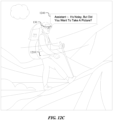
- a user in a noisy environment says a voice command, e.g., "hey assistant, take a picture.”
- the assistant system may reply “It's too noisy. I can't understand you” (i.e., a contextual out-of-domain response).
- the assistant system may say “It's noisy, but did you want to take a picture?” (i.e., a contextual response for a low-confidence success with explicit confirmation).
- a method comprising, by one or more computing systems: accessing, from a head-mounted device associated with a user, one or more audio signals corresponding to a voice input from the user; determining, based on the one or more audio signals, one or more audio-environment metrics corresponding to the voice input; calculating a confidence score indicating a likelihood that an assistant system associated with the head-mounted device understood the voice input; generating a response based on the confidence score and the one or more audio-environment metrics; and providing instructions to the head-mounted device for presenting the response.
- the method may further comprise determining, based on the one or more audio-environment metrics, a noise level associated with the one or more audio signals.
- the noise level may be above a threshold level.
- the one or more audio signals may be captured by one or more microphones of the head-mounted device.
- the one or more audio-environment metrics may comprise one or more of an environment loudness, a wind energy, or a speech activity.
- the method may further comprise: determining one or more noise signals associated with the one or more audio signals; and suppressing the one or more noise signals from the one or more audio signals based on a noise-suppression model.
- the method may further comprise generating, based on the noise-suppressed audio signals, a transcription for the voice input by an automatic-speech-recognition (ASR) model.
- ASR automatic-speech-recognition
- Suppressing the one or more noise signals from the one or more audio signals may be further based on one or more of filter-bank processing or echo cancellation.
- Suppressing the one or more noise signals from the one or more audio signals may comprise applying a beamforming algorithm to the one or more audio signals.
- the method may further comprise: generating one or more updated audio signals by combining the one or more audio-environment metrics with the one or more audio signals; and providing the one or more updated audio signals to one or more modules associated with the assistant system. Generating the response may be further based on processing results of the one or more updated audio signals by one or more of the modules associated with the assistant system.
- the confidence score may be less than a threshold score.
- the response may comprise one or more of: an indication that the assistant system did not understand the user; an indication that an environment of the user is too noisy; or an implicit confirmation of a command associated with the voice input.
- the response may comprise an implicit confirmation of a command associated with the voice input.
- the voice input may be associated with a first dialog session between the user and the assistant system.
- the implicit confirmation may be generated based on a prior action taken by the assistant system during the first dialog session.
- the method may further comprise determining one or more modalities for presenting the response.
- the one or more modalities may comprise one or more of a text modality, an imagery modality, a video modality, an XR modality, a sound modality, a voice modality, or a light modality.
- the one or more modalities may comprise one or more of a video modality, a sound modality, or a voice modality.
- the method may further comprise determining an increase of audio signals associated with the presented response by a threshold amount.
- the instructions may comprise an instruction of the determined increase.
- the voice input may be associated with a first dialog session between the user and the assistant system. Generating the response may be further based on one or more of a prior dialog state associated with the first dialog session or a device context associated with the head-mounted device.
- one or more computer-readable storage media embodying software that is operable when executed to carry out the method of the first aspect.
- the media may be non-transitory.
- a system comprising: one or more processors; and a memory coupled to the processors comprising instructions executable by the processors, the processors operable when executing the instructions to carry out the method of the first aspect.
- the memory may be non-transitory.
- a computer program product comprising instructions which, when the program is executed by a computer, cause the computer to carry out the method of the first aspect.
- One technical challenge may include determining a user is in a noisy environment.
- the solution presented by the embodiments disclosed herein to address this challenge may be utilizing audio-environment metrics to determine a noise level associated with received audio signals as the audio-environment metrics may provide effective measurement of environmental noise loudness, environmental wind energy level, and speech activity.
- Another technical challenge may include determining what type of response to provide to a user in a noisy environment.
- the solution presented by the embodiments disclosed herein to address this challenge may be using a model-based dialog (MBD) system as the model-based dialog (MBD) system may train lightweight models to choose an action based on a declared set of input features, in which the training is based on real interaction data to incorporate environment noise, wind noise, speech activity to optimize for task-success.
- MBD model-based dialog
- the training is based on real interaction data to incorporate environment noise, wind noise, speech activity to optimize for task-success.
- a technical advantage of the embodiments may include improving ASR models to be robust to background noises as the assistant system may use noise suppression to improve ASR in noisy environments so that the inputs to the assistant system (i.e., ASR tokens) are of higher quality.
- Another technical advantage of the embodiments may include providing better assistant feedback to users as the assistant system may make it clear to users when the assistant system is listening to users but a command isn't understood due to background noise, and also automatically raise the volume of assistant text-to-speech (TTS) responses when users are in noisy environments.
- TTS assistant text-to-speech
- Another technical advantage of the embodiments may include creating more successful assistant interactions as the assistant system may leverage environment context when deciding how to respond to low/medium confidence utterances for both single-turn interactions and multi-turn interactions. Certain embodiments disclosed herein may provide none, some, or all of the above technical advantages. One or more other technical advantages may be readily apparent to one skilled in the art in view of the figures, descriptions, and claims of the present disclosure.
- Embodiments according to the invention are in particular disclosed in the attached claims directed to a method, a storage medium, a system and a computer program product, wherein any feature mentioned in one claim category, e.g. method, can be claimed in another claim category, e.g. system, as well.
- the dependencies or references back in the attached claims are chosen for formal reasons only. However any subject matter resulting from a deliberate reference back to any previous claims (in particular multiple dependencies) can be claimed as well, so that any combination of claims and the features thereof are disclosed and can be claimed regardless of the dependencies chosen in the attached claims.
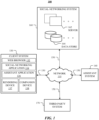
- FIG. 1 illustrates an example network environment 100 associated with an assistant system.
- Network environment 100 includes a client system 130, an assistant system 140, a social-networking system 160, and a third-party system 170 connected to each other by a network 110.
- FIG. 1 illustrates a particular arrangement of a client system 130, an assistant system 140, a social-networking system 160, a third-party system 170, and a network 110, this disclosure contemplates any suitable arrangement of a client system 130, an assistant system 140, a social-networking system 160, a third-party system 170, and a network 110.
- two or more of a client system 130, a social-networking system 160, an assistant system 140, and a third-party system 170 may be connected to each other directly, bypassing a network 110.
- two or more of a client system 130, an assistant system 140, a social-networking system 160, and a third-party system 170 may be physically or logically co-located with each other in whole or in part.
- FIG. 1 illustrates a particular number of client systems 130, assistant systems 140, social-networking systems 160, third-party systems 170, and networks 110, this disclosure contemplates any suitable number of client systems 130, assistant systems 140, social-networking systems 160, third-party systems 170, and networks 110.
- network environment 100 may include multiple client systems 130, assistant systems 140, social-networking systems 160, third-party systems 170, and networks 110.
- a network 110 may include an ad hoc network, an intranet, an extranet, a virtual private network (VPN), a local area network (LAN), a wireless LAN (WLAN), a wide area network (WAN), a wireless WAN (WWAN), a metropolitan area network (MAN), a portion of the Internet, a portion of the Public Switched Telephone Network (PSTN), a cellular technology-based network, a satellite communications technology-based network, another network 110, or a combination of two or more such networks 110.
- VPN virtual private network
- LAN local area network
- WLAN wireless LAN
- WAN wide area network
- WWAN wireless WAN
- MAN metropolitan area network
- PSTN Public Switched Telephone Network
- PSTN Public Switched Telephone Network
- Links 150 may connect a client system 130, an assistant system 140, a social-networking system 160, and a third-party system 170 to a communication network 110 or to each other.
- This disclosure contemplates any suitable links 150.
- one or more links 150 include one or more wireline (such as for example Digital Subscriber Line (DSL) or Data Over Cable Service Interface Specification (DOCSIS)), wireless (such as for example Wi-Fi or Worldwide Interoperability for Microwave Access (WiMAX)), or optical (such as for example Synchronous Optical Network (SONET) or Synchronous Digital Hierarchy (SDH)) links.
- wireline such as for example Digital Subscriber Line (DSL) or Data Over Cable Service Interface Specification (DOCSIS)
- wireless such as for example Wi-Fi or Worldwide Interoperability for Microwave Access (WiMAX)
- optical such as for example Synchronous Optical Network (SONET) or Synchronous Digital Hierarchy (SDH) links.
- SONET Synchronous Optical Network
- one or more links 150 each include an ad hoc network, an intranet, an extranet, a VPN, a LAN, a WLAN, a WAN, a WWAN, a MAN, a portion of the Internet, a portion of the PSTN, a cellular technology-based network, a satellite communications technology-based network, another link 150, or a combination of two or more such links 150.
- Links 150 need not necessarily be the same throughout a network environment 100.
- One or more first links 150 may differ in one or more respects from one or more second links 150.
- a client system 130 may be any suitable electronic device including hardware, software, or embedded logic components, or a combination of two or more such components, and may be capable of carrying out the functionalities implemented or supported by a client system 130.
- the client system 130 may include a computer system such as a desktop computer, notebook or laptop computer, netbook, a tablet computer, e-book reader, GPS device, camera, personal digital assistant (PDA), handheld electronic device, cellular telephone, smartphone, smart speaker, smart watch, smart glasses, augmented-reality (AR) smart glasses, virtual reality (VR) headset, other suitable electronic device, or any suitable combination thereof.
- the client system 130 may be a smart assistant device. More information on smart assistant devices may be found in U.S.
- a client system 130 may enable a network user at a client system 130 to access a network 110.
- the client system 130 may also enable the user to communicate with other users at other client systems 130.
- a client system 130 may include a web browser 132, and may have one or more add-ons, plug-ins, or other extensions.
- a user at a client system 130 may enter a Uniform Resource Locator (URL) or other address directing a web browser 132 to a particular server (such as server 162, or a server associated with a third-party system 170), and the web browser 132 may generate a Hyper Text Transfer Protocol (HTTP) request and communicate the HTTP request to server.
- the server may accept the HTTP request and communicate to a client system 130 one or more Hyper Text Markup Language (HTML) files responsive to the HTTP request.
- the client system 130 may render a web interface (e.g. a webpage) based on the HTML files from the server for presentation to the user.
- a web interface e.g. a webpage
- a web interface may be rendered from HTML files, Extensible Hyper Text Markup Language (XHTML) files, or Extensible Markup Language (XML) files, according to particular needs. Such interfaces may also execute scripts, combinations of markup language and scripts, and the like.
- XHTML Extensible Hyper Text Markup Language
- XML Extensible Markup Language
- Such interfaces may also execute scripts, combinations of markup language and scripts, and the like.
- reference to a web interface encompasses one or more corresponding source files (which a browser may use to render the web interface) and vice versa, where appropriate.
- a client system 130 may include a social-networking application 134 installed on the client system 130.
- a user at a client system 130 may use the social-networking application 134 to access on online social network.
- the user at the client system 130 may use the social-networking application 134 to communicate with the user's social connections (e.g., friends, followers, followed accounts, contacts, etc.).
- the user at the client system 130 may also use the social-networking application 134 to interact with a plurality of content objects (e.g., posts, news articles, ephemeral content, etc.) on the online social network.
- the user may browse trending topics and breaking news using the social-networking application 134.
- a client system 130 may include an assistant application 136.
- a user at a client system 130 may use the assistant application 136 to interact with the assistant system 140.
- the assistant application 136 may include an assistant xbot functionality as a front-end interface for interacting with the user of the client system 130, including receiving user inputs and presenting outputs.
- the assistant application 136 may comprise a stand-alone application.
- the assistant application 136 may be integrated into the social-networking application 134 or another suitable application (e.g., a messaging application).
- the assistant application 136 may be also integrated into the client system 130, an assistant hardware device, or any other suitable hardware devices.
- the assistant application 136 may be also part of the assistant system 140.
- the assistant application 136 may be accessed via the web browser 132.
- the user may interact with the assistant system 140 by providing user input to the assistant application 136 via various modalities (e.g., audio, voice, text, vision, image, video, gesture, motion, activity, location, orientation).
- the assistant application 136 may communicate the user input to the assistant system 140 (e.g., via the assistant xbot).
- the assistant system 140 may generate responses.
- the assistant system 140 may send the generated responses to the assistant application 136.
- the assistant application 136 may then present the responses to the user at the client system 130 via various modalities (e.g., audio, text, image, and video).
- the user may interact with the assistant system 140 by providing a user input (e.g., a verbal request for information regarding a current status of nearby vehicle traffic) to the assistant xbot via a microphone of the client system 130.
- the assistant application 136 may then communicate the user input to the assistant system 140 over network 110.
- the assistant system 140 may accordingly analyze the user input, generate a response based on the analysis of the user input (e.g., vehicle traffic information obtained from a third-party source), and communicate the generated response back to the assistant application 136.
- the assistant application 136 may then present the generated response to the user in any suitable manner (e.g., displaying a text-based push notification and/or image(s) illustrating a local map of nearby vehicle traffic on a display of the client system 130).
- a client system 130 may implement wake-word detection techniques to allow users to conveniently activate the assistant system 140 using one or more wake-words associated with assistant system 140.
- the system audio API on client system 130 may continuously monitor user input comprising audio data (e.g., frames of voice data) received at the client system 130.
- a wake-word associated with the assistant system 140 may be the voice phrase "hey assistant.”
- the assistant system 140 may be activated for subsequent interaction with the user.
- similar detection techniques may be implemented to activate the assistant system 140 using particular non-audio user inputs associated with the assistant system 140.
- the non-audio user inputs may be specific visual signals detected by a low-power sensor (e.g., camera) of client system 130.
- the visual signals may be a static image (e.g., barcode, QR code, universal product code (UPC)), a position of the user (e.g., the user's gaze towards client system 130), a user motion (e.g., the user pointing at an object), or any other suitable visual signal.
- a static image e.g., barcode, QR code, universal product code (UPC)
- a position of the user e.g., the user's gaze towards client system 130
- a user motion e.g., the user pointing at an object
- a client system 130 may include a rendering device 137 and, optionally, a companion device 138.
- the rendering device 137 may be configured to render outputs generated by the assistant system 140 to the user.
- the companion device 138 may be configured to perform computations associated with particular tasks (e.g., communications with the assistant system 140) locally (i.e., on-device) on the companion device 138 in particular circumstances (e.g., when the rendering device 137 is unable to perform said computations).
- the client system 130, the rendering device 137, and/or the companion device 138 may each be a suitable electronic device including hardware, software, or embedded logic components, or a combination of two or more such components, and may be capable of carrying out, individually or cooperatively, the functionalities implemented or supported by the client system 130 described herein.
- the client system 130, the rendering device 137, and/or the companion device 138 may each include a computer system such as a desktop computer, notebook or laptop computer, netbook, a tablet computer, e-book reader, GPS device, camera, personal digital assistant (PDA), handheld electronic device, cellular telephone, smartphone, smart speaker, virtual reality (VR) headset, augmented-reality (AR) smart glasses, other suitable electronic device, or any suitable combination thereof.
- PDA personal digital assistant
- the client system 130, the rendering device 137, and the companion device 138 may operate as a smart assistant device.
- the rendering device 137 may comprise smart glasses and the companion device 138 may comprise a smart phone.
- the rendering device 137 may comprise a smart watch and the companion device 138 may comprise a smart phone.
- the rendering device 137 may comprise smart glasses and the companion device 138 may comprise a smart remote for the smart glasses.
- the rendering device 137 may comprise a VR/AR headset and the companion device 138 may comprise a smart phone.
- a user may interact with the assistant system 140 using the rendering device 137 or the companion device 138, individually or in combination.
- one or more of the client system 130, the rendering device 137, and the companion device 138 may implement a multi-stage wake-word detection model to enable users to conveniently activate the assistant system 140 by continuously monitoring for one or more wake-words associated with assistant system 140.
- the rendering device 137 may receive audio user input (e.g., frames of voice data). If a wireless connection between the rendering device 137 and the companion device 138 is available, the application on the rendering device 137 may communicate the received audio user input to the companion application on the companion device 138 via the wireless connection.
- the companion application on the companion device 138 may process the received audio user input to detect a wake-word associated with the assistant system 140. The companion application on the companion device 138 may then communicate the detected wake-word to a server associated with the assistant system 140 via wireless network 110.
- the server associated with the assistant system 140 may perform a keyword verification on the detected wake-word to verify whether the user intended to activate and receive assistance from the assistant system 140. In alternative examples, any of the processing, detection, or keyword verification may be performed by the rendering device 137 and/or the companion device 138.
- an application on the rendering device 137 may be configured to receive user input from the user, and a companion application on the companion device 138 may be configured to handle user inputs (e.g., user requests) received by the application on the rendering device 137.
- the rendering device 137 and the companion device 138 may be associated with each other (i.e., paired) via one or more wireless communication protocols (e.g., Bluetooth).
- the following example workflow illustrates how a rendering device 137 and a companion device 138 may handle a user input provided by a user.
- an application on the rendering device 137 may receive a user input comprising a user request directed to the rendering device 137.
- the application on the rendering device 137 may then determine a status of a wireless connection (i.e., tethering status) between the rendering device 137 and the companion device 138. If a wireless connection between the rendering device 137 and the companion device 138 is not available, the application on the rendering device 137 may communicate the user request (optionally including additional data and/or contextual information available to the rendering device 137) to the assistant system 140 via the network 110.
- a wireless connection i.e., tethering status
- the assistant system 140 may then generate a response to the user request and communicate the generated response back to the rendering device 137.
- the rendering device 137 may then present the response to the user in any suitable manner.
- the application on the rendering device 137 may communicate the user request (optionally including additional data and/or contextual information available to the rendering device 137) to the companion application on the companion device 138 via the wireless connection.
- the companion application on the companion device 138 may then communicate the user request (optionally including additional data and/or contextual information available to the companion device 138) to the assistant system 140 via the network 110.
- the assistant system 140 may then generate a response to the user request and communicate the generated response back to the companion device 138.
- the companion application on the companion device 138 may then communicate the generated response to the application on the rendering device 137.
- the rendering device 137 may then present the response to the user in any suitable manner.
- the rendering device 137 and the companion device 138 may each perform one or more computations and/or processes at each respective step of the workflow.
- performance of the computations and/or processes disclosed herein may be adaptively switched between the rendering device 137 and the companion device 138 based at least in part on a device state of the rendering device 137 and/or the companion device 138, a task associated with the user input, and/or one or more additional factors.
- one factor may be signal strength of the wireless connection between the rendering device 137 and the companion device 138.
- the computations and processes may be adaptively switched to be substantially performed by the companion device 138 in order to, for example, benefit from the greater processing power of the CPU of the companion device 138.
- the signal strength of the wireless connection between the rendering device 137 and the companion device 138 is weak, the computations and processes may be adaptively switched to be substantially performed by the rendering device 137 in a standalone manner.
- the client system 130 does not comprise a companion device 138, the aforementioned computations and processes may be performed solely by the rendering device 137 in a standalone manner.
- an assistant system 140 may assist users with various assistant-related tasks.
- the assistant system 140 may interact with the social-networking system 160 and/or the third-party system 170 when executing these assistant-related tasks.
- the social-networking system 160 may be a network-addressable computing system that can host an online social network.
- the social-networking system 160 may generate, store, receive, and send social-networking data, such as, for example, user profile data, concept-profile data, social-graph information, or other suitable data related to the online social network.
- the social-networking system 160 may be accessed by the other components of network environment 100 either directly or via a network 110.
- a client system 130 may access the social-networking system 160 using a web browser 132 or a native application associated with the social-networking system 160 (e.g., a mobile social-networking application, a messaging application, another suitable application, or any combination thereof) either directly or via a network 110.
- the social-networking system 160 may include one or more servers 162. Each server 162 may be a unitary server or a distributed server spanning multiple computers or multiple datacenters.
- each server 162 may be a web server, a news server, a mail server, a message server, an advertising server, a file server, an application server, an exchange server, a database server, a proxy server, another server suitable for performing functions or processes described herein, or any combination thereof.
- each server 162 may include hardware, software, or embedded logic components or a combination of two or more such components for carrying out the appropriate functionalities implemented or supported by server 162.
- the social-networking system 160 may include one or more data stores 164. Data stores 164 may be used to store various types of information. In particular examples, the information stored in data stores 164 may be organized according to specific data structures.
- each data store 164 may be a relational, columnar, correlation, or other suitable database.
- this disclosure describes or illustrates particular types of databases, this disclosure contemplates any suitable types of databases.
- Particular examples may provide interfaces that enable a client system 130, a social-networking system 160, an assistant system 140, or a third-party system 170 to manage, retrieve, modify, add, or delete, the information stored in data store 164.
- the social-networking system 160 may store one or more social graphs in one or more data stores 164.
- a social graph may include multiple nodes-which may include multiple user nodes (each corresponding to a particular user) or multiple concept nodes (each corresponding to a particular concept)-and multiple edges connecting the nodes.
- the social-networking system 160 may provide users of the online social network the ability to communicate and interact with other users.
- users may join the online social network via the social-networking system 160 and then add connections (e.g., relationships) to a number of other users of the social-networking system 160 whom they want to be connected to.
- the term "friend" may refer to any other user of the social-networking system 160 with whom a user has formed a connection, association, or relationship via the social-networking system 160.
- the social-networking system 160 may provide users with the ability to take actions on various types of items or objects, supported by the social-networking system 160.
- the items and objects may include groups or social networks to which users of the social-networking system 160 may belong, events or calendar entries in which a user might be interested, computer-based applications that a user may use, transactions that allow users to buy or sell items via the service, interactions with advertisements that a user may perform, or other suitable items or objects.
- a user may interact with anything that is capable of being represented in the social-networking system 160 or by an external system of a third-party system 170, which is separate from the social-networking system 160 and coupled to the social-networking system 160 via a network 110.
- the social-networking system 160 may be capable of linking a variety of entities.
- the social-networking system 160 may enable users to interact with each other as well as receive content from third-party systems 170 or other entities, or to allow users to interact with these entities through an application programming interfaces (API) or other communication channels.
- API application programming interfaces
- a third-party system 170 may include one or more types of servers, one or more data stores, one or more interfaces, including but not limited to APIs, one or more web services, one or more content sources, one or more networks, or any other suitable components, e.g., that servers may communicate with.
- a third-party system 170 may be operated by a different entity from an entity operating the social-networking system 160.
- the social-networking system 160 and third-party systems 170 may operate in conjunction with each other to provide social-networking services to users of the social-networking system 160 or third-party systems 170.
- the social-networking system 160 may provide a platform, or backbone, which other systems, such as third-party systems 170, may use to provide social-networking services and functionality to users across the Internet.
- a third-party system 170 may include a third-party content object provider.
- a third-party content object provider may include one or more sources of content objects, which may be communicated to a client system 130.
- content objects may include information regarding things or activities of interest to the user, such as, for example, movie show times, movie reviews, restaurant reviews, restaurant menus, product information and reviews, or other suitable information.
- content objects may include incentive content objects, such as coupons, discount tickets, gift certificates, or other suitable incentive objects.
- a third-party content provider may use one or more third-party agents to provide content objects and/or services.
- a third-party agent may be an implementation that is hosted and executing on the third-party system 170.
- the social-networking system 160 also includes user-generated content objects, which may enhance a user's interactions with the social-networking system 160.
- User-generated content may include anything a user can add, upload, send, or "post" to the social-networking system 160.
- Posts may include data such as status updates or other textual data, location information, photos, videos, links, music or other similar data or media.
- Content may also be added to the social-networking system 160 by a third-party through a "communication channel," such as a newsfeed or stream.
- the social-networking system 160 may include a variety of servers, sub-systems, programs, modules, logs, and data stores.
- the social-networking system 160 may include one or more of the following: a web server, action logger, API-request server, relevance-and-ranking engine, content-object classifier, notification controller, action log, third-party-content-object-exposure log, inference module, authorization/privacy server, search module, advertisement-targeting module, user-interface module, user-profile store, connection store, third-party content store, or location store.
- the social-networking system 160 may also include suitable components such as network interfaces, security mechanisms, load balancers, failover servers, management-and-network-operations consoles, other suitable components, or any suitable combination thereof.
- the social-networking system 160 may include one or more user-profile stores for storing user profiles.
- a user profile may include, for example, biographic information, demographic information, behavioral information, social information, or other types of descriptive information, such as work experience, educational history, hobbies or preferences, interests, affinities, or location.
- Interest information may include interests related to one or more categories. Categories may be general or specific.
- a connection store may be used for storing connection information about users.
- the connection information may indicate users who have similar or common work experience, group memberships, hobbies, educational history, or are in any way related or share common attributes.
- the connection information may also include user-defined connections between different users and content (both internal and external).
- a web server may be used for linking the social-networking system 160 to one or more client systems 130 or one or more third-party systems 170 via a network 110.
- the web server may include a mail server or other messaging functionality for receiving and routing messages between the social-networking system 160 and one or more client systems 130.
- An API-request server may allow, for example, an assistant system 140 or a third-party system 170 to access information from the social-networking system 160 by calling one or more APIs.
- An action logger may be used to receive communications from a web server about a user's actions on or off the social-networking system 160.
- a third-party-content-object log may be maintained of user exposures to third-party-content objects.
- a notification controller may provide information regarding content objects to a client system 130. Information may be pushed to a client system 130 as notifications, or information may be pulled from a client system 130 responsive to a user input comprising a user request received from a client system 130.
- Authorization servers may be used to enforce one or more privacy settings of the users of the social-networking system 160.
- a privacy setting of a user may determine how particular information associated with a user can be shared.
- the authorization server may allow users to opt in to or opt out of having their actions logged by the social-networking system 160 or shared with other systems (e.g., a third-party system 170), such as, for example, by setting appropriate privacy settings.
- Third-party-content-object stores may be used to store content objects received from third parties, such as a third-party system 170.
- Location stores may be used for storing location information received from client systems 130 associated with users. Advertisement-pricing modules may combine social information, the current time, location information, or other suitable information to provide relevant advertisements, in the form of notifications, to a user.
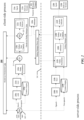
- FIG. 2 illustrates an example architecture 200 of the assistant system 140.
- the assistant system 140 may assist a user to obtain information or services.
- the assistant system 140 may enable the user to interact with the assistant system 140 via user inputs of various modalities (e.g., audio, voice, text, vision, image, video, gesture, motion, activity, location, orientation) in stateful and multi-turn conversations to receive assistance from the assistant system 140.
- modalities e.g., audio, voice, text, vision, image, video, gesture, motion, activity, location, orientation
- a user input may comprise an audio input based on the user's voice (e.g., a verbal command), which may be processed by a system audio API (application programming interface) on client system 130.
- system audio API application programming interface
- the system audio API may perform techniques including echo cancellation, noise removal, beam forming, self-user voice activation, speaker identification, voice activity detection (VAD), and/or any other suitable acoustic technique in order to generate audio data that is readily processable by the assistant system 140.
- the assistant system 140 may support mono-modal inputs (e.g., only voice inputs), multi-modal inputs (e.g., voice inputs and text inputs), hybrid/multi-modal inputs, or any combination thereof.
- a user input may be a user-generated input that is sent to the assistant system 140 in a single turn.
- User inputs provided by a user may be associated with particular assistant-related tasks, and may include, for example, user requests (e.g., verbal requests for information or performance of an action), user interactions with the assistant application 136 associated with the assistant system 140 (e.g., selection of UI elements via touch or gesture), or any other type of suitable user input that may be detected and understood by the assistant system 140 (e.g., user movements detected by the client device 130 of the user).
- user requests e.g., verbal requests for information or performance of an action
- user interactions with the assistant application 136 associated with the assistant system 140 e.g., selection of UI elements via touch or gesture
- any other type of suitable user input that may be detected and understood by the assistant system 140 (e.g., user movements detected by the client device 130 of the user).
- the assistant system 140 may create and store a user profile comprising both personal and contextual information associated with the user.
- the assistant system 140 may analyze the user input using natural-language understanding (NLU) techniques. The analysis may be based at least in part on the user profile of the user for more personalized and context-aware understanding.
- NLU natural-language understanding
- the assistant system 140 may resolve entities associated with the user input based on the analysis.
- the assistant system 140 may interact with different agents to obtain information or services that are associated with the resolved entities.
- the assistant system 140 may generate a response for the user regarding the information or services by using natural-language generation (NLG).
- NNLG natural-language generation
- the assistant system 140 may use dialog management techniques to manage and forward the conversation flow with the user.
- the assistant system 140 may further assist the user to effectively and efficiently digest the obtained information by summarizing the information.
- the assistant system 140 may also assist the user to be more engaging with an online social network by providing tools that help the user interact with the online social network (e.g., creating posts, comments, messages).
- the assistant system 140 may additionally assist the user to manage different tasks such as keeping track of events.
- the assistant system 140 may proactively execute, without a user input, pre-authorized tasks that are relevant to user interests and preferences based on the user profile, at a time relevant for the user.
- the assistant system 140 may check privacy settings to ensure that accessing a user's profile or other user information and executing different tasks are permitted subject to the user's privacy settings. More information on assisting users subject to privacy settings may be found in U.S. Patent Application No. 16/182542, filed 06 November 2018 , which is incorporated by reference.
- the assistant system 140 may assist a user via an architecture built upon client-side processes and server-side processes which may operate in various operational modes.
- the client-side process is illustrated above the dashed line 202 whereas the server-side process is illustrated below the dashed line 202.
- a first operational mode i.e., on-device mode
- the assistant system 140 may handle a user input in the first operational mode utilizing only client-side processes.
- a second operational mode may be a workflow in which the assistant system 140 processes a user input and provides assistance to the user by primarily or exclusively performing server-side processes on one or more remote servers (e.g., a server associated with assistant system 140).
- a third operational mode i.e., blended mode
- the client system 130 and the server associated with assistant system 140 may both perform automatic speech recognition (ASR) and natural-language understanding (NLU) processes, but the client system 130 may delegate dialog, agent, and natural-language generation (NLG) processes to be performed by the server associated with assistant system 140.
- ASR automatic speech recognition
- NLU natural-language understanding
- NLG natural-language generation
- selection of an operational mode may be based at least in part on a device state, a task associated with a user input, and/or one or more additional factors.
- one factor may be a network connectivity status for client system 130.
- the assistant system 140 may handle a user input in the first operational mode (i.e., on-device mode).
- another factor may be based on a measure of available battery power (i.e., battery status) for the client system 130.
- the assistant system 140 may handle a user input in the second operational mode (i.e., cloud mode) or the third operational mode (i.e., blended mode) in order to perform fewer power-intensive operations on the client system 130.
- another factor may be one or more privacy constraints (e.g., specified privacy settings, applicable privacy policies).
- the assistant system 140 may handle a user input in the first operational mode (i.e., on-device mode) in order to protect user privacy.
- another factor may be desynchronized context data between the client system 130 and a remote server (e.g., the server associated with assistant system 140).
- the client system 130 and the server associated with assistant system 140 may be determined to have inconsistent, missing, and/or unreconciled context data, the assistant system 140 may handle a user input in the third operational mode (i.e., blended mode) to reduce the likelihood of an inadequate analysis associated with the user input.
- another factor may be a measure of latency for the connection between client system 130 and a remote server (e.g., the server associated with assistant system 140).
- the assistant system 140 may handle the user input in the first operational mode (i.e., on-device mode) to ensure the task is performed in a timely manner.
- the first operational mode i.e., on-device mode
- another factor may be, for a feature relevant to a task associated with a user input, whether the feature is only supported by a remote server (e.g., the server associated with assistant system 140).
- the assistant system 140 may handle the user input in the second operational mode (i.e., cloud mode) or the third operational mode (i.e., blended mode) in order to benefit from the relevant feature.
- the second operational mode i.e., cloud mode
- the third operational mode i.e., blended mode
- an on-device orchestrator 206 on the client system 130 may coordinate receiving a user input and may determine, at one or more decision points in an example workflow, which of the operational modes described above should be used to process or continue processing the user input. As discussed above, selection of an operational mode may be based at least in part on a device state, a task associated with a user input, and/or one or more additional factors. As an example and not by way of limitation, with reference to the workflow architecture illustrated in FIG.
- the on-device orchestrator 206 may determine, at decision point (D0) 205, whether to begin processing the user input in the first operational mode (i.e., on-device mode), the second operational mode (i.e., cloud mode), or the third operational mode (i.e., blended mode).
- the first operational mode i.e., on-device mode
- the second operational mode i.e., cloud mode
- the third operational mode i.e., blended mode
- the on-device orchestrator 206 may select the first operational mode (i.e., on-device mode) if the client system 130 is not connected to network 110 (i.e., when client system 130 is offline), if one or more privacy constraints expressly require on-device processing (e.g., adding or removing another person to a private call between users), or if the user input is associated with a task which does not require or benefit from server-side processing (e.g., setting an alarm or calling another user).
- the first operational mode i.e., on-device mode
- the client system 130 is not connected to network 110 (i.e., when client system 130 is offline)
- one or more privacy constraints expressly require on-device processing (e.g., adding or removing another person to a private call between users), or if the user input is associated with a task which does not require or benefit from server-side processing (e.g., setting an alarm or calling another user).
- the on-device orchestrator 206 may select the second operational mode (i.e., cloud mode) or the third operational mode (i.e., blended mode) if the client system 130 has a need to conserve battery power (e.g., when client system 130 has minimal available battery power or the user has indicated a desire to conserve the battery power of the client system 130) or has a need to limit additional utilization of computing resources (e.g., when other processes operating on client device 130 require high CPU utilization (e.g., SMS messaging applications)).
- the second operational mode i.e., cloud mode
- the third operational mode i.e., blended mode
- the client-side process may continue as illustrated in FIG. 2 .
- the user input comprises speech data
- the speech data may be received at a local automatic speech recognition (ASR) module 208a on the client system 130.
- ASR automatic speech recognition
- the ASR module 208a may allow a user to dictate and have speech transcribed as written text, have a document synthesized as an audio stream, or issue commands that are recognized as such by the system.
- the output of the ASR module 208a may be sent to a local natural-language understanding (NLU) module 210a.
- the NLU module 210a may perform named entity resolution (NER), or named entity resolution may be performed by the entity resolution module 212a, as described below.
- NER named entity resolution
- one or more of an intent, a slot, or a domain may be an output of the NLU module 210a.
- the user input may comprise non-speech data, which may be received at a local context engine 220a.
- the non-speech data may comprise locations, visuals, touch, gestures, world updates, social updates, contextual information, information related to people, activity data, and/or any other suitable type of non-speech data.
- the non-speech data may further comprise sensory data received by client system 130 sensors (e.g., microphone, camera), which may be accessed subject to privacy constraints and further analyzed by computer vision technologies.
- the computer vision technologies may comprise object detection, scene recognition, hand tracking, eye tracking, and/or any other suitable computer vision technologies.
- the non-speech data may be subject to geometric constructions, which may comprise constructing objects surrounding a user using any suitable type of data collected by a client system 130.
- a user may be wearing AR glasses, and geometric constructions may be utilized to determine spatial locations of surfaces and items (e.g., a floor, a wall, a user's hands).
- the non-speech data may be inertial data captured by AR glasses or a VR headset, and which may be data associated with linear and angular motions (e.g., measurements associated with a user's body movements).
- the context engine 220a may determine various types of events and context based on the non-speech data.
- the outputs of the NLU module 210a and/or the context engine 220a may be sent to an entity resolution module 212a.
- the entity resolution module 212a may resolve entities associated with one or more slots output by NLU module 210a.
- each resolved entity may be associated with one or more entity identifiers.
- an identifier may comprise a unique user identifier (ID) corresponding to a particular user (e.g., a unique username or user ID number for the social-networking system 160).
- ID unique user identifier
- each resolved entity may also be associated with a confidence score. More information on resolving entities may be found in U.S. Patent No. 10,803,050, filed 27 July 2018 , and U.S. Patent Application No. 16/048072, filed 27 July 2018 , each of which is incorporated by reference.
- the on-device orchestrator 206 may determine that a user input should be handled in the second operational mode (i.e., cloud mode) or the third operational mode (i.e., blended mode). In these operational modes, the user input may be handled by certain server-side modules in a similar manner as the client-side process described above.
- the speech data of the user input may be received at a remote automatic speech recognition (ASR) module 208b on a remote server (e.g., the server associated with assistant system 140).
- ASR remote automatic speech recognition
- the ASR module 208b may allow a user to dictate and have speech transcribed as written text, have a document synthesized as an audio stream, or issue commands that are recognized as such by the system.
- the output of the ASR module 208b may be sent to a remote natural-language understanding (NLU) module 210b.
- NLU natural-language understanding
- the NLU module 210b may perform named entity resolution (NER) or named entity resolution may be performed by entity resolution module 212b of dialog manager module 216b as described below.
- NER named entity resolution
- one or more of an intent, a slot, or a domain may be an output of the NLU module 210b.
- the user input may comprise non-speech data, which may be received at a remote context engine 220b.
- the remote context engine 220b may determine various types of events and context based on the non-speech data.
- the output of the NLU module 210b and/or the context engine 220b may be sent to a remote dialog manager 216b.
- an on-device orchestrator 206 on the client system 130 may coordinate receiving a user input and may determine, at one or more decision points in an example workflow, which of the operational modes described above should be used to process or continue processing the user input. As further discussed above, selection of an operational mode may be based at least in part on a device state, a task associated with a user input, and/or one or more additional factors. As an example and not by way of limitation, with continued reference to the workflow architecture illustrated in FIG.
- the on-device orchestrator 206 may determine, at decision point (D1) 215, whether to continue processing the user input in the first operational mode (i.e., on-device mode), the second operational mode (i.e., cloud mode), or the third operational mode (i.e., blended mode). For example, at decision point (D1) 215, the on-device orchestrator 206 may select the first operational mode (i.e., on-device mode) if an identified intent is associated with a latency sensitive processing task (e.g., taking a photo, pausing a stopwatch).
- a latency sensitive processing task e.g., taking a photo, pausing a stopwatch.
- the on-device orchestrator 206 may select the third operational mode (i.e., blended mode) to process the user input associated with a messaging request.
- the on-device orchestrator 206 may select the second operational mode (i.e., cloud mode) or the third operational mode (i.e., blended mode) if the task being processed requires access to a social graph, a knowledge graph, or a concept graph not stored on the client system 130.
- the on-device orchestrator 206 may instead select the first operational mode (i.e., on-device mode) if a sufficient version of an informational graph including requisite information for the task exists on the client system 130 (e.g., a smaller and/or bootstrapped version of a knowledge graph).
- the first operational mode i.e., on-device mode
- a sufficient version of an informational graph including requisite information for the task exists on the client system 130 (e.g., a smaller and/or bootstrapped version of a knowledge graph).
- the client-side process may continue as illustrated in FIG. 2 .
- the output from the entity resolution module 212a may be sent to an on-device dialog manager 216a.
- the on-device dialog manager 216a may comprise a dialog state tracker 218a and an action selector 222a.
- the on-device dialog manager 216a may have complex dialog logic and product-related business logic to manage the dialog state and flow of the conversation between the user and the assistant system 140.
- the on-device dialog manager 216a may include full functionality for end-to-end integration and multi-turn support (e.g., confirmation, disambiguation).
- the on-device dialog manager 216a may also be lightweight with respect to computing limitations and resources including memory, computation (CPU), and binary size constraints.
- the on-device dialog manager 216a may also be scalable to improve developer experience.
- the on-device dialog manager 216a may benefit the assistant system 140, for example, by providing offline support to alleviate network connectivity issues (e.g., unstable or unavailable network connections), by using client-side processes to prevent privacy-sensitive information from being transmitted off of client system 130, and by providing a stable user experience in high-latency sensitive scenarios.
- network connectivity issues e.g., unstable or unavailable network connections
- the on-device dialog manager 216a may further conduct false trigger mitigation.
- Implementation of false trigger mitigation may detect and prevent false triggers from user inputs which would otherwise invoke the assistant system 140 (e.g., an unintended wake-word) and may further prevent the assistant system 140 from generating data records based on the false trigger that may be inaccurate and/or subject to privacy constraints.
- the false trigger mitigation may limit detection of wake-words to audio user inputs received locally by the user's client system 130.
- the on-device dialog manager 216a may implement false trigger mitigation based on a nonsense detector.
- the on-device dialog manager 216a may determine that the user did not intend to invoke the assistant system 140.
- the on-device dialog manager 216a may conduct on-device learning based on learning algorithms particularly tailored for client system 130.
- federated learning techniques may be implemented by the on-device dialog manager 216a.
- Federated learning is a specific category of distributed machine learning techniques which may train machine-learning models using decentralized data stored on end devices (e.g., mobile phones).
- the on-device dialog manager 216a may use federated user representation learning model to extend existing neural-network personalization techniques to implementation of federated learning by the on-device dialog manager 216a.
- Federated user representation learning may personalize federated learning models by learning task-specific user representations (i.e., embeddings) and/or by personalizing model weights.
- Federated user representation learning is a simple, scalable, privacy-preserving, and resource-efficient.
- Federated user representation learning may divide model parameters into federated and private parameters. Private parameters, such as private user embeddings, may be trained locally on a client system 130 instead of being transferred to or averaged by a remote server (e.g., the server associated with assistant system 140).
- Federated parameters by contrast, may be trained remotely on the server.
- the on-device dialog manager 216a may use an active federated learning model, which may transmit a global model trained on the remote server to client systems 130 and calculate gradients locally on the client systems 130. Active federated learning may enable the on-device dialog manager 216a to minimize the transmission costs associated with downloading models and uploading gradients.
- client systems 130 may be selected in a semi-random manner based at least in part on a probability conditioned on the current model and the data on the client systems 130 in order to optimize efficiency for training the federated learning model.
- the dialog state tracker 218a may track state changes over time as a user interacts with the world and the assistant system 140 interacts with the user.
- the dialog state tracker 218a may track, for example, what the user is talking about, whom the user is with, where the user is, what tasks are currently in progress, and where the user's gaze is at subject to applicable privacy policies.
- the on-device orchestrator 206 may determine to forward the user input to the server for either the second operational mode (i.e., cloud mode) or the third operational mode (i.e., blended mode).
- the on-device orchestrator 206 may determine at decision point (D1) 215 to use the third operational mode (i.e., blended mode).
- the on-device orchestrator 206 may cause the outputs from the NLU module 210a, the context engine 220a, and the entity resolution module 212a, via a dialog manager proxy 224, to be forwarded to an entity resolution module 212b of the remote dialog manager 216b to continue the processing.
- the dialog manager proxy 224 may be a communication channel for information/events exchange between the client system 130 and the server.
- the dialog manager 216b may additionally comprise a remote arbitrator 226b, a remote dialog state tracker 218b, and a remote action selector 222b.
- the assistant system 140 may have started processing a user input with the second operational mode (i.e., cloud mode) at decision point (D0) 205 and the on-device orchestrator 206 may determine to continue processing the user input based on the second operational mode (i.e., cloud mode) at decision point (D1) 215.
- the output from the NLU module 210b and the context engine 220b may be received at the remote entity resolution module 212b.
- the remote entity resolution module 212b may have similar functionality as the local entity resolution module 212a, which may comprise resolving entities associated with the slots.
- the entity resolution module 212b may access one or more of the social graph, the knowledge graph, or the concept graph when resolving the entities.
- the output from the entity resolution module 212b may be received at the arbitrator 226b.
- the remote arbitrator 226b may be responsible for choosing between client-side and server-side upstream results (e.g., results from the NLU module 210a/b, results from the entity resolution module 212a/b, and results from the context engine 220a/b).
- the arbitrator 226b may send the selected upstream results to the remote dialog state tracker 218b.
- the remote dialog state tracker 218b may convert the upstream results into candidate tasks using task specifications and resolve arguments with entity resolution.
- the on-device orchestrator 206 may determine whether to continue processing the user input based on the first operational mode (i.e., on-device mode) or forward the user input to the server for the third operational mode (i.e., blended mode).
- the decision may depend on, for example, whether the client-side process is able to resolve the task and slots successfully, whether there is a valid task policy with a specific feature support, and/or the context differences between the client-side process and the server-side process.
- decisions made at decision point (D2) 225 may be for multi-turn scenarios. In particular examples, there may be at least two possible scenarios.
- the assistant system 140 may have started processing a user input in the first operational mode (i.e., on-device mode) using client-side dialog state. If at some point the assistant system 140 decides to switch to having the remote server process the user input, the assistant system 140 may create a programmatic/predefined task with the current task state and forward it to the remote server. For subsequent turns, the assistant system 140 may continue processing in the third operational mode (i.e., blended mode) using the server-side dialog state. In another scenario, the assistant system 140 may have started processing the user input in either the second operational mode (i.e., cloud mode) or the third operational mode (i.e., blended mode) and may substantially rely on server-side dialog state for all subsequent turns. If the on-device orchestrator 206 determines to continue processing the user input based on the first operational mode (i.e., on-device mode), the output from the dialog state tracker 218a may be received at the action selector 222a.
- the first operational mode i.e., on-dev
- the on-device orchestrator 206 may determine to forward the user input to the remote server and continue processing the user input in either the second operational mode (i.e., cloud mode) or the third operational mode (i.e., blended mode).
- the assistant system 140 may create a programmatic/predefined task with the current task state and forward it to the server, which may be received at the action selector 222b.
- the assistant system 140 may have started processing the user input in the second operational mode (i.e., cloud mode), and the on-device orchestrator 206 may determine to continue processing the user input in the second operational mode (i.e., cloud mode) at decision point (D2) 225. Accordingly, the output from the dialog state tracker 218b may be received at the action selector 222b.
- the action selector 222a/b may perform interaction management.
- the action selector 222a/b may determine and trigger a set of general executable actions.
- the actions may be executed either on the client system 130 or at the remote server. As an example and not by way of limitation, these actions may include providing information or suggestions to the user.
- the actions may interact with agents 228a/b, users, and/or the assistant system 140 itself. These actions may comprise actions including one or more of a slot request, a confirmation, a disambiguation, or an agent execution.
- the actions may be independent of the underlying implementation of the action selector 222a/b.
- the local action selector 222a may call one or more local agents 228a, and the remote action selector 222b may call one or more remote agents 228b to execute the actions.
- Agents 228a/b may be invoked via task ID, and any actions may be routed to the correct agent 228a/b using that task ID.
- an agent 228a/b may be configured to serve as a broker across a plurality of content providers for one domain.
- a content provider may be an entity responsible for carrying out an action associated with an intent or completing a task associated with the intent.
- agents 228a/b may provide several functionalities for the assistant system 140 including, for example, native template generation, task specific business logic, and querying external APIs.
- agents 228a/b may use context from the dialog state tracker 218a/b, and may also update the dialog state tracker 218a/b.
- agents 228a/b may also generate partial payloads from a dialog act.
- the local agents 228a may have different implementations to be compiled/registered for different platforms (e.g., smart glasses versus a VR headset).
- multiple device-specific implementations e.g., real-time calls for a client system 130 or a messaging application on the client system 130
- device-specific implementations may be handled internally by a single agent 228a.
- device-specific implementations may be handled by multiple agents 228a associated with multiple domains.
- calling an agent 228a on smart glasses may be implemented in a different manner than calling an agent 228a on a smart phone.
- Different platforms may also utilize varying numbers of agents 228a.
- the agents 228a may also be cross-platform (i.e., different operating systems on the client system 130). In addition, the agents 228a may have minimized startup time or binary size impact. Local agents 228a may be suitable for particular use cases. As an example and not by way of limitation, one use case may be emergency calling on the client system 130. As another example and not by way of limitation, another use case may be responding to a user input without network connectivity. As yet another example and not by way of limitation, another use case may be that particular domains/tasks may be privacy sensitive and may prohibit user inputs being sent to the remote server.
- the local action selector 222a may call a local delivery system 230a for executing the actions
- the remote action selector 222b may call a remote delivery system 230b for executing the actions.
- the delivery system 230a/b may deliver a predefined event upon receiving triggering signals from the dialog state tracker 218a/b by executing corresponding actions.
- the delivery system 230a/b may ensure that events get delivered to a host with a living connection.
- the delivery system 230a/b may broadcast to all online devices that belong to one user.
- the delivery system 230a/b may deliver events to target-specific devices.
- the delivery system 230a/b may further render a payload using up-to-date device context.
- the on-device dialog manager 216a may additionally comprise a separate local action execution module
- the remote dialog manager 216b may additionally comprise a separate remote action execution module.
- the local execution module and the remote action execution module may have similar functionality.
- the action execution module may call the agents 228a/b to execute tasks.
- the action execution module may additionally perform a set of general executable actions determined by the action selector 222a/b.
- the set of executable actions may interact with agents 228a/b, users, and the assistant system 140 itself via the delivery system 230a/b.
- results from the agents 228a and/or the delivery system 230a may be returned to the on-device dialog manager 216a.
- the on-device dialog manager 216a may then instruct a local arbitrator 226a to generate a final response based on these results.
- the arbitrator 226a may aggregate the results and evaluate them. As an example and not by way of limitation, the arbitrator 226a may rank and select a best result for responding to the user input. If the user request is handled in the second operational mode (i.e., cloud mode), the results from the agents 228b and/or the delivery system 230b may be returned to the remote dialog manager 216b.
- the second operational mode i.e., cloud mode
- the remote dialog manager 216b may instruct, via the dialog manager proxy 224, the arbitrator 226a to generate the final response based on these results.
- the arbitrator 226a may analyze the results and select the best result to provide to the user. If the user input is handled based on the third operational mode (i.e., blended mode), the client-side results and server-side results (e.g., from agents 228a/b and/or delivery system 230a/b) may both be provided to the arbitrator 226a by the on-device dialog manager 216a and remote dialog manager 216b, respectively.
- the arbitrator 226 may then choose between the client-side and server-side side results to determine the final result to be presented to the user. In particular examples, the logic to decide between these results may depend on the specific use-case.
- the local arbitrator 226a may generate a response based on the final result and send it to a render output module 232.
- the render output module 232 may determine how to render the output in a way that is suitable for the client system 130.
- the render output module 232 may determine to render the output using a visual-based modality (e.g., an image or a video clip) that may be displayed via the VR headset or AR smart glasses.
- the response may be rendered as audio signals that may be played by the user via a VR headset or AR smart glasses.
- the response may be rendered as augmented-reality data for enhancing user experience.
- the on-device orchestrator 206 may also determine whether to process the user input on the rendering device 137, process the user input on the companion device 138, or process the user request on the remote server.
- the rendering device 137 and/or the companion device 138 may each use the assistant stack in a similar manner as disclosed above to process the user input.
- the on-device orchestrator 206 may determine that part of the processing should be done on the rendering device 137, part of the processing should be done on the companion device 138, and the remaining processing should be done on the remote server.
- the assistant system 140 may have a variety of capabilities including audio cognition, visual cognition, signals intelligence, reasoning, and memories.
- the capability of audio cognition may enable the assistant system 140 to, for example, understand a user's input associated with various domains in different languages, understand and summarize a conversation, perform on-device audio cognition for complex commands, identify a user by voice, extract topics from a conversation and auto-tag sections of the conversation, enable audio interaction without a wake-word, filter and amplify user voice from ambient noise and conversations, and/or understand which client system 130 a user is talking to if multiple client systems 130 are in vicinity.
- the capability of visual cognition may enable the assistant system 140 to, for example, recognize interesting objects in the world through a combination of existing machine-learning models and one-shot learning, recognize an interesting moment and auto-capture it, achieve semantic understanding over multiple visual frames across different episodes of time, provide platform support for additional capabilities in places or objects recognition, recognize a full set of settings and micro-locations including personalized locations, recognize complex activities, recognize complex gestures to control a client system 130, handle images/videos from egocentric cameras (e.g., with motion, capture angles, resolution), accomplish similar levels of accuracy and speed regarding images with lower resolution, conduct one-shot registration and recognition of places and objects, and/or perform visual recognition on a client system 130.
- egocentric cameras e.g., with motion, capture angles, resolution
- the assistant system 140 may leverage computer vision techniques to achieve visual cognition. Besides computer vision techniques, the assistant system 140 may explore options that may supplement these techniques to scale up the recognition of objects. In particular examples, the assistant system 140 may use supplemental signals such as, for example, optical character recognition (OCR) of an object's labels, GPS signals for places recognition, and/or signals from a user's client system 130 to identify the user. In particular examples, the assistant system 140 may perform general scene recognition (e.g., home, work, public spaces) to set a context for the user and reduce the computer-vision search space to identify likely objects or people. In particular examples, the assistant system 140 may guide users to train the assistant system 140.
- OCR optical character recognition
- general scene recognition e.g., home, work, public spaces
- the assistant system 140 may guide users to train the assistant system 140.
- crowdsourcing may be used to get users to tag objects and help the assistant system 140 recognize more objects over time.
- users may register their personal objects as part of an initial setup when using the assistant system 140.
- the assistant system 140 may further allow users to provide positive/negative signals for objects they interact with to train and improve personalized models for them.
- the capability of signals intelligence may enable the assistant system 140 to, for example, determine user location, understand date/time, determine family locations, understand users' calendars and future desired locations, integrate richer sound understanding to identify setting/context through sound alone, and/or build signals intelligence models at runtime which may be personalized to a user's individual routines.
- the capability of reasoning may enable the assistant system 140 to, for example, pick up previous conversation threads at any point in the future, synthesize all signals to understand micro and personalized context, learn interaction patterns and preferences from users' historical behavior and accurately suggest interactions that they may value, generate highly predictive proactive suggestions based on micro-context understanding, understand what content a user may want to see at what time of a day, and/or understand the changes in a scene and how that may impact the user's desired content.
- the capabilities of memories may enable the assistant system 140 to, for example, remember which social connections a user previously called or interacted with, write into memory and query memory at will (i.e., open dictation and auto tags), extract richer preferences based on prior interactions and long-term learning, remember a user's life history, extract rich information from egocentric streams of data and auto catalog, and/or write to memory in structured form to form rich short, episodic and long-term memories.
- FIG. 3 illustrates an example flow diagram 300 of the assistant system 140.
- an assistant service module 305 may access a request manager 310 upon receiving a user input.
- the request manager 310 may comprise a context extractor 312 and a conversational understanding object generator (CU object generator) 314.
- the context extractor 312 may extract contextual information associated with the user input.
- the context extractor 312 may also update contextual information based on the assistant application 136 executing on the client system 130.
- the update of contextual information may comprise content items are displayed on the client system 130.
- the update of contextual information may comprise whether an alarm is set on the client system 130.
- the update of contextual information may comprise whether a song is playing on the client system 130.
- the CU object generator 314 may generate particular CU objects relevant to the user input.
- the CU objects may comprise dialog-session data and features associated with the user input, which may be shared with all the modules of the assistant system 140.
- the request manager 310 may store the contextual information and the generated CU objects in a data store 320 which is a particular data store implemented in the assistant system 140.
- the request manger 310 may send the generated CU objects to the NLU module 210.
- the NLU module 210 may perform a plurality of steps to process the CU objects.
- the NLU module 210 may first run the CU objects through an allowlist/blocklist 330.
- the allowlist/blocklist 330 may comprise interpretation data matching the user input.
- the NLU module 210 may then perform a featurization 332 of the CU objects.
- the NLU module 210 may then perform domain classification/selection 334 on user input based on the features resulted from the featurization 332 to classify the user input into predefined domains.
- a domain may denote a social context of interaction (e.g., education), or a namespace for a set of intents (e.g., music).
- the domain classification/selection results may be further processed based on two related procedures.
- the NLU module 210 may process the domain classification/selection results using a meta-intent classifier 336a.
- the meta-intent classifier 336a may determine categories that describe the user's intent.
- An intent may be an element in a pre-defined taxonomy of semantic intentions, which may indicate a purpose of a user interaction with the assistant system 140.
- the NLU module 210a may classify a user input into a member of the pre-defined taxonomy.
- the user input may be "Play Beethoven's 5th," and the NLU module 210a may classify the input as having the intent [IN:play_music].
- intents that are common to multiple domains may be processed by the meta-intent classifier 336a.
- the meta-intent classifier 336a may be based on a machine-learning model that may take the domain classification/selection results as input and calculate a probability of the input being associated with a particular predefined meta-intent.
- the NLU module 210 may then use a meta slot tagger 338a to annotate one or more meta slots for the classification result from the meta-intent classifier 336a.
- a slot may be a named sub-string corresponding to a character string within the user input representing a basic semantic entity.
- a slot for "pizza” may be [SL:dish].
- a set of valid or expected named slots may be conditioned on the classified intent.
- a valid slot may be [SL:song_name].
- the meta slot tagger 338a may tag generic slots such as references to items (e.g., the first), the type of slot, the value of the slot, etc.
- the NLU module 210 may process the domain classification/selection results using an intent classifier 336b.
- the intent classifier 336b may determine the user's intent associated with the user input. In particular examples, there may be one intent classifier 336b for each domain to determine the most possible intents in a given domain. As an example and not by way of limitation, the intent classifier 336b may be based on a machine-learning model that may take the domain classification/selection results as input and calculate a probability of the input being associated with a particular predefined intent.
- the NLU module 210 may then use a slot tagger 338b to annotate one or more slots associated with the user input. In particular examples, the slot tagger 338b may annotate the one or more slots for the n-grams of the user input.
- a user input may comprise "change 500 dollars in my account to Japanese yen.”
- the intent classifier 336b may take the user input as input and formulate it into a vector.
- the intent classifier 336b may then calculate probabilities of the user input being associated with different predefined intents based on a vector comparison between the vector representing the user input and the vectors representing different predefined intents.
- the slot tagger 338b may take the user input as input and formulate each word into a vector.
- the slot tagger 338b may then calculate probabilities of each word being associated with different predefined slots based on a vector comparison between the vector representing the word and the vectors representing different predefined slots.
- the intent of the user may be classified as "changing money”.
- the slots of the user input may comprise "500", "dollars", “account”, and "Japanese yen”.
- the meta-intent of the user may be classified as "financial service”.
- the meta slot may comprise "finance”.
- the natural-language understanding (NLU) module 210 may additionally extract information from one or more of a social graph, a knowledge graph, or a concept graph, and may retrieve a user's profile stored locally on the client system 130.
- the NLU module 210 may additionally consider contextual information when analyzing the user input.
- the NLU module 210 may further process information from these different sources by identifying and aggregating information, annotating n-grams of the user input, ranking the n-grams with confidence scores based on the aggregated information, and formulating the ranked n-grams into features that may be used by the NLU module 210 for understanding the user input.
- the NLU module 210 may identify one or more of a domain, an intent, or a slot from the user input in a personalized and context-aware manner.
- a user input may comprise "show me how to get to the coffee shop.”
- the NLU module 210 may identify a particular coffee shop that the user wants to go to based on the user's personal information and the associated contextual information.
- the NLU module 210 may comprise a lexicon of a particular language, a parser, and grammar rules to partition sentences into an internal representation.
- the NLU module 210 may also comprise one or more programs that perform naive semantics or stochastic semantic analysis, and may further use pragmatics to understand a user input.
- the parser may be based on a deep learning architecture comprising multiple long-short term memory (LSTM) networks.
- the parser may be based on a recurrent neural network grammar (RNNG) model, which is a type of recurrent and recursive LSTM algorithm.
- RNG recurrent neural network grammar
- NLU natural-language understanding
- the output of the NLU module 210 may be sent to the entity resolution module 212 to resolve relevant entities.
- Entities may include, for example, unique users or concepts, each of which may have a unique identifier (ID).
- the entities may include one or more of a real-world entity (from general knowledge base), a user entity (from user memory), a contextual entity (device context/dialog context), or a value resolution (numbers, datetime, etc.).
- the entity resolution module 212 may comprise domain entity resolution 340 and generic entity resolution 342.
- the entity resolution module 212 may execute generic and domain-specific entity resolution.
- the generic entity resolution 342 may resolve the entities by categorizing the slots and meta slots into different generic topics.
- the domain entity resolution 340 may resolve the entities by categorizing the slots and meta slots into different domains.
- the generic entity resolution 342 may resolve the referenced brand of electric car as vehicle and the domain entity resolution 340 may resolve the referenced brand of electric car as electric car.
- entities may be resolved based on knowledge 350 about the world and the user.
- the assistant system 140 may extract ontology data from the graphs 352.
- the graphs 352 may comprise one or more of a knowledge graph, a social graph, or a concept graph.
- the ontology data may comprise the structural relationship between different slots/meta-slots and domains.
- the ontology data may also comprise information of how the slots/meta-slots may be grouped, related within a hierarchy where the higher level comprises the domain, and subdivided according to similarities and differences.
- the knowledge graph may comprise a plurality of entities. Each entity may comprise a single record associated with one or more attribute values. The particular record may be associated with a unique entity identifier.
- Each record may have diverse values for an attribute of the entity.
- Each attribute value may be associated with a confidence probability and/or a semantic weight.
- a confidence probability for an attribute value represents a probability that the value is accurate for the given attribute.
- a semantic weight for an attribute value may represent how the value semantically appropriate for the given attribute considering all the available information.
- the knowledge graph may comprise an entity of a book titled "BookName", which may include information extracted from multiple content sources (e.g., an online social network, online encyclopedias, book review sources, media databases, and entertainment content sources), which may be deduped, resolved, and fused to generate the single unique record for the knowledge graph.
- the entity titled "BookName” may be associated with a "fantasy” attribute value for a "genre” entity attribute. More information on the knowledge graph may be found in U.S. Patent Application No. 16/048049, filed 27 July 2018 , and U.S. Patent Application No. 16/048101, filed 27 July 2018 , each of which is incorporated by reference.
- the assistant user memory (AUM) 354 may comprise user episodic memories which help determine how to assist a user more effectively.
- the AUM 354 may be the central place for storing, retrieving, indexing, and searching over user data.
- the AUM 354 may store information such as contacts, photos, reminders, etc.
- the AUM 354 may automatically synchronize data to the server and other devices (only for non-sensitive data).
- the AUM 354 may first prepare events, user sate, reminder, and trigger state for storing in a data store.
- Memory node identifiers may be created to store entry objects in the AUM 354, where an entry may be some piece of information about the user (e.g., photo, reminder, etc.)
- an entry may be some piece of information about the user (e.g., photo, reminder, etc.)
- the first few bits of the memory node ID may indicate that this is a memory node ID type
- the next bits may be the user ID
- the next bits may be the time of creation.
- the AUM 354 may then index these data for retrieval as needed. Index ID may be created for such purpose.
- the AUM 354 may get a list of memory IDs that have that attribute (e.g., photos in San Francisco).
- the first few bits may indicate this is an index ID type
- the next bits may be the user ID
- the next bits may encode an "index key” and "index value”.
- the AUM 354 may further conduct information retrieval with a flexible query language. Relation index ID may be created for such purpose.
- the AUM 354 may get memory IDs of all target nodes with that type of outgoing edge from the source.
- the first few bits may indicate this is a relation index ID type
- the next bits may be the user ID
- the next bits may be a source node ID and edge type.
- the AUM 354 may help detect concurrent updates of different events. More information on episodic memories may be found in U.S. Patent Application No. 16/552559, filed 27 August 2019 , which is incorporated by reference.
- the entity resolution module 212 may use different techniques to resolve different types of entities.
- the entity resolution module 212 may use a knowledge graph to resolve the span to the entities, such as "music track", “movie”, etc.
- the entity resolution module 212 may use user memory or some agents to resolve the span to user-specific entities, such as "contact”, “reminders", or “relationship”.
- the entity resolution module 212 may perform coreference based on information from the context engine 220 to resolve the references to entities in the context, such as "him”, “her”, “the first one", or “the last one”.
- the entity resolution module 212 may create references for entities determined by the NLU module 210.
- the entity resolution module 212 may then resolve these references accurately.
- a user input may comprise "find me the nearest grocery store and direct me there".
- the entity resolution module 212 may interpret "there” as "the nearest grocery store”.
- coreference may depend on the information from the context engine 220 and the dialog manager 216 so as to interpret references with improved accuracy.
- the entity resolution module 212 may additionally resolve an entity under the context (device context or dialog context), such as, for example, the entity shown on the screen or an entity from the last conversation history.
- the entity resolution module 212 may resolve the mention to exact value in standardized form, such as numerical value, date time, address, etc.
- the entity resolution module 212 may first perform a check on applicable privacy constraints in order to guarantee that performing entity resolution does not violate any applicable privacy policies.
- an entity to be resolved may be another user who specifies in their privacy settings that their identity should not be searchable on the online social network. In this case, the entity resolution module 212 may refrain from returning that user's entity identifier in response to a user input.
- the entity resolution module 212 may resolve entities associated with a user input in a personalized, context-aware, and privacy-protected manner.
- the entity resolution module 212 may work with the ASR module 208 to perform entity resolution.
- the following example illustrates how the entity resolution module 212 may resolve an entity name.
- the entity resolution module 212 may first expand names associated with a user into their respective normalized text forms as phonetic consonant representations which may be phonetically transcribed using a double metaphone algorithm.
- the entity resolution module 212 may then determine an n -best set of candidate transcriptions and perform a parallel comprehension process on all of the phonetic transcriptions in the n -best set of candidate transcriptions.
- each transcription that resolves to the same intent may then be collapsed into a single intent.
- Each intent may then be assigned a score corresponding to the highest scoring candidate transcription for that intent.
- the entity resolution module 212 may identify various possible text transcriptions associated with each slot, correlated by boundary timing offsets associated with the slot's transcription. The entity resolution module 212 may then extract a subset of possible candidate transcriptions for each slot from a plurality (e.g., 1000) of candidate transcriptions, regardless of whether they are classified to the same intent. In this manner, the slots and intents may be scored lists of phrases.
- a new or running task capable of handling the intent may be identified and provided with the intent (e.g., a message composition task for an intent to send a message to another user). The identified task may then trigger the entity resolution module 212 by providing it with the scored lists of phrases associated with one of its slots and the categories against which it should be resolved.
- the entity resolution module 212 may run every candidate list of terms through the same expansion that may be run at matcher compilation time. Each candidate expansion of the terms may be matched in the precompiled trie matching structure. Matches may be scored using a function based at least in part on the transcribed input, matched form, and friend name. As another example and not byway of limitation, if an entity attribute is specified as "celebrity/notable person,” the entity resolution module 212 may perform parallel searches against the knowledge graph for each candidate set of terms for the slot output from the ASR module 208. The entity resolution module 212 may score matches based on matched person popularity and ASR-provided score signal.
- the entity resolution module 212 may perform the same search against user memory.
- the entity resolution module 212 may crawl backward through user memory and attempt to match each memory (e.g., person recently mentioned in conversation, or seen and recognized via visual signals, etc.).
- the entity resolution module 212 may employ matching similarly to how friends are matched (i.e., phonetic).
- scoring may comprise a temporal decay factor associated with a recency with which the name was previously mentioned.
- the entity resolution module 212 may further combine, sort, and dedupe all matches.
- the task may receive the set of candidates. When multiple high scoring candidates are present, the entity resolution module 212 may perform user-facilitated disambiguation (e.g., getting real-time user feedback from users on these candidates).
- the context engine 220 may help the entity resolution module 212 improve entity resolution.
- the context engine 220 may comprise offline aggregators and an online inference service.
- the offline aggregators may process a plurality of data associated with the user that are collected from a prior time window.
- the data may include news feed posts/comments, interactions with news feed posts/comments, search history, etc., that are collected during a predetermined timeframe (e.g., from a prior 90-day window).
- the processing result may be stored in the context engine 220 as part of the user profile.
- the user profile of the user may comprise user profile data including demographic information, social information, and contextual information associated with the user.
- the user profile data may also include user interests and preferences on a plurality of topics, aggregated through conversations on news feed, search logs, messaging platforms, etc.
- the usage of a user profile may be subject to privacy constraints to ensure that a user's information can be used only for his/her benefit, and not shared with anyone else. More information on user profiles may be found in U.S. Patent Application No. 15/967239, filed 30 April 2018 , which is incorporated by reference.
- the online inference service may analyze the conversational data associated with the user that are received by the assistant system 140 at a current time. The analysis result may be stored in the context engine 220 also as part of the user profile.
- both the offline aggregators and online inference service may extract personalization features from the plurality of data.
- the extracted personalization features may be used by other modules of the assistant system 140 to better understand user input.
- the entity resolution module 212 may process the information from the context engine 220 (e.g., a user profile) in the following steps based on natural-language processing (NLP).
- NLP natural-language processing
- the entity resolution module 212 may tokenize text by text normalization, extract syntax features from text, and extract semantic features from text based on NLP.
- the entity resolution module 212 may additionally extract features from contextual information, which is accessed from dialog history between a user and the assistant system 140.
- the entity resolution module 212 may further conduct global word embedding, domain-specific embedding, and/or dynamic embedding based on the contextual information.
- the processing result may be annotated with entities by an entity tagger.
- the entity resolution module 212 may generate dictionaries.
- the dictionaries may comprise global dictionary features which can be updated dynamically offline.
- the entity resolution module 212 may rank the entities tagged by the entity tagger.
- the entity resolution module 212 may communicate with different graphs 352 including one or more of the social graph, the knowledge graph, or the concept graph to extract ontology data that is relevant to the retrieved information from the context engine 220.
- the entity resolution module 212 may further resolve entities based on the user profile, the ranked entities, and the information from the graphs 352.
- the entity resolution module 212 may be driven by the task (corresponding to an agent 228). This inversion of processing order may make it possible for domain knowledge present in a task to be applied to pre-filter or bias the set of resolution targets when it is obvious and appropriate to do so. As an example and not by way of limitation, for the utterance "who is John?" no clear category is implied in the utterance. Therefore, the entity resolution module 212 may resolve "John” against everything. As another example and not by way of limitation, for the utterance "send a message to John", the entity resolution module 212 may easily determine "John” refers to a person that one can message. As a result, the entity resolution module 212 may bias the resolution to a friend.
- the entity resolution module 212 may first determine the task corresponding to the utterance, which is finding a music album. The entity resolution module 212 may determine that entities related to music albums include singers, producers, and recording studios. Therefore, the entity resolution module 212 may search among these types of entities in a music domain to resolve "John.”
- the output of the entity resolution module 212 may be sent to the dialog manager 216 to advance the flow of the conversation with the user.
- the dialog manager 216 may be an asynchronous state machine that repeatedly updates the state and selects actions based on the new state.
- the dialog manager 216 may additionally store previous conversations between the user and the assistant system 140.
- the dialog manager 216 may conduct dialog optimization. Dialog optimization relates to the challenge of understanding and identifying the most likely branching options in a dialog with a user.
- the assistant system 140 may implement dialog optimization techniques to obviate the need to confirm who a user wants to call because the assistant system 140 may determine a high confidence that a person inferred based on context and available data is the intended recipient.
- the dialog manager 216 may implement reinforcement learning frameworks to improve the dialog optimization.
- the dialog manager 216 may comprise dialog intent resolution 356, the dialog state tracker 218, and the action selector 222.
- the dialog manager 216 may execute the selected actions and then call the dialog state tracker 218 again until the action selected requires a user response, or there are no more actions to execute. Each action selected may depend on the execution result from previous actions.
- the dialog intent resolution 356 may resolve the user intent associated with the current dialog session based on dialog history between the user and the assistant system 140.
- the dialog intent resolution 356 may map intents determined by the NLU module 210 to different dialog intents.
- the dialog intent resolution 356 may further rank dialog intents based on signals from the NLU module 210, the entity resolution module 212, and dialog history between the user and the assistant system 140.
- the dialog state tracker 218 may use a set of operators to track the dialog state.
- the operators may comprise necessary data and logic to update the dialog state. Each operator may act as delta of the dialog state after processing an incoming user input.
- the dialog state tracker 218 may a comprise a task tracker, which may be based on task specifications and different rules.
- the dialog state tracker 218 may also comprise a slot tracker and coreference component, which may be rule based and/or recency based.
- the coreference component may help the entity resolution module 212 to resolve entities.
- the dialog state tracker 218 may replace the entity resolution module 212 and may resolve any references/mentions and keep track of the state.
- the dialog state tracker 218 may convert the upstream results into candidate tasks using task specifications and resolve arguments with entity resolution. Both user state (e.g., user's current activity) and task state (e.g., triggering conditions) may be tracked. Given the current state, the dialog state tracker 218 may generate candidate tasks the assistant system 140 may process and perform for the user. As an example and not by way of limitation, candidate tasks may include "show suggestion,” "get weather information," or "take photo.” In particular examples, the dialog state tracker 218 may generate candidate tasks based on available data from, for example, a knowledge graph, a user memory, and a user task history. In particular examples, the dialog state tracker 218 may then resolve the triggers object using the resolved arguments.
- user state e.g., user's current activity
- task state e.g., triggering conditions
- candidate tasks may include "show suggestion,” "get weather information," or "take photo.”
- candidate tasks may include "show suggestion,” "get weather information," or "take photo.”
- a user input "remind me to call mom when she's online and I'm home tonight” may perform the conversion from the NLU output to the triggers representation by the dialog state tracker 218 as illustrated in Table 1 below: Table 1: Example Conversion from NLU Output to Triggers Representation
- the dialog manager 216 may map events determined by the context engine 220 to actions.
- an action may be a natural-language generation (NLG) action, a display or overlay, a device action, or a retrieval action.
- the dialog manager 216 may also perform context tracking and interaction management. Context tracking may comprise aggregating real-time stream of events into a unified user state. Interaction management may comprise selecting optimal action in each state.
- the dialog state tracker 218 may perform context tracking (i.e., tracking events related to the user). To support processing of event streams, the dialog state tracker 218a may use an event handler (e.g., for disambiguation, confirmation, request) that may consume various types of events and update an internal assistant state.
- an event handler e.g., for disambiguation, confirmation, request
- Each event type may have one or more handlers.
- Each event handler may be modifying a certain slice of the assistant state.
- the event handlers may be operating on disjoint subsets of the state (i.e., only one handler may have write-access to a particular field in the state).
- all event handlers may have an opportunity to process a given event.
- the dialog state tracker 218 may run all event handlers in parallel on every event, and then may merge the state updates proposed by each event handler (e.g., for each event, most handlers may return a NULL update).
- the dialog state tracker 218 may work as any programmatic handler (logic) that requires versioning.
- the dialog state tracker 218 may be a side-effect free component and generate n-best candidates of dialog state update operators that propose updates to the dialog state.
- the dialog state tracker 218 may comprise intent resolvers containing logic to handle different types of NLU intent based on the dialog state and generate the operators.
- the logic may be organized by intent handler, such as a disambiguation intent handler to handle the intents when the assistant system 140 asks for disambiguation, a confirmation intent handler that comprises the logic to handle confirmations, etc.
- Intent resolvers may combine the turn intent together with the dialog state to generate the contextual updates for a conversation with the user.
- a slot resolution component may then recursively resolve the slots in the update operators with resolution providers including the knowledge graph and domain agents.
- the dialog state tracker 218 may update/rank the dialog state of the current dialog session.
- the dialog state tracker 218 may update the dialog state as "completed" if the dialog session is over.
- the dialog state tracker 218 may rank the dialog state based on a priority associated with it.
- the dialog state tracker 218 may communicate with the action selector 222 about the dialog intents and associated content objects.
- the action selector 222 may rank different dialog hypotheses for different dialog intents.
- the action selector 222 may take candidate operators of dialog state and consult the dialog policies 360 to decide what actions should be executed.
- a dialog policy 360 may a tree-based policy, which is a pre-constructed dialog plan. Based on the current dialog state, a dialog policy 360 may choose a node to execute and generate the corresponding actions.
- the tree-based policy may comprise topic grouping nodes and dialog action (leaf) nodes.
- a dialog policy 360 may also comprise a data structure that describes an execution plan of an action by an agent 228.
- a dialog policy 360 may further comprise multiple goals related to each other through logical operators.
- a goal may be an outcome of a portion of the dialog policy and it may be constructed by the dialog manager 216.
- a goal may be represented by an identifier (e.g., string) with one or more named arguments, which parameterize the goal.
- a goal with its associated goal argument may be represented as ⁇ confirm_artist, args: ⁇ artist: "Madonna" ⁇ .
- goals may be mapped to leaves of the tree of the tree-structured representation of the dialog policy 360.
- the assistant system 140 may use hierarchical dialog policies 360 with general policy 362 handling the cross-domain business logic and task policies 364 handling the task/domain specific logic.
- the general policy 362 may be used for actions that are not specific to individual tasks.
- the general policy 362 may be used to determine task stacking and switching, proactive tasks, notifications, etc.
- the general policy 362 may comprise handling low-confidence intents, internal errors, unacceptable user response with retries, and/or skipping or inserting confirmation based on ASR or NLU confidence scores.
- the general policy 362 may also comprise the logic of ranking dialog state update candidates from the dialog state tracker 218 output and pick the one to update (such as picking the top ranked task intent).
- the assistant system 140 may have a particular interface for the general policy 362, which allows for consolidating scattered cross-domain policy/business-rules, especial those found in the dialog state tracker 218, into a function of the action selector 222.
- the interface for the general policy 362 may also allow for authoring of self-contained sub-policy units that may be tied to specific situations or clients (e.g., policy functions that may be easily switched on or off based on clients, situation).
- the interface for the general policy 362 may also allow for providing a layering of policies with back-off, i.e., multiple policy units, with highly specialized policy units that deal with specific situations being backed up by more general policies 362 that apply in wider circumstances.
- the general policy 362 may alternatively comprise intent or task specific policy.
- a task policy 364 may comprise the logic for action selector 222 based on the task and current state.
- the task policy 364 may be dynamic and ad-hoc.
- the types of task policies 364 may include one or more of the following types: (1) manually crafted tree-based dialog plans; (2) coded policy that directly implements the interface for generating actions; (3) configurator-specified slot-filling tasks; or (4) machine-learning model based policy learned from data.
- the assistant system 140 may bootstrap new domains with rule-based logic and later refine the task policies 364 with machine-learning models.
- the general policy 362 may pick one operator from the candidate operators to update the dialog state, followed by the selection of a user facing action by a task policy 364. Once a task is active in the dialog state, the corresponding task policy 364 may be consulted to select right actions.
- the action selector 222 may select an action based on one or more of the event determined by the context engine 220, the dialog intent and state, the associated content objects, and the guidance from dialog policies 360.
- Each dialog policy 360 may be subscribed to specific conditions over the fields of the state.
- the action selector 222 may run a fast search algorithm (e.g., similarly to the Boolean satisfiability) to identify which policies should be triggered based on the current state. In particular examples, if multiple policies are triggered, the action selector 222 may use a tie-breaking mechanism to pick a particular policy.
- mapping events to actions may result in several technical advantages for the assistant system 140.
- Each event may be a state update from the user or the user's physical/digital environment, which may or may not trigger an action from assistant system 140.
- Another technical advantage may include possibilities to handle rapid bursts of events (e.g., user enters a new building and sees many people) by first consuming all events to update state, and then triggering action(s) from the final state.
- Another technical advantage may include consuming all events into a single global assistant state.
- the action selector 222 may take the dialog state update operators as part of the input to select the dialog action.
- the execution of the dialog action may generate a set of expectations to instruct the dialog state tracker 218 to handle future turns.
- an expectation may be used to provide context to the dialog state tracker 218 when handling the user input from next turn.
- slot request dialog action may have the expectation of proving a value for the requested slot.
- both the dialog state tracker 218 and the action selector 222 may not change the dialog state until the selected action is executed. This may allow the assistant system 140 to execute the dialog state tracker 218 and the action selector 222 for processing speculative ASR results and to do n -best ranking with dry runs.
- the action selector 222 may call different agents 228 for task execution.
- the dialog manager 216 may receive an instruction to update the dialog state.
- the update may comprise awaiting agents' 228 response.
- An agent 228 may select among registered content providers to complete the action.
- the data structure may be constructed by the dialog manager 216 based on an intent and one or more slots associated with the intent.
- the agents 228 may comprise first-party agents and third-party agents.
- first-party agents may comprise internal agents that are accessible and controllable by the assistant system 140 (e.g. agents associated with services provided by the online social network, such as messaging services or photo-share services).
- third-party agents may comprise external agents that the assistant system 140 has no control over (e.g., third-party online music application agents, ticket sales agents).
- the first-party agents may be associated with first-party providers that provide content objects and/or services hosted by the social-networking system 160.
- the third-party agents may be associated with third-party providers that provide content objects and/or services hosted by the third-party system 170.
- each of the first-party agents or third-party agents may be designated for a particular domain.
- the domain may comprise weather, transportation, music, shopping, social, videos, photos, events, locations, and/or work.
- the assistant system 140 may use a plurality of agents 228 collaboratively to respond to a user input.
- the user input may comprise "direct me to my next meeting.”
- the assistant system 140 may use a calendar agent to retrieve the location of the next meeting.
- the assistant system 140 may then use a navigation agent to direct the user to the next meeting.
- the dialog manager 216 may support multi-turn compositional resolution of slot mentions.
- the resolver may recursively resolve the nested slots.
- the dialog manager 216 may additionally support disambiguation for the nested slots.
- the user input may be "remind me to call Alex".
- the resolver may need to know which Alex to call before creating an actionable reminder to-do entity.
- the resolver may halt the resolution and set the resolution state when further user clarification is necessary for a particular slot.
- the general policy 362 may examine the resolution state and create corresponding dialog action for user clarification.
- dialog state tracker 218, based on the user input and the last dialog action, the dialog manager 216 may update the nested slot. This capability may allow the assistant system 140 to interact with the user not only to collect missing slot values but also to reduce ambiguity of more complex/ambiguous utterances to complete the task.
- the dialog manager 216 may further support requesting missing slots in a nested intent and multi-intent user inputs (e.g., "take this photo and send it to Dad").
- the dialog manager 216 may support machine-learning models for more robust dialog experience.
- the dialog state tracker 218 may use neural network based models (or any other suitable machine-learning models) to model belief over task hypotheses.
- highest priority policy units may comprise white-list/black-list overrides, which may have to occur by design; middle priority units may comprise machine-learning models designed for action selection; and lower priority units may comprise rule-based fallbacks when the machine-learning models elect not to handle a situation.
- machine-learning model based general policy unit may help the assistant system 140 reduce redundant disambiguation or confirmation steps, thereby reducing the number of turns to execute the user input.
- the determined actions by the action selector 222 may be sent to the delivery system 230.
- the delivery system 230 may comprise a CU composer 370, a response generation component 380, a dialog state writing component 382, and a text-to-speech (TTS) component 390.
- the output of the action selector 222 may be received at the CU composer 370.
- the output from the action selector 222 may be formulated as a ⁇ k,c,u,d > tuple, in which k indicates a knowledge source, c indicates a communicative goal, u indicates a user model, and d indicates a discourse model.
- the CU composer 370 may generate a communication content for the user using a natural-language generation (NLG) component 372.
- NLG natural-language generation
- the NLG component 372 may use different language models and/or language templates to generate natural-language outputs.
- the generation of natural-language outputs may be application specific.
- the generation of natural-language outputs may be also personalized for each user.
- the NLG component 372 may comprise a content determination component, a sentence planner, and a surface realization component.
- the content determination component may determine the communication content based on the knowledge source, communicative goal, and the user's expectations. As an example and not by way of limitation, the determining may be based on a description logic.
- the description logic may comprise, for example, three fundamental notions which are individuals (representing objects in the domain), concepts (describing sets of individuals), and roles (representing binary relations between individuals or concepts).
- the description logic may be characterized by a set of constructors that allow the natural-language generator to build complex concepts/roles from atomic ones.
- the content determination component may perform the following tasks to determine the communication content.
- the first task may comprise a translation task, in which the input to the NLG component 372 may be translated to concepts.
- the second task may comprise a selection task, in which relevant concepts may be selected among those resulted from the translation task based on the user model.
- the third task may comprise a verification task, in which the coherence of the selected concepts may be verified.
- the fourth task may comprise an instantiation task, in which the verified concepts may be instantiated as an executable file that can be processed by the NLG component 372.
- the sentence planner may determine the organization of the communication content to make it human understandable.
- the surface realization component may determine specific words to use, the sequence of the sentences, and the style of the communication content.
- the CU composer 370 may also determine a modality of the generated communication content using the Ul payload generator 374. Since the generated communication content may be considered as a response to the user input, the CU composer 370 may additionally rank the generated communication content using a response ranker 376. As an example and not by way of limitation, the ranking may indicate the priority of the response.
- the CU composer 370 may comprise a natural-language synthesis (NLS) component that may be separate from the NLG component 372.
- the NLS component may specify attributes of the synthesized speech generated by the CU composer 370, including gender, volume, pace, style, or register, in order to customize the response for a particular user, task, or agent.
- the NLS component may tune language synthesis without engaging the implementation of associated tasks.
- the CU composer 370 may check privacy constraints associated with the user to make sure the generation of the communication content follows the privacy policies. More information on customizing natural-language generation (NLG) may be found in U.S. Patent Application No. 15/967279, filed 30 April 2018 , and U.S. Patent Application No. 15/966455, filed 30 April 2018 , which is incorporated by reference.
- the delivery system 230 may perform different tasks based on the output of the CU composer 370. These tasks may include writing (i.e., storing/updating) the dialog state into the data store 330 using the dialog state writing component 382 and generating responses using the response generation component 380.
- the output of the CU composer 370 may be additionally sent to the TTS component 390 if the determined modality of the communication content is audio.
- the output from the delivery system 230 comprising one or more of the generated responses, the communication content, or the speech generated by the TTS component 390 may be then sent back to the dialog manager 216.
- the orchestrator 206 may determine, based on the output of the entity resolution module 212, whether to processing a user input on the client system 130 or on the server, or in the third operational mode (i.e., blended mode) using both. Besides determining how to process the user input, the orchestrator 206 may receive the results from the agents 228 and/or the results from the delivery system 230 provided by the dialog manager 216. The orchestrator 206 may then forward these results to the arbitrator 226. The arbitrator 226 may aggregate these results, analyze them, select the best result, and provide the selected result to the render output module 232. In particular examples, the arbitrator 226 may consult with dialog policies 360 to obtain the guidance when analyzing these results. In particular examples, the render output module 232 may generate a response that is suitable for the client system 130.
- FIG. 4 illustrates an example task-centric flow diagram 400 of processing a user input.
- the assistant system 140 may assist users not only with voice-initiated experiences but also more proactive, multi-modal experiences that are initiated on understanding user context.
- the assistant system 140 may rely on assistant tasks for such purpose.
- An assistant task may be a central concept that is shared across the whole assistant stack to understand user intention, interact with the user and the world to complete the right task for the user.
- an assistant task may be the primitive unit of assistant capability. It may comprise data fetching, updating some state, executing some command, or complex tasks composed of a smaller set of tasks. Completing a task correctly and successfully to deliver the value to the user may be the goal that the assistant system 140 is optimized for.
- an assistant task may be defined as a capability or a feature.
- the assistant task may be shared across multiple product surfaces if they have exactly the same requirements so it may be easily tracked. It may also be passed from device to device, and easily picked up mid-task by another device since the primitive unit is consistent.
- the consistent format of the assistant task may allow developers working on different modules in the assistant stack to more easily design around it. Furthermore, it may allow for task sharing.
- the smart glasses may formulate a task that is provided to the phone, which may then be executed by the phone to start playing music.
- the assistant task may be retained by each surface separately if they have different expected behaviors.
- the assistant system 140 may identify the right task based on user inputs in different modality or other signals, conduct conversation to collect all necessary information, and complete that task with action selector 222 implemented internally or externally, on server or locally product surfaces.
- the assistant stack may comprise a set of processing components from wake-up, recognizing user inputs, understanding user intention, reasoning about the tasks, fulfilling a task to generate natural-language response with voices.
- the user input may comprise speech input.
- the speech input may be received at the ASR module 208 for extracting the text transcription from the speech input.
- the ASR module 208 may use statistical models to determine the most likely sequences of words that correspond to a given portion of speech received by the assistant system 140 as audio input.
- the models may include one or more of hidden Markov models, neural networks, deep learning models, or any combination thereof.
- the received audio input may be encoded into digital data at a particular sampling rate (e.g., 16, 44.1, or 96 kHz) and with a particular number of bits representing each sample (e.g., 8, 16, of 24 bits).
- the ASR module 208 may comprise one or more of a grapheme-to-phoneme (G2P) model, a pronunciation learning model, a personalized acoustic model, a personalized language model (PLM), or an end-pointing model.
- G2P grapheme-to-phoneme
- the grapheme-to-phoneme (G2P) model may be used to determine a user's grapheme-to-phoneme style (i.e., what it may sound like when a particular user speaks a particular word).
- the personalized acoustic model may be a model of the relationship between audio signals and the sounds of phonetic units in the language. Therefore, such personalized acoustic model may identify how a user's voice sounds.
- the personalized acoustical model may be generated using training data such as training speech received as audio input and the corresponding phonetic units that correspond to the speech.
- the personalized acoustical model may be trained or refined using the voice of a particular user to recognize that user's speech.
- the personalized language model may then determine the most likely phrase that corresponds to the identified phonetic units for a particular audio input.
- the personalized language model may be a model of the probabilities that various word sequences may occur in the language.
- the sounds of the phonetic units in the audio input may be matched with word sequences using the personalized language model, and greater weights may be assigned to the word sequences that are more likely to be phrases in the language.
- the word sequence having the highest weight may be then selected as the text that corresponds to the audio input.
- the personalized language model may also be used to predict what words a user is most likely to say given a context.
- the end-pointing model may detect when the end of an utterance is reached.
- the assistant system 140 may optimize the personalized language model at runtime during the client-side process.
- the assistant system 140 may pre-compute a plurality of personalized language models for a plurality of possible subjects a user may talk about.
- the assistant system 140 may promptly switch between and locally optimize the pre-computed language models at runtime based on user activities.
- the assistant system 140 may preserve computational resources while efficiently identifying a subject matter associated with the user input.
- the assistant system 140 may also dynamically re-learn user pronunciations at runtime.
- the user input may comprise non-speech input.
- the non-speech input may be received at the context engine 220 for determining events and context from the non-speech input.
- the context engine 220 may determine multi-modal events comprising voice/text intents, location updates, visual events, touch, gaze, gestures, activities, device/application events, and/or any other suitable type of events.
- the voice/text intents may depend on the ASR module 208 and the NLU module 210.
- the location updates may be consumed by the dialog manager 216 to support various proactive/reactive scenarios.
- the visual events may be based on person or object appearing in the user's field of view.
- These events may be consumed by the dialog manager 216 and recorded in transient user state to support visual co-reference (e.g., resolving "that” in “how much is that shirt?" and resolving "him” in “send him my contact”).
- the gaze, gesture, and activity may result in flags being set in the transient user state (e.g., user is running) which may condition the action selector 222.
- the device/application events if an application makes an update to the device state, this may be published to the assistant system 140 so that the dialog manager 216 may use this context (what is currently displayed to the user) to handle reactive and proactive scenarios.
- the context engine 220 may cause a push notification message to be displayed on a display screen of the user's client system 130.
- the user may interact with the push notification message, which may initiate a multi-modal event (e.g., an event workflow for replying to a message received from another user).
- a multi-modal event e.g., an event workflow for replying to a message received from another user.
- Other example multi-modal events may include seeing a friend, seeing a landmark, being at home, running, starting a call with touch, taking a photo with touch, opening an application, etc.
- the context engine 220 may also determine world/social events based on world/social updates (e.g., weather changes, a friend getting online).
- the social updates may comprise events that a user is subscribed to, (e.g., friend's birthday, posts, comments, other notifications). These updates may be consumed by the dialog manager 216 to trigger proactive actions based on context (e.g., suggesting a user call a friend on their birthday, but only if the user is not focused on something else).
- receiving a message may be a social event, which may trigger the task of reading the message to the user.
- the text transcription from the ASR module 208 may be sent to the NLU module 210.
- the NLU module 210 may process the text transcription and extract the user intention (i.e., intents) and parse the slots or parsing result based on the linguistic ontology.
- the intents and slots from the NLU module 210 and/or the events and contexts from the context engine 220 may be sent to the entity resolution module 212.
- the entity resolution module 212 may resolve entities associated with the user input based on the output from the NLU module 210 and/or the context engine 220.
- the entity resolution module 212 may use different techniques to resolve the entities, including accessing user memory from the assistant user memory (AUM) 354.
- the AUM 354 may comprise user episodic memories helpful for resolving the entities by the entity resolution module 212.
- the AUM 354 may be the central place for storing, retrieving, indexing, and searching over user data.
- the entity resolution module 212 may provide one or more of the intents, slots, entities, events, context, or user memory to the dialog state tracker 218.
- the dialog state tracker 218 may identify a set of state candidates for a task accordingly, conduct interaction with the user to collect necessary information to fill the state, and call the action selector 222 to fulfill the task.
- the dialog state tracker 218 may comprise a task tracker 410.
- the task tracker 410 may track the task state associated with an assistant task.
- a task state may be a data structure persistent cross interaction turns and updates in real time to capture the state of the task during the whole interaction.
- the task state may comprise all the current information about a task execution status, such as arguments, confirmation status, confidence score, etc. Any incorrect or outdated information in the task state may lead to failure or incorrect task execution.
- the task state may also serve as a set of contextual information for many other components such as the ASR module 208, the NLU module 210, etc.
- the task tracker 410 may comprise intent handlers 411, task candidate ranking module 414, task candidate generation module 416, and merging layer 419.
- a task may be identified by its ID name.
- the task ID may be used to associate corresponding component assets if it is not explicitly set in the task specification, such as dialog policy 360, agent execution, NLG dialog act, etc. Therefore, the output from the entity resolution module 212 may be received by a task ID resolution component 417 of the task candidate generation module 416 to resolve the task ID of the corresponding task.
- the task ID resolution component 417 may call a task specification manager API 430 to access the triggering specifications and deployment specifications for resolving the task ID. Given these specifications, the task ID resolution component 417 may resolve the task ID using intents, slots, dialog state, context, and user memory.
- the technical specification of a task may be defined by a task specification.
- the task specification may be used by the assistant system 140 to trigger a task, conduct dialog conversation, and find a right execution module (e.g., agents 228) to execute the task.
- the task specification may be an implementation of the product requirement document. It may serve as the general contract and requirements that all the components agreed on. It may be considered as an assembly specification for a product, while all development partners deliver the modules based on the specification.
- an assistant task may be defined in the implementation by a specification.
- the task specification may be defined as the following categories.
- One category may be a basic task schema which comprises the basic identification information such as ID, name, and the schema of the input arguments.
- Another category may be a triggering specification, which is about how a task can be triggered, such as intents, event message ID, etc.
- Another category may be a conversational specification, which is for dialog manager 216 to conduct the conversation with users and systems.
- Another category may be an execution specification, which is about how the task will be executed and fulfilled.
- Another category may be a deployment specification, which is about how a feature will be deployed to certain surfaces, local, and group of users.
- the task specification manager API 430 may be an API for accessing a task specification manager.
- the task specification manager may be a module in the runtime stack for loading the specifications from all the tasks and providing interfaces to access all the tasks specifications for detailed information or generating task candidates.
- the task specification manager may be accessible for all components in the runtime stack via the task specification manager API 430.
- the task specification manager may comprise a set of static utility functions to manage tasks with the task specification manager, such as filtering task candidates by platform.
- the assistant system 140 may also dynamically load the task specifications to support end-to-end development on the development stage.
- the task specifications may be grouped by domains and stored in runtime configurations 435.
- the runtime stack may load all the task specifications from the runtime configurations 435 during the building time.
- a cconf file and a cinc file e.g., sidechef_task.cconf and sidechef_task.inc.
- ⁇ domain>_tasks.cconf may comprise all the details of the task specifications.
- ⁇ domain>_tasks.cinc may provide a way to override the generated specification if there is no support for that feature yet.
- an argument resolution component 418 may resolve the argument names using the argument specifications for the resolved task ID. These arguments may be resolved based on NLU outputs (e.g., slot [SLcontact]), dialog state (e.g., short-term calling history), user memory (such as user preferences, location, long-term calling history, etc.), or device context (such as timer states, screen content, etc.).
- the argument modality may be text, audio, images or other structured data.
- the slot to argument mapping may be defined by a filling strategy and/or language ontology.
- the task candidate generation module 416 may look for the list of tasks to be triggered as task candidates based on the resolved task ID and arguments.
- the generated task candidates may be sent to the task candidate ranking module 414 to be further ranked.
- the task candidate ranking module 414 may use a rule-based ranker 415 to rank them.
- the rule-based ranker 415 may comprise a set of heuristics to bias certain domain tasks.
- the ranking logic may be described as below with principles of context priority.
- the priority of a user specified task may be higher than an on-foreground task.
- the priority of the on-foreground task may be higher than a device-domain task when the intent is a meta intent.
- the priority of the device-domain task may be higher than a task of a triggering intent domain.
- the ranking may pick the task if the task domain is mentioned or specified in the utterance, such as "create a timer in TIMER app".
- the ranking may pick the task if the task domain is on foreground or active state, such as "stop the timer” to stop the timer while the TIMER app is on foreground and there is an active timer.
- the ranking may pick the task if the intent is general meta intent, and the task is device control while there is no other active application or active state.
- the ranking may pick the task if the task is the same as the intent domain.
- the task candidate ranking module 414 may customize some more logic to check the match of intent/slot/entity types.
- the ranked task candidates may be sent to the merging layer 419.
- the output from the entity resolution module 212 may also sent to a task ID resolution component 412 of the intent handlers 411.
- the task ID resolution component 412 may resolve the task ID of the corresponding task similarly to the task ID resolution component 417.
- the intent handlers 411 may additionally comprise an argument resolution component 413.
- the argument resolution component 413 may resolve the argument names using the argument specifications for the resolved task ID similarly to the argument resolution component 418.
- intent handlers 411 may deal with task agnostic features and may not be expressed within the task specifications which are task specific. Intent handlers 411 may output state candidates other than task candidates such as argument update, confirmation update, disambiguation update, etc.
- some tasks may require very complex triggering conditions or very complex argument filling logic that may not be reusable by other tasks even if they were supported in the task specifications (e.g., in-call voice commands, media tasks via [IN:PLAY_MEDIA], etc.).
- Intent handlers 411 may be also suitable for such type of tasks.
- the results from the intent handlers 411 may take precedence over the results from the task candidate ranking module 414.
- the results from the intent handlers 411 may be also sent to the merging layer 419.
- the merging layer 419 may combine the results from the intent handlers 411 and the results from the task candidate ranking module 414.
- the dialog state tracker 218 may suggest each task as a new state for the dialog policies 360 to select from, thereby generating a list of state candidates.
- the merged results may be further sent to a conversational understanding reinforcement engine (CURE) tracker 420.
- CURE conversational understanding reinforcement engine
- the CURE tracker 420 may be a personalized learning process to improve the determination of the state candidates by the dialog state tracker 218 under different contexts using real-time user feedback. More information on conversational understanding reinforcement engine may be found in U.S. Patent Application No. 17/186459, filed 26 February 2021 , which is incorporated by reference.
- the state candidates generated by the CURE tracker 420 may be sent to the action selector 222.
- the action selector 222 may consult with the task policies 364, which may be generated from execution specifications accessed via the task specification manager API 430.
- the execution specifications may describe how a task should be executed and what actions the action selector 222 may need to take to complete the task.
- the action selector 222 may determine actions associated with the system. Such actions may involve the agents 228 to execute. As a result, the action selector 222 may send the system actions to the agents 228 and the agents 228 may return the execution results of these actions. In particular examples, the action selector may determine actions associated with the user or device. Such actions may need to be executed by the delivery system 230. As a result, the action selector 222 may send the user/device actions to the delivery system 230 and the delivery system 230 may return the execution results of these actions.
- Artificial reality is a form of reality that has been adjusted in some manner before presentation to a user, which may include, e.g., a virtual reality (VR), an augmented reality (AR), a mixed reality (MR), a hybrid reality, or some combination and/or derivatives thereof.
- Artificial reality content may include completely generated content or generated content combined with captured content (e.g., real-world photographs).
- the artificial reality content may include video, audio, haptic feedback, or some combination thereof, and any of which may be presented in a single channel or in multiple channels (such as stereo video that produces a three-dimensional effect to the viewer).
- artificial reality may be associated with applications, products, accessories, services, or some combination thereof, that are, e.g., used to create content in an artificial reality and/or used in (e.g., perform activities in) an artificial reality.
- the artificial reality system that provides the artificial reality content may be implemented on various platforms, including a head-mounted display (HMD) connected to a host computer system, a standalone HMD, a mobile device or computing system, or any other hardware platform capable of providing artificial reality content to one or more viewers.
- HMD head-mounted display
- the assistant system 140 may improve the responses to users' voice commands in noisy environments while they use assistant-enabled head-mounted devices such as smart glasses.
- the assistant system 140 may access audio signals captured by the microphones of the head-mounted device, measure the background noise with different on-frame environment metrics, and use the measurements to drive meaningful responses for users (i.e., contextual responses based on the noisy environment).
- the assistant system 140 may use noise suppression to improve automatic speech recognition (ASR) in noisy environments, automatically increase the volume of the assistant's response when the user is in a noisy environment, and successfully recover the task rather than simply failing the task.
- ASR automatic speech recognition
- a user in a noisy environment says a voice command, e.g., "hey assistant, take a picture.”
- the assistant system 140 may reply “It's too noisy. I can't understand you” (i.e., a contextual out-of-domain response).
- the assistant system 140 may say “It's noisy, but did you want to take a picture?” (i.e., a contextual response for a low-confidence success with explicit confirmation).
- the assistant system 140 may access, from a head-mounted device associated with a user, one or more audio signals corresponding to a voice input from the user. The assistant system 140 may then determine, based on the one or more audio signals, one or more audio-environment metrics corresponding to the voice input. The assistant system 140 may then calculate a confidence score indicating a likelihood that the assistant system 140 associated with the head-mounted device understood the voice input. In particular examples, the assistant system 140 may generate a response based on the confidence score and the one or more audio-environment metrics. The assistant system 140 may further provide instructions to the head-mounted device for presenting the response.
- a problem for a user using a head-mounted device such as smart glasses may be that environment noise, particularly wind noise, may distort the user's voice input and make it difficult for the wake-word model and ASR model to correctly recognize the user's speech.
- the outcome may include that the user utterances may be misclassified as SILENCE or OUT_OF_DOMAIN.
- the assistant system 140 may not respond at all.
- the assistant system 140 may respond with the generic out-of-domain (OOD) response (e.g., "I can't do that on your glasses"), which may not explain why the in-domain command failed. Both of these scenarios may result in poor user experiences.
- OOD out-of-domain
- the one or more audio signals may be captured by one or more microphones of the head-mounted device.
- the head-mounted device may use new mic arrays that enable better noise suppression (e.g., five microphones instead of three microphones).
- noise may still pose a problem for the assistant system 140 according to a study, in which estimates for speech signal-noise-ratio (SNR) and ASR word-error-rate (WER) with a six-mic array suggest that ASR accuracy may be only "somewhat usable" (7-8% WER) in cars, busy streets, restaurants, and bars.
- SNR speech signal-noise-ratio
- WER ASR word-error-rate
- the examples disclosed herein utilize a different solution to address this problem, by inferring when the assistant system 140 cannot understand a user's voice command due to high background noise and providing a text-to-speech (TTS) response accordingly.
- the assistant system 140 may use context driven dialog to provide users feedback on assistant interactions in noisy environments.
- the response may comprise one or more of an indication that the assistant system 140 did not understand the user, an indication that an environment of the user is too noisy, or an implicit confirmation of a command associated with the voice input.
- environment noise is strong and speech recognition is not confident (i.e., the confidence score is less than a threshold score)
- the assistant system 140 may respond, "!
- the assistant system 140 may further improve the understanding of user utterances in noisy environments, including using noise suppression to improve ASR models in noisy environments, automatically increasing the volume of the text-to-speech (TTS) responses from the assistant system 140 when the user is in a noisy environment, and successfully recovering the task rather than simply gracefully failing the task.
- the assistant system 140 may have a technical advantage of providing better assistant feedback to users as the assistant system 140 may make it clear to users when the assistant system 140 is listening to users but a command isn't understood due to background noise, and also automatically raise the volume of assistant text-to-speech (TTS) responses when users are in noisy environments.
- FIG. 5 illustrates an example flow diagram 500 for server-side context driven dialog.
- environment noise and/or wind noise may be measured on the digital-signalprocessing (DSP) unit on the head-mounted device.
- DSP digital-signalprocessing
- audio and metadata may be forwarded through companion device 138 to server.
- the server of the assistant system 140 may transcribe, assess audio, and take action.
- the assistant system 140 may respond: "I didn't understand, it's too noisy.”
- the head-mounted device may inform user with text-to-speech (TTS).
- TTS text-to-speech
- the assistant system 140 may utilize environmental context through on-frame audio-environment metrics and pass them together with the audio stream to the assistant server to handle server-side interactions.
- the one or more audio-environment metrics may comprise one or more of an environment loudness, a wind energy, or a speech activity.
- the assistant system 140 may further determine, based on the one or more audio-environment metrics, a noise level associated with the one or more audio signals. The noise level may be above a threshold level.
- Utilizing audio-environment metrics to determine a noise level associated with received audio signals may be an effective solution for addressing the technical challenge of determining a user is in a noisy environment as the audio-environment metrics may provide effective measurement of environmental noise loudness, environmental wind energy level, and speech activity.
- the assistant system 140 may capture the average value of environmental noise loudness and environmental wind energy level during each ASR session, i.e., per utterance.
- the average value of environmental noise loudness may be measured as the dB-relative to full-strength audio.
- a reading of 0 may indicate that the audio signal is as loud as the audio system can handle.
- a reading of -45 may indicate that the audio has an amplitude 45 dB below full-strength.
- these numbers may be cast to positive values. For example, a reading of 18 means -18 dB while a reading of 45 means -45 dB.
- the average value of environmental noise loudness may be measured as decibel (dB) sound pressure level (SPL) (dBSPL), an absolute measure of sound pressure which may always be positive and thus directly correlated with noise level.
- the assistant system 140 may additionally measure the average value of wind activity level, which is a measure between [0, 1] that predicts the probability that wind is present. In particular examples, the average value of wind activity level may be scaled by a factor of 1000 to accommodate conversion from float32 to int8.
- the assistant system 140 may additionally measure the average value of speech activity level, which is the average measure of the probability [0, 1] that user is speaking during the ASR session. The average value of speech activity level may be scaled by a factor of 1000 to accommodate conversion from float32 to int8.
- the assistant system 140 may additionally measure the average value of device speaker volume settings (0-100) during each ASR session.
- the assistant system 140 may also capture the percentage of time the user may be speaking during each ASR session.
- the assistant system 140 may further capture the average value of device speaker volume settings (0-100) during each ASR session.
- the environment may be considered windy if the wind energy per minute is over 11 in decibel (dB) sound pressure level (SPL) and the average speech level is less than 60 in decibel (dB) sound pressure level (SPL).
- the environment may be considered noisy not due to wind if the environment loudness per minute is not less than 54 in decibel (dB) sound pressure level (SPL) and the wind energy per minute is less than 11 in decibel (dB) sound pressure level (SPL).
- FIG. 6 illustrates an example pipeline 600 for utilizing on-frame audio-environment metrics.
- the audio signals captured by the microphones 602 may be provided to the DSP unit 604.
- the DSP unit 604 may first perform filter-bank processing and echo cancellation (EC) 606 on the audio signals.
- suppressing the one or more noise signals from the one or more audio signals may be further based on one or more of filter-bank processing or echo cancellation.
- the DSP unit 604 may then perform wind removal 608 on the processed signals. After wind removal 608, the DSP unit 604 may perform beamform 610.
- suppressing the one or more noise signals from the one or more audio signals may comprise applying a beamforming algorithm to the one or more audio signals. After beamform 610, the audio stream may either go directly to a stereo capture 612 in the microcontroller unit (MCU) 614, or processed by noise removal 616.
- MCU microcontroller unit
- noise removal 616 may be based on a noise-suppression model that determines whether there is a high amount of background noise.
- the noise-suppression model may also filter the audio data before it goes to the ASR module 208.
- the assistant system 140 may determine one or more noise signals associated with the one or more audio signals.
- the assistant system 140 may further suppress the one or more noise signals from the one or more audio signals based on the noise-suppression model.
- the assistant system 140 may have a technical advantage of improving ASR models to be robust to background noises as the assistant system 140 may use noise suppression to improve ASR in noisy environments so that the inputs to the assistant system 140 (i.e., ASR tokens) are of higher quality.
- the audio stream may be sent to VOIP 618 of the MCU 614.
- the audio stream may be sent to the arbitrator 206, voice activity detector (VAD) 620, and wake-word (WW) detector 622, respectively.
- VAD voice activity detector
- WW wake-word detector
- the audio streams after noise removal 616b and VAD 620 may be provided to the arbitrator 2026.
- the audio stream after wake-word detector 622 may be sent to an assistant wake module 624 of a system on a chip (SoC).
- SoC system on a chip
- the assistant system 140 may generate, based on the noise-suppressed audio signals, a transcription for the voice input by an automatic-speech-recognition (ASR) model.
- ASR automatic-speech-recognition
- the DSP unit 604 may estimate wind, noise, and activity early in the pipeline 600. After wind removal 608, the DSP unit 604 may add the estimated environment metrics to the audio stream, which may be further provided to the arbitrator 206.
- the assistant system 140 may generate one or more updated audio signals by combining the one or more audio-environment metrics with the one or more audio signals. The assistant system 140 may then provide the one or more updated audio signals to one or more modules associated with the assistant system 140. Accordingly, generating the response may be further based on processing results of the one or more updated audio signals by one or more of the modules associated with the assistant system 140.
- the voice input may be associated with a first dialog session between the user and the assistant system 140. Generating the response may be further based on one or more of a prior dialog state associated with the first dialog session or a device context associated with the head-mounted device.
- FIG. 7 illustrates an example metadata encoded audio stream.
- the metadata may be added to include audio-environment metrics in key-value structure, including environment noise level in decibel (dB) sound pressure level (SPL), wind-level in dB SPL, and speech-activity from 0 to 1.
- the audio stream may comprise a plurality of packets 710, 720, 730, and 740. Each packet may be approximately 4 milliseconds of audio data.
- each packet 710, 720, 730, and 740 may comprise a header (8 bytes) 712, 722, 732, and 742, respectively.
- Each packet 710, 720, 730, and 740 may additionally comprise metadata (64 bytes) 714, 724, 734, and 744, respectively.
- Each packet 710, 720, 730, and 740 may further comprise the encoded audio (128 bytes) 716, 726, 736, and 746, respectively.
- the arbitrator 206 may forward the audio stream 626 to the assistant system 140.
- audio sent to the assistant system 140 may have already been adjusted to reduce noise and suppress wind.
- the arbitrator 206 may run in the MCU 614 to quickly handle the input audio stream
- the arbitration logic may include "first response wins" except for out-of-domain requests. If either the companion device 138 or the head-mounted device responds with out of domain while the other is processing, the arbitrator 206 may wait.
- the companion device 138 or assistant system 140 may respond quickly for silent interactions.
- "capture" requests may be classified as out of domain.
- the audio stream may be processed by the ASR module 208.
- the assistant system 140 may further align the audio-environment metrics with the confidence levels of the ASR module 208.
- the ASR outputs may be then passed to the NLU module 210, which may classify the input audio stream as out-of-domain (OOD).
- OOD out-of-domain
- the out-of-domain (OOD) classification and the determination whether there is a high amount of background noise may be then passed to the dialog manager 216, which may determine that it is too noisy and generate a response accordingly.
- the assistant system 140 may provide a failure when the ASR module 208 outputs low confidence for the text transcription of the audio input and there is a high amount of background noise.
- the assistant system 140 may provide the text-to-speech (TTS) response considering the background noise.
- the assistant system 140 may provide different responses in different scenarios.
- ASR 208 or NLU 210 fails to understand the user's first utterance with enough confidence, and the average environment loudness or average wind energy level are beyond predetermined thresholds, the assistant system 140 may either provide a graceful out-of-domain (OOD) response.
- OOD graceful out-of-domain
- the ASR module 208 may have no confidence (i.e., the assistant system 140 has no guess what the user wanted), which means explicitly error out because of noise.
- the out-of-domain (OOD) response may be a type of contextual out-of-domain (OOD) response that lets users know that the assistant system 140 cannot respond (i.e., it doesn't understand the user or can't determine which domain to invoke), and why the assistant system 140 cannot respond (i.e., because it is too loud to hear the user clearly).
- OOD contextual out-of-domain
- the response may be "sorry, I can't understand you. It's too loud” or "sorry, there's very strong background noise, please try your command again later.”
- the assistant system 140 may rely on particular logic for a few attempts (e.g., 1-3) with tapered responses.
- the assistant system 140 may provide recovered out-of-domain responses.
- the assistant system 140 may respond with, e.g., "It's a bit noisy but here's your answer: [normal dialogue]" to confirm.
- the assistant system 140 may have the confirmation step because of noise, e.g., domain specific confirmation step. If the ASR module 208 has medium confidence, the assistant system 140 may implicitly confirm the noise.
- the assistant system 140 may respond based on the contextual information in the specific conversations, and then determine either to terminate the conversations gracefully or recover the conversations.
- the graceful termination of conversations may be similar to the generation of graceful out-of-domain (OOD) responses as described above.
- OOD graceful out-of-domain
- the assistant system 140 may utilize domain specific scripting responses.
- FIG. 8 illustrates an example user flow with logic 800 for graceful out-of-domain responses.
- a wake-word e.g., "hey assistant” may start the user flow 800.
- the assistant system 140 may then determine if the user request is recognized at step 804. If it is recognized, the assistant system 140 may determine if the request is out of domain at step 806. If it is out of domain, the assistant system 140 may generate an out-of-domain (OOD) response, e.g., "I can't do that on your glasses” at step 808. If it is not out of domain, the user flow 800 may go to that domain at step 810.
- the domain may be capture (photo, video), calling, messaging, sharing, or utilities.
- the assistant system 140 may determine the ASR confidence level at step 812. If the ASR confidence level is high, the assistant system 140 may generate a recovered out-of-domain response at step 814. If the ASR confidence level is low, the assistant system 140 may determine if it is the first attempt at step 816. If it is the first attempt, the assistant system 140 may generate a first graceful response, e.g., "I can't hear you, it's too loud" at step 818. If it is not the first attempt, the assistant system 140 may determine if it is the second attempt at step 820. If it is the second attempt, the assistant system 140 may generate a second graceful response, e.g., "I still can't hear you.
- the assistant system 140 may determine if it is the third attempt at step 824. If it is the third attempt, the assistant system 140 may generate a third graceful response, e.g., "It's too loud” at step 826. In particular examples, from step 812 to either step 818, step 822, or step 826, the assistant system 140 may have the audio-environment metrics explicitly, so the assistant system 140 may notify the user that it is "too loud” or there is "too much noise”.
- FIG. 9 illustrates an example user flow with logic 900 for recovered out-of-domain responses with low confidence.
- a wake-word e.g., "hey assistant” may start the user flow 900.
- the assistant system 140 may then determine if the user request is recognized at step 904. If it is recognized, the assistant system 140 may determine if the request is out of domain at step 906. If it is out of domain, the assistant system 140 may generate an out-of-domain (OOD) response, e.g., "I can't do that on your glasses” at step 908. If it is not out of domain, the user flow 900 may go to that domain at step 910.
- OOD out-of-domain
- the assistant system 140 may determine the ASR confidence level at step 912. If there is no confidence, the assistant system 140 may generate a graceful out-of-domain (OOD) response at step 914. Between step 912 and step 914, the assistant system 140 may check the audio-environment metrics. If there is confidence, the assistant system 140 may determine if ASR has medium confidence level at step 916. If there is medium confidence level, the assistant system 140 may generate an out-of-domain (OOD) response with medium confidence at step 918.
- OOD out-of-domain
- the assistant system 140 may explicitly confirm the domain with the user, e.g., via yes/no prompt. For example, at step 920, the assistant system 140 may determine if it is the capture domain. If it is capture domain, the assistant system 140 may generate a response to explicitly confirm the capture at step 922, e.g., "I could't really hear you. Take a photo?" or "I could't really hear you. Record a video?” The user flow 900 may then proceed to step 910.
- the assistant system 140 may determine if it is the call domain at step 924. If it is call domain, the assistant system 140 may generate a response to explicitly confirm the call at step 926. The user flow 900 may then proceed to step 910. If it is not the call domain, the assistant system 140 may determine if it is the message domain at step 928. If it is message domain, the assistant system 140 may generate a response to explicitly confirm message at step 930. The user flow 900 may then proceed to step 910.
- the assistant system 140 may determine if it is the share domain at step 932. If it is share domain, the assistant system 140 may generate a response to explicitly confirm sharing at step 934. The user flow 900 may then proceed to step 910. If it is not share domain, the assistant system 140 may determine if it is the utility domain at step 936. If it is utility domain, the assistant system 140 may generate a response to explicitly confirm utility at step 938. The user flow 900 may then proceed to step 910. If the user doesn't confirm, the user flow 900 may end at step 940.
- FIG. 10 illustrates an example user flow with logic 1000 for recovered out-of-domain responses with medium confidence.
- a wake-word e.g., "hey assistant” may start the user flow 1000.
- the assistant system 140 may then determine if the user request is recognized at step 1004. If it is recognized, the assistant system 140 may determine if the request is out of domain at step 1006. If it is out of domain, the assistant system 140 may generate an out-of-domain (OOD) response, e.g., "I can't do that on your glasses” at step 1008. If it is not out of domain, the user flow 1000 may go to that domain at step 1010.
- OOD out-of-domain
- the assistant system 140 may determine the ASR confidence level at step 1012. If there is no confidence, the assistant system 140 may generate a graceful out-of-domain (OOD) response at step 1014. Between step 1012 and step 91014, the assistant system 140 may check the audio-environment metrics. If there is confidence, the assistant system 140 may determine if ASR has medium confidence level at step 1016. If ASR has low confidence level, the assistant system 140 may generate an out-of-domain (OOD) response with low confidence at step 1018.
- OOD out-of-domain
- the assistant system 140 may determine if it is the capture domain. If it is capture domain, the assistant system 140 may generate a response to implicitly confirm the capture at step 1022, e.g., "Taking a photo -- or "Starting a video" The user flow 1000 may then proceed to step 1010.
- the assistant system 140 may determine if it is the call domain at step 1024. If it is call domain, the assistant system 140 may generate a response to implicitly confirm the call at step 1026. The user flow 1000 may then proceed to step 1010. If it is not the call domain, the assistant system 140 may determine if it is the message domain at step 1028. If it is message domain, the assistant system 140 may generate a response to implicitly confirm message at step 1030. The user flow 1000 may then proceed to step 1010.
- the assistant system 140 may determine if it is the share domain at step 1032. If it is share domain, the assistant system 140 may generate a response to implicitly confirm sharing at step 1034. The user flow 1000 may then proceed to step 1010. If it is not share domain, the assistant system 140 may determine if it is the utility domain at step 1036. If it is utility domain, the assistant system 140 may generate a response to implicitly confirm utility at step 10310. The user flow 1000 may then proceed to step 1010.
- the assistant system 140 may use the model-based dialog (MBD) system.
- MBD system may have off-the-shelf handling for changing the response based on dialog history.
- MBD system may also provide the facility to customize the thresholds according to observed interaction behavior using trained models.
- the assistant system 140 may implement a hotfix rule in the MBD system to directly address interactions where noise is above thresholds.
- the assistant system 140 may have another technical advantage of creating more successful assistant interactions as the assistant system 140 may leverage environment context when deciding how to respond to low/medium confidence utterances for both single-turn interactions and multi-turn interactions.
- the assistant system 140 may use environment context and ASR confidence to complete the task in one turn, instead of silently failing.
- the assistant system 140 may ask follow-up questions when a command isn't understood due to background noise in order to successfully complete the task.
- FIG. 11 illustrates an example high-level flow 1100 using context driven model-based dialog (MBD) system for generating gracefully out-of-domain responses.
- a wake-word e.g., "hey assistant” may start the high-level flow 1100.
- the assistant system 140 may then determine if the domain is recognized at step 1104. If it is recognized, the assistant system 140 may go to that domain at step 1106. If the domain is not recognized, the assistant system 140 may determine the confidence level at step 1108.
- the assistant system 140 may determine if this is the first attempt at step 1110. If it is the first attempt, the assistant system 140 may send the error out at step 1112. As an example and not by way of limitation, the assistant system 140 may say "I can't hear you, it's too loud.” If it is not the first attempt, the assistant system 140 may send the error out and also provide an alternative option at step 1114. As an example and not by way of limitation, the assistant system 140 may say "I still can't hear you. Try again when it's quieter, or use the capture button.” After step 1110 or step 1112, the high-level flow 1100 may end at step 1116.
- the assistant system 140 may confirm the domain with the user, e.g., with a yes/no prompt at step 1118. As an example and not by way of limitation, the assistant system 140 may say "I didn't really hear you. Do you want to take a photo? Say yes or no.” If the user confirms the domain, the assistant system 140 may go to that domain at step 1120. If the user does not confirm the domain, the assistant system 140 may end the high-level flow 1100 at step 1116.
- the assistant system 140 may confirm the request and proceed the high-level flow 1100 at step 1122. As an example and not by way of limitation, the assistant system 140 may say "It's loud, but I heard you. Taking a photo now.” The assistant system 140 may then go to that domain at step 1120.
- the assistant system 140 may accumulate statistics of the noise environment and create an aggregate for each interaction. This may get logged for users who have opted in to assistant logging.
- the logged aggregation may be:
- the assistant system 140 may further use one or more noisy environment policies to intercept multiple domains.
- the assistant system 140 may use these policies for precondition checks for out of domain (OOD), SILENT domain, noisy environment, and ASR confidence (if it is out of domain).
- OOD out of domain
- SILENT domain SILENT domain
- noisy environment noisy environment
- ASR confidence if it is out of domain
- the assistant system 140 may then link to model-based dialog to generate dialog responses.
- the assistant system 140 may match the specific conditions in place and invoke model-based dialog (MBD) system if the conditions pass.
- MBD model-based dialog
- the result may be to create a dialog state operator that adds and prioritizes a new task to the task queue to specifically match the task associated with the MBD system.
- the assistant system 140 may provide cross-domain linking to a single MBD task.
- model-based dialog (MBD) system may train lightweight models to choose an action based on a declared set of input features.
- Context driven dialog may primarily look at the noise-level and any recurrence (past dialog state) to choose the dialog response.
- a first-time response may be "I can't understand” whereas a second- time response may be "I still can't understand ".
- the model-based dialog may be based on predefined threshold.
- the model-based dialog may train models on real interaction data to incorporate environment noise, wind noise, speech activity to optimize for task-success.
- model-based dialog (MBD) system may be an effective solution for addressing the technical challenge of determining what type of response to provide to a user in a noisy environment, as the model-based dialog (MBD) system may train lightweight models to choose an action based on a declared set of input features, in which the training is based on real interaction data to incorporate environment noise, wind noise, speech activity to optimize for task-success.
- the assistant system 140 may provide disambiguation for uncertain events with noise-robust responses. As an example and not by way of limitation, instead of "I can't understand", the assistant system 140 may ask for clarification, e.g., "It's noisy, but did you want to take a picture?" The assistant system 140 may disambiguate based on previous actions.
- the response may comprise an implicit confirmation of a command associated with the voice input.
- the voice input may be associated with a first dialog session between the user and the assistant system 140. Accordingly, the implicit confirmation may be generated based on a prior action taken by the assistant system 140 during the first dialog session.
- the assistant system 140 may offer to take a picture again even if the ASR-confidence is low and noise is high.
- the assistant system 140 may use model-based dialog to alter disambiguation questions. As an example and not by way of limitation, instead of asking “John Smith” or “John Smythe” the assistant system 140 may ask, "do you want to message John Smith” which may get clearer answers in a noisy environment.
- the assistant system 140 may pass the outputs from the ASR module 208 and the determination whether there is a high amount of background noise to the NLU module 210.
- the NLU module 210 may classify them as out-of-domain (OOD) or too noisy.
- OOD out-of-domain
- the NLU module 210 may be trained to classify various types of out-of-domain (OOD) inputs (e.g., too noisy, not capable, etc.).
- the assistant system 140 may determine one or more modalities for presenting the response.
- the one or more modalities may comprise one or more of a text modality, an imagery modality, a video modality, an XR modality, a sound modality, a voice modality, or a light modality.
- the assistant system 140 may determine an increase of audio signals associated with the presented response by a threshold amount. Accordingly, the instructions may comprise an instruction of the determined increase.
- FIGS. 12A-12C illustrate an example scenario of contextual responses in noisy environments.
- a user 1210 may be hiking.
- the user 1210 may be wearing smart glasses 130.
- the user 1210 may then speak to the assistant system 140 via the smart glasses 130.
- the utterance may be "hey, assistant, take a picture. 1220"
- the environment may be noisy, e.g., windy.
- the assistant system 140 may generate a contextual out-of-domain (OOD) response considering the noisy environment.
- the response may be "it's too noisy. I can't understand you. 1230"
- the assistant system 140 may perform task recovering when it has low confidence of what the user 1210 has said.
- the assistant system 140 may provide a recovered out-of-domain (OOD) response, which may be "it's noisy, but did you want to take a picture? 1240"
- FIG. 13 illustrates an example method 1300 for generating contextual responses in noisy environments.
- the method may begin at step 1310, where the assistant system 140 may access, from a head-mounted device associated with a user, one or more audio signals corresponding to a voice input from the user, wherein the one or more audio signals are captured by one or more microphones of the head-mounted device, wherein the voice input is associated with a first dialog session between the user and the assistant system 140.
- the assistant system 140 may determine, based on the one or more audio signals, one or more audio-environment metrics corresponding to the voice input, wherein the one or more audio-environment metrics comprise one or more of an environment loudness, a wind energy, or a speech activity.
- the assistant system 140 may determine, based on the one or more audio-environment metrics, a noise level associated with the one or more audio signals, wherein the noise level is above a threshold level.
- the assistant system 140 may generate one or more updated audio signals by combining the one or more audio-environment metrics with the one or more audio signals and provide the one or more updated audio signals to one or more modules associated with the assistant system 140.
- the assistant system 140 may determine one or more noise signals associated with the one or more audio signals and suppress the one or more noise signals from the one or more audio signals based on one or more of a noise-suppression model, filter-bank processing, echo cancellation, or a beamforming algorithm.
- the assistant system 140 may calculate a confidence score indicating a likelihood that the assistant system associated with the head-mounted device understood the voice input, wherein the confidence score is less than a threshold score.
- the assistant system 140 may generate a response based on one or more of the confidence score, the one or more audio-environment metrics, or processing results of the one or more updated audio signals by one or more of the modules associated with the assistant system 140, wherein the response comprises one or more of an indication that the assistant system 140 did not understand the user, an indication that an environment of the user is too noisy, or an implicit confirmation of a command associated with the voice input generated based on a prior action taken by the assistant system 140 during the first dialog session.
- the assistant system 140 may determine one or more modalities for presenting the response, wherein the one or more modalities comprise one or more of a text modality, an imagery modality, a video modality, an XR modality, a sound modality, a voice modality, or a light modality.
- the assistant system 140 may provide instructions to the head-mounted device for presenting the response. Particular examples may repeat one or more steps of the method of FIG. 13 , where appropriate.
- this disclosure describes and illustrates particular steps of the method of FIG. 13 as occurring in a particular order, this disclosure contemplates any suitable steps of the method of FIG. 13 occurring in any suitable order.
- this disclosure describes and illustrates an example method for generating contextual responses in noisy environments including the particular steps of the method of FIG. 13
- this disclosure contemplates any suitable method for generating contextual responses in noisy environments including any suitable steps, which may include all, some, or none of the steps of the method of FIG. 13 , where appropriate.
- this disclosure describes and illustrates particular components, devices, or systems carrying out particular steps of the method of FIG. 13 , this disclosure contemplates any suitable combination of any suitable components, devices, or systems carrying out any suitable steps of the method of FIG. 13 .
- one or more objects of a computing system may be associated with one or more privacy settings.
- the one or more objects may be stored on or otherwise associated with any suitable computing system or application, such as, for example, a social-networking system 160, a client system 130, an assistant system 140, a third-party system 170, a social-networking application, an assistant application, a messaging application, a photo-sharing application, or any other suitable computing system or application.
- a social-networking system 160 such as, for example, a social-networking system 160, a client system 130, an assistant system 140, a third-party system 170, a social-networking application, an assistant application, a messaging application, a photo-sharing application, or any other suitable computing system or application.
- these privacy settings may be applied to any other suitable computing system.
- Privacy settings for an object may be stored in any suitable manner, such as, for example, in association with the object, in an index on an authorization server, in another suitable manner, or any suitable combination thereof.
- a privacy setting for an object may specify how the object (or particular information associated with the object) can be accessed, stored, or otherwise used (e.g., viewed, shared, modified, copied, executed, surfaced, or identified) within the online social network.
- privacy settings for an object allow a particular user or other entity to access that object, the object may be described as being "visible” with respect to that user or other entity.
- a user of the online social network may specify privacy settings for a user-profile page that identify a set of users that may access work-experience information on the user-profile page, thus excluding other users from accessing that information.
- privacy settings for an object may specify a "blocked list" of users or other entities that should not be allowed to access certain information associated with the object.
- the blocked list may include third-party entities.
- the blocked list may specify one or more users or entities for which an object is not visible.
- a user may specify a set of users who may not access photo albums associated with the user, thus excluding those users from accessing the photo albums (while also possibly allowing certain users not within the specified set of users to access the photo albums).
- privacy settings may be associated with particular social-graph elements.
- Privacy settings of a social-graph element may specify how the social-graph element, information associated with the social-graph element, or objects associated with the social-graph element can be accessed using the online social network.
- a particular photo may have a privacy setting specifying that the photo may be accessed only by users tagged in the photo and friends of the users tagged in the photo.
- privacy settings may allow users to opt in to or opt out of having their content, information, or actions stored/logged by the social-networking system 160 or assistant system 140 or shared with other systems (e.g., a third-party system 170).
- the social-networking system 160 may present a "privacy wizard" (e.g., within a webpage, a module, one or more dialog boxes, or any other suitable interface) to the first user to assist the first user in specifying one or more privacy settings.
- the privacy wizard may display instructions, suitable privacy-related information, current privacy settings, one or more input fields for accepting one or more inputs from the first user specifying a change or confirmation of privacy settings, or any suitable combination thereof.
- the social-networking system 160 may offer a "dashboard" functionality to the first user that may display, to the first user, current privacy settings of the first user.
- the dashboard functionality may be displayed to the first user at any appropriate time (e.g., following an input from the first user summoning the dashboard functionality, following the occurrence of a particular event or trigger action).
- the dashboard functionality may allow the first user to modify one or more of the first user's current privacy settings at any time, in any suitable manner (e.g., redirecting the first user to the privacy wizard).
- Privacy settings associated with an object may specify any suitable granularity of permitted access or denial of access.
- access or denial of access may be specified for particular users (e.g., only me, my roommates, my boss), users within a particular degree-of-separation (e.g., friends, friends-of-friends), user groups (e.g., the gaming club, my family), user networks (e.g., employees of particular employers, students or alumni of particular university), all users ("public”), no users (“private”), users of third-party systems 170, particular applications (e.g., third-party applications, external websites), other suitable entities, or any suitable combination thereof.
- this disclosure describes particular granularities of permitted access or denial of access, this disclosure contemplates any suitable granularities of permitted access or denial of access.
- one or more servers 162 may be authorization/privacy servers for enforcing privacy settings.
- the social-networking system 160 may send a request to the data store 164 for the object.
- the request may identify the user associated with the request and the object may be sent only to the user (or a client system 130 of the user) if the authorization server determines that the user is authorized to access the object based on the privacy settings associated with the object. If the requesting user is not authorized to access the object, the authorization server may prevent the requested object from being retrieved from the data store 164 or may prevent the requested object from being sent to the user.
- an object may be provided as a search result only if the querying user is authorized to access the object, e.g., if the privacy settings for the object allow it to be surfaced to, discovered by, or otherwise visible to the querying user.
- an object may represent content that is visible to a user through a newsfeed of the user.
- one or more objects may be visible to a user's "Trending" page.
- an object may correspond to a particular user. The object may be content associated with the particular user, or may be the particular user's account or information stored on the social-networking system 160, or other computing system.
- a first user may view one or more second users of an online social network through a "People You May Know" function of the online social network, or by viewing a list of friends of the first user.
- a first user may specify that they do not wish to see objects associated with a particular second user in their newsfeed or friends list. If the privacy settings for the object do not allow it to be surfaced to, discovered by, or visible to the user, the object may be excluded from the search results.
- different objects of the same type associated with a user may have different privacy settings.
- Different types of objects associated with a user may have different types of privacy settings.
- a first user may specify that the first user's status updates are public, but any images shared by the first user are visible only to the first user's friends on the online social network.
- a user may specify different privacy settings for different types of entities, such as individual users, friends-of-friends, followers, user groups, or corporate entities.
- a first user may specify a group of users that may view videos posted by the first user, while keeping the videos from being visible to the first user's employer.
- different privacy settings may be provided for different user groups or user demographics.
- a first user may specify that other users who attend the same university as the first user may view the first user's pictures, but that other users who are family members of the first user may not view those same pictures.
- the social-networking system 160 may provide one or more default privacy settings for each object of a particular object-type.
- a privacy setting for an object that is set to a default may be changed by a user associated with that object.
- all images posted by a first user may have a default privacy setting of being visible only to friends of the first user and, for a particular image, the first user may change the privacy setting for the image to be visible to friends and friends-of-friends.
- privacy settings may allow a first user to specify (e.g., by opting out, by not opting in) whether the social-networking system 160 or assistant system 140 may receive, collect, log, or store particular objects or information associated with the user for any purpose.
- privacy settings may allow the first user to specify whether particular applications or processes may access, store, or use particular objects or information associated with the user.
- the privacy settings may allow the first user to opt in or opt out of having objects or information accessed, stored, or used by specific applications or processes.
- the social-networking system 160 or assistant system 140 may access such information in order to provide a particular function or service to the first user, without the social-networking system 160 or assistant system 140 having access to that information for any other purposes.
- the social-networking system 160 or assistant system 140 may prompt the user to provide privacy settings specifying which applications or processes, if any, may access, store, or use the object or information prior to allowing any such action.
- a first user may transmit a message to a second user via an application related to the online social network (e.g., a messaging app), and may specify privacy settings that such messages should not be stored by the social-networking system 160 or assistant system 140.
- an application related to the online social network e.g., a messaging app
- a user may specify whether particular types of objects or information associated with the first user may be accessed, stored, or used by the social-networking system 160 or assistant system 140.
- the first user may specify that images sent by the first user through the social-networking system 160 or assistant system 140 may not be stored by the social-networking system 160 or assistant system 140.
- a first user may specify that messages sent from the first user to a particular second user may not be stored by the social-networking system 160 or assistant system 140.
- a first user may specify that all objects sent via a particular application may be saved by the social-networking system 160 or assistant system 140.
- privacy settings may allow a first user to specify whether particular objects or information associated with the first user may be accessed from particular client systems 130 or third-party systems 170.
- the privacy settings may allow the first user to opt in or opt out of having objects or information accessed from a particular device (e.g., the phone book on a user's smart phone), from a particular application (e.g., a messaging app), or from a particular system (e.g., an email server).
- the social-networking system 160 or assistant system 140 may provide default privacy settings with respect to each device, system, or application, and/or the first user may be prompted to specify a particular privacy setting for each context.
- the first user may utilize a location-services feature of the social-networking system 160 or assistant system 140 to provide recommendations for restaurants or other places in proximity to the user.
- the first user's default privacy settings may specify that the social-networking system 160 or assistant system 140 may use location information provided from a client system 130 of the first user to provide the location-based services, but that the social-networking system 160 or assistant system 140 may not store the location information of the first user or provide it to any third-party system 170.
- the first user may then update the privacy settings to allow location information to be used by a third-party image-sharing application in order to geo-tag photos.
- privacy settings may allow a user to specify one or more geographic locations from which objects can be accessed. Access or denial of access to the objects may depend on the geographic location of a user who is attempting to access the objects.
- a user may share an object and specify that only users in the same city may access or view the object.
- a first user may share an object and specify that the object is visible to second users only while the first user is in a particular location. If the first user leaves the particular location, the object may no longer be visible to the second users.
- a first user may specify that an object is visible only to second users within a threshold distance from the first user. If the first user subsequently changes location, the original second users with access to the object may lose access, while a new group of second users may gain access as they come within the threshold distance of the first user.
- the social-networking system 160 or assistant system 140 may have functionalities that may use, as inputs, personal or biometric information of a user for user-authentication or experience-personalization purposes.
- a user may opt to make use of these functionalities to enhance their experience on the online social network.
- a user may provide personal or biometric information to the social-networking system 160 or assistant system 140.
- the user's privacy settings may specify that such information may be used only for particular processes, such as authentication, and further specify that such information may not be shared with any third-party system 170 or used for other processes or applications associated with the social-networking system 160 or assistant system 140.
- the social-networking system 160 may provide a functionality for a user to provide voice-print recordings to the online social network.
- the user may provide a voice recording of his or her own voice to provide a status update on the online social network.
- the recording of the voice-input may be compared to a voice print of the user to determine what words were spoken by the user.
- the user's privacy setting may specify that such voice recording may be used only for voice-input purposes (e.g., to authenticate the user, to send voice messages, to improve voice recognition in order to use voice-operated features of the online social network), and further specify that such voice recording may not be shared with any third-party system 170 or used by other processes or applications associated with the social-networking system 160.
- FIG. 14 illustrates an example computer system 1400.
- one or more computer systems 1400 perform one or more steps of one or more methods described or illustrated herein.
- one or more computer systems 1400 provide functionality described or illustrated herein.
- software running on one or more computer systems 1400 performs one or more steps of one or more methods described or illustrated herein or provides functionality described or illustrated herein.
- Particular examples include one or more portions of one or more computer systems 1400.
- reference to a computer system may encompass a computing device, and vice versa, where appropriate.
- reference to a computer system may encompass one or more computer systems, where appropriate.
- computer system 1400 may be an embedded computer system, a system-on-chip (SOC), a single-board computer system (SBC) (such as, for example, a computer-on-module (COM) or system-on-module (SOM)), a desktop computer system, a laptop or notebook computer system, an interactive kiosk, a mainframe, a mesh of computer systems, a mobile telephone, a personal digital assistant (PDA), a server, a tablet computer system, or a combination of two or more of these.
- SOC system-on-chip
- SBC single-board computer system
- COM computer-on-module
- SOM system-on-module
- computer system 1400 may include one or more computer systems 1400; be unitary or distributed; span multiple locations; span multiple machines; span multiple data centers; or reside in a cloud, which may include one or more cloud components in one or more networks.
- one or more computer systems 1400 may perform without substantial spatial or temporal limitation one or more steps of one or more methods described or illustrated herein.
- one or more computer systems 1400 may perform in real time or in batch mode one or more steps of one or more methods described or illustrated herein.
- One or more computer systems 1400 may perform at different times or at different locations one or more steps of one or more methods described or illustrated herein, where appropriate.
- computer system 1400 includes a processor 1402, memory 1404, storage 1406, an input/output (I/O) interface 1408, a communication interface 1410, and a bus 1412.
- processor 1402 memory 1404, storage 1406, an input/output (I/O) interface 1408, a communication interface 1410, and a bus 1412.
- processor 1402 includes hardware for executing instructions, such as those making up a computer program.
- processor 1402 may retrieve (or fetch) the instructions from an internal register, an internal cache, memory 1404, or storage 1406; decode and execute them; and then write one or more results to an internal register, an internal cache, memory 1404, or storage 1406.
- processor 1402 may include one or more internal caches for data, instructions, or addresses. This disclosure contemplates processor 1402 including any suitable number of any suitable internal caches, where appropriate.
- processor 1402 may include one or more instruction caches, one or more data caches, and one or more translation lookaside buffers (TLBs).
- TLBs translation lookaside buffers
- Instructions in the instruction caches may be copies of instructions in memory 1404 or storage 1406, and the instruction caches may speed up retrieval of those instructions by processor 1402.
- Data in the data caches may be copies of data in memory 1404 or storage 1406 for instructions executing at processor 1402 to operate on; the results of previous instructions executed at processor 1402 for access by subsequent instructions executing at processor 1402 or for writing to memory 1404 or storage 1406; or other suitable data.
- the data caches may speed up read or write operations by processor 1402.
- the TLBs may speed up virtual-address translation for processor 1402.
- processor 1402 may include one or more internal registers for data, instructions, or addresses. This disclosure contemplates processor 1402 including any suitable number of any suitable internal registers, where appropriate. Where appropriate, processor 1402 may include one or more arithmetic logic units (ALUs); be a multi-core processor; or include one or more processors 1402.
- memory 1404 includes main memory for storing instructions for processor 1402 to execute or data for processor 1402 to operate on.
- computer system 1400 may load instructions from storage 1406 or another source (such as, for example, another computer system 1400) to memory 1404.
- Processor 1402 may then load the instructions from memory 1404 to an internal register or internal cache.
- processor 1402 may retrieve the instructions from the internal register or internal cache and decode them.
- processor 1402 may write one or more results (which may be intermediate or final results) to the internal register or internal cache.
- Processor 1402 may then write one or more of those results to memory 1404.
- processor 1402 executes only instructions in one or more internal registers or internal caches or in memory 1404 (as opposed to storage 1406 or elsewhere) and operates only on data in one or more internal registers or internal caches or in memory 1404 (as opposed to storage 1406 or elsewhere).
- One or more memory buses (which may each include an address bus and a data bus) may couple processor 1402 to memory 1404.
- Bus 1412 may include one or more memory buses, as described below.
- one or more memory management units (MMUs) reside between processor 1402 and memory 1404 and facilitate accesses to memory 1404 requested by processor 1402.
- memory 1404 includes random access memory (RAM). This RAM may be volatile memory, where appropriate.
- this RAM may be dynamic RAM (DRAM) or static RAM (SRAM). Moreover, where appropriate, this RAM may be single-ported or multi-ported RAM. This disclosure contemplates any suitable RAM.
- Memory 1404 may include one or more memories 1404, where appropriate. Although this disclosure describes and illustrates particular memory, this disclosure contemplates any suitable memory.
- storage 1406 includes mass storage for data or instructions.
- storage 1406 may include a hard disk drive (HDD), a floppy disk drive, flash memory, an optical disc, a magneto-optical disc, magnetic tape, or a Universal Serial Bus (USB) drive or a combination of two or more of these.
- Storage 1406 may include removable or non-removable (or fixed) media, where appropriate.
- Storage 1406 may be internal or external to computer system 1400, where appropriate.
- storage 1406 is non-volatile, solid-state memory.
- storage 1406 includes read-only memory (ROM).
- this ROM may be mask-programmed ROM, programmable ROM (PROM), erasable PROM (EPROM), electrically erasable PROM (EEPROM), electrically alterable ROM (EAROM), or flash memory or a combination of two or more of these.
- This disclosure contemplates mass storage 1406 taking any suitable physical form.
- Storage 1406 may include one or more storage control units facilitating communication between processor 1402 and storage 1406, where appropriate. Where appropriate, storage 1406 may include one or more storages 1406. Although this disclosure describes and illustrates particular storage, this disclosure contemplates any suitable storage.
- I/O interface 1408 includes hardware, software, or both, providing one or more interfaces for communication between computer system 1400 and one or more I/O devices.
- Computer system 1400 may include one or more of these I/O devices, where appropriate.
- One or more of these I/O devices may enable communication between a person and computer system 1400.
- an I/O device may include a keyboard, keypad, microphone, monitor, mouse, printer, scanner, speaker, still camera, stylus, tablet, touch screen, trackball, video camera, another suitable I/O device or a combination of two or more of these.
- An I/O device may include one or more sensors. This disclosure contemplates any suitable I/O devices and any suitable I/O interfaces 1408 for them.
- I/O interface 1408 may include one or more device or software drivers enabling processor 1402 to drive one or more of these I/O devices.
- I/O interface 1408 may include one or more I/O interfaces 1408, where appropriate.
- communication interface 1410 includes hardware, software, or both providing one or more interfaces for communication (such as, for example, packet-based communication) between computer system 1400 and one or more other computer systems 1400 or one or more networks.
- communication interface 1410 may include a network interface controller (NIC) or network adapter for communicating with an Ethernet or other wire-based network or a wireless NIC (WNIC) or wireless adapter for communicating with a wireless network, such as a WI-FI network.
- NIC network interface controller
- WNIC wireless NIC
- WI-FI network wireless network
- computer system 1400 may communicate with an ad hoc network, a personal area network (PAN), a local area network (LAN), a wide area network (WAN), a metropolitan area network (MAN), or one or more portions of the Internet or a combination of two or more of these.
- PAN personal area network
- LAN local area network
- WAN wide area network
- MAN metropolitan area network
- computer system 1400 may communicate with a wireless PAN (WPAN) (such as, for example, a BLUETOOTH WPAN), a WI-FI network, a WI-MAX network, a cellular telephone network (such as, for example, a Global System for Mobile Communications (GSM) network), or other suitable wireless network or a combination of two or more of these.
- Computer system 1400 may include any suitable communication interface 1410 for any of these networks, where appropriate.
- Communication interface 1410 may include one or more communication interfaces 1410, where appropriate.
- bus 1412 includes hardware, software, or both coupling components of computer system 1400 to each other.
- bus 1412 may include an Accelerated Graphics Port (AGP) or other graphics bus, an Enhanced Industry Standard Architecture (EISA) bus, a front-side bus (FSB), a HYPERTRANSPORT (HT) interconnect, an Industry Standard Architecture (ISA) bus, an INFINIBAND interconnect, a low-pin-count (LPC) bus, a memory bus, a Micro Channel Architecture (MCA) bus, a Peripheral Component Interconnect (PCI) bus, a PCI-Express (PCIe) bus, a serial advanced technology attachment (SATA) bus, a Video Electronics Standards Association local (VLB) bus, or another suitable bus or a combination of two or more of these.
- Bus 1412 may include one or more buses 1412, where appropriate.
- a computer-readable non-transitory storage medium or media may include one or more semiconductor-based or other integrated circuits (ICs) (such, as for example, field-programmable gate arrays (FPGAs) or application-specific ICs (ASICs)), hard disk drives (HDDs), hybrid hard drives (HHDs), optical discs, optical disc drives (ODDs), magneto-optical discs, magneto-optical drives, floppy diskettes, floppy disk drives (FDDs), magnetic tapes, solid-state drives (SSDs), RAM-drives, SECURE DIGITAL cards or drives, any other suitable computer-readable non-transitory storage media, or any suitable combination of two or more of these, where appropriate.
- ICs such, as for example, field-programmable gate arrays (FPGAs) or application-specific ICs (ASICs)
- HDDs hard disk drives
- HHDs hybrid hard drives
- ODDs optical disc drives
- magneto-optical discs magneto-optical drives
- references in the appended claims to an apparatus or system or a component of an apparatus or system being adapted to, arranged to, capable of, configured to, enabled to, operable to, or operative to perform a particular function encompasses that apparatus, system, component, whether or not it or that particular function is activated, turned on, or unlocked, as long as that apparatus, system, or component is so adapted, arranged, capable, configured, enabled, operable, or operative. Additionally, although this disclosure describes or illustrates particular examples as providing particular advantages, particular examples may provide none, some, or all of these advantages.
Landscapes
- Engineering & Computer Science (AREA)
- Physics & Mathematics (AREA)
- Theoretical Computer Science (AREA)
- Computational Linguistics (AREA)
- Audiology, Speech & Language Pathology (AREA)
- Human Computer Interaction (AREA)
- Acoustics & Sound (AREA)
- Data Mining & Analysis (AREA)
- Databases & Information Systems (AREA)
- General Engineering & Computer Science (AREA)
- General Physics & Mathematics (AREA)
- Health & Medical Sciences (AREA)
- Mathematical Physics (AREA)
- General Health & Medical Sciences (AREA)
- Artificial Intelligence (AREA)
- Multimedia (AREA)
- Information Transfer Between Computers (AREA)
Applications Claiming Priority (1)
| Application Number | Priority Date | Filing Date | Title |
|---|---|---|---|
| US202318352889A | 2023-07-14 | 2023-07-14 |
Publications (1)
| Publication Number | Publication Date |
|---|---|
| EP4492374A1 true EP4492374A1 (fr) | 2025-01-15 |
Family
ID=90368401
Family Applications (1)
| Application Number | Title | Priority Date | Filing Date |
|---|---|---|---|
| EP24164546.4A Pending EP4492374A1 (fr) | 2023-07-14 | 2024-03-19 | Dialogue commandé par contexte dans des environnements bruyants pour systèmes d'assistant |
Country Status (2)
| Country | Link |
|---|---|
| EP (1) | EP4492374A1 (fr) |
| CN (1) | CN119322825A (fr) |
Citations (4)
| Publication number | Priority date | Publication date | Assignee | Title |
|---|---|---|---|---|
| US20100138215A1 (en) * | 2008-12-01 | 2010-06-03 | At&T Intellectual Property I, L.P. | System and method for using alternate recognition hypotheses to improve whole-dialog understanding accuracy |
| US9343056B1 (en) * | 2010-04-27 | 2016-05-17 | Knowles Electronics, Llc | Wind noise detection and suppression |
| US10803050B1 (en) | 2018-04-20 | 2020-10-13 | Facebook, Inc. | Resolving entities from multiple data sources for assistant systems |
| WO2023004561A1 (fr) * | 2021-07-27 | 2023-02-02 | Qualcomm Incorporated | Reconnaissance de la voix ou de la parole à l'aide d'informations contextuelles et de l'émotion d'un utilisateur |
-
2024
- 2024-03-19 EP EP24164546.4A patent/EP4492374A1/fr active Pending
- 2024-06-25 CN CN202410827691.6A patent/CN119322825A/zh active Pending
Patent Citations (4)
| Publication number | Priority date | Publication date | Assignee | Title |
|---|---|---|---|---|
| US20100138215A1 (en) * | 2008-12-01 | 2010-06-03 | At&T Intellectual Property I, L.P. | System and method for using alternate recognition hypotheses to improve whole-dialog understanding accuracy |
| US9343056B1 (en) * | 2010-04-27 | 2016-05-17 | Knowles Electronics, Llc | Wind noise detection and suppression |
| US10803050B1 (en) | 2018-04-20 | 2020-10-13 | Facebook, Inc. | Resolving entities from multiple data sources for assistant systems |
| WO2023004561A1 (fr) * | 2021-07-27 | 2023-02-02 | Qualcomm Incorporated | Reconnaissance de la voix ou de la parole à l'aide d'informations contextuelles et de l'émotion d'un utilisateur |
Non-Patent Citations (2)
| Title |
|---|
| LIPSKI OLIVIA: "6 Top-Tested Smart Glasses of 2024 - Best AR Glasses", 4 August 2022 (2022-08-04), XP093335119, Retrieved from the Internet <URL:https://www.goodhousekeeping.com/electronics/g40754368/best-smart-glasses/> * |
| PALIWAL KULDIP K. ET AL: "Human-Centric Interfaces for Ambient Intelligence", 1 January 2010 (2010-01-01), pages 135 - 162, XP093182358, Retrieved from the Internet <URL:https://dx.doi.org/10.1016/B978-0-12-374708-2.00006-1> DOI: 10.1016/B978-0-12-374708-2.00006-1 * |
Also Published As
| Publication number | Publication date |
|---|---|
| CN119322825A (zh) | 2025-01-17 |
Similar Documents
| Publication | Publication Date | Title |
|---|---|---|
| US12374330B1 (en) | Action registry management via assistant application and device software development toolkits | |
| EP4327199B1 (fr) | Écoute active pour systèmes auxiliaires | |
| EP4327200B1 (fr) | Capture automatique de moments intéressants par des systèmes d'assistant | |
| US20220358917A1 (en) | Multi-device Mediation for Assistant Systems | |
| US20230419952A1 (en) | Data Synthesis for Domain Development of Natural Language Understanding for Assistant Systems | |
| EP4278346A1 (fr) | Lecture de contenu de communication comprenant des éléments de contenu non latins ou ne pouvant pas être analysés pour des systèmes d'aide | |
| US12592017B2 (en) | Rendering XR avatars based on acoustical features | |
| US20240161742A1 (en) | Adaptively Muting Audio Transmission of User Speech for Assistant Systems | |
| US12495098B2 (en) | Presenting personalized content during idle time for assistant systems | |
| US11983329B1 (en) | Detecting head gestures using inertial measurement unit signals | |
| US12561032B2 (en) | Preventing false process execution responsive to received touch input | |
| EP4435703A1 (fr) | Génération de réponses contextuelles pour des demandes hors couverture pour des systèmes d'assistant | |
| EP4343493A1 (fr) | Présentation d'états d'attention associés à des commandes vocales pour des systèmes d'assistant | |
| US20250045537A1 (en) | Bilingual Models for Live Translation for Assistant Systems | |
| US20240219720A1 (en) | Reading Out Scene Analysis for Users Wearing Head-mounted Devices | |
| WO2024145376A1 (fr) | Lecture d'analyse de scène pour des utilisateurs portant des dispositifs montés sur la tête | |
| EP4492374A1 (fr) | Dialogue commandé par contexte dans des environnements bruyants pour systèmes d'assistant | |
| EP4418077A1 (fr) | Interruption proactive de lecture multimédia sur la base d'un mouvement ambiant pour systèmes d'assistant | |
| US20250156034A1 (en) | One dimensional keyboard | |
| WO2025106825A1 (fr) | Clavier unidimensionnel | |
| WO2022178066A1 (fr) | Lecture de contenu de communication comprenant des éléments de contenu non latins ou ne pouvant pas être analysés pour des systèmes d'aide | |
| CN117377942A (zh) | 助理系统的主动收听 |
Legal Events
| Date | Code | Title | Description |
|---|---|---|---|
| PUAI | Public reference made under article 153(3) epc to a published international application that has entered the european phase |
Free format text: ORIGINAL CODE: 0009012 |
|
| STAA | Information on the status of an ep patent application or granted ep patent |
Free format text: STATUS: THE APPLICATION HAS BEEN PUBLISHED |
|
| AK | Designated contracting states |
Kind code of ref document: A1 Designated state(s): AL AT BE BG CH CY CZ DE DK EE ES FI FR GB GR HR HU IE IS IT LI LT LU LV MC ME MK MT NL NO PL PT RO RS SE SI SK SM TR |
|
| STAA | Information on the status of an ep patent application or granted ep patent |
Free format text: STATUS: REQUEST FOR EXAMINATION WAS MADE |
|
| 17P | Request for examination filed |
Effective date: 20250318 |
|
| STAA | Information on the status of an ep patent application or granted ep patent |
Free format text: STATUS: EXAMINATION IS IN PROGRESS |
|
| 17Q | First examination report despatched |
Effective date: 20251121 |