EP4492509A2 - Unité de traitement de combustible pour un système de pile à combustible et son procédé de fonctionnement à une température élevée - Google Patents
Unité de traitement de combustible pour un système de pile à combustible et son procédé de fonctionnement à une température élevée Download PDFInfo
- Publication number
- EP4492509A2 EP4492509A2 EP24185342.3A EP24185342A EP4492509A2 EP 4492509 A2 EP4492509 A2 EP 4492509A2 EP 24185342 A EP24185342 A EP 24185342A EP 4492509 A2 EP4492509 A2 EP 4492509A2
- Authority
- EP
- European Patent Office
- Prior art keywords
- fuel
- desulfurization
- elevated temperature
- canister
- processing unit
- Prior art date
- Legal status (The legal status is an assumption and is not a legal conclusion. Google has not performed a legal analysis and makes no representation as to the accuracy of the status listed.)
- Pending
Links
Images


Classifications
-
- H—ELECTRICITY
- H01—ELECTRIC ELEMENTS
- H01M—PROCESSES OR MEANS, e.g. BATTERIES, FOR THE DIRECT CONVERSION OF CHEMICAL ENERGY INTO ELECTRICAL ENERGY
- H01M8/00—Fuel cells; Manufacture thereof
- H01M8/06—Combination of fuel cells with means for production of reactants or for treatment of residues
- H01M8/0662—Treatment of gaseous reactants or gaseous residues, e.g. cleaning
- H01M8/0675—Removal of sulfur
-
- B—PERFORMING OPERATIONS; TRANSPORTING
- B01—PHYSICAL OR CHEMICAL PROCESSES OR APPARATUS IN GENERAL
- B01D—SEPARATION
- B01D53/00—Separation of gases or vapours; Recovering vapours of volatile solvents from gases; Chemical or biological purification of waste gases, e.g. engine exhaust gases, smoke, fumes, flue gases, aerosols
- B01D53/02—Separation of gases or vapours; Recovering vapours of volatile solvents from gases; Chemical or biological purification of waste gases, e.g. engine exhaust gases, smoke, fumes, flue gases, aerosols by adsorption, e.g. preparative gas chromatography
- B01D53/04—Separation of gases or vapours; Recovering vapours of volatile solvents from gases; Chemical or biological purification of waste gases, e.g. engine exhaust gases, smoke, fumes, flue gases, aerosols by adsorption, e.g. preparative gas chromatography with stationary adsorbents
- B01D53/0407—Constructional details of adsorbing systems
- B01D53/0415—Beds in cartridges
-
- B—PERFORMING OPERATIONS; TRANSPORTING
- B01—PHYSICAL OR CHEMICAL PROCESSES OR APPARATUS IN GENERAL
- B01D—SEPARATION
- B01D53/00—Separation of gases or vapours; Recovering vapours of volatile solvents from gases; Chemical or biological purification of waste gases, e.g. engine exhaust gases, smoke, fumes, flue gases, aerosols
- B01D53/02—Separation of gases or vapours; Recovering vapours of volatile solvents from gases; Chemical or biological purification of waste gases, e.g. engine exhaust gases, smoke, fumes, flue gases, aerosols by adsorption, e.g. preparative gas chromatography
- B01D53/04—Separation of gases or vapours; Recovering vapours of volatile solvents from gases; Chemical or biological purification of waste gases, e.g. engine exhaust gases, smoke, fumes, flue gases, aerosols by adsorption, e.g. preparative gas chromatography with stationary adsorbents
- B01D53/0407—Constructional details of adsorbing systems
- B01D53/0438—Cooling or heating systems
-
- B—PERFORMING OPERATIONS; TRANSPORTING
- B01—PHYSICAL OR CHEMICAL PROCESSES OR APPARATUS IN GENERAL
- B01D—SEPARATION
- B01D53/00—Separation of gases or vapours; Recovering vapours of volatile solvents from gases; Chemical or biological purification of waste gases, e.g. engine exhaust gases, smoke, fumes, flue gases, aerosols
- B01D53/02—Separation of gases or vapours; Recovering vapours of volatile solvents from gases; Chemical or biological purification of waste gases, e.g. engine exhaust gases, smoke, fumes, flue gases, aerosols by adsorption, e.g. preparative gas chromatography
- B01D53/04—Separation of gases or vapours; Recovering vapours of volatile solvents from gases; Chemical or biological purification of waste gases, e.g. engine exhaust gases, smoke, fumes, flue gases, aerosols by adsorption, e.g. preparative gas chromatography with stationary adsorbents
- B01D53/0407—Constructional details of adsorbing systems
- B01D53/0446—Means for feeding or distributing gases
-
- B—PERFORMING OPERATIONS; TRANSPORTING
- B01—PHYSICAL OR CHEMICAL PROCESSES OR APPARATUS IN GENERAL
- B01D—SEPARATION
- B01D53/00—Separation of gases or vapours; Recovering vapours of volatile solvents from gases; Chemical or biological purification of waste gases, e.g. engine exhaust gases, smoke, fumes, flue gases, aerosols
- B01D53/34—Chemical or biological purification of waste gases
- B01D53/74—General processes for purification of waste gases; Apparatus or devices specially adapted therefor
- B01D53/75—Multi-step processes
-
- B—PERFORMING OPERATIONS; TRANSPORTING
- B01—PHYSICAL OR CHEMICAL PROCESSES OR APPARATUS IN GENERAL
- B01D—SEPARATION
- B01D53/00—Separation of gases or vapours; Recovering vapours of volatile solvents from gases; Chemical or biological purification of waste gases, e.g. engine exhaust gases, smoke, fumes, flue gases, aerosols
- B01D53/34—Chemical or biological purification of waste gases
- B01D53/74—General processes for purification of waste gases; Apparatus or devices specially adapted therefor
- B01D53/86—Catalytic processes
- B01D53/8603—Removing sulfur compounds
-
- H—ELECTRICITY
- H01—ELECTRIC ELEMENTS
- H01M—PROCESSES OR MEANS, e.g. BATTERIES, FOR THE DIRECT CONVERSION OF CHEMICAL ENERGY INTO ELECTRICAL ENERGY
- H01M8/00—Fuel cells; Manufacture thereof
- H01M8/04—Auxiliary arrangements, e.g. for control of pressure or for circulation of fluids
- H01M8/04007—Auxiliary arrangements, e.g. for control of pressure or for circulation of fluids related to heat exchange
-
- H—ELECTRICITY
- H01—ELECTRIC ELEMENTS
- H01M—PROCESSES OR MEANS, e.g. BATTERIES, FOR THE DIRECT CONVERSION OF CHEMICAL ENERGY INTO ELECTRICAL ENERGY
- H01M8/00—Fuel cells; Manufacture thereof
- H01M8/04—Auxiliary arrangements, e.g. for control of pressure or for circulation of fluids
- H01M8/04007—Auxiliary arrangements, e.g. for control of pressure or for circulation of fluids related to heat exchange
- H01M8/04014—Heat exchange using gaseous fluids; Heat exchange by combustion of reactants
-
- H—ELECTRICITY
- H01—ELECTRIC ELEMENTS
- H01M—PROCESSES OR MEANS, e.g. BATTERIES, FOR THE DIRECT CONVERSION OF CHEMICAL ENERGY INTO ELECTRICAL ENERGY
- H01M8/00—Fuel cells; Manufacture thereof
- H01M8/04—Auxiliary arrangements, e.g. for control of pressure or for circulation of fluids
- H01M8/04007—Auxiliary arrangements, e.g. for control of pressure or for circulation of fluids related to heat exchange
- H01M8/04014—Heat exchange using gaseous fluids; Heat exchange by combustion of reactants
- H01M8/04022—Heating by combustion
-
- H—ELECTRICITY
- H01—ELECTRIC ELEMENTS
- H01M—PROCESSES OR MEANS, e.g. BATTERIES, FOR THE DIRECT CONVERSION OF CHEMICAL ENERGY INTO ELECTRICAL ENERGY
- H01M8/00—Fuel cells; Manufacture thereof
- H01M8/04—Auxiliary arrangements, e.g. for control of pressure or for circulation of fluids
- H01M8/04007—Auxiliary arrangements, e.g. for control of pressure or for circulation of fluids related to heat exchange
- H01M8/04037—Electrical heating
-
- H—ELECTRICITY
- H01—ELECTRIC ELEMENTS
- H01M—PROCESSES OR MEANS, e.g. BATTERIES, FOR THE DIRECT CONVERSION OF CHEMICAL ENERGY INTO ELECTRICAL ENERGY
- H01M8/00—Fuel cells; Manufacture thereof
- H01M8/04—Auxiliary arrangements, e.g. for control of pressure or for circulation of fluids
- H01M8/04082—Arrangements for control of reactant parameters, e.g. pressure or concentration
- H01M8/04089—Arrangements for control of reactant parameters, e.g. pressure or concentration of gaseous reactants
-
- H—ELECTRICITY
- H01—ELECTRIC ELEMENTS
- H01M—PROCESSES OR MEANS, e.g. BATTERIES, FOR THE DIRECT CONVERSION OF CHEMICAL ENERGY INTO ELECTRICAL ENERGY
- H01M8/00—Fuel cells; Manufacture thereof
- H01M8/04—Auxiliary arrangements, e.g. for control of pressure or for circulation of fluids
- H01M8/04082—Arrangements for control of reactant parameters, e.g. pressure or concentration
- H01M8/04201—Reactant storage and supply, e.g. means for feeding, pipes
-
- H—ELECTRICITY
- H01—ELECTRIC ELEMENTS
- H01M—PROCESSES OR MEANS, e.g. BATTERIES, FOR THE DIRECT CONVERSION OF CHEMICAL ENERGY INTO ELECTRICAL ENERGY
- H01M8/00—Fuel cells; Manufacture thereof
- H01M8/04—Auxiliary arrangements, e.g. for control of pressure or for circulation of fluids
- H01M8/04298—Processes for controlling fuel cells or fuel cell systems
- H01M8/04694—Processes for controlling fuel cells or fuel cell systems characterised by variables to be controlled
- H01M8/04701—Temperature
- H01M8/04738—Temperature of auxiliary devices, e.g. reformer, compressor, burner
-
- H—ELECTRICITY
- H01—ELECTRIC ELEMENTS
- H01M—PROCESSES OR MEANS, e.g. BATTERIES, FOR THE DIRECT CONVERSION OF CHEMICAL ENERGY INTO ELECTRICAL ENERGY
- H01M8/00—Fuel cells; Manufacture thereof
- H01M8/06—Combination of fuel cells with means for production of reactants or for treatment of residues
- H01M8/0606—Combination of fuel cells with means for production of reactants or for treatment of residues with means for production of gaseous reactants
- H01M8/0612—Combination of fuel cells with means for production of reactants or for treatment of residues with means for production of gaseous reactants from carbon-containing material
- H01M8/0618—Reforming processes, e.g. autothermal, partial oxidation or steam reforming
-
- B—PERFORMING OPERATIONS; TRANSPORTING
- B01—PHYSICAL OR CHEMICAL PROCESSES OR APPARATUS IN GENERAL
- B01D—SEPARATION
- B01D2253/00—Adsorbents used in seperation treatment of gases and vapours
- B01D2253/10—Inorganic adsorbents
- B01D2253/102—Carbon
-
- B—PERFORMING OPERATIONS; TRANSPORTING
- B01—PHYSICAL OR CHEMICAL PROCESSES OR APPARATUS IN GENERAL
- B01D—SEPARATION
- B01D2253/00—Adsorbents used in seperation treatment of gases and vapours
- B01D2253/10—Inorganic adsorbents
- B01D2253/112—Metals or metal compounds not provided for in B01D2253/104 or B01D2253/106
- B01D2253/1124—Metal oxides
-
- B—PERFORMING OPERATIONS; TRANSPORTING
- B01—PHYSICAL OR CHEMICAL PROCESSES OR APPARATUS IN GENERAL
- B01D—SEPARATION
- B01D2255/00—Catalysts
- B01D2255/20—Metals or compounds thereof
- B01D2255/209—Other metals
- B01D2255/2092—Aluminium
-
- B—PERFORMING OPERATIONS; TRANSPORTING
- B01—PHYSICAL OR CHEMICAL PROCESSES OR APPARATUS IN GENERAL
- B01D—SEPARATION
- B01D2257/00—Components to be removed
- B01D2257/30—Sulfur compounds
-
- B—PERFORMING OPERATIONS; TRANSPORTING
- B01—PHYSICAL OR CHEMICAL PROCESSES OR APPARATUS IN GENERAL
- B01D—SEPARATION
- B01D2259/00—Type of treatment
- B01D2259/40—Further details for adsorption processes and devices
- B01D2259/403—Further details for adsorption processes and devices using three beds
-
- H—ELECTRICITY
- H01—ELECTRIC ELEMENTS
- H01M—PROCESSES OR MEANS, e.g. BATTERIES, FOR THE DIRECT CONVERSION OF CHEMICAL ENERGY INTO ELECTRICAL ENERGY
- H01M8/00—Fuel cells; Manufacture thereof
- H01M8/10—Fuel cells with solid electrolytes
- H01M8/12—Fuel cells with solid electrolytes operating at high temperature, e.g. with stabilised ZrO2 electrolyte
- H01M2008/1293—Fuel cells with solid oxide electrolytes
-
- Y—GENERAL TAGGING OF NEW TECHNOLOGICAL DEVELOPMENTS; GENERAL TAGGING OF CROSS-SECTIONAL TECHNOLOGIES SPANNING OVER SEVERAL SECTIONS OF THE IPC; TECHNICAL SUBJECTS COVERED BY FORMER USPC CROSS-REFERENCE ART COLLECTIONS [XRACs] AND DIGESTS
- Y02—TECHNOLOGIES OR APPLICATIONS FOR MITIGATION OR ADAPTATION AGAINST CLIMATE CHANGE
- Y02E—REDUCTION OF GREENHOUSE GAS [GHG] EMISSIONS, RELATED TO ENERGY GENERATION, TRANSMISSION OR DISTRIBUTION
- Y02E60/00—Enabling technologies; Technologies with a potential or indirect contribution to GHG emissions mitigation
- Y02E60/30—Hydrogen technology
- Y02E60/50—Fuel cells
Definitions
- the present disclosure generally relates to a fuel processing unit, and more particularly to a desulfurizer unit for a fuel cell system and method of operating thereof at an elevated temperature.
- impurities such as sulfur compounds
- hydrocarbon fuel e.g., natural gas, methane, biogas, syngas, etc.
- the fuel cell system may include a fuel processor that removes the impurities from the fuel.
- the fuel processor may include a desulfurization unit (e.g., sulfur removal unit) for removing sulfur and sulfur compounds from the fuel.
- the desulfurization unit may include adsorption beds which adsorb sulfur and/or sulfur compounds.
- the adsorption bed material lifetime is relatively short, which results in relatively frequent replacement of the adsorption bed material, thereby increasing the costs to run and maintain the system.
- a fuel processing unit includes a fuel line configured to transfer a fuel, a fuel processor including a processing material container configured to contain a processing material configured to remove at least one impurity from the fuel at an elevated temperature above 50°C to produce a processed fuel, and a thermal treatment device configured to thermally treat the fuel by treating at least one of the fuel line to at least the elevated temperature or the processing material container to at least the elevated temperature.
- a method of operating a fuel cell system includes processing a fuel to remove at least one impurity from the fuel at an elevated temperature above 50°C to provide a processed fuel, and providing the processed fuel to a fuel cell stack.
- the present disclosure includes a system and method in which a fuel processing unit (e.g., desulfurizer) for a fuel cell system is operated at an elevated temperature above room temperature, such as a temperature of above 50°C, for example 55°C to 250°C, including 60°C to 120°C. Operation at the elevated temperature may increase the lifespan and impurity removal efficiency of the processing material in the fuel processing unit.
- the processing material may comprise an impurity adsorbent and/or impurity conversion catalyst, such as a desulfurizer material, for example a sulfur adsorption bed material (i.e., sulfur adsorbent material) and/or a hydrodesulfurization catalyst.
- the processing material is a sulfur or sulfur compound adsorbent material, such as a metal oxide or activated carbon material.
- the metal oxide material may comprise copper oxide, manganese oxide, zinc oxide and/or aluminum oxide (i.e., alumina), such as GS-06 (also known as HyProGen ® 121) from Clariant Corp., ActiSorb ® S6 from Clariant Corp., or PuriStar ® R3-17 or R3-22 materials from BASF.
- the activated carbon material may comprise R8C sorbent material from SulfaTrap LLC.
- Some processing materials may have a limited capacity for adsorption of CS 2 (e.g., 0.1 %) at ambient temperature, but show a higher adsorption capacity (e.g., 1.8%) at 60°C and much higher adsorption capacity (e.g., 3.6%) at 125°C.
- the sulfur and sulfur compound removal efficiency is improved by operating the fuel processing unit (e.g., desulfurizer) at an elevated temperature.
- the processing material is a hydrolysis (e.g., hydrodesulfurization) catalyst, which may comprise a promoted alumina catalyst, such as ActiSorb ® 405 from Clariant Corp.
- hydrolysis e.g., hydrodesulfurization
- the hydrolysis of sulfur containing impurities may occur at the elevated temperature in a range from 60°C to 120°C, and the sulfur containing impurities may be converted to H 2 S which can be captured using an adsorbent material described above.
- the fuel and/or at least one processing material (e.g., desulfurizer material) container in the fuel cell system may be heated to the elevated temperature using a thermal treatment device, such as a heater and/or a heat exchanger, located in a heat transfer relationship with a fuel inlet line (e.g., fuel inlet conduit) and/or the processing material container housing the processing material.
- a thermal treatment device for heating the fuel in the fuel line and/or heating the processing material (e.g., desulfurizer material).
- a fuel pressurization device such as a fuel blower
- a fuel pressurization device such as a fuel blower
- natural gas fuel at room temperature e.g., 25 °C
- low pressure e.g., 0.25 psi
- a higher temperature e.g., 120 to 140 °C
- a fuel pressurization device upstream of the fuel processor to increase the fuel temperature to above 50 °C by increasing a pressure of the fuel provided into the fuel processor.
- the heater and/or the heat exchanger may be present or may be omitted.
- the fuel processing unit is operated at a lower elevated temperature (e.g., 55°C to 70°C) at the beginning of life of the processing material and then operated at a higher elevated temperature (e.g., 110°C to 125°C) after a period of time (e.g., at least 6 months, such as after 1 to 2 years) has elapsed.
- a lower elevated temperature e.g., 55°C to 70°C
- a higher elevated temperature e.g., 110°C to 125°C
- the thermal treatment device may be controlled to increase the temperature of the fuel either gradually or stepwise from beginning of life to middle or end of life of the processing material.
- the hot box 101 may also include an anode recuperator 110, a cathode recuperator 120, an anode tail gas oxidizer (ATO) 130, an anode exhaust cooler (AEC) 140, a splitter 150, and a steam generator 160.
- the steam generator 160 may be replaced by a water injector which injects liquid water and/or water vapor directly into an anode exhaust stream flowing from the fuel cell stacks 102 to a mixer 210.
- An exemplary water injector is described in U.S. Patent No. 11,196,068, issued on December 7, 2021 , which is incorporated herein by reference in its entirety.
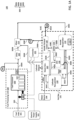
- the fuel cell system 100 may also include a fuel processing unit 500 and a fuel line 505 which fluidly connects a fuel inlet 301 to the fuel processing unit 500.
- the fuel inlet 301 may include, for example, a utility gas line and/or a gas tank, such as a higher hydrocarbon gas tank (e.g., a propane tank), including one or more valves and sensors (e.g., flow meters) for controlling a flow rate of the fuel.
- the pre-reformer 112 may include a hydrogenation catalyst.
- the hydrogenation catalyst may be configured to combine unsaturated hydrocarbons, such as ethylene and/or propylene (alkenes), with available hydrogen in the fuel stream, resulting in saturated hydrocarbons, such as ethane and propane or other alkanes.
- the hydrogenation catalyst may be disposed upstream of the reforming catalyst or integrated throughout the reforming catalyst.
- the hydrogenation catalyst may include a ceramic base, such as alumina, ceria, zirconia, or a mixture of ceria and zirconia, with a small percentage of a catalyst metal such as palladium.
- the hydrogenation catalyst may include an amount of palladium ranging from about 0.1 wt% to about 5 wt%, such as from about 0.2 wt% to about 4 wt%, from about 0.3 wt% to about 3 wt%, or from about 0.5 wt% to about 2 wt%.
- the hydrogenation catalyst may also include some inhibitors and/or stabilizers such as vanadium, tungsten, and/or other similar transition metal materials.
- Fuel may be provided from the anode recuperator 110 to the fuel cell stack 102 by fuel conduit 300D, where the fuel is reacted to generate electricity.
- the resultant anode exhaust e.g., reaction product
- the fuel cell system 100 may further include a controller 225 configured to control various elements of the fuel cell system 100.
- the controller 225 may include a central processing unit, microcontroller, etc.
- the fuel cell system 100 may include a memory device (not shown) configured to store instructions and other data (e.g., history data, reference data, performance data, etc.).
- the memory device may be included in the controller 225, elsewhere in the fuel cell system 100 or remotely (e.g., outside the fuel cell system 100).
- the controller 225 may be configured to execute the instructions stored in the memory device.
- the controller 225 may be configured to provide data directly or indirectly to a remote monitoring control center.
- the controller 225 may be configured to control air flow through the fuel cell system 100, and/or the operation of the CPOx reactor 200.
- the controller 225 may be configured to control amounts (e.g., flow rates) of steam, fuel and anode exhaust provided to the mixer 210.
- the controller 225 may also be configured to control relative amounts of anode exhaust provided from the fuel cell stack 102 to the ATO 130 and the anode recuperator 110.
- FIG. 1B is a detailed schematic view of the fuel processing unit 500 of FIG. 1A having the first configuration, according to the first embodiment.
- the fuel processing unit 500 may include a fuel processing unit housing, such as a fuel processing cabinet (not shown) that houses the fuel processor 530.
- the thermal treatment device 510 may be located within the housing (internally) or outside of the housing (externally).
- the fuel processor 530 contains a processing material 534 (e.g., impurity conversion catalyst and/or impurity adsorbent material, etc.) for processing the fuel (e.g., removing impurities, such as sulfur or its compounds, from the fuel inlet stream) in the fuel line 505.
- the processing material 534 in the fuel processor 530 may be located in one or more processing material containers 532, such as desulfurization canisters.
- the processing material 534 may be in a form of an adsorption bed, a catalyst coated support, a catalyst coating on the interior wall of the container 532 and/or a catalyst bed.
- the processing material 534 may be contained in a plurality of the processing material containers 532 fluidly connected in parallel or in series to the fuel line 505 and the fuel conduit 300A, as will be described in more detail below.
- the fuel processing unit 500 may also include a thermal treatment device 510 for thermally treating (e.g., heating) at least one of the fuel in the fuel line 505 or the processing material 534 in the fuel processor 530 to an elevated temperature.
- the thermal treatment device 510 may thermally treat the fuel, the processing material 534 or both the fuel and the processing material 534.
- the fuel from the fuel inlet 301 may enter the fuel processing unit 500 through the fuel line 505 at ambient temperature (e.g., about 20°C to 45°C).
- the thermal treatment device 510 may heat the fuel from about ambient temperature to an elevated temperature that increases at least one of a lifetime and/or efficiency of the processing material (e.g., desulfurization material) 534.
- the elevated temperature may greater than 50°C, for example from 55°C to 250°C, including from 60°C to 120°C.
- the desulfurization material 534 may, therefore, efficiently process the thermally treated fuel and produce a processed fuel that is substantially free of sulfur or its compounds.
- the processed fuel may then be transferred out of the processing material container (e.g., desulfurization canister) 532 to the fuel cell stack 102 through the fuel conduit 300A.
- the lifespan of the desulfurization material 534 may increase, such as double or triple.
- operating at the elevated temperature may increase a service life of the desulfurization canister 532 and thus reduce the cost of servicing the fuel processing unit 500.
- the cost of the desulfurization material 534 may also be reduced, since it lasts longer, the cost of recycling the desulfurization material may also be reduced as the recycling frequency is decreased, and the cost of labor may also be reduced.
- the thermal treatment device 510 may include an electrically powered thermal treatment device 510 powered by an electric power supply 501.
- the electric power supply 501 may include a power supply which provides electric power generated outside the fuel cell system 100 (e.g., power supplied by the electric grid, battery, or other renewable energy source) and/or power generated by the fuel cell system 100.
- the thermal treatment device 510 may include, for example, an electric heater that generates heat by joule heating.
- the electric heater may include, for example, an insulated coil, jacket or plate resistor configured to heat the fuel line 505.
- the electric heater may contact the fuel line 505 or be placed in close proximity to the fuel line 505.
- the thermal treatment device 510 may comprise a gas heater, such as a natural gas, propane or a kerosine heater.
- the gas heater generates heat by oxidation of a fuel gas, such as natural gas, propane or kerosine.
- the fuel processing unit 500 may optionally also include a fuel analyzer 570 ( FIG. 1 ) for analyzing the fuel in the fuel conduit 300A exiting the fuel processor 530.
- the fuel analyzer 570 may include, for example, a gas composition analyzer, such as an optical or chemical gas composition sensor.
- a performance of the fuel processor 530 e.g., an effectiveness of the fuel processor 530 in removing impurities, such as sulfur and/or its compounds
- One or more operations in the fuel processing unit 500 may be controlled by a dedicated controller of the fuel processing unit 500 and/or the controller 225 of the fuel cell system 100.
- the controller 225 may be configured to control one or more operations of fuel cell system 100, including one or more operations of the fuel processing unit 500.
- the controller 225 may control the amount of electric power provided by the power supply 501 to the electric heater 510 to control the temperature of the fuel in the fuel line 505 and/or the temperature of the fuel processor 530.
- the controller 225 may control a flow rate of the fuel in the fuel line 505 from the fuel inlet 301 to the fuel processor 530.
- the controller 225 may also control a flow rate of the fuel within the fuel processor 530.
- the controller 225 may also operate the selection valve in the fuel processor 530 to provide automated selection of one or more of the processing material containers 532 in the fuel processor 530.
- the controller 225 may also control an operation of the fuel analyzer 570 in the fuel conduit 300A.
- the controller 225 may receive a data signal from the fuel analyzer 570 and control an operation of the fuel processing unit 500 based on the data signal from the fuel analyzer 570.
- the fuel processing unit 500 may include one or more temperature sensors (not shown) located in or near the fuel processing unit 500, such as in or on the fuel line 505, in the fuel processor 530 and/or in the fuel conduit 300A.
- the controller 225 may receive a data signal from the temperature sensor(s) and control an operation of the fuel processing unit 500 based on the data signal from the temperature sensors, such as by controlling the temperature of the thermal treatment device 510 and thereby controlling a temperature of the fuel to be processed in the fuel processor 530 and/or a temperature of the processing material 534 in the fuel processor 530.
- the controller 225 may control an amount of heat produced by the thermal treatment device 510 by controlling a current or voltage of electric power from the power supply 501 that powers the thermal treatment device 510.
- the controller 225 may control an operation of the thermal treatment device 510 based on the data signal from the fuel analyzer 570.
- the controller 225 may also generate service indication signals based upon data signals provided from the fuel analyzer 570.
- the controller may generate service indication signals which are provided to a remote monitoring control station for the fuel cell system 100 and used to schedule maintenance operations when the fuel analyzer data signals indicate gas impurities have increased above a threshold value.
- FIG. 2A is a schematic representation of the fuel cell system 100 having a second configuration, according to a second embodiment.
- the second configuration of the fuel cell system 100 may be substantially the same as the first configuration in FIG. 1A , except with respect to the thermal treatment device 510 and the manner of operating the thermal treatment device 510.
- the thermal treatment device 510 may include a heat exchanger configured to heat the fuel in the fuel line 505, as shown in FIGS. 2A and 2B .
- a heat exchanger configured to heat the fuel in the fuel line 505, as shown in FIGS. 2A and 2B .
- an elevated temperature heat exchange fluid is provided from other components of the fuel cell system to the heat exchanger (i.e., the thermal treatment device 510) to heat the fuel flowing through the fuel line 505.
- the heat exchanger thermal treatment device 510 may comprise any type of heat exchanger, such as a plate heat exchanger, a tube within a tube heat exchanger, a shell and tube heat exchanger, etc.
- the heat exchange fluid may include hot water and/or steam provided from the steam generator 160 in the fuel cell system 100.
- the hot water and/or steam may be transferred from the steam generator 160 to the heat exchanger thermal treatment device 510 by transfer conduit 620a (e.g., a pipe).
- transfer conduit 620a e.g., a pipe
- a control valve 660 may be included in the transfer conduit 620a for controlling a flow rate of the hot water and/or steam in the transfer conduit 620a.
- the control valve 660 may be controlled, for example, by a control signal from the controller 225.
- the hot water and/or steam in the transfer conduit 620a may enter the heat exchanger thermal treatment device 510 and heat the fuel in the fuel line 505 passing through the heat exchanger thermal treatment device 510.
- the hot water and/or steam may then exit the heat exchanger thermal treatment device 510 through a return conduit 620b.
- the return conduit 620b may provide the hot water and/or steam back to the water conduit 306A for transporting water to the steam generator 160.
- the return conduit 620b may provide the hot water and/or steam directly to the steam generator 160.
- the transfer conduit 620a and return conduit 620b may therefore constitute a water loop 670 connected to the heat exchanger thermal treatment device 510.
- the controller 225 may control the temperature in the heat exchanger thermal treatment device 510 and thereby a temperature of the fuel in the fuel line 505.
- the controller 225 may increase a temperature of the fuel by opening the control valve 660.
- the controller 225 may decrease a temperature of the fuel by closing the control valve 660.
- the controller 225 may control the control valve 660 based on a signal from the fuel analyzer 570.
- FIG. 3A is a schematic representation of the fuel cell system 100 having a third configuration, according to a third embodiment.
- the third configuration of the fuel cell system 100 may be substantially the same as the second configuration in FIG. 2A , except that a fuel cell system 100 exhaust is used as the heat exchange fluid.
- the thermal treatment device 510 may include a heat exchanger similar to the heat exchanger in the second configuration in FIGS. 2A and 2B .
- the heat exchange fluid utilized by the heat exchanger thermal treatment device 510 may include a fuel cell exhaust from the fuel cell stack 102.
- the heat exchange fluid may include a cathode exhaust (i.e., the ATO 130 exhaust) from the hot box 101.
- the cathode exhaust may be transferred from the cathode recuperator 120 in the hot box 101 by a transfer conduit 720a to the heat exchanger thermal treatment device 510.
- the transfer conduit 720a fluidly connects an outlet of the anode tail gas oxidizer 130 to the heat exchanger thermal treatment device 510.
- the heat from the cathode exhaust may be transferred to the fuel in the thermal treatment device 510.
- the heat exchanger thermal treatment device 510 may comprise any type of heat exchanger, such as a finned tube heat exchanger, a plate heat exchanger, a tube within a tube heat exchanger, a shell and tube heat exchanger, etc.
- transfer conduit 720a may be fluidly connected to the cathode recuperator 120 to receive at least a portion of the cathode exhaust from the cathode recuperator 120.
- the cathode recuperator 120 receives the cathode exhaust (i.e., the ATO exhaust) from the ATO 130.
- the transfer conduit 720a may alternatively and/or additionally be connected at other locations inside the hot box 101 for accessing the cathode exhaust produced by the fuel cell stack 102.
- the transfer conduit 720a may be coupled to the cathode exhaust outlet conduit 304D provided from the steam generator 160 (if present).
- the transfer conduit 720a may be coupled to the exhaust conduit 304A in order to access the cathode exhaust in the exhaust conduit 304A before it is used to oxidize the anode exhaust in the ATO 130.
- a control valve 760 may be included in the transfer conduit 720a for controlling a flow rate of the cathode exhaust in the transfer conduit 720a.
- the control valve 760 may be controlled, for example, by a control signal from the controller 225. Similar to the second configuration in FIG. 2A , by controlling the control valve 760, the controller 225 may control the thermal treatment device 510 and thereby a temperature of the fuel. Further, the controller 225 may control the control valve 760 based on a signal from the fuel analyzer 570.
- FIG. 4 is a schematic representation of the fuel cell system 100 having a fourth configuration, according to a fourth embodiment.
- the fourth configuration of the fuel cell system 100 may be substantially the same as the first configuration in FIG. 1A , except that a fuel pressurization device 810 is used as the thermal treatment device.
- the fuel pressurization device 810 such as a fuel blower, is provided on the fuel line 505 upstream of the fuel processor 530.
- the fuel pressurization device 810 increases the fuel temperature by increasing the fuel pressure. For example, natural gas at room temperature (e.g., 25 °C) and low pressure (e.g., 0.25 psi) may be heated to a higher temperature (e.g., 120 to 140 °C) by increasing the fuel pressure above 1 psi, such as from 8 to 10 psi by the fuel blower.
Landscapes
- Chemical & Material Sciences (AREA)
- Engineering & Computer Science (AREA)
- General Chemical & Material Sciences (AREA)
- Chemical Kinetics & Catalysis (AREA)
- Sustainable Energy (AREA)
- Life Sciences & Earth Sciences (AREA)
- Sustainable Development (AREA)
- Electrochemistry (AREA)
- Manufacturing & Machinery (AREA)
- Analytical Chemistry (AREA)
- Oil, Petroleum & Natural Gas (AREA)
- Environmental & Geological Engineering (AREA)
- Combustion & Propulsion (AREA)
- Health & Medical Sciences (AREA)
- Biomedical Technology (AREA)
- Fuel Cell (AREA)
Applications Claiming Priority (1)
| Application Number | Priority Date | Filing Date | Title |
|---|---|---|---|
| US202363526295P | 2023-07-12 | 2023-07-12 |
Publications (2)
| Publication Number | Publication Date |
|---|---|
| EP4492509A2 true EP4492509A2 (fr) | 2025-01-15 |
| EP4492509A3 EP4492509A3 (fr) | 2025-02-26 |
Family
ID=91738843
Family Applications (1)
| Application Number | Title | Priority Date | Filing Date |
|---|---|---|---|
| EP24185342.3A Pending EP4492509A3 (fr) | 2023-07-12 | 2024-06-28 | Unité de traitement de combustible pour un système de pile à combustible et son procédé de fonctionnement à une température élevée |
Country Status (3)
| Country | Link |
|---|---|
| US (1) | US20250023076A1 (fr) |
| EP (1) | EP4492509A3 (fr) |
| KR (1) | KR20250010532A (fr) |
Citations (1)
| Publication number | Priority date | Publication date | Assignee | Title |
|---|---|---|---|---|
| US11196068B2 (en) | 2019-01-29 | 2021-12-07 | Bloom Energy Corporation | Fuel cell system containing water injector and method of operating the same |
Family Cites Families (3)
| Publication number | Priority date | Publication date | Assignee | Title |
|---|---|---|---|---|
| US7063732B2 (en) * | 2003-07-28 | 2006-06-20 | Fuelcell Energy, Inc. | High-capacity sulfur adsorbent bed and gas desulfurization method |
| DE112017002018T5 (de) * | 2016-04-13 | 2019-01-03 | Lg Fuel Cell Systems, Inc. | Brennstoffzellensystem mit kombinierten passiven und aktiven Sorptionsmittelbetten |
| US10847824B2 (en) * | 2018-09-13 | 2020-11-24 | Bloom Energy Corporation | Fuel cell system including high-temperature desulfurization subsystem and method of operating the same |
-
2024
- 2024-06-28 EP EP24185342.3A patent/EP4492509A3/fr active Pending
- 2024-06-28 US US18/759,293 patent/US20250023076A1/en active Pending
- 2024-06-28 KR KR1020240085059A patent/KR20250010532A/ko active Pending
Patent Citations (1)
| Publication number | Priority date | Publication date | Assignee | Title |
|---|---|---|---|---|
| US11196068B2 (en) | 2019-01-29 | 2021-12-07 | Bloom Energy Corporation | Fuel cell system containing water injector and method of operating the same |
Also Published As
| Publication number | Publication date |
|---|---|
| US20250023076A1 (en) | 2025-01-16 |
| EP4492509A3 (fr) | 2025-02-26 |
| KR20250010532A (ko) | 2025-01-21 |
Similar Documents
| Publication | Publication Date | Title |
|---|---|---|
| US8790840B2 (en) | Systems and methods for fuel cell thermal management | |
| St-Pierre et al. | Fuel cells: a new, efficient and cleaner power source | |
| JP4515253B2 (ja) | 燃料電池システム | |
| US8227119B2 (en) | Fuel cell system | |
| US12542289B2 (en) | Handling of variable and unpredictable gas composition changes to maximize health and performance of fuel cell systems | |
| US20250243053A1 (en) | Systems and methods of processing ammonia | |
| KR102044766B1 (ko) | 안정적인 성능유지와 열효율이 향상된 고효율 연료전지시스템 | |
| EP1929568B1 (fr) | Groupes d alimentation à pile a combustible et systèmes avec régulation de température réagissant au fluide | |
| KR102355412B1 (ko) | 연료전지 시스템 및 이를 구비한 선박 | |
| US20260005272A1 (en) | Fuel cell system containing catalyst based fuel contamination sensor and method of operating thereof | |
| EP4492509A2 (fr) | Unité de traitement de combustible pour un système de pile à combustible et son procédé de fonctionnement à une température élevée | |
| US11081704B2 (en) | Fuel cell systems containing chromium filters | |
| US12126061B1 (en) | Ammonia-based solid oxide fuel cell (SOFC) system in which temperature rise using heating element is applied, and operation method therefor | |
| KR101817432B1 (ko) | 연료전지 시스템 | |
| CN103210536A (zh) | 避免阳极氧化的方法和装置 | |
| WO2008016217A1 (fr) | Système de piles à combustible | |
| US20240347749A1 (en) | Fuel cell system including anode recycle cooler and method of operating the same | |
| US20260128336A1 (en) | Handling of variable and unpredictable gas composition changes to maximize health and performance of fuel cell systems | |
| JP2010225284A (ja) | 間接内部改質型固体酸化物形燃料電池システムの運転方法 | |
| JP2011175745A (ja) | 燃料電池システム | |
| KR101435392B1 (ko) | 연료전지 시스템 | |
| KR101435391B1 (ko) | 연료전지 시스템 | |
| WO2012091131A1 (fr) | Système de piles à combustible | |
| WO2009123585A1 (fr) | Système de traitement de combustible pour centrale électrique à pile à combustible | |
| WO2012091132A1 (fr) | Système de piles à combustible |
Legal Events
| Date | Code | Title | Description |
|---|---|---|---|
| PUAI | Public reference made under article 153(3) epc to a published international application that has entered the european phase |
Free format text: ORIGINAL CODE: 0009012 |
|
| STAA | Information on the status of an ep patent application or granted ep patent |
Free format text: STATUS: THE APPLICATION HAS BEEN PUBLISHED |
|
| AK | Designated contracting states |
Kind code of ref document: A2 Designated state(s): AL AT BE BG CH CY CZ DE DK EE ES FI FR GB GR HR HU IE IS IT LI LT LU LV MC ME MK MT NL NO PL PT RO RS SE SI SK SM TR |
|
| PUAL | Search report despatched |
Free format text: ORIGINAL CODE: 0009013 |
|
| AK | Designated contracting states |
Kind code of ref document: A3 Designated state(s): AL AT BE BG CH CY CZ DE DK EE ES FI FR GB GR HR HU IE IS IT LI LT LU LV MC ME MK MT NL NO PL PT RO RS SE SI SK SM TR |
|
| RIC1 | Information provided on ipc code assigned before grant |
Ipc: H01M 8/04701 20160101ALI20250122BHEP Ipc: H01M 8/04111 20160101ALI20250122BHEP Ipc: H01M 8/04007 20160101ALI20250122BHEP Ipc: H01M 8/04029 20160101ALI20250122BHEP Ipc: H01M 8/0662 20160101ALI20250122BHEP Ipc: H01M 8/0612 20160101ALI20250122BHEP Ipc: H01M 8/04014 20160101AFI20250122BHEP |
|
| STAA | Information on the status of an ep patent application or granted ep patent |
Free format text: STATUS: REQUEST FOR EXAMINATION WAS MADE |
|
| 17P | Request for examination filed |
Effective date: 20250820 |