EP4492886A1 - Funkrufverfahren und vorrichtung dafür - Google Patents
Funkrufverfahren und vorrichtung dafür Download PDFInfo
- Publication number
- EP4492886A1 EP4492886A1 EP23765940.4A EP23765940A EP4492886A1 EP 4492886 A1 EP4492886 A1 EP 4492886A1 EP 23765940 A EP23765940 A EP 23765940A EP 4492886 A1 EP4492886 A1 EP 4492886A1
- Authority
- EP
- European Patent Office
- Prior art keywords
- sdt
- terminal device
- access network
- paging message
- network device
- Prior art date
- Legal status (The legal status is an assumption and is not a legal conclusion. Google has not performed a legal analysis and makes no representation as to the accuracy of the status listed.)
- Pending
Links
Images




Classifications
-
- H—ELECTRICITY
- H04—ELECTRIC COMMUNICATION TECHNIQUE
- H04W—WIRELESS COMMUNICATION NETWORKS
- H04W68/00—User notification, e.g. alerting and paging, for incoming communication, change of service or the like
- H04W68/02—Arrangements for increasing efficiency of notification or paging channel
-
- H—ELECTRICITY
- H04—ELECTRIC COMMUNICATION TECHNIQUE
- H04W—WIRELESS COMMUNICATION NETWORKS
- H04W68/00—User notification, e.g. alerting and paging, for incoming communication, change of service or the like
- H04W68/005—Transmission of information for alerting of incoming communication
-
- H—ELECTRICITY
- H04—ELECTRIC COMMUNICATION TECHNIQUE
- H04W—WIRELESS COMMUNICATION NETWORKS
- H04W68/00—User notification, e.g. alerting and paging, for incoming communication, change of service or the like
-
- H—ELECTRICITY
- H04—ELECTRIC COMMUNICATION TECHNIQUE
- H04W—WIRELESS COMMUNICATION NETWORKS
- H04W76/00—Connection management
- H04W76/20—Manipulation of established connections
- H04W76/27—Transitions between radio resource control [RRC] states
-
- H—ELECTRICITY
- H04—ELECTRIC COMMUNICATION TECHNIQUE
- H04W—WIRELESS COMMUNICATION NETWORKS
- H04W28/00—Network traffic management; Network resource management
- H04W28/16—Central resource management; Negotiation of resources or communication parameters, e.g. negotiating bandwidth or QoS [Quality of Service]
- H04W28/24—Negotiating SLA [Service Level Agreement]; Negotiating QoS [Quality of Service]
Definitions
- This disclosure relates to the technical field of communications, and in particular, to a paging method and a paging apparatus.
- an air interface state of a terminal device includes a radio resource control (RRC) idle ( RRC_idle) state, an RRC connected ( RRC_connected) state, and an RRC inactive ( RRC_inactive) state.
- RRC radio resource control
- RRC_idle radio resource control
- RRC_connected RRC connected
- RRC_inactive RRC inactive
- the terminal device When the terminal device is in the RRC _connected state, the terminal device is connected to a network, a base station performs relevant configuration of a radio bearer (RB) and a physical layer, etc., and the base station can perform uplink and downlink data scheduling on the terminal device.
- a base station When the terminal device is in the RRC_inactive state, movement of the terminal device within a radio access network-based notification area (RNA) does not require to be notified to the base station, and the terminal device can reserve a certain configuration (for example, a packet data convergence protocol (PDCP), service data adaptation protocol (SDAP), etc.). If the base station needs to schedule the terminal device or the terminal device has data to be sent, the terminal device needs to transit to the RRC_connected state and restore the reserved configuration for data transmission.
- PDCP packet data convergence protocol
- SDAP service data adaptation protocol
- Small data transmission refers to transmission or reception of data when the terminal device is in the RRC_inactive state, and the terminal device does not need to transit to the RRC _connected state.
- the network configures some conditions for allowing the use of SDT.
- a base station storing a context of a terminal device, or a base station sending an RRC release message to the terminal device to make the terminal device transit to the RRC_inactive state is referred to as a last serving next generation node B (gNB) or an anchor gNB.
- a base station (referred to as base station b) needs to send an RAN paging message via an Xn interface between base stations to notify the base station b to page the terminal device.
- the base station b is unable to determine whether to initiate MT-SDT paging, which may result in that the terminal device is unable to be paged.
- a paging method and a paging apparatus are disclosed in the present disclosure.
- a first paging message By means of a first paging message, it is conducive to successfully paging a terminal device.
- a paging method is provided in embodiments of the present disclosure.
- the paging method is applied to a first access network device and includes the following.
- a first paging message is sent to a second access network device, where the first paging message contains an identity of a terminal device to be paged and indication information for indicating that mobile terminated-small data transmission (MT-SDT) is to be performed.
- M-SDT mobile terminated-small data transmission
- the method further includes receiving first information from a core network device, where the first information contains quality of service (QoS) information about downlink data to be sent to the terminal device.
- QoS quality of service
- the method further includes sending second information to the second access network device, where the second information contains one or more of the following: a data volume of downlink data to be sent to the terminal device, QoS information about the downlink data, and an identity of a radio bearer (RB) supporting small data transmission (SDT).
- the second information contains one or more of the following: a data volume of downlink data to be sent to the terminal device, QoS information about the downlink data, and an identity of a radio bearer (RB) supporting small data transmission (SDT).
- RB radio bearer supporting small data transmission
- the downlink data includes predicted data to be sent to the terminal device.
- the first paging message is sent to the second access network device as follows.
- the first paging message is sent to the second access network device in response to an identity of an RB supporting SDT including an identity of an RB of the downlink data.
- the method further includes receiving capability information from the second access network device, where the capability information indicates whether a cell served by the second access network device supports MT-SDT.
- a paging method is further provided in embodiments of the present disclosure.
- the paging method is applied to a terminal device and includes the following.
- a paging message is received from an access network device, where the paging message contains an identity of the terminal device to be paged and indication information for indicating that MT-SDT is to be performed.
- Whether to perform uplink transmission by using SDT resources are determined in response to presence of uplink data to be sent; and/or the SDT resources are selected to perform uplink transmission in response to absence of uplink data to be sent.
- whether to perform uplink transmission by using the SDT resources are determined by determining to perform uplink transmission by using the SDT resources in response to an identity of an RB supporting SDT including an identity of an RB of the uplink data to be sent.
- a paging method is further provided in embodiments of the present disclosure.
- the paging method is applied to a second access network device and includes the following.
- a first paging message is received from a first access network device, where the first paging message contains an identity of a terminal device to be paged and indication information for indicating that MT-SDT is to be performed.
- the method further includes sending a second paging message to the terminal device according to the first paging message, where the second paging message contains the identity of the terminal device to be paged and the indication information for indicating that MT-SDT is to be performed.
- the method further includes receiving second information from the first access network device, where the second information contains one or more of the following: the data volume of downlink data to be sent to the terminal device, QoS information about the downlink data, and an identity of an RB supporting SDT; sending a third paging message to the terminal device according to the second information, where the third paging message contains the identity of the terminal device to be paged and the indication information for indicating that MT-SDT is to be performed.
- the downlink data includes predicted data to be sent to the terminal device.
- the third paging message is sent to the terminal device according to the second information as follows.
- the third paging message is sent to the terminal device in response to the identity of an RB supporting SDT includes the identity of an RB of the downlink data.
- the method further includes sending capability information to the first access network device, where the capability information indicates whether a cell served by the second access network device supports MT-SDT.
- a paging method is further provided in embodiments of the present disclosure.
- the paging method is applied to a second access network device and includes the following.
- Second information is received from a first access network device, where the second information contains one or more of the following: a data volume of downlink data to be sent to a terminal device, QoS information about the downlink data, and an identity of an RB supporting SDT.
- a fourth paging message is sent to the terminal device according to the second information, where the fourth paging message contains an identity of the terminal device to be paged and indication information for indicating that MT-SDT is to be performed.
- the method further includes receiving a first paging message from the first access network device, where the first paging message contains the identity of the terminal device to be paged and indication information for indicating that MT-SDT is to be performed.
- the downlink data includes predicted data to be sent to the terminal device.
- the fourth paging message is sent to the terminal device according to the second information as follows.
- the fourth paging message is sent to the terminal device in response to an identity of an RB supporting SDT including an identity of an RB of the downlink data.
- the method further includes sending capability information to the first access network device, where the capability information indicates whether a cell served by the second access network device supports MT-SDT.
- a paging apparatus in embodiments of the present disclosure.
- the paging apparatus includes a unit for performing the method in the first aspect, the second aspect, the third aspect, or the fourth aspect.
- the paging apparatus includes a processor.
- the processor is configured to perform the method in the first aspect, the second aspect, the third aspect, or the fourth aspect.
- the paging apparatus further includes a memory.
- the memory is configured to store a computer program
- the processor is specifically configured to invoke the computer program from the memory to perform the method in the first aspect, the second aspect, the third aspect, or the fourth aspect.
- a chip is provided in embodiments of the present disclosure.
- the chip is configured to perform the method in the first aspect, the second aspect, the third aspect, or the fourth aspect.
- a chip module in embodiments of the present disclosure.
- the chip module includes a communication interface and a chip.
- the communication interface is configured to perform communication within the chip module, or perform communication between the chip module and an external device.
- the chip is configured to perform the method in the first aspect, the second aspect, the third aspect, or the fourth aspect.
- a computer-readable storage medium stores a computer program.
- the computer program includes program instructions which, when executed by a processor, enables the processor to perform the method in the first aspect, the second aspect, the third aspect, or the fourth aspect.
- a computer program product in embodiments of the present disclosure.
- the computer program product includes a computer program or an instruction which, when executed on a computer, enables the computer to perform the method in the first aspect, the second aspect, the third aspect, or the fourth aspect.
- the indication information for indicating that MT-SDT is to be performed is carried in the first paging message, and the second access network device can determine that an MT-SDT procedure can be initiated, so that the occurrence of a situation where the second access network device is unable to determine whether to initiate the MT-SDT procedure can be avoided, thereby facilitating successful paging of the terminal device.
- FIG. 1 is a schematic architecture diagram of a communication system provided in embodiments of the present disclosure.
- the communication system may include, but is not limited to, a first access network device, a second access network device, and a terminal device.
- the number and form of devices illustrated in FIG. 1 are used as an example and do not limit embodiments of the present disclosure. In practical applications, two or more first access network devices, two or more second access network devices, and two or more terminal devices may be included.
- the communication system illustrated in FIG. 1 includes one first access network device 101, one second access network device 102, and one terminal device 103.
- the terminal device in embodiments of the present disclosure is a device having a wireless transmit/receive function, and may be referred to as a terminal, a user equipment (UE), a mobile station (MS), a mobile terminal (MT), an access terminal device, a vehicle-mounted terminal device, an industrial control terminal device, a UE unit, a UE station, a mobile station, a remote station, a remote terminal device, a mobile device, a UE terminal device, a wireless communication device, a UE agent, or a UE device.
- the terminal device may be fixed or mobile. It is to be noted that the terminal device may support at least one wireless communication technology, for example, long time evolution (LTE), new radio (NR), wideband code division multiple access (WCDMA), and the like.
- LTE long time evolution
- NR new radio
- WCDMA wideband code division multiple access
- the terminal device may be a mobile phone, a tablet computer (pad), a desktop computer, a notebook computer, an all-in-one computer, a vehicle-mounted terminal, or a virtual reality (VR) terminal device, an augmented reality (AR) terminal device, a wireless terminal in industrial control, a wireless terminal in self driving, a wireless terminal in remote medical surgery, a wireless terminal in smart grid, a wireless terminal in transport safety, a wireless terminal in smart city, a wireless terminal in smart home, a cellular phone, a cordless phone, a session initiation protocol (SIP) phone, a wireless local loop (WLL) station, a personal digital assistant (PDA), a handheld device having a wireless communication capability, a computing device or other processing devices connected to a wireless modem, a wearable device, a terminal device in a future mobile communication network, or a terminal device in a future evolved public land mobile network (PLMN).
- PLMN public land mobile network
- the terminal device may also be an apparatus with a transmit/receive function, such as a chip module.
- the chip module may include a chip, and may also include other discrete components.
- a specific technology and a specific device form adopted by the terminal device are not limited in embodiments of the present disclosure.
- An access network (AN) device (such as a first access network device and a second access network device) in embodiments of the present disclosure is a device providing a wireless communication function for a terminal device.
- the access network device may be a radio access network (RAN) device.
- the access network device may support at least one wireless communication technology, for example, LTE, NR, WCDMA, and the like.
- the access network device includes, but is not limited to, a generation node B (gNB), an evolved node B (eNB), a radio network controller (RNC), a node B (NB), a base station controller (BSC), a BSC), a base transceiver station (BTS), a home base station (e.
- gNB generation node B
- eNB evolved node B
- RNC radio network controller
- NB node B
- BSC base station controller
- BSC base transceiver station
- home base station e.
- the access network device may also be a radio controller, a centralized unit (CU), and/or a distributed unit (DU) in a cloud radio access network (CRAN) scenario.
- the access network device may also be an apparatus providing a wireless communication function for the terminal device, such as a chip module.
- the chip module may include a chip, and may also include other discrete components.
- a specific technology and a specific device form adopted by the access network device are not limited in embodiments of the present disclosure.
- the communication system illustrated in FIG. 1 can further include a core network device (not illustrated in FIG. 1 ).
- the core network device may have the following functions: providing a broadband access service, converging and forwarding of multiple services, satisfying requirements of different users for transmission capacity and bandwidth utilization, terminating and managing a point-to-point protocol over Ethernet (PPPoE)/ IP over Ethernet (IPoE) sessions of a user, and providing authentication services, authorization services, or charging services.
- the terminal device 103 may access a radio network through an access network device, and register in a core network through a core network device.
- the core network device may include, but is not limited to, a mobility management network element, a user plane network element, a session management network element, and the like.
- a mobility management network element may be an access and mobility management function (AMF) network element
- a user plane network element may be a user plane function (UPF) network element
- a session management network element may be a session management function (SMF) network element.
- the mobility management network element is a terminating point of non-access stratum (NAS) signaling, and is mainly responsible for access authentication and mobility management of a user.
- the terminal device may communicate with the AMF through an N1 NAS message, and a communication message between the terminal device and the AMF may also be forwarded through an N2 message in a radio access network.
- the radio access network communicates with the AMF through an N2 message.
- the user plane network element is used for processing a user message, such as forwarding and charging.
- the session management network element is responsible for managing creation, deletion, and the like of a session of a user, and maintaining a protocol data unit (PDU) session context and user plane forwarding pipeline information.
- N1 represents an interface between the AMF network element and the terminal device
- N2 represents an interface between the AMF network element and a radio access network device.
- the random access procedure refers to a process before the terminal device sends a random access preamble, tries to access a network, and establishes a basic signaling connection with the network.
- the preamble can be used for a network device to recognize an identity of a terminal device during random access, or used for a network device to distinguish a device initiating random access, and can also be used for other purposes, which are not limited in embodiments of the present disclosure.
- the random access procedure includes four-step random access and two-step random access, where the four-step random access may include four messages: message 1 (also referred to as Msg1 ) , message 2 (also referred to as Msg2 ) , message 3 (also referred to as Msg3 ) and message 4 (also referred to as Msg4 ), and a schematic flowchart of the four-step random access procedure is illustrated in FIG. 2 .
- message 1 also referred to as Msg1
- message 2 also referred to as Msg2
- message 3 also referred to as Msg3
- message 4 also referred to as Msg4
- the terminal device sends Msg1 on a physical random access channel (PRACH) occasion (RO), where Msg1 includes the preamble.
- PRACH physical random access channel
- the network device After receiving the preamble, the network device generates a random access response (RAR) for the preamble and sends the RAR (also referred to as Msg2 ) .
- RAR random access response
- the RAR is carried on a physical downlink shared channel (PDSCH), the PDSCH is scheduled by a physical downlink control channel (PDCCH), and the PDCCH is scrambled by a random access radio network temporary identity (RA-RNTI).
- PDSCH physical downlink shared channel
- PDCCH physical downlink control channel
- RA-RNTI random access radio network temporary identity
- the RAR includes one or more of the following: a timing advance command (TAC), uplink grant (UL grant), a temporary cell radio network temporary identity (TC-RNTI).
- TAC carries timing advance (TA) information.
- the UL grant carries scheduling information for the terminal device to send Msg3.
- the terminal device without a cell radio network temporary identity (C-RNTI) may receive Msg4 through the TC-RNTI.
- the first two steps of the random access procedure mainly complete time synchronization of uplink.
- Multiple terminal devices may select the same RO and preamble to initiate the random access procedure, which may lead to a contention.
- the latter two steps of the random access procedure can solve the contention, and a unique and legal identity is assigned to the terminal device for subsequent data transmission.
- the terminal device After sending Msg1, the terminal device monitors the PDCCH scrambled by the RA-RNTI to receive the RAR. After receiving the RAR, the terminal device sends Msg3, where Msg3 is carried on a physical uplink shared channel (PUSCH). For a terminal device in a non-RRC_connected state, an RRC common control channel (CCCH) is sent.
- PUSCH physical uplink shared channel
- the network device After the network device receives the PUSCH sent by the terminal device, if the terminal device succeeds in contention resolution, the network device generates a response (i. e. Msg4 ) for the PUSCH, where Msg4 is carried on the PDSCH.
- a identity (contention resolution identity (CRID)) for uniquely identifying the terminal device is carried in Msg4 to indicate the terminal device that succeeds in contention resolution, and other terminal devices that fail in contention resolution will re-initiate random access.
- CRID contention resolution identity
- the terminal device determines that the random access is successful and converts its own TC-RNTI into the C-RNTI.
- the two-step random access includes message A (also referred to as MsgA ) and message B (also referred to as MsgB ), and a schematic flowchart of the two-step random access procedure is illustrated in FIG. 3 .
- Msg1 includes Msg1 and Msg3, that is, includes a preamble sent over a physical random access channel (PRACH) and a payload sent over the PUSCH.
- MsgB includes Msg2 and Msg4. If the network device only receives the preamble sent by the terminal device, the network device returns the RAR of the four-step random access procedure, and the terminal device falls back to the four-step random access.
- PRACH physical random access channel
- Random access-SDT Random access-SDT
- CG-SDT Configured Grant-SDT
- SDT includes two transmission modes, that is, RA-SDT and CG-SDT.
- RA-SDT refers to that during the four-step random access procedure, a data transmission mode can be carried in Msg3 in addition to an RRC message, or RA-SDT refers to that during the two-step random access procedure, a data transmission mode can be carried in MsgA in addition to an RRC message.
- CG-SDT refers to that a network pre-configures dedicated CGTypel resources to a terminal device, and the terminal device uses the resources to transmit a valid TA and can directly send data without sending a preamble. Compared with the four-step random access procedure, CG-SDT reduces two steps of Msg1 and Msg2.
- the network configures some conditions for allowing the use of SDT.
- a data volume threshold is configured, and a radio bearer (RB) for which SDT is enabled that includes a signaling radio bearer (SRB) and a data radio bearer (DRB).
- SRB signaling radio bearer
- DRB data radio bearer
- an RB for which SDT is enabled may also be described as an RB supporting SDT.
- CG-SDT is used, the following parameters may also be configured: CG resources, a threshold range of a reference signal receive power (RSRP) change, and a signal threshold used by a synchronization signal block (SSB). It is to be noted that, CG-SDT is only used in a cell where the RRC Release message is received, and once a new cell is reselected to, the terminal device releases corresponding CG resources.
- RSRP reference signal receive power
- SSB synchronization signal block
- CG-SDT is only used in a cell where the RRC Release message is received, and once a new cell is reselected to, the terminal device releases corresponding CG resources.
- the following parameters may be different: a threshold range of an RSRP change and a signal threshold used by an SSB.
- an RSRP threshold may also be configured. RA-SDT resources are configured through a system message of each cell. Optionally, RSRP thresholds configured for different cells may be different.
- FIG. 4 is a schematic flowchart of a paging method provided in embodiments of the present disclosure.
- the embodiment corresponding to FIG. 4 mainly describes how a first access network device triggers a mobile terminated-small data transmission (MT-SDT) procedure, and further describes how a second access network device triggers an MT-SDT procedure.
- the paging method may include but is not limited to the following operations.
- the first access network device sends a first paging message to the second access network device, where the first paging message contains an identity of a terminal device to be paged and indication information for indicating that MT-SDT is to be performed.
- the second access network device receives the first paging message from the first access network device.
- the terminal device may be in a non-RRC_connected state, and the non-RRC_connected state may refer to an RRC_idle state or an RRC_inactive state.
- the indication information for indicating that MT-SDT is to be performed may also be described as indication information for indicating that enhanced paging is to be performed.
- the first paging message contains the indication information for indicating that MT-SDT is to be performed or the indication information for indicating that enhanced paging is to be performed.
- the first access network device determines that the MT-SDT procedure can be initiated. Initiating the MT-SDT procedure means that the terminal device in the non-RRC _connected state can perform uplink transmission using SDT resources.
- Initiating the MT-SDT procedure may also be described as initiating MT-SDT paging or initiating enhanced paging.
- the second access network device can determine that the MT-SDT procedure can be initiated, and in this way, it can be avoided that the second access network device is unable to determine whether to initiate the MT-SDT procedure due to the lack of configuration information of the terminal device (for example, configuration information of an RB about whether the terminal device is allowed to use SDT), and therefore it is conducive to successfully paging the terminal device.
- the terminal device using the SDT resources to perform uplink transmission includes that the terminal device using the SDT resources to transmit uplink data and/or signalling, where the uplink data may refer to useful data, service data, or user data to be sent in the terminal device, and the signalling may include signalling for responding to a paging message received by the terminal device.
- a last serving access network device (or referred to as anchor access network device) corresponding to the terminal device 103 in the non-RRC_connected state is the first access network device 101, and the terminal device 103 moves from a radio access network-based notification area (RNA) to an access network device (such as the second access network device 102) in another RNA.
- RNA radio access network-based notification area
- the first access network device 101 needs to send a paging message to the second access network device 102 through an Xn interface to instruct the second access network device 102 to page the terminal device 103.
- the second access network device 102 does not know a condition for allowing the use of SDT configured for the terminal device 103 by a network when the terminal device transits to the RRC_inactive state, and therefore the second access network device 102 is unable to determine whether to initiate the MT-SDT procedure for the terminal device 103.
- the last serving access network device i.e., the first access network device 101
- the configuration information of an RB for which SDT is enabled i. e., a condition for allowing to use SDT
- the second access network device 102 does not know the configuration information, so the second access network device 102 is unable to determine whether to initiate the MT-SDT procedure for the terminal device 103.
- the second access network device can determine that the MT-SDT procedure can be initiated, which can avoid a situation where the second access network device is unable to determine whether to initiate the MT-SDT procedure.
- the first paging message may be sent through the Xn interface between the first access network device and the second access network device, and the first paging message is an Xn RAN paging message.
- the first access network device may receive first information from a core network device, where the first information contains quality of service (QoS) information about downlink data to be sent to the terminal device.
- QoS information about the downlink data may include one or more of the following: QoS flow information about the downlink data, a delay requirement of the downlink data, a data packet size of the downlink data, and service-related information of the downlink data.
- the QoS flow information about the downlink data may include a QoS flow identity.
- the downlink data may include predicted data to be sent to the terminal device, and/or determined data to be sent to the terminal device.
- the first information can further include the downlink data to be sent to the terminal device.
- the first access network device may determine, according to the first information, whether to initiate the MT-SDT procedure.
- the first access network device determines, according to the first information, whether to initiate the MT-SDT procedure includes the following.
- the first access network device determines whether an identity of an RB supporting SDT includes an identity of an RB of the downlink data.
- the access network device determines to initiate the MT-SDT procedure if the identity of the RB supporting SDT includes the identity of the RB of the downlink data. If the identity of the RB supporting SDT does not include the identity of the RB of the downlink data, the access network device determines not to initiate the MT-SDT procedure.
- the first access network device adds, to a paging message (i. e., the first paging message) sent to the second access network device, the indication information for indicating that MT-SDT is to be performed.
- the first access network device sends the first paging message to the second access network device as follows. If the identity of the RB supporting SDT includes the identity of the RB of the downlink data, the first access network device sends the first paging message to the second access network device.
- the first access network device may not add, to the paging message sent to the second access network device, any indication information for indicating that MT-SDT is to be performed.
- the identity of the RB of the downlink data is determined according to the QoS information about the downlink data.
- the first access network device may determine the identity of the RB of the downlink data as follows. According to a mapping relationship between QoS flow identities and identities of RBs, the identity of the RB mapped to the QoS flow identity of the downlink data is determined as the identity of the RB of the downlink data.
- the first information can further include a data volume of the downlink data, where the data volume of the downlink data may include a data volume of existing downlink data to be sent to the terminal device, and/or a data volume of predicted downlink data to be sent to the terminal device.
- the core network device may assist the first access network device in determining whether to initiate the MT-SDT procedure by notifying the first access network device of the data volume of the downlink data.
- the core network device in embodiments of the present disclosure may be a mobile management network element (such as an AMF) or a user plane network element (such as a UPF).
- a mobile management network element such as an AMF
- a user plane network element such as a UPF
- the first access network device and the second access network device can exchange whether a served cell supports MT-SDT.
- the second access network device sends capability information to the first access network device, where the capability information indicates whether a cell served by the second access network device supports MT-SDT.
- the first access network device receives the capability information.
- the first access network device and the second access network device may exchange, in an Xn setup procedure, whether a served cell supports MT-SDT. Exemplarily, for illustrative purpose, whether a cell served by the second access network device supports MT-SDT is exchanged in the Xn setup procedure.
- the first access network device may send a request message to the second access network device, where the request message requests to acquire the capability information, and the second access network device sends a response message to the first access network device, where the response message includes the capability information.
- the request message may be an Xn setup request message
- the response message may be an Xn setup response message.
- the capability information may be indicated in an NR field in served cell information in the Xn setup request and the Xn setup response, or the capability information may be indicated in a new extended field in the Xn setup request and the Xn setup response.
- the second access network device may further perform the following operations.
- the second access network device sends a second paging message to the terminal device according to the first paging message, where the second paging message contains the identity of the terminal device to be paged and the indication information for indicating that MT-SDT is to be performed.
- the terminal device receives the second paging message.
- the second access network device obtains that the first paging message contains the indication information for indicating that MT-SDT is to be performed, and the second access network device sends the second paging message to the terminal device to initiate the MT-SDT procedure. It is to be noted that information carried in the first paging message and information carried in the second paging message may be the same, but the first paging message is different from the second paging message, that is, a RAN paging message transmitted between access network devices is different from a paging message sent by an access network device to the terminal device.
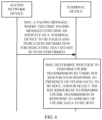
- FIG. 6 the embodiment corresponding to FIG. 6 mainly describes how the terminal device determines whether to perform uplink transmission by using SDT resources after receiving a paging message from an access network device.
- the paging method illustrated in FIG. 6 includes, but is not limited to, operations at S601-S602.
- an access network device sends a paging message to the terminal device, where the paging message includes an identity of a terminal device to be paged and indication information for indicating that MT-SDT is to be performed.
- the terminal device receives the paging message from the access network device.
- the access network device in operations at S601 may be the first access network device or the second access network device.
- the access network device in operations at S601 is the first access network device
- the paging message in operations at S601 may be the first paging message.
- the first access network device directly sends the paging message to the terminal device without passing through the second access network device. It can be understood that, in this case, the terminal device is within a coverage range of the first access network device.
- For contents of the first paging message reference may be made to the specific description of operations at S401 in the embodiment corresponding to FIG. 4 , which will not be repeatedly described herein.
- the access network device in operations at S601 is the second access network device
- the paging message in operations at S601 may be the second paging message
- the paging message in operations at S601 may be a third paging message or a fourth paging message described in the following.
- the first access network device may indirectly send the paging message to the terminal device through the second access network device.
- the second paging message, the third paging message, and the fourth paging message reference may be made to the specific description of operations at step S502 in the embodiment corresponding to FIG. 5 , operations at S703 in the embodiment corresponding to FIG. 7 , and operations at S802 in the embodiment corresponding to FIG. 8 , which are not described herein again.
- the terminal device determines whether to perform uplink transmission by using SDT resources in response to presence of uplink data to be sent; and/or the terminal device selects SDT resources to perform uplink transmission in response to absence of uplink data to be sent.
- whether to perform uplink transmission by using SDT resources are determined as follows. If an identity of an RB supporting SDT includes an identity of an RB of uplink data to be sent, determine to perform uplink transmission by using SDT resources. Optionally, if the identity of the RB supporting SDT does not include the identity of the RB of the uplink data to be sent, uplink transmission may not be performed by using SDT resources. Exemplarily, uplink transmission may be performed by using random-access channel (RACH) resources rather than SDT resources.
- RACH random-access channel
- whether to perform uplink transmission by using SDT resources are determined as follows. Whether an identity of an RB supporting SDT includes an identity of an RB of the uplink data to be sent is determined, and whether a data volume of the uplink data to be sent satisfies a data volume threshold is determined. If the identity of the RB supporting SDT includes the identity of the RB of the uplink data to be sent, and the data volume of the uplink data to be sent satisfies the data volume threshold, it is determined that uplink transmission can be performed by using SDT resources.
- the identity of the RB supporting SDT does not include the identity of the RB of the uplink data to be sent, and/or the data volume of the uplink data to be sent does not satisfy the data volume threshold, it is determined that SDT resources are unable to be used to perform uplink transmission. If the identity of the RB supporting SDT includes the identity of the RB of the uplink data to be sent, it indicates that the uplink data to be sent is allowed RB data. If the identity of the RB supporting SDT does not include the identity of the RB of the uplink data to be sent, it indicates that the uplink data to be sent is not allowed RB data.
- the identity of the RB supporting SDT may be configured by a network.
- Whether the data volume of the uplink data to be sent satisfies the data volume threshold includes whether the data volume of the uplink data to be sent is less than the data volume threshold. If the data volume of the uplink data to be sent is less than the data volume threshold, the data volume of the uplink data to be sent satisfies the data volume threshold. If the data volume of the uplink data to be sent is greater than or equal to the data volume threshold, the data volume of the uplink data to be sent does not satisfy the data volume threshold.
- the terminal device determines that uplink transmission can be performed by using SDT resources
- SDT resources such as CG-SDT resources, RA-SDT resources for four-step random access, and RA-SDT resources for two-step random access
- the terminal device determines whether CG-SDT resources can be used. If CG-SDT resources are unable to be used, RA-SDT resources are used to send data to be sent.
- the RA-SDT resources are used to send data to be sent as follows. RA-SDT resources for the four-step random access are used to send data to be sent, or RA-SDT resources for the two-step random access are used to send data to be sent.
- the terminal device determines whether the CG-SDT resources can be used as follows. Whether a TA change of the terminal device is within a valid range is determined. If the TA fails due to a great change in the position of the terminal device, the CG-SDT resources are unable to be used, and a preamble needs to be sent through a random access procedure to obtain a valid TA.
- the SDT resources are selected to perform uplink transmission in response to absence of uplink data to be sent.
- uplink information to be sent may include a response message to a paging message (i. e. the paging message in operations at S601) received by the terminal device.
- the uplink information to be sent may include a response message to the paging message received by the terminal device and the uplink data to be sent.
- the absence of uplink data to be sent may include that an RRC layer of the terminal device does not receive a request for recovering an RRC connection from an upper layer, or the terminal device performs a periodic RNA update procedure without any user data or service data to be sent.
- the RRC layer may indicate to the MAC layer that there is no uplink data to be sent, and uplink transmission can be performed by using SDT.
- the terminal device after receiving the paging message (such as the first paging message or the second paging message) containing indication information for indicating that MT-SDT is to be performed, in the case where uplink data to be sent exists, the terminal device does not directly select SDT resources to perform uplink transmission, but firstly determines whether to perform uplink transmission by using SDT resources. In this way, it is beneficial to avoid initiating the MT-SDT procedure in the case where it is improper to initiate the MT-SDT procedure.
- the paging message such as the first paging message or the second paging message
- the terminal device if the uplink data to be sent of the terminal device includes non-SDT data, where the non-SDT data refers to data that is unable to be sent by using SDT resources, the terminal device is unable to perform uplink transmission through SDT resources. However, if the terminal device does not determine whether SDT resources can be used to perform uplink transmission, the terminal device may perform uplink transmission by using SDT resources after receiving the paging message, which will result in that the non-SDT data is unable to be sent.
- the terminal device subsequently re-sends a message to notify the access network device the presence of non-SDT data, and the access network device further sends a message to the terminal device to make the terminal device transit from the non-RRC_connected state to the RRC_connected state, and then the terminal device sends the non-SDT data, which may cause a long delay.
- the terminal device After receiving the paging message (such as the first paging message or the second paging message) containing the indication information for indicating that perform MT-SDT is to be performed, the terminal device firstly determines whether to perform uplink transmission by using the SDT resources, and thus the above problems can be solved.
- data can be sent more than once by using SDT resources, and after the terminal device uses CG-SDT resources to send first data, the access network device can continue to schedule the terminal device which is still in the non-RRC_connected state to perform uplink and downlink data transmission through dynamic scheduling resources or CG resources.
- the terminal device performs uplink transmission by using CG-SDT resources
- new non-SDT data that needs to be sent may emerge.
- the terminal device is unable to continue to perform uplink transmission by using SDT resources; otherwise, the terminal device is unable to send the non-SDT data.
- the terminal device determines whether to perform uplink transmission by using SDT resources, it is beneficial to avoid using SDT resources to perform uplink transmission in the case where it is improper to use SDT resources to perform uplink transmission, thereby helping to avoid resource waste and ensure better data transmission.
- the terminal device may further perform the following operations.
- the terminal device determines whether to perform uplink transmission by using SDT resources in response to presence of uplink data to be sent; and/or, the terminal device selects SDT resources to perform uplink transmission in response to absence of uplink data to be sent.
- the second access network device may further perform the following operations.
- the second access network device receives second information from the first access network device, where the second information contains one or more of the following: a data volume of the downlink data, QoS information about the downlink data, and an identity of an RB supporting SDT.
- the first access network device sends the second information.
- the second access network device sends a third paging message to the terminal device according to the second information, where the third paging message contains the identity of the terminal device to be paged and the indication information for indicating that MT-SDT is to be performed.
- the terminal device receives the third paging message.
- the second access network device sends the third paging message to the terminal device according to the second information as follows.
- the second access network device sends the third paging message to the terminal device if an identity of an RB supporting SDT includes an identity of an RB of the downlink data.
- the second access network device may add, to the paging message (i. e. the third paging message) sent to the terminal device, the indication information for indicating that MT-SDT is to be performed.
- the second access network device may not add, to the paging message sent to the terminal device, the indication information for indicating that MT-SDT is to be performed.
- the first access network device may assist the second access network device in determining whether to initiate the MT-SDT procedure by sending the second information to the second access network device, that is, the first access network device assists the second access network device in determining whether to add the indication information for indicating that MT-SDT is to be performed to the paging message sent to the terminal device.
- the first access network device determines to initiate the MT-SDT procedure
- the first access network device sends the second information to the second access network device so as to assist the second access network device in determining whether to initiate the MT-SDT procedure.
- the first access network device and the second access network device both determine whether to initiate the MT-SDT procedure, so that a more accurate determination result can be obtained and it is beneficial to avoid initiating the MT-SDT procedure in the case where it is improper to initiate the MT-SDT procedure.
- the first paging message and the second information may be carried in the same message to be sent, and may also be carried in different messages to be sent, which is not limited in embodiments of the present disclosure.
- the second first network device may also send the second information to the second access network device, so as to assist the second access network device in determining whether to initiate the MT-SDT procedure.
- an execution order in which the first access network device sends the paging message (for example, the first paging message) to the second access network device and the first access network device sends the second information to the second access network device is not limited in the embodiment of the present disclosure.
- the first access network device may first send the first paging message to the second access network device, or the first access network device may first send the second information to the second access network device, or the first access network device may simultaneously send the first paging message and the second information to the second access network device.
- the terminal device may further perform the following operations.
- the terminal device determines whether to perform uplink transmission by using SDT resources in response to presence of uplink data to be sent; and/or, the terminal device selects SDT resources to perform uplink transmission in response to absence of uplink data to be sent.
- the indication information for indicating that MT-SDT is to be performed is carried in the first paging message, and the second access network device can determine to initiate the MT-SDT procedure.
- the second access network device can determine to initiate the MT-SDT procedure.
- the first access network device assists the second access network device in determining whether to initiate the MT-SDT procedure, so that a determination result is more accurate, and it is beneficial to avoid initiating the MT-SDT procedure in the case where it is improper to initiate the MT-SDT procedure.
- FIG. 8 is a schematic flowchart of a paging method provided in other embodiments of the present disclosure.
- the embodiment corresponding to FIG. 8 mainly describes that the first access network device does not trigger the MT-SDT procedure or did not trigger the MT-SDT procedure, but the second access network device triggers the MT-SDT procedure.
- the paging method may include, but is not limited to, the following operations.
- the first access network device sends the second information to the second access network device, where the second information includes one or more of the following: a data volume of downlink data to be sent to a terminal device, QoS information about the downlink data, and an identity of an RB that supports SDT.
- the second access network device receives the second information.
- the first access network device may further send a paging message to the second access network device, where the paging message includes an identity of the terminal device to be paged.
- the paging message and the second information may be carried in the same message to be sent, and may also be carried in different messages to be sent, which is not limited in embodiments of the present disclosure.
- the first access network device may determine whether to initiate the MT-SDT procedure, and no matter whether the first access network device initiates the MT-SDT procedure, the first access network device may send the second information to the second access network device.
- the first access network device may also not determine whether to initiate the MT-SDT procedure.
- the second access network device sends a fourth paging message to the terminal device according to the second information, where the fourth paging message contains the identity of the terminal device to be paged and indication information for indicating that MT-SDT is to be performed.
- the terminal device receives the fourth paging message.
- the method can further include the following.
- the first access network device sends the first paging message to the second access network device, where the first paging message contains the identity of the terminal device to be paged and the indication information for indicating that MT-SDT is to be performed.
- the second access network device receives the first paging message from the first access network device.
- the fourth paging message in the embodiment corresponding to FIG. 8 is the same as the third paging message in the embodiment corresponding to FIG. 7 .
- the first access network device sends the second information to the second access network device, so as to assist the second access network device in determining whether to initiate the MT-SDT procedure, so that a determination result is more accurate, and it is beneficial to avoid initiating the MT-SDT procedure in the case where it is improper to initiate the MT-SDT procedure.
- FIG. 9 is a schematic structural diagram of a paging apparatus provided in embodiments of the present disclosure.
- the paging apparatus 90 includes a sending unit 901 and a receiving unit 902.
- the paging apparatus 90 may execute operations related to the first access network device and the second access network device in the foregoing method embodiments.
- a situation in which the paging apparatus 90 is configured to implement functions of the first access network device in the foregoing embodiments is as follows.
- the sending unit 901 is configured to send a first paging message to a second access network device, where the first paging message contains an identity of a terminal device to be paged and indication information for indicating that MT-SDT is to be performed.
- the receiving unit 902 may be configured to receive first information from a core network device, where the first information contains QoS information about downlink data to be sent to the terminal device.
- the sending unit 901 may be further configured to send second information to the second access network device, where the second information contains one or more of the following: a data volume of downlink data to be sent to the terminal device, QoS information about the downlink data, and an identity of an RB supporting SDT.
- the downlink data includes predicted data to be sent to the terminal device.
- the sending unit 901 configured to send the first paging message to the second access network device is configured to send the first paging message to the second access network device in response to an identity of an RB supporting SDT including an identity of an RB of the downlink data.
- the receiving unit 902 may be further configured to receive capability information from the second access network device, where the capability information indicates whether a cell served by the second access network device supports MT-SDT.
- a situation in which the paging apparatus 90 is configured to implement functions of the second access network device in the embodiments corresponding to FIG. 4 to FIG. 7 is as follows.
- the receiving unit 902 is configured to receive a paging message from an access network device, where the paging message contains an identity of a terminal device to be paged and indication information for indicating that MT-SDT is to be performed.
- the sending unit 901 may be configured to send a second paging message to the terminal device according to the first paging message, where the second paging message contains the identity of the terminal device to be paged and the indication information for indicating that MT-SDT is to be performed.
- the receiving unit 902 may be further configured to receive second information from the first access network device, where the second information contains one or more of the following: a data volume of downlink data to be sent to the terminal device, QoS information about the downlink data, and an identity of an RB supporting SDT.
- the sending unit 901 may be further configured to send a third paging message to the terminal device according to the second information, where the third paging message contains the identity of the terminal device to be paged and the indication information for indicating that MT-SDT is to be performed.
- the downlink data includes predicted data to be sent to the terminal device.
- the sending unit 901 configured to send the third paging message to the terminal device according to the second information is configured to send the third paging message to the terminal device in response to an identity of an RB supporting SDT includes an identity of an RB of the downlink data.
- the sending unit 901 may be further configured to send capability information to the first access network device, where the capability information indicates whether a cell served by the second access network device supports MT-SDT.
- a situation in which the paging apparatus 90 is configured to implement functions of the second access network device in the embodiment corresponding to FIG. 8 is as follows.
- the receiving unit 902 is configured to receive second information from a first access network device, where the second information contains one or more of the following: a data volume of downlink data to be sent to a terminal device, QoS information about the downlink data, and an identity of an RB supporting SDT.
- the sending unit 901 is configured to send a fourth paging message to the terminal device according to the second information, where the fourth paging message contains an identity of the terminal device to be paged and indication information for indicating that MT-SDT is to be performed.
- the receiving unit 902 may be further configured to receive a first paging message from the first access network device, where the first paging message contains the identity of the terminal device to be paged and indication information for indicating that MT-SDT is to be performed.
- the downlink data includes predicted data to be sent to the terminal device.
- the sending unit 901 configured to send the fourth paging message to the terminal device according to the second information is configured to send the fourth paging message to the terminal device in response to an identity of an RB supporting SDT including an identity of an RB of the downlink data.
- the sending unit 901 may be further configured to send capability information to the first access network device, where the capability information indicates whether a cell served by the second access network device supports MT-SDT
- FIG. 10 is a schematic structural diagram of a paging apparatus provided in other embodiments of the present disclosure.
- the paging apparatus 100 includes a receiving unit 1001, a determining unit 1002, and a selecting unit 1003.
- the paging apparatus 100 may perform operations related to the terminal device in the foregoing method embodiments.
- the receiving unit 1001 is configured to receive a paging message from an access network device, where the paging message contains an identity of a terminal device to be paged and indication information for indicating that MT-SDT is to be performed.
- the determining unit 1002 is configured to determine whether to perform uplink transmission by using SDT resources in response to presence of uplink data to be sent.
- the selecting unit 1003 configured to select SDT resources to perform uplink transmission in response to absence of uplink data to be sent.
- the determining unit 1002 configured to determine whether to perform uplink transmission by using SDT resources is specifically configured to determine to perform uplink transmission by using SDT resources in response to an identity of an RB supporting SDT including an identity of an RB of the uplink data to be sent.
- the paging apparatus 100 may be further configured to implement functions of the terminal device in the embodiments corresponding to FIG. 4 and FIG. 8 , which are not described herein again.
- FIG. 11 is a schematic structural diagram of a paging apparatus provided in other embodiments of the present disclosure.
- the paging apparatus 110 may be configured to implement functions of the terminal device in the foregoing method embodiments, or implement functions of the first access network device in the foregoing method embodiments, or implement functions of the second access network device in the foregoing method embodiments.
- the paging apparatus 110 may include a transceiver 1101 and a processor 1102.
- the paging apparatus may also include a memory 1103.
- the transceiver 1101, the processor 1102, and the memory 1103 may be connected via a bus 1104 or in other ways.
- the bus is illustrated by a thick line in FIG.
- the bus may be classified into an address bus, a data bus, a control bus, and the like. For ease of representation, only one thick line is illustrated in FIG. 11 , which does not represent only one bus or one type of bus.
- the coupling in embodiments of the present disclosure is indirect coupling or communication connection between devices, units, or modules, and may be in electrical, mechanical, or other forms, for information interaction between devices, units, or modules.
- a specific connection medium among the transceiver 1101, the processor 1102, and the memory 1103 is not limited in embodiments of the present disclosure.
- the memory 1103 may include a read-only memory (RAM) and a random access memory (RAM), and is configured to provide an instruction and data for the processor 1102.
- a portion of the memory 1103 can further include a non-volatile random access memory (NVRAM).
- NVRAM non-volatile random access memory
- the processor 1102 may be a central processing unit (CPU).
- the processor 1102 may also be a general-purpose processor, a digital signal processor (DSP), an application-specific integrated circuit (ASIC), a field programmable gate array (FPGA), or other programmable logic devices, discrete gates or transistor logic devices, discrete hardware components, etc.
- the general-purpose processor may be a microprocessor.
- the processor 1102 may be any conventional processor or the like.
- the processor in FIG. 11 may perform the method executed by the terminal device in any one of the foregoing method embodiments.
- the processor in FIG. 11 may perform the method executed by the first access network device in any one of the foregoing method embodiments.
- the processor in FIG. 11 may perform the method executed by the second access network device in any one of the foregoing method embodiments.
- the memory 1103 is configured to store a program instruction.
- the processor 1102 is configured to invoke the program instruction stored in the memory 1103, to execute operations executed by the terminal device, the first access network device, and the second access network device in the embodiments corresponding to FIG. 4 to FIG. 8 .
- the functions/the execution process of the sending unit and the receiving unit in FIG. 9 may be implemented by invoking, by the processor 1102 in FIG. 11 , a computer execution instruction stored in the memory 1103.
- the functions/ the execution process of the sending unit and the receiving unit in FIG. 9 may be implemented by the transceiver 1101 in FIG. 11 .
- the functions/ the execution process of the determining unit and the selecting unit in FIG. 10 may be implemented by invoking, by the processor 1102 in FIG. 11 , a computer execution instruction stored in the memory 1103, and the functions/ the execution process of the receiving unit in FIG. 10 may be implemented by the transceiver 1101 in FIG. 11 .
- the method provided in embodiments of the present disclosure can be realized by running a computer program (including program codes) capable of executing operations of the described method on a general-purpose computing device, such as a computer, which includes a processing element and a storage element, such as a CPU, an RAM, an ROM, etc.
- the computer program may be recorded on, for example, a computer-readable recording medium, loaded into the computing device through the computer-readable recording medium, and run in the computing device.
- the principle and advantageous effects of solving the problem by the paging apparatus 110 provided in embodiments of the present disclosure are similar to the principle and advantageous effects of solving the problem by the terminal device, the first access network device, and the second access network device in the method embodiments of the present disclosure.
- the paging apparatus (for example, the paging apparatus 90, the paging apparatus 100, and the paging apparatus 110) may be, for example, a chip or a chip module.
- a chip is further provided in embodiments of the present disclosure.
- the chip is configured to execute relevant operations of the terminal device, the first access network device, and the second access network device in the method embodiments.
- a situation in which the chip is configured to implement functions of the first access network device in the foregoing embodiments is as follows.
- the chip is configured to send a first paging message to a second access network device, where the first paging message contains an identity of a terminal device to be paged and indication information for indicating that MT-SDT is to be performed.
- the chip may be further configured to receive first information from a core network device, where the first information contains QoS information about downlink data to be sent to the terminal device.
- the chip may be further configured to send second information to the second access network device, where the second information contains one or more of the following: a data volume of downlink data to be sent to the terminal device, QoS information about the downlink data, and an identity of an RB supporting SDT.
- the downlink data includes predicted data to be sent to the terminal device.
- the chip configured to send the first paging message to the second access network device is configured to send the first paging message to the second access network device in response to an identity of an RB supporting SDT including an identity of an RB of the downlink data.
- the chip may further be configured to receive capability information from the second access network device, where the capability information indicates whether a cell served by the second access network device supports MT-SDT.
- the chip is configured to receive a paging message from an access network device, where the paging message contains an identity of a terminal device to be paged and indication information for indicating that MT-SDT is to be performed.
- the chip is further configured to determine whether to perform uplink transmission by using SDT resources in response to presence of uplink data to be sent; and/or select SDT resources to perform uplink transmission in response to absence of uplink data to be sent.
- the chip configured to determine whether to perform uplink transmission by using SDT resources is configured to determine to perform uplink transmission by using SDT resources in response to an identity of an RB supporting SDT including an identity of an RB of the uplink data to be sent.
- a situation in which the chip is configured to implement functions of the second access network device in the foregoing embodiments corresponding to FIG. 4 to FIG. 7 is as follows.
- the chip is configured to receive a first paging message from a first access network device, where the first paging message contains an identity of a terminal device to be paged and indication information for indicating that MT-SDT is to be performed.
- the chip may further be configured to send a second paging message to the terminal device according to the first paging message, where the second paging message contains the identity of the terminal device to be paged and the indication information for indicating that MT-SDT is to be performed.
- the chip may be further configured to receive second information from the first access network device, where the second information contains one or more of the following: a data volume of downlink data to be sent to the terminal device, QoS information about the downlink data, and an identity of an RB supporting SDT; and send a third paging message to the terminal device according to the second information, where the third paging message contains the identity of the terminal device to be paged and the indication information for indicating that MT-SDT is to be performed.
- the downlink data includes predicted data to be sent to the terminal device.
- the chip configured to send the third paging message to the terminal device according to the second information is configured to send the third paging message to the terminal device in response to an identity of an RB supporting SDT includes an identity of an RB of the downlink data.
- the chip may further be configured to send capability information to the first access network device, where the capability information indicates whether a cell served by the second access network device supports MT-SDT.
- a situation in which the chip is configured to implement functions of the second access network device in the embodiment corresponding to FIG. 8 is as follows.
- the chip is configured to receive second information from a first access network device, where the second information contains one or more of the following: a data volume of downlink data to be sent to a terminal device, QoS information about the downlink data, and an identity of an RB supporting SDT; and send a fourth paging message to the terminal device according to the second information, where the fourth paging message contains an identity of the terminal device to be paged and indication information for indicating that MT-SDT is to be performed.
- the chip may be further configured to receive a first paging message from the first access network device, where the first paging message contains the identity of the terminal device to be paged and indication information for indicating that MT-SDT is to be performed.
- the downlink data includes predicted data to be sent to the terminal device.
- the chip configured to send the fourth paging message to the terminal device according to the second information is configured to send the fourth paging message to the terminal device in response to an identity of an RB supporting SDT including an identity of an RB of the downlink data.
- the chip may further be configured to send capability information to the first access network device, where the capability information indicates whether a cell served by the second access network device supports MT-SDT.
- the chip includes at least one processor, at least one first memory, and at least one second memory.
- the at least one first memory and the at least one processor are interconnected via lines.
- the at least one first memory is configured to store instructions.
- the at least one second memory and the at least one processor are interconnected via lines.
- the at least second memory is configured to stores data required in the method embodiments.
- each module contained therein may be implemented by hardware such as circuits, or at least some of the modules may be implemented by a software program that runs on a processor integrated in the chip, and the remaining (if any) modules may be implemented by hardware such as circuits.
- FIG. 12 is a schematic structural diagram of a chip module provided in embodiments of the present disclosure.
- the chip module 120 may execute relevant operations of the terminal device, the first access network device, and the second access network device in the method embodiments.
- the chip module 120 includes a communication interface 1201 and a chip 1202.
- the communication interface is configured to perform communication within the chip module, or perform communication between the chip module and an external device.
- the chip is configured to implement functions of the terminal device, the first access network device, and the second access network device in the embodiments of the present disclosure. For details, reference may be made to the embodiments corresponding to FIG. 4 to FIG. 8 .
- the chip module 120 can further include a storage module 1203 and a power module 1204.
- the storage module 1203 is configured to store data and instructions.
- the power module 1204 is configured to power the chip module.
- each module contained therein may be implemented by hardware such as circuits, different modules may be located in a same component (such as a chip, circuit module, etc.) or different components of the chip module, or at least some modules may be implemented by a software program that runs on a processor integrated in the chip module, and the remaining (if any) modules may be implemented by hardware such as circuits.
- a computer-readable storage medium is further provided in embodiments of the present disclosure.
- the computer-readable storage medium stores one or more instructions, and the one or more instructions are configured to be loaded by a processor to perform the method provided by the method embodiments.
- a computer program product is further provided in embodiments of the present disclosure.
- the computer program product includes a computer program or an instruction.
- the computer program or the instruction when executed on a computer, enables the computer to perform the method provided by the method embodiments.
- a paging system is further provided in embodiments of the present disclosure.
- the system may include the first access network device and the second access network device in the embodiments corresponding to FIG. 4 to FIG. 8 .
- the system may further include the terminal device in the embodiments corresponding to FIG. 4 to FIG. 8 .
- the system may further include the core network device in the embodiments corresponding to FIG. 4 to FIG. 8 .
- Each module/unit in the apparatuses or products described in the foregoing embodiments may be a software module/unit, a hardware module/unit, or may be partially a software module/unit and partially a hardware module/unit.
- each module/unit included may be implemented by means of hardware such as circuits or the like, or at least part of modules/units may be implemented by means of a software program that run on a processor integrated inside the chip, and the rest of (if any) modules/units may be implemented by means of hardware such as circuits or the like.
- each module/unit included may be implemented by means of hardware such as circuits or the like, and different modules/units may be located in a same component (such as a chip, a circuit module, etc.) or different components of the chip module.
- at least part of modules/units may be implemented by means of the software program that is run on the processor integrated inside the chip module, and the rest of (if any) modules/units may be implemented by means of hardware such as circuits or the like.
- each module/unit included may be implemented by means of hardware such as circuits or the like, and different modules/units may be located in a same component (e.g., a chip, a circuit module, etc.) or different components in the terminal device, or at least part of modules/units may be implemented by means of the software program that run on the processor integrated inside the terminal device, and the rest of (if any) modules/units may be implemented by means of hardware such as circuits or the like.
- Steps in methods according to embodiments of the present disclosure may be adjusted sequentially, combined, and deleted according to actual requirements.
- Modules in a processing device may be combined, divided, and deleted according to actual requirements.
Landscapes
- Engineering & Computer Science (AREA)
- Computer Networks & Wireless Communication (AREA)
- Signal Processing (AREA)
- Mobile Radio Communication Systems (AREA)
Applications Claiming Priority (2)
| Application Number | Priority Date | Filing Date | Title |
|---|---|---|---|
| CN202210228681.1A CN116782383A (zh) | 2022-03-07 | 2022-03-07 | 一种寻呼方法及其装置 |
| PCT/CN2023/079848 WO2023169362A1 (zh) | 2022-03-07 | 2023-03-06 | 一种寻呼方法及其装置 |
Publications (2)
| Publication Number | Publication Date |
|---|---|
| EP4492886A1 true EP4492886A1 (de) | 2025-01-15 |
| EP4492886A4 EP4492886A4 (de) | 2025-07-09 |
Family
ID=87935990
Family Applications (1)
| Application Number | Title | Priority Date | Filing Date |
|---|---|---|---|
| EP23765940.4A Pending EP4492886A4 (de) | 2022-03-07 | 2023-03-06 | Funkrufverfahren und vorrichtung dafür |
Country Status (4)
| Country | Link |
|---|---|
| US (1) | US20250220636A1 (de) |
| EP (1) | EP4492886A4 (de) |
| CN (1) | CN116782383A (de) |
| WO (1) | WO2023169362A1 (de) |
Families Citing this family (1)
| Publication number | Priority date | Publication date | Assignee | Title |
|---|---|---|---|---|
| WO2026000236A1 (zh) * | 2024-06-26 | 2026-01-02 | 上海移远通信技术股份有限公司 | 无线通信的方法、终端设备及网络设备 |
Family Cites Families (6)
| Publication number | Priority date | Publication date | Assignee | Title |
|---|---|---|---|---|
| CN109644382B (zh) * | 2016-09-21 | 2021-07-30 | 富士通株式会社 | 下行数据传输方法、装置以及通信系统 |
| US11903032B2 (en) * | 2018-08-13 | 2024-02-13 | Qualcomm Incorporated | Downlink data transmission in RRC inactive mode |
| CN111800856B (zh) * | 2019-07-05 | 2022-08-02 | 维沃移动通信有限公司 | 数据传输方法、寻呼方法、终端、基站及核心网设备 |
| PL4026391T3 (pl) * | 2020-02-13 | 2024-10-28 | Canon Kabushiki Kaisha | Transmisja małych danych (SDT) |
| US12574921B2 (en) * | 2020-04-08 | 2026-03-10 | Interdigital Patent Holdings, Inc. | Methods, apparatus and systems for uplink transmission of small data |
| CN113766612B (zh) * | 2020-06-04 | 2026-01-09 | 华为技术有限公司 | 通信方法及装置 |
-
2022
- 2022-03-07 CN CN202210228681.1A patent/CN116782383A/zh active Pending
-
2023
- 2023-03-06 EP EP23765940.4A patent/EP4492886A4/de active Pending
- 2023-03-06 WO PCT/CN2023/079848 patent/WO2023169362A1/zh not_active Ceased
- 2023-03-06 US US18/844,291 patent/US20250220636A1/en active Pending
Also Published As
| Publication number | Publication date |
|---|---|
| WO2023169362A1 (zh) | 2023-09-14 |
| EP4492886A4 (de) | 2025-07-09 |
| US20250220636A1 (en) | 2025-07-03 |
| CN116782383A (zh) | 2023-09-19 |
Similar Documents
| Publication | Publication Date | Title |
|---|---|---|
| KR102348988B1 (ko) | 빔 실패 복구 방법, 장치 및 장치 | |
| US10149339B2 (en) | Base station, user equipment and methods for random access | |
| US20230123151A1 (en) | Data transmission method and device | |
| US20220417985A1 (en) | Communication method and apparatus | |
| US20240049327A1 (en) | Communication method, apparatus, and system | |
| CN113453343B (zh) | 业务的请求方法及装置 | |
| US11516852B2 (en) | Random access method of communications apparatus, apparatus, and storage medium | |
| CN112806086B (zh) | 一种随机接入方法、设备及存储介质 | |
| US20240349238A1 (en) | Communication processing method and apparatus, terminal device and access network device | |
| EP4333489A1 (de) | Sdt-fehlermeldeverfahren, endgerätevorrichtung und netzwerkvorrichtung | |
| EP3606181B1 (de) | Verfahren für endgerätevorrichtung zum zugriff auf ein netzwerk und endgerätevorrichtung | |
| EP4492886A1 (de) | Funkrufverfahren und vorrichtung dafür | |
| EP4373200A1 (de) | Direktzugriffsverfahren und -vorrichtung | |
| WO2023169580A1 (zh) | 数据传输方法及装置、存储介质、终端设备、网络设备 | |
| EP3799509B1 (de) | Direktzugriffsverfahren | |
| RU2736782C1 (ru) | Способ и устройство для передачи информации и сетевое устройство | |
| US12309746B2 (en) | Energy-efficient and RRC state aware radio resource allocation | |
| CN117413547A (zh) | 信息指示方法、终端设备、网络设备、芯片和存储介质 | |
| CN115734365A (zh) | 一种上行信道或信号的发送方法及通信装置 | |
| EP4561207A1 (de) | Funkrufantwortverfahren und -vorrichtung | |
| CN115316025B (zh) | 无线通信的方法及装置 | |
| CN113853815B (zh) | 一种通信方法及装置 | |
| US20260067770A1 (en) | Path processing method and apparatus and communication system | |
| WO2025140252A1 (zh) | 接入方法及装置、计算机可读存储介质 | |
| CN121240262A (zh) | 通信方法、通信装置及计算机可读存储介质 |
Legal Events
| Date | Code | Title | Description |
|---|---|---|---|
| STAA | Information on the status of an ep patent application or granted ep patent |
Free format text: STATUS: THE INTERNATIONAL PUBLICATION HAS BEEN MADE |
|
| PUAI | Public reference made under article 153(3) epc to a published international application that has entered the european phase |
Free format text: ORIGINAL CODE: 0009012 |
|
| STAA | Information on the status of an ep patent application or granted ep patent |
Free format text: STATUS: REQUEST FOR EXAMINATION WAS MADE |
|
| 17P | Request for examination filed |
Effective date: 20241002 |
|
| AK | Designated contracting states |
Kind code of ref document: A1 Designated state(s): AL AT BE BG CH CY CZ DE DK EE ES FI FR GB GR HR HU IE IS IT LI LT LU LV MC ME MK MT NL NO PL PT RO RS SE SI SK SM TR |
|
| DAV | Request for validation of the european patent (deleted) | ||
| DAX | Request for extension of the european patent (deleted) | ||
| A4 | Supplementary search report drawn up and despatched |
Effective date: 20250605 |
|
| RIC1 | Information provided on ipc code assigned before grant |
Ipc: H04W 76/27 20180101ALI20250530BHEP Ipc: H04W 74/08 20240101ALI20250530BHEP Ipc: H04W 68/02 20090101AFI20250530BHEP |