EP4495265A1 - Vorhersage eines ergebnisses eines an einem gliom leidenden patienten - Google Patents
Vorhersage eines ergebnisses eines an einem gliom leidenden patienten Download PDFInfo
- Publication number
- EP4495265A1 EP4495265A1 EP23186098.2A EP23186098A EP4495265A1 EP 4495265 A1 EP4495265 A1 EP 4495265A1 EP 23186098 A EP23186098 A EP 23186098A EP 4495265 A1 EP4495265 A1 EP 4495265A1
- Authority
- EP
- European Patent Office
- Prior art keywords
- gene expression
- seq
- sequence
- expression profile
- set forth
- Prior art date
- Legal status (The legal status is an assumption and is not a legal conclusion. Google has not performed a legal analysis and makes no representation as to the accuracy of the status listed.)
- Withdrawn
Links
Images








Classifications
-
- C—CHEMISTRY; METALLURGY
- C12—BIOCHEMISTRY; BEER; SPIRITS; WINE; VINEGAR; MICROBIOLOGY; ENZYMOLOGY; MUTATION OR GENETIC ENGINEERING
- C12Q—MEASURING OR TESTING PROCESSES INVOLVING ENZYMES, NUCLEIC ACIDS OR MICROORGANISMS; COMPOSITIONS OR TEST PAPERS THEREFOR; PROCESSES OF PREPARING SUCH COMPOSITIONS; CONDITION-RESPONSIVE CONTROL IN MICROBIOLOGICAL OR ENZYMOLOGICAL PROCESSES
- C12Q1/00—Measuring or testing processes involving enzymes, nucleic acids or microorganisms; Compositions therefor; Processes of preparing such compositions
- C12Q1/68—Measuring or testing processes involving enzymes, nucleic acids or microorganisms; Compositions therefor; Processes of preparing such compositions involving nucleic acids
- C12Q1/6876—Nucleic acid products used in the analysis of nucleic acids, e.g. primers or probes
- C12Q1/6883—Nucleic acid products used in the analysis of nucleic acids, e.g. primers or probes for diseases caused by alterations of genetic material
- C12Q1/6886—Nucleic acid products used in the analysis of nucleic acids, e.g. primers or probes for diseases caused by alterations of genetic material for cancer
-
- C—CHEMISTRY; METALLURGY
- C12—BIOCHEMISTRY; BEER; SPIRITS; WINE; VINEGAR; MICROBIOLOGY; ENZYMOLOGY; MUTATION OR GENETIC ENGINEERING
- C12Q—MEASURING OR TESTING PROCESSES INVOLVING ENZYMES, NUCLEIC ACIDS OR MICROORGANISMS; COMPOSITIONS OR TEST PAPERS THEREFOR; PROCESSES OF PREPARING SUCH COMPOSITIONS; CONDITION-RESPONSIVE CONTROL IN MICROBIOLOGICAL OR ENZYMOLOGICAL PROCESSES
- C12Q2600/00—Oligonucleotides characterized by their use
- C12Q2600/118—Prognosis of disease development
-
- C—CHEMISTRY; METALLURGY
- C12—BIOCHEMISTRY; BEER; SPIRITS; WINE; VINEGAR; MICROBIOLOGY; ENZYMOLOGY; MUTATION OR GENETIC ENGINEERING
- C12Q—MEASURING OR TESTING PROCESSES INVOLVING ENZYMES, NUCLEIC ACIDS OR MICROORGANISMS; COMPOSITIONS OR TEST PAPERS THEREFOR; PROCESSES OF PREPARING SUCH COMPOSITIONS; CONDITION-RESPONSIVE CONTROL IN MICROBIOLOGICAL OR ENZYMOLOGICAL PROCESSES
- C12Q2600/00—Oligonucleotides characterized by their use
- C12Q2600/158—Expression markers
Definitions
- the invention relates to a method of predicting an outcome of a subject suffering from a glioma, and to an apparatus for predicting an outcome of a subject suffering from a glioma.
- the invention relates to a diagnostic kit, to a use of the kit, to a use of the kit in a method of predicting an outcome of a subject suffering from a glioma, to a use of first, second, and/or third gene expression profile(s) in a method of predicting an outcome of a subject suffering from a glioma, and to a corresponding computer program product.
- Cancer is a class of diseases in which a group of cells displays uncontrolled growth, invasion and sometimes metastasis. These three malignant properties of cancers differentiate them from benign tumors, which are self-limited and do not invade or metastasize. Brain tumors are relatively rare, but even when benign can be life-threatening. They are grouped under the brain and other nervous system cancers. For 2020, it is estimated that almost 24,000 new cases will be diagnosed (representing 1.3% of all new cancer cases), and more than 18,000 will die from the disease, representing 3% of all cancer deaths. The median age at diagnosis is 59 years, with quite some spread around the age groups; the 5-year relative survival is 32.6%. In general, the earlier cancers are diagnosed, the higher the chance of surviving more than 5 years after diagnosis.
- having certain genetic syndromes may increase the risk for brain tumors, such as neurofibromatosis type 1 or 2, von Hippel-Lindau disease, tuberous sclerosis, Li-Fraumeni syndrome, Turcot syndrome type 1 or 2, and syndrome.
- brain tumors such as neurofibromatosis type 1 or 2, von Hippel-Lindau disease, tuberous sclerosis, Li-Fraumeni syndrome, Turcot syndrome type 1 or 2, and syndrome.
- Brain tumors can be divided in glial and non-glial tumors. Most adult brain tumors start in the glial cells. These tumors are called gliomas. Non-glial tumors generally start in areas outside the brain tissue, for example in the nerves, the covering of the brain (the meninges) or the nearby glands, such as the pituitary or pineal gland.
- Glial brain tumors rarely spread to other parts of the body, but they can spread through the brain tissue. Also benign forms can be harmful, as they tend to press and destroy normal brain tissue, sometimes leading to life-threatening damage. As they are located in the brain, the main concerns are around how fast they grow, if they spread through the rest of the brain, where they are located, and if they can be removed. Brain and spinal cord tumors are different in adults and children, with respect to where they are formed, which cell types are involved, and differing in outlook and treatment options.
- secondary brain tumors tumors that start in another part of the body and have spread to the brain; non-glial tumors
- primary brain tumors rarely spread to other organs, although they can still cause a lot of damage in the brain.
- the brain consists of different types of tissue with different functions. AS such, depending on where the tumor originates the tumor can have different properties and consequential different treatments are considered.
- Gliomas start in glial cells, and can be astrocytomas (including glioblastomas), oligodendrogliomas and ependymomas.
- Low grade (I+II) astrocytomas tend to grow slowly, whereas high grade (II+IV) tend to grow quickly and spread into the surrounding brain tissue.
- Glioblastomas are grade IV astrocytomas and are the fastest growing, making up more than 50% of all gliomas, and which are the most common malignant brain tumors in adults.
- Oligodendromas start in brain glial cells and tend to grow slowly (grade II), but most of them can grow into surrounding tissue, making them hard to remove surgically.
- Ependymomas start in ependymal cells, and typically grow in the ventricles or spinal cord in adults. These tumors are more likely to spread along the cerebrospinal fluid than other gliomas but do not spread outside the brain or spinal cord.
- Meningiomas originate in the meninges, the layers that surround the outer part of the brain, and account for about 30% of brain tumors, which makes them the most common primary brain tumors in adults.
- Medulloblastomas originate from neuroectodermal cells in the cerebellum. They are fast growing, and more common in children than adults. These tumors can be treated by surgery, radiation therapy and chemotherapy.
- a very uncommon type of brain tumors are the gangliogliomas, slow growing tumors which contain neurons and glial cells. 8% of all CNS tumors are Schwannomas which are almost always grade I tumors.
- craniopharyngiomas are slow-growing tumors that often cause hormonal and vision problems due to their location.
- gliomas Attempts at characterizing gliomas are aimed at providing a better insight in the tumor biology/physiology in order to get to a better treatment decision. A few examples are summarized below. Diagnosis and treatment of gliomas is significantly limited by their molecular and cellular complexity, as well as by inter and intra-tumoral heterogeneity.
- Metabolic profiles produced by (1)H MRS can be used to distinguish between two distinct glioblastoma phenotypes: low-generation (LG) and high-generation (HG) tumors. In the LG tumors, a more pronounced anaerobic metabolism was present, suggesting a more malignant phenotype [ Thorsen et al. NMR Biomed. 2008 Oct;21(8):830-8 .].
- glioma associated molecular aberrations include IDH mutations, EGFR amplification, P53 and RB mutations, and abnormalities in the pathways involving RTK, Akt, PI3K and Ras [ Kan et al. BMJ Neurol Open. 2020 Aug 24;2(2):e000069 .].
- RNA expression profiling studies found correlations with patient survival.
- unsupervised hierarchical clustering for subclassification based on RNA expression profiles identified molecular subgroups that are distinct from histologic subgroups, correlating better with patient survival [ Gravendeel et al. Cancer Res. 2009 Dec 1;69(23):9065-72 .]. These data also provided evidence for treatment response. Additionally, it was found that specific genetic changes (EGFR amplification, IDH1 mutation, and 1p19q LOH) segregate in distinct molecular subgroups.
- Standard care for glioblastoma is still similar to that of other cancers, but are not always very effective.
- Immunotherapy has provided a more specific and efficient approach to prolong patients' lives, but is faced with several challenges.
- GBM is considered a 'cold' tumor and therefore often immunotherapy fails. Understanding the mechanisms that underlie this, may improve treatment decisions.
- Recent research has vested hope on proteomics, which can reveal the actual state of the tumor cells by quantifying thousands of functional proteins. This may supplement the 'traditional' molecular subtyping which reveals information on the tumor origin.
- the invention relates to a method of predicting an outcome of a subject having a glioma, the method comprising determining or receiving the result of a determination of six or more gene expression levels selected from a first gene expression profile, a second gene expression profile and/or a third gene expression profile, wherein the first gene expression profile consist of the immune defense response genes selected from the group consisting of: AIM2, APOBEC3A, CIAO1, DDX58, DHX9, IFI16, IFIH1, IFIT1, IFIT3, LRRFIP1, MYD88, OAS1, TLR8, and ZBP1; the second gene expression profile consist of the T-Cell receptor signaling genes selected from the group consisting of: CD2, CD247, CD28, CD3E, CD3G, CD4, CSK, EZR, FYN, LAT, LCK, PAG1, PDE4D, PRKACA, PRKACB, PTPRC, and ZAP70; the third gene expression profile consists of the PDE
- the invention in a second aspect relates to an apparatus for predicting an outcome of a subject having a glioma, comprising an input adapted to receive data indicative of six or more gene expression levels selected from a first gene expression profile, a second gene expression profile and/or a third gene expression profile, wherein the first gene expression profile consist of the immune defense response genes selected from the group consisting of: AIM2, APOBEC3A, CIAO1, DDX58, DHX9, IFI16, IFIH1, IFIT1, IFIT3, LRRFIP1, MYD88, OAS1, TLR8, and ZBP1; the second gene expression profile consist of the T-Cell receptor signaling genes selected from the group consisting of: CD2, CD247, CD28, CD3E, CD3G, CD4, CSK, EZR, FYN, LAT, LCK, PAG1, PDE4D, PRKACA, PRKACB, PTPRC, and ZAP70; the third gene expression profile consists of the PDE4D7 correlated
- the invention relates to a computer program product comprising instructions which, when the program is executed by a computer, cause the computer to carry out a method for predicting an outcome of a subject having a glioma comprising receiving data indicative of six or more gene expression levels selected from a first gene expression profile, a second gene expression profile and/or a third gene expression profile, wherein the first gene expression profile consist of the immune defense response genes selected from the group consisting of: AIM2, APOBEC3A, CIAO1, DDX58, DHX9, IFI16, IFIH1, IFIT1, IFIT3, LRRFIP1, MYD88, OAS1, TLR8, and ZBP1; the second gene expression profile consist of the T-Cell receptor signaling genes selected from the group consisting of: CD2, CD247, CD28, CD3E, CD3G, CD4, CSK, EZR, FYN, LAT, LCK, PAG1, PDE4D, PRKACA, PRKACB, PTPRC, and
- the invention relates to the use of a kit, the use comprising:
- the invention relates to a product for use in the treatment or amelioration of a subject having a glioma, the product comprising a chemotherapeutic compound, a targeted cancer therapeutic compound or an immunotherapeutic compound, wherein the use comprises determining or receiving the result of a determination of six or more gene expression levels selected from a first gene expression profile, a second gene expression profile and/or a third gene expression profile, wherein the first gene expression profile consist of the immune defense response genes selected from the group consisting of: AIM2, APOBEC3A, CIAO1, DDX58, DHX9, IFI16, IFIH1, IFIT1, IFIT3, LRRFIP1, MYD88, OAS1, TLR8, and ZBP1; the second gene expression profile consist of the T-Cell receptor signaling genes selected from the group consisting of: CD2, CD247, CD28, CD3E, CD3G, CD4, CSK, EZR, FYN, LAT, LCK, PAG1, PDE4D,
- the terms “about” and “approximately” denote an interval of accuracy that a person skilled in the art will understand to still ensure the technical effect of the feature in question.
- the term typically indicates a deviation from the indicated numerical value of ⁇ 20%, preferably ⁇ 15%, more preferably ⁇ 10%, and even more preferably ⁇ 5%.
- Antagonist and " inhibitor”: These terms are used interchangeably, and they refer to a compound or agent having the ability to reduce or inhibit a biological function of a target protein or polypeptide, such as by reducing or inhibiting the activity or expression of the target protein or polypeptide. Accordingly, the terms “antagonist” and “inhibitor” are defined in the context of the biological role of the target protein or polypeptide. An inhibitor need not completely abrogate the biological function of a target protein or polypeptide, and in some embodiments reduces the activity by at least 20%, 30%, 40%, 50%, 60%, 70%, 80%, 90%, 95%, or 99%.
- While some antagonists herein specifically interact with (e.g., bind to) the target, compounds that inhibit a biological activity of the target protein or polypeptide by interacting with other members of the signal transduction pathway of which the target protein or polypeptide are also specifically included within this definition.
- Non-limiting examples of biological activity inhibited by an antagonist include those associated with the development, growth, or spread of a tumor, or an undesired immune response as manifested in autoimmune disease.
- Anti-cancer effect This refers to the effect a therapeutic agent has on cancer, e.g., a decrease in growth, viability, or both of a cancer cell.
- the IC50 of cancer cells can be used as a measure the anti-cancer effect.
- IC50 refers to a measure of the effectiveness of a therapeutic agent in inhibiting cancer cells by 50%.
- “Alleviating cancer” refers to degrading a tumor, for example, breaking down the structural integrity or connective tissue of a tumor, such that the tumor size is reduced when compared to the tumor size before treatment. "Alleviating" metastasis of cancer includes reducing the rate at which the cancer spreads to other organs.
- compositions suitable for various routes of administration, including, but not limited to, intravenous, subcutaneous, intradermal, subdermal, intranodal, intratumoral, intramuscular, intraperitoneal, oral, nasal, topical (including buccal and sublingual), rectal, vaginal, aerosol and/or parenteral or mucosal application.
- the compositions, formulations, and products according to the disclosure invention normally comprise the drugs/compound/inhibitor (alone or in combination) and one or more suitable pharmaceutically acceptable excipients or carriers.
- Compound 1 refers to the use of more than one compound or agent to treat a particular disorder or condition.
- Compound 1 may be administered in combination with at least one additional therapeutic agent.
- in combination with it is not intended to imply that the other therapy and Compound 1 must be administered at the same time and/or formulated for delivery together, although these methods of delivery are within the scope of this disclosure.
- Compound 1 can be administered concurrently with, prior to (e.g.
- each therapeutic agent will be administered at a dose and/or on a time schedule determined for that particular agent.
- the other therapeutic agent can be administered with Compound 1 herein in a single composition or separately in a different composition. Higher combinations, e.g., triple therapy, are also contemplated herein.
- first”, “second”, “third” or “(a)”, “(b)”, “(c)”, “(d)” etc. relate to steps of a method or use there is no time or time interval coherence between the steps, i.e. the steps may be carried out simultaneously or there may be time intervals of seconds, minutes, hours, days, weeks, months or even years between such steps, unless otherwise indicated in the application as set forth herein above or below.
- the term "at least” a particular value means that particular value or more.
- “at least 2" is understood to be the same as “2 or more” i.e., 2, 3, 4, 5, 6, 7, 8, 9, 10, 11, 12, 13, 14, 15, ..., etc.
- the term “at most” a particular value means that particular value or less.
- “at most 5" is understood to be the same as "5 or less” i.e., 5, 4, 3, ....-10, -11, etc.
- the term “and/or” indicates that one or more of the stated cases may occur, alone or in combination with at least one of the stated cases, up to with all of the stated cases.
- the word “comprise” or variations thereof such as “comprises” or “comprising” will be understood to include a stated element, integer or step, or group of elements, integers or steps, but not to exclude any other element, integer or steps, or groups of elements, integers or steps.
- the verb “comprising” includes the verbs "essentially consisting of” and “consisting of”.
- conventional techniques refers to a situation wherein the methods of carrying out the conventional techniques used in methods of the invention will be evident to the skilled worker.
- the practice of conventional techniques in molecular biology, biochemistry, computational chemistry, cell culture, recombinant DNA, bioinformatics, genomics, sequencing and related fields are well-known to those of skill in the art and are discussed, for example, in the following literature references: Sambrook et al., Molecular Cloning. A Laboratory Manual, 2nd Edition, Cold Spring Harbor Laboratory Press, Cold Spring Harbor, N. Y., 1989 ; Ausubel et al., Current Protocols in Molecular Biology, John Wiley & Sons, New York, 1987 and periodic updates; and the series Methods in Enzymology, Academic Press, San Diego .
- identity refers to a measure of the identity of nucleotide sequences or amino acid sequences. In general, the sequences are aligned so that the highest order match is obtained. "Identity" per se has an art-recognized meaning and can be calculated using published techniques. See, e.g.: ( Computational Molecular Biology, Lesk, A. M., ED., Oxford University Press, New York, 1988 ; Biocomputing: Informatics And Genome Projects, Smith, D. W., ED., Academic Press, New York, 1993 ; Computer Analysis Of Sequence Data, Part I, Griffin, A. M., And Griffin, H.
- nucleotide sequence having at least, for example, 95% "identity" to a reference nucleotide sequence encoding a polypeptide of a certain sequence
- the nucleotide sequence of the polynucleotide is identical to the reference sequence except that the polynucleotide sequence may include up to five point mutations per each 100 nucleotides of the reference amino acid sequence.
- nucleotide having a nucleotide sequence at least 95% identical to a reference nucleotide sequence up to 5% of the nucleotides in the reference sequence may be deleted and/or substituted with another nucleotide, and/or a number of nucleotides up to 5% of the total nucleotides in the reference sequence may be inserted into the reference sequence.
- mutations of the reference sequence may occur at the 5' or 3' terminal positions of the reference nucleotide sequence, or anywhere between those terminal positions, interspersed either individually among nucleotides in the reference sequence or in one or more contiguous groups within the reference sequence.
- a polypeptide having an amino acid sequence having at least, for example, 95% "identity" to a reference amino acid sequence of SEQ ID NO: X is intended that the amino acid sequence of the polypeptide is identical to the reference sequence except that the amino acid sequence may include up to five amino acid alterations per each 100 amino acids of the reference amino acid of SEQ ID NO: X.
- up to 5% of the amino acid residues in the reference sequence may be deleted or substituted with another amino acid, or a number of amino acids up to 5% of the total amino acid residues in the reference sequence may be inserted into the reference sequence.
- These alterations of the reference sequence may occur at the amino or carboxy terminal positions of the reference amino acid sequence or anywhere between those terminal positions, interspersed either individually among residues in the reference sequence or in one or more contiguous groups within the reference sequence.
- in vitro refers to experimentation or measurements conducted using components of an organism that have been isolated from their natural conditions.
- ex vivo refers to experimentation or measurements done in or on tissue from an organism in an external environment with minimal alteration of natural condition.
- nucleic acid As used herein, the term “nucleic acid”, “nucleic acid molecule” and “polynucleotide” is intended to include DNA molecules and RNA molecules.
- a nucleic acid (molecule) may be single-stranded or double-stranded, but preferably is double-stranded DNA.
- sequence when referring to nucleotides, or “nucleic acid sequence”, “nucleotide sequence” or “polynucleotide sequence” refer to the order of nucleotides of, or within, a nucleic acid and/or polynucleotide.
- a first nucleic acid sequence may be comprised within or overlap with a further nucleic acid sequence.
- Mammalian subjects include humans, domestic animals, farm animals, and zoo-, sports-, or pet-animals such as dogs, cats, guinea pigs, rabbits, rats, mice, horses, cattle, cows, bears, and so on.
- a subject may be alive or dead. Samples can be taken from a subject post-mortem, i.e. after death, and/or samples can be taken from a living subject.
- treatment refers to an approach for obtaining beneficial or desired results including, but not limited to, therapeutic benefit.
- therapeutic benefit is meant eradication or amelioration or reduction (or delay) of progress of the underlying disease being treated.
- a therapeutic benefit is achieved with the eradication or amelioration or reduction (or delay) of progress of one or more of the physiological symptoms associated with the underlying disease such that an improvement or slowing down or reduction of decline is observed in the patient, notwithstanding that the patient can still be afflicted with the underlying disease.
- an outcome of a subject having a glioma examples include an outcome of the glioma, a pathology outcome, an outcome of a therapy for treating the gliioma, such as a surgery outcome, a radiation therapy outcome, a chemotherapy outcome, and an immunotherapy outcome, as well as other outcomes, such as a biomarker related outcome (e.g., CEA ( Carcinoembryonic Antigen )), a genomic profile related outcome, an imaging related outcome (e.g., a change in morphology or texture of the tumor), a biology related outcome (e.g., inflammation or immune response), a surrogate marker related outcome, a tumor size outcome, a treatment side effect outcome, a treatment toxicity outcome, a disease pain outcome, a quality of life outcome, a cancer specific survival, and an overall survival.
- a biomarker related outcome e.g., CEA ( Carcinoembryonic Antigen )
- a genomic profile related outcome e.g., an imaging related outcome (e
- clinical recurrence refers to the presence of clinical signs indicating the presence of tumour cells as measured, for example using in vivo imaging.
- immune defense response genes is interchangeably used with “IDR genes” or “immune defense genes” and refers to one or more of the genes selected from AIM2, APOBEC3A, CIAO1, DDX58, DHX9, IFI16, IFIH1, IFIT1, IFIT3, LRRFIP1, MYD88, OAS1, TLR8, and ZBP1.
- metastatic diseases refers to the presence of metastatic disease in organs other than a bladder tissue.
- PDE4D7 correlated genes is interchangeably used with “PDE4D7 genes” and refers to one or more of the genes selected from: ABCC5, CUX2, KIAA1549, PDE4D, RAP1GAP2, SLC39A11, TDRD1, and VWA2.
- T-cell receptor signalling genes is interchangeably used with “TCR signalling genes” or “TCR genes” and refers to one or more of the genes selected from: CD2, CD247, CD28, CD3E, CD3G, CD4, CSK, EZR, FYN, LAT, LCK, PAG1, PDE4D, PRKACA, PRKACB, PTPRC, and ZAP70.
- a portion of this invention contains material that is subject to copyright protection (such as, but not limited to, diagrams, device photographs, or any other aspects of this submission for which copyright protection is or may be available in any jurisdiction).
- copyright protection such as, but not limited to, diagrams, device photographs, or any other aspects of this submission for which copyright protection is or may be available in any jurisdiction.
- the copyright owner has no objection to the facsimile reproduction by anyone of the patent document or patent invention, as it appears in the Patent Office patent file or records, but otherwise reserves all copyright rights whatsoever.
- mis-localized DNA e.g., DNA unnaturally appearing in the cytosolic fraction of the cell in contrast to the nucleus
- damaged DNA e.g., through mutations occurring in cancer development
- cytosolic DNA sensor proteins have been demonstrated to be involved in the detection of DNA occurring unnaturally in the cytosol of the cell. Detection of such DNA by different nucleic acid sensors translates into similar responses leading to nuclear factor kappa-B (NF-kB) and interferon type I (IFN type I) signalling followed by the activation of innate immune system components. While the recognition of viral DNA is known to induce an IFN type I response, evidence that sensing of DNA damage can initiate immune responses has only recently been accumulating.
- NF-kB nuclear factor kappa-B
- IFN type I interferon type I
- TLR9 (Toll-like receptor 9) located in the endosomes was one of the first DNA sensors molecules identified to be involved in the immune recognition of DNA by signalling downstream via the adaptor protein myeloid differentiation primary-response protein88 (MYD88). This interaction in turn activates mitogen-activated protein kinases (MAPKs) and NF-kB. TLR9 also induces the generation of type I interferons through the activation of IRF7 via IkB Kinase alpha (IKKalpha) in plasmacytoid dendritic cells (pDCs).
- MYD88 adaptor protein myeloid differentiation primary-response protein88
- MAPKs mitogen-activated protein kinases
- IKKalpha IkB Kinase alpha
- IFI16 IFI16-gamma-inducible protein 16
- cGAS cyclic DMP-AMP synthase, DDX41 (DEAD-box helicase 41)
- ZBP1 Z-DNA-binding protein 1
- STING stimulator of IFN genes
- IRF3 IRF3 through TBK1
- TANK binding kinase 1 TANK binding kinase 1
- ZBP1 also activates NF-kB via recruitment of RIP 1 and RIP3 (receptor-interacting protein 1 and 3, respectively).
- helicase DHX36 (DEAH-box helicase 36) interacts in a complex with TRID to induce NF-kB and IRF-3/7 the DHX9 helicase stimulates MYD88-dependent signalling in plasmacytoid dendritic cells.
- the DNA sensor LRRFIP1 leucine-rich repeat flightless-interacting protein
- AIM2 abent in melanoma 2
- ASC apoptosis speck-like protein
- An immune response against pathogens can be elicited at different levels: there are physical barriers, such as the skin, to keep invaders out. If breached, innate immunity comes into play; a first and fast non-specific response. If this is not sufficient, the adaptive immune response is elicited. This is much more specific and needs time to develop when encountering a pathogen for the first time. Lymphocytes are activated by interacting with activated antigen presenting cells from the innate immune system, and are also responsible for maintenance of memory for faster responses upon next encounters with the same pathogen.
- lymphocytes are highly specific and effective when activated, they are subject to negative selection for their ability to recognize self, a process known as central tolerance.
- peripheral tolerance mechanisms evolved as well, such as ligation of the TCR in absence of co-stimulation, expression of inhibitory co-receptors, and suppression by Tregs. A disturbed balance between activation and suppression may lead to autoimmune disorders, or immune deficiencies and cancer, respectively.
- T-cell activation can have different functional consequences, depending on the location the type of T-cell involved.
- CD8+ T-cells differentiate into cytotoxic effector cells
- CD4+ T-cells can differentiate into Th1 (IFN ⁇ secretion and promotion of cell mediated immunity) or Th2 (IL4/5/13 secretion and promotion of B cell and humoral immunity).
- Th1 IFN ⁇ secretion and promotion of cell mediated immunity
- Th2 IL4/5/13 secretion and promotion of B cell and humoral immunity
- Differentiation towards other, more recently identified T-cell subsets is also possible, for example the Tregs, which have a suppressive effect on immune activation (see Mosenden R. and Tasken K., "Cyclic AMP-mediated immune regulation - Overview of mechanisms of action in T-cells", Cell Signal, Vol. 23, No. 6, pages 1009-1016, 2011 , in particular, Fig.
- T-cells In T-cells, it mediates effects of prostaglandins, adenosine, histamine, beta-adrenergic agonists, neuropeptide hormones and beta-endorphin. Binding of these extracellular molecules to GPCRs leads to their conformational change, release of stimulatory subunits and subsequent activation of adenylate cyclases (AC), which hydrolyze ATP to cAMP (see Fig. 6 of Abrahamsen H. et al., 2004, ibid). Although not the only one, PKA is the principal effector of cAMP signaling (see Mosenden R. and Tasken K., 2011, ibid, and Tasken K. and Ruppelt A., 2006, ibid).
- AC adenylate cyclases
- hyperphosphorylated PAG targets Csk to lipid rafts.
- PKA is targeted to Csk.
- Csk can negatively regulate Lck and Fyn to dampen their activity and downregulate T-cell activation (see Fig. 6 of Abrahamsen H. et al., 2004, ibid).
- PAG is dephosphorylated and Csk is released from the rafts. Dissociation of Csk is needed for T-cell activation to proceed.
- TCR and CD28 stimulation mediates recruitment of the cyclic nucleotide phosphodiesterase PDE4 to lipid rafts, which enhances cAMP degradation (see Fig. 6 of Abrahamsen H. et al., 2004, ibid).
- PDE4 cyclic nucleotide phosphodiesterase
- TCR signaling via cAMP-PKA-Csk is thought to set the threshold for T-cell activation.
- Recruitment of PDEs can counter this suppression.
- Tissue or cell-type specific regulation is accomplished through expression of multiple isoforms of AC, PKA, and PDEs. As mentioned above, the balance between activation and suppression needs to be tightly regulated to prevent development of autoimmune disorders, immune deficiencies and cancer.
- Phosphodiesterases provide the sole means for the degradation of the second messenger 3'-5'-cyclic AMP. As such they are poised to provide a key regulatory role. Thus, aberrant changes in their expression, activity and intracellular location may all contribute to the underlying molecular pathology of particular disease states. Indeed, it has recently been shown that mutations in PDE genes are enriched in prostate cancer patients leading to elevated cAMP signalling and a potential predisposition to prostate cancer. However, varied expression profiles in different cell types coupled with complex arrays of isoform variants within each PDE family makes understanding the links between aberrant changes in PDE expression and functionality during disease progression challenging.
- genes have originally been selected by us for prognostication in prostate cancer subjects. In this document, it is shown that they are also of prognostic value with respect to an outcome of a subject having a glioma.
- the identified immune defense response genes ZBP1, and AIM2, APOBEC3A, CIAO1, DDX58, DHX9, IFI16, IFIH1, IFIT1, IFIT3, LRRFIP1, MYD88, OAS1, TLR8, and ZBP1, respectively, were identified as follows: A group of 538 prostate cancer patients were treated with RP and the prostate cancer tissue was stored together with clinical (e.g., pathological Gleason grade group (pGGG), pathology state (pT stage)) as well as relevant outcome parameters (e.g., biochemical recurrence (BCR), metastatic recurrence, prostate cancer specific death (PCa death), salvage radiation treatment (SRT), salvage androgen deprivation treatment (SADT), chemotherapy (CTX)).
- clinical e.g., pathological Gleason grade group (pGGG), pathology state (pT stage)
- relevant outcome parameters e.g., biochemical recurrence (BCR), metastatic recurrence, prostate cancer
- PDE4D7 score class 1 represents patient samples with lowest expression levels of PDE4D7
- PDE4D7 score class 4 represents patient samples with highest levels of PDE4D7 expression.
- RNASeq expression data TPM - Transcripts Per Million
- the class of genes with a function in defense response to viruses, negative regulation of viral genome replication as well as type I interferon signaling was further enriched to 61 genes by literature search to identify additional genes with the same molecular function.
- a further selection from the 61 genes was made based on the combinatorial power to separate patients who died from prostate cancer vs. those who did not, resulting of a preferred set of 14 genes. It was found that the number of events (metastases, prostate cancer specific death) was enriched in sub-cohorts with a low expression of these genes compared to the total patient cohort (#538) and a sub-cohort of 151 patients undergoing salvage RT (SRT) after post-surgical disease recurrence.
- SRT salvage RT
- T-Cell receptor signaling genes CD2, CD247, CD28, CD3E, CD3G, CD4, CSK, EZR, FYN, LAT, LCK, PAG1, PDE4D, PRKACA, PRKACB, PTPRC, and ZAP70 were identified as follows: A group of 538 prostate cancer patients were treated with RP and the prostate cancer tissue was stored together with clinical (e.g., pathological Gleason grade group (pGGG), pathology state (pT stage)) as well as relevant outcome parameters (e.g., biochemical recurrence (BCR), metastatic recurrence, prostate cancer specific death (PCa death), salvage radiation treatment (SRT), salvage androgen deprivation treatment (SADT), chemotherapy (CTX)).
- clinical e.g., pathological Gleason grade group (pGGG), pathology state (pT stage)
- relevant outcome parameters e.g., biochemical recurrence (BCR), metastatic recurrence, prostate cancer specific death
- PDE4D7 score class 1 represents patient samples with lowest expression levels of PDE4D7
- PDE4D7 score class 4 represents patient samples with highest levels of PDE4D7 expression.
- RNASeq expression data TPM - Transcripts Per Million
- the identified PDE4D7 correlated genes ABCC5, CUX2, KIAA1549, PDE4D, RAP1GAP2, SLC39A11, TDRD1, and VWA2 were identified as follows: We have identified in RNAseq data generated on 571 prostate cancer patients on close to 60,000 transcripts a range of genes that are correlated to the expression of the known biomarker PDE4D7 in this data. The correlation between the expression of any of these genes and PDE4D7 across the 571 samples was done by Pearson correlation and is expressed as a value between 0 to 1 in case of positive correlation or a value between -1 to 0 in case of negative correlation. As input data for the calculation of the correlation coefficient we used the PDE4D7 score (see Alves de Inda M. et al., 2018, ibid) and the RNAseq determined TPM gene expression value per gene of interest (see below).
- the maximum negative correlation coefficient identified between the expression of any of the approximately 60,000 transcripts and the expression of PDE4D7 was -0.38 while the maximum positive correlation coefficient identified between the expression of any of the approximately 60,000 transcripts and the expression of PDE4D7 was +0.56.
- these genes are also of prognostic value with respect to an outcome of a subject suffering from a glioma.
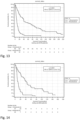
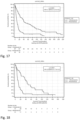
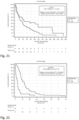
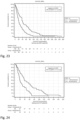
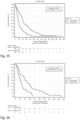
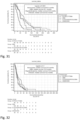
- the gene signatures "Immune defense response genes”, “T-cell receptor signaling genes”, and “PDE4D7 correlated genes” each individually or their combination (GLCAI score) could stratify patients based on the end point overall death (survival time in months).
- the data described below in the examples describes the testing and validation of the IDR, TCR and PDE4D7 correlated gene signatures individually or combined (GLCAI score) on three different patient cohorts, TCGA, GSE16011 and GSE108476.
- the TCGA cohort comprises gene expression data from patients having astrocytoma, oligoastrocytoma, oligodendroglioma, treated glioblastoma multiforme, untreated (primary) glioblastoma multiforme.
- the GSE16011 cohort comprises gene expression data from patients having astrocytic tumors (incl pilocytic astrocytomas (PA), astrocytomas, and glioblastomas (GBM)), and oligodendroglial (OD) tumors (incl pure OD tumors and mixed oligoastrocytic (MOA) tumors).
- the GSE108476 cohort comprises gene expression data from patients having Astrocytoma, GBM, mixed, non-tumor (control samples), oligodendroglioma, or an unknown glioma type.
- a training set was used to train the models (IDR, TCR, PDE4D7 correlated and GLCAI), the trained models were then tested on a test data set.
- the end point use to train the model was survival status based on survival time in months.
- the gene signatures allowed to distinguish between poor and improved survival time.
- the invention relates to method of predicting an outcome of a subject having a glioma, the method comprising:
- the invention provides for a computer implemented method of predicting an outcome of a subject having a glioma, the method comprising:
- the invention provides for a method of predicting an outcome of a subject having a glioma, comprising: determining or receiving the result of a determination of a gene expression profile comprising six or more, such as 6, 7, 8, 9, 10, 11, 12, 13, 14, 16, 17, 18, 19, 20, 21, 22, 23, 24, 25, 26, 27, 28, 29, 30, 31, 32, 33, 34, 35, 36, 37, 38 or even 39, gene expression levels, wherein the six or more gene expression levels are selected from: immune defense response genes selected from the group consisting of: AIM2, APOBEC3A, CIAO1, DDX58, DHX9, IFI16, IFIH1, IFIT1, IFIT3, LRRFIP1, MYD88, OAS1, TLR8, and ZBP1, and/or T-Cell receptor signaling genes selected from the group consisting of: CD2, CD247, CD28, CD3E, CD
- a favorable outcome is understood as a longer predicted survival time and an unfavorable outcome is understood as a shorter predicted survival time, for example compared to the average or mean survival time for a patient diagnosed with a glioma.
- the present method has shown to be able to stratify patients for having a favorable or unfavorable outcome. This holds relevance for example for treatment recommendation, which may be adapted based on the predicted outcome (favorable or unfavorable).
- Surgery Surgical removal of the tumor is often the first line of treatment when feasible. However, in cases of gliomas with a poor prognosis, complete removal may not be possible due to the tumor's location or invasive nature.
- Radiation therapy uses high-energy beams to target and kill cancer cells. It is commonly used in the treatment of gliomas, including those with a poor prognosis. Different techniques, such as stereotactic radiosurgery or fractionated radiation, may be employed depending on the tumor characteristics.
- Chemotherapy involves the use of drugs to destroy cancer cells. Temozolomide is a commonly used chemotherapy drug for gliomas and may be administered in conjunction with radiation therapy, however other chemotherapies are known and may be used instead.
- Targeted therapies Some gliomas may have specific genetic mutations that can be targeted with specific drugs. For example, certain gliomas with mutations in the IDH1 or IDH2 genes may respond to targeted therapies like ivosidenib or enasidenib. Other targeted therapies are known and may be used instead.
- Combination therapy a combination of two or more therapies selected from surgery, chemotherapy radiotherapy and targeted therapy.
- Immunotherapy aims to enhance the body's immune response to fight cancer. While it has shown promising results in other types of cancers, its effectiveness in gliomas is still being studied, and its use in cases with poor prognosis is limited.
- Clinical trials may provide access to novel treatments or experimental therapies that are not yet widely available. Participation in clinical trials should be considered after carefully evaluating the potential risks and benefits.
- a treatment response of a subject having a glioma may be predicted using the gene signatures described herein or individual genes selected therefrom (e.g. six or more genes). Therefore in a an embodiment the invention provides for a method of predicting an outcome of subject having a glioma, comprising: determining or receiving the result of a determination of a gene expression profile comprising three or more, such as 3, 4, 5, 6, 7, 8, 9, 10, 11, 12, 13, 14, 16, 17, 18, 19, 20, 21, 22, 23, 24, 25, 26, 27, 28, 29, 30, 31, 32, 33, 34, 35, 36, 37, 38 or even 39, gene expression levels, wherein the three or more gene expression levels are selected from: immune defence response genes selected from the group consisting of: AIM2, APOBEC3A, CIAO1, DDX58, DHX9, IFI16, IFIH1, IFIT1, IFIT3, LRRFIP1, MYD88, OAS1, TLR8, and ZBP1, and/or T-Cell receptor signalling genes selected from the group consisting of
- the present invention describes the use of a gene signature to predict the outcome of a subject with glioma.
- the gene signature comprises a gene expression profile comprising six or more, such as 6, 7, 8, 9, 10, 11, 12, 13, 14, 16, 17, 18, 19, 20, 21, 22, 23, 24, 25, 26, 27, 28, 29, 30, 31, 32, 33, 34, 35, 36, 37, 38 or even 39, gene expression levels, wherein the three or more gene expression levels are selected from: immune defense response genes and/or T-cell receptor signaling genes and/or PDE4D7 correlated genes. Therefore in an embodiment the six or more genes may be selected from immune defense response genes. In an embodiment the six or more genes may be selected from the T-cell receptor signaling genes. In an embodiment the six or more genes may be selected from the PDE4D7 correlated genes.
- the six or more genes comprise one or more immune defense response genes and one or more T-cell receptor signaling genes. In an embodiment the six or more genes comprise one or more immune defense response genes and one or more PDE4D7 correlated genes. In an embodiment the six or more genes comprise one or more PDE4D7 correlated genes and one or more T-cell receptor signaling genes. In an embodiment the six or more genes comprise one or more immune defense response genes and one or more T-cell receptor signaling genes and one or more PDE4D7 correlated genes.
- ABSCC5 refers to the human ATP binding cassette subfamily C member 5 gene (Ensembl: ENSG00000114770), for example, to the sequence as defined in NCBI Reference Sequence NM_001023587.2 or in NCBI Reference Sequence NM_005688.3, specifically, to the nucleotide sequence as set forth in SEQ ID NO:1 or in SEQ ID NO:2, which correspond to the sequences of the above indicated NCBI Reference Sequences of the ABCC5 transcript, and also relates to the corresponding amino acid sequence for example as set forth in SEQ ID NO:3 or in SEQ ID NO:4, which correspond to the protein sequences defined in NCBI Protein Accession Reference Sequence NP_001018881.1 and in NCBI Protein Accession Reference Sequence NP_005679 encoding the ABCC5 polypeptide.
- ABSCC5 also comprises nucleotide sequences showing a high degree of homology to ABCC5, e.g., nucleic acid sequences being at least 75%, 80%, 85%, 90%, 91%, 92%, 93%, 94%, 95%, 96%, 97%, 98% or 99% identical to the sequence as set forth in SEQ ID NO: 1 or in SEQ ID NO:2 or amino acid sequences being at least 75%, 80%, 85%, 90%, 91%, 92%, 93%, 94%, 95%, 96%, 97%, 98% or 99% identical to the sequence as set forth in SEQ ID NO:3 or in SEQ ID NO:4 or nucleic acid sequences encoding amino acid sequences being at least 75%, 80%, 85%, 90%, 91%, 92%, 93%, 94%, 95%, 96%, 97%, 98% or 99% identical to the sequence as set forth in SEQ ID NO:3 or in SEQ ID NO:4 or amino acid sequences being encoded by nucle
- AIM2 refers to the Absent in Melanoma 2 gene (Ensembl: ENSG00000163568), for example, to the sequence as defined in NCBI Reference Sequence NM_004833, specifically, to the nucleotide sequence as set forth in SEQ ID NO:5, which corresponds to the sequence of the above indicated NCBI Reference Sequence of the AIM2 transcript, and also relates to the corresponding amino acid sequence for example as set forth in SEQ ID NO:6, which corresponds to the protein sequence defined in NCBI Protein Accession Reference Sequence NP_004824 encoding the AIM2 polypeptide.
- AIM2 also comprises nucleotide sequences showing a high degree of homology to AIM2, e.g., nucleic acid sequences being at least 75%, 80%, 85%, 90%, 91%, 92%, 93%, 94%, 95%, 96%, 97%, 98% or 99% identical to the sequence as set forth in SEQ ID NO:5 or amino acid sequences being at least 75%, 80%, 85%, 90%, 91%, 92%, 93%, 94%, 95%, 96%, 97%, 98% or 99% identical to the sequence as set forth in SEQ ID NO:6 or nucleic acid sequences encoding amino acid sequences being at least 75%, 80%, 85%, 90%, 91%, 92%, 93%, 94%, 95%, 96%, 97%, 98% or 99% identical to the sequence as set forth in SEQ ID NO:6 or amino acid sequences being encoded by nucleic acid sequences being at least 75%, 80%, 85%, 90%, 91%, 92%, 93%
- APOBEC3A refers to the Apolipoprotein B mRNA Editing Enzyme Catalytic Subunit 3A gene (Ensembl: ENSG00000128383), for example, to the sequence as defined in NCBI Reference Sequence NM_145699, specifically, to the nucleotide sequence as set forth in SEQ ID NO:7, which corresponds to the sequence of the above indicated NCBI Reference Sequence of the APOBEC3A transcript, and also relates to the corresponding amino acid sequence for example as set forth in SEQ ID NO:8, which corresponds to the protein sequence defined in NCBI Protein Accession Reference Sequence NP_663745 encoding the APOBEC3A polypeptide.
- APOBEC3A also comprises nucleotide sequences showing a high degree of homology to APOBEC3A, e.g., nucleic acid sequences being at least 75%, 80%, 85%, 90%, 91%, 92%, 93%, 94%, 95%, 96%, 97%, 98% or 99% identical to the sequence as set forth in SEQ ID NO:7 or amino acid sequences being at least 75%, 80%, 85%, 90%, 91%, 92%, 93%, 94%, 95%, 96%, 97%, 98% or 99% identical to the sequence as set forth in SEQ ID NO:8 or nucleic acid sequences encoding amino acid sequences being at least 75%, 80%, 85%, 90%, 91%, 92%, 93%, 94%, 95%, 96%, 97%, 98% or 99% identical to the sequence as set forth in SEQ ID NO:8 or amino acid sequences being encoded by nucleic acid sequences being at least 75%, 80%, 85%, 90%, 9
- CD2 refers to the Cluster Of Differentiation 2 gene (Ensembl: ENSG00000116824), for example, to the sequence as defined in NCBI Reference Sequence NM_001767, specifically, to the nucleotide sequence as set forth in SEQ ID NO:9, which corresponds to the sequence of the above indicated NCBI Reference Sequence of the CD2 transcript, and also relates to the corresponding amino acid sequence for example as set forth in SEQ ID NO: 10, which corresponds to the protein sequence defined in NCBI Protein Accession Reference Sequence NP_001758 encoding the CD2 polypeptide.
- CD2 also comprises nucleotide sequences showing a high degree of homology to CD2, e.g., nucleic acid sequences being at least 75%, 80%, 85%, 90%, 91%, 92%, 93%, 94%, 95%, 96%, 97%, 98% or 99% identical to the sequence as set forth in SEQ ID NO:9 or amino acid sequences being at least 75%, 80%, 85%, 90%, 91%, 92%, 93%, 94%, 95%, 96%, 97%, 98% or 99% identical to the sequence as set forth in SEQ ID NO: 10 or nucleic acid sequences encoding amino acid sequences being at least 75%, 80%, 85%, 90%, 91%, 92%, 93%, 94%, 95%, 96%, 97%, 98% or 99% identical to the sequence as set forth in SEQ ID NO: 10 or amino acid sequences being encoded by nucleic acid sequences being at least 75%, 80%, 85%, 90%, 91%, 92%, 9
- CD247 refers to the Cluster Of Differentiation 247 gene (Ensembl: ENSG00000198821), for example, to the sequence as defined in NCBI Reference Sequence NM_000734 or in NCBI Reference Sequence NM_198053, specifically, to the nucleotide sequence as set forth in SEQ ID NO: 11 or in SEQ ID NO: 12, which correspond to the sequences of the above indicated NCBI Reference Sequences of the CD247 transcript, and also relates to the corresponding amino acid sequence for example as set forth in SEQ ID NO: 13 or in SEQ ID NO: 14, which correspond to the protein sequences defined in NCBI Protein Accession Reference Sequence NP_000725 and in NCBI Protein Accession Reference Sequence NP_932170 encoding the CD247 polypeptide.
- CD247 also comprises nucleotide sequences showing a high degree of homology to CD247, e.g., nucleic acid sequences being at least 75%, 80%, 85%, 90%, 91%, 92%, 93%, 94%, 95%, 96%, 97%, 98% or 99% identical to the sequence as set forth in SEQ ID NO: 11 or in SEQ ID NO: 12 or amino acid sequences being at least 75%, 80%, 85%, 90%, 91%, 92%, 93%, 94%, 95%, 96%, 97%, 98% or 99% identical to the sequence as set forth in SEQ ID NO: 13 or in SEQ ID NO: 14 or nucleic acid sequences encoding amino acid sequences being at least 75%, 80%, 85%, 90%, 91%, 92%, 93%, 94%, 95%, 96%, 97%, 98% or 99% identical to the sequence as set forth in SEQ ID NO: 13 or in SEQ ID NO: 14 or amino acid sequences being encoded by
- CD28 refers to the Cluster Of Differentiation 28 gene (Ensembl: ENSG00000178562), for example, to the sequence as defined in NCBI Reference Sequence NM_006139 or in NCBI Reference Sequence NM_001243078, specifically, to the nucleotide sequence as set forth in SEQ ID NO: 15 or in SEQ ID NO: 16, which correspond to the sequences of the above indicated NCBI Reference Sequences of the CD28 transcript, and also relates to the corresponding amino acid sequence for example as set forth in SEQ ID NO: 17 or in SEQ ID NO: 18, which correspond to the protein sequences defined in NCBI Protein Accession Reference Sequence NP_006130 and in NCBI Protein Accession Reference Sequence NP_001230007 encoding the CD28 polypeptide.
- CD28 also comprises nucleotide sequences showing a high degree of homology to CD28, e.g., nucleic acid sequences being at least 75%, 80%, 85%, 90%, 91%, 92%, 93%, 94%, 95%, 96%, 97%, 98% or 99% identical to the sequence as set forth in SEQ ID NO: 15 or in SEQ ID NO: 16 or amino acid sequences being at least 75%, 80%, 85%, 90%, 91%, 92%, 93%, 94%, 95%, 96%, 97%, 98% or 99% identical to the sequence as set forth in SEQ ID NO: 17 or in SEQ ID NO: 18 or nucleic acid sequences encoding amino acid sequences being at least 75%, 80%, 85%, 90%, 91%, 92%, 93%, 94%, 95%, 96%, 97%, 98% or 99% identical to the sequence as set forth in SEQ ID NO: 17 or in SEQ ID NO: 18 or amino acid sequences being encoded by nucle
- CD3E refers to the Cluster Of Differentiation 3E gene (Ensembl: ENSG00000198851), for example, to the sequence as defined in NCBI Reference Sequence NM_000733, specifically, to the nucleotide sequence as set forth in SEQ ID NO: 19, which corresponds to the sequence of the above indicated NCBI Reference Sequence of the CD3E transcript, and also relates to the corresponding amino acid sequence for example as set forth in SEQ ID NO:20, which corresponds to the protein sequence defined in NCBI Protein Accession Reference Sequence NP_000724 encoding the CD3E polypeptide.
- CD3E also comprises nucleotide sequences showing a high degree of homology to CD3E, e.g., nucleic acid sequences being at least 75%, 80%, 85%, 90%, 91%, 92%, 93%, 94%, 95%, 96%, 97%, 98% or 99% identical to the sequence as set forth in SEQ ID NO: 19 or amino acid sequences being at least 75%, 80%, 85%, 90%, 91%, 92%, 93%, 94%, 95%, 96%, 97%, 98% or 99% identical to the sequence as set forth in SEQ ID NO:20 or nucleic acid sequences encoding amino acid sequences being at least 75%, 80%, 85%, 90%, 91%, 92%, 93%, 94%, 95%, 96%, 97%, 98% or 99% identical to the sequence as set forth in SEQ ID NO:20 or amino acid sequences being encoded by nucleic acid sequences being at least 75%, 80%, 85%, 90%, 91%, 92%, 9
- CD3G refers to the Cluster Of Differentiation 3G gene (Ensembl: ENSG00000160654), for example, to the sequence as defined in NCBI Reference Sequence NM_000073, specifically, to the nucleotide sequence as set forth in SEQ ID NO:21, which corresponds to the sequence of the above indicated NCBI Reference Sequence of the CD3G transcript, and also relates to the corresponding amino acid sequence for example as set forth in SEQ ID NO:22, which corresponds to the protein sequence defined in NCBI Protein Accession Reference Sequence NP_000064 encoding the CD3G polypeptide.
- CD3G also comprises nucleotide sequences showing a high degree of homology to CD3G, e.g., nucleic acid sequences being at least 75%, 80%, 85%, 90%, 91%, 92%, 93%, 94%, 95%, 96%, 97%, 98% or 99% identical to the sequence as set forth in SEQ ID NO:21 or amino acid sequences being at least 75%, 80%, 85%, 90%, 91%, 92%, 93%, 94%, 95%, 96%, 97%, 98% or 99% identical to the sequence as set forth in SEQ ID NO:22 or nucleic acid sequences encoding amino acid sequences being at least 75%, 80%, 85%, 90%, 91%, 92%, 93%, 94%, 95%, 96%, 97%, 98% or 99% identical to the sequence as set forth in SEQ ID NO:22 or amino acid sequences being encoded by nucleic acid sequences being at least 75%, 80%, 85%, 90%, 91%, 92%, 9
- CD4 refers to the Cluster Of Differentiation 4 gene (Ensembl: ENSG00000010610), for example, to the sequence as defined in NCBI Reference Sequence NM_000616, specifically, to the nucleotide sequence as set forth in SEQ ID NO:23, which corresponds to the sequence of the above indicated NCBI Reference Sequence of the CD4 transcript, and also relates to the corresponding amino acid sequence for example as set forth in SEQ ID NO:24, which corresponds to the protein sequence defined in NCBI Protein Accession Reference Sequence NP_000607 encoding the CD4 polypeptide.
- CD4 also comprises nucleotide sequences showing a high degree of homology to CD4, e.g., nucleic acid sequences being at least 75%, 80%, 85%, 90%, 91%, 92%, 93%, 94%, 95%, 96%, 97%, 98% or 99% identical to the sequence as set forth in SEQ ID NO:23 or amino acid sequences being at least 75%, 80%, 85%, 90%, 91%, 92%, 93%, 94%, 95%, 96%, 97%, 98% or 99% identical to the sequence as set forth in SEQ ID NO:24 or nucleic acid sequences encoding amino acid sequences being at least 75%, 80%, 85%, 90%, 91%, 92%, 93%, 94%, 95%, 96%, 97%, 98% or 99% identical to the sequence as set forth in SEQ ID NO:24 or amino acid sequences being encoded by nucleic acid sequences being at least 75%, 80%, 85%, 90%, 91%, 92%, 93%, 9
- CIAO1 refers to the Cytosolic Iron-Sulfur Assembly Component 1 gene (Ensembl: ENSG00000144021), for example, to the sequence as defined in NCBI Reference Sequence NM_004804, specifically, to the nucleotide sequence as set forth in SEQ ID NO:25, which corresponds to the sequence of the above indicated NCBI Reference Sequence of the CIAO1 transcript, and also relates to the corresponding amino acid sequence for example as set forth in SEQ ID NO:26, which corresponds to the protein sequence defined in NCBI Protein Accession Reference Sequence NP_663745 encoding the CIAO1 polypeptide.
- CIAO1 also comprises nucleotide sequences showing a high degree of homology to CIAO1, e.g., nucleic acid sequences being at least 75%, 80%, 85%, 90%, 91%, 92%, 93%, 94%, 95%, 96%, 97%, 98% or 99% identical to the sequence as set forth in SEQ ID NO:25 or amino acid sequences being at least 75%, 80%, 85%, 90%, 91%, 92%, 93%, 94%, 95%, 96%, 97%, 98% or 99% identical to the sequence as set forth in SEQ ID NO:26 or nucleic acid sequences encoding amino acid sequences being at least 75%, 80%, 85%, 90%, 91%, 92%, 93%, 94%, 95%, 96%, 97%, 98% or 99% identical to the sequence as set forth in SEQ ID NO:26 or amino acid sequences being encoded by nucleic acid sequences being at least 75%, 80%, 85%, 90%, 91%, 92%, 9
- CSK refers to the C-Terminal Src Kinase gene (Ensembl: ENSG00000103653), for example, to the sequence as defined in NCBI Reference Sequence NM_004383, specifically, to the nucleotide sequence as set forth in SEQ ID NO:27, which corresponds to the sequence of the above indicated NCBI Reference Sequence of the CSK transcript, and also relates to the corresponding amino acid sequence for example as set forth in SEQ ID NO:28, which corresponds to the protein sequence defined in NCBI Protein Accession Reference Sequence NP_004374 encoding the CSK polypeptide.
- CSK also comprises nucleotide sequences showing a high degree of homology to CSK, e.g., nucleic acid sequences being at least 75%, 80%, 85%, 90%, 91%, 92%, 93%, 94%, 95%, 96%, 97%, 98% or 99% identical to the sequence as set forth in SEQ ID NO:27 or amino acid sequences being at least 75%, 80%, 85%, 90%, 91%, 92%, 93%, 94%, 95%, 96%, 97%, 98% or 99% identical to the sequence as set forth in SEQ ID NO:28 or nucleic acid sequences encoding amino acid sequences being at least 75%, 80%, 85%, 90%, 91%, 92%, 93%, 94%, 95%, 96%, 97%, 98% or 99% identical to the sequence as set forth in SEQ ID NO:28 or amino acid sequences being encoded by nucleic acid sequences being at least 75%, 80%, 85%, 90%, 91%, 92%,
- CUX2 refers to the human Cut Like Homeobox 2 gene (Ensembl: ENSG00000111249), for example, to the sequence as defined in NCBI Reference Sequence NM_015267.3, specifically, to the nucleotide sequence as set forth in SEQ ID NO:29, which corresponds to the sequence of the above indicated NCBI Reference Sequence of the CUX2 transcript, and also relates to the corresponding amino acid sequence for example as set forth in SEQ ID NO:30, which corresponds to the protein sequence defined in NCBI Protein Accession Reference Sequence NP_056082.2 encoding the CUX2 polypeptide.
- CUX2 also comprises nucleotide sequences showing a high degree of homology to CUX2, e.g., nucleic acid sequences being at least 75%, 80%, 85%, 90%, 91%, 92%, 93%, 94%, 95%, 96%, 97%, 98% or 99% identical to the sequence as set forth in SEQ ID NO:29 or amino acid sequences being at least 75%, 80%, 85%, 90%, 91%, 92%, 93%, 94%, 95%, 96%, 97%, 98% or 99% identical to the sequence as set forth in SEQ ID NO:30 or nucleic acid sequences encoding amino acid sequences being at least 75%, 80%, 85%, 90%, 91%, 92%, 93%, 94%, 95%, 96%, 97%, 98% or 99% identical to the sequence as set forth in SEQ ID NO:30 or amino acid sequences being encoded by nucleic acid sequences being at least 75%, 80%, 85%, 90%, 91%, 92%
- DDX58 refers to the DExD/H-box Helicase 58 gene (Ensembl: ENSG00000107201), for example, to the sequence as defined in NCBI Reference Sequence NM_014314, specifically, to the nucleotide sequence as set forth in SEQ ID NO:31, which corresponds to the sequence of the above indicated NCBI Reference Sequence of the DDX58 transcript, and also relates to the corresponding amino acid sequence for example as set forth in SEQ ID NO:32, which corresponds to the protein sequence defined in NCBI Protein Accession Reference Sequence NP_055129 encoding the DDX58 polypeptide.
- DDX58 also comprises nucleotide sequences showing a high degree of homology to DDX58, e.g., nucleic acid sequences being at least 75%, 80%, 85%, 90%, 91%, 92%, 93%, 94%, 95%, 96%, 97%, 98% or 99% identical to the sequence as set forth in SEQ ID NO:31 or amino acid sequences being at least 75%, 80%, 85%, 90%, 91%, 92%, 93%, 94%, 95%, 96%, 97%, 98% or 99% identical to the sequence as set forth in SEQ ID NO:32 or nucleic acid sequences encoding amino acid sequences being at least 75%, 80%, 85%, 90%, 91%, 92%, 93%, 94%, 95%, 96%, 97%, 98% or 99% identical to the sequence as set forth in SEQ ID NO:32 or amino acid sequences being encoded by nucleic acid sequences being at least 75%, 80%, 85%, 90%, 91%, 91%
- DHX9 refers to the DExD/H-box Helicase 9 gene (Ensembl: ENSG00000135829), for example, to the sequence as defined in NCBI Reference Sequence NM_001357, specifically, to the nucleotide sequence as set forth in SEQ ID NO:33, which corresponds to the sequence of the above indicated NCBI Reference Sequence of the DHX9 transcript, and also relates to the corresponding amino acid sequence for example as set forth in SEQ ID NO:34, which corresponds to the protein sequence defined in NCBI Protein Accession Reference Sequence NP_001348 encoding the DHX9 polypeptide.
- DHX9 also comprises nucleotide sequences showing a high degree of homology to DHX9, e.g., nucleic acid sequences being at least 75%, 80%, 85%, 90%, 91%, 92%, 93%, 94%, 95%, 96%, 97%, 98% or 99% identical to the sequence as set forth in SEQ ID NO:33 or amino acid sequences being at least 75%, 80%, 85%, 90%, 91%, 92%, 93%, 94%, 95%, 96%, 97%, 98% or 99% identical to the sequence as set forth in SEQ ID NO:34 or nucleic acid sequences encoding amino acid sequences being at least 75%, 80%, 85%, 90%, 91%, 92%, 93%, 94%, 95%, 96%, 97%, 98% or 99% identical to the sequence as set forth in SEQ ID NO:34 or amino acid sequences being encoded by nucleic acid sequences being at least 75%, 80%, 85%, 90%, 91%, 91%
- EZR refers to the Ezrin gene (Ensembl: ENSG00000092820), for example, to the sequence as defined in NCBI Reference Sequence NM_003379, specifically, to the nucleotide sequence as set forth in SEQ ID NO:35, which corresponds to the sequence of the above indicated NCBI Reference Sequence of the EZR transcript, and also relates to the corresponding amino acid sequence for example as set forth in SEQ ID NO:36, which corresponds to the protein sequence defined in NCBI Protein Accession Reference Sequence NP_003370 encoding the EZR polypeptide.
- EZR also comprises nucleotide sequences showing a high degree of homology to EZR, e.g., nucleic acid sequences being at least 75%, 80%, 85%, 90%, 91%, 92%, 93%, 94%, 95%, 96%, 97%, 98% or 99% identical to the sequence as set forth in SEQ ID NO:35 or amino acid sequences being at least 75%, 80%, 85%, 90%, 91%, 92%, 93%, 94%, 95%, 96%, 97%, 98% or 99% identical to the sequence as set forth in SEQ ID NO:36 or nucleic acid sequences encoding amino acid sequences being at least 75%, 80%, 85%, 90%, 91%, 92%, 93%, 94%, 95%, 96%, 97%, 98% or 99% identical to the sequence as set forth in SEQ ID NO:36 or amino acid sequences being encoded by nucleic acid sequences being at least 75%, 80%, 85%, 90%, 91%, 92%, 9
- FYN refers to the FYN Proto-Oncogene gene (Ensembl: ENSG00000010810), for example, to the sequence as defined in NCBI Reference Sequence NM_002037 or in NCBI Reference Sequence NM_153047 or in NCBI Reference Sequence NM_153048, specifically, to the nucleotide sequence as set forth in SEQ ID NO:37 or in SEQ ID NO:38 or in SEQ ID NO:39, which correspond to the sequences of the above indicated NCBI Reference Sequences of the FYN transcript, and also relates to the corresponding amino acid sequence for example as set forth in SEQ ID NO:40 or in SEQ ID NO:41 or in SEQ ID NO:42, which correspond to the protein sequences defined in NCBI Protein Accession Reference Sequence NP_002028 and in NCBI Protein Accession Reference Sequence NP_694592 and in NCBI Protein Accession Reference Sequence XP_005266949 encoding the FYN polypeptide.
- FYN also comprises nucleotide sequences showing a high degree of homology to FYN, e.g., nucleic acid sequences being at least 75%, 80%, 85%, 90%, 91%, 92%, 93%, 94%, 95%, 96%, 97%, 98% or 99% identical to the sequence as set forth in SEQ ID NO:37 or in SEQ ID NO:38 or in SEQ ID NO:39 or amino acid sequences being at least 75%, 80%, 85%, 90%, 91%, 92%, 93%, 94%, 95%, 96%, 97%, 98% or 99% identical to the sequence as set forth in SEQ ID NO:40 or in SEQ ID NO:41 or in SEQ ID NO:42 or nucleic acid sequences encoding amino acid sequences being at least 75%, 80%, 85%, 90%, 91%, 92%, 93%, 94%, 95%, 96%, 97%, 98% or 99% identical to the sequence as set forth in SEQ ID NO:40 or in
- IFI16 refers to the Interferon Gamma Inducible Protein 16 gene (Ensembl: ENSG00000163565), for example, to the sequence as defined in NCBI Reference Sequence NM_005531, specifically, to the nucleotide sequence as set forth in SEQ ID NO:43, which corresponds to the sequence of the above indicated NCBI Reference Sequence of the IFI16 transcript, and also relates to the corresponding amino acid sequence for example as set forth in SEQ ID NO:44, which corresponds to the protein sequence defined in NCBI Protein Accession Reference Sequence NP_005522 encoding the IFI16 polypeptide.
- IFI16 also comprises nucleotide sequences showing a high degree of homology to IFI16, e.g., nucleic acid sequences being at least 75%, 80%, 85%, 90%, 91%, 92%, 93%, 94%, 95%, 96%, 97%, 98% or 99% identical to the sequence as set forth in SEQ ID NO:43 or amino acid sequences being at least 75%, 80%, 85%, 90%, 91%, 92%, 93%, 94%, 95%, 96%, 97%, 98% or 99% identical to the sequence as set forth in SEQ ID NO:44 or nucleic acid sequences encoding amino acid sequences being at least 75%, 80%, 85%, 90%, 91%, 92%, 93%, 94%, 95%, 96%, 97%, 98% or 99% identical to the sequence as set forth in SEQ ID NO:44 or amino acid sequences being encoded by nucleic acid sequences being at least 75%, 80%, 85%, 90%, 91%, 92%, 9
- IFIH1 refers to the Interferon Induced With Helicase C Domain 1 gene (Ensembl: ENSG00000115267), for example, to the sequence as defined in NCBI Reference Sequence NM_022168, specifically, to the nucleotide sequence as set forth in SEQ ID NO:45, which corresponds to the sequence of the above indicated NCBI Reference Sequence of the IFIH1 transcript, and also relates to the corresponding amino acid sequence for example as set forth in SEQ ID NO:46, which corresponds to the protein sequence defined in NCBI Protein Accession Reference Sequence NP_071451 encoding the IFIH1 polypeptide.
- IFIH1 also comprises nucleotide sequences showing a high degree of homology to IFIH1, e.g., nucleic acid sequences being at least 75%, 80%, 85%, 90%, 91%, 92%, 93%, 94%, 95%, 96%, 97%, 98% or 99% identical to the sequence as set forth in SEQ ID NO:45 or amino acid sequences being at least 75%, 80%, 85%, 90%, 91%, 92%, 93%, 94%, 95%, 96%, 97%, 98% or 99% identical to the sequence as set forth in SEQ ID NO:46 or nucleic acid sequences encoding amino acid sequences being at least 75%, 80%, 85%, 90%, 91%, 92%, 93%, 94%, 95%, 96%, 97%, 98% or 99% identical to the sequence as set forth in SEQ ID NO:46 or amino acid sequences being encoded by nucleic acid sequences being at least 75%, 80%, 85%, 90%, 91%,
- IFIT1 refers to the Interferon Induced Protein With Tetratricopeptide Repeats 1 gene (Ensembl: ENSG00000185745), for example, to the sequence as defined in NCBI Reference Sequence NM_001270929 or in NCBI Reference Sequence NM_001548.5, specifically, to the nucleotide sequence as set forth in SEQ ID NO:47 or in SEQ ID NO:48, which correspond to the sequences of the above indicated NCBI Reference Sequences of the IFIT1 transcript, and also relates to the corresponding amino acid sequence for example as set forth in SEQ ID NO:49 or in SEQ ID NO:50, which correspond to the protein sequences defined in NCBI Protein Accession Reference Sequence NP_001257858 and in NCBI Protein Accession Reference Sequence NP_001539 encoding the IFIT1 polypeptide.
- IFIT1 also comprises nucleotide sequences showing a high degree of homology to IFIT1, e.g., nucleic acid sequences being at least 75%, 80%, 85%, 90%, 91%, 92%, 93%, 94%, 95%, 96%, 97%, 98% or 99% identical to the sequence as set forth in SEQ ID NO:47 or in SEQ ID NO:48 or amino acid sequences being at least 75%, 80%, 85%, 90%, 91%, 92%, 93%, 94%, 95%, 96%, 97%, 98% or 99% identical to the sequence as set forth in SEQ ID NO:49 or in SEQ ID NO:50 or nucleic acid sequences encoding amino acid sequences being at least 75%, 80%, 85%, 90%, 91%, 92%, 93%, 94%, 95%, 96%, 97%, 98% or 99% identical to the sequence as set forth in SEQ ID NO:49 or SEQ ID NO:50 or amino acid sequences being encoded by nucle
- IFIT3 refers to the Interferon Induced Protein With Tetratricopeptide Repeats 3 gene (Ensembl: ENSG00000119917), for example, to the sequence as defined in NCBI Reference Sequence NM_001031683, specifically, to the nucleotide sequence as set forth in SEQ ID NO:51, which corresponds to the sequence of the above indicated NCBI Reference Sequence of the IFIT3 transcript, and also relates to the corresponding amino acid sequence for example as set forth in SEQ ID NO:52, which corresponds to the protein sequence defined in NCBI Protein Accession Reference Sequence NP_001026853 encoding the IFIT3 polypeptide.
- IFIT3 also comprises nucleotide sequences showing a high degree of homology to IFIT3, e.g., nucleic acid sequences being at least 75%, 80%, 85%, 90%, 91%, 92%, 93%, 94%, 95%, 96%, 97%, 98% or 99% identical to the sequence as set forth in SEQ ID NO:51 or amino acid sequences being at least 75%, 80%, 85%, 90%, 91%, 92%, 93%, 94%, 95%, 96%, 97%, 98% or 99% identical to the sequence as set forth in SEQ ID NO:52 or nucleic acid sequences encoding amino acid sequences being at least 75%, 80%, 85%, 90%, 91%, 92%, 93%, 94%, 95%, 96%, 97%, 98% or 99% identical to the sequence as set forth in SEQ ID NO:52 or amino acid sequences being encoded by nucleic acid sequences being at least 75%, 80%, 85%, 90%, 91%, 92%, 93%
- KIAA1549 refers to the human KIAA1549 gene (Ensembl: ENSG00000122778), for example, to the sequence as defined in NCBI Reference Sequence NM_020910 or in NCBI Reference Sequence NM_001164665, specifically, to the nucleotide sequence as set forth in SEQ ID NO:53 or in SEQ ID NO:54, which correspond to the sequences of the above indicated NCBI Reference Sequence of the KIAA1549 transcript, and also relates to the corresponding amino acid sequence for example as set forth in SEQ ID NO:55 or in SEQ ID NO:56, which correspond to the protein sequences defined in NCBI Protein Accession Reference Sequence NP_065961 and in NCBI Protein Accession Reference Sequence NP_001158137 encoding the KIAA1549 polypeptide.
- KIAA1549 also comprises nucleotide sequences showing a high degree of homology to KIAA1549, e.g., nucleic acid sequences being at least 75%, 80%, 85%, 90%, 91%, 92%, 93%, 94%, 95%, 96%, 97%, 98% or 99% identical to the sequence as set forth in SEQ ID NO:53 or in SEQ ID NO:54 or amino acid sequences being at least 75%, 80%, 85%, 90%, 91%, 92%, 93%, 94%, 95%, 96%, 97%, 98% or 99% identical to the sequence as set forth in SEQ ID NO:55 or in SEQ ID NO:56 or nucleic acid sequences encoding amino acid sequences being at least 75%, 80%, 85%, 90%, 91%, 92%, 93%, 94%, 95%, 96%, 97%, 98% or 99% identical to the sequence as set forth in SEQ ID NO:55 or in SEQ ID NO:56 or amino acid sequences being
- LAT refers to the Linker For Activation Of T-Cells gene (Ensembl: ENSG00000213658), for example, to the sequence as defined in NCBI Reference Sequence NM_001014987 or in NCBI Reference Sequence NM_014387, specifically, to the nucleotide sequence as set forth in SEQ ID NO:57 or in SEQ ID NO:58, which correspond to the sequences of the above indicated NCBI Reference Sequences of the LAT transcript, and also relates to the corresponding amino acid sequence for example as set forth in SEQ ID NO:59 or in SEQ ID NO:60, which corresponds to the protein sequences defined in NCBI Protein Accession Reference Sequence NP_001014987 and in NCBI Protein Accession Reference Sequence NP_055202 encoding the LAT polypeptide.
- LAT also comprises nucleotide sequences showing a high degree of homology to LAT, e.g., nucleic acid sequences being at least 75%, 80%, 85%, 90%, 91%, 92%, 93%, 94%, 95%, 96%, 97%, 98% or 99% identical to the sequence as set forth in SEQ ID NO:57 or in SEQ ID NO:58 or amino acid sequences being at least 75%, 80%, 85%, 90%, 91%, 92%, 93%, 94%, 95%, 96%, 97%, 98% or 99% identical to the sequence as set forth in SEQ ID NO:59 or in SEQ ID NO:60 or nucleic acid sequences encoding amino acid sequences being at least 75%, 80%, 85%, 90%, 91%, 92%, 93%, 94%, 95%, 96%, 97%, 98% or 99% identical to the sequence as set forth in SEQ ID NO:59 or in SEQ ID NO:60 or amino acid sequences being encoded by nucle
- LCK refers to the LCK Proto-Oncogene gene (Ensembl: ENSG00000182866), for example, to the sequence as defined in NCBI Reference Sequence NM_005356, specifically, to the nucleotide sequence as set forth in SEQ ID NO:61, which corresponds to the sequence of the above indicated NCBI Reference Sequence of the LCK transcript, and also relates to the corresponding amino acid sequence for example as set forth in SEQ ID NO:62, which corresponds to the protein sequence defined in NCBI Protein Accession Reference Sequence NP_005347 encoding the LCK polypeptide.
- LCK also comprises nucleotide sequences showing a high degree of homology to LCK, e.g., nucleic acid sequences being at least 75%, 80%, 85%, 90%, 91%, 92%, 93%, 94%, 95%, 96%, 97%, 98% or 99% identical to the sequence as set forth in SEQ ID NO:61 or amino acid sequences being at least 75%, 80%, 85%, 90%, 91%, 92%, 93%, 94%, 95%, 96%, 97%, 98% or 99% identical to the sequence as set forth in SEQ ID NO:62 or nucleic acid sequences encoding amino acid sequences being at least 75%, 80%, 85%, 90%, 91%, 92%, 93%, 94%, 95%, 96%, 97%, 98% or 99% identical to the sequence as set forth in SEQ ID NO:62 or amino acid sequences being encoded by nucleic acid sequences being at least 75%, 80%, 85%, 90%, 91%, 92%,
- LRRFIP1 refers to the LRR Binding FLII Interacting Protein 1 gene (Ensembl: ENSG00000124831), for example, to the sequence as defined in NCBI Reference Sequence NM_004735 or in NCBI Reference Sequence NM_001137550 or in NCBI Reference Sequence NM_001137553 or in NCBI Reference Sequence NM_001137552, specifically, to the nucleotide sequence as set forth in SEQ ID NO:63 or in SEQ ID NO:64 or in SEQ ID NO:65 or in SEQ ID NO:66, which correspond to the sequences of the above indicated NCBI Reference Sequences of the LRRFIP1 transcript, and also relates to the corresponding amino acid sequence for example as set forth in SEQ ID NO:67 or in SEQ ID NO:68 or in SEQ ID NO:69 or in SEQ ID NO:70, which correspond to the protein sequences defined in NCBI Protein Accession Reference Sequence NP_004726 and in NCBI Protein Accession Reference Sequence NP_
- LRRFIP1 also comprises nucleotide sequences showing a high degree of homology to LRRFIP1, e.g., nucleic acid sequences being at least 75%, 80%, 85%, 90%, 91%, 92%, 93%, 94%, 95%, 96%, 97%, 98% or 99% identical to the sequence as set forth in SEQ ID NO:63 or in SEQ ID NO:64 or in SEQ ID NO:65 or in SEQ ID NO:66 or amino acid sequences being at least 75%, 80%, 85%, 90%, 91%, 92%, 93%, 94%, 95%, 96%, 97%, 98% or 99% identical to the sequence as set forth in SEQ ID NO:67 or in SEQ ID NO:68 or in SEQ ID NO:69 or in SEQ ID NO: 70 or nucleic acid sequences encoding amino acid sequences being at least 75%, 80%, 85%, 90%, 91%, 92%, 93%, 94%, 95%, 96%, 97%, 98% or
- MYD88 refers to the MYD88 Innate Immune Signal Transduction Adaptor gene (Ensembl: ENSG00000172936), for example, to the sequence as defined in NCBI Reference Sequence NM_001172567 or in NCBI Reference Sequence NM_001172568 or in NCBI Reference Sequence NM_001172569 or in NCBI Reference Sequence NM_001172566 or in NCBI Reference Sequence NM_002468, specifically, to the nucleotide sequences as set forth in SEQ ID NO:71 or in SEQ ID NO:72 or in SEQ ID NO:73 or in SEQ ID NO:74 or in SEQ ID NO:75, which correspond to the sequences of the above indicated NCBI Reference Sequences of the MYD88 transcript, and also relates to the corresponding amino acid sequence for example as set forth in SEQ ID NO:76 or in SEQ ID NO:77 or in SEQ ID NO:78 or in SEQ ID NO:79 or in SEQ ID NO:80, which correspond
- MYD88 also comprises nucleotide sequences showing a high degree of homology to MYD88, e.g., nucleic acid sequences being at least 75%, 80%, 85%, 90%, 91%, 92%, 93%, 94%, 95%, 96%, 97%, 98% or 99% identical to the sequence as set forth in SEQ ID NO:71 or in SEQ ID NO:72 or in SEQ ID NO:73 or in SEQ ID NO:74 or in SEQ ID NO:75 or amino acid sequences being at least 75%, 80%, 85%, 90%, 91%, 92%, 93%, 94%, 95%, 96%, 97%, 98% or 99% identical to the sequence as set forth in SEQ ID NO:76 or in SEQ ID NO:77 or in SEQ ID NO:78 or in SEQ ID NO:79 or in SEQ ID NO:80 or nucleic acid sequences encoding amino acid sequences being at least 75%, 80%, 85%, 90%, 91%, 92%, 9
- OAS 1 refers to the 2'-5'-Oligoadenylate Synthetase 1 gene (Ensembl: ENSG00000089127), for example, to the sequence as defined in NCBI Reference Sequence NM_001320151 or in NCBI Reference Sequence NM_002534 or in NCBI Reference Sequence NM_001032409 or in NCBI Reference Sequence NM_016816, specifically, to the nucleotide sequences as set forth in SEQ ID NO:81 or in SEQ ID NO:82 or in SEQ ID NO:83 or in SEQ ID NO:84, which correspond to the sequences of the above indicated NCBI Reference Sequences of the OAS1 transcript, and also relates to the corresponding amino acid sequences for example as set forth in SEQ ID NO:85 or in SEQ ID NO:86 or in SEQ ID NO:87 or in SEQ ID NO:88, which correspond to the protein sequences defined in NCBI Protein Accession Reference Sequence NP_001307080 and in NCBI Protein Accession Reference
- OAS1 also comprises nucleotide sequences showing a high degree of homology to OAS1, e.g., nucleic acid sequences being at least 75%, 80%, 85%, 90%, 91%, 92%, 93%, 94%, 95%, 96%, 97%, 98% or 99% identical to the sequence as set forth in SEQ ID NO:81 or in SEQ ID NO:82 or in SEQ ID NO:83 or in SEQ ID NO:84 or amino acid sequences being at least 75%, 80%, 85%, 90%, 91%, 92%, 93%, 94%, 95%, 96%, 97%, 98% or 99% identical to the sequence as set forth in SEQ ID NO:85 or in SEQ ID NO:86 or in SEQ ID NO:87 or in SEQ ID NO:88 or nucleic acid sequences encoding amino acid sequences being at least 75%, 80%, 85%, 90%, 91%, 92%, 93%, 94%, 95%, 96%, 97%, 98% or 99%
- PAG1 refers to the Phosphoprotein Membrane Anchor With Glycosphingolipid Microdomains 1 gene (Ensembl: ENSG00000076641), for example, to the sequence as defined in NCBI Reference Sequence NM_018440, specifically, to the nucleotide sequence as set forth in SEQ ID NO:89, which corresponds to the sequence of the above indicated NCBI Reference Sequence of the PAG1 transcript, and also relates to the corresponding amino acid sequence for example as set forth in SEQ ID NO:90, which corresponds to the protein sequence defined in NCBI Protein Accession Reference Sequence NP_060910 encoding the PAG1 polypeptide.
- PAG1 also comprises nucleotide sequences showing a high degree of homology to PAG1, e.g., nucleic acid sequences being at least 75%, 80%, 85%, 90%, 91%, 92%, 93%, 94%, 95%, 96%, 97%, 98% or 99% identical to the sequence as set forth in SEQ ID NO:89 or amino acid sequences being at least 75%, 80%, 85%, 90%, 91%, 92%, 93%, 94%, 95%, 96%, 97%, 98% or 99% identical to the sequence as set forth in SEQ ID NO:90 or nucleic acid sequences encoding amino acid sequences being at least 75%, 80%, 85%, 90%, 91%, 92%, 93%, 94%, 95%, 96%, 97%, 98% or 99% identical to the sequence as set forth in SEQ ID NO:90 or amino acid sequences being encoded by nucleic acid sequences being at least 75%, 80%, 85%, 90%, 91%, 92%, 93%
- PDE4D refers to the human Phosphodiesterase 4D gene (Ensembl: ENSG00000113448), for example, to the sequence as defined in NCBI Reference Sequence NM_001104631 or in NCBI Reference Sequence NM_001349242 or in NCBI Reference Sequence NM_001197218 or in NCBI Reference Sequence NM_006203 or in NCBI Reference Sequence NM_001197221 or in NCBI Reference Sequence NM_001197220 or in NCBI Reference Sequence NM_001197223 or in NCBI Reference Sequence NM_001165899 or in NCBI Reference Sequence NM_001165899, specifically, to the nucleotide sequence as set forth in SEQ ID NO:91 or in SEQ ID NO:92 or in SEQ ID NO:93 or in SEQ ID NO:94 or in SEQ ID NO:95 or in SEQ ID NO:96 or in SEQ ID NO:97 or in SEQ ID NO:98 or in SEQ ID NO:99, which correspond
- PDE4D also comprises nucleotide sequences showing a high degree of homology to PDE4D, e.g., nucleic acid sequences being at least 75%, 80%, 85%, 90%, 91%, 92%, 93%, 94%, 95%, 96%, 97%, 98% or 99% identical to the sequence as set forth in SEQ ID NO:91 or in SEQ ID NO:92 or in SEQ ID NO:93 or in SEQ ID NO:94 or in SEQ ID NO:95 or in SEQ ID NO:96 or in SEQ ID NO:97 or in SEQ ID NO:98 or in SEQ ID NO:99 or amino acid sequences being at least 75%, 80%, 85%, 90%, 91%, 92%, 93%, 94%, 95%, 96%, 97%, 98% or 99% identical to the sequence as set forth in SEQ ID NO:100 or in SEQ ID NO:101 or in SEQ ID NO:102 or in SEQ ID NO:103 or in SEQ ID NO:104 or in S
- PRKACA refers to the Protein Kinase cAMP-Activated Catalytic Subunit Alpha gene (Ensembl: ENSG00000072062), for example, to the sequence as defined in NCBI Reference Sequence NM_002730 or in NCBI Reference Sequence NM_207518, specifically, to the nucleotide sequences as set forth in SEQ ID NO:109 or in SEQ ID NO:110, which correspond to the sequences of the above indicated NCBI Reference Sequences of the PRKACA transcript, and also relates to the corresponding amino acid sequence for example as set forth in SEQ ID NO:111 or in SEQ ID NO:112, which correspond to the protein sequences defined in NCBI Protein Accession Reference Sequence NP_002721 and in NCBI Protein Accession Reference Sequence NP_997401 encoding the PRKACA polypeptide.
- PRKACA also comprises nucleotide sequences showing a high degree of homology to PRKACA, e.g., nucleic acid sequences being at least 75%, 80%, 85%, 90%, 91%, 92%, 93%, 94%, 95%, 96%, 97%, 98% or 99% identical to the sequence as set forth in SEQ ID NO:109 or in SEQ ID NO:110 or amino acid sequences being at least 75%, 80%, 85%, 90%, 91%, 92%, 93%, 94%, 95%, 96%, 97%, 98% or 99% identical to the sequence as set forth in SEQ ID NO:111 or in SEQ ID NO:112 or nucleic acid sequences encoding amino acid sequences being at least 75%, 80%, 85%, 90%, 91%, 92%, 93%, 94%, 95%, 96%, 97%, 98% or 99% identical to the sequence as set forth in SEQ ID NO:111 or in SEQ ID NO:112 or amino acid sequences being encode
- PRKACB refers to the Protein Kinase cAMP-Activated Catalytic Subunit Beta gene (Ensembl: ENSG00000142875), for example, to the sequence as defined in NCBI Reference Sequence NM_002731 or in NCBI Reference Sequence NM_182948 or in NCBI Reference Sequence NM_001242860 or in NCBI Reference Sequence NM_001242859 or in NCBI Reference Sequence NM_001242858 or in NCBI Reference Sequence NM_001242862 or in NCBI Reference Sequence NM_001242861 or in NCBI Reference Sequence NM_001300915 or in NCBI Reference Sequence NM_207578 or in NCBI Reference Sequence NM_001242857 or in NCBI Reference Sequence NM_001300917, specifically, to the nucleotide sequence as set forth in SEQ ID NO:113 or in SEQ ID NO:114 or in SEQ ID NO:115 or in SEQ ID NO:116 or in SEQ ID NO:117
- PRKACB also comprises nucleotide sequences showing a high degree of homology to PRKACB, e.g., nucleic acid sequences being at least 75%, 80%, 85%, 90%, 91%, 92%, 93%, 94%, 95%, 96%, 97%, 98% or 99% identical to the sequence as set forth in SEQ ID NO:113 or in SEQ ID NO:114 or in SEQ ID NO:115 or in SEQ ID NO:116 or in SEQ ID NO:117 or in SEQ ID NO:118 or in SEQ ID NO:119 or in SEQ ID NO:120 or in SEQ ID NO:121 or in SEQ ID NO:122 or in SEQ ID NO:123 or amino acid sequences being at least 75%, 80%, 85%, 90%, 91%, 92%, 93%, 94%, 95%, 96%, 97%, 98% or 99% identical to the sequence as set forth in SEQ ID NO:124 or in SEQ ID NO:125 or in SEQ ID NO:126 or in S
- PTPRC refers to the Protein Tyrosine Phosphatase Receptor Type C gene (Ensembl: ENSG00000081237), for example, to the sequence as defined in NCBI Reference Sequence NM_002838 or in NCBI Reference Sequence NM_080921, specifically, to the nucleotide sequence as set forth in SEQ ID NO:135 or in SEQ ID NO:136, which correspond to the sequences of the above indicated NCBI Reference Sequences of the PTPRC transcript, and also relates to the corresponding amino acid sequence for example as set forth in SEQ ID NO:137 or in SEQ ID NO:138, which correspond to the protein sequences defined in NCBI Protein Accession Reference Sequence NP_002829 encoding the PTPRC polypeptide and in NCBI Protein Accession Reference Sequence NP_563578.
- PTPRC also comprises nucleotide sequences showing a high degree of homology to PTPRC, e.g., nucleic acid sequences being at least 75%, 80%, 85%, 90%, 91%, 92%, 93%, 94%, 95%, 96%, 97%, 98% or 99% identical to the sequence as set forth in SEQ ID NO:135 or in SEQ ID NO:136 or amino acid sequences being at least 75%, 80%, 85%, 90%, 91%, 92%, 93%, 94%, 95%, 96%, 97%, 98% or 99% identical to the sequence as set forth in SEQ ID NO:137 or in SEQ ID NO:138 or nucleic acid sequences encoding amino acid sequences being at least 75%, 80%, 85%, 90%, 91%, 92%, 93%, 94%, 95%, 96%, 97%, 98% or 99% identical to the sequence as set forth in SEQ ID NO:137 or in SEQ ID NO:138 or amino acid sequences being encoded
- RAP1GAP2 refers to the human RAP1 GTPase Activating Protein 2 gene (ENSG00000132359), for example, to the sequence as defined in NCBI Reference Sequence NM_015085 or in NCBI Reference Sequence NM_001100398 or in NCBI Reference Sequence NM_001330058, specifically, to the nucleotide sequence as set forth in SEQ ID NO:139 or in SEQ ID NO:140 or in SEQ ID NO:141, which correspond to the sequences of the above indicated NCBI Reference Sequences of the RAP1GAP2 transcript, and also relates to the corresponding amino acid sequence for example as set forth in SEQ ID NO: 142 or in SEQ ID NO:143 or in SEQ ID NO:144, which correspond to the protein sequences defined in NCBI Protein Accession Reference Sequence NP_055900 and in NCBI Protein Accession Reference Sequence NP _001093868 and in NCBI Protein Accession Reference Sequence NP_001316987 encoding the RAP
- RAP1GAP2 also comprises nucleotide sequences showing a high degree of homology to RAP1GAP2, e.g., nucleic acid sequences being at least 75%, 80%, 85%, 90%, 91%, 92%, 93%, 94%, 95%, 96%, 97%, 98% or 99% identical to the sequence as set forth in SEQ ID NO: 139 or in SEQ ID NO:140 or in SEQ ID NO:141 or amino acid sequences being at least 75%, 80%, 85%, 90%, 91%, 92%, 93%, 94%, 95%, 96%, 97%, 98% or 99% identical to the sequence as set forth in SEQ ID NO: 142 or in SEQ ID NO:143 or in SEQ ID NO:144 or nucleic acid sequences encoding amino acid sequences being at least 75%, 80%, 85%, 90%, 91%, 92%, 93%, 94%, 95%, 96%, 97%, 98% or 99% identical to the sequence as set forth in
- SLC39A11 refers to the human Solute Carrier Family 39 Member 11 gene (Ensembl: ENSG00000133195), for example, to the sequence as defined in NCBI Reference Sequence NM_139177 or in NCBI Reference Sequence NM_001352692, specifically, to the nucleotide sequence as set forth in SEQ ID NO:145 or in SEQ ID NO:146, which correspond to the sequences of the above indicated NCBI Reference Sequences of the SLC39A11 transcript, and also relates to the corresponding amino acid sequence for example as set forth in SEQ ID NO:147 or in SEQ ID NO:148, which correspond to the protein sequences defined in NCBI Protein Accession Reference Sequence NP_631916 and in NCBI Protein Accession Reference Sequence NP_001339621 encoding the SLC39A11 polypeptide.
- SLC39A11 also comprises nucleotide sequences showing a high degree of homology to SLC39A11, e.g., nucleic acid sequences being at least 75%, 80%, 85%, 90%, 91%, 92%, 93%, 94%, 95%, 96%, 97%, 98% or 99% identical to the sequence as set forth in SEQ ID NO: 145 or in SEQ ID NO:146 or amino acid sequences being at least 75%, 80%, 85%, 90%, 91%, 92%, 93%, 94%, 95%, 96%, 97%, 98% or 99% identical to the sequence as set forth in SEQ ID NO:147 or in SEQ ID NO: 148 or nucleic acid sequences encoding amino acid sequences being at least 75%, 80%, 85%, 90%, 91%, 92%, 93%, 94%, 95%, 96%, 97%, 98% or 99% identical to the sequence as set forth in SEQ ID NO:147 or in SEQ ID NO:148 or amino acid
- TDRD1 refers to the human Six Domain Containing 1 gene (Ensembl: ENSG00000095627), for example, to the sequence as defined in NCBI Reference Sequence NM_198795, specifically, to the nucleotide sequence as set forth in SEQ ID NO: 149, which corresponds to the sequence of the above indicated NCBI Reference Sequence of the TDRD1 transcript, and also relates to the corresponding amino acid sequence for example as set forth in SEQ ID NO: 150, which corresponds to the protein sequence defined in NCBI Protein Accession Reference Sequence NP_942090 encoding the TDRD1 polypeptide.
- TDRD1 also comprises nucleotide sequences showing a high degree of homology to TDRD1, e.g., nucleic acid sequences being at least 75%, 80%, 85%, 90%, 91%, 92%, 93%, 94%, 95%, 96%, 97%, 98% or 99% identical to the sequence as set forth in SEQ ID NO: 149 or amino acid sequences being at least 75%, 80%, 85%, 90%, 91%, 92%, 93%, 94%, 95%, 96%, 97%, 98% or 99% identical to the sequence as set forth in SEQ ID NO: 150 or nucleic acid sequences encoding amino acid sequences being at least 75%, 80%, 85%, 90%, 91%, 92%, 93%, 94%, 95%, 96%, 97%, 98% or 99% identical to the sequence as set forth in SEQ ID NO: 150 or amino acid sequences being encoded by nucleic acid sequences being at least 75%, 80%, 85%, 90%, 91%, 91%
- TLR8 refers to the Toll Like Receptor 8 gene (Ensembl: ENSG00000101916), for example, to the sequence as defined in NCBI Reference Sequence NM_138636 or in NCBI Reference Sequence NM_016610, specifically, to the nucleotide sequences as set forth in SEQ ID NO:151 or in SEQ ID NO:152, which correspond to the sequences of the above indicated NCBI Reference Sequences of the TLR8 transcript, and also relates to the corresponding amino acid sequences for example as set forth in SEQ ID NO: 153 or in SEQ ID NO:154, which corresponds to the protein sequences defined in NCBI Protein Accession Reference Sequence NP_619542 and in NCBI Protein Accession Reference Sequence NP_057694 encoding the TLR8 polypeptide.
- TLR8 also comprises nucleotide sequences showing a high degree of homology to TLR8, e.g., nucleic acid sequences being at least 75%, 80%, 85%, 90%, 91%, 92%, 93%, 94%, 95%, 96%, 97%, 98% or 99% identical to the sequence as set forth in SEQ ID NO:151 or in SEQ ID NO:152 or amino acid sequences being at least 75%, 80%, 85%, 90%, 91%, 92%, 93%, 94%, 95%, 96%, 97%, 98% or 99% identical to the sequence as set forth in SEQ ID NO:153 or in SEQ ID NO:154 or nucleic acid sequences encoding amino acid sequences being at least 75%, 80%, 85%, 90%, 91%, 92%, 93%, 94%, 95%, 96%, 97%, 98% or 99% identical to the sequence as set forth in SEQ ID NO: 153 or in SEQ ID NO: 154 or amino acid sequences being encoded
- VWA2 refers to the human Von Willebrand Factor A Domain Containing 2 gene (Ensembl: ENSG00000165816), for example, to the sequence as defined in NCBI Reference Sequence NM_001320804, specifically, to the nucleotide sequence as set forth in SEQ ID NO:155, which corresponds to the sequence of the above indicated NCBI Reference Sequence of the VWA2 transcript, and also relates to the corresponding amino acid sequence for example as set forth in SEQ ID NO:156, which corresponds to the protein sequence defined in NCBI Protein Accession Reference Sequence NP_001307733 encoding the VWA2 polypeptide.
- VWA2 also comprises nucleotide sequences showing a high degree of homology to VWA2, e.g., nucleic acid sequences being at least 75%, 80%, 85%, 90%, 91%, 92%, 93%, 94%, 95%, 96%, 97%, 98% or 99% identical to the sequence as set forth in SEQ ID NO: 155 or amino acid sequences being at least 75%, 80%, 85%, 90%, 91%, 92%, 93%, 94%, 95%, 96%, 97%, 98% or 99% identical to the sequence as set forth in SEQ ID NO:156 or nucleic acid sequences encoding amino acid sequences being at least 75%, 80%, 85%, 90%, 91%, 92%, 93%, 94%, 95%, 96%, 97%, 98% or 99% identical to the sequence as set forth in SEQ ID NO: 156 or amino acid sequences being encoded by nucleic acid sequences being at least 75%, 80%, 85%, 90%, 91%,
- ZAP70 refers to the Zeta Chain Of T-Cell Receptor Associated Protein Kinase 70 gene (Ensembl: ENSG00000115085), for example, to the sequence as defined in NCBI Reference Sequence NM_001079 or in NCBI Reference Sequence NM_207519, specifically, to the nucleotide sequences as set forth in SEQ ID NO:157 or in SEQ ID NO:158, which correspond to the sequences of the above indicated NCBI Reference Sequences of the ZAP70 transcript, and also relates to the corresponding amino acid sequence for example as set forth in SEQ ID NO:159 or in SEQ ID NO:160, which corresponds to the protein sequences defined in NCBI Protein Accession Reference Sequence NP_001070 and in NCBI Protein Accession Reference Sequence NP_997402 encoding the ZAP70 polypeptide.
- ZAP70 also comprises nucleotide sequences showing a high degree of homology to ZAP70, e.g., nucleic acid sequences being at least 75%, 80%, 85%, 90%, 91%, 92%, 93%, 94%, 95%, 96%, 97%, 98% or 99% identical to the sequence as set forth in SEQ ID NO:157 or in SEQ ID NO:158or amino acid sequences being at least 75%, 80%, 85%, 90%, 91%, 92%, 93%, 94%, 95%, 96%, 97%, 98% or 99% identical to the sequence as set forth in SEQ ID NO:159 or in SEQ ID NO:160 or nucleic acid sequences encoding amino acid sequences being at least 75%, 80%, 85%, 90%, 91%, 92%, 93%, 94%, 95%, 96%, 97%, 98% or 99% identical to the sequence as set forth in SEQ ID NO:159 or in SEQ ID NO:160 or amino acid sequences being encoded by
- ZBP1 refers to the Z-DNA Binding Protein 1 gene (Ensembl: ENSG00000124256), for example, to the sequence as defined in NCBI Reference Sequence NM_030776 or in NCBI Reference Sequence NM_001160418 or in NCBI Reference Sequence NM_001160419, specifically, to the nucleotide sequence as set forth in SEQ ID NO:161 or in SEQ ID NO:162 or in SEQ ID NO:163, which corresponds to the sequence of the above indicated NCBI Reference Sequence of the ZBP1 transcript, and also relates to the corresponding amino acid sequence for example as set forth in SEQ ID NO:164 or in SEQ ID NO:165 or in SEQ ID NO:166, which corresponds to the protein sequences defined in NCBI Protein Accession Reference Sequence NP_110403 and in NCBI Protein Accession Reference Sequence NP_001153890 and in NCBI Protein Accession Reference Sequence NP_001153891 encoding the ZBP1 polypeptide.
- ZBP1 also comprises nucleotide sequences showing a high degree of homology to ZBP1, e.g., nucleic acid sequences being at least 75%, 80%, 85%, 90%, 91%, 92%, 93%, 94%, 95%, 96%, 97%, 98% or 99% identical to the sequence as set forth in SEQ ID NO:161 or in SEQ ID NO:162 or in SEQ ID NO:163 or amino acid sequences being at least 75%, 80%, 85%, 90%, 91%, 92%, 93%, 94%, 95%, 96%, 97%, 98% or 99% identical to the sequence as set forth in SEQ ID NO:164 or in SEQ ID NO:165 or in SEQ ID NO:166 or nucleic acid sequences encoding amino acid sequences being at least 75%, 80%, 85%, 90%, 91%, 92%, 93%, 94%, 95%, 96%, 97%, 98% or 99% identical to the sequence as set forth in SEQ ID NO:
- biological sample or “sample obtained from a subject” refers to any biological material obtained via suitable methods known to the person skilled in the art from a subject, e.g., a patient having a glioma.
- the biological sample used may be collected in a clinically acceptable manner, e.g., in a way that nucleic acids (in particular RNA) or proteins are preserved.
- the biological sample(s) may include body tissue and/or a fluid, such as, but not limited to, blood (or blood derived such as serum, plasma, or PBMC's (peripheral blood mononuclear cells)), sweat, saliva, urine, and a needle biopsy or resection biopsy.
- a fluid such as, but not limited to, blood (or blood derived such as serum, plasma, or PBMC's (peripheral blood mononuclear cells)), sweat, saliva, urine, and a needle biopsy or resection biopsy.
- the biological sample may contain a cell extract derived from or a cell population including a cancerous cell or a cell derived from tissue suspected to be cancerous, such as a glioma cell. Additionally, cells may be purified from obtained body tissues and fluids if necessary, and then used as the biological sample.
- the sample may be a tissue sample, a urine sample, a urine sediment sample, a blood sample, a saliva sample, a semen sample, a sample including circulating tumour cells, extracellular vesicles, a sample containing prostate secreted exosomes, or cell lines or cancer cell line.
- biopsy or resections samples may be obtained and/or used.
- samples may include cells or cell lysates.
- a sample may be contacted with ligands specific for the cell membrane or organelles of certain cell types, e.g., glioma cells, functionalized for example with magnetic particles.
- the material concentrated by the magnetic particles may subsequently be used for detection and analysis steps as described herein above or below.
- cells e.g., tumour cells
- cells may be enriched via filtration processes of fluid or liquid samples, e.g., blood, urine, etc.
- filtration processes may also be combined with enrichment steps based on ligand specific interactions as described herein above.
- the six or more gene expression levels comprise
- the determining of the outcome comprises:
- Cox proportional-hazards regression allows analyzing the effect of several risk factors on time to a tested event like survival.
- the risk factors maybe dichotomous or discrete variables like a risk score or a clinical stage but may also be a continuous variable like a biomarker measurement or gene expression values.
- the probability of the endpoint e.g., death or disease recurrence
- the hazard is called the time to the endpoint.
- the combination of the first gene expression profiles for the six or more, for example 6, 7, 8, 9, 10, 11, 12, 13 or all, of the immune defense response genes with a regression function is determined as follows: IDR model: w 1 ⁇ AIM 2 + w 2 ⁇ APOBEC 3 A + w 3 ⁇ CIAO 1 + w 4 ⁇ DDX 58 + w 5 ⁇ DHX 9 + w 6 ⁇ IFI 16 + w 7 ⁇ IFIH 1 + w 8 ⁇ IFIT 1 + w 9 ⁇ IFIT 3 + w 10 ⁇ LRRFIP 1 + w 11 ⁇ MYD 88 + w 12 ⁇ OAS 1 + w 13 ⁇ TLR 8 + w 14 ⁇ ZBP 1 where w 1 to w 14 are weights and AIM2, APOBEC3A, CIAO1, DDX58, DHX9, IFI16, IFIH1, IFIT1, IFIT3, LRRFIP1, MYD88, OAS1, TLR8,
- the combination of the second gene expression profiles for the six or more, for example, 6, 7, 8, 9, 10, 11, 12, 13, 14, 15, 16 or all, of the T-Cell receptor signaling genes with a regression function is determined as follows: TCR SIGNALING model: w 15 ⁇ C 2 + w 16 ⁇ CD 247 + w 17 ⁇ CD 28 + w 18 ⁇ CD 3 E + w 19 ⁇ CD 3 G + w 20 ⁇ CD 4 + w 21 ⁇ CSK + w 22 ⁇ EZR + w 23 ⁇ FYN + w 24 ⁇ LAT + w 25 ⁇ LCK + w 26 ⁇ PAG 1 + w 27 ⁇ PDE 4 D + w 28 ⁇ PRKACA + w 29 ⁇ PRKACB + w 30 ⁇ PTPRC + w 31 ⁇ ZAP 70 where w 15 to w 31 are weights and CD2, CD247, CD28, CD3E, CD3G, CD4, CSK, EZR, FYN, LAT,
- the combination of the third gene expression profiles for the six or more, for example, 6, 7 or all, of the PDE4D7 correlated genes with a regression function is determined as follows: PDE4D7_CORR_model: w 32 ⁇ ABCC 5 + w 33 ⁇ CUX 2 + w 34 ⁇ KIAA 1549 + w 35 ⁇ PDE 4 D + w 36 ⁇ RAP 1 GAP 2 + w 37 ⁇ SLC 39 A 11 + w 38 ⁇ TDRD 1 + w 39 ⁇ VWA 2 where w 32 to w 39 are weights and ABCC5, CUX2, KIAA1549, PDE4D, RAP1GAP2, SLC39A11, TDRD1, and VWA2 are the expression levels of the PDE4D7 correlated genes.
- the determining of the prediction of the outcome further comprises combining the combination of the first gene expression profiles, the combination of the second gene expression profiles, and the combination of the third gene expression profiles with a regression function that had been derived from a population of glioma subjects.
- the prediction of the outcome is determined as follows: GLCAI_model: w 40 ⁇ IDR _ model + w 41 ⁇ TCR _ SIGNALING _ model + w 42 ⁇ PDE 4 D 7 _ CORR _ model where w 40 to w 42 are weights, IDR_model is the above-described regression model based on the expression profiles for the two or more, for example, 2, 3, 4, 6, 7, 8, 9, 10, 11, 12, 13 or all, of the immune defense response genes, TCR_SIGNALING_model is the above-described regression model based on the expression profiles for the two or more, for example, 2, 3, 4, 6, 7, 8, 9, 10, 11, 12, 13, 14, 15, 16 or all, of the T-Cell receptor signaling genes, and PDE4D7_CORR_model is the above-described regression model based on the expression profiles for the two or more, for example, 2, 3, 4, 6, 7 or all, of the PDE4D7 correlated genes.
- the combination of the expression levels of the six or more genes are calculated as follows: GLCAI_6 model: w a ⁇ geneA + w b ⁇ geneB + w c ⁇ geneC + w d ⁇ geneD + w e ⁇ geneE + w f ⁇ geneF where w x represents the weight for the respective gene geneX. It is within the ability of the skilled artisan to generate combinations of six or more genes as defined herein and calculated the respective weights for such model.
- the prediction of the outcome may also be classified or categorized into one of at least two risk groups, based on the value of the prediction of the outcome. For example, there may be two risk groups, or three risk groups, or four risk groups, or more than four predefined risk groups. Each risk group covers a respective range of (non-overlapping) values of the prediction of the outcome. For example, a risk group may indicate a probability of occurrence of a specific clinical event from 0 to ⁇ 0.1 or from 0.1 to ⁇ 0.25 or from 0.25 to ⁇ 0.5 or from 0.5 to 1.0 or the like.
- the determining of the prediction of the outcome is further based on one or more clinical parameters obtained from the subject.
- the clinical parameters comprise one or more of: (i) Karnofsky Performance Score; (ii) Tumor Grade; (iii) presence and amount of lesions. Additionally or alternatively, the clinical parameters comprise one or more other clinical parameters that is/are relevant for the diagnosis and/or prognosis of glioma.
- KPS Karnofsky Performance Score
- the Karnofsky Performance score may group patients as follows: 0-20; 20-40; 40-60; 60-80; and 80-100.
- the determining of the prediction of the outcome comprises combining one or more of: (i) the first gene expression profile(s) for the one or more immune defense response genes; (ii) the second gene expression profile(s) for the one or more T-Cell receptor signaling genes; (iii) the third gene expression profile(s) for the one or more PDE4D7 correlated genes, and; (iv) the combination of the first gene expression profiles, the combination of the second gene expression profiles, and the combination of the third gene expression profiles, and the one or more clinical parameters obtained from the subject with a regression function that had been derived from a population of subjects having a glioma.
- the biological sample is obtained from the subject before the start of the therapy.
- the gene expression profile(s) may be determined in the form of mRNA or protein in tissue of glioma. Alternatively, if the genes are present in a soluble form, the gene expression profile(s) may be determined in blood, for example a blood sample comprising a circulating tumor cell.
- the therapy is surgery, radiotherapy, cytotoxic chemotherapy (CTX), short- or long-course chemo-radiation therapy (CRT), immunotherapy, targeted therapy or any combination thereof.
- CX cytotoxic chemotherapy
- CRT short- or long-course chemo-radiation therapy
- immunotherapy targeted therapy or any combination thereof.
- the prediction of the therapy response is unlikely or likely for the effectiveness of the therapy, wherein a therapy is recommended based on the prediction and, if the prediction is negative, the recommended therapy comprises one or more of: (i) therapy provided earlier than is the standard; (ii) radiotherapy with an increased effective dose; (iii) an adjuvant therapy, such as chemotherapy; (iv) long-course CRT (chemo-radiation therapy), and; (iv) an alternative therapy, such as immunotherapy.
- an apparatus for predicting an outcome of a subject having a glioma comprising:
- a computer program product comprising instructions which, when the program is executed by a computer, cause the computer to carry out a method for predicting an outcome of a subject having a glioma comprising:
- a diagnostic kit comprising:
- a diagnostic kit comprising:
- the means for determining the expression levels of the target genes may be primers and/or probes suitable for any one of PCR, quantitative PCR, digital PCR RNA sequencing, or targeted RNA sequencing.
- the means may be PCR primers, quantitative PCR primers and probes, digital PCR primers and probes, or capture probes for targeted mRNA sequencing.
- the means are PCR amplification primers and optionally probes or mRNA targeted sequencing capture probes.
- the present invention relates to the use of a kit, the use comprising:
- a use of six or more gene expression levels selected from a first gene expression profile, a second gene expression profile and a third gene expression profile wherein said six or more gene expression levels comprise at least one or more gene expression level selected from the third gene expression profile and at least one or more gene expression level selected from the first and/or the second gene expression profile
- the first gene expression profile consists of the immune defense response genes selected from the group consisting of: AIM2, APOBEC3A, CIAO1, DDX58, DHX9, IFI16, IFIH1, IFIT1, IFIT3, LRRFIP1, MYD88, OAS1, TLR8, and ZBP1
- the second gene expression profile consists of the T-Cell receptor signaling genes selected from the group consisting of: CD2, CD247, CD28, CD3E, CD3G, CD4, CSK, EZR, FYN, LAT, LCK, PAG1, PDE4D, PRKACA, PRKACB, PTPRC, and ZAP
- the method relates to the use of a first gene expression profile for each of one or more, for example, 1, 2, 3, 4, 5, 6, 7, 8, 9, 10, 11, 12, 13 or all, immune defense response genes selected from the group consisting of: AIM2, APOBEC3A, CIAO1, DDX58, DHX9, IFI16, IFIH1, IFIT1, IFIT3, LRRFIP1, MYD88, OAS1, TLR8, and ZBP1, and/or of a second gene expression profile for each of one or more, for example, 1, 2, 3, 4, 5, 6, 7, 8, 9, 10, 11, 12, 13, 14, 15, 16 or all, T-Cell receptor signaling genes selected from the group consisting of: CD2, CD247, CD28, CD3E, CD3G, CD4, CSK, EZR, FYN, LAT, LCK, PAG1, PDE4D, PRKACA, PRKACB, PTPRC, and ZAP70, and/or of a third gene expression profile for each of one or more, for example, 1, 2, 3, 4, 5, 6, 7
- the invention relates to a product for use in the treatment or amelioration of a subject having a glioma, the product comprising a chemotherapeutic compound, a targeted cancer therapeutic compound or an immunotherapeutic compound; wherein the use comprises determining or receiving the result of a determination of six or more gene expression levels selected from a first gene expression profile, a second gene expression profile and/or a third gene expression profile, wherein
- the product thus may comprise comprising a chemotherapeutic compound, a targeted cancer therapeutic compound or an immunotherapeutic compound or a combination thereof.
- chemotherapeutic compounds are Abraxane, Actinomycin, Alitretinoin, All-trans retinoic acid, Altretamine, Azacitidine, Azathioprine, Belotecan, Bendamustine, Bexarotene, Bleomycin, Bortezomib, Busulfan, Cabazitaxel, Camptothecin, Carboplatin, Carboquone, Carmustine, Capecitabine, Cisplatin, Chlorambucil, Chlormethine, Chlorozotocin, Cyclophosphamide, Cytarabine, dacarbazine, Daunorubicin, Docetaxel, Doxifluridine, Doxorubicin, Epirubicin, Epothilone, Erlotinib, Etoposide, Exatecan, Fluorouraci
- Non limiting examples of immunotherapeutic compounds are Ipilimumab (Yervoy), tremelimumab, Nivolumab (Opdivo), Pembrolizumab (Keytruda), Atezolizumab (Tecentriq), Avelumab (Bavencio), Durvalumab (Imfinzi), Cemiplimab (Libtayo), Dostarlimab (Jemperli), JTX-4014, Spartalizumab (PDR001), Camrelizumab (SHR1210), Sintilimab (IBI308), Tislelizumab (BGB-A317), Toripalimab (JS 001), Relatlimab (BMS-986016), INCMGA00012 (MGA012), AMP-224, AMP-514 (MEDI0680), KN035, CK-301, ALTNP12, CA-170, BCD-100, and BMS-986189, even more preferably
- target therapeutic compounds are belzutifan (Welireg), bevacizumab (Avastin), dabrafenib (Tafinlar), everolimus (Afinitor), and trametinib (Mekinist). Therefore in an embodiment the product comprises a target therapeutic compound as listed above.
- the product comprises a combination of two or more chemotherapeutic compounds, immunotherapeutic compounds and/or target therapeutic compound as listed above.
- the product comprises a chemotherapeutic compound or a targeted therapeutic compound when a favorable outcome is predicted for the subject.
- the product comprises an immunotherapeutic compound or a combination of a chemotherapeutic or a comprises a chemotherapeutic compound or a targeted therapeutic compound when an unfavorable outcome is predicted for the subject.
- the invention relates to a method of treating a subject having a glioma, the method comprising: determining or receiving the result of a determination of six or more gene expression levels selected from a first gene expression profile, a second gene expression profile and/or a third gene expression profile, wherein
- favorable outcome is predicted and a treatment is administered or performed selected from surgery, radiation therapy, chemotherapy, or targeted therapy.
- an unfavorable outcome is predicted and a treatment is administered or performed selected from a combination of two or more selected from surgery, radiation therapy, chemotherapy, and targeted therapy, or immunotherapy, or an experimental drug or treatment (clinical trial).
- the method of predicting an outcome of a subject having a glioma as broadly described herein the apparatus as broadly described herein, the computer program product as broadly described herein, the diagnostic kit as broadly described herein, the use of the diagnostic kit as broadly described herein, the use of first, second, and/or third gene expression profile(s) as broadly described herein and the product for use as broadly described herein have similar and/or identical preferred embodiments, in particular, as defined in the dependent claims.
- Fig. 1 shows schematically and exemplarily a flowchart of an embodiment of a method of predicting an outcome of a subject having a glioma.
- a biological sample is obtained from each of a first set of patients (subjects) diagnosed with a glioma.
- monitoring glioma has been performed for these patients over a period of time, such as at least one year, or at least two years, or about five years, after obtaining the biological sample.
- a first gene expression profile for each of one or more for example, 1, 2, 3, 4, 5, 6, 7, 8, 9, 10, 11, 12, 13 or all, immune defense response genes selected from the group consisting of: AIM2, APOBEC3A, CIAO1, DDX58, DHX9, IFI16, IFIH1, IFIT1, IFIT3, LRRFIP1, MYD88, OAS1, TLR8, and ZBP1, and/or a second gene expression profile for each of one or more, for example, 1, 2, 3, 4, 5, 6, 7, 8, 9, 10, 11, 12, 13, 14, 15, 16 or all, T-Cell receptor signaling genes selected from the group consisting of: CD2, CD247, CD28, CD3E, CD3G, CD4, CSK, EZR, FYN, LAT, LCK, PAG1, PDE4D, PRKACA, PRKACB, PTPRC, and ZAP70, and/or a third gene expression profile for each of two or more, for example, 2, 3, 4, 5, 6, 7 or all, PDE4D
- the exemplary gene expression profiles include an expression level (e.g., value) for each of the two or more genes which can be normalized using value(s) for each of a set of reference genes, such as B2M, HPRT1, POLR2A, and/or PUM1.
- the gene expression level for each of the two or more genes of the first gene expression profiles, and/or the second gene expression profiles, and/or the third gene expression profiles is normalized with respect to one or more reference genes selected from the group consisting of ACTB, ALAS1, B2M, HPRT1, POLR2A, PUM1, RPLP0, TBP, TUBA1B, and/or YWHAZ, e.g., at least one, or at least two, or at least three, or, preferably, all of these reference genes.
- a regression function for assigning a prediction of the outcome is determined based on the first gene expression profiles for the two or more immune defense response genes, AIM2, APOBEC3A, CIAO1, DDX58, DHX9, IFI16, IFIH1, IFIT1, IFIT3, LRRFIP1, MYD88, OAS1, TLR8, and/or ZBP1, and/or the second gene expression profiles for the two or more T-Cell receptor signaling genes, CD2, CD247, CD28, CD3E, CD3G, CD4, CSK, EZR, FYN, LAT, LCK, PAG1, PDE4D, PRKACA, PRKACB, PTPRC, and/or ZAP70, and/or the third gene expression profiles for the two or more PDE4D7 correlated genes, ABCC5, CUX2, KIAA1549, PDE4D, RAP1GAP2, SLC39A11, TDRD1, and/or VWA2, obtained for at least some of the biological samples
- a biological sample is obtained from a patient (subject or individual).
- the patient can be a new patient or one of the first set.
- a first gene expression profile for each of one or more for example, 1, 2, 3, 4, 5, 6, 7, 8, 9, 10, 11, 12, 13 or all, immune defense response genes selected from the group consisting of: AIM2, APOBEC3A, CIAO1, DDX58, DHX9, IFI16, IFIH1, IFIT1, IFIT3, LRRFIP1, MYD88, OAS1, TLR8, and ZBP1, and/or a second gene expression profile for each of one or more, for example, 1, 2, 3, 4, 5, 6, 7, 8, 9, 10, 11, 12, 13, 14, 15, 16 or all, T-Cell receptor signaling genes selected from the group consisting of: CD2, CD247, CD28, CD3E, CD3G, CD4, CSK, EZR, FYN, LAT, LCK, PAG1, PDE4D, PRKACA, PRKACB, PTPRC, and ZAP70, and/or a third gene expression profile is obtained for each of the two or more, for example, 2, 3, 4, 5, 6, 7 or all, PIM2, APOBEC
- the gene expression level for each of the two or more genes of the first gene expression profiles, and/or the second gene expression profiles, and/or the third gene expression profiles is normalized with respect to one or more reference genes selected from the group consisting of ACTB, ALAS1, B2M, HPRT1, POLR2A, PUM1, RPLP0, TBP, TUBA1B, and/or YWHAZ, e.g., at least one, or at least two, or at least three, or, preferably, all of these reference genes.
- a prediction of the outcome based on the first, second, and third gene expression profiles is determined for the patient using the regression function. This will be described in more detail later in the description.
- a therapy recommendation may be provided, e.g., to the patient or his or her guardian, to a doctor, or to another healthcare worker, based on the prediction or the personalization.
- the prediction or personalization may be categorized into one of a predefined set of risk groups, based on the value of the prediction or personalization.
- the therapy may be radiotherapy and the prediction of the therapy response may be unlikely or likely for the effectiveness of the therapy.
- the recommended therapy may comprise one or more of: (i) therapy provided earlier than is the standard; (ii) radiotherapy with an increased effective dose; (iii) an adjuvant therapy, such as chemotherapy; (iv) long-course CRT (chemo-radiation therapy), and; (iv) an alternative therapy, such as immunotherapy.
- the gene expression profiles are determined by detecting mRNA expression using two or more primers and/or probes and/or two or more sets thereof.
- the steps further comprise obtaining clinical parameters from the first set of patients and the patient, respectively.
- the clinical parameters may comprise one or more of: (i) Karnofsky Performance Score; (ii) Tumor Grade; (iii) presence and amount of lesions. Additionally or alternatively, the clinical parameters comprise one or more other clinical parameters that is/are relevant for the diagnosis and/or prognosis of glioma.
- the regression function for assigning the prediction of the outcome that is determined above is then further based on the one or more clinical parameters obtained from at least some of the first set of patients.
- the prediction of the outcome is then further based on the one or more clinical parameters, e.g., (i) Karnofsky Performance Score; (ii) Tumor Grade; (iii) presence and amount of lesions, obtained from the patient and is determined for the patient using the regression function.
- the regression function is determined as specified above.
- the method is based on for example three or more gene expression levels, such as preferably four, five, six, seven eight nine or ten expression levels selected from the immune defense response genes AIM2, APOBEC3A, CIAO1, DDX58, DHX9, IFI16, IFIH1, IFIT1, IFIT3, LRRFIP1, MYD88, OAS1, TLR8, and ZBP1, and/or T-Cell receptor signaling genes selected from CD2, CD247, CD28, CD3E, CD3G, CD4, CSK, EZR, FYN, LAT, LCK, PAG1, PDE4D, PRKACA, PRKACB, PTPRC, and ZAP70, and/or PDE4D7 correlated genes selected from ABCC5, CUX2, KIAA1549, PDE4D, RAP1GAP2, SLC39A11,
- the invention relates to a product for use in the treatment or amelioration of a subject having a glioma, the product comprising a chemotherapeutic compound, a targeted cancer therapeutic compound or an immunotherapeutic compound, wherein the use comprises determining or receiving the result of a determination of six or more gene expression levels selected from a first gene expression profile, a second gene expression profile and/or a third gene expression profile, wherein the first gene expression profile consist of the immune defense response genes selected from the group consisting of: AIM2, APOBEC3A, CIAO1, DDX58, DHX9, IFI16, IFIH1, IFIT1, IFIT3, LRRFIP1, MYD88, OAS1, TLR8, and ZBP1; the second gene expression profile consist of the T-Cell receptor signaling genes selected from the group consisting of: CD2, CD247, CD28, CD3E, CD3G, CD4, CSK, EZR, FYN, LAT, LCK, PAG1, PDE4D,
- TGCA Cohort This cohort comprises data from patients having Astrocytoma (29%), glioblastoma multiforme (GBM, 0.1%), oligoastrocytoma (19%), oligodendroglioma (29%), treated primary GBM (0.1%), untreated primary (denovo) GBM (22%), or N.A. (0.3%).
- the median follow-up of the patients is 20 months, max follow-up is approximately 17.5 yrs.
- the cohort comprises 669 patients for which combined RNA sequencing data and clinical metadata is available, of these for 625 samples survival data is available.
- the cohort was divided in a training cohort of 413 patients and a test cohort of 212 patients randomly. The data obtained with this cohort is depicted in Figs. 3-12 and Example 2 below.
- GSE16011 Cohort This cohort comprises data from patients having astrocytic tumors (including pilocytic astrocytomas (PA; 2.8%), astrocytomas, and glioblastomas (GBM; 56%)), and oligodendroglial (OD; 18%) tumors (incl pure OD tumors and mixed oligoastrocytic (MOA) tumors)).
- the median follow-up of the patients is 14.5 months, max follow-up is over 20 years.
- the cohort comprises 284 patients for which combined RNA sequencing data and clinical metadata is available, of these for 272 samples survival data is available.
- the cohort was divided in a training cohort of 180 patients and a test cohort of 92 patients randomly. The data obtained with this cohort is depicted in Figs. 13-22 and Example 2 below.
- GSE108476 Cohort This cohort comprises data from patients having Astrocytoma (29%), glioblastoma multiforme (GBM, 39%), mixed (2%), non-tumor (4%), oligodendroglioma (12%), unknown (14%).
- the median follow-up of the patients is 22 months, max follow-up is almost 21 yrs.
- the cohort comprises 493 patients for which combined RNA sequencing data and clinical metadata is available, of these for 428 samples survival data is available.
- the cohort was divided in a training cohort of 281 patients and a test cohort of 147 patients randomly. The data obtained with this cohort is depicted in Figs. 23-34 and Example 2 below.
- This process distributes the transformed log2_gene values around the mean 0 with a standard deviation of 1.
- TABLE 4 Variables and weights for the three individual Cox regression models as trained on the TGCA Glioma dataset, i.e., the immune defense response model (IDR_model), the T-Cell receptor signaling model (TCR SIGNALING model), and the PDE4D7 correlation model (PDE4D7_CORR_model) for glioma; NA - not available.
- IDR_model immune defense response model
- TCR SIGNALING model TCR SIGNALING model
- PDE4D7_CORR_model PDE4D7 correlation model
- the Cox regression functions were derived as follows: GLCAI_model: w 40 ⁇ IDR _ model + w 41 ⁇ TCR _ SIGNALING _ model + w 42 ⁇ PDE 4 D 7 _ CORR _ model
- weights w 40 to w 44 are shown in the following TABLE 5.
- TABLE 5 Variables and weights for two combination Cox regression models, i.e., glioma AI model (GLCAI_model) and the glioma & clinical model (GLCAI&Clinical_model); NA - not available.
- IDR_model immune defense response model
- TCR SIGNALING model TCR SIGNALING model
- PDE4D7_CORR_model PDE4D7 correlation model
- the Cox regression functions were derived as follows: GLCAI_model: w 40 ⁇ IDR _ model + w 41 ⁇ TCR _ SIGNALING _ model + w 42 ⁇ PDE 4 D 7 _ CORR _ model
- TABLE 7 Variables and weights for two combination Cox regression models, i.e., glioma AI model (GLCAI_model) and the glioma & clinical model (GLCAI&Clinical_model); NA - not available.
- glioma AI model GLCAI_model
- GLCAI&Clinical_model glioma & clinical model
- IDR_model immune defense response model
- TCR SIGNALING model TCR SIGNALING model
- PDE4D7_CORR_model PDE4D7 correlation model
- the Cox regression functions were derived as follows: GLCAI_model: w 40 ⁇ IDR _ model + w 41 ⁇ TCR _ SIGNALING _ model + w 42 ⁇ PDE 4 D 7 _ CORR _ model
- the Cox functions of the risk models were categorized into two sub-cohorts based on a cut-off.
- the threshold for group separation into low and high risk was based on the risk to experience the clinical endpoint (outcome) as predicted by the respective Cox regression model
- the Kaplan-Meier survival curve analysis as shown in Figs. 4 to 34 demonstrates the presence of different patient risk groups.
- the risk group of a patient is determined by the probability to suffer from the respective clinical endpoint (overall death) as calculated by the respective risk model as shown in the figures.
- the predicted risk of a patient i.e., depending on in which risk group the patient may belong
- different types of interventions might be indicated.
- SOC standard of care
- adjuvant therapies with radiation or cytotoxic drugs or alternative therapies like immunotherapies (e.g., atezolizumab; pembrolizumab; nivolumab; avelumab; durvalumab) or other experimental therapies.
- immunotherapies e.g., atezolizumab; pembrolizumab; nivolumab; avelumab; durvalumab
- other experimental therapies e.g., atezolizumab; pembrolizumab; nivolumab; avelumab; durvalumab
- the computer program product may comprise a non-transitory computer-readable recording medium on which a control program is recorded (stored), such as a disk, hard drive, or the like.
- a control program is recorded (stored)
- Common forms of non-transitory computer-readable media include, for example, floppy disks, flexible disks, hard disks, magnetic tape, or any other magnetic storage medium, CD-ROM, DVD, or any other optical medium, a RAM, a PROM, an EPROM, a FLASH-EPROM, or other memory chip or cartridge, or any other non-transitory medium from which a computer can read and use.
- the one or more steps of the method may be implemented in transitory media, such as a transmittable carrier wave in which the control program is embodied as a data signal using transmission media, such as acoustic or light waves, such as those generated during radio wave and infrared data communications, and the like.
- transitory media such as a transmittable carrier wave in which the control program is embodied as a data signal using transmission media, such as acoustic or light waves, such as those generated during radio wave and infrared data communications, and the like.
- the exemplary method may be implemented on one or more general purpose computers, special purpose computer(s), a programmed microprocessor or microcontroller and peripheral integrated circuit elements, an ASIC or other integrated circuit, a digital signal processor, a hardwired electronic or logic circuit such as a discrete element circuit, a programmable logic device such as a PLD, PLA, FPGA, Graphical card CPU (GPU), or PAL, or the like.
- any device capable of implementing a finite state machine that is in turn capable of implementing the flowchart shown in Fig. 1 , can be used to implement one or more steps of the method of risk stratification for therapy selection in a patient with prostate cancer is illustrated.
- the steps of the method may all be computer implemented, in some embodiments one or more of the steps may be at least partially performed manually.
- the computer program instructions may also be loaded onto a computer, other programmable data processing apparatus, or other devices to cause a series of operational steps to be performed on the computer, other programmable apparatus or other devices to produce a computer implemented process such that the instructions which execute on the computer or other programmable apparatus provide processes for implementing the functions/acts specified herein.
Landscapes
- Chemical & Material Sciences (AREA)
- Life Sciences & Earth Sciences (AREA)
- Health & Medical Sciences (AREA)
- Organic Chemistry (AREA)
- Proteomics, Peptides & Aminoacids (AREA)
- Engineering & Computer Science (AREA)
- Immunology (AREA)
- Pathology (AREA)
- Analytical Chemistry (AREA)
- Zoology (AREA)
- Genetics & Genomics (AREA)
- Wood Science & Technology (AREA)
- Physics & Mathematics (AREA)
- Biotechnology (AREA)
- Microbiology (AREA)
- Molecular Biology (AREA)
- Hospice & Palliative Care (AREA)
- Biophysics (AREA)
- Oncology (AREA)
- Biochemistry (AREA)
- Bioinformatics & Cheminformatics (AREA)
- General Engineering & Computer Science (AREA)
- General Health & Medical Sciences (AREA)
- Measuring Or Testing Involving Enzymes Or Micro-Organisms (AREA)
Priority Applications (3)
| Application Number | Priority Date | Filing Date | Title |
|---|---|---|---|
| EP23186098.2A EP4495265A1 (de) | 2023-07-18 | 2023-07-18 | Vorhersage eines ergebnisses eines an einem gliom leidenden patienten |
| CN202480047589.2A CN121548649A (zh) | 2023-07-18 | 2024-07-12 | 预测患有神经胶质瘤的受试者的结果 |
| PCT/EP2024/069869 WO2025016918A1 (en) | 2023-07-18 | 2024-07-12 | Prediction of an outcome of a subject suffering from a glioma |
Applications Claiming Priority (1)
| Application Number | Priority Date | Filing Date | Title |
|---|---|---|---|
| EP23186098.2A EP4495265A1 (de) | 2023-07-18 | 2023-07-18 | Vorhersage eines ergebnisses eines an einem gliom leidenden patienten |
Publications (1)
| Publication Number | Publication Date |
|---|---|
| EP4495265A1 true EP4495265A1 (de) | 2025-01-22 |
Family
ID=87418876
Family Applications (1)
| Application Number | Title | Priority Date | Filing Date |
|---|---|---|---|
| EP23186098.2A Withdrawn EP4495265A1 (de) | 2023-07-18 | 2023-07-18 | Vorhersage eines ergebnisses eines an einem gliom leidenden patienten |
Country Status (1)
| Country | Link |
|---|---|
| EP (1) | EP4495265A1 (de) |
Cited By (1)
| Publication number | Priority date | Publication date | Assignee | Title |
|---|---|---|---|---|
| CN121208348A (zh) * | 2025-11-25 | 2025-12-26 | 长兴固容生物科技有限公司 | 一种用于脑胶质瘤筛查、诊断的标志物组及其用途 |
Citations (5)
| Publication number | Priority date | Publication date | Assignee | Title |
|---|---|---|---|---|
| US20150038357A1 (en) * | 2011-10-07 | 2015-02-05 | Universite Montpellier 2 Sciences Et Techniques | Prognosis for glioma |
| WO2021175746A1 (en) * | 2020-03-05 | 2021-09-10 | Koninklijke Philips N.V. | Prediction of radiotherapy response for prostate cancer subject based on immune defense response genes |
| WO2022069201A1 (en) * | 2020-10-01 | 2022-04-07 | Koninklijke Philips N.V. | Prediction of an outcome of a bladder or kidney cancer subject |
| WO2022152597A1 (en) * | 2021-01-12 | 2022-07-21 | Koninklijke Philips N.V. | Prediction of an outcome of a colorectal cancer subject |
| WO2023083581A1 (en) * | 2021-11-09 | 2023-05-19 | Koninklijke Philips N.V. | Prediction of an outcome of a breast cancer subject |
-
2023
- 2023-07-18 EP EP23186098.2A patent/EP4495265A1/de not_active Withdrawn
Patent Citations (5)
| Publication number | Priority date | Publication date | Assignee | Title |
|---|---|---|---|---|
| US20150038357A1 (en) * | 2011-10-07 | 2015-02-05 | Universite Montpellier 2 Sciences Et Techniques | Prognosis for glioma |
| WO2021175746A1 (en) * | 2020-03-05 | 2021-09-10 | Koninklijke Philips N.V. | Prediction of radiotherapy response for prostate cancer subject based on immune defense response genes |
| WO2022069201A1 (en) * | 2020-10-01 | 2022-04-07 | Koninklijke Philips N.V. | Prediction of an outcome of a bladder or kidney cancer subject |
| WO2022152597A1 (en) * | 2021-01-12 | 2022-07-21 | Koninklijke Philips N.V. | Prediction of an outcome of a colorectal cancer subject |
| WO2023083581A1 (en) * | 2021-11-09 | 2023-05-19 | Koninklijke Philips N.V. | Prediction of an outcome of a breast cancer subject |
Non-Patent Citations (19)
| Title |
|---|
| "Biocomputing: Informatics And Genome Projects", 1993, ACADEMIC PRESS |
| "Computer Analysis Of Sequence Data", 1994, ACADEMIC PRESS |
| "Sequence Analysis Primer", 1991, M STOCKTON PRESS |
| ABRAHAMSEN H. ET AL.: "TCR- and CD28-mediated recruitment of phosphodiesterase 4 to lipid rafts potentiates TCR signaling", J IMMUNOL, vol. 173, 2004, pages 4847 - 4848 |
| ALVES DE INDA M. ET AL.: "Validation of Cyclic Adenosine Monophosphate Phosphodiesterase-4D7 for its Independent Contribution to Risk Stratification in a Prostate Cancer Patient Cohort with Longitudinal Biological Outcomes", EUR UROL FOCUS, vol. 4, no. 3, 2018, pages 376 - 384 |
| ATSCHUL, S. F. ET AL., J. MOLEC. BIOL., vol. 215, 1990, pages 403 |
| CARILLO, H.LIPTON, D., SIAM J. APPLIED MATH, vol. 48, 1988, pages 1073 |
| DEVEREUX, J. ET AL., NUCLEIC ACIDS RESEARCH, vol. 12, no. 1, 1984, pages 387 |
| FREIJE W A ET AL: "Gene expression profiling of gliomas strongly predicts survival", CANCER RESEARCH, AMERICAN ASSOCIATION FOR CANCER RESEARCH, US, vol. 64, no. 18, 15 September 2004 (2004-09-15), pages 6503 - 6510, XP003010811, ISSN: 0008-5472, DOI: 10.1158/0008-5472.CAN-04-0452 * |
| GASSER S. ET AL.: "Sensing of dangerous DNA", MECHANISMS OF AGING AND DEVELOPMENT, vol. 165, 2017, pages 33 - 46, XP085145785, DOI: 10.1016/j.mad.2016.09.001 |
| GRAVENDEEL ET AL., CANCER RES., vol. 69, no. 23, 1 December 2009 (2009-12-01), pages 9065 - 72 |
| KAN ET AL., BMJ NEUROL OPEN., vol. 2, no. 2, 24 August 2020 (2020-08-24), pages e000069 |
| LIPTON, D., SIAM J. APPLIED MATH, vol. 48, 1988, pages 1073 |
| MOSENDEN R.TASKEN K.: "Cyclic AMP-mediated immune regulation - Overview of mechanisms of action in T-cells", CELL SIGNAL, vol. 23, no. 6, 2011, pages 1009 - 1016, XP028166177, DOI: 10.1016/j.cellsig.2010.11.018 |
| SAMBROOK ET AL.: "Molecular Cloning. A Laboratory Manual", 1989, COLD SPRING HARBOR LABORATORY PRESS |
| TASKEN K.RUPPELT A.: "Negative regulation of T-cell receptor activation by the cAMP-PKA-Csk signaling pathway in T-cell lipid rafts", FRONT BIOSCI, vol. 11, 2006, pages 2929 - 2939 |
| THORSEN ET AL., NMR BIOMED., vol. 21, no. 8, October 2008 (2008-10-01), pages 830 - 8 |
| TORHEIM E.A.: "Thesis for the degree of Philosophiae Docto", 2009, THE BIOTECHNOLOGY CENTRE OF OLA, article "Immunity Leashed - Mechanisms of Regulation in the Human Immune System" |
| VON HEINJE, G.: "Sequence Analysis In Molecular Biology", 1987, JOHN WILEY & SONS |
Cited By (1)
| Publication number | Priority date | Publication date | Assignee | Title |
|---|---|---|---|---|
| CN121208348A (zh) * | 2025-11-25 | 2025-12-26 | 长兴固容生物科技有限公司 | 一种用于脑胶质瘤筛查、诊断的标志物组及其用途 |
Similar Documents
| Publication | Publication Date | Title |
|---|---|---|
| Ladomersky et al. | The coincidence between increasing age, immunosuppression, and the incidence of patients with glioblastoma | |
| EP4222286B1 (de) | Ergebnisvorhersage von blasen- oder nierenkrebs | |
| US20230114184A1 (en) | Prediction of radiotherapy response for prostate cancer subject based on t-cell receptor signaling genes | |
| EP4114980B1 (de) | Vorhersage der radiotherapiereaktion für prostatakrebspatienten auf der basis von immunabwehr-antwortgenen | |
| US20230407402A1 (en) | Prediction of a response of a prostate cancer subject to therapy or personalization of therapy of a prostate cancer subject | |
| CN112005114A (zh) | 癌症血清生物标志物及其使用方法 | |
| US20240076746A1 (en) | Prediction of an outcome of a colorectal cancer subject | |
| RU2600026C2 (ru) | Прогностические факторы для лечения рака | |
| Luo et al. | Blocking initial infiltration of pioneer CD 8+ T‐cells into the CNS via inhibition of SHP‐2 ameliorates experimental autoimmune encephalomyelitis in mice | |
| EP4177357A1 (de) | Vorhersage eines ergebnisses eines brustkrebspatienten | |
| EP4495265A1 (de) | Vorhersage eines ergebnisses eines an einem gliom leidenden patienten | |
| US20230357853A1 (en) | Selection of a dose for radiotherapy of a prostate cancer subject | |
| EP4600377A1 (de) | Vorhersage eines ergebnisses eines an einem gliom leidenden patienten | |
| EP4357462A1 (de) | Vorhersage des ergebnisses einer androgendeprivationstherapie bei einem prostatakrebspatienten | |
| TW201823471A (zh) | 以視黃酸受體-α促效劑及抗CD38抗體治療病患之方法 | |
| WO2025016918A1 (en) | Prediction of an outcome of a subject suffering from a glioma | |
| WO2020101826A1 (en) | Method of personalized treatment for glioblastoma and other related diseases using a novel glioblastoma prognostic index | |
| EP4722388A1 (de) | Vorhersage des ergebnisses einer person mit akuter myoloider leukämie | |
| EP4660322A1 (de) | Vorhersage eines ergebnisses eines an glioblastom leidenden patienten | |
| EP4722389A1 (de) | Vorhersage eines ergebnisses einer person mit einem melanom | |
| US20260125761A1 (en) | Prediction of an outcome of neoadjuvant androgen deprivation therapy in a prostate cancer subject | |
| EP4343003A1 (de) | Vorhersage eines ergebnisses eines blasenkrebspatienten | |
| EP4733415A1 (de) | Verfahren zur risikostratifizierung für patienten mit prostatakrebs mit geringem risiko | |
| WO2026093014A1 (en) | A method of risk stratification for low risk prostate cancer patients | |
| WO2024025916A2 (en) | Assessing and treating mesothelioma |
Legal Events
| Date | Code | Title | Description |
|---|---|---|---|
| PUAI | Public reference made under article 153(3) epc to a published international application that has entered the european phase |
Free format text: ORIGINAL CODE: 0009012 |
|
| STAA | Information on the status of an ep patent application or granted ep patent |
Free format text: STATUS: THE APPLICATION HAS BEEN PUBLISHED |
|
| AK | Designated contracting states |
Kind code of ref document: A1 Designated state(s): AL AT BE BG CH CY CZ DE DK EE ES FI FR GB GR HR HU IE IS IT LI LT LU LV MC ME MK MT NL NO PL PT RO RS SE SI SK SM TR |
|
| STAA | Information on the status of an ep patent application or granted ep patent |
Free format text: STATUS: THE APPLICATION IS DEEMED TO BE WITHDRAWN |
|
| 18D | Application deemed to be withdrawn |
Effective date: 20250723 |