EP4495897A1 - Appareil et procédé de détection de qualité de gravure de code, dispositif informatique et support de stockage - Google Patents
Appareil et procédé de détection de qualité de gravure de code, dispositif informatique et support de stockage Download PDFInfo
- Publication number
- EP4495897A1 EP4495897A1 EP23729929.2A EP23729929A EP4495897A1 EP 4495897 A1 EP4495897 A1 EP 4495897A1 EP 23729929 A EP23729929 A EP 23729929A EP 4495897 A1 EP4495897 A1 EP 4495897A1
- Authority
- EP
- European Patent Office
- Prior art keywords
- product
- marked
- image
- mark
- identification
- Prior art date
- Legal status (The legal status is an assumption and is not a legal conclusion. Google has not performed a legal analysis and makes no representation as to the accuracy of the status listed.)
- Granted
Links
Images



Classifications
-
- G—PHYSICS
- G06—COMPUTING OR CALCULATING; COUNTING
- G06T—IMAGE DATA PROCESSING OR GENERATION, IN GENERAL
- G06T7/00—Image analysis
- G06T7/0002—Inspection of images, e.g. flaw detection
- G06T7/0004—Industrial image inspection
-
- G—PHYSICS
- G06—COMPUTING OR CALCULATING; COUNTING
- G06K—GRAPHICAL DATA READING; PRESENTATION OF DATA; RECORD CARRIERS; HANDLING RECORD CARRIERS
- G06K7/00—Methods or arrangements for sensing record carriers, e.g. for reading patterns
- G06K7/10—Methods or arrangements for sensing record carriers, e.g. for reading patterns by electromagnetic radiation, e.g. optical sensing; by corpuscular radiation
- G06K7/14—Methods or arrangements for sensing record carriers, e.g. for reading patterns by electromagnetic radiation, e.g. optical sensing; by corpuscular radiation using light without selection of wavelength, e.g. sensing reflected white light
- G06K7/1404—Methods for optical code recognition
- G06K7/1408—Methods for optical code recognition the method being specifically adapted for the type of code
- G06K7/1417—2D bar codes
-
- G—PHYSICS
- G06—COMPUTING OR CALCULATING; COUNTING
- G06T—IMAGE DATA PROCESSING OR GENERATION, IN GENERAL
- G06T7/00—Image analysis
- G06T7/0002—Inspection of images, e.g. flaw detection
- G06T7/0004—Industrial image inspection
- G06T7/001—Industrial image inspection using an image reference approach
-
- G—PHYSICS
- G06—COMPUTING OR CALCULATING; COUNTING
- G06T—IMAGE DATA PROCESSING OR GENERATION, IN GENERAL
- G06T7/00—Image analysis
- G06T7/60—Analysis of geometric attributes
-
- G—PHYSICS
- G06—COMPUTING OR CALCULATING; COUNTING
- G06T—IMAGE DATA PROCESSING OR GENERATION, IN GENERAL
- G06T7/00—Image analysis
- G06T7/60—Analysis of geometric attributes
- G06T7/62—Analysis of geometric attributes of area, perimeter, diameter or volume
-
- G—PHYSICS
- G06—COMPUTING OR CALCULATING; COUNTING
- G06T—IMAGE DATA PROCESSING OR GENERATION, IN GENERAL
- G06T7/00—Image analysis
- G06T7/70—Determining position or orientation of objects or cameras
-
- G—PHYSICS
- G06—COMPUTING OR CALCULATING; COUNTING
- G06T—IMAGE DATA PROCESSING OR GENERATION, IN GENERAL
- G06T7/00—Image analysis
- G06T7/70—Determining position or orientation of objects or cameras
- G06T7/73—Determining position or orientation of objects or cameras using feature-based methods
-
- G—PHYSICS
- G06—COMPUTING OR CALCULATING; COUNTING
- G06V—IMAGE OR VIDEO RECOGNITION OR UNDERSTANDING
- G06V10/00—Arrangements for image or video recognition or understanding
- G06V10/98—Detection or correction of errors, e.g. by rescanning the pattern or by human intervention; Evaluation of the quality of the acquired patterns
- G06V10/993—Evaluation of the quality of the acquired pattern
-
- G—PHYSICS
- G06—COMPUTING OR CALCULATING; COUNTING
- G06T—IMAGE DATA PROCESSING OR GENERATION, IN GENERAL
- G06T2207/00—Indexing scheme for image analysis or image enhancement
- G06T2207/30—Subject of image; Context of image processing
- G06T2207/30108—Industrial image inspection
-
- G—PHYSICS
- G06—COMPUTING OR CALCULATING; COUNTING
- G06T—IMAGE DATA PROCESSING OR GENERATION, IN GENERAL
- G06T2207/00—Indexing scheme for image analysis or image enhancement
- G06T2207/30—Subject of image; Context of image processing
- G06T2207/30204—Marker
-
- G—PHYSICS
- G06—COMPUTING OR CALCULATING; COUNTING
- G06V—IMAGE OR VIDEO RECOGNITION OR UNDERSTANDING
- G06V20/00—Scenes; Scene-specific elements
- G06V20/50—Context or environment of the image
- G06V20/52—Surveillance or monitoring of activities, e.g. for recognising suspicious objects
-
- G—PHYSICS
- G06—COMPUTING OR CALCULATING; COUNTING
- G06V—IMAGE OR VIDEO RECOGNITION OR UNDERSTANDING
- G06V2201/00—Indexing scheme relating to image or video recognition or understanding
- G06V2201/06—Recognition of objects for industrial automation
-
- G—PHYSICS
- G06—COMPUTING OR CALCULATING; COUNTING
- G06V—IMAGE OR VIDEO RECOGNITION OR UNDERSTANDING
- G06V30/00—Character recognition; Recognising digital ink; Document-oriented image-based pattern recognition
- G06V30/10—Character recognition
- G06V30/19—Recognition using electronic means
-
- Y—GENERAL TAGGING OF NEW TECHNOLOGICAL DEVELOPMENTS; GENERAL TAGGING OF CROSS-SECTIONAL TECHNOLOGIES SPANNING OVER SEVERAL SECTIONS OF THE IPC; TECHNICAL SUBJECTS COVERED BY FORMER USPC CROSS-REFERENCE ART COLLECTIONS [XRACs] AND DIGESTS
- Y02—TECHNOLOGIES OR APPLICATIONS FOR MITIGATION OR ADAPTATION AGAINST CLIMATE CHANGE
- Y02P—CLIMATE CHANGE MITIGATION TECHNOLOGIES IN THE PRODUCTION OR PROCESSING OF GOODS
- Y02P90/00—Enabling technologies with a potential contribution to greenhouse gas [GHG] emissions mitigation
- Y02P90/30—Computing systems specially adapted for manufacturing
Definitions
- This application relates to the field of manufacturing technologies, and in particular, to a mark quality inspection method and apparatus, a computer device, a computer-readable storage medium, and a computer program product.
- the marking operation refers to marking an identification code on the manufactured product through engraving or by other means.
- the identification code may be a quick response code.
- a quick response code is generally engraved on the top cover of the prismatic lithium battery.
- the mark quality of the product needs to be inspected.
- embodiments of this application provide a mark quality inspection method and apparatus, a computer device, a computer-readable storage medium, and a computer program product.
- this application provides a mark quality inspection method.
- the method includes:
- the marked product is photographed in real time to obtain the marked-product image, and image identification is performed on the marked-product image to obtain the mark quality identification result of the product. If the mark quality identification result is normal, the marked product flows to a process subsequent to the marking operation. In this way, the mark quality can be inspected in real time, and manual inspection of the first product can be avoided, so that mark quality problems can be detected in a timely manner and the possibility of undesirable mark quality and defectiveness of mass-produced products is effectively reduced.
- the performing image identification on the marked-product image to obtain a mark quality identification result of an identification code in the marked-product image includes:
- the identification code mark image corresponding to the product is obtained, the identification code image is identified from the marked-product image, and the identification code image is compared with the identification code mark image for checking consistency, so as to learn about whether the identification code marked on the product is complete, thereby increasing the possibility of determining that the identification code marked on the product is a correct identification code.
- the performing image identification on the marked-product image to obtain a mark quality identification result of an identification code in the marked-product image includes:
- identification code is generally marked on the products at a preset size.
- the identification codes marked on the mass-produced products should be consistent in size. In this way, whether the size of the marked identification code meets the requirement can be determined by comparing the identification code size information, increasing the possibility that the identification codes on the products are consistent in size.
- the performing image identification on the marked-product image to obtain a mark quality identification result of an identification code in the marked-product image includes:
- identification code is generally marked at a specified position on the products. In this way, it can be determined by comparing the mark position information that the identification code is marked at a specified position on the product. This increases the possibility that the identification codes on the products are consistent in position.
- the mark position information includes: a first distance of the quick response code image with respect to a first product boundary of the marked product, and a second distance with respect to a second product boundary of the marked product; and the obtaining a mark position detection result based on the mark position information includes: under a condition that the first distance falls within a first preset distance range and the second distance falls within a second preset distance range, determining that the mark position detection result is the mark position being accurate.
- a distance of the identification code marked on the product with respect to the product boundary can be determined, so as to determine whether the mark position is accurate, featuring easy implementation.
- the performing image identification on the marked-product image to obtain a mark quality identification result of an identification code in the marked-product image includes:
- some digital codes may be marked together with the identification code. Therefore, the digital code is identified and compared against the digital code content for checking consistency. In this way, the marking accuracy of the digital code content can be determined.
- the method further includes: outputting a second indication signal under a condition that the mark quality identification result is abnormal, where the second indication signal is used to indicate pulling the marked product off a belt.
- the mark quality identification result when the mark quality identification result is abnormal, it can be indicated in a timely manner to pull the marked product off the belt, reducing the possibility that a marked product with an abnormal mark flows to the next process.
- the method further includes: outputting a third indication signal under a condition that the second indication signal has been consecutively output for a preset number of times, where the third indication signal is used to control shutdown of a device.
- this application provides a mark quality inspection apparatus.
- the apparatus includes:
- this application provides a computer device including a memory and one or more processors.
- the memory stores computer-readable instructions, and when the computer-readable instructions are executed by the one or more processors, the steps of the foregoing mark quality inspection method are executed by the one or more processors.
- this application provides one or more computer-readable storage media storing computer-readable instructions.
- the steps of the foregoing mark quality inspection method are executed by the one or more processors.
- this application provides a computer program product.
- the computer program product includes a computer program.
- the steps of the foregoing mark quality inspection method are executed by the one or more processors.
- the term "and/or" is only an associative relationship for describing associated objects, indicating that three relationships may be present.
- a and/or B may indicate the following three cases: presence of only A, presence of both A and B, and presence of only B.
- the character "/" in this specification generally indicates an "or" relationship between contextually associated objects.
- a plurality of means more than two (inclusive).
- a plurality of groups means more than two (inclusive) groups
- a plurality of pieces means more than two (inclusive) pieces.
- the terms “mount”, “connect”, “join”, and “fasten” should be understood in their general senses. For example, they may refer to a fixed connection, a detachable connection, or an integral connection, may refer to a mechanical connection or electrical connection, and may refer to a direct connection, an indirect connection via an intermediate medium, or an interaction between two elements. Persons of ordinary skill in the art can understand specific meanings of these terms in this application as appropriate to specific situations.
- a specific marking operation may be marking an identification code on a product by means of engraving, label attaching, or others.
- the identification code marked on the product is typically a quick response code.
- a quick response code is generally marked on a specified position of the traction batteries, for example, on the top cover.
- a general practice is manually inspecting whether the mark quality of the first marked product meets the requirements before mass production. If the requirements are met, it indicates that the marking operation is normal, and then the machine is controlled to continue the marking operation on all the rest of products. In this case, the mark quality is generally no longer inspected during subsequent marking operation on all products. Therefore, once an exception occurs for marking during this process, the mark quality of the entire batch of products will be unsatisfactory, causing a batch of defective products.
- the mark quality of a marked product is inspected after the marking operation is completed.
- the marked product can flow to a subsequent process only when the mark quality identification result is normal. In this way, mark quality problems can be found in a timely manner, reducing cases of undesirable mark quality and defectiveness of mass-produced products.
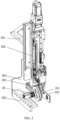
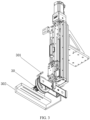
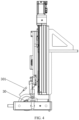
- this production scenario relates to a manufactured product 10, for example, a prismatic lithium battery, and further relates to a marking device 20, a photographing apparatus 30, and an inspection device 40. It should be understood that only part of devices used in this scenario are described as an example, and more devices will be included in actual production scenarios.
- the marking device 20 is used to mark a code on the product 10, for example, mark a quick response code on the product 10. A marked product is obtained after the marking operation is completed. Then, the marked product becomes the product 10 marked with a quick response code.
- the photographing apparatus 30 photographs the marked product to obtain a marked-product image
- the inspection device 40 performs image identification on the marked-product image to obtain a mark quality identification result.
- the inspection device 40 may be a device independent of or integrally provided with the photographing apparatus 30.
- the inspection device 40 may alternatively be a device for controlling the entire flow of product generation, for example, a master control device or a host computer.
- the photographing apparatus 30 may be placed facing a side, marked with a quick response code, of the prismatic lithium battery, and the prismatic lithium battery is located within a photographing range of the photographing apparatus 30.
- a focal axis of the photographing apparatus 30 may be perpendicular to the side, marked with a quick response code, of the prismatic lithium battery.
- a camera light source 301 may be further provided to fill in light to enhance brightness for the photographing apparatus 30 during photographing.
- the photographing apparatus 30 may be mounted on a camera mounting bracket 302, and the camera light source 301 may be provided above the camera.
- an X-axis traverse servo mounting plate 501 and a Z-axis servo robot arm 502 may be further provided.
- the Z-axis servo robot arm 502 is provided on the X-axis traverse servo mounting plate 501.
- the Z-axis servo robot arm 502 grabs a marked product and rises to a starting position, and the photographing apparatus 30 takes a picture and uploads the picture to the inspection device 40 for inspection.
- a mark quality inspection method is provided.
- the method can be applied to the inspection device 40 shown in FIG. 1 .
- the method includes step S701 to step S703.
- Step S701. Acquire a marked-product image obtained by photographing a marked product upon completion of a marking operation on a product.
- the marked product refers to a product on which the marking operation is completed.
- the marked product is a product marked with an identification code after the marking operation is completed.
- the identification code may be a quick response code. The following embodiments are described assuming that the identification code is a quick response code.
- the identification code may be marked on the product in various possible manners.
- the marked-product image is an image obtained by photographing the marked product.
- Completion of the marking operation means that the marking process on a product is completed.
- the photographing apparatus may take a picture to obtain the marked-product image.
- the marking device may send information to the photographing apparatus upon completion of the marking operation on the product.
- the photographing apparatus receives the information, takes a picture to obtain the marked-product image, and sends the obtained marked-product image to the inspection device for inspection.
- a master control device may be provided.
- the marking device sends information to the master control device upon completion of product marking.
- the master control device receives the information, and sends a photographing command to the photographing apparatus, so that the photographing apparatus is controlled to photograph the marked product to obtain the marked-product image.
- the marked-product image may alternatively be obtained in real time by other means.
- Step S702. Perform image identification on the marked-product image to obtain a mark quality identification result of an identification code in the marked-product image.
- Step S703. Output a first indication signal under a condition that the mark quality identification result is normal, where the first indication signal is used to indicate that the marked product flows to a process subsequent to the marking operation.
- the first indication signal can be output to indicate that the marked product flows to a process subsequent to the marking operation, and the marking operation process is completed.
- the marked product is photographed in real time to obtain the marked-product image, and image identification is performed on the marked-product image to obtain the mark quality identification result of the product. If the mark quality identification result is normal, the marked product flows to a process subsequent to the marking operation. Therefore, the mark quality can be inspected in real time. This can detect mark quality problems in a timely manner, effectively reducing the possibility of undesirable mark quality and defectiveness of mass-produced products.
- Step S801. Identify an identification code image in the marked-product image.
- the identification code image refers to a portion of the marked-product image including the identification code.
- the identification code being a quick response code is used as an example.
- the identification code may be a portion of a quick response code identified from the marked-product image.
- the identification code image may be identified from the marked-product image in various possible manners. For example, a reference point of the marked-product image is identified, and the identification code is identified based on the reference point. For another example, the identification code image is identified from the marked-product image based on image characteristics of the identification code.
- the identification code image After the identification code image is identified, the identification code image can be segmented from the marked-product image for subsequent comparison.
- Step S802. Compare whether the identification code image is consistent with an identification code mark image corresponding to the product to obtain an image consistency comparison result.
- the identification code mark image corresponding to the product refers to a predetermined image to be marked on the product, and the identification code mark image can be obtained from the host computer or the master control device.
- the host computer or the master control device sends an identification code mark image of the product to the marking device, and then the marking device performs marking operation.
- the host computer or the master control device also sends the identification code mark image to the inspection device.
- the inspection device compares the identification code image obtained by segmentation against the identification code mark image to obtain the image consistency comparison result.
- the foregoing mark quality identification result includes the image consistency comparison result.
- pixel values of the identification code image and the identification code mark image may be compared directly, reference points of the identification code image and the identification code mark image may be compared, or comparison may be performed by other means, so as to obtain the image consistency comparison result, which is not specifically limited in this embodiment of this application.
- the image consistency comparison result can be obtained by simply comparing the identification code image against the identification code mark image itself, with no need to acquire specific content of the identification code by scanning the code.
- the foregoing image consistency comparison result may be consistent images or inconsistent images. If the images are consistent, it means that the identification code image is complete. If the images are inconsistent, the identification code image is defective, and the image may be incomplete.
- the identification code mark image corresponding to the product is obtained, the identification code image is identified from the marked-product image, and the identification code image is compared with the identification code mark image for checking consistency, so as to learn about whether the identification code marked on the product is complete, thereby determining the correctness of the identification code marked on the product.
- the identification code mark image is a predetermined image to be marked on the product.
- comparison for checking consistency between the identification code image and the identification code mark image if the identification code image is complete, it means that the identification code mark image is completely marked on the product. In other words, the identification code image marked on the product is correct and the same as the identification code mark image. In this way, the correctness of the identification code can be determined without identifying the content of the identification code.
- step S702 of performing image identification on the marked-product image to obtain a mark quality identification result of an identification code in the marked-product image further includes step S901 and step S902.
- Step S901. Determine identification code size information of the identification code image.
- the identification code size information is information that can represent the size of an identified identification code image.
- the identification code being a quick response code is used as an example.
- the quick response code is generally a rectangular pattern. Therefore, the identification code size information may refer to length of each side of a rectangular area of the identification code image.
- Step S902 Compare the identification code size information against a preset size range to obtain a mark size identification result.
- the mark quality identification result includes the mark size identification result.
- the preset size range may be a preset range of size of the identification code marked on the product.
- the preset size range may be obtained from the master control device or the host computer. For mass-produced products, the size range is generally unchanged for all products, so the preset size range may also be set in the inspection device in advance.
- the preset size range may be a length range of two opposite sides of the rectangular area and a length range of the other two opposite sides of the rectangular area. In some other embodiments, the preset size range may be length of two opposite sides of the rectangular area and length of the other two opposite sides of the rectangular area, and a margin of error may be preset for the length, which is not specifically limited in the embodiments of this application.
- the mark size identification result may conform to the preset size range or may not conform to the preset size range. If the result conforms to the preset size range, it means that the size of the identification code image is normal. If the result does not conform to the preset size range, it means that the size of the identification code image is abnormal and does not meet the size requirement.
- an identification code is generally marked on the products at a preset size.
- the identification codes marked on the mass-produced products should be consistent.
- whether the size of the marked identification code meets the requirement can be determined by comparing the identification code size information, increasing the possibility that the identification codes on the products are consistent in size.
- step S702 of performing image identification on the marked-product image to obtain a mark quality identification result of an identification code in the marked-product image further includes step S1001 and step S1002.
- Step S100 Determine mark position information of the identified identification code image in the marked product.
- the mark position information refers to position-related information of the identification code on the product after marking is completed.
- the mark position information may be determined in combination with a reference position on the product, for example, product boundary information.
- the product being a prismatic lithium battery is used as an example.
- the reference position may be a position on the top cover of the prismatic lithium battery, and the mark position information may be a distance between the identification code in the marked-product image and the top cover of the prismatic lithium battery.
- Step S1002. Obtain a mark position detection result based on the mark position information.
- the mark quality identification result includes the mark position detection result.
- the mark position detection result may be a detection result whether the identification code is in the specified position, that is, whether the identification code deviates from the mark position. If the mark position detection result shows no deviation from the mark position, the inspection is successful, and if the mark position detection result shows a deviation from the mark position, the inspection fails.
- the identification code is generally marked at a specified position on the products. In this case, it can be determined by comparing the mark position information that the identification code is marked at the specified position on the product. This increases the possibility that the identification codes on the products are consistent in position.
- step S 1002 of obtaining a mark position detection result based on the mark position information includes: under a condition that the first distance falls within a first preset distance range and the second distance falls within a second preset distance range, determining that the mark position detection result is the mark position being accurate.
- a distance of the identification code marked on the product with respect to the product boundary can be determined, so as to determine whether the mark position is accurate, featuring easy implementation.
- step S702 of performing image identification on the marked-product image to obtain a mark quality identification result of an identification code in the marked-product image further includes steps S1101 and step S1102.
- Step S1101. Identify a digital code in the marked-product image.
- the identification code being a quick response code is used as an example.
- a digital code is also marked on the product, along with the quick response code.
- the digital code may be an Arabic number, a letter, or a combination of an Arabic number and a letter.
- a digital code 103 may typically be arranged around a quick response code 101.
- the digital code can be used to mark product-related information, so that the digital code or the product-related information can be easily viewed together with the quick response code of the product.
- Specific information represented by the digital code is not limited in the embodiments of this application.
- identifying a digital code from the marked-product image is not limited in the embodiments of this application.
- OCR optical character recognition
- Step S1102. Compare whether the digital code is consistent with digital code content corresponding to the product to obtain a digital code comparison result.
- the mark quality identification result includes the digital code comparison result.
- Digital code content of a product refers to predetermined content of the digital code to be marked on the product.
- the digital code content of the product can be obtained from the host computer or the master control device.
- Comparing whether the digital code is consistent with the digital code content corresponding to the product may be directly comparing the identified digital code against the digital code content corresponding to the product to obtain the digital code comparison result.
- the digital code comparison result may be a result of comparing the digital code against the digital code content corresponding to the product, that is, a result of whether the content thereof are exactly the same. If the digital code comparison result is being consistent, the inspection is successful; and if the digital code comparison result is being inconsistent, the inspection fails.
- some digital codes may be marked together with the identification code. Therefore, the digital code is identified and compared against the digital code content for checking consistency. In this way, the marking accuracy of the digital code content can be determined.
- the mark quality inspection method further includes the following step.
- Step S704. Output a second indication signal under a condition that the mark quality identification result is abnormal, where the second indication signal is used to indicate pulling the marked product off a belt.
- the mark quality identification result is abnormal when any one of the following conditions is met: the image consistency comparison result is being inconsistent, the mark size identification result is not conforming to the preset size range, the mark position detection result is deviating from the mark position, and the digital code comparison result is being inconsistent.
- the second indication signal is output.
- the mark quality identification result is abnormal, indicating that the identification result is that the mark quality does not meet the requirements.
- the second indication signal is output so that the marked product is pulled off the belt, reducing the possibility that the marked product with non-conforming mark quality flows to the next process.
- the belt may be an NG belt for pulling out non-conforming products.
- the mark quality identification result when the mark quality identification result is abnormal, it can be indicated in a timely manner to pull the marked product off the belt, reducing the possibility that a marked product with an abnormal mark flows to the next process.
- the mark quality inspection method further includes the following step.
- Step S705. Output a third indication signal under a condition that the second indication signal has been consecutively output for a preset number of times, where the third indication signal is used to control shutdown of a device.
- the preset number may be set based on actual needs. A smaller preset number indicates a probability of finding and reducing batch accidents as earlier as possible during marking. For example, in some embodiments, the preset number may be set to three times.
- the control device is a device for controlling the entire flow of product generation, for example, a master control device or a host computer.
- the following describes some specific implementations based on an example in which the product is a lithium battery, the mark quality inspection is performed during lithium battery production, and the identification code is a quick response code.
- the marking operation needs to be performed on finished lithium batteries by using a marking device, so as to engrave a quick response code on a surface of the lithium batteries.
- the master control device or the host computer needs to send, to the marking device and the inspection device, the quick response code to be engraved on the lithium battery (namely, the foregoing identification code mark image), as well as the digital code content corresponding to the product.
- the marking device obtains the quick response code and the digital code content, and engraves them onto the lithium battery at the current work station according to a set position and manner.
- the inspection device obtains the quick response code, and compares the quick response code against a quick response code image identified from the marked-product image (namely, the foregoing identification code image) to detect whether the quick response code engraved on the lithium battery is complete.
- the inspection device obtains the digital code content, and compares the digital code content against the digital code identified from the marked-product image to check the consistency with the digital code content.
- the photographing apparatus photographs the lithium battery on which the marking operation is completed to obtain a marked-product image, and then sends the marked-product image to the inspection device.
- the inspection device performs mark quality inspection based on the marked-product image.
- the inspection device identifies the quick response code image in the marked-product image, and compares whether the quick response code image is consistent with the image of the quick response code received from the master control device or the host computer, to obtain an image consistency comparison result.
- the inspection device also determines the quick response code size information of the quick response code image from the marked-product image, and compares the quick response code size information against the preset size range to obtain a mark size identification result.
- the inspection device also determines the mark position information of the identified quick response code image on the lithium battery.
- the mark position information includes: a first distance of the identification code image with respect to a first product boundary of the lithium battery, and a second distance with respect to a second product boundary of the lithium battery.
- the first distance is compared against the first preset distance range and the second distance is compared against the second preset distance range to obtain a mark position detection result.
- the inspection device also identifies the digital code in the marked-product image, and compares whether the digital code is consistent with the digital code content corresponding to the product, to obtain a digital code comparison result.
- the first indication signal is output to indicate that the marked product flows to a process subsequent to the marking operation.
- the mark quality identification result is abnormal when any one of the following four conditions is met: the image consistency comparison result is being inconsistent, the mark size identification result is not conforming to the preset size range, the mark position detection result is deviating from the mark position, and the digital code comparison result is being inconsistent.
- the second indication signal is output to indicate that the marked product is pulled off the belt, reducing the possibility that a marked product with an abnormal mark flows to the next process.
- the foregoing mark quality inspection process is executed on each lithium battery to be marked.
- the second indication signal has been consecutively output for a preset number of times, that is, a mark quality problem is consecutively found on the preset number of lithium batteries, it indicates that the risk of unsatisfactory mark quality is present on a batch of products.
- the third indication signal is output to control the device to shut down and stop the marking operation, so that troubleshooting and repair can be performed.
- an embodiment of this application further provides a mark quality inspection apparatus for implementing the foregoing mark quality inspection method.
- the solution provided by the apparatus is similar to the solution described in the foregoing method. Therefore, the specific limitations in one or more embodiments of the mark quality inspection method provided below can be found in the limitations on the foregoing mark quality inspection method, and are not repeated herein.
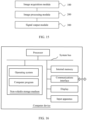
- a mark quality inspection apparatus including an image acquisition module 100, an image processing module 200, and a signal output module 300.
- the image acquisition module 100 is configured to acquire a marked-product image obtained by photographing a marked product upon completion of a marking operation on a product.
- the image processing module 200 is configured to perform image identification on the marked-product image to obtain a mark quality identification result of an identification code in the marked-product image.
- the signal output module 300 is configured to output a first indication signal when the mark quality identification result obtained by the image processing module 200 is normal, where the first indication signal is used to indicate that the marked product flows to a process subsequent to the marking operation.
- the image processing module 200 is configured to: identify an identification code image in the marked-product image and compare whether the identification code image is consistent with an identification code mark image corresponding to the product to obtain an image consistency comparison result.
- the mark quality identification result includes the image consistency comparison result.
- the image processing module 200 is configured to determine identification code size information of the identification code image and compare the identification code size information against a preset size range to obtain a mark size identification result.
- the mark quality identification result includes the mark size identification result.
- the image processing module 200 is configured to determine mark position information of the identified identification code image in the marked product and obtain a mark position detection result based on the mark position information.
- the mark quality identification result includes the mark position detection result.
- the mark position information includes: a first distance of the identification code image with respect to a first product boundary of the marked product, and a second distance with respect to a second product boundary of the marked product.
- the image processing module 200 is configured to: when the first distance falls within a first preset distance range and the second distance falls within a second preset distance range, determine that the mark position detection result is the mark position being accurate.
- the image processing module 200 is configured to identify the digital code in the marked-product image and compares whether the digital code is consistent with the digital code content corresponding to the product, to obtain a digital code comparison result.
- the mark quality identification result includes the digital code comparison result.
- the signal output module 300 is configured to output a second indication signal when the mark quality identification result obtained by the image processing module 200 is abnormal.
- the second indication signal is used to indicate pulling the marked product off a belt.
- the signal output module 300 is configured to output a third indication signal under a condition that the second indication signal has been consecutively output for a preset number of times, where the third indication signal is used to control shutdown of a device.
- the modules in the mark quality inspection apparatus may be implemented as a whole or partially by software, hardware and a combination thereof.
- the foregoing modules may be embedded in or provided independent of a processor of a computer device in the form of hardware, and may also be stored in a memory of the computer device in the form of software, so that the processor can invoke the modules to perform the corresponding operations of the modules.
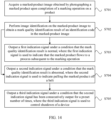
- a computer device is provided. With the computer device, the inspection device 40 can be implemented.
- the computer device may be a terminal, with an internal structure illustrated in FIG. 16 .
- the computer device includes a processor, a memory, a communications interface, a display, and an input apparatus that are connected via a system bus.
- the processor of the computer device is used to provide computing and control capabilities.
- the memory of the computer device includes a non-volatile storage medium or an internal memory.
- the non-volatile storage medium stores an operating system and computer programs.
- the internal memory provides an environment for operation of the operating system and the computer programs in the non-volatile storage medium.
- the communications interface of the computer device is used for wired or wireless communication with an external device, for example, communication with a marking device and a photographing apparatus, where the wireless communication may be implemented by means of WiFi, an operator network, NFC (near field communication), or other technologies.
- the computer programs are executed by the processor to implement a mark quality inspection method.
- the display of the computer device may be a liquid crystal display or an electronic ink display.
- the input apparatus of the computer device may be a touch layer covered on the display, a button, a trackball, or touch panel provided on the housing of the computer device, or an external keyboard, touch panel, a mouse, or the like.
- FIG. 16 is merely a block diagram of part of the structure associated with the solution in this application, and does not constitute limitations on the computer device, to which the solution in this application is applied.
- a specific computer device may include more or fewer components than as shown in the figure, be combined with some components, or have components arranged in a different manner.
- a computer device including a memory and one or more processors.
- the memory stores computer-readable instructions, and when the computer-readable instructions are executed by the one or more processors, the steps of the mark quality inspection method according to any one of the foregoing embodiments are executed by the one or more processors.
- one or more computer-readable storage media storing computer-readable instructions are provided.
- the steps of the mark quality inspection method according to any one of the foregoing embodiments are executed by the one or more processors.
- a computer program product includes a computer program.
- the computer program product includes a computer program.
- the steps of the mark quality inspection method according to any one of the foregoing embodiments are executed by the one or more processors.
- the computer program may be stored in a non-volatile computer readable storage medium. When the computer program is executed, the processes of the method embodiments may be included. Any reference to the memory, storage, database, or other media used in the embodiments of this application may include at least one of a non-volatile memory and a volatile memory.
- the non-volatile memory may include a read-only memory (Read-Only Memory, ROM), a magnetic tape, a floppy disk, a flash memory, an optical memory, or the like.
- the volatile memory may include a random access memory (Random Access Memory, RAM) or an external cache memory.
- the RAM may be in various forms, such as a static random access memory (Static Random Access Memory, SRAM) or a dynamic random access memory (Dynamic Random Access Memory, DRAM).
Landscapes
- Engineering & Computer Science (AREA)
- Physics & Mathematics (AREA)
- General Physics & Mathematics (AREA)
- Theoretical Computer Science (AREA)
- Computer Vision & Pattern Recognition (AREA)
- Quality & Reliability (AREA)
- Multimedia (AREA)
- Electromagnetism (AREA)
- Toxicology (AREA)
- Artificial Intelligence (AREA)
- Geometry (AREA)
- General Health & Medical Sciences (AREA)
- Health & Medical Sciences (AREA)
- Investigating Materials By The Use Of Optical Means Adapted For Particular Applications (AREA)
Applications Claiming Priority (2)
| Application Number | Priority Date | Filing Date | Title |
|---|---|---|---|
| CN202211062329.1A CN115131741B (zh) | 2022-08-30 | 2022-08-30 | 刻码质量检测方法、装置、计算机设备和存储介质 |
| PCT/CN2023/084409 WO2024045589A1 (fr) | 2022-08-30 | 2023-03-28 | Appareil et procédé de détection de qualité de gravure de code, dispositif informatique et support de stockage |
Publications (3)
| Publication Number | Publication Date |
|---|---|
| EP4495897A1 true EP4495897A1 (fr) | 2025-01-22 |
| EP4495897A4 EP4495897A4 (fr) | 2025-07-09 |
| EP4495897B1 EP4495897B1 (fr) | 2026-05-06 |
Family
ID=89997433
Family Applications (1)
| Application Number | Title | Priority Date | Filing Date |
|---|---|---|---|
| EP23729929.2A Active EP4495897B1 (fr) | 2022-08-30 | 2023-03-28 | Appareil et procédé de détection de qualité de gravure de code, dispositif informatique et support de stockage |
Country Status (2)
| Country | Link |
|---|---|
| US (1) | US12450717B2 (fr) |
| EP (1) | EP4495897B1 (fr) |
Families Citing this family (1)
| Publication number | Priority date | Publication date | Assignee | Title |
|---|---|---|---|---|
| CN120976211A (zh) * | 2025-10-16 | 2025-11-18 | 宁德时代新能源科技股份有限公司 | 极片标记方法、装置、系统、计算机设备、介质和产品 |
Family Cites Families (19)
| Publication number | Priority date | Publication date | Assignee | Title |
|---|---|---|---|---|
| US9552506B1 (en) * | 2004-12-23 | 2017-01-24 | Cognex Technology And Investment Llc | Method and apparatus for industrial identification mark verification |
| US20070205258A1 (en) * | 2005-02-03 | 2007-09-06 | Yottamark, Inc. | System and Method of Product Information Coding and Authentication |
| US20080011841A1 (en) * | 2005-02-03 | 2008-01-17 | Yottamark, Inc. | System and Method of Detecting Product Code Duplication and Product Diversion |
| JP4247190B2 (ja) | 2005-02-25 | 2009-04-02 | 日本電信電話株式会社 | 二次元コード認識装置とそのプログラム |
| US8442297B2 (en) * | 2010-02-23 | 2013-05-14 | Arinc Incorporated | Methods of evaluating the quality of two-dimensional matrix dot-peened marks on objects and mark verification systems |
| US9436770B2 (en) * | 2011-03-10 | 2016-09-06 | Fastechnology Group, LLC | Database systems and methods for consumer packaged goods |
| US20180033016A1 (en) * | 2016-07-26 | 2018-02-01 | RacerX Inc. | Systems and methods for facilitating access to product information |
| US12198149B2 (en) * | 2017-12-27 | 2025-01-14 | Emtruth, Inc. | System and method for product authentication |
| CN109389150B (zh) | 2018-08-28 | 2022-04-05 | 东软集团股份有限公司 | 图像一致性比对方法、装置、存储介质及电子设备 |
| CN111611821B (zh) | 2020-04-22 | 2023-03-21 | 浙江大华技术股份有限公司 | 二维码识别方法、装置、计算机设备和可读存储介质 |
| CN111738028A (zh) | 2020-05-27 | 2020-10-02 | 杭州易现先进科技有限公司 | 二维码扫描的方法、装置、投影仪和计算机设备 |
| CN111767754B (zh) | 2020-06-30 | 2024-05-07 | 创新奇智(北京)科技有限公司 | 一种识别码的识别方法、装置、电子设备及存储介质 |
| IT202000020218A1 (it) * | 2020-08-17 | 2022-02-17 | Certilogo S P A | Metodo automatico per determinare l’autenticità di un prodotto |
| CN112001200A (zh) | 2020-09-01 | 2020-11-27 | 杭州海康威视数字技术股份有限公司 | 识别码识别方法、装置、设备、存储介质和系统 |
| US11834261B2 (en) * | 2021-05-07 | 2023-12-05 | Wastezero, Inc. | Materials management bag and system and method for tracking |
| CN113485318B (zh) | 2021-05-28 | 2024-08-16 | 北京旷视机器人技术有限公司 | 位置修正方法、装置、设备和存储介质 |
| CN114170432B (zh) | 2021-11-24 | 2025-10-31 | 奥比中光科技集团股份有限公司 | 一种图像处理方法、图像识别方法及相关装置 |
| CN114330404B (zh) | 2021-12-28 | 2024-07-19 | 易唯思智能自动化装备无锡有限公司 | 二维码刻印效果验证方法、系统及存储介质 |
| CN117636233A (zh) | 2022-08-30 | 2024-03-01 | 江苏时代新能源科技有限公司 | 刻码质量检测方法、装置、计算机设备和存储介质 |
-
2023
- 2023-03-28 EP EP23729929.2A patent/EP4495897B1/fr active Active
- 2023-09-14 US US18/466,834 patent/US12450717B2/en active Active
Also Published As
| Publication number | Publication date |
|---|---|
| EP4495897B1 (fr) | 2026-05-06 |
| US20240070843A1 (en) | 2024-02-29 |
| US12450717B2 (en) | 2025-10-21 |
| EP4495897A4 (fr) | 2025-07-09 |
Similar Documents
| Publication | Publication Date | Title |
|---|---|---|
| CN115131741B (zh) | 刻码质量检测方法、装置、计算机设备和存储介质 | |
| CN114627089B (zh) | 缺陷识别方法、装置、计算机设备及计算机可读存储介质 | |
| CN113808108B (zh) | 一种印刷膜缺陷视觉检测方法和系统 | |
| US20240029238A1 (en) | Inspection apparatus, method of controlling the same, inspection system, and storage medium | |
| EP4495897A1 (fr) | Appareil et procédé de détection de qualité de gravure de code, dispositif informatique et support de stockage | |
| CN114862816B (zh) | 毛刺检测方法、系统和计算机可读存储介质 | |
| WO2019001164A1 (fr) | Procédé de mesure de la concentricité d'un filtre optique et dispositif terminal | |
| CN112528776A (zh) | 文本行校正方法和装置 | |
| CN110956087A (zh) | 一种图片中表格的识别方法、装置、可读介质和电子设备 | |
| CN116071365A (zh) | 零件检测方法、装置、设备及存储介质 | |
| CN113804704A (zh) | 电路板检测方法、视觉检测设备及具有存储功能的装置 | |
| CN117058411B (zh) | 电池棱边外形瑕疵识别方法、装置、介质和设备 | |
| CN111062836B (zh) | 一种基于视频的评分方法、装置及电子设备 | |
| US7266233B2 (en) | System and method for measuring an object | |
| CN114581360A (zh) | 光伏组件标签检测方法、装置、设备和计算机存储介质 | |
| EP4358030B1 (fr) | Dispositif et procédé d'inspection de points pour système d'inspection visuelle | |
| CN110658215A (zh) | 一种基于机器视觉的pcb板自动拼接检测方法与装置 | |
| CN113379692B (zh) | 校准om和sem坐标关系的方法和装置、设备和存储介质 | |
| CN111046878B (zh) | 一种数据处理方法、装置及计算机存储介质和计算机 | |
| CN120235848A (zh) | 一种基于YOLOv8模型的新能源锂电池表面缺陷视觉检测方法 | |
| CN111126030B (zh) | 标签排版处理方法及装置、系统 | |
| CN116634134B (zh) | 一种成像系统校准的方法、装置、存储介质及电子设备 | |
| CN114199890A (zh) | 电子元器件检测装置及其检测方法 | |
| CN113808067A (zh) | 电路板检测方法、视觉检测设备及具有存储功能的装置 | |
| US20200150909A1 (en) | Device And Method For Checking The Printing of an Article |
Legal Events
| Date | Code | Title | Description |
|---|---|---|---|
| STAA | Information on the status of an ep patent application or granted ep patent |
Free format text: STATUS: UNKNOWN |
|
| STAA | Information on the status of an ep patent application or granted ep patent |
Free format text: STATUS: THE INTERNATIONAL PUBLICATION HAS BEEN MADE |
|
| PUAI | Public reference made under article 153(3) epc to a published international application that has entered the european phase |
Free format text: ORIGINAL CODE: 0009012 |
|
| STAA | Information on the status of an ep patent application or granted ep patent |
Free format text: STATUS: REQUEST FOR EXAMINATION WAS MADE |
|
| PUAB | Information related to the publication of an a document modified or deleted |
Free format text: ORIGINAL CODE: 0009199EPPU |
|
| PUAI | Public reference made under article 153(3) epc to a published international application that has entered the european phase |
Free format text: ORIGINAL CODE: 0009012 |
|
| 17P | Request for examination filed |
Effective date: 20240620 |
|
| AK | Designated contracting states |
Kind code of ref document: A1 Designated state(s): AL AT BE BG CH CY CZ DE DK EE ES FI FR GB GR HR HU IE IS IT LI LT LU LV MC ME MK MT NL NO PL PT RO RS SE SI SK SM TR |
|
| A4 | Supplementary search report drawn up and despatched |
Effective date: 20250606 |
|
| RIC1 | Information provided on ipc code assigned before grant |
Ipc: G06V 10/98 20220101ALI20250602BHEP Ipc: G06V 30/19 20220101ALI20250602BHEP Ipc: G06V 20/52 20220101AFI20250602BHEP |
|
| STAA | Information on the status of an ep patent application or granted ep patent |
Free format text: STATUS: EXAMINATION IS IN PROGRESS |
|
| DAV | Request for validation of the european patent (deleted) | ||
| DAX | Request for extension of the european patent (deleted) | ||
| 17Q | First examination report despatched |
Effective date: 20251201 |
|
| GRAP | Despatch of communication of intention to grant a patent |
Free format text: ORIGINAL CODE: EPIDOSNIGR1 |
|
| STAA | Information on the status of an ep patent application or granted ep patent |
Free format text: STATUS: GRANT OF PATENT IS INTENDED |
|
| INTG | Intention to grant announced |
Effective date: 20260211 |
|
| GRAS | Grant fee paid |
Free format text: ORIGINAL CODE: EPIDOSNIGR3 |
|
| GRAA | (expected) grant |
Free format text: ORIGINAL CODE: 0009210 |
|
| STAA | Information on the status of an ep patent application or granted ep patent |
Free format text: STATUS: THE PATENT HAS BEEN GRANTED |