EP4497799A1 - Kohlenwasserstoff-kältemittelgas als ersatz für ein hfo- oder hfc-kältemittel - Google Patents
Kohlenwasserstoff-kältemittelgas als ersatz für ein hfo- oder hfc-kältemittel Download PDFInfo
- Publication number
- EP4497799A1 EP4497799A1 EP24189334.6A EP24189334A EP4497799A1 EP 4497799 A1 EP4497799 A1 EP 4497799A1 EP 24189334 A EP24189334 A EP 24189334A EP 4497799 A1 EP4497799 A1 EP 4497799A1
- Authority
- EP
- European Patent Office
- Prior art keywords
- instrument
- grade
- refrigerant gas
- butane
- propane
- Prior art date
- Legal status (The legal status is an assumption and is not a legal conclusion. Google has not performed a legal analysis and makes no representation as to the accuracy of the status listed.)
- Withdrawn
Links
Images
Classifications
-
- C—CHEMISTRY; METALLURGY
- C09—DYES; PAINTS; POLISHES; NATURAL RESINS; ADHESIVES; COMPOSITIONS NOT OTHERWISE PROVIDED FOR; APPLICATIONS OF MATERIALS NOT OTHERWISE PROVIDED FOR
- C09K—MATERIALS FOR MISCELLANEOUS APPLICATIONS, NOT PROVIDED FOR ELSEWHERE
- C09K5/00—Heat-transfer, heat-exchange or heat-storage materials, e.g. refrigerants; Materials for the production of heat or cold by chemical reactions other than by combustion
- C09K5/02—Materials undergoing a change of physical state when used
- C09K5/04—Materials undergoing a change of physical state when used the change of state being from liquid to vapour or vice versa
- C09K5/041—Materials undergoing a change of physical state when used the change of state being from liquid to vapour or vice versa for compression-type refrigeration systems
- C09K5/042—Materials undergoing a change of physical state when used the change of state being from liquid to vapour or vice versa for compression-type refrigeration systems comprising compounds containing carbon and hydrogen only
-
- C—CHEMISTRY; METALLURGY
- C09—DYES; PAINTS; POLISHES; NATURAL RESINS; ADHESIVES; COMPOSITIONS NOT OTHERWISE PROVIDED FOR; APPLICATIONS OF MATERIALS NOT OTHERWISE PROVIDED FOR
- C09K—MATERIALS FOR MISCELLANEOUS APPLICATIONS, NOT PROVIDED FOR ELSEWHERE
- C09K2205/00—Aspects relating to compounds used in compression type refrigeration systems
- C09K2205/10—Components
- C09K2205/12—Hydrocarbons
Definitions
- the invention relates to refrigerants used in air conditioning systems such as aerosol grade refrigerators, residential air conditioning systems, and air conditioning systems in vehicles, such as automobiles, trucks, and other types of motorized vehicles, hybrid vehicles, and electric vehicles, (“EV's”). More particularly, it relates to blended hydrocarbon, (hereinafter “HC"), refrigerant gases that can serve as replacement refrigerants for hydrofluorocarbon, (hereinafter “HFC”), refrigerants, such as R134a, and hydrofluoroolefin, (hereinafter “HFO”) refrigerants, such as R1234yf, (HFC and HFO are collectively referred to herein as "Hydrofluoro Refrigerants” or "HFx Refrigerants”).
- HFC hydrofluorocarbon
- HFO hydrofluoroolefin
- a mobile air conditioning system removes humidity from, and cools, ambient air within the vehicle's cabin.
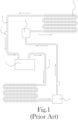
- a mobile air conditioning system includes a low side tap 1, a compressor 2, typically a receiver dryer 3, and expansion valve 4, an evaporator 5, and a fluid path 6, such as various high pressure lines as will be appreciated by those skilled in the art. Refrigerant flows through the system as illustrated by the arrows.
- HFC's such as R134a has been driven by the need to address environmental concerns and reduce the impact of HFCs on climate change.
- R1234yf is generally considered a more environmentally friendly refrigerant with a lower global warming potential, (R1234yf has a 100-year GWP of less than one compared to R134a's 100-year GWP of 1,430), this switch is not without its challenges.
- One of the major concerns is the compatibility of R1234yf with existing equipment and infrastructure designed for R134a.
- the physical properties of R1234yf differ significantly from R134a, which can lead to system performance issues, potential leaks, and the need for modifications in order to ensure safe and efficient operation.
- the industry has been grappling with the costs and complexities of retrofitting existing systems or designing new ones to accommodate R1234yf.
- HFO's are not considered to be greenhouse gases and have a negligible contribution to global warming
- HFO's are now believed to have other deleterious effects on the environment.
- TFA trifluoroacetic acid
- R1234yf has a unique degradation pathway in the atmosphere, where it can break down into TFA, a long-lived and stable compound. While TFA is not a potent greenhouse gas, its accumulation in the environment can lead to unintended consequences.
- the air conditioning systems of normal, internal combustion engine vehicles could utilize what are commonly referred to as aerosol grade refrigerants.
- hybrid vehicles and EV's increasingly require very pure, and very dry instrument-grade refrigerants that meet AHRI Standards 700 specifications for refrigerants, especially regarding moisture and impurities, and should not include any ethane. This is a result of the fact that these vehicles utilize high voltage electrical systems to energize the components of the air conditioning system such as the compressor.
- traditional refrigerants often contain a hygroscopic additive, Polyalkylene Glycol, (“PAG”), a synthetic oil used to lubricate the compressor.
- PAG Polyalkylene Glycol
- the present invention is directed towards an instrument-grade, blended HC refrigerant gas that can be utilized in both existing air conditioning systems and that is suitable for air conditioning systems in hybrid vehicles and EV's.
- the present invention is also directed towards a method of recharging various air conditioning and/or chilling systems, with a blended HC refrigerant gas.
- the invention also discloses a method for replacing a hydrofluoro refrigerant in an air conditioning system with an instrument-grade hydrocarbon refrigerant gas. This method is described in claim 1 of the set of claims.
- the invention also discloses an instrument-grade blended hydrocarbon refrigerant gas according to claim 7. Special developments of the method and the instrument-graded hydrocarbon refrigerant gas are matter of the subclaims.
- the present invention is directed towards an instrument-grade, blended HC refrigerant gas that can be utilized in various air conditioning and/or chilling systems, such as the refrigerant systems in refrigerators, especially aerosol grade refrigerators, residential air conditioning systems, and the air conditioning systems utilized in motorized, hybrid, and electric vehicles, systems as a replacement for state-of-the-art Hydrofluro Refrigerants and that can be utilized in new chilling and air conditioning systems that require an instrument-grade refrigerant.
- a blended HC refrigerant In order to be useful as a refrigerant and be a suitable replacement for Hydrofluoro Refrigerants, a blended HC refrigerant must have a comparable boiling point.
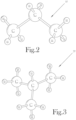
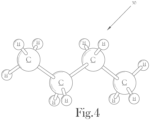
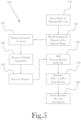
- a suitable blended HC refrigerant gas By blending refrigerant grade propane, R290, and refrigerant grade butane, either n -butane, R600, or iso-butane, R600a together, a suitable blended HC refrigerant gas, with a suitable boiling point, can be attained. Moreover, a blended HC refrigerant gas will produce less electrical draw on the MAC system than R134a, R1234fy, or other aerosol grade HFx Refrigerants.
- an HC gas blend of R290 and either R600 or R600a is created as in accordance with method 100.
- a ratio of blended HC gas is selected.
- a blend of approximately 50% R290 to approximately 50% R600 or R600a is utilized. It will be appreciated that the percentages expressed herein are by liquid volume. While this is the preferred ratio, the acceptable range is approximately 50% to 80% R290 and approximately 20% to 50% of either R600 or R600A.
- an HC gas blend of R290 and either R600 or R600a is created as follows.
- approximately 70% R290 is blended with approximately 30% either R600 or R600a. While this an exemplary ratio, the acceptable range is approximately 70% to 90% R290 and approximately 10% to 30% either R600 or R600A. Once the desired ratio is selected, the R290 and either R600 or R600A are blended at step 120.
- the blended HC refrigerant gas is preferably instrument-grade and must meet AHRI 700 Standards for refrigerants, especially with regard to water and impurities.
- the moisture content must be reduced below 5% and preferably below 10mg/kg at step 130.
- all other volatile impurities must be reduced below 0.5 percent by weight at step 140.
- ethane must be removed at step 150. Those skilled in the art will recognize that these steps could be performed by means of a fractionator. Those skilled in the art will recognize that there are also other methods for removing ethane and for drying the blended HC refrigerant gas.
- a drying agent could be added to the HC refrigerant gas blend. It will be appreciated that the step of drying and reducing water content to AHRI 700 Standard and removing ethane could be performed on the constituent HC gases prior to the step of blending the constituent HC gases or could be performed on the HC refrigerant gas blend.
- a non-conductive synthetic oil such as Polyolester Oil is added at step 160 to lubricate the compressor of the air conditioning system. It should be understood that only a non-conductive POE oil should be utilized to provide for lubrication of the compressor.
- the aerosol grade HFx Refrigerant is carefully removed from the system with a reclaiming machine, at step 170, taking care not to release any of the aerosol grade HFx Refrigerant to the atmosphere.
- the instrument-grade blended HC refrigerant gas replacement is then injected into the system at step 180.
Landscapes
- Chemical & Material Sciences (AREA)
- Engineering & Computer Science (AREA)
- Physics & Mathematics (AREA)
- Chemical Kinetics & Catalysis (AREA)
- Combustion & Propulsion (AREA)
- Thermal Sciences (AREA)
- Materials Engineering (AREA)
- Organic Chemistry (AREA)
- Lubricants (AREA)
Applications Claiming Priority (3)
| Application Number | Priority Date | Filing Date | Title |
|---|---|---|---|
| US202363528996P | 2023-07-26 | 2023-07-26 | |
| US18/369,250 US20240002713A1 (en) | 2023-07-26 | 2023-09-18 | Method for Producing Hydrocarbon Refrigerant Gas as a Replacement for an HFO or HFC Refrigerant |
| US18/657,209 US20240294816A1 (en) | 2023-09-18 | 2024-05-07 | Method for Producing Hydrocarbon Refrigerant Gas as a Replacement for an HFO or HFC Refrigerant |
Publications (1)
| Publication Number | Publication Date |
|---|---|
| EP4497799A1 true EP4497799A1 (de) | 2025-01-29 |
Family
ID=91959167
Family Applications (1)
| Application Number | Title | Priority Date | Filing Date |
|---|---|---|---|
| EP24189334.6A Withdrawn EP4497799A1 (de) | 2023-07-26 | 2024-07-18 | Kohlenwasserstoff-kältemittelgas als ersatz für ein hfo- oder hfc-kältemittel |
Country Status (1)
| Country | Link |
|---|---|
| EP (1) | EP4497799A1 (de) |
Citations (3)
| Publication number | Priority date | Publication date | Assignee | Title |
|---|---|---|---|---|
| WO2011007968A9 (ko) * | 2009-07-13 | 2011-06-16 | 주식회사 와이엠환경연구소 | 냉매 조성물 |
| EP2799527A1 (de) * | 2011-12-27 | 2014-11-05 | Japan Sun Oil Company, Ltd. | Kältemaschinenölzusammensetzung |
| CN113004870A (zh) * | 2021-02-26 | 2021-06-22 | 青岛万宝压缩机有限公司 | 一种制冷剂混合物、混合工质及压缩机 |
-
2024
- 2024-07-18 EP EP24189334.6A patent/EP4497799A1/de not_active Withdrawn
Patent Citations (3)
| Publication number | Priority date | Publication date | Assignee | Title |
|---|---|---|---|---|
| WO2011007968A9 (ko) * | 2009-07-13 | 2011-06-16 | 주식회사 와이엠환경연구소 | 냉매 조성물 |
| EP2799527A1 (de) * | 2011-12-27 | 2014-11-05 | Japan Sun Oil Company, Ltd. | Kältemaschinenölzusammensetzung |
| CN113004870A (zh) * | 2021-02-26 | 2021-06-22 | 青岛万宝压缩机有限公司 | 一种制冷剂混合物、混合工质及压缩机 |
Non-Patent Citations (3)
| Title |
|---|
| AIR-CONDITIONING ET AL: "AHRI Standard 700 (2019): Specifications for Refrigerants", 1 January 2019 (2019-01-01), pages 1 - 30, XP093098484, Retrieved from the Internet <URL:https://www.ahrinet.org/system/files/2023-06/AHRI_Standard_700_2019.pdf> [retrieved on 20231106] * |
| ANONYMOUS: "Extraction Grade(TM) Hydrocarbon Solvents (LPG) Specifications", HIGHPRECISIONGAS.COM, 31 March 2023 (2023-03-31), XP093224756, Retrieved from the Internet <URL:https://web.archive.org/web/20230331001348/https://highprecisiongas.com/pages/extraction-grade-liquid-petroleum-gases-lpg-specifications> * |
| WEN M Y ET AL: "Condensation heat-transfer and pressure drop characteristics of refrigerant R-290/R-600a-oil mixtures in serpentine small-diameter U-tubes", APPLIED THERMAL ENGINEERING, PERGAMON, OXFORD, GB, vol. 29, no. 11-12, 1 August 2009 (2009-08-01), pages 2460 - 2467, XP026046382, ISSN: 1359-4311, [retrieved on 20090420], DOI: 10.1016/J.APPLTHERMALENG.2008.12.014 * |
Similar Documents
| Publication | Publication Date | Title |
|---|---|---|
| KR102763017B1 (ko) | 냉매 조성물 및 그 용도 | |
| CN113661224B (zh) | 组合物 | |
| EP3825383B1 (de) | Kältekreislaufvorrichtung für ein fahrzeug | |
| EP2767569A1 (de) | Wärmeübertragungszusammensetzungen und -verfahren | |
| CN103502381A (zh) | 呈现出改善的与润滑油的混溶性的传热组合物 | |
| EP3561020B1 (de) | Kühlmittelzusammensetzung mit hydrofluorolefin | |
| AU2018405230B2 (en) | Compositions, system and methods for introducing poe lubricant into an electric (HEV, PHEV, EV) automotive air-conditioning/heating system or stationary air-conditioning/heating system or stationary refrigeration system using lower or low GWP refrigerant or refrigerant blends | |
| US20170198184A9 (en) | Low GWP Heat Transfer Compositions Containing Difluoromethane And 1,3,3,3-Tetrafluoropropene | |
| JP2025106303A (ja) | Hfo-1234yfを含む伝熱組成物を用いるシステム | |
| WO2010010917A1 (ja) | 冷凍回路 | |
| EP4497799A1 (de) | Kohlenwasserstoff-kältemittelgas als ersatz für ein hfo- oder hfc-kältemittel | |
| US20240002713A1 (en) | Method for Producing Hydrocarbon Refrigerant Gas as a Replacement for an HFO or HFC Refrigerant | |
| US20240294816A1 (en) | Method for Producing Hydrocarbon Refrigerant Gas as a Replacement for an HFO or HFC Refrigerant | |
| CA3245256A1 (en) | PROCESS FOR PRODUCING HYDROCARBONATED REFRIGERANT GAS AS A REPLACEMENT FOR AN HFO OR HFC REFRIGERANT | |
| US20250207009A1 (en) | HC Refrigerant Blended Gas and Method for Decontaminating an A/C System Using a Hydrocarbon Replacement Refrigerant Blended Gas | |
| CN112789342A (zh) | Hfo-1234yf和丙烯的共沸组合物 | |
| US20050133756A1 (en) | Refrigerant with lubricating oil | |
| JP3658571B2 (ja) | 冷凍装置 | |
| CN1546594A (zh) | 含有1,1,2,2-四氟乙烷的混合制冷剂 |
Legal Events
| Date | Code | Title | Description |
|---|---|---|---|
| PUAI | Public reference made under article 153(3) epc to a published international application that has entered the european phase |
Free format text: ORIGINAL CODE: 0009012 |
|
| STAA | Information on the status of an ep patent application or granted ep patent |
Free format text: STATUS: THE APPLICATION HAS BEEN PUBLISHED |
|
| AK | Designated contracting states |
Kind code of ref document: A1 Designated state(s): AL AT BE BG CH CY CZ DE DK EE ES FI FR GB GR HR HU IE IS IT LI LT LU LV MC ME MK MT NL NO PL PT RO RS SE SI SK SM TR |
|
| STAA | Information on the status of an ep patent application or granted ep patent |
Free format text: STATUS: THE APPLICATION IS DEEMED TO BE WITHDRAWN |
|
| 18D | Application deemed to be withdrawn |
Effective date: 20250730 |