EP4498184A1 - Elektronische vorrichtung zur implementierung einer temperaturvorhersage und steuerungssystem sowie steuerungsverfahren dafür - Google Patents
Elektronische vorrichtung zur implementierung einer temperaturvorhersage und steuerungssystem sowie steuerungsverfahren dafür Download PDFInfo
- Publication number
- EP4498184A1 EP4498184A1 EP24189434.4A EP24189434A EP4498184A1 EP 4498184 A1 EP4498184 A1 EP 4498184A1 EP 24189434 A EP24189434 A EP 24189434A EP 4498184 A1 EP4498184 A1 EP 4498184A1
- Authority
- EP
- European Patent Office
- Prior art keywords
- information
- input
- predicted temperature
- fuel
- trained
- Prior art date
- Legal status (The legal status is an assumption and is not a legal conclusion. Google has not performed a legal analysis and makes no representation as to the accuracy of the status listed.)
- Pending
Links
Images



Classifications
-
- G—PHYSICS
- G05—CONTROLLING; REGULATING
- G05B—CONTROL OR REGULATING SYSTEMS IN GENERAL; FUNCTIONAL ELEMENTS OF SUCH SYSTEMS; MONITORING OR TESTING ARRANGEMENTS FOR SUCH SYSTEMS OR ELEMENTS
- G05B13/00—Adaptive control systems, i.e. systems automatically adjusting themselves to have a performance which is optimum according to some preassigned criterion
- G05B13/02—Adaptive control systems, i.e. systems automatically adjusting themselves to have a performance which is optimum according to some preassigned criterion electric
- G05B13/0265—Adaptive control systems, i.e. systems automatically adjusting themselves to have a performance which is optimum according to some preassigned criterion electric the criterion being a learning criterion
- G05B13/027—Adaptive control systems, i.e. systems automatically adjusting themselves to have a performance which is optimum according to some preassigned criterion electric the criterion being a learning criterion using neural networks only
-
- C—CHEMISTRY; METALLURGY
- C03—GLASS; MINERAL OR SLAG WOOL
- C03B—MANUFACTURE, SHAPING, OR SUPPLEMENTARY PROCESSES
- C03B5/00—Melting in furnaces; Furnaces so far as specially adapted for glass manufacture
- C03B5/16—Special features of the melting process; Auxiliary means specially adapted for glass-melting furnaces
- C03B5/24—Automatically regulating the melting process
-
- G—PHYSICS
- G01—MEASURING; TESTING
- G01K—MEASURING TEMPERATURE; MEASURING QUANTITY OF HEAT; THERMALLY-SENSITIVE ELEMENTS NOT OTHERWISE PROVIDED FOR
- G01K13/00—Thermometers specially adapted for specific purposes
- G01K13/02—Thermometers specially adapted for specific purposes for measuring temperature of moving fluids or granular materials capable of flow
- G01K13/024—Thermometers specially adapted for specific purposes for measuring temperature of moving fluids or granular materials capable of flow of moving gases
-
- C—CHEMISTRY; METALLURGY
- C03—GLASS; MINERAL OR SLAG WOOL
- C03B—MANUFACTURE, SHAPING, OR SUPPLEMENTARY PROCESSES
- C03B5/00—Melting in furnaces; Furnaces so far as specially adapted for glass manufacture
- C03B5/16—Special features of the melting process; Auxiliary means specially adapted for glass-melting furnaces
- C03B5/235—Heating the glass
-
- G—PHYSICS
- G01—MEASURING; TESTING
- G01K—MEASURING TEMPERATURE; MEASURING QUANTITY OF HEAT; THERMALLY-SENSITIVE ELEMENTS NOT OTHERWISE PROVIDED FOR
- G01K13/00—Thermometers specially adapted for specific purposes
-
- G—PHYSICS
- G06—COMPUTING OR CALCULATING; COUNTING
- G06F—ELECTRIC DIGITAL DATA PROCESSING
- G06F30/00—Computer-aided design [CAD]
- G06F30/20—Design optimisation, verification or simulation
- G06F30/27—Design optimisation, verification or simulation using machine learning, e.g. artificial intelligence, neural networks, support vector machines [SVM] or training a model
-
- G—PHYSICS
- G06—COMPUTING OR CALCULATING; COUNTING
- G06N—COMPUTING ARRANGEMENTS BASED ON SPECIFIC COMPUTATIONAL MODELS
- G06N3/00—Computing arrangements based on biological models
- G06N3/02—Neural networks
- G06N3/04—Architecture, e.g. interconnection topology
- G06N3/044—Recurrent networks, e.g. Hopfield networks
-
- G—PHYSICS
- G06—COMPUTING OR CALCULATING; COUNTING
- G06N—COMPUTING ARRANGEMENTS BASED ON SPECIFIC COMPUTATIONAL MODELS
- G06N3/00—Computing arrangements based on biological models
- G06N3/02—Neural networks
- G06N3/04—Architecture, e.g. interconnection topology
- G06N3/045—Combinations of networks
-
- G—PHYSICS
- G06—COMPUTING OR CALCULATING; COUNTING
- G06N—COMPUTING ARRANGEMENTS BASED ON SPECIFIC COMPUTATIONAL MODELS
- G06N3/00—Computing arrangements based on biological models
- G06N3/02—Neural networks
- G06N3/04—Architecture, e.g. interconnection topology
- G06N3/0464—Convolutional networks [CNN, ConvNet]
-
- G—PHYSICS
- G06—COMPUTING OR CALCULATING; COUNTING
- G06F—ELECTRIC DIGITAL DATA PROCESSING
- G06F2119/00—Details relating to the type or aim of the analysis or the optimisation
- G06F2119/08—Thermal analysis or thermal optimisation
Definitions
- the present disclosure relates to an electronic device for implementing a temperature prediction and control system and a control method thereof, and more particularly, to an electronic device for predicting a temperature of a lower portion of a glass melting device using a trained neural network model and controlling fuel input into the glass melting device based on the predicted temperature and a control method thereof.
- OBC On Board Charge
- the present disclosure is directed to providing an electronic device, which predicts the temperature of a specific position in a glass melting device using a trained neural network model and provides a user with guidance information for reducing the amount of input fuel while maintaining an appropriate process temperature based on the predicted temperature information, and a control method thereof.
- an electronic device for implementing a temperature prediction and control system, which includes a communication interface, a memory in which a trained first neural network model and a trained second neural network model are stored, and one or more processors configured to perform preprocessing, when process information including fuel input information for a glass melting device is received through the communication interface, on the received process information.
- the one or more processors may input the preprocessed process information into the trained first neural network model and obtain first predicted temperature information corresponding to a first position of the glass melting device.
- the one or more processors may input the obtained first predicted temperature information and the process information into the trained second neural network model and obtain second predicted temperature information corresponding to a second position of the glass melting device.
- the one or more processors may provide guidance information including the obtained first predicted temperature information and the obtained second predicted temperature information.
- a control method of an electronic device for implementing a temperature prediction and control system which includes performing preprocessing, when process information including fuel input information for a glass melting device is received, on the received process information.
- the control method may include inputting the preprocessed process information into the trained first neural network model and obtaining first predicted temperature information corresponding to a first position of the glass melting device.
- the control method may include inputting the obtained first predicted temperature information and the process information into the trained second neural network model and obtaining second predicted temperature information corresponding to a second position of the glass melting device.
- the control method may include providing guidance information including the obtained first predicted temperature information and the obtained second predicted temperature information.
- a non-transitory computer-readable recording medium that stores, when executed by a processor of an electronic device for implementing a temperature prediction and control system, computer commands that cause the electronic device to perform operations which include performing preprocessing, when process information including fuel input information for a glass melting device is received, on the received process information.
- the operation may include inputting the preprocessed process information into a trained first neural network model and obtaining first predicted temperature information corresponding to a first position of the glass melting device.
- the operation may include inputting the obtained first predicted temperature information and the process information into a trained second neural network model and obtaining second predicted temperature information corresponding to a second position of the glass melting device.
- the operation may include providing guidance information including the obtained first predicted temperature information and the obtained second predicted temperature information.
- expressions such as “have,” “may have,” “include,” or “may include” refer to the presence of the corresponding feature (e.g., component such as numerical value, function, operation, or part), and does not rule out the existence of additional features.
- a first component is (operatively or communicatively) coupled with/to or is connected to a second component
- the first component is directly coupled with/to the second component or may be coupled with/to the second component through a third component.
- module or “unit” may perform at least one function or operation, and be implemented as hardware or software or be implemented as a combination of hardware and software.
- a plurality of “modules” or a plurality of “units” may be integrated in at least one module and be implemented as at least one processor (not shown) except for a “module” or an “unit” that needs to be implemented as specific hardware.
- An electronic device may include an artificial intelligence model (or artificial neural network model or learning network model) including at least one neural network layer.
- the artificial neural network may include deep neural network (DNN), such as convolutional neural network (CNN), recurrent neural network (RNN), restricted Boltzmann machine (RBM), deep belief network (DBN), bidirectional recurrent deep neural network (BRDNN) or deep Q-network, etc., but are not limited to the above examples.
- parameter is a value used in a calculation process of each layer constituting a neural network and may include, for example, a weight used when applying an input value to a predetermined calculation equation.
- parameters can be expressed in a matrix form. The parameters are values set as a result of training, and can be updated through separate training data as needed.
- FIG. 1 is a diagram schematically illustrating a control method of an electronic device according to one embodiment.
- a glass melting device 1 may include a plurality of fuel input units including a plurality of burners 10 and an electric booster 20.
- the burner 10 is a heat source corresponding to the relatively upper side of the glass melting device 1
- the electric booster 20 is a heat source corresponding to the relatively lower side of the glass melting device 1.
- the temperature of the molten glass contained in the glass melting device 1 may be maintained depending on the amount of fuel input to the burner and the electric booster.
- the electronic device 100 may obtain predicted temperature information corresponding to a specific position of the glass melting device 1 based on process information of the glass melting device 1, and provide guidance information to guide the amount of fuel to be supplied to the plurality of fuel input units based on the obtained predicted temperature information.
- FIG. 2 is a block diagram illustrating a configuration of an electronic device according to one embodiment.
- an electronic device 100 may include a communication interface 110, a memory 120, and one or more processors 130.
- the electronic device 100 may be implemented as a device that processes data and communicates with an external device, such as a server, but is not limited thereto.
- the electronic device 100 may be implemented as various devices such as a smart TV, tablet, monitor, smartphone, desktop computer, laptop computer, etc.
- the electronic device 100 according to one embodiment of the present disclosure is not limited to the above-mentioned devices, and the electronic device 100 may be implemented as an electronic device 100 having two or more functions of the above-mentioned devices.
- the electronic device 100 may communicate with external devices and external servers in various ways.
- communication modules for communication with external devices and external servers may be implemented in the same way.
- the electronic device 100 may communicate with an external device using a Bluetooth module, and also communicate with an external server using the Bluetooth module.
- communication modules for communication with external devices and external servers may be implemented separately.
- the electronic device 100 may communicate with an external device using a Bluetooth module and communicate with an external server using an Ethernet modem or a Wi-Fi module.
- an external device may be implemented as the glass melting device 1, but is not limited thereto.
- the communication interface 110 may transmit and receive various types of data to and from external devices (e.g., source devices), external storage media (e.g., a USB memory), and external servers (e.g., web hard drives) through communication methods using AP-based Wi-Fi (a wireless local area network (LAN) network), Bluetooth, ZigBee, a wired/wireless LAN, a wide area network (WAN), Ethernet, IEEE 1394, a high-definition multimedia interface (HDMI), a Universal Serial Bus (USB), a mobile high-definition link (MHL), an audio engineering society/European broadcasting union (AES/EBU), an optical method, a coaxial method, etc.
- AP-based Wi-Fi a wireless local area network (LAN) network
- Bluetooth ZigBee
- a wired/wireless LAN a wide area network (WAN), Ethernet, IEEE 1394
- HDMI high-definition multimedia interface
- USB Universal Serial Bus
- MHL mobile high-definition link
- AES/EBU
- the communication interface 110 may include a Bluetooth low energy (BLE) module.
- BLE refers to a Bluetooth technology that enables transmission and reception of low-power and low-capacity data in a frequency band of 2.4 GHz within a reach radius of approximately 10 m.
- the communication interface 110 is not limited to the BLE module and includes a Wi-Fi communication module. That is, the communication interface 110 may include at least one of a BLE module and a Wi-Fi communication module.
- the communication interface 110 may use another communication module to communicate with an external device and an external server, such as a remote control device.
- the communication interface 110 may use at least one of an Ethernet module and a Wi-Fi module to communicate with an external server and use a Bluetooth module to communicate with an external device such as a remote control device.
- this is only an example, and the communication interface 110 may use at least one communication module among various communication modules in the case of communication with a plurality of external devices or external servers.
- the memory 120 may store data needed for various embodiments.
- the memory 120 may be implemented as a memory embedded in the electronic device 100 or as a memory detachable from the electronic device 100 depending on the data storage purpose.
- data for driving the electronic device 100 may be stored in the memory embedded in the electronic device 100
- data for the expansion function of the electronic device 100 may be stored in the memory detachable from the electronic device 100.
- the memory embedded in the electronic device 100 may be implemented as at least one of a volatile memory (e.g., a dynamic RAM (DRAM), a static RAM (SRAM), or a synchronous dynamic RAM (SDRAM)), and a non-volatile memory (e.g., a one time programmable ROM (OTPROM), a programmable RAM (PROM), an erasable and programmable ROM (EPROM), an electrically erasable and programmable ROM (EEPROM), a mask ROM, a flash ROM, a flash memory (e.g., a NAND flash or NOR flash, etc.), a hard drive, or a solid state drive (SSD)).
- a volatile memory e.g., a dynamic RAM (DRAM), a static RAM (SRAM), or a synchronous dynamic RAM (SDRAM)
- a non-volatile memory e.g., a one time programmable ROM (OTPROM), a programmable RAM (PROM
- the memory detachable from the electronic device 100 it may be implemented in the form of a memory card (e.g., a compact flash (CF), a secure digital (SD) card, a micro secure digital (Micro-SD) card, a mini secure digital (Mini-SD) card, an extreme digital (xD) card, a multi-media card (MMC), etc.), an external memory connectable to a USB port (e.g., a USB memory), or the like.
- a memory card e.g., a compact flash (CF), a secure digital (SD) card, a micro secure digital (Micro-SD) card, a mini secure digital (Mini-SD) card, an extreme digital (xD) card, a multi-media card (MMC), etc.
- a memory card e.g., a compact flash (CF), a secure digital (SD) card, a micro secure digital (Micro-SD) card, a mini secure digital (Mini-SD) card, an extreme digital (
- the memory 120 may store a trained first neural network model and a trained second neural network model. Meanwhile, the trained first neural network model and the trained second neural network model will be described in detail with reference to FIGS. 4 and 5 .
- the one or more processors 130 are electrically connected to the communication interface 110 and the memory 120 to control the overall operation of the electronic device 100.
- the processor 130 may be formed of one or multiple processors. Specifically, the processor 130 may perform the operation of the electronic device 100 according to various embodiments of the present disclosure by executing at least one instruction stored in the memory 120.
- the processor 130 may be implemented as a digital signal processor (DSP), a microprocessor, a graphics processing unit (GPU), an artificial intelligence (AI) processor, and a neural processing unit (NPU), or a time controller (TCON), but is not limited thereto.
- the processor 130 may include one or more of a central processing unit (CPU), a micro controller unit (MCU), a micro processing unit (MPU), a controller, an application processor (AP), a communication processor (CP), and an ARM processor, or may be defined by the corresponding term.
- the processor 130 may be implemented as a SoC (System on Chip) with a built-in processing algorithm, a large scale integration (LSI), or as an application specific integrated circuit (ASIC) or a field programmable gate array (FPGA).
- SoC System on Chip
- the processor 130 may be implemented as a DSP, a microprocessor, or a TCON.
- the processor 130 is not limited thereto and may include one or more of a CPU, an MCU, an MPU, a controller, an AP, a CP, and an ARM processor, or may be defined by the corresponding term.
- the processor 130 may be implemented as an SoC or LSI with a built-in processing algorithm or implemented in the form of an FPGA.
- the processor 130 may receive process information including fuel input information for the glass melting device 1 through the communication interface 110.
- the process information is information on the overall environment of the glass melting device 1 in which a glass melting process is performed.
- the process information may include fuel input information on fuel input into the glass melting device 1 to perform the glass melting process or process state information corresponding to the glass melting device 1.
- the fuel input information may include information on the amount of fuel input to perform the glass melting process.
- the fuel input information may include information on the amount of input fuel corresponding to each of the plurality of fuel input units included in the glass melting device 1.
- the process state information corresponding to the glass melting device 1 may include, for example, process environment information for the glass melting device 1.
- the process state information may include at least one of information on the amount of oxygen input into the glass melting device 1, information on a discharged volume (or the amount of production) discharged from the glass melting device 1, surrounding environmental information of the glass melting device 1, and power amount information of an electronic booster included in the glass melting device 1.
- the environmental information around the glass melting device 1 may include, for example, temperature information or humidity information within the glass melting device 1.
- the processor 130 may perform preprocessing on the received process information.
- the processor 130 may identify outlier data among a plurality of pieces of data included in the received process information using a predetermined algorithm, and obtain process information from which the identified outlier data has been removed.
- the processor 130 may perform preprocessing after receiving process information that has not been received from the communication interface 110.
- the present disclosure is not limited to this.
- the processor 130 may input the pre-processed process information into the trained first neural network model to obtain first predicted temperature information corresponding to a first position of the glass melting device 1.
- the first position of the glass melting device 1 may be a position corresponding to the relatively upper side (or ceiling) of the glass melting device 1.
- a temperature sensor may be provided at the first position of the glass melting device 1, and a temperature at the relatively upper side of the glass melting device 1 may be identified through the sensor corresponding to the first position.
- the temperature at the relatively upper side may be a temperature of the vaporized gas of a melted material.
- the processor 130 may input the pre-processed process information into the trained first neural network model stored in the memory 120 to obtain first predicted temperature information corresponding to the first position of the glass melting device 1.
- a plurality of types of temperature information including first predicted temperature information and second predicted temperature information may include information on temperature values.
- the processor 130 may input the obtained first predicted temperature information and the process information into the trained second neural network model to obtain second predicted temperature information corresponding to a second position of the glass melting device 1.
- the second position of the glass melting device 1 may be a position corresponding to a relatively lower side of the glass melting device 1 (or the bottom surface provided at the lower end of the glass melting device 1 to be in contact with the molten glass) of the glass melting device 1.
- a temperature sensor may be provided at the first position of the glass melting device 1, and the temperature at the relatively lower side of the glass melting device 1 may be identified through a sensor corresponding to the second position. In this case, the temperature at the relatively lower side may be the temperature of the melted material (or molten glass).
- the processor 130 may input the preprocessed process information and the first predicted temperature information into the trained second neural network model stored in the memory 120 to obtain second predicted temperature information corresponding to the second position of the glass melting device 1. That is, in order to accurately measure the temperature of the molten glass, information on the temperature of the gas within the glass melting device 1 (or the temperature of the upper portion of the glass melting device 1) is required.
- the processor 130 may provide guidance information including the obtained first predicted temperature information and the obtained second predicted temperature information. According to one embodiment, when the obtained second predicted temperature information is identified to be out of a predetermined range, the processor 130 may obtain guidance information to guide the second predicted temperature information to fall within the predetermined range based on information stored in the memory 120. According to one embodiment, the memory 120 may store information on a reference temperature range corresponding to each of the first position and the second position.
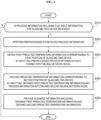
- FIG. 3 is a flowchart illustrating a control method of an electronic device according to one embodiment.
- control method may identify whether process information including fuel input information for the glass melting device 1 is received.
- the control method may perform preprocessing on the received process information in operation S320.
- the processor 130 may identify outlier data among a plurality of pieces of data included in the received process information using a predetermined algorithm, and obtain process information from which the identified outlier data has been removed.
- control method may input the preprocessed process information into a trained first neural network model to obtain first predicted temperature information corresponding to a first position of the glass melting device 1.
- the processor 130 may input the process information including preprocessed fuel input information and process state information to the trained first neural network model stored in the memory 120 to obtain the first predicted temperature information.
- control method may input the obtained first predicted temperature information and process information into a trained second neural network model to obtain second predicted temperature information corresponding to a second position of the glass melting device 1.
- the processor 130 may input the first predicted temperature information and the process information received through the communication interface 110 into the trained second neural network model stored in the memory 120 to obtain the second predicted temperature information.
- control method may provide guidance information including the obtained first predicted temperature information and the obtained second predicted temperature information.
- the processor 130 may obtain guidance information to guide the second predicted temperature information to fall within the predetermined range based on the information stored in the memory 120.
- the processor 130 may obtain and provide guidance information to guide the second predicted temperature information to be less than or equal to the first threshold.
- the processor 130 may obtain and provide guidance information to guide the second predicted temperature information to be greater than or equal to the second threshold.
- the electronic device 100 may provide the user with the guidance information for minimizing the amount of input fuel while maintaining the temperature of the molten glass within an appropriate range.
- FIG. 4 is a diagram illustrating a trained first neural network model according to one embodiment.
- An artificial neural network including a trained first neural network model and a trained second neural network model according to one embodiment of the present disclosure may include a deep neural network (DNN).
- the artificial neural network may include a convolutional neural network (CNN), a recurrent neural network (RNN), a restricted Boltzmann machine (RBM), a deep belief network (DBN), a bidirectional recurrent deep neural network (BRDNN), a deep Q-networks, etc., but is not limited to the above examples.
- the trained first neural network model may be stored in the memory 120.
- the trained first neural network model may be trained to output first predicted temperature information according to the amount of the input fuel.
- a data set containing process information 410 including fuel input information and process state information may be input to a first neural network model 400 as training data to allow the first neural network model to be trained.
- the data set may include first temperature information 420 output based on (or due to) the input fuel as a label.
- the data set containing the process information including the information on the amount of input fuel and the process state information at an n th time point may be input into the first neural network model as the trained data to allow the neural network model to be trained.
- the data set may include temperature information corresponding to the first position of the glass melting device 1 at an (n+1) th time point of a first preheating chamber, which is measured based on the amount of fuel input at the n th time point, as a label, so that training may be performed.
- FIG. 5 is a diagram illustrating a trained second neural network model according to one embodiment.
- the memory 120 may store a trained second neural network model.
- the trained second neural network model may be trained to output the second predicted temperature information according to the amount of the input fuel.
- the second predicted temperature information is predicted temperature information corresponding to the lower end (or molten glass) of the glass melting device 1.
- a data set containing process information 520 and first predicted temperature information 530 is input into the second neural network model 500 as training data to allow the second neural network model 500 to be trained.
- the first predicted temperature information 530 is information output from the trained first neural network model 400.
- the process information 520 may include fuel input information and process information.
- the data set may include second temperature information 510 output based on (or due to) the input fuel as a label.
- the second temperature information is temperature information measured from a sensor provided at the second position of the glass melting device 1.
- a data set containing process information including information on the amount of input fuel and process state information at the n th time point, and first predicted temperature information corresponding to the first position output from the trained first neural network model 400 may be input into the second neural network model as training data to allow the neural network model to be trained.
- the data set may contain temperature information corresponding to the second position of the glass melting device 1 at the (n+1) th time point in the first preheating chamber, which is measured based on the amount of fuel input at the n th time point, as a label, so that training may be performed.
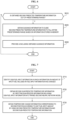
- FIG. 6 is a diagram illustrating a method of providing guidance information according to one embodiment.
- control method may identify whether obtained second predicted temperature information is out of a predetermined range.
- the memory 120 may store reference range information corresponding to the second predicted temperature information. According to one example, when the second predicted temperature information is obtained, the processor 130 may identify whether the obtained second predicted temperature is within a reference range based on the information stored in the memory 120.
- the control method may obtain guidance information to guide the second predicted temperature information to fall within the predetermined range based on the information stored in the memory 120.
- the memory 120 may further include temperature change information corresponding to the second position according to a unit fuel input amount. That is, when fuel corresponding to a predetermined unit is input into the glass melting device 1, information on the magnitude of the temperature change at the second position may be stored in the memory 120.
- the processor 130 may use the temperature change information stored in the memory 120 to obtain guidance information for ensuring that the second predicted temperature information falls within the predetermined range.
- the processor 130 may obtain the temperature change information using the trained neural network model. This will be described in detail with reference to FIG. 7 .
- control method may provide a user interface (UI) including the obtained guidance information.
- UI user interface
- FIG. 7 is a diagram illustrating a method of obtaining temperature change information according to one embodiment.
- the control method may identify sub-fuel input information in which information on the amount of input fuel included in the fuel input information has changed.
- the sub- fuel input information may be process information in which the amount of input fuel has been changed by a predetermined value.
- the control method may obtain second sub-predicted temperature information by inputting sub-process information including the sub-fuel input information into the trained second neural network model.
- the processor 130 may obtain the sub-process information in which the magnitude of the identified input fuel amount is updated.
- the processor 130 may obtain second sub-predicted temperature information by inputting the sub-process information into the trained second neural network model.
- the second sub-predicted temperature information refers to predicted temperature information corresponding to the sub-fuel input information in which the amount of the input fuel has changed.
- control method may use the second predicted temperature information and the second sub-predicted temperature information to obtain the temperature change information corresponding to the second position according to the unit fuel input amount.
- the processor 130 may compare the second predicted temperature information output through the trained second neural network model and the second sub-predicted temperature information to obtain second temperature change information corresponding to the second position according to the unit fuel input amount.
- the present disclosure is not limited to this, and according to one embodiment, the second temperature change information corresponding to the second position according to the unit fuel input amount may be previously stored in the memory 120.
- the processor 130 may obtain the second temperature change information corresponding to the second position according to the unit fuel input amount by using process history information on the glass melting device 1 through a predetermined algorithm.
- the process history information may include history information on input fuel and history information on process state.
- FIG. 8 is a diagram illustrating a method of obtaining temperature change information according to one embodiment.
- the control method may identify relationship information between the amount of input fuel and the temperature of the second position based on process history information.
- the process history information may include history information on the input fuel, history information on the process state, and temperature history information of the second position.
- the relationship information may be a formula corresponding to the relationship between input fuel information and the temperature value of the second position obtained using a regression analysis model.
- the processor 130 may use a predetermined algorithm (e.g., a regression analysis model) to obtain the relationship information between the input fuel information and the temperature value of the second position from the process history information including the history information on the input fuel, the history information on the process state, and the temperature history information of the second position.
- a predetermined algorithm e.g., a regression analysis model
- the control method may obtain and store temperature change information corresponding to the second position according to the unit fuel input amount based on the identified relationship information.
- the processor 130 may obtain the temperature change information corresponding to the second position according to the unit fuel input amount based on the relationship between the input fuel information and the temperature value of the second position, and may use the obtained temperature change information to provide guidance information.
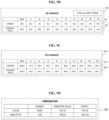
- FIGS. 9A to 9D are drawings illustrating a method of providing a UI according to one embodiment.
- the memory 120 may store process history information.
- the process history information may include temperature history information of the first position and temperature history information of the second position.
- the process history information may include history information on the input fuel and history information on the process state.
- the processor 130 may provide a UI 900 including the process history information.
- the processor 130 may obtain temperature history information of a first position ARCH_#3 included in the process history information and temperature history information of a second position MELTER_BT_#11 based on the information stored in the memory 120.
- the processor 130 may provide a UI 900 including graph information corresponding to the temperature history of the first position.
- the processor 130 may provide the UI 900 including graph information corresponding to the temperature history of the second position.
- the electronic device 100 may further include a display (not shown), and according to one embodiment, the processor 130 may display the UI 900 through the display (not shown).
- the processor 130 may provide a UI 910 including guidance information on the amount of input fuel.
- the guidance information may include information 911 on the amount of currently input fuel corresponding to each of a plurality of fuel input units in the glass melting device 1 including a first fuel input unit and a second fuel input unit.
- the guidance information on the amount of input fuel may include guidance information 912 on the amount of fuel input into each of the plurality of input units in the glass melting device 1 including the first fuel input unit and the second fuel input unit.
- each item e.g., "MAIN,” “1L,” “2L,” “3L,” ..., and "4R" displayed on the UI corresponds to each of the plurality of fuel input units including a plurality of burners 19 included in the glass melting device 1.
- the guidance information 912 on the amount of input fuel refers to information on a recommended input amount corresponding to the fuel input into each of a plurality of positions (alternatively, a plurality of fuel input units) to reduce the amount of fuel input while the temperature of the second position is maintained in a predetermined range. That is, the guidance information 912 on the amount of input fuel refers to a recommended input amount that minimizes the amount of fuel input into each of the plurality of positions under the condition that the temperature of the second position is maintained in the predetermined range.
- the processor 130 may use a predetermined algorithm to obtain the guidance information 912 on the amount of input fuel from the process information, the process history information, and the second predicted temperature information. Alternatively, the guidance information 912 on the amount of input fuel may be previously stored in the memory 120.
- the processor 130 may provide a UI 910-1 that includes guidance information on the amount of oxygen corresponding to each of the plurality of fuel input units.
- the guidance information on the amount of oxygen corresponding to each of the plurality of fuel input units may include information 911-1 on the current amount of oxygen corresponding to each of the plurality of fuel input units in the glass melting device 1 including the first fuel input unit and the second fuel input unit.
- the guidance information on the amount of oxygen corresponding to each of the plurality of fuel input units may include guidance information 912-1 on the amount of oxygen input into each of the plurality of fuel input units in the glass melting device 1 including the first fuel input unit and the second fuel input unit.
- each item e.g., "MAIN,” “1L,” “2L,” “3L,” ..., and "4R" displayed on the UI corresponds to each of the plurality of fuel input units including a plurality of burners 10 included in the glass melting device 1.
- the guidance information 912-1 on the amount of oxygen corresponding to each of the plurality of fuel input units refers to information on a recommended oxygen amount corresponding to each of the plurality of fuel input units to reduce the amount of input fuel while the temperature of the second position is maintained in a predetermined range. That is, the guidance information 912-1 on the amount of oxygen corresponding to each of the plurality of fuel input units refers to a recommended input amount that minimizes a recommended oxygen amount corresponding to each of the plurality of fuel input units under the condition that the temperature of the second position is maintained in the predetermined range.
- the processor 130 may use a predetermined algorithm to obtain the guidance information 912-1 on the amount of oxygen corresponding to each of the plurality of fuel input units from the process information, the process history information, and the second predicted temperature information.
- the guidance information 912-1 on the amount of oxygen corresponding to each of the plurality of fuel input units may be previously stored in the memory 120.
- the processor 130 may provide the UI 910 including the guidance information on the amount of input fuel shown in FIG. 9B and the UI 910-1 including the guidance information on the amount of oxygen corresponding to each of the plurality of fuel input units together, or may provide the UI 910 including the guidance information on the amount of input fuel and the UI 910-1 including the guidance information on the amount of oxygen corresponding to each of the plurality of fuel input units separately.
- the processor 130 may provide a UI 920 including predicted temperature information.
- the processor 130 may obtain the UI 920 including first predicted temperature information corresponding to the obtained first position ARCH_#3 and second predicted temperature information corresponding to the second position MELTER_BT_#11.
- the processor 130 may identify current temperature information corresponding to the first position and the second position based on the received process information and may provide the UI 920 including the current temperature information corresponding to the identified first position and second position.
- the processor 930 may use the trained first neural network model and the trained second neural network model to obtain an expected value (effect) when the fuel corresponding to the guidance information 912 is input.
- the expected value may include temperature information of the first position corresponding to the guidance information 912 and temperature information of the second position corresponding to the guidance information 912.
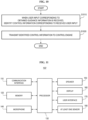
- FIG. 10 is a diagram illustrating a method of identifying control information and transmitting the control information to a control engine according to one embodiment.
- the control method may identify control information corresponding to the received user input.
- the control information refers to a control signal for controlling the control engine
- the control engine refers to an engine for controlling the glass melting device 1.
- the electronic device 100 may further include a user interface (not shown), and the processor 130 may receive a user input corresponding to the guidance information obtained through the user interface (not shown). Next, the processor 130 may identify the control information corresponding to the received user input based on the information stored in the memory 120.
- the control method may transmit the identified control information to the control engine.
- the processor 130 may transmit the identified control information to the control engine through the communication interface 110.
- the control engine is an engine for controlling the glass melting device 1.
- FIG. 11 is a block diagram illustrating the detailed configuration of an electronic device according to one embodiment.
- an electronic device 100' may include a communication interface 110, a memory 120, one or more processors 130, a microphone 140, a speaker 150, a display 160, a user interface 170, and at least one sensor 180.
- a communication interface 110 may include a communication interface 110, a memory 120, one or more processors 130, a microphone 140, a speaker 150, a display 160, a user interface 170, and at least one sensor 180.
- a communication interface 110 may include a communication interface 110, a memory 120, one or more processors 130, a microphone 140, a speaker 150, a display 160, a user interface 170, and at least one sensor 180.
- the microphone 140 may refer to a module that acquires sound and converts the acquired sound into an electrical signal, and may be a condenser microphone, a ribbon microphone, a moving coil microphone, a piezoelectric element microphone, a carbon microphone, or a micro electro mechanical system (MEMS) microphone.
- MEMS micro electro mechanical system
- the microphone 140 can be implemented in omni-directional, bi-directional, uni-directional, sub-cardioid, super-cardioid, and hyper-cardioid methods.
- the electronic device 100' performs an operation corresponding to a user voice signal received through the microphone 140.
- the electronic device 100' may control the display 160 based on the user voice signal received through the microphone 140. For example, when a user voice signal for displaying content A is received, the electronic device 100' may control the display 160 to display content A.
- the electronic device 100' may control an external display device connected to the electronic device 100' based on the user voice signal received through the microphone 140. Specifically, the electronic device 100' may provide a control signal for controlling the external display device to allow an operation corresponding to the user voice signal to be performed in the external display device, and transmit the provided control signal to the external display device.
- the electronic device 100' may store a remote control application for controlling the external display device.
- the electronic device 100' may transmit the provided control signal to the external display device using at least one communication method of Bluetooth, Wi-Fi, and infrared. For example, when the user voice signal for displaying content A is received, the electronic device 100' may transmit a control signal for controlling content A to be displayed on the external display device, to the external display device.
- the electronic device 100' may refer to various terminal devices that can install a remote control application, such as a smartphone or AI speaker.
- the electronic device 100' may use a remote control device to control an external display device connected to the electronic device 100' based on the user voice signal received through the microphone 140. Specifically, the electronic device 100' may transmit the control signal for controlling the external display device to the remote control device to allow the operation corresponding to the user voice signal to be performed on the external display device.
- the remote control device may transmit the control signal received from the electronic device 100' to the external display device. For example, when the user voice signal for displaying content A is received, the electronic device 100' may transmit the control signal for controlling content A to be displayed on an external display device to the remote control device, and the remote control device may transmit the received control signal to the external display device.
- the speaker 150 may include a tweeter for reproducing high-pitched sounds, a midrange for reproducing mid-pitched sounds, a woofer for reproducing low-pitched sounds, a subwoofer for reproducing extremely low-pitched sounds, an enclosure for controlling resonance, and a crossover network that divides the frequency of an electrical signal input to the speaker by band.
- the speaker 150 may output an acoustic signal to the outside of the electronic device 100'.
- the speaker 150 may output multimedia playback, recording playback, various notification sounds, voice messages, etc.
- the electronic device 100' may include an audio output device such as the speaker 150, or include an output device such as an audio output terminal.
- the speaker 150 may provide acquired information, information processed and produced based on the acquired information, response results to the user voice inputs, or operation results, etc., in the form of voice.
- the display 160 may be implemented as a display including a self-emitting device or a display including a non-self-emitting device and a backlight.
- the display 160 can be implemented as various types of displays such as a liquid crystal display (LCD), an organic light emitting diode (OLED) display, light emitting diodes (LED), micro LEDs, Mini LEDs, a plasma display panel (PDP), a quantum dot (QD) display, quantum dot light-emitting diodes (QLED), and the like.
- LCD liquid crystal display
- OLED organic light emitting diode
- LED light emitting diodes
- micro LEDs micro LEDs
- Mini LEDs a plasma display panel
- PDP plasma display panel
- QD quantum dot
- QLED quantum dot light-emitting diodes
- the display 160 may also include a driving circuit that may be implemented in the form of an a-si thin film transistor (TFT), a low temperature poly silicon (LTPS) TFT, or an organic TFT (OTFT), a back light unit, and the like.
- the display 160 may be implemented as a touch screen combined with a touch sensor, a flexible display, a rollable display, a 3D display, or a display in which a plurality of display modules are physically connected.
- the processor 130 may control the display 160 to output the output image obtained according to the various embodiments described above.
- the output image may be a high-resolution image of 4K or 8K or higher.
- the electronic device 100' may not include the display 160.
- the electronic device 100' may be connected to an external display device, and transmit images or content stored in the electronic device 100' to the external display device.
- the electronic device 100' may transmit images or content to the external display device along with a control signal for controlling the images or content to be displayed on the external display device.
- the external display device may be connected to the electronic device 100' through a communication interface 110 or an input/output interface (not shown).
- the electronic device 100' may not include a display, such as in a set top box (STB).
- the electronic device 100' may include only a small display capable of displaying only simple information such as text information.
- the electronic device 100' may transmit the images or content to the external display device wired or wirelessly through the communication interface 110, or may transmit the images or content to the external display device through an input/output interface (not shown).
- the user interface 170 is a component that allows the electronic device 100' to perform interaction with a user.
- the user interface 170 may include at least one of a touch sensor, a motion sensor, a button, a jog dial, a switch, a microphone, and a speaker, but is not limited thereto.
- At least one sensor 180 may include various types of a plurality of sensors.
- the sensor 180 may measure a physical quantity or detect the operating state of the electronic device 100', and convert the measured or detected information into an electrical signal.
- the sensor 180 may include a camera, and the camera may include a lens that focuses visible light or other optical signals reflected by an object and received onto an image sensor, and an image sensor that can detect visible light or other optical signals.
- the image sensor may include a 2D pixel array divided into a plurality of pixels.
- the internal temperature of the glass melting device and the temperature of the molten glass can be predicted using the trained neural network model. Based on this, the electronic device 100' can provide the user with guidance information for minimizing the amount of input fuel while maintaining the temperature of the molten glass within an appropriate range.
- the methods according to various embodiments of the present disclosure described above may be implemented in the form of applications that can be installed on existing electronic devices.
- the methods according to various embodiments of the present disclosure described above may be performed using a deep learning-based trained neural network (or deep trained neural network), that is, learning network model.
- the methods according to various embodiments of the present disclosure described above may be implemented only by software upgrade for an existing electronic device, or hardware upgrade.
- the various embodiments of the present disclosure described above may also be performed through an embedded server provided in an electronic device or an external server of the electronic device.
- the various embodiments described above may be implemented as software including instructions stored in a machine-readable storage medium (e.g., a computer).
- the device is a device capable of calling the stored instructions from the storage medium and operating according to the called instructions and includes a display device (e.g., display device A) according to the disclosed embodiments.
- the processor may perform a function corresponding to the instruction directly or using other components under the control of the processor.
- the instruction may contain codes provided or executed by a compiler or interpreter.
- the machine-readable storage medium may be provided in the form of a non-transitory storage medium.
- non-transitory only means that a storage medium is a device that is tangible and does not include a signal (e.g., electromagnetic wave), and the term does not distinguish between a case where data is semi-permanently stored and a case where it is temporarily stored.
- a signal e.g., electromagnetic wave
- the methods according to various embodiments described above may be provided by being included in a computer program product.
- the computer program products may be traded between sellers and buyers as products.
- the computer program products may be distributed in the form of machine-readable storage medium (e.g., a compact disc read only memory (CD-ROM)) or distributed online through an application store (e.g. Play Store TM ).
- an application store e.g. Play Store TM
- at least some of the computer program products may be at least temporarily stored or temporarily provided on a storage medium such as a manufacturer's server, a server in an application store, or a memory in a relay server.
- each component e.g., module or program
- each component may be composed of a single or multiple entities, and some of the sub-components described above may be omitted, or other sub-components may be included in various embodiments.
- some components e.g., modules or programs
- operations performed by a module, a program, or another component may be executed sequentially, in parallel, iteratively, or heuristically, or at least some operations may be executed in a different order, omitted, or other operations may be added.
- the internal temperature of the glass melting device and the temperature of the molten glass can be predicted using the trained neural network model. Based on this, the electronic device 100 can provide the user with guidance information for minimizing the amount of input fuel while maintaining the temperature of the molten glass within an appropriate range.
Landscapes
- Engineering & Computer Science (AREA)
- Physics & Mathematics (AREA)
- Theoretical Computer Science (AREA)
- General Physics & Mathematics (AREA)
- Artificial Intelligence (AREA)
- Evolutionary Computation (AREA)
- Software Systems (AREA)
- Chemical & Material Sciences (AREA)
- General Engineering & Computer Science (AREA)
- Health & Medical Sciences (AREA)
- Data Mining & Analysis (AREA)
- Biomedical Technology (AREA)
- Computing Systems (AREA)
- General Health & Medical Sciences (AREA)
- Computational Linguistics (AREA)
- Mathematical Physics (AREA)
- Biophysics (AREA)
- Life Sciences & Earth Sciences (AREA)
- Molecular Biology (AREA)
- Organic Chemistry (AREA)
- Materials Engineering (AREA)
- Medical Informatics (AREA)
- Computer Vision & Pattern Recognition (AREA)
- Automation & Control Theory (AREA)
- Geometry (AREA)
- Computer Hardware Design (AREA)
- Feedback Control In General (AREA)
- Manufacturing & Machinery (AREA)
- Testing And Monitoring For Control Systems (AREA)
- Waste-Gas Treatment And Other Accessory Devices For Furnaces (AREA)
- Quality & Reliability (AREA)
- Combined Controls Of Internal Combustion Engines (AREA)
- Human Computer Interaction (AREA)
Applications Claiming Priority (1)
| Application Number | Priority Date | Filing Date | Title |
|---|---|---|---|
| KR1020230096478A KR102640747B1 (ko) | 2023-07-25 | 2023-07-25 | 온도 예측 및 제어 시스템을 구현하기 위한 전자 장치 및 이의 제어 방법 |
Publications (1)
| Publication Number | Publication Date |
|---|---|
| EP4498184A1 true EP4498184A1 (de) | 2025-01-29 |
Family
ID=90058370
Family Applications (1)
| Application Number | Title | Priority Date | Filing Date |
|---|---|---|---|
| EP24189434.4A Pending EP4498184A1 (de) | 2023-07-25 | 2024-07-18 | Elektronische vorrichtung zur implementierung einer temperaturvorhersage und steuerungssystem sowie steuerungsverfahren dafür |
Country Status (5)
| Country | Link |
|---|---|
| US (1) | US20250034021A1 (de) |
| EP (1) | EP4498184A1 (de) |
| JP (1) | JP7701094B2 (de) |
| KR (1) | KR102640747B1 (de) |
| CN (1) | CN119378348A (de) |
Families Citing this family (1)
| Publication number | Priority date | Publication date | Assignee | Title |
|---|---|---|---|---|
| CN118939035B (zh) * | 2024-08-13 | 2025-04-08 | 广州索诺康医疗科技有限公司 | 一种掌上超声设备温度控制方法及装置 |
Citations (4)
| Publication number | Priority date | Publication date | Assignee | Title |
|---|---|---|---|---|
| CN110187727B (zh) * | 2019-06-17 | 2021-08-03 | 武汉理工大学 | 一种基于深度学习和强化学习的玻璃熔炉温度控制方法 |
| EP3929671A1 (de) * | 2020-06-26 | 2021-12-29 | Saint-Gobain Glass France | Verfahren zum einstellen mindestens eines parameters eines glasformofens zur herstellung eines glasgegenstandes |
| US20220092473A1 (en) * | 2020-09-18 | 2022-03-24 | Samsung Display Co., Ltd. | System and method for performing tree-based multimodal regression |
| CN114647943A (zh) * | 2022-03-29 | 2022-06-21 | 西门子(中国)有限公司 | 模型训练和预测方法、装置、电子设备以及存储介质 |
Family Cites Families (5)
| Publication number | Priority date | Publication date | Assignee | Title |
|---|---|---|---|---|
| JPS5782427A (en) * | 1980-11-12 | 1982-05-22 | Mitsubishi Electric Corp | Control method for continuous type heating furnace |
| JP5453728B2 (ja) | 2008-04-09 | 2014-03-26 | 新日鐵住金株式会社 | 加熱炉温度制御装置、加熱炉温度制御システム及び加熱炉温度制御方法、並びに、プログラム |
| JP2012158700A (ja) | 2011-02-01 | 2012-08-23 | Ihi Corp | 温度制御装置および温度制御方法 |
| EP4341223A1 (de) * | 2021-05-19 | 2024-03-27 | Glass Service, A.S. | Verfahren zur steuerung, regelsystem und glasofen, insbesondere zur temperatur-/wärmeregelung |
| CN116048162B (zh) * | 2022-12-13 | 2025-11-18 | 蚌埠凯盛工程技术有限公司 | 一种平衡玻璃熔窑碹顶温度的控制方法及装置 |
-
2023
- 2023-07-25 KR KR1020230096478A patent/KR102640747B1/ko active Active
-
2024
- 2024-07-16 CN CN202410951754.9A patent/CN119378348A/zh active Pending
- 2024-07-18 EP EP24189434.4A patent/EP4498184A1/de active Pending
- 2024-07-19 US US18/778,307 patent/US20250034021A1/en active Pending
- 2024-07-25 JP JP2024120385A patent/JP7701094B2/ja active Active
Patent Citations (4)
| Publication number | Priority date | Publication date | Assignee | Title |
|---|---|---|---|---|
| CN110187727B (zh) * | 2019-06-17 | 2021-08-03 | 武汉理工大学 | 一种基于深度学习和强化学习的玻璃熔炉温度控制方法 |
| EP3929671A1 (de) * | 2020-06-26 | 2021-12-29 | Saint-Gobain Glass France | Verfahren zum einstellen mindestens eines parameters eines glasformofens zur herstellung eines glasgegenstandes |
| US20220092473A1 (en) * | 2020-09-18 | 2022-03-24 | Samsung Display Co., Ltd. | System and method for performing tree-based multimodal regression |
| CN114647943A (zh) * | 2022-03-29 | 2022-06-21 | 西门子(中国)有限公司 | 模型训练和预测方法、装置、电子设备以及存储介质 |
Also Published As
| Publication number | Publication date |
|---|---|
| US20250034021A1 (en) | 2025-01-30 |
| CN119378348A (zh) | 2025-01-28 |
| JP7701094B2 (ja) | 2025-07-01 |
| JP2025019031A (ja) | 2025-02-06 |
| KR102640747B1 (ko) | 2024-02-27 |
Similar Documents
| Publication | Publication Date | Title |
|---|---|---|
| KR102481894B1 (ko) | 전자 장치 및 이를 이용한 화면 공유 방법 | |
| KR102248841B1 (ko) | 디스플레이 장치, 전자 장치 및 전자 장치의 동작 방법 | |
| EP3032839B1 (de) | Vorrichtung und verfahren zur kontrollierten tonausgabe | |
| CN111971972B (zh) | 电子设备和电子设备的控制方法 | |
| EP4498184A1 (de) | Elektronische vorrichtung zur implementierung einer temperaturvorhersage und steuerungssystem sowie steuerungsverfahren dafür | |
| US11297293B2 (en) | Electronic device and control method thereof | |
| KR102242031B1 (ko) | 전자 장치 및 이의 제어 방법 | |
| KR20210086368A (ko) | 디스플레이 장치 및 그 제어 방법 | |
| US20180342246A1 (en) | Multimedia apparatus and multimedia system | |
| EP4485158A1 (de) | Elektronische vorrichtung und benutzeroberflächenbereitstellungsverfahren dafür | |
| KR20210125193A (ko) | 디스플레이 시스템, 디스플레이 시스템의 제어 방법 및 디스플레이 장치 | |
| EP4498202A1 (de) | Elektronische vorrichtung zur implementierung eines systems zur vorhersage und steuerung von industriellen prozessen und steuerungsverfahren dafür | |
| KR102649791B1 (ko) | 폴리머(Polymer)의 품질 예측 및 제어 시스템을 구현하기 위한 전자 장치 및 이의 제어 방법 | |
| EP4538854A1 (de) | Elektronische vorrichtung zur ausgabe von audio und steuerungsverfahren dafür | |
| US20260105625A1 (en) | Electronic apparatus and control method thereof | |
| KR20240092417A (ko) | 전자 장치 및 이의 제어 방법 | |
| KR20240069220A (ko) | 전자 장치 및 이의 제어 방법 | |
| US20250203375A1 (en) | Electronic device and control method therefor | |
| US20260076621A1 (en) | Electronic device and method of controlling same | |
| KR20240010314A (ko) | 전자 장치 및 그 ui 제공 방법 | |
| KR20240028164A (ko) | 전자 장치 및 그 ui 제공 방법 | |
| US12566443B2 (en) | Robot traveling in specific space and control method thereof | |
| US20240169986A1 (en) | Electronic device and control method therefor | |
| KR20240005511A (ko) | 특정 서비스를 수행하는 로봇 및 그 제어 방법 | |
| WO2024136150A1 (ko) | 전자 장치 및 이의 제어 방법 |
Legal Events
| Date | Code | Title | Description |
|---|---|---|---|
| PUAI | Public reference made under article 153(3) epc to a published international application that has entered the european phase |
Free format text: ORIGINAL CODE: 0009012 |
|
| STAA | Information on the status of an ep patent application or granted ep patent |
Free format text: STATUS: REQUEST FOR EXAMINATION WAS MADE |
|
| 17P | Request for examination filed |
Effective date: 20240718 |
|
| AK | Designated contracting states |
Kind code of ref document: A1 Designated state(s): AL AT BE BG CH CY CZ DE DK EE ES FI FR GB GR HR HU IE IS IT LI LT LU LV MC ME MK MT NL NO PL PT RO RS SE SI SK SM TR |