EP4498247A1 - Système et procédé pour fournir des espaces de nommage en nuage flexibles dans un environnement informatique en nuage - Google Patents
Système et procédé pour fournir des espaces de nommage en nuage flexibles dans un environnement informatique en nuage Download PDFInfo
- Publication number
- EP4498247A1 EP4498247A1 EP24190790.6A EP24190790A EP4498247A1 EP 4498247 A1 EP4498247 A1 EP 4498247A1 EP 24190790 A EP24190790 A EP 24190790A EP 4498247 A1 EP4498247 A1 EP 4498247A1
- Authority
- EP
- European Patent Office
- Prior art keywords
- cloud
- namespace
- sddc
- instruction
- user
- Prior art date
- Legal status (The legal status is an assumption and is not a legal conclusion. Google has not performed a legal analysis and makes no representation as to the accuracy of the status listed.)
- Pending
Links
Images



Classifications
-
- G—PHYSICS
- G06—COMPUTING OR CALCULATING; COUNTING
- G06F—ELECTRIC DIGITAL DATA PROCESSING
- G06F9/00—Arrangements for program control, e.g. control units
- G06F9/06—Arrangements for program control, e.g. control units using stored programs, i.e. using an internal store of processing equipment to receive or retain programs
- G06F9/46—Multiprogramming arrangements
- G06F9/50—Allocation of resources, e.g. of the central processing unit [CPU]
- G06F9/5061—Partitioning or combining of resources
- G06F9/5077—Logical partitioning of resources; Management or configuration of virtualized resources
-
- G—PHYSICS
- G06—COMPUTING OR CALCULATING; COUNTING
- G06F—ELECTRIC DIGITAL DATA PROCESSING
- G06F2209/00—Indexing scheme relating to G06F9/00
- G06F2209/50—Indexing scheme relating to G06F9/50
- G06F2209/501—Performance criteria
-
- G—PHYSICS
- G06—COMPUTING OR CALCULATING; COUNTING
- G06F—ELECTRIC DIGITAL DATA PROCESSING
- G06F2209/00—Indexing scheme relating to G06F9/00
- G06F2209/50—Indexing scheme relating to G06F9/50
- G06F2209/5011—Pool
Definitions
- the topmost pain point for customers may be cloud instance flexibility.
- customers deploy their applications on certain type of public cloud instances based on their initial requirement analysis of their applications.
- deploying applications on certain type of public cloud instances is not flexible as customers may experience migration costs and downtime to address End Of Life (EOL) for the current instance type and/or to utilize a better suited instance type available to lower cost or to satisfy changing workload requirement.
- EOL End Of Life
- a computer-implemented method comprises, in response to a first instruction from a user, providing a computing infrastructure as a service by creating a flexible cloud namespace in a software-defined data center (SDDC), wherein the flexible cloud namespace comprises a logical construct with a plurality of resources in the SDDC, and, in response to a second instruction from the user, deploying virtual computing instances in the flexible cloud namespace such that the virtual computing instances executes in the flexible cloud namespace of the SDDC using the resources that are supported by underlying SDDC management entities.
- the steps of this method are performed when program instructions contained in a computer-readable storage medium are executed by one or more processors.
- a system in accordance with an embodiment of the invention comprises memory and at least one processor configured to, in response to a first instruction from a user, provide a computing infrastructure as a service by creating a flexible cloud namespace in a software-defined data center (SDDC), wherein the flexible cloud namespace comprises a logical construct with a plurality of resources in the SDDC, and, in response to a second instruction from the user, deploy virtual computing instances in the flexible cloud namespace such that the virtual computing instances executes in the flexible cloud namespace of the SDDC using the resources that are supported by underlying SDDC management entities.
- SDDC software-defined data center
- the computing system 100 includes a cloud-based computing environment 102 in which a software-defined data center (SDDC) 104 is deployed.
- the cloud-based computing environment 102 may be a virtual private cloud (VPC) in a public cloud environment, for example, a VMware Cloud TM in an AWS public cloud.
- VPC virtual private cloud
- the SDDC 104 can be configured as any software-defined computing network.
- the computing system 100 further includes a private cloud management service 106, which resides in the public cloud environment outside of the cloud-based computing environment 102.
- the private cloud management service 106 provides various services for administrators to create and manage cloud-based computing environments, such as the cloud-based computing environment 102, in the public cloud environment.
- the private cloud management service 106 provides services for the administrators to create SDDCs, such as the SDDC 104, in the cloud-based computing environments.
- the private cloud management services 106 may communicate with public cloud management services 108, which manage the public cloud environment in which the cloud-based computing environments are created.
- the public cloud management services 108 can provide hardware and/or software needed to create, maintain, update and/or delete the cloud-based computing environments in the public cloud environment.
- the services provided by the private cloud management services 106 may be requested by the administrators using a graphic user interface (GUI), which may be provided by a web-based application or by an application running on a computer system that can access the private cloud management services 106. In some situations, some of these services may be requested by an automated process running in the private cloud management services 106 or on a computer system that can access the private cloud management services 106.
- GUI graphic user interface
- the private cloud management services 106 include at least a cloud-based service 110.
- the cloud-based service 110 provides back-end services for the cloud-based computing environments, such as deploying new SDDCs in the cloud-based computing environments and restoring one or more management components in the SDDCs.
- the SDDC 104 includes a cluster 114 of host computers ("hosts") 116.
- the hosts 116 may be constructed on a server grade hardware platform 118, such as an x86 architecture platform, which may be provided by the public cloud management services 108.
- the hardware platform 118 of each host 116 may include conventional components of a computer, such as one or more processors (e.g., CPUs) 120, system memory 122, a network interface 124, and storage 126.
- the processor 120 can be any type of a processor commonly used in servers.
- the memory 122 is volatile memory used for retrieving programs and processing data.
- the memory 122 may include, for example, one or more random access memory (RAM) modules.
- RAM random access memory
- the network interface 124 enables the host 116 to communicate with other devices that are inside or outside of the cloud-based computing environment 102 via a communication network, such as a network 128.
- the network interface 124 may be one or more network adapters, also referred to as network interface cards (NICs).
- the storage 126 represents one or more local storage devices (e.g., one or more hard disks, flash memory modules, solid state disks and/or optical disks), which are used as part of a virtual storage 130 (e.g., virtual storage area network (SAN)), which is described in more detail below.
- SAN virtual storage area network
- the virtual storage 130 will be described as being a virtual SAN, although embodiments of the invention described herein are not limited to virtual SANs.
- Each host 116 may be configured to provide a virtualization layer that abstracts processor, memory, storage and networking resources of the hardware platform 118 into virtual computing instances (VCIs) 132 that run concurrently on the same host.
- VCIs virtual computing instances
- virtual computing instance refers to any software processing entity that can run on a computer system, such as a software application, a software process, a virtual machine or a virtual container.
- a virtual machine is an emulation of a physical computer system in the form of a software computer that, like a physical computer, can run an operating system and applications.
- a virtual machine may be comprised of a set of specification and configuration files and is backed by the physical resources of the physical host computer.
- a virtual machine may have virtual devices that provide the same functionality as physical hardware and have additional benefits in terms of portability, manageability, and security.
- An example of a virtual machine is the virtual machine created using VMware vSphere@ solution made commercially available from VMware, Inc of Palo Alto, California.
- a virtual container is a package that relies on virtual isolation to deploy and run applications that access a shared operating system (OS) kernel.
- An example of a virtual container is the virtual container created using a Docker engine made available by Docker, Inc.
- the virtual computing instances will be described as being virtual machines, although embodiments of the invention described herein are not limited to virtual machines (VMs).
- the VCIs in the form of VMs 132 are provided by host virtualization software 134, which is referred to herein as a hypervisor, which enables sharing of the hardware resources of the host by the VMs.
- host virtualization software 134 which is referred to herein as a hypervisor, which enables sharing of the hardware resources of the host by the VMs.
- hypervisor 134 is a VMware ESXi TM hypervisor provided as part of the VMware vSphere@ solution made commercially available from VMware, Inc.
- the hypervisor 134 may run on top of the operating system of the host or directly on hardware components of the host.
- the host may include other virtualization software platforms to support those VCIs, such as Docker virtualization platform to support "containers".
- embodiments of the inventions may involve other types of VCIs, various embodiments of the invention are described herein as involving VMs.
- the hypervisor 134 includes a logical network (LN) agent 136, which operates to provide logical networking capabilities, also referred to as "software-defined networking".
- LN logical network
- Each logical network may include software managed and implemented network services, such as bridging, L3 routing, L2 switching, network address translation (NAT), and firewall capabilities, to support one or more logical overlay networks in the cloud-based computing environment 102.
- the logical network agent 136 may receive configuration information from a logical network manager 138 (which may include a control plane cluster) and, based on this information, populates forwarding, firewall and/or other action tables for dropping or directing packets between the VMs 132 in the host 116, other VMs on other hosts, and/or other devices outside of the cloud-based computing environment 102.
- a logical network manager 138 which may include a control plane cluster
- the logical network agent 136 together with other logical network agents on other hosts, according to their forwarding/routing tables, implement isolated overlay networks that can connect arbitrarily selected VMs with each other.
- Each VM may be arbitrarily assigned a particular logical network in a manner that decouples the overlay network topology from the underlying physical network.
- the logical network agent 136 may include a Virtual Extensible Local Area Network (VXLAN) Tunnel End Point or VTEP that operates to execute operations with respect to encapsulation and decapsulation of packets to support a VXLAN backed overlay network.
- VXLAN Virtual Extensible Local Area Network
- VTEPs support other tunneling protocols, such as stateless transport tunneling (STT), Network Virtualization using Generic Routing Encapsulation (NVGRE), or Geneve, instead of, or in addition to, VXLAN.
- the hypervisor 134 may also include a local scheduler and a high availability (HA) agent, which are not illustrated.
- the local scheduler operates as a part of a resource scheduling system that provides load balancing among enabled hosts 116 in the cluster 114.
- the HA agent operates as a part of a high availability system that provides high availability of select VMs running on the hosts 116 in the cluster 114 by monitoring the hosts, and in the event of a host failure, the VMs on the failed host are restarted on alternate hosts in the cluster.
- the SDDC 104 also includes the logical network manager 138 (which may include a control plane cluster), which operates with the logical network agents 136 in the hosts 116 to manage and control logical overlay networks in the SDDC.
- the SDDC 104 may include multiple logical network managers that provide the logical overlay networks of the SDDC.
- Logical overlay networks comprise logical network devices and connections that are mapped to physical networking resources, e.g., switches and routers, in a manner analogous to the manner in which other physical resources as compute and storage are virtualized.
- the logical network manager 138 has access to information regarding physical components and logical overlay network components in the SDDC 104.
- the logical network manager 138 is able to map logical network configurations to the physical network components that convey, route, and filter physical traffic in the SDDC 104.
- the logical network manager 138 is a VMware NSX ® Manager TM product running on any computer, such as one of the hosts 116 or VMs 132 in the SDDC 104.
- the logical overlay networks of the SDDC 104 may sometimes be simply referred to herein as the "logical network" of the SDDC 104.
- the SDDC 104 also includes one or more edge services gateway 141 to control network traffic into and out of the SDDC.
- the edge services gateway 141 is VMware NSX ® Edge TM product made available from VMware, Inc. running on any computer, such as one of the hosts 116 or VMs 132 in the SDDC 104.
- the logical network manager(s) 138 and the edge services gateway(s) 141 are part of a logical network platform, which supports the software-defined networking in the SDDC 104.
- the SDDC 104 includes a virtual storage manager 142, which manages the virtual SAN 130.
- the virtual SAN 130 leverages local storage resources of host computers 116, which are part of the logically defined cluster 114 of hosts that is managed by a cluster management center 144 in the computing system 100.
- the virtual SAN 130 allows the local storage resources of the hosts 116 to be aggregated to form a shared pool of storage resources, which allows the hosts 116, including any VMs running on the hosts, to use the shared storage resources.
- the virtual SAN 130 may be used to store any data, including virtual disks of the VMs.
- the virtual storage manager 142 is a computer program that resides and executes in a computer system, such as one of the hosts 116, or in one of the VMs 132 running on the hosts 116.
- the SDDC 104 also includes the cluster management center 144, which operates to manage and monitor the cluster 114 of hosts 116.
- the cluster management center 144 may be configured to allow an administrator to create a cluster of hosts, add hosts to the cluster, delete hosts from the cluster and delete the cluster.
- the cluster management center 144 may further be configured to monitor the current configurations of the hosts 116 in the cluster 114 and the VMs running on the hosts.
- the monitored configurations may include hardware and/or software configurations of each of the hosts 116.
- the monitored configurations may also include VM hosting information, i.e., which VMs are hosted or running on which hosts.
- the cluster management center 144 supports or executes various operations.
- the cluster management center 144 may be configured to perform resource management operations for the cluster 114, including VM placement operations for initial placement of VMs and load balancing.
- the cluster management center 144 is a computer program that resides and executes in a computer system, such as one of the hosts 116, or in one of the VMs 132 running on the hosts 116.
- a computer system such as one of the hosts 116, or in one of the VMs 132 running on the hosts 116.
- One example of the cluster management center 144 is the VMware vCenter Server ® product made available from VMware, Inc.
- the cluster management center 144 includes an SDDC configuration service 146, which operates to configure one or more management components of the SDDC 104 (e.g., the logical network manager 138, the edge services gateway 141, the virtual storage manager 142 and/or the cluster management center 144), as described in detail below.
- SDDC configuration service 146 operates to configure one or more management components of the SDDC 104 (e.g., the logical network manager 138, the edge services gateway 141, the virtual storage manager 142 and/or the cluster management center 144), as described in detail below.
- the management components of the SDDC 104 communicate using a management network 148, which may be separate from the network 128, which are used by the hosts 116 and the VMs 132 on the hosts.
- a management network 148 which may be separate from the network 128, which are used by the hosts 116 and the VMs 132 on the hosts.
- the management components or entities of the SDDC 104 may be implemented in one or more virtual computing instance, e.g., VMs 132, running in the SDDC 104.
- the virtual storage manager 142 may be incorporated or integrated into the cluster management center 144.
- the cluster management center 144 would also perform tasks of the virtual storage manager 142.
- the cloud solution (also referred to herein as flexible cloud namespace (FCN)) in accordance with embodiments of the invention allows customers to purchase cloud computing capacity in small increments, which reduces the cost of entry into cloud computing, e.g., VMware Cloud TM on AWS, made commercially available from VMware, Inc of Palo Alto, California.
- FCN flexible cloud namespace
- the cloud solution in accordance with embodiments of the invention can make cloud computing, e.g., VMware Cloud TM on AWS, an easy choice for direct DevOps consumption, deploying modern applications, virtual desktop infrastructure (VDI), traditional VM user with multi-tier workloads and other hybrid use cases.
- the cloud solution in accordance with embodiments of the invention allows customers to be shielded from underlying cloud instance type changes as the customers can purchase cloud infrastructure in terms units of resources.
- the cloud solution in accordance with embodiments of the invention can enable instance migration with minimum or zero impact to customer workloads.
- the cloud solution i.e., FCN in accordance with embodiments of the invention can break the barrier of current host-based consumption model and create an illusion of elastic capacity for cloud customers.
- the cloud solution in accordance with embodiments of the invention can offer a multi-tenant solution for virtual computing instances (VCIs), such as VMs and containers, that is scalable and directly consumable via using a known interface, such as VMware Cloud console and Cloud Consumption Interface (CCI).
- VCIs virtual computing instances
- CLI Cloud console and Cloud Consumption Interface
- the cloud solution in accordance with embodiments of the invention uses an internal fleet of existing cloud managed SDDCs and provides a consumption surface to allow purchasing portions of SDDC capacity (or a slice of SDDC) for workload consumptions, as explained in detail below.
- customers are expected to directly interact with the SDDC management entities, such as the logical network manager 138, the virtual storage manager 142 and the cluster management center 144, to perform any management operations with respect to their FCNs.
- the SDDC management entities such as the logical network manager 138, the virtual storage manager 142 and the cluster management center 144, to perform any management operations with respect to their FCNs.
- a computing infrastructure as a service is provided by creating a FCN in the SDDC 104, where the FCN includes a logical construct with resources in the SDDC, and in response to a second instruction from the customer, virtual computing instances (VCIs), such as VMs, are deployed in the FCN such that the VCIs execute in the FCN of the SDDC using the resources that are supported by the SDDC management components, such as the logical network manager 138, the virtual storage manager 142 and the cluster management center 144, which are not managed by the customer, but by the provider of the FCN.
- VCIs virtual computing instances
- a second flexible cloud namespace is created in the SDDC, where the second flexible cloud namespace includes a second logical construct with resources in the SDDC that are isolated from the resources of the logical construct of the FCN of the customer.
- the resources of the FCN include compute and storage resources in the SDDC 104.
- capacity profiles CPs
- CPs may be created to represent compute and storage resource capacity of the FCN.
- These CPs may include compute profiles and storage profiles.
- a compute profile is created to represent the compute capacity of the FCN, and a storage profile is created to represent the storage capacity of the FCN.
- the compute profile includes a configuration of virtual processors and memory.
- the compute profile may be one of a general purpose compute profile, a memory optimized compute profile or a compute optimized compute profile.
- the storage profile includes a configuration of storage throughput and storage capacity.
- the storage profile may be associated with a specific a performance tier.
- the resources of the FCN further include networking resources in the SDDC 104.
- a network configuration for the FCN is generated.
- the network configuration for the FCN may include least one of a network Classless Inter-Domain Routing (CIDR) configuration, a network segment configuration, a firewall configuration, an elastic IP address (EIP) configuration, a virtual private network (VPN) configuration, and a Network Address Translation (NAT) rule.
- CIDR network Classless Inter-Domain Routing
- EIP elastic IP address
- VPN virtual private network
- NAT Network Address Translation
- a resource pool is created in the cloud-based computing environment 102.
- storage setup and/or network configuration setup are performed in the cloud-based computing environment 102.
- the FCN cloud solution in accordance with embodiments of the invention may be a VMware Cloud TM service that provides compute capacity that can be sized and purchased according to workload needs based on VMware vSphere@ technology.
- the FCN cloud solution can enable users to spin up a small virtual pool of resources (e.g., virtual CPU (vCPU), memory, and storage) on an isolated network and elastically extend based on application needs.
- the FCN cloud solution provides customers the ability to provision and scale workload VMs without the need to provision and manage the underlying VMware Cloud TM SDDC, such as VMware NSX ® , VMware ESXi TM , VMware vCenter ® and other management software.
- the FCN cloud solution offers a new granular, flexible consumption model where customers can get the same speed, agility, built-in elasticity, and enterprise grade capabilities of VMware Cloud TM on AWS, but in smaller consumable units.
- customers can buy slices of compute, storage and networking capacity as required by their workloads in the form of FCNs, thereby reducing the onboarding cost and allowing their FCNs to grow as per workload demands.
- a customer can purchase a 2-node SDDC in which one host is used for high availability (HA) and the other host is used for management VM reservations. Consequently, customers do not have a lot of capacity left to deploy their workloads as management VM reservations can take up to 32 vCPUs or more (depending on instance type) which cannot be used for workload VMs.
- the FCN cloud solution is more cost effective and economically viable for entry level customers who have a small number of workloads with which to start.
- customers do not have to manage the underlying hardware and networking configurations and can get their workloads up and running via VMware Console User Interface by providing minimal details.
- the cloud solution allows customers to determine the best suited hardware for their workloads and take care of moving the workloads to a new hardware or new instance type to meet the workload requirements without customer intervention, which saves customers time, effort and migration costs, thus providing better customer experience.
- customer workloads can be moved to a new host using migration technology, such as VMware vSphere ® vMotion ® technology, with zero downtime, for example, when a host has reached end of life and is scheduled for retirement, when one or more hardware failures occur on a host, or when a better instance type is determined for a workload.
- migration technology such as VMware vSphere ® vMotion ® technology
- a hybrid management technology such as VMware HCX technology
- a hybrid management technology can be leveraged to seamlessly migrate workloads from customer environments to FCNs.
- customers can improve operational efficiency by provisioning and scaling the FCNs and having comprehensive, enterprise grade infrastructure stack up and running in minutes, as compared to hours needed to provision a full SDDC.
- customers can onboard with purchasing limited capacity as needed for their workloads and can grow and shrink their cloud solution as per application needs. Scaling-out or scaling-in a FCN can be much faster compared to the SDDC elasticity where an entire host has to be added or removed.
- SDDCs in a FCN fleet can use the same SDDC bundle and can be upgraded similar to a VMware cloud fleet. Consequently, a maintenance schedule with FCN customers whose FCN instances are deployed across FCN SDDCs is not needed. Each customer may be informed in advance about upcoming maintenance window of FCN SDDC hosting their FCN instances.
- an FCN is a logical consumption construct with compute, storage and networking resources in place to allow deploying production grade applications within a tenant selected region without any knowledge about underlying hardware and software infrastructure.
- FCNs provide a cost-effective way to supplement workload capacity without purchasing complete hosts.
- An FCN may span multiple fault domains and hardware types and is elastic in nature.
- An FCN can be used to deploy modern applications, multi-tier applications and any traditional workloads.
- an FCN includes a collection of capacity profiles.
- a capacity profile may define characteristics or requirements of workloads. Customers can create multiple capacity profiles suitable for their workloads within an FCN. Each profile corresponds to the amount of capacity in terms of CPU/memory/storage that can be allocated from an underlying host cluster(s) having all hosts of a cloud supported instance type.
- a capacity profile may be a collection of compute profiles and storage profiles.
- compute profiles provide special CPU/Memory characteristics as required by certain types of workloads and are categorized into types of a general purpose profile, a memory-optimized profile and a compute-optimized profile.
- General purpose profile is capacity backed by a hardware type that provides a simple balance of CPU and memory, which may be best suited for general production array of workload types.
- General purpose profile may be mostly suitable to run small to medium servers, databases and applications.
- Memory-optimized profile is capacity backed by a hardware type that provides a higher memory to CPU ratio than for the general purpose profile. Memory-optimized profile may be best for workloads requirements, such, as caching, high churn databases, in-memory analytics and the ability to help avoid swapping to disk.
- Compute-optimized profile is capacity backed by a hardware type that provides a higher CPU to memory ratio than for the general purpose profile. Compute-optimized profile may be suitable for workloads with high compute needs.
- storage profiles provide special storage characteristics as required by certain types of workloads.
- a default general-purpose profile may come with a t-shirt sized (e.g., small, medium and large) performance tier and a scalable storage capacity. Workloads running in each capacity profile within an FCN may consume storage from the collection of storage profiles associated with the FCN.
- an FCN provides multi-tenancy with compute, network and storage isolation. While different customers might be using the same underlying SDDC to run their workloads, an FCN network provides complete isolation for workloads running inside an FCN from other customers' workloads in another FCN.
- networking solution for an FCN provides customers the capability to connect to their managed virtual private cloud(s) and on-premise data centers using a virtual private network (VPN), connect to their workloads running inside an FCN using Secure Shell (SSH), connect to the Internet from their workloads in an FCN, assign a public Internet Protocol (IP) to their workloads in an FCN, and/or connect to workloads within the same FCN.
- Networking configurations may be performed for each FCN to achieve isolation. Resources/configurations, such as, network Classless Inter-Domain Routing (CIDR), list of named network segments, network policies, firewall rules, Elastic IP (EIP) configurations, VPN configurations, and Network Address Translation (NAT) rules can be used.
- CIDR network Classless Inter-Domain Routing
- each FCN has a default storage profile backed by a dedicated file system that exposes a network file system (NFS) datastore which is associated with every CP in the FCN.
- NFS network file system
- Storage can be consumed independent of compute. Workloads running in each capacity profile within an FCN consume storage from the collection of storage profiles associated with the FCN.
- an FCN unit or slice is the smallest unit of compute and storage allocation in a FCN. Examples of the base FCN unit size for compute profiles and storage profiles are shown below in Table 1. Table 1 Compute Profile vCPUs Memory (GiB) General Purpose Compute Profile 2 8 Memory Optimized Compute Profile 2 16 Compute Optimized Compute Profile 4 8
- each compute profile has a different vCPU and memory (gibibyte (GiB)) configuration.
- a general purpose compute profile has 2 vCPUs and 8 GiB memory
- a memory optimized compute profile has 2 vCPUs and 16 GiB memory
- a compute optimized compute profile has 4 vCPUs and 8 GiB memory.
- Table 2 Small Medium Large X-Large XXL Extreme Throughput 128MB/s 256MB/s 512MB/s 1024MB/s 2048MB/s 4096MB/s IOPS 12500 25000 50000 100000 200000 400000
- Each FCN has a default storage profile.
- initial capacity can be set to 1 tebibyte (TiB), and throughput and capacity can be scaled up separately within a storage profile (including default profile).
- T-shirt sizing i.e., predefined sizes, can be used for performance scaling. Capacity can be scaled in the increments of 1TiB.
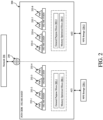
- AZ1 includes VMs 232-1, 232-2 within a network 192.168.10.0/24 and VMs 232-3, 232-4 within a network 192.168.11.0/24 with general purpose slices or profiles 202-1 and memory optimized slices or profiles 204-1 and is connected to an NFS storage 228-1.
- VMs 232-1, 232-3, 232-4 may operate based on the general purpose slices or profiles 202-1 (e.g., based on resource (CPU/memory/storage) allocation specified in the general purpose slices or profiles 202-1) while VM 232-2 may operate based on the memory optimized slices or profiles 204-1 (e.g., based on resource (CPU/memory/storage) allocation specified in the memory optimized slices or profiles 204-1).
- AZ2 includes VMs 232-5, 232-6 within a network 192.168.12.0/24, and VMs 232-7, 232-8 within a network 192.168.13.0/24 with general purpose slices or profiles 202-2 and memory optimized slices or profiles 204-2 and is connected to an NFS storage 228-2.
- VMs 232-5, 232-8 may operate based on the general purpose slices or profiles 202-2 (e.g., based on resource (CPU/memory/storage) allocation specified in the general purpose slices or profiles 202-2) while VMs 232-6, 232-7 may operate based on the memory optimized slices or profiles 204-2 (e.g., based on resource (CPU/memory/storage) allocation specified in the memory optimized slices or profiles 204-2).
- the general purpose slices or profiles 202-2 e.g., based on resource (CPU/memory/storage) allocation specified in the general purpose slices or profiles 202-2
- VMs 232-6, 232-7 may operate based on the memory optimized slices or profiles 204-2 (e.g., based on resource (CPU/memory/storage) allocation specified in the memory optimized slices or profiles 204-2).
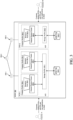
- the namespace FCN-1 includes a compute profile (CP) 304-1, which includes a resource pool 306-1 and a general purpose cluster 308-1, a compute profile 304-2, which includes a resource pool 306-2 and a general purpose cluster 308-2, and a storage profile 310-1, which is connected to the corresponding datastore 320-1 (e.g., an external storage server instance).
- the namespace FCN-2 includes a compute profile 304-3, which includes a resource pool 306-3 and a general purpose cluster 308-3, and a storage profile 310-2, which is connected to the corresponding datastore 320-2 (e.g., an external storage server instance).
- storage compute profiles are per FCN and are provided as external storage (e.g., NFS datastores).
- customer A deploys the namespace FCN-1 and the compute profiles (CPs) 304-1, 304-2 and runs applications on them
- customer B deploys the namespace FCN-2 and the compute profile (CP) 304-3 and runs applications on them.
- the namespaces FCN-1, FCN-2 may reside in the same availability zone (e.g., AZ1) or in different availability zones.
- the namespace FCN-1 is connected to a network (not shown), which may be an on-premise network, a customer SDDC, or a public network (e.g., the Internet), through a router or switch 350-1, which provides network isolation for the namespace FCN-1.
- the namespace FCN-2 is connected to a network (not shown), which may be an on-premise network, a customer SDDC, or a public network (e.g., the Internet), through a router or switch 350-2, which provides network isolation for the namespace FCN-2.
- a network not shown
- the router or switch 350-1 and the router or switch 350-2 are connected to a router or switch 350-3, which provides network isolation between the namespace FCN-1 and the namespace FCN-2.
- the router or switch 350-3 is located in a different tier or level from the router or switch 350-1 and the router or switch 350-2.
- the router or switch 350-3 is a tier-0 logical router, which provides a gateway service between the logical and physical network
- the router or switch 350-1 and the router or switch 350-2 are tier-1 logical routers.
- the router or switch 350-3 may be a top-tier router that on one side, interface with the actual physical network in which routing protocols can be configured to exchange routing information with physical routers, and on the other side, connect to tenant routing topologies.
- the router or switch 350-1 and the router or switch 350-2 may on one side, connect with the tier-0 logical router (i.e., the router or switch 350-3) for public networks access, and on the other side, interface with tenant logical switches.
- an FCN SDDC fleet contains a set of SDDCs that are managed and operated by an FCN cloud service, which may be running in the cloud-based service 110, the public cloud management services 108, and/or the SDDC configuration service 146.
- SDDCs in the FCN SDDC fleet can be automatically added, deleted, extended, or manipulated based on the consumption and scale limits of various resources required to support multiple tenants.
- the SDDCs in the fleet may not be visible to end customers and may be consumed via a new FCN construct that draws capacity from underlying SDDCs.
- An FCN can consume capacity from one or more SDDCs.
- each SDDC may contain multiple FCNs belonging to multiple customers.
- the SDDCs that support FCNs may be similar in all aspects to VM cloud SDDCs purchased by VM cloud customers and follow same life cycle management model. However, these SDDCs may have enhanced capabilities to support multiple T1 routing devices, such as VMware NSX ® T1s, mix of single AZ and multi-AZ clusters etc.
- a primary cluster in an FCN SDDC is only used by management appliances and no FCNs are deployed in the primary cluster.
- a primary cluster may be deployed as a stretched cluster, e.g., VMware vSAN ® stretch cluster, for increased resiliency and availability of all VM cloud management appliances.
- a multi-AZ primary cluster may be required as an FCN may span fault domains and keeping management appliance in a single AZ cluster may impact workloads (due to edge appliances loss) if an AZ becomes degraded.
- all secondary clusters are single AZ clusters.
- An FCN SDDC may have a set of these clusters in each of the two availability zones excluding the witness Availability Zone. Each FCN can allocate resources from multiple secondary clusters.
- Each SDDC can possibly have a set of secondary clusters with different supported instance types, general purpose / memory optimized / compute optimized cluster.
- a zone is a logical grouping concept to group a set of clusters that are placed within the same fault domain (e.g., Availability Zone for AWS).
- a single cluster cannot be mapped to multiple zones, which can be enforced by an FCN SDDC management layer.
- Zone definition can align with the underlying vSphere platform zone construct.
- the namespace FCN-1 includes a general purpose compute profile (CP) 406-1, a memory optimized CP 416-1, and a storage optimized CP 426-1 that are located in zone 1 (i.e., AZ1), and a general purpose CP 406-4, a memory optimized CP 416-3, and a storage optimized CP 426-3 that are located in zone 2 (i.e., AZ2).
- CP general purpose compute profile
- the namespace FCN-2 includes a general purpose compute profile (CP) 406-2 and a storage optimized CP 426-2 that are located in zone 1 (i.e., AZ1), and a general purpose compute profile (CP) 406-5 and a storage optimized CP 426-4 that are located in zone 2 (i.e., AZ2).
- the namespace FCN-3 includes a general purpose compute profile (CP) 406-3 and a memory optimized CP 416-2 that are located in zone 1 (i.e., AZ1).
- the general purpose CPs 406-1, 406-2, 406-3 are associated with general purpose clusters 408-1
- the memory optimized CPs 416-1, 416-2 are associated with memory optimized clusters 408-2
- the storage optimized CPs 426-1, 426-2 are associated with storage optimized clusters 408-3.
- the general purpose CPs 406-4, 406-5 are associated with general purpose clusters 408-4
- the memory optimized CP 416-3 is associated with memory optimized clusters 408-5
- the storage optimized CPs 426-3, 426-4 are associated with storage optimized clusters 408-6.
- the namespace FCN-1 is connected to a network (not shown), which may be an on-premise network, a customer SDDC, or a public network (e.g., the Internet), through a router or switch 450-1, which provides network isolation
- the namespace FCN-2 is connected to a network (not shown), which may be an on-premise network, a customer SDDC, or a public network (e.g., the Internet), through a router or switch 450-2, which provides network isolation
- the namespace FCN-3 is connected to a network (not shown), which may be an on-premise network, a customer SDDC, or a public network (e.g., the Internet), through a router or switch 450-3, which provides network isolation.
- customer A deploys the namespace FCN-1 and the compute profiles (CPs) 406-1, 416-1, 426-1, 406-4, 416-3, 426-3, and runs applications on them
- customer B deploys the namespace FCN-2 and the compute profiles (CP) 406-2, 426-2, 406-5, 426-4 and runs applications on them
- customer C deploys the namespace FCN-3 and the compute profiles (CP) 406-3, 416-2 and runs applications on them.
- a process of creating an FCN in an SDDC in accordance with an embodiment of the invention is described with reference to a flow diagram of Fig. 5 .
- the creation of an FCN may be initiated by a customer, through a cloud console (e.g., VM cloud console), to use cloud services to initiate an FCN creation workflow.
- a cloud console e.g., VM cloud console
- customers have access to an FCN service (e.g., the cloud-based service 110, the public cloud management services 108, and/or the SDDC configuration service 146), they can start by creating an FCN and then deploying workload VMs to run their applications.
- an FCN service e.g., the cloud-based service 110, the public cloud management services 108, and/or the SDDC configuration service 146
- cloud services 504 e.g., the cloud-based service 110, the public cloud management services 108, and/or the SDDC configuration service 146) create an FCN.
- a customer can access a VM cloud user interface (UI) console to create an FCN by providing the FCN name, number of slices (i.e., FCN units) and network segment information (e.g., CIDR information) and in the created FCN, create a VM using an uploaded image (e.g., an International Organization for Standardization (ISO), Open Virtualization Format (OVF), or Open Virtualization Appliance (OVA) image) by providing a name and workload segment for the VM.
- ISO International Organization for Standardization
- OVF Open Virtualization Format
- OVA Open Virtualization Appliance
- the FCN creation process begins at step 512, where, a capacity policy is created for the FCN by the cloud services 504.
- FCN namespace placement details are obtained by the cloud services.
- a resource pool is created using a cluster manager center in one or more SDDCs by the cloud services.
- NFS storage is set up by the cloud services.
- network configurations are set up by the cloud services.
- FCNs may be used for onboarding entry level workloads. For example, purchasing hosts for deploying a SDDC can be expensive to customers who have very small workloads, for example, workloads used for testing products or features or low traffic workloads that do not require much resources. Such customers can save money by using FCNs to purchase only the amount of capacity or resources they need for their workloads and can scale/grow as needed in future to grow their FCNs per workload demand.
- FCNs may be used for disaster recovery workloads.
- a customer who has an on-premise data center in case of a disaster, their critical workloads in the data center can get affected resulting in data loss or downtime.
- a customer who wants to failover small workloads on-demand and avoid downtime in case of a disaster can deploy a small FCN as a disaster/recovery pod in a VMware Cloud TM .
- the frequency of disasters is usually low so as a backup it is highly expensive for the customers to buy massive capacity upfront. Using an FCN in such cases can be very cost-effective.
- FCNs may be used for burstable workloads. For example, for a shopping store customer, people shop for gifts and many other things during holidays such as Thanksgiving and Christmas. The load on the application at such times can be ten times as that of the usual load. To support the high load or demand for a few days in a year, it is not feasible for the customers to purchase entire hosts for a year using subscription, which can be expensive to the customers. FCNs can help in cutting down the additional cost. Customers can purchase only the capacity they need for their usual workload demand. During holidays, the resources can be automatically scaled up as per demand and scale down once the load decreases and customers will only be charged for the on-demand capacity used during a short amount of time.
- FCNs may be used for workload migration. For example, hardware instances have a limited life span after which the instances are scheduled for retirement. The workloads running on such instances need to be moved to other healthy hosts. With FCNs, because customers have no knowledge of the underlying hardware, they do not have to worry about such cases. FCNs can track the instance end of life and move the workloads accordingly to new hosts using VMware vSphere@ vMotion ® technology without any downtime and customer intervention.
- FCNs may be used to improve instance flexibility.
- customers must choose between hundreds of different instance types, necessitating lengthy and detailed capacity and cost analysis, with limited flexibility to change instance types as needs change and make difficult trade-offs that compromise cloud agility, cost efficiency and elasticity.
- This problem can be solved with FCNs since customers have no knowledge of the underlying hardware.
- the FCN solution can be used to determine the best suited hardware for the customer's workloads and takes care of moving the workloads to a new hardware or new instance type to meet the workload requirements without customer intervention, which saves customers time, effort and migration costs, thus providing better customer experience and performance.
- a computer-implemented method in accordance with an embodiment of the invention is described with reference to a flow diagram of Fig. 6 .
- a computing infrastructure is provided as a service by creating a flexible cloud namespace in a software-defined data center (SDDC), where virtual computing instances include a logical construct with resources in the SDDC.
- SDDC software-defined data center
- virtual computing instances are deployed in the flexible cloud namespace such that the virtual computing instances execute in the SDDC using the resources that are supported by underlying SDDC management entities.
- a first user interface is presented to a user to receive compute and storage capacity profile information, where a flexible cloud namespace is created in a software-defined data center (SDDC) with resources specified in the compute and storage capacity profile information.
- SDDC software-defined data center
- a second user interface is presented to the user to receive an image of a virtual computing instance, wherein the virtual computing instance is deployed in the flexible cloud namespace using the image such that the virtual computing instance executes in the SDDC using the resources that are supported by underlying SDDC management entities.
- an embodiment of a computer program product includes a computer useable storage medium to store a computer readable program that, when executed on a computer, causes the computer to perform operations, as described herein.
- embodiments of at least portions of the invention can take the form of a computer program product accessible from a computer-usable or computer-readable medium providing program code for use by or in connection with a computer or any instruction execution system.
- a computer-usable or computer readable medium can be any apparatus that can contain, store, communicate, propagate, or transport the program for use by or in connection with the instruction execution system, apparatus, or device.
- the computer-useable or computer-readable medium can be an electronic, magnetic, optical, electromagnetic, infrared, or semiconductor system (or apparatus or device), or a propagation medium.
- Examples of a computer-readable medium include a semiconductor or solid state memory, magnetic tape, a removable computer diskette, a random access memory (RAM), a read-only memory (ROM), a rigid magnetic disc, and an optical disc.
- Current examples of optical discs include a compact disc with read only memory (CD-ROM), a compact disc with read/write (CD-R/W), a digital video disc (DVD), and a Blu-ray disc.
Landscapes
- Engineering & Computer Science (AREA)
- Software Systems (AREA)
- Theoretical Computer Science (AREA)
- Physics & Mathematics (AREA)
- General Engineering & Computer Science (AREA)
- General Physics & Mathematics (AREA)
- Data Exchanges In Wide-Area Networks (AREA)
Applications Claiming Priority (2)
| Application Number | Priority Date | Filing Date | Title |
|---|---|---|---|
| IN202341050487 | 2023-07-26 | ||
| US18/378,220 US20250036443A1 (en) | 2023-07-26 | 2023-10-10 | System and method for providing flexible cloud namespaces in a cloud computing environment |
Publications (1)
| Publication Number | Publication Date |
|---|---|
| EP4498247A1 true EP4498247A1 (fr) | 2025-01-29 |
Family
ID=92042852
Family Applications (1)
| Application Number | Title | Priority Date | Filing Date |
|---|---|---|---|
| EP24190790.6A Pending EP4498247A1 (fr) | 2023-07-26 | 2024-07-25 | Système et procédé pour fournir des espaces de nommage en nuage flexibles dans un environnement informatique en nuage |
Country Status (1)
| Country | Link |
|---|---|
| EP (1) | EP4498247A1 (fr) |
Citations (1)
| Publication number | Priority date | Publication date | Assignee | Title |
|---|---|---|---|---|
| US20210311760A1 (en) * | 2020-04-02 | 2021-10-07 | Vmware, Inc. | Software-defined network orchestration in a virtualized computer system |
-
2024
- 2024-07-25 EP EP24190790.6A patent/EP4498247A1/fr active Pending
Patent Citations (1)
| Publication number | Priority date | Publication date | Assignee | Title |
|---|---|---|---|---|
| US20210311760A1 (en) * | 2020-04-02 | 2021-10-07 | Vmware, Inc. | Software-defined network orchestration in a virtualized computer system |
Non-Patent Citations (1)
| Title |
|---|
| ANONYMOUS CENTER 5: "VMware Validated Design for Software-Defined Data Center 5.1", 18 July 2019 (2019-07-18), XP055926067, Retrieved from the Internet <URL:https://docs.vmware.com/en/VMware-Validated-Design/5.1/vmware-validated-design-51-sddc-architecture-design.pdf> [retrieved on 20220530] * |
Similar Documents
| Publication | Publication Date | Title |
|---|---|---|
| JP7785081B2 (ja) | ネットワークスライスの割り当ての管理 | |
| US11321197B2 (en) | File service auto-remediation in storage systems | |
| US11915049B2 (en) | Method and apparatus for scaling a custom resource with custom metrics in a containerized application handling system | |
| US10834140B1 (en) | Public service network job processing | |
| US10713071B2 (en) | Method and apparatus for network function virtualization | |
| US20160198003A1 (en) | Architecture and method for sharing dedicated public cloud connectivity | |
| US20160197834A1 (en) | Architecture and method for traffic engineering between diverse cloud providers | |
| US20160197835A1 (en) | Architecture and method for virtualization of cloud networking components | |
| CN114946166A (zh) | 在包括云边缘位置的异构计算环境中的动态资源移动 | |
| US20150195347A1 (en) | Architecture and method for cloud provider selection and projection | |
| US10152343B2 (en) | Method and apparatus for managing IT infrastructure in cloud environments by migrating pairs of virtual machines | |
| US20150193466A1 (en) | Architecture and method for cloud provider selection and projection | |
| US12021743B1 (en) | Software-defined multi-network-segment gateways for scalable routing of traffic between customer-premise network segments and cloud-based virtual networks | |
| US20150195141A1 (en) | Apparatus and method for data center migration | |
| US12450083B2 (en) | System and method for deploying a software-defined data center based on desired state specification from virtualization software | |
| WO2016109845A1 (fr) | Architecture et procédé pour une ingénierie de trafic entre des fournisseurs de nuages divers | |
| EP3111326A2 (fr) | Architecture et procédé de sélection et de projection de fournisseur de nuage | |
| US20150193862A1 (en) | Architecture and method for implementing a marketplace for data center resources | |
| EP4498247A1 (fr) | Système et procédé pour fournir des espaces de nommage en nuage flexibles dans un environnement informatique en nuage | |
| US12407591B2 (en) | Centralized monitoring of containerized workloads in a multi-tenant, multi-cloud environment | |
| US20250036443A1 (en) | System and method for providing flexible cloud namespaces in a cloud computing environment | |
| US12026045B2 (en) | Propagating fault domain topology to nodes in a distributed container orchestration system | |
| US11689411B1 (en) | Hardware resource management for management appliances running on a shared cluster of hosts | |
| US20150193128A1 (en) | Virtual data center graphical user interface | |
| US11815999B2 (en) | Optimized alarm state restoration through categorization |
Legal Events
| Date | Code | Title | Description |
|---|---|---|---|
| PUAI | Public reference made under article 153(3) epc to a published international application that has entered the european phase |
Free format text: ORIGINAL CODE: 0009012 |
|
| STAA | Information on the status of an ep patent application or granted ep patent |
Free format text: STATUS: THE APPLICATION HAS BEEN PUBLISHED |
|
| AK | Designated contracting states |
Kind code of ref document: A1 Designated state(s): AL AT BE BG CH CY CZ DE DK EE ES FI FR GB GR HR HU IE IS IT LI LT LU LV MC ME MK MT NL NO PL PT RO RS SE SI SK SM TR |
|
| STAA | Information on the status of an ep patent application or granted ep patent |
Free format text: STATUS: REQUEST FOR EXAMINATION WAS MADE |
|
| RAP3 | Party data changed (applicant data changed or rights of an application transferred) |
Owner name: VMWARE LLC |
|
| 17P | Request for examination filed |
Effective date: 20250415 |