EP4498251A1 - Transfert de données robuste vers des systèmes de stockage en nuage et sur site - Google Patents
Transfert de données robuste vers des systèmes de stockage en nuage et sur site Download PDFInfo
- Publication number
- EP4498251A1 EP4498251A1 EP24184268.1A EP24184268A EP4498251A1 EP 4498251 A1 EP4498251 A1 EP 4498251A1 EP 24184268 A EP24184268 A EP 24184268A EP 4498251 A1 EP4498251 A1 EP 4498251A1
- Authority
- EP
- European Patent Office
- Prior art keywords
- data
- data records
- target
- transfer system
- target machine
- Prior art date
- Legal status (The legal status is an assumption and is not a legal conclusion. Google has not performed a legal analysis and makes no representation as to the accuracy of the status listed.)
- Pending
Links
Images


Classifications
-
- G—PHYSICS
- G06—COMPUTING OR CALCULATING; COUNTING
- G06F—ELECTRIC DIGITAL DATA PROCESSING
- G06F11/00—Error detection; Error correction; Monitoring
- G06F11/07—Responding to the occurrence of a fault, e.g. fault tolerance
- G06F11/0703—Error or fault processing not based on redundancy, i.e. by taking additional measures to deal with the error or fault not making use of redundancy in operation, in hardware, or in data representation
- G06F11/0793—Remedial or corrective actions
-
- G—PHYSICS
- G06—COMPUTING OR CALCULATING; COUNTING
- G06F—ELECTRIC DIGITAL DATA PROCESSING
- G06F11/00—Error detection; Error correction; Monitoring
- G06F11/07—Responding to the occurrence of a fault, e.g. fault tolerance
- G06F11/0703—Error or fault processing not based on redundancy, i.e. by taking additional measures to deal with the error or fault not making use of redundancy in operation, in hardware, or in data representation
- G06F11/0706—Error or fault processing not based on redundancy, i.e. by taking additional measures to deal with the error or fault not making use of redundancy in operation, in hardware, or in data representation the processing taking place on a specific hardware platform or in a specific software environment
- G06F11/0727—Error or fault processing not based on redundancy, i.e. by taking additional measures to deal with the error or fault not making use of redundancy in operation, in hardware, or in data representation the processing taking place on a specific hardware platform or in a specific software environment in a storage system, e.g. in a DASD or network based storage system
-
- G—PHYSICS
- G06—COMPUTING OR CALCULATING; COUNTING
- G06F—ELECTRIC DIGITAL DATA PROCESSING
- G06F11/00—Error detection; Error correction; Monitoring
- G06F11/30—Monitoring
- G06F11/3003—Monitoring arrangements specially adapted to the computing system or computing system component being monitored
- G06F11/3006—Monitoring arrangements specially adapted to the computing system or computing system component being monitored where the computing system is distributed, e.g. networked systems, clusters, multiprocessor systems
-
- G—PHYSICS
- G06—COMPUTING OR CALCULATING; COUNTING
- G06F—ELECTRIC DIGITAL DATA PROCESSING
- G06F11/00—Error detection; Error correction; Monitoring
- G06F11/30—Monitoring
- G06F11/3055—Monitoring arrangements for monitoring the status of the computing system or of the computing system component, e.g. monitoring if the computing system is on, off, available, not available
-
- G—PHYSICS
- G06—COMPUTING OR CALCULATING; COUNTING
- G06F—ELECTRIC DIGITAL DATA PROCESSING
- G06F16/00—Information retrieval; Database structures therefor; File system structures therefor
- G06F16/20—Information retrieval; Database structures therefor; File system structures therefor of structured data, e.g. relational data
- G06F16/25—Integrating or interfacing systems involving database management systems
- G06F16/254—Extract, transform and load [ETL] procedures, e.g. ETL data flows in data warehouses
-
- G—PHYSICS
- G06—COMPUTING OR CALCULATING; COUNTING
- G06F—ELECTRIC DIGITAL DATA PROCESSING
- G06F16/00—Information retrieval; Database structures therefor; File system structures therefor
- G06F16/20—Information retrieval; Database structures therefor; File system structures therefor of structured data, e.g. relational data
- G06F16/27—Replication, distribution or synchronisation of data between databases or within a distributed database system; Distributed database system architectures therefor
- G06F16/273—Asynchronous replication or reconciliation
Definitions
- An ETL (Extract, Transform, Load) system is a software framework or architecture designed to integrate and consolidate data from multiple sources into a centralized target system or data warehouse.
- the ETL systems are widely used in data integration processes, especially in scenarios where data is scattered across various sources with different formats and structures. They enable organizations to bring disparate data together, harmonize it, and make it accessible for decision-making, business intelligence, data analysis, and reporting purposes.
- existing ETL systems often lack efficiency and robustness in data transfer, which can slow the overall ETL process. Thus, there is room for improvement of the ETL systems.
- An ETL process typically involves three phases: data extraction, data transformation, and data loading.
- the ETL system retrieves data from different types of sources, such as databases, files, application programming interfaces (APIs), or web scraping. Extraction methods can depend on the source system and may involve querying databases, using APIs to fetch data, or parsing files in various formats.
- the ETL system enters the data transformation phase, which typically involves cleaning, filtering, validating, and restructuring the data to meet specific requirements.
- This phase can include tasks like data cleansing (e.g., removing duplicates or errors), data integration (e.g., merging data from different sources), and data enrichment (e.g., adding additional information to the data).
- the data transformation phase often involves complex calculations and business logic.
- the ETL system can move to the data loading phase, during which the transformed data is loaded into (or transferred to) the target system or data warehouse.
- Loading can involve inserting data into tables, updating existing records, creating new data structures, merging with previously loaded data, etc.
- network latency can cause delays in data transfer and consequently slow down the loading phase.
- network interruption can bring the ETL process to a halt.
- network failure may even abort the ETL process, which must be restarted later when the network is back on again.
- the technologies described herein can improve the efficiency of ETL systems. Specifically, the technologies described herein support more efficient and robust data loading, allowing the transformed data to be transferred to the target system and stored in target data storage with minimal delay, even in the presence of unstable network connection and/or non-responsive target application.
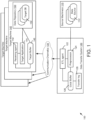
- FIG. 1 shows an overall block diagram of an example computing system 100 supporting improved ETL process.
- the computing system 100 can include one or more source machines 110, a data transfer system 120 (which can also be referred to as an "ETL system"), one or more communication channels 130, and one or more target machines 140.
- Each target machine 140 can include or be linked to a corresponding data repository 150.
- the source machines 110 can maintain one or more data sources 112.
- the data sources 112 contain original data that needs to be extracted, processed, and loaded by an ETL system.
- the data sources 112 can vary in format depending on specific requirements of the project or organization.
- the data sources 112 can be relational or non-relation databases, structured or unstructured data files, web APIs, log files, message queues, real-time data streams, etc.
- the data transfer system 120 can include an ETL agent 122, a preprocessor 124, a local buffer 126, and a transfer log 128.
- the source machines 110 are separate from the data transfer system 120. In other examples, the source machines 110, or at least part of the data sources 112, can be part of the data transfer system 120.
- the preprocessor 124 can be an application running on the data transfer system 120 and configured to extract original data from the data sources 112, and transform the extracted original data into a plurality of data records that will be send to the target machines 140 for storage in the data repository 150.
- Example transformations performed by the preprocessor 124 include data cleansing (e.g., removing errors and inconsistencies), data integration (e.g., combining data from multiple data sources), data filtering (e.g., selecting relevant data), data aggregation (e.g., summarizing or consolidating data), data enrichment (e.g., adding additional information), data normalization (e.g., restructuring data into a consistent format), data validation (e.g., ensuring data meets predefined rules), data deduplication (e.g., removing duplicate records), data formatting (e.g., converting data into a desired format), and data calculations (e.g., performing mathematical or logical operations). These transformations help ensure data quality, consistency, and usability for analysis, reporting, or storage purposes.
- data cleansing e.g., removing errors and inconsistencies
- data integration e.g., combining data from multiple data sources
- data filtering e.g., selecting relevant data
- data aggregation e.g.
- the ETL agent 122 can be an application configured to coordinate the data extraction, data transformation, and data loading phases of the ETL process. For example, the ETL agent 122 can control operations performed by the preprocessor 124 by identifying data sources 112 for data extraction and specifying particular steps and/or parameters for data transformation. The ETL agent 122 can also control the data loading operations on the sender's side. For example, the ETL agent 122 can determine the timing, frequency, mode, channels, and other aspects of transmitting the data records from the data transfer system 120 to the target machines 140. In some examples, the ETL agent 122 can operate the ETL process in a batch mode, where data extraction, transformation, and loading are processed in predefined intervals. In some examples, the ETL agent 122 can operate the ETL process in real-time or substantially in real-time. In some examples, the ETL agent 122 can send the same data records to multiple target machines 140 in parallel.
- the ETL agent 122 can be configured to monitor, continuously and/or periodically, whether reliable communication can be established between the data transfer system 120 and the target machines 140. For example, the ETL agent 122 can determine if any of the communication channels 130 is open (e.g., operating normally with negligible network delay) or closed (e.g., network failure or experiencing significant network latency). As another example, the ETL agent 122 can ping the target machines 140 to determine if they are online or offline. In some examples, the connection status of communication channels 130 and the target machines 140 can be diagnosed based on a network protocol, such as the Internet control message protocol (ICMP).
- ICMP Internet control message protocol
- the ETL agent 122 can store residual data records in the local buffer 126.
- the residual data records refer to those data records that have not been sent from the data transfer system 120 to the target machines 140.
- the ETL agent 122 can resume the data loading process by sending the residual data records stored in the local buffer 126 to the target machines 140, instead of recreating those data records through the preprocessor 124, which can be time-consuming.
- the transfer log 128 can keep track of what data records have been sent to each of the target machines 140. For example, when the data records need to be sent according to a specific sequence, the transfer log 128 can keep track of last data records that have been sent from the data transfer system 120 to multiple target machines 140. Using the transfer log 128, the ETL agent 122 can determine, for each target machine 140, what residual data records stored in the local buffer 126 need to be sent.
- the data records stored in the local buffer 126 can be a union of all residual data records corresponding to all target machines 140.
- the union of multiple sets of residual data records refers to the combination of unique residual data records from those sets, resulting in a new set that contains all distinct residual data records from the multiple sets (that is, merging the multiple sets without including any duplicate residual data records).
- the data records contained in the local buffer 126 are the residual data records for one of the target machines 140 that missed the most data record transmission. For other less affected target machines, only some of the data records contained in the local buffer need to be transmitted. As such, the size of the local buffer 126 can be reduced compared to saving residual data records for each target machine separately.
- the communication channels 130 can connect the data transfer system 120 to the target machines 140.
- each target machine 140 can have its own communication channel with the data transfer system 120. Thus, disruption of one communication channel linked to one target machine will not interfere with data loading to another target machine through another communication channel.
- multiple target machines 140 can share the same communication channels for communicating with the data transfer system 120.
- the communication channels can include a variety of wired and/or wireless networks, such as Internet, ethernet, Wi-Fi, cellular networks, etc.
- the target machines 140 are the recipients of the data records (extracted from the data source and transformed by the preprocessor).
- the data repository 150 is the final destination of the received data records.
- the data repository 150 can include one or more target databases 152 for storage of the data records received by the target machines 140.
- the data repository 150 can be configured as data warehouses, data lakes, etc.
- the data repository 150 is part of the target machines 140 so that the data repository 150 is local to a target application 144 which is described more fully below.
- the data repository 150 can be external to the target machines 140.
- the target machines 140 and/or the data repository 150 can be configured on-premises or in the cloud.
- Each target machine 140 can have a receiving agent 142 configured to control the data loading operations on the receiver's side.
- Each target machine 140 can also have a target application 144 (which can also be referred to as a "data loading application") configured to manage data storage in the data repository 150.
- the target application 144 can be a database management software configured to store received data records in one or more target databases 152.
- the receiving agent 142 can be a software application configured to continuously and/or periodically monitor the operating status of the target application 144.
- the receiving agent 142 can coordinate receiving data records sent from the data transfer system 120 (e.g., by the ETL agent 122). For example, when the target application 144 operates normally, the receiving agent 142 can route the data records to the target application 144, which can directly store the received data records in the data repository 150.
- the target application 144 may be temporarily not available for receiving data records.
- the target application 144 may be non-responsive (e.g., stop operating) due to insufficient computing resources or crashed for any number of reasons.
- the receiving agent 142 can redirect the data records sent from the data transfer system 120 to a target buffer 146 on the target machine 140 for local storage.
- the receiving agent 142 can direct the data records stored in the target buffer 146 to be transferred to the data repository. Because the data records stored in the target buffer 146 can be directly written into the data repository 150 (i.e., do not need to be re-transmitted through the communication channels 130), any transmission delay through the communication channels 130 can be avoided. Meanwhile, the target application 144 can continue receiving new data records from the data transfer system 120 and directly storing the new data records in the data repository.
- two threads of data transfer can run in parallel or concurrently: (1) transfer of previously transmitted data records (when the target application 144 was non-responsive) from the target buffer 146 to the data repository 150; and (2) transfer of new data records from the data transfer system 120 to the data repository 150 (through the target application).
- a sequential data storage protocol e.g., first transfer data records from the target buffer 146 to the data repository 150 and then transfer new data records from the data transfer system 120 to the data repository 150, or vice versa
- concurrent data storage protocol can further improve the efficiency of the data loading process.
- the receiving agent 142 can be configured to synchronize storage of the data records in the two concurrent threads. For example, the receiving agent 142 can identify conflicts that may arise when attempting to insert or update the same records in the data repository 150 from the two threads, resolve the conflicts based on predefine rules or policies (e.g., prioritizing one thread over another thread, merging conflicting data records, etc.), optimizing and/or maintaining consistency of data storage, etc.
- rules or policies e.g., prioritizing one thread over another thread, merging conflicting data records, etc.
- the data transfer system 120 is connected to each target machine 140 via a corresponding communication channel 130.
- at least one target machine 140 can be an integral part of the data transfer system 120 such that the target machine 140 is local to the ETL agent 122 (thus, there is no need for a dedicated communication channel connecting from the data transfer system to the target machine).
- the ETL agent 122 can be integrated with the receiving agent 142 to coordinate the ETL process (e.g., controlling the preprocessor 124 for data extraction and data transformation and the target application for data loading).
- the local buffer 126 and the target buffer 146 can be merged as an integrated data buffer.
- the integrated data buffer can be used to temporarily store data records generated by the preprocessor 124 when the target application 144 stops operating. When the target application 144 resumes operating, the data records stored in the integrated data buffer can be transferred to the data repository 150. At the same time, the target application 144 can directly store new data records generated by the preprocessor 124 into the data repository 150.
- the systems shown herein can vary in complexity, with additional functionality, more complex components, and the like.
- additional functionality within the data transfer system 120 and/or the target machines 140.
- Additional components can be included to implement security, redundancy, load balancing, report design, and the like.
- the described computing systems can be networked via wired or wireless network connections, including the Internet.
- systems can be connected through an intranet connection (e.g., in a corporate environment, government environment, or the like).
- the system 100 and any of the other systems described herein can be implemented in conjunction with any of the hardware components described herein, such as the computing systems described below (e.g., processing units, memory, and the like).
- the applications, data records, status parameters, and the like can be stored in one or more computer-readable storage media or computer-readable storage devices.
- the technologies described herein can be generic to the specifics of operating systems or hardware and can be applied in any variety of environments to take advantage of the described features.
- FIG. 2 is a flowchart illustrating an example overall method 200 for efficient data loading in an ETL process, and can be performed, for example, by the computing system 100 of FIG. 1 .
- a plurality of data records can be obtained from one or more data sources, e.g., by the data transfer system 120.
- the preprocessor 124 can extract original data from the data sources 112 and transform the extracted original data into the plurality of data records.
- the operating status of a target application running on a target machine can be monitored.
- the target application can be configured to manage data storage in a data repository.
- monitoring the operating status of the target application can be performed by the ETL agent 122, e.g., by checking one or more parameter values of the target application through an API of the target application.
- the ETL agent 122 can periodically check version number of the target application by making the API call. Returning a valid version number by the API call can indicate normal operation of target application, wherein returning of an invalid version number can indicate that the target operation stops operating.
- one or more data records can be sent from the data transfer system to the target machine and storing the received data records in a target buffer (e.g., the target buffer 146) residing on the target machine.
- a target buffer e.g., the target buffer 1466
- the data records sent to the target machine during the period when the target application is non-operative can be referred to as the "first data records.”
- receiving the first data records and storing the same in the target buffer can be performed by the receiving agent 142.
- additional data records (which can also be referred to as "second data records" and are distinct from the first data records) can be sent from the data transfer system to the target machine and directly stored in the data repository. Receiving the second data records and storing the same in the data repository can be performed by the target application.
- the first data records can be transferred from the target buffer to the data repository.
- the first data records and the second data records can be saved in the data repository in parallel.
- transferring the first data records from the target buffer to the data repository can be performed by the receiving agent 142.
- the method 200 and any of the other methods described herein can be performed by computer-executable instructions (e.g., causing a computing system to perform the method) stored in one or more computer-readable media (e.g., storage or other tangible media) or stored in one or more computer-readable storage devices.
- Such methods can be performed in software, firmware, hardware, or combinations thereof.
- Such methods can be performed at least in part by a computing system (e.g., one or more computing devices).
- Example 2 The method of example 1, wherein obtaining the plurality of data records comprises extracting original data from the one or more data sources and transforming the extracted original data into the plurality of data records.
- Example 3 The method of any one of examples 1-2, wherein monitoring operating status of the target application comprises checking one or more parameter values of the target application through an application programming interface of the target application.
- Example 5 The method of any one of examples 1-4, further comprising monitoring a communication channel between the data transfer system and the target machine, wherein sending the first or second data records from the data transfer system to the target machine is conditioned upon the communication channel being open.
- Example 7 The method of any one of examples 5-6, further comprising: responsive to detecting that the communication channel is closed, storing residual data records in a local buffer on the data transfer system, wherein the residual data records comprise data records that have not been sent from the data transfer system to the target machine.
- Example 9 The method of any one of examples 7-8, wherein the target machine is a first target machine, the communication channel is a first communication channel, and the residual data records are first residual data records, the method further comprising: monitoring a second communication channel between the data transfer system and a second target machine; responsive to detecting that the second communication channel is closed, storing second residual data records in the local buffer, wherein the second residual data records comprise data records that have not been sent from the data transfer system to the second target machine; and responsive to detecting that the second communication channel switches open, sending the second residual data records from the local buffer to the second target machine.
- Example 10 The method of example 9, further comprising tracking last data records that have been sent from the data transfer system to the first and second target machines, respectively, and wherein data records stored in the local buffer represent a union of the first residual data records and the second residual data records.
- Example 11 A computing system, comprising: memory; one or more hardware processors coupled to the memory; and one or more computer readable storage media storing instructions that, when loaded into the memory, cause the one or more hardware processors to perform operations comprising: obtaining, in a data transfer system, a plurality of data records from one or more data sources; monitoring operating status of a target application running on a target machine, wherein the target application is configured to manage data storage in a data repository that is local to the target application; responsive to finding that the target application stops operating, sending one or more first data records from the data transfer system to the target machine and storing the one or more first data records in a target buffer on the target machine; responsive to finding that the target application resumes operating, sending one or more second data records from the data transfer system to the target machine and directly storing the one or more second data records in the data repository, wherein the one or more second data records are distinct from the one or more first data records; and while sending the one or more second data records, transferring the one or more first data records from the target buffer to the
- Example 12 The system of example 11, wherein obtaining the plurality of data records comprises extracting original data from the one or more data sources and transforming the extracted original data into the plurality of data records.
- Example 13 The system of any one of examples 11-12, wherein monitoring operating status of the target application comprises checking one or more parameter values of the target application through an application programming interface of the target application.
- Example 14 The system of any one of examples 11-13, wherein the operations further comprise synchronizing storage of the one or more first data records and the one or more second data records on the data repository.
- Example 15 The system of any one of examples 11-14, wherein the operations further comprise monitoring a communication channel between the data transfer system and the target machine, wherein sending the first or second data records from the data transfer system to the target machine is conditioned upon the communication channel being open.
- Example 16 The system of example 15, wherein the operations further comprise: responsive to detecting that the communication channel is closed, storing residual data records in a local buffer on the data transfer system, wherein the residual data records comprise data records that have not been sent from the data transfer system to the target machine.
- Example 17 The system of example 16, wherein the operations further comprise: responsive to detecting that the communication channel switches open, sending the residual data records from the local buffer to the target machine.
- Example 18 The system of any one of examples 16-17, wherein the target machine is a first target machine, the communication channel is a first communication channel, and the residual data records are first residual data records, wherein the operations further comprise: monitoring a second communication channel between the data transfer system and a second target machine; responsive to detecting that the second communication channel is closed, storing second residual data records in the local buffer, wherein the second residual data records comprise data records that have not been sent from the data transfer system to the second target machine; and responsive to detecting that the second communication channel switches open, sending the second residual data records from the local buffer to the second target machine.
- Example 19 The system of example 18, wherein the operations further comprise tracking last data records that have been sent from the data transfer system to the first and second target machines, respectively, and wherein data records stored in the local buffer represent a union of the first residual data records and the second residual data records.
- Example 20 One or more non-transitory computer-readable media having encoded thereon computer-executable instructions causing one or more processors to perform a method comprising: in a data transfer system, extracting original data from one or more data sources and transforming the extracted original data into a plurality of data records; monitoring operating status of a target application running on a target machine, wherein the target application is configured to manage data storage in a data repository that is local to the target application; responsive to finding that the target application stops operating, sending one or more first data records from the data transfer system to the target machine and storing the one or more first data records in a target buffer on the target machine; responsive to finding that the target application resumes operating, sending one or more second data records from the data transfer system to the target machine and directly storing the one or more second data records in the data repository, wherein the one or more second data records are distinct from the one or more first data records; and while sending the one or more second data records, transferring the one or more first data records from the target buffer to the data repository.
Landscapes
- Engineering & Computer Science (AREA)
- Theoretical Computer Science (AREA)
- Physics & Mathematics (AREA)
- General Engineering & Computer Science (AREA)
- General Physics & Mathematics (AREA)
- Databases & Information Systems (AREA)
- Quality & Reliability (AREA)
- Computing Systems (AREA)
- Data Mining & Analysis (AREA)
- Mathematical Physics (AREA)
- Information Retrieval, Db Structures And Fs Structures Therefor (AREA)
Applications Claiming Priority (1)
| Application Number | Priority Date | Filing Date | Title |
|---|---|---|---|
| US18/358,332 US12339736B2 (en) | 2023-07-25 | 2023-07-25 | Robust data transfer to cloud and on-premise storage systems |
Publications (1)
| Publication Number | Publication Date |
|---|---|
| EP4498251A1 true EP4498251A1 (fr) | 2025-01-29 |
Family
ID=91670289
Family Applications (1)
| Application Number | Title | Priority Date | Filing Date |
|---|---|---|---|
| EP24184268.1A Pending EP4498251A1 (fr) | 2023-07-25 | 2024-06-25 | Transfert de données robuste vers des systèmes de stockage en nuage et sur site |
Country Status (2)
| Country | Link |
|---|---|
| US (1) | US12339736B2 (fr) |
| EP (1) | EP4498251A1 (fr) |
Families Citing this family (2)
| Publication number | Priority date | Publication date | Assignee | Title |
|---|---|---|---|---|
| US12393634B1 (en) * | 2024-06-28 | 2025-08-19 | Amazon Technologies, Inc. | Scalable graph-based vector storage and search in distributed storage systems |
| US12591560B2 (en) | 2024-06-28 | 2026-03-31 | Amazon Technologies, Inc. | Vector lifecycle management in distributed storage systems |
Citations (1)
| Publication number | Priority date | Publication date | Assignee | Title |
|---|---|---|---|---|
| US20210271648A1 (en) * | 2018-08-06 | 2021-09-02 | Accelario Software Ltd. | Data migration methods and system |
Family Cites Families (14)
| Publication number | Priority date | Publication date | Assignee | Title |
|---|---|---|---|---|
| US20070067488A1 (en) * | 2005-09-16 | 2007-03-22 | Ebay Inc. | System and method for transferring data |
| US7487383B2 (en) | 2006-06-29 | 2009-02-03 | Dssdr, Llc | Data transfer and recovery process |
| US7962458B2 (en) * | 2008-06-12 | 2011-06-14 | Gravic, Inc. | Method for replicating explicit locks in a data replication engine |
| US8060714B1 (en) | 2008-09-26 | 2011-11-15 | Emc (Benelux) B.V., S.A.R.L. | Initializing volumes in a replication system |
| US8204859B2 (en) | 2008-12-10 | 2012-06-19 | Commvault Systems, Inc. | Systems and methods for managing replicated database data |
| US8769336B1 (en) | 2011-12-27 | 2014-07-01 | Emc Corporation | Method and apparatus for preventing journal loss on failover in symmetric continuous data protection replication |
| US8572051B1 (en) * | 2012-08-08 | 2013-10-29 | Oracle International Corporation | Making parallel execution of structured query language statements fault-tolerant |
| US9268797B2 (en) | 2012-12-21 | 2016-02-23 | Zetta Inc. | Systems and methods for on-line backup and disaster recovery |
| US8909604B1 (en) | 2013-03-06 | 2014-12-09 | Gravic, Inc. | Methods for returning a corrupted database to a known, correct state by selectively using redo and undo operations |
| US9116842B2 (en) * | 2013-03-14 | 2015-08-25 | International Business Machines Corporation | Avoiding restart on error in data integration |
| US9262276B2 (en) * | 2014-02-10 | 2016-02-16 | Qognify Ltd. | Storage device as buffer for unreliable storage |
| US9679033B2 (en) * | 2014-03-21 | 2017-06-13 | International Business Machines Corporation | Run time insertion and removal of buffer operators |
| US10191802B2 (en) * | 2015-09-04 | 2019-01-29 | Oracle International Corporation | Extract-transform-load diagnostics |
| US11620192B2 (en) | 2020-07-10 | 2023-04-04 | Vmware, Inc. | Hardware-assisted memory disaggregation with recovery from network failures using non-volatile memory |
-
2023
- 2023-07-25 US US18/358,332 patent/US12339736B2/en active Active
-
2024
- 2024-06-25 EP EP24184268.1A patent/EP4498251A1/fr active Pending
Patent Citations (1)
| Publication number | Priority date | Publication date | Assignee | Title |
|---|---|---|---|---|
| US20210271648A1 (en) * | 2018-08-06 | 2021-09-02 | Accelario Software Ltd. | Data migration methods and system |
Non-Patent Citations (1)
| Title |
|---|
| COMARTIN DEREK: "Synchronous vs Messaging: When to use which?", 22 March 2023 (2023-03-22), XP093229761, Retrieved from the Internet <URL:https://web.archive.org/web/20230322150531/https://codeopinion.com/synchronous-vs-messaging-when-to-use-which/> [retrieved on 20241202] * |
Also Published As
| Publication number | Publication date |
|---|---|
| US20250036515A1 (en) | 2025-01-30 |
| US12339736B2 (en) | 2025-06-24 |
Similar Documents
| Publication | Publication Date | Title |
|---|---|---|
| EP4498251A1 (fr) | Transfert de données robuste vers des systèmes de stockage en nuage et sur site | |
| US9424149B2 (en) | Systems and methods for fault tolerant communications | |
| US9009104B2 (en) | Checkpoint-free in log mining for distributed information sharing | |
| US11544232B2 (en) | Efficient transaction log and database processing | |
| CN104981768B (zh) | 基于云的串流数据接收机和保存程序 | |
| US20200019543A1 (en) | Method, apparatus and device for updating data, and medium | |
| CN106371932B (zh) | 一种基于zookeeper的信息配置方法及装置 | |
| WO2011114548A1 (fr) | Procédé de rattrapage d'une défaillance dans le traitement de trains de données | |
| CN113987064A (zh) | 数据处理方法、系统及设备 | |
| CN111526188B (zh) | 基于Spark Streaming结合Kafka确保数据零丢失的系统和方法 | |
| WO2025195152A1 (fr) | Système, procédé et appareil de sauvegarde de données, et dispositif, support de stockage et produit-programme | |
| CN118484499A (zh) | SQL Server数据库实时数据复制方法、装置、设备及介质 | |
| CN114791931A (zh) | 一种基于datax的数据治理方法 | |
| CN113326268B (zh) | 一种数据写入、读取方法及装置 | |
| CN118861155A (zh) | 一种非侵入式数据同步服务的实现方法和系统 | |
| CN114328743A (zh) | 集群中实现对等服务的方法及系统 | |
| JP6100135B2 (ja) | フォールトトレラントシステム及びフォールトトレラントシステム制御方法 | |
| CN119248886B (zh) | 数据管理方法及系统、计算设备、存储介质、程序产品 | |
| Liarokapis | Event-driven architectures using Apache Kafka | |
| Almishev | Methods and Tools for Developing Collaborative Applications Based on CRDT Types with User Conflict Resolution | |
| CN121309645A (zh) | 一种Zabbix监控系统、数据接入方法及电子设备 | |
| CN121255910A (zh) | 一种实时数据引接系统、方法、设备及介质 | |
| CN116028465A (zh) | 一种数据迁移方法、装置和存储介质 | |
| CN120540872A (zh) | 将缓存队列数据同步至kafka消息系统的方法、装置、电子设备及存储介质 | |
| CN119537398A (zh) | 一种数据分析方法和装置 |
Legal Events
| Date | Code | Title | Description |
|---|---|---|---|
| PUAI | Public reference made under article 153(3) epc to a published international application that has entered the european phase |
Free format text: ORIGINAL CODE: 0009012 |
|
| STAA | Information on the status of an ep patent application or granted ep patent |
Free format text: STATUS: THE APPLICATION HAS BEEN PUBLISHED |
|
| AK | Designated contracting states |
Kind code of ref document: A1 Designated state(s): AL AT BE BG CH CY CZ DE DK EE ES FI FR GB GR HR HU IE IS IT LI LT LU LV MC ME MK MT NL NO PL PT RO RS SE SI SK SM TR |
|
| STAA | Information on the status of an ep patent application or granted ep patent |
Free format text: STATUS: REQUEST FOR EXAMINATION WAS MADE |
|
| 17P | Request for examination filed |
Effective date: 20250703 |