EP4498751A1 - Procédé et appareil d?émission de signal, et procédé et appareil de réception de signal - Google Patents
Procédé et appareil d?émission de signal, et procédé et appareil de réception de signal Download PDFInfo
- Publication number
- EP4498751A1 EP4498751A1 EP23810805.4A EP23810805A EP4498751A1 EP 4498751 A1 EP4498751 A1 EP 4498751A1 EP 23810805 A EP23810805 A EP 23810805A EP 4498751 A1 EP4498751 A1 EP 4498751A1
- Authority
- EP
- European Patent Office
- Prior art keywords
- node
- target
- beams
- response message
- sending
- Prior art date
- Legal status (The legal status is an assumption and is not a legal conclusion. Google has not performed a legal analysis and makes no representation as to the accuracy of the status listed.)
- Pending
Links
Images
Classifications
-
- H—ELECTRICITY
- H04—ELECTRIC COMMUNICATION TECHNIQUE
- H04W—WIRELESS COMMUNICATION NETWORKS
- H04W74/00—Wireless channel access
- H04W74/08—Non-scheduled access, e.g. ALOHA
- H04W74/0833—Random access procedures, e.g. with 4-step access
-
- H—ELECTRICITY
- H04—ELECTRIC COMMUNICATION TECHNIQUE
- H04B—TRANSMISSION
- H04B7/00—Radio transmission systems, i.e. using radiation field
- H04B7/02—Diversity systems; Multi-antenna system, i.e. transmission or reception using multiple antennas
- H04B7/04—Diversity systems; Multi-antenna system, i.e. transmission or reception using multiple antennas using two or more spaced independent antennas
- H04B7/06—Diversity systems; Multi-antenna system, i.e. transmission or reception using multiple antennas using two or more spaced independent antennas at the transmitting station
- H04B7/0686—Hybrid systems, i.e. switching and simultaneous transmission
- H04B7/0695—Hybrid systems, i.e. switching and simultaneous transmission using beam selection
- H04B7/06952—Selecting one or more beams from a plurality of beams, e.g. beam training, management or sweeping
-
- H—ELECTRICITY
- H04—ELECTRIC COMMUNICATION TECHNIQUE
- H04B—TRANSMISSION
- H04B7/00—Radio transmission systems, i.e. using radiation field
- H04B7/02—Diversity systems; Multi-antenna system, i.e. transmission or reception using multiple antennas
- H04B7/04—Diversity systems; Multi-antenna system, i.e. transmission or reception using multiple antennas using two or more spaced independent antennas
- H04B7/08—Diversity systems; Multi-antenna system, i.e. transmission or reception using multiple antennas using two or more spaced independent antennas at the receiving station
- H04B7/0868—Hybrid systems, i.e. switching and combining
- H04B7/088—Hybrid systems, i.e. switching and combining using beam selection
-
- H—ELECTRICITY
- H04—ELECTRIC COMMUNICATION TECHNIQUE
- H04W—WIRELESS COMMUNICATION NETWORKS
- H04W16/00—Network planning, e.g. coverage or traffic planning tools; Network deployment, e.g. resource partitioning or cells structures
- H04W16/24—Cell structures
- H04W16/28—Cell structures using beam steering
-
- H—ELECTRICITY
- H04—ELECTRIC COMMUNICATION TECHNIQUE
- H04W—WIRELESS COMMUNICATION NETWORKS
- H04W74/00—Wireless channel access
- H04W74/002—Transmission of channel access control information
- H04W74/004—Transmission of channel access control information in the uplink, i.e. towards network
Definitions
- the present disclosure relates to the field of communications, and specifically to a signal sending method and apparatus, a signal receiving method and apparatus, and a storage medium and an electronic apparatus.
- the large-scale commercialization of the 5th Generation Mobile Communication System (5G) New Radio (NR) is accelerating the transformation of the economic society into digitalization, networking and intelligence, and driving the network into a new era of Internet of Everything.
- 5G 5th Generation Mobile Communication System
- NR New Radio
- the rapid emergence of application needs in terms of smart cities, intelligent transportation, intelligent industrial production, and the like leads to the continuous increasing of the development trend of network equipment capacity differentiation, network function diversification, and intelligent network management and control, thereby further promoting the arrival of the 6th Generation Mobile Communication System (6G).
- a large number of intelligent automation devices with highly differentiated capabilities exist in typical 6G application scenarios represented by smart cities, intelligent transportation, and smart homes, and have increasingly stringent communication requirements in terms of extremely low delay, extremely high reliability, an ultra-large bandwidth, mass access, etc.
- a terminal in a random access process, can only send a random access signal (preamble) by selecting a Physical Random Access Channel (PRACH) resource corresponding to a beam direction, and then start the random access process.
- PRACH Physical Random Access Channel
- this may limit the performance of a UE, when the PRACH resource is limited or there are excessive UEs selecting the same beam direction, collision occurs in preamble sequences in the same beam direction, thus causing the UE to be unable to successfully access a system or causing the access delay of the UE to increase. Therefore, the random access method is unable to meet the emerging application requirements in the post-5G/6G era, for example, communication requirements in terms of extremely low delay, extremely high reliability, an ultra-large bandwidth, mass access, etc.
- the terminal can only send the random access signal by selecting the PRACH resource corresponding to the beam direction, which limits the performance of the UE, and causes the UE to be unable to successfully access the system or causes the access delay of the UE to increase, thus the communication requirements in terms of extremely low delay, extremely high reliability, an ultra-large bandwidth, mass access, etc. cannot be met. No effective solutions have been proposed to solve the above problems in related art.
- Embodiments of the present disclosure provide a signal sending method and apparatus, a signal receiving method and apparatus, and a storage medium and an electronic apparatus, to at least solve the technical problem in the related art that a random access signal is able to be transmitted only on a resource corresponding to a single beam during a random access process.
- One embodiment of the present disclosure provides a signal sending method, including: determining a plurality of target beams; and sending a random access signal to a first node based on resources respectively corresponding to the plurality of target beams.
- One embodiment of the present disclosure provides a signal receiving method, including: receiving a random access signal sent by a second node on resources respectively corresponding to a plurality of target beams.
- the plurality of target beams are beams that are determined by the second node.
- a signal sending apparatus including: a first determination module, configured to determine a plurality of target beams; and a first sending module, configured to send a random access signal to a first node based on resources respectively corresponding to the plurality of target beams.
- One embodiment of the present disclosure provides a signal receiving apparatus, including: a third receiving module, configured to receive a random access signal sent by a second node on resources respectively corresponding to a plurality of target beams.
- the plurality of target beams are beams that are determined by the second node.
- Still another embodiment of the present disclosure further provides a computer-readable storage medium.
- the computer-readable storage medium stores a computer program. Steps in any one of the above method embodiments are executed when the computer program is configured to operate.
- Still another embodiment of the present disclosure further provides an electronic apparatus.
- the electronic apparatus includes a memory and a processor.
- the memory stores a computer program.
- the processor is configured to operate the computer program to execute steps in any one of the above method embodiments.
- Fig. 1 is a block diagram of a hardware structure of a mobile terminal of a signal sending method according to embodiments of the present disclosure.
- the mobile terminal may include one or more (only one is shown in Fig. 1 ) processors 102 (the processor 102 may include, but is not limited to, a processing apparatus such as a microprocessor MCU or a programmable logic device FPGA) and a memory 104 for storing data.
- the above mobile terminal may further include a transmission device 106 for achieving a communication function and an input/output device 108.
- Fig. 1 is only a schematic diagram, which does not limit the structure of the above mobile terminal.
- the mobile terminal may also include more or less components than those shown in Fig. 1 , or have a different configuration from that shown in Fig. 1 .
- the memory 104 may be configured to store a computer program, for example, a software program and a module of application software, such as a computer program corresponding to a signal sending method in the embodiments of the present disclosure.
- the processor 102 runs the computer program stored in the memory 104, so as to execute various functional applications and data processing, that is, to realize the above method.
- the memory 104 may include a high-speed random access memory, and may further include a non-volatile memory, such as one or more magnetic disk memory apparatuses, a flash memory device, or other non-volatile solid-state memory devices.
- the memory 104 may further include memories remotely disposed relative to the processor 102.
- the remote memories may be connected to the mobile terminal by using a network. Examples of the above network include, but are not limited to, the Internet, an intranet, a local area network, a mobile communication network, and a combination thereof.
- the transmission apparatus 106 is configured to receive or transmit data via a network.
- the specific example of the above network may include a wireless network provided by a communication provider of the mobile terminal.
- the transmission apparatus 106 includes a Network Interface Controller (NIC), and may be connected to other network devices by using a base station, so as to communicate with the Internet.
- the transmission apparatus 106 is a Radio Frequency (RF) module, which is configured to communicate with the Internet in a wireless manner.
- RF Radio Frequency
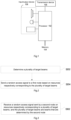
- FIG. 2 is a flowchart of a signal sending method according to embodiments of the present disclosure. As shown in Fig. 2 , the flow includes the following steps.
- a plurality of target beams are determined.
- a random access signal is sent to a first node based on resources respectively corresponding to the plurality of target beams.
- An execution subject of the above steps may be a device having signal receiving and sending capabilities, such as a User Equipment (UE), and a processor or processing module in the UE, or may also be other processing devices or processing units having similar processing capabilities.
- the first node may be a base station, a specific module in the base station, or other network nodes that may communicate with the base station, and the like.
- the random access signal may also be referred to as a message 1, that is, Msg1.
- a beam may be represented by a determined resource set.
- the resource set may include at least one of the following: a sending end pre-code, a receiving end pre-code, an antenna port configuration of a sending end, an antenna weight vector of the sending end, an antenna weight matrix of the sending end, an antenna port configuration of a receiving end, an antenna weight vector of the receiving end, an antenna weight matrix of the receiving end, or determined time domain resources and/or frequency domain resources and/or code sub-resources. Therefore, a beam index may be replaced with a resource index.
- the beam may also be a transmission (sending/receiving) mode, and the transmission mode may include space division multiplexing, frequency domain and/or time domain diversity, etc.
- the beam includes at least one of the following: a sending beam, a receiving beam, a pre-code, a pre-coding matrix, a pre-coding matrix index, a receiving beam and sending beam pair, or a sending beam and receiving beam pair.
- a sending mode of a second channel/signal/resource refers to or uses a sending beam used by a first channel/signal/resource, which is called that the second channel and the first channel use the same sending beam.
- the sending beam of the first channel/signal/resource is represented by the determined resource set.
- a receiving mode of the second channel/signal/resource refers to or uses a receiving beam used by the first channel/signal/resource, which is called that the second channel and the first channel use the same receiving beam.
- the receiving beam of the first channel/signal/resource is represented by the determined resource set.
- one target beam corresponding to one beam direction, and the plurality of target beams may correspond to the same beam direction or different beam directions.
- the plurality of target beams may be determined, and the random access signal may be sent to the first node based on the resources respectively corresponding to the plurality of target beams.
- the random access signal may be sent to the first node by using the resources that may send the random access signal and respectively correspond to the plurality of target beams, such that the situation that the random access signal is unable to be sent to the first node when there is a fault in a resource corresponding to a single beam is avoided, the technical problem in the related art that a random access signal is able to be transmitted only on a resource corresponding to a single beam during a random access process is solved, thereby achieving the technical effect of transmitting the random access signal on resources respectively corresponding to a plurality of beams, and meeting communication requirements such as extremely low delay, extremely high reliability, an ultra-large bandwidth, mass access, etc.
- determining the plurality of target beams comprises at least one of the following: detecting a downlink channel, and selecting the plurality of target beams based on detection results; measuring a downlink signal, and selecting the plurality of target beams based on measurement results; selecting the plurality of target beams from stored beams; acquiring the plurality of target beams from a plurality of beams configured by the first node; or selecting a target resource group from a plurality of resource groups configured, and selecting the plurality of target beams from a plurality of beams corresponding to the target resource group.
- the target resource group may include a PRACH time domain resource and/or a preamble resource on a PRACH.
- the target beams corresponding to the target resource group may be pre-configured.
- the target beams corresponding to one or more downlink beams may be selected based on the detection results or measurement results by detecting or measuring the downlink channel.
- the UE may select uplink beams corresponding to 2 downlink beams from the 4 downlink beams as the target beams according to a correspondence relationship between the uplink beam and the downlink beam (the correspondence relationship may be pre-defined, or informed through signaling, or negotiated by the UE and a base station side, etc.).
- the target beams are determined by means of acquiring the plurality of target beams from the plurality of beams configured by the first node, the first node may be pre-configured with more beams, and then the plurality of target beams are selected from more beams by the UE.
- sending the random access signal to the first node based on the resources respectively corresponding to the plurality of target beams includes: determining a transmission power for sending the random access signal on the target beam; determining a first beam from the plurality of target beams based on the transmission power, wherein there is one or more first beams, and the number of the first beams is less than or equal to the number of the target beams; and sending the random access signal on a resource corresponding to the first beam.
- the first beam needs to be determined based on the transmission power.
- the first beam may also be one or more beams selected from the target beams according to a specific selection mode (for example, pre-configured priorities for the beams, frequencies at which the beams are used, etc.).
- a specific selection mode for example, pre-configured priorities for the beams, frequencies at which the beams are used, etc.
- one or more beams may also be randomly selected from the target beams, and the number of the first beams may also be adjusted based on actual situations.
- the selection mode of the first beam is only an exemplary embodiment, and the first beam is not limited to the above selection mode.
- determining the first beam from the plurality of target beams based on the transmission power includes: determining the corresponding target beam of which the transmission power is less than or equal to a first threshold as the first beam.
- the first threshold may be a preset value, which may be set to a maximum transmission power supported by the first node or the maximum transmission power configured for the first node.
- the corresponding target beams of which the transmission power is less than or equal to the first threshold may all be determined as the first beams, or part of the target beams of which the transmission power is less than or equal to the first threshold are determined as the first beam. It is to be further noted that, the setting of the first threshold may be flexibly adjusted according to actual application situations.
- the method further includes: acquiring a first response message sent by the first node; and sending an uplink message to the first node based on an uplink channel resource configured by uplink channel configuration information in the first response message.
- the uplink message includes at least one of the following information: first indication information; or identification information of a second node sending the uplink message.
- the first indication information is configured to indicate whether to use a first effective beam, the first effective beam is a target beam for a random access signal corresponding to the first response message, and a beam corresponding to the first response message is a second effective beam.
- the first response message (or referred to as a second message, that is, Msg2) is returned by the first node based on the received random access signal sent by the second node, that is, the first response message is a response message of the random access signal.
- the first effective beam may correspond to one second effective beam
- the uplink message may also be referred to as a third message, that is, Msg3.
- the method further includes: the first node terminating sending of a second response message to the second node on a resource corresponding to the second effective beam when determining that the second node no longer uses the first effective beam based on the first indication information in the received uplink message; and the first node sending the second response message to the second node on the resource corresponding to the second effective beam when determining that the second node uses the first effective beam based on the first indication information in the received uplink message.
- the second response message is a response message of the uplink message.
- the first node determines that the received uplink message does not include the first indication information, the first node sends the second response message to the second node on the resource corresponding to the second effective beam.
- the method further includes: the first node receiving the uplink message; and when the first indication information included in at least one uplink message received by the first node within a time window indicates that the first effective beam is no longer used, the first node selecting at least one first effective beam among the first effective beams no longer in use and indicated by the second node, and continuously sending the second response message to the second node on a resource corresponding to the second effective beam corresponding to the at least one first effective beam selected.
- the second response message is a response message of the uplink message.
- the uplink message is scheduled by an information packet of the first response message.
- the information packet of the first response message only has index information of the random access signal, and the random access signal is common to terminals using the same beam, such that it cannot be ensured that only one terminal uses one beam to send the uplink message, that is to say, there may also be a plurality of terminals using the same beam to send the uplink message.
- the base station may modify the decision of the terminal, that is, the first node continues to select at least one first effective beam among the first effective beams no longer in use and indicated by the second node, so as to complete the random access flow.
- the plurality of terminals may also be the plurality of terminals using the same beam to send the uplink message, resulting in increased delay in sending the uplink message.
- the base station may modify the decision of the terminal, that is, at least one first effective beam is continuously selected among the first effective beams no longer in use and indicated by the second node, so as to complete the random access flow.
- the method further includes at least one of the following: confirming the abandonment of the use of the first effective beam when indicating that a target downlink channel sent to the second node by the first node is not received on the resource corresponding to the second effective beam corresponding to the first effective beam not in use; confirming not to continue detecting the target downlink channel on the resource corresponding to the second effective beam corresponding to the first effective beam when indicating that the target downlink channel sent to the second node by the first node is received on the resource corresponding to the second effective beam corresponding to the first effective beam not in use and control information in the target downlink channel includes confirmation information not using the first effective beam; continuously detecting the second response message according to scheduling information of the second response message in the target downlink channel when indicating that the target downlink channel sent by the first node is received on the resource corresponding to the second effective beam corresponding to the first effective beam not in use and the control information in the target downlink channel includes information using the first effective beam; or
- the terminal when the terminal indicates that the target downlink channel sent by the base station is not received on the resource corresponding to the second effective beam corresponding to the first effective beam not in use, the terminal abandons the use of the first effective beam based on the situation; when the terminal indicates that the target downlink channel sent by the base station is received on the resource corresponding to the second effective beam corresponding to the first effective beam not in use and the control information in the target downlink channel includes the confirmation information not using the first effective beam, the terminal confirms not to continuously detect the target downlink channel on the resource corresponding to the second effective beam corresponding to the first effective beam based on the situation; when the terminal indicates that the target downlink channel sent by the base station is received on the resource corresponding to the second effective beam corresponding to the first effective beam not in use, the terminal continues to detect the second response message according to the scheduling information of the second response message in the target downlink channel; and the terminal indicates that the target downlink channel sent by the base station is received on the resource corresponding to the second effective beam corresponding to the first effective beam, the control
- sending the uplink message to the first node based on the uplink channel resource configured by the uplink channel configuration information in the first response message includes: selecting one or more first response messages from the acquired first response messages; and sending the uplink message to the first node through the uplink channel resource configured by the uplink channel configuration information in the selected first response message.
- the information packet of the first response message is not necessarily carried in one first response message, and may be distributed in the plurality of first response messages, such that the uplink message may be sent to the base station by selecting the uplink channel resource configured by the uplink channel configuration information of one or more first response messages from the acquired first response messages.
- sending the uplink message may also be implemented through the following manners: selecting a predetermined number of the first beams from the beams receiving the random access signal; and sending the uplink message to the first node through the resource corresponding to the first beam, that is, the UE may select to send Msg3 (i.e., the uplink message) corresponding to a part of the beams.
- Msg3 i.e., the uplink message
- sending the uplink message to the first node includes: determining the uplink message that does not need to be sent on a resource corresponding to the first effective beam when at least one of the following rules is met: sending the uplink message with a transmission power exceeding a second threshold on the resource corresponding to the first effective beam; the size of the configured resource of the uplink message not meeting a first requirement; the channel quality performance of the received first response message not meeting a second requirement; or sending uplink messages other than the uplink message that does not need to be sent to the first node.
- the second threshold may be a preset value, which may be set to the maximum transmission power supported by the first node or the maximum transmission power configured for the first node.
- the uplink message that does not need to be sent on the resource corresponding to the first effective beam may be determined.
- the first requirement may be a bandwidth, a data access volume, etc.
- the second requirement may be delay, reliability, efficiency, etc. It is to be noted that, the above example description of the second threshold, first requirement, and second requirement is only an exemplary embodiment, and the second threshold, first requirement, and second requirement are not limited to the above example.
- the method further includes: receiving a target downlink channel sent by the first node, and determining whether to continuously use the first effective beam based on the target downlink channel.
- the second response message is no longer detected when the target downlink channel indicates that the first effective beam is no longer used; the second response message is continuously detected when the target downlink channel indicates that the first effective beam needs to be continuously used; and the second response message is a response message of the uplink message.
- acquiring the first response message returned by the first node based on the received random access signal includes: detecting a target downlink channel sent by the first node within a target time window after sending the random access signal, where target control information of the target downlink channel carries scheduling information of the first response message; and detecting and receiving the first response message based on the scheduling information of the first response message.
- the method further includes: terminating continuous detection of the target downlink channel within the target time window.
- the information packet of the first response message may be carried in the plurality of first response messages within the time window, such that the information packet of the first response message includes at least index information of one random access signal.
- the index information is the random access signal that is configured to indicate that the information packet responds to the index information.
- FIG. 3 is a flowchart of a signal receiving method according to embodiments of the present disclosure. As shown in Fig. 3 , the flow includes the following step.
- a random access signal sent by a second node on resources respectively corresponding to a plurality of target beams is received, and the plurality of target beams are beams that are determined by the second node.
- the first node may be a device having signal receiving and sending capabilities, such as a base station, or a module in the base station, or may also be a network node that may perform data transmission with the base station, or may also be other processing devices or processing units having similar processing capabilities.
- the following is described with an example (only an exemplary description, in practice, there may be other devices or modules to execute the above operations) that the base station executes the above operations.
- the second node may be the foregoing UE.
- the second node may determine the plurality of target beams, and the random access signal may be sent to the first node based on the resources respectively corresponding to the plurality of target beams.
- the random access signal may be sent to the first node by using the resources that may send the random access signal and respectively correspond to the plurality of target beams, such that the situation that the random access signal is unable to be sent to the first node when there is a fault in a resource corresponding to a single beam is avoided, the technical problem in the related art that a random access signal is able to be transmitted only on a resource corresponding to a single beam during a random access process is solved, thereby achieving the technical effect of transmitting the random access signal on resources respectively corresponding to a plurality of beams, and meeting communication requirements such as extremely low delay, extremely high reliability, an ultra-large bandwidth, mass access, etc.
- the plurality of target beams may be optimal beams determined by the second node from the plurality of beams, or may also be beams randomly determined by the second node from the plurality of beams.
- the plurality of target beams are determined by the second node through at least one of the following manners: measuring a downlink signal, and selecting the plurality of target beams based on measurement results; selecting the plurality of target beams from stored beams; acquiring the plurality of target beams from a plurality of beams configured by the first node; or selecting a target resource group from a plurality of resource groups configured, and selecting the plurality of target beams from a plurality of beams corresponding to the target resource group.
- receiving the random access signal sent by the second node on resources respectively corresponding to the plurality of target beams includes: receiving the random access signal sent by the second node on a resource corresponding to a first beam.
- the first beam is determined by the second node through the following manners: determining a transmission power for sending the random access signal on the target beam; and determining the first beam from the plurality of target beams based on the transmission power, where there is one or more first beams, and the number of the first beams is less than or equal to the number of the target beams.
- the second node determines the first beam from the plurality of target beams based on the transmission power by the following manner: determining the corresponding target beam of which the transmission power is less than or equal to a first threshold as the first beam.
- the method further includes: returning a first response message to the second node based on the received random access signal.
- the first response message is configured to instruct the second node to return an uplink message based on an uplink channel resource configured by uplink channel configuration information in the first response message, and the uplink message includes at least one of the following information: first indication information; identification information of a second node sending the uplink message.
- the first indication information is configured to indicate whether to use a first effective beam, the first effective beam is a target beam for a random access signal corresponding to the first response message, and a beam corresponding to the first response message is a second effective beam.
- sending of a second response message to the second node on a resource corresponding to the second effective beam is terminated when it is determined that the second node no longer uses the first effective beam based on the first indication information in the received uplink message; and the second response message is sent to the second node on the resource corresponding to the second effective beam when it is determined that the second node uses the first effective beam based on the first indication information in the received uplink message.
- the second response message is a response message of the uplink message.
- the uplink message is received; and when the first indication information included in at least one uplink message received within a time window indicates that the first effective beam is no longer used, at least one first effective beam is selected among the first effective beams no longer in use and indicated by the second node, and the second response message is continuously sent to the second node on a resource corresponding to the second effective beam corresponding to the at least one first effective beam selected.
- the second response message is a response message of the uplink message.
- the uplink message sent by the second node through the uplink channel resource configured by the uplink channel configuration information in one or more first response messages selected is received.
- the one or more first response messages selected are selected by the second node from the acquired first response messages.
- an information packet of the first response message may be carried by the plurality of first response messages, such that the base station may receive the uplink message sent by the terminal selecting the uplink channel resource configured by the uplink channel configuration information of one or more first response messages from the acquired first response messages.
- a target downlink channel is sent to the second node to indicate whether the second node continuously uses the first effective beam.
- the second node does not continue to detect a second response message; when it indicates that the second node needs to continuously use the first effective beam, the second node continuously detects the second response message.
- the second response message is a response message of the uplink message.
- the terminal receives Transmit-Receive Point (TRP, a new name for the base station by 5G) Synchronization Signal/Physical Broadcast Channel Block (SSB). Since the SSB may be sent by means of the plurality of beams, that is, SSB information may be sent out in different beam directions.
- Fig. 4 is a schematic diagram of different beam directions between a base station and a terminal according to embodiments of the present disclosure. Then, the terminal selects one Beam direction corresponding to the SSB according to the received SSB, further selects a PRACH resource corresponding to the Beam direction, and sends the random access signal (preamble) on the PRACH resource, so as to start a random access process.
- the SSB includes a Primary Synchronization Signal (PSS), a Secondary Synchronization Signal (SSS), and a Physical Broadcast Channel (PBCH).
- PSS Primary Synchronization Signal
- SSS Secondary Synchronization Signal
- PBCH Physical Broadcast Channel
- the PRACH occasion in the random access process in the NR needs to form a correspondence relationship with the SSB, that is, 1 PRACH Occasion may correspond to 1 SSB, or may also correspond to a plurality of SSBs, which are configured by the base station.
- a UE sends the random access signal (preamble) on the PRACH time-frequency resource (i.e., the foregoing PRACH occasion) corresponding to the plurality of beams, which may be referred to as Msg1 (corresponding to the random access signal) message sending.
- the beams direction selected by the UE may be obtained by using at least one of the following manners.
- the UE measures/detects a Downlink signal/channel (the Downlink signal/channel may be sent in different beams directions), so as to determine the plurality of beams directions selected by the UE.
- the UE performs comparison with a threshold value according to results for measuring/detecting the Downlink signal/channel, and determines the number of beams directions selected by the UE according to the following manners, including: when the number of beams meeting a threshold value requirement is greater than or equal to N, selecting N beams directions therein (the N beams directions may be the optimal N of Reference Signal Receiving Power (RSRP)/Reference Signal Receiving Quality (RSRQ, LTE RSRQ)/Reference Signal Strength Indicator (RSSI)/Signal-to-Noise-Ratio (SNR, a quality control method), or may also be any N); otherwise, all beams meeting the threshold value requirement are used as the beams directions selected.
- Meeting the threshold value requirement includes information of RSRP/RSRQ/RSSI/SNR for
- the UE automatically selects N beams directions.
- the N beams directions may be N beams directions stored by the UE, or may also be N beams directions that are used when the UE previously accesses to a system.
- Manner 3 the TPR configures the N beams directions for the UE through DL information.
- the PRACH resource (including the PRACH time-frequency resource and/or a preamble resource on the PRACH) is grouped, and each group of the PRACH resources may support Msg1 sending of the plurality of beams directions.
- the UE selects one group of PRACH resources, and the UE sends the Msg1 on M beams corresponding to the group of PRACH resources.
- the UE determines the beams according to S1 if the transmission power of the UE that is required to transmit the Msg1 in the beam direction exceeds one threshold, the beam does not need to perform the transmission of the Msg1.
- the TRP sends response information of the Msg1 to the UE, which may be referred to as Msg2 (corresponding to the first response message).
- Scheduling information of the Msg2 is carried in Downlink Control Information (DCI) in a Physical Downlink Control Channel (PDCCH).
- the Msg2 is sent by being carried in a Physical Downlink Shared Channel (PDSCH).
- the Msg2 includes one or more information packets, and the information packet includes at least index information of one preamble.
- the preamble index information is configured to indicate that the information packet is a response to the preamble of the index information.
- the UE detects, within one time window, the PDCCH in which the scheduling information of the Msg2 sent by the TRP is located, and then detects the Msg2 according to the scheduling information carried by the DCI in the detected PDCCH.
- the UE detects K (K is less than or equal to M) Msg2s of M beams sent by the TRP (the TRP may not always detect the preambles of the M beams, such that K is used here to represent the Msg2), for example, the index information of K preambles in the information packets of the K Msg2s (the information packets of the K Msg2s are not necessarily carried in one Msg2, and may also be distributed in the plurality of Msg2s within the time window) is sent by the UE.
- the information packets of the K Msg2s further include resource allocation information of a Physical Uplink Shared Channel (PUSCH), which is used for the UE to transmit the uplink message, and the uplink message may be referred to as Msg3.
- PUSCH Physical Uplink Shared Channel
- the UE sends K1 Msg3s according to the PUSCH indicated by the information packets of the K Msg2s.
- the Msg3 includes at least one of the following information:
- K1 is less than or equal to K.
- the TRP receives the Msg3 sent by the UE, and then executes the following operations.
- the TRP does not continue to send a response message, i.e., Msg4 (corresponding to the second response message), of the Msg3 to the UE in the beams direction.
- the Msg4 is carried by the PDSCH scheduled by the PDCCH.
- the TRP continues to send the response message (i.e., Msg4) of the Msg3 to the UE.
- the TRP receives the Msg3 sent by the UE, and then executes the following operations.
- the TRP sends the PDCCH to the UE, and indicates, in the DCI therein, whether to abandon the beam direction. If the DCI instructs the UE to abandon the beam direction, the UE no longer detects the follow-up Msg4 information. If the DCI instructs the UE to continue using the beam direction, the UE continues to detect the follow-up Msg4 information. It is to be noted that, if the DCI does not instruct the UE to continue using the beam direction, indication information included in the resource allocation information of the Msg4 is acquired, that is, instructs the UE to decode the DCI to determine that the resource allocation information of the Msg4 is a valid value, and it is determined that the TRP instructs the UE to continue using the beam direction.
- the TRP receives the Msg3 sent by the UE, and then executes the following operations.
- the TRP only detects the Msg3 sent by the UE in the beams direction that the UE is instructed to not use, the TRP continues to send the Msg4 in the Beams direction, that is, in the random access process, although the Msg3 is scheduled by the information packet of the Msg2, the information packet of the Msg2 only has the preamble index information, and the preamble is common to the UE that may using the same beams, such that there may be a plurality of UEs using the same beams to send the Msg3, causing the Msg3s of the plurality of UEs to collide and causing the TRP to detect the Msg3 on the beams abandoned by the UE instead of detecting the Msg3 on the beams.
- the TRP may modify the decision of the UE, that is, continuing using the beams direction to complete the random
- the UE continues to detect the PDCCHs of the response messages Msg4 of the K Msg3s, and executes at least one of the following operations.
- the UE does not receive the PDCCH in the beams direction that the UE is instructed to not use, it is confirmed that the beams direction is abandoned.
- the UE If the UE receives the PDCCH in the beams direction that the UE is instructed to not use, and the DCI in the PDCCH includes confirmation information for confirming to not use the beams direction, the UE does not continue to detect the PDCCH in the beams direction.
- the UE If the UE receives the PDCCH in the beams direction that the UE is instructed to not use, and the DCI in the PDCCH includes information continuously using the beams, the UE continues to detect the Msg4 according to the PDSCH scheduling information in the PDCCH.
- the UE If the UE receives the PDCCH in the beams direction that the UE is instructed to not use, the DCI in the PDCCH includes the PDSCH scheduling information, and the PDSCH scheduling information is a valid value, the UE continues to detect the Msg4 according to the PDSCH scheduling information in the PDCCH.
- the UE After sending the Msg1, the UE detects, within one time window, the PDCCH in which the scheduling information of the Msg2 sent by the TRP is located, and then detects the Msg2 according to the scheduling information carried by the DCI in the detected PDCCH.
- the UE detects K (K is less than or equal to M) Msg2s of M beams sent by the TRP (the TRP may not always detect the preambles of the M beams, such that K is used here to represent the Msg2), for example, the index information of K preambles in the information packets of the K Msg2s (the information packets of the K Msg2s are not necessarily carried in one Msg2, and may also be distributed in the plurality of Msg2s within the time window) is sent by the UE.
- the information packets of the K Msg2s further include the resource allocation information of the PUSCH, which is used for the UE to transmit the uplink message, and the uplink message may be referred to as the Msg3.
- the UE receives the information packet of the Msg2 in K beams directions, and the UE selects K1 beams directions among the K beams directions to send the Msg3.
- the scheduling information of the Msg3 is indicated in the information packet of the Msg2.
- the Msg3 in the beam direction is not sent when at least one of the following conditions is met.
- the extension of S5 is specifically as follows.
- the TRP receives the Msg3 sent by the UE, and then executes the following operations.
- the TRP sends the PDCCH to the UE, and indicates, in the DCI therein, whether to abandon the beam direction. If the DCI instructs the UE to abandon the beam direction, the UE no longer detects the follow-up Msg4 information. If the DCI instructs the UE to continue using the beam direction, the UE continues to detect the follow-up Msg4 information. If the DCI does not instruct the UE to continue using the beam direction, indication information included in the resource allocation information of the Msg4 is acquired, that is, instructs the UE to decode the DCI to determine that the resource allocation information of the Msg4 is a valid value, and it is determined that the TRP instructs the UE to continue using the beam direction.
- the TRP sends the response information, which is referred to as the Msg2, of the Msg1 to the UE.
- the scheduling information of the Msg2 is carried in the DCI of the PDCCH.
- the Msg2 is sent by being carried in the PDSCH.
- the Msg2 includes one or more information packets, and each information packet includes at least index information of one preamble.
- the preamble index information is configured to indicate that the information packet is a response to the preamble of the index information.
- the PRACH resource (including the PRACH time-frequency resource and/or a preamble resource on the PRACH) is grouped, and each group of the PRACH resources may support Msg1 sending of the plurality of beams directions.
- the UE selects one group of PRACH resources, and the UE sends the Msg1 on M beams corresponding to the group of PRACH resources.
- the UE detects the PDCCH sent by the TRP within one time window, where the DCI of the PDCCH carries the scheduling information of the response information Msg2 of the Msg1. Within the time window, the UE continues to send the Msg3 according to a Msg3 resource indicated in the Msg2 when detecting the PDCCH and detecting the preamble index sent by itself from the Msg2 carried in the corresponding PDSCH. Further, the UE does not continue to detect the PDCCH within the time window.
- the method according to the foregoing embodiments may be implemented in a manner of combining software and a necessary universal hardware platform, and of course, may also be implemented through hardware, but the former is a preferred implementation mode under many circumstances.
- the technical solutions of the present disclosure substantially or parts making contributions to the conventional art may be embodied in form of software product, and the computer software product is stored in a storage medium (for example, a ROM/RAM), a magnetic disk and an optical disk), including a plurality of instructions configured to enable a UE (which may be a mobile phone, a computer, a server, a network device, or the like) to execute the method in each embodiment of the present disclosure.
- This embodiment further provides a signal sending apparatus.
- the apparatus is configured to implement the foregoing embodiments, and what has been described will not be described again.
- the term "module” may be a combination of software and/or hardware that implements a predetermined function.
- the apparatus described in the following embodiments is implemented in software, but implementations in hardware, or a combination of software and hardware, are also possible and conceived.
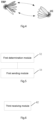
- Fig. 5 is a structural block diagram of a signal sending apparatus according to embodiments of the present disclosure. As shown in Fig. 5 , the apparatus includes a first determination module and a first sending module.
- the first determination module 52 is configured to determine a plurality of target beams.
- the first sending module 54 is configured to send a random access signal to a first node based on resources respectively corresponding to the plurality of target beams.
- the first determination module 52 is configured to determine the plurality of target beams through at least one of the following manners.
- a downlink channel is detected, and the plurality of target beams are selected based on detection results; a downlink signal is measured, and the plurality of target beams are selected based on measurement results; the plurality of target beams are selected from stored beams; the plurality of target beams are acquired from a plurality of beams configured by the first node; or a target resource group is selected from a plurality of resource groups configured, and the plurality of target beams are selected from a plurality of beams corresponding to the target resource group.
- the first sending module 54 includes a first determination unit, a second determination unit, and a first sending unit.
- the first determination unit is configured to determine a transmission power for sending the random access signal on the target beam.
- the second determination unit is configured to determine a first beam from the plurality of target beams based on the transmission power. There is one or more first beams, and the number of the first beams is less than or equal to the number of the target beams.
- the first sending unit is configured to send the random access signal on a resource corresponding to the first beam.
- the second determination unit includes a determination sub-unit.
- the determination sub-unit is configured to determine the corresponding target beam of which the transmission power is less than or equal to a first threshold as the first beam.
- the apparatus further includes an acquisition module and a second sending module.
- the acquisition module is configured to send the random access signal to the first node based on the resources respectively corresponding to the plurality of target beams, and then acquire a first response message sent by the first node.
- the second sending module is configured to send an uplink message to the first node based on an uplink channel resource configured by uplink channel configuration information in the first response message.
- the uplink message includes at least one of the following information: first indication information; identification information of a second node sending the uplink message.
- the first indication information is configured to indicate whether to use a first effective beam, the first effective beam is a target beam for a random access signal corresponding to the first response message, and a beam corresponding to the first response message is a second effective beam.
- the apparatus further includes a first termination module and a third sending module.
- the first termination module is configured to send the uplink message to the first node, and then terminate sending of a second response message to the second node on a resource corresponding to the second effective beam when the first node determines that the second node no longer uses the first effective beam based on the first indication information in the received uplink message.
- the third sending module is configured to send the second response message to the second node on the resource corresponding to the second effective beam when the first node determines that the second node uses the first effective beam based on the first indication information in the received uplink message.
- the second response message is a response message of the uplink message.
- the first node includes a first receiving module and a fourth sending module.
- the first receiving module is configured to receive the uplink message.
- the fourth sending module is configured to, when the first indication information included in at least one uplink message received within a time window indicates that the first effective beam is no longer used, select, by the first node, at least one first effective beam among the first effective beams no longer in use and indicated by the second node, and continuously send the second response message to the second node on a resource corresponding to the second effective beam corresponding to the at least one first effective beam selected.
- the second response message is a response message of the uplink message.
- the apparatus further includes at least one of the followings: a first confirmation module, a second confirmation module, a first detection module, or a second detection module.
- the first confirmation module is configured to send the uplink message to the first node, and then confirm the abandonment of the use of the first effective beam when indicating that a target downlink channel sent to the second node by the first node is not received on the resource corresponding to the second effective beam corresponding to the first effective beam not in use.
- the second confirmation module is configured to confirm not to continue detecting the target downlink channel on the resource corresponding to the second effective beam corresponding to the first effective beam when indicating that the target downlink channel sent to the second node by the first node is received on the resource corresponding to the second effective beam corresponding to the first effective beam not in use and control information in the target downlink channel comprises confirmation information not using the first effective beam.
- the first detection module is configured to continuously detect the second response message according to scheduling information of the second response message in the target downlink channel when indicating that the target downlink channel sent by the first node is received on the resource corresponding to the second effective beam corresponding to the first effective beam not in use and the control information in the target downlink channel comprises information using the first effective beam.
- the second detection module is configured to continuously detect the second response message according to the scheduling information when indicating that the target downlink channel sent by the first node is received on the resource corresponding to the second effective beam corresponding to the first effective beam not in use, the control information in the target downlink channel comprises the scheduling information of the second response message, and the scheduling information is in a valid state.
- the second sending module includes a selection unit and a second sending unit.
- the selection unit is configured to select one or more first response messages from the acquired first response messages.
- the second sending unit is configured to send the uplink message to the first node through the uplink channel resource configured by the uplink channel configuration information in the selected first response message.
- the second sending module includes a third determination unit and a third sending unit.
- the third determination unit is configured to determine the uplink message that does not need to be sent on a resource corresponding to the first effective beam when at least one of the following rules is met: the uplink message with a transmission power exceeding a second threshold being sent on the resource corresponding to the first effective beam; the size of the configured resource of the uplink message not meeting a first requirement; the channel quality performance of the received first response message not meeting a second requirement.
- the third sending unit is configured to send uplink messages other than the uplink message that does not need to be sent to the first node.
- the apparatus further includes a second receiving module.
- the second receiving module is configured to send the uplink message to the first node, then receive a target downlink channel sent by the first node, and determine whether to continuously use the first effective beam based on the target downlink channel.
- the second response message is no longer detected when the target downlink channel indicates that the first effective beam is no longer used; the second response message is continuously detected when the target downlink channel indicates that the first effective beam needs to be continuously used; and the second response message is a response message of the uplink message.
- the acquisition module includes a first detection unit and a second detection unit.
- the first detection unit is configured to detect a target downlink channel sent by the first node within a target time window after sending the random access signal.
- Target control information of the target downlink channel carries scheduling information of the first response message.
- the second detection unit is configured to detect and receive the first response message based on the scheduling information of the first response message.
- the apparatus further includes a second termination module, configured to acquire the first response message returned by the first node based on the received random access signal, and then terminate continuous detection of the target downlink channel within the target time window.
- Fig. 6 is a structural block diagram of a signal receiving apparatus according to embodiments of the present disclosure. As shown in Fig. 6 , the apparatus includes a third receiving module.
- the third receiving module 62 is configured to receive a random access signal sent by a second node on resources respectively corresponding to a plurality of target beams.
- the plurality of target beams are beams that are determined by the second node.
- the plurality of target beams are determined by the second node through at least one of the following manners: measuring a downlink signal, and selecting the plurality of target beams based on measurement results; selecting the plurality of target beams from stored beams; acquiring the plurality of target beams from a plurality of beams configured by the first node; or selecting a target resource group from a plurality of resource groups configured, and selecting the plurality of target beams from a plurality of beams corresponding to the target resource group.
- the third receiving module 62 includes a first determination unit, a second receiving unit.
- the second receiving unit is configured to receive the random access signal sent by the second node on a resource corresponding to a first beam.
- the first beam is determined by the second node through the following manners: determining a transmission power for sending the random access signal on the target beam; and determining the first beam from the plurality of target beams based on the transmission power, where there is one or more first beams, and the number of the first beams is less than or equal to the number of the target beams.
- the second node determines the first beam from the plurality of target beams based on the transmission power by the following manner: determining the corresponding target beam of which the transmission power is less than or equal to a first threshold as the first beam.
- the apparatus further includes a returning module.
- the returning module is configured to receive the random access signal sent by the second node on resources respectively corresponding to the plurality of target beams, and then return a first response message to the second node based on the received random access signal.
- the first response message is configured to instruct the second node to return an uplink message based on an uplink channel resource configured by uplink channel configuration information in the first response message, and the uplink message includes at least one of the following information: first indication information; identification information of a second node sending the uplink message.
- the first indication information is configured to indicate whether to use a first effective beam, the first effective beam is a target beam for a random access signal corresponding to the first response message, and a beam corresponding to the first response message is a second effective beam.
- the apparatus further includes a third termination module and a processing module.
- the third termination module is configured to terminate sending of a second response message to the second node on a resource corresponding to the second effective beam when determining that the second node no longer uses the first effective beam based on the first indication information in the received uplink message.
- the processing module is configured to send the second response message to the second node on the resource corresponding to the second effective beam when determining that the second node uses the first effective beam based on the first indication information in the received uplink message.
- the second response message is a response message of the uplink message.
- the apparatus further includes a fourth receiving module and a fifth sending module.
- the fourth receiving module is configured to receive the uplink message.
- the fifth sending module is configured to, when the first indication information included in at least one uplink message received within a time window indicates that the first effective beam is no longer used, select at least one first effective beam among the first effective beams no longer in use and indicated by the second node, and continuously send the second response message to the second node on a resource corresponding to the second effective beam corresponding to the at least one first effective beam selected.
- the second response message is a response message of the uplink message.
- the apparatus further includes a fifth receiving module.
- the fifth receiving module is configured to receive the uplink message sent by the second node through the uplink channel resource configured by the uplink channel configuration information in one or more first response messages selected.
- the one or more first response messages selected are selected by the second node from the acquired first response messages.
- the apparatus further includes a sixth sending module.
- the sixth sending module is configured to send a target downlink channel to the second node to indicate whether the second node continuously uses the first effective beam. When it indicates that the second node no longer uses the first effective beam, the second node does not continue to detect a second response message; when it indicates that the second node needs to continuously use the first effective beam, the second node continuously detects the second response message; and the second response message is a response message of the uplink message.
- each of the above modules may be implemented by software or hardware. For the latter, it may be implemented in the following manners, but is not limited to the follow: the above modules are all located in a same processor; or the above modules are located in different processors in any combination.
- An embodiment of the present disclosure further provides a computer-readable storage medium.
- the computer-readable storage medium stores a computer program. Steps in any one of the above method embodiments are executed when the computer program is configured to operate.
- the computer-readable storage medium may include, but is not limited to, a USB flash disk, a Read-Only Memory (ROM), a Random Access Memory (RAM), and various media that can store computer programs, such as a mobile hard disk, a magnetic disk, or an optical disk.
- a USB flash disk a Read-Only Memory (ROM), a Random Access Memory (RAM), and various media that can store computer programs, such as a mobile hard disk, a magnetic disk, or an optical disk.
- ROM Read-Only Memory
- RAM Random Access Memory
- An embodiment of the present disclosure further provides an electronic apparatus.
- the electronic apparatus includes a memory and a processor.
- the memory is configured to store a computer program.
- the processor is configured to run the computer program to execute steps in any one of method embodiments described above.
- the electronic apparatus may further include a transmission device and an input/output device.
- the transmission device is connected to the processor.
- the input/output device is connected to the processor.
- modules or steps of the present disclosure may be implemented by a general computing device, and may also be gathered together on a single computing device or distributed in network composed of multiple computing devices.
- the above mentioned modules or steps of the present application may be implemented with program codes executable by the computing device, so that may be stored in a storage device for execution by the computing device, and in some cases, the steps shown or described may be performed in a different sequence than herein, or can be fabricated into individual integrated circuit modules respectively, or multiple modules or steps thereof are fabricated into a single integrated circuit module for implementation. In this way, the present disclosure is not limited to any specific combination of hardware and software.
Landscapes
- Engineering & Computer Science (AREA)
- Computer Networks & Wireless Communication (AREA)
- Signal Processing (AREA)
- Mobile Radio Communication Systems (AREA)
Applications Claiming Priority (2)
| Application Number | Priority Date | Filing Date | Title |
|---|---|---|---|
| CN202210591041.7A CN117202387A (zh) | 2022-05-27 | 2022-05-27 | 信号的发送方法及装置、信号的接收方法及装置 |
| PCT/CN2023/092589 WO2023226732A1 (fr) | 2022-05-27 | 2023-05-06 | Procédé et appareil d'émission de signal, et procédé et appareil de réception de signal |
Publications (2)
| Publication Number | Publication Date |
|---|---|
| EP4498751A1 true EP4498751A1 (fr) | 2025-01-29 |
| EP4498751A4 EP4498751A4 (fr) | 2025-08-27 |
Family
ID=88918391
Family Applications (1)
| Application Number | Title | Priority Date | Filing Date |
|---|---|---|---|
| EP23810805.4A Pending EP4498751A4 (fr) | 2022-05-27 | 2023-05-06 | Procédé et appareil d?émission de signal, et procédé et appareil de réception de signal |
Country Status (4)
| Country | Link |
|---|---|
| EP (1) | EP4498751A4 (fr) |
| JP (1) | JP2025516923A (fr) |
| CN (1) | CN117202387A (fr) |
| WO (1) | WO2023226732A1 (fr) |
Family Cites Families (7)
| Publication number | Priority date | Publication date | Assignee | Title |
|---|---|---|---|---|
| KR102118693B1 (ko) * | 2013-06-24 | 2020-06-03 | 삼성전자주식회사 | 무선 통신 시스템에서 랜덤 액세스를 위한 적응적 송신 빔 패턴 결정 장치 및 방법 |
| CN106358216A (zh) * | 2015-07-17 | 2017-01-25 | 北京信威通信技术股份有限公司 | 一种多波束随机接入方法 |
| CN109151967B (zh) * | 2017-06-14 | 2020-07-21 | 维沃移动通信有限公司 | 一种上行多波束功率控制方法及终端 |
| CN109152081B (zh) * | 2017-06-16 | 2021-05-25 | 维沃移动通信有限公司 | 基于多波束的随机接入方法、网络侧设备及用户终端 |
| MX2020003907A (es) * | 2017-09-28 | 2020-10-05 | Ericsson Telefon Ab L M | Procedimiento de acceso aleatorio de haces multiples en ejecucion de traspaso. |
| CN109803339A (zh) * | 2017-11-16 | 2019-05-24 | 中国移动通信有限公司研究院 | 一种随机接入方法、终端及基站 |
| JP2021511710A (ja) * | 2018-01-11 | 2021-05-06 | テレフオンアクチーボラゲット エルエム エリクソン(パブル) | ビーム障害回復のためのコンテンションベースランダムアクセス |
-
2022
- 2022-05-27 CN CN202210591041.7A patent/CN117202387A/zh active Pending
-
2023
- 2023-05-06 EP EP23810805.4A patent/EP4498751A4/fr active Pending
- 2023-05-06 WO PCT/CN2023/092589 patent/WO2023226732A1/fr not_active Ceased
- 2023-05-06 JP JP2024569133A patent/JP2025516923A/ja active Pending
Also Published As
| Publication number | Publication date |
|---|---|
| CN117202387A (zh) | 2023-12-08 |
| WO2023226732A1 (fr) | 2023-11-30 |
| EP4498751A4 (fr) | 2025-08-27 |
| JP2025516923A (ja) | 2025-05-30 |
Similar Documents
| Publication | Publication Date | Title |
|---|---|---|
| CN112119597B (zh) | 波束失败确定方法、装置、设备及存储介质 | |
| EP3972352B1 (fr) | Procédé et appareil de surveillance d'espace de recherche | |
| AU2019248674B2 (en) | Delay reduction method and apparatus and computer readable storage medium | |
| EP3493626B1 (fr) | Procédé, appareil et système d'accès aléatoire, terminal et station de base | |
| US10736148B2 (en) | Random access method, random access device, and terminal | |
| CN111586878B (zh) | 通信方法及装置 | |
| EP3879873A1 (fr) | Procédé de transmission d'informations, dispositif de réseau, dispositif terminal et support d'informations | |
| CN109803443A (zh) | 用于随机接入的方法、终端设备和网络设备 | |
| US12501347B2 (en) | Signal transmission methods and apparatuses, nodes, and storage media | |
| CN120786678A (zh) | 物理下行控制信道pdcch监测方法、装置及终端 | |
| WO2023143269A1 (fr) | Procédé et appareil de communication | |
| EP4084540A1 (fr) | Procédé et appareil pour la transmission d'un préambule d'accès aléatoire | |
| US12538149B2 (en) | Beam failure recovery method and apparatus, and device | |
| KR20240017345A (ko) | 무선 네트워크에서의 커버리지 향상을 위한 방법 및 시스템 | |
| US20200314733A1 (en) | Communications Method, Terminal Device and Network Device | |
| CN116112134A (zh) | 随机接入方法、装置、终端及网络侧设备 | |
| CN111819814B (zh) | 通信方法、装置、网络侧设备、终端和存储介质 | |
| EP3910988B1 (fr) | Procédé et appareil de transmission d'informations de contrôle | |
| EP4694439A1 (fr) | Procédé et appareil de communication | |
| EP4280744A1 (fr) | Procédé d'attribution de ressources, procédé de sélection de ressources, dispositif et support de stockage | |
| EP4482245A1 (fr) | Procédé et appareil de détermination de ressources, dispositif, et support de stockage | |
| EP2999285B1 (fr) | Procédé de transmission de signal dans un service de proximité de dispositif à dispositif, station de base et équipement utilisateur | |
| EP4498751A1 (fr) | Procédé et appareil d?émission de signal, et procédé et appareil de réception de signal | |
| US20240080907A1 (en) | Communication method and apparatus | |
| EP4277418B1 (fr) | Procédé d'accès aléatoire, procédé de commande d'accès, et terminal, point d'accès et support de stockage |
Legal Events
| Date | Code | Title | Description |
|---|---|---|---|
| STAA | Information on the status of an ep patent application or granted ep patent |
Free format text: STATUS: THE INTERNATIONAL PUBLICATION HAS BEEN MADE |
|
| PUAI | Public reference made under article 153(3) epc to a published international application that has entered the european phase |
Free format text: ORIGINAL CODE: 0009012 |
|
| STAA | Information on the status of an ep patent application or granted ep patent |
Free format text: STATUS: REQUEST FOR EXAMINATION WAS MADE |
|
| 17P | Request for examination filed |
Effective date: 20241022 |
|
| AK | Designated contracting states |
Kind code of ref document: A1 Designated state(s): AL AT BE BG CH CY CZ DE DK EE ES FI FR GB GR HR HU IE IS IT LI LT LU LV MC ME MK MT NL NO PL PT RO RS SE SI SK SM TR |
|
| RIC1 | Information provided on ipc code assigned before grant |
Ipc: H04B 7/06 20060101ALI20250430BHEP Ipc: H04W 74/08 20240101AFI20250430BHEP |
|
| A4 | Supplementary search report drawn up and despatched |
Effective date: 20250729 |
|
| RIC1 | Information provided on ipc code assigned before grant |
Ipc: H04W 74/08 20240101AFI20250723BHEP Ipc: H04B 7/06 20060101ALI20250723BHEP |
|
| DAV | Request for validation of the european patent (deleted) | ||
| DAX | Request for extension of the european patent (deleted) |