EP4501331A1 - Mittel zur induzierung der proliferation oder differenzierung von chondrozyten - Google Patents
Mittel zur induzierung der proliferation oder differenzierung von chondrozyten Download PDFInfo
- Publication number
- EP4501331A1 EP4501331A1 EP23780694.8A EP23780694A EP4501331A1 EP 4501331 A1 EP4501331 A1 EP 4501331A1 EP 23780694 A EP23780694 A EP 23780694A EP 4501331 A1 EP4501331 A1 EP 4501331A1
- Authority
- EP
- European Patent Office
- Prior art keywords
- chondrocyte
- cartilage
- differentiation
- salt
- proliferation
- Prior art date
- Legal status (The legal status is an assumption and is not a legal conclusion. Google has not performed a legal analysis and makes no representation as to the accuracy of the status listed.)
- Pending
Links
Images




Classifications
-
- A—HUMAN NECESSITIES
- A61—MEDICAL OR VETERINARY SCIENCE; HYGIENE
- A61K—PREPARATIONS FOR MEDICAL, DENTAL OR TOILETRY PURPOSES
- A61K31/00—Medicinal preparations containing organic active ingredients
- A61K31/66—Phosphorus compounds
- A61K31/662—Phosphorus acids or esters thereof having P—C bonds, e.g. foscarnet, trichlorfon
- A61K31/663—Compounds having two or more phosphorus acid groups or esters thereof, e.g. clodronic acid, pamidronic acid
-
- A—HUMAN NECESSITIES
- A61—MEDICAL OR VETERINARY SCIENCE; HYGIENE
- A61P—SPECIFIC THERAPEUTIC ACTIVITY OF CHEMICAL COMPOUNDS OR MEDICINAL PREPARATIONS
- A61P19/00—Drugs for skeletal disorders
-
- A—HUMAN NECESSITIES
- A61—MEDICAL OR VETERINARY SCIENCE; HYGIENE
- A61P—SPECIFIC THERAPEUTIC ACTIVITY OF CHEMICAL COMPOUNDS OR MEDICINAL PREPARATIONS
- A61P19/00—Drugs for skeletal disorders
- A61P19/02—Drugs for skeletal disorders for joint disorders, e.g. arthritis, arthrosis
-
- A—HUMAN NECESSITIES
- A61—MEDICAL OR VETERINARY SCIENCE; HYGIENE
- A61P—SPECIFIC THERAPEUTIC ACTIVITY OF CHEMICAL COMPOUNDS OR MEDICINAL PREPARATIONS
- A61P19/00—Drugs for skeletal disorders
- A61P19/04—Drugs for skeletal disorders for non-specific disorders of the connective tissue
-
- C—CHEMISTRY; METALLURGY
- C12—BIOCHEMISTRY; BEER; SPIRITS; WINE; VINEGAR; MICROBIOLOGY; ENZYMOLOGY; MUTATION OR GENETIC ENGINEERING
- C12N—MICROORGANISMS OR ENZYMES; COMPOSITIONS THEREOF; PROPAGATING, PRESERVING, OR MAINTAINING MICROORGANISMS; MUTATION OR GENETIC ENGINEERING; CULTURE MEDIA
- C12N5/00—Undifferentiated human, animal or plant cells, e.g. cell lines; Tissues; Cultivation or maintenance thereof; Culture media therefor
- C12N5/0018—Culture media for cell or tissue culture
-
- C—CHEMISTRY; METALLURGY
- C12—BIOCHEMISTRY; BEER; SPIRITS; WINE; VINEGAR; MICROBIOLOGY; ENZYMOLOGY; MUTATION OR GENETIC ENGINEERING
- C12N—MICROORGANISMS OR ENZYMES; COMPOSITIONS THEREOF; PROPAGATING, PRESERVING, OR MAINTAINING MICROORGANISMS; MUTATION OR GENETIC ENGINEERING; CULTURE MEDIA
- C12N5/00—Undifferentiated human, animal or plant cells, e.g. cell lines; Tissues; Cultivation or maintenance thereof; Culture media therefor
- C12N5/06—Animal cells or tissues; Human cells or tissues
- C12N5/0602—Vertebrate cells
- C12N5/0652—Cells of skeletal and connective tissues; Mesenchyme
- C12N5/0655—Chondrocytes; Cartilage
-
- C—CHEMISTRY; METALLURGY
- C12—BIOCHEMISTRY; BEER; SPIRITS; WINE; VINEGAR; MICROBIOLOGY; ENZYMOLOGY; MUTATION OR GENETIC ENGINEERING
- C12N—MICROORGANISMS OR ENZYMES; COMPOSITIONS THEREOF; PROPAGATING, PRESERVING, OR MAINTAINING MICROORGANISMS; MUTATION OR GENETIC ENGINEERING; CULTURE MEDIA
- C12N2501/00—Active agents used in cell culture processes, e.g. differentation
- C12N2501/999—Small molecules not provided for elsewhere
-
- C—CHEMISTRY; METALLURGY
- C12—BIOCHEMISTRY; BEER; SPIRITS; WINE; VINEGAR; MICROBIOLOGY; ENZYMOLOGY; MUTATION OR GENETIC ENGINEERING
- C12N—MICROORGANISMS OR ENZYMES; COMPOSITIONS THEREOF; PROPAGATING, PRESERVING, OR MAINTAINING MICROORGANISMS; MUTATION OR GENETIC ENGINEERING; CULTURE MEDIA
- C12N2506/00—Differentiation of animal cells from one lineage to another; Differentiation of pluripotent cells
- C12N2506/13—Differentiation of animal cells from one lineage to another; Differentiation of pluripotent cells from connective tissue cells, from mesenchymal cells
Definitions
- the present application claims priority to Japanese patent application No. 2022-061383 description filed on March 31, 2022 (the entire disclosure thereof is incorporated in the present description by reference).
- the present invention relates to an agent for inducing proliferation or differentiation of a chondrocyte and a method for inducing proliferation or differentiation of a chondrocyte.
- the invention provides a novel agent for inducing proliferation or differentiation of a chondrocyte containing a compound which has not been known so far to have the capability of inducing proliferation or differentiation of a chondrocyte as an active ingredient.
- Item 1 An agent for inducing proliferation or differentiation of a chondrocyte containing a compound represented by the general formula (1) or a salt thereof [wherein in the formula, R 1 represents a hydrocarbon group of C1 to C5 which may be substituted, R 2 represents hydrogen or a hydroxy group, and n represents an integer of 0 to 3].
- Item 3 The prophylactic or therapeutic agent according to item 2, wherein the disorder which can be treated by induction of proliferation or differentiation of a chondrocyte is osteoarthritis, inflammatory arthritis, cartilage damage, congenital cartilage defect, an age-related decrease in articular cartilage or chondrodystrophy.
- Examples of the salt of the compound (1), which is the active ingredient of the invention include a salt with a base.
- Specific examples of the salt with a base include an alkali metal or alkaline earth metal salt such as a sodium salt, a potassium salt and a calcium salt.
- a salt with a base such as an alkali metal salt is preferable, and a sodium salt is further preferable.
- a disodium salt is preferable, and disodium [4-(methylthio)phenylthio]-methanebisphosphonate (disodium dihydrogen[4(methylthio)pheylthio]methanebisphosphonate, abbreviated to as MPMBP) is particularly preferable.
- Examples of the solvent which forms a solvate include alcohols such as ethanol and propanol, organic acids such as acetic acid, esters such as ethyl acetate, ethers such as tetrahydrofuran and diethyl ether, ketones such as acetone, and DMSO.
- alcohols such as ethanol and propanol
- organic acids such as acetic acid
- esters such as ethyl acetate
- ethers such as tetrahydrofuran and diethyl ether
- ketones such as acetone
- DMSO DMSO.
- One kind of these solvents alone or a mixed solvent of two or more kinds thereof can be used.
- Examples of the disorder which can be treated by induction of proliferation or differentiation of a chondrocyte include arthritis such as osteoarthritis and inflammatory arthritis, and congenital cartilage defect or cartilage defect due to injury or inflammation.
- Examples of the cartilage are the cartilage in the nose, ears, jaws, knees, hip joints, elbows, shoulders, hands, feet, spine and the like.
- the arthritis is, for example, arthritis of the jaws, knees, hip joints, elbows or the like and is typically temporomandibular disorder, knee arthritis or the like.
- the "prophylactic or therapeutic agent for a disorder which can be treated by induction of proliferation or differentiation of a chondrocyte of the invention” is sometimes simply referred to as the "prophylactic or therapeutic agent of the invention”.
- the compound (1) or the salt thereof itself, which is the active ingredient may be used as the prophylactic or therapeutic agent of the invention or used as a composition combined with various carriers which are acceptable for a pharmaceutical or food application or the like (for example, an isotonizing agent, a chelating agent, a stabilizer, a pH regulator, an antiseptic, an antioxidant, a solubilizer, a thickener or the like).
- various carriers which are acceptable for a pharmaceutical or food application or the like (for example, an isotonizing agent, a chelating agent, a stabilizer, a pH regulator, an antiseptic, an antioxidant, a solubilizer, a thickener or the like).
- isotonizing agent examples include saccharides such as glucose, trehalose, lactose, fructose, mannitol, xylitol and sorbitol, polyhydric alcohols such as glycerin, polyethylene glycol and propylene glycol, and inorganic salts such as sodium chloride, potassium chloride and calcium chloride.
- saccharides such as glucose, trehalose, lactose, fructose, mannitol, xylitol and sorbitol
- polyhydric alcohols such as glycerin
- polyethylene glycol and propylene glycol examples of the isotonizing agent
- inorganic salts such as sodium chloride, potassium chloride and calcium chloride.
- Examples of the stabilizer include sodium hydrogen sulfite.
- antiseptic examples include sorbic acid, potassium sorbate, paraoxybenzoate esters such as methyl paraoxybenzoate, ethyl paraoxybenzoate, propyl paraoxybenzoate and butyl paraoxybenzoate, quaternary ammonium salts such as chlorhexidine gluconate, benzalkonium chloride, benzethonium chloride and cetylpyridinium chloride, alkylpolyaminoethyl glycine, chlorobutanol, Polyquad, polyhexamethylene biguanide, and chlorhexidine.
- paraoxybenzoate esters such as methyl paraoxybenzoate, ethyl paraoxybenzoate, propyl paraoxybenzoate and butyl paraoxybenzoate
- quaternary ammonium salts such as chlorhexidine gluconate, benzalkonium chloride, benzethonium chloride and cetylpyridinium chloride, alkylpolya
- solubilizer examples include sodium benzoate, glycerin, D-sorbitol, glucose, propylene glycol, hydroxypropyl methylcellulose, polyvinylpyrrolidone, macrogol, and D-mannitol.
- sodium benzoate glycerin
- D-sorbitol glucose
- propylene glycol propylene glycol
- hydroxypropyl methylcellulose polyvinylpyrrolidone
- macrogol macrogol
- D-mannitol D-mannitol
- thickener examples include polyethylene glycol, methylcellulose, ethylcellulose, carmellose sodium, xanthan gum, chondroitin sodium sulfate, hydroxyethylcellulose, hydroxypropylcellulose, hydroxypropylmethylcellulose, polyvinylpyrrolidone, and polyvinyl alcohol.
- these thickeners alone or a combination of two or more kinds thereof can be used.
- composition of the invention may be used in combination with a method used for preventing or treating a disorder which can be treated by induction of proliferation or differentiation of a chondrocyte, such as the methods below.
- Combination use with a cartilage regenerative therapy, transplantation or the like such as filling of a defect part with chondrocytes and a cartilage matrix or with a formed carrier containing these.
- TGF ⁇ superfamily BMP, IGF, VEGF, CNP, FGF, a proteoglycan, type II collagen, PTHrP or the like.
- combination use with an antirheumatic drug or an immunosuppressive agent used for strong inflammation, rheumatism or the like a biopharmaceutical (fusion protein of an anti-TNF ⁇ monoclonal antibody or a soluble TNF ⁇ receptor and human IgG), a JAK inhibitor or the like.
- composition of the invention may further contain a component used for the combination uses in addition to the compound (1) or the salt thereof.
- a component used for the combination uses in addition to the compound (1) or the salt thereof.
- one kind thereof alone or a combination of two or more kinds thereof can be used.
- the amount of the compound (1) or the salt thereof contained in the composition is not particularly limited and can be appropriately set from the conditions of, for example, 90 mass% or more, 70 mass% or more, 50 mass% or more, 30 mass% or more, 10 mass% or more, 5 mass% or more, 1 mass% or more or the like.
- the dosage of the compound (1) or the salt thereof differs with the route of administration, the age of the patient, the body weight, the symptom or the like and cannot be generally specified, but the dosage may be such an amount that the daily dosage for an adult is generally about 5000 mg or less, preferably about 1000 mg or less.
- the lower limit of the dosage of the compound (1) or the salt thereof is not particularly limited, and for example, the dosage of the compound (1) can be appropriately set in the range of a daily dosage for an adult of generally 0.1 mg or more, preferably 0.5 mg or more.
- one preparation should contain the amount, and in the case of administration three times a day, one preparation should contain one third of the amount.
- the prophylactic or therapeutic agent of the invention is administered to a mammal or the like.
- the mammal include human, monkey, mouse, rat, rabbit, cat, dog, pig, cattle, horse, sheep or the like.
- examples of the food include dairy products such as yoghurt and milk beverage, soups, jellies, juices, coffee drinks, tea drinks, cookies, rice crackers, and cakes.
- the amount of the compound (1) or the salt thereof contained in the food is not particularly limited as long as it is an acceptable amount.
- the prophylactic or therapeutic agent of the invention may be in the form of tablets, powder, granules or the like. In the case of such a form, the amount of the compound (1) or the salt thereof contained in the tablets, the powder, the granules or the like can be appropriately set.
- the compound (1) or the salt thereof, which is the active ingredient of the invention is known to have the effect of suppressing the function of osteoclasts that absorb the bone (NPL 1), and MPMBP, of the compound (1) or the salt thereof, is known to also have the action of promoting osteogenesis in addition to the effect.
- the effect of inducing proliferation or differentiation of a chondrocyte has not been known at all.
- cartilage and bone are tissues which exist in close parts but are completely different in terms of the functions and the components. For example, the two are functionally different because while cartilage is a tissue having excellent resistance to mechanical pressure, a bone is a hard tissue having excellent flex resistance.
- the cell components of cartilage are chondroblasts and chondrocytes
- the cell components of a bone are osteocytes, osteoblasts and osteoclasts.
- the matrix extra cellular matrix
- the collagen fibers in cartilage are mainly type II collagen
- the collagen fibers in the bone are mainly type I collagen, and the two are different also because the bone contains a large amount of inorganic calcium salts (calcium phosphate, calcium carbonate and the like).
- the two are different structurally, for example, because cartilage does not basically have developed vessels and receives nutrients through passive diffusion from the cartilage surface and because chondrocytes are dispersed in cavities (cartilage cavities) surrounded by the matrix that the chondrocytes themselves have formed and maintain the matrix while the inside of the bone is filled with the bone marrow.
- Mesenchymal stem cells are known to have the ability of differentiating into osteocytes, chondrocytes, adipocytes and the like (NPL 3), and the differentiation is directed by a different specific transcription factor.
- MPMBP is known to also have the action of promoting osteogenesis (NPL 2). Accordingly, it is expected that differentiation from mesenchymal stem cells into osteoblasts and bone tissue is promoted by the addition of MPMBP or the like and that differentiation into cartilage is thus suppressed.
- the present inventors have found unexpectedly that proliferation or differentiation of chondrocytes is induced. The effect of proliferating or differentiating chondrocytes of the compound (1) or the salt thereof in the invention cannot be expected from the conventional arts.
- the active ingredient, the preparation form, the used amount or the like of the agent for inducing proliferation or differentiation of a chondrocyte can be selected in the similar manners to those of the prophylactic or therapeutic agent of the invention.
- the agent for inducing proliferation or differentiation of a chondrocyte of the invention can also induce proliferation or differentiation of a chondrocyte in vitro by adding to a mesenchymal stem cell and/or a cartilage precursor cell.
- the invention also provides a method for inducing proliferation or differentiation of a chondrocyte including a step of causing the compound (1) or the salt thereof to act on a mesenchymal stem cell and/or a cartilage precursor cell in vitro.
- the mesenchymal stem cell is a cell obtained from the cord blood, the bone marrow or the like or the like.
- the cartilage precursor cell is a cell obtained by induced differentiation from a mesenchymal stem cell or the like. These cells may be known cells, those produced in accordance with a known method or the like. Commercial cells or the like may be used as these cells.
- the mesenchymal stem cell and/or the cartilage precursor cell may be used in the state of being arranged in a solution such as a medium.
- a medium which is generally used for culturing animal cells can be appropriately used. Examples of such a medium include DMEM medium, ⁇ MEM medium, RPMI medium, and BJG medium.
- serum, a buffer, a growth factor, a differentiation factor, a stabilizer or the like may be appropriately added to the medium.
- the recovery step a method which is used in the field of cell culture to which the invention belongs can be widely used.
- the method used for the recovery step is centrifugation, filtration, adsorption, forming in the form of a sheet, forming with a 3D printer or the like.
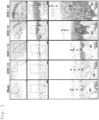
- Typical tissue images of the mandibular condylar cartilage which was thickened in a dose dependent manner by the administration of MPMBP are shown. A dose-dependent increase in the numbers of the hypertrophic chondrocytes and the empty lacunae is observed.
- Tissue images of the toluidine blue-stained mandibular condylar cartilage are shown in Fig. 3 .
- the magnification is x4, x10 and x20 from the top.
- MPMBP was administered at 0 mg/kg/week (OVX + 0), 1.2 mg/kg/week (OVX + 1.2), 6 mg/kg/week (OVX + 6) or 30 mg/kg/week (OVX + 30).
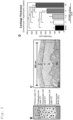
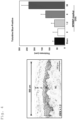
- Fig. 4 The area of the toluidine blue-positive cartilage matrix (surrounded by the dashed line) was measured with a width of 500 ⁇ m.
- MPMBP significantly increased the thickness of the toluidine blue-positive mandibular condylar cartilage matrix rich in proteoglycans in a dose dependent manner (OVX + 6 and OVX + 30).
- MPMBP significantly enhances the expression of proteoglycans in the mandibular condylar cartilage matrix which has been reduced after the OVX and that the thickness of the mandibular condylar cartilage matrix rich in proteoglycans is directly proportional to a dose-dependent increase in MPMBP.
- PCNA Proliferating cell nuclear antigen
- PCNA exists in the nuclei of proliferating cells, the nuclei are stained. There are many proliferating cells in the bone marrow, and many positive cells which emit red fluorescence in PCNA immunostaining are observed in the bone marrow. PCNA-positive proliferating cells are observed in the chondrocyte layer by the administration of MPMBP. On the other hand, PCNA-positive proliferating cells are not observed in the fibrous layer, the proliferating layer and the hypertrophic cartilage layer. PCNA-positive cells, which indicate proliferation, were observed in the chondrocyte layer of the mandibular condylar chondrocytes of the rats to which MPMBP was administered.
- ATDC5 cells were cultured at a cell density of 5 ⁇ 10 5 cells/35 mm dish.
- DMEM-Ham's F12 medium containing 5% FBS and 1% Pen/Strep was used as the culture solution. Adjustment was conducted to final concentrations of MPMBP of 10 ⁇ M (M10) and 100 ⁇ M (M100), clodronate of 10 ⁇ M (C10) and 100 ⁇ M (C100), zoledronate of 10 ⁇ M (Z10) and 100 ⁇ M (Z100) and a control (Vehicle), and the cells were cultured under the conditions of 5% CO 2 at 37°C. The medium was changed every three days. The results are shown in Fig. 6 .
- the number of cells decreased significantly in Z10 and Z100 compared to those of the control, C10, C100, M10 and M100 but increased in particular with M10 and M100 treatment.
- ATDC5 cells were cultured at a cell density of 5 ⁇ 10 5 cells/35 mm dish.
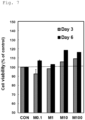
- DMEM-Ham's F12 medium containing 5% FBS and 1% Pen/Strep was used as the culture solution. Adjustment was conducted to final concentrations of MPMBP of 0.1 ⁇ M (M0.1), 1 ⁇ M (M1), 10 ⁇ M (M10) and 100 ⁇ M (M100) and a control (Vehicle), and the cells were cultured under the conditions of 5% CO 2 at 37°C. The medium was changed every three days. Alamar Blue assay was conducted after three days of culture or six days of culture. After incubation under the conditions of 37°C and 5% CO 2 for three hours, measurement was made with an excitation wavelength of 544 nm and a measurement wavelength of 590 nm. The results are shown in Fig. 7 .
- the difference is believed to be caused because the mandibular condylar cartilage is a non-load bearing bone to which no pressure is applied at rest and thus the mechanical environment is different from that of the tibia to which the body weight is applied.
- the mandibular condylar cartilage is cartilage generated in the joint part of the mandible formed through the process of a membrane bone while the tibia is a bone formed through the process of a cartilaginous bone, and thus, reactivity may be different. It was suggested that both cartilage tissues increase.
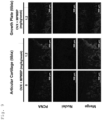
- PCNA exists in the nuclei of proliferating cells, the nuclei are stained. There are many proliferating cells in the bone marrow, and many positive cells which emit red fluorescence with PCNA immunostaining are observed in the bone marrow.
- PCNA-positive proliferating cells are observed in the chondrocyte layer in the surface layer of the articular cartilage and the growth plate cartilage of the tibia by the administration of MPMBP (1.2 mg/kg/week).
- MPMBP 1.2 mg/kg/week
- PCNA-positive proliferating cells are not observed in the cartilage layer of the OVX rats. It was suggested that chondrocytes of the articular cartilage and the growth plate cartilage of the tibia are proliferated by the administration of MPMBP.
- proliferation of a chondrocyte can be promoted, or differentiation can be induced using the compound (1) or a salt thereof. Accordingly, the invention is useful for prevention or treatment of a disorder which can be treated by induction of proliferation or differentiation of a chondrocyte. Moreover, the invention is also useful for test research of chondrocytes and the like.
Landscapes
- Health & Medical Sciences (AREA)
- Engineering & Computer Science (AREA)
- Life Sciences & Earth Sciences (AREA)
- Chemical & Material Sciences (AREA)
- Biomedical Technology (AREA)
- Organic Chemistry (AREA)
- Bioinformatics & Cheminformatics (AREA)
- General Health & Medical Sciences (AREA)
- Biotechnology (AREA)
- Wood Science & Technology (AREA)
- Zoology (AREA)
- Genetics & Genomics (AREA)
- Public Health (AREA)
- Medicinal Chemistry (AREA)
- Animal Behavior & Ethology (AREA)
- Pharmacology & Pharmacy (AREA)
- Veterinary Medicine (AREA)
- Rheumatology (AREA)
- Nuclear Medicine, Radiotherapy & Molecular Imaging (AREA)
- General Chemical & Material Sciences (AREA)
- Chemical Kinetics & Catalysis (AREA)
- Physical Education & Sports Medicine (AREA)
- General Engineering & Computer Science (AREA)
- Biochemistry (AREA)
- Microbiology (AREA)
- Cell Biology (AREA)
- Epidemiology (AREA)
- Immunology (AREA)
- Orthopedic Medicine & Surgery (AREA)
- Pharmaceuticals Containing Other Organic And Inorganic Compounds (AREA)
Applications Claiming Priority (2)
| Application Number | Priority Date | Filing Date | Title |
|---|---|---|---|
| JP2022061383A JP2023151646A (ja) | 2022-03-31 | 2022-03-31 | 軟骨細胞の増殖又は分化誘導剤 |
| PCT/JP2023/012799 WO2023190685A1 (ja) | 2022-03-31 | 2023-03-29 | 軟骨細胞の増殖又は分化誘導剤 |
Publications (2)
| Publication Number | Publication Date |
|---|---|
| EP4501331A1 true EP4501331A1 (de) | 2025-02-05 |
| EP4501331A4 EP4501331A4 (de) | 2025-07-30 |
Family
ID=88202027
Family Applications (1)
| Application Number | Title | Priority Date | Filing Date |
|---|---|---|---|
| EP23780694.8A Pending EP4501331A4 (de) | 2022-03-31 | 2023-03-29 | Mittel zur induzierung der proliferation oder differenzierung von chondrozyten |
Country Status (5)
| Country | Link |
|---|---|
| US (1) | US20250213597A1 (de) |
| EP (1) | EP4501331A4 (de) |
| JP (1) | JP2023151646A (de) |
| CN (1) | CN119212712A (de) |
| WO (1) | WO2023190685A1 (de) |
Family Cites Families (2)
| Publication number | Priority date | Publication date | Assignee | Title |
|---|---|---|---|---|
| WO2001035968A1 (en) * | 1999-11-19 | 2001-05-25 | Children's Medical Center Corporation | Methods for inducing chondrogenesis and producing de novo cartilage in vitro |
| EP2340841B1 (de) * | 2008-09-03 | 2016-11-09 | Tohoku University | Osteogenesepromoter mit [4-(methylthio)phenylthio]methanbisphosphonsäure oder pharmazeutisch akzeptablem salz daraus als wirkstoff |
-
2022
- 2022-03-31 JP JP2022061383A patent/JP2023151646A/ja active Pending
-
2023
- 2023-03-29 EP EP23780694.8A patent/EP4501331A4/de active Pending
- 2023-03-29 CN CN202380031865.1A patent/CN119212712A/zh active Pending
- 2023-03-29 US US18/852,169 patent/US20250213597A1/en active Pending
- 2023-03-29 WO PCT/JP2023/012799 patent/WO2023190685A1/ja not_active Ceased
Also Published As
| Publication number | Publication date |
|---|---|
| JP2023151646A (ja) | 2023-10-16 |
| WO2023190685A1 (ja) | 2023-10-05 |
| US20250213597A1 (en) | 2025-07-03 |
| EP4501331A4 (de) | 2025-07-30 |
| CN119212712A (zh) | 2024-12-27 |
Similar Documents
| Publication | Publication Date | Title |
|---|---|---|
| AU2014251087B2 (en) | Formulations of oxabicycloheptanes and oxabicycloheptenes | |
| KR20130128451A (ko) | 지방이상증의 치료 | |
| US11213572B2 (en) | Cartilage regeneration composition containing HAPLN1 as active ingredient | |
| CA2153213A1 (en) | Methods of inhibiting bone loss | |
| WO2021207828A1 (en) | Methods for treating cytokine release syndrome | |
| CN101848708A (zh) | 皮质类固醇用于治疗埃坡霉素或埃坡霉素衍生物诱导的腹泻 | |
| US20220313626A1 (en) | Small molecule inhibitors for treating cancer in a subject having tumors with high interstitial pressure | |
| EP4501331A1 (de) | Mittel zur induzierung der proliferation oder differenzierung von chondrozyten | |
| JP2005511721A (ja) | エポチロンを含む組成物およびカルチノイド症候群の治療のためのそれらの使用 | |
| CN117396198A (zh) | 改善和预防年龄相关性肌肉退化的方法 | |
| EP1642576B1 (de) | Verwendung von Pyrrolederivaten gegen Angstzustände | |
| WO1997002822A1 (en) | Drug for ameliorating brain diseases | |
| KR20210113240A (ko) | 신경 변성 질환의 예방 또는 치료약 | |
| JPWO2008018637A1 (ja) | 骨形成能を促進する機能性水 | |
| WO2015050160A1 (ja) | 副甲状腺ホルモンまたはその誘導体を有効成分とする筋の老化防止用医薬組成物 | |
| JP2023048160A (ja) | 破骨細胞分化抑制、筋肉量増加、運動機能改善、及び/又は筋力増強用組成物 | |
| JP5854492B2 (ja) | 軟骨細胞分化誘導促進剤 | |
| EP3476398B1 (de) | Vorbeugendes und/oder therapeutisches mittel für osteogenesis imperfecta und dergleichen | |
| TW202135807A (zh) | 組合 | |
| EP1485090B1 (de) | Kombinationspräparat aus epothilone derivate und imidazotetrazinone | |
| JPH1112175A (ja) | 白血病治療剤 | |
| WO2002102367A1 (en) | Pharmaceutical composition for prevention and treatment of joint arthritis and a screening method thereof | |
| JP5366386B2 (ja) | 神経細胞賦活及び神経伸長促進用組成物 | |
| JPH07324035A (ja) | 滑膜細胞増殖抑制剤及び慢性関節リウマチ治療剤 | |
| WO2025064491A1 (en) | Methods for fat reduction |
Legal Events
| Date | Code | Title | Description |
|---|---|---|---|
| STAA | Information on the status of an ep patent application or granted ep patent |
Free format text: STATUS: THE INTERNATIONAL PUBLICATION HAS BEEN MADE |
|
| PUAI | Public reference made under article 153(3) epc to a published international application that has entered the european phase |
Free format text: ORIGINAL CODE: 0009012 |
|
| STAA | Information on the status of an ep patent application or granted ep patent |
Free format text: STATUS: REQUEST FOR EXAMINATION WAS MADE |
|
| 17P | Request for examination filed |
Effective date: 20241031 |
|
| AK | Designated contracting states |
Kind code of ref document: A1 Designated state(s): AL AT BE BG CH CY CZ DE DK EE ES FI FR GB GR HR HU IE IS IT LI LT LU LV MC ME MK MT NL NO PL PT RO RS SE SI SK SM TR |
|
| DAV | Request for validation of the european patent (deleted) | ||
| DAX | Request for extension of the european patent (deleted) | ||
| A4 | Supplementary search report drawn up and despatched |
Effective date: 20250626 |
|
| RIC1 | Information provided on ipc code assigned before grant |
Ipc: A61K 31/663 20060101AFI20250620BHEP Ipc: A61P 19/00 20060101ALI20250620BHEP Ipc: A61P 19/02 20060101ALI20250620BHEP Ipc: A61P 19/08 20060101ALI20250620BHEP Ipc: A61P 19/04 20060101ALI20250620BHEP Ipc: C12N 5/077 20100101ALI20250620BHEP |