EP4501334A1 - Verfahren zur herstellung einer biopharmazeutischen arzneimittelsubstanz, system zur herstellung einer biopharmazeutischen arzneimittelsubstanz und biopharmazeutische arzneimittelsubstanz - Google Patents
Verfahren zur herstellung einer biopharmazeutischen arzneimittelsubstanz, system zur herstellung einer biopharmazeutischen arzneimittelsubstanz und biopharmazeutische arzneimittelsubstanz Download PDFInfo
- Publication number
- EP4501334A1 EP4501334A1 EP23781016.3A EP23781016A EP4501334A1 EP 4501334 A1 EP4501334 A1 EP 4501334A1 EP 23781016 A EP23781016 A EP 23781016A EP 4501334 A1 EP4501334 A1 EP 4501334A1
- Authority
- EP
- European Patent Office
- Prior art keywords
- culture supernatant
- supernatant liquid
- liquid
- culture
- intermediate container
- Prior art date
- Legal status (The legal status is an assumption and is not a legal conclusion. Google has not performed a legal analysis and makes no representation as to the accuracy of the status listed.)
- Pending
Links
Images





Classifications
-
- C—CHEMISTRY; METALLURGY
- C07—ORGANIC CHEMISTRY
- C07K—PEPTIDES
- C07K16/00—Immunoglobulins [IG], e.g. monoclonal or polyclonal antibodies
-
- A—HUMAN NECESSITIES
- A61—MEDICAL OR VETERINARY SCIENCE; HYGIENE
- A61K—PREPARATIONS FOR MEDICAL, DENTAL OR TOILETRY PURPOSES
- A61K35/00—Medicinal preparations containing materials or reaction products thereof with undetermined constitution
- A61K35/12—Materials from mammals; Compositions comprising non-specified tissues or cells; Compositions comprising non-embryonic stem cells; Genetically modified cells
-
- A—HUMAN NECESSITIES
- A61—MEDICAL OR VETERINARY SCIENCE; HYGIENE
- A61K—PREPARATIONS FOR MEDICAL, DENTAL OR TOILETRY PURPOSES
- A61K35/00—Medicinal preparations containing materials or reaction products thereof with undetermined constitution
- A61K35/12—Materials from mammals; Compositions comprising non-specified tissues or cells; Compositions comprising non-embryonic stem cells; Genetically modified cells
- A61K35/48—Reproductive organs
- A61K35/54—Ovaries; Ova; Ovules; Embryos; Foetal cells; Germ cells
-
- C—CHEMISTRY; METALLURGY
- C07—ORGANIC CHEMISTRY
- C07K—PEPTIDES
- C07K1/00—General methods for the preparation of peptides, i.e. processes for the organic chemical preparation of peptides or proteins of any length
-
- C—CHEMISTRY; METALLURGY
- C07—ORGANIC CHEMISTRY
- C07K—PEPTIDES
- C07K1/00—General methods for the preparation of peptides, i.e. processes for the organic chemical preparation of peptides or proteins of any length
- C07K1/14—Extraction; Separation; Purification
- C07K1/16—Extraction; Separation; Purification by chromatography
-
- C—CHEMISTRY; METALLURGY
- C12—BIOCHEMISTRY; BEER; SPIRITS; WINE; VINEGAR; MICROBIOLOGY; ENZYMOLOGY; MUTATION OR GENETIC ENGINEERING
- C12M—APPARATUS FOR ENZYMOLOGY OR MICROBIOLOGY; APPARATUS FOR CULTURING MICROORGANISMS FOR PRODUCING BIOMASS, FOR GROWING CELLS OR FOR OBTAINING FERMENTATION OR METABOLIC PRODUCTS, i.e. BIOREACTORS OR FERMENTERS
- C12M23/00—Constructional details, e.g. recesses, hinges
- C12M23/28—Constructional details, e.g. recesses, hinges disposable or single use
-
- C—CHEMISTRY; METALLURGY
- C12—BIOCHEMISTRY; BEER; SPIRITS; WINE; VINEGAR; MICROBIOLOGY; ENZYMOLOGY; MUTATION OR GENETIC ENGINEERING
- C12M—APPARATUS FOR ENZYMOLOGY OR MICROBIOLOGY; APPARATUS FOR CULTURING MICROORGANISMS FOR PRODUCING BIOMASS, FOR GROWING CELLS OR FOR OBTAINING FERMENTATION OR METABOLIC PRODUCTS, i.e. BIOREACTORS OR FERMENTERS
- C12M29/00—Means for introduction, extraction or recirculation of materials, e.g. pumps
- C12M29/16—Hollow fibers
-
- C—CHEMISTRY; METALLURGY
- C12—BIOCHEMISTRY; BEER; SPIRITS; WINE; VINEGAR; MICROBIOLOGY; ENZYMOLOGY; MUTATION OR GENETIC ENGINEERING
- C12M—APPARATUS FOR ENZYMOLOGY OR MICROBIOLOGY; APPARATUS FOR CULTURING MICROORGANISMS FOR PRODUCING BIOMASS, FOR GROWING CELLS OR FOR OBTAINING FERMENTATION OR METABOLIC PRODUCTS, i.e. BIOREACTORS OR FERMENTERS
- C12M29/00—Means for introduction, extraction or recirculation of materials, e.g. pumps
- C12M29/18—External loop; Means for reintroduction of fermented biomass or liquid percolate
-
- C—CHEMISTRY; METALLURGY
- C12—BIOCHEMISTRY; BEER; SPIRITS; WINE; VINEGAR; MICROBIOLOGY; ENZYMOLOGY; MUTATION OR GENETIC ENGINEERING
- C12M—APPARATUS FOR ENZYMOLOGY OR MICROBIOLOGY; APPARATUS FOR CULTURING MICROORGANISMS FOR PRODUCING BIOMASS, FOR GROWING CELLS OR FOR OBTAINING FERMENTATION OR METABOLIC PRODUCTS, i.e. BIOREACTORS OR FERMENTERS
- C12M3/00—Tissue, human, animal or plant cell, or virus culture apparatus
-
- C—CHEMISTRY; METALLURGY
- C12—BIOCHEMISTRY; BEER; SPIRITS; WINE; VINEGAR; MICROBIOLOGY; ENZYMOLOGY; MUTATION OR GENETIC ENGINEERING
- C12M—APPARATUS FOR ENZYMOLOGY OR MICROBIOLOGY; APPARATUS FOR CULTURING MICROORGANISMS FOR PRODUCING BIOMASS, FOR GROWING CELLS OR FOR OBTAINING FERMENTATION OR METABOLIC PRODUCTS, i.e. BIOREACTORS OR FERMENTERS
- C12M47/00—Means for after-treatment of the produced biomass or of the fermentation or metabolic products, e.g. storage of biomass
- C12M47/10—Separation or concentration of fermentation products
-
- C—CHEMISTRY; METALLURGY
- C12—BIOCHEMISTRY; BEER; SPIRITS; WINE; VINEGAR; MICROBIOLOGY; ENZYMOLOGY; MUTATION OR GENETIC ENGINEERING
- C12M—APPARATUS FOR ENZYMOLOGY OR MICROBIOLOGY; APPARATUS FOR CULTURING MICROORGANISMS FOR PRODUCING BIOMASS, FOR GROWING CELLS OR FOR OBTAINING FERMENTATION OR METABOLIC PRODUCTS, i.e. BIOREACTORS OR FERMENTERS
- C12M47/00—Means for after-treatment of the produced biomass or of the fermentation or metabolic products, e.g. storage of biomass
- C12M47/12—Purification
-
- C—CHEMISTRY; METALLURGY
- C12—BIOCHEMISTRY; BEER; SPIRITS; WINE; VINEGAR; MICROBIOLOGY; ENZYMOLOGY; MUTATION OR GENETIC ENGINEERING
- C12P—FERMENTATION OR ENZYME-USING PROCESSES TO SYNTHESISE A DESIRED CHEMICAL COMPOUND OR COMPOSITION OR TO SEPARATE OPTICAL ISOMERS FROM A RACEMIC MIXTURE
- C12P21/00—Preparation of peptides or proteins
- C12P21/02—Preparation of peptides or proteins having a known sequence of two or more amino acids, e.g. glutathione
Definitions
- the technology of the present disclosure relates to a method for producing an active pharmaceutical ingredient of a biopharmaceutical, a system for producing an active pharmaceutical ingredient of a biopharmaceutical, and an active pharmaceutical ingredient of a biopharmaceutical.
- a cell product such as an antibody is obtained by culturing a cell such as an antibody-producing cell in which an antibody gene is incorporated into Chinese Hamster Ovary cells (CHO cells), and an active pharmaceutical ingredient of a biopharmaceutical is obtained by purifying the product.
- CHO cells Chinese Hamster Ovary cells
- an active pharmaceutical ingredient of a biopharmaceutical is obtained by purifying the product.
- batch production in which a cell culture step and a cell product purification step are separately performed has been performed, but in recent years, continuous production has become mainstream instead of the batch production.
- the continuous production is a method in which a culture section where a culture step is performed, which includes a culture tank and the like, and a purification section where a purification step is performed, which includes a chromatography device and the like, are connected to each other physically, and the culture step and the purification step are continuously and consistently performed. According to the continuous production, quality and productivity of the active pharmaceutical ingredient can be significantly improved as compared with the batch production.
- JP2012-213772A and JP2020-529215A disclose a system for producing an active pharmaceutical ingredient of a biopharmaceutical by the continuous production.
- an intermediate container (referred to as a surge container or a surge bag in JP2012-213772A and JP2020-529215A ) is provided between a culture section and a purification section.
- the intermediate container temporarily stores a culture supernatant liquid containing a product, which is continuously sent out from the culture section.
- the culture supernatant liquid is sent from the intermediate container to the purification section at an appropriate timing.
- the intermediate container includes an inlet port through which the culture supernatant liquid flows from the culture section, and an outlet port through which the culture supernatant liquid flows toward the purification section.
- One embodiment according to the technology of the present disclosure provides a method for producing an active pharmaceutical ingredient of a biopharmaceutical, a system for producing an active pharmaceutical ingredient of a biopharmaceutical, and an active pharmaceutical ingredient of a biopharmaceutical, with which it is possible to suppress deterioration in quality of a product of a cell.
- an outflow rate of the culture supernatant liquid at the outlet port is higher than an inflow rate of the culture supernatant liquid at the inlet port, and in the purification section, operation is performed while the culture supernatant liquid flows out from the outlet port and the operation is stopped while the culture supernatant liquid does not flow out from the outlet port.
- the liquid amount is measured by measuring a weight of the intermediate container.
- the intermediate container is a bag manufactured by liquid-tightly bonding two resin-made sheets and is a bag used by being suspended from a hook, and the liquid amount is measured by measuring a weight of the intermediate container in a state of being suspended from the hook.
- the liquid amount is measured by detecting a position of a liquid surface of the culture supernatant liquid.
- the purification step includes a purification step using a purification filter of a single pass tangential flow filtration method.
- a flow rate of the culture supernatant liquid flowing into the purification filter is changed by 50% or more at a set interval set to be 2 minutes to 30 minutes.
- the purification step includes a purification step using a chromatography device.
- a flow rate of the culture supernatant liquid from the culture section to the inlet port is constant.
- a flow rate of the culture supernatant liquid from the outlet port to the purification section is constant.
- the intermediate container is made of a single-use material.
- the intermediate container is a bag manufactured by liquid-tightly bonding two resin-made sheets.
- the product is a protein.
- the cell is a cell derived from Chinese Hamster Ovary cell.
- a system for producing an active pharmaceutical ingredient of a biopharmaceutical includes a culture section where a culture step, in which cells are cultured in a culture liquid stored in a culture tank and the cells are removed from the culture liquid to obtain a culture supernatant liquid containing a product of the cells, is performed; a purification section where a purification step, in which the product is purified from the culture supernatant liquid to obtain an active pharmaceutical ingredient of a biopharmaceutical, is performed; a coupling line which connects the culture section and the purification section; and an intermediate container which is provided in the coupling line, temporarily stores the culture supernatant liquid from the culture section, and provides with, at a bottom portion, an inlet port through which the culture supernatant liquid flows from the culture section and an outlet port in which the culture supernatant liquid flows out toward the purification section.
- An active pharmaceutical ingredient of a biopharmaceutical according to the present disclosure is produced by the method for producing an active pharmaceutical ingredient of a biopharmaceutical described above.
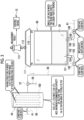
- a system 2 for producing an active pharmaceutical ingredient of a biopharmaceutical which is used for performing a method for producing an active pharmaceutical ingredient of a biopharmaceutical, includes a culture section 10 where a culture step is performed, an intermediate section 11, a purification section 12 where a purification step is performed, and a control device 13.
- the culture section 10 includes a culture tank 14 and a cell separation filter 15.
- a culture liquid (also referred to as a medium) 16 is stored in the culture tank 14.
- Antibody-producing cells 17 are seeded in the culture tank 14, and are cultured in the culture liquid 16.
- the antibody-producing cells 17 are, for example, cells established by incorporating an antibody gene into a cell such as Chinese Hamster Ovary cell. That is, the antibody-producing cells 17 are an example of "cell derived from Chinese Hamster Ovary cell” according to the technology of the present disclosure.
- the antibody-producing cells 17 produce an immunoglobulin, that is, an antibody 18 as a product in the process of culturing. Therefore, not only the antibody-producing cells 17 but also the antibody 18 is present in the culture liquid.
- the antibody 18 is, for example, a monoclonal antibody, and is an active ingredient of a biopharmaceutical.
- the antibody 18 is an example of "protein” according to the technology of the present disclosure.
- the culture tank 14 is provided with a culture liquid supply path 19, a gas supply path 20, an exhaust path 21, a culture liquid delivery and recovery path 22, a sparger 23, a gas supply path 24, a stirring blade 25, and the like.
- the culture liquid supply path 19 is a flow passage for continuously supplying a fresh culture liquid 16 into the culture tank 14, as indicated by an arrow A. That is, the culture section 10 performs perfusion culture.
- the gas supply path 20 is a flow passage for supplying a gas containing air and carbon dioxide from the upper part, as indicated by an arrow B.
- the exhaust path 21 is a flow passage for exhausting the gas supplied from the gas supply path 20 to the outside of the culture tank 14.
- An exhaust filter 26 is provided in the exhaust path 21.
- the culture liquid delivery and recovery path 22 is connected to an inlet and outlet 27 of the cell separation filter 15.
- the culture liquid delivery and recovery path 22 is a flow passage for delivering the culture liquid 16 in the culture tank 14 to the cell separation filter 15, as indicated by an arrow D.
- the culture liquid delivery and recovery path 22 is a flow passage for returning the culture liquid 16 (concentrated solution) from the cell separation filter 15 to the culture tank 14, as indicated by an arrow E.
- a pump which supplies the culture liquid 16 into the culture tank 14 is provided in the culture liquid supply path 19.
- the sparger 23 is disposed at the bottom of the culture tank 14. As indicated by an arrow F, the sparger 23 releases gas containing oxygen, which is supplied from the gas supply path 24, to the culture tank 14. The oxygen released from the sparger 23 is dissolved in the culture liquid 16, and supports production activity of the antibody 18 of the antibody-producing cells 17.
- the stirring blade 25 is rotated at a predetermined rotation speed by a motor or the like to stir the culture liquid 16 in the culture tank 14. As a result, homogeneity of the culture liquid 16 in the culture tank 14 is maintained.
- the culture tank 14 is provided with a flow passage for a cell breeding treatment of intentionally taking out a part of the culture liquid 16, for example.
- the stirring blade 25 may have a plurality of blades as shown in the drawing or may have one disk-shaped blade, and the shape thereof is not particularly limited. In addition, two or more stirring blades 25 may be arranged in the culture tank 14.
- the cell separation filter 15 has a filter membrane 28 inside.
- the filter membrane 28 captures the antibody-producing cells 17 and transmits the antibody 18.
- a culture supernatant liquid 29 is obtained by, for example, Tangential Flow Filtration (TFF) method in which the antibody-producing cells 17 are removed from the culture liquid 16 by the filter membrane 28.
- a pore diameter of the filter membrane 28 is not particularly limited as long as it is a size capable of removing cells such as the antibody-producing cells 17 from the culture liquid 16, and it may be 0.01 ⁇ m or more and 0.5 ⁇ m or less, preferably 0.1 ⁇ m or more and 0.4 ⁇ m or less and particularly preferably 0.15 ⁇ m or more and 0.3 ⁇ m or less.
- the pore diameter of the filter membrane 28 is, for example, 0.2 ⁇ m.
- the "pore diameter" used herein means an average pore diameter. The average pore diameter can be measured by mercury porosimetry.
- the cell separation filter 15 has a diaphragm pump 31 having an elastic film 30 inside, and a degassing and gas suppling path 32. Air on the lower side of the elastic film 30 is degassed from the degassing and gas suppling path 32, and the elastic film 30 is elastically deformed to be attached to the lower end of the diaphragm pump 31, whereby the culture liquid 16 in the culture tank 14 flows into the cell separation filter 15 through the culture liquid delivery and recovery path 22.
- the culture liquid 16 (concentrated solution) which cannot pass through the filter membrane 28 is returned to the culture tank 14 through the culture liquid delivery and recovery path 22, by supplying air from the degassing and gas suppling path 32 to the lower side of the elastic film 30 and elastically deforming the elastic film 30 to be attached to the upper side of the diaphragm pump 31.
- the culture supernatant liquid 29 flows out from an outlet 33 of the cell separation filter 15, as indicated by an arrow G.
- the culture supernatant liquid 29 mainly contains the antibody 18.
- the culture supernatant liquid 29 contains, in addition to the antibody 18, contaminants such as a cell-derived protein, cell-derived Deoxyribonucleic Acid (DNA), and an aggregate of the antibody 18, a virus, and the like.
- a coupling path 34 is connected to an outlet 33 of the cell separation filter 15.
- the coupling path 34 is provided with a delivery pump 35 and a flowmeter 36.
- the delivery pump 35 sends out the culture supernatant liquid 29 flowed out from the outlet 33 downstream of the intermediate section 11 and the purification section 12.
- the flowmeter 36 measures a flow rate of the culture supernatant liquid 29 flowing through the coupling path 34.
- the coupling path 34 is sterilely connected to a coupling path 41 and a branch path 42 through a three-way joint 40.
- the coupling path 41 is provided with a pinch valve 43 and a sterile filter 44.
- the pinch valve 43 and the sterile filter 44 are provided downstream of the three-way joint 40, which is the connecting portion with the branch path 42, in the coupling path 41.
- the pinch valve 43 is a valve for switching a flow passage of the culture supernatant liquid 29 from the coupling path 41 to the branch path 42.
- the pinch valve 43 is, for example, a valve which closes the coupling path 41 by flattening the tube constituting the coupling path 41 from the outside with a valve body by the action of a coil and a movable iron core.
- the pinch valve 43 flattens the tube constituting the coupling path 41 to block the flow of the culture supernatant liquid 29 from the culture section 10 into the purification section 12 through the coupling path 41. In this way, the pinch valve 43 is a method of pinching the tube from the outside, and the flow passage can be switched without contacting the culture supernatant liquid 29.
- pinch valves 50 and 70 described later also have the same configuration and the same action as the pinch valve 43, except that the tube flattening with the valve body is different, the detailed description thereof will be omitted.
- a pinch valve 56 described later has the same configuration and the same operation as the pinch valve 43, except that the tube flattening with the valve body is different and the pinch valve 56 is manually operated, the detailed description thereof will be omitted.
- the sterile filter 44 filters the culture supernatant liquid 29 flowing into the purification section 12.
- the sterile filter 44 incorporates a filter membrane 99 and a filter membrane 100 (see Fig. 3 ) having a pore diameter larger than the filter membrane 28 of the cell separation filter 15 and a purification filter 82 of a single pass tangential flow filtration (hereinafter, abbreviated as SPTFF) device 80 described later.
- the filter membrane 100 has a pore diameter smaller than that of the filter membrane 99. The pore diameter of the filter membranes 99 and 100 satisfies the following conditions, respectively.
- the sterile filter 44 may have a two-layer structure filter membrane satisfying the following condition, in addition to the condition of having a pore diameter larger than that of the cell separation filter 15. Condition: even in a case where the indicator bacteria are loaded at 10 7 /cm 2 on the upstream side, it is possible to obtain a sterile liquid on the downstream side
- a tank 45 is connected to the branch path 42.
- the tank 45 temporarily stores the culture supernatant liquid 29 from the culture section 10 in a case where a malfunction occurs in the purification section 12.
- the tank 45 is formed of, for example, a resin film such as polyolefin (PO) and ethylene-vinyl acetate (EVA) copolymer in a rectangular shape, and has flexibility.
- the tank 45 is made of a single-use material which can be used only once.
- the tank 45 has an accommodation capacity of 0.2 times or more and 10 times or less the amount of the culture liquid 16 in the culture tank 14. Therefore, for example, in a case where the amount of the culture liquid 16 is 50 L, the accommodation capacity of the tank 45 is 10 L to 500 L. In addition, for example, in a case where the amount of the culture liquid 16 is 5,000 L, the accommodation capacity of the tank 45 is 1,000 L to 50,000 L.
- a sterile connector 46 is provided at a distal end of the branch path 42.
- a sterile connector 49 is also provided at a distal end of a flow-in tube 48 connected to an inlet port 47 of the tank 45 for the culture supernatant liquid 29.
- the branch path 42 is sterilely connected to the flow-in tube 48, and thus sterilely connected to the tank 45.
- the flow passage of the culture supernatant liquid 29 from the culture section 10 to the tank 45 is all sterilely connected by the sterile connectors 46 and 49, the three-way joint 40, and the like.
- sterile connector 46 and the like including sterile connectors 53, 55, 65, 68, and the like described later
- DAC Disposable Aseptic Connector
- the branch path 42 is provided with a pinch valve 50.
- the pinch valve 50 is a valve for allowing the culture supernatant liquid 29 to flow into the tank 45 through the branch path 42.
- a liquid level sensor (not shown) is provided in the tank 45. In a case where the liquid level sensor detects that the culture supernatant liquid 29 has reached a predetermined water level, a signal indicating that the tank 45 is filled with the culture supernatant liquid 29 is transmitted to the control device 13.
- a discharge port 51 is provided at the bottom of the tank 45.
- a discharge tube 52 is connected to the discharge port 51.
- a sterile connector 53 is provided at a distal end of the discharge tube 52.
- a waste liquid path 54 is connected to the discharge tube 52.
- a sterile connector 55 is provided at a distal end of the waste liquid path 54. Through the sterile connectors 53 and 55, the waste liquid path 54 is sterilely connected to the discharge tube 52, and thus sterilely connected to the tank 45.
- a manual pinch valve 56 is provided in the waste liquid path 54.
- the culture supernatant liquid 29 temporarily stored in the tank 45 is discarded as waste liquid to a waste liquid tank (not shown) through the discharge port 51, the discharge tube 52, and the waste liquid path 54.
- the reason why the culture supernatant liquid 29 from the culture section 10 is once stored in the tank 45 and then discarded into the waste liquid path 54, without being directly discarded into the waste liquid path 54, is to prevent contamination from the waste liquid path 54.
- a sterile filter may be installed between the waste liquid path 54 and the waste liquid tank.
- the tank 45 is separated from the branch path 42 by removing the sterile connector 49 from the sterile connector 46 after the pinch valve 56 is manually opened and the culture supernatant liquid 29 is discarded.
- a sterile connector 49 of a new empty tank 45 is attached to the sterile connector 46. As a result, the used tank 45 is exchanged for the new empty tank 45.
- a configuration may be adopted in which a further branch path is connected to the upstream side of the branch path 42 with respect to the pinch valve 50, and a plurality of tanks 45 can be connected.
- the tank 45 and the coupling path 41 may be connected to each other, and the culture supernatant liquid 29 temporarily stored in the tank 45 may be returned to the coupling path 41 and flow into the purification section 12.
- the coupling path 41 Downstream of the sterile filter 44, the coupling path 41 is sterilely connected to a coupling path 58 and a branch path 59 through a three-way joint 57.
- An intermediate container 60 is connected to the coupling path 58.
- the intermediate container 60 temporarily stores the culture supernatant liquid 29 in front of the purification section 12.
- a coupling path 61 is connected to the intermediate container 60.
- the coupling path 61 is connected to the purification section 12.
- the coupling path 61 is provided with a first supply pump 62 and a flowmeter 63.
- the first supply pump 62 supplies the culture supernatant liquid 29 in the intermediate container 60 to the purification section 12.
- the flowmeter 63 measures a flow rate of the culture supernatant liquid 29 flowing through the coupling path 61, that is, a flow rate of the culture supernatant liquid 29 flowing into the purification section 12.
- the coupling paths 34, 41, 58, and 61 are an example of "coupling line" according to the technology of the present disclosure.
- a sampling container 64 is connected to the branch path 59.
- the sampling container 64 is a container for sampling a small amount of the culture supernatant liquid 29 for sampling the concentration of the antibody 18, and the like in the culture supernatant liquid 29.
- the sampling container 64 is formed of a resin film such as polyolefin and ethylene-vinyl acetate copolymer in a rectangular shape, and has flexibility.
- the sampling container 64 is made of a single-use material which can be used only once, same as the tank 45. However, the sampling container 64 has a smaller accommodation capacity than the tank 45.
- a sterile connector 65 is provided at a distal end of the branch path 59.
- a sterile connector 68 is also provided at a distal end of a flow-in tube 67 connected to an inlet port 66 of the sampling container 64 for the culture supernatant liquid 29.
- the branch path 59 is provided with a second supply pump 69 and a pinch valve 70.
- the second supply pump 69 introduces the culture supernatant liquid 29 flowing through the coupling path 41 into the branch path 59.
- the pinch valve 70 is a valve for allowing the culture supernatant liquid 29 led into the branch path 59 by the second supply pump 69 to flow into the sampling container 64.
- the sampling container 64 is separated from the branch path 59 after a sufficient amount of the culture supernatant liquid 29 is flowed thereinto for sampling, by removing the sterile connector 68 from the sterile connector 65.
- the separated sampling container 64 is placed in a sampling device such as an antibody concentration determination device.
- a sterile connector 68 of a new sampling container 64 is attached to the sterile connector 65.
- the used sampling container 64 is exchanged for the new sampling container 64.
- a configuration may be adopted in which a further branch path is connected between the second supply pump 69 and the pinch valve 70 of the branch path 59, and a plurality of sampling containers 64 can be connected.
- the purification section 12 includes the SPTFF device 80, an immunaffinity chromatography device 81, and the like, and continuously purifies the culture supernatant liquid 29 by these devices 80, 81, and the like.
- the culture supernatant liquid 29 flows into the SPTFF device 80 through the coupling path 61.
- the SPTFF device 80 includes a purification filter 82 of the SPTFF method.
- the purification filter 82 is composed of a plurality of ultrafiltration (UF) filter membranes connected in series. With the purification filter 82, the antibody 18 can be sufficiently concentrated only by passing the culture supernatant liquid 29 once without requiring the loop of the culture supernatant liquid 29.
- the SPTFF device 80 generates a first purified liquid 83 by extracting the antibody 18 from the culture supernatant liquid 29 using the purification filter 82.
- the first purified liquid 83 extracted using the purification filter 82 flows into the immunaffinity chromatography device 81.
- the immunaffinity chromatography device 81 extracts the antibody 18 from the culture supernatant liquid 29 using a column in which a ligand such as protein A and protein G, having an affinity for the antibody 18, is immobilized on a carrier, thereby generating a second purified liquid 84. That is, in the purification section 12, the first step is a purification step using the purification filter 82 of the SPTFF method, and the next step is a purification step using the immunaffinity chromatography device 81 with a single column.
- the second purified liquid 84 is subjected to a treatment 85 for inactivating the virus (hereinafter, referred to as a virus inactivating treatment).
- the second purified liquid 84 subjected to the virus inactivating treatment 85 is further purified by an ion affinity chromatography device 86 with a column in which a cation exchanger is used as a stationary phase and/or with a column in which an anion exchanger is used as a stationary phase, and then passed through a filter 87 to remove the virus.
- the second purified liquid 84 is subjected to a concentration and filtration treatment by an ultrafiltration and diafiltration (DF) through a filter 88.
- DF ultrafiltration and diafiltration
- the purification section 12 is a site where the concentration of the purified target such as the antibody 18 and the removal of the impurities other than the purified target, such as the virus, are intentionally performed by making full use of the SPTFF device 80 and the like.
- the sterile filter 44 includes a flow-in tube 91 having a sterile connector 90, and a flow-out tube 93 having a sterile connector 92.
- sterile connectors 94 and 95 are provided on the upstream side and the downstream side of the coupling path 41.
- the sterile connector 90 is connected to the sterile connector 94, and the sterile connector 92 is connected to the sterile connector 95, whereby the sterile filter 44 is attached to the coupling path 41.
- the sterile filter 44 is sterilely connected to the coupling path 41 through the sterile connectors 90, 92, 94, and 95.
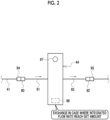
- the sterile filter 44 is provided with an integrated flowmeter 96 which measures an integrated flow rate of the culture supernatant liquid 29.
- the sterile filter 44 is provided with an indicator 97 which reports that an integrated flow rate of the culture supernatant liquid 29 measured by the integrated flowmeter 96 has reached a set amount.
- the indicator 97 is, for example, a rotating disk having a white background and a red background, and displays the white background in a case where the integrated flow rate of the culture supernatant liquid 29 does not reach the set amount, and displays the red background in a case where the integrated flow rate of the culture supernatant liquid 29 reaches the set amount.
- the indicator 97 is a light emitting element such as Light-Emitting Diode (LED).
- the set amount is set in a range of 1,000 L/m 2 to 10,000 L/m 2 .
- the integrated flowmeter 96 may not be incorporated in the sterile filter 44, and may be provided upstream of the sterile filter 44 separately from the sterile filter 44.
- the sterile filter 44 is separated from the coupling path 41 by removing the sterile connectors 90 and 92 from the sterile connectors 94 and 95. Sterile connectors 90 and 92 of a new sterile filter 44 are attached to the sterile connectors 94 and 95. As a result, the sterile filter 44 in which the integrated flow rate of the culture supernatant liquid 29 has reached the set amount is exchanged for the new sterile filter 44.
- the flow rate of the culture supernatant liquid 29 flowing into the sterile filter 44 by the delivery pump 35 is constant.
- the “constant” refers to a certain in the sense of including an error generally allowed in the technical field to which the technology of the present disclosure belongs, that is, an error to the extent that it does not contradict the gist of the technology of the present disclosure, in addition to the complete certainty.
- the "constant” means that the flow rate of the culture supernatant liquid 29 flowing into the sterile filter 44 need only be within ⁇ 20% of a target value, and preferably within ⁇ 10% of the target value.
- the sterile filter 44 includes the filter membranes 99 and 100.
- the filter membranes 99 and 100 have a structure in which a flat filter paper made of polyethersulfone is folded.
- the sterile filter 44 having such filter membranes 99 and 100 is referred to as a flat membrane filter.
- a ratio FA/MCC of the maximum accommodation capacity MCC of the culture tank 14 to the filtration area FA of the filter membranes 99 and 100 may be in a range of Expression (1), preferably in a range of Expression (2). 0.0004 m 2 / liter L ⁇ FA/MCC ⁇ 0.02 m 2 / L 0.001 m 2 / L ⁇ FA/MCC ⁇ 0.01 m 2 / L
- the maximum accommodation capacity MCC of the culture tank 14 is, for example, 50 L or more and 5,000 L or less. Therefore, for example, in a case where the maximum accommodation capacity MCC of the culture tank 14 is 50 L, the filtration area FA of the filter membranes 99 and 100 is 0.05 m 2 or more and 0.5 m 2 or less. In addition, for example, in a case where the maximum accommodation capacity MCC of the culture tank 14 is 5,000 L, the filtration area FA of the filter membranes 99 and 100 is 5 m 2 or more and 50 m 2 or less.
- the intermediate container 60 is a bag formed by pouching entire peripheries of two resin-made sheets such as polyolefin and ethylene-vinyl acetate copolymer, and liquid-tightly bonding the two resin-made sheets.
- the intermediate container 60 is made of a single-use material which can be used only once, same as the tank 45 and the sampling container 64.
- An inlet port 102 into which the culture supernatant liquid 29 from the culture section 10 flows is provided in a bottom portion 101 of the intermediate container 60.
- a flow-in tube 103 is attached to the inlet port 102, and a sterile connector 104 is provided at a distal end of the flow-in tube 103.
- a sterile connector 105 is also provided at a distal end of the coupling path 58. Through the sterile connectors 104 and 105, the coupling path 58 is sterilely connected to the flow-in tube 103, and thus sterilely connected to the intermediate container 60.
- an outlet port 106 through which the culture supernatant liquid 29 flows out toward the purification section 12 is provided on the bottom portion 101 of the intermediate container 60.
- a flow-out tube 107 is attached to the outlet port 106, and a sterile connector 108 is provided at a distal end of the flow-out tube 107.
- a sterile connector 109 is also provided at a distal end of the coupling path 61. Through the sterile connectors 108 and 109, the coupling path 61 is sterilely connected to the flow-out tube 107, and thus sterilely connected to the intermediate container 60.
- the intermediate container 60 is separated from the coupling paths 58 and 61 by removing the sterile connectors 104 and 108 from the sterile connectors 105 and 109. Sterile connectors 104 and 108 of a new intermediate container 60 are attached to the sterile connectors 105 and 109. As a result, the used intermediate container 60 is exchanged for the new intermediate container 60.
- a flow rate of the culture supernatant liquid 29 flowing into the inlet port 102 by the delivery pump 35 is constant.
- a flow rate of the culture supernatant liquid 29 flowing out from the outlet port 106 by the first supply pump 62 is also constant.
- an outflow rate of the culture supernatant liquid 29 at the inlet port 102 is higher than an inflow rate of the culture supernatant liquid 29 at the outlet port 106. It is sufficient that the outflow rate of the culture supernatant liquid 29 at the outlet port 106 is 1% or more and 30% or less, preferably 2% or more and 20% or less, higher than the inflow rate of the culture supernatant liquid 29 at the inlet port 102.
- a hanging tool 111 is attached to an upper portion 110 of the intermediate container 60.
- the intermediate container 60 can be used by hanging the intermediate container 60 on a hook 112 using the hanging tool 111.
- An electronic spring scale 113 is attached to the hook 112.
- the electronic spring scale 113 measures a weight of the intermediate container 60 in a state of being suspended from the hook 112 to measure a liquid amount of the culture supernatant liquid 29 in the intermediate container 60.
- a weight of the empty intermediate container 60 and a weight of the hook 112 are stored in advance in the electronic spring scale 113.
- the electronic spring scale 113 calculates the liquid amount of the culture supernatant liquid 29 in the intermediate container 60 from the measured weight of the intermediate container 60 by subtracting the weight of the empty intermediate container 60 and the weight of the hook 112, and outputs the calculated weight as the measurement result.
- the electronic spring scale 113 transmits the measurement result of the liquid amount to the control device 13.
- the electronic spring scale 113 is further attached to a hook of a hanging stand (not shown).
- the electronic spring scale 113 may output the weight of the intermediate container 60 as the measurement result to the control device 13, and the control device 13 may perform conversion of the weight into the liquid amount.
- the weight of the intermediate container 60 itself may be treated as the liquid amount of the culture supernatant liquid 29.
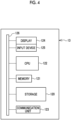
- a computer constituting the control device 13 includes a storage 120, a memory 121, a central processing unit (CPU) 122, a communication unit 123, a display 124, and an input device 125. These units are connected to one another through a bus line 126.
- CPU central processing unit
- the storage 120 is a hard disk drive that is provided in the computer constituting the control device 13 or is connected to the computer through a cable or a network.
- the storage 120 is a disk array in which a plurality of hard disk drives are connected.
- the storage 120 stores, for example, a control program, such as an operating system, various application programs, and various types of data associated with these programs.
- a solid state drive may be used instead of the hard disk drive.
- the memory 121 is a work memory for the CPU 122 to perform processes.
- the CPU 122 loads the program stored in the storage 120 to the memory 121 and performs a process corresponding to the program. As a result, the CPU 122 integrally controls each unit of the computer.
- the memory 121 may be incorporated in the CPU 122.
- the communication unit 123 controls transmission of various information to an external apparatus.
- the display 124 displays various screens.
- the various screens have operation functions by a graphical user interface (GUI).
- GUI graphical user interface
- the computer constituting the control device 13 receives operation instructions input from the input device 125 through various screens.
- the input device 125 is, for example, a keyboard, a mouse, a touch panel, and a microphone for voice input.
- a control program 130 is stored in the storage 120 of the control device 13.
- the control program 130 is an application program for causing the computer to function as the control device 13.
- the storage 120 stores data of various types of screens to be displayed on the display 124.
- the CPU 122 of the computer constituting the control device 13 functions as a culture section control unit 135, an intermediate section control unit 136, and a purification section control unit 137, in cooperation with the memory 121 and the like.
- the culture section control unit 135 controls the operation of the culture section 10
- the intermediate section control unit 136 controls the operation of the intermediate section 11
- the purification section control unit 137 controls the operation of the purification section 12.
- the culture section control unit 135 receives the measurement result of the flow rate of the culture supernatant liquid 29 from the flowmeter 36.
- the culture section control unit 135 controls the flow rate of the culture supernatant liquid 29 based on the measurement result. More specifically, the culture section control unit 135 transmits, to the delivery pump 35, a control signal for setting the flow rate of the culture supernatant liquid 29 to a preset value.
- the culture section control unit 135 also controls the supply amount of the culture liquid 16 through the culture liquid supply path 19, the supply amount of the gas containing oxygen through the sparger 23 and the gas supply path 24, the rotation speed of the stirring blade 25, and the like.
- the intermediate section control unit 136 receives the measurement result of the flow rate of the culture supernatant liquid 29 from the flowmeter 63.
- the intermediate section control unit 136 controls the flow rate of the culture supernatant liquid 29 based on the measurement result. More specifically, the intermediate section control unit 136 transmits, to the first supply pump 62, a control signal for setting the flow rate of the culture supernatant liquid 29 to a preset value. By such control, the flow rate of the culture supernatant liquid 29 at the outlet port 106 is kept constant.
- the intermediate section control unit 136 transmits a control signal to the second supply pump 69 to operate the second supply pump 69. In addition, the intermediate section control unit 136 transmits the control signal (open) to the pinch valve 70. As a result, the culture supernatant liquid 29 flows into the sampling container 64.
- the intermediate section control unit 136 receives, from the electronic spring scale 113, the measurement result of the liquid amount of the culture supernatant liquid 29 in the intermediate container 60.
- the intermediate section control unit 136 operates or stops the first supply pump 62 based on the measurement result of the liquid amount.
- the intermediate section control unit 136 transmits a signal indicating that the first supply pump 62 is operated to the purification section control unit 137.
- the intermediate section control unit 136 transmits a signal indicating that the operation of the first supply pump 62 is stopped to the purification section control unit 137.
- the purification section control unit 137 transmits the control signal to the SPTFF device 80 and the immunaffinity chromatography device 81.
- the built-in pump, valve, and the like of the SPTFF device 80 and the immunaffinity chromatography device 81 are operated in response to the control signal.
- the purification section control unit 137 also transmits a control signal to the ion affinity chromatography device 86.
- the purification section control unit 137 receives an error signal from the SPTFF device 80 or the immunaffinity chromatography device 81.
- the error signal is issued from the SPTFF device 80 or the immunaffinity chromatography device 81 in a case where a malfunction occurs in the SPTFF device 80 or the immunaffinity chromatography device 81.
- the purification section control unit 137 also receives an error signal from the ion affinity chromatography device 86.
- the malfunction is, for example, a failure of a pump in the SPTFF device 80 or the immunaffinity chromatography device 81, or clogging of the column in the immunaffinity chromatography device 81.
- the purification section control unit 137 transmits the error signal to the intermediate section control unit 136. Furthermore, although not shown, in a case where the malfunction is resolved, a notification signal indicating the fact is issued from the SPTFF device 80, the immunaffinity chromatography device 81, or the ion affinity chromatography device 86 toward the purification section control unit 137.
- the intermediate section control unit 136 transmits the control signal (close) to the pinch valve 43 and then transmits the control signal (open) to the pinch valve 50.
- the flow passage of the culture supernatant liquid 29 is switched from the coupling path 41 to the branch path 42. That is, the intermediate section control unit 136 performs control of switching the flow passage of the culture supernatant liquid 29 from the coupling path 41 to the branch path 42 in a case where the error signal indicating that the malfunction has occurred in the purification section 12 is output.
- the culture supernatant liquid 29 flows into the tank 45 through the branch path 42, the flow-in tube 48, and the inlet port 47.
- the intermediate section control unit 136 transmits the control signal (close) to the pinch valve 50 and then transmits the control signal (open) to the pinch valve 43, and performs control of returning the flow passage of the culture supernatant liquid 29 from the branch path 42 to the coupling path 41.
- the intermediate section control unit 136 operates (turns on) the first supply pump 62 to start the outflow of the culture supernatant liquid 29 through the outlet port 106.
- the purification section control unit 137 operates (turns on) the purification section 12.
- the intermediate section control unit 136 stops (turns off) the operation of the first supply pump 62 to stop the outflow of the culture supernatant liquid 29 through the outlet port 106.
- the purification section control unit 137 stops (turns off) the operation of the purification section 12. That is, the purification section 12 performs intermittent operation of operating while the culture supernatant liquid 29 is flowing out from the outlet port 106 and stopping the operation while the culture supernatant liquid 29 is not flowing out from the outlet port 106.
- the lower limit storage amount LL, the upper limit storage amount UL, and the set amount PL are also obtained from the weight of the intermediate container 60.
- 3 kg is set as the lower limit storage amount LL
- 7 kg is set as the upper limit storage amount UL
- 5 kg is set as the set amount PL.
- the intermediate section control unit 136 starts the outflow of the culture supernatant liquid 29; and in a case where it is detected that the weight of the intermediate container 60 has reached 3 kg, the intermediate section control unit 136 stops the outflow of the culture supernatant liquid 29.
- the flow rate of the culture supernatant liquid 29 from the culture section 10 to the inlet port 102 is constant. Therefore, the liquid amount of the culture supernatant liquid 29 increases linearly.
- the flow rate of the culture supernatant liquid 29 from the outlet port 106 to the purification section 12 is also constant. Therefore, the liquid amount of the culture supernatant liquid 29 decreases linearly.
- a slope of a straight line indicating the increase in liquid amount of the culture supernatant liquid 29 represents the increase amount of the liquid amount of the culture supernatant liquid 29 per unit time, that is, the inflow rate of the culture supernatant liquid 29 at the inlet port 102.
- a slope of a straight line indicating the decrease in liquid amount of the culture supernatant liquid 29 represents the decrease amount of the liquid amount of the culture supernatant liquid 29 per unit time, but does not match the outflow rate of the culture supernatant liquid 29 at the outlet port 106. This is because the culture supernatant liquid 29 continues to flow at the inlet port 102 even during the outflow of the culture supernatant liquid 29 from the outlet port 106.
- the outflow rate of the culture supernatant liquid 29 at the inlet port 102 is higher than the inflow rate of the culture supernatant liquid 29 at the outlet port 106. Therefore, in a case where the amount of the culture supernatant liquid 29 flowing at the inlet port 102 is subtracted during the outflow of the culture supernatant liquid 29 from the outlet port 106, the slope of the straight line indicating the decrease in liquid amount of the culture supernatant liquid 29 is steeper than the slope of the straight line indicating the increase in liquid amount of the culture supernatant liquid 29. However, in reality, the amount of the culture supernatant liquid 29 flowing at the inlet port 102 during the outflow of the culture supernatant liquid 29 from the outlet port 106 is also included.
- the upper limit storage amount UL of the intermediate container 60 is in a range of Expression (3).
- the upper limit storage amount UL does not necessarily match the maximum accommodation capacity MC.
- the lower limit storage amount LL of the intermediate container 60 is in a range of Expression (4).
- the lower limit storage amount LL is a value larger than 0.
- the set amount PL is, for example, represented by Expression (5).
- PL UL + LL / 2
- the set amount PL is not limited to Expression (5).
- the antibody-producing cells 17 are seeded in the culture tank 14 of the culture section 10, and are cultured in the culture liquid 16.
- the antibody 18 is produced from the antibody-producing cells 17, and is dispersed in the culture liquid 16.
- the culture liquid 16 is sent to the cell separation filter 15 through the culture liquid delivery and recovery path 22 and the inlet and outlet 27.
- the antibody-producing cells 17 are removed from the culture liquid 16 by the filter membrane 28 of the cell separation filter 15, and the culture supernatant liquid 29 is obtained.
- the culture supernatant liquid 29 flows out from the outlet 33 to the coupling path 34, and is sent downstream by the delivery pump 35.
- the control signal according to the measurement result of the flowmeter 36 is transmitted from the culture section control unit 135 to the delivery pump 35, whereby the flow rate of the culture supernatant liquid 29 is controlled to be constant based on the measurement result of the flowmeter 36.
- the culture supernatant liquid 29 flows from the coupling path 34 to the coupling path 41 and passes through the pinch valve 43 and the sterile filter 44. By passing through the sterile filter 44, impurities other than the antibody 18 in the culture supernatant liquid 29 are removed.
- the culture supernatant liquid 29 which has passed through the sterile filter 44 flows into the inlet port 102 of the intermediate container 60 through the coupling path 58 and the flow-in tube 103, and flows into the intermediate container 60 through the inlet port 102. As a result, the culture supernatant liquid 29 is stored in the intermediate container 60.
- the liquid amount of the culture supernatant liquid 29 in the intermediate container 60 is measured by the electronic spring scale 113.
- the measurement result of the liquid amount of the culture supernatant liquid 29 is transmitted from the electronic spring scale 113 to the intermediate section control unit 136.
- the operation of the first supply pump 62 is stopped by the intermediate section control unit 136, and the operation of the purification section 12 is stopped by the purification section control unit 137 (step ST100).
- the first supply pump 62 is operated by the intermediate section control unit 136, and the outflow of the culture supernatant liquid 29 through the outlet port 106 is started.
- the purification section 12 is operated by the purification section control unit 137 (step ST120).
- the antibody 18 in the culture supernatant liquid 29 is continuously purified by the SPTFF device 80 and the immunaffinity chromatography device 81, and the active pharmaceutical ingredient 89 of a biopharmaceutical is finally obtained.
- the operation of the first supply pump 62 is continued by the intermediate section control unit 136, and the operation of the purification section 12 is continued by the purification section control unit 137 (step ST120).
- the operation of the first supply pump 62 is stopped by the intermediate section control unit 136, and the outflow of the culture supernatant liquid 29 through the outlet port 106 is stopped.
- the operation of the purification section 12 is stopped by the purification section control unit 137 (step ST100).
- the control signal (open) is transmitted from the intermediate section control unit 136 to the pinch valve 43, and the control signal (close) is transmitted from the intermediate section control unit 136 to the pinch valve 50.
- the coupling path 41 is opened, and the branch path 42 is closed. In this way, the culture supernatant liquid 29 flows from the coupling path 34 to the coupling path 41.
- an error signal is issued from the SPTFF device 80 or the like to the purification section control unit 137.
- the error signal is transmitted from the purification section control unit 137 to the intermediate section control unit 136.
- the control signal (close) is transmitted to the pinch valve 43, and then the control signal (open) is transmitted to the pinch valve 50.
- the coupling path 41 is closed, and the branch path 42 is opened.
- the culture supernatant liquid 29 flows into the tank 45.
- the state in which the culture supernatant liquid 29 flows into the tank 45 and then temporarily stored is continued until the malfunction in the purification section 12 is resolved.
- the control signal (close) is transmitted from the intermediate section control unit 136 to the pinch valve 50, and then the control signal (open) is transmitted to the pinch valve 43.
- the coupling path 41 is opened again, the branch path 42 is closed, and the culture supernatant liquid 29 flows from the coupling path 34 to the coupling path 41.
- a control signal is transmitted from the intermediate section control unit 136 to the second supply pump 69 to operate the second supply pump 69.
- the control signal (open) is transmitted from the intermediate section control unit 136 to the pinch valve 70.
- the culture section 10 and the purification section 12 are connected to each other by the coupling paths 34, 41, 58, and 61.
- a culture step of culturing the antibody-producing cells 17 in the culture liquid 16 stored in the culture tank 14 and obtaining the culture supernatant liquid 29 containing the antibody 18 by removing the antibody-producing cells 17 from the culture liquid 16 is performed.
- a purification step of purifying the antibody 18 from the culture supernatant liquid 29 to obtain the active pharmaceutical ingredient 89 of a biopharmaceutical is performed.
- the intermediate container 60 is provided between the coupling path 58 and the coupling path 61, and the culture supernatant liquid 29 from the culture section 10 flows into the intermediate container 60 through the inlet port 102 provided at the bottom portion 101 of the intermediate container 60, whereby the culture supernatant liquid 29 is temporarily stored in the intermediate container 60.
- the culture supernatant liquid 29 flows out from the intermediate container 60 toward the purification section 12 through the outlet port 106 provided at the bottom portion 101 of the intermediate container 60.
- the inlet port 102 for the culture supernatant liquid 29 is provided at the bottom portion 101. Therefore, stress on the antibody 18 is reduced as compared with a case in which the inlet port 102 is provided in the upper portion or the side portion in the intermediate container, so that inflow of the culture supernatant liquid 29 causes foaming in the stored culture supernatant liquid 29.
- the inlet port 102 is provided at the side portion, it is also possible to make a container for suppressing the foaming of the culture supernatant liquid 29 as much as possible by allowing the culture supernatant liquid 29 to flow into the intermediate container 60 by being transmitted through an interior wall of the intermediate container 60.
- the antibody 18 is subjected to stress by traveling along the interior wall. Therefore, it is preferable that the inlet port 102 for the culture supernatant liquid 29 is located at the bottom portion 101 as in the intermediate container 60. From the above, the technology of the present disclosure can suppress the deterioration in quality of the antibody 18.
- the intermediate container in which the inlet port 102 is provided on the upper portion or the side portion in order to avoid a malfunction that the first supply pump 62 or the pump in the SPTFF device 80 and the immunaffinity chromatography device 81 stops due to entrapment of air, it is necessary to increase the size of the intermediate container for increasing a distance between a portion where the culture supernatant liquid 29 foams and the outlet port 106. In a case where the size of the intermediate container is increased, an installation space is required accordingly. In addition, workability during replacement or the like is deteriorated. Furthermore, since the culture supernatant liquid 29 is retained in the intermediate container for a long time, there is also a risk that the antibody 18 deteriorates over time.
- the inlet port 102 for the culture supernatant liquid 29 is located at the bottom portion 101 and the foaming of the culture supernatant liquid 29 is suppressed, it is not necessary to increase the size of the intermediate container 60. Therefore, it is not necessary to secure a large installation space, and the workability during replacement or the like is also favorable.
- the retention time of the culture supernatant liquid 29 is relatively short, the risk of deterioration of the antibody 18 over time is also reduced.
- the outflow rate of the culture supernatant liquid 29 at the outlet port 106 is higher than the inflow rate of the culture supernatant liquid 29 at the inlet port 102.
- the purification section 12 is operated while the culture supernatant liquid 29 flows out from the outlet port 106, and stops the operation while the culture supernatant liquid 29 does not flow out from the outlet port 106.
- the outflow rate of the culture supernatant liquid 29 at the outlet port 106 is higher than the inflow rate of the culture supernatant liquid 29 at the inlet port 102, it is possible to avoid the culture supernatant liquid 29 from being stored in the intermediate container 60 in an amount equal to or more than the upper limit storage amount UL.
- the purification section 12 is operated only while the culture supernatant liquid 29 is flowing out from the outlet port 106, it is possible to avoid the malfunction that the first supply pump 62 or the pump in the SPTFF device 80 and the immunaffinity chromatography device 81 stops due to entrapment of air.
- the liquid amount of the culture supernatant liquid 29 in the intermediate container 60 is measured only by the electronic spring scale 113.
- the intermediate section control unit 136 starts the outflow of the culture supernatant liquid 29 through the outlet port 106 in a case where it is detected that the liquid amount has reached a preset amount PL between the upper limit storage amount UL and the lower limit storage amount LL of the intermediate container 60, based on the measurement result of the liquid amount.
- the intermediate section control unit 136 stops the outflow of the culture supernatant liquid 29 through the outlet port 106. Therefore, a situation in which the culture supernatant liquid 29 is stored in an amount equal to or more than the set amount PL or the liquid amount of the culture supernatant liquid 29 is less than the lower limit storage amount LL can be avoided.
- the method is a method of controlling the operation of the delivery pump 35 and the first supply pump 62 such that, after the culture supernatant liquid 29 is stored in the intermediate container 60 with the set amount PL, an inflow amount of the culture supernatant liquid 29 from the culture section 10 into the intermediate container 60 is same as an outflow amount of the culture supernatant liquid 29 from the intermediate container 60 into the purification section 12.
- the inflow amount of the culture supernatant liquid 29 into the intermediate container 60 and the outflow amount of the culture supernatant liquid 29 from the intermediate container 60 are not completely the same, and a difference inevitably occurs.
- the situation in which the culture supernatant liquid 29 is stored in an amount equal to or more than the set amount PL or the liquid amount of the culture supernatant liquid 29 is less than the lower limit storage amount LL occurs.
- the control is performed according to the measurement result of the liquid amount of the culture supernatant liquid 29 in the intermediate container 60 without performing a very difficult control of making the inflow amount of the culture supernatant liquid 29 into the intermediate container 60 and the outflow amount of the culture supernatant liquid 29 from the intermediate container 60 the same. Therefore, the situation in which the culture supernatant liquid 29 is stored in an amount equal to or more than the set amount PL or the liquid amount of the culture supernatant liquid 29 is less than the lower limit storage amount LL can be easily avoided.
- the liquid amount of the culture supernatant liquid 29 in the intermediate container 60 is measured by measuring the weight of the intermediate container 60.
- the intermediate container 60 is a bag manufactured by liquid-tightly bonding two resin-made sheets, and is a bag used by being suspended from the hook 112.
- the weight of the intermediate container 60 is measured in a state of being suspended from the hook 112 to measure the liquid amount of the culture supernatant liquid 29 in the intermediate container 60. Therefore, the liquid amount of the culture supernatant liquid 29 in the intermediate container 60 can be easily measured only by attaching the electronic spring scale 113 to the hook 112.
- the culture supernatant liquid 29 in an amount suitable for the intermediate container 60 can be stored.
- the purification step in the purification section 12 includes a purification step using the purification filter 82 of the SPTFF method.
- the antibody 18 can be purified by a single circulation of the culture supernatant liquid 29.
- an additional pump and tank are required, and the work is also complicated.
- the risk of contamination is also high.
- an additional pump and tank are not required, and the workability is also favorable.
- the configuration is simple, the risk of contamination is also low.
- the purification filter 82 of the SPTFF method does not require maintenance such as stopping the inflow of the culture supernatant liquid 29 and washing, as in the column of the chromatography device, and the culture supernatant liquid 29 can be continuously flowed. Therefore, the aspect of operating the purification section 12 while the culture supernatant liquid 29 is flowing out from the outlet port 106 is compatible.
- the flow rate of the culture supernatant liquid 29 from the culture section 10 to the inlet port 102 is constant.
- the flow rate of the culture supernatant liquid 29 from the outlet port 106 to the purification section 12 is constant. Therefore, an outflow start timing and an outflow stop timing of the culture supernatant liquid 29 through the outlet port 106, and thus an operation start timing and an operation stop timing of the purification section 12 can be set to be substantially the same.
- the retention time of the culture supernatant liquid 29 in the intermediate container 60 can also be made substantially the same, and the state of the culture supernatant liquid 29 flowing into the purification section 12 can be kept constant.
- the "flow rate of the culture supernatant liquid 29 from the outlet port 106 to the purification section 12 is constant" means that the flow rate is constant during the time from the start of the outflow of the culture supernatant liquid 29 through the outlet port 106 by operating the first supply pump 62 by the intermediate section control unit 136 to the stop of the outflow of the culture supernatant liquid 29 through the outlet port 106 by stopping the operation of the first supply pump 62.
- the intermediate container 60 is made of a single-use material. Therefore, sterilization is not time-consuming as in a glass container which is repeatedly used. In addition, it is easier to discard than the glass container.
- the intermediate container 60 is a bag manufactured by liquid-tightly bonding two resin-made sheets. Therefore, the container is not bulky as compared with a rectangular container such as the tank 45, and is easy to handle. Therefore, the workability in a case of exchanging the used intermediate container 60 with a new intermediate container 60 can be improved.
- the intermediate container 60 can increase the liquid surface height with a small liquid amount of liquid as compared with a rectangular container such as the tank 45. Therefore, even in a case where the foaming occurs on the liquid surface of the culture supernatant liquid 29 in the intermediate container 60, the distance to the outlet port 106 of the bottom portion 101 can be increased. Accordingly, it is possible to further reduce the risk of the malfunction that the first supply pump 62 or the pump in the SPTFF device 80 and the immunaffinity chromatography device 81 stops due to entrapment of air.
- the biopharmaceutical containing the antibody 18 as an active ingredient is called an antibody pharmaceutical, and is widely used for the treatment of rare diseases such as hemophilia and Crohn's disease, as well as the treatment of chronic diseases such as cancer, diabetes, and rheumatoid arthritis. Therefore, according to the present example in which the cell is the antibody-producing cells 17 derived from CHO cells and the product is the protein, particularly the antibody 18, it is possible to contribute to the development of antibody pharmaceuticals which are widely used for the treatment of various diseases.
- a liquid level sensor 140 is provided on the upper portion 110 of the intermediate container 60.
- the liquid level sensor 140 detects a position of a liquid surface of the culture supernatant liquid 29 in the intermediate container 60, whereby the liquid level sensor 140 measures the liquid amount of the culture supernatant liquid 29 in the intermediate container 60.
- the liquid level sensor 140 is, for example, a reflective type photo sensor (also referred to as a photoreflector) which radiates a measurement light ML toward the liquid surface of the culture supernatant liquid 29 and receives reflected light of the measurement light ML from the liquid surface of the culture supernatant liquid 29.
- the liquid level sensor 140 detects a position of the liquid surface of the culture supernatant liquid 29 by a difference in intensity of the reflected light received.
- the liquid level sensor 140 refers to a data table or the like, showing a relationship between the position of the liquid surface of the culture supernatant liquid 29 and the liquid amount of the culture supernatant liquid 29 in the intermediate container 60; converts the detected position of the liquid surface of the culture supernatant liquid 29 into the liquid amount of the culture supernatant liquid 29 in the intermediate container 60; and outputs the converted liquid amount as a measurement result.
- the liquid level sensor 140 transmits the measurement result of the liquid amount to the control device 13. Since the subsequent processing is the same as the processing of the first embodiment described above, the description thereof will be omitted.
- the liquid level sensor 140 may output the position of the liquid surface of the culture supernatant liquid 29 as the measurement result to the control device 13, and the control device 13 may perform the conversion of the position of the liquid surface of the culture supernatant liquid 29 into the liquid amount.
- the position of the liquid surface itself may be treated as the liquid amount of the culture supernatant liquid 29.
- the liquid amount of the culture supernatant liquid 29 in the intermediate container 60 is measured by measuring the position of the liquid surface of the culture supernatant liquid 29. Therefore, even in a situation in which the measurement of the weight of the intermediate container 60 is difficult, the liquid amount of the culture supernatant liquid 29 in the intermediate container 60 can be measured.
- the liquid level sensor may be a liquid level sensor using ultrasound.
- the flow rate of the culture supernatant liquid 29 from the outlet port 106 to the purification section 12 is kept constant, but the present invention is not limited thereto.
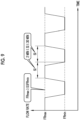
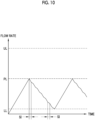
- the intermediate section control unit 136 controls the operation of the first supply pump 62 to vary the flow rate of the culture supernatant liquid 29 flowing into the purification filter 82 of the SPTFF device 80 at a set interval SI.
- the set interval SI is set to be 2 minutes to 30 minutes (2 min ⁇ SI ⁇ 30 min).
- the maximum value FRmax of the flow rate of the culture supernatant liquid 29 is half or more of the minimum value FRmin (FRmax ⁇ 0.5 FRmin). That is, the flow rate of the culture supernatant liquid 29 flowing into the purification filter 82 is changed by 50% or more.
- the liquid amount of the culture supernatant liquid 29 in the intermediate container 60 decreases in a broken line shape, not in a straight line shape, as an example shown in Fig. 10 .
- the flow rate of the culture supernatant liquid 29 flowing into the purification filter 82 is varied by 50% or more at the set interval SI set to be 2 minutes to 30 minutes.
- the set interval SI is set to be 2 minutes to 30 minutes, and the width of the variation of the flow rate is set to be 50% or more.
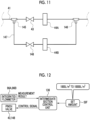
- a sterile filter 44 is used, but the present disclosure is not limited thereto. As an example shown in Fig. 11 , a plurality of sterile filters 44 may be used.
- Fig. 11 shows an example in which two sterile filters 44A and 44B are used.
- three-way joints 145 and 146 are provided on the upstream side of the pinch valve 43 in the coupling path 41 and on the downstream side of the sterile filter 44A, respectively.
- a branch path 147 is connected to the three-way joints 145 and 146, and a pinch valve 148 and the sterile filter 44B are provided in the branch path 147.
- the sterile filter 44B is also sterilely connected to the branch path 147 through the sterile connectors 90, the sterile connector 92, and the like.
- measurement results of integrated flow rates of the culture supernatant liquid 29 from an integrated flowmeter 96A incorporated in the sterile filter 44A and an integrated flowmeter 96B incorporated in the sterile filter 44B are input to the intermediate section control unit 136.
- the intermediate section control unit 136 compares the measurement results of the integrated flow rates of the culture supernatant liquid 29 with a set amount SIF.
- the set amount SIF is set to be 1,000 L/m 2 to 10,000 L/m 2 , as described in Fig. 2 of the first embodiment above.
- the intermediate section control unit 136 transmits the control signal to the pinch valves 43 and 148.
- the left side of Fig. 13 shows a state in which the control signal (open) is transmitted from the intermediate section control unit 136 to the pinch valve 43 and the control signal (close) is transmitted to the pinch valve 148, and the culture supernatant liquid 29 is filtered by the sterile filter 44A of the coupling path 41.
- the intermediate section control unit 136 transmits the control signal (close) to the pinch valve 43 and then transmits the control signal (open) to the pinch valve 148, as shown in the right side of Fig. 13 .
- the flow passage of the culture supernatant liquid 29 is switched from the coupling path 41 to the branch path 147, and the culture supernatant liquid 29 flows into the sterile filter 44B of the branch path 147. That is, in a case where the integrated flow rate of the culture supernatant liquid 29 of one of the plurality of sterile filters 44 reaches the set amount SIF, the intermediate section control unit 136 performs switching for another sterile filter 44 to be used.
- the sterile filter 44B connected in parallel to the coupling path 41 is used in addition to the sterile filter 44A provided in the coupling path 41. Therefore, the effort of exchanging the sterile filter 44 can be reduced.
- the number of the sterile filters 44 connected in parallel to the coupling path 41 is not limited to 1 as the example, and may be 2 or more.
- the sterile filter 44 including the filter membrane 100 having the structure in which a flat filter paper made of polyethersulfone is folded has been described as an example, but the present invention is not limited thereto.
- a sterile filter 150 shown in Fig. 14 may be used.
- the sterile filter 150 has a filter membrane 151 having a structure in which hollow fibers made of polyethersulfone are bundled together.
- the sterile filter 150 having such a filter membrane 151 is called a hollow fiber filter.
- the filter membrane 151 having the structure in which hollow fibers are bundled together has a washing effect. Therefore, with the sterile filter 150, the frequency of replacement can be reduced as compared with the sterile filter 44 having the filter membranes 99 and 100, in which a flat filter paper is folded.
- the filter membrane 151 may also have a two-layer structure as in the filter membranes 99 and 100 of the first embodiment described above.
- the first step of the purification section 12 is the purification step using the purification filter 82 of the SPTFF method, but the present invention is not limited thereto.
- the first step of the purification section 12 may be a purification step using the immunaffinity chromatography device 81.
- the purification section 155 includes an immunaffinity chromatography device 81, a cation chromatography device 156, and an anion chromatography device 157, and continuously purifies the culture supernatant liquid 29 by these chromatography devices 81, 156, and 157.
- the immunaffinity chromatography device 81 is allowed to flow the culture supernatant liquid 29 thereto through the coupling path 61.
- the immunaffinity chromatography device 81 generates a first purified liquid 158 by extracting the antibody 18 from the culture supernatant liquid 29.
- the first purified liquid 158 is subjected to the virus inactivating treatment 85.
- the cation chromatography device 156 extracts the antibody 18 from the first purified liquid 158 using a column in which a cation exchanger is used as a stationary phase, thereby generating a second purified liquid 159.
- the second purified liquid 159 flows into the anion chromatography device 157.
- the anion chromatography device 157 extracts the antibody 18 from the second purified liquid 159 using a column in which an anion exchanger is used as a stationary phase, thereby generating a third purified liquid 160.
- the third purified liquid 160 is passed through the filter 87 to remove the virus, and then is subjected to the concentration and the filtration treatment by the ultrafiltration and diafiltration with the filter 88, in the same manner as the second purified liquid 84 of the first embodiment described above. As a result, the active pharmaceutical ingredient 89 of a biopharmaceutical is obtained.
- the first step in the purification section 155 is a purification step using the immunaffinity chromatography device 81.
- the culture supernatant liquid 29 can be continuously purified.
- the sterile connector 46 or the like has been mentioned as the sterile connection means, but the present invention is not limited thereto.
- the connection may be made in a sterile manner by thermal welding.
- pinch valves 43 and the like are mentioned as the no liquid-contact type valve, the present invention is not limited thereto.
- a non-electric (manual) tube clamp may be used instead of the pinch valve 43 or the like.
- the tube clamp a screw type, a crocodile mouth type, a roller type, a ratchet type, or the like can be adopted.
- an indicator such as a warning light may be provided in the purification section 12, and the user may be notified of the occurrence of the malfunction in the purification section 12 by the indicator.
- the SPTFF device 80 or the immunaffinity chromatography device 81 may not issue the error signal to the purification section control unit 137.
- the product is not limited to the antibody 18.
- the product is not particularly limited as long as it is the active pharmaceutical ingredient 89 of a biopharmaceutical, and may be a protein, a peptide, a nucleic acid (DNA or ribonucleic acid (RNA)), a lipid, a virus, a virus subunit, a virus-like particle, or the like, other than the antibody 18.
- various processors shown below can be used as hardware structures of processing units that execute various kinds of processing, such as the culture section control unit 135, the intermediate section control unit 136, and the purification section control unit 137.
- the various processors include, for example, the CPU 122 which is a general-purpose processor executing software (control program 130) to function as various processors as described above, a programmable logic device (PLD), such as a field programmable gate array (FPGA), which is a processor whose circuit configuration can be changed after manufacture, and a dedicated electric circuit, such as an application specific integrated circuit (ASIC), which is a processor having a dedicated circuit configuration designed to perform a specific process.
- PLD programmable logic device
- FPGA field programmable gate array
- ASIC application specific integrated circuit
- One processing unit may be configured by one of the various types of processors or may be configured by a combination of two or more processors of the same type or different types (for example, a combination of a plurality of FPGAs and/or a combination of a CPU and an FPGA).
- a plurality of processing units may be configured by one processor.
- one processor is configured by a combination of one or more CPUs and software and the processor functions as the plurality of processing units, as represented by computers such as a client and a server.
- a second example of the configuration is an aspect in which a processor that implements the functions of the entire system including a plurality of processing units using one integrated circuit (IC) chip is used.
- IC integrated circuit
- a representative example of the aspect is a system-on-chip (SoC).
- SoC system-on-chip
- circuitry in which circuit elements, such as semiconductor elements, are combined can be used as the hardware structure of these various processors.
- a and/or B has the same meaning as “at least one of A or B”. That is, the “A and/or B” means only A, only B, or a combination of A and B.
- the same concept as “A and/or B” is applied.
Landscapes
- Health & Medical Sciences (AREA)
- Chemical & Material Sciences (AREA)
- Life Sciences & Earth Sciences (AREA)
- Organic Chemistry (AREA)
- Engineering & Computer Science (AREA)
- Zoology (AREA)
- Wood Science & Technology (AREA)
- Bioinformatics & Cheminformatics (AREA)
- Biotechnology (AREA)
- General Health & Medical Sciences (AREA)
- Biochemistry (AREA)
- Genetics & Genomics (AREA)
- Biomedical Technology (AREA)
- General Engineering & Computer Science (AREA)
- Microbiology (AREA)
- Sustainable Development (AREA)
- Medicinal Chemistry (AREA)
- Molecular Biology (AREA)
- Proteomics, Peptides & Aminoacids (AREA)
- Biophysics (AREA)
- Immunology (AREA)
- Cell Biology (AREA)
- Developmental Biology & Embryology (AREA)
- Virology (AREA)
- Animal Behavior & Ethology (AREA)
- Analytical Chemistry (AREA)
- Reproductive Health (AREA)
- Pharmacology & Pharmacy (AREA)
- Epidemiology (AREA)
- Public Health (AREA)
- Veterinary Medicine (AREA)
- Clinical Laboratory Science (AREA)
- General Chemical & Material Sciences (AREA)
- Chemical Kinetics & Catalysis (AREA)
- Gynecology & Obstetrics (AREA)
- Apparatus Associated With Microorganisms And Enzymes (AREA)
Applications Claiming Priority (2)
| Application Number | Priority Date | Filing Date | Title |
|---|---|---|---|
| JP2022057526 | 2022-03-30 | ||
| PCT/JP2023/013428 WO2023191008A1 (ja) | 2022-03-30 | 2023-03-30 | バイオ医薬品の原薬の製造方法、バイオ医薬品の原薬の製造システム、およびバイオ医薬品の原薬 |
Publications (2)
| Publication Number | Publication Date |
|---|---|
| EP4501334A1 true EP4501334A1 (de) | 2025-02-05 |
| EP4501334A4 EP4501334A4 (de) | 2025-07-16 |
Family
ID=88202301
Family Applications (1)
| Application Number | Title | Priority Date | Filing Date |
|---|---|---|---|
| EP23781016.3A Pending EP4501334A4 (de) | 2022-03-30 | 2023-03-30 | Verfahren zur herstellung einer biopharmazeutischen arzneimittelsubstanz, system zur herstellung einer biopharmazeutischen arzneimittelsubstanz und biopharmazeutische arzneimittelsubstanz |
Country Status (5)
| Country | Link |
|---|---|
| US (1) | US20250011708A1 (de) |
| EP (1) | EP4501334A4 (de) |
| JP (1) | JPWO2023191008A1 (de) |
| CN (1) | CN118984710A (de) |
| WO (1) | WO2023191008A1 (de) |
Family Cites Families (7)
| Publication number | Priority date | Publication date | Assignee | Title |
|---|---|---|---|---|
| PL1807101T3 (pl) * | 2004-09-30 | 2016-11-30 | Urządzenia i sposoby do zintegrowanego wytwarzania cząsteczek biologicznych w sposób ciągły | |
| AU2014226126B2 (en) * | 2013-03-08 | 2019-02-14 | Genzyme Corporation | Continuous purification of therapeutic proteins |
| US20170058308A1 (en) * | 2014-05-02 | 2017-03-02 | Novo Nordisk A/S | Integrated continuous biomanufacturing process |
| EP4218991A1 (de) * | 2014-05-13 | 2023-08-02 | Amgen Inc. | Prozesssteuerungssysteme und verfahren zur verwendung mit filtern und filtrationsverfahren |
| EP3015542A1 (de) * | 2015-05-07 | 2016-05-04 | Bayer Technology Services GmbH | Modulare anlage und verfahren zur kontinuierlichen, keimreduzierten produktion und/oder aufbereitung eines produktes |
| US11359172B2 (en) | 2017-08-09 | 2022-06-14 | Sartorius Stedim Biotech Gmbh | Upstream and downstream processing within single-use containers |
| WO2021197248A1 (zh) * | 2020-03-30 | 2021-10-07 | 上海复宏汉霖生物技术股份有限公司 | 连续纯化生物制药产品的系统和方法 |
-
2023
- 2023-03-30 JP JP2024512871A patent/JPWO2023191008A1/ja active Pending
- 2023-03-30 CN CN202380028994.5A patent/CN118984710A/zh active Pending
- 2023-03-30 WO PCT/JP2023/013428 patent/WO2023191008A1/ja not_active Ceased
- 2023-03-30 EP EP23781016.3A patent/EP4501334A4/de active Pending
-
2024
- 2024-09-24 US US18/894,011 patent/US20250011708A1/en active Pending
Also Published As
| Publication number | Publication date |
|---|---|
| US20250011708A1 (en) | 2025-01-09 |
| WO2023191008A1 (ja) | 2023-10-05 |
| JPWO2023191008A1 (de) | 2023-10-05 |
| EP4501334A4 (de) | 2025-07-16 |
| CN118984710A (zh) | 2024-11-19 |
Similar Documents
| Publication | Publication Date | Title |
|---|---|---|
| RU2676639C2 (ru) | Блок ультрафильтрации для непрерывной замены буферного раствора или среды из раствора белка | |
| CA2824907C (en) | Pneumatic alternating pressure membrane cell separation system | |
| CN108260347A (zh) | Cff/tff单次使用流路径中的再循环回路 | |
| EP2830744B1 (de) | Mikrofluss-filtrationssystem und flussfiltrationsverfahren | |
| AU2016254582C1 (en) | Method for continuous virus inactivation in a microreactor | |
| US20250019394A1 (en) | Method for producing active pharmaceutical ingredient of biopharmaceutical, system for producing active pharmaceutical ingredient of biopharmaceutical, and active pharmaceutical ingredient of biopharmaceutical | |
| EP4501334A1 (de) | Verfahren zur herstellung einer biopharmazeutischen arzneimittelsubstanz, system zur herstellung einer biopharmazeutischen arzneimittelsubstanz und biopharmazeutische arzneimittelsubstanz | |
| EP4488355A1 (de) | Verfahren zur herstellung eines pharmazeutischen wirkstoffs, system zur herstellung eines pharmazeutischen wirkstoffs | |
| CN216630346U (zh) | 一种切向流超滤系统 | |
| CN108348875A (zh) | 混合方法和系统 | |
| US20240352063A1 (en) | End-to-End Continuous Purification System | |
| Szarafinski | Flexible, scalable and configurable single‐use systems for biopharmaceutical research and manufacture | |
| JP2025503394A (ja) | 自動中空糸システム | |
| CN119158324A (zh) | 用于连续切向流过滤的多模块系统 | |
| JPWO2023191008A5 (de) | ||
| HK1227350A1 (en) | Ultrafiltration unit for continuous buffer or media exchange from a protein solution | |
| HK1227350B (zh) | 用於从蛋白质溶液的连续缓冲或介质交换的超滤单元 | |
| NZ614364B2 (en) | Pneumatic alternating pressure membrane cell separation system |
Legal Events
| Date | Code | Title | Description |
|---|---|---|---|
| STAA | Information on the status of an ep patent application or granted ep patent |
Free format text: STATUS: THE INTERNATIONAL PUBLICATION HAS BEEN MADE |
|
| PUAI | Public reference made under article 153(3) epc to a published international application that has entered the european phase |
Free format text: ORIGINAL CODE: 0009012 |
|
| STAA | Information on the status of an ep patent application or granted ep patent |
Free format text: STATUS: REQUEST FOR EXAMINATION WAS MADE |
|
| 17P | Request for examination filed |
Effective date: 20240930 |
|
| AK | Designated contracting states |
Kind code of ref document: A1 Designated state(s): AL AT BE BG CH CY CZ DE DK EE ES FI FR GB GR HR HU IE IS IT LI LT LU LV MC ME MK MT NL NO PL PT RO RS SE SI SK SM TR |
|
| DAV | Request for validation of the european patent (deleted) | ||
| DAX | Request for extension of the european patent (deleted) | ||
| A4 | Supplementary search report drawn up and despatched |
Effective date: 20250618 |
|
| RIC1 | Information provided on ipc code assigned before grant |
Ipc: A61K 35/12 20150101AFI20250612BHEP Ipc: A61K 35/54 20150101ALI20250612BHEP Ipc: C07K 1/00 20060101ALI20250612BHEP Ipc: C07K 1/16 20060101ALI20250612BHEP Ipc: C12M 3/00 20060101ALI20250612BHEP Ipc: C12P 21/02 20060101ALI20250612BHEP Ipc: C12P 21/08 20060101ALI20250612BHEP Ipc: C12M 1/00 20060101ALI20250612BHEP |