EP4501438A1 - Système catalytique - Google Patents
Système catalytique Download PDFInfo
- Publication number
- EP4501438A1 EP4501438A1 EP23188743.1A EP23188743A EP4501438A1 EP 4501438 A1 EP4501438 A1 EP 4501438A1 EP 23188743 A EP23188743 A EP 23188743A EP 4501438 A1 EP4501438 A1 EP 4501438A1
- Authority
- EP
- European Patent Office
- Prior art keywords
- substrate
- catalyst
- scr catalyst
- scr
- clause
- Prior art date
- Legal status (The legal status is an assumption and is not a legal conclusion. Google has not performed a legal analysis and makes no representation as to the accuracy of the status listed.)
- Withdrawn
Links
Images




Classifications
-
- B—PERFORMING OPERATIONS; TRANSPORTING
- B01—PHYSICAL OR CHEMICAL PROCESSES OR APPARATUS IN GENERAL
- B01D—SEPARATION
- B01D53/00—Separation of gases or vapours; Recovering vapours of volatile solvents from gases; Chemical or biological purification of waste gases, e.g. engine exhaust gases, smoke, fumes, flue gases, aerosols
- B01D53/34—Chemical or biological purification of waste gases
- B01D53/92—Chemical or biological purification of waste gases of engine exhaust gases
- B01D53/94—Chemical or biological purification of waste gases of engine exhaust gases by catalytic processes
- B01D53/9404—Removing only nitrogen compounds
- B01D53/9409—Nitrogen oxides
- B01D53/9413—Processes characterised by a specific catalyst
- B01D53/9418—Processes characterised by a specific catalyst for removing nitrogen oxides by selective catalytic reduction [SCR] using a reducing agent in a lean exhaust gas
-
- B—PERFORMING OPERATIONS; TRANSPORTING
- B01—PHYSICAL OR CHEMICAL PROCESSES OR APPARATUS IN GENERAL
- B01D—SEPARATION
- B01D53/00—Separation of gases or vapours; Recovering vapours of volatile solvents from gases; Chemical or biological purification of waste gases, e.g. engine exhaust gases, smoke, fumes, flue gases, aerosols
- B01D53/34—Chemical or biological purification of waste gases
- B01D53/92—Chemical or biological purification of waste gases of engine exhaust gases
- B01D53/94—Chemical or biological purification of waste gases of engine exhaust gases by catalytic processes
- B01D53/9459—Removing one or more of nitrogen oxides, carbon monoxide, or hydrocarbons by multiple successive catalytic functions; systems with more than one different function, e.g. zone coated catalysts
- B01D53/9477—Removing one or more of nitrogen oxides, carbon monoxide, or hydrocarbons by multiple successive catalytic functions; systems with more than one different function, e.g. zone coated catalysts with catalysts positioned on separate bricks, e.g. exhaust systems
-
- B—PERFORMING OPERATIONS; TRANSPORTING
- B01—PHYSICAL OR CHEMICAL PROCESSES OR APPARATUS IN GENERAL
- B01J—CHEMICAL OR PHYSICAL PROCESSES, e.g. CATALYSIS OR COLLOID CHEMISTRY; THEIR RELEVANT APPARATUS
- B01J23/00—Catalysts comprising metals or metal oxides or hydroxides, not provided for in group B01J21/00
- B01J23/16—Catalysts comprising metals or metal oxides or hydroxides, not provided for in group B01J21/00 of arsenic, antimony, bismuth, vanadium, niobium, tantalum, polonium, chromium, molybdenum, tungsten, manganese, technetium or rhenium
- B01J23/20—Vanadium, niobium or tantalum
- B01J23/22—Vanadium
-
- B—PERFORMING OPERATIONS; TRANSPORTING
- B01—PHYSICAL OR CHEMICAL PROCESSES OR APPARATUS IN GENERAL
- B01J—CHEMICAL OR PHYSICAL PROCESSES, e.g. CATALYSIS OR COLLOID CHEMISTRY; THEIR RELEVANT APPARATUS
- B01J29/00—Catalysts comprising molecular sieves
- B01J29/04—Catalysts comprising molecular sieves having base-exchange properties, e.g. crystalline zeolites
- B01J29/06—Crystalline aluminosilicate zeolites; Isomorphous compounds thereof
- B01J29/40—Crystalline aluminosilicate zeolites; Isomorphous compounds thereof of the pentasil type, e.g. types ZSM-5, ZSM-8 or ZSM-11, as exemplified by patent documents US3702886, GB1334243 and US3709979, respectively
- B01J29/42—Crystalline aluminosilicate zeolites; Isomorphous compounds thereof of the pentasil type, e.g. types ZSM-5, ZSM-8 or ZSM-11, as exemplified by patent documents US3702886, GB1334243 and US3709979, respectively containing iron group metals, noble metals or copper
- B01J29/46—Iron group metals or copper
-
- B—PERFORMING OPERATIONS; TRANSPORTING
- B01—PHYSICAL OR CHEMICAL PROCESSES OR APPARATUS IN GENERAL
- B01J—CHEMICAL OR PHYSICAL PROCESSES, e.g. CATALYSIS OR COLLOID CHEMISTRY; THEIR RELEVANT APPARATUS
- B01J29/00—Catalysts comprising molecular sieves
- B01J29/04—Catalysts comprising molecular sieves having base-exchange properties, e.g. crystalline zeolites
- B01J29/06—Crystalline aluminosilicate zeolites; Isomorphous compounds thereof
- B01J29/65—Crystalline aluminosilicate zeolites; Isomorphous compounds thereof of the ferrierite type, e.g. types ZSM-21, ZSM-35 or ZSM-38, as exemplified by patent documents US4046859, US4016245 and US4046859, respectively
- B01J29/66—Crystalline aluminosilicate zeolites; Isomorphous compounds thereof of the ferrierite type, e.g. types ZSM-21, ZSM-35 or ZSM-38, as exemplified by patent documents US4046859, US4016245 and US4046859, respectively containing iron group metals, noble metals or copper
- B01J29/68—Iron group metals or copper
-
- B—PERFORMING OPERATIONS; TRANSPORTING
- B01—PHYSICAL OR CHEMICAL PROCESSES OR APPARATUS IN GENERAL
- B01J—CHEMICAL OR PHYSICAL PROCESSES, e.g. CATALYSIS OR COLLOID CHEMISTRY; THEIR RELEVANT APPARATUS
- B01J35/00—Catalysts, in general, characterised by their form or physical properties
- B01J35/19—Catalysts containing parts with different compositions
-
- B—PERFORMING OPERATIONS; TRANSPORTING
- B01—PHYSICAL OR CHEMICAL PROCESSES OR APPARATUS IN GENERAL
- B01J—CHEMICAL OR PHYSICAL PROCESSES, e.g. CATALYSIS OR COLLOID CHEMISTRY; THEIR RELEVANT APPARATUS
- B01J35/00—Catalysts, in general, characterised by their form or physical properties
- B01J35/50—Catalysts, in general, characterised by their form or physical properties characterised by their shape or configuration
- B01J35/56—Foraminous structures having flow-through passages or channels, e.g. grids or three-dimensional [3D] monoliths
- B01J35/57—Honeycombs
-
- B—PERFORMING OPERATIONS; TRANSPORTING
- B01—PHYSICAL OR CHEMICAL PROCESSES OR APPARATUS IN GENERAL
- B01J—CHEMICAL OR PHYSICAL PROCESSES, e.g. CATALYSIS OR COLLOID CHEMISTRY; THEIR RELEVANT APPARATUS
- B01J37/00—Processes, in general, for preparing catalysts; Processes, in general, for activation of catalysts
- B01J37/02—Impregnation, coating or precipitation
- B01J37/024—Multiple impregnation or coating
-
- B—PERFORMING OPERATIONS; TRANSPORTING
- B01—PHYSICAL OR CHEMICAL PROCESSES OR APPARATUS IN GENERAL
- B01J—CHEMICAL OR PHYSICAL PROCESSES, e.g. CATALYSIS OR COLLOID CHEMISTRY; THEIR RELEVANT APPARATUS
- B01J37/00—Processes, in general, for preparing catalysts; Processes, in general, for activation of catalysts
- B01J37/02—Impregnation, coating or precipitation
- B01J37/024—Multiple impregnation or coating
- B01J37/0244—Coatings comprising several layers
-
- B—PERFORMING OPERATIONS; TRANSPORTING
- B01—PHYSICAL OR CHEMICAL PROCESSES OR APPARATUS IN GENERAL
- B01J—CHEMICAL OR PHYSICAL PROCESSES, e.g. CATALYSIS OR COLLOID CHEMISTRY; THEIR RELEVANT APPARATUS
- B01J37/00—Processes, in general, for preparing catalysts; Processes, in general, for activation of catalysts
- B01J37/02—Impregnation, coating or precipitation
- B01J37/024—Multiple impregnation or coating
- B01J37/0246—Coatings comprising a zeolite
-
- B—PERFORMING OPERATIONS; TRANSPORTING
- B01—PHYSICAL OR CHEMICAL PROCESSES OR APPARATUS IN GENERAL
- B01J—CHEMICAL OR PHYSICAL PROCESSES, e.g. CATALYSIS OR COLLOID CHEMISTRY; THEIR RELEVANT APPARATUS
- B01J37/00—Processes, in general, for preparing catalysts; Processes, in general, for activation of catalysts
- B01J37/02—Impregnation, coating or precipitation
- B01J37/024—Multiple impregnation or coating
- B01J37/0248—Coatings comprising impregnated particles
-
- F—MECHANICAL ENGINEERING; LIGHTING; HEATING; WEAPONS; BLASTING
- F01—MACHINES OR ENGINES IN GENERAL; ENGINE PLANTS IN GENERAL; STEAM ENGINES
- F01N—GAS-FLOW SILENCERS OR EXHAUST APPARATUS FOR MACHINES OR ENGINES IN GENERAL; GAS-FLOW SILENCERS OR EXHAUST APPARATUS FOR INTERNAL-COMBUSTION ENGINES
- F01N3/00—Exhaust or silencing apparatus having means for purifying, rendering innocuous, or otherwise treating exhaust
- F01N3/08—Exhaust or silencing apparatus having means for purifying, rendering innocuous, or otherwise treating exhaust for rendering innocuous
- F01N3/10—Exhaust or silencing apparatus having means for purifying, rendering innocuous, or otherwise treating exhaust for rendering innocuous by thermal or catalytic conversion of noxious components of exhaust
- F01N3/18—Exhaust or silencing apparatus having means for purifying, rendering innocuous, or otherwise treating exhaust for rendering innocuous by thermal or catalytic conversion of noxious components of exhaust characterised by methods of operation; Control
- F01N3/20—Exhaust or silencing apparatus having means for purifying, rendering innocuous, or otherwise treating exhaust for rendering innocuous by thermal or catalytic conversion of noxious components of exhaust characterised by methods of operation; Control specially adapted for catalytic conversion
- F01N3/206—Adding periodically or continuously substances to exhaust gases for promoting purification, e.g. catalytic material in liquid form, NOx reducing agents
- F01N3/2066—Selective catalytic reduction [SCR]
-
- B—PERFORMING OPERATIONS; TRANSPORTING
- B01—PHYSICAL OR CHEMICAL PROCESSES OR APPARATUS IN GENERAL
- B01D—SEPARATION
- B01D2255/00—Catalysts
- B01D2255/20—Metals or compounds thereof
- B01D2255/207—Transition metals
- B01D2255/20723—Vanadium
-
- B—PERFORMING OPERATIONS; TRANSPORTING
- B01—PHYSICAL OR CHEMICAL PROCESSES OR APPARATUS IN GENERAL
- B01D—SEPARATION
- B01D2255/00—Catalysts
- B01D2255/20—Metals or compounds thereof
- B01D2255/207—Transition metals
- B01D2255/20738—Iron
-
- B—PERFORMING OPERATIONS; TRANSPORTING
- B01—PHYSICAL OR CHEMICAL PROCESSES OR APPARATUS IN GENERAL
- B01D—SEPARATION
- B01D2255/00—Catalysts
- B01D2255/50—Zeolites
-
- B—PERFORMING OPERATIONS; TRANSPORTING
- B01—PHYSICAL OR CHEMICAL PROCESSES OR APPARATUS IN GENERAL
- B01D—SEPARATION
- B01D2255/00—Catalysts
- B01D2255/50—Zeolites
- B01D2255/504—ZSM 5 zeolites
-
- B—PERFORMING OPERATIONS; TRANSPORTING
- B01—PHYSICAL OR CHEMICAL PROCESSES OR APPARATUS IN GENERAL
- B01D—SEPARATION
- B01D2255/00—Catalysts
- B01D2255/90—Physical characteristics of catalysts
- B01D2255/902—Multilayered catalyst
- B01D2255/9022—Two layers
-
- B—PERFORMING OPERATIONS; TRANSPORTING
- B01—PHYSICAL OR CHEMICAL PROCESSES OR APPARATUS IN GENERAL
- B01D—SEPARATION
- B01D2255/00—Catalysts
- B01D2255/90—Physical characteristics of catalysts
- B01D2255/903—Multi-zoned catalysts
- B01D2255/9032—Two zones
-
- B—PERFORMING OPERATIONS; TRANSPORTING
- B01—PHYSICAL OR CHEMICAL PROCESSES OR APPARATUS IN GENERAL
- B01D—SEPARATION
- B01D2257/00—Components to be removed
- B01D2257/40—Nitrogen compounds
- B01D2257/404—Nitrogen oxides other than dinitrogen oxide
-
- B—PERFORMING OPERATIONS; TRANSPORTING
- B01—PHYSICAL OR CHEMICAL PROCESSES OR APPARATUS IN GENERAL
- B01D—SEPARATION
- B01D2258/00—Sources of waste gases
- B01D2258/01—Engine exhaust gases
- B01D2258/012—Diesel engines and lean burn gasoline engines
-
- Y—GENERAL TAGGING OF NEW TECHNOLOGICAL DEVELOPMENTS; GENERAL TAGGING OF CROSS-SECTIONAL TECHNOLOGIES SPANNING OVER SEVERAL SECTIONS OF THE IPC; TECHNICAL SUBJECTS COVERED BY FORMER USPC CROSS-REFERENCE ART COLLECTIONS [XRACs] AND DIGESTS
- Y02—TECHNOLOGIES OR APPLICATIONS FOR MITIGATION OR ADAPTATION AGAINST CLIMATE CHANGE
- Y02T—CLIMATE CHANGE MITIGATION TECHNOLOGIES RELATED TO TRANSPORTATION
- Y02T10/00—Road transport of goods or passengers
- Y02T10/10—Internal combustion engine [ICE] based vehicles
- Y02T10/12—Improving ICE efficiencies
Definitions
- the present invention relates to a catalyst system suitable for treating an exhaust gas.
- the present invention relates to a catalyst system suitable for use in the selective catalytic reduction of nitrogen oxides (NOx) in an exhaust gas.
- NOx nitrogen oxides
- Catalytic converters for use in motor-vehicles typically comprise a ceramic honeycomb monolith that is provided with channels for the through-flow of exhaust gases.
- the channels of the monolith may be coated with a catalytically active material.
- the monolith itself is an extrusion of a catalytically active material (referred to as an "all-active extrudate" or "extruded catalyst").
- the selective catalytic reduction of nitrogen oxides (NO x ) by ammonia is considered to be the most practical and efficient technology for the abatement of NO x from exhaust gases emitted from stationary sources and mobile engines, principally lean-burn engines, such as diesel engines for vehicles.
- exhaust gases from lean burn gas engines have a net oxidizing effect due to the high proportion of oxygen that is provided to ensure adequate combustion of the hydrocarbon fuel.
- the reduction of NO x to N 2 is particularly problematic because the exhaust gas contains enough oxygen to favor oxidative reactions instead of reduction.
- An SCR process involves the conversion of NO x , in the presence of a catalyst and with the aid of a reducing agent, such as ammonia, into elemental nitrogen (N 2 ) and water.
- a gaseous reductant such as ammonia is added to an exhaust gas stream prior to contacting the exhaust gas with the SCR catalyst.
- the reductant is absorbed onto the catalyst and the NO x reduction reaction takes place as the gases pass through or over the catalyzed substrate.
- the chemical equation for stoichiometric SCR reactions using ammonia is: 4NO + 4NH 3 + O 2 ⁇ 4N 2 + 6H 2 O 2NO 2 + 4NH 3 + O 2 ⁇ 3N 2 + 6H 2 O NO + NO 2 + 2NH 3 ⁇ 2N 2 + 3H 2 O
- SCR selective catalytic reduction
- Known SCR (selective catalytic reduction) catalysts include vanadium-based catalysts and molecular sieves, such as metal loaded molecular sieves.
- a problem associated with the treatment of nitrogen oxides in exhaust gas from lean-burn engines using SCR catalysts is that the ammonia may be oxidized to low-valent nitrogen oxides, especially nitrous oxide (N 2 O), due to the high oxygen content in the exhaust gas. This removes the reducing agent required for the SCR reaction from the process on the one hand, and the nitrous oxide escapes as an undesired secondary emission on the other hand. In particular, it has been found that N 2 O selectivity increases at higher exhaust gas temperatures.
- US2019/0314801 describes a catalyst device for purifying exhaust gases containing nitrogen oxide by means of selective catalytic reduction (SCR), comprising at least two catalytic regions, the first region containing vanadium oxide and cerium oxide, and the second region containing a molecular sieve containing iron.
- SCR selective catalytic reduction
- the zeolite is preferably of the BEA type. It is particularly preferred that the catalyst device is designed in such a manner that the exhaust gases initially contact the first region containing the vanadium cerium catalyst, since it is assumed that an exhaust gas fraction reacting with the vanadium cerium catalyst then reacts advantageously with the iron-containing zeolite.
- WO 2014/027207 A1 discloses a catalyst composition for treating oxides of nitrogen in exhaust gas derived from a combustion process, such as from an internal combustion engine (whether mobile or stationary), a gas turbine or a coal or oil fired power plant, the catalyst comprising a blend of a first component and second component, wherein the first component is an aluminosilicate or ferrosilicate molecular sieve component and wherein the molecular sieve is either in H+ form or is ion exchanged with one or more transition metals, and the second component is a vanadium oxide supported on a metal oxide support selected from alumina, titania, zirconia, ceria, silica, and combinations thereof.
- the present invention provides a catalyst system for treatment of an exhaust gas comprising:
- the combination of an Fe-loaded FER or an MFI molecular sieve with a vanadium-based SCR catalyst in the specified configuration may provide improved or comparable NO x conversion compared with known systems, whilst also achieving reduced selectivity to N 2 O.
- the use of a medium pore molecular sieves in SCR applications may be advantageous compared with conventional large pore BEA; for example, they may provide improved resistance to coking by hydrocarbons, which reduces catalyst performance.
- the present invention provides an exhaust system comprising a source of nitrogen containing reducing agent and the catalyst system of the first aspect.
- the present invention provides a method of treating an exhaust gas comprising contacting a mixture of an exhaust gas comprising nitrogen oxides and a nitrogen containing reducing agent with the catalyst system of the first aspect.
- the present invention provides the use of the catalyst system of the first aspect for the selective catalytic reduction of nitrogen oxides in an exhaust gas.
- the present invention provides a vehicle comprising an internal combustion engine and a catalyst system according to the first aspect.
- the term “comprising” as used herein can be exchanged for the definitions "consisting essentially of' or “consisting of”.
- the term “comprising” is intended to mean that the named elements are essential, but other elements may be added and still form a construct within the scope of the claim.
- the term “consisting essentially of” limits the scope of a claim to the specified materials or steps and those that do not materially affect the basic and novel characteristic(s) of the claimed invention.
- the term “consisting of” closes the claim to the inclusion of materials other than those recited except for impurities ordinarily associated therewith.
- the first SCR catalyst and the second SCR catalyst are each provided on or within a substrate.
- the term "provided on or within” as used herein may encompass that the relevant SCR catalyst is disposed on the substrate and/or that the SCR catalysts is present in the substrate, such as in the form of an extruded catalyst formed from an extrudate comprising the SCR composition.
- the term "disposed on” as used herein may encompass either that the relevant SCR catalyst is directly disposed on the substrate, i.e. with no intervening material, and/or indirectly disposed on the substrate, i.e. with intervening material.
- the term "disposed on” may also encompass having the catalytic composition disposed therein, for example within the pores of the substrate, i.e. wherein the catalytic composition is disposed thereon and/or therein, for example, as a washcoat.
- the first and second SCR catalysts may be provided on or within the same substrate. Alternatively, the first and second SCR catalysts may be provided on or within separate substrates which may be arranged in series.
- the one or more substrates may be monolith substrates.
- Such monolith substrates have a honeycomb structure, wherein many small, parallel thin-walled channels for the through-flow of exhaust gas run axially through the substrate extending from an inlet end or an outlet end of the substrate.
- the inlet end is the upstream end of the monolith substrate which, when arranged in an exhaust gas treatment system, receives the gas to be treated.
- the outlet end is the downstream end of the monolith substrate which releases the treated gases.
- the one or more substrates may independently be flow-through monolith substrates, wherein each channel is open at both ends and the channels extend through the entire axial length of the substrate.
- exhaust gas enters a channel at the inlet end and exits the same channel at the outlet end.
- the one or more monolith substrates may independently be configured as a wall-flow filter, in which some channels are plugged at one end of the article and alternate channels are plugged at the opposite end.
- exhaust gas enters a channel at the inlet end, then flows through the channel walls, and exits the filter from a different channel at the outlet end.
- the first SCR catalyst may be provided in an upstream zone and the second SCR catalyst may be provided in a downstream zone.
- the first SCR catalyst may be disposed on the substrate as a coating extending from the inlet end for less than the axial length and the second SCR catalyst may be disposed on the substrate as a coating extending from the outlet end for less than the axial length (for example, see Figure 1 ).
- the coating comprising the first SCR catalyst may extend from the inlet end up to 50% of an axial length of the substrate, more preferably 10 to 30% or 15 to 25% of the axial length of the substrate.
- the coating comprising the second SCR catalyst may extend from the outlet end up to 90% of an axial length of the substrate, for example 50 to 90%, 60 to 90%, 75 to 85% of the axial length of the substrate.
- the total axial length of the upstream zone and the downstream zone may be equal to 100% of the axial length of the monolith substrate, however during manufacturing a small overlap may be obtained as the layer coated last overlaps the layer coated first.
- the first and second SCR catalysts are provided on or within the same substrate, the first SCR catalyst may be provided as a layer coated on top of the second SCR catalyst.
- this embodiment when used in an ammonia-SCR process, this embodiment may benefit from faster transient response compared with other configurations; that is, initiation of the SCR reaction upon dosing with ammonia may occur sooner.
- vanadium-based SCR catalysts achieve faster transient response compared to molecular sieve-based SCR catalysts.
- the first SCR catalyst is provided as a layer on top of the second SCR catalyst, similar transient response times as would be expected from a vanadium SCR catalyst can be achieved.
- the second SCR catalyst may be provided as a lower layer applied to the substrate.
- the second SCR catalyst may be disposed on the substrate as a coating which extends the full axial length of the substrate monolith and the first SCR catalyst may be disposed on the substrate as a coating extending from the inlet end, on top of the coating comprising the second SCR catalyst (for example, see Figure 2 ).
- the coating comprising the first SCR catalyst may extend the full axial length of the substrate monolith or may extend less than 100% of the axial length of the substrate.
- the coating comprising the first SCR catalyst may extend from the inlet end for 10 to 90% of the axial length of the substrate, preferably 10 to 50%, for example 10 to 35% or 15 to 25% of the axial length of the substrate.
- the second SCR catalyst may be incorporated within the substrate itself, in the form of an extruded, all-active catalyst.
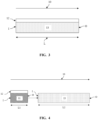
- the substrate may be an active substrate comprising an extrusion of the second SCR catalyst and the first SCR catalyst may be disposed on the active substrate as a coating (for example, see Figure 3 ).
- the coating comprising the first SCR catalyst may extend the full axial length of the active substrate or may extend less than 100% of the axial length of the active substrate, for example, the coating comprising the first SCR catalyst may extend from the inlet end for 10 to 90% of the axial length of the substrate, preferably 10 to 50%, for example 10 to 35% or 15 to 25% of the axial length of the substrate.
- the first SCR catalyst may be provided on or within a first substrate having axial length L1 and the second SCR catalyst may be provided on or within a second substrate having axial length L2, wherein the first substrate is arranged upstream of the second substrate with respect to normal exhaust gas flow through the system (for example, see Figure 4 ).
- the first and second substrates may be arranged in series in the exhaust treatment system and may be adjacent to and in contact with each other, or may be separated by a specific distance, provided that they are in fluid communication with each other.
- the first and second substrates may be of equal axial length. Alternatively, the first and second substrates may have different axial lengths.
- the ratio of the axial length of the second substrate to the axial length of the first substrate may be at least 1.5 to 1 or at least 2:1, such as at least 3:1, at least 5:1, at least 6:1 and may be less than 10:1, such as less than 8:1.
- the ratio of the axial length of the second substrate to the axial length of the first substrate i.e. L2:L1 is in the range 4:1 to 5:1 or in the range 6:1 to 7:1.
- the ratio of the axial length of the second substrate to the axial length of the first substrate i.e. L2:L1 may be about 5:1 or about 6.5:1.
- the first SCR catalyst may be disposed on the first substrate as a coating.
- the coating comprising the first SCR catalyst may extend the full axial length L1 of the first substrate or may extend for less than 100% of the axial length L1.
- the first SCR catalyst may be incorporated within the first substrate itself, in the form of an extruded, all-active catalyst.
- the first substrate may be an active substrate comprising an extrusion of the first SCR catalyst.
- the second SCR catalyst may be disposed on the second substrate as a coating.
- the coating comprising the second SCR catalyst may extend the full axial length L2 of the second substrate or may extend for less than 100% of the axial length L2.
- the second SCR catalyst may be incorporated within the second substrate itself, in the form of an extruded, all-active catalyst.
- the second substrate may be an active substrate comprising an extrusion of the second SCR catalyst.
- the first substrate is an active substrate comprising an extrusion of the first SCR catalyst and the second substrate is an active substrate comprising an extrusion of the second SCR catalyst and the axial length L1 of the first substrate is less than the axial length L2 of the second substrate.
- the ratio of the axial length of the second substrate to the axial length of the first substrate i.e. L2:L1 is at least 2:1, preferably at least 2.5:1, more preferably at least 3:1.
- the first SCR catalyst comprises an iron (Fe) ion-exchanged molecular sieve having a FER or MFI framework as a catalytically active component.
- the FER and MFI Framework type codes (defined by the International Zeolite Association) refer to families of molecular sieves sharing the same structure. Both FER and MFI have a largest pore opening of ten tetrahedral atoms and molecular sieves having this property are referred to in the literature as being "medium pore" molecular sieves. Aluminosilicate molecular sieves are commonly referred to as zeolites.
- Useful FER isotypes include Ferrierite, [Si-O]-FER, FU-9, ISI-6, Monoclinic ferrierite, NU-23, Sr-D, and ZSM-35.
- Useful MFI isotypes include ZSM-5, [Fe-Si-O]-MFI, AMS-1B, AZ-1, Bor-C, Boralite, Encilite, FZ-1, LZ-105, Mutinaite, NU-4, NU-5, Silicalite, TS-1, TSZ, TSZ-III, TZ-01, USC-4, USI-108, ZBH, ZKQ-1B, and ZMQ-TB, with ZSM-5 being particularly preferred.
- the iron content in the iron ion-exchanged aluminosilicate FER or MFI molecular sieve for use in the invention may be in the range 2-7wt% such as 3-6 wt.%.
- the iron (Fe) ion-exchanged molecular sieve is an iron (Fe) ion-exchanged FER.
- the silica-to-alumina molar ratio (SAR) of the FER or MFI molecular sieve may be in the range 10 to 100, preferably 10 to 50.
- the SAR of the FER or MFI molecular sieve may be in the range 30 to 40, such as 35 to 40, or in the range 15 to 25, such as 15 to 20.
- the Fe-loaded FER or MFI molecular sieve is essentially free of any non-framework metal other than Fe.
- the first SCR composition may further comprise other components, particularly catalytically inactive components such as binders and other additives.
- catalytically active component is one that directly participates in the catalytic reduction of NOx; and a “catalytically inactive” components is one which does not directly participate in the catalytic reduction NOx.
- binders or additives employed may depend on the form of the finished catalyst.
- the first SCR catalyst may comprise binders and other types of additives such as alumina, zirconia, ceria, silica, mixtures of alumina with zirconia or ceria, ceria coated on alumina, and mixed oxides, such as (non-zeolite) silica-alumina, alumina-zirconia, alumina chromia, and alumina ceria.
- the first SCR catalyst may further comprise inorganic fibres.
- the second SCR catalyst comprises vanadium as a catalytically active component.
- the vanadium may be supported on a metal oxide support, such as a support comprising titania.
- the vanadium may include vanadium as free vanadium, vanadium ion, or an oxide of vanadium or a derivative thereof.
- the vanadium may be in the form of an oxide, for example vanadium pentoxide (V 2 O 5 ) or a metal vanadate, such as FeVO 4 ).
- the second SCR catalyst can include other catalytically active metal oxides such as oxides of tungsten, oxides of niobium, oxides of antimony, oxides of cerium and/or oxides of molybdenum.
- the second SCR catalyst further comprises an oxide of antimony.
- an oxide of cerium may be present in the second SCR catalyst.
- cerium may be substantially absent from the second SCR catalyst.
- the second SCR catalyst may comprise an oxide of vanadium present in a majority amount (i.e., greater than 50 wt%) relative to other catalytically active metal oxides, such as tungsten oxides and/or antimony oxides.
- the second SCR catalyst may comprise an oxide of vanadium present in a minority amount (i.e., less than 50 wt%) relative to other catalytically active metal oxides, such as tungsten oxides.
- the vanadium (as V metal) is preferably loaded on a metal oxide support material at a concentration of about 0.5 to about 4 wt% based on total weight of the metal oxide support.
- the support material for the vanadium component may be titania or titania in combination with another component such as tungsten (VI) oxide, molybdenum oxide, niobium oxide, antimony oxide, or silica as a mixture or as a mixed oxide.
- a support may be titania doped with W, Si, Mo, Nb, Sb, or combinations thereof.
- the support is titania doped with W and Si.
- a preferred oxide of titanium is titanium dioxide (TiO 2 ) which is also known as titania or titanium (IV) oxide and is preferably in the anatase form.
- the second SCR catalyst may comprise oxides of titanium and oxides of vanadium in a weight ratio of about 30:1 to about 2:1, more preferably from about 25:1 to about 10:1, and even more preferably from about 22:1 to about 14:1. While both vanadium and the support can be metal oxides, the two components are structurally distinct from each other in that the support is present as discrete particles and the vanadium is present in a relatively thin layer or coating that adheres to the particles. Thus, the vanadium and titania are not present as a mixed oxide.
- the first SCR composition may further comprise other components, particularly catalytically inactive components such as binders and other additives.
- binders or additives employed may depend on the form of the finished catalyst.
- the second SCR catalyst may comprise binders and other types of additives such as alumina, zirconia, ceria, silica, mixtures of alumina with zirconia or ceria, ceria coated on alumina, and mixed oxides, such as (non-zeolite) silica-alumina, alumina-zirconia, alumina chromia, and alumina ceria.
- the first SCR catalyst may further comprise inorganic fibres.
- the second SCR catalyst may be free from molecular sieve materials.
- the first SCR catalyst may be free from vanadium.
- the first and second SCR catalysts may be prepared according to methods known in the art. Where an SCR catalyst is disposed on a substrate, it may be applied to the substrate in the form of a washcoat.
- a washcoat typically comprises a liquid and a catalytic material.
- the washcoat may take the form of a solution, slurry or suspension of catalytic material in a solvent. Once coated onto the substrate, the washcoat typically undergoes a calcination step, to remove solvent and to fix the catalytically active material to the substrate.
- the active substrate may be prepared by including the catalytically active component in a composition whose rheological properties have been set so as to be suitable for an extrusion process.
- This composition is a plastic (i.e. easily shaped or mouldable), viscous composition.
- binders or additives are typically added to the composition.
- This plastic composition is then subjected to an extrusion process for preparing, for example, a honeycomb body.
- the so-called "green" body thus obtained is then subjected to a high temperature calcination treatment to form the finished extruded catalyst body.
- the catalyst system according to the first aspect of the present invention may further comprise an ammonia slip catalyst (ASC).
- ASC catalyst typically comprises an ammonia oxidation catalyst and an SCR catalyst configured as superimposed layers.
- the ASC is arranged in the catalyst system such that the exhaust gas contacts the first and second SCR catalysts prior to contact with the ASC.
- the ASC catalyst may be provided on or within a further substrate, arranged downstream of the second SCR catalyst.
- an ammonia oxidation catalyst may be applied as a coating on top of or underneath the second SCR catalyst to form an ASC zone.
- the ammonia oxidation catalyst may be disposed on the same substrate as a coating applied on top of or underneath the coating comprising the second SCR catalyst.
- the second SCR catalyst may be provided as active substrate comprising an extrusion of the second SCR catalyst and an ammonia oxidation catalyst may be disposed on the active substrate as a coating.
- the ammonia oxidation catalyst may be disposed on the substrate as a coating extending from the outlet end to less than the axial length of the substrate, for example, up to 50% of the axial length.
- the first SCR catalyst, the second SCR catalysts and the ammonia oxidation catalyst are provided on or within the same substrate, wherein the substrate is an active substrate comprising an extrusion of the second SCR catalyst and the first SCR catalyst is disposed on the active substrate as a coating extending from the inlet end for less than 100% of the axial length of the substrate, such as from 5 to 50%, preferably 10 to 30% of the axial length, and the ASC catalyst is disposed on the active substrate as a coating extending from the outlet end for less than 100% of the axial length of the substrate, such as from 5 to 50%, preferably 10 to 30% of the axial length (for example, see Figure 5 ).
- the exhaust system includes a source of nitrogen containing reducing agent.
- the source of nitrogen containing reducing agent may be disposed upstream of the catalyst system.
- the upstream source of nitrogenous reductant is an ammonia or ammonia pre-cursor (e.g. urea) injector disposed upstream of the first SCR catalyst.
- the exhaust system may include a controller for metering the injection of nitrogenous reductant into the flowing exhaust gas.
- the exhaust system may include additional upstream components, such as additional catalytic components.
- an oxidation catalyst for example a diesel oxidation catalyst (DOC)
- DOC diesel oxidation catalyst
- the catalyst system according to the first aspect of the present invention can promote the reaction of a nitrogenous reductant, preferably ammonia, with nitrogen oxides to selectively form elemental nitrogen (N 2 ) and water (H 2 O) whilst achieving low N 2 O selectivity.
- SCR catalysts were prepared according to the following procedures.
- Powdered silica-stabilised titania, ammonia meta vanadate and an antimony salt were combined with clay minerals and glass fibres and then cellulose, a plasticizer/extrusion aid (for example, an oleic acid, or a glycol) and a polyethylene oxide at room temperature to form a mouldable paste.
- the solids content of the paste was set such that its rheological properties were suitable for extrusion.
- the quantitative proportions of the starting materials were selected such that the final solid catalyst body contained around 4% V 2 O 5 .
- the mouldable paste was extruded at 20°C into a flow-through honeycomb having a circular cross-section of 1 inch diameter and a cell density of 400 cpsi (cells per square inch).
- the extruded honeycomb was freeze dried for several hours at 2 mbar according to the method described in WO 2009/080155 and then calcined at a temperature of 500-650°C in a lab scale muffle oven to form a solid catalyst body.
- a commercially available Fe-exchanged FER having an iron content of 3wt% and SAR of 17.5 was combined with a boehmite binder in an aqueous solvent to form a slurry.
- the slurry was applied to substrates via a conventional vacuum deposition washcoating technique (as described in WO99/47260 ).
- the coated substrates were then dried to complete dryness using a dynamicline drier.
- the dried coated substrates were then calcined on a dynamic line calciner at 500°C for at least 30 minutes to form a catalyst layer on the substrate.
- the quantitative proportions of the starting materials were such that the final coated catalyst contained around 88wt% of the Fe-exchanged FER.
- An iron exchanged MFI aluminosilicate was blended with a V 2 O 5 - TiO 2 /WO 3 suspension.
- the resulting composition contained about 20 weight percent iron exchanged MFI aluminosilicate based on the combined weight of the iron exchanged MFI aluminosilicate and V 2 O 5 - TiO 2 /WO 3 solids.
- the catalyst blend was combined with clay minerals, glass fibres and organic components similar to those employed in the preparation of Catalyst (i) to form an mouldable paste which was extruded at 20°C into a flow-through honeycomb having a circular cross-section of 1 inch diameter and a cell density of 400 cpsi (cells per square inch).
- the extruded honeycomb was freeze dried for several hours at 2mbar according to the method described in WO 2009/080155 and then calcined at a temperature of 500-650°C in a lab scale muffle oven to form a solid catalyst body.
- a commercially available BEA zeolite was combined with iron nitrate, alumina and organic additives in an aqueous solvent to form a slurry.
- the slurry was applied to substrates via a conventional vacuum deposition washcoating technique (as described in WO99/47260 ).
- the coated substrates were then dried to complete dryness using a dynamicline drier.
- the dried coated substrates were then calcined on a dynamic line calciner at 500°C for at least 30 minutes to form a catalyst layer on the substrate comprising an Fe-loaded BEA zeolite having an iron content of around 4.4wt%.
- the quantitative proportions of the starting materials were such that the final catalyst layer had an Fe content of 3.7wt%.
- a commercially available Fe-exchanged MFI having an iron content of 5wt% and SAR of 36 was combined with a boehmite binder in an aqueous solvent to form a slurry.
- the slurry was applied to a substrates via a conventional vacuum deposition washcoating technique (as described in WO99/47260 ).
- the coated substrates were then dried to complete dryness using a dynamicline drier.
- the dried coated substrates were then calcined on a dynamic line calciner at 500°C for at least 30 minutes to form a catalyst layer on the substrate.
- the quantitative proportions of the starting materials were such that the catalyst layer contained around 9 wt% of Fe-loaded MFI zeolite.
- Catalysts (ii) and (iv) were prepared using inert (non-catalytically active) ceramic substrates, having a circular cross-section of 1 inch diameter and a cell density of 400 cpsi (cells per square inch), and the coating was applied along the full axial length.
- Catalysts (i) and (iii) were employed, only the bare active extruded substrates were employed (i.e. no further catalytic coatings were applied). The length of each substrate and the identity of the catalyst are shown in Table 1.
- SCAT synthetic catalytic activity test
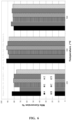
- Figure 6 shows NO x conversion rates achieved by Systems 1, 2 and 5 and Comparative Systems A, B and C at the selected inlet temperatures.
- Figure 7 shows N 2 O selectivity achieved by Systems 1, 2 and 5 and Comparative Systems A, B and C at the selected inlet temperatures.
- Figure 8 shows NO x conversion rates achieved by Systems 3 and 4 and Comparative Systems D and E at the selected inlet temperatures.
- Figure 9 shows N 2 O selectivity achieved by Systems 3 and 4 and Comparative Systems D and E at the selected inlet temperatures.
- catalyst systems 1 to 5 As demonstrated by the data shown in Figures 6 to 9 , at temperatures of at least 400°C, catalyst systems 1 to 5 according to the present invention achieve comparable or even improved NO x conversions and significantly reduced N 2 O selectivity compared to comparative catalyst systems A to E. Further, it can be seen by comparing catalyst systems 1, 2, 3 and 4 that different configurations of the catalyst system may also influence the performance achieved.
Landscapes
- Chemical & Material Sciences (AREA)
- Engineering & Computer Science (AREA)
- Chemical Kinetics & Catalysis (AREA)
- Materials Engineering (AREA)
- Organic Chemistry (AREA)
- Combustion & Propulsion (AREA)
- Health & Medical Sciences (AREA)
- Environmental & Geological Engineering (AREA)
- Crystallography & Structural Chemistry (AREA)
- Biomedical Technology (AREA)
- Analytical Chemistry (AREA)
- General Chemical & Material Sciences (AREA)
- Oil, Petroleum & Natural Gas (AREA)
- Mechanical Engineering (AREA)
- General Engineering & Computer Science (AREA)
- Toxicology (AREA)
- Catalysts (AREA)
- Exhaust Gas After Treatment (AREA)
- Exhaust Gas Treatment By Means Of Catalyst (AREA)
Priority Applications (5)
| Application Number | Priority Date | Filing Date | Title |
|---|---|---|---|
| EP23188743.1A EP4501438A1 (fr) | 2023-07-31 | 2023-07-31 | Système catalytique |
| EP24754737.5A EP4522314B1 (fr) | 2023-07-31 | 2024-07-30 | Système catalytique |
| PCT/GB2024/052003 WO2025027315A1 (fr) | 2023-07-31 | 2024-07-30 | Système catalyseur |
| CN202480045410.XA CN121511125A (zh) | 2023-07-31 | 2024-07-30 | 催化剂体系 |
| KR1020267001396A KR20260022459A (ko) | 2023-07-31 | 2024-07-30 | 촉매 시스템 |
Applications Claiming Priority (1)
| Application Number | Priority Date | Filing Date | Title |
|---|---|---|---|
| EP23188743.1A EP4501438A1 (fr) | 2023-07-31 | 2023-07-31 | Système catalytique |
Publications (1)
| Publication Number | Publication Date |
|---|---|
| EP4501438A1 true EP4501438A1 (fr) | 2025-02-05 |
Family
ID=87553530
Family Applications (2)
| Application Number | Title | Priority Date | Filing Date |
|---|---|---|---|
| EP23188743.1A Withdrawn EP4501438A1 (fr) | 2023-07-31 | 2023-07-31 | Système catalytique |
| EP24754737.5A Active EP4522314B1 (fr) | 2023-07-31 | 2024-07-30 | Système catalytique |
Family Applications After (1)
| Application Number | Title | Priority Date | Filing Date |
|---|---|---|---|
| EP24754737.5A Active EP4522314B1 (fr) | 2023-07-31 | 2024-07-30 | Système catalytique |
Country Status (4)
| Country | Link |
|---|---|
| EP (2) | EP4501438A1 (fr) |
| KR (1) | KR20260022459A (fr) |
| CN (1) | CN121511125A (fr) |
| WO (1) | WO2025027315A1 (fr) |
Citations (6)
| Publication number | Priority date | Publication date | Assignee | Title |
|---|---|---|---|---|
| WO1999047260A1 (fr) | 1998-03-19 | 1999-09-23 | Johnson Matthey Public Limited Company | Appareil de revetement de support monolithique et son procede de fabrication |
| DE102006031661A1 (de) * | 2006-07-08 | 2008-01-10 | Man Nutzfahrzeuge Ag | Anordnung zur Verminderung von Stickoxiden in Abgasen |
| WO2009080155A1 (fr) | 2007-12-20 | 2009-07-02 | Argillon Gmbh | Procédé pour sécher des corps céramiques en nid d'abeilles |
| WO2014027207A1 (fr) | 2012-08-17 | 2014-02-20 | Johnson Matthey Public Limited Company | Catalyseurs zéolitiques v/ti/w activés |
| US20180280946A1 (en) * | 2017-03-30 | 2018-10-04 | Johnson Matthey Public Limited Company | Catalyst for treating an exhaust gas, an exhaust system and a method |
| US20190314801A1 (en) | 2016-12-20 | 2019-10-17 | Umicore Ag & Co. Kg | Scr catalyst device containing vanadium oxide and molecular sieve containing iron |
-
2023
- 2023-07-31 EP EP23188743.1A patent/EP4501438A1/fr not_active Withdrawn
-
2024
- 2024-07-30 EP EP24754737.5A patent/EP4522314B1/fr active Active
- 2024-07-30 CN CN202480045410.XA patent/CN121511125A/zh active Pending
- 2024-07-30 KR KR1020267001396A patent/KR20260022459A/ko active Pending
- 2024-07-30 WO PCT/GB2024/052003 patent/WO2025027315A1/fr active Pending
Patent Citations (7)
| Publication number | Priority date | Publication date | Assignee | Title |
|---|---|---|---|---|
| WO1999047260A1 (fr) | 1998-03-19 | 1999-09-23 | Johnson Matthey Public Limited Company | Appareil de revetement de support monolithique et son procede de fabrication |
| DE102006031661A1 (de) * | 2006-07-08 | 2008-01-10 | Man Nutzfahrzeuge Ag | Anordnung zur Verminderung von Stickoxiden in Abgasen |
| WO2009080155A1 (fr) | 2007-12-20 | 2009-07-02 | Argillon Gmbh | Procédé pour sécher des corps céramiques en nid d'abeilles |
| WO2014027207A1 (fr) | 2012-08-17 | 2014-02-20 | Johnson Matthey Public Limited Company | Catalyseurs zéolitiques v/ti/w activés |
| US20190299198A1 (en) * | 2012-08-17 | 2019-10-03 | Johnson Matthey Public Limited Company | ZEOLITE PROMOTED V/TiW CATALYSTS |
| US20190314801A1 (en) | 2016-12-20 | 2019-10-17 | Umicore Ag & Co. Kg | Scr catalyst device containing vanadium oxide and molecular sieve containing iron |
| US20180280946A1 (en) * | 2017-03-30 | 2018-10-04 | Johnson Matthey Public Limited Company | Catalyst for treating an exhaust gas, an exhaust system and a method |
Non-Patent Citations (1)
| Title |
|---|
| OLIVER KROCHER ET AL: "Combination of V 2 O 5 /WO 3 -TiO 2 , Fe-ZSM5, and Cu-ZSM5 Catalysts for the Selective Catalytic Reduction of Nitric Oxide with Ammonia", INDUSTRIAL & ENGINEERING CHEMISTRY RESEARCH, vol. 47, no. 22, 19 November 2008 (2008-11-19), pages 8588 - 8593, XP055094103, ISSN: 0888-5885, DOI: 10.1021/ie800951a * |
Also Published As
| Publication number | Publication date |
|---|---|
| EP4522314B1 (fr) | 2025-11-26 |
| EP4522314A1 (fr) | 2025-03-19 |
| CN121511125A (zh) | 2026-02-10 |
| KR20260022459A (ko) | 2026-02-19 |
| WO2025027315A1 (fr) | 2025-02-06 |
Similar Documents
| Publication | Publication Date | Title |
|---|---|---|
| KR101542754B1 (ko) | Scr 촉매 수단에 의한 엔진 배기 가스들의 처리를 위한 배기 가스 정화 시스템 | |
| US9227176B2 (en) | Ammonia oxidation catalyst | |
| US10857521B2 (en) | Diesel oxidation catalyst | |
| US20140212350A1 (en) | Ammonia oxidation catalyst | |
| US10799832B2 (en) | Catalyst article for use in an emission treatment system | |
| US20170341026A1 (en) | Vanadium Catalysts for High Engine-Out NO2 Systems | |
| JP7152401B2 (ja) | 酸化バナジウムを含有するscr触媒装置、及び鉄を含有するモレキュラーシーブ | |
| CN113543878A (zh) | 包含钒酸铁的scr催化剂 | |
| US12377401B2 (en) | SCR catalyst compositions and SCR catalytic articles comprising said catalyst compositions | |
| CN111818999A (zh) | 用于排放处理系统的催化剂制品 | |
| CN110099732A (zh) | 含有氧化钒和含有铁的分子筛的scr催化剂装置 | |
| JP2023528232A (ja) | 選択的触媒還元触媒、及びそれを含む触媒物品 | |
| US20230347288A1 (en) | Selective catalytic reduction catalyst and catalytic article comprising the same | |
| EP4522314B1 (fr) | Système catalytique | |
| WO2018065353A1 (fr) | Article catalyseur et procédé de réduction d'ammoniac et d'oxydes d'azote | |
| KR20230079420A (ko) | 비스무트를 함유하는 디젤 산화 촉매 | |
| RU2776705C2 (ru) | Каталитическое изделие с активным субстратом scr, слоем катализатора нейтрализации проскока аммиака и слоем scr для использования в системе обработки выхлопов | |
| US20230323802A1 (en) | Exhaust gas treatment system | |
| EP3775510B1 (fr) | Système d'échappement comprenant un catalyseur scrf avec zone d'oxydation | |
| CN120418002A (zh) | 用于选择性催化还原的金属氧化物催化剂 |
Legal Events
| Date | Code | Title | Description |
|---|---|---|---|
| PUAI | Public reference made under article 153(3) epc to a published international application that has entered the european phase |
Free format text: ORIGINAL CODE: 0009012 |
|
| STAA | Information on the status of an ep patent application or granted ep patent |
Free format text: STATUS: THE APPLICATION HAS BEEN PUBLISHED |
|
| AK | Designated contracting states |
Kind code of ref document: A1 Designated state(s): AL AT BE BG CH CY CZ DE DK EE ES FI FR GB GR HR HU IE IS IT LI LT LU LV MC ME MK MT NL NO PL PT RO RS SE SI SK SM TR |
|
| RAP3 | Party data changed (applicant data changed or rights of an application transferred) |
Owner name: JOHNSON MATTHEY PUBLIC LIMITED COMPANY |
|
| STAA | Information on the status of an ep patent application or granted ep patent |
Free format text: STATUS: THE APPLICATION IS DEEMED TO BE WITHDRAWN |
|
| 18D | Application deemed to be withdrawn |
Effective date: 20250806 |