EP4502140A1 - Souche de lactococcus cremoris et son utilisation pour la préparation de produits alimentaires - Google Patents
Souche de lactococcus cremoris et son utilisation pour la préparation de produits alimentaires Download PDFInfo
- Publication number
- EP4502140A1 EP4502140A1 EP23189180.5A EP23189180A EP4502140A1 EP 4502140 A1 EP4502140 A1 EP 4502140A1 EP 23189180 A EP23189180 A EP 23189180A EP 4502140 A1 EP4502140 A1 EP 4502140A1
- Authority
- EP
- European Patent Office
- Prior art keywords
- strain
- product
- milk
- strains
- cremoris
- Prior art date
- Legal status (The legal status is an assumption and is not a legal conclusion. Google has not performed a legal analysis and makes no representation as to the accuracy of the status listed.)
- Withdrawn
Links
Images



Classifications
-
- C—CHEMISTRY; METALLURGY
- C12—BIOCHEMISTRY; BEER; SPIRITS; WINE; VINEGAR; MICROBIOLOGY; ENZYMOLOGY; MUTATION OR GENETIC ENGINEERING
- C12N—MICROORGANISMS OR ENZYMES; COMPOSITIONS THEREOF; PROPAGATING, PRESERVING, OR MAINTAINING MICROORGANISMS; MUTATION OR GENETIC ENGINEERING; CULTURE MEDIA
- C12N1/00—Microorganisms; Compositions thereof; Processes of propagating, maintaining or preserving microorganisms or compositions thereof; Processes of preparing or isolating a composition containing a microorganism; Culture media therefor
- C12N1/20—Bacteria; Culture media therefor
-
- C—CHEMISTRY; METALLURGY
- C12—BIOCHEMISTRY; BEER; SPIRITS; WINE; VINEGAR; MICROBIOLOGY; ENZYMOLOGY; MUTATION OR GENETIC ENGINEERING
- C12N—MICROORGANISMS OR ENZYMES; COMPOSITIONS THEREOF; PROPAGATING, PRESERVING, OR MAINTAINING MICROORGANISMS; MUTATION OR GENETIC ENGINEERING; CULTURE MEDIA
- C12N1/00—Microorganisms; Compositions thereof; Processes of propagating, maintaining or preserving microorganisms or compositions thereof; Processes of preparing or isolating a composition containing a microorganism; Culture media therefor
- C12N1/20—Bacteria; Culture media therefor
- C12N1/205—Bacterial isolates
-
- A—HUMAN NECESSITIES
- A23—FOODS OR FOODSTUFFS; TREATMENT THEREOF, NOT COVERED BY OTHER CLASSES
- A23C—DAIRY PRODUCTS, e.g. MILK, BUTTER OR CHEESE; MILK OR CHEESE SUBSTITUTES; PREPARATION THEREOF
- A23C9/00—Milk preparations; Milk powder or milk powder preparations
- A23C9/12—Fermented milk preparations; Treatment using microorganisms or enzymes
-
- A—HUMAN NECESSITIES
- A23—FOODS OR FOODSTUFFS; TREATMENT THEREOF, NOT COVERED BY OTHER CLASSES
- A23L—FOODS, FOODSTUFFS OR NON-ALCOHOLIC BEVERAGES, NOT OTHERWISE PROVIDED FOR; PREPARATION OR TREATMENT THEREOF
- A23L33/00—Modifying nutritive qualities of foods; Dietetic products; Preparation or treatment thereof
- A23L33/10—Modifying nutritive qualities of foods; Dietetic products; Preparation or treatment thereof using additives
- A23L33/135—Bacteria or derivatives thereof, e.g. probiotics
-
- A—HUMAN NECESSITIES
- A23—FOODS OR FOODSTUFFS; TREATMENT THEREOF, NOT COVERED BY OTHER CLASSES
- A23V—INDEXING SCHEME RELATING TO FOODS, FOODSTUFFS OR NON-ALCOHOLIC BEVERAGES AND LACTIC OR PROPIONIC ACID BACTERIA USED IN FOODSTUFFS OR FOOD PREPARATION
- A23V2002/00—Food compositions, function of food ingredients or processes for food or foodstuffs
-
- C—CHEMISTRY; METALLURGY
- C12—BIOCHEMISTRY; BEER; SPIRITS; WINE; VINEGAR; MICROBIOLOGY; ENZYMOLOGY; MUTATION OR GENETIC ENGINEERING
- C12R—INDEXING SCHEME ASSOCIATED WITH SUBCLASSES C12C - C12Q, RELATING TO MICROORGANISMS
- C12R2001/00—Microorganisms ; Processes using microorganisms
- C12R2001/01—Bacteria or Actinomycetales ; using bacteria or Actinomycetales
- C12R2001/46—Streptococcus ; Enterococcus; Lactococcus
Definitions
- the present invention relates to a novel lactic acid bacterium (LAB), namely a novel Lactococcus cremoris strain, which acquired improved texturizing properties.
- LAB novel lactic acid bacterium
- the present invention also relates to methods of using the strain as an ingredient for making food products and to food products comprising the strain as ingredient.
- the invention further relates to the combination of the improved L. cremoris strains with other LAB of the genera Streptococcus, Lactococcus, Leuconostoc, Lactobacillus, Pediococcus and Bifidobacterium and to a food, in particular a dairy or dairy-alternative fermented product, prepared using milk or plant based extracts and fermented by using the above improved strains.
- Lactic acid bacteria are extensively used in the food industry to prepare foods by fermentation.
- LAB fermented products such as fermented milk, drinks and/or cheeses are characterized by unique sensory, texture, shelf life and overall quality. Carefully selected strains are combined into the formulation of food cultures that are used by the food industry as ingredients for the production of many different fermented foods.
- the starter culture industry is selecting strains based on the characterization of their performance, i.e., acidification, reduced post-acidification, preservation, aroma development as well as texturizing properties.
- Good texture is typically high mouth thickness and viscosity (measured with viscosimeter at constant and increased share rate) and high gel firmness.
- EPS Exo-(or extracellular) PolySaccharides
- capsular attached to the cell in the form of capsules
- secreted into the media EPS-producing LAB are of interest, since EPS act as natural viscosifier and texture enhancer in fermented foods. EPS producers thus have the ability to positively influence viscosity, syneresis, firmness and overall sensory properties of the food product generated through their fermentation.
- L. cremoris is a LAB and one of the most important microorganisms used by the dairy industry. It is a gram-positive bacterium, nonsporulating and are nonmotile. L. cremoris has a homofermentative metabolism, meaning lactic acid is the main metabolite produced from sugars. Some strains of L. cremoris are able to produce EPS and thus influence the overall texture of the products. These strains are commonly used for the production of fermented beverages such as buttermilk and other traditional North-East European products, as well as many different cheeses.
- the authors of the present invention have surprisingly identified two Lactococcus cremoris strains, having improved qualities, when compared to the parental strain, for the production of fermented milk and cheese as well as plant based matrixes.
- the invention therefore relates to L. cremoris strains, wherein said strains are:
- the present invention relates to a composition comprising one or more of the L. cremoris strain SC226 or the L. cremoris strain SC244, according to the invention.
- the present invention relates to the use of one or more of the L. cremoris strain SC226 or the L. cremoris strain SC244 or of the composition comprising the same, for the preparation of a starter formulation.
- the present invention relates to the use of one or more of the L. cremoris strain SC226 or the L. cremoris strain SC244 or of the composition comprising the same, for the preparation of a food product.
- the present invention relates to a food or beverage product comprising one or more of the L. cremoris strain SC226 or the L. cremoris strain SC244, deposited respectively with accession number DSM 34237 and DSM 34238 at the DSMZ.
- the present invention relates to a method for preparing a dairy product, a milk product, a plant-based product or a vegetal and/or fruit product, said method comprising the step of using one or more of the L. cremoris strain deposited with accession number DSM 34237 at the DSMZ or the L. cremoris strain deposited with accession number DSM 34238.
- the present invention relates to a method to prepare fermented plant based milk or vegetable/fruit based fermented preparations, said method comprising the use of the L. cremoris strain deposited with accession number DSM 34237 at the DSMZ and/or L. cremoris strain deposited with accession number DSM 34238 at the DSMZ.
- the present invention relates to two texturizing lactic acid bacteria strains, belonging to the species Lactococcus cremoris. Said strains are called SC226 and SC244 and are deposited with accession number DSM 34237 and DSM 34238, respectively, at the Leibniz Institute DSMZ under the Budapest Treaty on 23 February 2022.
- the L. cremoris strains of the invention can be present in a culture, such as a starter culture.
- a culture such as a starter culture.
- the inventors have found that the SC226 and SC244 strains have improved texturizing capacity when compared to the parental strain SC96.
- the viscosity of the resulting milk inoculated with the SC226 or SC244 cultures was seen to be optimal, with increased body and ropiness, and did not present clumps even when fermented at higher temperature (e.g., 37 °C), in contrast with the results obtained by using the parental strain SC96.
- the increased viscosity of the strains allows to reach the same performance of the parental strain, even with a reduced inoculum (more advantageous from an economic point of view).
- lactic acid bacterium designates a gram-positive microaerotollerant bacterium, which ferments sugars with the production of organic acids including lactic acid as the predominantly produced acid, acetic acid and propionic acid.
- the industrially most useful LAB are found within the order "Lactobacillales” which includes Lactococcus spp., and other lactic acid bacteria, including bacteria of the species Lactobacillus sp. and Streptococcus salivarius subsp.
- the present invention relates to the use of one or more of the L. cremoris strain SC226 or the L. cremoris strain SC244 or of the composition comprising the same, for the preparation of a starter formulation.
- the present invention relates to a food or beverage product comprising one or more of the L. cremoris strain SC226 or the L. cremoris strain SC244, deposited with accession numbers DSM 34237 and DSM 34238 at the DSMZ.
- the food product is a dairy product or a milk product, a plant based product or a vegetable and/or fruit product.
- the food product can be a fermented product, for example a fermented milk product, fermented with the cultures of the L.cremoris strain SC226.
- the present invention relates to a method for preparing a dairy product or a milk product, a plant-based product or a vegetal and/or fruit product, said method comprising the step of using one or more of the the L. cremoris strains deposited with accession numbers DSM 34237 or DSM 34238 at the DSMZ.
- the present invention relates to a method to prepare fermented plant based milk or vegetable/fruit based fermented preparations, said method comprising the use of the L. cremoris strain deposited with accession number DSM 34237 at the DSMZ and/or L. cremoris strain deposited with accession number DSM 34238 at the DSMZ.
- L. cremoris strain deposited with accession number DSM 34237 at the DSMZ and/or L. cremoris strain deposited with accession number DSM 34238 at the DSMZ.
- Example 1 selection of strains SC226 and SC244
- the strain according to the present invention was obtained after a conjugation trial between SC96 (L. cremoris) strain and SL56 (Lactococcus lactis subsp. lactis) in presence of 10 7 pfu/ml of the bacteriophage SL56.
- a strict selection condition was applied: serial dilutions were plated on milk plates containing 0.1 ⁇ g/ml of ampicillin at 40°C.
- the resulting colonies were inoculated in milk and incubated for 18 h at 30°C.
- the milk cultures were assayed for exopolysaccharides (EPS) production: the ropy ones were selected for further characterization.
- EPS exopolysaccharides
- SC226 and SC244 were classified as Lactococcus cremoris strains with improved texturizing properties when compared to the parental strains SC96.
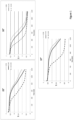
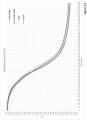
- the SC226 and SC244 strains milk acidification profiles at different temperatures were checked in comparison to SC96, after 2% inoculum in pasteurized milk ( Figure 1 ).
- the capability to acidify milk has been kept by the strains SC226 and SC244, which resulted even slightly faster than the parental SC96 in the milk acidification at different growth temperatures, especially the higher ones.
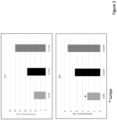
- SC226 and SC244 resulted both significantly improved in texturizing capacity, according to the achieved texture values (s/g) measured in milk.
- yogurts Prior to viscosity measurements, the yogurts were manually stirred according to a standardized protocol. Also, the time between homogenization and viscosity measurement was standardized for all the samples.
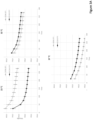
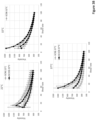
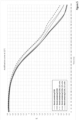
- SC226 creates a structure more resistant to shear stress: there is a lower loss in viscosity in trials at constant shear rate ( Figure 3A ) and the return curves of the rap trials ( Figure 3B ) are closer to the forward one for SC226 with respect to the parental SC96.
- SC226 was produced on an industrial scale till 20000 liters as frozen and freeze-dried products.
- the acidification performance of the strain according to the invention was maintained with the scaling-up and the overall texture was even increased (with respect to the results achieved with the liquid cultures), further highlighting the improvement of the strain SC226, with respect to the parental SC96 (Table 1).
- Table 1 average of the texture values (s/g) at 22°C achieved with both frozen and freeze-dried cultures from production.
- the industrial products have been used in blends with other strains, also belonging to different species.
- Blend containing strains of Lactococcus cremoris and Streptococcus salivarius thermophilus Blend containing strains of Lactococcus cremoris and Streptococcus salivarius thermophilus.
- SC226 lead to an increased viscosity and to the improvement of desired features.
- the SC226 products were used in other blends with Lactococcus cremoris, Lactococcus lactis subsp. lactis biovar diacetylactis and Leuconostoc mesenteroides, these blends are useful to develop dairy products with specific aromas.
- the overall texture was 13 s/g, which is higher than the comparative product set up with SC96. Similar texture values were reached also reducing the SC226 amount at, 1/2 1/3 or 1/5 of the units, with respect to SC96 amount in unit.
- the citrate consumption was twice faster than in the counterpart with SC96 (at the same pH), with a positive influence on the aromatic profile (at pH 4.50 the residual citrate was the 44% while in the blend with SC96 was left the 94%.
- the blend with SC226 reduced at 1/5 of the unit had only the 6% of the residual citrate) ( Figure 5 and Table 5).
- Table 5 Day 1, storage at 5°C-sensory analysis stirred (score 0-III maximum) Time to reach Residual citric acid (%) at pH 4,55 ⁇ 0,05 pH Overall texture (s/g) Ropiness Body Lumpiness Acidity Aroma Gas pH 4,5 Blend containing SC96 16h20 94% 4,48 7,5 III II/III 0 I II 0 Blend containing SC226 16h20 84% 4,49 13,0 III III 0 I II 0 Blend containing SC226, 1/2 units 16h45 44% 4,47 11,5 III III 0 I II 0 Blend containingSC226, 1/3 units 15h30 16% 4,38 12,9 III III 0 I II 0 Blend containingSC226, 1/5 units 16h40 5% 4,39 12,7 III III 0 I II 0
- yogurts Prior to viscosity measurements, the yogurts were manually stirred according to a standardized protocol. Also, the time between homogenization and viscosity measurement was standardized.
- the reduction of the inoculum units does not impair the acidification performance.
Landscapes
- Life Sciences & Earth Sciences (AREA)
- Chemical & Material Sciences (AREA)
- Engineering & Computer Science (AREA)
- Health & Medical Sciences (AREA)
- Genetics & Genomics (AREA)
- Biotechnology (AREA)
- Organic Chemistry (AREA)
- Zoology (AREA)
- Bioinformatics & Cheminformatics (AREA)
- Wood Science & Technology (AREA)
- Medicinal Chemistry (AREA)
- Microbiology (AREA)
- Biomedical Technology (AREA)
- Virology (AREA)
- Biochemistry (AREA)
- General Engineering & Computer Science (AREA)
- General Health & Medical Sciences (AREA)
- Tropical Medicine & Parasitology (AREA)
- Dairy Products (AREA)
- Micro-Organisms Or Cultivation Processes Thereof (AREA)
Priority Applications (3)
| Application Number | Priority Date | Filing Date | Title |
|---|---|---|---|
| EP23189180.5A EP4502140A1 (fr) | 2023-08-02 | 2023-08-02 | Souche de lactococcus cremoris et son utilisation pour la préparation de produits alimentaires |
| PCT/EP2024/071310 WO2025026923A1 (fr) | 2023-08-02 | 2024-07-26 | Souche de lactococcus cremoris et son utilisation pour la préparation de produits alimentaires |
| ARP240102002A AR133401A1 (es) | 2023-08-02 | 2024-07-30 | Cepa de lactococcus cremoris y uso de la misma para preparar productos alimenticios |
Applications Claiming Priority (1)
| Application Number | Priority Date | Filing Date | Title |
|---|---|---|---|
| EP23189180.5A EP4502140A1 (fr) | 2023-08-02 | 2023-08-02 | Souche de lactococcus cremoris et son utilisation pour la préparation de produits alimentaires |
Publications (1)
| Publication Number | Publication Date |
|---|---|
| EP4502140A1 true EP4502140A1 (fr) | 2025-02-05 |
Family
ID=87555053
Family Applications (1)
| Application Number | Title | Priority Date | Filing Date |
|---|---|---|---|
| EP23189180.5A Withdrawn EP4502140A1 (fr) | 2023-08-02 | 2023-08-02 | Souche de lactococcus cremoris et son utilisation pour la préparation de produits alimentaires |
Country Status (3)
| Country | Link |
|---|---|
| EP (1) | EP4502140A1 (fr) |
| AR (1) | AR133401A1 (fr) |
| WO (1) | WO2025026923A1 (fr) |
Citations (4)
| Publication number | Priority date | Publication date | Assignee | Title |
|---|---|---|---|---|
| EP0521331A2 (fr) * | 1991-06-19 | 1993-01-07 | N.V. Vandemoortele International | Procédé de fermentation de lait de soja |
| JP2005328831A (ja) * | 2004-09-17 | 2005-12-02 | Fujicco Co Ltd | ヨーグルトの製法およびそれにより得られたヨーグルト |
| EP3068232B1 (fr) * | 2013-11-11 | 2020-01-08 | Chr. Hansen A/S | Culture de bactéries lactiques |
| WO2023001633A1 (fr) * | 2021-07-23 | 2023-01-26 | Dupont Nutrition Biosciences Aps | Souches de lactococcus |
-
2023
- 2023-08-02 EP EP23189180.5A patent/EP4502140A1/fr not_active Withdrawn
-
2024
- 2024-07-26 WO PCT/EP2024/071310 patent/WO2025026923A1/fr not_active Ceased
- 2024-07-30 AR ARP240102002A patent/AR133401A1/es unknown
Patent Citations (4)
| Publication number | Priority date | Publication date | Assignee | Title |
|---|---|---|---|---|
| EP0521331A2 (fr) * | 1991-06-19 | 1993-01-07 | N.V. Vandemoortele International | Procédé de fermentation de lait de soja |
| JP2005328831A (ja) * | 2004-09-17 | 2005-12-02 | Fujicco Co Ltd | ヨーグルトの製法およびそれにより得られたヨーグルト |
| EP3068232B1 (fr) * | 2013-11-11 | 2020-01-08 | Chr. Hansen A/S | Culture de bactéries lactiques |
| WO2023001633A1 (fr) * | 2021-07-23 | 2023-01-26 | Dupont Nutrition Biosciences Aps | Souches de lactococcus |
Non-Patent Citations (1)
| Title |
|---|
| DATABASE WPI Week 200581, Derwent World Patents Index; AN 2005-792183 * |
Also Published As
| Publication number | Publication date |
|---|---|
| WO2025026923A1 (fr) | 2025-02-06 |
| AR133401A1 (es) | 2025-09-24 |
Similar Documents
| Publication | Publication Date | Title |
|---|---|---|
| JP6633552B2 (ja) | 後酸性化の制御が改善された発酵乳製品の製造方法 | |
| CA3163217C (fr) | Streptococcus thermophilus à saccharose négatif destiné à être utilisé dans la préparation de produits fermentés | |
| CN102469803B (zh) | 制造发酵奶制品的方法 | |
| KR20190006999A (ko) | 주위 온도에서 저장하기 위한 열처리 식품용 유산균 | |
| US10368559B2 (en) | Streptococcus thermophilus strains | |
| WO2015068790A1 (fr) | Lait fermenté présentant une suppression de l'augmentation de l'acidité et son procédé de production | |
| Ibrahim | Effects of exopolysaccharide-producing starter cultures on physicochemical, rheological and sensory properties of fermented camel's milk. | |
| WO2018041869A1 (fr) | Procédé de production d'un produit laitier fermenté thermiquement traité | |
| KR20180103140A (ko) | 락토바실러스 카제이를 이용한 발효유제품의 생산 방법 | |
| US11992023B2 (en) | Fermented milk soft cheese product and process of making same | |
| US20190357556A1 (en) | Production method for low-acid fermented milk | |
| JP3878953B2 (ja) | ヨーグルトの製法およびそれにより得られたヨーグルト | |
| EP1593309B1 (fr) | Produit laitier ayant au moins une caractéristique d'un produit laitier composé | |
| JP2022136018A (ja) | 保形性が改善された発酵組成物、及びその製造方法 | |
| US20200383345A1 (en) | Process for producing an improved mesophilic fermented milk product | |
| JP7089818B1 (ja) | 乳酸菌スターター及びそれを用いて得られる発酵乳 | |
| WO2025026923A1 (fr) | Souche de lactococcus cremoris et son utilisation pour la préparation de produits alimentaires | |
| US20020136798A1 (en) | Carbon-containing additive for foodstuff fermentations and food compositions containing it | |
| Pagthinathan et al. | Evaluate the physical, chemical and sensory parameters of probiotic yoghurt during storage | |
| Krishna et al. | Shelf life study of developed reduced fat synbiotic cream cheese | |
| JP7839636B2 (ja) | 発酵組成物、及びその製造方法 | |
| WO2023038072A1 (fr) | Bactérie d'acide lactique, démarreur de bactérie d'acide lactique, lait fermenté, procédé de fabrication de lait fermenté, et procédé de criblage de bactérie d'acide lactique | |
| JP2025084265A (ja) | 嗜好性が改善した発酵乳の製造方法 | |
| RASHMI | MASTER OF TECHNOLOGY IN DAIRYING (DAIRY MICROBIOLOGY) | |
| Fadaei et al. | Determination of the best ratio of starter culture for making milk co-fermented with mesophilic and thermophilic lactic acid bacteria and mould Geotrichum candidum |
Legal Events
| Date | Code | Title | Description |
|---|---|---|---|
| PUAI | Public reference made under article 153(3) epc to a published international application that has entered the european phase |
Free format text: ORIGINAL CODE: 0009012 |
|
| STAA | Information on the status of an ep patent application or granted ep patent |
Free format text: STATUS: THE APPLICATION HAS BEEN PUBLISHED |
|
| AK | Designated contracting states |
Kind code of ref document: A1 Designated state(s): AL AT BE BG CH CY CZ DE DK EE ES FI FR GB GR HR HU IE IS IT LI LT LU LV MC ME MK MT NL NO PL PT RO RS SE SI SK SM TR |
|
| STAA | Information on the status of an ep patent application or granted ep patent |
Free format text: STATUS: REQUEST FOR EXAMINATION WAS MADE |
|
| 17P | Request for examination filed |
Effective date: 20250530 |
|
| GRAP | Despatch of communication of intention to grant a patent |
Free format text: ORIGINAL CODE: EPIDOSNIGR1 |
|
| STAA | Information on the status of an ep patent application or granted ep patent |
Free format text: STATUS: GRANT OF PATENT IS INTENDED |
|
| INTG | Intention to grant announced |
Effective date: 20251028 |
|
| STAA | Information on the status of an ep patent application or granted ep patent |
Free format text: STATUS: THE APPLICATION IS DEEMED TO BE WITHDRAWN |
|
| 18D | Application deemed to be withdrawn |
Effective date: 20260303 |