EP4502885A1 - Systèmes et procédés pour améliorer la fiabilité de modèles d'apprentissage automatique - Google Patents
Systèmes et procédés pour améliorer la fiabilité de modèles d'apprentissage automatique Download PDFInfo
- Publication number
- EP4502885A1 EP4502885A1 EP24192102.2A EP24192102A EP4502885A1 EP 4502885 A1 EP4502885 A1 EP 4502885A1 EP 24192102 A EP24192102 A EP 24192102A EP 4502885 A1 EP4502885 A1 EP 4502885A1
- Authority
- EP
- European Patent Office
- Prior art keywords
- model
- output
- matrix
- variance
- time
- Prior art date
- Legal status (The legal status is an assumption and is not a legal conclusion. Google has not performed a legal analysis and makes no representation as to the accuracy of the status listed.)
- Pending
Links
Images



Classifications
-
- G—PHYSICS
- G06—COMPUTING OR CALCULATING; COUNTING
- G06N—COMPUTING ARRANGEMENTS BASED ON SPECIFIC COMPUTATIONAL MODELS
- G06N20/00—Machine learning
-
- G—PHYSICS
- G06—COMPUTING OR CALCULATING; COUNTING
- G06F—ELECTRIC DIGITAL DATA PROCESSING
- G06F17/00—Digital computing or data processing equipment or methods, specially adapted for specific functions
- G06F17/10—Complex mathematical operations
- G06F17/18—Complex mathematical operations for evaluating statistical data, e.g. average values, frequency distributions, probability functions, regression analysis
Definitions
- the described aspects relate to machine learning systems.
- Machine learning models e.g., regression, classification, etc.
- deep learning models e.g., convolutional neural networks, adversarial neural networks, etc.
- models face challenges such as low prediction performance for low quality (e.g., uncertain/confusing) input signals and a lack of a reliable indication for accuracy probability.
- An example aspect includes a method for indicating reliability of an artificial intelligence (AI) model, comprising configuring an AI model to generate an output vector representing output values for a first period of time based on an input vector, wherein the AI model is initially configured to generate one output value for a point in time based on the input vector.
- the method further includes receiving a plurality of output vectors from the AI model. Additionally, the method further includes generating a matrix comprising the plurality of output vectors ordered sequentially such that each output vector of the plurality of output vectors is placed in a unique row or column of the matrix. Additionally, the method further includes extracting values in a cross section of the matrix. Additionally, the method further includes applying a filter to the values extracted in the cross section and calculating a variance of the values filtered. Additionally, the method further includes transmitting an indication that the plurality of output vectors is unreliable in response to determining that the variance is greater than a variance threshold.
- AI artificial intelligence
- Another example aspect includes an apparatus for indicating reliability of an artificial intelligence (AI) model, comprising one or more memory and at least one processor coupled with the memory.
- the at least one processor is configured to configure an AI model to generate an output vector representing output values for a first period of time based on an input vector, wherein the AI model is initially configured to generate one output value for a point in time based on the input vector.
- the at least one processor is further configured to receive a plurality of output vectors from the AI model. Additionally, the at least one processor further configured to generate a matrix comprising the plurality of output vectors ordered sequentially such that each output vector of the plurality of output vectors is placed in a unique row or column of the matrix. Additionally, the at least one processor further configured to extract values in a cross section of the matrix.
- the at least one processor further configured to apply a filter to the values extracted in the cross section and calculate a variance of the values filtered. Additionally, the at least one processor further configured to transmit an indication that the plurality of output vectors are unreliable in response to determining that the variance is greater than a variance threshold.
- Another example aspect includes a computer-readable medium having instructions stored thereon for indicating reliability of an artificial intelligence (AI) model, wherein the instructions are executable by at least one processor to configure an AI model to generate an output vector representing output values for a first period of time based on an input vector, wherein the AI model is initially configured to generate one output value for a point in time based on the input vector.
- the instructions are further executable to receive a plurality of output vectors from the AI model. Additionally, the instructions are further executable to generate a matrix comprising the plurality of output vectors ordered sequentially such that each output vector of the plurality of output vectors is placed in a unique row or column of the matrix. Additionally, the instructions are further executable to extract values in a cross section of the matrix.
- the instructions are further executable to apply a filter to the values extracted in the cross section and calculate a variance of the values filtered. Additionally, the instructions are further executable to transmit an indication that the plurality of output vectors are unreliable in response to determining that the variance is greater than a variance threshold.
- the one or more aspects comprise the features hereinafter fully described and particularly pointed out in the claims.
- the following description and the annexed drawings set forth in detail certain illustrative features of the one or more aspects. These features are indicative, however, of but a few of the various ways in which the principles of various aspects may be employed, and this description is intended to include all such aspects and their equivalents.
- the systems and methods of the present disclosure measure how reliable a deep/machine learning model (hereinafter referred to as an artificial intelligence (AI) model) performs in run time. It is important to know the confidence level and reliability of an AI model. If an output produced by an AI model is not reliable, the output should not be reported to the end user without an appropriate warning or reported with some post processing. This will improve the overall performance and the report management capabilities of any product featuring the AI model, especially in low signal quality regions or cases.
- AI artificial intelligence
- the systems and methods renovate an AI model and measure the reliability of each target signal output with renovation dynamics.
- outputs that are unreliable are detected and flagged.
- the renovation technique is independent from raw signal type, target output, model type/architecture, or any other model specific factors. It is applicable to any AI model and can easily be implemented with little memory and computation resources.
- Fig. 1 is an example of a single point regression/classification model 100 being converted to a line regression/classification model 102.
- models 100 and 102 are AI models that are either machine learning models or deep learning models.
- model 100 may be any type of machine learning model such as a 64/32/16-bit float model or quantized artificial/convolutional neural network.
- Model 100 is configured to generate one output value 106 (e.g., y[t]) for a point in time (i.e., t) based on the input vector 104.
- model 100 which is a regression model, is configured to output a heart rate (e.g., 60 beats per minute) at a given time based on an input vector that includes data collected from various sensors.
- a heart rate e.g., 60 beats per minute
- one sensor may be a pulse sensor that uses LED light to detect expansions of blood vessels underneath a skin's surface.
- the sensor may include an emitter that outputs light at a certain amplitude and a receiver that receives reflected light that has passed through the skin.
- the input vector 104 may be a waveform that represents the magnitude of the reflected light over a period of time.
- a model reliability component (described in FIG. 3 ) may be a software application that configures model 100 to generate an output vector 108 (e.g., ⁇ y[t], y[t-1], y[t-2], y[t-3], and y[t-4] ⁇ representing output values for a first period of time based on an input vector.
- the model reliability component may restructure the layers of model 100 (if it is a neural network) to output multiple heart rates or may restructure the regression formula of model 100 (if it is a machine learning model) to output multiple heart rates. In some aspects, this restructuring happens at the code level and ultimately converts model 100 to model 102.
- model 100 involves adding historical information to input features extracted by model 100 and retraining model 100 to output the output vector based on the historical information. For example, instead of adding one input vector representing light signals in a time window until time t (e.g., input vector[t]), model 100 may be configured to accept multiple input vectors (e.g., input vector[t-1], input vector[t-2], ... input vector[t-N]). Model 102 may be configured to output a single output value for each input vector and may merge each output value into one output vector 108 (e.g., y[t] outputted for input vector[t]), y[t-1] outputted for input vector[t-1], etc.).
- model 100 may be configured to accept multiple input vectors (e.g., input vector[t-1], input vector[t-2], ... input vector[t-N]).
- Model 102 may be configured to output a single output value for each input vector and may merge each output value into one output vector 108 (e.g., y[t] output
- each output vector spans a first period of time.
- each output vector may represent a 5 second window from time t-4] to time t, and each output value is associated with a particular second of the 5 second window.
- the model reliability component receives a plurality of output vectors from model 102.
- the plurality of output vectors span a second period of time that is greater than the first period of time.
- the first period of time may be a five second window and the second period of time may be a ten second window.
- the model reliability component then generates a matrix including the plurality of output vectors ordered sequentially such that each output vector of the plurality of output vectors is placed in a unique row/column of the matrix.
- the model reliability component extracts values in a cross section across multiple rows of the matrix.
- Fig. 2A is an example of a first cross section of matrix that is used to evaluate the reliability of an AI model.
- Matrix 200 includes output vectors 202a, 202b, 202c, 202d, and 202e. Each output vector includes an output value 204.
- the older (further from the current time) output vectors are placed at the top of the matrix 200 while the newer (closer to the current time) output vectors are placed on the bottom.
- the older output vectors are placed at the bottom and the newer output vectors are placed on the top.
- matrix 200 is rotated such that each output vector is configured along a column instead of a row. For example, matrix 200 may be rotated by 90, 180, 270, etc., degrees.
- Output vector 202a is received from model 102 at time t-4 and includes output values between time t-8 and t-4.
- Output vector 202b is received from model 102 at time t-3 and includes output values between time t-7 and t-3.
- Output vector 202c is received from model 102 at time t-2 and includes output values between time t-6 and t-2.
- Output vector 202d is received from model 102 at time t-1 and includes output values between time t-5 and t-1.
- Output vector 202a which is the latest output vector, is received from model 102 at time t and includes output values between time t-4 and t. As seen in FIG. 2A , the output vectors are ordered in matrix 200 sequentially.
- the model reliability component extracts values in a cross section 206 across multiple rows of the matrix 200.
- the values extracted in the cross section are associated with a same time.
- cross section 206 is a diagonal line that includes output values from each of the plurality of output vectors; these output values are associated with time t-4. Revisiting the heart rate example, consider the following table that corresponds to the structure of matrix 200: Table 1 88 87 92 91 88 88 93 93 87 86 91 92 88 84 85 92 88 85 83 84 87 86 84 81 91
- the first row corresponds to output vector 202a and the final row corresponds to output vector 202e.
- the heart rate values in table 1 are outputs from model 102, which is configured to receive a signal from a sensor (e.g., a pulse sensor outputting a waveform of the reflected light captured) and output the heart rate over a five-second interval.
- the first row is an output in which model 102 determined that the heart rate is 88 beats per minute (BPM) at time t-8, 87 BPM at time t-7, 92 BPM at time t-6, 91 BPM at time t-5, and 88 BPM at time t-4.
- the subsequent row is an output from model 102 generated when a new input vector is given.
- This new input vector may partially overlap with the original input vector for which output vector 202a was generated.
- the original input vector may be a waveform from time t-8 to time t-4.
- the new input vector may be a waveform from time t-7 and time t-3.
- model 102 outputs output vector 202b, which indicates that the heart rate is 88 BPM at time t-7, 93 BPM at time t-6, 93 BPM at time t-5, 87 BPM at time t-4, and 86 BPM at time t-3. It should be noted that due to the overlap in time intervals, model 102 is given another opportunity to evaluate a waveform and estimate the heart rate.
- the pulse sensor providing the input vector is implemented in a smartwatch that uses model 100 to output heart rates. While a user may simply see the latest heart rate at time t-4 for output vector 202a and at time t-3 for output vector 202b on his/her watch, the additional output values are useful in evaluating whether the heart rates are even reliable.
- model 102 may receive a low quality signal (e.g., incorrect waveforms because the user is moving the smartwatch or debris has blocked the pulse sensor) and, as a result, may generate heart rates that are inaccurate.
- a low quality signal e.g., incorrect waveforms because the user is moving the smartwatch or debris has blocked the pulse sensor
- model 102 may generate heart rates that are inaccurate.
- One sign of inaccurate heart rates is inconsistencies in readings.
- model 102 outputs the heart rate as 88 BPM at time t-4
- model 102 outputs the heart rate as 87 BPM at time t-4.
- the output values should be the same or quite close. If they are very different and there is no consistency in readings from model 102, then the output vectors include unreliable data.
- the model reliability component identifies a cross section (e.g., cross section 206) in matrix 200.
- a cross section e.g., cross section 206 in matrix 200.
- the cross section will be diagonal. This is because the diagonal line cross along the same time (e.g., time t-4 as shown in FIG. 2A ).
- a horizontal line is not an ideal cross section when matrix 200 is structured as shown, because the output values can change within a given period of time. For example, it may be reasonable for a heart rate to fluctuate from time t-8 to time t-4 because the user may become active e.g.
- the model reliability component then calculates a variance of the values extracted in the cross section.
- the variance is any one or any combination of: mean, mode, median, standard deviation, kurtosis, skewness, non-statistical metrics, etc. Due to limited sample sizes described in the present disclosure, the calculation of variance may involve t-statistics, which represent the ratio of the departure of the estimated value of a parameter from its hypothesized value to its standard error. Referring to table 1 and FIG. 2A , the extracted values are [87, 88, 88, 87, 88]. Suppose that the variance is given by standard deviation. The model reliability component may determine that the standard deviation is approximately 0.489.
- the model reliability component may further determine whether the variance is greater than a variance threshold (e.g., 1). In response to determining that the variance is not greater than the variance threshold (as shown in relation to table 1), the model reliability component may not output any alert and may allow for additional outputs to be received from model 102. In some aspects, the model reliability component may transmit an indication that the plurality of output vectors are reliable.
- a variance threshold e.g. 1
- the cross section associated with time t-4 has extracted values of [88, 93, 94, 98, 98].
- the standard deviation for this cross section is 3.70.
- the model reliability component may transmit an indication that the plurality of output vectors is unreliable. For example, the model reliability component may generate an alert that informs that user (e.g., on his/her smartwatch) that the heart rate values between the current time t and time t-8 are unreliable. In some aspects, the model reliability component may further indicate in the alert that the unreliability may be due to a low quality signal.
- the model reliability component may recommend corrective measures to improve the signal. For example, in the case of a portable healthcare device e.g. smartwatch evaluating heart rate, the model reliability component may recommend actions such as tightening the watch around the wrist, cleaning the surface of the pulse sensor, or restarting the smartwatch.
- the model reliability component may apply a filter to the output values extracted in the cross section. Applying the filter may involve performing at least one of: normalizing, applying a gain factor, scaling non-linearly, or applying an attenuation factor.
- An advantage of applying a filter is broadening the applicability of the variance threshold to different types of output values. For example, a normal resting heart rate may range from 60 BPM to 100 BPM. However, if model 100 is configured to output a different parameter such as voltages that range from 1 volt to 5 volts, a variance threshold of 0.400 may not be effective in detecting reliability.
- the model reliability component may perform normalization (e.g., dividing all heart rates by a maximum heart rate), apply a gain factor (e.g., multiply all output values by 2), or apply an attenuation factor (e.g., multiply all output values by 0.1).
- Gain/bias may be applied in digital or software or both, or may be applied in hardware (e.g., programmable gain amplified front end for an analog-to-digital converter). Gain/bias may also be solved by a combination of both hardware and software or digital means e.g. where it may be desirable to perform coarse and fine operations separately.
- the model reliability component may perform a combination of these filters (e.g., multiplying all values by an attenuation factor, and normalizing by a mean value of the outputs).
- Table 3 shows an example of normalized values, where all output values are divided by the highest BPM detected in the second period of time (e.g., 93 BPM): Table 3 0.94 0.93 0.98 0.97 0.94 0.94 1 1 0.93 0.92 0.97 0.98 0.94 0.90 0.91 0.98 0.94 0.91 0.89 0.90 0.93 0.92 0.90 0.87 0.97
- the cross section includes the output values [0.93, 0.94, 0.94, 0.93, and 0.94].
- the standard deviation is 0.00489 and if the variance threshold is 0.005, the output vectors are considered reliable by the model reliability component.
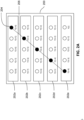
- Fig. 2B is an example of a second cross section 208 of matrix 200 that is used to evaluate the reliability of model 102.
- the model reliability component may select the cross section based on the line with the most output values. For example, in matrix 200, there is one output value 204 for time t-8, two values for time t-7, three values for time t-6, four values for time t-5, five values for time t-4, four values for time t-3, three values for time t-2, two values for time t-1, and one value for time t. Because the most values are associated with time t-4, the cross section extracted may be the line comprising output values of time t-4.
- the model reliability component may select any cross section at random as long as it has a minimum amount of points (e.g., 3). Referring to matrix 200, this means that the model reliability component may select any line associated with times t-6, t-5, t-4, t-3, and t-2.
- the model reliability component may select cross section 208, which includes four output values associated with time t-3. Referring to table 1, cross section 208 includes points [86, 85, 84, 86].
- the variance may again be a standard deviation, which is equal to 0.829. If this variance is greater than a variance threshold (e.g., 0.4), the model reliability component may determine that the output vectors of matrix 200 are unreliable.
- the model reliability component may select a plurality of cross sections in the matrix. For example, the model reliability component may select each cross section with at least four output values. Referring to matrix 200, this includes a cross section with output values at time t-5, cross section 206, and cross section 208.
- the model reliability component may determine a variance that is a function of all output values in the selected cross sections. For example, the model reliability component may determine the standard deviation for each cross section, and then determine the average standard deviation based on the three standard deviation values. This average standard deviation is considered the variance of matrix 200 and is compared to the variance threshold.
- the model reliability component may continuously update matrix 200 to include new output vectors received from model 102, and may monitor for unreliability. For example, at time t+1, model 102 may output a vector that includes output values spanning from time t-3 to time t+1. In some aspects, the model reliability component may remove the oldest output vector from matrix 200 whenever a new output vector is received. In response to receiving the new output vector, the model reliability component may select a new cross section(s) and perform a new variance calculation.
- an AI model such as model 100 may be configured to output a specific class for a point in time.
- the classes may be "active” or "rest.”
- the model reliability component may interpret classes using numbers (e.g., "1" for "active” and "0" for "rest”).
- a matrix representation may be structured as shown in the example of table 4. Table 4 0 0 0 1 1 0 0 1 1 1 0 1 1 1 1 1 1 1 0 0 1 1 0 0 0 0 0 0
- Cross section 206 that includes values from table 4 would be [0, 1, 1, 1, 1]. Ideally, the cross section should have the same class for all output values. However, in this case, there is one output value that differs from the others.
- the model reliability component may calculate a variance (e.g., standard deviation) and compare it against a variance threshold to determine whether the output vectors are reliable.
- the consistency of the output values is correlated with the confidence level of the AI model. If the AI model is not confident about an output value, the associated confidence score of the output value may be lower than a threshold confidence score. In some aspects, the confidence scores may be placed in the matrix instead of the output values to determine whether the AI model is consistently confident when outputting multiple values. In some aspects, confidence scores may be appended or prepended to the data in the tables above (e.g., a confidence score for each output vector).
- the systems and methods of the present disclosure may be used in many applications for the analysis of temporal variation of a signal including in healthcare, environmental monitoring, industrial applications, the automotive industry, robotics (e.g., drones), and smart cities.
- Healthcare may include personal health, animal, and/or machine health.
- Personal and animal healthcare monitoring may include cardiac monitoring such as heart rate, inter-beat-interval, etc.
- cardiac monitoring such as heart rate, inter-beat-interval, etc.
- SPO2 pulse oximetry
- movement and temperature tracking.
- machines include motors, engines, and other mechanical devices such as fans, which are used in homes, and industrial applications (e.g., air conditioning, automotive, smart vehicles, and e-mobility) or agricultural applications.
- industrial applications e.g., air conditioning, automotive, smart vehicles, and e-mobility
- Condition based monitoring is a term commonly used for industrial applications, and may be seen as a form to healthcare focused on machines, motors, engines, etc.
- Such devices pervade many applications now and hence this solution has a very broad scope of applications.
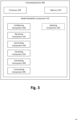
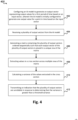
- computing device 300 may perform a method 400 for indicating reliability of an artificial intelligence (AI) model, such as via execution of model reliability component 315 by processor 305 and/or memory 310.
- processor 305 may represent one or more processors that work individually or in any combination.
- memory 310 may represent one or more memory blocks.
- the model reliability component 315 may be executed by one or more computing devices 300 as well.
- the method 400 includes configuring an AI model to generate an output vector representing output values for a first period of time based on an input vector, wherein the AI model is initially configured to generate one output value for a point in time based on the input vector.
- computing device 300, processor 305, memory 310, model reliability component 315, and/or configuring component 320 may be configured to or may comprise means for configuring an AI model (e.g., model 100) to generate an output vector (e.g., vector 108) representing output values for a first period of time based on an input vector (e.g., vector 104), wherein the AI model is initially configured to generate one output value (e.g., value 106) for a point in time based on the input vector.
- the AI model is a machine learning model (e.g., a classification model, a regression model, a decision tree, a neural network, etc.).
- the method 400 includes receiving a plurality of output vectors from the AI model.
- computing device 300, processor 305, memory 310, model reliability component 315, and/or receiving component 325 may be configured to or may comprise means for receiving a plurality of output vectors (e.g., 202a, 202b, 202c, etc.) from the AI model (e.g., model 102 after model 100 has been configured).
- the method 400 includes generating a matrix comprising the plurality of output vectors ordered sequentially such that each output vector of the plurality of output vectors is placed in a unique row or column of the matrix.
- computing device 300, processor 305, memory 310, model reliability component 315, and/or generating component 330 may be configured to or may comprise means for generating a matrix (e.g., matrix 200) comprising the plurality of output vectors ordered sequentially such that each output vector of the plurality of output vectors is placed in a unique row of the matrix.
- model reliability component 315 may receive each of the output vectors at a certain time and the matrix may be organized by the time when the output vectors are received.
- the method 400 includes extracting values in a cross section across multiple rows of the matrix.
- computing device 300, processor 305, memory 310, model reliability component 315, and/or extracting component 335 may be configured to or may comprise means for extracting values 204 in a cross section (e.g., cross section 206) across multiple rows of the matrix 200.
- the method 400 includes calculating a variance of the values extracted in the cross section.
- computing device 300, processor 305, memory 310, model reliability component 315, and/or calculating component 340 may be configured to or may comprise means for calculating a variance of the values extracted in the cross section.
- the variance is any one or any combination of: mean, mode, median, standard deviation, skewness, tailedness, or kurtosis.
- the method 400 includes transmitting an indication that the plurality of output vectors is unreliable in response to determining that the variance is greater than a variance threshold.
- computing device 300, processor 305, memory 310, model reliability component 315, and/or transmitting component 345 may be configured to or may comprise means for transmitting an indication that the plurality of output vectors is unreliable in response to determining that the variance is greater than a variance threshold.
- model reliability component may map the variance (e.g., standard deviation, kurtosis, etc.) to a continuous reliability metric such as a confidence level (e.g., 0%, 25%, 50%, 75%, 100%, etc.). For example, the relationship between variance and confidence level may be provided as a function such that a larger variance equates to a lower confidence level. Rather than directly comparing the variance to a variance threshold, the model reliability component may compare the mapped variance to a threshold confidence. When the mapped variance (e.g., 95%) meets or exceeds the threshold confidence (e.g., 90%), the output vectors may be deemed reliable. Otherwise, the output vectors may be deemed unreliable.
- a threshold confidence e.g., 90%
- the values extracted in the cross section are associated with a same time.
- cross section 206 includes output values associated with time t-4 taken from different samples.
- the cross section is a diagonal line through the matrix. If the matrix is organized sequentially, there is an equal time difference between each output vector, and there is a time overlap for each vector, then all output values associated with the same time will be distributed across a diagonal line. Accordingly, the selected cross section may be a diagonal line.
- the plurality of output vectors spans a second period of time, wherein the second period of time is greater than the first period of time.
- each output value is separated by a 1 second time difference.
- the output value of time t-8 is one second apart from the output value of time t-7 in output vector 202a.
- the first period of time represents the time window for a single output vector.
- the first period of time is a 5 second window for each of the output vectors in matrix 200.
- the second period of time is the time window of the entire matrix.
- the oldest point in matrix 200 is the output value of time t-8.
- the latest point in matrix 200 is the output value of time t.
- the second period of time thus spans t-8 to t, which is a total of eight sample periods.
- the method 400 may further include transmitting an indication that the plurality of output vectors is reliable in response to determining that the variance is not greater than the variance threshold.
- computing device 300, processor 305, memory 310, model reliability component 315, and/or transmitting component 345 may be configured to or may comprise means for transmitting an indication that the plurality of output vectors is reliable in response to determining that the variance is not greater than the variance threshold.
- computing device 300 may be an electronic device with a graphical user interface (GUI) that receives and displays the output values provided by model 100.
- GUI graphical user interface
- the model reliability component may output alerts indicating whether the output values are reliable or unreliable.
- the configuration of the AI model and computations may be performed on a different computing device (e.g., a remote server).
- model 100 may be uploaded to a server that configures the model to model 102 and provides the configured model to computing device 300.
- Computing device 300 may then execute model 102 and provide reliability metrics.
- there may be a combination of remote and local processing and calculations.
- the AI model is a point regression model and configuring the AI model comprises converting the AI model to a line regression model. In an alternative or additional aspect, the AI model is a point classification model and configuring the AI model comprises converting the AI model to a line classification model.
- the configuring at block 402 of the AI model further includes adding historical information to input features extracted by the AI model.
- the historical information may be in the form of a longer input vector that includes more input values.
- the input vector may include a waveform that can be used to output the heart rate at time t.
- the input vector may be modified to include prior waveforms. The combination of the prior waveforms and the latest waveforms may then be used to evaluate heart rate from time t-4 to time t.
- the historical information is added to the input features due to the input vector have more information.
- the configuring at block 402 of the AI model further includes retraining the AI model to output the output vector based on the historical information.
- the retaining may involve providing a labelled dataset that includes input values structured in the modified input vector and actual output values (e.g., the actual heart rates).
- creating the new training dataset may simply involve restructuring the older dataset to include multiple heart rates in the output values rather than a single output value.
- the method 400 may further include applying a filter to the values extracted in the cross section.
- computing device 300, processor 305, memory 310, model reliability component 315, and/or applying component 350 may be configured to or may comprise means for applying a filter to the values extracted in the cross section.
- the applying at block 702 of the filter further comprises performing at least one of normalizing, applying a gain factor, scaling non-linearly, or applying an attenuation factor.
- the machine learning model may transmit or communicate data using an interface of communication system to share the information with a controller device or function. This communication may be done on an integrated circuit or the communication may be off-chip (e.g., between circuits at a system in package (SiP) or module level), at a printed circuit board (PCB) level or to a remote controller or host for network, or cloud, computing.
- the model may use federated learning.
Landscapes
- Engineering & Computer Science (AREA)
- Theoretical Computer Science (AREA)
- Physics & Mathematics (AREA)
- Software Systems (AREA)
- Data Mining & Analysis (AREA)
- General Physics & Mathematics (AREA)
- Mathematical Physics (AREA)
- General Engineering & Computer Science (AREA)
- Evolutionary Computation (AREA)
- Medical Informatics (AREA)
- Computer Vision & Pattern Recognition (AREA)
- Computing Systems (AREA)
- Artificial Intelligence (AREA)
- Mathematical Optimization (AREA)
- Computational Mathematics (AREA)
- Mathematical Analysis (AREA)
- Pure & Applied Mathematics (AREA)
- Bioinformatics & Cheminformatics (AREA)
- Bioinformatics & Computational Biology (AREA)
- Evolutionary Biology (AREA)
- Life Sciences & Earth Sciences (AREA)
- Operations Research (AREA)
- Probability & Statistics with Applications (AREA)
- Algebra (AREA)
- Databases & Information Systems (AREA)
- Management, Administration, Business Operations System, And Electronic Commerce (AREA)
Applications Claiming Priority (1)
| Application Number | Priority Date | Filing Date | Title |
|---|---|---|---|
| US18/365,797 US20250045628A1 (en) | 2023-08-04 | 2023-08-04 | Systems and methods for improving reliability of machine learning models |
Publications (1)
| Publication Number | Publication Date |
|---|---|
| EP4502885A1 true EP4502885A1 (fr) | 2025-02-05 |
Family
ID=92171906
Family Applications (1)
| Application Number | Title | Priority Date | Filing Date |
|---|---|---|---|
| EP24192102.2A Pending EP4502885A1 (fr) | 2023-08-04 | 2024-07-31 | Systèmes et procédés pour améliorer la fiabilité de modèles d'apprentissage automatique |
Country Status (2)
| Country | Link |
|---|---|
| US (1) | US20250045628A1 (fr) |
| EP (1) | EP4502885A1 (fr) |
Citations (3)
| Publication number | Priority date | Publication date | Assignee | Title |
|---|---|---|---|---|
| US20210174258A1 (en) * | 2019-12-10 | 2021-06-10 | Arthur AI, Inc. | Machine learning monitoring systems and methods |
| US20220183608A1 (en) * | 2020-12-16 | 2022-06-16 | Samsung Electronics Co., Ltd. | Non-invasive continuous heart rhythm monitoring based on wearable sensors |
| US11636389B2 (en) * | 2020-02-19 | 2023-04-25 | Microsoft Technology Licensing, Llc | System and method for improving machine learning models by detecting and removing inaccurate training data |
-
2023
- 2023-08-04 US US18/365,797 patent/US20250045628A1/en active Pending
-
2024
- 2024-07-31 EP EP24192102.2A patent/EP4502885A1/fr active Pending
Patent Citations (3)
| Publication number | Priority date | Publication date | Assignee | Title |
|---|---|---|---|---|
| US20210174258A1 (en) * | 2019-12-10 | 2021-06-10 | Arthur AI, Inc. | Machine learning monitoring systems and methods |
| US11636389B2 (en) * | 2020-02-19 | 2023-04-25 | Microsoft Technology Licensing, Llc | System and method for improving machine learning models by detecting and removing inaccurate training data |
| US20220183608A1 (en) * | 2020-12-16 | 2022-06-16 | Samsung Electronics Co., Ltd. | Non-invasive continuous heart rhythm monitoring based on wearable sensors |
Non-Patent Citations (1)
| Title |
|---|
| AHN JUNGMO ET AL: "On-Device Filter Design for Self-Identifying Inaccurate Heart Rate Readings on Wrist-Worn PPG Sensors", IEEE ACCESS, IEEE, USA, vol. 8, 21 September 2020 (2020-09-21), pages 184774 - 184784, XP011815343, DOI: 10.1109/ACCESS.2020.3025776 * |
Also Published As
| Publication number | Publication date |
|---|---|
| US20250045628A1 (en) | 2025-02-06 |
Similar Documents
| Publication | Publication Date | Title |
|---|---|---|
| US12293287B2 (en) | Systems and methods of identity analysis of electrocardiograms | |
| Clifton et al. | Gaussian processes for personalized e-health monitoring with wearable sensors | |
| AU2006325153B2 (en) | Residual-based monitoring of human health | |
| US20150272509A1 (en) | Diagnostic apparatus and method | |
| US10660536B2 (en) | Wearable biometric measurement device | |
| US8751414B2 (en) | Identifying abnormalities in resource usage | |
| US20190243739A1 (en) | Time series retrieval for analyzing and correcting system status | |
| US20160223514A1 (en) | Method for denoising and data fusion of biophysiological rate features into a single rate estimate | |
| US12298881B2 (en) | Anomaly monitoring method and apparatus for timing data, electronic device, and storage medium | |
| CN113647905A (zh) | 深度神经网络预测血压的训练方法、计算机装置和存储介质 | |
| US11471113B2 (en) | Determination of health status of systems equipped with sensors | |
| Quinn et al. | Known unknowns: Novelty detection in condition monitoring | |
| CN116153505B (zh) | 基于医用压力传感器的危重病人体征智能识别方法及系统 | |
| CN116649940A (zh) | 一种用于可穿戴设备的远程监测系统及方法 | |
| EP3839972A1 (fr) | Dispositif et procédé de surveillance respiratoire chez des patients mécaniquement ventilés | |
| CN117297594A (zh) | 基于毫米波雷达与热成像的居家健康协同监测方法及装置 | |
| JP6797295B2 (ja) | 診断装置、診断方法及びプログラム | |
| US20210375473A1 (en) | Systems and methods for hypertension monitoring | |
| CN110841143A (zh) | 一种用于预测输液管路状态的方法及系统 | |
| US20210161479A1 (en) | A Probability-Based Detector and Controller Apparatus, Method, Computer Program | |
| EP4502885A1 (fr) | Systèmes et procédés pour améliorer la fiabilité de modèles d'apprentissage automatique | |
| CN112957018A (zh) | 基于人工智能的心脏状态检测方法和装置 | |
| CN113545777B (zh) | 血氧检测方法、血氧检测装置、电子设备和可读存储介质 | |
| CN113499037A (zh) | 用户睡眠质量的确定方法和装置、电子设备和存储介质 | |
| US20160228067A1 (en) | System and method for intelligent monitoring of patient vital signs |
Legal Events
| Date | Code | Title | Description |
|---|---|---|---|
| PUAI | Public reference made under article 153(3) epc to a published international application that has entered the european phase |
Free format text: ORIGINAL CODE: 0009012 |
|
| STAA | Information on the status of an ep patent application or granted ep patent |
Free format text: STATUS: REQUEST FOR EXAMINATION WAS MADE |
|
| 17P | Request for examination filed |
Effective date: 20240731 |
|
| AK | Designated contracting states |
Kind code of ref document: A1 Designated state(s): AL AT BE BG CH CY CZ DE DK EE ES FI FR GB GR HR HU IE IS IT LI LT LU LV MC ME MK MT NL NO PL PT RO RS SE SI SK SM TR |