EP4503556A2 - Procédé d'établissement d'un routage de segment pour un tunnel ipv6 - Google Patents
Procédé d'établissement d'un routage de segment pour un tunnel ipv6 Download PDFInfo
- Publication number
- EP4503556A2 EP4503556A2 EP24212593.8A EP24212593A EP4503556A2 EP 4503556 A2 EP4503556 A2 EP 4503556A2 EP 24212593 A EP24212593 A EP 24212593A EP 4503556 A2 EP4503556 A2 EP 4503556A2
- Authority
- EP
- European Patent Office
- Prior art keywords
- srv6
- pce
- message
- pcep
- pcc
- Prior art date
- Legal status (The legal status is an assumption and is not a legal conclusion. Google has not performed a legal analysis and makes no representation as to the accuracy of the status listed.)
- Pending
Links
Images





Classifications
-
- H—ELECTRICITY
- H04—ELECTRIC COMMUNICATION TECHNIQUE
- H04L—TRANSMISSION OF DIGITAL INFORMATION, e.g. TELEGRAPHIC COMMUNICATION
- H04L12/00—Data switching networks
- H04L12/28—Data switching networks characterised by path configuration, e.g. LAN [Local Area Networks] or WAN [Wide Area Networks]
- H04L12/46—Interconnection of networks
- H04L12/4633—Interconnection of networks using encapsulation techniques, e.g. tunneling
-
- H—ELECTRICITY
- H04—ELECTRIC COMMUNICATION TECHNIQUE
- H04L—TRANSMISSION OF DIGITAL INFORMATION, e.g. TELEGRAPHIC COMMUNICATION
- H04L45/00—Routing or path finding of packets in data switching networks
- H04L45/12—Shortest path evaluation
-
- H—ELECTRICITY
- H04—ELECTRIC COMMUNICATION TECHNIQUE
- H04L—TRANSMISSION OF DIGITAL INFORMATION, e.g. TELEGRAPHIC COMMUNICATION
- H04L45/00—Routing or path finding of packets in data switching networks
- H04L45/34—Source routing
-
- H—ELECTRICITY
- H04—ELECTRIC COMMUNICATION TECHNIQUE
- H04L—TRANSMISSION OF DIGITAL INFORMATION, e.g. TELEGRAPHIC COMMUNICATION
- H04L45/00—Routing or path finding of packets in data switching networks
- H04L45/42—Centralised routing
-
- H—ELECTRICITY
- H04—ELECTRIC COMMUNICATION TECHNIQUE
- H04L—TRANSMISSION OF DIGITAL INFORMATION, e.g. TELEGRAPHIC COMMUNICATION
- H04L45/00—Routing or path finding of packets in data switching networks
- H04L45/50—Routing or path finding of packets in data switching networks using label swapping, e.g. multi-protocol label switch [MPLS]
-
- H—ELECTRICITY
- H04—ELECTRIC COMMUNICATION TECHNIQUE
- H04L—TRANSMISSION OF DIGITAL INFORMATION, e.g. TELEGRAPHIC COMMUNICATION
- H04L45/00—Routing or path finding of packets in data switching networks
- H04L45/74—Address processing for routing
-
- H—ELECTRICITY
- H04—ELECTRIC COMMUNICATION TECHNIQUE
- H04L—TRANSMISSION OF DIGITAL INFORMATION, e.g. TELEGRAPHIC COMMUNICATION
- H04L47/00—Traffic control in data switching networks
- H04L47/10—Flow control; Congestion control
- H04L47/34—Flow control; Congestion control ensuring sequence integrity, e.g. using sequence numbers
-
- H—ELECTRICITY
- H04—ELECTRIC COMMUNICATION TECHNIQUE
- H04L—TRANSMISSION OF DIGITAL INFORMATION, e.g. TELEGRAPHIC COMMUNICATION
- H04L61/00—Network arrangements, protocols or services for addressing or naming
- H04L61/09—Mapping addresses
- H04L61/25—Mapping addresses of the same type
- H04L61/2503—Translation of Internet protocol [IP] addresses
- H04L61/2592—Translation of Internet protocol [IP] addresses using tunnelling or encapsulation
-
- H—ELECTRICITY
- H04—ELECTRIC COMMUNICATION TECHNIQUE
- H04L—TRANSMISSION OF DIGITAL INFORMATION, e.g. TELEGRAPHIC COMMUNICATION
- H04L61/00—Network arrangements, protocols or services for addressing or naming
- H04L61/50—Address allocation
- H04L61/5007—Internet protocol [IP] addresses
-
- H—ELECTRICITY
- H04—ELECTRIC COMMUNICATION TECHNIQUE
- H04L—TRANSMISSION OF DIGITAL INFORMATION, e.g. TELEGRAPHIC COMMUNICATION
- H04L67/00—Network arrangements or protocols for supporting network services or applications
- H04L67/14—Session management
- H04L67/141—Setup of application sessions
-
- H—ELECTRICITY
- H04—ELECTRIC COMMUNICATION TECHNIQUE
- H04L—TRANSMISSION OF DIGITAL INFORMATION, e.g. TELEGRAPHIC COMMUNICATION
- H04L2101/00—Indexing scheme associated with group H04L61/00
- H04L2101/30—Types of network names
- H04L2101/35—Types of network names containing special prefixes
-
- H—ELECTRICITY
- H04—ELECTRIC COMMUNICATION TECHNIQUE
- H04L—TRANSMISSION OF DIGITAL INFORMATION, e.g. TELEGRAPHIC COMMUNICATION
- H04L2101/00—Indexing scheme associated with group H04L61/00
- H04L2101/60—Types of network addresses
- H04L2101/618—Details of network addresses
- H04L2101/659—Internet protocol version 6 [IPv6] addresses
-
- H—ELECTRICITY
- H04—ELECTRIC COMMUNICATION TECHNIQUE
- H04L—TRANSMISSION OF DIGITAL INFORMATION, e.g. TELEGRAPHIC COMMUNICATION
- H04L45/00—Routing or path finding of packets in data switching networks
- H04L45/645—Splitting route computation layer and forwarding layer, e.g. routing according to path computational element [PCE] or based on OpenFlow functionality
-
- H—ELECTRICITY
- H04—ELECTRIC COMMUNICATION TECHNIQUE
- H04L—TRANSMISSION OF DIGITAL INFORMATION, e.g. TELEGRAPHIC COMMUNICATION
- H04L47/00—Traffic control in data switching networks
- H04L47/10—Flow control; Congestion control
- H04L47/12—Avoiding congestion; Recovering from congestion
- H04L47/125—Avoiding congestion; Recovering from congestion by balancing the load, e.g. traffic engineering
Definitions
- the present disclosure described herein in general, relates to segment routing and more particularly to a mechanism to support Segment Routing for IPv6 forwarding plane (SRv6) by using path computation element communication protocol (PCEP).
- PCEP path computation element communication protocol
- a Segment Routing (SR) technology leverages the source routing and tunneling paradigms. It enables any head-end node, i.e., the source node, to choose a path without relying on hop-by-hop signaling protocols in the Multiprotocol Label Switching (MLPS) network, such as Label Distribution Protocol (LDP) or Resource Reservation Protocol-Traffic engineered (RSVP-TE). Each path is specified as a set of "segments" advertised by link-state routing Protocols.
- a Segment Routed Path can be derived from a variety of mechanisms, including an IGP Shortest Path Tree (SPT), explicit configuration, or calculated by a Path Computation Element (PCE). Such paths may be chosen by a suitable network planning tool or provisioned on the ingress node.
- SPT IGP Shortest Path Tree
- PCE Path Computation Element
- the draft-filsfils-rtgwg-segment-routing-00 defines an "IGP Segment or IGP SID" as a segment attached to a piece of information advertised by a link-state routing protocols, e.g. an IGP prefix or an IGP adjacency.
- IGP SID an IGP Segment attached to a piece of information advertised by a link-state routing protocols, e.g. an IGP prefix or an IGP adjacency.
- An IGP-Node Segment represents an IGP-Prefix Segment which identifies a specific router (e.g. a loopback).
- Node Segment or "Node-SID” are often used as an abbreviation.
- An IGP-Adjacency Segment or Adjacency Segment or Adj-SID represents an IGP segment attached to an unidirectional adjacency or a set of unidirectional adjacencies.
- An Adjacency Segment is local to the node which advertises it. Both Node segments and Adjacency segments can be used for SR Traffic Engineering (SR-TE).
- SR-TE Traffic Engineering
- Segment Routing can operate with the MPLS data plane or an IPv6 data plane, and Segment Routing integrates with multiple service capabilities of the MPLS, including Layer 3 virtual private network (L3VPN), Virtual Private Wire Service (VPWS), Virtual Private LAN Service (VPLS), and Ethernet VPN (EVPN).
- L3VPN Layer 3 virtual private network
- VPWS Virtual Private Wire Service
- VPLS Virtual Private LAN Service
- EVPN Ethernet VPN
- the SR architecture can be applied to the MPLS forwarding plane without any change, in which case an SR path corresponds to an MPLS Label Switching Path (LSP).
- LSP MPLS Label Switching Path
- the SR is applied to IPV6 forwarding plane using Segment Routing Header (SRH) as specified in the Internet-draft [I D.ietf-6man-segment-routing-header].
- SSH Segment Routing Header
- SR-ERO subobject capable of carrying a Segment Identifier (SID) as well as a node/adjacency identifier (NAI) associated with the SID.
- SID Segment Identifier
- NAI node/adjacency identifier
- draft-ietf-pce-segment-routing-09 specifies extensions to the Path Computation Element Protocol (PCEP) extensions for supporting a SR-TE 1sp for MPLS forwarding plane, that allow a stateful PCE to compute and initiate Traffic Engineering (TE) paths, as well as a PCC to request a path subject to certain constraint(s) and optimization criteria in SR networks.
- PCEP Path Computation Element Protocol
- IPv6 Segment Routing Header discloses that Segment Routing can be applied to the IPv6 data plane with the addition of a new type of Routing Extension Header.
- An objective of the present disclosure is to provide PCEP extensions for establishing a Segment Routing tunnel by PCE managed SDN based on IPv6 data-plane.
- the Segment Routing for IPv6 (SRv6) tunnel can be configured in PCC or initiated by PCE.
- Another objective of the present disclosure is to provide a PCC or PCE indicating its ability to support IPv6 SR-Path during the PCEP session Initialization phase via a new flag bit in the SR-PCE-CAPABILITY TLV
- a method for sending data packets in a communications network comprises the steps of generating, by a path computation element (PCE), a first path computation element communication protocol (PCEP) message, wherein the first PCEP message comprises an indicating information and a segment identifier (SID) field, the SID field comprises multiple SIDs and the indicating information is used to indicate that each of the multiple SIDs is an IPv6 prefix of a node in a tunnel respectively; and sending, by the PCE, the first PCEP message to a first path computation client (PCC) to establish a segment routing for IPv6 (SRv6) tunnel from the first PCC to a second PCC according to the SIDs and the indicating information.
- PCE path computation element
- PCEP first path computation element communication protocol
- SID segment identifier
- SRv6 segment routing for IPv6
- the method before generating the first PCEP message, comprises the steps of receiving, by the PCE, a second PCEP message from the first PCC; sending, by the PCE, a third PCEP message to the first PCC; wherein, the second PCEP message and the third PCEP message are used to set up an SRv6 capable PCEP session between the first PCC and the PCE, each of the second PCEP message and the third PCEP message carries an SRv6-CAPABILITY Type Length Value (TLV) field, wherein the Type field of the SRv6-CAPABILITY TLV field is used to indicate that both the PCE and the first PCC support SRv6 forwarding.
- TLV Type Length Value
- a method in a communications network comprises the steps of receiving, by a first path computation client (PCC), a first path computation element communication protocol (PCEP) message from a path computation element (PCE), wherein the first PCEP message comprises an indicating information and a segment identifier (SID) field, the SID field comprises multiple SIDs and the indicating information is used to indicate that each of the multiple SIDs is an IPv6 Prefix of a node in tunnel respectively ; and establishing, by the first PCC, a segment routing for IPv6 (SRv6) tunnel from the first PCC to a second PCC according to the SIDs and the indicating information the SIDs and the indicating information.
- PCC path computation client
- PCEP path computation element communication protocol
- SID segment identifier
- the method before receiving the first PCEP message, comprises the steps of sending, by the first PCC, a second PCEP message to the PCE; receiving, by the first PCC, a third PCEP message from the PCE; wherein, the second PCEP message and the third PCEP message are used to set up an SRv6 capable PCEP session between the first PCC and the PCE, each of the second PCEP message and the third PCEP message carries an SRv6-CAPABILITY Type Length Value (TLV) field, wherein the Type field of the SRv6-CAPABILITY TLV field is used to indicate that both the PCE and the first PCC support SRv6 forwarding.
- TLV SRv6-CAPABILITY Type Length Value
- SID field and the indication information can be carried by an Explicit Route Object (ERO) subobject supporting variable length SID for SR IPv6.
- ERO Explicit Route Object
- the ERO subobject in the present application can also be known as SRv6-ERO Subobject.
- the indicating information can be a bit, i.e. an I-bit of the SRv6-ERO Subobject, modified to support variable length SID for SR IPv6. It indicates that the SID is variable length (i.e. 16 bytes to encode IPv6 Prefix) unlike 4 bytes in old subobjects.
- the ERO subobjects can be carried in at least one or more of PCUpd message, Reinitiate message and PCRep message to convey an explicit-path to the PCC from the PCE.
- the first PCEP message which can be a Reinitiate message, or a PCRep message, also comprises a PATH-SETUP-TLV field, where the Type field of the PATH-SETUP-TLV field indicates that the tunnel is established by SRv6 technique.
- the second PCEP message which can be a PCReq Message, also comprises a SRv6-CAPABILITY Type Length Value (TLV) field, where the Type field of the SRv6-CAPABILITY TLV field indicates that the first PCC supports SRv6 forwarding.
- the third PCEP message which can be a PCRep Message, also comprises an SRv6-CAPABILITY Type Length Value (TLV) field, where the Type field of the SRv6-CAPABILITY TLV field indicates that the PCE supports SRv6 forwarding.
- TLV SRv6-CAPABILITY Type Length Value
- the PCC configured to send a Path Computation Report (PCRpt) message for updating Link-State-Database (LSDB) to the PCE.
- PCEPLS path computation element protocol link state
- BGP Border Gateway Protocol link state
- IGP Interior Gateway Protocols
- both PCC and PCE can exchange SRv6 capability TLV through an Open message, for establishing SRv6 capability during the PCEP session.
- the PCC first sends an Open message to PCE to indicate that it is capable of establishing a SRv6 session.
- the PCE sends an Open message to PCC to indicate that it is also capable of establishing a SRv6 session.
- a Route Record object (RRO) carried in PCRpt message and/or PCReq message sent by PCC conveys the actual-path from PCC to PCE.
- RRO Route Record object
- a forwarding node can compute the SRv6 tunnel path, however it is limited to intra area and optimal inter-area/inter-AS tunnels cannot be setup.
- the PCE may optimally set up intra-area, inter-area and inter-AS SRv6 tunnels.
- segment routing tunnel setup can be achieved by the IPv6 data plane with PCE even if the forwarding network does not support the MPLS.
- the application can be implemented in numerous ways, as a process, an apparatus, a system, a composition of matter, a computer readable medium such as a computer readable storage medium or a computer network wherein program instructions are sent over optical or electronic communication links.
- these implementations, or any other form that the application may take, may be referred to as techniques.
- the order of the steps of disclosed processes may be altered within the scope of the application.
- the terms “plurality” and “a plurality” as used herein may include, for example, “multiple” or “two or more”.
- the terms “plurality” or “a plurality” may be used throughout the specification to describe two or more components, devices, elements, units, parameters, or the like.
- the method embodiments described herein are not constrained to a particular order or sequence. Additionally, some of the described method embodiments or elements thereof can occur or be performed simultaneously, at the same point in time, or concurrently.
- Embodiments of the present invention teach a method for setting up a segment routing tunnel based on IPv6 data plane by using Path Computation Element Protocol (PCEP) extensions.
- the Path Computation Element Protocol (PCEP) runs on a Path Computation Client (PCC) and a Path Computation Element (PCE) to establish the communication between the PCC and the PCE.
- PCEP is capable of computing a network path or route based on a network graph and applying computational constraints.
- the method is applied in a system including a PCC and a PCE, wherein the PCC and the PCE run the PCEP and communication with each other.
- PCEP Physical Network Communication Protocol
- PCE Processing Element
- PCEP PCEP for communication between a PCC and a PCE or between one a pair of PCEs.
- PCE Processing Element
- PCEP Communication Protocol
- the basic PCEP operation in SR networks are followed as in the Internet-draft document, draft-ietf-pce-segment routing.
- SR-IPv6 LSPs computed by a PCE can be represented in one of the following forms:
- the present invention extends the "SR-ERO subobject" as defined in I-D.ietf-pce-segment-routing, to carry IPv6 SID(s) (IPv6 Addresses).
- IPv6 SID(s) IPv6 Addresses.
- the SRH-capable PCEP speakers should be able to generate and/or process such ERO subobject.
- PCEP Path Computation Reply PCEP LSP Initiate Request message (PCInitiate) as defined in the Internet Draft document I-D.ietf-pce-pce-initiated-lsp, as well as in the PCEP LSP Update Request (PCUpd) and PCEP LSP State Report (PCRpt) messages defined in defined in Stateful PCE [I-D.ietf-pce-stateful-pce].
- PCEP messages E.g., Path computation Request, Path computation Reply, Path Computation Report, Path Computation
- Update, Path Computation Initiate, etc. must be formatted according to the IETF Internet-Draft document (RFC5440), Internet draft I-D.ietf-pce-stateful-pce, Internet draft I-D.ietf-pce-pce-initiated-lsp, and any other applicable PCEP specifications.
- the present invention uses the following terms which are as follows:
- the Path Computation Client (PCC) and the PCE includes a processor, a memory, and an interconnection mechanism coupling the memory and a transceiver respectively.
- the processor may be implemented as one or more microprocessors, microcomputers, microcontrollers, digital signal processors, central processing units, state machines, logic circuitries, and/or any devices that manipulate signals based on operational instructions.
- at least one processor is configured to fetch and execute computer-readable instructions stored in the memory to implement the method of present invention.
- the memory may include any computer-readable medium known in the art including, for example, volatile memory, such as static random access memory (SRAM) and dynamic random access memory (DRAM), and/or non-volatile memory, such as read only memory (ROM), erasable programmable ROM, flash memories, hard disks, optical disks, and magnetic tapes.
- volatile memory such as static random access memory (SRAM) and dynamic random access memory (DRAM)
- DRAM dynamic random access memory
- non-volatile memory such as read only memory (ROM), erasable programmable ROM, flash memories, hard disks, optical disks, and magnetic tapes.
- the Path Computation Element (PCE) ane the PCC includes a transceiving unit and a processing unit.
- the transceiving unit is used to perform the action of receiving and sending in the method of the present invention
- the processing unit is used to perform the other actions except the transceiving action in the method of the present invention.
- the processing unit of the PCE is configured to generate a first path computation element communication protocol (PCEP) message, wherein the first PCEP message comprises an indicating information and a segment identifier (SID) field, the SID field comprises multiple SIDs and the indicating information is used to indicate that each of the multiple SIDs is an IPv6 prefix of a node in a tunnel respectively; and the transceiving unit of the PCE is configured to send the first PCEP message to a first path computation client (PCC) to establish a segment routing for IPv6 (SRv6) tunnel from the first PCC to a second PCC according to the SIDs and the indicating information.
- PCEP path computation element communication protocol
- SID segment identifier
- the transceiving unit of the PCC is configured to receive a first path computation element communication protocol (PCEP) message from a path computation element (PCE), wherein the first PCEP message comprises an indicating information and a segment identifier (SID) field, the SID field comprises multiple SIDs and the indicating information is used to indicate that each of the multiple SIDs is an IPv6 Prefix of a node in tunnel respectively; and the processing unit of the PCC is configured to establish a segment routing for IPv6 (SRv6) tunnel from the first PCC to a second PCC according to the SIDs and the indicating information.
- PCEP path computation element communication protocol
- PCE path computation element
- SID segment identifier
- SRv6 segment routing for IPv6
- the PCC or PCE may also be implemented in a variety of computing systems, such as a laptop computer, a desktop computer, a notebook, a workstation, a mainframe computer, a server, a network server, and the like. It will be understood that the PCC or PCE may be accessed by multiple users through one or more user devices (not shown), collectively referred to as user hereinbefore/after, or applications residing on the user devices. Examples of the PCC or PCE may include, but are not limited to, a router, a switch, a controller in a SDN, a portable computer, a personal digital assistant, a handheld device, and a workstation. The PCC and PCE are communicatively coupled to with each other through a network.
- the PCEP in order to support SRv6 tunnel, the PCEP is extended to support IPv6 capability (in Open Object/open message), IPv6 prefix SR-Stack (in SR-ERO subobject) and a new path-setup-type (in RP/SRP object).
- IPv6 capability in Open Object/open message
- IPv6 prefix SR-Stack in SR-ERO subobject
- a new path-setup-type in RP/SRP object.
- a PCC can create tunnel or a PCE can send request to a PCC for creating a tunnel based on SRv6 (e.g. IPv6 tunnel based on SRH technique defined in IETF draft-ietf-6man-segment-routing-header-06).
- an ingress node of an SR path appends all outgoing packets with an SR header (SRH) consisting of a list of SIDs (i.e., IPv6 prefix in case of SRH-IPv6).
- the header has all necessary information to guide the packets from the ingress node to the egress node of the path, and hence there is no need for any signaling protocol.
- the present invention describes extensions to SR path for IPv6 forwarding-plane.
- SR-path i.e., ERO object
- a PCC or PCE indicates its ability to support IPv6 SR-path during the PCEP session Initialization phase via a new flag in the SR-PCE-CAPABILITY TLV format.
- FIG 1 which illustrates the process flow of a method for establishing a Segment Routing tunnel over an IPv6 data-plane (SRv6) configured at a PCC or initiated by PCE, according to an embodiment of the present invention.
- SRv6 data-plane IPv6 data-plane
- the PCE when PCC configures the tunnel, then before the PCE sending the first PCEP message, receives a second PCEP message from the PCC, wherein the second PCEP message can be PCReq MESSAGE. And the PCE sends a third PCEP message to PCC.
- the third PCEP message is PCRep MESSAGE.
- the method 100 includes the following steps for sending data packets in a communications network through SRv6 tunnel:
- the first PCEP message can be selected from a Path Computation Initiate (Reinitiate) message
- the second PCEP message can be selected from a Path Computation Request (PCReq) message
- the third PCEP message can be selected from a Path Computation Reply (PCRep) message.
- the PCEP message can also be selected from an update message (PCUpd) or LSP State Report (PCRpt).
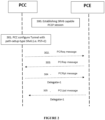
- FIG 2 which illustrates the flow chart diagram of a method 200 for configuring SRv6 tunnel initiated by a PCC. It illustrates the followings steps:
- Figure 3 illustrates the flow chart diagram of a method 300 for configuring SRv6 tunnel initiated by a PCE.
- the flow chart diagram of SRv6 tunnel initiated by PCE according to second embodiment of the present invention. It illustrates the following steps:
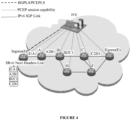
- the SRv6 tunnel setup by PCE schematic is shown figure 4 .
- the PCE send a first PCEP message to the first PCC node (Ingress node).
- the message contains the ERO according to the format as shown in figure 8 .
- FIG 5 illustrates the schematic of SRv6 packet forwarding, based on SRv6 data plane, in accordance with an embodiment of the present subject matter.
- PCC downloads SRv6 IPv6 Prefix SIDS as SRv6 Next Headers List.
- DA Destination Address
- PCE updates ingress node with SRv6 ERO.
- SRv6 ERO On receiving packet at ingress, it applies SRv6 ERO as SRv6 next headers and forwards the packet to A, DA [1A1] (i.e. from the bottom of the next-headers).
- A DA is updated to [A2B1] and packet is forwarded to B.
- B DA is updated to [B2C1] and packet is forwarded to C.
- C DA is updated to [C2D1] and packet is forwarded to E (i.e. Final Destination).
- the SRv6 capable PCEP session is establish between PCC and PCE by an OPEN message.
- a SRv6-PCE-CAPABILITY TLV is introduced, but it's an optional TLV associated with the OPEN Object to exchange SR IPv6 capability of PCEP speakers.
- the PCE and PCC exchange an open message to establish SRv6 capable PCEP session.
- PCC or PCE must encode the SRv6-PCE-CAPABILITY TLV in the open message.
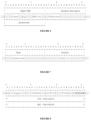
- the figure 6 illustrates the updated format of SRv6 capability TLV, in accordance with an embodiment of the present subject matter.
- This TLV is for SR based on iPv6 data plane not TE existing one is for SR-TE.
- the format of the SRv6-PCE-CAPABILITY TLV is shown in the figure.
- the code point for the TLV type is TBD as defined by IANA.
- the TLV length is 4 octets and is variable length.
- the 32-bit value is formatted as follows.
- the MAX-SL is "Maximum SID Depth" (1 octet) field (MSD) specifies the maximum number of SIDs a PCC is capable of imposing as MPLS labels.
- the "SRH MSD” (2 octets) field specifies the maximum number of SIDs a PCC is capable of imposing as next headers in SRH.
- "Flags" field is 1 octet long, and the present invention defines the following flag: L-flag: A PCC sets this flag to 1 to indicate that it does not impose any limit on MSD.
- the PCE learns IPv6 LSDB via PCEPLSBGPLS/IGP protocols.
- the IPv6PrefixSIDs are advertised by IGP for each IPv6 adjacency.
- PCC and PCE must have BGPLS/IGP or PCEPLS (capability), so PCC can update Link-State-Database (LSDB) to PCE.
- LSDB Link-State-Database
- PCE encodes SRv6_ERO in PCRep (i.e. if PCReq message is send from PCC to PCE), in PCUpd (i.e. if LSP is delegated from PCC to PCE), in PCInitiate (i.e. if tunnel is initiated by PCE).
- PCC encodes SRv6_RRO in PCRpt (i.e. in Path Computation Report send from PCC to PCE).
- a tunnel with IPv6 SRH technique is utilized by PCE to support tunnel setup based on SRv6.
- a PATH-SETLTP-TYPE (2) is defined in PATH-SETUP-TYFE TLV.
- Figure 7 illustrates the format of path setup type TLV (PST Type 2 is added).
- This TLV is encoded in RP/SRP object as specified in Internet-draft document draft-ietf-pce-lsp-setup-type, SRP object can be encoded in PCUpd (to identify the transaction from PCE) and PCRpt (i.e. to match the transaction received from PCE) message.
- FIGS 8 and 9 which illustrate a SRv6- Explicit Route Object (ERO) Subobject and SRv6-Route Record object (RRO) Subobject, respectively, in accordance with an embodiment of the present invention, whereby SID is the Segment Identifier and Node or Adjacency Identifier (NAI) contains the NAI associated with the SID.
- ERO SRv6- Explicit Route Object
- RRO SRv6-Route Record object
- SR-ERO/SR-RRO subobject is modified to support variable length SID for SR IPv6.
- Indicating information i.e., a bit (I)
- SID is variable length (i.e. 16 bytes to encode IPv6 Prefix) unlike 4 bytes in old subobjects.
- ERO object is encoded in PCUpd, Reinitiate or PCRep message, to convey the explicit-path to PCC from PCE.
- RRO object is encoded in PCRpt message to convey the actual-path to PCE from PCC, RRO object also can be encoded in PCReq message.
- SR-ERO subobject for supporting IPv6 SID(s), indicating information, i.e., a new bit (I), is set in existing SR-ERO sub object. If I bit is set, then SR-ERO sub object consists of a 32-bit header followed by the IPv6 SID and the NAI associated with theIPv6 SID. If I-bit is set, length field is variable unlike defined in the Internet Draft document, I-D.ietf-pce-segment-routing.
- the SR-ERO Subobject format is shown in figure 9 . The fields in the SR-ERO Subobject are as follows:
- Flags is used to carry any additional information pertaining to SID.
- new bit(I) is defined.
- the SID value represents an MPLS label stack entry as specified in [RFC5462] where only the label value is specified by the PCE.
- a SRIPv6-ERO subobject consists of a 32-bit header followed by the variable (SID) PrefixSID and the NAI associated with the PrefixSID.
- FIG. 10 is schematic diagram of the PCE according to an embodiment of the present invention.
- Other parts of the PCE can refer to the existing technology of PCE and not be described in the present invention.
- the PCE includes a transceiving unit 1001 and a processing unit 1002.
- the transceiving unit 1001 is configure to perform the receiving action and sending action performed by the PCE in the method 100, 200 or 300 as shown in figures 1-3
- the processing unit 1002 is configured to perform the other actions except the receiving action and the sending action in the method 100, 200 or 300.
- the processing unit 1002 is configured to generate a first path computation element communication protocol (PCEP) message, wherein the first PCEP message comprises an indicating information and a segment identifier (SID) field, the SID field comprises multiple SIDs and the indicating information is used to indicate that each of the multiple SIDs is an IPv6 prefix of a node in a tunnel respectively; and the transceiving unit 1001 is configured to send the first PCEP message to a first path computation client (PCC) to establish a segment routing for IPv6 (SRv6) tunnel from the first PCC to a second PCC according to the SIDs and the indicating information.
- PCEP path computation element communication protocol
- SID segment identifier
- SRv6 segment routing for IPv6
- an embodiment of the present invention further provides a PCE 600.
- the PCE may include: a processor 501, a memory 502, a transceiver 503, and a bus system504, where
- the PCC includes a transceiving unit 3001 and a processing unit 3002.
- the transceiving unit 3001 is configure to perform the receiving action and sending action performed by the PCC in the method 100, 200 or 300 as shown in figures 1-3
- the processing unit 3002 is configured to perform the other actions except the receiving action and the sending action in the method 100, 200 or 300.
- the transceiving unit 3001 is configured to receive a first path computation element communication protocol (PCEP) message from a path computation element (PCE), wherein the first PCEP message comprises an indicating information and a segment identifier (SID) field, the SID field comprises multiple SIDs and the indicating information is used to indicate that each of the multiple SIDs is an IPv6 Prefix of a node in tunnel respectively; and the processing unit 3002 is configured to establish a segment routing for IPv6 (SRv6) tunnel from the first PCC to a second PCC according to the SIDs and the indicating information.
- PCEP path computation element communication protocol
- PCE path computation element
- SID segment identifier
- SRv6 segment routing for IPv6
- an embodiment of the present invention further provides a PCC 600.
- the PCC may include: a processor 601, a memory 602, a transceiver 603, and a bus system604, where
- the processor in the present invention may be implemented as one or more microprocessors, microcomputers, microcontrollers, digital signal processors, central processing units, state machines, logic circuitries, and/or any devices that manipulate signals based on operational instructions.
- at least one processor is configured to fetch and execute computer-readable instructions stored in the memory to implement the method of present invention.
- a system is provided, where the system includes: a PCE according to any one of the above PCE and a PCC according to any one of the above PCC.
- the software product may be stored in a storage medium, such as a read-only memory (English: read-only memory, ROM for short), a RAM, a magnetic disk, or an optical disc, and includes several instructions for instructing a computer device (which may be a personal computer, a server, or a network device such as media gateway) to perform the methods described in the embodiments or some parts of the embodiments of the present invention.
- a storage medium such as a read-only memory (English: read-only memory, ROM for short), a RAM, a magnetic disk, or an optical disc, and includes several instructions for instructing a computer device (which may be a personal computer, a server, or a network device such as media gateway) to perform the methods described in the embodiments or some parts of the embodiments of the present invention.
Landscapes
- Engineering & Computer Science (AREA)
- Computer Networks & Wireless Communication (AREA)
- Signal Processing (AREA)
- Computer Security & Cryptography (AREA)
- Data Exchanges In Wide-Area Networks (AREA)
Applications Claiming Priority (4)
| Application Number | Priority Date | Filing Date | Title |
|---|---|---|---|
| IN201741025136 | 2017-07-14 | ||
| EP18831875.2A EP3643022B1 (fr) | 2017-07-14 | 2018-06-20 | Procédé d'établissement d'un routage de segment pour un tunnel ipv6 |
| EP23152179.0A EP4191979B1 (fr) | 2017-07-14 | 2018-06-20 | Procédé d'établissement d'un routage de segment pour un tunnel ipv6 |
| PCT/CN2018/091976 WO2019011114A1 (fr) | 2017-07-14 | 2018-06-20 | Procédé d'établissement d'un routage de segment pour un tunnel ipv6 |
Related Parent Applications (3)
| Application Number | Title | Priority Date | Filing Date |
|---|---|---|---|
| EP18831875.2A Division EP3643022B1 (fr) | 2017-07-14 | 2018-06-20 | Procédé d'établissement d'un routage de segment pour un tunnel ipv6 |
| EP23152179.0A Division EP4191979B1 (fr) | 2017-07-14 | 2018-06-20 | Procédé d'établissement d'un routage de segment pour un tunnel ipv6 |
| EP23152179.0A Division-Into EP4191979B1 (fr) | 2017-07-14 | 2018-06-20 | Procédé d'établissement d'un routage de segment pour un tunnel ipv6 |
Publications (2)
| Publication Number | Publication Date |
|---|---|
| EP4503556A2 true EP4503556A2 (fr) | 2025-02-05 |
| EP4503556A3 EP4503556A3 (fr) | 2025-02-26 |
Family
ID=65001066
Family Applications (3)
| Application Number | Title | Priority Date | Filing Date |
|---|---|---|---|
| EP23152179.0A Active EP4191979B1 (fr) | 2017-07-14 | 2018-06-20 | Procédé d'établissement d'un routage de segment pour un tunnel ipv6 |
| EP24212593.8A Pending EP4503556A3 (fr) | 2017-07-14 | 2018-06-20 | Procédé d'établissement d'un routage de segment pour un tunnel ipv6 |
| EP18831875.2A Active EP3643022B1 (fr) | 2017-07-14 | 2018-06-20 | Procédé d'établissement d'un routage de segment pour un tunnel ipv6 |
Family Applications Before (1)
| Application Number | Title | Priority Date | Filing Date |
|---|---|---|---|
| EP23152179.0A Active EP4191979B1 (fr) | 2017-07-14 | 2018-06-20 | Procédé d'établissement d'un routage de segment pour un tunnel ipv6 |
Family Applications After (1)
| Application Number | Title | Priority Date | Filing Date |
|---|---|---|---|
| EP18831875.2A Active EP3643022B1 (fr) | 2017-07-14 | 2018-06-20 | Procédé d'établissement d'un routage de segment pour un tunnel ipv6 |
Country Status (6)
| Country | Link |
|---|---|
| US (2) | US11483235B2 (fr) |
| EP (3) | EP4191979B1 (fr) |
| JP (2) | JP7174033B2 (fr) |
| KR (2) | KR102315401B1 (fr) |
| CN (2) | CN113872859A (fr) |
| WO (1) | WO2019011114A1 (fr) |
Families Citing this family (40)
| Publication number | Priority date | Publication date | Assignee | Title |
|---|---|---|---|---|
| EP3378194B1 (fr) | 2015-12-09 | 2022-02-02 | Huawei Technologies Co., Ltd. | Nouds et procédé de mesurage de performance dans un réseau de routage de segments |
| KR102315401B1 (ko) | 2017-07-14 | 2021-10-19 | 후아웨이 테크놀러지 컴퍼니 리미티드 | Ipv6 터널에 대한 세그먼트 라우팅을 구축하기 위한 방법 |
| CN110300061A (zh) * | 2018-03-23 | 2019-10-01 | 中兴通讯股份有限公司 | 一种通告绑定信息的方法、设备及存储介质 |
| CN110417651B (zh) * | 2018-04-28 | 2021-07-16 | 华为技术有限公司 | 一种隧道建立方法、装置及系统 |
| CN110971433B (zh) * | 2018-09-29 | 2022-02-22 | 华为技术有限公司 | 获取SRv6隧道信息的方法、设备和系统 |
| WO2020097296A1 (fr) * | 2018-11-08 | 2020-05-14 | Trilliant Networks, Inc. | Procédé et appareil d'attribution de piste dynamique dans un réseau |
| US11245617B1 (en) | 2018-12-28 | 2022-02-08 | Juniper Networks, Inc. | Compressed routing header |
| CN111510386B (zh) | 2019-01-30 | 2023-06-20 | 华为技术有限公司 | 用于处理报文的方法和装置 |
| CN109981458B (zh) * | 2019-03-08 | 2022-07-26 | 华为技术有限公司 | 一种确定报文转发路径的方法、网络节点及系统 |
| CN111917640B (zh) * | 2019-05-09 | 2023-06-06 | 华为技术有限公司 | SRv6网络生成段列表、报文转发的方法、设备和系统 |
| US11412071B2 (en) * | 2019-05-13 | 2022-08-09 | Juniper Networks, Inc. | Compressed routing header information for networks |
| CN114448860A (zh) | 2019-06-17 | 2022-05-06 | 华为技术有限公司 | 处理报文的方法、装置及计算机存储介质 |
| US11140074B2 (en) | 2019-09-24 | 2021-10-05 | Cisco Technology, Inc. | Communicating packets across multi-domain networks using compact forwarding instructions |
| CN112583711B (zh) * | 2019-09-27 | 2024-06-28 | 华为技术有限公司 | 一种报文处理方法及装置 |
| CN112636935B (zh) * | 2019-10-08 | 2023-06-30 | 中兴通讯股份有限公司 | 基于IPv6网络的虚拟专用网络组播方法及电子设备 |
| CN114844828A (zh) | 2019-10-31 | 2022-08-02 | 华为技术有限公司 | 发送报文的方法、装置及系统 |
| CN113206787B (zh) * | 2020-01-31 | 2022-11-15 | 中国移动通信有限公司研究院 | 分段标识的处理方法及设备 |
| CN113382452B (zh) * | 2020-03-09 | 2023-04-07 | 中国移动通信有限公司研究院 | 路径建立方法、数据传输方法、装置、网络节点及存储介质 |
| CN112511428B (zh) * | 2020-03-10 | 2025-01-03 | 中兴通讯股份有限公司 | 报文封装方法、报文转发方法、通告方法、电子设备、和存储介质 |
| US11627017B2 (en) * | 2020-10-22 | 2023-04-11 | Ciena Corporation | VPWS signaling using segment routing |
| US11824772B2 (en) * | 2020-12-18 | 2023-11-21 | Ciena Corporation | Optimized L2/L3 services over classical MPLS transport |
| CN113691490B (zh) * | 2020-05-19 | 2024-10-22 | 华为技术有限公司 | 一种校验SRv6报文的方法及装置 |
| CN112511430B (zh) * | 2020-06-28 | 2025-04-29 | 中兴通讯股份有限公司 | 信息交互、隧道建立方法、装置、通信节点及存储介质 |
| US12348361B2 (en) * | 2020-06-30 | 2025-07-01 | New H3C Technologies Co., Ltd. | Method and apparatus for failure detection and PE device |
| CN111917643B (zh) * | 2020-07-17 | 2023-01-13 | 中盈优创资讯科技有限公司 | 分段路由隧道的无缝双向转发检测方法及装置 |
| JP2023542677A (ja) * | 2020-09-19 | 2023-10-11 | 華為技術有限公司 | 経路識別割振り方法、システム、および装置、デバイス、ならびに記憶媒体 |
| CN119996161B (zh) * | 2020-09-21 | 2025-12-09 | 华为技术有限公司 | 一种实现业务路径检测的方法、设备和系统 |
| CN112491709B (zh) * | 2020-10-21 | 2025-06-20 | 中兴通讯股份有限公司 | 交叉SR/SRv6路径下发方法和装置、存储介质及电子装置 |
| CN114553763B (zh) * | 2020-11-10 | 2025-02-28 | 华为技术有限公司 | 路径关联信息的获取方法、设备及系统 |
| CN114640616A (zh) * | 2020-11-30 | 2022-06-17 | 华为技术有限公司 | 一种报文传输、段列表生成、压缩段标识获取方法及装置 |
| CN116530065A (zh) * | 2020-12-18 | 2023-08-01 | 华为技术有限公司 | 使用路径计算单元协议创建sr策略的方法、装置及系统 |
| CN115225722A (zh) * | 2021-04-20 | 2022-10-21 | 中兴通讯股份有限公司 | 算力资源的通告方法及装置、存储介质、电子装置 |
| CN115373755B (zh) * | 2021-05-20 | 2025-10-31 | 中国移动通信集团有限公司 | 一种参数配置方法、装置、设备及存储介质 |
| CN115604055A (zh) * | 2021-06-28 | 2023-01-13 | 中兴通讯股份有限公司(Cn) | 隧道建立方法、设备及存储介质 |
| CN113992475B (zh) * | 2021-09-23 | 2023-12-26 | 新华三信息安全技术有限公司 | 一种隧道建立方法及装置 |
| EP4512057A2 (fr) * | 2022-05-10 | 2025-02-26 | Huawei Technologies Co., Ltd. | Domaine ipv6 par routage et transfert de domaine |
| KR20240054840A (ko) | 2022-10-19 | 2024-04-26 | 한국전자통신연구원 | 통신 시스템에서 세그먼트 라우팅의 선택적 바인딩 세그먼트를 기반으로 동적 네트워크 프로그래밍을 제공하기 위한 장치 및 방법 |
| CN115834294B (zh) * | 2022-11-24 | 2025-03-11 | 新华三信息技术有限公司 | 一种流量引导方法以及装置 |
| CN118540259A (zh) * | 2023-02-22 | 2024-08-23 | 华为技术有限公司 | 一种信息传输方法及相关设备 |
| CN116319508B (zh) * | 2023-05-15 | 2023-08-18 | 新华三技术有限公司 | 一种路径检测方法、装置、网络设备及存储介质 |
Family Cites Families (40)
| Publication number | Priority date | Publication date | Assignee | Title |
|---|---|---|---|---|
| US7701940B2 (en) * | 2007-03-09 | 2010-04-20 | Cisco Technology, Inc. | Inter-domain point-to-multipoint path computation in a computer network |
| US8064447B2 (en) * | 2008-03-27 | 2011-11-22 | Futurewei Technologies, Inc. | Computing point-to-multipoint paths |
| US8351418B2 (en) * | 2009-02-19 | 2013-01-08 | Futurewei Technologies, Inc. | System and method for point to multipoint inter-domain multiprotocol label switching traffic engineering path calculation |
| WO2011079962A1 (fr) * | 2010-01-04 | 2011-07-07 | Telefonaktiebolaget L M Ericsson (Publ) | Renvoi d'informations à élément de calcul de trajet |
| CN102893558B (zh) * | 2010-02-23 | 2015-11-25 | Lg电子株式会社 | 用于家庭网络系统中的会话路由的方法和设备 |
| US8885459B2 (en) * | 2010-02-26 | 2014-11-11 | Futurewei Technologies, Inc. | System and method for computing a backup ingress of a point-to-multipoint label switched path |
| US8837292B2 (en) * | 2010-09-21 | 2014-09-16 | Telefonaktiebolaget L M Ericsson (Publ) | Relayed CSPF computation for multiple areas and multiple autonomous systems |
| US8830826B2 (en) * | 2010-10-15 | 2014-09-09 | Futurewei Technologies, Inc. | System and method for computing a backup egress of a point-to-multi-point label switched path |
| US8531969B2 (en) * | 2011-01-21 | 2013-09-10 | Ciena Corporation | Path computation systems and methods for heterogeneous multi-domain networks |
| US9231851B2 (en) * | 2011-01-31 | 2016-01-05 | Futurewei Technologies, Inc. | System and method for computing point-to-point label switched path crossing multiple domains |
| WO2012109566A2 (fr) | 2011-02-11 | 2012-08-16 | Huawei Technologies Co., Ltd. | Système d'élément de calcul de trajet et procédé de routage et d'attribution de longueur d'onde dans réseau optique à commutation de longueur d'onde |
| CN103370908B (zh) * | 2011-02-21 | 2016-06-08 | 华为技术有限公司 | 用于找到跨多个域的点到多点标签交换路径的系统以及方法 |
| US8885463B1 (en) * | 2011-10-17 | 2014-11-11 | Juniper Networks, Inc. | Path computation element communication protocol (PCEP) extensions for stateful label switched path management |
| US9143557B2 (en) * | 2012-06-27 | 2015-09-22 | Juniper Networks, Inc. | Feedback loop for service engineered paths |
| US9450864B2 (en) * | 2013-10-11 | 2016-09-20 | Futurewei Technologies, Inc. | Using PCE as SDN controller |
| US9444677B2 (en) * | 2013-10-18 | 2016-09-13 | Cisco Technology, Inc. | Scalable edge node protection using IPv6 segment routing extension header |
| US9660897B1 (en) * | 2013-12-04 | 2017-05-23 | Juniper Networks, Inc. | BGP link-state extensions for segment routing |
| US9537753B2 (en) * | 2014-03-03 | 2017-01-03 | Cisco Technology, Inc. | Opaque profile identifiers for path computation element protocol |
| US20150256465A1 (en) * | 2014-03-04 | 2015-09-10 | Futurewei Technologies, Inc. | Software-Defined Network Control Using Control Macros |
| US9762488B2 (en) * | 2014-03-06 | 2017-09-12 | Cisco Technology, Inc. | Segment routing extension headers |
| US10326695B2 (en) * | 2014-06-27 | 2019-06-18 | Nokia Solutions And Networks Oy | Ultra high-speed mobile network based on layer-2-switching |
| CN105634714A (zh) * | 2014-10-28 | 2016-06-01 | 中兴通讯股份有限公司 | 一种跨域时钟同步方法、装置和系统 |
| EP3238387B1 (fr) * | 2014-12-23 | 2019-10-30 | Telefonaktiebolaget LM Ericsson (publ) | Calcul de trajet dans un réseau de routage segmenté |
| CN105991437B (zh) * | 2015-02-16 | 2020-05-15 | 中兴通讯股份有限公司 | 报文转发处理方法、装置、控制器及路由转发设备 |
| CN106161243B (zh) * | 2015-04-10 | 2020-11-24 | 中兴通讯股份有限公司 | 一种状态上报控制方法和装置 |
| WO2016204662A1 (fr) * | 2015-06-16 | 2016-12-22 | Telefonaktiebolaget Lm Ericsson (Publ) | Appareil et procédé de routage de segment |
| US9967184B2 (en) * | 2015-07-02 | 2018-05-08 | Telefonaktiebolaget Lm Ericsson (Publ) | Using border gateway protocol to expose maximum segment identifier depth to an external application |
| US10165093B2 (en) * | 2015-08-31 | 2018-12-25 | Cisco Technology, Inc. | Generating segment routing conduit in service provider network for routing packets |
| US9838307B2 (en) * | 2015-12-28 | 2017-12-05 | Juniper Networks, Inc. | Simple hierarchical label-switched paths |
| CN109076018B (zh) * | 2016-02-15 | 2021-04-27 | 瑞典爱立信有限公司 | 利用is-is协议实现分段路由网络中网元的方法和设备 |
| JP6967521B2 (ja) * | 2016-02-15 | 2021-11-17 | テレフオンアクチーボラゲット エルエム エリクソン(パブル) | Ospfを利用して最大ノードおよび/またはリンクセグメント識別子深度を明らかにするための技法 |
| US10270690B2 (en) * | 2016-02-29 | 2019-04-23 | Cisco Technology, Inc. | System and method for dataplane-signaled packet capture in IPV6 environment |
| US10892981B2 (en) * | 2016-05-20 | 2021-01-12 | Telefonaktiebolaget Lm Ericsson (Publ) | Method and apparatus for segment routing and RSVP-TE routing in transport SDN networks |
| US10728098B2 (en) * | 2016-07-06 | 2020-07-28 | Futurewei Technologies, Inc. | Connections and accesses for hierarchical path computation element (PCE) |
| EP3497893B1 (fr) * | 2016-08-15 | 2020-11-04 | Telefonaktiebolaget LM Ericsson (publ) | Routage de segments sur la base d'une profondeur d'identifiant de segment maximale |
| US10511544B2 (en) * | 2016-11-22 | 2019-12-17 | At&T Intellectual Property I, L.P. | Path computation element protocol response and simple network management protocol confirmation for tunnel configuration |
| EP3625937A1 (fr) * | 2017-05-19 | 2020-03-25 | Telefonaktiebolaget LM Ericsson (publ) | Procédés et appareils de calcul de trajet dans un réseau de télécommunications |
| KR102315401B1 (ko) * | 2017-07-14 | 2021-10-19 | 후아웨이 테크놀러지 컴퍼니 리미티드 | Ipv6 터널에 대한 세그먼트 라우팅을 구축하기 위한 방법 |
| CN110061920B (zh) * | 2018-01-18 | 2021-10-19 | 中兴通讯股份有限公司 | 一种创建双向段路由隧道的方法、设备及存储介质 |
| CN110300061A (zh) * | 2018-03-23 | 2019-10-01 | 中兴通讯股份有限公司 | 一种通告绑定信息的方法、设备及存储介质 |
-
2018
- 2018-06-20 KR KR1020207003725A patent/KR102315401B1/ko active Active
- 2018-06-20 CN CN202111206409.5A patent/CN113872859A/zh active Pending
- 2018-06-20 EP EP23152179.0A patent/EP4191979B1/fr active Active
- 2018-06-20 EP EP24212593.8A patent/EP4503556A3/fr active Pending
- 2018-06-20 JP JP2020501356A patent/JP7174033B2/ja active Active
- 2018-06-20 WO PCT/CN2018/091976 patent/WO2019011114A1/fr not_active Ceased
- 2018-06-20 EP EP18831875.2A patent/EP3643022B1/fr active Active
- 2018-06-20 KR KR1020217033261A patent/KR102415794B1/ko active Active
- 2018-06-20 CN CN201880045798.8A patent/CN110870260B/zh active Active
-
2020
- 2020-01-13 US US16/741,163 patent/US11483235B2/en active Active
-
2022
- 2022-03-16 JP JP2022041002A patent/JP7412469B2/ja active Active
- 2022-09-14 US US17/944,456 patent/US11962496B2/en active Active
Non-Patent Citations (1)
| Title |
|---|
| PCEP EXTENSIONS FOR SEGMENT ROUTING, April 2017 (2017-04-01) |
Also Published As
| Publication number | Publication date |
|---|---|
| EP4191979C0 (fr) | 2025-01-01 |
| US11962496B2 (en) | 2024-04-16 |
| EP3643022A4 (fr) | 2020-05-20 |
| JP2022069590A (ja) | 2022-05-11 |
| CN110870260B (zh) | 2021-10-15 |
| KR102315401B1 (ko) | 2021-10-19 |
| US20200153732A1 (en) | 2020-05-14 |
| CN113872859A (zh) | 2021-12-31 |
| JP2020526989A (ja) | 2020-08-31 |
| US11483235B2 (en) | 2022-10-25 |
| KR20210127824A (ko) | 2021-10-22 |
| EP3643022B1 (fr) | 2023-02-15 |
| EP3643022A1 (fr) | 2020-04-29 |
| US20230006924A1 (en) | 2023-01-05 |
| KR102415794B1 (ko) | 2022-06-30 |
| JP7174033B2 (ja) | 2022-11-17 |
| KR20200019256A (ko) | 2020-02-21 |
| EP4191979B1 (fr) | 2025-01-01 |
| WO2019011114A1 (fr) | 2019-01-17 |
| EP4503556A3 (fr) | 2025-02-26 |
| EP4191979A1 (fr) | 2023-06-07 |
| CN110870260A (zh) | 2020-03-06 |
| JP7412469B2 (ja) | 2024-01-12 |
Similar Documents
| Publication | Publication Date | Title |
|---|---|---|
| US11962496B2 (en) | Method for establishing segment routing for IPv6 tunnel | |
| US11909596B2 (en) | Connections and accesses for hierarchical path computation element (PCE) | |
| US9998368B2 (en) | Zone routing system | |
| EP2933958B1 (fr) | Routage de segment - ingénierie homologue d'évacuation (sp-epe) | |
| EP4102807B1 (fr) | Procédé, appareil et système d'établissement de tunnel | |
| EP4252399B1 (fr) | Procédés, appareil et système pour créer une politique sr à l'aide d'un protocole d'élément de calcul de trajet | |
| WO2019007390A1 (fr) | Extension de liaison d'étiquette de segments de chemin de routage de segments pcep | |
| CN113162854B (zh) | 路径计算方法和装置 | |
| CN103650453B (zh) | 在路径计算单元通信协议中通信的方法以及网络装置 | |
| IL288658B1 (en) | A method and a device for routing traffic along an igp shortcut path | |
| CN109417511B (zh) | 用于路径计算单元中央控制器的组播支持的方法及设备 | |
| EP2594046A1 (fr) | Procédé et appareil permettant la mise en uvre d'un calcul de chemins p2mp |
Legal Events
| Date | Code | Title | Description |
|---|---|---|---|
| PUAI | Public reference made under article 153(3) epc to a published international application that has entered the european phase |
Free format text: ORIGINAL CODE: 0009012 |
|
| STAA | Information on the status of an ep patent application or granted ep patent |
Free format text: STATUS: THE APPLICATION HAS BEEN PUBLISHED |
|
| REG | Reference to a national code |
Ref country code: DE Ref legal event code: R079 Free format text: PREVIOUS MAIN CLASS: H04L0045420000 Ipc: H04L0067141000 |
|
| PUAL | Search report despatched |
Free format text: ORIGINAL CODE: 0009013 |
|
| AC | Divisional application: reference to earlier application |
Ref document number: 3643022 Country of ref document: EP Kind code of ref document: P Ref document number: 4191979 Country of ref document: EP Kind code of ref document: P |
|
| AK | Designated contracting states |
Kind code of ref document: A2 Designated state(s): AL AT BE BG CH CY CZ DE DK EE ES FI FR GB GR HR HU IE IS IT LI LT LU LV MC MK MT NL NO PL PT RO RS SE SI SK SM TR |
|
| AK | Designated contracting states |
Kind code of ref document: A3 Designated state(s): AL AT BE BG CH CY CZ DE DK EE ES FI FR GB GR HR HU IE IS IT LI LT LU LV MC MK MT NL NO PL PT RO RS SE SI SK SM TR |
|
| RIC1 | Information provided on ipc code assigned before grant |
Ipc: H04L 45/42 20220101ALI20250121BHEP Ipc: H04L 47/34 20220101ALI20250121BHEP Ipc: H04L 67/141 20220101AFI20250121BHEP |
|
| STAA | Information on the status of an ep patent application or granted ep patent |
Free format text: STATUS: REQUEST FOR EXAMINATION WAS MADE |
|
| 17P | Request for examination filed |
Effective date: 20250826 |