EP4503594A1 - Videobildverarbeitungsverfahren und -vorrichtung sowie vorrichtung und speichermedium - Google Patents
Videobildverarbeitungsverfahren und -vorrichtung sowie vorrichtung und speichermedium Download PDFInfo
- Publication number
- EP4503594A1 EP4503594A1 EP22934670.5A EP22934670A EP4503594A1 EP 4503594 A1 EP4503594 A1 EP 4503594A1 EP 22934670 A EP22934670 A EP 22934670A EP 4503594 A1 EP4503594 A1 EP 4503594A1
- Authority
- EP
- European Patent Office
- Prior art keywords
- optical parameter
- character
- video image
- processing
- superimposed
- Prior art date
- Legal status (The legal status is an assumption and is not a legal conclusion. Google has not performed a legal analysis and makes no representation as to the accuracy of the status listed.)
- Pending
Links
Images
Classifications
-
- H—ELECTRICITY
- H04—ELECTRIC COMMUNICATION TECHNIQUE
- H04N—PICTORIAL COMMUNICATION, e.g. TELEVISION
- H04N5/00—Details of television systems
- H04N5/222—Studio circuitry; Studio devices; Studio equipment
- H04N5/262—Studio circuits, e.g. for mixing, switching-over, change of character of image, other special effects ; Cameras specially adapted for the electronic generation of special effects
- H04N5/2628—Alteration of picture size, shape, position or orientation, e.g. zooming, rotation, rolling, perspective, translation
-
- G—PHYSICS
- G06—COMPUTING OR CALCULATING; COUNTING
- G06T—IMAGE DATA PROCESSING OR GENERATION, IN GENERAL
- G06T11/00—Two-dimensional [2D] image generation
- G06T11/60—Creating or editing images; Combining images with text
-
- G—PHYSICS
- G09—EDUCATION; CRYPTOGRAPHY; DISPLAY; ADVERTISING; SEALS
- G09G—ARRANGEMENTS OR CIRCUITS FOR CONTROL OF INDICATING DEVICES USING STATIC MEANS TO PRESENT VARIABLE INFORMATION
- G09G5/00—Control arrangements or circuits for visual indicators common to cathode-ray tube indicators and other visual indicators
- G09G5/10—Intensity circuits
-
- G—PHYSICS
- G09—EDUCATION; CRYPTOGRAPHY; DISPLAY; ADVERTISING; SEALS
- G09G—ARRANGEMENTS OR CIRCUITS FOR CONTROL OF INDICATING DEVICES USING STATIC MEANS TO PRESENT VARIABLE INFORMATION
- G09G5/00—Control arrangements or circuits for visual indicators common to cathode-ray tube indicators and other visual indicators
- G09G5/22—Control arrangements or circuits for visual indicators common to cathode-ray tube indicators and other visual indicators characterised by the display of characters or indicia using display control signals derived from coded signals representing the characters or indicia, e.g. with a character-code memory
- G09G5/24—Generation of individual character patterns
-
- G—PHYSICS
- G09—EDUCATION; CRYPTOGRAPHY; DISPLAY; ADVERTISING; SEALS
- G09G—ARRANGEMENTS OR CIRCUITS FOR CONTROL OF INDICATING DEVICES USING STATIC MEANS TO PRESENT VARIABLE INFORMATION
- G09G5/00—Control arrangements or circuits for visual indicators common to cathode-ray tube indicators and other visual indicators
- G09G5/36—Control arrangements or circuits for visual indicators common to cathode-ray tube indicators and other visual indicators characterised by the display of a graphic pattern, e.g. using an all-points-addressable [APA] memory
- G09G5/37—Details of the operation on graphic patterns
- G09G5/377—Details of the operation on graphic patterns for mixing or overlaying two or more graphic patterns
-
- H—ELECTRICITY
- H04—ELECTRIC COMMUNICATION TECHNIQUE
- H04N—PICTORIAL COMMUNICATION, e.g. TELEVISION
- H04N21/00—Selective content distribution, e.g. interactive television or video on demand [VOD]
- H04N21/40—Client devices specifically adapted for the reception of or interaction with content, e.g. set-top-box [STB]; Operations thereof
- H04N21/43—Processing of content or additional data, e.g. demultiplexing additional data from a digital video stream; Elementary client operations, e.g. monitoring of home network or synchronising decoder's clock; Client middleware
- H04N21/431—Generation of visual interfaces for content selection or interaction; Content or additional data rendering
-
- H—ELECTRICITY
- H04—ELECTRIC COMMUNICATION TECHNIQUE
- H04N—PICTORIAL COMMUNICATION, e.g. TELEVISION
- H04N21/00—Selective content distribution, e.g. interactive television or video on demand [VOD]
- H04N21/40—Client devices specifically adapted for the reception of or interaction with content, e.g. set-top-box [STB]; Operations thereof
- H04N21/43—Processing of content or additional data, e.g. demultiplexing additional data from a digital video stream; Elementary client operations, e.g. monitoring of home network or synchronising decoder's clock; Client middleware
- H04N21/431—Generation of visual interfaces for content selection or interaction; Content or additional data rendering
- H04N21/4318—Generation of visual interfaces for content selection or interaction; Content or additional data rendering by altering the content in the rendering process, e.g. blanking, blurring or masking an image region
-
- H—ELECTRICITY
- H04—ELECTRIC COMMUNICATION TECHNIQUE
- H04N—PICTORIAL COMMUNICATION, e.g. TELEVISION
- H04N21/00—Selective content distribution, e.g. interactive television or video on demand [VOD]
- H04N21/40—Client devices specifically adapted for the reception of or interaction with content, e.g. set-top-box [STB]; Operations thereof
- H04N21/43—Processing of content or additional data, e.g. demultiplexing additional data from a digital video stream; Elementary client operations, e.g. monitoring of home network or synchronising decoder's clock; Client middleware
- H04N21/44—Processing of video elementary streams, e.g. splicing a video clip retrieved from local storage with an incoming video stream or rendering scenes according to encoded video stream scene graphs
- H04N21/44008—Processing of video elementary streams, e.g. splicing a video clip retrieved from local storage with an incoming video stream or rendering scenes according to encoded video stream scene graphs involving operations for analysing video streams, e.g. detecting features or characteristics in the video stream
-
- H—ELECTRICITY
- H04—ELECTRIC COMMUNICATION TECHNIQUE
- H04N—PICTORIAL COMMUNICATION, e.g. TELEVISION
- H04N5/00—Details of television systems
- H04N5/44—Receiver circuitry for the reception of television signals according to analogue transmission standards
- H04N5/445—Receiver circuitry for the reception of television signals according to analogue transmission standards for displaying additional information
- H04N5/44504—Circuit details of the additional information generator, e.g. details of the character or graphics signal generator, overlay mixing circuits
-
- H—ELECTRICITY
- H04—ELECTRIC COMMUNICATION TECHNIQUE
- H04N—PICTORIAL COMMUNICATION, e.g. TELEVISION
- H04N5/00—Details of television systems
- H04N5/44—Receiver circuitry for the reception of television signals according to analogue transmission standards
- H04N5/57—Control of contrast or brightness
-
- H—ELECTRICITY
- H04—ELECTRIC COMMUNICATION TECHNIQUE
- H04N—PICTORIAL COMMUNICATION, e.g. TELEVISION
- H04N5/00—Details of television systems
- H04N5/76—Television signal recording
- H04N5/91—Television signal processing therefor
- H04N5/917—Television signal processing therefor for bandwidth reduction
-
- G—PHYSICS
- G09—EDUCATION; CRYPTOGRAPHY; DISPLAY; ADVERTISING; SEALS
- G09G—ARRANGEMENTS OR CIRCUITS FOR CONTROL OF INDICATING DEVICES USING STATIC MEANS TO PRESENT VARIABLE INFORMATION
- G09G2320/00—Control of display operating conditions
- G09G2320/06—Adjustment of display parameters
- G09G2320/0686—Adjustment of display parameters with two or more screen areas displaying information with different brightness or colours
-
- G—PHYSICS
- G09—EDUCATION; CRYPTOGRAPHY; DISPLAY; ADVERTISING; SEALS
- G09G—ARRANGEMENTS OR CIRCUITS FOR CONTROL OF INDICATING DEVICES USING STATIC MEANS TO PRESENT VARIABLE INFORMATION
- G09G2320/00—Control of display operating conditions
- G09G2320/06—Adjustment of display parameters
- G09G2320/0693—Calibration of display systems
-
- G—PHYSICS
- G09—EDUCATION; CRYPTOGRAPHY; DISPLAY; ADVERTISING; SEALS
- G09G—ARRANGEMENTS OR CIRCUITS FOR CONTROL OF INDICATING DEVICES USING STATIC MEANS TO PRESENT VARIABLE INFORMATION
- G09G2340/00—Aspects of display data processing
- G09G2340/12—Overlay of images, i.e. displayed pixel being the result of switching between the corresponding input pixels
-
- G—PHYSICS
- G09—EDUCATION; CRYPTOGRAPHY; DISPLAY; ADVERTISING; SEALS
- G09G—ARRANGEMENTS OR CIRCUITS FOR CONTROL OF INDICATING DEVICES USING STATIC MEANS TO PRESENT VARIABLE INFORMATION
- G09G2360/00—Aspects of the architecture of display systems
- G09G2360/16—Calculation or use of calculated indices related to luminance levels in display data
Definitions
- the present disclosure relates to the technical field of image processing, and in particular, to a video image processing method and apparatus, and device and storage medium.
- Video image processing techniques are widely used in intelligent video image analysis techniques.
- OSD On-Screen Display
- CTR/LCD monitors VCRs
- DVD players to produce some special glyphs or graphics on the display screen, so that the user can get some information, such as station labels, trademarks, lines, system menus and so on.
- Some embodiments of the present disclosure provide a video image processing method and apparatus, and device and storage medium, to reduce CPU load, amount of computing, and bandwidth, and also help reduce the complexity of chip design and the area occupied by the chip.
- a video image processing method comprising: obtaining an area to be superimposed in a video image, wherein the area to be superimposed contains a plurality of display blocks; performing optical parameter statistical processing on each display block by an optical parameter statistical unit to obtain an optical parameter statistical value, wherein the optical parameter statistical unit is a hardware unit; based on a difference value between the optical parameter statistical value and an optical parameter value of a target display character, determining whether an adjustment processing needs to be performed on the target display character; in response to a determination that the difference value is less than or equal to a preset threshold, performing adjustment processing on the target display character to obtain a superimposed character, wherein a difference value between an optical parameter value of the superimposed character and the optical parameter statistical value of a corresponding display block is greater than the preset threshold; and performing character superimposition processing on the area to be superimposed, wherein the character superimposition processing comprises: superimposing the superimposed character with the corresponding display block.
- a video image processing method and apparatus, and device and storage medium provided by embodiments of the present disclosure, wherein the video image processing method performs optical parameter statistical processing on each display block by an optical parameter statistical unit to obtain an optical parameter statistical value, wherein the optical parameter statistical unit is a hardware unit; based on a difference value between the optical parameter statistical value and an optical parameter value of a target display character, determines whether an adjustment processing needs to be performed on the target display character; in response to a determination that the difference value is less than or equal to a preset threshold, performs adjustment processing on the target display character; therefore, the embodiments of the present disclosure completes the statistics of local optical parameters of video images by adding a small number of hardware units without using software to perform optical parameter statistical processing, which correspondingly reduces the CPU load, amount of computation and bandwidth, and requires little modification to the hardware modules, which is also beneficial to reducing the complexity of chip design and area occupied by the chip.
- a video image processing apparatus comprising: an obtaining unit configured to obtain an area to be superimposed in a video image, wherein the area to be superimposed contains a plurality of display blocks; an optical parameter statistical unit configured to perform optical parameter statistical processing on each display block to obtain an optical parameter statistical value, wherein the optical parameter statistical unit is a hardware unit; a determining unit configured to determine whether an adjustment processing needs to be performed on the target display character based on a difference value between the optical parameter statistical value and an optical parameter value of a target display character; a character adjusting unit configured to perform adjustment processing on the target display character to obtain a superimposed character in response to a determination that the difference value is less than or equal to a preset threshold, wherein a difference value between an optical parameter value of the superimposed character and the optical parameter statistical value of a corresponding display block is greater than the preset threshold; and a character superimposing unit configured to perform character superimposition processing on the area to be superimposed, wherein the character superimposing unit comprises: a first subunit configured to
- a device comprising at least one memory and at least one processor, the memory stores at least one or more computer instructions, wherein one or more computer instructions are executed by the processor to implement the video image processing method provided by the embodiments of the present disclosure.
- a storage medium wherein the storage medium stores at least one or more computer instructions, one or more computer instructions are executed to implement the video image processing method provided by the embodiments of the present disclosure.
- One is a pure software implementation method, in which the CPU reads the area to be superimposed in the video image and divides the area to be superimposed into multiple display blocks, then performs brightness statistical processing on each display block to obtain a brightness statistical value, and then determines whether each display block needs to be adjusted based on the difference value between the brightness statistical value and the brightness value of the target display character.
- the pure software implementation method has high flexibility. However, when there are many locations or large areas of the areas to be superimposed, it will generate a large bandwidth and amount of CPU computing.
- the other is a hardware implementation method, in which the video superimposing module in the chip has integrated the brightness adjustment processing function, and the CPU only needs to configure the corresponding brightness adjustment processing settings for the video superimposing module.
- the hardware implementation method basically does not require CPU participation, but a video superimposition processing module requires a corresponding brightness adjustment unit, which increases the complexity of chip design and the area occupied by the chip.
- the hardware implementation method easily reduces the flexibility of video image processing and cannot expand functions.
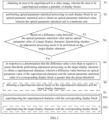
- FIG. 1 shows a schematic flow diagram of a video image processing method provided by an embodiment of the present disclosure.
- the video image processing method comprises the following basic steps:
- the video image processing method performs optical parameter statistical processing on each display block by an optical parameter statistical unit to obtain an optical parameter statistical value, wherein the optical parameter statistical unit is a hardware unit; based on a difference value between the optical parameter statistical value and an optical parameter value of a target display character, determines whether an adjustment processing needs to be performed on the target display character; in response to a determination that there is a need to perform optical parameter statistical adjustment processing, perform optical parameter statistical adjustment processing on the target display character; therefore, the embodiments of the present disclosure completes the statistics of local optical parameters of video images by adding a small number of hardware units without using software to perform optical parameter statistical processing, which correspondingly reduces the CPU load, amount of computation and bandwidth, and requires little modification to the hardware modules, which is also beneficial to reducing the complexity of chip design and area occupied by the chip.
- step S1 obtaining an area to be superimposed in a video image, wherein the area to be superimposed contains a plurality of display blocks.
- the area to be superimposed is the area in the original video image where characters need to be superimposed.
- content such as menus, prompt information, dates, addresses, icons (such as logos), camera information, etc. can be superimposed in the area to be superimposed, thereby providing additional display information based on the video screen.
- the area to be superimposed contains a plurality of display blocks so that subsequently the brightness statistical unit can perform brightness statistics on each display block respectively.
- obtaining the position information of the area to be superimposed, and the position information and size of the display block based on the size of the superimposed characters and the position information of the superimposed characters in the original video image, obtaining the position information of the area to be superimposed, and the position information and size of the display block.
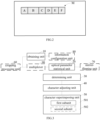
- an area M to be superimposed in a frame of video image is shown.
- the area to be superimposed includes 6 display blocks: A, B, C, D, E, and F.
- the shape of the display block is a rectangle.
- the size and number of the display blocks can be flexibly set according to actual needs, and the size of the display blocks can be the same or different.
- the steps of obtaining the area to be superimposed and the display blocks include: obtaining the area to be superimposed in the video image; and performing area division processing on the area to be superimposed to obtain the multiple display blocks. That is to say, the area to be superimposed is firstly acquired, and then the area to be superimposed is divided into a plurality of the display blocks.
- the size of the superimposed characters based on the size of the superimposed characters, performing area division processing on the area to be superimposed to obtain the multiple display blocks. For example, if the size of the superimposed characters is 32*32, then the size of the display block is 32*32 or 16*32.
- the display block corresponds to one or more superimposed characters.
- the video image processing method further comprising: performing post-processing on the video image, wherein the post-processing comprises: performing cropping processing on the video image and outputting a cropped image.
- the cropped image includes multiple rows of sub-images.
- the cropping processing step may be omitted.
- obtaining an area to be superimposed in a video image comprises: obtaining an area to be superimposed in the cropped image.
- the size of the final output video image can be confirmed by cropped video images.
- the information of the area to be superimposed can be obtained based on the size of the final output image, and the position accuracy of the area to be superimposed can be ensured accordingly.
- the pixel information at each position in the image is usually obtained, such as the optical parameter value of each pixel.
- a post-processing module is usually used to perform post-processing on video images. Accordingly, the optical parameter statistical unit can be attached to the post-processing module and can be easily designed as an online module, which correspondingly reduces the changes to the existing hardware modules, thereby reducing the complexity of chip design and is beneficial to saving chip area.
- the post-processing further comprises: before performing cropping processing on the video image, performing scaling processing on the video image to output multiple video images with different resolutions.
- the scaling processing can also be omitted.
- the video image processing method is applied to a surveillance camera scenario as an example for explanation, and the post-processing further includes: before performing scaling processing, performing covering processing on the video image.
- covering processing on the video image so that based on actual needs, covering the area in the video image that is not expected to be exposed (for example: the area in the image that may expose personal privacy).
- the area in the video image that is not expected to be exposed can be covered with a pure color area.
- the step of the covering processing can also be omitted.
- the video image processing method further comprising: after obtaining an area to be superimposed and the display blocks, configuring information of the display block to the optical parameter statistical unit.
- Configuring information of the display block to the optical parameter statistical unit so that subsequently the optical parameter statistical unit can perform optical parameter statistical processing on the display block based on the configured information of the display block.
- the information of the display blocks includes position information and size information of each display block.
- it can be CPU that obtains the information of the area to be superimposed and the display blocks, and then configures information of the display block to the optical parameter statistical unit.
- CPU stores the information of the area to be superimposed and the display block in a register so that the optical parameter statistical unit acquires the information of the area to be superimposed and the display block from the register.
- the register may be configured inside the post-processing module.
- step S2 performing optical parameter statistical processing on each display block by an optical parameter statistical unit to obtain an optical parameter statistical value, wherein the optical parameter statistical unit is a hardware unit.
- the optical parameter statistical unit is a hardware unit, therefore, an embodiment of the present disclosure completes the statistics of local optical parameters of video images by adding a small number of hardware units without using software to perform optical parameter statistical processing, which correspondingly reduces the CPU load, amount of computation and bandwidth, and requires little modification to the hardware modules, which is also beneficial to reducing the complexity of chip design and area occupied by the chip.
- performing optical parameter statistical processing on each display block comprises: obtaining the optical parameter statistical value of all pixels in each display block.
- the optical parameter statistical value of the pixel may be the sum of the optical parameters of all pixels, or may be the average value of the optical parameters of all pixels.
- the optical parameter is brightness;
- the optical parameter statistical unit is a brightness statistical unit;
- performing optical parameter statistical processing on each display block comprises: performing brightness statistical processing on each display block by the brightness statistical unit to obtain a brightness statistical value.
- the brightness statistical value of the pixel may be the sum of the brightness value of all pixels in the current display block, or may be the average value of the brightness value of all pixels in the current display block.
- the optical parameter is brightness
- the optical parameter statistical unit being a brightness statistical unit is only an example, and the implementation of the optical parameter statistical unit is not limited thereto.
- the optical parameter is chromaticity
- the optical parameter statistical unit is a chromaticity statistical unit
- the chromaticity statistical unit is configured to perform chromaticity statistical processing on each display block to obtain chromaticity statistical value.
- each display block can be subsequently compared with the chromaticity value of the corresponding target display character, thereby determining whether adjustment processing needs to be performed on the target display character.
- the optical parameter statistical unit is a hardware unit.
- the optical parameter statistical unit can be a logic electrical circuit.
- the video image processing method further comprising: selecting one cropped image from multiple cropped images during different time periods and outputting it to the optical parameter statistical unit.
- the optical parameter statistical unit can perform optical parameter statistical processing on display blocks in cropped images with different resolutions, thereby enabling time-sharing multiplexing of the optical parameter statistical unit. Accordingly, there is no need to respectively set corresponding optical parameter statistical units for the plurality of cropped images, thereby helping to reduce the area occupied by the chip and saving costs.
- the post-processing module reads and processes the image row by row. There is a corresponding row count inside the post-processing module. After processing the corresponding number of rows, the processing of one frame of the image is completed.
- the cropped image includes multiple rows of sub-images output sequentially; the multiple rows of sub-images are sequentially input to the optical parameter statistical unit.
- performing optical statistical processing on each display block by an optical parameter statistical unit comprises: determining whether the current row of sub-images contains the display block; if so, the optical parameter statistical unit performs optical parameter statistical processing on the display block in the current row of sub-images.
- the cropped image is divided into multiple rows of sub-images, which are input into the optical parameter statistical unit in sequence, it is necessary to determine whether the current row of sub-images contains the display block, so that only the display blocks in the current row of sub-images containing the display blocks is determined, thereby reducing the amount of computation and ensuring that the optical parameter statistical unit correctly performs optical parameter statistical processing on the display blocks.
- the post-processing further comprises: after performing optical parameter statistical processing on each of the display blocks, performing mirror/flipping processing on the cropped image, and outputting the processed image.
- the mirror/flip processing can also be omitted.
- step S3 based on a difference value between the optical parameter statistical value and an optical parameter value of a target display character, determining whether an adjustment processing needs to be performed on the target display character.
- target display characters are characters that need to be superimposed and displayed on each display block in the area to be superimposed so that additional display information can be provided based on the video picture.
- the target display characters may include menus, prompt information, dates, addresses, icons (such as logos), camera information, and the like.
- the display block corresponds to one or more superimposed characters. Therefore, based on a difference value between the optical parameter statistical value and an optical parameter value of a target display character, determining whether an adjustment processing needs to be performed on the target display character.
- the optical parameter is brightness, therefore, based on a difference value between the brightness statistical value and an optical brightness value of a target display character, determining whether an adjustment processing needs to be performed on the target display character.
- the optical parameter may also be other types of optical parameters, such as chromaticity. Accordingly, based on a difference value between the chromaticity statistical value of the current block and the optical chromaticity value of the corresponding target display character, determining whether adjustment processing needs to be performed on the target display character.
- determining whether an adjustment processing needs to be performed on the target display character comprises: determining whether the difference value is greater or equal to a preset threshold; in response to a determination that the difference value is less than or equal to a preset threshold, determine that it is necessary to perform adjustment processing on the target display character; in response to a determination that the difference value is greater than the preset threshold, determine that there is no need to perform adjustment processing on the target display character.
- the difference value between the optical parameter statistical value and the optical parameter value of the target display character is compared with the preset threshold. When the difference value is less than or equal to the preset threshold, it indicates that the difference in optical parameters between the display block and the target display character is too small. If the display block and the corresponding target display character are directly superimposed, the target display character cannot be displayed normally on the display block. Therefore, it is determined that it is necessary to perform adjustment processing on the target display character so that the target display character can be displayed normally on the display block.
- the difference When the difference is greater than the preset threshold, it indicates that the optical parameter values between the display block and the target display character are sufficiently different, so that after the display block and the corresponding target display character are superimposed, the target display character can be normally displayed on the display block as the background.
- the preset threshold is set based on an experience value or user preference.
- step S4 in response to a determination that the difference value is less than or equal to a preset threshold, performing adjustment processing on the target display character to obtain a superimposed character, wherein a difference value between an optical parameter value of the superimposed character and the optical parameter statistical value of a corresponding display block is greater than the preset threshold.
- the difference value is less than or equal to the preset threshold, it indicates that the difference in optical parameters between the display block and the target display character is too small, which indicates that it is necessary to perform adjustment processing on the target display character to obtain the superimposed character, so that the target display character can be displayed normally on the display block after the superimposed character is superimposed with corresponding display block later.
- the superimposed character is configured to be subsequently superimposed with the corresponding display block to display the target display character on the display block.
- the step of performing adjustment processing on the target display character comprises: adjusting the optical parameters of the target display character to obtain a superimposed character, so that the difference between the optical parameter value of the superimposed character and the optical parameter statistical value of the corresponding display block is greater than the preset threshold.
- the optical parameter values between the obtained superimposed character and the corresponding display block have sufficient difference, so that after the superimposed character and the display block are subsequently superimposed, the superimposed character can be normally displayed on the display block.
- the optical parameter is brightness as an example for explanation.
- performing adjustment processing on the target display character comprises: performing color inversion processing on the target display character.
- the target display characters are usually eye-catching black or white characters.
- color inversion processing that is, changing the white target display characters into black superimposed characters, and changing the black target display characters into white superimposed characters, not only is the operation simple, but also the target similar characters can be clearly displayed in the video image after the superimposed characters are subsequently superimposed with the display blocks.
- the step of performing color inversion processing on the target display character includes bitwise inversion processing.
- the optical parameter may also be other types of optical parameters, such as chromaticity.
- performing adjustment processing on the target display character comprises: performing color adjustment processing on the target display character corresponding to the current display block to obtain the superimposed character, the difference value between the chromaticity value of the superimposed character and the chromaticity statistical value of the corresponding display block is greater than the preset threshold.
- performing color adjustment processing on the target display character corresponding to the current display block may comprise: adjusting the white balance and color richness of the target display character.
- step S5 performing character superimposition processing on the area to be superimposed. Performing character superimposition processing on the area to be superimposed, to display the target display character in the area to be superimposed.
- the character superimposition processing comprises step S51: superimposing the superimposed character with the corresponding display block.
- the superimposed character is a display character that has been adjusted so that the optical parameter values of the superimposed characters are sufficiently different from the optical parameter statistical values of the corresponding display blocks. Accordingly, after the superimposed characters are superimposed on the corresponding display blocks, the target display characters can be clearly displayed and easily distinguished on the display blocks, thereby ensuring that the content information additionally displayed on the video screen can be displayed normally, thereby optimizing the user experience and perception.
- the character superimposition processing in response to a determination that the difference value is greater than the preset threshold, determining there is no need to perform adjustment processing; the character superimposition processing further comprises step S52: in response to a determination that there is no need to perform adjustment processing, superimposing the target display character with the corresponding display block.
- the target display character when the target display character is directly superimposed on the corresponding display block without the need for adjustment processing, the target display character can be normally displayed on the display block so that the target display character is clear and easy to identify.
- the video image processing method further comprises: Step S6: obtaining a superimposed canvas based on the superimposed characters and the target display characters.
- the superimposed canvas is configured to be superimposed with the current video image.
- the superimposed canvas contains the superimposed characters and their corresponding position information, and the target display characters and their corresponding position information.
- performing character superimposition processing on the area to be superimposed comprises: superimposing the video image with the superimposed canvas.
- FIG. 3 shows a schematic block diagram of a video image processing apparatus in an embodiment of the present disclosure.
- the video image processing apparatus comprising: an obtaining unit 10 configured to obtain an area to be superimposed in a video image, wherein the area to be superimposed contains a plurality of display blocks; an optical parameter statistical unit 20 configured to perform optical parameter statistical processing on each display block to obtain an optical parameter statistical value, wherein the optical parameter statistical unit is a hardware unit; a determining unit 30 configured to determine whether an adjustment processing needs to be performed on the target display character based on a difference value between the optical parameter statistical value and an optical parameter value of a target display character; a character adjusting unit 40 configured to perform adjustment processing on the target display character to obtain a superimposed character in response to a determination that the difference value is less than or equal to a preset threshold, wherein a difference value between an optical parameter value of the superimposed character and the optical parameter statistical value of a corresponding display block is greater than the preset threshold; and a character superimposing unit 50 configured to perform character superimposition processing on the area to be superimposed, wherein the character superimposing unit comprises:
- the optical parameter statistical unit 20 performs optical parameter statistical processing on each display block to obtain an optical parameter statistical value, wherein the optical parameter statistical unit 20 is a hardware unit; the determining unit 30 based on a difference value between the optical parameter statistical value and an optical parameter value of a target display character, determines whether an adjustment processing needs to be performed on the target display character; the character adjusting unit 40 in response to a determination that the difference value is less than or equal to a preset threshold, performs adjustment processing on the target display character; therefore, the embodiments of the present disclosure completes the statistics of local optical parameters of video images by adding a small number of hardware units without using software to perform optical parameter statistical processing, which correspondingly reduces the CPU load, amount of computation and bandwidth, and requires little modification to the hardware modules, which is also beneficial to reducing the complexity of chip design and area occupied by the chip.
- the obtaining unit 10 obtains an area to be superimposed in a video image and a plurality of display blocks inside it.
- the area to be superimposed is the area in the original video image where characters need to be superimposed.
- content such as menus, prompt information, dates, addresses, icons (such as logos), camera information, etc. can be superimposed in the area to be superimposed, thereby providing additional display information based on the video screen.
- the area to be superimposed contains a plurality of display blocks so that subsequently the optical parameter statistical unit 20 can perform optical parameter statistics on each display block respectively.
- the obtaining unit 10 obtains the position information of the area to be superimposed, and the position information and size of the display block.
- obtaining unit 10 based on the size of the superimposed characters and the position information of the superimposed characters in the original video image, obtains the position information of the area to be superimposed, and the position information and size of the display block.
- an area M to be superimposed in a frame of video image is shown.
- the area to be superimposed includes 6 display blocks: A, B, C, D, E, and F.
- the shape of the display block is a rectangle.
- the size and number of the display blocks can be flexibly set according to actual needs, and the size of the display blocks can be the same or different.
- obtaining unit 10 obtains the area to be superimposed in the video image and performs area division processing on the area to be superimposed to obtain the multiple display blocks. That is to say, obtaining unit 10 firstly obtains the area to be superimposed, and then dividing the area to be superimposed into a plurality of the display blocks.
- the obtaining unit 10 based on the size of the superimposed characters, performs area division processing on the area to be superimposed to obtain the multiple display blocks. For example, if the size of the superimposed characters is 32*32, then the size of the display block is 32*32 or 16*32.
- the display block corresponds to one or more superimposed characters.
- the video image processing apparatus further comprises: a post-processing module (not shown) configured to perform post-processing on the video image, wherein the post-processing module comprises: a cropping processing unit 60 configured to perform cropping processing on the video image and output a cropped image.
- a post-processing module (not shown) configured to perform post-processing on the video image
- the post-processing module comprises: a cropping processing unit 60 configured to perform cropping processing on the video image and output a cropped image.
- the cropped image includes multiple rows of sub-images.
- the post-processing module may also omit the cropping processing unit.
- the obtaining unit 10 is configured to obtain an area to be superimposed in the cropped image.
- the size of the final output video image can be confirmed by cropped video images.
- the obtaining unit 10 can obtain the information of the area to be superimposed based on the size of the final output image, and the position accuracy of the area to be superimposed can be ensured accordingly.
- the pixel information at each position in the image is usually obtained, such as the optical parameter value of each pixel.
- the cropping processing unit 60 in the post-processing module is executed, using the optical parameter statistics unit 20 to perform optical parameter statistical processing, so that the optical parameter statistics unit 20 can directly perform optical parameter statistical processing based on the optical parameter values of pixels at various positions output by the cropping processing unit 60, and no need to call data from DDR and generate additional DDR reading and writing, which is beneficial to reducing the amount of computation, CPU load, and bandwidth.
- optical parameter statistical unit 20 can be attached to the post-processing module and can be easily designed as an online module, which correspondingly reduces the changes to the existing hardware modules, thereby reducing the complexity of chip design and is beneficial to saving chip area.
- the cropping processing unit 60 outputs multiple cropped images with different resolutions.
- the post-processing module further includes: a scaling unit (not shown) configured to perform scaling processing on the video image to output multiple video images with different resolutions.
- the scaling unit performs scaling processing on the video image to output multiple video images with different resolutions, thereby meeting the requirements for different resolutions in different scenarios.
- the cropping processing unit 60 performs cropping processing on the multiple video images with different resolutions respectively to output the multiple cropped images with different resolutions.
- the post-processing module may also omit the scaling unit.
- the video image processing method is applied to a surveillance camera scenario as an example for explanation, and the post-processing module further includes: a covering unit (not shown) configured to perform covering processing on the video image to output covered image to the scaling unit.
- a covering unit (not shown) configured to perform covering processing on the video image to output covered image to the scaling unit.
- the covering unit performs covering processing on the video image, so that based on actual needs, covering the area in the video image that is not expected to be exposed (for example: the area in the image that may expose personal privacy).
- the area in the video image that is not expected to be exposed can be covered with a pure color area.
- the step of the covering processing can also be omitted.
- the video image processing apparatus further comprising: an information configuration unit 80 configured to configure the information of the area to be superimposed and display block obtained by the obtaining unit 10 to the optical parameter statistical unit 20.
- the information configuration unit 80 configures the information of the display block to the optical parameter statistical unit 20 so that the optical parameter statistical unit 20 can perform optical parameter statistical processing on the display block based on the configured information of the display block.
- the information of the display blocks includes position information and size information of each display block.
- the information configuration unit 80 can be CPU, and CPU obtains the information of the area to be superimposed and the display blocks, and then configures information of the display block to the optical parameter statistical unit 20.
- CPU stores the information of the area to be superimposed and the display block in a register so that the optical parameter statistical unit 20 acquires the information of the area to be superimposed and the display block from the register.
- the register may be configured inside the post-processing module to facilitate the interaction between software and hardware.
- the optical parameter statistical unit 20 is configured to perform optical parameter statistical processing on display blocks to obtain an optical parameter statistical value, thereby the determining unit 30 can determine whether an adjustment processing needs to be performed on the target display character based on a difference value between the optical parameter statistical value and an optical parameter value of a target display character.
- the optical parameter statistical unit 20 is a hardware unit, therefore, an embodiment of the present disclosure completes the statistics of local optical parameters of video images by adding a small number of hardware units to the video image processing apparatus without using software to perform optical parameter statistical processing, which correspondingly reduces the CPU load, amount of computation and bandwidth, and requires little modification to the hardware modules, which is also beneficial to reducing the complexity of chip design and area occupied by the chip.
- the optical parameter statistical unit 20 obtains the optical parameter statistical value of all pixels in each display block to realize the optical parameter statistical processing.
- the optical parameter statistical value of the pixel may be the sum of the optical parameters of all pixels, or may be the average value of the optical parameters of all pixels.
- the optical parameter is brightness;
- the optical parameter statistical unit 20 is a brightness statistical unit;
- the brightness statistical unit is configured to perform brightness statistical processing on each display block to obtain brightness statistical value.
- the brightness statistical value of the pixel may be the sum of the brightness value of all pixels in the current display block, or may be the average value of the brightness value of all pixels in the current display block.
- the optical parameter is brightness
- the optical parameter statistical unit 20 being a brightness statistical unit is only an example, and the implementation of the optical parameter statistical unit 20 is not limited thereto.
- the optical parameter is chromaticity
- the optical parameter statistical unit is a chromaticity statistical unit
- the chromaticity statistical unit is configured to perform chromaticity statistical processing on each display block to obtain chromaticity statistical value.
- each display block can be subsequently compared with the chromaticity value of the corresponding target display character, thereby determining whether adjustment processing needs to be performed on the target display character.
- the optical parameter statistical unit 20 is a hardware unit.
- the optical parameter statistical unit can be a logic electrical circuit.
- the post-processing module comprises a register, and the optical parameter statistical value is stored in the register.
- the cropping processing unit 60 is configured to perform cropping processing on the video image to output multiple cropped images with different resolutions.
- the video image processing apparatus further comprising: a multiplexer 90 configured to select one cropped image from multiple cropped images during different time periods and output it to the optical parameter statistical unit 20.
- the multiplexer 90 selects one cropped image from multiple cropped images during different time periods and outputs it to the optical parameter statistical unit, so that in different time periods, the optical parameter statistical unit 20 can perform optical parameter statistical processing on display blocks in cropped images with different resolutions, thereby enabling time-sharing multiplexing of the optical parameter statistical unit 20. Accordingly, there is no need to respectively set corresponding optical parameter statistical units 20 for the plurality of cropped images, thereby helping to reduce the area occupied by the chip and thereby saving costs.
- the post-processing module reads and processes the image row by row. There is a corresponding row count inside the post-processing module. After processing the corresponding number of rows, the processing of one frame of the image is completed.
- the cropped image includes multiple rows of sub-images output sequentially; the multiple rows of sub-images are sequentially input to the optical parameter statistical unit 20.
- the optical parameter statistical unit 20 comprises: a display block determiner (not shown) configured to determine whether the current row of sub-images contains the display block; a statistical processor (not shown) configured to perform optical parameter statistical processing on the display block in the current row of sub-images in response to a determination that the current row of sub-images contains the display block.
- the cropped image is divided into multiple rows of sub-images, which are input into the optical parameter statistical unit 20 in sequence, it is necessary to determine whether the current row of sub-images contains the display block, so that only the display blocks in the current row of sub-images containing the display blocks is determined, thereby reducing the amount of computation and ensuring that the optical parameter statistical unit correctly performs optical parameter statistical processing on the display blocks.
- the post-processing module further comprises: a mirror-flipping unit 70 configured to perform mirror/flipping processing on the cropped image after the optical parameter statistical unit performs optical parameter statistical processing on each of the display blocks, and outputs the processed image.
- a mirror-flipping unit 70 configured to perform mirror/flipping processing on the cropped image after the optical parameter statistical unit performs optical parameter statistical processing on each of the display blocks, and outputs the processed image.
- the mirror-flipping unit can also be omitted.
- the determining unit 30 determines whether an adjustment processing needs to be performed on the target display character based on a difference value between the optical parameter statistical value and an optical parameter value of a target display character.
- target display characters are characters that need to be superimposed and displayed on each display block in the area to be superimposed so that additional display information can be provided based on the video picture.
- the target display characters may include menus, prompt information, dates, addresses, icons (such as logos), camera information, and the like.
- the display block corresponds to one or more superimposed characters. Therefore, the determining unit 30, based on a difference value between the optical parameter statistical value and an optical parameter value of a target display character, determines whether an adjustment processing needs to be performed on the target display character.
- the optical parameter is brightness
- the determining unit 30 based on a difference value between the brightness statistical value and an optical brightness value of a target display character, determines whether an adjustment processing needs to be performed on the target display character.
- the optical parameter may also be other types of optical parameters, such as chromaticity. Accordingly, the determining unit, based on a difference value between the chromaticity statistical value of the current block and the optical chromaticity value of the corresponding target display character, determines whether adjustment processing needs to be performed on the target display character.
- the determining unit 30 is configured to determine whether the difference value is greater or equal to a preset threshold; in response to a determination that the difference value is less than or equal to a preset threshold, determine that it is necessary to perform adjustment processing; in response to a determination that the difference value is greater than the preset threshold, determine that there is no need to perform adjustment processing.
- the determining unit 30 compares the difference value between the optical parameter statistical value and the optical parameter value of the target display character with the preset threshold. When the difference value is less than or equal to the preset threshold, it indicates that the difference in optical parameters between the display block and the target display character is too small. If the display block and the corresponding target display character are directly superimposed, the target display character cannot be displayed normally on the display block. Therefore, it is determined that it is necessary to perform adjustment processing on the target display character so that the target display character can be displayed normally on the display block.
- the difference When the difference is greater than the preset threshold, it indicates that the optical parameter values between the display block and the target display character are sufficiently different, so that after the display block and the corresponding target display character are superimposed, the target display character can be normally displayed on the display block as the background.
- the preset threshold is set based on an experience value or user preference.
- the determining unit 30 is configured to call the optical parameter statistical value from the register.
- the character adjusting unit 40 performs adjustment processing on the target display character to obtain a superimposed character in response to a determination that the difference value is less than or equal to a preset threshold, wherein a difference value between an optical parameter value of the superimposed character and the optical parameter statistical value of a corresponding display block is greater than the preset threshold so that after the character superimposing unit 50 superimposes the superimposed character and the corresponding display block, the target display character can be normally displayed on the display block.
- the superimposed character is configured to be subsequently superimposed with the corresponding display block to display the target display character on the display block.
- the character adjusting unit 40 is configured to adjust the optical parameters of the target display character to obtain a superimposed character, so that the difference value between the optical parameter value of the superimposed character and the optical parameter statistical value of the corresponding display block is greater than the preset threshold.
- the optical parameter values between the obtained superimposed character and the corresponding display block have sufficient difference, so that after the character superimposing unit 50 superimposes the superimposed character and the display block, the superimposed character can be normally displayed on the display block.
- the optical parameter is brightness as an example for explanation.
- the character adjusting unit 40 performing adjustment processing on the target display character may comprise: performing color inversion processing on the target display character.
- the target display characters are usually eye-catching black or white characters.
- color inversion processing that is, changing the white target display characters into black superimposed characters, and changing the black target display characters into white superimposed characters, not only is the operation simple, but also the target similar characters can be clearly displayed in the video image after the superimposed characters are subsequently superimposed with the display blocks.
- the character adjusting unit performing color inversion processing on the target display character includes bitwise inversion processing.
- the optical parameter may also be other types of optical parameters, such as chromaticity.
- the chromaticity performs adjustment processing on the target display character.
- the character adjusting unit performs color adjustment processing on the target display character corresponding to the current display block to obtain the superimposed character, and the difference value between the chromaticity value of the superimposed character and the chromaticity statistical value of the corresponding display block is greater than the preset threshold.
- the character adjusting unit performing color adjustment processing on the target display character corresponding to the current display block may comprise: adjusting the white balance and color richness of the target display character.
- the character superimposing unit 50 performs character superimposition processing on the area to be superimposed, to display the target display character in the area to be superimposed.
- the first subunit 501 is configured to perform superimposition processing on each display block based on the superimposed character.
- the superimposed character is a display character that has been adjusted so that the optical parameter values of the superimposed characters are sufficiently different from the optical parameter statistical values of the corresponding display blocks. Accordingly, after the superimposed characters are superimposed on the corresponding display blocks, the target display characters can be clearly displayed and easily distinguished on the display blocks, thereby ensuring that the content information additionally displayed on the video screen can be displayed normally, thereby optimizing the user experience and perception.
- the character superimposing unit 50 further comprises: a second subunit 502 configured to superimpose the target display character with the corresponding display block in response to a determination that there is no need to perform adjustment processing.
- the target display character when the target display character is directly superimposed on the corresponding display block without the need for adjustment processing, the target display character can be normally displayed on the display block so that the target display character is clear and easy to identify.
- the superimposed canvas is configured to be superimposed with the current video image.
- the superimposed canvas contains the superimposed characters and their corresponding position information, and the target display characters and their corresponding position information.
- the character superimposing unit 50 superimposes the video image with the superimposed canvas.
- the embodiments of the present disclosure provide a device, which can implement the video image processing method provided by the embodiment of the present disclosure by loading the above-mentioned video image processing method in the form of a program.
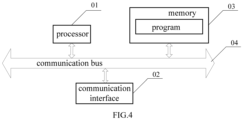
- FIG. 4 An optional hardware structure of the device provided by the embodiment of the present disclosure may be as shown in FIG. 4 , comprising: at least one processor 01, at least one communication interface 02, at least one memory 03, and at least one communication bus 04.
- the quantity of the processor 01, the communication interface 02, the memory 03, and the communication bus 04 are at least one, and the processor 01, the communication interface 02, and the memory 03 communicate with each other through the communication bus 04.
- the communication interface 02 may be an interface of a communication module for network communication, such as an interface of a GSM module.
- the processor 01 may be a central processing unit (CPU), an ASIC (Application Specific Integrated Circuit), or one or more integrated circuits configured to implement the embodiments of the present disclosure.
- CPU central processing unit
- ASIC Application Specific Integrated Circuit
- the memory 03 may include high-speed RAM, and may also include non-volatile memory, such as at least one disk memory.
- memory 03 stores at least one or more computer instructions, one or more computer instructions are executed by processor 01 to implement the video image processing method provided by the embodiments of the present disclosure.
- implementation terminal device may also include other devices (not shown) that may not be necessary for understanding the contents disclosed in the embodiments of the present disclosure; since these other devices may not be necessary for understanding the contents disclosed in the embodiments of the present disclosure, the embodiments of the present disclosure will not introduce them one by one.
- the embodiments of the present disclosure also provide a storage medium, wherein the storage medium stores at least one or more computer instructions, the one or more computer instructions are executed to implement the video image processing method provided by the embodiments of the present disclosure.
- the storage medium is computer-readable, and the storage medium may be a read-only memory (ROM), a random-access memory (RAM), a USB flash drive, a mobile hard disk, a magnetic disk or an optical disk, or any other medium that can store program codes.
- ROM read-only memory
- RAM random-access memory
- USB flash drive a USB flash drive
- mobile hard disk a magnetic disk or an optical disk, or any other medium that can store program codes.
- Embodiments of the present disclosure can be realized by various means such as hardware, firmware, software, or a combination thereof.
- the method according to the embodiments of the present disclosure may be implemented by one or more application-specific integrated circuits (ASICs), digital signal processors (DSPs), digital signal processing devices (DSPDs), programmable logic devices (PLDs), field programmable Gate arrays (FPGA), processors, controllers, micro-controllers, microprocessors, etc. to achieve.
- ASICs application-specific integrated circuits
- DSPs digital signal processors
- DSPDs digital signal processing devices
- PLDs programmable logic devices
- FPGA field programmable Gate arrays
- processors controllers, micro-controllers, microprocessors, etc.
- the embodiments of the present disclosure can be implemented in the form of modules, procedures, functions, and the like.
- the software codes may be stored in memory units and executed by processors.
- the memory unit is located inside or outside the processor and can transmit data to and receive data from the processor via various known means.
Landscapes
- Engineering & Computer Science (AREA)
- Multimedia (AREA)
- Signal Processing (AREA)
- Physics & Mathematics (AREA)
- General Physics & Mathematics (AREA)
- Theoretical Computer Science (AREA)
- Computer Graphics (AREA)
- Computer Hardware Design (AREA)
- Image Processing (AREA)
- Controls And Circuits For Display Device (AREA)
Applications Claiming Priority (2)
| Application Number | Priority Date | Filing Date | Title |
|---|---|---|---|
| CN202210333869.2A CN114745520A (zh) | 2022-03-31 | 2022-03-31 | 视频图像处理方法及装置、设备以及存储介质 |
| PCT/CN2022/115939 WO2023184850A1 (zh) | 2022-03-31 | 2022-08-30 | 视频图像处理方法及装置、设备以及存储介质 |
Publications (2)
| Publication Number | Publication Date |
|---|---|
| EP4503594A1 true EP4503594A1 (de) | 2025-02-05 |
| EP4503594A4 EP4503594A4 (de) | 2026-03-11 |
Family
ID=82280075
Family Applications (1)
| Application Number | Title | Priority Date | Filing Date |
|---|---|---|---|
| EP22934670.5A Pending EP4503594A4 (de) | 2022-03-31 | 2022-08-30 | Videobildverarbeitungsverfahren und -vorrichtung sowie vorrichtung und speichermedium |
Country Status (4)
| Country | Link |
|---|---|
| US (1) | US20250203036A1 (de) |
| EP (1) | EP4503594A4 (de) |
| CN (1) | CN114745520A (de) |
| WO (1) | WO2023184850A1 (de) |
Families Citing this family (3)
| Publication number | Priority date | Publication date | Assignee | Title |
|---|---|---|---|---|
| CN114745520A (zh) * | 2022-03-31 | 2022-07-12 | 晶晨芯半导体(成都)有限公司 | 视频图像处理方法及装置、设备以及存储介质 |
| CN116095255B (zh) * | 2023-02-08 | 2025-03-07 | 北京镁伽机器人科技有限公司 | 一种叠加图像生成方法、装置、设备及介质 |
| CN118864226B (zh) * | 2024-09-24 | 2024-12-10 | 浙江大华技术股份有限公司 | 一种视频叠加方法、装置和系统 |
Family Cites Families (11)
| Publication number | Priority date | Publication date | Assignee | Title |
|---|---|---|---|---|
| JP2709009B2 (ja) * | 1992-11-18 | 1998-02-04 | 三洋電機株式会社 | キャプションデコーダ装置 |
| JPH09181994A (ja) * | 1995-12-25 | 1997-07-11 | Sharp Corp | 映像信号処理装置 |
| JP2006210978A (ja) * | 2005-01-25 | 2006-08-10 | Matsushita Electric Ind Co Ltd | タイトル編集・再生装置 |
| JP2007180641A (ja) * | 2005-12-27 | 2007-07-12 | Sony Corp | 撮像装置及び撮像装置の表示方法 |
| CN101299804A (zh) * | 2008-05-28 | 2008-11-05 | 华为技术有限公司 | 字符叠加方法和装置 |
| CN102209205B (zh) * | 2011-06-14 | 2012-11-07 | 中国科学院长春光学精密机械与物理研究所 | 电视跟踪器中的视频叠加显示装置 |
| CN103731608B (zh) * | 2013-12-27 | 2017-02-08 | 深圳英飞拓科技股份有限公司 | 一种能支持多种颜色及自动反色的字符叠加显示方法 |
| CN109151549A (zh) * | 2018-09-10 | 2019-01-04 | 天津市亚安科技有限公司 | 实现监控视频画面字符叠加反色显示系统及方法、处理器 |
| CN113544002B (zh) * | 2019-03-29 | 2024-04-23 | 罗姆股份有限公司 | 半导体装置、使用了它的车载用显示器系统、电子设备 |
| CN111683213B (zh) * | 2020-06-16 | 2022-08-16 | 中国北方车辆研究所 | 基于感兴趣区域灰度图像的自适应字符叠加系统及方法 |
| CN114745520A (zh) * | 2022-03-31 | 2022-07-12 | 晶晨芯半导体(成都)有限公司 | 视频图像处理方法及装置、设备以及存储介质 |
-
2022
- 2022-03-31 CN CN202210333869.2A patent/CN114745520A/zh active Pending
- 2022-08-30 US US18/844,696 patent/US20250203036A1/en active Pending
- 2022-08-30 WO PCT/CN2022/115939 patent/WO2023184850A1/zh not_active Ceased
- 2022-08-30 EP EP22934670.5A patent/EP4503594A4/de active Pending
Also Published As
| Publication number | Publication date |
|---|---|
| US20250203036A1 (en) | 2025-06-19 |
| CN114745520A (zh) | 2022-07-12 |
| WO2023184850A1 (zh) | 2023-10-05 |
| EP4503594A4 (de) | 2026-03-11 |
Similar Documents
| Publication | Publication Date | Title |
|---|---|---|
| EP4503594A1 (de) | Videobildverarbeitungsverfahren und -vorrichtung sowie vorrichtung und speichermedium | |
| CN110688081B (zh) | 一种在屏幕上显示数据的方法及显示控制装置 | |
| CN111295688B (zh) | 图像处理设备、用于处理图像的方法和计算机可读记录介质 | |
| CN106899878A (zh) | 一种基于omap芯片的透明度可调的视频图像叠加方法及系统 | |
| CN112184538B (zh) | 图像加速方法、相关装置、设备及存储介质 | |
| US20240257302A1 (en) | Image processing apparatus and method | |
| US20210234991A1 (en) | Method and apparatus for converting image data, and storage medium | |
| US20020176011A1 (en) | On-screen device for subject of interest in portable electronic device, and method of controlling same | |
| US10079981B2 (en) | Image dynamic range adjustment method, terminal, and storage medium | |
| US20170076702A1 (en) | Systems and methods for graphical layer blending | |
| CN113393391B (zh) | 图像增强方法、图像增强装置、电子设备和存储介质 | |
| CN110519530B (zh) | 基于硬件的画中画显示方法及装置 | |
| CN105554587B (zh) | 一种显示控制方法、装置及显示装置 | |
| CN113676674A (zh) | 图像处理方法、装置、电子设备及可读存储介质 | |
| CN119917201A (zh) | 显示屏分屏显示方法、装置和存储介质 | |
| CN116320776B (zh) | 图像处理方法、装置、芯片、电子设备和存储介质 | |
| US11042985B2 (en) | Electronic apparatus, control method, and non-transitory computer readable medium for generating a display image | |
| US10321321B2 (en) | Method and device for displaying locked interface and mobile terminal | |
| US8488897B2 (en) | Method and device for image filtering | |
| CN111372048B (zh) | 图像预监处理设备及其方法、现场可编程逻辑门阵列 | |
| US8531350B2 (en) | Display control apparatus, and setting method and program for display control apparatus | |
| US12438998B2 (en) | Display control method, display control device, display apparatus and computer readable medium | |
| CN114356262B (zh) | 一种osd画面生成装置、芯片、显示设备及方法 | |
| WO2022116718A1 (zh) | 显示调整方法、装置、电子设备及存储介质 | |
| CN116567352B (zh) | 图像处理方法、装置、设备、存储介质及程序产品 |
Legal Events
| Date | Code | Title | Description |
|---|---|---|---|
| STAA | Information on the status of an ep patent application or granted ep patent |
Free format text: STATUS: THE INTERNATIONAL PUBLICATION HAS BEEN MADE |
|
| PUAI | Public reference made under article 153(3) epc to a published international application that has entered the european phase |
Free format text: ORIGINAL CODE: 0009012 |
|
| STAA | Information on the status of an ep patent application or granted ep patent |
Free format text: STATUS: REQUEST FOR EXAMINATION WAS MADE |
|
| 17P | Request for examination filed |
Effective date: 20240909 |
|
| AK | Designated contracting states |
Kind code of ref document: A1 Designated state(s): AL AT BE BG CH CY CZ DE DK EE ES FI FR GB GR HR HU IE IS IT LI LT LU LV MC MK MT NL NO PL PT RO RS SE SI SK SM TR |
|
| DAV | Request for validation of the european patent (deleted) | ||
| DAX | Request for extension of the european patent (deleted) | ||
| REG | Reference to a national code |
Ref country code: DE Ref legal event code: R079 Free format text: PREVIOUS MAIN CLASS: H04N0005445000 Ipc: G06T0011600000 |
|
| A4 | Supplementary search report drawn up and despatched |
Effective date: 20260209 |
|
| RIC1 | Information provided on ipc code assigned before grant |
Ipc: G06T 11/60 20060101AFI20260203BHEP Ipc: G09G 5/10 20060101ALI20260203BHEP Ipc: G09G 5/24 20060101ALI20260203BHEP Ipc: G09G 5/377 20060101ALI20260203BHEP Ipc: H04N 5/262 20060101ALI20260203BHEP Ipc: H04N 5/445 20110101ALI20260203BHEP Ipc: H04N 5/57 20060101ALI20260203BHEP Ipc: H04N 21/431 20110101ALI20260203BHEP Ipc: H04N 21/44 20110101ALI20260203BHEP |