EP4503675A1 - Procédé et appareil de découverte de terminal, dispositif et support de stockage - Google Patents
Procédé et appareil de découverte de terminal, dispositif et support de stockage Download PDFInfo
- Publication number
- EP4503675A1 EP4503675A1 EP23773803.4A EP23773803A EP4503675A1 EP 4503675 A1 EP4503675 A1 EP 4503675A1 EP 23773803 A EP23773803 A EP 23773803A EP 4503675 A1 EP4503675 A1 EP 4503675A1
- Authority
- EP
- European Patent Office
- Prior art keywords
- terminal
- information
- service
- reference signal
- identifier
- Prior art date
- Legal status (The legal status is an assumption and is not a legal conclusion. Google has not performed a legal analysis and makes no representation as to the accuracy of the status listed.)
- Pending
Links
Images




Classifications
-
- H—ELECTRICITY
- H04—ELECTRIC COMMUNICATION TECHNIQUE
- H04W—WIRELESS COMMUNICATION NETWORKS
- H04W64/00—Locating users or terminals or network equipment for network management purposes, e.g. mobility management
- H04W64/003—Locating users or terminals or network equipment for network management purposes, e.g. mobility management locating network equipment
-
- H—ELECTRICITY
- H04—ELECTRIC COMMUNICATION TECHNIQUE
- H04L—TRANSMISSION OF DIGITAL INFORMATION, e.g. TELEGRAPHIC COMMUNICATION
- H04L5/00—Arrangements affording multiple use of the transmission path
- H04L5/003—Arrangements for allocating sub-channels of the transmission path
- H04L5/0048—Allocation of pilot signals, i.e. of signals known to the receiver
-
- H—ELECTRICITY
- H04—ELECTRIC COMMUNICATION TECHNIQUE
- H04W—WIRELESS COMMUNICATION NETWORKS
- H04W12/00—Security arrangements; Authentication; Protecting privacy or anonymity
- H04W12/08—Access security
-
- H—ELECTRICITY
- H04—ELECTRIC COMMUNICATION TECHNIQUE
- H04W—WIRELESS COMMUNICATION NETWORKS
- H04W24/00—Supervisory, monitoring or testing arrangements
- H04W24/08—Testing, supervising or monitoring using real traffic
-
- H—ELECTRICITY
- H04—ELECTRIC COMMUNICATION TECHNIQUE
- H04W—WIRELESS COMMUNICATION NETWORKS
- H04W4/00—Services specially adapted for wireless communication networks; Facilities therefor
- H04W4/02—Services making use of location information
-
- H—ELECTRICITY
- H04—ELECTRIC COMMUNICATION TECHNIQUE
- H04W—WIRELESS COMMUNICATION NETWORKS
- H04W4/00—Services specially adapted for wireless communication networks; Facilities therefor
- H04W4/02—Services making use of location information
- H04W4/023—Services making use of location information using mutual or relative location information between multiple location based services [LBS] targets or of distance thresholds
-
- H—ELECTRICITY
- H04—ELECTRIC COMMUNICATION TECHNIQUE
- H04W—WIRELESS COMMUNICATION NETWORKS
- H04W4/00—Services specially adapted for wireless communication networks; Facilities therefor
- H04W4/02—Services making use of location information
- H04W4/029—Location-based management or tracking services
-
- H—ELECTRICITY
- H04—ELECTRIC COMMUNICATION TECHNIQUE
- H04W—WIRELESS COMMUNICATION NETWORKS
- H04W4/00—Services specially adapted for wireless communication networks; Facilities therefor
- H04W4/50—Service provisioning or reconfiguring
-
- H—ELECTRICITY
- H04—ELECTRIC COMMUNICATION TECHNIQUE
- H04W—WIRELESS COMMUNICATION NETWORKS
- H04W72/00—Local resource management
- H04W72/20—Control channels or signalling for resource management
- H04W72/25—Control channels or signalling for resource management between terminals via a wireless link, e.g. sidelink
-
- H—ELECTRICITY
- H04—ELECTRIC COMMUNICATION TECHNIQUE
- H04W—WIRELESS COMMUNICATION NETWORKS
- H04W8/00—Network data management
-
- H—ELECTRICITY
- H04—ELECTRIC COMMUNICATION TECHNIQUE
- H04W—WIRELESS COMMUNICATION NETWORKS
- H04W8/00—Network data management
- H04W8/005—Discovery of network devices, e.g. terminals
-
- H—ELECTRICITY
- H04—ELECTRIC COMMUNICATION TECHNIQUE
- H04W—WIRELESS COMMUNICATION NETWORKS
- H04W8/00—Network data management
- H04W8/22—Processing or transfer of terminal data, e.g. status or physical capabilities
-
- H—ELECTRICITY
- H04—ELECTRIC COMMUNICATION TECHNIQUE
- H04W—WIRELESS COMMUNICATION NETWORKS
- H04W64/00—Locating users or terminals or network equipment for network management purposes, e.g. mobility management
-
- H—ELECTRICITY
- H04—ELECTRIC COMMUNICATION TECHNIQUE
- H04W—WIRELESS COMMUNICATION NETWORKS
- H04W92/00—Interfaces specially adapted for wireless communication networks
- H04W92/16—Interfaces between hierarchically similar devices
- H04W92/18—Interfaces between hierarchically similar devices between terminal devices
Definitions
- This application pertains to the field of communication technologies, and specifically, relates to a terminal discovery method and apparatus, a device, and a storage medium.
- Ranging refers to determining a distance between two or more terminals through direct device connection, and/or a direction and/or a relative location of one terminal (that is, a target terminal) with respect to another terminal (that is, a reference terminal).
- Sidelink positioning refers to locating the terminal using a PC5 interface.
- Ranging-based services and sidelink positioning can be used in various vertical fields, such as consumers, smart homes, smart cities, intelligent transportation, smart retail, and industry 4.0.
- communication between terminals can be implemented by using different access technologies, such as vehicle-to-everything (Vehicle-to-Everything, V2X) based on LTE, new radio NR sidelink, and other radio access technologies (Radio Access Technology, RAT) that may be supported on PC5.
- V2X vehicle-to-everything
- RAT Radio Access Technology
- Embodiments of this application provide a terminal discovery method and apparatus, a device, and a storage medium, which can implement that one terminal supporting ranging-based services and sidelink positioning discovers another terminal supporting ranging-based services and sidelink positioning.
- a terminal discovery method applied to a first terminal, and the method includes:
- a terminal discovery method applied to a second terminal, and the method includes:
- a terminal discovery method applied to a first network side, and the method includes: sending, by a first network side, first configuration information to a first terminal, where the first configuration information is used for a first service, and the first service includes a ranging-based service and/or a sidelink positioning service.
- a terminal discovery method applied to a second network side, and the method includes: sending, by a second network side, second configuration information to a second terminal; where the second configuration information is used for a first service, and the first service includes a ranging-based service and/or a sidelink positioning service.
- a terminal discovery apparatus applied to a first terminal, and the apparatus includes:
- the first request message is used to request discovery of the second terminal supporting the first service, and the first service includes a ranging-based service and/or a sidelink positioning service.
- a terminal discovery apparatus applied to a second terminal, and the apparatus includes:
- a terminal discovery apparatus applied to a first network-side device, and the apparatus includes: a fifth sending module, configured to send first configuration information to a first terminal, where the first configuration information is used for a first service, and the first service includes a ranging-based service and/or a sidelink positioning service.
- a terminal discovery apparatus applied to a second network-side device, and the apparatus includes: a sixth sending module, configured to send second configuration information to a second terminal; where the second configuration information is used for a first service, and the first service includes a ranging-based service and/or a sidelink positioning service.
- a first terminal includes a processor and a memory, and a program or instruction capable of running on the processor is stored in the memory.
- the program or instruction is executed by the processor, the steps of the method according to the first aspect are implemented.
- a first terminal including a processor and a communication interface, where
- a second terminal includes a processor and a memory, and a program or instruction capable of running on the processor is stored in the memory.
- the program or instruction is executed by the processor, the steps of the method according to the second aspect are implemented.
- a second terminal including a processor and a communication interface, where
- a first network-side device includes a processor and a memory, and a program or instruction capable of running on the processor is stored in the memory.
- the program or instruction is executed by the processor, the steps of the method according to the third aspect are implemented.
- a first network-side device including a processor and a communication interface, where the communication interface is configured to send first configuration information to a first terminal, where the first configuration information is used for a first service, and the first service includes a ranging-based service and/or a sidelink positioning service.
- a second network-side device includes a processor and a memory, and a program or instruction capable of running on the processor is stored in the memory.
- the program or instruction is executed by the processor, the steps of the method according to the fourth aspect are implemented.
- a second network-side device including a processor and a communication interface, where the communication interface is configured to send second configuration information to a second terminal; where the second configuration information is used for a first service, and the first service includes a ranging-based service and/or a sidelink positioning service.
- a terminal discovery system including a first terminal, a second terminal, a first network-side device, and a second network-side device, where the first terminal can be configured to perform the steps of the terminal discovery method according to the first aspect, the second terminal can be configured to perform the steps of the terminal discovery method according to the second aspect, the first network-side device can be configured to perform the steps of the terminal discovery method according to the third aspect, and the second network-side device can be configured to perform the steps of the terminal discovery method according to the fourth aspect.
- a readable storage medium where a program or instruction is stored in the readable storage medium; and when the program or instruction is executed by a processor, the steps of the method according to the first aspect are implemented, or the steps of the method according to the second aspect are implemented, or the steps of the method according to the third aspect are implemented, or the steps of the method according to the fourth aspect are implemented.
- a chip is provided, where the chip includes a processor and a communication interface, the communication interface is coupled to the processor, and the processor is configured to run a program or instruction to implement the method according to the first aspect, or implement the method according to the second aspect, or implement the method according to the third aspect, or implement the method according to the fourth aspect.
- a computer program/program product is provided, where the computer program/program product is stored in a storage medium, and the computer program/program product is executed by at least one processor to implement the terminal discovery method according to the first aspect, or implement the terminal discovery method according to the second aspect, or implement the terminal discovery method according to the third aspect, or implement the terminal discovery method according to the fourth aspect.
- the configuration information related to a ranging-based service and/or sidelink positioning service is obtained to perform the ranging-based service and/or sidelink positioning service.
- the first request message is transmitted, so that one terminal supporting the ranging-based service and/or sidelink positioning service can discover another terminal supporting ranging-based service and/or sidelink positioning service to obtain the ranging-based service and/or sidelink positioning service.
- first and second are intended to distinguish between similar objects but do not necessarily indicate a specific order or sequence. It should be understood that the terms used in this way are interchangeable in appropriate circumstances so that the embodiments of this application can be implemented in other orders than the order illustrated or described herein, and “first” and “second” are usually for distinguishing same-type objects but not limiting the number of objects, for example, there may be one or more first objects.
- first and second are usually for distinguishing same-type objects but not limiting the number of objects, for example, there may be one or more first objects.
- “and/or” in this specification and claims indicates at least one of connected objects, and the symbol “/" generally indicates that the associated objects are in an "or” relationship.
- LTE Long Term Evolution
- LTE-A LTE-advanced
- LTE-A LTE-Advanced
- CDMA code division multiple access
- TDMA time division multiple access
- FDMA frequency division multiple access
- OFDMA Orthogonal Frequency Division Multiple Access
- SC-FDMA single-carrier Frequency-Division Multiple Access
- system and “network” in the embodiments of this application are usually used interchangeably. Techniques described herein may be used in the aforementioned systems and radio technologies, and may also be used in other systems and radio technologies.
- New Radio New Radio
- NR New Radio
- NR terms are used in most of the following descriptions, although these technologies may also be applied to other applications than an NR system application, for example, the 6th generation (6th Generation, 6G) communications system.
- FIG. 1 is a block diagram of a wireless communication system to which the embodiments of this application are applicable.
- the wireless communication system includes a terminal 11 and a network-side device 12.
- the terminal 11 may be a terminal-side device, such as a mobile phone, a tablet computer (Tablet Personal Computer), a laptop computer (Laptop Computer) or a notebook computer, a personal digital assistant (Personal Digital Assistant, PDA), a palmtop computer, a netbook, an ultra-mobile personal computer (ultra-mobile personal computer, UMPC), a mobile Internet device (Mobile Internet Device, MID), an augmented reality (augmented reality, AR)/virtual reality (virtual reality, VR) device, a robot, a wearable device (Wearable Device), vehicle user equipment (VUE), pedestrian user equipment (PUE), a smart home device (a home device with wireless communication function, such as a refrigerator, a television, a washing machine, or a furniture), a game console, a personal computer (personal computer, PC), a
- the wearable device includes: a smart watch, a wrist band, smart earphones, smart glasses, smart jewelry (smart bracelet, smart wristband, smart ring, smart necklace, smart anklet, smart ankle bracelet, or the like), smart wristband, smart clothing, and the like.
- the network-side device 12 may include an access network device or a core network device, where the access network device 12 may also be referred to as a radio access network device, a radio access network (Radio Access Network, RAN), a radio access network function, or a radio access network unit.
- the access network device 12 may include a base station, a WLAN access point a Wi-Fi node, or the like.
- the base station may be referred to as a NodeB, an evolved NodeB, an access point, a base transceiver station (Base Transceiver Station, BTS), a radio base station, a radio transceiver, a basic service set (Basic Service Set, BSS), an extended service set (Extended Service Set, ESS), a home NodeB, a home evolved NodeB, a WLAN access point, a Wi-Fi node, a transmission and reception point (Transmitting Receiving Point, TRP), or another appropriate term in the art.
- BTS Base Transceiver Station
- BSS Base Transceiver Station
- BSS Basic Service Set
- Extended Service Set Extended Service Set
- TRP Transmission and reception point
- the base station is not limited to a specific technical term.
- the core network device may include but is not limited to at least one of the following: a core network node, a core network function, a mobility management entity (Mobility Management Entity, MME), an access mobility management function (Access and Mobility Management Function, AMF), a session management function (Session Management Function, SMF), a user plane function (User Plane Function, UPF), a policy control function (Policy Control Function, PCF), a policy and charging rules function (Policy and Charging Rules Function, PCRF), an edge application server discovery function (Edge Application Server Discovery Function, EASDF), a unified data management (Unified Data Management, UDM), a unified data repository (Unified Data Repository, UDR), a home subscriber server (Home Subscriber Server, HSS), a centralized network configuration (Centralized network configuration, CNC), a network repository function (Mobility Management Entity, MME), an access mobility management function (Access and Mobility Management Function, AMF), a session management function (Session Management Function, SMF
- FIG. 2 is a first schematic flowchart of a terminal discovery method according to an embodiment of this application. As shown in FIG. 2 , the method includes the following steps.
- Step 200 A first terminal obtains first configuration information related to a first service.
- Step 210 The first terminal sends a first request message to a second terminal.
- the first request message is used to request discovery of the second terminal supporting the first service, and the first service includes a ranging-based service and/or a sidelink positioning service.
- the first service represents a ranging-based service and/or a sidelink positioning service, that is, may be a ranging-based service, or a sidelink positioning service, or a ranging-based and sidelink positioning service.
- Ranging may refer to determining a distance between two user equipments (User Equipment, UE) and/or a direction between one UE (that is, a target UE) and another UE (that is, an observer UE) through direct device connection.
- the direction includes a horizontal direction and a vertical direction.
- the ranging-based service can be used in various vertical fields, such as consumers, smart homes, smart cities, intelligent transportation, smart retail, and industry 4.0.
- vertical fields such as consumers, smart homes, smart cities, intelligent transportation, smart retail, and industry 4.0.
- Control on smart home television based on a distance between the UE and a television reference point, a direction from the television reference point to the UE, and a direction from the UE to the television reference point, the smart television can present a television screen area pointed by the UE, so as to determine a position where the cursor is placed and content selected by the user.
- a distance between a visitor holding UE2 and a ranging-capable door can be remotely monitored through a mobile phone UE1, so as to determine when to unlock the door to allow access of the visitor.
- Ranging may refer to determining a distance between two or more UEs and/or a direction and/or relative positioning between one UE (that is, target UE) and another UE (a reference UE) through a PC5 interface.
- Positioning a function of detecting a geographical location and optional speed (for example, a mobile terminal).
- Relative location estimating a location of the UE relative to another network element or another UE.
- the first service may be relative information (such as a relative location) between the first terminal and another terminal that the first terminal hopes to obtain, or may be absolute information (such as a geographical location and velocity); or may be relative information between the first terminal and a specific network device (other network elements, which can be understood as a network-side device, a base station, an RSU, or the like) that the first terminal hopes to obtain, or absolute information.
- relative information such as a relative location
- absolute information such as a geographical location and velocity
- a specific network device other network elements, which can be understood as a network-side device, a base station, an RSU, or the like
- the first terminal may obtain the first configuration information related to the first service, and the first configuration information is used to configure, for the first terminal, information required by the first terminal during execution of the first service.
- the first terminal may send the first request message to the second terminal.
- the second terminal may know that the first terminal needs to discover a terminal supporting the first service, so that the terminal supporting the first service can discover another terminal supporting the first service.
- the first network side does not need to send the first configuration information to the first terminal each time the first service is executed.
- An occasion at which the first network side sends the first configuration information to the first terminal is not limited in this embodiment of this application.
- the first network side when the first terminal registers to the first network side, the first network side sends the first configuration information to the first terminal.
- the first terminal may request at any time to obtain or update the first configuration information.
- the first configuration information is configured in the first terminal in a preconfigured manner.
- the configuration information related to a ranging-based service and/or sidelink positioning service is obtained to perform the ranging-based service and/or sidelink positioning service.
- the first request message is transmitted, so that one terminal supporting the ranging-based service and/or sidelink positioning service can discover another terminal supporting ranging-based service and/or sidelink positioning service to obtain the ranging-based service and/or sidelink positioning service.
- the first request message includes at least one of the following:
- the first request message may include any one or more of the following (a) to (i):
- the first request message may be a PROSE PC5 DISCOVERY message in the existing mechanism.
- the first request message may be a RANGING PC5 DISCOVERY message, that is, a new message different from an existing message.
- the first assistance information includes at least one of the following: reference signal information of the first terminal, algorithm information of the first terminal, or measurement requirement information of the first terminal.
- the first assistance information may include reference signal information of the first terminal.
- the first assistance information may include algorithm information of the first terminal.
- the first assistance information may include measurement requirement information of the first terminal.
- the first assistance information may include reference signal information of the first terminal and algorithm information of the first terminal.
- the first assistance information may include reference signal information of the first terminal and measurement requirement information of the first terminal.
- the first assistance information may include algorithm information of the first terminal and measurement requirement information of the first terminal.
- the algorithm information of the first terminal is algorithm information used by the first terminal for execution of the first service, and the algorithm information includes at least one of the following: an algorithm name, an algorithm identifier, an algorithm parameter, an algorithm precision, and the like.
- the reference signal information of the first terminal may indicate information about a reference signal used by the first terminal during use of the ranging and positioning service, including at least one of the following: a name of the reference signal, an identifier of the reference signal, a frequency of the reference signal, a period of the reference signal, a power of the reference signal, and accuracy of the reference signal.
- the measurement requirement information of the first terminal includes measurement accuracy and/or quality of service (Quality of Service, QoS) information.
- QoS Quality of Service
- the first service information includes at least one of the following: a service code corresponding to the first terminal, a service identifier corresponding to the first terminal, or a service type corresponding to the first terminal.
- the first service information may include at least one of the following:
- the first terminal may send the address information of the first terminal to the second terminal.
- the first terminal may send the address information of the second terminal to the second terminal.
- the first terminal may send the address information of the first terminal and the address information of the second terminal to the second terminal.
- the address information of the first terminal and the address information of the second terminal may be included in the first request message, or may be sent along with the first request message but not being included in the first request message.
- the second terminal can directly initiate a process related to the first service.
- the first terminal sends the first request message to the second terminal and in a case that the second terminal starts the first service
- the first terminal can directly enter the process related to the first service with the second terminal.
- the first request response message sent by the second terminal can be received, where the first request response message is used to indicate that the second terminal has received the first request message of the first terminal.
- the first request response message includes at least one of the following:
- the first request response message may include any one or more of the following (j) to (q):
- the second service information includes at least one of the following: a service code corresponding to the second terminal, a service identifier corresponding to the second terminal, or a service type corresponding to the second terminal.
- the first request response message includes the second service information, and can be also understood that the second terminal can provide the first service related to the second service information.
- the second service information is a service identifier
- the second terminal can provide the first service related to a service identified by the service identifier.
- the second terminal may send the address information of the first terminal to the first terminal.
- the second terminal may send the address information of the second terminal to the first terminal.
- the second terminal may send the address information of the first terminal and the address information of the second terminal to the first terminal.
- the address information of the first terminal may be included in the first request response message, or may be sent along with the first request response message but not being included in the first request response message.
- the address information of the second terminal may be included in the first request response message, or may be sent along with the first request response message but not being included in the first request response message.
- the address information of the first terminal and the address information of the second terminal may be included in the first request response message, or may be sent along with the first request response message but not being included in the first request response message.
- the second assistance information includes at least one of the following: reference signal information of the second terminal, algorithm information of the second terminal, or measurement requirement information of the second terminal.
- the second assistance information may include reference signal information of the second terminal.
- the second assistance information may include algorithm information of the second terminal.
- the second assistance information may include measurement requirement information of the second terminal.
- the second assistance information may include reference signal information of the second terminal and algorithm information of the second terminal.
- the second assistance information may include reference signal information of the second terminal and measurement requirement information of the second terminal.
- the second assistance information may include algorithm information of the second terminal and measurement requirement information of the second terminal.
- the second assistance information includes one or more items
- the first terminal or the second terminal implements discovery of a terminal supporting the first service based on the second assistance information
- all or part of the items included in the second assistance information can be used.
- the algorithm information of the second terminal is algorithm information used by the second terminal for execution of the first service, and the algorithm information includes at least one of the following: an algorithm name, an algorithm identifier, an algorithm parameter, an algorithm precision, and the like.
- the reference signal information of the second terminal may indicate information about a reference signal used by the second terminal during use of the ranging and positioning service, including at least one of the following: a name of the reference signal, an identifier of the reference signal, a frequency of the reference signal, a period of the reference signal, a power of the reference signal, and accuracy of the reference signal.
- the measurement requirement information of the second terminal includes measurement accuracy and/or QoS information
- the reference signal transmission mode includes at least one of the following:
- the reference signal transmission mode includes any one or more of the following:
- the result determining manner includes at least one of the following:
- the result determining manner includes any one or more of the following:
- the first result may be a result obtained by executing the first service, such as a distance between two or more UEs and/or a direction and/or relative positioning between one UE (that is, target UE) and another UE (that is, reference UE).
- the first result may be a result corresponding to the first service related to the second terminal and obtained by the first terminal, and the first result may include at least one of the following: absolute location information of the second terminal, relative location information of the second terminal with respect to the first terminal, accuracy information, or a measurement result of a second positioning reference signal.
- the absolute location information of the second terminal is, for example, a timing advance (Timing Advance, TA), a registration area (Registration Area, RA), a cell identifier (Identifier, ID), latitude and longitude, altitude, horizontal direction, or elevation direction.
- TA Timing Advance
- RA Registration Area
- ID cell identifier
- latitude and longitude altitude, horizontal direction, or elevation direction.
- the accuracy information indicates accuracy information of the first result, which, for example, may include at least one of the following: result dimension information, measurement accuracy, and error information.
- the result dimension information is, for example, angle, meter, or centimeter.
- the measurement accuracy is, for example, high accuracy, ultra-high accuracy, and low accuracy.
- the error information includes: error accuracy information and error dimension information.
- the error information is, for example, high error, low error, and ultra-low error.
- the error dimension information is, for example, angle, meter, or centimeter.
- FIG. 3 is a second schematic flowchart of a terminal discovery method according to an embodiment of this application.
- a second terminal can determine, based on a first request message, whether a first terminal and the second terminal can perform a first service (the second terminal determines a first result).
- a first network side can send first configuration information (including a parameter and policy configuration of UE-1) to the first terminal (for example, UE-1 in FIG. 3 ), and a second network side can send second configuration information (including a parameter and policy configuration of UE-2 and a parameter and policy configuration of UE-3) to the second terminal (UE-2 and UE-3 in FIG. 3 ).
- the first terminal for example, UE-1 in FIG.
- a first request message (such as a ranging and positioning request) to the second terminal (for example, UE-2 and/or UE-3 in FIG. 3 ).
- the second terminal After receiving the first request message, the second terminal can determine, based on the first request message, to perform the first service with the first terminal, and then directly initiate a process of executing the first service.
- FIG. 4 is a third schematic flowchart of a terminal discovery method according to an embodiment of this application.
- a first terminal can determine whether a second terminal supports a first service (the first terminal and the second terminal determine a first result), and the second terminal can determine, based on a first request message, that both the first terminal and the second terminal support the first service.
- a first network side can send first configuration information (including a parameter and policy configuration of UE-1) to the first terminal (for example, UE-1 in FIG. 4 ), and a second network side can send second configuration information (including a parameter and policy configuration of UE-2) to the second terminal (for example, UE-2 in FIG. 4 ).
- the first terminal (for example, UE-1 in FIG. 4 ) can send a first request message (such as a ranging and positioning request) to the second terminal (for example, UE-2 in FIG. 4 ).
- a first request message such as a ranging and positioning request
- the second terminal After receiving the first request message, the second terminal can determine, based on the first request message, that the second terminal can perform the first service with the first terminal, and then send a first request message response.
- the first terminal After receiving the first request message response, the first terminal can determine, based on the first request message response, that the second terminal also supports the first service.
- the second terminal may determine that both the first terminal and the second terminal support the first service, based on at least one of the following: a first request message, an application layer indication, a network side indication, or pre-configuration information.
- a first network-side device and a second network-side device may be the same or different.
- the method further includes: performing, by the first terminal, a first operation based on the first request response message, where the first operation includes at least one of the following:
- the first terminal determines, based on the terminal identifier of the first terminal in the first request response message and the terminal identifier of the first terminal in the first request message, that the second terminal supports the first service may include: in a case that the first terminal determines the terminal identifier of the first terminal in the first request response message matching the terminal identifier of the first terminal in the first request message, determining that the second terminal supports the first service.
- the first terminal determines, based on the terminal identifier of the second terminal in the first request response message and the terminal identifier of the second terminal in the first request message, that the second terminal supports the first service may include: in a case that the first terminal determines the terminal identifier of the second terminal in the first request response message matching the terminal identifier of the second terminal in the first request message, determining that the second terminal supports the first service.
- that the first terminal determines, based on the second service information in the first request response message and the first service information in the first request message, that the second terminal supports the first service may include: in a case that the first terminal determines the second service information in the first request response message matching the first service information in the first request message, determining that the second terminal supports the first service.
- the first terminal determines, based on the reference signal information of the second terminal in the first request response message and the reference signal information of the first terminal in the first request message, that the second terminal supports the first service may include: in a case that the first terminal determines the reference signal information of the second terminal in the first request response message matching the reference signal information of the first terminal in the first request message, determining that the second terminal supports the first service.
- that the first terminal determines, based on the algorithm information of the second terminal in the first request response message and the algorithm information of the first terminal in the first request message, that the second terminal supports the first service may include: in a case that the first terminal determines the algorithm information of the second terminal in the first request response message matching the algorithm information of the first terminal in the first request message, determining that the second terminal supports the first service.
- the first terminal determines, based on the measurement requirement information of the second terminal in the first request response message and the measurement requirement information of the first terminal in the first request message, that the second terminal supports the first service may include: in a case that the first terminal determines the measurement requirement information of the second terminal in the first request response message matching the measurement requirement information of the first terminal in the first request message, determining that the second terminal supports the first service.
- matching may be the same or similar, and similarity may be that corresponding values belong to a same range or indicated content has the same substantive meaning.
- the first terminal determines that the second indication information matches the first indication information.
- the first terminal determines the terminal identifier of the first terminal in the first request response message matching the terminal identifier of the first terminal in the first request message, it can be determined that the second terminal supports the first service.
- the first terminal determines the terminal identifier of the second terminal in the first request response message matching the terminal identifier of the second terminal in the first request message, it can be determined that the second terminal supports the first service.
- the first terminal determines the second service information in the first request response message matching the first service information in the first request message, it can be determined that the second terminal supports the first service.
- the first terminal determines the reference signal information of the second terminal in the first request response message matching the reference signal information of the first terminal in the first request message, it can be determined that the second terminal supports the first service.
- the first terminal determines the algorithm information of the second terminal in the first request response message matching the algorithm information of the first terminal in the first request message, it can be determined that the second terminal supports the first service.
- the first terminal determines the measurement requirement information of the second terminal in the first request response message matching the measurement requirement information of the first terminal in the first request message, it can be determined that the second terminal supports the first service.
- the first assistance information further includes at least one of the following:
- the second assistance information further includes at least one of the following:
- the first assistance information further includes any one or more of the following (r1) to (r5):
- the second assistance information further includes any one or more of the following (s1) to (s5):
- the first configuration information includes at least one of the following:
- the first network-side device may configure in advance, for the first terminal, a parameter or policy (which may be referred to as first configuration information) related to the first service.
- a parameter or policy which may be referred to as first configuration information
- the first configuration information may include any one or more of the following (t1) to (t12):
- the method further includes: determining, by the first terminal, a reference signal transmission mode based on the first authorization indication information.
- the reference signal transmission mode that can be determined by the first terminal based on the first authorization indication information is any one or more of the following:
- the method further includes: determining, by the first terminal, a result determining manner based on the second authorization indication information.
- the result determining manner that can be determined by the first terminal based on the second authorization indication information is any one or more of the following:
- the method further includes: sending, by the first terminal, a second request message, where the second request message is used to request to establish a PC5 connection to the second terminal.
- the first terminal may send the second request message, where the second request message is used to request to establish a PC5 connection to the second terminal.
- the configuration information related to a ranging-based service and/or sidelink positioning service is obtained to perform the ranging-based service and/or sidelink positioning service.
- the first request message is transmitted, so that one terminal supporting the ranging-based service and/or sidelink positioning service can discover another terminal supporting ranging-based service and/or sidelink positioning service to obtain the ranging-based service and/or sidelink positioning service.
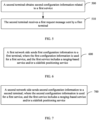
- FIG. 5 is a fourth schematic flowchart of a terminal discovery method according to an embodiment of this application. The method includes the following steps:
- the first request message is used for discovering a second terminal that supports the first service, and the first service is a terminal discovery related service.
- the first service may be relative information (such as relative position) between the first terminal and another terminal that the first terminal hopes to obtain, or may be absolute information (such as a geographical location and velocity), or may be relative information between the first terminal and a specific network device (other network elements, which can be understood as a network-side device, a base station, an RSU, or the like) that the first terminal hopes to obtain, or absolute information.
- relative information such as relative position
- absolute information such as a geographical location and velocity
- a specific network device other network elements, which can be understood as a network-side device, a base station, an RSU, or the like
- the second terminal may obtain the second configuration information related to the first service, and the second configuration information is used to configure, for the second terminal, information required by the second terminal during execution of the first service.
- the first terminal may send the first request message to the second terminal.
- the second terminal may know that the first terminal needs to discover a terminal supporting the first service, so that the terminal supporting the first service can discover another terminal supporting the first service.
- the second network side does not need to send the second configuration information to the second terminal each time the first service is executed.
- An occasion at which the second network side sends the second configuration information to the second terminal is not limited in this embodiment.
- the second network side when the second terminal registers to the second network side, the second network side sends the second configuration information to the second terminal.
- the second terminal may request at any time to obtain or update the second configuration information.
- the second configuration information is configured in the second terminal in a preconfigured manner.
- the configuration information related to a ranging-based service and/or sidelink positioning service is obtained to perform the ranging-based service and/or sidelink positioning service.
- the first request message is transmitted, so that one terminal supporting the ranging-based service and/or sidelink positioning service can discover another terminal supporting ranging-based service and/or sidelink positioning service to obtain the ranging-based service and/or sidelink positioning service.
- the method further includes: sending, by the second terminal, a third request message, where the third request message is used to request to establish a PC5 connection to the first terminal.
- the second terminal may send the third request message, where the third request message is used to request to establish a PC5 connection to the first terminal.
- the first request message includes at least one of the following:
- the first request message may include any one or more of the following (a) to (i):
- the first request message may be a PROSE PC5 DISCOVERY message in the existing mechanism.
- the first request message may be a RANGING PC5 DISCOVERY message, that is, a new message different from an existing message.
- the first assistance information includes at least one of the following: reference signal information of the first terminal, algorithm information of the first terminal, or measurement requirement information of the first terminal.
- the first assistance information may include reference signal information of the first terminal.
- the first assistance information may include algorithm information of the first terminal.
- the first assistance information may include measurement requirement information of the first terminal.
- the first assistance information may include reference signal information of the first terminal and algorithm information of the first terminal.
- the first assistance information may include reference signal information of the first terminal and measurement requirement information of the first terminal.
- the first assistance information may include algorithm information of the first terminal and measurement requirement information of the first terminal.
- the algorithm information of the first terminal is algorithm information used by the first terminal for execution of the first service, and the algorithm information includes at least one of the following: an algorithm name, an algorithm identifier, an algorithm parameter, an algorithm precision, and the like.
- the reference signal information of the first terminal may indicate information about a reference signal used by the first terminal during use of the ranging and positioning service, including at least one of the following: a name of the reference signal, an identifier of the reference signal, a frequency of the reference signal, a period of the reference signal, a power of the reference signal, and accuracy of the reference signal.
- the measurement requirement information of the first terminal includes measurement accuracy and/or QoS information.
- the first service information includes at least one of the following: a service code corresponding to the first terminal, a service identifier corresponding to the first terminal, or a service type corresponding to the first terminal.
- the first service information may include at least one of the following:
- the first request message further includes address information of the first terminal and/or address information of the second terminal; or the address information of the first terminal and/or the address information of the second terminal are sent along with the first request message.
- the first terminal may send the address information of the first terminal to the second terminal.
- the first terminal may send the address information of the second terminal to the second terminal.
- the first terminal may send the address information of the first terminal and the address information of the second terminal to the second terminal.
- the address information of the first terminal may be included in the first request message, or may be sent along with the first request message but not being included in the first request message.
- the address information of the second terminal may be included in the first request message, or may be sent along with the first request message but not being included in the first request message.
- the address information of the first terminal and the address information of the second terminal may be included in the first request message, or may be sent along with the first request message but not being included in the first request message.
- the second terminal can directly initiate a process related to the first service.
- the first terminal sends the first request message to the second terminal and in a case that the second terminal starts the first service, the first terminal can directly enter the process related to the first service with the second terminal.
- the second configuration information includes at least one of the following:
- the second network-side device may configure in advance, for the second terminal, a parameter or policy (which may be referred to as second configuration information) related to the first service.
- a parameter or policy which may be referred to as second configuration information
- the second configuration information may include any one or more of the following (u1) to (u12):
- the method further includes: determining, by the second terminal, a reference signal transmission mode based on the third authorization indication information.
- the reference signal transmission mode that can be determined by the second terminal based on the third authorization indication information is any one or more of the following:
- the method further includes: determining, by the second terminal, a result determining manner based on the fourth authorization indication information.
- the result determining manner determined by the second terminal based on the fourth authorization indication information includes at least one of the following:
- the reference signal transmission mode is associated with the result determining manner. For example, if the first terminal sets, in the first request message, the reference signal transmission mode to "the first terminal sends a reference signal", after the second terminal receives the first request message, the second terminal can infer that the "result determining manner" of the first service is "the second terminal determines the first result”.
- the method further includes: performing, by the second terminal, a second operation based on the first request message, where the second operation includes at least one of the following:
- the second terminal can determine, based on the first request message, whether the first terminal and the second terminal can perform the first service. In this case, after receiving the first request message, the second terminal can determine, based on the first request message, to perform the first service with the first terminal, and then directly initiate a process of executing the first service.
- the second terminal may perform a second operation based on the first request message.
- the second operation includes at least one of the following:
- That the second terminal determines, based on the second service information in the second configuration information and the first service information in the first request message, that the first terminal and the second terminal can perform the first service may be: in a case that the second terminal determines the second service information in the second configuration information matching the first service information in the first request message, determining that the first terminal and the second terminal can perform the first service.
- That the second terminal determines, based on the reference signal information of the second terminal in the second configuration information and the reference signal information of the first terminal in the first request message, that the first terminal and the second terminal can perform the first service may be: in a case that the second terminal determines the reference signal information of the second terminal in the second configuration information matching the reference signal information of the first terminal in the first request message, determining that the first terminal and the second terminal can perform the first service.
- That the second terminal determines, based on the algorithm information of the second terminal in the second configuration information and the algorithm information of the first terminal in the first request message, that the first terminal and the second terminal can perform the first service may be: in a case that the second terminal determines the algorithm information of the second terminal in the second configuration information matching the algorithm information of the first terminal in the first request message, determining that the first terminal and the second terminal can perform the first service.
- That the second terminal determines, based on the measurement requirement information of the second terminal in the second configuration information and the measurement requirement information of the first terminal in the first request message, that the first terminal and the second terminal can perform the first service may be: in a case that the second terminal determines the measurement requirement information of the second terminal in the second configuration information matching the measurement requirement information of the first terminal in the first request message, determining that the first terminal and the second terminal can perform the first service.
- That the second terminal determines, based on the third authorization indication information in the second configuration information and the reference signal transmission mode in the first request message, that the first terminal and the second terminal can perform the first service may be: in a case that the second terminal determines the third authorization indication information in the second configuration information matching the reference signal transmission mode in the first request message, determining that the first terminal and the second terminal can perform the first service.
- That the second terminal determines, based on the fourth authorization indication information in the second configuration information and the result determining manner in the first request message, that the first terminal and the second terminal can perform the first service may be: in a case that the second terminal determines the fourth authorization indication information in the second configuration information matching the result determining manner in the first request message, determining that the first terminal and the second terminal can perform the first service.
- matching may be the same or similar, and similarity may be that corresponding values belong to a same range or indicated content has the same substantive meaning.
- the method further includes: sending, by the second terminal, a first request response message to the first terminal, where the first request response message is used to indicate that the second terminal has received the first request message of the first terminal.
- whether the second terminal supports the first service can be determined by the first terminal.
- the first terminal may determine whether the second terminal supports the first service.
- the second terminal after receiving the first request message, the second terminal merely needs to determine that a message type of the first request message is a first service discovery request message, and then directly send the first request message response.
- whether the second terminal supports the first service may be determined by the first terminal, and the second terminal may determine, based on the first request message, that the first terminal may perform the first service with the second terminal.
- the second terminal may determine, based on the first request message, that the first terminal is able to perform the first service with the second terminal, and then sends a first request message response.
- the first terminal may determine, based on the first request message response, that the second terminal also supports the first service.
- the second terminal determining that both the first terminal and the second terminal support the first service may be based on at least one of the following: a first request message, an application layer indication, a network side indication, or pre-configuration information.
- the sending, by the second terminal, a first request response message to the first terminal includes: sending, by the second terminal, second assistance information based on the third indication information; where the second assistance information is in the first request response message.
- the second terminal may send the second assistance information based on the third indication information.
- the second assistance information may be one of the first request response message.
- the first request response message includes at least one of the following:
- the first request response message may include any one or more of the following (j) to (q):
- the first request response message further includes the address information of the first terminal and/or the address information of the second terminal; or the address information of the first terminal and/or the address information of the second terminal are sent along with the first request response message.
- the second terminal may send the address information of the first terminal to the first terminal.
- the second terminal may send the address information of the second terminal to the first terminal.
- the second terminal may send the address information of the first terminal and the address information of the second terminal to the first terminal.
- the address information of the first terminal may be included in the first request response message, or may be sent along with the first request response message but not being included in the first request response message.
- the address information of the second terminal may be included in the first request response message, or may be sent along with the first request response message but not being included in the first request response message.
- the address information of the first terminal and the address information of the second terminal may be included in the first request response message, or may be sent along with the first request response message but not being included in the first request response message.
- the second service information includes at least one of the following: a service code corresponding to the second terminal, a service identifier corresponding to the second terminal, or a service type corresponding to the second terminal.
- the second service information may include at least one of the following:
- the first request response message includes the second service information, and can be also understood that the second terminal can provide the first service related to the second service information.
- the second service information is a service identifier
- the second terminal can provide the first service related to a service identified by the service identifier.
- the second assistance information includes at least one of the following: reference signal information of the second terminal, algorithm information of the second terminal, or measurement requirement information of the second terminal.
- the second assistance information may include reference signal information of the second terminal.
- the second assistance information may include algorithm information of the second terminal.
- the second assistance information may include measurement requirement information of the second terminal.
- the second assistance information may include reference signal information of the second terminal and algorithm information of the second terminal.
- the second assistance information may include reference signal information of the second terminal and measurement requirement information of the second terminal.
- the second assistance information may include algorithm information of the second terminal and measurement requirement information of the second terminal.
- the second assistance information includes one or more items
- the first terminal or the second terminal implements discovery of a terminal supporting the first service based on the second assistance information
- all or part of the items included in the second assistance information can be used.
- the algorithm information of the second terminal is algorithm information used by the second terminal for execution of the first service, and the algorithm information includes at least one of the following: an algorithm name, an algorithm identifier, an algorithm parameter, an algorithm precision, and the like.
- the reference signal information of the second terminal may indicate information about a reference signal used by the second terminal during use of the ranging and positioning service, including at least one of the following: a name of the reference signal, an identifier of the reference signal, a frequency of the reference signal, a period of the reference signal, a power of the reference signal, and accuracy of the reference signal.
- the measurement requirement information of the second terminal includes measurement accuracy and/or QoS information.
- the reference signal transmission mode includes at least one of the following:
- the reference signal transmission mode includes any one or more of the following:
- the result determining manner includes at least one of the following: the first terminal determines a first result, the second terminal determines the first result, and the first terminal and the second terminal determine the first result.
- the result determining manner includes any one or more of the following:
- the reference signal transmission mode is associated with the result determining manner. For example, if the first terminal sets, in the first request message, the reference signal transmission mode to "the first terminal sends a reference signal", after the second terminal receives the first request message, the second terminal can infer that the "result determining manner" of the first service is "the second terminal determines the first result”.
- the first result may be a result obtained by executing the first service, such as a distance between two or more UEs and/or a direction and/or relative positioning between one UE (that is, target UE) and another UE (that is, reference UE).
- the first result may be a result corresponding to the first service related to the second terminal and obtained by the first terminal, and the first result may include at least one of the following: absolute location information of the second terminal, relative location information of the second terminal with respect to the first terminal, accuracy information, or a measurement result of a second positioning reference signal.
- the absolute location information of the second terminal is, for example, TA, registration area RA, cell ID, latitude and longitude, altitude, horizontal direction angle, and elevation direction angle.
- the relative location information is, for example, a relative angle or a relative distance of the second terminal relative to the first terminal.
- the accuracy information indicates accuracy information of the first result, which, for example, may include at least one of the following: result dimension information, measurement accuracy, and error information.
- the result dimension information is, for example, angle, meter, or centimeter.
- the measurement accuracy is, for example, high accuracy, ultra-high accuracy, and low accuracy.
- the error information includes: error accuracy information and error dimension information.
- the error information is, for example, high error, low error, and ultra-low error.
- the error dimension information is, for example, angle, meter, or centimeter.
- the measurement result indicates a measurement result of the second positioning reference signal, for example, a signal strength, or a value of a specific measurement quantity obtained through calculation based on the second positioning reference signal.
- the sending, by the second terminal, a first request response message to the first terminal includes: sending, by the second terminal, the first request response message to the first terminal based on first information, where the first information includes at least one of the following: a first request message, application layer indication information, network side indication information, or pre-configuration information.
- the second terminal may determine, based on the first request message, that the first terminal supports the first service and determines that the second terminal also supports the first service, and then sends a first request message response.
- the first terminal may determine, based on the first request message response, that the second terminal also supports the first service.
- the second terminal determining that both the first terminal and the second terminal support the first service may be based on at least one of the following: a first request message, application layer indication information, network side indication information, or pre-configuration information.
- the sending, by the second terminal, the first request response message to the first terminal based on first information includes at least one of the following:
- the application layer indication information may include at least one of the following:
- that the second terminal sends the first request response message to the first terminal based on the reference signal transmission mode in the first request message and the reference signal transmission mode included in the application layer indication information may be: sending the first request response message to the first terminal in a case that the second terminal determines the reference signal transmission mode in the first request message matching the reference signal transmission mode included in the application layer indication information.
- that the second terminal sends the first request response message to the first terminal based on the result determining manner in the first request message and the result determining manner included in the application layer indication information may be: sending the first request response message to the first terminal in a case that the second terminal determines the result determining manner in the first request message matching the result determining manner included in the application layer indication information.
- that the second terminal sends the first request response message to the first terminal based on the first service information in the first request message and the service information included in the application layer indication information may be: sending the first request response message to the first terminal in a case that the second terminal determines the first service information in the first request message matching the service information included in the application layer indication information.
- that the second terminal sends the first request response message to the first terminal based on the first terminal identifier in the first request message and the terminal identifier included in the application layer indication information may be: sending the first request response message to the first terminal in a case that the second terminal determines the first terminal identifier in the first request message matching the terminal identifier included in the application layer indication information.
- matching may be the same or similar, and similarity may be that corresponding values belong to a same range or indicated content has the same substantive meaning.
- the sending, by the second terminal, the first request response message to the first terminal based on first information includes at least one of the following:
- the second terminal sends the first request response message to the first terminal based on the reference signal transmission mode in the first request message and the reference signal transmission mode included in the pre-configuration information.
- That the second terminal sends the first request response message to the first terminal based on the result determining manner in the first request message and the result determining manner included in the pre-configuration information may be: sending the first request response message to the first terminal in a case that the second terminal determines the result determining manner in the first request message matching the result determining manner included in the pre-configuration information.
- That the second terminal sends the first request response message to the first terminal based on the terminal identifier of the first terminal in the first request message and the terminal identifier of the first terminal included in the pre-configuration information may be: sending the first request response message to the first terminal in a case that the second terminal determines the terminal identifier of the first terminal in the first request message matching the terminal identifier of the first terminal included in the pre-configuration information.
- That the second terminal sends the first request response message to the first terminal based on the first service information in the first request message and the service information included in the pre-configuration information may be: sending the first request response message to the first terminal in a case that the second terminal determines the first service information in the first request message matching the service information included in the pre-configuration information.
- That the second terminal sends the first request response message to the first terminal based on the address information of the second terminal in the first request message and the address information of the second terminal included in the pre-configuration information may be: sending the first request response message to the first terminal in a case that the second terminal determines the address information of the second terminal in the first request message matching the address information of the second terminal included in the pre-configuration information.
- That the second terminal sends the first request response message to the first terminal based on the terminal identifier of the second terminal in the first request message and the terminal identifier of the second terminal included in the pre-configuration information may be: sending the first request response message to the first terminal in a case that the second terminal determines the terminal identifier of the second terminal in the first request message matching the terminal identifier of the second terminal included in the pre-configuration information.
- the pre-configuration information may include at least one of the following:
- the configuration information related to a ranging-based service and/or sidelink positioning service is obtained to perform the ranging-based service and/or sidelink positioning service.
- the first request message is transmitted, so that one terminal supporting the ranging-based service and/or sidelink positioning service can discover another terminal supporting ranging-based service and/or sidelink positioning service to obtain the ranging-based service and/or sidelink positioning service.
- FIG. 6 is a fifth schematic flowchart of a terminal discovery method according to an embodiment of this application. As shown in FIG. 6 , the method includes the following step.
- Step 600 A first network side sends first configuration information to a first terminal, where the first configuration information is used for a first service, and the first service includes a ranging-based service and/or a sidelink positioning service.
- the first network-side device may configure in advance, for the first terminal, a parameter or policy (which may be referred to as first configuration information) related to the first service.
- a parameter or policy which may be referred to as first configuration information
- the first network side does not need to send the first configuration information to the first terminal each time the first service is executed.
- An occasion at which the first network side sends the first configuration information to the first terminal is not limited in the embodiments of this application.
- the first network side when the first terminal registers to the first network side, the first network side sends the first configuration information to the first terminal.
- the first terminal may request at any time to obtain or update the first configuration information.
- the first configuration information is configured in the first terminal in a preconfigured manner.
- the configuration information related to a ranging-based service and/or sidelink positioning service is obtained to perform the ranging-based service and/or sidelink positioning service.
- the first request message is transmitted, so that one terminal supporting the ranging-based service and/or sidelink positioning service can discover another terminal supporting ranging-based service and/or sidelink positioning service to obtain the ranging-based service and/or sidelink positioning service.
- the first configuration information includes at least one of the following:
- the first configuration information may include any one or more of the following (t1) to (t12):
- the first service information includes at least one of the following: a service code corresponding to the first terminal, a service identifier corresponding to the first terminal, or a service type corresponding to the first terminal.
- the first service information may include at least one of the following:
- the configuration information related to a ranging-based service and/or sidelink positioning service is obtained to perform the ranging-based service and/or sidelink positioning service.
- the first request message is transmitted, so that one terminal supporting the ranging-based service and/or sidelink positioning service can discover another terminal supporting ranging-based service and/or sidelink positioning service to obtain the ranging-based service and/or sidelink positioning service.
- FIG. 7 is a sixth schematic flowchart of a terminal discovery method according to an embodiment of this application. As shown in FIG. 7 , the method includes the following step.
- Step 700 A second network side sends second configuration information to a second terminal; where the second configuration information is used for a first service, and the first service includes a ranging-based service and/or a sidelink positioning service.
- the second network-side device may configure in advance, for the second terminal, a parameter or policy (which may be referred to as second configuration information) related to the first service.
- a parameter or policy which may be referred to as second configuration information
- the second network side does not need to send the second configuration information to the second terminal each time the first service is executed.
- An occasion at which the second network side sends the second configuration information to the second terminal is not limited in this embodiment.
- the second network side when the second terminal registers to the second network side, the second network side sends the second configuration information to the second terminal.
- the second terminal may request at any time to obtain or update the second configuration information.
- the second configuration information is configured in the second terminal in a preconfigured manner.
- the configuration information related to a ranging-based service and/or sidelink positioning service is obtained to perform the ranging-based service and/or sidelink positioning service.
- the first request message is transmitted, so that one terminal supporting the ranging-based service and/or sidelink positioning service can discover another terminal supporting ranging-based service and/or sidelink positioning service to obtain the ranging-based service and/or sidelink positioning service.
- the second configuration information includes at least one of the following:
- the second configuration information may include any one or more of the following (u1) to (u12):
- the second service information includes at least one of the following: a service code corresponding to the second terminal, a service identifier corresponding to the second terminal, or a service type corresponding to the second terminal.
- the second service information may include at least one of the following:
- the first request response message includes the second service information, and can be also understood that the second terminal can provide the first service related to the second service information.
- the second service information is a service identifier
- the second terminal can provide the first service related to a service identified by the service identifier.
- the configuration information related to a ranging-based service and/or sidelink positioning service is obtained to perform the ranging-based service and/or sidelink positioning service.
- the first request message is transmitted, so that one terminal supporting the ranging-based service and/or sidelink positioning service can discover another terminal supporting ranging-based service and/or sidelink positioning service to obtain the ranging-based service and/or sidelink positioning service.
- the execution subject may be a terminal discovery apparatus.
- the terminal discovery apparatus provided in the embodiments of this application is described by using the terminal discovery method being executed by the terminal discovery apparatus as an example.
- FIG. 8 is a first schematic structural diagram of a terminal discovery apparatus according to an embodiment of this application. As shown in FIG. 8 , the apparatus 800 includes a first obtaining module 801 and a first sending module 802.
- the first obtaining module 801 is configured to obtain first configuration information related to a first service.
- the first sending module 802 is configured to send a first request message to a second terminal.
- the first request message is used to request discovery of the second terminal supporting the first service, and the first service includes a ranging-based service and/or a sidelink positioning service.
- the configuration information related to a ranging-based service and/or sidelink positioning service is obtained to perform the ranging-based service and/or sidelink positioning service.
- the first request message is transmitted, so that one terminal supporting the ranging-based service and/or sidelink positioning service can discover another terminal supporting ranging-based service and/or sidelink positioning service to obtain the ranging-based service and/or sidelink positioning service.
- the first request message includes at least one of the following:
- the first assistance information includes at least one of the following: reference signal information of the first terminal, algorithm information of the first terminal, or measurement requirement information of the first terminal.
- the first service information includes at least one of the following: a service code corresponding to the first terminal, a service identifier corresponding to the first terminal, or a service type corresponding to the first terminal.
- the first request message further includes address information of the first terminal and/or address information of the second terminal; or the address information of the first terminal and/or the address information of the second terminal are sent along with the first request message.
- the apparatus further includes a first receiving module, and the first receiving module is configured to: after the first request message is sent to the second terminal, receive a first request response message sent by the second terminal, where the first request response message is used to indicate that the second terminal has received the first request message of the first terminal.
- the first request response message includes at least one of the following:
- the second service information includes at least one of the following: a service code corresponding to the second terminal, a service identifier corresponding to the second terminal, or a service type corresponding to the second terminal.
- the first request response message further includes address information of the first terminal and/or address information of the second terminal; or the address information of the first terminal and/or the address information of the second terminal are sent along with the first request response message.
- the second assistance information includes at least one of the following: reference signal information of the second terminal, algorithm information of the second terminal, or measurement requirement information of the second terminal.
- the reference signal transmission mode includes at least one of the following:
- the result determining manner includes at least one of the following:
- the apparatus further includes a first determining module, and the first determining module is configured to: after the first request response message sent by the second terminal is received, perform a first operation based on the first request response message, where the first operation includes at least one of the following:
- the first assistance information further includes at least one of the following:
- the second assistance information further includes at least one of the following:
- the first configuration information includes at least one of the following:
- the apparatus further includes a second determining module, and the second determining module is configured to: determine a reference signal transmission mode based on the first authorization indication information.
- the apparatus further includes a third determining module, and the third determining module is configured to: determine a result determining manner based on the second authorization indication information.
- the apparatus further includes a second sending module, and the second sending module is configured to: after the first request message is sent to the second terminal, send a second request message, where the second request message is used to request to establish a PC5 connection to the second terminal.
- the configuration information related to a ranging-based service and/or sidelink positioning service is obtained to perform the ranging-based service and/or sidelink positioning service.
- the first request message is transmitted, so that one terminal supporting the ranging-based service and/or sidelink positioning service can discover another terminal supporting ranging-based service and/or sidelink positioning service to obtain the ranging-based service and/or sidelink positioning service.
- the terminal discovery apparatus in this embodiment of the application may be an electronic device, such as an electronic device with an operating system, or a component in the electronic device, such as an integrated circuit or a chip.
- the electronic device may be a terminal or other devices than the terminal.
- the terminal may include, but is not limited to, the types of the terminal 11 listed above, and other devices may be a server, a network attached storage (Network Attached Storage, NAS), and the like. This is not limited in the embodiment of this application.
- the terminal discovery apparatus provided in this embodiment of this application is capable of implementing the processes implemented in the method embodiment shown in FIG. 2 to FIG. 4 , with the same technical effects achieved. To avoid repetition, details are not described herein again.
- FIG. 9 is a second schematic structural diagram of a terminal discovery apparatus according to an embodiment of this application. As shown in FIG. 9 , the apparatus 900 includes a second obtaining module 901 and a second receiving module 902.
- the second obtaining module 901 is configured to obtain second configuration information related to a first service.
- the second receiving module 902 is configured to receive a first request message sent by a first terminal.
- the first request message is used for discovering a second terminal that supports the first service, and the first service is a terminal discovery related service.
- the configuration information related to a ranging-based service and/or sidelink positioning service is obtained to perform the ranging-based service and/or sidelink positioning service.
- the first request message is transmitted, so that one terminal supporting the ranging-based service and/or sidelink positioning service can discover another terminal supporting ranging-based service and/or sidelink positioning service to obtain the ranging-based service and/or sidelink positioning service.
- the apparatus further includes a third sending module, and the third sending module is configured to: after the first request message sent by the first terminal is received, send a third request message, where the third request message is used to request to establish a PC5 connection to the first terminal.
- the first request message includes at least one of the following:
- the first assistance information includes at least one of the following: reference signal information of the first terminal, algorithm information of the first terminal, or measurement requirement information of the first terminal.
- the first service information includes at least one of the following: a service code corresponding to the first terminal, a service identifier corresponding to the first terminal, or a service type corresponding to the first terminal.
- the first request message further includes the address information of the first terminal and/or the address information of the second terminal; or the address information of the first terminal and/or the address information of the second terminal are sent along with the first request message.
- the second configuration information includes at least one of the following:
- the apparatus further includes a fourth determining module, and the fourth determining module is configured to: determine a reference signal transmission mode based on the third authorization indication information.
- the apparatus further includes a fifth determining module, and the fifth determining module is configured to: determine a result determining manner based on the fourth authorization indication information.
- the apparatus further includes a sixth determining module, and the sixth determining module is configured to: perform a second operation based on the first request message, where the second operation includes at least one of the following:
- the apparatus further includes a fourth sending module, and the fourth sending module is configured to: send a first request response message to the first terminal, where the first request response message is used to indicate that the second terminal has received the first request message of the first terminal.
- the fourth sending module is specifically configured to: send second assistance information based on the third indication information; where the second assistance information is in the first request response message.
- the first request response message includes at least one of the following:
- the first request response message further includes the address information of the first terminal and/or the address information of the second terminal; or the address information of the first terminal and/or the address information of the second terminal are sent along with the first request response message.
- the second service information includes at least one of the following: a service code corresponding to the second terminal, a service identifier corresponding to the second terminal, or a service type corresponding to the second terminal.
- the second assistance information includes at least one of the following: reference signal information of the second terminal, algorithm information of the second terminal, or measurement requirement information of the second terminal.
- the reference signal transmission mode includes at least one of the following:
- the result determining manner includes at least one of the following: the first terminal determines a first result, the second terminal determines the first result, and the first terminal and the second terminal determine the first result.
- the fourth sending module is specifically configured to: send the first request response message to the first terminal based on first information, where the first information includes at least one of the following: a first request message, application layer indication information, network side indication information, or pre-configuration information.
- the fourth sending module is specifically configured to perform at least one of the following:
- the fourth sending module is specifically configured to perform at least one of the following:
- the configuration information related to a ranging-based service and/or sidelink positioning service is obtained to perform the ranging-based service and/or sidelink positioning service.
- the first request message is transmitted, so that one terminal supporting the ranging-based service and/or sidelink positioning service can discover another terminal supporting ranging-based service and/or sidelink positioning service to obtain the ranging-based service and/or sidelink positioning service.
- the terminal discovery apparatus in this embodiment of the application may be an electronic device, such as an electronic device with an operating system, or a component in the electronic device, such as an integrated circuit or a chip.
- the electronic device may be a terminal or other devices than the terminal.
- the terminal may include, but is not limited to, the types of the terminal 11 listed above, and other devices may be a server, a network attached storage (Network Attached Storage, NAS), and the like. This is not limited in the embodiment of this application.
- the terminal discovery apparatus in this embodiment of this application may be an apparatus with an operating system.
- the operating system may be an Android (Android) operating system, an iOS operating system, or other possible operating systems, and is not specifically limited in the embodiments of this application.
- the terminal discovery apparatus provided in this embodiment of this application is capable of implementing the processes implemented in the method embodiment shown in FIG. 5 , with the same technical effects achieved. To avoid repetition, details are not described herein again.
- FIG. 10 is a third schematic structural diagram of a terminal discovery apparatus according to an embodiment of this application. As shown in FIG. 10 , the apparatus 1000 includes a fifth sending module 1001.
- the fifth sending module 1001 is configured to send first configuration information to a first terminal, where the first configuration information is used for a first service, and the first service includes a ranging-based service and/or a sidelink positioning service.
- the configuration information related to a ranging-based service and/or sidelink positioning service is obtained to perform the ranging-based service and/or sidelink positioning service.
- the first request message is transmitted, so that one terminal supporting the ranging-based service and/or sidelink positioning service can discover another terminal supporting ranging-based service and/or sidelink positioning service to obtain the ranging-based service and/or sidelink positioning service.
- the first configuration information includes at least one of the following:
- the first service information includes at least one of the following: a service code corresponding to the first terminal, a service identifier corresponding to the first terminal, or a service type corresponding to the first terminal.
- the configuration information related to a ranging-based service and/or sidelink positioning service is obtained to perform the ranging-based service and/or sidelink positioning service.
- the first request message is transmitted, so that one terminal supporting the ranging-based service and/or sidelink positioning service can discover another terminal supporting ranging-based service and/or sidelink positioning service to obtain the ranging-based service and/or sidelink positioning service.
- the terminal discovery apparatus in this embodiment of the application may be an electronic device, such as an electronic device with an operating system, or a component in the electronic device, such as an integrated circuit or a chip.
- the electronic device may be a terminal or other devices than the terminal.
- the terminal may include, but is not limited to, the types of the terminal 11 listed above, and other devices may be a server, a network attached storage (Network Attached Storage, NAS), and the like. This is not limited in the embodiment of this application.
- the terminal discovery apparatus provided in this embodiment of this application is capable of implementing the processes implemented in the method embodiment shown in FIG. 6 , with the same technical effects achieved. To avoid repetition, details are not described herein again.
- FIG. 11 is a fourth schematic structural diagram of a terminal discovery apparatus according to an embodiment of this application. As shown in FIG. 11 , the apparatus 1100 includes a sixth sending module 1101.
- the sixth sending module 1101 is configured to send second configuration information to a second terminal; where the second configuration information is used for a first service, and the first service includes a ranging-based service and/or a sidelink positioning service.
- the configuration information related to a ranging-based service and/or sidelink positioning service is obtained to perform the ranging-based service and/or sidelink positioning service.
- the first request message is transmitted, so that one terminal supporting the ranging-based service and/or sidelink positioning service can discover another terminal supporting ranging-based service and/or sidelink positioning service to obtain the ranging-based service and/or sidelink positioning service.
- the second configuration information includes at least one of the following:
- the second service information includes at least one of the following: a service code corresponding to the second terminal, a service identifier corresponding to the second terminal, or a service type corresponding to the second terminal.
- the configuration information related to a ranging-based service and/or sidelink positioning service is obtained to perform the ranging-based service and/or sidelink positioning service.
- the first request message is transmitted, so that one terminal supporting the ranging-based service and/or sidelink positioning service can discover another terminal supporting ranging-based service and/or sidelink positioning service to obtain the ranging-based service and/or sidelink positioning service.
- the terminal discovery apparatus in this embodiment of the application may be an electronic device, such as an electronic device with an operating system, or a component in the electronic device, such as an integrated circuit or a chip.
- the electronic device may be a terminal or other devices than the terminal.
- the terminal may include, but is not limited to, the types of the terminal 11 listed above, and other devices may be a server, a network attached storage (Network Attached Storage, NAS), and the like. This is not limited in the embodiment of this application.
- the terminal discovery apparatus provided in this embodiment of this application is capable of implementing the processes implemented in the method embodiment shown in FIG. 7 , with the same technical effects achieved. To avoid repetition, details are not described herein again.
- an embodiment of this application further provides a communication device 1200, including a processor 1201, a memory 1202, and a program or instruction stored in the memory 1202 and capable of running on the processor 1201.
- a communication device 1200 including a processor 1201, a memory 1202, and a program or instruction stored in the memory 1202 and capable of running on the processor 1201.
- the steps of the foregoing embodiments of the terminal discovery method corresponding to the first terminal are implemented, with the same technical effects achieved.
- the communication device 1200 is a second terminal and when the program or instruction is executed by the processor 1201, the steps of the foregoing embodiments of the terminal discovery method corresponding to the second terminal are implemented, with the same technical effects achieved.
- the steps of the foregoing embodiments of the terminal discovery method corresponding to the first network-side device are implemented, with the same technical effects achieved.
- the steps of the foregoing embodiments of the terminal discovery method corresponding to the second network-side device are implemented, with the same technical effects achieved.
- An embodiment of this application further provides a first terminal, including a processor and a communication interface.
- the processor is configured to obtain first configuration information related to a first service.
- the communication interface is configured to send a first request message to a second terminal.
- FIG. 13 is a schematic diagram of a hardware structure of a first terminal for implementing the embodiments of this application.
- the terminal 1300 includes but is not limited to at least part of components such as a radio frequency unit 1301, a network module 1302, an audio output unit 1303, an input unit 1304, a sensor 1305, a display unit 1306, a user input unit 1307, an interface unit 1308, a memory 1309, and a processor 1310.
- the terminal 1300 may further include a power supply (for example, a battery) supplying power to the components, and the power supply may be logically connected to the processor 1310 through a power management system. In this way, functions such as charge management, discharge management, and power consumption management are implemented by using the power management system.
- a power supply for example, a battery
- the structure of the terminal shown in FIG. 13 does not constitute any limitation on the terminal.
- the terminal may include more or fewer components than shown in the figure, or a combination of some components, or the components disposed differently. Details are not described herein again.
- the input unit 1304 may include a graphics processing unit (Graphics Processing Unit, GPU) 13041 and a microphone 13042.
- the graphics processing unit 13041 processes image data of a still picture or video obtained by an image capture apparatus (such as a camera) in a video capture mode or an image capture mode.
- the display unit 1306 may include a display panel 13061, and the display panel 13061 may be configured in a form of a liquid crystal display, an organic light-emitting diode, and the like.
- the user input unit 1307 may include at least one of a touch panel 13071 and other input devices 13072.
- the touch panel 13071 is also referred to as a touchscreen.
- the touch panel 13071 may include two parts: a touch detection apparatus and a touch controller.
- the other input devices 13072 may include but are not limited to a physical keyboard, a function key (such as a volume control key or a power on/off key), a trackball, a mouse, a joystick, and the like. Details are not described herein.
- the radio frequency unit 1301 receives downlink data from a network-side device, and then sends the downlink data to the processor 1310 for processing.
- the radio frequency unit 1301 may send uplink data to the network-side device.
- the radio frequency unit 1301 includes but is not limited to an antenna, an amplifier, a transceiver, a coupler, a low noise amplifier, a duplexer, and the like.
- the memory 1309 may be configured to store software programs or instructions and various data.
- the memory 1309 may include a first storage area for storing a program or instruction and a second storage area for storing data.
- the first storage area may store an operating system, an application program or instruction required by at least one function (for example, a sound playback function or an image playback function), and the like.
- the memory 1309 may include a volatile memory or a non-volatile memory, or the memory 1309 may include both a volatile memory and a non-volatile memory.
- the non-volatile memory may be a read-only memory (Read-Only Memory, ROM), a programmable read only memory (Programmable ROM, PROM), an erasable programmable read-only memory (Erasable PROM, EPROM), and an electrically erasable programmable read-only memory (Electrically EPROM, EEPROM), or flash memory.
- ROM Read-Only Memory
- PROM programmable read only memory
- Erasable PROM Erasable PROM
- EPROM erasable programmable read-only memory
- Electrically erasable programmable read-only memory Electrically erasable programmable read-only memory
- the volatile memory can be a random access memory (Random Access Memory, RAM), a static random access memory (Static RAM, SRAM), a dynamic random access memory (Dynamic RAM, DRAM), a synchronous dynamic random access memory (Synchronous DRAM, SDRAM), a double data rate synchronous dynamic random access memory (Double Data Rate SDRAM, DDRSDRAM), an enhanced synchronous dynamic random access memory (Enhanced SDRAM, ESDRAM), a synchlink dynamic random access memory (Synch link DRAM, SLDRAM), and a direct rambus random access memory (Direct Rambus RAM, DRRAM).
- RAM Random Access Memory
- SRAM static random access memory
- DRAM dynamic random access memory
- DRAM synchronous dynamic random access memory
- SDRAM double data rate synchronous dynamic random access memory
- Enhanced SDRAM, ESDRAM enhanced synchronous dynamic random access memory
- Synch link DRAM, SLDRAM synchlink dynamic random access memory
- Direct Rambus RAM Direct Rambus RAM
- the processor 1310 may include one or more processing units.
- an application processor and a modem processor may be integrated in the processor 1310.
- the application processor primarily processes operations involving an operating system, user interfaces, application programs, and the like.
- the modem processor primarily processes radio communication signals, for example, being a baseband processor. It can be understood that the modem processor may alternatively be not integrated in the processor 1310.
- the processor 1310 is configured to obtain first configuration information related to a first service.
- the radio frequency unit 1301 is configured to send a first request message to a second terminal.
- the first request message is used to request discovery of the second terminal supporting the first service, and the first service includes a ranging-based service and/or a sidelink positioning service.
- the configuration information related to a ranging-based service and/or sidelink positioning service is obtained to perform the ranging-based service and/or sidelink positioning service.
- the first request message is transmitted, so that one terminal supporting the ranging-based service and/or sidelink positioning service can discover another terminal supporting ranging-based service and/or sidelink positioning service to obtain the ranging-based service and/or sidelink positioning service.
- the first request message includes at least one of the following:
- the first assistance information includes at least one of the following: reference signal information of the first terminal, algorithm information of the first terminal, or measurement requirement information of the first terminal.
- the first service information includes at least one of the following: a service code corresponding to the first terminal, a service identifier corresponding to the first terminal, or a service type corresponding to the first terminal.
- the first request message further includes address information of the first terminal and/or address information of the second terminal; or the address information of the first terminal and/or the address information of the second terminal are sent along with the first request message.
- the radio frequency unit 1301 is further configured to: after the first request message is sent to the second terminal, receive a first request response message sent by the second terminal, where the first request response message is used to indicate that the second terminal has received the first request message of the first terminal.
- the first request response message includes at least one of the following:
- the second service information includes at least one of the following: a service code corresponding to the second terminal, a service identifier corresponding to the second terminal, or a service type corresponding to the second terminal.
- the first request response message further includes address information of the first terminal and/or address information of the second terminal; or the address information of the first terminal and/or the address information of the second terminal are sent along with the first request response message.
- the second assistance information includes at least one of the following: reference signal information of the second terminal, algorithm information of the second terminal, or measurement requirement information of the second terminal.
- the reference signal transmission mode includes at least one of the following:
- the result determining manner includes at least one of the following:
- the processor 1310 is further configured to: after the first request response message sent by the second terminal is received, perform a first operation based on the first request response message, where the first operation includes at least one of the following:
- the first assistance information further includes at least one of the following:
- the second assistance information further includes at least one of the following:
- the first configuration information includes at least one of the following:
- the processor 1310 is further configured to: determine a reference signal transmission mode based on the first authorization indication information.
- the processor 1310 is further configured to: determine a result determining manner based on the second authorization indication information.
- the radio frequency unit 1301 is further configured to: after the first request message is sent to the second terminal, send a second request message, where the second request message is used to request to establish a PC5 connection to the second terminal.
- the configuration information related to a ranging-based service and/or sidelink positioning service is obtained to perform the ranging-based service and/or sidelink positioning service.
- the first request message is transmitted, so that one terminal supporting the ranging-based service and/or sidelink positioning service can discover another terminal supporting ranging-based service and/or sidelink positioning service to obtain the ranging-based service and/or sidelink positioning service.
- An embodiment of this application further provides a second terminal, including a processor and a communication interface.
- the processor is configured to obtain second configuration information related to a first service.
- the communication interface is configured to receive a first request message sent by a first terminal.
- FIG. 14 is a schematic diagram of a hardware structure of a second terminal for implementing the embodiments of this application.
- the terminal 1400 includes but is not limited to at least part of components such as a radio frequency unit 1401, a network module 1402, an audio output unit 1403, an input unit 1404, a sensor 1405, a display unit 1406, a user input unit 1407, an interface unit 1408, a memory 1409, and a processor 1410.
- the terminal 1400 may further include a power supply (for example, a battery) supplying power to the components, and the power supply may be logically connected to the processor 1410 through a power management system. In this way, functions such as charge management, discharge management, and power consumption management are implemented by using the power management system.
- a power supply for example, a battery
- functions such as charge management, discharge management, and power consumption management are implemented by using the power management system.
- the structure of the terminal shown in FIG. 14 does not constitute any limitation on the terminal.
- the terminal may include more or fewer components than shown in the figure, or a combination of some components, or the components disposed differently. Details are not described herein again.
- the input unit 1404 may include a graphics processing unit (Graphics Processing Unit, GPU) 14041 and a microphone 14042.
- the graphics processing unit 14041 processes image data of a still picture or video obtained by an image capture apparatus (such as a camera) in a video capture mode or an image capture mode.
- the display unit 1406 may include a display panel 14061, and the display panel 14061 may be configured in a form of a liquid crystal display, an organic light-emitting diode, and the like.
- the user input unit 1407 may include at least one of a touch panel 14071 and other input devices 14072.
- the touch panel 14071 is also referred to as a touchscreen.
- the touch panel 14071 may include two parts: a touch detection apparatus and a touch controller.
- the other input devices 14072 may include but are not limited to a physical keyboard, a function key (such as a volume control key or a power on/off key), a trackball, a mouse, a joystick, and the like. Details are not described herein.
- the radio frequency unit 1401 receives downlink data from a network-side device, and then sends the downlink data to the processor 1410 for processing.
- the radio frequency unit 1401 may send uplink data to the network-side device.
- the radio frequency unit 1401 includes but is not limited to an antenna, an amplifier, a transceiver, a coupler, a low noise amplifier, a duplexer, and the like.
- the memory 1409 may be configured to store software programs or instructions and various data.
- the memory 1409 may include a first storage area for storing a program or instruction and a second storage area for storing data.
- the first storage area may store an operating system, an application program or instruction required by at least one function (for example, a sound playback function or an image playback function), and the like.
- the memory 1409 may include a volatile memory or a non-volatile memory, or the memory 1409 may include both a volatile memory and a non-volatile memory.
- the non-volatile memory may be a read-only memory (Read-Only Memory, ROM), a programmable read only memory (Programmable ROM, PROM), an erasable programmable read-only memory (Erasable PROM, EPROM), and an electrically erasable programmable read-only memory (Electrically EPROM, EEPROM), or flash memory.
- ROM Read-Only Memory
- PROM programmable read only memory
- Erasable PROM Erasable PROM
- EPROM erasable programmable read-only memory
- Electrically erasable programmable read-only memory Electrically erasable programmable read-only memory
- the volatile memory can be a random access memory (Random Access Memory, RAM), a static random access memory (Static RAM, SRAM), a dynamic random access memory (Dynamic RAM, DRAM), a synchronous dynamic random access memory (Synchronous DRAM, SDRAM), a double data rate synchronous dynamic random access memory (Double Data Rate SDRAM, DDRSDRAM), an enhanced synchronous dynamic random access memory (Enhanced SDRAM, ESDRAM), a synchlink dynamic random access memory (Synch link DRAM, SLDRAM), and a direct rambus random access memory (Direct Rambus RAM, DRRAM).
- RAM Random Access Memory
- SRAM static random access memory
- DRAM dynamic random access memory
- DRAM synchronous dynamic random access memory
- SDRAM double data rate synchronous dynamic random access memory
- Enhanced SDRAM, ESDRAM enhanced synchronous dynamic random access memory
- Synch link DRAM, SLDRAM synchlink dynamic random access memory
- Direct Rambus RAM Direct Rambus RAM
- the processor 1410 may include one or more processing units.
- an application processor and a modem processor may be integrated in the processor 1410.
- the application processor primarily processes operations involving an operating system, user interfaces, application programs, and the like.
- the modem processor primarily processes radio communication signals, for example, being a baseband processor. It can be understood that the modem processor may alternatively be not integrated in the processor 1410.
- the processor 1410 is configured to obtain second configuration information related to a first service.
- the radio frequency unit 1401 is configured to receive a first request message sent by a first terminal.
- the first request message is used for discovering a second terminal that supports the first service, and the first service is a terminal discovery related service.
- the configuration information related to a ranging-based service and/or sidelink positioning service is obtained to perform the ranging-based service and/or sidelink positioning service.
- the first request message is transmitted, so that one terminal supporting the ranging-based service and/or sidelink positioning service can discover another terminal supporting ranging-based service and/or sidelink positioning service to obtain the ranging-based service and/or sidelink positioning service.
- the radio frequency unit 1401 is further configured to: after the first request message sent by the first terminal is received, send the third request message, where the third request message is used to request to establish a PC5 connection to the first terminal.
- the first request message includes at least one of the following:
- the first assistance information includes at least one of the following: reference signal information of the first terminal, algorithm information of the first terminal, or measurement requirement information of the first terminal.
- the first service information includes at least one of the following: a service code corresponding to the first terminal, a service identifier corresponding to the first terminal, or a service type corresponding to the first terminal.
- the first request message further includes the address information of the first terminal and/or the address information of the second terminal; or the address information of the first terminal and/or the address information of the second terminal are sent along with the first request message.
- the second configuration information includes at least one of the following:
- the processor 1410 is further configured to: determine a reference signal transmission mode based on the third authorization indication information.
- the processor 1410 is further configured to: determine a result determining manner based on the fourth authorization indication information.
- the processor 1410 is further configured to: perform a second operation based on the first request message, where the second operation includes at least one of the following:
- the radio frequency unit 1401 is further configured to: send a first request response message to the first terminal, where the first request response message is used to indicate that the second terminal has received the first request message of the first terminal.
- the radio frequency unit 1401 is further configured to: send second assistance information based on the third indication information; where the second assistance information is in the first request response message.
- the first request response message includes at least one of the following:
- the first request response message further includes the address information of the first terminal and/or the address information of the second terminal; or the address information of the first terminal and/or the address information of the second terminal are sent along with the first request response message.
- the second service information includes at least one of the following: a service code corresponding to the second terminal, a service identifier corresponding to the second terminal, or a service type corresponding to the second terminal.
- the second assistance information includes at least one of the following: reference signal information of the second terminal, algorithm information of the second terminal, or measurement requirement information of the second terminal.
- the reference signal transmission mode includes at least one of the following:
- the result determining manner includes at least one of the following: the first terminal determines a first result, the second terminal determines the first result, and the first terminal and the second terminal determine the first result.
- the radio frequency unit 1401 is further configured to: send the first request response message to the first terminal based on first information, where the first information includes at least one of the following: a first request message, application layer indication information, network side indication information, or pre-configuration information.
- the radio frequency unit 1401 is further configured to perform at least one of the following:
- the radio frequency unit 1401 is further configured to perform at least one of the following:
- the configuration information related to a ranging-based service and/or sidelink positioning service is obtained to perform the ranging-based service and/or sidelink positioning service.
- the first request message is transmitted, so that one terminal supporting the ranging-based service and/or sidelink positioning service can discover another terminal supporting ranging-based service and/or sidelink positioning service to obtain the ranging-based service and/or sidelink positioning service.
- An embodiment of this application further provides a first network-side device, including a processor and a communication interface.
- the communication interface is configured to send first configuration information to a first terminal, where the first configuration information is used for a first service, and the first service includes a ranging-based service and/or a sidelink positioning service.
- the first network-side device embodiments correspond to the foregoing first network-side device method embodiments, and the implementation processes and implementations of the foregoing method embodiments can be applied to the first network-side device embodiments, with the same technical effects achieved.
- FIG. 15 is a schematic diagram of a hardware structure of a first network-side device for implementing the embodiments of this application.
- the first network-side device 1500 includes an antenna 1501, a radio frequency apparatus 1502, a baseband apparatus 1503, a processor 1504, and a memory 1505.
- the antenna 1501 is connected to the radio frequency apparatus 1502.
- the radio frequency apparatus 1502 receives information by using the antenna 1501, and sends the received information to the baseband apparatus 1503 for processing.
- the baseband apparatus 1503 processes to-be-sent information, and sends the information to the radio frequency apparatus 1502; and the radio frequency apparatus 1502 processes the received information and then sends the information out by using the antenna 1501.
- the method executed by the first network-side device in the foregoing embodiments can be implemented in the baseband apparatus 1503, and the baseband apparatus 1503 includes a baseband processor.
- the baseband apparatus 1503 may include, for example, at least one baseband board, where a plurality of chips are disposed on the baseband board. As shown in FIG. 15 , one of the chips is, for example, a baseband processor, and is connected to the memory 1505 through the bus interface, to invoke a program in the memory 1505 to perform the operations of the network device shown in the foregoing method embodiments.
- the first network-side device may further include a network interface 1506, where the interface is, for example, a common public radio interface (common public radio interface, CPRI).
- a common public radio interface common public radio interface, CPRI
- the first network-side device 1500 in this embodiment of the present invention further includes: an instruction or program stored in the memory 1505 and capable of running on the processor 1504.
- the processor 1504 invokes the instruction or program in the memory 1505 to execute the method executed by the modules shown in FIG. 10 , with the same technical effects achieved. To avoid repetition, details are not repeated herein.
- An embodiment of this application further provides a second network-side device, including a processor and a communication interface.
- the communication interface is configured to send second configuration information to a second terminal; where the second configuration information is used for a first service, and the first service includes a ranging-based service and/or a sidelink positioning service.
- the second network-side device embodiments correspond to the foregoing second network-side device method embodiments, and the implementation processes and implementations of the foregoing method embodiments can be applied to the second network-side device embodiments, with the same technical effects achieved.
- FIG. 16 is a schematic diagram of a hardware structure of a second network-side device for implementing the embodiments of this application.
- the second network-side device 1600 includes an antenna 1601, a radio frequency apparatus 1602, a baseband apparatus 1603, a processor 1604, and a memory 1605.
- the antenna 1601 is connected to the radio frequency apparatus 1602.
- the radio frequency apparatus 1602 receives information by using the antenna 1601, and sends the received information to the baseband apparatus 1603 for processing.
- the baseband apparatus 1603 processes to-be-sent information, and sends the information to the radio frequency apparatus 1602; and the radio frequency apparatus 1602 processes the received information and then sends the information out by using the antenna 1601.
- the method executed by the second network-side device in the foregoing embodiments can be implemented in the baseband apparatus 1603, and the baseband apparatus 1603 includes a baseband processor.
- the baseband apparatus 1603 may include, for example, at least one baseband board, where a plurality of chips are disposed on the baseband board. As shown in FIG. 16 , one of the chips is, for example, a baseband processor, and is connected to the memory 1605 through the bus interface, to invoke a program in the memory 1605 to perform the operations of the network device shown in the foregoing method embodiments.
- the second network-side device may further include a network interface 1606, where the interface is, for example, a common public radio interface (common public radio interface, CPRI).
- a common public radio interface common public radio interface, CPRI
- the second network-side device 1600 in this embodiment of the present invention further includes: an instruction or program stored in the memory 1605 and capable of running on the processor 1604.
- the processor 1604 invokes the instruction or program in the memory 1605 to execute the method executed by the modules shown in FIG. 11 , with the same technical effects achieved. To avoid repetition, details are not repeated herein.
- An embodiment of this application further provides a readable storage medium, where a program or instruction is stored in the readable storage medium.
- a program or instruction is stored in the readable storage medium.
- the processor is a processor in the terminal described in the foregoing embodiments.
- the readable storage medium includes a computer-readable storage medium, for example, a computer read only memory ROM, a random access memory RAM, a magnetic disk, or an optical disc.
- An embodiment of this application further provides a chip, where the chip includes a processor and a communications interface.
- the communications interface is coupled to the processor, and the processor is configured to run a program or instruction to implement the processes of the foregoing embodiments of the terminal discovery method, with the same technical effects achieved. To avoid repetition, details are not described herein again.
- the chip mentioned in the embodiments of this application may also be referred to as a system-level chip, a system chip, a chip system, a system-on-chip, or the like.
- An embodiment of this application further provides a computer program/program product, where the computer program/program product is stored in a storage medium, and when being executed by at least one processor, the computer program/program product is configured to implement the processes of the foregoing embodiments of the terminal discovery method, with the same technical effects achieved. To avoid repetition, details are not repeated herein.
- An embodiment of the application further provides a terminal discovery system, including a first terminal, a second terminal, a first network-side device, and a second network-side device, where the first terminal can be configured to perform the steps of the terminal discovery method as described above, the second terminal can be configured to perform the steps of the terminal discovery method as described above, the first network-side device can be configured to perform the steps of the terminal discovery method as described above, and the second network-side device can be configured to perform the steps of the terminal discovery method as described above.
- the computer software product is stored in a storage medium (such as a ROM/RAM, a magnetic disk, or an optical disc), and includes several instructions for instructing a terminal (which may be a mobile phone, a computer, a server, a network device, or the like) to perform the methods described in the embodiments of this application.
- a storage medium such as a ROM/RAM, a magnetic disk, or an optical disc
Landscapes
- Engineering & Computer Science (AREA)
- Signal Processing (AREA)
- Computer Networks & Wireless Communication (AREA)
- Databases & Information Systems (AREA)
- Computer Security & Cryptography (AREA)
- Mobile Radio Communication Systems (AREA)
Applications Claiming Priority (2)
| Application Number | Priority Date | Filing Date | Title |
|---|---|---|---|
| CN202210303809.6A CN116847313A (zh) | 2022-03-24 | 2022-03-24 | 终端发现方法、装置、设备及存储介质 |
| PCT/CN2023/082560 WO2023179556A1 (fr) | 2022-03-24 | 2023-03-20 | Procédé et appareil de découverte de terminal, dispositif et support de stockage |
Publications (2)
| Publication Number | Publication Date |
|---|---|
| EP4503675A1 true EP4503675A1 (fr) | 2025-02-05 |
| EP4503675A4 EP4503675A4 (fr) | 2025-07-23 |
Family
ID=88099936
Family Applications (1)
| Application Number | Title | Priority Date | Filing Date |
|---|---|---|---|
| EP23773803.4A Pending EP4503675A4 (fr) | 2022-03-24 | 2023-03-20 | Procédé et appareil de découverte de terminal, dispositif et support de stockage |
Country Status (6)
| Country | Link |
|---|---|
| US (1) | US20250016730A1 (fr) |
| EP (1) | EP4503675A4 (fr) |
| JP (1) | JP2025510798A (fr) |
| KR (1) | KR20240164806A (fr) |
| CN (1) | CN116847313A (fr) |
| WO (1) | WO2023179556A1 (fr) |
Families Citing this family (1)
| Publication number | Priority date | Publication date | Assignee | Title |
|---|---|---|---|---|
| WO2025097455A1 (fr) * | 2023-11-10 | 2025-05-15 | 北京小米移动软件有限公司 | Procédé et appareil de découverte, dispositif de communication, système de communication, et support de stockage |
Family Cites Families (9)
| Publication number | Priority date | Publication date | Assignee | Title |
|---|---|---|---|---|
| US9918244B2 (en) * | 2015-03-06 | 2018-03-13 | Qualcomm Incorporated | User equipment testing techniques for device-to-device transmission channels |
| WO2017105154A1 (fr) * | 2015-12-17 | 2017-06-22 | 엘지전자 주식회사 | Procédé et dispositif au moyen desquels un terminal de nan exécute une opération de télémétrie dans un système de communication sans fil |
| US10924912B2 (en) * | 2017-01-06 | 2021-02-16 | Lg Electronics Inc. | Method for transmitting and receiving data through relay in wireless communication system and apparatus therefor |
| WO2018160045A1 (fr) * | 2017-03-02 | 2018-09-07 | Samsung Electronics Co., Ltd. | Procédé et système d'interfonctionnement d2d wlan et prose lte, et optimisation prose |
| CN110730413A (zh) * | 2018-06-29 | 2020-01-24 | 阿里巴巴集团控股有限公司 | 一种终端定位方法和装置 |
| CN112806081B (zh) * | 2018-10-02 | 2023-08-18 | 鸿颖创新有限公司 | 配置用户设备交换侧链路分组的方法和用户设备 |
| ES3035153T3 (en) * | 2020-08-14 | 2025-08-29 | Beijing Xiaomi Mobile Software Co Ltd | Processing capability request, processing capability sending, and processing capability receiving methods and apparatuses |
| EP4210395A4 (fr) * | 2020-09-02 | 2024-02-28 | Sony Group Corporation | Dispositif de gestion , procédé de gestion, dispositif de communication sans fil et procédé de communication sans fil |
| US12490050B2 (en) * | 2020-09-03 | 2025-12-02 | Beijing Xiaomi Mobile Software Co., Ltd. | Ranging method, communication node, communication device and storage medium |
-
2022
- 2022-03-24 CN CN202210303809.6A patent/CN116847313A/zh active Pending
-
2023
- 2023-03-20 KR KR1020247035143A patent/KR20240164806A/ko active Pending
- 2023-03-20 EP EP23773803.4A patent/EP4503675A4/fr active Pending
- 2023-03-20 WO PCT/CN2023/082560 patent/WO2023179556A1/fr not_active Ceased
- 2023-03-20 JP JP2024556506A patent/JP2025510798A/ja active Pending
-
2024
- 2024-09-23 US US18/892,638 patent/US20250016730A1/en active Pending
Also Published As
| Publication number | Publication date |
|---|---|
| US20250016730A1 (en) | 2025-01-09 |
| KR20240164806A (ko) | 2024-11-20 |
| WO2023179556A1 (fr) | 2023-09-28 |
| CN116847313A (zh) | 2023-10-03 |
| EP4503675A4 (fr) | 2025-07-23 |
| JP2025510798A (ja) | 2025-04-15 |
Similar Documents
| Publication | Publication Date | Title |
|---|---|---|
| US12603925B2 (en) | Registration method and apparatus for internet of things device, communication device, core network device, storage medium and system | |
| EP4380259A1 (fr) | Procédé et appareil d'enregistrement de dispositif de détection, et dispositif | |
| WO2023236979A1 (fr) | Procédé de sélection de modèle de positionnement, terminal et dispositif côté réseau | |
| CN116156667B (zh) | 物联网设备的会话建立方法及装置 | |
| EP4456644A1 (fr) | Procédé et appareil de planification de signal de positionnement de liaison latérale, terminal et dispositif côté réseau | |
| WO2024017035A1 (fr) | Procédé d'acquisition d'informations d'emplacement, terminal et dispositif côté réseau | |
| CN116962960A (zh) | 移动性管理方法、装置、终端、网络侧设备及介质 | |
| EP4586656A1 (fr) | Procédé et appareil de positionnement, terminal, et dispositif côté réseau | |
| CN117082439A (zh) | 感知测量的处理方法及设备 | |
| US20250016730A1 (en) | Terminal discovery method and apparatus, device, and storage medium | |
| WO2023109686A1 (fr) | Procédé et appareil de configuration de paramètres, et dispositif de communication, support de stockage et système | |
| WO2024083045A1 (fr) | Procédé et appareil de détermination d'authentification, procédé et appareil d'authentification, et noeud | |
| US20250031174A1 (en) | Method for Verifying Location of Terminal, Terminal, and Network Side Device | |
| US20250024427A1 (en) | Service exposure processing method and apparatus and related device | |
| EP4510724A1 (fr) | Procédé et appareil de positionnement, terminal et support de stockage lisible | |
| WO2023179560A1 (fr) | Procédé de télémétrie et de localisation, et terminal | |
| WO2024027546A1 (fr) | Procédé et appareil de positionnement et dispositif | |
| WO2024027678A1 (fr) | Procédé de configuration de réception discontinue étendue, appareil et dispositif de communication | |
| CN116418467B (zh) | 探测参考信号的配置方法、装置、终端及网络侧设备 | |
| US20250310858A1 (en) | Information interaction method and device | |
| EP4564986A1 (fr) | Procédé et appareil d'enregistrement de dispositif pin, et dispositif de communication | |
| CN117119370A (zh) | 定位配置信息请求方法、装置、目标终端及网络侧设备 | |
| WO2025201253A1 (fr) | Procédé d'émission de données d'aide à la détection, procédé de demande, terminal et dispositif côté réseau | |
| WO2026026935A1 (fr) | Procédé et appareil d'acquisition de données, dispositif terminal et dispositif côté réseau | |
| CN118785322A (zh) | Srs发送窗口配置方法、装置及相关设备 |
Legal Events
| Date | Code | Title | Description |
|---|---|---|---|
| STAA | Information on the status of an ep patent application or granted ep patent |
Free format text: STATUS: THE INTERNATIONAL PUBLICATION HAS BEEN MADE |
|
| PUAI | Public reference made under article 153(3) epc to a published international application that has entered the european phase |
Free format text: ORIGINAL CODE: 0009012 |
|
| STAA | Information on the status of an ep patent application or granted ep patent |
Free format text: STATUS: REQUEST FOR EXAMINATION WAS MADE |
|
| 17P | Request for examination filed |
Effective date: 20241015 |
|
| AK | Designated contracting states |
Kind code of ref document: A1 Designated state(s): AL AT BE BG CH CY CZ DE DK EE ES FI FR GB GR HR HU IE IS IT LI LT LU LV MC ME MK MT NL NO PL PT RO RS SE SI SK SM TR |
|
| REG | Reference to a national code |
Ref country code: DE Ref legal event code: R079 Free format text: PREVIOUS MAIN CLASS: H04W0004500000 Ipc: H04W0008000000 |
|
| DAV | Request for validation of the european patent (deleted) | ||
| DAX | Request for extension of the european patent (deleted) | ||
| A4 | Supplementary search report drawn up and despatched |
Effective date: 20250620 |
|
| RIC1 | Information provided on ipc code assigned before grant |
Ipc: H04W 8/00 20090101AFI20250613BHEP |