EP4503681A1 - Procédé de traitement de déchargement, dispositif et support de stockage - Google Patents
Procédé de traitement de déchargement, dispositif et support de stockage Download PDFInfo
- Publication number
- EP4503681A1 EP4503681A1 EP23778046.5A EP23778046A EP4503681A1 EP 4503681 A1 EP4503681 A1 EP 4503681A1 EP 23778046 A EP23778046 A EP 23778046A EP 4503681 A1 EP4503681 A1 EP 4503681A1
- Authority
- EP
- European Patent Office
- Prior art keywords
- information
- plmn
- smf
- session
- land mobile
- Prior art date
- Legal status (The legal status is an assumption and is not a legal conclusion. Google has not performed a legal analysis and makes no representation as to the accuracy of the status listed.)
- Pending
Links
Images




Classifications
-
- H—ELECTRICITY
- H04—ELECTRIC COMMUNICATION TECHNIQUE
- H04W—WIRELESS COMMUNICATION NETWORKS
- H04W8/00—Network data management
- H04W8/26—Network addressing or numbering for mobility support
-
- H—ELECTRICITY
- H04—ELECTRIC COMMUNICATION TECHNIQUE
- H04W—WIRELESS COMMUNICATION NETWORKS
- H04W76/00—Connection management
- H04W76/10—Connection setup
-
- H—ELECTRICITY
- H04—ELECTRIC COMMUNICATION TECHNIQUE
- H04W—WIRELESS COMMUNICATION NETWORKS
- H04W36/00—Hand-off or reselection arrangements
- H04W36/34—Reselection control
- H04W36/38—Reselection control by fixed network equipment
- H04W36/385—Reselection control by fixed network equipment of the core network
-
- H—ELECTRICITY
- H04—ELECTRIC COMMUNICATION TECHNIQUE
- H04W—WIRELESS COMMUNICATION NETWORKS
- H04W48/00—Access restriction; Network selection; Access point selection
- H04W48/18—Selecting a network or a communication service
-
- H—ELECTRICITY
- H04—ELECTRIC COMMUNICATION TECHNIQUE
- H04W—WIRELESS COMMUNICATION NETWORKS
- H04W76/00—Connection management
- H04W76/20—Manipulation of established connections
-
- H—ELECTRICITY
- H04—ELECTRIC COMMUNICATION TECHNIQUE
- H04W—WIRELESS COMMUNICATION NETWORKS
- H04W8/00—Network data management
-
- H—ELECTRICITY
- H04—ELECTRIC COMMUNICATION TECHNIQUE
- H04W—WIRELESS COMMUNICATION NETWORKS
- H04W8/00—Network data management
- H04W8/02—Processing of mobility data, e.g. registration information at HLR [Home Location Register] or VLR [Visitor Location Register]; Transfer of mobility data, e.g. between HLR, VLR or external networks
- H04W8/04—Registration at HLR or HSS [Home Subscriber Server]
-
- H—ELECTRICITY
- H04—ELECTRIC COMMUNICATION TECHNIQUE
- H04W—WIRELESS COMMUNICATION NETWORKS
- H04W8/00—Network data management
- H04W8/02—Processing of mobility data, e.g. registration information at HLR [Home Location Register] or VLR [Visitor Location Register]; Transfer of mobility data, e.g. between HLR, VLR or external networks
- H04W8/06—Registration at serving network Location Register, VLR or user mobility server
- H04W8/065—Registration at serving network Location Register, VLR or user mobility server involving selection of the user mobility server
-
- H—ELECTRICITY
- H04—ELECTRIC COMMUNICATION TECHNIQUE
- H04W—WIRELESS COMMUNICATION NETWORKS
- H04W8/00—Network data management
- H04W8/02—Processing of mobility data, e.g. registration information at HLR [Home Location Register] or VLR [Visitor Location Register]; Transfer of mobility data, e.g. between HLR, VLR or external networks
- H04W8/08—Mobility data transfer
-
- H—ELECTRICITY
- H04—ELECTRIC COMMUNICATION TECHNIQUE
- H04W—WIRELESS COMMUNICATION NETWORKS
- H04W8/00—Network data management
- H04W8/02—Processing of mobility data, e.g. registration information at HLR [Home Location Register] or VLR [Visitor Location Register]; Transfer of mobility data, e.g. between HLR, VLR or external networks
- H04W8/08—Mobility data transfer
- H04W8/082—Mobility data transfer for traffic bypassing of mobility servers, e.g. location registers, home PLMNs or home agents
-
- H—ELECTRICITY
- H04—ELECTRIC COMMUNICATION TECHNIQUE
- H04W—WIRELESS COMMUNICATION NETWORKS
- H04W8/00—Network data management
- H04W8/02—Processing of mobility data, e.g. registration information at HLR [Home Location Register] or VLR [Visitor Location Register]; Transfer of mobility data, e.g. between HLR, VLR or external networks
- H04W8/08—Mobility data transfer
- H04W8/12—Mobility data transfer between location registers or mobility servers
-
- H—ELECTRICITY
- H04—ELECTRIC COMMUNICATION TECHNIQUE
- H04W—WIRELESS COMMUNICATION NETWORKS
- H04W8/00—Network data management
- H04W8/22—Processing or transfer of terminal data, e.g. status or physical capabilities
-
- H—ELECTRICITY
- H04—ELECTRIC COMMUNICATION TECHNIQUE
- H04W—WIRELESS COMMUNICATION NETWORKS
- H04W84/00—Network topologies
- H04W84/02—Hierarchically pre-organised networks, e.g. paging networks, cellular networks, WLAN [Wireless Local Area Network] or WLL [Wireless Local Loop]
- H04W84/04—Large scale networks; Deep hierarchical networks
- H04W84/042—Public Land Mobile systems, e.g. cellular systems
Definitions
- the present disclosure relates to the field of communication technology, and in particular to a session breakout processing method, a device and a storage medium.
- Fig.1 is a schematic diagram of the fifth-generation mobile communication (5th-Generation, 5G) network architecture in the case of Home-Routed (HR) roaming
- Figure 2 is a schematic diagram of the interface between network functions in the case of HR roaming.
- the 5G network architecture is divided into roaming and non-roaming scenarios, and the roaming scenarios are divided into Local Breakout (LBO) roaming and HR roaming scenarios.
- LBO Local Breakout
- the 5G network architecture in the case of HR roaming is shown in Figure 1 .
- VPN Visited Public Land Mobile Network
- HPLMN Home Public Land Mobile Network
- Edge computing is one of the key technologies of 5G networks. Edge computing can be supported by the uplink classifier (ULCL), thereby realizing the ability of local session breakout. Before edge computing, when the user equipment (UE) accesses the application, the data flow needs to enter the data network (DN) through the user plane function (UPF). If edge computing nodes are deployed, the application can be deployed on the local edge computing platform, and the data flow of the user accessing the application can be offloaded to the local area through the ULCL session breakout function, reducing the burden on the core network.
- ULCL uplink classifier
- UPF as a user plane function
- PDU Protocol Data Unit
- SMF session management function
- the ULCL connects two or more different UPFs as PDU Session Anchors (PSA), and each PSA can be connected to different data networks.
- PSA PDU Session Anchors
- the present disclosure provides a session breakout processing method, device and storage medium to solve the problem that there is no solution that can support the use of edge computing capabilities in a Home-Routed roaming scenario.
- a method for sending information including: when a Home-Routed Protocol Data Unit (PDU) session is established or modified, sending to the V-PLMN SMF one or a combination of the following information: Edge Application Server (EAS) information of the V-PLMN, an Edge Configuration Server (ECS) address of the V-PLMN, relevant information of an application function (AF) of the V-PLMN, information of authorization of local session breakout performed by V-SMF, and a session breakout policy.
- EAS Edge Application Server
- ECS Edge Configuration Server
- the EAS information of the V-PLMN in the information is used by the V-SMF to configure an Edge Application Server Discovery Function (EASDF) of the V-PLMN.
- EASDF Edge Application Server Discovery Function
- the method further includes: H-SMF receiving fifth information sent by the V-SMF, where the fifth information includes one or a combination of: authorization of local session breakout in the V-PLMN, indication of supporting EASDF capability, and indication of supporting local session breakout capability in the V-PLMN.
- the EAS information of the V-PLMN received by the V-SMF is obtained by H-SMF from a network exposure function (NEF) of the H-PLMN.
- NEF network exposure function
- the relevant information of the AF of the V-PLMN received by the V-SMF is obtained by H-SMF from a policy control function (PCF) of the H-PLMN.
- PCF policy control function
- the method further includes: H-SMF obtaining sixth information from a unified data management (UDM) of the H-PLMN, where the sixth information indicates to perform a local session breakout.
- UDM unified data management
- a breakout method including: a V-SMF receiving first information sent by a network function (NF) of a H-PLMN and performing a local session breakout.
- NF network function
- the NF of the H-PLMN is an SMF, or a policy control function (PCF), or a unified data management (UDM).
- PCF policy control function
- UDM unified data management
- the method further includes: the V-SMF sending a session breakout policy to the user plane function (UPF) of the V-PLMN.
- the V-SMF sending a session breakout policy to the user plane function (UPF) of the V-PLMN.
- UPF user plane function
- the performing local breakout includes: the V-SMF inserting or updating an uplink classifier (ULCL) according to first information, and selecting a local data network service (DNS) server according to the first information.
- ULCL uplink classifier
- DNS local data network service
- the first information includes one or a combination of the following information: a data network access identifier (DNAI), application information, edge application server (EAS) information, application service identification information.
- DNAI data network access identifier
- EAS edge application server
- application service identification information application service identification information
- the V-SMF sends the EAS information to an edge application server discovery function (EASDF) of the V-PLMN.
- EASDF edge application server discovery function
- the EAS information is obtained from H-SMF, or from a network exposure function (NEF) of the V-PLMN, or from other network functions (NFs) of the V-PLMN.
- NEF network exposure function
- NFs network functions
- a method for processing service request including: a user plane function (UPF) of a V-PLMN receiving second information initiated by a user equipment (UE), and sending the second information to a H.
- UPF user plane function
- the second information is sent to H-SMF via V-SMF or a UPF of a H-PLMN.
- the second information is a data network service (DNS) query message for discovering an edge application server.
- DNS data network service
- the method further includes: the UPF of the V-PLMN sending second information to a DNS server of the V-PLMN for processing.
- the method further includes: after the UPF of the V-PLMN receives a DNS feedback, the UPF of the V-PLMN returning the feedback information to the UE through an uplink classifier (ULCL) of the V-PLMN.
- ULCL uplink classifier
- a PCF selection method including: a V-SMF searching for a policy control function (PCF) of the V-PLMN, and performing a session management (SM) policy association with the PCF or triggering an SM policy association modification.
- PCF policy control function
- SM session management
- the V-SMF searches for the PCF of the V-PLMN in a Home-Routed PDU session.
- the method further includes: receiving third information sent by the PCF of the V-PLMN, to insert or update an uplink classifier (ULCL) in the V-PLMN.
- ULCL uplink classifier
- the method further includes: the V-SMF inserting or updating the ULCL according to the third information, and selecting a data network service (DNS) server of the V-PLMN according to the third information.
- DNS data network service
- the third information includes one or a combination of the following information: a data network access identifier (DNAI), application information, edge application server (EAS) information, application service identification information.
- DNAI data network access identifier
- EAS edge application server
- application service identification information application service identification information
- a breakout method including:
- the fourth information is sent by a unified data repository (UDR) of the V-PLMN to the PCF of the V-PLMN through a data management notification Nudr_DM_Notify message.
- UDR unified data repository
- the fourth information is sent by the PCF of the V-PLMN to the V-SMF through a session management policy control update notification Npcf_SMPolicyControl_UpdateNotify message.
- the fourth information includes one or a combination of the following information: a data network access identifier (DNAI), application information, edge application server (EAS) information, application service identification information.
- DNAI data network access identifier
- EAS edge application server
- application service identification information application service identification information
- a H-SMF including: a processor configure to read a program in a memory to perform: when a Home-Routed Protocol Data Unit (PDU) session is established or modified, a H-SMF sending to the V-SMF one or a combination of the following information:
- PDU Protocol Data Unit
- the EAS information of the V-PLMN in the information is used by the V-SMF to configure an Edge Application Server Discovery Function (EASDF) of the V-PLMN.
- EASDF Edge Application Server Discovery Function
- the EAS information of the V-PLMN received by the V-SMF is obtained by H-SMF from a network exposure function (NEF) of the H-PLMN.
- NEF network exposure function
- the relevant information of the AF of the V-PLMN received by the V-SMF is obtained by H-SMF from a policy control function (PCF) of the H-PLMN.
- PCF policy control function
- H-SMF obtaining sixth information from a unified data management (UDM) of the H-PLMN, where the sixth information indicates to perform a local breakout.
- UDM unified data management
- a H-SMF including: a H-SMF sending module, configured to: when a Home-Routed roaming Protocol Data Unit (PDU) session is established or modified, send to the V-PLMN SMF one or a combination of the following information: Edge Application Server (EAS) information of the V-PLMN, an Edge Configuration Server (ECS) address of the V-PLMN, relevant information of an application function (AF) of the V-PLMN, information of authorization of local session breakout performed by V-SMF, and a session breakout policy.
- EAS Edge Application Server
- ECS Edge Configuration Server
- the H-SMF sending module is further configured to send the EAS information of the V-PLMN in the information used by the V-SMF to configure an Edge Application Server Discovery Function (EASDF) of the V-PLMN.
- EASDF Edge Application Server Discovery Function
- a H-SMF receiving module configured to receive fifth information sent by the V-SMF, where the fifth information includes one or a combination of: authorization of local session breakout in the V-PLMN, indication of supporting EASDF capability, and indication of supporting local session breakout capability in the V-PLMN.
- the H-SMF sending module is further configured to send the received EAS information of the V-PLMN obtained by H-SMF from a network exposure function (NEF) of the H-PLMN
- NEF network exposure function
- the H-SMF sending module is further configured to send the received relevant information of the AF of the V-PLMN obtained by H-SMF from a policy control function (PCF) of the H-PLMN.
- PCF policy control function
- the H-SMF receiving module is configured to obtain sixth information from a unified data management (UDM) of the H-PLMN, where the sixth information indicates to perform a local breakout.
- UDM unified data management
- a V-SMF including: a processor configure to read a program in a memory to perform:
- the NF of the H-PLMN is an SMF, or a policy control function (PCF), or a unified data management (UDM).
- PCF policy control function
- UDM unified data management
- UPF user plane function
- the performing local breakout includes: inserting or updating an uplink classifier (ULCL) according to first information, and selecting a local data network service (DNS) server according to the first information.
- ULCL uplink classifier
- DNS local data network service
- the first information includes one or a combination of the following information: a data network access identifier (DNAI), application information, edge application server (EAS) information, application service identification information.
- DNAI data network access identifier
- EAS edge application server
- application service identification information application service identification information
- the EAS information is sent to an edge application server discovery function (EASDF) of the V-PLMN.
- EASDF edge application server discovery function
- the EAS information is obtained from H-SMF, or from a network exposure function (NEF) of the V-PLMN, or from other network functions (NFs) of the V-PLMN.
- NEF network exposure function
- NFs network functions
- a V-SMF including: a V-SMF breakout module, configured to perform a local session breakout after receiving first information sent by a network function (NF) of a H-PLMN.
- NF network function
- the NF of the H-PLMN is an SMF, or a policy control function (PCF), or a unified data management (UDM).
- PCF policy control function
- UDM unified data management
- a V-SMF sending module configured to send a session breakout policy to the user plane function (UPF) of the V-PLMN.
- UPF user plane function
- the V-SMF breakout module is further configured to insert or update an uplink classifier (ULCL) according to first information, and selecting a local data network service (DNS) server according to the first information.
- ULCL uplink classifier
- DNS local data network service
- the first information includes one or a combination of the following information: a data network access identifier (DNAI), application information, edge application server (EAS) information, application service identification information.
- DNAI data network access identifier
- EAS edge application server
- application service identification information application service identification information
- an SMF sending module of a V-PLMN is further configured to send the EAS information to an edge application server discovery function (EASDF) of the V-PLMN.
- EASDF edge application server discovery function
- the EAS information is obtained from H-SMF, or from a network exposure function (NEF) of the V-PLMN, or from other network functions (NFs) of the V-PLMN.
- NEF network exposure function
- NFs network functions
- a UPF of V-PLMN including: a processor configure to read a program in a memory to perform:
- the second information is sent to H-SMF via V-SMF or a UPF of a H-PLMN.
- the second information is a data network service (DNS) query message for discovering an edge application server.
- DNS data network service
- the UPF of the V-PLMN further including: after the UPF of the V-PLMN receives a DNS feedback, the UPF of the V-PLMN returning the feedback information to the UE through an uplink classifier (ULCL) of the V-PLMN.
- ULCL uplink classifier
- a UPF of V-PLMN including: a user plane function (UPF) sending module of a V-PLMN, configured to receive second information initiated by a user equipment (UE) and send the second information to a H-SMF.
- UPF user plane function
- the UPF sending module of the V-PLMN is further configured to send the second information to H-SMF via a V-SMF or a UPF of a H-PLMN.
- the second information is a data network service (DNS) query message for discovering an edge application server.
- DNS data network service
- the UPF sending module of the V-PLMN is further configured to send second information to a DNS server of the V-PLMN for processing.
- the UPF sending module of the V-PLMN is further configured to, after the UPF of the V-PLMN receives a DNS feedback, return the feedback information to the UE through an uplink classifier (ULCL) of the V-PLMN.
- ULCL uplink classifier
- a V-SMF including: a processor configure to read a program in a memory to perform:
- the PCF of the V-PLMN is searched in a Home-Routed PDU session.
- ULCL uplink classifier
- DNS data network service
- the third information includes one or a combination of the following information: a data network access identifier (DNAI), application information, edge application server (EAS) information, application service identification information.
- DNAI data network access identifier
- EAS edge application server
- application service identification information application service identification information
- a V-SMF including: a V-SMF selection module, configured to search for a policy control function (PCF) of the V-PLMN, and perform a session management (SM) policy association with the PCF or trigger an SM policy association modification.
- PCF policy control function
- SM session management
- the SMF selection module of the V-PLMN is further configured to search the PCF of the V-PLMN in a Home-Routed PDU session.
- an SMF receiving module of the V-PLMN configured to: receive third information sent by the PCF of the V-PLMN, to insert or update an uplink classifier (ULCL) in the V-PLMN.
- ULCL uplink classifier
- the V-SMF selection module is further configured to insert or update the ULCL according to the third information, and select a data network service (DNS) server of the V-PLMN according to the third information.
- DNS data network service
- the third information includes one or a combination of the following information: a data network access identifier (DNAI), application information, edge application server (EAS) information, application service identification information.
- DNAI data network access identifier
- EAS edge application server
- application service identification information application service identification information
- a V-SMF including: a processor configure to read a program in a memory to perform:
- the fourth information is sent by a unified data repository (UDR) of the V-PLMN to the PCF of the V-PLMN through a data management notification Nudr_DM_Notify message.
- UDR unified data repository
- the fourth information is sent by the PCF of the V-PLMN to the V-SMF through a session management policy control update notification Npcf_SMPolicyControl _UpdateNotify message.
- the fourth information includes one or a combination of the following information: a data network access identifier (DNAI), application information, edge application server (EAS) information, application service identification information.
- DNAI data network access identifier
- EAS edge application server
- application service identification information application service identification information
- a V-SMF including:
- the V-SMF receiving module is further configured to receive the fourth information sent by a unified data repository (UDR) of the V-PLMN to the PCF of the V-PLMN through a data management notification Nudr_DM_Notify message.
- UDR unified data repository
- the SMF receiving module of the V-PLMN is further configured to receive the fourth information sent by the PCF of the V-PLMN to the V-SMF through a session management policy control update notification Npcf_SMPolicyControl _UpdateNotify message.
- the fourth information includes one or a combination of the following information: a data network access identifier (DNAI), application information, edge application server (EAS) information, application service identification information.
- DNAI data network access identifier
- EAS edge application server
- application service identification information application service identification information
- a computer-readable storage medium storing a computer program, where the computer program is executed by a processor to perform the method hereinabove.
- the present disclosure are as follows:
- the prior art does not describe how to use edge computing functions in the HR roaming scenario.
- the technical solution provided in this disclosure addresses how to utilize edge computing capabilities in a Home-Routed (HR) roaming scenario, including the discovery of an Edge Application Server (EAS) or an Edge Host Environment (EHE).
- the EHE contains or is equal to an instance of the EAS.
- the UE accesses the EAS, it can be equivalently considered that the UE has already accessed or visited the EHE.
- this solution explains how to perform local routing of traffic within the VPLMN, thereby filling a research gap in related technologies.
- edge computing In the 5G network architecture standard research of the 3rd Generation Partnership Project (3GPP), edge computing focuses more on accessing local services and is not combined with roaming scenarios.
- 3GPP 3rd Generation Partnership Project
- edge computing In the 5G network architecture standard research of the 3rd Generation Partnership Project (3GPP), edge computing focuses more on accessing local services and is not combined with roaming scenarios.
- 3GPP 3rd Generation Partnership Project
- edge computing capabilities to discover edge application servers and use local session breakout capabilities to access local services in the visited location has become a problem that needs to be solved.
- edge computing is used more in roaming scenarios in LBO.
- DNNs data network names
- EAS Edge Application Server
- EHE Edge Host Environment
- the H in the name stands for home location, such as HSMF for home location SMF
- the V stands for visited location, such as VPCF for visited location PCF
- VPLMN is the V-PLMN of the terminal device
- HPLMN is the HPLMN of the terminal device
- VAF is the AF of the V-PLMN.
- Fig.3 is a schematic diagram of an implementation flow of a method for sending information on the HSMF side, as shown in the figure, including: Step 301: during a Home-Routed roaming Protocol Data Unit (PDU) session establishment procedure or modification procedure, a H-SMF sending to a V-SMF one or a combination of the following information: Edge Application Server (EAS) information of the V-PLMN, an Edge Configuration Server (ECS) address of the V-PLMN, relevant information of an application function (AF) of the V-PLMN, information of authorization of local session breakout performed by V-SMF, and a session breakout policy.
- EAS Edge Application Server
- ECS Edge Configuration Server
- the EAS information refers to EAS deployment information and/or other EAS related information.
- the EAS information may be EAS deployment information and/or other EAS related information, which is information describing the edge application server, and can be used for discovering the edge application server and configuring the Edge Application Server Discovery Function (EASDF).
- the SMF can obtain the relevant information of the Data Network Service (DNS) server from the information.
- DNS Data Network Service
- Relevant information of AF may include external application identifier, application service identifier, data network access identifier (DN Access Identifier, DNAI), related routing profile identifier, N6 traffic routing information, EAS deployment information, etc.
- the information is sent via first information, and the first information is used for PDU session request establishment or update.
- the information may be sent via a PDU session establishment request (Nsmf_PDUSession_Create Request) or a PDU session update request (Nsmf_PDUSession_Update Request).
- Nsmf_PDUSession_Create Request a PDU session establishment request
- Nsmf_PDUSession_Update Request a PDU session update request
- the EAS information of the V-PLMN of the terminal device in the information is used for the V-SMF to configure the V-PLMN EASDF.
- the EAS information may be used by the VSMF to configure the V-PLMN EASDF.
- it further includes: H-SMF receiving fifth information sent by the V-SMF, where the fifth information includes one or a combination of: authorization of local session breakout in the V-PLMN, indication of supporting EASDF capability, and indication of supporting local session breakout capability in the V-PLMN.
- the fifth information may be or include at least one of the following contents or a combination thereof: authorization of local session breakout in the V-PLMN, indication of supporting EASDF capability, and indication of supporting local session breakout capability in the V-PLMN.
- the fifth information when the fifth information only includes authorization to request local session breakout in the V-PLMN, the fifth information is authorization to request local session breakout in the V-PLMN;
- the EAS information of the V-PLMN of the terminal device received by the V-SMF is obtained by H-SMF from the NEF of the home domain.
- the information related to the AF of the V-PLMN received by the V-SMF is obtained by H-SMF from the PCF of the H-PLMN.
- the H-PLMN AF sends AF-related information to the H-PLMN NEF through an AF request.
- the relevant information of AF can affect the traffic routing of the session, and may include external application identifiers, application service identifiers, DNAI, relevant routing profile identifiers, N6 traffic routing information, EAS deployment information, etc.
- the H-PLMN NEF stores the AF request information in the H-PLMN unified data repository (Unified Data Repository, UDR).
- UDR Unified Data Repository
- the H-PLMN PCF subscribes to changes in AF requests and receives notifications from the H-PLMN UDR, which include AF request information.
- the H-PLMN AF directly sends the AF request to the H-PLMN PCF.
- the PCF generates the corresponding policy based on the AF request and sends the policy information to the H- PLMN.
- the policy information includes relevant information of the AF.
- H-SMF obtains the sixth information from the UDM of the H-PLMN, and the sixth information may indicate to perform local session breakout.
- Fig.4 is a schematic diagram of the implementation flow of the shunt method on the VSMF side, as shown in the figure, including: Step 401: Session Management Function in Visited Public Land Mobile Network (V-SMF) receiving first information sent by a network function (NF) of a H-PLMN and performing a local session breakout.
- V-SMF Visited Public Land Mobile Network
- NF network function
- the NF of the H-PLMN may be SMF, PCF, or UDM.
- the method may further include: the V-SMF sending the session breakout policy to the UPF in the V-PLMN via an N4 session message, and instructs the UPF in the V-PLMN to identify the service flow.
- performing local session breakout includes the V-SMF inserting or updating an uplink classifier (ULCL) according to first information, and selecting a local data network service (DNS) server according to the first information.
- ULCL uplink classifier
- DNS local data network service
- the EAS information is obtained from H-SMF, or from the NEF of the V-PLMN, or from other NFs of the V-PLMN.
- Fig.5 is a schematic diagram of an implementation flow of a method for processing a service request on the VUPF side, as shown in the figure, including: Step 501: a user plane function (UPF) of a V-PLMN receiving second information initiated by a user equipment (UE), and sending the second information to a H-SMF.
- UPF user plane function
- the sending and receiving in the implementation may be direct sending and receiving, or may be indirect sending and receiving, for example, sending and receiving through forwarding by one or more network elements.
- the second information is sent to H-SMF, through the V-SMF or the UPF of the H-PLMN.
- the second information is a DNS query message used for discovering the edge application server.
- the method may further include: The UPF of the V-PLMN sends the second information to the DNS server of the V-PLMN for processing.
- the method may further include: After receiving the DNS feedback, the UPF of the V-PLMN returns the feedback information to the UE through the ULCL of the V-PLMN.
- Fig.6 is a schematic diagram of the implementation flow of the PCF selection method on the VSMF side, as shown in the figure, including: Step 601: a Session Management Function in Visited Public Land Mobile Network (V-SMF) searching for a policy control function (PCF) of the V-PLMN, and performing a session management (SM) policy association with the PCF or triggering an SM policy association modification.
- V-SMF Visited Public Land Mobile Network
- PCF policy control function
- SM session management
- the V-SMF searches for the PCF of the V-PLMN in the case of a Home-Routed PDU session.
- the session management policy association is SM Policy Association
- the session management policy association modification is SM Policy Association Modification.
- the V-SMF finds a PCF in the V-PLMN of the terminal device to perform a subscription query or update, and performs SM Policy Association Establishment (policy association establishment) or triggers SM Policy Association Modification (policy association modification) with the PCF.
- the method may further include: The third information sent by the PCF of the V-PLMN is received, and is used for inserting or updating the ULCL in the V-PLMN of the terminal device.
- the third information sent by the PCF of the V-PLMN is sent by the PCF of the V-PLMN through an Npcf_SMPolicyControl_UpdateNotify message.
- the method may further include: The V-SMF inserts or updates the ULCL according to the third information, and selects a DNS server of the V-PLMN according to the third information.
- the third information includes one or a combination of the following information: DNAI, application information, EAS information, application service identification information.
- Fig. 7 is a schematic diagram of a flow chart of a breakout method on the VSMF side, as shown in the figure, including:
- the fourth information is the fourth information sent by the UDR of the V-PLMN to the PCF of the V-PLMN through a Nudr_DM_Notify (data management notification) message.
- the fourth information is sent by the PCF of the V-PLMN to the V-SMF through the Npcf_SMPolicyControl_UpdateNotify (session management policy control update notification) message.
- Npcf and Nudr are two different interfaces. The specific meanings of the Npcf and Nudr interfaces can be found in the definitions in the 3Gpp standard protocol, and will not be repeated in this application.
- the fourth information includes one or a combination of the following information: DNAI, application information, EAS information, application service identification information.
- the solution mainly solves the problem of how to use edge computing capabilities in Home-Routed roaming scenarios, including edge application servers (EAS) or edge application server deployment environments (The following describes the discovery of the Edge Host Environment (EHE) and how to perform local routing of traffic within the VPLMN.
- EAS edge application servers
- EHE Edge Host Environment
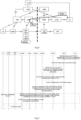
- Fig.8 is a schematic diagram of the implementation architecture of the first embodiment.
- the HPLMN knows the deployment information of the EAS of the related VPLMN.
- the application function (AF) of the HPLMN passes the EAS deployment information (EDI) of the VPLMN to the VSMF through the AF-HNEF (home NEF; NEF: network capability exposure function, Network Exposure Function)-HSMF-VSMF path.
- the VSMF configures the VEASDF (visited EASDF; EASDF: edge application server discovery function, Edge Application Server Discovery Function) according to the EDI information.
- the VSMF dynamically inserts the ULCL and PSA according to the data network service (DNS) query result returned by the VEASDF to perform local session breakout within the VPLMN.
- DNS data network service
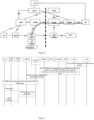
- Fig. 9 is a schematic diagram of a flow chart of a flow splitting implementation in accordance with the first embodiment. As shown in the figure, the flow splitting implementation in this architecture may include:
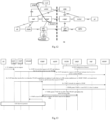
- Fig. 10 is a schematic diagram of the implementation architecture of the second embodiment.
- the AF of the HPLMN transmits the EDI information of the VPLMN to the VSMF through the AF-HNEF-HSMF-VSMF path.
- the VSMF configures the EASDF according to the EDI information.
- the VAF sends the updated AF-related information such as the DN Access Identifier (DNAI) information and the EAS information to the HAF, and uses the AF influence process to bring it to the VSMF through the VAF-HAF-HPCF (home PCF; PCF: Policy Control Function)-HSMF-VSMF path.
- the VSMF finds the corresponding local DNS server (local DNS server), ULCL and LPSA according to the DNAI information and/or EAS information in the AF request, and performs local session breakout within the VPLMN.
- Fig. 11 is a schematic diagram of a flow chart of a flow splitting implementation in Embodiment 2. As shown in the figure, the flow splitting implementation in this architecture may include:
- Fig. 12 is a schematic diagram of the implementation architecture of the third embodiment.
- the VUPF when the HPLMN does not know the EAS information of the VPLMN, when the UE requests a service, the VUPF sends the request to the HSMF through the HUPF or VSMF, and indicates that the service server is local.
- the HSMF authorizes the VSMF to perform local session breakout.
- the VSMF requests the latest EDI information from the VNEF, and configures the VEASDF according to the EDI information.
- the VSMF dynamically inserts the ULCL and PSA according to the DNS query result returned by the VEASDF to perform local session breakout within the VPLMN.
- Fig. 13 is a schematic diagram of a flow chart of a three-way splitting implementation process in an embodiment. As shown in the figure, the splitting implementation under this architecture may include:
- HPLMN does not know the EAS information of VPLMN, so a new interface is added between VPCF and VSMF.
- VUPF sends the request to HSMF through HUPF or VSMF, and indicates that the service server is local.
- HSMF authorizes VSMF to perform local session breakout.
- VSMF inserts ULCL and PSA according to the DNAI information sent by the AF influence process of VAF and searches for the local DNS server for local session breakout within VPLMN.
- Fig. 14 is a schematic diagram of a flow chart of a flow splitting implementation in Embodiment 4. As shown in the figure, the flow splitting implementation in this architecture may include:
- the embodiments of the present disclosure also provide an H-SMF, a UPF of a V-PLMN, an SMF of a V-PLMN, and a computer-readable storage medium. Since the principles of solving problems by these devices are similar to the information sending and session breakout methods, the implementation of these devices can refer to the implementation of the methods, and the repeated parts will not be repeated.
- Fig. 15 is a schematic diagram of the SMF structure of the H-PLMN.
- the SMF includes: a processor 1500 configure to read a program in a memory 1520 to perform: during a Home-Routed roaming Protocol Data Unit (PDU) session establishment procedure or modification procedure, sending to the V-SMF one or a combination of the following information:
- PDU Home-Routed roaming Protocol Data Unit
- the EAS information of the V-PLMN in the information is used by the V-SMF to configure an Edge Application Server Discovery Function (EASDF) of the V-PLMN.
- EASDF Edge Application Server Discovery Function
- the EAS information of the V-PLMN received by the V-SMF is obtained by H-SMF from a network exposure function (NEF) of the H-PLMN.
- NEF network exposure function
- the relevant information of the AF of the V-PLMN received is obtained by H-SMF from a policy control function (PCF) of the H-PLMN.
- PCF policy control function
- H-SMF obtaining sixth information from a unified data management (UDM) of the H-PLMN, where the sixth information indicates to perform a local session breakout.
- UDM unified data management
- the bus architecture may include any number of interconnected buses and bridges, specifically one or more processors represented by processor 1500 and various circuits of memory represented by memory 1520 are linked together.
- the bus architecture may also link together various other circuits such as peripherals, voltage regulators, and power management circuits, which are well known in the art and are therefore not further described herein.
- the bus interface provides an interface.
- the transceiver 1510 may be a plurality of components, namely, a transmitter and a receiver, providing a unit for communicating with various other devices on a transmission medium.
- the processor 1500 is responsible for managing the bus architecture and general processing, and the memory 1520 may store data used by the processor 1500 when performing operations.
- the present disclosure also provides an H-SMF, including: a H-SMF sending module, configured to: during a Home-Routed roaming Protocol Data Unit (PDU) session establishment procedure or modification procedure, send to the V- SMF one or a combination of the following information: Edge Application Server (EAS) information of the V-PLMN, an Edge Configuration Server (ECS) address of the V-PLMN, relevant information of an application function (AF) of the V-PLMN, information of authorization of local session breakout performed by V-SMF, and a session breakout policy.
- EAS Edge Application Server
- ECS Edge Configuration Server
- AF application function
- AF application function
- the H-SMF sending module is further configured to send the EAS information of the V-PLMN in the information used by the V-SMF to configure an Edge Application Server Discovery Function (EASDF) of the V-PLMN.
- EASDF Edge Application Server Discovery Function
- a H-SMF receiving module configured to receive fifth information sent by the V-SMF, where the fifth information includes one or a combination of: authorization of local session breakout in the V-PLMN, indication of supporting EASDF capability, and indication of supporting local session breakout capability in the V-PLMN.
- the H-SMF sending module is further configured to send the received EAS information of the V-PLMN obtained by H-SMF from a network exposure function (NEF) of the H-PLMN.
- NEF network exposure function
- the H-SMF sending module is further configured to send the received relevant information of the AF of the V-PLMN obtained by H-SMF from a policy control function (PCF) of the H-PLMN.
- PCF policy control function
- the H-SMF receiving module is configured to obtain sixth information from a unified data management (UDM) of the H-PLMN, where the sixth information indicates to perform a local session breakout.
- UDM unified data management
- Fig. 16 is a schematic diagram of the SMF structure of the V-PLMN. As shown in the figure, the SMF includes: a processor 1600 configure to read a program in a memory 1620 to perform:
- the NF of the H-PLMN is an SMF, or a policy control function (PCF), or a unified data management (UDM).
- PCF policy control function
- UDM unified data management
- UPF user plane function
- the performing local session breakout includes: inserting or updating an uplink classifier (ULCL) according to first information, and selecting a local data network service (DNS) server according to the first information.
- ULCL uplink classifier
- DNS local data network service
- the first information includes one or a combination of the following information: a data network access identifier (DNAI), application information, edge application server (EAS) information, application service identification information.
- DNAI data network access identifier
- EAS edge application server
- application service identification information application service identification information
- the EAS information is sent to an edge application server discovery function (EASDF) of the V-PLMN.
- EASDF edge application server discovery function
- the EAS information is obtained from H-SMF, or from a network exposure function (NEF) of the V-PLMN, or from other network functions (NFs) of the V-PLMN.
- NEF network exposure function
- NFs network functions
- the bus architecture can include any number of interconnected buses and bridges, specifically one or more processors represented by processor 1600 and various circuits of memory represented by memory 1620 are linked together.
- the bus architecture can also link various other circuits such as peripherals, regulators, and power management circuits together, which are all well known in the art, so they are not further described herein.
- the bus interface provides an interface.
- the transceiver 1610 can be a plurality of components, that is, including a transmitter and a receiver, providing a unit for communicating with various other devices on a transmission medium.
- the processor 1600 is responsible for managing the bus architecture and general processing, and the memory 1620 can store data used by the processor 1600 when performing operations.
- the present disclosure also provides a V-SMF, including: a session management function (SMF) session breakout module of a V-PLMN, configured to perform a local session breakout after receiving first information sent by a network function (NF) of a H-PLMN.
- SMF session management function
- NF network function
- the NF of the H-PLMN is an SMF, or a policy control function (PCF), or a unified data management (UDM).
- PCF policy control function
- UDM unified data management
- an SMF sending module of a V-PLMN configured to send a session breakout policy to the user plane function (UPF) of the V-PLMN.
- UPF user plane function
- an SMF session breakout module of a V-PLMN is further configured to insert or update an uplink classifier (ULCL) according to first information, and selecting a local data network service (DNS) server according to the first information.
- ULCL uplink classifier
- DNS local data network service
- the first information includes one or a combination of the following information: a data network access identifier (DNAI), application information, edge application server (EAS) information, application service identification information.
- DNAI data network access identifier
- EAS edge application server
- application service identification information application service identification information
- an SMF sending module of a V-PLMN is further configured to send the EAS information to an edge application server discovery function (EASDF) of the V-PLMN.
- EASDF edge application server discovery function
- the EAS information is obtained from H-SMF, or from a network exposure function (NEF) of the V-PLMN, or from other network functions (NFs) of the V-PLMN.
- NEF network exposure function
- NFs network functions
- Fig. 17 is a schematic diagram of the UPF structure of the V-PLMN. As shown in the figure, the UPF includes: a processor 1700 configure to read a program in a memory 1720 to perform:
- the second information is sent to H-SMF via an SMF of a visited location or a UPF of a home location.
- the second information is a data network service (DNS) query message for discovering an edge application server.
- DNS data network service
- ULCL uplink classifier
- the bus architecture can include any number of interconnected buses and bridges, specifically one or more processors represented by processor 1700 and various circuits of memory represented by memory 1720 are linked together.
- the bus architecture can also link various other circuits such as peripherals, regulators, and power management circuits together, which are all well known in the art and are therefore not further described herein.
- the bus interface provides an interface.
- the transceiver 1710 can be a plurality of components, namely, a transmitter and a receiver, providing a unit for communicating with various other devices on a transmission medium.
- the processor 1700 is responsible for managing the bus architecture and general processing, and the memory 1720 can store data used by the processor 1700 when performing operations.
- the present disclosure also provides a UPF of a V-PLMN, including: a user plane function (UPF) sending module of a V-PLMN, configured to receive second information initiated by a user equipment (UE) and send the second information to a H-SMF.
- UPF user plane function
- the UPF sending module of the V-PLMN is further configured to send the second information to H-SMF via an V-SMF or a UPF of a H-PLMN.
- the second information is a data network service (DNS) query message for discovering an edge application server.
- DNS data network service
- the UPF sending module of the V-PLMN is further configured to send second information to a DNS server of the V-PLMN for processing.
- the UPF sending module of the V-PLMN is further configured to, after the UPF of the V-PLMN receives a DNS feedback, return the feedback information to the UE through an uplink classifier (ULCL) of the V-PLMN.
- ULCL uplink classifier
- Fig. 18 is a schematic diagram of the SMF structure of the V-PLMN. As shown in the figure, the SMF includes: a processor 1800 configure to read a program in a memory 1820 to perform:
- the PCF of the V-PLMN is searched in a Home-Routed PDU session.
- ULCL uplink classifier
- DNS data network service
- the third information includes one or a combination of the following information: a data network access identifier (DNAI), application information, edge application server (EAS) information, application service identification information.
- DNAI data network access identifier
- EAS edge application server
- application service identification information application service identification information
- the bus architecture can include any number of interconnected buses and bridges, specifically one or more processors represented by processor 1800 and various circuits of memory represented by memory 1820 are linked together.
- the bus architecture can also link various other circuits such as peripherals, regulators, and power management circuits together, which are all well known in the art, so they are not further described herein.
- the bus interface provides an interface.
- the transceiver 1810 can be a plurality of components, that is, including a transmitter and a receiver, providing a unit for communicating with various other devices on a transmission medium.
- the processor 1800 is responsible for managing the bus architecture and general processing, and the memory 1820 can store data used by the processor 1800 when performing operations.
- the present disclosure also provides an SMF of a V-PLMN, including: a V-SMF selection module, configured to search for a policy control function (PCF) of the V-PLMN, and perform a session management (SM) policy association with the PCF or trigger an SM policy association modification.
- a V-SMF selection module configured to search for a policy control function (PCF) of the V-PLMN, and perform a session management (SM) policy association with the PCF or trigger an SM policy association modification.
- PCF policy control function
- SM session management
- the SMF selection module of the V-PLMN is further configured to search the PCF of the V-PLMN in a Home-Routed PDU session.
- a V-SMF receiving module configured to: receive third information sent by the PCF of the V-PLMN, to insert or update an uplink classifier (ULCL) in the V-PLMN.
- ULCL uplink classifier
- the V-SMF selection module is further configured to insert or update the ULCL according to the third information, and select a data network service (DNS) server of the V-PLMN according to the third information.
- DNS data network service
- the third information includes one or a combination of the following information: a data network access identifier (DNAI), application information, edge application server (EAS) information, application service identification information.
- DNAI data network access identifier
- EAS edge application server
- application service identification information application service identification information
- Fig. 19 is a schematic diagram of the SMF structure of the V-PLMN. As shown in the figure, the SMF includes: a processor 1900 configure to read a program in a memory 1920 to perform:
- the fourth information is sent by a unified data repository (UDR) of the V-PLMN to the PCF of the V-PLMN through a data management notification Nudr_DM_Notify message.
- UDR unified data repository
- the fourth information is sent by the PCF of the V-PLMN to the V-SMF through a session management policy control update notification Npcf_SMPolicyControl _UpdateNotify message.
- the fourth information includes one or a combination of the following information: a data network access identifier (DNAI), application information, edge application server (EAS) information, application service identification information.
- DNAI data network access identifier
- EAS edge application server
- application service identification information application service identification information
- the bus architecture can include any number of interconnected buses and bridges, specifically one or more processors represented by processor 1900 and various circuits of memory represented by memory 1920 are linked together.
- the bus architecture can also link various other circuits such as peripherals, regulators, and power management circuits together, which are all well known in the art and are therefore not further described herein.
- the bus interface provides an interface.
- the transceiver 1910 can be a plurality of components, namely, a transmitter and a receiver, providing a unit for communicating with various other devices on a transmission medium.
- the processor 1900 is responsible for managing the bus architecture and general processing, and the memory 1920 can store data used by the processor 1900 when performing operations.
- the present disclosure also provides an SMF of a V-PLMN, including:
- the V-SMF receiving module is further configured to receive the fourth information sent by a unified data repository (UDR) of the V-PLMN to the PCF of the V-PLMN through a data management notification Nudr_DM_Notify message.
- UDR unified data repository
- the V-SMF receiving module is further configured to receive the fourth information sent by the PCF of the V-PLMN to the V-SMF through a session management policy control update notification Npcf_SMPolicyControl _UpdateNotify message.
- the fourth information includes one or a combination of the following information: a data network access identifier (DNAI), application information, edge application server (EAS) information, application service identification information.
- DNAI data network access identifier
- EAS edge application server
- application service identification information application service identification information
- a computer-readable storage medium is further provided in the embodiment of the present disclosure, storing a computer program, where the computer program is executed by a processor to perform the method hereinabove.
- the HSMF sends at least one of the following information to the VSMF through the Nsmf_PDUSession_Create Request: EAS information of the VPLMN, DNAI information of the VAF, an indication of authorizing the VSMF to perform local session breakout within the VPLMN, session breakout capability of the VSMF, and capability of the VUPF to identify flows.
- VSMF performs local session breakout according to the instructions of HSMF.
- the VUPF After receiving the service request initiated by the UE, the VUPF identifies that the service belongs to the VPLMN and forwards the request to the HUPF or VSMF. After receiving the request, the HUPF or VSMF forwards it to the HSMF.
- the VSMF finds the PCF in the VPLMN for subscription query or update, and selects a PCF to perform SM Policy Association Establishment or SMF initiated SM Policy Association Modification.
- the PCF is selected as the VSM PCF of the VSMF.
- the VPCF sends the DNAI information sent by the VAF to the VSMF.
- the VSMF receives DNAI information from the VPCF or HPCF and selects and inserts the ULCL in the VPLMN based on the information.
- EAS Edge Application Server
- EHE Edge Host Environment
- the embodiments of the present disclosure may be provided as methods, systems, or computer program products. Therefore, the present disclosure may take the form of a complete hardware embodiment, a complete software embodiment, or an embodiment combining software and hardware. Furthermore, the present disclosure may take the form of a computer program product implemented on one or more computer-usable storage media (including but not limited to disk storage and optical storage, etc.) containing computer-usable program codes.
- These computer program instructions may also be stored in a computer-readable memory that can direct a computer or other programmable data processing device to work in a specific manner, so that the instructions stored in the computer-readable memory produce a manufactured product including an instruction device that implements the functions specified in one or more processes in the flowchart and/or one or more boxes in the block diagram.
- These computer program instructions may also be loaded onto a computer or other programmable data processing device so that a series of operational steps are executed on the computer or other programmable device to produce a computer-implemented process, whereby the instructions executed on the computer or other programmable device provide steps for implementing the functions specified in one or more processes in the flowchart and/or one or more boxes in the block diagram.
Landscapes
- Engineering & Computer Science (AREA)
- Computer Networks & Wireless Communication (AREA)
- Signal Processing (AREA)
- Databases & Information Systems (AREA)
- Computer Security & Cryptography (AREA)
- Mobile Radio Communication Systems (AREA)
Applications Claiming Priority (2)
| Application Number | Priority Date | Filing Date | Title |
|---|---|---|---|
| CN202210325973.7A CN116939585A (zh) | 2022-03-29 | 2022-03-29 | 一种分流处理方法、设备及存储介质 |
| PCT/CN2023/083700 WO2023185678A1 (fr) | 2022-03-29 | 2023-03-24 | Procédé de traitement de déchargement, dispositif et support de stockage |
Publications (2)
| Publication Number | Publication Date |
|---|---|
| EP4503681A1 true EP4503681A1 (fr) | 2025-02-05 |
| EP4503681A4 EP4503681A4 (fr) | 2025-07-09 |
Family
ID=88199324
Family Applications (1)
| Application Number | Title | Priority Date | Filing Date |
|---|---|---|---|
| EP23778046.5A Pending EP4503681A4 (fr) | 2022-03-29 | 2023-03-24 | Procédé de traitement de déchargement, dispositif et support de stockage |
Country Status (5)
| Country | Link |
|---|---|
| US (1) | US20250220734A1 (fr) |
| EP (1) | EP4503681A4 (fr) |
| JP (1) | JP7813382B2 (fr) |
| CN (1) | CN116939585A (fr) |
| WO (1) | WO2023185678A1 (fr) |
Families Citing this family (2)
| Publication number | Priority date | Publication date | Assignee | Title |
|---|---|---|---|---|
| CN118317289A (zh) * | 2023-01-06 | 2024-07-09 | 华为技术有限公司 | 通信方法、装置和系统 |
| KR20250148115A (ko) * | 2024-04-05 | 2025-10-14 | 삼성전자주식회사 | 무선 통신 시스템에서 Local SMF를 고려한 이벤트 통지 방법 및 장치 |
Family Cites Families (8)
| Publication number | Priority date | Publication date | Assignee | Title |
|---|---|---|---|---|
| CN108366380A (zh) * | 2017-01-26 | 2018-08-03 | 中兴通讯股份有限公司 | 一种支持多归属协议数据单元会话的策略控制方法及装置 |
| CN109429272B (zh) * | 2017-08-31 | 2022-02-11 | 华为技术有限公司 | 一种漫游场景下的分流方法及相关设备 |
| EP4057656B1 (fr) * | 2019-02-13 | 2024-08-14 | Telefonaktiebolaget LM Ericsson (publ) | Établissement efficace d'une session de pdu pour itinèrance route domestique |
| CN111586668B (zh) * | 2019-02-15 | 2022-04-12 | 华为技术有限公司 | 发送终端策略的方法、装置和系统 |
| CN112468529B (zh) * | 2019-09-09 | 2022-08-23 | 中国移动通信有限公司研究院 | 一种会话管理方法及设备 |
| CN111586114B (zh) * | 2020-04-24 | 2025-07-25 | 腾讯科技(深圳)有限公司 | 业务协同处理方法及相关设备 |
| CN115884155B (zh) * | 2021-09-30 | 2025-07-11 | 华为技术有限公司 | 信息传输的方法和装置 |
| CN114125808B (zh) * | 2021-11-29 | 2023-10-27 | 中国联合网络通信集团有限公司 | 一种边缘应用服务器的发现方法及装置 |
-
2022
- 2022-03-29 CN CN202210325973.7A patent/CN116939585A/zh active Pending
-
2023
- 2023-03-24 EP EP23778046.5A patent/EP4503681A4/fr active Pending
- 2023-03-24 JP JP2024557220A patent/JP7813382B2/ja active Active
- 2023-03-24 US US18/851,886 patent/US20250220734A1/en active Pending
- 2023-03-24 WO PCT/CN2023/083700 patent/WO2023185678A1/fr not_active Ceased
Also Published As
| Publication number | Publication date |
|---|---|
| JP7813382B2 (ja) | 2026-02-12 |
| EP4503681A4 (fr) | 2025-07-09 |
| CN116939585A (zh) | 2023-10-24 |
| JP2025510297A (ja) | 2025-04-14 |
| US20250220734A1 (en) | 2025-07-03 |
| WO2023185678A1 (fr) | 2023-10-05 |
Similar Documents
| Publication | Publication Date | Title |
|---|---|---|
| CN116057924B (zh) | 用于提供网络功能发现服务增强的方法、系统和计算机可读介质 | |
| US11528334B2 (en) | Methods, systems, and computer readable media for preferred network function (NF) location routing using service communications proxy (SCP) | |
| US11589298B2 (en) | Methods, systems, and computer readable media for selecting multiple network function types using a single discovery request | |
| US11283883B1 (en) | Methods, systems, and computer readable media for providing optimized binding support function (BSF) packet data unit (PDU) session binding discovery responses | |
| CN112335274B (zh) | 用于通信系统中服务访问的安全管理 | |
| US11888946B2 (en) | Methods, systems, and computer readable media for applying or overriding preferred locality criteria in processing network function (NF) discovery requests | |
| EP4243379B1 (fr) | Procédés, systèmes et supports lisibles par ordinateur pour découvrir des producteurs de service de fonction de réseau dans un réseau hiérarchique | |
| RU2740637C1 (ru) | Способ исполнения услуги для потребителя услуги, а также соответствующий сетевой узел и компьютерный программный продукт | |
| JP7635255B2 (ja) | Pduセッションの確立のための方法および装置 | |
| EP4117314A1 (fr) | Procédé d'établissement de connexion, ainsi que dispositif et système de communication | |
| US20190037485A1 (en) | Service node selection and query method, apparatus, and system | |
| EP4503681A1 (fr) | Procédé de traitement de déchargement, dispositif et support de stockage | |
| EP3937521A1 (fr) | Procédé pour une fonctionnalité d'échange et/ou d'interfonctionnement améliorée entre un premier réseau de communication mobile et un second réseau de communication mobile, fonction d'échange de réseau, programme et produit de programme informatique | |
| US12587956B2 (en) | Methods, systems, and computer readable media for using network function (NF) repository function (NRF) to provide mapping of single network slice selection assistance information (S-NSSAI) for roaming and inter-public land mobile network (inter-PLMN) traffic | |
| US20250212100A1 (en) | EAS Discovery Method, Apparatus and Network Device | |
| US12323316B2 (en) | Methods, systems, and computer readable media for service communication proxy (SCP) routing | |
| EP4040729B1 (fr) | Procédé d'appel de service et dispositif réseau | |
| CN119544677B (zh) | 会话建立方法、装置、设备及存储介质 | |
| US12452137B1 (en) | Methods, systems, and computer readable media for providing for network topology learning by service communication proxy (SCP) using root network function (NF) repository function (NRF) | |
| US12526224B2 (en) | Methods, systems, and computer readable media for selecting network function (NF) profiles of NF set mates to enable alternate routing | |
| EP4354828A1 (fr) | V-easdf dans l'itinérance à acheminement domestique | |
| EP4311280A1 (fr) | Procédé et dispositif de communication | |
| HK40115934A (en) | Offload processing method, and device and storage medium | |
| US12452341B2 (en) | Methods, systems, and computer readable media for improved network function (NF) discovery between forwarded and forwarding NF repository functions (NRFs) to avoid preemption of NF profiles of producer NFs local to forwarding NRF | |
| CN113873493A (zh) | 用于会话绑定的方法和系统 |
Legal Events
| Date | Code | Title | Description |
|---|---|---|---|
| STAA | Information on the status of an ep patent application or granted ep patent |
Free format text: STATUS: THE INTERNATIONAL PUBLICATION HAS BEEN MADE |
|
| PUAI | Public reference made under article 153(3) epc to a published international application that has entered the european phase |
Free format text: ORIGINAL CODE: 0009012 |
|
| STAA | Information on the status of an ep patent application or granted ep patent |
Free format text: STATUS: REQUEST FOR EXAMINATION WAS MADE |
|
| 17P | Request for examination filed |
Effective date: 20241029 |
|
| AK | Designated contracting states |
Kind code of ref document: A1 Designated state(s): AL AT BE BG CH CY CZ DE DK EE ES FI FR GB GR HR HU IE IS IT LI LT LU LV MC ME MK MT NL NO PL PT RO RS SE SI SK SM TR |
|
| REG | Reference to a national code |
Ref country code: HK Ref legal event code: DE Ref document number: 40115934 Country of ref document: HK |
|
| REG | Reference to a national code |
Ref country code: DE Ref legal event code: R079 Free format text: PREVIOUS MAIN CLASS: H04W0008000000 Ipc: H04W0008120000 |
|
| A4 | Supplementary search report drawn up and despatched |
Effective date: 20250605 |
|
| DAV | Request for validation of the european patent (deleted) | ||
| DAX | Request for extension of the european patent (deleted) | ||
| RIC1 | Information provided on ipc code assigned before grant |
Ipc: H04W 36/38 20090101ALI20250530BHEP Ipc: H04W 8/08 20090101ALI20250530BHEP Ipc: H04W 8/12 20090101AFI20250530BHEP |