EP4506018A1 - Nouvel agent anticancéreux ciblant un antigène tumoral - Google Patents
Nouvel agent anticancéreux ciblant un antigène tumoral Download PDFInfo
- Publication number
- EP4506018A1 EP4506018A1 EP23784991.4A EP23784991A EP4506018A1 EP 4506018 A1 EP4506018 A1 EP 4506018A1 EP 23784991 A EP23784991 A EP 23784991A EP 4506018 A1 EP4506018 A1 EP 4506018A1
- Authority
- EP
- European Patent Office
- Prior art keywords
- cancer
- tumor
- monobody
- fusion protein
- pharmaceutical composition
- Prior art date
- Legal status (The legal status is an assumption and is not a legal conclusion. Google has not performed a legal analysis and makes no representation as to the accuracy of the status listed.)
- Pending
Links
Images



















Classifications
-
- C—CHEMISTRY; METALLURGY
- C07—ORGANIC CHEMISTRY
- C07K—PEPTIDES
- C07K14/00—Peptides having more than 20 amino acids; Gastrins; Somatostatins; Melanotropins; Derivatives thereof
- C07K14/435—Peptides having more than 20 amino acids; Gastrins; Somatostatins; Melanotropins; Derivatives thereof from animals; from humans
- C07K14/78—Connective tissue peptides, e.g. collagen, elastin, laminin, fibronectin, vitronectin or cold insoluble globulin [CIG]
-
- C—CHEMISTRY; METALLURGY
- C07—ORGANIC CHEMISTRY
- C07K—PEPTIDES
- C07K16/00—Immunoglobulins [IG], e.g. monoclonal or polyclonal antibodies
- C07K16/18—Immunoglobulins [IG], e.g. monoclonal or polyclonal antibodies against material from animals or humans
-
- A—HUMAN NECESSITIES
- A61—MEDICAL OR VETERINARY SCIENCE; HYGIENE
- A61K—PREPARATIONS FOR MEDICAL, DENTAL OR TOILETRY PURPOSES
- A61K31/00—Medicinal preparations containing organic active ingredients
- A61K31/70—Carbohydrates; Sugars; Derivatives thereof
- A61K31/7028—Compounds having saccharide radicals attached to non-saccharide compounds by glycosidic linkages
- A61K31/7034—Compounds having saccharide radicals attached to non-saccharide compounds by glycosidic linkages attached to a carbocyclic compound, e.g. phloridzin
- A61K31/704—Compounds having saccharide radicals attached to non-saccharide compounds by glycosidic linkages attached to a carbocyclic compound, e.g. phloridzin attached to a condensed carbocyclic ring system, e.g. sennosides, thiocolchicosides, escin, daunorubicin
-
- A—HUMAN NECESSITIES
- A61—MEDICAL OR VETERINARY SCIENCE; HYGIENE
- A61K—PREPARATIONS FOR MEDICAL, DENTAL OR TOILETRY PURPOSES
- A61K38/00—Medicinal preparations containing peptides
-
- A—HUMAN NECESSITIES
- A61—MEDICAL OR VETERINARY SCIENCE; HYGIENE
- A61K—PREPARATIONS FOR MEDICAL, DENTAL OR TOILETRY PURPOSES
- A61K39/00—Medicinal preparations containing antigens or antibodies
- A61K39/395—Antibodies; Immunoglobulins; Immune serum, e.g. antilymphocytic serum
-
- A—HUMAN NECESSITIES
- A61—MEDICAL OR VETERINARY SCIENCE; HYGIENE
- A61K—PREPARATIONS FOR MEDICAL, DENTAL OR TOILETRY PURPOSES
- A61K45/00—Medicinal preparations containing active ingredients not provided for in groups A61K31/00 - A61K41/00
- A61K45/06—Mixtures of active ingredients without chemical characterisation, e.g. antiphlogistics and cardiaca
-
- A—HUMAN NECESSITIES
- A61—MEDICAL OR VETERINARY SCIENCE; HYGIENE
- A61K—PREPARATIONS FOR MEDICAL, DENTAL OR TOILETRY PURPOSES
- A61K47/00—Medicinal preparations characterised by the non-active ingredients used, e.g. carriers or inert additives; Targeting or modifying agents chemically bound to the active ingredient
- A61K47/50—Medicinal preparations characterised by the non-active ingredients used, e.g. carriers or inert additives; Targeting or modifying agents chemically bound to the active ingredient the non-active ingredient being chemically bound to the active ingredient, e.g. polymer-drug conjugates
- A61K47/51—Medicinal preparations characterised by the non-active ingredients used, e.g. carriers or inert additives; Targeting or modifying agents chemically bound to the active ingredient the non-active ingredient being chemically bound to the active ingredient, e.g. polymer-drug conjugates the non-active ingredient being a modifying agent
- A61K47/68—Medicinal preparations characterised by the non-active ingredients used, e.g. carriers or inert additives; Targeting or modifying agents chemically bound to the active ingredient the non-active ingredient being chemically bound to the active ingredient, e.g. polymer-drug conjugates the non-active ingredient being a modifying agent the modifying agent being an antibody, an immunoglobulin or a fragment thereof, e.g. an Fc-fragment
- A61K47/6801—Drug-antibody or immunoglobulin conjugates defined by the pharmacologically or therapeutically active agent
- A61K47/6803—Drugs conjugated to an antibody or immunoglobulin, e.g. cisplatin-antibody conjugates
- A61K47/6811—Drugs conjugated to an antibody or immunoglobulin, e.g. cisplatin-antibody conjugates the drug being a protein or peptide, e.g. transferrin or bleomycin
- A61K47/6815—Enzymes
-
- A—HUMAN NECESSITIES
- A61—MEDICAL OR VETERINARY SCIENCE; HYGIENE
- A61P—SPECIFIC THERAPEUTIC ACTIVITY OF CHEMICAL COMPOUNDS OR MEDICINAL PREPARATIONS
- A61P35/00—Antineoplastic agents
-
- C—CHEMISTRY; METALLURGY
- C07—ORGANIC CHEMISTRY
- C07K—PEPTIDES
- C07K14/00—Peptides having more than 20 amino acids; Gastrins; Somatostatins; Melanotropins; Derivatives thereof
- C07K14/435—Peptides having more than 20 amino acids; Gastrins; Somatostatins; Melanotropins; Derivatives thereof from animals; from humans
- C07K14/46—Peptides having more than 20 amino acids; Gastrins; Somatostatins; Melanotropins; Derivatives thereof from animals; from humans from vertebrates
- C07K14/47—Peptides having more than 20 amino acids; Gastrins; Somatostatins; Melanotropins; Derivatives thereof from animals; from humans from vertebrates from mammals
-
- C—CHEMISTRY; METALLURGY
- C07—ORGANIC CHEMISTRY
- C07K—PEPTIDES
- C07K14/00—Peptides having more than 20 amino acids; Gastrins; Somatostatins; Melanotropins; Derivatives thereof
- C07K14/435—Peptides having more than 20 amino acids; Gastrins; Somatostatins; Melanotropins; Derivatives thereof from animals; from humans
- C07K14/46—Peptides having more than 20 amino acids; Gastrins; Somatostatins; Melanotropins; Derivatives thereof from animals; from humans from vertebrates
- C07K14/47—Peptides having more than 20 amino acids; Gastrins; Somatostatins; Melanotropins; Derivatives thereof from animals; from humans from vertebrates from mammals
- C07K14/4701—Peptides having more than 20 amino acids; Gastrins; Somatostatins; Melanotropins; Derivatives thereof from animals; from humans from vertebrates from mammals not used
- C07K14/4748—Tumour specific antigens; Tumour rejection antigen precursors [TRAP], e.g. MAGE
-
- C—CHEMISTRY; METALLURGY
- C12—BIOCHEMISTRY; BEER; SPIRITS; WINE; VINEGAR; MICROBIOLOGY; ENZYMOLOGY; MUTATION OR GENETIC ENGINEERING
- C12N—MICROORGANISMS OR ENZYMES; COMPOSITIONS THEREOF; PROPAGATING, PRESERVING, OR MAINTAINING MICROORGANISMS; MUTATION OR GENETIC ENGINEERING; CULTURE MEDIA
- C12N9/00—Enzymes; Proenzymes; Compositions thereof; Processes for preparing, activating, inhibiting, separating or purifying enzymes
- C12N9/14—Hydrolases (3)
- C12N9/78—Hydrolases (3) acting on carbon to nitrogen bonds other than peptide bonds (3.5)
- C12N9/80—Hydrolases (3) acting on carbon to nitrogen bonds other than peptide bonds (3.5) acting on amide bonds in linear amides (3.5.1)
- C12N9/82—Asparaginase (3.5.1.1)
-
- A—HUMAN NECESSITIES
- A61—MEDICAL OR VETERINARY SCIENCE; HYGIENE
- A61K—PREPARATIONS FOR MEDICAL, DENTAL OR TOILETRY PURPOSES
- A61K39/00—Medicinal preparations containing antigens or antibodies
- A61K2039/505—Medicinal preparations containing antigens or antibodies comprising antibodies
-
- A—HUMAN NECESSITIES
- A61—MEDICAL OR VETERINARY SCIENCE; HYGIENE
- A61N—ELECTROTHERAPY; MAGNETOTHERAPY; RADIATION THERAPY; ULTRASOUND THERAPY
- A61N5/00—Radiation therapy
- A61N5/10—X-ray therapy; Gamma-ray therapy; Particle-irradiation therapy
- A61N2005/1092—Details
- A61N2005/1098—Enhancing the effect of the particle by an injected agent or implanted device
-
- C—CHEMISTRY; METALLURGY
- C07—ORGANIC CHEMISTRY
- C07K—PEPTIDES
- C07K2317/00—Immunoglobulins specific features
- C07K2317/70—Immunoglobulins specific features characterized by effect upon binding to a cell or to an antigen
- C07K2317/73—Inducing cell death, e.g. apoptosis, necrosis or inhibition of cell proliferation
-
- C—CHEMISTRY; METALLURGY
- C07—ORGANIC CHEMISTRY
- C07K—PEPTIDES
- C07K2317/00—Immunoglobulins specific features
- C07K2317/90—Immunoglobulins specific features characterized by (pharmaco)kinetic aspects or by stability of the immunoglobulin
- C07K2317/92—Affinity (KD), association rate (Ka), dissociation rate (Kd) or EC50 value
-
- C—CHEMISTRY; METALLURGY
- C07—ORGANIC CHEMISTRY
- C07K—PEPTIDES
- C07K2318/00—Antibody mimetics or scaffolds
- C07K2318/20—Antigen-binding scaffold molecules wherein the scaffold is not an immunoglobulin variable region or antibody mimetics
-
- C—CHEMISTRY; METALLURGY
- C07—ORGANIC CHEMISTRY
- C07K—PEPTIDES
- C07K2319/00—Fusion polypeptide
-
- C—CHEMISTRY; METALLURGY
- C07—ORGANIC CHEMISTRY
- C07K—PEPTIDES
- C07K2319/00—Fusion polypeptide
- C07K2319/31—Fusion polypeptide fusions, other than Fc, for prolonged plasma life, e.g. albumin
-
- C—CHEMISTRY; METALLURGY
- C07—ORGANIC CHEMISTRY
- C07K—PEPTIDES
- C07K2319/00—Fusion polypeptide
- C07K2319/33—Fusion polypeptide fusions for targeting to specific cell types, e.g. tissue specific targeting, targeting of a bacterial subspecies
-
- C—CHEMISTRY; METALLURGY
- C12—BIOCHEMISTRY; BEER; SPIRITS; WINE; VINEGAR; MICROBIOLOGY; ENZYMOLOGY; MUTATION OR GENETIC ENGINEERING
- C12Y—ENZYMES
- C12Y305/00—Hydrolases acting on carbon-nitrogen bonds, other than peptide bonds (3.5)
- C12Y305/01—Hydrolases acting on carbon-nitrogen bonds, other than peptide bonds (3.5) in linear amides (3.5.1)
- C12Y305/01001—Asparaginase (3.5.1.1)
-
- Y—GENERAL TAGGING OF NEW TECHNOLOGICAL DEVELOPMENTS; GENERAL TAGGING OF CROSS-SECTIONAL TECHNOLOGIES SPANNING OVER SEVERAL SECTIONS OF THE IPC; TECHNICAL SUBJECTS COVERED BY FORMER USPC CROSS-REFERENCE ART COLLECTIONS [XRACs] AND DIGESTS
- Y02—TECHNOLOGIES OR APPLICATIONS FOR MITIGATION OR ADAPTATION AGAINST CLIMATE CHANGE
- Y02A—TECHNOLOGIES FOR ADAPTATION TO CLIMATE CHANGE
- Y02A50/00—TECHNOLOGIES FOR ADAPTATION TO CLIMATE CHANGE in human health protection, e.g. against extreme weather
- Y02A50/30—Against vector-borne diseases, e.g. mosquito-borne, fly-borne, tick-borne or waterborne diseases whose impact is exacerbated by climate change
Definitions
- the present invention relates to a novel anticancer agent, and more particularly to a novel anticancer agent targeting tumor antigens.
- Tumor antigens are molecules that are specifically expressed on cancer cells or are overexpressed compared to normal cells. Tumor antigens are often closely associated with the proliferation and metastasis of cancer cells, therefore, administration of molecules such as antibodies that can block the function of these tumor antigens can inhibit the growth or metastasis of tumor tissue.
- Targeted anticancer agents are being developed using the tumor antigen-specific binding capability of the molecules such as the antibodies that can selectively bind to tumor antigens. Those targeted anticancer agents can selectively attack tumor cells by linking themselves or therapeutic radionuclides to tumor antigen-targeting molecules through a covalent bond or a non-covalent bond such as a coordination bond with chelators.
- a therapeutic strategy has been adopted in which a chimeric antigen receptor (CAR), a fusion protein prepared by linking an antibody fragment specific for a tumor antigen (e.g., scFv) to the intracellular signal transduction domain of a TCR, is transfected into innate immune cells such as T cells or NK cells to enhance their innate immunity, and the cells are then used as anticancer therapeutics.
- CAR chimeric antigen receptor
- scFv tumor antigen
- innate immune cells such as T cells or NK cells
- EP12102374B1 discloses the use of a monobody that specifically binds to PMSA and a conjugate comprising the antibody or a cytotoxin in the preparation of an anticancer therapeutic agent.
- L-asparaginase an enzyme that catalyzes a reaction that hydrolyzes L-asparagine to produce aspartic acid and ammonia
- ALL acute lymphoblastic leukemia
- NHL non-Hodgkin's lymphoma
- L-asparaginase which breaks down asparagine to aspartate, thereby kills T-lymphocytic leukemia cancer cells by inhibiting asparaginase supply and in turn protein synthesis.
- L-ASNase L-asparaginase
- L-asparaginase which works well against blood cancers, does not perform effectively against solid tumors. This is presumed to be due to the difficulty in delivering protein drugs to solid tumors, unlike in blood cancers.
- the present inventors have previously developed an attenuated Salmonella strain genetically engineered to present L-asparaginase on its surface and reported its anticancer activity against solid tumors. ( Korean Patent No. 10-1750007 ).
- the present invention is intended to address the above and other problems, and aims to provide a novel asparaginase-based anticancer agent that target tumor antigens.
- a fusion protein comprising a recombinant monobody which specifically binds to clareticulin and an L-asparaginase linked to the C-terminus of the recombinant monobody, wherein the recombinant monobody has a peptide that specifically binds to the calreticulin inserted into at least one of the BC loop and the FG loop of human fibronectin domain III (Fn3).
- a pharmaceutical composition for the treatment of solid tumors comprising the fusion protein as an active ingredient.
- a method of treating solid tumors comprising administering a therapeutically effective amount of the pharmaceutical composition to an individual with a solid tumor.
- a method of treating solid tumors comprising administering a therapeutically effective amount of the fusion protein or the pharmaceutical composition to the individual with a solid tumor, simultaneously with or before or after irradiation.
- novel fusion protein of the present invention as described above is a very useful substance that can be used to effectively treat solid cancers that have not been easily treated by L-asparaginase. It can be used as a therapeutic agent for cancers, especially cancers characterized by the high expression of certain tumor antigens. However, these effects do not limit the scope of the present invention.
- the term “monobody” refers to a type of antibody mimetic, an artificial protein with a protein scaffold derived from the amino acid sequence of the tenth human fibronectin type III domain (FnIII). Monobodies are characterized by its ability to specifically bind to various antigens through amino acid modifications, so they are being used as a substitute for antibodies.
- fibronectin refers to a glycoprotein found in plasma and extracellular matrix (ECM) that has a structure comprising many of type I, type II, and type III domains with two anti-parallel beta-sheets structure linked to each other.
- ECM extracellular matrix
- the type I and type II domains are characterized by intrastructural disulfide bridges, which are absent in the type III.
- CRT Calreticulin
- cancer cells When cells are damaged by anticancer agents, the damaged cells expose CRTs on their cell surface to release "eat me signal", so that immune cells can eliminate the damaged cells.
- cancer cells have a feature of proliferating without stopping, as cancer progresses more CRTs appear on the surface of the cells, especially when treated with anticancer agents such as doxorubicin.
- the CRTs play a role in sending a pro-phagocytic signal to phagocytic macrophages, which indicates the message of "eliminate me (phagocytosis, cell lysis)" to immune cells in the blood.
- tumor antigen refers to an antigenic substance produced by cancer cells that is used as a target for the diagnosis and treatment of tumors. Tumor antigens are divided into tumor-specific antigens, which are found only on tumor cells, and tumor-associated antigens, which are also present in normal tissue but whose expression is significantly increased in tumor tissue.
- peptide conjugate refers to a formulation that allows for the prolonged efficacy of peptide pharmaceuticals, consisting of a complex formed by the combination of proteins and drugs
- PASylation refers to a biological substitution that has been utilized as an alternative to conventional PEGylation. It is a flexible, resinous sequence of 100 to 600 repeating proline (P), alanine (A), and serine (S) amino acids bound to the N- or C-terminus of a protein molecule. It significantly increases the hydrological volume of the macromolecule, thereby significantly extending its circulation time. It provides the benefits of PEGylation without affecting the biological activity or affinity of the target protein and facilitates biopharmaceutical manufacturing by eliminating the need for an in vitro binding step.
- P proline
- A alanine
- S serine
- a fusion protein comprising a recombinant monobody which specifically binds to clareticulin and an L-asparaginase linked to the C-terminus of the recombinant monobody, wherein the recombinant monobody has a peptide that specifically binds to the calreticulin inserted into at least one of the BC loop and the FG loop of human fibronectin domain III (Fn3).
- the calreticulin is a tumor antigen, and another tumor antigens such as human ephrin type-A receptor 2 (EphA2), alpha-fetoprotein (AFP), carcinoembryonic antigen (CEA), CA-125, CA-19, CD19, CD20, CD22, Kappa-chain, CD30, CD123, CD33, LeY, CD138, CD5, BCMA, CD7, CD40, IL-1RAP, GD2, GPC3, FOLR (e.g., FOLR1 or FOLR2), HER2, EFGRVIII, IL13RA2, VEGFR2, ROR1, NKG2D, EpCAM, Mesothelin, MUC1, CLDN18.2, CD171, CD133, PSCA, cMET, PSA, EGFR, PSMA, FAP, CD70, MUC16, L1-CAM, B7H3, CAIX, adipophilin, AIM-2, ALDH1A1, alpha-actinin-4
- the recombinant monobody may have a tumor antigen-specific binding peptide inserted into both the BC loop and FG loop, and may consist of an amino acid sequence represented by SEQ ID NO: 9 or 10. Furthermore, the recombinant monobody may have a calreticulin-binding peptide represented by SEQ ID NO: 15 inserted into the BC loop of the human fibronectin domain III and a calreticulin-binding peptide represented by SEQ ID NO: 16 inserted into the FG loop, or, it can have a calreticulin-binding peptide represented by SEQ ID NO: 16 inserted into the BC loop and a calreticulin-binding peptide represented by SEQ ID NO: 15 inserted into the FG loop.
- the monobody may be screened using any one of the fibronectin domains as a scaffold, preferably derived from any one of the repeat domains of fibronectin type III. More preferably, the monobody may have a tumor antigen-specific binding peptide inserted into at least one of the BC loop and the FG loop of the tenth domain of fibronectin type III (FNIII10), or may have a tumor antigen-specific binding peptide inserted into both the BC loop and the FG loop of the FNIII10.
- FNIII10 tenth domain of fibronectin type III
- the fusion protein may further comprise a Pro-Ala-Ser (PAS) repeat, and the PAS repeat may be linked to an N-terminal or C-terminal end of the fusion protein.
- the PAS repeats may comprise from 20 to 500 units, such as 20, 30, 40, 50, 60, 70, 80, 90, 100, 110, 120, 130, 140, 150, 160, 170, 180, 190, 200, 210, 220, 230, 240, 250, 260, 270, 280, 290, 300, 310, 320, 330, 340, 350, 360, 370, 380, 390, 400, 410, 420, 430, 440, 450, 460, 470, 480, 490, 500, or a value between two or more units.
- the fusion protein may comprise an amino acid sequence represented by SEQ ID NO: 23 or 24.
- a pharmaceutical composition for the treatment of solid tumors comprising the fusion protein as an active ingredient.
- the pharmaceutical composition may be used as an adjuvant to radiation therapy and may comprise one or more anticancer compounds, tumor suppressor proteins, or anticancer proteins.
- the anticancer compound may be a single substance or a combination of two or more selected from the group comprising immunogenic cell death agents, immune checkpoint inhibitors, mitotic inhibitors, antimetabolites, hormonal agents, alkylating agents, and topoisomerase inhibitors, wherein the immunogenic cell death agent may be anthracycline anticancer agents, taxanes, anti-EGFR antibodies, BK channel agonists, bortezomib, cardiac glycosides, cyclophosphamide agents, GADD34/PP1 inhibitors, LV-tSMAC, Measles virus, or oxaliplatin.
- the anthracycline anticancer agent may be daunorubicin, doxorubicin, epirubicin, idarubicin, pixantrone, sabarubicin, or valrubicin.
- anticancer compounds may be used alone or in combination with one or more of the compounds listed above, such as mecholrethamine, uramustine, melphalan, chlorambucil, ifosfamide, bendamustine, carmustine, lomustine, streptozocin, busulfan, dacarbazine, temozolomide, thiotepa, altretamine, duocarmycin, cisplatin, carboplatin, nedaplatin, satraplatin, triplatin tetranitrate, 5-fluorouracil, 6-mercaptopurine, capecitabine, cladribine, clofarabine, cystarbine, floxuridine, fludarabine, gemcitabine, hydroxyurea, methotrexate, pemetrexed, pentostatin, thioguanine, camptothecin, topotecan, irinotecan, etoposide,
- the tumor suppressor protein may be Von HippelLindau (VHL), Adenomatous polyposis coli (APC), cluster of differentiation 95 (CD95), Suppression of tumorigenicity 5 (ST5), Yippee like 3 (YPEL3), p53, Suppression of tumorigenicity 7 (ST7), or Suppression of tumorigenicity 14 (ST14).
- VHL Von HippelLindau
- APC Adenomatous polyposis coli
- CD95 cluster of differentiation 95
- ST5 Suppression of tumorigenicity 5
- YPEL3 Yippee like 3
- p53 Suppression of tumorigenicity 7
- ST14 Suppression of tumorigenicity 14
- the anticancer protein may be a protein toxin, an antibody specific for a cancer antigen or a fragment of the antibody, or an antiangiogenic factor.
- the protein toxin may be Botulinum toxin, Tetanus toxin, Shiga toxin, Diphtheria toxin (DT), ricin, Pseudomonas exotoxin (PE), cytolysin A (ClyA), or r-Gelonin.
- the tumor suppressor protein is a protein that inhibits tumor developments, such as von HippelLindau (VHL), Adenomatous polyposis coli (APC), cluster of differentiation 95 (CD95), Suppression of tumorigenicity 5 (ST5), Yippee like 3 (YPEL3), p53, Suppression of tumorigenicity 7 (ST7), and Suppression of tumorigenicity 14 (ST14).
- the antiangiogenic factors include, for example, anti-VEGF antibodies, angiostatin, endostatin, and the kringle V domain of apolipoproteins.
- the anticancer protein may be a toxin, an antibody specific for a cancer antigen, or a fragment of the antibody, or an antiangiogenic factor
- the protein toxin may be Botulinum toxin, Tetanus toxin, Shiga toxin, Diphtheria toxin, DT), ricin, Pseudomonas exotoxin (PE), cytolysin A (ClyA), or r-Gelonin
- the antiangiogenic factor may be an anti-VEGF antibody, an angiostatin, an endostatin, a kringle V domain of an apolipoprotein, or the like.
- the solid cancer may be lung cancer, stomach cancer, liver cancer, bone cancer, pancreatic cancer, gallbladder cancer, cholangiocarcinoma, skin cancer, head and neck cancer, skin melanoma, uterine cancer, ovarian cancer, rectal cancer, colon cancer, colorectal cancer, breast cancer, uterine sarcoma, fallopian tube carcinoma, endometrial carcinoma, cervical carcinoma, vaginal carcinoma, vulvar carcinoma, esophageal cancer, laryngeal cancer, small bowel cancer, or thyroid cancer.
- a method of treating an individual with a solid tumor comprising administering a therapeutically effective amount of the pharmaceutical composition to the individual.
- a method of treating an individual with a solid tumor comprising administering a therapeutically effective amount of the fusion protein or the pharmaceutical composition to the individual simultaneously with or before or after irradiation.
- the pharmaceutical composition according to one embodiment of the invention may be administered to the individual by parenteral administration, wherein the parenteral administration may be by intravenous injection, intraperitoneal injection, intramuscular injection, subcutaneous injection, intracerebral injection, intraventricular injection, intracranial injection, intracerebrospinal injection, or intratumoral injection.
- parenteral administration may be by intravenous injection, intraperitoneal injection, intramuscular injection, subcutaneous injection, intracerebral injection, intraventricular injection, intracranial injection, intracerebrospinal injection, or intratumoral injection.
- the pharmaceutical composition according to an embodiment of the present invention further comprises an inert ingredient, including a pharmaceutically acceptable carrier.
- a pharmaceutically acceptable carrier refers to a component of the composition, more specifically, a component other than the active substance of a pharmaceutical composition.
- pharmaceutically acceptable carriers include binders, disintegrating agents, diluents, fillers, glossing agents, solubilizing or emulsifying agents, and salts.
- a pharmaceutical composition according to another embodiment of the present invention may be administered at a dosage of 0.1 mg/kg to 1 g/kg, more preferably at a dosage of 0.1 mg/kg to 500 mg/kg.
- the dosage may be appropriately adjusted according to the age, sex and condition of the patient.
- a method of treating an individual with a solid tumor comprising administering a therapeutically effective amount of the fusion protein to the individual.
- the present inventors prepared a recombinant CRT-monobody by substituting two CRT peptides, Int- ⁇ (SEQ ID NO: 15) and Hep-I (SEQ ID NO: 16), at each loop position (BC, DE, FG) of the conventional Fn3 domain, and confirmed that the anti-CRT monobody specifically binds to calreticulin. Then, to utilize the anti-CRT monobody as a therapeutic agent for calreticulin-overexpressing tumors, the present inventors prepared a fusion protein in which the anti-cancer protein L-ASNase was linked to the C-terminus of the anti-CRT monobody ( FIG. 1 ).
- the present invention was completed by confirming that the fusion protein has a high killing capacity against cancer cells overexpressing calreticulin.
- the present inventors also prepared a fusion protein with the structure of L-ASNase linked to an anti-EphA2 monobody that can specifically bind to another tumor antigen, EphA2. They confirmed that it also exhibited anticancer activity against tumors overexpressing EphA2, thus verifying that the tumor antigen-specific monobody-L-ASNase fusion protein of the present invention is a highly effective platform for anticancer therapy, especially for the treatment of solid tumors.
- L-ASNase has been widely used in the treatment of leukemia in combination with other anticancer agents ( N. Verma, et al., Critical reviews in biotechnology, 27(1): 45-62, 2007 ).
- clinical trials designed to extend its application to solid tumors failed due to its limited accumulation in tumor tissue ( F. Chiarini, et al., Biochimica et Biophysica Acta (BBA)-Molecular Cell Research, 1863(3): 449-463, 2016 ).
- Attempts to confer targeting activity to the enzymes were carried out by conjugation with target peptides.
- L-ASNase conjugated with a target-specific scFv was designed ( L.
- PASylation at the C-terminus increased their solubility; thus, these ligands were expressed much higher than non-PASylated ligands in E . coli and showed longer half-lives in vivo.
- PASylated adnectin which is a VEGFR2-targeting monobody.
- the increased in vivo half-life may be partly due to the protection of the enzyme by the N-terminal monobody moieties.
- L-ASNases inhibited mTORC1 signaling and induced cell cycle arrest in G1 phase, leading to apoptosis.
- tumor cells treated with L-ASNases showed growth inhibition but did not detect ecto-CRT. Therefore, the cell death induced by the L-ASNase activity of CRT3LP and CRT4LP and the treated cells did not induce ecto-CRT. This indicates that CRT3LP and CRT4LP can only kill tumor cells exposed to external CRT. This was consistent with immunohistochemistry results, which showed in an irregular dotted pattern that CRT3LP and CRT4LP localized to DOX-treated tumors. High doses of CRT3LP (20 IU) caused sudden death in DOX-treated mice. The reason for this was first thought to be endotoxin contamination of the purified protein.
- CRT3LP The last possibility is ammonia generated by the L-ASNase activity of CRT3LP.
- Large amount of ammonia caused in vivo side effects such as cellular pH changes, mitochondrial membrane disruption, and ATP depletion.
- CRT3LP and CRT4LP have been tested against solid tumors, they could be clinically applicable to blood cancers such as ALL (acute lymphocytic leukemia).
- ALL acute lymphocytic leukemia
- PEGylated L-ASNases have been used for blood cancer, although the number of PEG moieties is not clearly defined due to chemical bonding, and PEGylated L-ASNases do not have target specificity for blood tumors.
- CRT3LP and CRT4LP are combined with chemotherapy for blood cancers may be more efficient than L-ASNase alone due to better CRT targeting.
- L-ASNase an enzyme used as an anticancer agent against hematologic cancers
- L-ASNase an enzyme used as an anticancer agent against hematologic cancers
- L-ASNase a bacterial enzyme that breaks down asparagine
- ALL acute lymphocytic leukemia
- the above enzymes are known to inhibit the growth of solid tumor cells in vitro, they are not effective in vivo.
- CRT3 and CRT4 two novel monobodies specifically bind to calreticulin (CRT) exposed on tumor cells and tissues during immunogenic cell death (ICD).
- ICD immunogenic cell death
- the present inventors designed L-ASNase conjugated to the monobodies at the C-terminus (CRT3LP and CRT4LP), N-terminus and the PAS200 tag.
- the proteins were expected to have four monobodies and PAS200 tag moieties that would not interfere with the L-ASNase conformation.
- the proteins were expressed 3.8-fold higher in E . coli than those without PASylation.
- the purified proteins were highly soluble with a much larger apparent molecular weight than expected.
- the affinity (Kd) of the proteins for CRT was approximately 2 nM, which is 4 times higher than that of a monobody.
- the enzymatic activity ( ⁇ 6.5 IU/nmol) was similar to that of L-ASNase ( ⁇ 7.2 IU/nmol) and the thermal stability increased significantly at 55°C. The half-life was > 9h in mouse serum, roughly 5-fold longer than that of L-ASNase (1.8h).
- CRT3LP and CRT4LP specifically bound to CRTs exposed to tumor cells in vitro, significantly inhibiting tumor growth in CT-26 and MC-38 tumor-bearing mice treated with ICD-inducing drugs (doxorubicin and mitozantrone), but not with non-ICD-inducing drugs (gemcitabine).
- the mouse colon cancer CT-26 and MC-38 cell lines used in the present invention were purchased from American Type Culture Collection (ATCC, USA) and Kerafast, USA, respectively.
- DMEM medium was purchased from GIBCO, USA, and, fetal bovine serum (FBS) and phosphate buffered saline (PBS) were purchased from Gibco/Thermo Fisher Scientific, USA.
- penicillin/streptomycin solution was purchased from Sigma-Aldrich, USA.
- Asparaginase activity analysis kit and recombinant calreticulin protein (rCRT) were purchased from Abcam, USA, and paraformaldehyde (PFA) was purchased from Biosesang, Korea.
- L-ASNase was purchased from Prospec, USA, and Cell Counting Kit-8 (CCK-8) was purchased from Enzo Life Sciences, USA. All antibodies used in the present invention are summarized in Table 1 below. Table 1 Information of used antibodies Antibody name Company/Catalog Number Remarks Calreticulin (D3E6) XP Rabbit mAb Cell signaling/ #12238 1:400 dilution L-asparaginase polyclonal antibody Thermo scientific/ 200-4171-0100 1:500 - 5000 dilution Recombinant anti-6X His tag antibody Abcam/ab245114 1:500 - 2000 dilution Anti-rabbit secondary Invitrogen/3 1460 1:2000 dilution antibody, HRP Asparaginase antibody (HRP) GeneTex/GTX40848 1:700 dilution Goat anti-rabbit secondary antibody, Alexa Flour 488 Thermo scientific/ A-11008 5 ⁇ g/mL Wheat germ agglutinin - Alexa Flour
- the PAS200 fragment (ASP AAP AP ASP AAP AP APSAP A) 1 0 was referenced to the prior art ( J. Breibeck, et al., Biopolymers, 109(1): e23069, 2018 ) and based on the use of E. coli codons, the amino acid sequence was back-translated by the EMBOSS Backtranseq program (EMBL's European Bioinformatics Institute, UK) to yield the gene. Sequences corresponding to the Eco R1 and Bam H1 sites were added to the 5' and 3' ends, respectively, and some nucleotides were changed to create the Pst 1 site without mutation of amino acids in the middle of the PSA200 gene.
- the full-length PAS200 fragment was used as a template for the polymerase chain reaction (PCR) with the primers BglII-G4S-PAS200-F (SEQ ID NO: 30) and pET-R (SEQ ID NO: 31) for pETh-E1-PAS200.
- PCR polymerase chain reaction
- the fragments were cloned into pBluescript II SK(+) (Agilent Technologies, USA), digested with EcoRV and dephosphorylated with alkaline phosphatase (Thermo Fisher Scientific, USA).
- the resulting plasmid was named pBS-BglII-G4S-PAS200-BamH1.
- the plasmid pASN containing E. coli L-ASNase was obtained from Dr. Hyun-Yi Choi (Chonnam National University College of Medicine) ( K. Kim, et al., Molecular Therapy-Oncolytics, 2, 15007, 2015 ).
- the above L-ASNase gene fragment was PCR amplified using LASP-EcoR1-F (SEQ ID NO: 32) and LASP- Bam H1 -R (SEQ ID NO: 33) primers for pASN as template.
- the above monobody genes were PCR amplified by T7 (SEQ ID NO: 34) and 94old (GC)-R (SEQ ID NO: 35) primers with the respective corresponding plasmids as template, and then cut with Nhe 1 and Eco R1.
- LASP-PAS200 fragments were prepared by digestion of pBS-LASP-PAS200 with Eco R1 and Bam H1 .
- the respective monobodies and LASP-PAS200 gene fragments were triple-ligated into pETh-E1-PAS200 digested with Nhe1 and Bam H1 , and the resulting plasmids were named pETh-CRT3-LASP-PAS200, pETh-CRT4-LASP-PAS200, and pETh-Fn3(DGR)-LASP-PAS200. They have genes encoding PASylated L-ASNase proteins named CRT3LP, CRT4LP, and #DGRLP, respectively.
- E. coli BL21(DE3) (Invitrogen, CA) transformed with expression vectors was cultured overnight at 37°C in LB medium containing 50 ⁇ g/mLkanamycin. Bacteria were inoculated into 500 mL of fresh LB broth containing 50 ⁇ g/mLkanamycin (diluted to 1/100). After 3h of incubation at 37°C, the bacteria were treated with isopropyl- ⁇ -D-thiogalactopyranoside (IPTG) at a final concentration of 0.5 mM.
- IPTG isopropyl- ⁇ -D-thiogalactopyranoside
- the bacterial pellets were harvested by centrifugation at 8,000 xg for 5 minutes at 4°C and resuspended for 30 minutes in ice-cold lysis buffer [50 mM NaH 2 PO 4 , 300 mM NaCl, and 10 mM imidazole (pH 8.0)] containing 100 ⁇ g/mLof lysozyme solution, and then gently sonicated on ice. After centrifugation, the supernatant was purified using a His GraviTrap column (GE Healthcare, USA) and excess imidazole was removed with a PD-10 desalting column (GE Healthcare, USA). The proteins were then dispersed in PBS and stored at 4°C until needed.
- CRT3 monobody The structure of a CRT3 monobody was constructed using AlphaFold ( J. Jumper, et al., Nature, 596(7873), 583-589, 2021 ). The highest ranked structure was selected for visualization.
- the structure of CRT3LP was built by superimposing the four units of a CRT3 monobody on the crystal structure of a L-ASNase tetramer (PDB 2HIM). All protein structures were rendered and analyzed using PyMOL ( W.L. DeLano, et al., Protein Crystallogr, 40(1): 82-92, 2002 ).
- the bacterial pellets of purified proteins were mixed with 5x sample buffer (ElpisBio, Korea) and loaded onto 12% SDS-PAGE gels (10 ⁇ g/well). After separation by electrophoresis, the proteins were visualized with Coomassie blue R-250 stain (Enzynomics, Korea). Western blotting was performed to evaluate protein expression in bacteria and the purity of the recombinant proteins.
- proteins from SDS-PAGE gels were transferred to nitrocellulose membranes at 4°C for 100 min at 120 volts. The membrane was then incubated in Tris-buffered saline-0.1% Tween ® 20 (TBS-T) solution containing 5% skim milk for 1h at room temperature.
- the washed membrane was incubated with horseradish peroxidase (HRP)-conjugated anti-rabbit secondary antibodies (diluted to 1:2000) for 1h.
- HRP horseradish peroxidase
- the immunoblotted proteins were detected using a LAS-3000 chemiluminescence detection system (Fuji, Japan).
- the molecular weights of the recombinant proteins were determined by Autoflex speed MALDI-TOF/TOF mass spectrometry at Gwangju Institute of Science and Technology (GIST) Central Research Facility (GCRF, Korea).
- the zeta potential values of the recombinant proteins were measured with a zeta potential and particle size analyzer ELS-Z series (Otsuka Electronics, Japan). Measurements were performed in triplicate on a purified sample [50 ⁇ g of protein in 800 ⁇ L of distilled water (pH 7.2)] at 25 °C.
- the affinity of the recombinant protein for CRT was measured by enzyme-linked immunosorbent analysis (ELISA) ( J.D. Beatty, et al., Journal of immunological methods 100(1-2), 173-179, 1987 ).
- ELISA enzyme-linked immunosorbent analysis
- the antibodies were removed by aspiration, and the wells were washed five times with T-PBS. Then, biotin-conjugated anti-rabbit secondary antibodies (diluted to 1:1000) were added and incubated for 1h. After washing with T-PBS, 100 ⁇ L of avidin-HRP (diluted to 1:250) was added to each well and incubated for 30 minutes at room temperature. After aspiration and washing five times, 100 ⁇ L of 1x3,3',5,5'-tetramethylbenzidine (TMB) buffer (Thermo Fisher Scientific, USA) was added to each well to form a yellow reaction product. After 15 minutes, 50 ⁇ L of 0.5 M H2SO4 solution was added to each well to stop the chromogenic reaction. The amount of colorimetric product was evaluated as the optical density value at 450 nm (OD450) by a SpectraMax M2 microtiter plate reader (Molecular Devices, USA).
- TMB 1x3,3',5,5'-tetramethylbenzidine
- the L-ASNase enzyme activity of the recombinant proteins was measured with an asparaginase activity analysis kit using an OxiRed probe (Abcam, USA). 1 International unit (IU) was defined as the amount of enzyme generating 1.0 ⁇ mol of Asp per minute at 25 °C.
- Cells were cultured at 37°C in DMEM medium supplemented with 10% FBS and 100 U of streptomycin/penicillin in an atmosphere of 5% CO2.
- Cells were treated with each anticancer drug [3 ⁇ M methotrexate (MTX), 25 ⁇ M doxycycline (DOX), or 15 ⁇ M gemcitabine (GEM)] to induce apoptosis ( Y. Zhang, et al., Cancers, 13(11), 2801, 2021 ). After 4h of incubation, the cells were scraped and detached from the plate. The cells (10 5 ) were fixed with 1% PFA for 15 min and then treated with 100 nM of PASylated recombinant proteins for 1h on ice.
- MTX methotrexate
- DOX 25 ⁇ M doxycycline
- GEM 15 ⁇ M gemcitabine
- T-PBS Tween-20
- the cells were incubated with anti-His tagged monobodies (diluted to 1:1000) for 1h and then treated with Alexa Fluor 488-conjugated secondary antibodies (5 ⁇ g/mL) for 1h. Fluorescence signals were detected by FACSCanto II Flow Cytometer (BD Biosciences, USA).
- FACSCanto II Flow Cytometer FACSCanto II Flow Cytometer (BD Biosciences, USA).
- anticancer agents for 4h and fixed with 1% PFA.
- anti-CRT antibodies diluted to1:400
- Cells were stained with PASylated recombinant proteins and followed the same procedure as described above.
- the cells were then fixed with 1% PFA for 15 min, stained with 100 nM PASylated recombinant proteins for 1h on ice, and treated with anti-His tagged monobodies (diluted to 1:1000) and Alexa Fluor 488-conjugated secondary antibody for 1h (5 ⁇ g/mL).
- Cell membranes were stained with Alexa Fluor 555-conjugated wheat germ agglutinin (WGA) (diluted to 1:5000). Between each step, samples were washed with cold T-PBS. Finally, the cells were incubated with 4',6-diamidino-2-phenylindole (DAPI) (Thermo Fisher Scientific, USA) to stain the nuclei.
- Immunofluorescence signals were imaged using an LSM510 confocal microscope (ZEISS, Jena, Germany) and data were analyzed with ZEN-LSM imaging software (ZEISS, Jena, Germany).
- CT-26 and MC-38 cells (104 cells per well) were seeded into three wells of a 96-well plate and incubated at 37°C. The next day, the culture medium was replaced with 100 ⁇ L of fresh medium containing the above concentrations of anticancer agents. After incubation at 37°C for 4 h, the culture medium was removed and the cells were washed three times with PBS. The cells were then incubated with 100 ⁇ L of L-ASNase or PASylated recombinant protein (1 IU/mL in DMEM medium) for 24h. Finally, CCK-8 reagent (10 ⁇ L/well) was added for 3h at 37 °C, and the amount of color in each sample was measured at OD450.
- CT-26 and MC-38 tumor cells (10 6 in 100 ⁇ L PBS) were implanted subcutaneously into the right flanks of 6-week-old BALB/c and C57BL/6 female mice (Orient company, Korea), respectively.
- the tumor-bearing mice were injected intraperitoneally with anticancer agents (15 mg/kg GEM, 10 mg/kg DOX or 2 mg/kg MTX) three times every 2 days.
- the mice were injected intravenously with the PASylated recombinant proteins of the present invention five times every 2 days.
- the length (L), width (W), and height (H) of each tumor were recorded every 3 days using a digital caliper, and the tumor volume (mm3) was calculated using the following formula (L x H x W)/2. Mice were euthanized when tumors were ⁇ 1,500 mm 3 and all animal experiments were performed in accordance with the general principles and procedures outlined in the National Institutes of Health Guidelines, and all protocols were approved by the Chonnam National University Animal Care and Use Committee (permit number: HCRL 16-001).
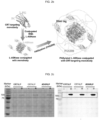
- CRT3 and CRT4 and control were designed to be fused with L-ASNases and PAS200 tags ( FIG. 2a ).
- the recombinant proteins were named CRT3LP, CRT4LP, and #DGRLP, respectively. All proteins were expected to have a His6 tag at the C-terminus.
- the structure of CRT3LP was estimated by computer simulation ( FIG. 2b ). Because L-ASNase is a homotetramer and the N-terminus of each enzyme subunit is exposed outside the enzyme complex, four CRT3 monobodies were linked to the enzyme complex.
- the PAS200 tag at the C-terminus of each enzyme subunit was also exposed to the outside and surrounded the enzyme complex.
- the CRT3 monobody was expected to maintain binding specificity and not affect the L-ASNase structure of the recombinant protein.
- the PAS200 tag was expected to protect the enzyme complex from protease attack.
- the His6 tag was also exposed, suggesting that purification by affinity chromatography would be efficient.
- the recombinant proteins were expressed in E. coli transformed with the expression vector after IPTG induction ( FIG. 2c ).
- the recombinant proteins were detected only in the presence of IPTG.
- the expected molecular weight (MW) was approximately 64 kDa
- the MW of the bands detected in the SDS-PAGE gel and Western blot was estimated to be more than 100 kDa.
- the recombinant proteins were purified and the actual MW was measured by mass spectrometry ( FIG. 2d ), and the measured value was the same as the expected MW.
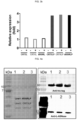
- FIG. 4 the PASylated CRT-targeted L-ASNases were characterized ( FIG. 4 ).
- the purified proteins showed a migration pattern similar to that of the bacterial pellets shown in FIG. 2c with a MW exceeding 100 kDa ( FIG. 4a , left panel).
- the proteins were detected by anti-His tag and anti-L-ASNase antibodies in Western blot analysis ( FIG. 4a , upper and lower panels).
- the zeta potential of the recombinant proteins was measured in the aqueous phase ( FIG. 4b ). Since the recombinant proteins have an isoelectric point (pIs) of 5.45, it was expected to be negatively charged in aqueous solution.
- the zeta potential (approximately -12.5 mV) was consistent with this expectation.
- the affinity of the recombinant proteins for CRT was evaluated by ELISA analysis ( FIG. 4c ).
- the dissociation constant (Kd) values were 2.067 ⁇ 0.173 nM for CRT3LP and 2.297 ⁇ 0.166 nM for CRT4LP, respectively. The above values were similar to those of typical monobodies.
- the affinity of the proteins was four times higher than that of CRT3 and CRT4 monobodies ( Y. Zhang, et al., Cancers, 13(11): 2801, 2021 ). As expected, #DGRLP did not show binding affinity for CRT.
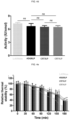
- the enzymatic activity of the PASylated CRT-targeting L-ASNase was measured ( FIG. 4d ).
- the enzymatic activity was similar to that of L-ASNase ( ⁇ 6.5 IU/nmol for PASylated protein vs. ⁇ 7.2 IU/nmol for L-ASNase). These results indicate that the monobody and PAS200 tags have little interference with the enzymatic activity of PASylated L-ASNase. Since the thermal stability of the enzyme is an important parameter for in vivo application, the enzyme activity was measured at 55°C for 180 min ( FIG. 4e ). The relative activity of the PASylated protein gradually decreased over time; however, the decrease was less than that observed for L-ASNase.
- PASylated recombinant proteins showed a ⁇ 5-fold improvement in half-life: #DGRLP, CRT3LP, and CRT4LP had half-lives of 9.20 ⁇ 1.22h, 9.34 ⁇ 0.91h, and 9.0 2 ⁇ 0.28h, respectively, compared to 1.79 ⁇ 0.22h for L-ASNase.
- CRT3LP and CRT4LP specifically target ecto-CRT and enhance cytotoxicity against tumor cells treated with ICD-induced drugs.
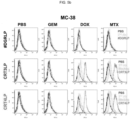
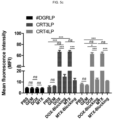
- the inventors evaluated the specific binding of CRT3LP and CRT4LP to ecto-CRT in tumor cells treated with ICD-induced anticancer agents by flow cytometry ( FIG. 5 ).
- the results showed that, similar to CRT3 and CRT4 monobodies, the proteins efficiently bound to CT-26 ( FIG. 5a and 5c ) and MC-38 ( FIG. 5b and 5d ) cells treated with DOX and MTX, but not with GEM or PBS treatment.
- the negative control #DGRLP did not bind to cells even in the presence of DOX and MTX.
- CRT3LP and CRT4LP specifically bind to ecto-CRTs exposed by ICD-induced anticancer agents.
- the above flow cytometry results were consistent with the results of immunofluorescence staining of the same cells ( FIGs. 5e and 5f ).
- CRT3LP and CRT4LP only bound to CT-26 and MC-38 cells treated with DOX or MTX, but not GEM.
- the negative control #DGRLP did not bind to cells even in the presence of DOX and MTX. L-ASNase induced cell death even in cells derived from solid tumors ( M.
- the treatment procedure was performed as shown in FIG. 7a .
- various doses of CRT3LP (5 doses, 2 days apart) were administered intravenously to mice treated with DOX (10 mg DOX/kg/peritoneal injection, 3 doses, 2 days apart) ( FIG. 7b ).
- DOX 10 mg DOX/kg/peritoneal injection, 3 doses, 2 days apart
- mice treated with DOX + CRT3LP Tumor growth was inhibited to a greater extent in mice treated with DOX + CRT3LP than in mice treated with DOX alone. Tumor growth inhibition in mice treated with 8 IU of CRT3LP was similar to that of mice treated with 12 IU and better than that of mice treated with 4 IU. Notably, 20 IU of CRT3LP treatment caused sudden death in some mice by day 12 (2 out of 3 mice). Based on the above results, the present inventors concluded that the optimal therapeutic dose of CRT3LP is 8 IU/injection/mouse ( FIG. 7c ).
- the present inventors investigated the therapeutic efficacy of an optimal therapeutic dose of PASylated CRT-targeted L-ASNase (8 IU/mouse) in combination with DOX in CT-26 tumor-bearing mice ( FIG. 8 ).
- Treatment of mice was performed according to the described schedule ( FIG. 8A ).
- the results showed that DOX + L-ASNase and DOX + #DGRLP inhibited tumor growth better than no treatment, but the level of inhibition was similar to that observed after treatment with DOX alone (DOX + PBS). This indicates that the enzymatic activity of L-ASNase and #DGRLP does not increase the anti-cancer effect of DOX.
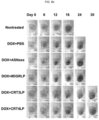
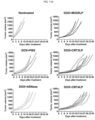
- DOX + CRT3LP and DOX + CRT4LP inhibited tumor growth to a higher degree than DOX + L-ASNase and DOX + #DGRLP ( FIG. 8b , 8c , and FIG. 9 ).
- the survival time of mice in the DOX + CRT3LP and DOX + CRT4LP groups was prolonged by more than 1 week compared to the DOX + L-ASNase and DOX + #DGRLP groups, but the tumors were not completely eliminated ( FIG. 8d ).
- the above results were also confirmed by tumor weights measured on day 12 ( FIGs. 8e and 8f ).
- the average tumor weight was slightly lower in the DOX + L-ASNase and DOX + #DGRLP groups than in the DOX alone group (304.8 mg in DOX + PBS, 263.3 mg in DOX + L-ASNase, and 278 mg in DOX + L-ASNase).
- Body weight was least in the DOX + CRT3LP and DOX + CRT4LP groups (136.2 mg in DOX + CRT3LP and 143.3 mg in DOX + CRT4LP). All results were consistent with tumor growth rate and survival measurements.
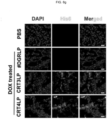
- the targeting of CRT3LP and CRT4LP to DOX-treated CT-26 tumors was observed by confocal microscopy on day 6 ( FIGs. 8g and 8h ).
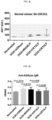
- FIGS. 8i to 8k biochemical analysis of serum samples was performed on day 12 ( FIGS. 8i to 8k ).
- the above levels showed little increase in all treated groups compared to the untreated group in the present invention ( FIGs. 8i and 8j ).
- IgM levels against L-ASNase in serum were measured to assess the primary antibody response to CRT3LP and CRT4LP ( FIG. 8k ). No significant changes in levels were detected in any of the groups. This indicates that PASylated CRT-targeted L-ASNase did not induce an antibody response at the early time point of treatment combined with DOX.
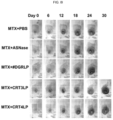
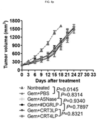
- the therapeutic efficacy of PASylated CRT-targeted L-ASNase (8 IU/mouse) combined with MTX was measured in CT-26 tumor-bearing mice. Treatment was performed with MTX (2 mg/kg/injection, 3 times and 2 days apart) on the same schedule described in FIG. 6a .
- the present inventors evaluated the therapeutic efficacy of CRT3LP and CRT4LP in MC-38 tumor-bearing C57BL/6 mice treated with DOX ( FIG. 11 ). All treatments were performed with the same procedure as used in CT-26 tumor-bearing mice. Tumor growth inhibition and increased survival were observed in the DOX + CRT3LP and DOX + CRT4LP groups compared to the other groups. The results of body weight changes were similar to those observed in CT-26 tumor-bearing mice. In conclusion, the above results suggest that PASylated CRT-targeted L-ASNase, CRT3LP and CRT4LP enhanced the efficacy of ICD-induced anticancer agents against solid tumors.
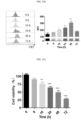
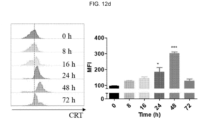
- CT-26 and MC-38 tumor cells were irradiated (10 Gy, 3.3 Gy/min) for the determination of cytotoxicity and ecto-CRT translocation after irradiation induction, and the viability and CRT exposure were analyzed. It was found that CT-26 and MC-38 cells exhibited cytotoxicity, and ecto-CRTs were detected according to the specified time after irradiation treatment ( FIG. 12 ).
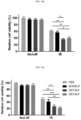
- CT-26 and MC-38 cells were treated with irradiation for 24h and co-incubated with CRT-targeted L-ASNase (1 IU/mL) for 24h, and then the cells were observed under a microscope to analyze the relative cell viability. It was showed that the CRT-targeted L-ASNase of the present invention enhanced the radiation-induced cytotoxicity in tumor cells ( FIG. 14 ).
Landscapes
- Health & Medical Sciences (AREA)
- Chemical & Material Sciences (AREA)
- Life Sciences & Earth Sciences (AREA)
- Organic Chemistry (AREA)
- Medicinal Chemistry (AREA)
- General Health & Medical Sciences (AREA)
- Engineering & Computer Science (AREA)
- Bioinformatics & Cheminformatics (AREA)
- Genetics & Genomics (AREA)
- Molecular Biology (AREA)
- Zoology (AREA)
- Animal Behavior & Ethology (AREA)
- Veterinary Medicine (AREA)
- Public Health (AREA)
- Pharmacology & Pharmacy (AREA)
- Biochemistry (AREA)
- Proteomics, Peptides & Aminoacids (AREA)
- Immunology (AREA)
- Wood Science & Technology (AREA)
- Epidemiology (AREA)
- Biophysics (AREA)
- Toxicology (AREA)
- Gastroenterology & Hepatology (AREA)
- Microbiology (AREA)
- Biomedical Technology (AREA)
- Biotechnology (AREA)
- General Engineering & Computer Science (AREA)
- Chemical Kinetics & Catalysis (AREA)
- General Chemical & Material Sciences (AREA)
- Nuclear Medicine, Radiotherapy & Molecular Imaging (AREA)
- Mycology (AREA)
- Medicines That Contain Protein Lipid Enzymes And Other Medicines (AREA)
- Peptides Or Proteins (AREA)
Applications Claiming Priority (2)
| Application Number | Priority Date | Filing Date | Title |
|---|---|---|---|
| KR20220042556 | 2022-04-05 | ||
| PCT/KR2023/004590 WO2023195767A1 (fr) | 2022-04-05 | 2023-04-05 | Nouvel agent anticancéreux ciblant un antigène tumoral |
Publications (2)
| Publication Number | Publication Date |
|---|---|
| EP4506018A1 true EP4506018A1 (fr) | 2025-02-12 |
| EP4506018A4 EP4506018A4 (fr) | 2026-04-15 |
Family
ID=88243218
Family Applications (1)
| Application Number | Title | Priority Date | Filing Date |
|---|---|---|---|
| EP23784991.4A Pending EP4506018A4 (fr) | 2022-04-05 | 2023-04-05 | Nouvel agent anticancéreux ciblant un antigène tumoral |
Country Status (4)
| Country | Link |
|---|---|
| US (1) | US20250376507A1 (fr) |
| EP (1) | EP4506018A4 (fr) |
| KR (1) | KR102936757B1 (fr) |
| WO (1) | WO2023195767A1 (fr) |
Family Cites Families (5)
| Publication number | Priority date | Publication date | Assignee | Title |
|---|---|---|---|---|
| KR101750007B1 (ko) | 2014-10-01 | 2017-06-22 | 전남대학교 산학협력단 | 박테리아를 이용한 고형암 치료제 |
| KR101636882B1 (ko) | 2015-06-25 | 2016-07-06 | 전남대학교 산학협력단 | 인간 피브로넥틴 도메인 Ⅲ 기본 골격의 신규 인간 EphA2 특이적 결합 단백질 및 그의 용도 |
| US10174302B1 (en) | 2017-06-21 | 2019-01-08 | Xl-Protein Gmbh | Modified L-asparaginase |
| WO2020058749A1 (fr) | 2018-09-20 | 2020-03-26 | Universita' Degli Studi Di Pavia | Fusion anticorps-médicament basée sur l'asparaginase |
| KR102557303B1 (ko) * | 2020-10-06 | 2023-07-18 | 전남대학교 산학협력단 | 인간 피브로넥틴 도메인 ⅲ 기본 골격의 신규 칼레티큘린 특이적 결합 단백질 및 그의 용도 |
-
2023
- 2023-04-05 US US18/854,647 patent/US20250376507A1/en active Pending
- 2023-04-05 WO PCT/KR2023/004590 patent/WO2023195767A1/fr not_active Ceased
- 2023-04-05 EP EP23784991.4A patent/EP4506018A4/fr active Pending
- 2023-04-05 KR KR1020230044677A patent/KR102936757B1/ko active Active
Also Published As
| Publication number | Publication date |
|---|---|
| KR102936757B1 (ko) | 2026-03-11 |
| US20250376507A1 (en) | 2025-12-11 |
| WO2023195767A1 (fr) | 2023-10-12 |
| KR20230143955A (ko) | 2023-10-13 |
| EP4506018A4 (fr) | 2026-04-15 |
Similar Documents
| Publication | Publication Date | Title |
|---|---|---|
| US20240277863A1 (en) | Antibody-urease conjugates for therapeutic purposes | |
| ES2654060T3 (es) | Receptores de antígenos quiméricos anti-CD22 | |
| EP2847222B1 (fr) | Anticorps spécifiques pour cll-1 | |
| TWI653244B (zh) | 雙功能抗體用於修飾聚乙二醇化物質之用途 | |
| US20180355044A1 (en) | Humanized anti-cll-1 antibodies | |
| BR112015009003B1 (pt) | Receptores de antígeno quiméricos que se ligam especificamente a cd22, ácido nucleico, vetor de expressão recombinante, microrganismo transgênico, composição farmacêutica, e uso dos mesmos | |
| JP2018536657A (ja) | Gdf15の活性を低減させるための試薬 | |
| WO2020249757A1 (fr) | Immunoconjugués comprenant un dianticorps à chaîne unique et de l'interleukine-15 ou l'interleukine-15 et un domaine sushi du récepteur alpha de l'interleukine-15 | |
| WO2024170897A1 (fr) | Agents, procédés et utilisations de ceux-ci | |
| EP4506018A1 (fr) | Nouvel agent anticancéreux ciblant un antigène tumoral | |
| KR102704977B1 (ko) | 신규 뉴클레오린-결합 펩타이드 및 이의 용도 | |
| Kiesgen et al. | An EGF receptor targeting Ranpirnase-diabody fusion protein mediates potent antitumour activity in vitro and in vivo | |
| CN117586414A (zh) | 一种双特异性t细胞接合器分子的制备及其应用 | |
| KR20240139054A (ko) | 가교 항체 | |
| HK40117905A (zh) | 用於治疗目的的抗体-脲酶缀合物 | |
| JP2026514252A (ja) | がん関連抗原の標的化を増強するための新規リンカー-ペイロード系を用いた抗体-薬物コンジュゲート | |
| HK1238557A1 (en) | Antibody-urease conjugates for therapeutic purposes |
Legal Events
| Date | Code | Title | Description |
|---|---|---|---|
| STAA | Information on the status of an ep patent application or granted ep patent |
Free format text: STATUS: THE INTERNATIONAL PUBLICATION HAS BEEN MADE |
|
| PUAI | Public reference made under article 153(3) epc to a published international application that has entered the european phase |
Free format text: ORIGINAL CODE: 0009012 |
|
| STAA | Information on the status of an ep patent application or granted ep patent |
Free format text: STATUS: REQUEST FOR EXAMINATION WAS MADE |
|
| 17P | Request for examination filed |
Effective date: 20241105 |
|
| AK | Designated contracting states |
Kind code of ref document: A1 Designated state(s): AL AT BE BG CH CY CZ DE DK EE ES FI FR GB GR HR HU IE IS IT LI LT LU LV MC ME MK MT NL NO PL PT RO RS SE SI SK SM TR |
|
| DAV | Request for validation of the european patent (deleted) | ||
| DAX | Request for extension of the european patent (deleted) | ||
| REG | Reference to a national code |
Ref country code: DE Ref legal event code: R079 Free format text: PREVIOUS MAIN CLASS: A61K0047680000 Ipc: C07K0014470000 |
|
| A4 | Supplementary search report drawn up and despatched |
Effective date: 20260317 |
|
| RIC1 | Information provided on ipc code assigned before grant |
Ipc: C07K 14/47 20060101AFI20260312BHEP Ipc: C07K 14/78 20060101ALI20260312BHEP Ipc: C07K 16/18 20060101ALI20260312BHEP Ipc: C12N 9/82 20060101ALI20260312BHEP Ipc: A61P 35/00 20060101ALI20260312BHEP Ipc: A61K 39/395 20060101ALI20260312BHEP Ipc: A61K 31/704 20060101ALI20260312BHEP Ipc: A61K 45/06 20060101ALI20260312BHEP |