EP4506500A1 - Procédé et appareil pour réduire le détachement de microfibres d'un vêtement dans une machine à laver - Google Patents
Procédé et appareil pour réduire le détachement de microfibres d'un vêtement dans une machine à laver Download PDFInfo
- Publication number
- EP4506500A1 EP4506500A1 EP23382837.5A EP23382837A EP4506500A1 EP 4506500 A1 EP4506500 A1 EP 4506500A1 EP 23382837 A EP23382837 A EP 23382837A EP 4506500 A1 EP4506500 A1 EP 4506500A1
- Authority
- EP
- European Patent Office
- Prior art keywords
- washing
- fabric
- garment
- washing machine
- risk
- Prior art date
- Legal status (The legal status is an assumption and is not a legal conclusion. Google has not performed a legal analysis and makes no representation as to the accuracy of the status listed.)
- Pending
Links
Images
Classifications
-
- D—TEXTILES; PAPER
- D06—TREATMENT OF TEXTILES OR THE LIKE; LAUNDERING; FLEXIBLE MATERIALS NOT OTHERWISE PROVIDED FOR
- D06F—LAUNDERING, DRYING, IRONING, PRESSING OR FOLDING TEXTILE ARTICLES
- D06F35/00—Washing machines, apparatus, or methods not otherwise provided for
- D06F35/005—Methods for washing, rinsing or spin-drying
-
- D—TEXTILES; PAPER
- D06—TREATMENT OF TEXTILES OR THE LIKE; LAUNDERING; FLEXIBLE MATERIALS NOT OTHERWISE PROVIDED FOR
- D06F—LAUNDERING, DRYING, IRONING, PRESSING OR FOLDING TEXTILE ARTICLES
- D06F33/00—Control of operations performed in washing machines or washer-dryers
- D06F33/30—Control of washing machines characterised by the purpose or target of the control
- D06F33/32—Control of operational steps, e.g. optimisation or improvement of operational steps depending on the condition of the laundry
- D06F33/34—Control of operational steps, e.g. optimisation or improvement of operational steps depending on the condition of the laundry of water filling
-
- D—TEXTILES; PAPER
- D06—TREATMENT OF TEXTILES OR THE LIKE; LAUNDERING; FLEXIBLE MATERIALS NOT OTHERWISE PROVIDED FOR
- D06F—LAUNDERING, DRYING, IRONING, PRESSING OR FOLDING TEXTILE ARTICLES
- D06F33/00—Control of operations performed in washing machines or washer-dryers
- D06F33/30—Control of washing machines characterised by the purpose or target of the control
- D06F33/32—Control of operational steps, e.g. optimisation or improvement of operational steps depending on the condition of the laundry
-
- D—TEXTILES; PAPER
- D06—TREATMENT OF TEXTILES OR THE LIKE; LAUNDERING; FLEXIBLE MATERIALS NOT OTHERWISE PROVIDED FOR
- D06F—LAUNDERING, DRYING, IRONING, PRESSING OR FOLDING TEXTILE ARTICLES
- D06F34/00—Details of control systems for washing machines, washer-dryers or laundry dryers
- D06F34/04—Signal transfer or data transmission arrangements
- D06F34/05—Signal transfer or data transmission arrangements for wireless communication between components, e.g. for remote monitoring or control
-
- D—TEXTILES; PAPER
- D06—TREATMENT OF TEXTILES OR THE LIKE; LAUNDERING; FLEXIBLE MATERIALS NOT OTHERWISE PROVIDED FOR
- D06F—LAUNDERING, DRYING, IRONING, PRESSING OR FOLDING TEXTILE ARTICLES
- D06F34/00—Details of control systems for washing machines, washer-dryers or laundry dryers
- D06F34/14—Arrangements for detecting or measuring specific parameters
-
- D—TEXTILES; PAPER
- D06—TREATMENT OF TEXTILES OR THE LIKE; LAUNDERING; FLEXIBLE MATERIALS NOT OTHERWISE PROVIDED FOR
- D06F—LAUNDERING, DRYING, IRONING, PRESSING OR FOLDING TEXTILE ARTICLES
- D06F34/00—Details of control systems for washing machines, washer-dryers or laundry dryers
- D06F34/14—Arrangements for detecting or measuring specific parameters
- D06F34/18—Condition of the laundry, e.g. nature or weight
-
- D—TEXTILES; PAPER
- D06—TREATMENT OF TEXTILES OR THE LIKE; LAUNDERING; FLEXIBLE MATERIALS NOT OTHERWISE PROVIDED FOR
- D06F—LAUNDERING, DRYING, IRONING, PRESSING OR FOLDING TEXTILE ARTICLES
- D06F34/00—Details of control systems for washing machines, washer-dryers or laundry dryers
- D06F34/14—Arrangements for detecting or measuring specific parameters
- D06F34/22—Condition of the washing liquid, e.g. turbidity
-
- D—TEXTILES; PAPER
- D06—TREATMENT OF TEXTILES OR THE LIKE; LAUNDERING; FLEXIBLE MATERIALS NOT OTHERWISE PROVIDED FOR
- D06F—LAUNDERING, DRYING, IRONING, PRESSING OR FOLDING TEXTILE ARTICLES
- D06F34/00—Details of control systems for washing machines, washer-dryers or laundry dryers
- D06F34/28—Arrangements for program selection, e.g. control panels therefor; Arrangements for indicating program parameters, e.g. the selected program or its progress
-
- D—TEXTILES; PAPER
- D06—TREATMENT OF TEXTILES OR THE LIKE; LAUNDERING; FLEXIBLE MATERIALS NOT OTHERWISE PROVIDED FOR
- D06F—LAUNDERING, DRYING, IRONING, PRESSING OR FOLDING TEXTILE ARTICLES
- D06F39/00—Details of washing machines not specific to a single type of machines covered by groups D06F9/00 - D06F27/00
- D06F39/10—Filtering arrangements
-
- D—TEXTILES; PAPER
- D06—TREATMENT OF TEXTILES OR THE LIKE; LAUNDERING; FLEXIBLE MATERIALS NOT OTHERWISE PROVIDED FOR
- D06F—LAUNDERING, DRYING, IRONING, PRESSING OR FOLDING TEXTILE ARTICLES
- D06F2101/00—User input for the control of domestic laundry washing machines, washer-dryers or laundry dryers
-
- D—TEXTILES; PAPER
- D06—TREATMENT OF TEXTILES OR THE LIKE; LAUNDERING; FLEXIBLE MATERIALS NOT OTHERWISE PROVIDED FOR
- D06F—LAUNDERING, DRYING, IRONING, PRESSING OR FOLDING TEXTILE ARTICLES
- D06F2101/00—User input for the control of domestic laundry washing machines, washer-dryers or laundry dryers
- D06F2101/02—Characteristics of laundry or load
-
- D—TEXTILES; PAPER
- D06—TREATMENT OF TEXTILES OR THE LIKE; LAUNDERING; FLEXIBLE MATERIALS NOT OTHERWISE PROVIDED FOR
- D06F—LAUNDERING, DRYING, IRONING, PRESSING OR FOLDING TEXTILE ARTICLES
- D06F2101/00—User input for the control of domestic laundry washing machines, washer-dryers or laundry dryers
- D06F2101/02—Characteristics of laundry or load
- D06F2101/06—Type or material
-
- D—TEXTILES; PAPER
- D06—TREATMENT OF TEXTILES OR THE LIKE; LAUNDERING; FLEXIBLE MATERIALS NOT OTHERWISE PROVIDED FOR
- D06F—LAUNDERING, DRYING, IRONING, PRESSING OR FOLDING TEXTILE ARTICLES
- D06F2101/00—User input for the control of domestic laundry washing machines, washer-dryers or laundry dryers
- D06F2101/12—Washing temperature
-
- D—TEXTILES; PAPER
- D06—TREATMENT OF TEXTILES OR THE LIKE; LAUNDERING; FLEXIBLE MATERIALS NOT OTHERWISE PROVIDED FOR
- D06F—LAUNDERING, DRYING, IRONING, PRESSING OR FOLDING TEXTILE ARTICLES
- D06F2101/00—User input for the control of domestic laundry washing machines, washer-dryers or laundry dryers
- D06F2101/20—Operation modes, e.g. delicate laundry washing programs, service modes or refreshment cycles
-
- D—TEXTILES; PAPER
- D06—TREATMENT OF TEXTILES OR THE LIKE; LAUNDERING; FLEXIBLE MATERIALS NOT OTHERWISE PROVIDED FOR
- D06F—LAUNDERING, DRYING, IRONING, PRESSING OR FOLDING TEXTILE ARTICLES
- D06F2103/00—Parameters monitored or detected for the control of domestic laundry washing machines, washer-dryers or laundry dryers
- D06F2103/02—Characteristics of laundry or load
- D06F2103/04—Quantity, e.g. weight or variation of weight
-
- D—TEXTILES; PAPER
- D06—TREATMENT OF TEXTILES OR THE LIKE; LAUNDERING; FLEXIBLE MATERIALS NOT OTHERWISE PROVIDED FOR
- D06F—LAUNDERING, DRYING, IRONING, PRESSING OR FOLDING TEXTILE ARTICLES
- D06F2103/00—Parameters monitored or detected for the control of domestic laundry washing machines, washer-dryers or laundry dryers
- D06F2103/02—Characteristics of laundry or load
- D06F2103/06—Type or material
-
- D—TEXTILES; PAPER
- D06—TREATMENT OF TEXTILES OR THE LIKE; LAUNDERING; FLEXIBLE MATERIALS NOT OTHERWISE PROVIDED FOR
- D06F—LAUNDERING, DRYING, IRONING, PRESSING OR FOLDING TEXTILE ARTICLES
- D06F2103/00—Parameters monitored or detected for the control of domestic laundry washing machines, washer-dryers or laundry dryers
- D06F2103/18—Washing liquid level
-
- D—TEXTILES; PAPER
- D06—TREATMENT OF TEXTILES OR THE LIKE; LAUNDERING; FLEXIBLE MATERIALS NOT OTHERWISE PROVIDED FOR
- D06F—LAUNDERING, DRYING, IRONING, PRESSING OR FOLDING TEXTILE ARTICLES
- D06F2105/00—Systems or parameters controlled or affected by the control systems of washing machines, washer-dryers or laundry dryers
- D06F2105/02—Water supply
-
- D—TEXTILES; PAPER
- D06—TREATMENT OF TEXTILES OR THE LIKE; LAUNDERING; FLEXIBLE MATERIALS NOT OTHERWISE PROVIDED FOR
- D06F—LAUNDERING, DRYING, IRONING, PRESSING OR FOLDING TEXTILE ARTICLES
- D06F2105/00—Systems or parameters controlled or affected by the control systems of washing machines, washer-dryers or laundry dryers
- D06F2105/46—Drum speed; Actuation of motors, e.g. starting or interrupting
- D06F2105/48—Drum speed
-
- D—TEXTILES; PAPER
- D06—TREATMENT OF TEXTILES OR THE LIKE; LAUNDERING; FLEXIBLE MATERIALS NOT OTHERWISE PROVIDED FOR
- D06F—LAUNDERING, DRYING, IRONING, PRESSING OR FOLDING TEXTILE ARTICLES
- D06F2105/00—Systems or parameters controlled or affected by the control systems of washing machines, washer-dryers or laundry dryers
- D06F2105/52—Changing sequence of operational steps; Carrying out additional operational steps; Modifying operational steps, e.g. by extending duration of steps
-
- D—TEXTILES; PAPER
- D06—TREATMENT OF TEXTILES OR THE LIKE; LAUNDERING; FLEXIBLE MATERIALS NOT OTHERWISE PROVIDED FOR
- D06F—LAUNDERING, DRYING, IRONING, PRESSING OR FOLDING TEXTILE ARTICLES
- D06F2105/00—Systems or parameters controlled or affected by the control systems of washing machines, washer-dryers or laundry dryers
- D06F2105/54—Changing between normal operation mode and special operation modes, e.g. service mode, component cleaning mode or stand-by mode
-
- D—TEXTILES; PAPER
- D06—TREATMENT OF TEXTILES OR THE LIKE; LAUNDERING; FLEXIBLE MATERIALS NOT OTHERWISE PROVIDED FOR
- D06F—LAUNDERING, DRYING, IRONING, PRESSING OR FOLDING TEXTILE ARTICLES
- D06F2105/00—Systems or parameters controlled or affected by the control systems of washing machines, washer-dryers or laundry dryers
- D06F2105/58—Indications or alarms to the control system or to the user
Definitions
- the present disclosure generally relates to a method for reducing detachment of microfibres from garment in a washing cycle of a washing machine. Particularly, the present disclosure relates to a method for reducing detachment of microfibres from garment by determining a risk level of microfibre detachment based on a fabric type input by a user and a determined type of fabric. Moreover, the present disclosure further relates to a mobile terminal and a washing machine configured to perform such method.
- microfibres are of non-organic material, which form microplastics.
- microplastic can be a particle smaller than 5mm.
- a conventional washing machine may be equipped with a filter to reduce the number of such microfibres in the wastewater.
- the user has to replace the filter regularly. If the replacement of the filter is postponed or forgotten, the amount of microfibres in the wastewater may increase or the washing machine has to be programmed to not run a washing cycle until a new filter has been installed.
- a method for reducing detachment of microfibres from garment in a washing cycle of a washing machine comprises receiving a fabric type user input specifying a type of fabric of the garment placed in the washing machine, determining a type of fabric of the garment in the washing machine, and calculating a risk level based on the fabric type user input and the determined type of fabric, the risk level indicating a risk that microfibres can be detached from the garment during the washing cycle.
- the method further comprises, if the risk level is determined to be high, outputting information indicating to perform a dedicated washing cycle specifically adapted to reduce detachment of microfibres.
- the dedicated washing cycle can be employed to reduce the amount of detached microfibres.
- the risk level is above a first threshold, which indicates that there is a high risk of microfibre detachment.
- the distinction between a low and high risk level can be made by use of a lookup table.
- the lookup table may include risk values or risk value groups, each mapped to a risk type, such as a low risk or a high risk.
- a result/an output may indicate a low or high risk of microfibre detachment, for example.
- the user input can include entering or selecting, by a user, a particular fabric type, such as nylon, polyester, wool, linen, Elastane, elastomer, cotton, acrylic, or the like.
- a particular fabric type such as nylon, polyester, wool, linen, Elastane, elastomer, cotton, acrylic, or the like.
- the user may select the particular fabric type from a predefined list. It is to be understood that the user input can include entering or selecting a plurality of fabric types, such as if garment of different fabric types are placed in a drum of the washing machine for the next washing cycle.
- the user input can include entering or selecting, by a user, a fabric group, such as organic or non-organic garment, or any other predefined fabric group, including numbers or characters (1, 2, 3, etc.; A, B, C, etc.), which can be interpreted as garment including one or more fabric types.
- a fabric group such as organic or non-organic garment, or any other predefined fabric group, including numbers or characters (1, 2, 3, etc.; A, B, C, etc.), which can be interpreted as garment including one or more fabric types.
- the user input can include entering or selecting, by a user, a washing cycle type, such as cold washing, coloured washing, hot washing, delicates, etc.
- the user input can be understood as the intention of the user to initiate a particular washing cycle corresponding to the received fabric type.
- the user selection may lead to an increased detachment of microfibres, although not intended by the user. It is very likely that users do not know how to reduce microfibre detachment during a washing cycle.
- the user input is checked against the determined type of fabric and the risk (level) of an unsuitable washing cycle is calculated. Based on this risk level, the washing cycle may be changed, i.e. the user input may be overruled.
- microfibre detachment i.e. the amount of microfibres washed out with the wastewater.
- microfibres from garment can be fibre particles/portions with a small size down to 25 ⁇ m and even fibre particles/portions with a size down to 1.2 ⁇ m. Since the washing cycle is optimised for a minimum microfibre emission, the method further allows a prolonged life of any microfibre filter or other filter mechanisms employed during the washing cycle. For instance, the disclosed method may allow 50% to 70% prolonged life of the filter as it will not be clogged as soon as in case of regular washing cycles.
- the risk level may be determined as low or high, or may correspond to a certain value from 0 to 10 or from 0 to 100, such as 0, 2, 5, 10, 20, 50, 80, 100 etc., wherein 0 means (almost) no risk, and 10 / 100 means a very high risk of microfibre emission (leading to a large amount of microfibre emission).
- the distinction between a low and high risk level can be made by the first threshold or the use of the lookup table. For instance, if the risk level is above the threshold, there is a high risk of microfibre detachment, i.e. it is quite likely that the amount of detached microfibres will be high.
- the first threshold value may depend on the kind of risk level determination. For example, if the risk level is determined on the basis of a scale from 0 to 100, the first threshold may be set between 25 and 75, preferably between 40 and 60. Such risk level determination can be achieved alternatively by a correspondingly predefined lookup table.
- the method can further comprise receiving a hardness user input specifying a water hardness of the water provided to the washing machine.
- the calculating of the risk level can then include calculating a risk contribution due to the specified water hardness.
- a risk contribution can influence the overall risk (level) that microfibres can be detached from the garment during the washing cycle.
- the risk contribution can increase or decrease the risk level.
- a high water hardness value (hard water) may contribute to the risk level only a small amount (e.g., 0, 20 or 30 points on the 0..100 scale).
- the risk level may even be reduced using a negative risk contribution value.
- a medium hardness of the water may contribute to the risk level an amount of, for example, 40, 50 or 60 points on the 0..100 scale, and a small water hardness value (soft water) may contribute to the risk level with a larger amount (e.g., 90 or 100 points on the 0..100 scale).
- risk contribution can likewise be on a 0..10 scale, for example, wherein hard water can be represented by a value of, e.g., 2, medium water (hardness) can be represented by a value of, e.g., 5, and soft water can be represented by a value of, e.g., 10.
- the method can further comprise receiving a detergent user input specifying a detergent type used in the washing machine for the washing cycle.
- the calculating of the risk level can then include calculating a risk contribution influencing the risk level due to the specified detergent.
- the detergent type can identify a heavy duty detergent (HDD), a light duty detergent (LDD), a non-biodegradable detergent, or a biodegradable detergent. For instance, it has been found that a light duty detergent decreases the amount or number of microfibres generated during a washing cycle, while using no detergent as well as using an HDD increases microfibre emission.
- an input indicating LDD may contribute to the risk level only a small amount (e.g., 0, 20 or 50 points on the 0..100 scale; or 5 on the 0..10 scale), while an input indicating HDD or no detergent may contribute to the risk level with a larger amount (e.g., 90 or 100 points on the 0..100 scale; or 10 on a 0..10 scale).
- the risk level may even be reduced.
- the method can further comprise determining a load weight of the garment placed in the washing machine.
- the calculating of the risk level includes calculating a risk contribution influencing the risk level due to the determined load weight. For instance, it has been found that a low load increases microfibre emission.
- a low load means, for example, equal to or less than 25% (quarter load) of the maximum load of the washing machine. This can, for example, correspond to 0 to 2 kg of garment.
- a low load weight value may contribute to the risk level a large amount (e.g., 80, 90 or even 100 points on the 0..100 scale), while a medium load (25% to 50%; half load) contributes to the risk level a smaller amount (e.g., 40 or 50 points on the 0..100 scale), and a high load weight (50% to 100%; full load) contributes to the risk level the smallest amount or zero (e.g., 0, 5, or 10 points).
- the risk level depending on the load weight can be determined by the use of a lookup table.
- the lookup table may include risk values or risk value groups, each mapped to a risk type, such as a low risk or a high risk.
- the lookup table can include load weight values or load weight value groups, each mapped to a load range, such as quarter load, half load or full load, or such as 0-500g, 500-1000g, 1000-1500g, etc. (up to the maximum load capacity of the washing machine).
- an output may indicate a low or high risk of microfibre detachment.
- the risk contribution due to the water hardness and/or the specified detergent and/or the determined load weight can be weighted.
- a weighting such as a factoring, can be applied to the risk contribution(s).
- the weight of each of the risk contributions can be between 0.1 and 0.3, preferably 0.2, on the 0..100 scale, or between 1 and 3, preferably 2, on the 0..10 scale when continuing in the 0..100 scale.
- the total risk is a weighted sum of risk contribution(s) plus the risk level.
- the risk level based on the fabric type and the risk contribution due to the water hardness and/or the specified detergent and/or the determined load weight can be weighted.
- a weighting such as a factoring, can be applied to the risk level as well as the risk contribution(s).
- the type of fabric has a greater influence on the resulting total risk than the other influences, such as water hardness, detergent or load.
- the weight of the risk level (based on the fabric type) can be between 0.4 and 0.8, preferably 0.6, on the 0..100 scale, or between 4 and 8, preferably 6, on the 0..10 scale (when continuing in the 0..100 scale), and the weight of each of the risk contributions can be between 0.1 and 0.3, preferably 0.2 on the 0..100 scale, or between 1 and 3, preferably 2, on the 0..10 scale.
- the total risk is a weighted sum of the individual risk level and risk contributions.
- the weighting factor can be employed to bring the resulting risk level value to a 0..100 scale, the latter being compared against the threshold or used as input to the lookup table.
- the above-mentioned values of the risk level and/or the risk contributions may be set smaller. For instance, each of the specified values may be reduced by a factor corresponding to the respectively mentioned weight.
- the determining of the type of fabric of the garment includes determining a water absorption of the garment.
- the water absorption of the garment can be determined, for example, by controlling the washing machine to open a water inlet to water/wet the garment.
- the load of garment can be weighed or virtually determined when the garment is dry. Then, the water inlet is opened and the garment is wetted. This allows weighing or virtually determining the load of the wet garment. Based on the difference between dry and wet load, a fabric type can be calculated. This can include using another lookup table including a mapping between load difference(s) and garment types. It is to be understood that a combined lookup table can be used.
- the water inlet and can be opened for a predefined period, for which a water level in the empty washing machine (specifically in the drum of the washing machine without garment) is known. Depending on the fibre of the garment, a certain amount of water is absorbed, so that the water level may differ depending on the type of fabric in the washing machine.
- the water absorption of the garment can be determined by sensing a weight of the load in the drum of the washing machine.
- Opening the water inlet and determining the load of garment may be performed several times after one another. This allows determination and analysis of a water absorption over time and in particular steps.
- the determining of the type of fabric of the garment can include controlling the washing machine to operate a drum of the washing machine. This allows moving the garment, so that the entire garment is wet and absorbs water. Thus, the type of fabric can be determined more accurately.
- the determining of the type of fabric of the garment can include detecting and analysing a power required by a motor to rotate the drum. Particularly, the more power the motor operating the drum requires, the heavier the garment is.
- the required motor power can also be analysed in combination with the watering of the garment.
- the risk level depending on the type of fabric of the garment may be set as low, medium or high, or may be set to a certain value, such as 20, 50, 80, 100 etc., wherein 0 means (almost) no risk, and 100 means a very high risk of microfibre emission (leading to a large amount of microfibre emission).
- a small risk level value is set, e.g., 0, 2, 5, or 10 points on the 0..100 scale, or 0, or 2 on the 0..10 scale.
- a higher risk level value is set, for example 10, 15 or even 20 points on the 0..100 scale, or 5, 6 or even 10 on the 0..10 scale.
- a medium risk level value may be set between the above-mentioned values for low and high risks.
- the method can further comprise, if the risk level is determined to be low, outputting information indicating to perform a washing cycle according to the type of fabric specified in the fabric type user input. For example, it can be determined that the risk level is below the first threshold (or the output of the lookup table indicates a small risk value), which indicates that there is a low risk of microfibre detachment.
- the user input can be understood as the intention of the user to initiate a particular washing cycle corresponding to the received fabric type. If the risk level is determined to be low, information can be output that indicates to perform this particular washing cycle.
- the method can further comprise, if the risk level is determined to be medium, outputting information indicating to perform a modified washing cycle that is a washing cycle according to the type of fabric specified in the fabric type user input with one or more washing parameters being modified.
- a modified washing cycle that is a washing cycle according to the type of fabric specified in the fabric type user input with one or more washing parameters being modified.
- the risk level may be compared to a second threshold (being below the first threshold). Thus, if the risk level (value) is between the first second threshold and the second threshold, the risk level is determined to be medium. If the risk level (value) is below the second threshold, the risk level is determined to be low.
- the distinction between a low, medium and high risk level can be made by use of a lookup table.
- the lookup table may include risk values or risk value groups, each mapped to a risk type, such as a low risk, a medium risk or a high risk.
- an output may indicate a low, medium or high risk of microfibre detachment.
- the one or more modified washing parameters can include an adapted water temperature and/or an adapted spin speed of the drum of the washing machine.
- the one or more modified washing parameters that are adapted may further include a water level, a duration of the washing cycle, and/or a number of agitation and/or rinsing sub-cycles.
- the water temperature can be adapted by setting a maximum water temperature to 40°C, and/or the spin speed can be adapted by setting a maximum speed to 800 rpm.
- the method can further comprise outputting a user message to the user that a microfibre filter of the washing machine requires cleaning or replacement.
- the outputting of the user message can include a visual indication and/or a sound output and/or a message transmission (e.g., via telecommunication means, such as a text message on a mobile telephone and/or an application executed on the mobile telephone presenting the information to the user).
- the outputting of the user message can be based on a change of power consumption by a pump motor driving a water pump of the washing machine.
- the power consumption of the pump motor for example, will decrease.
- the power e.g., a current of an electric pump motor
- changes e.g., compared to a predefined threshold value
- a power change including a power change over time, can trigger said outputting of the information.
- outputting information indicating to perform a washing cycle, a modified washing cycle or a dedicated washing cycle comprises outputting a corresponding user message and/or transmitting a corresponding signal to the washing machine to perform the respective washing cycle.
- outputting information indicating to perform a washing cycle generally means that a signal and/or data is output that can be interpreted by a receiving device.
- a message can be output to the user (e.g., in case of a receiving device having a display and/or audio output means).
- the washing machine can perform the indicated washing cycle.
- washing cycle parameters and/or an identifier of the selected washing cycle may be indicated to the washing machine with the output information, i.e. may be transmitted in a signal associated with the indicating to perform the washing cycle. It is to be understood that the washing machine may likewise output a message to a user that the washing cycle will be or is performed, if the washing machine is equipped with associated output means.
- the dedicated washing cycle reducing detachment of microfibres can include one or more of the parameters:
- the dedicated washing cycle can include one or more washing cycle subcategories, each category consisting of one or more of the above parameters.
- the dedicated washing cycle can be categorised into washing, draining, rinsing and/or final spin.
- different phases of a washing cycle can be determined and set in accordance with one or more of the parameters to achieve the dedicated washing cycle.
- a washing system comprises one or more processors, and one or more memories configured to store processor-executable instructions that when executed by the one or more processors configure the washing system to perform the method according to the first aspect or one of its implementation variants.
- the washing system can perform the method of the first aspect, the method according to one of the implementation variants of the first aspect, the method according to an example of the first aspect, or any combination thereof.
- the washing system can comprise a mobile terminal and/or a washing machine.
- the one or more processors may be installed in the mobile terminal, in the washing machine or may be distributed over the mobile terminal and the washing machine.
- the washing system can perform the method of the first aspect, one of its implementation variants and/or examples, or combinations thereof solely on the mobile terminal, solely on the washing machine, or on the mobile terminal and the washing machine interacting with each other (e.g., in a distributed manner). For instance, some method steps may be performed by the mobile terminal, while other method steps are performed by the washing machine.
- a mobile terminal comprises a processor, and a memory configured to store processor-executable instructions that when executed by the processor configure the mobile terminal to perform the method according to the first aspect or one of its implementation variants.
- the mobile terminal can perform the method of the first aspect, the method according to one of the implementation variants of the first aspect, the method according to an example of the first aspect, or any combination thereof.
- the mobile terminal may execute a program (an application) configured to perform the method of the first aspect or one of its implementation variants.
- An execution screen of such program may be displayed on a display screen of the mobile terminal to request for user input, to indicate a risk level, to indicate a washing cycle, to indicate modification of a washing cycle, etc.
- the mobile terminal can further comprise a communication unit configured to communicate with a washing machine.
- a communication unit may operate on any wireless or wired communication protocol.
- the mobile terminal and the washing machine may communicate with one another via Bluetooth, Wi-Fi (WLAN), near field communication, or the like.
- the communication unit may operate on a telecommunication standard data transfer protocol based on, for example, GSM, 3G, LTE, 5G, or the like.
- the communication unit may indicate any information and/or data to a server, and the washing machine is equipped with a corresponding communication unit to receive information and/or data from the server.
- the washing machine may be configured to determine a type of fabric of the garment in the washing machine and send information and/or data to the mobile terminal allowing the mobile terminal to determine the type of fabric of the garment in the washing machine.
- a washing machine comprises a washing drum, a controller, a user input unit configured to receive a user input, and a memory configured to store computer-executable instructions that when executed by the controller configure the washing machine to perform the method of the first aspect or one of its implementation variants.
- the washing machine can perform the method of the first aspect, the method according to one of the implementation variants of the first aspect, the method according to an example of the first aspect, or any combination thereof.
- the washing machine may comprise a user interface, such as a display and a user input device, e.g., buttons and/or a touchscreen. This allows the washing machine to receive user input, particularly the fabric type user input, and to output information to the user visually and/or audibly.
- a user interface such as a display and a user input device, e.g., buttons and/or a touchscreen. This allows the washing machine to receive user input, particularly the fabric type user input, and to output information to the user visually and/or audibly.
- the washing machine can further comprise a load sensor configured to weigh the load of the drum, and/or a water level sensor configured to detect a water level in the drum.
- a load sensor configured to weigh the load of the drum
- a water level sensor configured to detect a water level in the drum.
- the controller can be configured to calculate a load of the garment in the drum by determining a current and/or torque of a motor driving the drum. For instance, the heavier the garment (dry vs. wet) the more power is required to move the drum. Thus, the controller can implement a virtual load sensor, i.e., avoiding installation of an actual/physical load sensor.
- a computer program product comprises program code portions for performing the method of the first aspect when the computer program product is executed on one or more computing devices (e.g., a processor or a distributed set of processors).
- the computer program product may be stored on a computer readable recording medium, such as a semiconductor memory, DVD, CD-ROM, and so on.
- the processor when executing the processor-executable instructions stored in the memory, is configured to receive a user input to apply the dedicated washing cycle specifically adapted to reduce detachment of microfibres, and configure the component interface to transmit control signals to the at least one component to perform the dedicated washing cycle.
- the at least one component can include a washing drum, a water inlet (valve), a pump configured to convey water inside of the washing machine and/or to a waste water outlet, a motor driving the washing drum, a heater heating the water in the washing machine, and a detergent supply configured to release detergent into the water inside of the washing machine.
- the memory can be further configured to store additional processor-executable instructions that when executed by the processor configure the component interface to transmit control signals to the at least one component to perform the dedicated washing cycle in accordance with washing parameters including:
- the memory can be further configured to store additional processor-executable instructions that when executed by the processor configure the component interface to transmit control signals to the at least one component to perform the dedicated washing cycle in accordance with further washing parameters including:
- the dedicated washing cycle can include one or more washing cycle subcategories, each category consisting of one or more of the above parameters.
- the dedicated washing cycle can be categorised into washing, draining, rinsing and/or final spin.
- different phases of a washing cycle can be determined and set in accordance with one or more of the parameters to achieve the dedicated washing cycle.
- a washing machine comprises a washing machine control unit of the sixth aspect or one of its implementation variants.
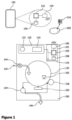
- FIG 1 schematically illustrates a washing machine 100 and a user terminal 150, that can together form a washing system.
- Such washing system may consist only of a washing machine 100, which has functionality integrated therein that is described in the present disclosure with respect to the user terminal 150.
- the washing machine 100 comprises a washing drum 132, into which garment can be placed for a washing cycle.
- a water inlet 142 such as a hose or other source
- the drum 132 or a sump (not explicitly illustrated), in which the drum 132 is installed, can be filled with water.
- the water inlet 142 may be controllable via an inlet valve 144.
- a water level sensor 105 may detect a water level in the drum 132 or sump.
- a load sensor 103 may be provided that is configured to weigh a load of the drum 132. Thus, the weight of garment loaded into the drum 132 can be weighed.
- the drum 132 can be moved, particularly, rotated. This can be achieved by a drive motor 136 mechanically coupled with the drum 132. Thus, driving the motor 136 is equivalent to driving or rotating the drum 132.
- a pump 134 may be provided to circulate water from the drum 132 or sump and back.
- a filter (not explicitly illustrated) may be arranged in a duct connected to the pump 134, so that particles in the water can be filtered out.
- waste water can be removed from the drum 132 or sump.
- the water outlet 146 may be connected to an outlet of the pump 134, so that the pump can further be configured to pump out waste water from the drum 132 or sump. It is to be understood that the water outlet 146 may likewise be equipped with a valve (not explicitly illustrated), if necessary.
- the washing machine 100 further comprises a controller 104, a user input unit 120 configured to receive a user input, and a memory 108 configured to store computer-executable instructions. These instructions may be loaded and executed by the controller 104 to perform a washing cycle, as it will be explained in more detail with respect to Figure 2 or 3 .
- the controller 104 can be part of a washing machine control unit 101 configured to control components of the washing machine 100, such as the drum 132 (e.g., via the motor 136), the pump 134, the water inlet 142 and/or valve 144, and the water outlet 146.
- the washing machine control unit 101 can comprise a component interface 110 configured to be coupled with at least one of the components 132, 134, 136, 142, 144, 146 of the washing machine 100 and to transmit a control signal to the at least one component.
- a signal line connecting the component interface 100 with the at least one component 132, 134, 136, 142, 144, 146 has been omitted.
- the washing machine 100 can further comprise a communication unit 106.
- the communication unit 106 allows wireless and/or wired communication with another device.
- the communication unit 106 can be configured to transmit and receive signals and data via a network 200.
- a server 210 may be connected to the network 200, so that a data communication can be achieved between the washing machine 100 and the server 210 via the communication unit 106.
- the washing machine 100 further comprises a user input unit 120.
- Figure 1 illustrates only a knob or button 122 representing one possibility for a user input device. It is to be understood that more than the one button 122 can be provided in the user input unit 120. This includes one or more keys, soft buttons and the like as well as a touchscreen.
- the washing machine 100 can further comprise a user output unit 125.
- the user output unit can include indication devices, such as one or more lights, a display, a speaker, a buzzer or the like. Such indication device may be employed to provide information to a user visually and/or audibly.
- the user output unit 125 can be combined with the user input unit 120 or can be spatially integrated therein. As a mere example, a touchscreen may be employed that combines the functionality of a user input unit 120 and user output unit 125.
- the user input unit 120 and/or user output unit 125 can be connected to the washing machine control unit 101, such as to the processor 104.
- the processor 104 can be configured to receive a user input from the user input unit 120 and can further be configured to output or indicate information to the user via the user output unit 125.
- a user input can be a fabric type selection of the user
- a user output can be information of a washing cycle, such as a beginning or other status of the washing cycle.
- the washing machine control unit 101 such as the processor 104, can be connected to a sensor of the washing machine 100, such as a load sensor 103 and/or a water level sensor 105.
- the washing machine control unit 101 can receive signals indicating a weight of the drum 132 and/or a water level in the drum 132 or sump, and can process the received signals to control the at least one component 132, 134, 136, 142, 144, 146 of the washing machine 100 based on the received signals and/or processed signals.
- the controller 104 can be configured to calculate a load of the garment in the drum 132 by determining a current and/or torque of the motor 136 driving the drum 132. For instance, the heavier the garment (dry vs. wet), the more power is required to move the drum 132. Thus, the controller 104 can implement a virtual load sensor, i.e., avoiding installation of an actual/physical load sensor 103. In addition, the controller 104 can further fill water into the drum 132 (e.g., by opening the valve 144), so that the garment absorbs water. By knowing the amount of water added to the washing machine 100, the weight of the garment can be determined by the controller 104 in a virtual manner.
- Figure 1 further illustrates a mobile terminal 150, such as a handheld device, a mobile telephone, a tablet, a laptop or the like.
- the mobile terminal 150 may be configured to communicate with the washing machine 100 and control at least one function of the washing machine 100. Some details of the mobile terminal 150 are illustrated highlighted between dashed-dotted lines.
- the mobile terminal 150 for example, includes a processor 153 and a memory 155 configured to store processor-executable instructions. These instructions can be executed by the processor 153 and configure the processor 153 and, hence, the mobile terminal 150, to perform a particular operation relating to the washing machine 100, which will be explained in more detail with respect to Figure 2 or 3 .
- the mobile terminal 150 can include a communication unit 154 configured to communicate with a washing machine 100.
- the communication unit 154 allows a wireless and/or wired communication with another device.
- the communication unit 154 can be configured to transmit and receive signals and data via a network 200.
- a data communication can be achieved between the mobile terminal 150 and the server 210 via the network 200.
- a data communication can be achieved between the washing machine 100 and mobile terminal 150 via associated communication units 106, 154. It is to be understood that a direct communication between mobile terminal 150 and washing machine 100 can likewise be achieved via communication units 154 and 106.
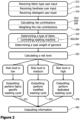
- FIG. 2 schematically illustrates a flow diagram of a method for reducing detachment of microfibres from garment in a dedicated washing cycle of a washing machine 100.
- This dedicated washing cycle is the result of a Spanish funding project called "Fiberclean project”.
- the method may be performed by the processor 153 of the mobile terminal 150 and/or the controller 104 of the washing machine 100.
- the processor-executable instructions or computer-executable instructions stored in the respective memory 155, 108 may configure the mobile terminal 150 and/or the washing machine 100 to perform the method or at least some of the method steps, so that interoperability between the mobile terminal 150 and the washing machine 100 is achieved.
- a fabric type user input is received that specifies a type of fabric of a garment placed in the washing machine 100, particularly placed in the drum 132.
- the fabric type may be input by a user via a user input unit of the mobile terminal 150 (not explicitly illustrated) or via the user input unit 120 of the washing machine 100, depending on which device performs the method.
- the user may directly input one or more fabric types of the garment placed into the drum 132.
- a list of possible fabric types is presented to the user, from which the user can select one or more.
- a hardness user input and a detergent user input can be received, respectively.
- the hardness user input specifies a water hardness of the water provided to the washing machine. For instance, the user may have the corresponding information from a water supplier or the like and enters the information via a user input unit.
- the hardness user input can be a water hardness value. The water hardness may not change often, so that this optional receiving step 314 may be performed only once, at long-term intervals (e.g., every year or second year) or not at all.
- the detergent user input specifies a detergent type used in the washing machine for the (next) washing cycle.
- the detergent user input may refer to HDD, LDD, biodegradable detergent, non-biodegradable detergent, or the like.
- the user input steps 314 and 316 may be performed at the user input unit of the mobile terminal 150 and/or via the user input unit 120 of the washing machine 100.
- the method continues with calculating a risk contribution in step 353, and optionally in steps 356 and 358. For instance, a risk contribution due to the fabric type user input can be calculated in step 353. If input by the user in steps 314 and/or 316, a risk contribution due to the specified water hardness can be calculated in step 354 and/or a risk contribution due to the specified detergent can be calculated in step 356. Thus, a risk contribution for each user input value is calculated.
- a risk contribution can be any value of a particular range, such as a certain value from 0 to 10 or from 0 to 100.
- a risk contribution value can be 0, 2, 5, 10 (or any value therebetween) or 0, 10, 20, 50, 80, 100 (or any value therebetween), wherein 0 means (almost) no risk, and 10 / 100 means a very high risk of detachment of microfibres.
- the risk contribution(s) can be weighted.
- the weighted risk contribution(s) can be summed up, i.e. a weighted sum is calculated.
- the risk contribution due to the fabric type user input may receive a higher weight, as it has larger impact on the actual amount of detached microfibres.
- the risk contribution due to fabric type user input may be weighted to form 60% of the weighted sum, while the risk contributions due to the specified water hardness and the specified detergent may each be weighted to form 20% of the weighted sum.
- the method further includes determining a type of fabric in step 332.
- the fabric type of the garment in the washing machine 100 is determined by the washing machine 100. This fabric type is processed either by the controller 104 of the washing machine 100 or it is transmitted via communication units 106 and 154 to the mobile terminal 150, where it is processed by processor 153. Alternatively or additionally, sensor information is provided by the washing machine 100 to the mobile terminal 150, so that the mobile terminal 150 can determine the fabric type of the garment based on the sensor information.
- the fabric type can be determined by the washing machine 100 by different means.
- the determining of the type of fabric can include controlling the washing machine to open a water inlet 142 in step 362.
- a water absorption of the garment can then be determined and allows conclusions on the type of fabric depending on the amount of water absorbed by the garment.
- the determining of the type of fabric can further include controlling the washing machine to operate the drum 132 in step 364.
- the load of garment can be weighed or virtually determined when the garment is dry. Then, the water inlet 142 is opened, for example, until the water level sensor 105 outputs a corresponding signal indicating the water level in the drum 132. This allows weighing or virtually determining the load of the wet garment. Based on the difference between dry and wet load, the controller 104 can calculate a fabric type. This can include using a lookup table including a mapping between load difference(s) and garment types. The opening of the water inlet 142 may be repeated one or more times, in order to achieve more precise results for the fabric type determination.
- the virtual determination of the load of the garment can include measuring a power consumption or torque of the motor 136, i.e. moving the garment in the drum 132.
- the measured power consumption or torque of the motor 136 varies depending on the amount of water absorption by the garment fabric.
- the processor 104 can determine (calculate or use a lookup table) the fabric type in dependence on the weight of the dry garment and the wet garment (including several repetitions of adding more water to the garment and measuring the power consumption or torque of the motor 136).
- an amount of water filled into the drum 132 can be opposed to a water level in the drum 132 sensed by the water level sensor 105.
- compared to filling the same amount of water in an empty drum 132 may lead to a different water level depending on the type of fabric of the garment.
- the difference between the water level of an empty drum 132 and the sensed water level indicated by sensor 105 allows determination of the fabric type, for example, based on empirical values.
- Any signal from the sensor 105 or weight values determined by the controller 104 may be transmitted to the mobile terminal 150 (as the sensor information), so that the mobile terminal can perform the associated determination of the fabric type.
- the determining of the type of fabric of the garment can include controlling the washing machine 100, particularly operating the drum 132.
- the drum 132 may be moved back and forth. This movement may include only a few degrees forward and backward or one or more full rotations in a forward or backward direction.
- the drum 132 is rotated in the same direction with a predefined rotational speed, such as 30 to 35 rpm.
- the load sensor 103 can provide a corresponding signal indicating a weight of the drum 132. This weight allows conclusions on the water absorption of the garment based on empirical values. Likewise, any signal from the load sensor 103 may be transmitted to the mobile terminal 150 (as the sensor information), to allow the mobile terminal 152 determine the fabric type.
- the load weight of the garment can be determined in step 334, for example, when the garment is placed into the drum 132 and/or during a washing cycle. Alternatively or additionally, the load weight of the garment can also be determined during controlling the washing machine in steps 362 and 364, i.e. letting the garment absorb water.
- the method continues with step 352 calculating a risk level based on the (risk contribution due to) fabric type user input and the determined type of fabric.
- the risk level indicates a risk that microfibres can be detached from the garment during the washing cycle.
- the risk level is calculated to determine whether the fabric type user input may lead to fibre shedding, i.e. the emission of microfibres from the garment.
- the fabric type user input and the type of fabric determined by the information received from the washing machine 100 are compared.
- step 332 if in step 332 it is determined that a majority of the garment consists of cotton, the risk of detachment of microfibres is very low. In this case (i.e., cotton is determined to be placed in the drum 132), the method could be stopped, as there is no risk of microfibre detachment. In other words, the risk level is calculated to be 0.
- a factor may be applied to the determined type of fabric (step 332) which results in a low risk level.
- the factor for calculating the risk level can be smaller than 1, for example can be 0, 0.1, 0.5, 0.8, or the like.
- the calculated risk contribution(s) (see step 355, 356, 358) may also be taken into account.
- the calculated risk contribution(s) can be multiplied with a factor depending on whether the risk contribution(s) increases or decreases the resulting risk level. For instance, the calculated risk contribution should be increased when calculating the risk level.
- the factor can be larger than 1, such as 1.2, 1.5, 2, 5 or the like.
- step 353 (calculating a risk contribution) can be omitted, if only the fabric type user input of step 312 is performed and the optional steps 314 and 316 are omitted.
- the type of fabric (from the user input and from the determination by the washing machine 100 or mobile terminal 150) may be used to directly calculate a risk level. This further allows avoiding a weighting of any risk level or risk contribution.
- the determined load weight of the garment can be taken into account when calculating the risk level in step 352.
- the risk contributions from step 353 (and optionally 356, 358) or from step 359 can be further modified based on the determined load weight of the garment.
- the resulting risk level has to be increased compared to the risk contribution(s).
- the risk contribution from step 353 (and optionally 356, 358) or from step 359 as well as the calculated risk level from step 352 could be a value between 0 and 100.
- the below (lookup) table indicates an influence on the risk level based on the determined load weight: Load 0 10 20 30 40 50 60 70 80 90 100 Quarter load (0%-25%) Half load (25%-50%) Full load (50%-100%) wherein a white field means a low risk, a light grey field means a medium risk and a dark grey field means a high risk of microfibre detachment.
- the above table may be further divided, for example, by sub-grouping the load.
- sub-groups in steps of, for example, 200g, 500g or 1000g can be employed to divide the load groups into finer groups.
- This can be derived from the below (lookup) table forming only one possible example: Load Load (g) 0 10 20 30 40 50 60 70 80 90 100 Quarter load (0%-25%) 0 500 1000 1500 Half load (25%-50%) 2000 2500 3000 3500 Full load (50%-100%) 4000 4500 5000 5500 6000 6500 7000
- the risk level may be low (white fields). Otherwise, there is a medium risk level or even high risk level, particularly for a quarter load and half load.
- risk level calculation may be performed in any manner, taking into account the type of fabric determined by the washing machine and/or taking into account the load weight determined by the washing machine.
- the user input may be handled by values of a 0..10 scale, so that each of the risk contributions calculated in step 353, 356, 358 results in a value between 0 and 10. These values may be multiplied by 10 and/or may be summed up, or a weighted sum may be calculated from the risk contributions, so that the resulting risk level is in a 0..100 scale.
- a specific example would be using in step 359 a factor of 1 to 3, preferably 2, for calculating the risk contributions regarding water hardness (step 314, 356) and regarding detergent (step 316, 358), and using a factor of 4 to 8, preferably 6, for calculating the risk contribution of the fabric type user input (steps 312, 353).
- the risk level calculated as a weighted sum, will be any value between 0 and 100 (e.g., using a 0..10 scale and factors of: 2, 2, and 6). This risk level can then be applied to one of the above (lookup) tables, where the resulting risk level is classified in dependence on the determined load (from step 334).
- the resulting risk level can be low or high, or optionally can have a medium value. If the risk level is low, in step 372 information is output that indicates to perform a washing cycle according to the type of fabric specified by the fabric type user input. On the other hand, if the risk level is high, in step 376 information is output that indicates to perform a dedicated washing cycle reducing detachment of microfibres. In other words, the dedicated washing cycle is employed and overrules any washing cycle identified by the fabric type user input.
- the risk level can also be medium and, if so, in step 374 information is output that indicates to perform a modified washing cycle.
- the modified washing cycle is based on or according to the type of fabric specified in the fabric type user input, where one or more washing parameters are modified.
- the one or more modified washing parameters can include an adapted water temperature and/or an adapted spin speed of the drum of the washing machine. The spin speed is particularly relevant at the end of a rinsing phase of the washing cycle.
- the water temperature can be adapted by setting a maximum water temperature to 40°C, or a maximum of 30°C.
- the spin speed can be adapted by setting a maximum spin speed between 400 rpm and 800 rpm. Spinning the garment with 400 rpm, 800 rpm, or another particular value therebetween, reduces the amount of microfibres shedded from the garment.
- the outputting of information in step 372, 374 or 376 can comprise outputting a corresponding user message (e.g., via a display of the mobile terminal 150 and/or the user output unit 125 of the washing machine 100) and/or transmitting a corresponding signal to the washing machine 100 and/or transmitting a corresponding signal to a washing machine component 132, 134, 136, 142, 144, 146 and to perform the respective washing cycle.
- a signal indicating the modified washing cycle can be transmitted to the washing machine 100.
- This signal can include the modified washing parameter(s).
- a signal is transmitted indicating the washing cycle specific to the fabric type or the dedicated washing cycle, respectively.
- Such signal can include an identification of the respective washing cycle and/or can include all washing parameters for the particular washing cycle.
- the transmission of this signal can take place via the communication unit(s) 154, 106, if the method is performed at the mobile terminal 150, and can take place via the component interface 110, if the method is performed by the washing machine 100.
- Corresponding information on the washing cycle performed by the washing machine 100 and selected depending on the calculated total risk level can be output to the user in step 392.
- a status of the respective washing cycle can be output during performing of the washing cycle.
- step 392 information can be output to the user that a microfibre filter of the washing machine 100 requires cleaning or replacement.
- This information output can be optional to the above-described information output to the user.
- the outputting of the information on the microfibre filter can be based on a power consumed by a pump motor (not explicitly illustrated) driving the water pump 134 of the washing machine 100. For instance, if the water pump 134 conveys the water in/from the drum 132 through the microfibre filter, the required power to convey the water will decrease with increasing clogging of the filter.
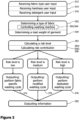
- Figure 3 schematically illustrates another exemplary method for reducing detachment of microfibres from garment in a washing cycle.
- the majority of method steps of the method of Figure 3 are identical to those of the method of Figure 2 . These method steps have been provided with the same reference numerals and their description will be omitted for sake of brevity of this disclosure.
- the risk level is calculated in step 352 solely based on the received fabric type user input (step 312) and the determined type of fabric (step 332).
- the method could function even without further user input and without determination of a load weight (step 334). Nevertheless, if such further user input and/or load weight determination takes place, a risk contribution(s) is/are calculated in step 354, 356 and/or 358 once the risk level is calculated.
- the risk level may be amended based on further information.
- particular risk contributions are calculated. For instance, a risk contribution due to the specified water hardness can be calculated in step 354, a risk contribution due to the specified detergent can be calculated in step 356 and/or a risk contribution due to a determined load weight can be calculated in step 358.
- the load weight of the garment can be determined in step 334, for example, when the garment is placed into the drum 132. Alternatively or additionally, the load weight of the garment can also be determined during controlling the washing machine in steps 362 and 364, i.e. letting the garment absorb water.
- the risk level as well as each risk contribution can be weighted (not explicitly illustrated in Figure 3 ), for example, to form a weighted sum of the risk level and each risk contribution, if any. Since the determined fabric type has the greatest influence on the amount of microfibres emitted during a washing cycle, the risk level can be weighted higher than the risk contribution(s).
- the method of Figure 3 can be employed by the washing machine 100, where any user input is performed at the washing machine 100, particularly at the user input unit 120.
- the receiving and determining steps 312 to 334 can be performed any time and in any (timely) order. This further allows grouping the corresponding tasks by the washing machine, as no interaction with the mobile terminal 150 is necessary. For instance, the calculation of a risk level and calculation of the risk contribution can take place after the receiving and determining steps 312 to 334 are completed.
- the washing machine 100 can be used as a standard washing machine. Particularly, if the user is at the washing machine 100 and not at a mobile terminal 150, which may be spatially away from the washing machine 100, the washing machine 100 can be used in a usual manner. This includes operating the washing machine 100 also without determination of a risk level and/or risk contribution.
- the dedicated washing cycle for reducing detachment of microfibres takes into account several washing parameters observed during testing, such as:
- the dedicated washing cycle can be performed in accordance with the below illustrated washing parameter ranges.
- the below table shows, for comparison, a "normal" 60 minute washing cycle, a dedicated washing cycle, and washing parameter ranges for the dedicated washing cycle.
Landscapes
- Engineering & Computer Science (AREA)
- Textile Engineering (AREA)
- Computer Networks & Wireless Communication (AREA)
- Control Of Washing Machine And Dryer (AREA)
Priority Applications (4)
| Application Number | Priority Date | Filing Date | Title |
|---|---|---|---|
| EP23382837.5A EP4506500A1 (fr) | 2023-08-09 | 2023-08-09 | Procédé et appareil pour réduire le détachement de microfibres d'un vêtement dans une machine à laver |
| CN202411063425.7A CN119465571A (zh) | 2023-08-09 | 2024-08-05 | 用于在洗衣机中减少微纤维从衣物上脱落的方法和装置 |
| US18/796,658 US20250051985A1 (en) | 2023-08-09 | 2024-08-07 | Method and apparatus for reducing detachment of microfibres from garment in a washing machine |
| KR1020240107123A KR20250023323A (ko) | 2023-08-09 | 2024-08-09 | 세탁기에서 의류로부터 미세 섬유의 분리를 감소시키기 위한 방법 및 장치 |
Applications Claiming Priority (1)
| Application Number | Priority Date | Filing Date | Title |
|---|---|---|---|
| EP23382837.5A EP4506500A1 (fr) | 2023-08-09 | 2023-08-09 | Procédé et appareil pour réduire le détachement de microfibres d'un vêtement dans une machine à laver |
Publications (2)
| Publication Number | Publication Date |
|---|---|
| EP4506500A1 true EP4506500A1 (fr) | 2025-02-12 |
| EP4506500A9 EP4506500A9 (fr) | 2025-05-28 |
Family
ID=87848027
Family Applications (1)
| Application Number | Title | Priority Date | Filing Date |
|---|---|---|---|
| EP23382837.5A Pending EP4506500A1 (fr) | 2023-08-09 | 2023-08-09 | Procédé et appareil pour réduire le détachement de microfibres d'un vêtement dans une machine à laver |
Country Status (4)
| Country | Link |
|---|---|
| US (1) | US20250051985A1 (fr) |
| EP (1) | EP4506500A1 (fr) |
| KR (1) | KR20250023323A (fr) |
| CN (1) | CN119465571A (fr) |
Families Citing this family (1)
| Publication number | Priority date | Publication date | Assignee | Title |
|---|---|---|---|---|
| US12427453B2 (en) * | 2022-11-25 | 2025-09-30 | Samsung Electronics Co., Ltd. | Microplastic filter for washing machines or other appliances |
Citations (3)
| Publication number | Priority date | Publication date | Assignee | Title |
|---|---|---|---|---|
| WO2019081013A1 (fr) * | 2017-10-25 | 2019-05-02 | E.G.O. Elektro-Gerätebau GmbH | Procédé permettant de faire fonctionner une machine à laver et machine à laver |
| EP3608466A1 (fr) * | 2018-08-09 | 2020-02-12 | E.G.O. ELEKTRO-GERÄTEBAU GmbH | Dispositif de traitement de linge et son procédé de fonctionnement |
| DE102019117282A1 (de) * | 2019-06-27 | 2020-12-31 | Miele & Cie. Kg | Verfahren zum Betreiben einer Waschmaschine und Waschmaschine |
-
2023
- 2023-08-09 EP EP23382837.5A patent/EP4506500A1/fr active Pending
-
2024
- 2024-08-05 CN CN202411063425.7A patent/CN119465571A/zh active Pending
- 2024-08-07 US US18/796,658 patent/US20250051985A1/en active Pending
- 2024-08-09 KR KR1020240107123A patent/KR20250023323A/ko active Pending
Patent Citations (3)
| Publication number | Priority date | Publication date | Assignee | Title |
|---|---|---|---|---|
| WO2019081013A1 (fr) * | 2017-10-25 | 2019-05-02 | E.G.O. Elektro-Gerätebau GmbH | Procédé permettant de faire fonctionner une machine à laver et machine à laver |
| EP3608466A1 (fr) * | 2018-08-09 | 2020-02-12 | E.G.O. ELEKTRO-GERÄTEBAU GmbH | Dispositif de traitement de linge et son procédé de fonctionnement |
| DE102019117282A1 (de) * | 2019-06-27 | 2020-12-31 | Miele & Cie. Kg | Verfahren zum Betreiben einer Waschmaschine und Waschmaschine |
Also Published As
| Publication number | Publication date |
|---|---|
| US20250051985A1 (en) | 2025-02-13 |
| CN119465571A (zh) | 2025-02-18 |
| EP4506500A9 (fr) | 2025-05-28 |
| KR20250023323A (ko) | 2025-02-18 |
Similar Documents
| Publication | Publication Date | Title |
|---|---|---|
| CN111254630B (zh) | 一种判断洗衣机空桶的方法及采用其的洗衣机 | |
| US11486072B2 (en) | Automatic color composition detection for laundry washing machine | |
| US7174227B2 (en) | Laundry system including home terminal device and laundry apparatus with communicating function | |
| CN102656308B (zh) | 洗衣机 | |
| AU2013273542B2 (en) | Water bearing household appliance and associated operating method | |
| EP3296441B1 (fr) | Procédé de commande de libération de détergent à lessive, et machine à laver | |
| US12601096B2 (en) | Laundry washing machine color composition analysis during loading | |
| EP4506500A1 (fr) | Procédé et appareil pour réduire le détachement de microfibres d'un vêtement dans une machine à laver | |
| EP4506499A1 (fr) | Unité de commande de machine à laver et machine à laver pour réduire le détachement de microfibres d'un vêtement | |
| CN106917229A (zh) | 洗衣机的控制方法、装置及洗衣机 | |
| CN111020969A (zh) | 洗涤方法、装置、电子设备和存储介质 | |
| JP2020078488A (ja) | 洗濯機 | |
| WO2018206951A1 (fr) | Personnalisation d'appareil | |
| CN112176650B (zh) | 洗衣机控制方法、装置、洗衣机及存储介质 | |
| EP2458058A1 (fr) | Machine à laver | |
| CN114763642B (zh) | 用于洗涤设备的控制方法 | |
| CN112941806A (zh) | 洗衣机及其泡沫量预测方法、装置和电子设备 | |
| CN114438710A (zh) | 洗衣机的控制方法及洗衣机 | |
| JP2026010808A (ja) | ランドリー管理システム | |
| JP2026059217A (ja) | ランドリー装置 | |
| CN116815449A (zh) | 一种添加剂投放设备及其控制方法 | |
| JP2004105266A (ja) | 環境負荷評価機能を持つ電気製品 | |
| CN109576954A (zh) | 洗衣机程序显示方法 |
Legal Events
| Date | Code | Title | Description |
|---|---|---|---|
| PUAI | Public reference made under article 153(3) epc to a published international application that has entered the european phase |
Free format text: ORIGINAL CODE: 0009012 |
|
| STAA | Information on the status of an ep patent application or granted ep patent |
Free format text: STATUS: REQUEST FOR EXAMINATION WAS MADE |
|
| 17P | Request for examination filed |
Effective date: 20240614 |
|
| AK | Designated contracting states |
Kind code of ref document: A1 Designated state(s): AL AT BE BG CH CY CZ DE DK EE ES FI FR GB GR HR HU IE IS IT LI LT LU LV MC ME MK MT NL NO PL PT RO RS SE SI SK SM TR |