EP4506662A1 - Procédé, appareil et dispositif d'alignement de camion de transport de marchandises sans conducteur et support d'enregistrement lisible - Google Patents
Procédé, appareil et dispositif d'alignement de camion de transport de marchandises sans conducteur et support d'enregistrement lisible Download PDFInfo
- Publication number
- EP4506662A1 EP4506662A1 EP23884548.1A EP23884548A EP4506662A1 EP 4506662 A1 EP4506662 A1 EP 4506662A1 EP 23884548 A EP23884548 A EP 23884548A EP 4506662 A1 EP4506662 A1 EP 4506662A1
- Authority
- EP
- European Patent Office
- Prior art keywords
- drayage
- unmanned
- truck
- alignment
- target
- Prior art date
- Legal status (The legal status is an assumption and is not a legal conclusion. Google has not performed a legal analysis and makes no representation as to the accuracy of the status listed.)
- Pending
Links
Images


Classifications
-
- G—PHYSICS
- G06—COMPUTING OR CALCULATING; COUNTING
- G06V—IMAGE OR VIDEO RECOGNITION OR UNDERSTANDING
- G06V20/00—Scenes; Scene-specific elements
- G06V20/50—Context or environment of the image
- G06V20/56—Context or environment of the image exterior to a vehicle by using sensors mounted on the vehicle
- G06V20/58—Recognition of moving objects or obstacles, e.g. vehicles or pedestrians; Recognition of traffic objects, e.g. traffic signs, traffic lights or roads
-
- G—PHYSICS
- G01—MEASURING; TESTING
- G01C—MEASURING DISTANCES, LEVELS OR BEARINGS; SURVEYING; NAVIGATION; GYROSCOPIC INSTRUMENTS; PHOTOGRAMMETRY OR VIDEOGRAMMETRY
- G01C21/00—Navigation; Navigational instruments not provided for in groups G01C1/00 - G01C19/00
- G01C21/20—Instruments for performing navigational calculations
-
- G—PHYSICS
- G05—CONTROLLING; REGULATING
- G05D—SYSTEMS FOR CONTROLLING OR REGULATING NON-ELECTRIC VARIABLES
- G05D1/00—Control of position, course, altitude or attitude of land, water, air or space vehicles, e.g. using automatic pilots
- G05D1/20—Control system inputs
- G05D1/22—Command input arrangements
- G05D1/221—Remote-control arrangements
- G05D1/225—Remote-control arrangements operated by off-board computers
-
- G—PHYSICS
- G05—CONTROLLING; REGULATING
- G05D—SYSTEMS FOR CONTROLLING OR REGULATING NON-ELECTRIC VARIABLES
- G05D1/00—Control of position, course, altitude or attitude of land, water, air or space vehicles, e.g. using automatic pilots
- G05D1/20—Control system inputs
- G05D1/24—Arrangements for determining position or orientation
- G05D1/247—Arrangements for determining position or orientation using signals provided by artificial sources external to the vehicle, e.g. navigation beacons
- G05D1/249—Arrangements for determining position or orientation using signals provided by artificial sources external to the vehicle, e.g. navigation beacons from positioning sensors located off-board the vehicle, e.g. from cameras
-
- G—PHYSICS
- G05—CONTROLLING; REGULATING
- G05D—SYSTEMS FOR CONTROLLING OR REGULATING NON-ELECTRIC VARIABLES
- G05D1/00—Control of position, course, altitude or attitude of land, water, air or space vehicles, e.g. using automatic pilots
- G05D1/60—Intended control result
- G05D1/656—Interaction with payloads or external entities
- G05D1/667—Delivering or retrieving payloads
-
- G—PHYSICS
- G06—COMPUTING OR CALCULATING; COUNTING
- G06T—IMAGE DATA PROCESSING OR GENERATION, IN GENERAL
- G06T7/00—Image analysis
- G06T7/70—Determining position or orientation of objects or cameras
- G06T7/73—Determining position or orientation of objects or cameras using feature-based methods
-
- G—PHYSICS
- G05—CONTROLLING; REGULATING
- G05D—SYSTEMS FOR CONTROLLING OR REGULATING NON-ELECTRIC VARIABLES
- G05D2105/00—Specific applications of the controlled vehicles
- G05D2105/20—Specific applications of the controlled vehicles for transportation
- G05D2105/28—Specific applications of the controlled vehicles for transportation of freight
-
- G—PHYSICS
- G05—CONTROLLING; REGULATING
- G05D—SYSTEMS FOR CONTROLLING OR REGULATING NON-ELECTRIC VARIABLES
- G05D2107/00—Specific environments of the controlled vehicles
- G05D2107/80—Transportation hubs
- G05D2107/84—Harbours
-
- G—PHYSICS
- G05—CONTROLLING; REGULATING
- G05D—SYSTEMS FOR CONTROLLING OR REGULATING NON-ELECTRIC VARIABLES
- G05D2109/00—Types of controlled vehicles
- G05D2109/10—Land vehicles
-
- G—PHYSICS
- G05—CONTROLLING; REGULATING
- G05D—SYSTEMS FOR CONTROLLING OR REGULATING NON-ELECTRIC VARIABLES
- G05D2111/00—Details of signals used for control of position, course, altitude or attitude of land, water, air or space vehicles
- G05D2111/10—Optical signals
-
- G—PHYSICS
- G06—COMPUTING OR CALCULATING; COUNTING
- G06T—IMAGE DATA PROCESSING OR GENERATION, IN GENERAL
- G06T2207/00—Indexing scheme for image analysis or image enhancement
- G06T2207/10—Image acquisition modality
- G06T2207/10016—Video; Image sequence
-
- G—PHYSICS
- G06—COMPUTING OR CALCULATING; COUNTING
- G06T—IMAGE DATA PROCESSING OR GENERATION, IN GENERAL
- G06T2207/00—Indexing scheme for image analysis or image enhancement
- G06T2207/30—Subject of image; Context of image processing
- G06T2207/30108—Industrial image inspection
- G06T2207/30164—Workpiece; Machine component
-
- G—PHYSICS
- G06—COMPUTING OR CALCULATING; COUNTING
- G06T—IMAGE DATA PROCESSING OR GENERATION, IN GENERAL
- G06T2207/00—Indexing scheme for image analysis or image enhancement
- G06T2207/30—Subject of image; Context of image processing
- G06T2207/30236—Traffic on road, railway or crossing
Definitions
- the present invention relates to the field of unmanned drayage truck control in smart ports, and in particular to an unmanned drayage truck alignment method, apparatus, and device, and a readable storage medium.
- ports mostly use manned drayage trucks to transport containers to complete loading operations, wherein when precise parking is required under port machinery equipment or in the yard operation area, drivers need to manually align and park according to the parking rods placed manually under the port machinery equipment, so as to facilitate the subsequent completion of container lifting and placing operations by the port machinery equipment.
- the method of using manned drayage trucks for alignment and parking mentioned above poses safety hazards to drivers and guiding personnel under the port machinery equipment, and is inefficient with high labor costs.
- the main purpose of the present invention is to provide an unmanned drayage truck alignment method, apparatus, and device, and a readable storage medium, aiming to solve the technical problem in the prior art that when manned drayage trucks are used for alignment and parking, manual alignment is required, which is inefficient and poses safety hazards.
- the present invention provides an unmanned drayage truck alignment method, comprising the following steps:
- the step of acquiring alignment information of the unmanned drayage truck comprises the following steps:
- the step of acquiring alignment information of the unmanned drayage truck comprises the following steps:
- the step of constructing an error correction model based on the test data comprises:
- the step of adjusting the position of the unmanned drayage truck based on the alignment information comprises:
- the method before the step of adjusting the position of the unmanned drayage truck based on the alignment information, the method further comprises:
- the present invention provides an unmanned drayage truck alignment apparatus, comprising:
- the unmanned drayage truck alignment apparatus further comprises a computing module, which is configured to:
- the unmanned drayage truck alignment apparatus further comprises an error correction module, which is configured to:
- the error correction module is further specifically configured to:
- the adjustment module is further specifically configured to:
- the unmanned drayage truck alignment apparatus further comprises an obstacle warning module, which is configured to:
- the present invention further provides an unmanned drayage truck alignment device, the unmanned drayage truck alignment device comprises a processor, a memory, and an unmanned drayage truck alignment program stored on the memory and executable by the processor, wherein when the unmanned drayage truck alignment program is executed by the processor, the steps of the above-mentioned unmanned drayage truck alignment method are realized.
- the unmanned drayage truck alignment device comprises a processor, a memory, and an unmanned drayage truck alignment program stored on the memory and executable by the processor, wherein when the unmanned drayage truck alignment program is executed by the processor, the steps of the above-mentioned unmanned drayage truck alignment method are realized.
- the present invention further provides a readable storage medium, an unmanned drayage truck alignment program is stored on the readable storage medium, wherein when the unmanned drayage truck alignment program is executed by a processor, the steps of the above-mentioned unmanned drayage truck alignment method are realized.
- the present invention provides an unmanned drayage truck alignment method, apparatus, and device, and a readable storage medium
- the unmanned drayage truck alignment method comprises the steps of controlling an unmanned drayage truck to perform alignment based on positioning information of a target position; acquiring alignment information of the unmanned drayage truck; determining whether the unmanned drayage truck is successfully aligned based on the alignment information of the unmanned drayage truck; if yes, outputting prompt information to prompt port machinery equipment to perform container loading/unloading operation; and if not, adjusting the position of the unmanned drayage truck based on the alignment information, and returning to the step of acquiring alignment information of the unmanned drayage truck.
- the present invention can solve the problems of low efficiency and potential safety hazards of manual alignment and parking of manned drayage trucks under the port machinery equipment, and on the basis, ensures the alignment accuracy and the safety reliability of unmanned drayage trucks, thereby making the overall interaction operation between the unmanned drayage trucks and the port machinery equipment safer and more efficient.
- the embodiment of the present invention provides an unmanned drayage truck alignment device.
- Fig. 1 is a hardware structure diagram of an unmanned drayage truck alignment device involved in the embodiment of the present invention.
- the unmanned drayage truck alignment device can comprise a processor 1001 (for example, a central processing unit (CPU)), a communication bus 1002, a user interface 1003, a network interface 1004, and a memory 1005.
- the communication bus 1002 is configured to realize the connection communication between these components.
- the user interface 1003 can comprise a display and an input unit such as a keyboard.
- the network interface 1004 can optionally comprise a standard wired interface and a wireless interface (such as a wireless-fidelity (WI-FI) interface).
- WI-FI wireless-fidelity
- the memory 1005 can be a high-speed random-access memory (RAM) or a non-volatile memory, such as a disk memory.
- the memory 1005 can optionally further be a storage device independent of the aforementioned processor 1001.
- Those skilled in the art can understand that the hardware structure shown in Fig. 1 does not constitute a limitation of the present invention, and can comprise more or less components than those shown in Fig. 1 , or combine some components, or arrange different components.
- the memory 1005 as a computer storage medium in Fig. 1 can comprise an operating system, a network communication module, a user interface module, and an unmanned drayage truck alignment program.
- the processor 1001 can call the unmanned drayage truck alignment program stored in the memory 1005, and execute the unmanned drayage truck alignment method provided by the embodiment of the present invention.
- the embodiment of the present invention provides an unmanned drayage truck alignment method.
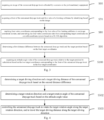
- Fig. 2 is a flowchart of an embodiment of an unmanned drayage truck alignment method in the present invention.
- the unmanned drayage truck alignment method comprises the steps of:
- unmanned drayage trucks are used for automatic driving alignment so as to solve the problem in the prior art that when manned drayage trucks are used for alignment and parking, manual alignment is required, which is inefficient and poses safety hazards.
- the target position corresponding to the high-precision positioning system and the positioning information of the unmanned drayage truck are first aligned.
- there are problems such as alignment accuracy and safety and reliability, which will lead to insufficient alignment success rate.
- the positioning signal of the unmanned drayage truck under the bridge may become unstable, leading to potential error reporting by the unmanned drayage truck, which may then wait in place for the positioning signal to recover; (2) if the difference between the accuracy of the positioning signal and the latitude and longitude of the destination is greater than the preset difference (such as 5cm), the unmanned drayage truck may need to make another round for repositioning, this repeated positioning can greatly affect operational efficiency and may cause congestion; and (3) in the case where the positioning signal is lost and no electronic fence is set in the intelligent system map of the vehicle, there is a risk of the vehicle on the quay bridge plunging into the sea.
- the preset difference such as 5cm
- the alignment information of the unmanned drayage truck will be acquired in real time. Whether the unmanned drayage truck is successfully aligned is determined based on the judgment of the above alignment information. When it is determined that the alignment is successful, a prompt information can be output, such as controlling the green light above the lifting gear of the port machinery equipment, thereby indicating that the port machinery operator can perform the grabbing/releasing of containers, that is, prompting the port machinery equipment to perform the loading/unloading of containers. When it is determined that the unmanned drayage truck has not been successfully aligned, the position of the unmanned drayage truck can be adjusted based on the alignment information.
- the step of acquiring the alignment information of the unmanned drayage truck is returned until the unmanned drayage truck is aligned successfully.
- the above-mentioned method of determining the alignment result based on positioning information and alignment information can solve the problem of low efficiency and potential safety hazards of manual alignment and parking of manned drayage trucks under port machinery equipment, and on the basis, ensures the alignment accuracy and the safety reliability of unmanned drayage trucks.
- the steps before S20 comprise:
- the unmanned drayage truck acquires the alignment information, it is necessary to collect the alignment information based on the port intelligent alignment system iCPS, etc.
- the alignment information collected by the iCPS can establish a camera-specific image coordinate system based on the camera video information on the lifting gear of the port machinery equipment.
- the camera on the lifting gear of the port machinery equipment collects images of the unmanned drayage truck in real time to capture and identify the boundary coordinates of the unmanned drayage truck in the collected images.
- the unmanned drayage truck boundary that needs to be identified comprises the front of the unmanned drayage truck and the four sides of the limiting subframe.
- the four vertex coordinates (X1, Y1), (X2, Y2), (X3, Y3), and (X4, Y4) corresponding to the four sides of the limiting subframe in the image coordinate system can be marked, and based on the SLAM algorithm, the four vertex coordinates can be converted into the corresponding four target coordinates (XG1, YG1), (XG2, YG2), (XG3, YG3), and (XG4, YG4) in the world coordinate system.
- the first distance difference between the unmanned drayage truck and the target position can be determined.
- the above first distance difference represents the deviation from the precise operation center position that the drayage truck needs to reach, wherein a positive value indicates the forward distance and a negative value indicates the backward distance, with units in millimeters (mm).
- the above first distance difference and attitude angle value are both the alignment information of the unmanned drayage truck, and the above alignment information will be pushed by the iCPS to the VMS vehicle management platform, and the VMS vehicle management platform will then push the above positioning information to the corresponding unmanned drayage truck end OBU.
- the steps before S20 comprise:
- the iCPS will report the distance L between the unmanned drayage truck and the target location at a fixed frequency, such as a frequency of 1 Hz.
- a fixed frequency such as a frequency of 1 Hz.
- L the distance between the unmanned drayage truck and the target location.
- D the distance between the unmanned drayage truck and the target location.
- the alignment adjustment process of the unmanned drayage truck needs to ensure the accuracy of alignment information, if the deviation is too large, the unmanned drayage truck will repeatedly perform alignment adjustment until the alignment is successful, which will result in extremely low efficiency. Therefore, it is necessary to control this deviation within a certain allowable range to acquire more accurate alignment information, thereby improving alignment efficiency.
- the unmanned drayage truck at the port is tested, and the test data L and D under each use case are collected at a frequency of seconds.
- the collected test data are a plurality of sets of first test distance difference values and corresponding second test distance difference values between the unmanned drayage truck and the target position collected at a preset frequency, wherein the first test distance difference values are acquired by identifying the image of the unmanned drayage truck collected by the camera on the port machinery equipment, and the second test distance difference values are acquired by calculating based on the positioning information of the unmanned drayage truck and the target position.
- an error correction model can be constructed based on the test data.
- the distance adjustment ratio can be determined based on the above error correction model, and the above distance adjustment ratio corresponds to the positive error between two test distances L and D of the unmanned drayage truck relative to the target position.
- the second distance difference between the unmanned drayage truck and the target location can be further determined based on the first distance difference and the distance adjustment ratio. For example, if the distance adjustment ratio is 0.5%-0.7%, and the first distance difference is L 0 , then the second distance difference can be further acquired as L 0 *(1+0.6%).
- the second distance difference is used as the distance difference between the unmanned drayage truck and the target position that needs to be referred to when the unmanned drayage truck in the alignment information performs alignment adjustment.
- the step of constructing an error correction model based on the test data comprises:
- the step of constructing an error correction model based on the test data comprises: calculating the ratios of the above a plurality of sets of the first test distance difference values L 0 and the corresponding second test distance difference values D 0 to acquire a plurality of sets of ratios. Then, through determining how many sets (i.e., the number of sets) correspond to the ratios in different numerical ranges, all the test data for the set ratios are integrated to acquire Table 1.
- a normal distribution curve is acquired by curve algorithm fitting.
- the error correction model can be constructed corresponding to the normal distribution curve acquired by fitting. Through the above error correction model, it can be determined how much the ratio of L 0 /D 0 is concentrated in a certain numerical range, such as concentrated between 100.5 and 100.7, that is, the actual distance between the unmanned drayage truck and the target position has a positive error of 0.5% to 0.7% relative to the distance monitored by the iCPS, that is, when the iCPS outputs the alignment information of the distance difference between the unmanned drayage truck and the target position, a correction value of 0.6% can be added.
- the above error correction model is acquired based on simulation, which can also be acquired through collecting more dimensional parameters, such as test data at various distances (within 10dm, 10-40dm, 40-80dm, 80-100dm, etc.) in various scenarios (rainy days, sunny days, snowy days, etc.) for group fitting to acquire a more accurate error adjustment model that adapts to more scenarios, thereby acquiring the alignment information with higher prediction accuracy.
- more dimensional parameters such as test data at various distances (within 10dm, 10-40dm, 40-80dm, 80-100dm, etc.) in various scenarios (rainy days, sunny days, snowy days, etc.) for group fitting to acquire a more accurate error adjustment model that adapts to more scenarios, thereby acquiring the alignment information with higher prediction accuracy.
- the step of adjusting the position of the unmanned drayage truck based on the alignment information comprises:
- the position of the unmanned drayage truck can be adjusted based on the relatively accurate alignment information.
- the alignment information comprises a second distance difference and an attitude angle value, and the target driving direction and target driving distance of the unmanned drayage truck can be determined through the second distance difference; and the target rotation direction and target rotation angle of the unmanned drayage truck can be determined through the attitude angle value.
- the unmanned drayage truck is controlled to rotate the target rotation angle along the target rotation direction, and to travel the target driving distance along the target driving direction. Since the above alignment information is relatively accurate, the alignment adjustment can be completed efficiently and accurately at this time.
- the step of adjusting the position of the unmanned drayage truck based on the alignment information it further comprises the following steps:
- the alignment adjustment of the unmanned drayage truck is a type of remote-control command
- the automatic driving system of the unmanned drayage truck will directly execute the stepping command of the adjustment.
- the vehicle-side laser radar of the unmanned drayage truck will continue to work synchronously, based on the reflected signal of the obstacle combined with timestamp information, laser scanning angle, GPS location and feature information. This data is processed into a high-precision three-dimensional coordinate, thereby becoming a three-dimensional signal with distance and spatial information. Based on fusion algorithms, a three-dimensional point cloud can be established.
- the three-dimensional point cloud information of the obstacle will be acquired, and based on the adjustment trajectory of the unmanned drayage truck, it will be determined whether there is a risk of collision with the obstacle. If there is a risk of collision, even if the adjustment instruction requires the vehicle to move forward a certain distance, the position adjustment of the unmanned drayage truck will be suspended to wait on a spot or avoid the obstacle, thereby ensuring the safety and efficiency of operations of the unmanned drayage truck.
- an unmanned drayage truck alignment method comprises: controlling an unmanned drayage truck to perform alignment based on positioning information of a target position; acquiring alignment information of the unmanned drayage truck; determining whether the unmanned drayage truck is successfully aligned based on the alignment information of the unmanned drayage truck; if yes, outputting prompt information to prompt port machinery equipment to perform container loading/unloading operation; and if not, adjusting the position of the unmanned drayage truck based on the alignment information, and returning to the step of acquiring alignment information of the unmanned drayage truck.
- the present invention can solve the problems of low efficiency and potential safety hazards of manual alignment and parking of manned drayage trucks under the port machinery equipment, and on the basis, ensures the alignment accuracy and the safety reliability of unmanned drayage trucks, thereby making the overall interaction operation between the unmanned drayage trucks and the port machinery equipment safer and more efficient.
- the embodiment of the present invention provides an unmanned drayage truck alignment apparatus.
- Fig. 5 is a schematic diagram of a functional module of an embodiment of an unmanned drayage truck alignment apparatus.
- the unmanned drayage truck alignment apparatus comprises:
- the unmanned drayage truck alignment apparatus further comprises a computing module, which is configured to:
- the unmanned drayage truck alignment apparatus further comprises an error correction module, which is configured to:
- the error correction module is further specifically configured to:
- the adjustment module 50 is further specifically configured to:
- the unmanned drayage truck alignment apparatus further comprises an obstacle warning module, which is configured to:
- each module in the above unmanned drayage truck alignment apparatus corresponds to the steps in the above embodiments of the unmanned drayage truck alignment method, and the functions and implementation processes thereof will not be repeated herein.
- the embodiment of the present invention further provides a readable storage medium.
- the readable storage medium of the present invention stores an unmanned drayage truck alignment program, when the unmanned drayage truck alignment program is executed by a processor, the steps of the above unmanned drayage truck alignment method are realized.
- the terms "include”, “comprise” or any other variants thereof are intended to cover non-exclusive inclusion, so that a process, method, article or device comprising a series of elements not only comprises those elements, but also comprises those that are not explicitly listed, or further comprises elements inherent to the process, method, article, or device. If there are no more restrictions, the elements defined by the sentence “comprising a" does not exclude the existence of other same elements in the process, method, article, or system comprising the elements.
Landscapes
- Engineering & Computer Science (AREA)
- Radar, Positioning & Navigation (AREA)
- Remote Sensing (AREA)
- Physics & Mathematics (AREA)
- General Physics & Mathematics (AREA)
- Automation & Control Theory (AREA)
- Aviation & Aerospace Engineering (AREA)
- Theoretical Computer Science (AREA)
- Computer Vision & Pattern Recognition (AREA)
- Multimedia (AREA)
- Control Of Position, Course, Altitude, Or Attitude Of Moving Bodies (AREA)
Applications Claiming Priority (2)
| Application Number | Priority Date | Filing Date | Title |
|---|---|---|---|
| CN202211372702.3A CN115773745A (zh) | 2022-11-03 | 2022-11-03 | 无人集卡对位方法、装置、设备及可读存储介质 |
| PCT/CN2023/123470 WO2024093616A1 (fr) | 2022-11-03 | 2023-10-09 | Procédé, appareil et dispositif d'alignement de camion de transport de marchandises sans conducteur et support d'enregistrement lisible |
Publications (2)
| Publication Number | Publication Date |
|---|---|
| EP4506662A1 true EP4506662A1 (fr) | 2025-02-12 |
| EP4506662A4 EP4506662A4 (fr) | 2026-01-07 |
Family
ID=85388733
Family Applications (1)
| Application Number | Title | Priority Date | Filing Date |
|---|---|---|---|
| EP23884548.1A Pending EP4506662A4 (fr) | 2022-11-03 | 2023-10-09 | Procédé, appareil et dispositif d'alignement de camion de transport de marchandises sans conducteur et support d'enregistrement lisible |
Country Status (3)
| Country | Link |
|---|---|
| EP (1) | EP4506662A4 (fr) |
| CN (1) | CN115773745A (fr) |
| WO (1) | WO2024093616A1 (fr) |
Families Citing this family (2)
| Publication number | Priority date | Publication date | Assignee | Title |
|---|---|---|---|---|
| CN115773745A (zh) * | 2022-11-03 | 2023-03-10 | 东风商用车有限公司 | 无人集卡对位方法、装置、设备及可读存储介质 |
| CN116795099A (zh) * | 2023-04-27 | 2023-09-22 | 济宁港航龙拱港有限公司 | 无人集卡调度方法及装置 |
Family Cites Families (13)
| Publication number | Priority date | Publication date | Assignee | Title |
|---|---|---|---|---|
| CN100537402C (zh) * | 2006-06-28 | 2009-09-09 | 上海振华港口机械(集团)股份有限公司 | 集装箱起重机的集卡车对位系统和方法 |
| CN102135435B (zh) * | 2010-12-20 | 2012-05-09 | 清华大学 | 一种数字太阳敏感器的误差修正方法及装置 |
| CN109895082A (zh) * | 2017-12-07 | 2019-06-18 | 中国科学院沈阳自动化研究所 | 一种应用于航天装配设备的控制系统 |
| EP3663250B1 (fr) * | 2018-12-03 | 2021-10-06 | CAMCO Technologies NV | Système et procédé d'alignement d'un camion terminal par rapport à une grue |
| CN110543612B (zh) * | 2019-06-27 | 2023-04-07 | 浙江工业大学 | 一种基于单目视觉测量的集卡定位方法 |
| CN112528721B (zh) * | 2020-04-10 | 2023-06-06 | 福建电子口岸股份有限公司 | 一种桥吊集卡安全定位方法和系统 |
| CN111508023B (zh) * | 2020-04-23 | 2023-09-12 | 畅加风行(苏州)智能科技有限公司 | 用于港口无人集卡的激光雷达辅助集装箱对位方法 |
| CN112150540B (zh) * | 2020-08-26 | 2023-08-25 | 交通运输部水运科学研究所 | 场桥下集卡对位方法、装置、终端、存储介质及处理器 |
| WO2022133636A1 (fr) * | 2020-12-21 | 2022-06-30 | 深圳元戎启行科技有限公司 | Procédé et appareil de répartition de camions porte-conteneurs sans pilote, et dispositif informatique et support de stockage |
| CN114299146B (zh) * | 2021-12-29 | 2025-07-01 | 北京万集科技股份有限公司 | 辅助停车方法、装置、计算机设备和计算机可读存储介质 |
| CN114852865B (zh) * | 2022-05-23 | 2025-08-05 | 青岛港国际股份有限公司 | 一种igv和armg自动引导对位方法及系统 |
| CN115180512B (zh) * | 2022-09-09 | 2023-01-20 | 湖南洋马信息有限责任公司 | 基于机器视觉的集装箱卡车自动装卸方法及系统 |
| CN115773745A (zh) * | 2022-11-03 | 2023-03-10 | 东风商用车有限公司 | 无人集卡对位方法、装置、设备及可读存储介质 |
-
2022
- 2022-11-03 CN CN202211372702.3A patent/CN115773745A/zh active Pending
-
2023
- 2023-10-09 EP EP23884548.1A patent/EP4506662A4/fr active Pending
- 2023-10-09 WO PCT/CN2023/123470 patent/WO2024093616A1/fr not_active Ceased
Also Published As
| Publication number | Publication date |
|---|---|
| EP4506662A4 (fr) | 2026-01-07 |
| CN115773745A (zh) | 2023-03-10 |
| WO2024093616A1 (fr) | 2024-05-10 |
Similar Documents
| Publication | Publication Date | Title |
|---|---|---|
| EP4506662A1 (fr) | Procédé, appareil et dispositif d'alignement de camion de transport de marchandises sans conducteur et support d'enregistrement lisible | |
| US12330919B2 (en) | Systems and methods for calculating a path | |
| CN112897345B (zh) | 集装箱卡车与起重机的对位方法及相关设备 | |
| CN115180512B (zh) | 基于机器视觉的集装箱卡车自动装卸方法及系统 | |
| CN115123307A (zh) | 基于障碍物意图的自动驾驶方法、装置及自动驾驶车辆 | |
| EP4279950A1 (fr) | Procédé de diagnostic et de gestion de défaillance pour radar laser monté sur véhicule, appareil, support et véhicule | |
| CN113168189A (zh) | 飞行作业方法、无人机及存储介质 | |
| CN115586552B (zh) | 一种港口轮胎吊或桥吊下无人集卡精确二次定位方法 | |
| CN115357015B (zh) | 一种集卡移动控制方法、系统、存储介质及智能终端 | |
| CN116149324B (zh) | 列车底检机器人底检控制方法、装置、机器人和存储介质 | |
| CN114995424B (zh) | 一种移动工作站的控制方法及其相关设备 | |
| CN115657660A (zh) | 基于ai的施工质量违规性巡检车和系统 | |
| RU2846218C2 (ru) | Способ, аппарат и устройство для выравнивания беспилотного грузовика-контейнеровоза, а также считываемый носитель для хранения данных | |
| CN116958255B (zh) | 基于三维点云数据处理技术的智能装车系统及使用方法 | |
| CN115410399A (zh) | 一种货车停车方法、装置及电子设备 | |
| EP4640381A1 (fr) | Système de commande de robot | |
| CN118992839A (zh) | 集装箱的锁孔识别方法、系统以及工程车辆 | |
| CN121069971A (zh) | 一种基于视觉引导的自动化番茄卸料控制方法 | |
| CN120161845A (zh) | 基于单小车岸桥与导引车交互系统的igv定位纠偏方法 | |
| CN117576175A (zh) | 储运管控方法、装置、设备及可读存储介质 | |
| CN121121697A (zh) | 码头岸吊下方拖车停车位置的指示方法、装置及存储介质 | |
| CN116342037A (zh) | 一种车载板坯出入库的自动控制方法 | |
| KR20260000052A (ko) | 군집운행 기술을 이용한 이송 및 본선하역작업용 시스템 | |
| CN120409871A (zh) | 巡检路线的确定方法、装置及电子设备 |
Legal Events
| Date | Code | Title | Description |
|---|---|---|---|
| STAA | Information on the status of an ep patent application or granted ep patent |
Free format text: STATUS: THE INTERNATIONAL PUBLICATION HAS BEEN MADE |
|
| PUAI | Public reference made under article 153(3) epc to a published international application that has entered the european phase |
Free format text: ORIGINAL CODE: 0009012 |
|
| STAA | Information on the status of an ep patent application or granted ep patent |
Free format text: STATUS: REQUEST FOR EXAMINATION WAS MADE |
|
| 17P | Request for examination filed |
Effective date: 20241108 |
|
| AK | Designated contracting states |
Kind code of ref document: A1 Designated state(s): AL AT BE BG CH CY CZ DE DK EE ES FI FR GB GR HR HU IE IS IT LI LT LU LV MC ME MK MT NL NO PL PT RO RS SE SI SK SM TR |
|
| REG | Reference to a national code |
Ref country code: DE Ref legal event code: R079 Free format text: PREVIOUS MAIN CLASS: G01C0021000000 Ipc: G05D0001225000 |
|
| A4 | Supplementary search report drawn up and despatched |
Effective date: 20251208 |
|
| RIC1 | Information provided on ipc code assigned before grant |
Ipc: G05D 1/225 20240101AFI20251202BHEP Ipc: G05D 1/249 20240101ALI20251202BHEP Ipc: G05D 1/667 20240101ALI20251202BHEP Ipc: G01C 21/20 20060101ALI20251202BHEP Ipc: G06T 7/73 20170101ALI20251202BHEP Ipc: G06V 20/58 20220101ALI20251202BHEP |
|
| DAV | Request for validation of the european patent (deleted) | ||
| DAX | Request for extension of the european patent (deleted) |