EP4506831A1 - Procédé de traitement de données et dispositif électronique - Google Patents
Procédé de traitement de données et dispositif électronique Download PDFInfo
- Publication number
- EP4506831A1 EP4506831A1 EP23819211.6A EP23819211A EP4506831A1 EP 4506831 A1 EP4506831 A1 EP 4506831A1 EP 23819211 A EP23819211 A EP 23819211A EP 4506831 A1 EP4506831 A1 EP 4506831A1
- Authority
- EP
- European Patent Office
- Prior art keywords
- file
- index node
- data
- index
- target
- Prior art date
- Legal status (The legal status is an assumption and is not a legal conclusion. Google has not performed a legal analysis and makes no representation as to the accuracy of the status listed.)
- Pending
Links
Images











Classifications
-
- G—PHYSICS
- G06—COMPUTING OR CALCULATING; COUNTING
- G06F—ELECTRIC DIGITAL DATA PROCESSING
- G06F21/00—Security arrangements for protecting computers, components thereof, programs or data against unauthorised activity
- G06F21/60—Protecting data
- G06F21/602—Providing cryptographic facilities or services
-
- G—PHYSICS
- G06—COMPUTING OR CALCULATING; COUNTING
- G06F—ELECTRIC DIGITAL DATA PROCESSING
- G06F16/00—Information retrieval; Database structures therefor; File system structures therefor
- G06F16/10—File systems; File servers
- G06F16/17—Details of further file system functions
- G06F16/174—Redundancy elimination performed by the file system
- G06F16/1748—De-duplication implemented within the file system, e.g. based on file segments
-
- G—PHYSICS
- G06—COMPUTING OR CALCULATING; COUNTING
- G06F—ELECTRIC DIGITAL DATA PROCESSING
- G06F16/00—Information retrieval; Database structures therefor; File system structures therefor
- G06F16/10—File systems; File servers
- G06F16/13—File access structures, e.g. distributed indices
-
- G—PHYSICS
- G06—COMPUTING OR CALCULATING; COUNTING
- G06F—ELECTRIC DIGITAL DATA PROCESSING
- G06F16/00—Information retrieval; Database structures therefor; File system structures therefor
- G06F16/10—File systems; File servers
- G06F16/16—File or folder operations, e.g. details of user interfaces specifically adapted to file systems
- G06F16/162—Delete operations
-
- G—PHYSICS
- G06—COMPUTING OR CALCULATING; COUNTING
- G06F—ELECTRIC DIGITAL DATA PROCESSING
- G06F16/00—Information retrieval; Database structures therefor; File system structures therefor
- G06F16/10—File systems; File servers
- G06F16/16—File or folder operations, e.g. details of user interfaces specifically adapted to file systems
- G06F16/168—Details of user interfaces specifically adapted to file systems, e.g. browsing and visualisation, 2d or 3d GUIs
-
- G—PHYSICS
- G06—COMPUTING OR CALCULATING; COUNTING
- G06F—ELECTRIC DIGITAL DATA PROCESSING
- G06F16/00—Information retrieval; Database structures therefor; File system structures therefor
- G06F16/10—File systems; File servers
- G06F16/18—File system types
- G06F16/182—Distributed file systems
- G06F16/184—Distributed file systems implemented as replicated file system
- G06F16/1844—Management specifically adapted to replicated file systems
-
- G—PHYSICS
- G06—COMPUTING OR CALCULATING; COUNTING
- G06F—ELECTRIC DIGITAL DATA PROCESSING
- G06F21/00—Security arrangements for protecting computers, components thereof, programs or data against unauthorised activity
- G06F21/60—Protecting data
-
- G—PHYSICS
- G06—COMPUTING OR CALCULATING; COUNTING
- G06F—ELECTRIC DIGITAL DATA PROCESSING
- G06F21/00—Security arrangements for protecting computers, components thereof, programs or data against unauthorised activity
- G06F21/60—Protecting data
- G06F21/62—Protecting access to data via a platform, e.g. using keys or access control rules
-
- G—PHYSICS
- G06—COMPUTING OR CALCULATING; COUNTING
- G06F—ELECTRIC DIGITAL DATA PROCESSING
- G06F21/00—Security arrangements for protecting computers, components thereof, programs or data against unauthorised activity
- G06F21/60—Protecting data
- G06F21/62—Protecting access to data via a platform, e.g. using keys or access control rules
- G06F21/6218—Protecting access to data via a platform, e.g. using keys or access control rules to a system of files or objects, e.g. local or distributed file system or database
-
- G—PHYSICS
- G06—COMPUTING OR CALCULATING; COUNTING
- G06F—ELECTRIC DIGITAL DATA PROCESSING
- G06F2221/00—Indexing scheme relating to security arrangements for protecting computers, components thereof, programs or data against unauthorised activity
- G06F2221/21—Indexing scheme relating to G06F21/00 and subgroups addressing additional information or applications relating to security arrangements for protecting computers, components thereof, programs or data against unauthorised activity
- G06F2221/2107—File encryption
Definitions
- Embodiments of this application relate to the field of data processing, and in particular, to a data processing method and an electronic device.
- a user may periodically clean up the data in the mobile phone to improve storage space utilization of the mobile phone.
- a manner of cleaning up redundant data in a conventional technology at least one piece of data in a plurality of pieces of similar data is deleted. When the user wants to access the deleted data, this manner may cause a failure to find the data. This affects user experience.
- this application provides a data processing method and an electronic device.
- the electronic device may associate index nodes of duplicate files with a target index node, and delete file data of a duplicate file, to reduce occupied storage space when data security is ensured.
- an embodiment of this application provides a data processing method.
- the method includes: An electronic device detects that a first file and a second file are duplicate files, and generates a target index node, where a first index node of the first file points to file data of the first file, and a second index node of the second file points to file data of the second file; the electronic device enables the target index node to point to the file data of the first file; the electronic device associates the first index node with the target index node and associates the second index node with the target index node; and the electronic device deletes the file data of the second file.
- the electronic device when processing the duplicate files, associates the index nodes of the duplicate files with the newly generated target index node, and deletes file data of a duplicate file, to reduce storage space occupied by redundant data, thereby improving storage space utilization.
- imperception for an upper-layer application can be implemented.
- the upper-layer application during reading or writing, the upper-layer application may still indicate a memory to find data based on the index nodes of the files, and the electronic device may perform conversion between the index nodes based on association relationships between the index nodes and the target index node, to find corresponding data based on the target index node.
- the second file still exists, and therefore data reading or writing of the second file by the application is not affected.
- the index nodes are associated with the target index node, if the upper-layer application queries content in an index node, information such as a type of recorded data in the content in the index node remains unchanged. Therefore, for the upper-layer application, the index node remains unchanged. Further, the information such as the type in the index node remains unchanged, and correspondingly, when the upper-layer application reads or writes data, a data type presented by the index node is still the same as that before and remains unchanged. This avoids a problem of a data reading or writing failure caused by a modification of data in the index node.
- the electronic device deletes file data of a duplicate file, for example, the second file. Because the second index node is associated with the target index node, the electronic device can still find the file data via an association relationship between the index node and the target index node.
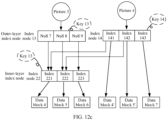
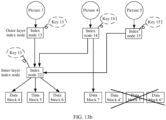
- file data of a first picture in a gallery application is the same as that of a second picture in a chat application.
- an index node of the first picture and an index node of the second picture are both associated with a target index node.
- the target index node points to the file data of the first picture, and the file data of the second picture is deleted. In this way, storage space occupied by same data in the second picture as that in the first picture is reduced.
- corresponding file data may be found via the target index node.
- second file data of the second picture is deleted, for the chat application, the second file still exists, and reading or writing of the data of the second file by the chat application is not affected.
- association relationship between the index node of the file and the target index node may also be understood as a correspondence.
- a pointing relationship may be understood as that the index node includes index information, and the index information indicates a storage address of data.
- the first file may be a picture 1 in an embodiment of this application
- the second file may be a picture 2 in an embodiment of this application.
- the first index node may be an index node 11
- the second index node may be an index node 12.
- the target index node may be an index node 21.
- associating the first index node with the target index node and associating the second index node with the target index node include: associating identification information of the first index node with identification information of the target index node; and associating identification information of the second index node with the identification information of the target index node.
- the identification information of the two index nodes is associated with the identification information of the target index node, and the information such as the type of the data stored in the index node does not need to be changed. Therefore, for the upper-layer application, the information (such as the type of the data) stored in the index node is unchanged. This implements imperception for the upper-layer application. For example, when the upper-layer application needs to query a data type of data to which the index node points, the data type of the data is still consistent with that before.
- the identification information is identity ID information or address information of an index node.
- the address information is a storage location of the index node in a memory.
- the ID information may be allocated to the index node when the index node is generated.
- address information and ID information of each index node are unique.
- the address information of the index node may be changed. If the address information of the index node is changed, the address information recorded in the association relationship between the index node and the target index node is changed accordingly.
- the ID information of the index node is unchanged. For example, after the storage location of the index node is changed, the ID information of the index node remains unchanged.
- the file data of the first file is completely the same as the file data of the second file.
- duplicate files are optionally two or more files whose data is completely the same, or two or more files whose data is similar.
- the similar data optionally means that 80% (which may be set based on an actual requirement) or more of data in two files is the same.
- the second index node further points to data that is in the file data of the second file and that is different from that in the file data of the first file.
- data that is in the first file and that is the same as that in the second file may be found via the association relationship between the index node and the target index node, or data that is different from that in the first file may be found based on the second index.
- the electronic device may perform conversion between the index nodes based on an indication from the upper-layer application, to determine whether an index that needs to be read is associated with the target index node or directly points to data.
- deleting the file data of the second file includes: The electronic device deletes data that is in the file data of the second file and that is the same as that in the file data of the first file.
- the same data is deleted to reduce storage space occupied by the data of the second file.
- different data is reserved to avoid affecting reading or writing of the second file.
- the index nodes are associated with the target index node, and pointing relationships for pointing to different data is retained, to implement deduplication of the similar files.
- the first index node includes a first key.
- the target index node includes the first key.
- the second index node includes a second key.
- the file data of the first file is generated through encryption based on the first key, and the file data of the second file is generated based on the second key.
- the target index node is introduced, so that a file data can have a corresponding key. This ensures security of file data.
- the electronic device may encrypt or decrypt the file data of the first file based on the key of the target index node.
- data to which the second index node points and that is different from the data of the first file may be encrypted or decrypted based on the key of the second index node. In this way, each piece of data corresponds to a key. This improves data security.
- the method further includes: In response to first indication information from a target application, the electronic device determines to read the second file; and the electronic device detects that the second index node is associated with the target index node, and reads the file data of the first file based on the target index node. In this way, in a data reading process, the electronic device may implement, based on an indication from the application, conversion between the index nodes, to read corresponding data via the target index node.
- the upper-layer application still considers that the second file is read. This implements imperception for the upper-layer application.
- the method further includes: In response to second indication information from a target application, the electronic device writes new data into the file data of the second file, where the new data is different from the file data of the first file; and the electronic device enables the second index node to point to the new data, where the second index node is still associated with the target index node.
- the upper-layer application still considers that the data is written into the second file. This implements imperception for the upper-layer application, and avoids mutual interference in writing processes.
- the first file is a file of a gallery application
- the second file is a file of a chat application.
- a writing instruction may be delivered to the electronic device.
- the instruction delivered by the chat application is for the second file. This implements imperception for the upper-layer application.
- the memory may write data into the memory based on the indication from the chat application.
- One of indexes in the second index node is enabled to point to new data when another index is still associated with the target index node.
- the electronic device may read, based on an association relationship and a pointing relationship of the index node, the data that is in the first file and that is the same as that in the second file via the target index node, or directly read the data of the second file via the index in the second index node. This avoids mutual interference between reading and writing of the duplicate files.
- the first index node before the target index node is enabled to point to the file data of the first file, the first index node includes first index information, the first index information indicates a storage location of the file data of the first file, the second index node includes second index information, and the second index information indicates a storage location of the file data of the second file.
- enabling the target index node to point to the file data of the first file includes: updating index information in the target index node to the first index information. In this way, the index information in the target index node is updated to the first index information, so that the target index node can directly point to the file data of the first file.
- enabling the target index node to point to the file data of the first file includes: The electronic device updates index information in the target index node to target index information, and copies the file data of the first file to a storage location to which the target index information points; and the electronic device deletes the file data of the first file.
- the file data of the first file is copied, and an index in the target index node is enabled to point to the copied data of the first file.
- the memory can find corresponding data via the index in the target index node.
- the method further includes: detecting that a third file and the first file are duplicate files, and associating a third index of the third file with the target index node; and deleting file data of the third file.
- deduplication of a plurality of duplicate files can be implemented. Index nodes of the plurality of duplicate files are associated with the target index node, and duplicate data is deleted. This can effectively reduce space occupied by redundant data.
- an embodiment of this application provides a data processing method.
- the method includes: An electronic device obtains first indication information from a first application, where the first indication information indicates to read data to which a second index node of a second file points; and in response to the first indication information, the electronic device detects that the second index node is associated with a target index node, and reads first target data to which the target index node points, where the first target data is file data of a first file, the first file and the second file are duplicate files, and a first index node of the first file is associated with the target index node.
- the electronic device when processing the duplicate files, associates the index nodes of the duplicate files with the newly generated target index node, and deletes file data of a duplicate file, to reduce storage space occupied by redundant data, thereby improving storage space utilization.
- imperception for an upper-layer application can be implemented.
- the upper-layer application may still indicate the electronic device to find data based on the index nodes of the files, and the electronic device may perform conversion between the index nodes based on the association relationships between the index nodes and the target index node, to find corresponding data based on the target index node.
- the index nodes are associated with the target index node
- information such as a type of recorded data in the content in the index node remains unchanged. Therefore, for the upper-layer application, the index node remains unchanged. Further, the information such as the type in the index node remains unchanged, and correspondingly, when the upper-layer application reads or writes data, a data type presented by the index node is still the same as that before, and remains unchanged. This avoids a problem of a data reading or writing failure caused by a modification of data in the index node.
- the electronic device deletes file data of a duplicate file, for example, the second file. Because the second index node is associated with the target index node, the electronic device can still read the file data via an association relationship between the index node and the target index node.
- file data of a first picture in a gallery application is the same as that of a second picture in a chat application.
- an index node of the first picture and an index node of the second picture are both associated with a target index node.
- the target index node points to the file data of the first picture, and the file data of the second picture is deleted. In this way, storage space occupied by same data in the second picture as that in the first picture is reduced.
- the chat application needs to read the second picture or the gallery application needs to read the first picture, corresponding file data may be found via the target index node.
- identification information of the first index node is associated with identification information of the target index node
- identification information of the second index node is associated with the identification information of the target index node
- the identification information is identity ID information or address information of an index node.
- the method further includes: The electronic device receives second indication information from a second application, where the second indication information indicates to read data to which the first index node of the first file points; and in response to the second indication information, the electronic device detects that the first index node is associated with the target index node, and reads the first target data to which the target index node points.
- both the first index node and the second index node are associated with the target index node.
- the electronic device may read corresponding data via the target index node. In other words, the first index node and the second index node point to same data. This effectively reduces occupied space and improves storage space utilization.
- reading the first target data to which the target index node points includes: The electronic device detects, based on the first indication information, that the first index information is null, and obtains target index information that is in the target index node and that corresponds to the first index information; and the electronic device reads the first target data to which the target index information points.
- the index information corresponding to the target index node is null. In other words, a location of the index information still exists, and the index information corresponds to the index information in the target index node.
- the upper-layer application may still indicate to read the second index node.
- the index information in the second index node still exists, and the electronic device may perform conversion on the index information, to query corresponding index information in the target index node and read the data pointed to.
- the method further includes: The electronic device obtains third indication information from the first application, where the third indication information indicates to read data to which second index information in the second index node of the second file points; in response to second indication information, the electronic device detects that the second index node is associated with the target index node, and further detects whether the second index information is null; and the electronic device detects that the second index information is not null, and reads second target data to which the second index information points.
- the second target data is the file data of the second file, and the target data is different from the file data of the first file.
- the deduplication method in an embodiment of this application may further be applied to processing of similar files, namely, files whose data that is partially the same.
- the index node of the second file may be associated with the target index node, and the second index node may further point to data different from that of the first file. This reduces storage space occupied by redundant data and further reserves a part of data that is in the second file and that is different from that in the first file.
- the first index node includes a first key.
- the target index node includes the first key.
- the second index node includes a second key.
- the file data of the first file is generated through encryption based on the first key, and the file data of the second file is generated based on the second key.
- the method further includes: inputting the first target data to the first application.
- the method further includes: receiving fourth indication information from the first application, where the fourth indication information indicates to write new data into the second file; and in response to the fourth indication information, writing the new data into the file data of the second file, where the second index node points to the new data, and the second index node is still associated with the target index node.
- the method before the first indication information from the first application is obtained, the method further includes: detecting that a first file and a second file are duplicate files, and generating a target index node, where a first index node of the first file points to file data of the first file, and a second index node of the second file points to file data of the second file; enabling the target index node to point to the file data of the first file; associating the first index node with the target index node and associating the second index node with the target index node; and deleting the file data of the second file.
- a target index node where a first index node of the first file points to file data of the first file, and a second index node of the second file points to file data of the second file.
- an embodiment of this application provides an electronic device.
- the electronic device includes one or more processors, a memory, and one or more computer programs.
- the one or more computer programs are stored in the memory.
- the computer program is executed by the one or more processors, the electronic device is enabled to execute instructions for the method according to any one of the first aspect and the possible implementations of the first aspect.
- an embodiment of this application provides an electronic device.
- the electronic device includes one or more processors, a memory, and one or more computer programs.
- the one or more computer programs are stored in the memory.
- the computer program is executed by the one or more processors, the electronic device is enabled to execute instructions for the method according to any one of the second aspect and the possible implementations of the second aspect.
- an embodiment of this application provides a computer-readable medium, configured to store a computer program.
- the computer program includes instructions used to perform the method according to any one of the first aspect and the possible implementations of the first aspect.
- an embodiment of this application provides a computer-readable medium, configured to store a computer program.
- the computer program includes instructions used to perform the method according to any one of the second aspect and the possible implementations of the second aspect.
- an embodiment of this application provides a computer program.
- the computer program includes instructions used to perform the method according to any one of the first aspect and the possible implementations of the first aspect.
- an embodiment of this application provides a computer program.
- the computer program includes instructions used to perform the method according to any one of the second aspect and the possible implementations of the second aspect.
- an embodiment of this application provides a chip, including one or more interface circuits and one or more processors.
- the interface circuit is configured to: receive a signal from a memory of an electronic device, and send the signal to the processor.
- the signal includes computer instructions stored in the memory.
- the processor executes the computer instructions, the electronic device is enabled to execute instructions for the method according to any one of the first aspect and the possible implementations of the first aspect.
- an embodiment of this application provides a chip, including one or more interface circuits and one or more processors.
- the interface circuit is configured to: receive a signal from a memory of an electronic device, and send the signal to the processor.
- the signal includes computer instructions stored in the memory.
- the processor executes the computer instructions, the electronic device is enabled to execute instructions for the method according to any one of the first aspect and the possible implementation of the first aspect.
- a and/or B may represent the following three cases: Only A exists, both A and B exist, and only B exists.
- first the terms “first”, “second”, and the like are used to distinguish between different objects, but are not used to describe a specific order of the objects.
- a first target object, a second target object, and the like are used to distinguish between different target objects, but are not used to describe a specific order of the target objects.
- the word “example” or “for example” is used for representing giving an example, an illustration, or a description. Any embodiment or design scheme described as an “example” or “for example” in embodiments of this application should not be explained as being more preferred or having more advantages than another embodiment or design scheme. Exactly, use of the word “example”, “for example”, or the like is intended to present a related concept in a specific manner.
- a plurality of means two or more.
- a plurality of processing units mean two or more processing units
- a plurality of systems mean two or more systems.
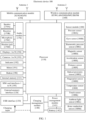
- FIG. 1 is a diagram of a structure of an electronic device 100. It should be understood that the electronic device 100 shown in FIG. 1 is merely an example of the electronic device, and the electronic device 100 may have more or fewer components than those shown in the figure, or may combine two or more components, or may have different component configurations.
- the various components shown in FIG. 1 may be implemented in hardware including one or more signal processing circuits and/or application-specific integrated circuits, software, or a combination of hardware and software. It should be noted that in an embodiment of this application, only an example in which the electronic device is a mobile phone is used for description. In another embodiment, a data processing method in embodiments of this application may alternatively be applied to any device, for example, a tablet, a wearable device, a smart home device, or a server. This is not limited in this application.
- the electronic device 100 may include a processor 110, an external memory interface 120, an internal memory 121, a universal serial bus (universal serial bus, USB) interface 130, a charging management module 140, a power management module 141, a battery 142, an antenna 1, an antenna 2, a mobile communication module 150, a wireless communication module 160, an audio module 170, a speaker 170A, a receiver 170B, a microphone 170C, a headset jack 170D, a sensor module 180, a button 190, a motor 191, an indicator 192, a camera 193, a display 194, a subscriber identity module (subscriber identity module, SIM) card interface 195, and the like.
- a processor 110 an external memory interface 120, an internal memory 121, a universal serial bus (universal serial bus, USB) interface 130, a charging management module 140, a power management module 141, a battery 142, an antenna 1, an antenna 2, a mobile communication module 150, a wireless communication module 160, an audio module 170,
- the sensor module 180 may include a pressure sensor 180A, a gyro sensor 180B, a barometric pressure sensor 180C, a magnetic sensor 180D, an acceleration sensor 180E, a distance sensor 180F, an optical proximity sensor 180G, a fingerprint sensor 180H, a temperature sensor 180J, a touch sensor 180K, an ambient light sensor 180L, a bone conduction sensor 180M, and the like.
- the processor 110 may include one or more processing units.
- the processor 110 may include an application processor (application processor, AP), a modem processor, a graphics processing unit (graphics processing unit, GPU), an image signal processor (image signal processor, ISP), a controller, a memory, a video codec, a digital signal processor (digital signal processor, DSP), a baseband processor, a neural-network processing unit (neural-network processing unit, NPU), and/or the like.
- Different processing units may be independent components, or may be integrated into one or more processors.
- the controller may be a nerve center and a command center of the electronic device 100.
- the controller may generate an operation control signal based on an instruction operation code and a time sequence signal, to complete control of instruction fetching and instruction execution.
- a memory may be further disposed in the processor 110, and is configured to store instructions and data.
- the memory in the processor 110 is a cache.
- the memory may store instructions or data that has been used or cyclically used by the processor 110. If the processor 110 needs to use the instructions or the data again, the processor may directly invoke the instructions or the data from the memory. This avoids repeated access, and reduces a waiting time of the processor 110, thereby improving system efficiency.
- the charging management module 140 is configured to receive a charging input from a charger.
- the charger may be a wireless charger or a wired charger.
- the charging management module 140 may receive a charging input from the wired charger through the USB interface 130.
- the charging management module 140 may receive a wireless charging input through a wireless charging coil of the electronic device 100.
- the charging management module 140 supplies power to the electronic device through the power management module 141 while charging the battery 142.
- the power management module 141 is configured to connect to the battery 142, the charging management module 140, and the processor 110.
- the power management module 141 receives input from the battery 142 and/or the charging management module 140, to supply power to the processor 110, the internal memory 121, the external memory, the display 194, the camera 193, the wireless communication module 160, and the like.
- the power management module 141 may be further configured to monitor parameters such as a battery capacity, a battery cycle count, and a battery health status (electric leakage or impedance).
- the power management module 141 may alternatively be disposed in the processor 110.
- the power management module 141 and the charging management module 140 may alternatively be disposed in a same device.
- a wireless communication function of the electronic device 100 may be implemented through the antenna 1, the antenna 2, the mobile communication module 150, the wireless communication module 160, the modem processor, the baseband processor, and the like.
- the antenna 1 and the antenna 2 are configured to transmit and receive electromagnetic wave signals.
- Each antenna in the electronic device 100 may be configured to cover one or more communication frequency bands. Different antennas may be further multiplexed to improve antenna utilization.
- the antenna 1 may be multiplexed as a diversity antenna of a wireless local area network. In some other embodiments, the antenna may be used in combination with a tuning switch.
- the mobile communication module 150 may provide a wireless communication solution that is applied to the electronic device 100 and that includes 2G, 3G, 4G, 5G, and the like.
- the mobile communication module 150 may include at least one filter, a switch, a power amplifier, a low noise amplifier (low noise amplifier, LNA), and the like.
- the mobile communication module 150 may receive an electromagnetic wave through the antenna 1, perform processing such as filtering or amplification on the received electromagnetic wave, and transmit the electromagnetic wave to the modem processor for demodulation.
- the mobile communication module 150 may further amplify a signal modulated by the modem processor, and convert the signal into an electromagnetic wave for radiation through the antenna 1.
- at least some functional modules in the mobile communication module 150 may be disposed in the processor 110.
- at least some functional modules of the mobile communication module 150 and at least some modules of the processor 110 may be disposed in a same component.
- the wireless communication module 160 may provide a wireless communication solution that is applied to the electronic device 100 and that includes a wireless local area network (wireless local area network, WLAN) (for example, a wireless fidelity (wireless fidelity, Wi-Fi) network), Bluetooth (bluetooth, BT), a global navigation satellite system (global navigation satellite system, GNSS), frequency modulation (frequency modulation, FM), a near-field communication (near-field communication, NFC) technology, an infrared (infrared, IR) technology, and the like.
- the wireless communication module 160 may be one or more components integrating at least one communication processing module.
- the wireless communication module 160 receives an electromagnetic wave through the antenna 2, performs frequency modulation and filtering processing on an electromagnetic wave signal, and sends a processed signal to the processor 110.
- the wireless communication module 160 may further receive a to-be-sent signal from the processor 110, perform frequency modulation and amplification on the signal, and convert the signal into an electromagnetic wave for radiation through the antenna 2.
- the antenna 1 and the mobile communication module 150 in the electronic device 100 are coupled, and the antenna 2 and the wireless communication module 160 in the electronic device 100 are coupled, so that the electronic device can communicate with a network and another device by using a wireless communication technology.
- the electronic device 100 implements a display function by using the GPU, the display 194, the application processor, and the like.
- the GPU is a microprocessor for image processing, and is connected to the display 194 and the application processor.
- the GPU is configured to: perform mathematical and geometric computation, and render an image.
- the processor 110 may include one or more GPUs, which execute program instructions to generate or change display information.
- the display 194 is configured to display an image, a video, and the like.
- the display 194 includes a display panel.
- the display panel may be a liquid crystal display (liquid crystal display, LCD), an organic light-emitting diode (organic light-emitting diode, OLED), an active-matrix organic light-emitting diode (active-matrix organic light-emitting diode, AMOLED), a flexible light-emitting diode (flexible light-emitting diode, FLED), a mini-LED, a micro-LED, a micro-OLED, a quantum dot light-emitting diode (quantum dot light-emitting diode, QLED), or the like.
- the electronic device 100 may include one or N displays 194, where N is a positive integer greater than 1.
- the electronic device 100 may implement a photographing function through the ISP, the camera 193, the video codec, the GPU, the display 194, the application processor, and the like.
- the camera 193 is configured to capture a static image or a video. An optical image of an object is generated through the lens, and is projected onto the light-sensitive element.
- the light-sensitive element may be a charge-coupled device (charge-coupled device, CCD) or a complementary metal-oxide-semiconductor (complementary metal-oxide-semiconductor, CMOS) phototransistor.
- CCD charge-coupled device
- CMOS complementary metal-oxide-semiconductor
- the light-sensitive element converts an optical signal into an electrical signal, and then transmits the electrical signal to the ISP to convert the electrical signal into a digital image signal.
- the ISP outputs the digital image signal to the DSP for processing.
- the DSP converts the digital image signal into an image signal in a standard format, for example, RGB or YUV.
- the electronic device 100 may include one or N cameras 193, where N is a positive integer greater than 1.
- the external memory interface 120 may be configured to connect to an external storage card, for example, a micro SD card, to extend a storage capability of the electronic device 100.
- the external memory card communicates with the processor 110 through the external memory interface 120, to implement a data storage function. For example, files such as music and videos are stored in the external storage card.
- the internal memory 121 may be configured to store computer-executable program code.
- the executable program code includes instructions.
- the processor 110 runs the instructions stored in the internal memory 121, to perform various function applications of the electronic device 100 and data processing. For example, the processor 110 may perform the data processing method in an embodiment of this application by running the instructions stored in the internal memory 121, that is, may deduplicate data in the electronic device.
- the internal memory 121 may include a program storage area and a data storage area.
- the program storage area may store an operating system, an application required by at least one function (for example, a voice playing function or an image playing function), and the like.
- the data storage area may store data (which may also be referred to as a file, for example, a picture, audio data, or a phone book) created during use of the electronic device 100, and the like.
- the internal memory 121 may include a high-speed random access memory, and may further include a non-volatile memory, for example, at least one magnetic disk storage component, a flash memory component, and a universal flash storage (universal flash storage, UFS).
- the electronic device 100 may implement an audio function through the audio module 170, the speaker 170A, the receiver 170B, the microphone 170C, the headset jack 170D, the application processor, and the like, for example, music playing and sound recording.
- the audio module 170 is configured to convert digital audio information into an analog audio signal for output, and is also configured to convert an analog audio input into a digital audio signal.
- the audio module 170 may be further configured to encode and decode an audio signal.
- the audio module 170 may be disposed in the processor 110, or some functional modules in the audio module 170 are disposed in the processor 110.
- the button 190 includes a power button, a volume button, and the like.
- the button 190 may be a mechanical button, or may be a touch button.
- the electronic device 100 may receive a button input, and generate a button signal input related to a user setting and function control of the electronic device 100.
- the motor 191 may generate a vibration prompt.
- the motor 191 may be configured to provide an incoming call vibration prompt and a touch vibration feedback.
- touch operations performed on different applications may correspond to different vibration feedback effects.
- the motor 191 may also correspond to different vibration feedback effects for touch operations performed on different areas of the display 194.
- Different application scenarios for example, a time reminder, information receiving, an alarm clock, and a game
- a touch vibration feedback effect may be further customized.
- the indicator 192 may be an indicator light, and may be configured to indicate a charging status and a power change, or may be configured to indicate a message, a missed call, a notification, and the like.
- a software system of the electronic device 100 may use a layered architecture, an event-driven architecture, a microkernel architecture, a micro service architecture, or a cloud architecture.
- an Android system of a layered architecture is used as an example to illustrate a software structure of the electronic device 100.
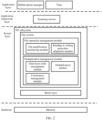
- FIG. 2 is a block diagram of the software structure of the electronic device 100 according to an embodiment of this application.
- the system of the electronic device 100 may include but is not limited to an application layer, an application framework layer, and a kernel layer. It should be noted that the structure shown in FIG. 2 does not constitute a specific limitation on the electronic device 100. In some other embodiments of this application, the electronic device 100 may include more or fewer layers and more or fewer components than those shown in the figure, or combine some components, or split some components, or have different component arrangements. This is not limited in this application.
- the application layer includes but is not limited to applications such as a mobile phone manager and a chat application.
- a mobile phone manager application (referred to as a mobile phone manager application) may provide a user management interface, so that a user manages a mobile phone.
- the mobile phone manager may provide a data cleanup function, to clear redundant data in the mobile phone.
- the redundant data is same or similar data. This improves storage utilization.
- the mobile phone manager may further provide another function, for example, including performance optimization. This is not limited in this application.
- the application framework layer provides an application programming interface (application programming interface, API) and a programming framework for an application at the application layer.
- the application framework layer includes some predefined functions.
- the application framework layer may include but is not limited to a window manager, a content provider, a view system, a phone manager, a resource manager, a notification manager, and a scanning service.
- the window manager is used to manage a window program.
- the window manager may obtain a size of a display, determine whether there is a status bar, perform screen locking, take a screenshot, and the like.
- the content provider is used to store and obtain data, and enable the data to be accessed by an application.
- the data may include a video, an image, an audio, calls that are made and answered, a browsing history and a bookmark, a phone book, and the like.
- the view system includes visible controls such as a control for displaying a text and a control for displaying a picture.
- the view system may be used to construct an application.
- a display interface may include one or more views.
- a display interface including an SMS message notification icon may include a text display view and a picture display view.
- the phone manager is used to provide a communication function of the electronic device 100, for example, management of a call status (including answering, declining, or the like).
- the resource manager provides various resources such as a localized character string, an icon, a picture, a layout file, and a video file for an application.
- the notification manager enables an application to display notification information in a status bar, and may be used to convey a notification message.
- the notification manager may automatically disappear after a short stay, without requiring a user interaction.
- the notification manager is used to notify download completion, provide a message notification, and the like.
- the notification manager may alternatively be a notification that appears in a top status bar of the system in a form of a graph or a scroll bar text, for example, a notification of an application that is run in a background, or may be a notification that appears on the screen in a form of a dialog window.
- text information is displayed in the status bar, a prompt tone is sent, the electronic device vibrates, or an indicator light blinks.
- the scanning service is used to scan duplicate files in a memory.
- the duplicate files may be optionally at least two files whose data is completely the same, or may be at least two files whose data is similar.
- a threshold may be set for similarity of files. For example, if 80% (which may be set based on an actual requirement, and is not limited in this application) of data in two files is the same, the two files are similar files.
- a specific scanning process of the scanning service refer to related content in embodiments of a conventional technology. Details are not described in this application.
- the kernel layer is a layer between hardware and software.
- the kernel layer includes but is not limited to a display driver, a camera driver, an audio driver, a sensor driver, an I/O subsystem, and the like.
- the I/O subsystem includes but is not limited to a file system and a block layer.
- the I/O subsystem is used to process data in the memory, including but not limited to reading data, writing data, removing duplicate data (deduplication for short), and the like.
- FIG. 3 is a diagram of an example of data reading or writing.
- a reading or writing instruction including a reading instruction or a writing instruction
- an upper-layer application for example, a chat application
- a file system reads data from a memory or writes data into a memory through a block layer.
- the file system may be understood as being used to transmit a control instruction.
- the file system receives the reading or writing instruction from the chat application, and stores data of the chat application in a cache.
- the cache may be located at a kernel layer.
- the file system may perform corresponding processing on the data in the cache, and after processing is completed, store the data in the cache into the memory through the block layer.
- the file system may be understood as controlling the data in the cache and the memory, and the data is actually stored in the cache and/or the memory.
- the data in an embodiment of this application includes metadata and file data (which may also be referred to as actual data or file content).
- the metadata is usually stored in an index node of the memory.
- FIG. 4 is a diagram of an example of an index node.
- the index node includes one or more pieces of metadata, and each piece of metadata includes information used to describe file data, for example, including but not limited to size information, type information, creation or modification time information, index information, and a key.
- the size information is used to describe a size of file data.
- the index information is used to describe a storage location of file data.
- the type information is used to describe a type of file data to which the index information points.
- the key is used to encrypt or decrypt file data.
- the key may be generated based on a directory (for a concept, refer to the foregoing descriptions). For a generation manner, refer to an embodiment in a conventional technology. This is not limited in this application.
- the index information includes but is not limited to index information 1 and index information 2. That the index information 1 points to a data block 1 may be understood as that the index information 1 corresponds to the data block 1. In other words, a file system may find data in the data block 1 based on the index information 1.
- the index information 2 may include a plurality of indexes, and each index may point to a data block or another index. In other words, an index in the index information may point to data directly (that is, directly point to the data) or indirectly (that is, point to data via at least one of other indexes).
- file system in an embodiment of this application may be an F2FS (Flash-Friendly File System, flash-friendly file system).
- F2FS Flash-Friendly File System, flash-friendly file system.
- the technical solutions in embodiments of this application may also be applied to another system and memory structure for searching for file data via an index. This is not limited in this application.
- the file system includes but is not limited to a file operation management module and a deduplication management module.
- the file operation management module includes but is not limited to a file modification monitoring module and a reading or writing procedure adaptation module.
- the deduplication management module includes but is not limited to a dual-layer node management module, a deduplication module, and a consistency management module.
- the file modification monitoring module is used to monitor file data to detect whether the file data is modified.
- the reading or writing procedure adaptation module is used to process a procedure of reading or writing file data.
- the dual-layer node management module is used to create and manage a dual-layer node.
- the dual-layer node includes an outer-layer node and an inner-layer node, and details are described in the following embodiments.
- the deduplication module is used for deduplication and reverse processing on file data. A specific processing process is described in detail in the following embodiments.
- the consistency management module is used for consistency management of file data, to keep consistency of the file data.
- FIG. 2 shows hardware included in the electronic device 100, for example, the memory.
- the memory may be configured to store the data (including the metadata and the file data).
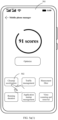
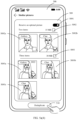
- FIG. 5a(1) to FIG. 5a(4) are diagrams of an example of a user interface.
- an interface 501 of a mobile phone manager application includes one or more controls.
- the controls include but are not limited to a one-touch optimization control, a performance score display control, a cleanup acceleration control 502, a traffic management control, and the like.
- a user taps the cleanup acceleration control 502 to clean up data in a mobile phone.
- the mobile phone manager application in response to a received user operation, invokes a scanning service to scan duplicate files to obtain duplicate data in a memory.
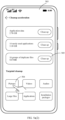
- the mobile phone manager application displays the cleanup acceleration interface 503.
- the cleanup acceleration interface 503 includes but is not limited to one or more controls.
- the controls include but are not limited to an application data cleanup control, a rarely-used application cleanup control, a duplicate file cleanup control 505, and a targeted cleanup control.
- the dedicated cleanup control includes but is not limited to a picture control 504, a video control, an audio control, a large file control, and the like.
- the duplicate file cleanup control 505 may include a quantity of duplicate files, a size of the duplicate files (a total size of all the duplicate files), and a "Clean up" control.
- Information such as the quantity of duplicate files is obtained by the mobile phone manager application by using the scanning service. This is not described in the following.
- the user may tap the "Clean up" control to clean up the duplicate files.
- the duplicate files may include duplicate files of different types, such as pictures, documents, videos, and compressed packages.
- a process of cleaning up files such as documents, videos, and compressed packages is similar to a process of cleaning up pictures in this embodiment of this application. Examples are not given one by one for description in this application.
- the user taps the picture control 504 to clean up duplicate pictures in the mobile phone.
- the mobile phone displays a picture display interface 506 (which may also be referred to as a duplicate picture cleanup interface).
- the picture display interface 506 includes but is not limited to a similar picture cleanup control 507, a fuzzy picture cleanup control, and the like.
- a quantity of similar pictures may be displayed in the similar picture cleanup control 507.
- the similar pictures are similar to the duplicate data described above.
- at least two completely same pictures may be similar pictures, and at least two pictures with 80% (which may be set based on an actual requirement) of similar content may also be referred to as similar pictures.
- the similar pictures may also be referred to as duplicate pictures. This is not described in the following.
- the user taps the similar picture cleanup control 507 to clear the similar pictures.
- the mobile phone manager displays a similar picture cleanup display interface 508.
- the similar picture cleanup display interface 508 includes but is not limited to a similar picture cleanup box 509 and a deduplication option 510.
- the similar picture cleanup box 509 includes the similar pictures detected by using the scanning service and an optimal picture reservation option 5091.
- the mobile phone manager may display, in groups, the similar pictures detected by using the scanning service.
- the similar picture cleanup box 509 includes a similar picture group 5092 and a similar picture group 5093.
- the similar picture group 5092 includes two items of (namely, two) same or similar pictures, that is, includes a picture 5092a and a picture 5092b. In other words, picture content of the picture 5092a and that of the picture 5092b are the same as or similar.
- the similar picture group 5093 includes three items of same or similar pictures, that is, includes a picture 5093a, a picture 5093b, and a picture 5093c. In other words, picture content of the picture 5093a as well as that of the picture 5093b and that of the picture 5093c are the same as or similar.
- the same pictures mean that 100% of picture content is consistent, and the similar pictures mean that 80% (which may be set based on an actual requirement) of picture content is consistent. This is not described again in the following.
- the picture content may include but is not limited to image data and image attribute information.
- the image attribute information includes but is not limited to time, an author, a source, and the like. This is not limited in this application.
- pictures in a group of similar pictures belong to an application may also be understood as that the pictures belong to a same folder or different folders.
- the user downloads the picture 5092b from a chat application.
- the mobile phone stores the picture 5092b in a specified folder of the chat application.
- a storage path of the picture 5092b is "/sdcard/liaotian/chat/”.
- the mobile phone further stores, in a gallery application, the picture downloaded from the chat application.
- a storage path of the picture 5092a is "/sdcard/DCIM/Camera/”.
- two pictures whose picture content is completely the same are stored in a folder of the gallery application and a folder of the chat application.
- the user may tap the optimal picture reservation option 509 to automatically reserve an optimal picture.
- the user may alternatively choose manually to reserve at least one picture in each group of pictures. This is not limited in this application.
- the user may alternatively delete all the similar pictures. In an embodiment of this application, only deduplication on the similar pictures is used as an example for description. For a picture deletion processing process, refer to an existing embodiment. This is not limited in this application.
- the mobile phone manager may automatically select an optimal picture in each group of pictures.
- an optimal picture For a specific selection rule, refer to related content in an embodiment of a conventional technology. Details are not described in this application.
- the mobile phone manager selects the picture 5092a in the similar picture group 5092 as an optimal picture, and selects the picture 5903b in the similar picture group 5903 as an optimal picture.
- other non-optimal pictures including the picture 5902a, the picture 5903a, and the picture 5903c
- the user may tap the deduplication option 510 to deduplicate the selected non-optimal pictures.
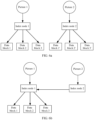
- FIG. 6a is a diagram of an example of a deduplication procedure according to an embodiment in a conventional technology.
- a picture 1 (for example, the picture 5902a) corresponds to an index node 1
- a picture 2 (for example, the picture 5902b) corresponds to an index node 2.
- a file system may obtain, based on the index node 1, data corresponding to the picture 1 in a memory
- the file system may obtain, based on the index node 2, data corresponding to the picture 2 in the memory.
- the index node For a related concept of the index node, refer to the foregoing description. Details are not described herein again.
- the index node 1 points to a data block 1, a data block 2, and a data block 3.
- the index node 2 points to a data block 1', and a data block 2', and a data block 3'.
- the picture 1 and the picture 2 are pictures whose picture content is the same. In other words, data in the data block 1 is the same as data in the data block 1', data in the data block 2 is the same as data in the data block 2', and data in the data block 3 is the same as data in the data block 3'.
- the file system creates a temporary file of the picture 1 by using a link command.
- the temporary file is /sdcard/liaotian/chat/.2_tmp.jpeg
- the temporary file includes a temporary index node.
- the temporary index node is associated with a path of the picture 1, to point to the index node 1.
- the file system replaces a to-be-deduplicated file (for example, the picture 2, which is denoted as /sdcard/liaotian/chat/2.jpeg) with the temporary file /sdcard/liaotian/chat/.2_tmp.jpeg.
- a to-be-deduplicated file for example, the picture 2, which is denoted as /sdcard/liaotian/chat/2.jpeg
- the file system enables the index node 2 of the picture 2 to point to the index node 1, and enables the temporary index node of the temporary file to point to a data block corresponding to the picture 2 (including the data block 1', the data block 2', and the data block 3').
- the file system deletes the temporary file, that is, deletes the index of the temporary file and corresponding data (including the data block 1', the data block 2', and the data block 3') to release storage space.
- the file system may search for the corresponding data based on an index of the picture 2.
- the index node 2 points to the index node 1 in a soft link manner.
- FIG. 5b is a diagram of an example of a user interface.
- the user may tap a thumbnail 511 corresponding to the picture 2, to open the picture 2.
- the chat application sends reading indication information to the file system.
- the file system reads the index node 2 of the picture 2.
- the chat application displays picture exception prompt information, as shown in (2) in FIG. 5b .
- an index of the picture 2 points to an index of the picture 1.
- the two files point to the same data.
- an upper-layer application perceives a picture modification, resulting in modification interference between the duplicate pictures.
- the picture 1 or the picture 2 is modified in the deduplication process, there is no corresponding technology in the conventional technology to resolve the problem.
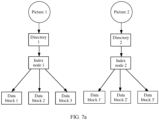
- FIG. 7a and FIG. 7b are diagrams of an example of a deduplication procedure according to an embodiment in another conventional technology.
- a picture 1 corresponds to a directory 1
- the directory 1 corresponds to an index node 1.
- the index node points to a data block 1, a data block 2, and a data block 3.
- the directory may be understood as a file similar to the index node.
- a corresponding index node may be found by using a directory file, and then corresponding data is found based on the index node.
- a picture 2 corresponds to a directory 2, and the directory 2 corresponds to an index node 2.
- the index node 2 points to a data block 1', a data block 2', and a data block 3'.
- a file system may create a temporary file /sdcard/liaotian/chat/.2_tmp.jpeg by using a link command.
- a directory of the temporary file points to the index node 1.
- the file system replaces the picture 2 with the temporary file.
- the directory 2 of the picture 2 points to the index node 1 in a hard link manner, and the directory of the temporary file points to the index node 2.
- the file system deletes the temporary file and data (including the directory, the index node 2, and pointed data) of the temporary file to release storage space.
- a data modification problem generated in the deduplication process and a data modification interference problem generated after deduplication is completed also exist.
- An embodiment of this application provides a data processing method.
- a dual-layer node index mechanism is introduced, to add, to an original index node, an inner-layer index node that is invisible (that is, imperceptible) to a user (namely, an upper-layer application).
- an upper-layer application a type of data and content of the data of the upper-layer application remain unchanged, and the upper-layer application may still indicate a file system to read or write the data in an original reading or writing manner.
- the file system may implement automatic conversion based on a correspondence in a dual-layer node, to find a corresponding index based on a correspondence between an index in an inner-layer node and an index in an outer-layer node, and find corresponding data based on the index.
- type information stored in an outer-layer index node is unchanged. In this way, when an application reads or writes data, corresponding data can be correctly read or written without being limited by a type of the outer-layer index node. This effectively improves reliability and security of data deduplication.
- FIG. 8 is a diagram of an example of a data processing procedure. With reference to FIG. 8 , the procedure specifically includes but is not limited to the following steps.
- S801 A scanning service scans duplicate files.
- a user may trigger a deduplication procedure by using a mobile phone manager service.
- the mobile phone manager service may invoke the scanning service to scan the duplicate files in a mobile phone.
- the scanning service scans the duplicate files in the mobile phone.
- the mobile phone manager application displays a scanning result of the scanning service.
- the scanning service sends monitoring indication information to a file modification monitoring module.
- the monitoring indication information may include but is not limited to identification information of each detected duplicate file.
- the identification information may be a file name, or may be a file path. This is not limited in this application.
- the monitoring indication information indicates the file modification monitoring module to monitor a modification of detected duplicate files, to monitor whether a duplicate file is modified.
- the file modification monitoring module monitors each duplicate file, and after detecting that any duplicate file is modified, triggers the scanning service to perform the scanning procedure again.
- the user may perform subsequent deduplication procedure on the duplicate files after a period of time.
- a duplicate file may be modified.
- the file modification monitoring module may notify the scanning service to perform the scanning procedure again.
- the scanning service may rescan only modified duplicate files.
- the scanning service may rescan all files in a similar file group to which the duplicate file belongs.
- the scanning service may rescan all files in the mobile phone for duplicate files. This is not limited in this application.
- the mobile phone manager invokes the scanning service to scan the duplicate files in response to a received user operation of tapping the cleanup acceleration control 502 is used for description.
- the mobile phone manager may alternatively trigger the scanning service to scan the duplicate files periodically, or after the mobile phone enters a standby mode, or at any specified time point, to perform the duplicate file scanning procedure in advance. This reduces waiting time of the user.
- the scanning service may perform rescanning immediately.
- the scanning service may perform rescanning at any moment before S802 is performed. This is not limited in this application.
- a dual-layer node management module creates an inner-layer index node.
- the mobile phone manager may invoke a deduplication management module in the file system to perform the deduplication procedure.
- a deduplication management module in the file system to perform the deduplication procedure.
- an operation for triggering the deduplication procedure in an embodiment of this application is merely an appropriate example.
- the mobile phone may alternatively periodically and automatically trigger the deduplication procedure to improve space utilization. This is not limited in this application.
- the dual-layer node management module in the deduplication management module detects whether each similar file group corresponds to an inner-layer index node.
- a single similar file group corresponds to one inner-layer index node.
- a single similar file group may alternatively correspond to a plurality of inner-layer index nodes, and a processing process thereof is similar to that of a single inner-layer index node. This is not described again in this application.
- a single inner-layer index node can correspond to only one similar file group.
- one similar file group may correspond to one or more inner-layer index nodes, but one inner-layer index node can correspond to only one similar file group.
- the dual-layer node management module may indicate the deduplication module to perform a deduplication procedure on files in the similar file group, that is, perform S803.
- the dual-layer node management module detects that the similar file group does not correspond to an inner-layer index node, creates an inner-layer index node for the similar file group.
- the dual-layer node management module converts a structure of single-layer index node of a source file into a dual-layer index node structure.
- the dual-layer node management module indicates the deduplication module to perform a deduplication procedure on the files in the similar file group, that is, perform S803.
- the dual-layer node management module creates the inner-layer index node corresponding to the similar file group, and the dual-layer node management module may copy file data of the source file, and copy a part of information in an index node of the source file to the inner-layer index node.
- the source file may be an optimal picture in each similar picture group in a scenario shown in FIG. 5a(1) to FIG. 5a(4) .
- the source file may alternatively be any file in the similar file group. This is not limited in this application.
- a part of data in the index node described above is optionally at least one piece of information other than index information in the index node of the source file, for example, may include information such as size information and a key.
- index information in the inner-layer index node points to the copied file data.
- the dual-layer node management module may alternatively generate a new key for the inner-layer index node, and use the new key to encrypt data (namely, original data, which may also be understood as decrypted data) in the data block of the source file.
- the new key is used for encryption and decryption. This is not limited in this application. In an embodiment of this application, only an example in which the inner-layer index node continues to use the key of the index node of the source file is used for description. This is not described again in the following.
- the dual-layer node management module copies all information (including size information, a key, and index information) in the index node of the source file to the inner-layer index node.
- the index information in the inner-layer index node points to the file data of the source file.
- the dual-layer node management module creates the inner-layer index node, and associates the index node of the source file with the inner-layer index node, to convert the single-layer index node of the source file into a dual-layer index node that includes the inner-layer index node and an outer-layer index node.
- the outer-layer index node is the original index node of the source file. It should be noted that, in an embodiment of this application, the outer-layer index node and the inner-layer index node are merely used to better distinguish between the index nodes.
- the index node of the source file may also be referred to as an inner-layer index node, and the inner-layer index node may also be referred to as an outer-layer index node.
- the inner-layer index node may also be referred to as a target index node or a conversion index node. This is not limited in this application.
- a consistency management module in the deduplication management module performs consistency check.
- the consistency management module detects that a consistency exception occurs, the consistency management module indicates the dual-layer management node to perform a rollback, to restore the source file to a status obtained in S801 (that is, before S802), that is, delete the inner-layer index node, and enable the outer-layer index node to point to the file data of the source file again.
- the consistency exception may include but is not limited to at least one of the following: an I/O reading or writing error and insufficient memory controls.
- the consistency management module may detect whether an I/O reading or writing error occurs by analyzing a log. For a specific detection manner, refer to an embodiment in a conventional technology. Details are not described in this application.
- the dual-layer management node processes the index node of the source file or the index node and the file data only after the inner-layer index node is established. This can ensure a proper rollback of the dual-layer management node when a consistency exception occurs.
- the dual-layer node management module sends indication information to the deduplication module, to indicate that the inner-layer index node is created.
- the deduplication module continues to perform subsequent deduplication.
- the dual-layer node management module creates the inner-layer index node in the first manner described above, that is, in a manner of copying the file data.
- the deduplication module associates the index node of the source file with the inner-layer index node. Then, the deduplication module deletes the index information and the file data from the index node of the source file. In an embodiment of this application, deleting the index information in the index node may also be understood as nulling (or setting to 0), that is, clearing all indexes included in the index information but reserving space occupied by the indexes.
- the dual-layer node management module creates the inner-layer index node in the second manner described above, that is, in a manner in which the index in the index node is associated with the file data of the source file.
- the deduplication module may clear all index information in the index node of the source file after associating the index node of the source file with the inner-layer index node.
- the deduplication module when processing the file data, the deduplication module first associates the outer-layer index with the inner-layer index, and then deletes the file data, to improve data processing security and avoid a problem of a rollback failure that occurs after the data is deleted.
- a manner in which the deduplication module associates index nodes of the file (including the index node of the source file and an index node of the target file described in the following) with the inner-layer index node may include but is not limited to: (1)
- the deduplication module may maintain an index relationship table (or may be in another form, which is not limited in this application).
- An association relationship between the index node and the inner-layer index node is recorded in the index relationship table.
- the association relationship is shown in Table 1.
- the index node 1 to the index node 3 correspond to the inner-layer index node 1.
- the index node 1 to the index node 3 are all associated with the inner-layer index node 1.
- the index node 4 and the index node 5 are associated with the inner-layer index node 2.
- each index node (including an inner-layer index node and an outer-layer index node (namely, the index node 1 to the index node 5)) in Table 1 is optionally identification information of the index node.
- the identification information may be an ID (Identity document, identity document) number of the index node.
- the identification information may be a storage address of the index node. It should be noted that, in an embodiment of this application, the identification information is used to uniquely identify the index node. If an address of the index node is changed, the identification information (namely, the address) of the index node recorded in Table 1 is correspondingly updated, to always maintain a correct correspondence.
- the deduplication management module may add identification information of the inner-layer index node to the outer-layer index node (for example, the index node of the source file and the index node of the target file described in the following), to indicate that the outer-layer index node is associated with the inner-layer index node corresponding to the identification information of the inner-layer index node.
- the identification information of the inner-layer index node may be an ID number of the inner-layer index node.
- the identification information of the inner-layer index node may be an address of the inner-layer index node. This is not limited in this application.
- the deduplication module may continue to convert the index node of the target file, to deduplicate the target file.
- the target file is a file other than the source file in a same similar file group.
- the target file may also be referred to as a to-be-deduplicated file or a duplicate file, for example, the picture 5092b, the picture 5093a, or the picture 5093c in FIG. 5a(1) to FIG. 5a(4) .
- the deduplication module associates the index node of the target file with an inner-layer index node corresponding to a similar file group to which the target file belongs. Then, the deduplication module may delete a data block that is in the target file and that is the same as that in the source file, to complete deduplication on the target file. This reduces controls occupied by duplicate data of the target file.
- the duplicate files may include same files and similar files, namely, files whose data blocks are completely the same and files whose data is partially the same.
- the deduplication module may delete all file data, namely, the data blocks, corresponding to the target file. If data blocks of the target file are partially the same as those of the source file, the deduplication module deletes same data blocks, and reserves different data blocks (referred to as reserved data blocks).
- the index node of the target file further reserves index information pointing to the reserved data block.
- the consistency management module also performs consistency check. For example, if the consistency management module detects that a consistency exception occurs in the process of performing S803, the consistency management module sends indication information to the deduplication module to indicate that the consistency exception occurs.
- the deduplication module may perform a deduplication rollback based on the indication from the consistency management module. In other words, the deduplication module restores the target file to a status obtained before S803. In other words, the index node of the target file points to the file data of the target file.
- the index node of the target file points to the file data of the target file.
- the scanning service may scan a plurality of similar file groups, and the file system may perform the data processing procedure from S801 to S803 for each similar file group.
- the file system may process the plurality of similar file groups in sequence, or may process the plurality of similar file groups in parallel. This is not limited in this application.
- a similar file group may include two or more similar files.
- the file system may process each target file in sequence, or may process a plurality of target files at the same time. This is not limited in this application.
- the file modification monitoring module monitors a modification of the target file before S803 is performed. If the file modification module detects that the target file is modified, the file modification module sends modification indication information to the scanning service. The scanning service may rescan the target file to check whether a modified target file is similar to the source file. If the modified target file is not similar to the source file, the procedure ends. If the modified target file and the source file are similar files, continue to perform S803.
- FIG. 9a is a diagram of an example of similar files.
- a scanning service scans files in a memory, and detects a plurality of similar file groups. For specific descriptions, refer to FIG. 5a(1) to FIG. 5a(4) . Details are not described herein again.
- the scanning service detects that a picture 1 and a picture 2 are duplicate files. In other words, the picture 1 and the picture 2 are in a same similar file group. In this example, data of the picture 1 is completely the same as that of the picture 2.
- data in a data block 1, a data block 2, and a data block 3 to which an index node 11 of the picture 1 points is respectively the same as data in a data block 1', a data block 2', and a data block 3' to which an index node 12 of the picture 2 points.
- data in this example only two files (namely, pictures) whose data is the same are used as an example for description, and a deduplication manner of similar files (that is, data is partially the same) is described by using a specific example in the following embodiment.
- the index node 11 corresponds to a key, namely, a key 11.
- the index node 12 corresponds to a key, namely, a key 12.
- the key 11 is the same as or different from the key 12.
- the key 11 may be generated by a file system based on a directory (for a concept, refer to the foregoing descriptions) of the picture 1, and the key 12 may be generated by the file system based on a directory of the picture 2.
- a specific generation manner refer to an embodiment in a conventional technology. Details are not described in this application.
- an ID number of the index node 11 is ID11
- an ID number corresponding to the index node 12 is ID12.
- An ID of each node is generated when the index node is created.
- a key of the index node may be used to encrypt or decrypt a data block to which the index node points.
- data in the data block 1 is generated through encryption based on the key, namely, the key 11, corresponding to the index node 11.
- the data block 1 needs to be decrypted by using the key (namely, the key 11) of the index node 11, to obtain the corresponding data.
- each index node may include but is not limited to size information, index information, and the like.
- Each piece of index information may include a plurality of indexes, and each index points to a corresponding data block.
- the index may directly point to the data block, or may indirectly point to the data block. This is not limited in this application.
- FIG. 9b to FIG. 9f are diagrams of an example of creating a dual-layer index node.
- a dual-layer node management module detects whether an inner-layer index node exists in the group to which the picture 1 and the picture 2 belong.
- the dual-layer node management module does not detect the inner-layer index node, and the dual-layer node management module selects the picture 1 as a source file, and creates the inner-layer index node, namely, an index node 21.
- the source file may alternatively be another picture or selected by a user. This is not limited in this application.
- the index node 21 corresponds to an ID number, for example, an ID 21.
- an index node may include information such as index information, and information such as index information in the current index node 21 is null.
- the dual-layer node management module copies at least one piece of information (including information such as size information and the key) other than index information in the index node 11 to the index node 21.
- the dual-layer node management module copies all the data (including the data block 1, the data block 2, and the data block 3) of the picture 1 (namely, the source file), that is, generates a data block 11, a data block 12, and a data block 13.
- the dual-layer node management module enables the index node 21 (namely, the inner-layer index node) to point to the data block 11, the data block 12, and the data block 13.
- data in the data block 11, the data block 12, and the data block 13 is generated by using the key 11.
- FIG. 9d is a diagram of an example of a structure of an index node.
- the index information in the index node 21 includes but is not limited to an index 211, an index 212, and an index 213. It should be noted that FIG. 9d shows only the index information, and the index node 21 (and another node in the following) further includes other information such as an ID number and size information. This is not described in the following.
- the index 211 points to the data block 11 (in a direct or indirect manner, where this is not described again in the following), the index 212 points to the data block 12, and the index 213 points to the data block 13.
- the index information in the index node 11 of the picture 1 includes but is not limited to an index 111, an index 112, and an index 113.
- the index 111 points to the data block 1
- the index 112 points to the data block 2
- the index 113 points to the data block 3.
- the dual-layer node management module after creating the inner-layer index node, notifies a deduplication module to continue processing.
- the deduplication module associates the index node 11 with the index node 21.
- a specific association manner may be any one of the foregoing Manner (1) and Manner (2) in an embodiment of this application. This is not limited in this application.
- FIG. 9e is a diagram of an example of a structure of an index node.
- the index node 11 is associated with the index node 21.
- the file system may find a corresponding index in the index node 21 based on an offset algorithm of the index node 11. It may be understood that the index 111 corresponds to the index 211, the index 112 corresponds to the index 212, and the index 113 corresponds to the index 213. However, there is no actual pointing relationship between the foregoing indexes.
- a corresponding index in the index node 21 may be found by using a specific algorithm (refer to a description in an embodiment in a conventional technology, which is not described herein), and a corresponding data block is found based on the index.
- a dashed arrow in an embodiment of this application indicates a correspondence.
- an index does not directly point to data, but an index corresponding to the inner-layer index node may be obtained based on an algorithm.
- a solid arrow indicates a pointing relationship.
- an index has a specific value, and directly or indirectly points to a corresponding data block.
- the index node 11 is associated with the inner-layer index node (namely, the index node 21), and the index node 11 may be referred to as an outer-layer index node.
- the deduplication module deletes file data of the picture 1 (namely, the source file), namely, the data block 1, the data block 2, and the data block 3, to save storage space.
- FIG. 9f is a diagram of an example of a structure of an index node.
- the deduplication module deletes the data block 1, the data block 2, and the data block 3.
- the deduplication module clears indexes corresponding to the data block 1, the data block 2, and the data block 3 in the index node 11, that is, clears the original index 111, the original index 112, and the original index 113. This may also be understood as nulling (or setting to 0).
- space namely, a location
- a location obtained after the index 111 is cleared is represented as null 1
- a location obtained after the index 112 is cleared is represented as null 2
- a location obtained after the index 113 is cleared is represented as null 3.
- the file system may determine, based on a specific algorithm, an index that corresponds to a null index in the index node 11 and that is in the index node 21.
- the null 1 corresponds to the index 211
- the null 2 corresponds to the index 212
- the null 3 corresponds to the index 213.
- FIG. 10a and FIG. 10b are diagrams of an example of creating another dual-layer index node.
- a dual-layer node management module creates the inner-layer index node (an index node 21).
- An ID number corresponding to the index node 21 is ID21.
- the dual-layer node management module copies all information (including size information, a key, index information, and the like) of an index node 11 to the index node 21.
- indexes for example, an index 211, an index 212, and an index 213 in the index node 21 point to a data block 1, a data block 2, and a data block 3.
- a deduplication module clears an index in the index node 11.
- the index node sets the index in the index 11 to null.
- the consistency management module in a process of creating the dual-layer index node, if a consistency management module detects that a consistency exception occurs, the consistency management module indicates the dual-layer node management module to perform a dual-layer index node rollback. In other words, when performing any step in FIG. 9b to FIG. 9c or FIG. 10a and FIG. 10b , in response to an indication from the consistency management module, the dual-layer node management module or the deduplication module restores the node and data to a status in FIG. 9a .
- FIG. 11a is a diagram of an example of a deduplication procedure.
- a deduplication management module associates the index node (namely, an index 12) of a target file (for example, a picture 2) with an index node 21.
- the index node namely, an index 12
- a target file for example, a picture 2
- FIG. 11b is a diagram of an example of a structure of an index node.
- the deduplication management module associates the index node 12 with the index node 21. This is similar to a process of associating an index node 11 with the index node 21.
- the index node 12 is associated with the index node 21 as a whole.
- a dashed line in FIG. 11b indicates a correspondence between indexes.
- an index 121 corresponds to an index 211
- an index 122 corresponds to an index 212
- an index 123 corresponds to an index 213.
- a file system may search for a corresponding index in the index node 211 based on a specific algorithm, and find corresponding data.
- the index 121, the index 122, and the index 123 currently still respectively point to a data block 1', a data block 2', and a data block 3'.
- FIG. 9e Details are not described herein again.
- FIG. 11c is a diagram of an example of a deduplication procedure.
- the deduplication module deletes file data (including the data block 1', the data block 2', and the data block 3') of the target file (namely, the picture 2), and clears index information in the index node 12.
- FIG. 11d is a diagram of an example of a structure of an index node.
- the deduplication module deletes the data block 1', the data block 2', and the data block 3', and sets the index 121, the index 122, and the index 123 in the index node 12 to null.
- the file system may obtain a correspondence between a null index in the index node 12 and an index in the index node 21 based on a specific algorithm.
- a null 4 corresponds to the index 211
- a null 5 corresponds to the index 212
- a null 6 corresponds to the index 213.
- FIG. 12a is a diagram of an example of similar files in another similar file group, including a picture 3 and a picture 4.
- An index node 13 of the picture 3 includes but is not limited to an index 131, an index 132, and an index 133.
- the index 131 points to a data block 4, the index 132 points to a data block 5, and the index 133 points to a data block 6.
- a key of the index node 13 is a key 13.
- the data block 4 to the data block 6 are generated through encryption based on the key 13.
- An ID corresponding to the index node 13 is ID13.
- an index node 14 of the picture 4 includes but is not limited to an index 141, an index 142, and an index 143.
- the index 141 points to a data block 4'
- the index 142 points to a data block 5'
- the index 143 points to a data block 7.
- Data in the data block 4 is the same as data in the data block 4'
- data in the data block 5 is the same as data in the data block 5'
- data in the data block 7 is different from data in the data block 6.
- a key of the index node 14 is a key 14.
- the data block 4', the data block 5', and the data block 7 are generated through encryption based on the key 14.
- An ID number of the index node 14 is ID14.
- FIG. 12b is a diagram of an example of a structure of a dual-layer node.
- a dual-layer management node selects the picture 3 as a source file, and creates an inner-layer index node, namely, an index node 22.
- An ID number of the index node 22 is ID22
- a deduplication module associates the index node 13 of the picture 3 with the index node 22.
- Manner (1) or Manner (2) Details are not described herein again.
- the index node 22 includes but is not limited to an index 211, an index 222, and an index 223.
- the index 221 points to a data block 4, the index 222 points to the data block 5, and the index 223 points to the data block 6.
- FIG. 12c is a diagram of an example of a deduplication procedure.
- the deduplication module associates the index node 14 with the index node 22.
- the index 141 corresponds to the index 221
- the index 142 corresponds to the index 222.
- indexes in the index node 14 currently still maintain previous pointing relationships.
- FIG. 12d is a diagram of an example of a deduplication procedure.
- the deduplication module deletes a part that is in file data of the picture 4 and that is the same as that of the picture 3, namely, the data block 4' and the data block 5'.
- the deduplication module sets the original index 141 and the index 142 in the index node 14 to null, namely, null 10 and null 11 shown in FIG. 12d .
- the file system may obtain, based on a specific algorithm, that the null 10 corresponds to the index 221, and the null 11 corresponds to the index 222.
- the index 14 still maintains an original pointing relationship.
- the index 143 points to the data block 7.
- the inner-layer index node is introduced, and a correspondence with an outer-layer index node is established by using an ID number, an address, or the like.
- the outer-layer index node points to the inner-layer index node, so that processing of a deduplicated file is imperceptible for an upper-layer application.
- the upper-layer application can read or write data according to the original procedure, and the file data may find corresponding data or an index based on the correspondence between the outer-layer index node and the inner-layer index node, and read or write the data.
- a type of the outer-layer index node is the same as an original type.
- the outer-layer index node is associated with the inner-layer index node by using the ID number or the address, and no information about the outer-layer index node needs to be changed.
- the index corresponding to the data block still exists, instead of being changed to a soft link or a hard link type in the conventional technology.
- FIG. 13a and FIG. 13b are diagrams of an example of a deduplication procedure.
- a similar file group may further include more target files, for example, may further include a picture 5.
- the picture 5 may be determined during same scanning as a picture 3, or the picture 5 may be detected during next scanning. For example, after a mobile phone performs the procedure in FIG. 12a and FIG. 12b , during next scanning, if it is detected that the picture 5 and a source file (namely, the picture 3) are same or similar pictures, the picture 5 and the picture 3 are in a similar file group.
- an index node 15 of the picture 5 points to a data block 4", a data block 5", and a data block 6".
- Data in the data block 4" is the same as data in a data block 4
- data in the data block 5" is the same as data in a data block 5
- data in the data block 6' is the same as data in a data block 6.
- the picture 5 and the picture 3 may alternatively be similar files (that is, data is partially the same), and a processing manner of the picture 5 is similar to that of a picture 4. Details are not described herein again.
- a key of the index node 15 is a key 15, and an ID number of the index node 15 is ID15.
- a dual-layer node management module detects that the picture 5 belongs to a group to which the picture 3 (namely, the source file) belongs, and an inner-layer index node (namely, an index node 22) is created in the group.
- the dual-layer node management module indicates a deduplication module to perform the deduplication procedure.
- the deduplication module associates the index node 15 with the index node 22.
- Manner (1) or Manner (2) Details are not described herein again.
- the index node 15 still points to the data block 4", the data block 5", and the data block 6".
- the index node 15 still points to the data block 4", the data block 5", and the data block 6".
- the index node 15 still points to the data block 4", the data block 5", and the data block 6".
- the deduplication module deletes the data block 4", the data block 5", and the data block 6", and clears index information in the index node 15.
- index nodes including an index node 14 and the index node 15 of the picture 4 and the picture 5, namely, pictures that are the same as or similar to the picture 3, in the similar file group, are both associated with the inner-layer index node, namely, the index node 22.
- the deduplication module may add identification information of a deduplicated file to each outer-layer index node (for example, an index node 11, an index node 12, an index node 13, or the index node 14) associated with the inner-layer index node (which may be a same inner-layer index node or may be different inner-layer index nodes), to indicate that a file corresponding to the index node is the deduplicated file, which may also be understood as indicating that the index node is associated with the inner-layer index node.
- each outer-layer index node for example, an index node 11, an index node 12, an index node 13, or the index node 14
- the inner-layer index node which may be a same inner-layer index node or may be different inner-layer index nodes
- a file system may determine, based on the identification information of the deduplicated file, that the file corresponding to the index node is the deduplicated file, and the index node is associated with the inner-layer index node.
- a file system may determine, based on the identification information, that the index node is an outer-layer index node, that is, the index node is associated with the inner-layer index node, and a corresponding file is a deduplicated file.
- FIG. 14 is a diagram of an example of a data reading procedure. With reference to FIG. 14 , the procedure specifically includes but is not limited to the following steps.
- the file in FIG. 12d is used as an example to describe the reading procedure.
- a reading or writing procedure adaptation module determines that data that needs to be read by the upper-layer application is data to which the null 10 in the index node 14 of the picture 4 points (certainly, the data may alternatively be data to which the index 143 points).
- the reading or writing procedure adaptation module may detect, based on identification information of an inner-layer index node in the index node 14 or identification information of a deduplicated file, that a file corresponding to the index node 14 is the deduplicated file.
- the index node 14 is associated with the inner-layer index node. In this case, S1403 is performed.
- the reading or writing procedure adaptation module may determine that a file (namely, the picture 4) corresponding to the index node 14 is not the deduplicated file. In other words, the index node 14 is not associated with any inner-layer index node. In this case, S1402 is performed.
- S1402 Read data based on index information.
- a file system may perform processing according to a data reading or writing procedure in a conventional technology, that is, may read content in a corresponding data block based on the index information in an index node, and return the read data to the chat application.
- the picture 4 in FIG. 12d is still used as an example.
- the index node 14 of the picture 4 is associated with the index node 22 (namely, the inner-layer index node), and the index 143 in the index node 14 points to the data block 7.
- some indexes (for example, the null 10 and the null 11) in the index node 14 correspond to the inner-layer index node (for example, the index node 22), and some indexes (for example, the index 143) point to data blocks.
- the reading or writing procedure adaptation module determines, based on an application indication, that data that needs to be read by the chat application is data indicated by a null index, namely, data to which an index corresponding to the inner-layer index node (namely, the index node 22) points, S1405 is performed.
- the reading or writing procedure adaptation module determines, based on an indication from the chat application, that data that the chat application indicates to read is data to which the index 143, namely, the index that directly points to the data block, points, S1404 is performed.
- the reading or writing procedure adaptation module may alternatively determine, based on an indication from the application, that the index node 14 needs to be read, and the reading or writing procedure adaptation module reads an index in the index node 14 based on a correspondence between the index node 14 and the index node 22 and further based on the indication from the application. If the index is null, an index in the index node 22 corresponding to the null index is determined based on a specific algorithm. If the index node is not null, that is, the index node includes a specific storage address (certainly, the index node may alternatively point to another index, and point to specific data through the another index), S1404 is performed.
- FIG. 12d is still used as an example.
- the index node 143 of the picture 4 points to the data block 7.
- the reading or writing procedure adaptation module reads data in the corresponding data block 7 based on the index information, namely, the index node 143.
- the index node 143 corresponds to a key, namely, the key 14.
- the reading or writing procedure adaptation module may decrypt the data in the data block 7 based on the key 14, and then transmit the data to the chat application. In this way, a one-file-one-key effect is achieved.
- each piece of data corresponds to a key used for encryption or decryption.
- S1405 Read data based on index information in the inner-layer index node.
- the reading or writing procedure adaptation module detects that the index node 14 is a node pointing to the inner-layer index node.
- the reading or writing procedure adaptation module may find, based on the index relationship table, that the index node 14 is associated with the index node 22.
- the reading or writing procedure adaptation module may determine, based on identification information of the inner-layer index node, that the index node 14 is associated with the index node 22.
- an index that is associated with the index node 22 and that is in the index node 14 is nulled by the deduplication module.
- the reading or writing procedure adaptation module determines, based on an indication from the chat application, that the index that needs to be read by the chat application is the null 10.
- the reading or writing procedure adaptation module may obtain, based on a specific algorithm, that an index that corresponds to the null 10 and that is in the index node 22 is the index 221.
- the reading or writing procedure adaptation module may read a data block to which the index 221 points, namely, the data block 4.
- the reading or writing procedure adaptation module may decrypt data in the data block 4 based on a key of the index node 22, namely, the key 13, and transmit the decrypted data to the chat application.
- FIG. 15 is a diagram of an example of a data writing procedure.
- the picture 4 is still used as an example to describe the data writing procedure.
- the reading or writing procedure adaptation module may determine, in response to a received indication from the chat application, an index corresponding to data that needs to be written.
- the reading or writing procedure adaptation module determines, in response to the indication from the chat application, that the data needs to be written into a data block to which the null 11 points (refer to FIG. 12d ).
- the reading or writing procedure adaptation module may encrypt data of the chat application based on a key (namely, the key 14) of the index node 14, and write the encrypted data into a data block 8.
- the original null 10 in the index node 14 is updated to a location of the data block 8, that is, an index 142' points to the data block 8.
- the location of the data block 8 may be a location that is the same as that of the original data block 4'.
- a value of the index 142' is the same as a value of the original index 142.
- the location of the data block 8 may alternatively be a location that is different from that of the original data block 4'.
- a value of the index 142' is different from a value of the original index 142. This is not limited in this application.
- the reading or writing procedure adaptation module determines, in response to an indication from the chat application, that the data needs to be written into a data block (namely, the data block 7) to which the index 143 points.
- the reading or writing procedure adaptation module may overwrite file data in the data block 7.
- the index 143 still points to the data block 7.
- new data in the data block 7 is generated through encryption based on the key 14.
- the reading or writing procedure adaptation module may alternatively write new data into another location, and the index 143 points to a new data block.
- the reading or writing procedure adaptation module deletes the data block 7.
- the reading or writing procedure adaptation module determines, in response to an indication from the chat application, that new data needs to be written.
- the reading or writing procedure adaptation module adds a new index to the index node 14, and enables the new index to point to a new data block.
- the reading or writing procedure adaptation module may encrypt the new data based on the key 14, and write the encrypted data into space in which the new data block is located.
- data writing and index pointing may be understood as being simultaneous, or may be understood as first enabling an index to point to a corresponding location, and then writing data into the corresponding location.
- FIG. 16 is a diagram of an example of another data writing procedure.
- the picture 4 in FIG. 12d is still used as an example.
- the reading or writing procedure adaptation module may determine (for a specific determining manner, refer to the foregoing descriptions, and details are not described herein again), based on a pointing relationship of the index node 14, that the index node 14 is associated with the index node 12.
- the reading or writing procedure adaptation module may copy, based on a correspondence between a null index in the index node 14 and an index in the index node 22 (for a specific determining manner, refer to the foregoing descriptions, and details are not described herein again), data to which the index 221 and the index 222 that correspond to the index null 10 and the index null 11 in the index node 14 point, that is, may generate a data block 14 and a data block 15.
- an index 144 in the index node 14 points to the data block 14
- an index 145 points to the data block 15, and the index 14 (which is specifically the index 143; refer to FIG. 12d ) still points to the data block 7.
- Data in the data block 14 is the same as data in the data block 4, and data in the data block 15 is the same as data in the data block 5.
- the reading or writing procedure adaptation module determines, based on an indication from the chat application, that data needs to be written into the original index null 11, namely, a data block indicated by the current index 145.
- the reading or writing procedure adaptation module may encrypt the data of the chat application based on the key 14, and write the encrypted data into the data block 15.
- the reading or writing procedure adaptation module determines, based on an indication from the chat application, that a new data block needs to be written, the reading or writing procedure adaptation module adds a new index to the index node 14, encrypts new data, and writes the encrypted data into space to which the new index points.
- the picture 4 is restored from a deduplicated file pointing to the inner-layer index node to a non-deduplicated file including only a single-layer index node, and then data writing of the picture 4 is performed according to a conventional technical procedure.
- the reading or writing procedure adaptation module may invoke the scanning service to rescan the picture 4, to detect whether an updated picture 4 is still a file that is the same as or similar to the picture 3. If the picture 4 is still a file similar to picture 3, the foregoing deduplication procedure is performed.
- the reading or writing procedure adaptation module may not invoke the scanning service, and the scanning service may repeat the foregoing procedure for the picture 4 during next scanning.
- the dual-layer node management module is further used to record a quantity of connections to an inner-layer index node, namely, a quantity of outer-layer index nodes pointing to a same inner-layer index node.
- the dual-layer node management module may determine, based on an index relationship table or a pointing relationship of an outer-layer index node, an inner-layer index node associated with each index node, and record a quantity of outer-layer nodes corresponding to each inner-layer index node.
- the dual-layer node management module may delete the inner-layer index node.
- FIG. 17 is a block diagram of an apparatus 1700 according to an embodiment of this application.
- the apparatus 1700 may include a processor 1701 and a transceiver/transceiver pin 1702, and optionally, further include a memory 1703.
- bus 1704 All components of the apparatus 1700 are coupled together through a bus 1704.
- the bus 1704 further includes a power bus, a control bus, and a status signal bus.
- various buses are referred to as the bus 1704 in the figure.
- the memory 1703 may be configured to store instructions in the foregoing method embodiments.
- the processor 1701 may be configured to execute the instructions in the memory 1703, control a receiving pin to receive a signal, and control a sending pin to send a signal.
- the apparatus 1700 may be the electronic device or a chip of the electronic device in the foregoing method embodiments.
- An embodiment further provides a computer storage medium.
- the computer storage medium stores computer instructions.
- the computer instructions When the computer instructions are run on an electronic device, the electronic device is enabled to perform the foregoing related method steps, to implement the method in the foregoing embodiments.
- An embodiment further provides a computer program product.
- the computer program product runs on a computer, the computer is enabled to perform the related steps, to implement the method in the foregoing embodiments.
- an embodiment of this application further provides an apparatus.
- the apparatus may be specifically a chip, a component, or a module.
- the apparatus may include a processor and a memory that are connected.
- the memory is configured to store computer-executable instructions.
- the processor may execute the computer-executable instructions stored in the memory, to enable the chip to perform the method in the foregoing method embodiments.
- the electronic device, the computer storage medium, the computer program product, or the chip provided in this embodiment may be configured to perform the corresponding method provided above. Therefore, for beneficial effects that can be achieved, refer to the beneficial effects of the corresponding method provided above. Details are not described herein again.
- the computer-readable medium includes a computer storage medium and a communication medium.
- the communication medium includes any medium that enables a computer program to be transmitted from one place to another.
- the storage medium may be any available medium accessible by a general-purpose or a dedicated computer.
Landscapes
- Engineering & Computer Science (AREA)
- Theoretical Computer Science (AREA)
- Physics & Mathematics (AREA)
- General Engineering & Computer Science (AREA)
- General Physics & Mathematics (AREA)
- Databases & Information Systems (AREA)
- Data Mining & Analysis (AREA)
- Health & Medical Sciences (AREA)
- Bioethics (AREA)
- General Health & Medical Sciences (AREA)
- Computer Hardware Design (AREA)
- Computer Security & Cryptography (AREA)
- Software Systems (AREA)
- Human Computer Interaction (AREA)
- Information Retrieval, Db Structures And Fs Structures Therefor (AREA)
Applications Claiming Priority (2)
| Application Number | Priority Date | Filing Date | Title |
|---|---|---|---|
| CN202210654818.XA CN117251411A (zh) | 2022-06-10 | 2022-06-10 | 数据处理方法及电子设备 |
| PCT/CN2023/099123 WO2023237047A1 (fr) | 2022-06-10 | 2023-06-08 | Procédé de traitement de données et dispositif électronique |
Publications (2)
| Publication Number | Publication Date |
|---|---|
| EP4506831A1 true EP4506831A1 (fr) | 2025-02-12 |
| EP4506831A4 EP4506831A4 (fr) | 2025-06-11 |
Family
ID=89117657
Family Applications (1)
| Application Number | Title | Priority Date | Filing Date |
|---|---|---|---|
| EP23819211.6A Pending EP4506831A4 (fr) | 2022-06-10 | 2023-06-08 | Procédé de traitement de données et dispositif électronique |
Country Status (4)
| Country | Link |
|---|---|
| US (1) | US20250103557A1 (fr) |
| EP (1) | EP4506831A4 (fr) |
| CN (1) | CN117251411A (fr) |
| WO (1) | WO2023237047A1 (fr) |
Families Citing this family (1)
| Publication number | Priority date | Publication date | Assignee | Title |
|---|---|---|---|---|
| CN118410020B (zh) * | 2024-03-18 | 2025-05-06 | 荣耀终端股份有限公司 | 一种文件处理方法及电子设备 |
Family Cites Families (10)
| Publication number | Priority date | Publication date | Assignee | Title |
|---|---|---|---|---|
| EP1244221A1 (fr) * | 2001-03-23 | 2002-09-25 | Sun Microsystems, Inc. | Procédé et système pour éliminer des données rédondantes |
| US9081771B1 (en) * | 2010-12-22 | 2015-07-14 | Emc Corporation | Encrypting in deduplication systems |
| CN102184211B (zh) * | 2011-05-03 | 2014-08-06 | 华为数字技术(成都)有限公司 | 文件系统和检索、写入、修改或删除文件的方法与装置 |
| US8706703B2 (en) * | 2011-06-27 | 2014-04-22 | International Business Machines Corporation | Efficient file system object-based deduplication |
| US8762349B2 (en) * | 2011-07-14 | 2014-06-24 | Dell Products L.P. | Intelligent deduplication data prefetching |
| US11100051B1 (en) * | 2013-03-15 | 2021-08-24 | Comcast Cable Communications, Llc | Management of content |
| CN114443598B (zh) * | 2020-10-30 | 2026-02-24 | 超聚变数字技术股份有限公司 | 写数据方法、装置、计算机设备及存储介质 |
| US20220244869A1 (en) * | 2021-02-02 | 2022-08-04 | Micron Technology, Inc. | File system storage allocation based on zones of a memory device |
| US11579976B2 (en) * | 2021-04-29 | 2023-02-14 | EMC IP Holding Company LLC | Methods and systems parallel raid rebuild in a distributed storage system |
| CN113377401B (zh) * | 2021-06-22 | 2025-02-28 | 武汉云漫文化传媒有限公司 | 一种嵌入式设备版本文件打包的方法及打包工具 |
-
2022
- 2022-06-10 CN CN202210654818.XA patent/CN117251411A/zh active Pending
-
2023
- 2023-06-08 EP EP23819211.6A patent/EP4506831A4/fr active Pending
- 2023-06-08 WO PCT/CN2023/099123 patent/WO2023237047A1/fr not_active Ceased
-
2024
- 2024-12-08 US US18/973,073 patent/US20250103557A1/en active Pending
Also Published As
| Publication number | Publication date |
|---|---|
| EP4506831A4 (fr) | 2025-06-11 |
| CN117251411A (zh) | 2023-12-19 |
| WO2023237047A1 (fr) | 2023-12-14 |
| US20250103557A1 (en) | 2025-03-27 |
Similar Documents
| Publication | Publication Date | Title |
|---|---|---|
| KR102356349B1 (ko) | 파일 처리 방법 및 이동 단말 | |
| CN108228894B (zh) | 查看最近使用文件的方法、装置及终端 | |
| CN113495744B (zh) | 一种版本升级方法及相关装置 | |
| KR102014083B1 (ko) | 단말기의 메모리 관리방법 및 장치 | |
| CN115729408A (zh) | 一种搜索方法和电子设备 | |
| US11368531B2 (en) | Method and apparatus for file management | |
| CN115017096B (zh) | 数据迁移方法、可读介质和电子设备 | |
| US20250103557A1 (en) | Data processing method and electronic device | |
| CN106599115B (zh) | 数据保护方法、装置及终端 | |
| CN118120212A (zh) | 一种文件去重方法、装置和设备 | |
| CN117119053B (zh) | 端云协同数据管理方法、终端、系统及可读存储介质 | |
| WO2024139279A1 (fr) | Procédé et appareil de configuration de règle de liste de contrôle d'accès, dispositif électronique et support de stockage | |
| CN118842971A (zh) | 一种缩略图显示方法和电子设备 | |
| CN118410020B (zh) | 一种文件处理方法及电子设备 | |
| US12307076B2 (en) | Image deletion operation notification method, device, and storage medium | |
| US20260050365A1 (en) | File management method, device, and storage medium | |
| US20250168227A1 (en) | Distributed data management method, electronic device, and system | |
| CN120111229B (zh) | 一种图片显示方法及相关装置 | |
| CN117707662B (zh) | 界面显示方法及电子设备 | |
| CN119248738B (zh) | 处理数据的方法、电子设备及存储介质 | |
| US20240357185A1 (en) | Content management method, electronic device, and system | |
| US20250141824A1 (en) | Communication Method and Apparatus | |
| CN121411676A (zh) | 图像显示方法、终端设备、计算机可读介质及程序产品 | |
| CN121277410A (zh) | 文档处理方法、电子设备、计算机程序产品及存储介质 | |
| CN120216045A (zh) | 输入事件处理方法及相关装置 |
Legal Events
| Date | Code | Title | Description |
|---|---|---|---|
| STAA | Information on the status of an ep patent application or granted ep patent |
Free format text: STATUS: THE INTERNATIONAL PUBLICATION HAS BEEN MADE |
|
| PUAI | Public reference made under article 153(3) epc to a published international application that has entered the european phase |
Free format text: ORIGINAL CODE: 0009012 |
|
| STAA | Information on the status of an ep patent application or granted ep patent |
Free format text: STATUS: REQUEST FOR EXAMINATION WAS MADE |
|
| 17P | Request for examination filed |
Effective date: 20241104 |
|
| AK | Designated contracting states |
Kind code of ref document: A1 Designated state(s): AL AT BE BG CH CY CZ DE DK EE ES FI FR GB GR HR HU IE IS IT LI LT LU LV MC ME MK MT NL NO PL PT RO RS SE SI SK SM TR |
|
| A4 | Supplementary search report drawn up and despatched |
Effective date: 20250514 |
|
| RIC1 | Information provided on ipc code assigned before grant |
Ipc: G06F 16/174 20190101ALI20250508BHEP Ipc: G06F 16/13 20190101AFI20250508BHEP |
|
| DAV | Request for validation of the european patent (deleted) | ||
| DAX | Request for extension of the european patent (deleted) |