EP4509176A2 - Vafidemstat zur verwendung bei der behandlung von autismusspektrumsstörungen - Google Patents
Vafidemstat zur verwendung bei der behandlung von autismusspektrumsstörungen Download PDFInfo
- Publication number
- EP4509176A2 EP4509176A2 EP24198301.4A EP24198301A EP4509176A2 EP 4509176 A2 EP4509176 A2 EP 4509176A2 EP 24198301 A EP24198301 A EP 24198301A EP 4509176 A2 EP4509176 A2 EP 4509176A2
- Authority
- EP
- European Patent Office
- Prior art keywords
- asd
- vafidemstat
- treating
- pharmaceutically acceptable
- treatment
- Prior art date
- Legal status (The legal status is an assumption and is not a legal conclusion. Google has not performed a legal analysis and makes no representation as to the accuracy of the status listed.)
- Withdrawn
Links
Images



Classifications
-
- A—HUMAN NECESSITIES
- A61—MEDICAL OR VETERINARY SCIENCE; HYGIENE
- A61K—PREPARATIONS FOR MEDICAL, DENTAL OR TOILETRY PURPOSES
- A61K31/00—Medicinal preparations containing organic active ingredients
- A61K31/33—Heterocyclic compounds
- A61K31/395—Heterocyclic compounds having nitrogen as a ring hetero atom, e.g. guanethidine or rifamycins
- A61K31/41—Heterocyclic compounds having nitrogen as a ring hetero atom, e.g. guanethidine or rifamycins having five-membered rings with two or more ring hetero atoms, at least one of which being nitrogen, e.g. tetrazole
- A61K31/4245—Oxadiazoles
-
- A—HUMAN NECESSITIES
- A61—MEDICAL OR VETERINARY SCIENCE; HYGIENE
- A61K—PREPARATIONS FOR MEDICAL, DENTAL OR TOILETRY PURPOSES
- A61K9/00—Medicinal preparations characterised by special physical form
- A61K9/0012—Galenical forms characterised by the site of application
- A61K9/0053—Mouth and digestive tract, i.e. intraoral and peroral administration
-
- A—HUMAN NECESSITIES
- A61—MEDICAL OR VETERINARY SCIENCE; HYGIENE
- A61P—SPECIFIC THERAPEUTIC ACTIVITY OF CHEMICAL COMPOUNDS OR MEDICINAL PREPARATIONS
- A61P25/00—Drugs for disorders of the nervous system
Definitions
- the present invention relates to methods for treating autism spectrum disorder.
- Autism spectrum disorder is a developmental disorder that affects communication and behavior. Although autism can be diagnosed at any age, it is said to be a "developmental disorder" because symptoms generally appear in the first two years of life. People with ASD have difficulty with communication and interaction with other people, restricted interests and repetitive behaviors, and symptoms that hurt the person's ability to function properly in school, work, and other areas of life.
- the invention provides novel methods for treating autism spectrum disorder by using vafidemstat (or a pharmaceutically acceptable salt or solvate thereof).
- the present invention provides vafidemstat, or a pharmaceutically acceptable salt or solvate thereof, for use in the treatment of autism spectrum disorder.
- the present invention further provides a method for treating autism spectrum disorder in a patient (preferably a human), comprising administering to the patient a therapeutically effective amount of vafidemstat, or a pharmaceutically acceptable salt or solvate thereof.
- the present invention further provides the use of vafidemstat, or a pharmaceutically acceptable salt or solvate thereof, for the manufacture of a medicament for the treatment of autism spectrum disorder.
- the present invention further provides the use of vafidemstat, or a pharmaceutically acceptable salt or solvate thereof, for the treatment of autism spectrum disorder.
- vafidemstat is useful and particularly well-suited as a therapeutic agent to treat ASD.
- Vafidemstat has been reported to be useful to reduce aggressiveness, such as aggressiveness associated with a disease, without sedative effects.
- Vafidemstat is currently in a Phase Ila clinical trial evaluating its efficacy in treating aggression in patients with ASD, attention deficit hyperactivity disorder (ADHD) and borderline personality disorder (BPD) (REIMAGINE trial). Results of this clinical trial unexpectedly demonstrated that vafidemstat is not only effective to treat aggression in ASD patients, but exhibits additional therapeutic effects on ASD, as detailed below and in the Examples.
- Vafidemstat is useful as a treatment for ASD, including adult ASD.
- the present invention provides vafidemstat or a pharmaceutically acceptable salt or solvate thereof for use in the treatment of ASD.
- the present invention further provides a method for treating ASD in a patient (preferably a human), comprising administering to the patient a therapeutically effective amount of vafidemstat or a pharmaceutically acceptable salt or solvate thereof.
- the present invention further provides the use of vafidemstat or a pharmaceutically acceptable salt or solvate thereof for the manufacture of a medicament for the treatment of ASD.
- the present invention further provides the use of vafidemstat or a pharmaceutically acceptable salt or solvate thereof for the treatment of ASD.
- the present invention provides vafidemstat or a pharmaceutically acceptable salt or solvate thereof for use in the treatment of ASD by treating (e.g. alleviating or improving) one or more core features of ASD.
- the present invention provides a method for treating ASD in a patient (preferably a human) by treating (e.g. alleviating or improving) one or more core features of ASD, the method comprising administering to the patient a therapeutically effective amount of vafidemstat or a pharmaceutically acceptable salt or solvate thereof.
- the present invention provides the use of vafidemstat or a pharmaceutically acceptable salt or solvate thereof for the manufacture of a medicament for the treatment of ASD by treating (e.g. alleviating or improving) one or more core features of ASD.
- the present invention provides the use of vafidemstat or a pharmaceutically acceptable salt or solvate thereof for the treatment of ASD by treating (e.g. alleviating or improving) one or more core features of ASD.
- core feature(s) of ASD mean the essential features of ASD according to the Diagnostic and Statistical Manual of Mental Disorders, Fifth Edition (DSM-5), as published by the American Psychiatric Association ; these include social communication and social interaction impairments and restricted, repetitive patterns of behavior or interests.
- the present invention provides vafidemstat or a pharmaceutically acceptable salt or solvate thereof for use in the treatment of ASD by treating (e.g. alleviating or improving) one or more non-aggressive symptoms of ASD.
- the present invention provides a method for treating ASD in a patient (preferably a human) by treating (e.g. alleviating or improving) one or more non-aggressive symptoms of ASD, the method comprising administering to the patient a therapeutically effective amount of vafidemstat or a pharmaceutically acceptable salt or solvate thereof.
- the present invention provides the use of vafidemstat or a pharmaceutically acceptable salt or solvate thereof for the manufacture of a medicament for the treatment of ASD by treating (e.g. alleviating or improving) one or more non-aggressive symptoms of ASD.
- the present invention provides the use of vafidemstat or a pharmaceutically acceptable salt or solvate thereof for the treatment of ASD by treating (e.g. alleviating or improving) one or more non-aggressive symptoms of ASD.
- non-aggressive as for example used in the context of an ASD symptom means that said symptom of ASD is not directly related to or associated with aggression or aggressive behavior.
- Aggression refers to any kind of abnormal, pathological or inappropriate aggressive or violent behavior, hostility or agitation, for example physical or verbal, including interpersonal aggressiveness (i.e. towards other subjects) and/or intrapersonal aggressiveness (i.e. self-aggressiveness).
- non-aggressive symptoms of ASD include: deficits in social-emotional reciprocity (e.g. abnormal social approach and failure of normal back-and-forth conversation, reduced sharing of interests, emotions, or affect, and failure to initiate or respond to social interactions); deficits in nonverbal communicative behaviors used for social interaction (e.g. poorly integrated verbal and nonverbal communication, abnormalities in eye contact and body language, deficits in understanding and use of gestures, or lack of facial expressions and nonverbal communication); deficits in developing, maintaining, and understand relationships (e.g. difficulties adjusting behavior to suit various social contexts, difficulties in sharing imaginative play or in making friends, or absence of interest in peers); stereotyped or repetitive motor movements, use of objects, or speech (e.g.
- the present invention provides vafidemstat or a pharmaceutically acceptable salt or solvate thereof for use in the treatment of ASD by treating (e.g. alleviating or improving) one or more core features of ASD and by treating (e.g. reducing) aggression.
- the present invention provides a method for treating ASD in a patient (preferably a human) by treating (e.g. alleviating or improving) one or more core features of ASD and by treating (e.g. reducing) aggression, the method comprising administering to the patient a therapeutically effective amount of vafidemstat or a pharmaceutically acceptable salt or solvate thereof.
- the present invention provides the use of vafidemstat or a pharmaceutically acceptable salt or solvate thereof for the manufacture of a medicament for the treatment of ASD by treating (e.g. alleviating or improving) one or more core features of ASD and by treating (e.g. reducing) aggression.
- the present invention provides the use of vafidemstat or a pharmaceutically acceptable salt or solvate thereof for the treatment of ASD by treating (e.g. alleviating or improving) one or more core features of ASD and by treating (e.g. reducing) aggression.
- the present invention provides vafidemstat or a pharmaceutically acceptable salt or solvate thereof for use in the treatment of ASD by treating (e.g. alleviating or improving) one or more non-aggressive symptoms of ASD and by treating (e.g. reducing) aggression.
- the present invention provides a method for treating ASD in a patient (preferably a human) by treating (e.g. alleviating or improving) one or more non-aggressive symptoms of ASD and by treating (e.g. reducing) aggression, the method comprising administering to the patient a therapeutically effective amount of vafidemstat or a pharmaceutically acceptable salt or solvate thereof.
- the present invention provides the use of vafidemstat or a pharmaceutically acceptable salt or solvate thereof for the manufacture of a medicament for the treatment of ASD by treating (e.g. alleviating or improving) one or more non-aggressive symptoms of ASD and by treating (e.g. reducing) aggression.
- the present invention provides the use of vafidemstat or a pharmaceutically acceptable salt or solvate thereof for the treatment of ASD by treating (e.g. alleviating or improving) one or more non-aggressive symptoms of ASD and by treating (e.g. reducing) aggression.
- the present invention provides vafidemstat or a pharmaceutically acceptable salt or solvate thereof for use in the treatment of ASD by treating (e.g. alleviating or improving) one or more core features of ASD and by treating (e.g. reducing) agitation.
- the present invention provides a method for treating ASD in a patient (preferably a human) by treating (e.g. alleviating or improving) one or more core features of ASD and by treating (e.g. reducing) agitation, the method comprising administering to the patient a therapeutically effective amount of vafidemstat or a pharmaceutically acceptable salt or solvate thereof.
- the present invention provides the use of vafidemstat or a pharmaceutically acceptable salt or solvate thereof for the manufacture of a medicament for the treatment of ASD by treating (e.g. alleviating or improving) one or more core features of ASD and by treating (e.g. reducing) agitation.
- the present invention provides the use of vafidemstat or a pharmaceutically acceptable salt or solvate thereof for the treatment of ASD by treating (e.g. alleviating or improving) one or more core features of ASD and by treating (e.g. reducing) agitation.
- the present invention provides vafidemstat or a pharmaceutically acceptable salt or solvate thereof for use in the treatment of ASD by treating (e.g. alleviating or improving) one or more non-aggressive symptoms of ASD and by treating (e.g. reducing) agitation.
- the present invention provides a method for treating ASD in a patient (preferably a human) by treating (e.g. alleviating or improving) one or more non-aggressive symptoms of ASD and by treating (e.g. reducing) agitation, the method comprising administering to the patient a therapeutically effective amount of vafidemstat or a pharmaceutically acceptable salt or solvate thereof.
- the present invention provides the use of vafidemstat or a pharmaceutically acceptable salt or solvate thereof for the manufacture of a medicament for the treatment of ASD by treating (e.g. alleviating or improving) one or more non-aggressive symptoms of ASD and by treating (e.g. reducing) agitation.
- the present invention provides the use of vafidemstat or a pharmaceutically acceptable salt or solvate thereof for the treatment of ASD by treating (e.g. alleviating or improving) one or more non-aggressive symptoms of ASD and by treating (e.g. reducing) agitation.
- the present invention provides vafidemstat or a pharmaceutically acceptable salt or solvate thereof for use in the treatment of ASD by treating (e.g. alleviating or improving) one or more core features of ASD and by treating (e.g. reducing) agitation and aggression.
- the present invention provides a method for treating ASD in a patient (preferably a human) by treating (e.g. alleviating or improving) one or more core features of ASD and by treating (e.g. reducing) agitation and aggression, the method comprising administering to the patient a therapeutically effective amount of vafidemstat or a pharmaceutically acceptable salt or solvate thereof.
- the present invention provides the use of vafidemstat or a pharmaceutically acceptable salt or solvate thereof for the manufacture of a medicament for the treatment of ASD by treating (e.g. alleviating or improving) one or more core features of ASD and by treating (e.g. reducing) agitation and aggression.
- the present invention provides the use of vafidemstat or a pharmaceutically acceptable salt or solvate thereof for the treatment of ASD by treating (e.g. alleviating or improving) one or more core features of ASD and by treating (e.g. reducing) agitation and aggression.
- the present invention provides vafidemstat or a pharmaceutically acceptable salt or solvate thereof for use in the treatment of ASD by treating (e.g. alleviating or improving) one or more non-aggressive symptoms of ASD and by treating (e.g. reducing) agitation and aggression.
- the present invention provides a method for treating ASD in a patient (preferably a human) by treating (e.g. alleviating or improving) one or more non-aggressive symptoms of ASD and by treating (e.g. reducing) agitation and aggression, the method comprising administering to the patient a therapeutically effective amount of vafidemstat or a pharmaceutically acceptable salt or solvate thereof.
- the present invention provides the use of vafidemstat or a pharmaceutically acceptable salt or solvate thereof for the manufacture of a medicament for the treatment of ASD by treating (e.g. alleviating or improving) one or more non-aggressive symptoms of ASD and by treating (e.g. reducing) agitation and aggression.
- the present invention provides the use of vafidemstat or a pharmaceutically acceptable salt or solvate thereof for the treatment of ASD by treating (e.g. alleviating or improving) one or more non-aggressive symptoms of ASD and by treating (e.g. reducing) agitation and aggression.
- the present invention provides vafidemstat or a pharmaceutically acceptable salt or solvate thereof for use in the treatment of an ASD patient by treating (e.g. alleviating or improving) one or more core features of ASD.
- the present invention provides a method for treating an ASD patient (preferably a human) by treating (e.g. alleviating or improving) one or more core features of ASD, the method comprising administering to the patient a therapeutically effective amount of vafidemstat or a pharmaceutically acceptable salt or solvate thereof.
- the present invention provides the use of vafidemstat or a pharmaceutically acceptable salt or solvate thereof for the manufacture of a medicament for the treatment of an ASD patient by treating (e.g. alleviating or improving) one or more core features of ASD.
- the present invention provides the use of vafidemstat or a pharmaceutically acceptable salt or solvate thereof for the treatment of an ASD patient by treating (e.g. alleviating or improving) one or more core features of ASD.
- the present invention provides vafidemstat or a pharmaceutically acceptable salt or solvate thereof for use in the treatment of an ASD patient by treating (e.g. alleviating or improving) one or more non-aggressive symptoms of ASD.
- the present invention provides a method for treating an ASD patient (preferably a human) by treating (e.g. alleviating or improving) one or more non-aggressive symptoms of ASD, the method comprising administering to the patient a therapeutically effective amount of vafidemstat or a pharmaceutically acceptable salt or solvate thereof.
- the present invention provides the use of vafidemstat or a pharmaceutically acceptable salt or solvate thereof for the manufacture of a medicament for the treatment of an ASD patient by treating (e.g. alleviating or improving) one or more non-aggressive symptoms of ASD.
- the present invention provides the use of vafidemstat or a pharmaceutically acceptable salt or solvate thereof for the treatment of an ASD patient by treating (e.g. alleviating or improving) one or more non-aggressive symptoms of ASD.
- the present invention provides vafidemstat or a pharmaceutically acceptable salt or solvate thereof for use in the treatment of an ASD patient by treating (e.g. alleviating or improving) one or more core features of ASD and by treating (e.g. reducing) aggression.
- the present invention provides a method for treating an ASD patient (preferably a human) by treating (e.g. alleviating or improving) one or more core features of ASD and by treating (e.g. reducing) aggression, the method comprising administering to the patient a therapeutically effective amount of vafidemstat or a pharmaceutically acceptable salt or solvate thereof.
- the present invention provides the use of vafidemstat or a pharmaceutically acceptable salt or solvate thereof for the manufacture of a medicament for the treatment of an ASD patient by treating (e.g. alleviating or improving) one or more core features of ASD and by treating (e.g. reducing) aggression.
- the present invention provides the use of vafidemstat or a pharmaceutically acceptable salt or solvate thereof for the treatment of an ASD patient by treating (e.g. alleviating or improving) one or more core features of ASD and by treating (e.g. reducing) aggression.
- the present invention provides vafidemstat or a pharmaceutically acceptable salt or solvate thereof for use in the treatment of an ASD patient by treating (e.g. alleviating or improving) one or more non-aggressive symptoms of ASD and by treating (e.g. reducing) aggression.
- the present invention provides a method for treating an ASD patient (preferably a human) by treating (e.g. alleviating or improving) one or more non-aggressive symptoms of ASD and by treating (e.g. reducing) aggression, the method comprising administering to the patient a therapeutically effective amount of vafidemstat or a pharmaceutically acceptable salt or solvate thereof.
- the present invention provides the use of vafidemstat or a pharmaceutically acceptable salt or solvate thereof for the manufacture of a medicament for the treatment of an ASD patient by treating (e.g. alleviating or improving) one or more non-aggressive symptoms of ASD and by treating (e.g. reducing) aggression.
- the present invention provides the use of vafidemstat or a pharmaceutically acceptable salt or solvate thereof for the treatment of an ASD patient by treating (e.g. alleviating or improving) one or more non-aggressive symptoms of ASD and by treating (e.g. reducing) aggression.
- the present invention provides vafidemstat or a pharmaceutically acceptable salt or solvate thereof for use in the treatment of an ASD patient by treating (e.g. alleviating or improving) one or more core features of ASD and by treating (e.g. reducing) agitation.
- the present invention provides a method for treating an ASD patient (preferably a human) by treating (e.g. alleviating or improving) one or more core features of ASD and by treating (e.g. reducing) agitation, the method comprising administering to the patient a therapeutically effective amount of vafidemstat or a pharmaceutically acceptable salt or solvate thereof
- the present invention provides the use of vafidemstat or a pharmaceutically acceptable salt or solvate thereof for the manufacture of a medicament for the treatment of an ASD patient by treating (e.g. alleviating or improving) one or more core features of ASD and by treating (e.g. reducing) agitation.
- the present invention provides the use of vafidemstat or a pharmaceutically acceptable salt or solvate thereof for the treatment of an ASD patient by treating (e.g. alleviating or improving) one or more core features of ASD and by treating (e.g. reducing) agitation.
- the present invention provides vafidemstat or a pharmaceutically acceptable salt or solvate thereof for use in the treatment of an ASD patient by treating (e.g. alleviating or improving) one or more non-aggressive symptoms of ASD and by treating (e.g. reducing) agitation.
- the present invention provides a method for treating an ASD patient (preferably a human) by treating (e.g. alleviating or improving) one or more non-aggressive symptoms of ASD and by treating (e.g. reducing) agitation, the method comprising administering to the patient a therapeutically effective amount of vafidemstat or a pharmaceutically acceptable salt or solvate thereof.
- the present invention provides the use of vafidemstat or a pharmaceutically acceptable salt or solvate thereof for the manufacture of a medicament for the treatment of an ASD patient by treating (e.g. alleviating or improving) one or more non-aggressive symptoms of ASD and by treating (e.g. reducing) agitation.
- the present invention provides the use of vafidemstat or a pharmaceutically acceptable salt or solvate thereof for the treatment of an ASD patient by treating (e.g. alleviating or improving) one or more non-aggressive symptoms of ASD and by treating (e.g. reducing) agitation.
- the present invention provides vafidemstat or a pharmaceutically acceptable salt or solvate thereof for use in the treatment of an ASD patient by treating (e.g. alleviating or improving) one or more core features of ASD and by treating (e.g. reducing) agitation and aggression.
- the present invention provides a method for treating an ASD patient (preferably a human) by treating (e.g. alleviating or improving) one or more core features of ASD and by treating (e.g. reducing) agitation and aggression, the method comprising administering to the patient a therapeutically effective amount of vafidemstat or a pharmaceutically acceptable salt or solvate thereof.
- the present invention provides the use of vafidemstat or a pharmaceutically acceptable salt or solvate thereof for the manufacture of a medicament for the treatment of an ASD patient by treating (e.g. alleviating or improving) one or more core features of ASD and by treating (e.g. reducing) agitation and aggression.
- the present invention provides the use of vafidemstat or a pharmaceutically acceptable salt or solvate thereof for the treatment of an ASD patient by treating (e.g. alleviating or improving) one or more core features of ASD and by treating (e.g. reducing) agitation and aggression.
- the present invention provides vafidemstat or a pharmaceutically acceptable salt or solvate thereof for use in the treatment of an ASD patient by treating (e.g. alleviating or improving) one or more non-aggressive symptoms of ASD and by treating (e.g. reducing) agitation and aggression.
- the present invention provides a method for treating an ASD patient (preferably a human) by treating (e.g. alleviating or improving) one or more non-aggressive symptoms of ASD and by treating (e.g. reducing) agitation and aggression, the method comprising administering to the patient a therapeutically effective amount of vafidemstat or a pharmaceutically acceptable salt or solvate thereof.
- the present invention provides the use of vafidemstat or a pharmaceutically acceptable salt or solvate thereof for the manufacture of a medicament for the treatment of an ASD patient by treating (e.g. alleviating or improving) one or more non-aggressive symptoms of ASD and by treating (e.g. reducing) agitation and aggression.
- the present invention provides the use of vafidemstat or a pharmaceutically acceptable salt or solvate thereof for the treatment of an ASD patient by treating (e.g. alleviating or improving) one or more non-aggressive symptoms of ASD and by treating (e.g. reducing) agitation and aggression.
- the present invention provides vafidemstat or a pharmaceutically acceptable salt or solvate thereof for use in the treatment of one or more core features of ASD.
- the present invention provides a method for treating one or more core features of ASD in a patient (preferably a human), the method comprising administering to the patient a therapeutically effective amount of vafidemstat or a pharmaceutically acceptable salt or solvate thereof.
- the present invention provides the use of vafidemstat or a pharmaceutically acceptable salt or solvate thereof for the manufacture of a medicament for the treatment of one or more core features of ASD.
- the present invention provides the use of vafidemstat or a pharmaceutically acceptable salt or solvate thereof for the treatment of one or more core features of ASD.
- the present invention provides vafidemstat or a pharmaceutically acceptable salt or solvate thereof for use in the treatment of one or more non-aggressive symptoms of ASD.
- the present invention provides a method for treating one or more non-aggressive symptoms of ASD in a patient (preferably a human), comprising administering to the patient a therapeutically effective amount of vafidemstat or a pharmaceutically acceptable salt or solvate thereof.
- the present invention provides the use of vafidemstat or a pharmaceutically acceptable salt or solvate thereof for the manufacture of a medicament for the treatment of one or more non-aggressive symptoms of ASD.
- the present invention provides the use of vafidemstat or a pharmaceutically acceptable salt or solvate thereof for the treatment of one or more non-aggressive symptoms of ASD.
- the present invention provides vafidemstat or a pharmaceutically acceptable salt or solvate thereof for use in the treatment of one or more core features of ASD as well as agitation and/or aggression.
- the present invention provides a method for treating one or more core features of ASD as well as agitation and/or aggression in a patient (preferably a human), the method comprising administering to the patient a therapeutically effective amount of vafidemstat or a pharmaceutically acceptable salt or solvate thereof.
- the present invention provides the use of vafidemstat or a pharmaceutically acceptable salt or solvate thereof for the manufacture of a medicament for the treatment of one or more core features of ASD as well as agitation and/or aggression.
- the present invention provides the use of vafidemstat or a pharmaceutically acceptable salt or solvate thereof for the treatment of one or more core features of ASD as well as agitation and/or aggression.
- the present invention provides vafidemstat or a pharmaceutically acceptable salt or solvate thereof for use in the treatment of one or more non-aggressive symptoms of ASD as well as agitation and/or aggression.
- the present invention provides a method for treating one or more non-aggressive symptoms of ASD as well as agitation and/or aggression in a patient (preferably a human), comprising administering to the patient a therapeutically effective amount of vafidemstat or a pharmaceutically acceptable salt or solvate thereof.
- the present invention provides the use of vafidemstat or a pharmaceutically acceptable salt or solvate thereof for the manufacture of a medicament for the treatment of one or more non-aggressive symptoms of ASD as well as agitation and/or aggression.
- the present invention provides the use of vafidemstat or a pharmaceutically acceptable salt or solvate thereof for the treatment of one or more non-aggressive symptoms of ASD as well as agitation and/or aggression.
- vafidemstat or a pharmaceutically acceptable salt or solvate thereof for use in the treatment (e.g. reduction) of agitation in ASD.
- vafidemstat or a pharmaceutically acceptable salt or solvate thereof for use in the treatment (e.g. reduction) of agitation in an ASD patient.
- vafidemstat or a pharmaceutically acceptable salt or solvate thereof for use in the treatment of an ASD patient by treating (e.g. reducing) agitation.
- a method for treating (e.g., reducing) agitation in an ASD patient comprising administering to the patient a therapeutically effective amount of vafidemstat or a pharmaceutically acceptable salt or solvate thereof.
- vafidemstat or a pharmaceutically acceptable salt or solvate thereof for the manufacture of a medicament for the treatment (e.g. reduction) of agitation in ASD.
- vafidemstat or a pharmaceutically acceptable salt or solvate thereof for the treatment (e.g. reduction) of agitation in ASD.
- vafidemstat or a pharmaceutically acceptable salt or solvate thereof for use in the treatment (e.g. reduction) of aggression in ASD.
- vafidemstat or a pharmaceutically acceptable salt or solvate thereof for use in the treatment (e.g. reduction) of aggression in an ASD patient.
- vafidemstat or a pharmaceutically acceptable salt or solvate thereof for use in the treatment of an ASD patient by treating (e.g. reducing) aggression.
- vafidemstat or a pharmaceutically acceptable salt or solvate thereof for treating (e.g., reducing) aggression in an ASD patient (preferably a human), comprising administering to the patient a therapeutically effective amount of vafidemstat or a pharmaceutically acceptable salt or solvate thereof.
- vafidemstat or a pharmaceutically acceptable salt or solvate thereof for the manufacture of a medicament for the treatment (e.g. reduction) of aggression in ASD.
- vafidemstat or a pharmaceutically acceptable salt or solvate thereof for the treatment (e.g. reduction) of aggression in ASD.
- Vafidemstat is the compound 5-((((1R,2S)-2-(4-(benzyloxy)phenyl)cyclopropyl)amino)methyl)-1,3,4-oxadiazol-2-amine, also known as (41R,42S)-6-oxa-3-aza-1(2)-[1,3,4]oxadiazola-5(1,4),8(1)-dibenzena-4(1,2)-cyclopropanaoctaphan-15-amine, or ORY-2001.
- vafidemstat "5-((((1R,2S)-2-(4-(benzyloxy)phenyl)cyclopropyl)amino)methyl)-1,3,4-oxadiazol-2-amine", "(41R,42S)-6-oxa-3-aza-1 (2)-[1,3,4]oxadiazola-5(1,4),8(1)-dibenzena-4(1,2)-cyclopropanaoctaphan-15-amine" or "ORY-2001” are used herein interchangeably.
- the ASD is adult ASD.
- vafidemstat (or a pharmaceutically acceptable salt or solvate thereof) is administered orally.
- exemplary formulations which can be administered via peroral ingestion are described in more detail further below.
- the present invention provides the compound vafidemstat, or a pharmaceutically acceptable salt or solvate thereof, for use in the treatment of ASD.
- the invention relates to the compound vafidemstat as a free base (in non-salt form) for use in the treatment of ASD and, furthermore, the invention also relates to a pharmaceutically acceptable salt or solvate of vafidemstat for use in the treatment of ASD. It is however preferred that the compound is vafidemstat (in non-salt form).
- vafidemstat is administered orally at a dose of 1.2 mg/day in a 5 days on/2 days off schedule.
- vafidemstat is useful to treat ASD, such as adult ASD.
- ASD adult ASD
- vafidemstat produces a significant improvement on aggressive behavior in ASD patients.
- treatment with vafidemstat causes an improvement in several commonly used scales to assess aggression, in particular the NPI A/A ( Figure 1 ), the CGI-I ( Figure 2 ) and the CGI-S ( Figure 3 ), in ASD patients after 8 weeks of treatment.
- the Neuropsychiatric Inventory Agitation/Aggression (NPI A/A) subscale is based on the NPI scale and consists of the 4 items in the NPI related to aggression/agitation, namely: agitation/aggression, disinhibition, irritability and aberrant motor disturbance.
- the Clinical Global Impression of Improvement (CGI-I) and Clinical Global Impression of Severity (CGI-S) values reflect physician's ratings of patient's improvement in aggression (CGI-I) and patient's aggression severity (CGI-S).
- CGI-I Clinical Global Impression of Improvement
- CGI-S Clinical Global Impression of Severity
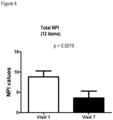
- Vafidemstat produced a statistically significant improvement on the Total NPI score comparing the Total NPI score after 8 weeks of treatment with vafidemstat (score at visit 7) with the score at baseline, prior to starting treatment with vafidemstat (score at visit 1), as shown in Figure 4 .
- the total NPI scale consists of 12 items relating to a variety of neuropsychiatric domains and can be used to measure patient's global functioning.
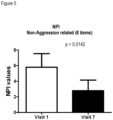
- vafidemstat In addition to the reduction in the total NPI score, vafidemstat also produced a statistically significant improvement on the NPI non-aggression related combined score comparing the NPI non-aggression related combined score after 8 weeks of treatment with vafidemstat (score at visit 7) with the score at baseline, prior to starting treatment with vafidemstat (score at visit 1), see Figure 5 .
- the NPI non-aggression related combined score is the NPI combined score for all other items in the NPI not related to aggression or agitation (8 items).
- the results obtained in ASD patients using total NPI scale and non-aggression related NPI subscale show that vafidemstat has a broad therapeutic effect in ASD, with therapeutic effects to treat ASD beyond treating aggresion. Vafidemstat has been found to be particularly well suited to treat ASD, including treating core features of ASD as defined herein.
- vafidemstat or a pharmaceutically acceptable salt or solvate thereof in the treatment of ASD are attainable without producing sedative effects or weight gain.
- vafidemstat may be administered for use in therapy directly as such, it is typically administered in the form of a pharmaceutical composition, which comprises the compound as active pharmaceutical ingredient together with one or more pharmaceutically acceptable excipients or carriers.
- vafidemstat throughout this specification includes a reference to the compound as such, i.e. the compound in non-salt form (e.g., as a free base) or in the form of any pharmaceutically acceptable salt or solvate thereof, as well as a reference to a pharmaceutical composition comprising said compound and one or more pharmaceutically acceptable excipients or carriers.
- Vafidemstat may be administered by any means that accomplish the intended purpose. Examples include administration by the oral, parenteral (including e.g. intravenous, subcutaneous or intracerebral), or topical routes.
- the compound can be incorporated into a formulation that includes pharmaceutically acceptable carriers such as binders (e.g., gelatin, cellulose, gum tragacanth), excipients (e.g., starch, lactose), lubricants (e.g., magnesium stearate, silicon dioxide), disintegrating agents (e.g., alginate, Primogel, and corn starch), and sweetening or flavoring agents (e.g., glucose, sucrose, saccharin, methyl salicylate, and peppermint).
- binders e.g., gelatin, cellulose, gum tragacanth
- excipients e.g., starch, lactose
- lubricants e.g., magnesium stearate, silicon dioxide
- disintegrating agents e.g., alginate, Primogel, and corn starch
- sweetening or flavoring agents e.g., glucose, sucrose, saccharin, methyl salicylate, and peppermint
- Suitable oral formulations can also be in the form of suspension, syrup, chewing gum, wafer, elixir, and the like. If desired, conventional agents for modifying flavors, tastes, colors, and shapes of the special forms can also be included.
- the active compounds can be dissolved in an acceptable lipophilic vegetable oil vehicle such as olive oil, corn oil and safflower oil.
- the compound can also be administered parenterally in the form of solution or suspension, or in lyophilized form capable of conversion into a solution or suspension form before use.
- diluents or pharmaceutically acceptable carriers such as sterile water and physiological saline buffer can be used.
- Other conventional solvents, pH buffers, stabilizers, anti-bacteria agents, surfactants, and antioxidants can all be included.
- useful components include sodium chloride, acetates, citrates or phosphates buffers, glycerin, dextrose, fixed oils, methyl parabens, polyethylene glycol, propylene glycol, sodium bisulfate, benzyl alcohol, ascorbic acid, and the like.
- the parenteral formulations can be stored in any conventional containers such as vials and ampoules.
- the compound can be formulated into lotions, creams, ointments, gels, powders, pastes, sprays, suspensions, drops and aerosols.
- one or more thickening agents, humectants, and stabilizing agents can be included in the formulations.
- examples of such agents include, but are not limited to, polyethylene glycol, sorbitol, xanthan gum, petrolatum, beeswax, or mineral oil, lanolin, squalene, and the like.
- a special form of topical administration is delivery by a transdermal patch. Methods for preparing transdermal patches are disclosed, e.g ., in Brown, et al. (1988) Ann. Rev. Med. 39:221-229 which is incorporated herein by reference.
- Subcutaneous implantation for sustained release of the compound may also be a suitable route of administration.
- This entails surgical procedures for implanting an active compound in any suitable formulation into a subcutaneous space, e.g ., beneath the anterior abdominal wall. See, e.g ., Wilson et al. (1984) J. Clin. Psych. 45:242-247 .
- Hydrogels can be used as a carrier for the sustained release of active compounds.
- Hydrogels are generally known in the art. They are typically made by crosslinking high molecular weight biocompatible polymers into a network, which swells in water to form a gel like material. Preferably, hydrogels are biodegradable or biosorbable.
- hydrogels made of polyethylene glycols, collagen, or poly(glycolic-co-L-lactic acid) may be useful. See, e.g ., Phillips et al. (1984) J. Pharmaceut. Sci., 73: 1718-1720 .
- the compound can also be conjugated to a water soluble non-immunogenic non-peptidic high molecular weight polymer to form a polymer conjugate.
- the compound can be covalently linked to polyethylene glycol to form a conjugate.
- a conjugate exhibits improved solubility, stability, and reduced toxicity and immunogenicity.
- the compound in the conjugate can have a longer half-life in the body, and exhibit better efficacy. See generally, Burnham (1994) Am. J. Hasp. Pharm. 15:210-218 . PEGylated proteins are currently being used in protein replacement therapies and for other therapeutic uses.
- PEGylated interferon PEG-INTRON A ®
- PEG-INTRON A ® PEGylated interferon
- ADAGEN ® PEGylated adenosine deaminase
- SCIDS severe combined immunodeficiency disease
- PEGylated L-asparaginase ONCAPSPAR ®
- ALL acute lymphoblastic leukemia
- covalent linkage between the polymer and the active compound and/or the polymer itself is hydrolytically degradable under physiological conditions.
- conjugates known as "prodrugs" can readily release the active compound inside the body.
- Controlled release of an active compound can also be achieved by incorporating the active ingredient into microcapsules, nanocapsules, or hydrogels generally known in the art.
- Other pharmaceutically acceptable prodrugs of the compound include, but are not limited to, esters, carbonates, thiocarbonates, N-acyl derivatives, N-acyloxyalkyl derivatives, quaternary derivatives of tertiary amines, N-Mannich bases, Schiff bases, amino acid conjugates, phosphate esters, metal salts and sulfonate esters.
- Liposomes can also be used as carriers for the active compound. Liposomes are micelles made of various lipids such as cholesterol, phospholipids, fatty acids, and derivatives thereof.
- Liposomes can reduce the toxicity of the active compounds, and increase their stability.
- Methods for preparing liposomal suspensions containing active ingredients therein are generally known in the art. See, e.g ., U.S. Patent No. 4,522,811 ; Prescott, Ed., Methods in Cell Biology, Volume XIV, Academic Press, New York, N. Y. (1976 ).
- unit dosage forms refers to physically discrete units suitable as unitary dosages for administration to subjects, each unit containing a predetermined quantity of active ingredient calculated to produce the desired therapeutic effect, in association with one or more suitable pharmaceutical carriers.
- compositions are to be administered in a manner appropriate to the disease to be treated, as determined by a person skilled in the medical arts.
- An appropriate dose and suitable duration and frequency of administration will be determined by such factors as the condition of the patient, the type and severity of the disease, the particular form of the active ingredient, the method of administration, among others.
- an appropriate dose and administration regimen provides the pharmaceutical composition in an amount sufficient to provide therapeutic benefit, for example an improved clinical outcome, such as more frequent complete or partial remissions, or longer disease-free and/or overall survival, or lessening of symptoms severity, or any other objectively identifiable improvement as noted by the clinician.
- Effective doses may generally be assessed or extrapolated using experimental models like dose-response curves derived from in vitro or animal model test systems, or from clinical trials.
- compositions of the invention can be included in a container, pack or dispenser together with instructions for administration.
- Vafidemstat have been found to be orally active and to be effective in the treatment of ASD when administered orally, as illustrated in Example 2. Accordingly, it is preferred that vafidemstat is administered by the oral route for the treatment of ASD.
- the present invention also embraces the use of vafidemstat, in which one or more atoms are replaced by a specific isotope of the corresponding atom.
- the invention encompasses the use of vafidemstat, in which one or more hydrogen atoms (or, e.g., all hydrogen atoms) are replaced by deuterium atoms (i.e., 2 H; also referred to as "D").
- the invention also embraces vafidemstat which is enriched in deuterium.
- Naturally occurring hydrogen is an isotopic mixture comprising about 99.98 mol-% hydrogen-1 ( 1 H) and about 0.0156 mol-% deuterium ( 2 H or D).
- vafidemstat The content of deuterium in one or more hydrogen positions in vafidemstat can be increased using deuteration techniques known in the art.
- vafidemstat or a reactant or precursor to be used in the synthesis of vafidemstat can be subjected to an H/D exchange reaction using, e.g., heavy water (D 2 O).
- H/D exchange reaction e.g., heavy water (D 2 O).
- deuteration techniques are described in: Atzrodt J et al., Bioorg Med Chem, 20(18), 5658-5667, 2012 ; William JS et al., Journal of Labelled Compounds and Radiopharmaceuticals, 53(11-12), 635-644, 2010 ; Modvig A et al., J Org Chem, 79, 5861-5868, 2014 .
- vafidemstat to be used in accordance with the present invention is not enriched in deuterium. Accordingly, the presence of naturally occurring hydrogen atoms or 1 H hydrogen atoms in vafidemstat is preferred. In general, it is preferred that none of the atoms in vafidemstat to be used in accordance with the invention are replaced by specific isotopes.
- a "patient” or “subject” for the purposes of the present invention includes both humans and other animals, particularly mammals. Thus, the methods and uses of the invention are applicable to both human therapy and veterinary applications.
- the subject or patient is a mammal, and in the most preferred aspect the subject or patient is a human (e.g. a male or female human).
- treatment means obtaining a desired pharmacological and/or physiological effect.
- the effect may be prophylactic in terms of completely or partially preventing a disease (herein, ASD) or symptom thereof and/or may be therapeutic in terms of partially or completely curing or ameliorating a disease (i.e. ASD) and/or a symptom or adverse effect attributed to the disease or partially or completely halting the progression of a disease and/or a symptom or adverse effect attributed to the disease.
- ASD a disease
- treatment covers any treatment of a disease (i.e.
- ASD in a patient and includes, without limitation, any one or more of the following: (a) preventing ASD in a patient which may be predisposed/at risk of developing ASD; (b) delaying the onset of ASD; (c) inhibiting ASD, i.e. arresting, delaying or slowing down its development/progression; or (d) relieving the ASD, i.e. causing (complete or partial) regression, correction or alleviation of ASD.
- the present invention specifically and distinctly relates to each one of these forms of treatment.
- a therapeutically effective amount refers to the amount sufficient to produce a desired biological effect (e.g., a therapeutic effect) in a subject.
- a therapeutically effective amount of a compound may be an amount which is sufficient to treat a disease (i.e. ASD), and/or delay the onset or progression of the disease, and/or alleviate one or more symptoms of the disease, when administered to a subject suffering from or susceptible to that disease.
- ASD autism spectrum disorder
- a "pharmaceutically acceptable salt” is intended to mean a salt that retains the biological effectiveness of the free acids and/or bases of the specified compound and that is not biologically or otherwise undesirable.
- a compound may possess a sufficiently acidic, a sufficiently basic, or both functional groups, and accordingly react with any of a number of inorganic or organic bases, and inorganic and organic acids, to form a pharmaceutically acceptable salt.
- Exemplary pharmaceutically acceptable salts include those salts prepared by reaction of a compound according to the invention, e.g.
- vafidemstat with a mineral or organic acid, such as hydrochlorides, hydrobromides, sulfates, pyrosulfates, bisulfates, sulfites, bisulfites, phosphates, monohydrophosphates, dihydrophosphates, metaphosphates, pyrophosphates, chlorides, bromides, iodides, nitrates, acetates, propionates, decanoates, caprylates, acrylates, formates, isobutyrates, caproates, heptanoates, propiolates, oxalates, malonates, succinates, suberates, sebacates, fumarates, maleates, butyne-1,4-dioates, hexyne-1,6-dioates, benzoates, chlorobenzoates, methylbenzoates, dinitrobenzoates, hydroxybenzoates, methoxybenzoates, phthalates, sulf
- suitable pharmaceutically acceptable salts thereof may include alkali metal salts, e.g. sodium or potassium salts; alkaline earth metal salts, e.g. calcium or magnesium salts; and salts formed with suitable organic ligands such as ammonia, alkylamines, hydroxyalkylamines, lysine, arginine, N-methylglucamine, procaine and the like.
- suitable organic ligands such as ammonia, alkylamines, hydroxyalkylamines, lysine, arginine, N-methylglucamine, procaine and the like.
- Pharmaceutically acceptable salts are well known in the art.
- a "pharmaceutically acceptable solvate” refers to a complex of variable stoichiometry formed by a solute and a pharmaceutically acceptable solvent such as water, ethanol and the like.
- a complex with water is known as a hydrate. It is to be understood that the invention encompasses pharmaceutically acceptable solvates of vafidemstat in non-salt form and also in the form of a pharmaceutically acceptable salt thereof.
- a "pharmaceutically acceptable carrier” or “pharmaceutically acceptable excipient” refers to non-API (API refers to Active Pharmaceutical Ingredient) substances such as disintegrators, binders, fillers, and lubricants used in formulating pharmaceutical products. They are generally safe for administering to humans according to established governmental standards, including those promulgated by the United States Food and Drug Administration and/or the European Medicines Agency. Pharmaceutically acceptable carriers or excipients are well known to those skilled in the art.
- the term “comprising” (or “comprise”, “comprises”, “contain”, “contains”, or “containing”), unless explicitly indicated otherwise or contradicted by context, has the meaning of “containing, inter alia”, i.e., “containing, among further optional elements, ". In addition thereto, this term also includes the narrower meanings of “consisting essentially of” and “consisting of”.
- a comprising B and C has the meaning of "A containing, inter alia, B and C", wherein A may contain further optional elements (e.g., "A containing B, C and D" would also be encompassed), but this term also includes the meaning of "A consisting essentially of B and C” and the meaning of "A consisting of B and C" (i.e., no other components than B and C are comprised in A).
- Vafidemstat (recommended International Nonproprietary Name) is the compound 5-((((1R,2S)-2-(4-(benzyloxy)phenyl)cyclopropyl)amino)methyl)-1,3,4-oxadiazol-2-amine, also known as (-) 5-((((trans)-2-(4-(benzyloxy)phenyl)cyclopropyl)amino)methyl)-1,3,4-oxadiazol-2-amine, (41R,42S)-6-oxa-3-aza-1(2)-[1,3,4]oxadiazola-5(1,4),8(1)-dibenzena-4(1,2)-cyclopropanaoctaphan-15-amine or ORY-2001, and whose chemical structure is shown below.
- This compound can be obtained as disclosed in WO2012/013728 .
- Vafidemstat is a KDM1A inhibitor, with a mean IC 50 value of 101 ⁇ 40 nM obtained in the KDM1A assay described below.
- KDM1A inhibition assay Human recombinant KDM1A protein (GenBank accession no. NM_015013, amino acids 158-end with N-terminal GST tag, MW: 103 kDa) was used. Serial 3-fold dilutions of test compound ranged between 30 ⁇ M and 1 nM were pre-incubated for 15 min with human recombinant KDM1A enzyme (BPS Bioscience, Ref. 50100) on ice in the assay buffer (50 mM sodium phosphate pH 7.4). Each concentration of inhibitor was tested in duplicate. The enzymatic reaction was initiated by the addition of dimethyl H3K4 peptide substrate (Anaspec, Ref.
- Reimagine is a unicenter, open-label, 1-arm, 8-week clinical study to evaluate the efficacy, safety and tolerability of vafidemstat in aggression in adult population with ASD, ADHD and BPD.
- vafidemstat as free base
- a dose of 1.2 mg/day administered orally as a single capsule, in a 5 days on/2 days off schedule, during 8 weeks.
- Table 1 Demographic data ASD patients no of patients 6 Sex Male 5 (83.3 %) Female 1(16.6 %) Age Median (years) 35.33 (Min, Max) (24/44) Race Caucasian 6(100%) Weight Median (Kg) 95.70 (Min, Max) 77.5/116.5 Height Median (cm) 181.08 (Min, Max) (174/190) BMI Median 29.06 (Min, Max) (22.56/37.46)
- the NPI A/A subscale is based on the NPI and consists of the 4 items in the NPI related to aggression/agitation, namely: agitation/aggression, disinhibition, irritability and aberrant motor disturbance.
- CGI values reflect clinician's ratings of patient's aggression severity (CGI-S scale) and improvement in aggression from the initiation (baseline) of the treatment (CGI-I scale).
- the total NPI scale consists of 12 items relating to a variety of neuropsychiatric domains (namely: delusions, hallucinations, agitation/aggression, depression, anxiety, euphoria/elation, apathy/indifference, disinhibition, irritability, aberrant motor disturbance, nightime behavior, and appetite/eating disorders) and was used to measure global functioning in ASD patients.
- the NPI non-aggression related combined score is the NPI combined score for all other items in the NPI not related to aggression or agitation (8 items; namely: delusions, hallucinations, depression, anxiety, euphoria/elation, apathy/indifference, nightime behavior, and appetite/eating disorders).
- Treatment with vafidemstat in ASD patients was safe and well tolerated, without significant adverse events.
- One patient experienced a transitory event related to hematological alteration, although no clinically relevant modification of the hematological and biochemical parameters tested were observed. No sedation was reported.
- a reduction in the CGI-S value from visit 1 to visit 7 was also observed (see Figure 3 ).
- Example 2 support the use of vafidemstat for the treatment of ASD, including the treatment of ASD core features or ASD symptoms unrelated to aggression.
- the present invention particularly relates to the following items:
Landscapes
- Health & Medical Sciences (AREA)
- Chemical & Material Sciences (AREA)
- Medicinal Chemistry (AREA)
- Pharmacology & Pharmacy (AREA)
- Life Sciences & Earth Sciences (AREA)
- Animal Behavior & Ethology (AREA)
- General Health & Medical Sciences (AREA)
- Public Health (AREA)
- Veterinary Medicine (AREA)
- Epidemiology (AREA)
- Biomedical Technology (AREA)
- Bioinformatics & Cheminformatics (AREA)
- Engineering & Computer Science (AREA)
- Neurology (AREA)
- Neurosurgery (AREA)
- Chemical Kinetics & Catalysis (AREA)
- General Chemical & Material Sciences (AREA)
- Nuclear Medicine, Radiotherapy & Molecular Imaging (AREA)
- Organic Chemistry (AREA)
- Nutrition Science (AREA)
- Physiology (AREA)
- Acyclic And Carbocyclic Compounds In Medicinal Compositions (AREA)
- Pharmaceuticals Containing Other Organic And Inorganic Compounds (AREA)
- Solid-Sorbent Or Filter-Aiding Compositions (AREA)
- Analysing Materials By The Use Of Radiation (AREA)
- Luminescent Compositions (AREA)
- Steroid Compounds (AREA)
Priority Applications (1)
| Application Number | Priority Date | Filing Date | Title |
|---|---|---|---|
| EP25213976.1A EP4717313A2 (de) | 2019-09-03 | 2020-09-03 | Vafidemstat zur verwendung bei der behandlung von autismusspektrumsstörungen |
Applications Claiming Priority (4)
| Application Number | Priority Date | Filing Date | Title |
|---|---|---|---|
| EP19382751 | 2019-09-03 | ||
| EP19382855 | 2019-10-03 | ||
| EP20764121.8A EP4025210A1 (de) | 2019-09-03 | 2020-09-03 | Vafidemstat zur verwendung bei der behandlung von störungen des autismusspektrums |
| PCT/EP2020/074602 WO2021043905A1 (en) | 2019-09-03 | 2020-09-03 | Vafidemstat for use in treating autism spectrum disorders |
Related Parent Applications (1)
| Application Number | Title | Priority Date | Filing Date |
|---|---|---|---|
| EP20764121.8A Division EP4025210A1 (de) | 2019-09-03 | 2020-09-03 | Vafidemstat zur verwendung bei der behandlung von störungen des autismusspektrums |
Related Child Applications (1)
| Application Number | Title | Priority Date | Filing Date |
|---|---|---|---|
| EP25213976.1A Division EP4717313A2 (de) | 2019-09-03 | 2020-09-03 | Vafidemstat zur verwendung bei der behandlung von autismusspektrumsstörungen |
Publications (2)
| Publication Number | Publication Date |
|---|---|
| EP4509176A2 true EP4509176A2 (de) | 2025-02-19 |
| EP4509176A3 EP4509176A3 (de) | 2025-05-07 |
Family
ID=72266308
Family Applications (3)
| Application Number | Title | Priority Date | Filing Date |
|---|---|---|---|
| EP24198301.4A Withdrawn EP4509176A3 (de) | 2019-09-03 | 2020-09-03 | Vafidemstat zur verwendung bei der behandlung von autismusspektrumsstörungen |
| EP20764121.8A Withdrawn EP4025210A1 (de) | 2019-09-03 | 2020-09-03 | Vafidemstat zur verwendung bei der behandlung von störungen des autismusspektrums |
| EP25213976.1A Pending EP4717313A2 (de) | 2019-09-03 | 2020-09-03 | Vafidemstat zur verwendung bei der behandlung von autismusspektrumsstörungen |
Family Applications After (2)
| Application Number | Title | Priority Date | Filing Date |
|---|---|---|---|
| EP20764121.8A Withdrawn EP4025210A1 (de) | 2019-09-03 | 2020-09-03 | Vafidemstat zur verwendung bei der behandlung von störungen des autismusspektrums |
| EP25213976.1A Pending EP4717313A2 (de) | 2019-09-03 | 2020-09-03 | Vafidemstat zur verwendung bei der behandlung von autismusspektrumsstörungen |
Country Status (6)
| Country | Link |
|---|---|
| US (2) | US20220288039A1 (de) |
| EP (3) | EP4509176A3 (de) |
| JP (1) | JP7681328B2 (de) |
| CN (1) | CN114615979A (de) |
| MX (1) | MX2022002420A (de) |
| WO (1) | WO2021043905A1 (de) |
Citations (2)
| Publication number | Priority date | Publication date | Assignee | Title |
|---|---|---|---|---|
| US4522811A (en) | 1982-07-08 | 1985-06-11 | Syntex (U.S.A.) Inc. | Serial injection of muramyldipeptides and liposomes enhances the anti-infective activity of muramyldipeptides |
| WO2012013728A1 (en) | 2010-07-29 | 2012-02-02 | Oryzon Genomics S.A. | Arylcyclopropylamine based demethylase inhibitors of lsd1 and their medical use |
Family Cites Families (3)
| Publication number | Priority date | Publication date | Assignee | Title |
|---|---|---|---|---|
| MX383502B (es) | 2015-12-08 | 2025-03-14 | Luoda Pharma Ltd | Métodos y composiciones para el tratamiento de úlceras gástricas |
| SI3661510T1 (sl) * | 2017-08-03 | 2025-03-31 | Oryzon Genomics, S.A. | Postopki zdravljenja vedenjskih sprememb |
| CN113194816A (zh) * | 2018-10-05 | 2021-07-30 | 豪夫迈·罗氏有限公司 | 用于评估自闭症谱系障碍的方法、设备和系统 |
-
2020
- 2020-09-03 CN CN202080076641.9A patent/CN114615979A/zh active Pending
- 2020-09-03 EP EP24198301.4A patent/EP4509176A3/de not_active Withdrawn
- 2020-09-03 JP JP2022514201A patent/JP7681328B2/ja active Active
- 2020-09-03 EP EP20764121.8A patent/EP4025210A1/de not_active Withdrawn
- 2020-09-03 WO PCT/EP2020/074602 patent/WO2021043905A1/en not_active Ceased
- 2020-09-03 MX MX2022002420A patent/MX2022002420A/es unknown
- 2020-09-03 US US17/753,406 patent/US20220288039A1/en not_active Abandoned
- 2020-09-03 EP EP25213976.1A patent/EP4717313A2/de active Pending
-
2023
- 2023-08-24 US US18/455,098 patent/US20240226069A1/en active Pending
Patent Citations (2)
| Publication number | Priority date | Publication date | Assignee | Title |
|---|---|---|---|---|
| US4522811A (en) | 1982-07-08 | 1985-06-11 | Syntex (U.S.A.) Inc. | Serial injection of muramyldipeptides and liposomes enhances the anti-infective activity of muramyldipeptides |
| WO2012013728A1 (en) | 2010-07-29 | 2012-02-02 | Oryzon Genomics S.A. | Arylcyclopropylamine based demethylase inhibitors of lsd1 and their medical use |
Non-Patent Citations (8)
| Title |
|---|
| "Methods in Cell Biology", vol. XIV, 1976, ACADEMIC PRESS |
| ATZRODT J ET AL., BIOORG MED CHEM, vol. 20, no. 18, 2012, pages 5658 - 5667 |
| BROWN ET AL., ANN. REV. MED., vol. 39, 1988, pages 221 - 229 |
| BURNHAM, AM. J. HASP. PHARM., vol. 15, 1994, pages 210 - 218 |
| MODVIG A ET AL., J ORG CHEM, vol. 79, 2014, pages 5861 - 5868 |
| PHILLIPS ET AL., J. PHARMACEUT. SCI., vol. 73, 1984, pages 1718 - 1720 |
| WILLIAM JS ET AL., JOURNAL OF LABELLED COMPOUNDS AND RADIOPHARMACEUTICALS, vol. 53, no. 11-12, 2010, pages 635 - 644 |
| WILSON ET AL., J. CLIN. PSYCH., vol. 45, 1984, pages 242 - 247 |
Also Published As
| Publication number | Publication date |
|---|---|
| US20220288039A1 (en) | 2022-09-15 |
| EP4025210A1 (de) | 2022-07-13 |
| US20240226069A1 (en) | 2024-07-11 |
| CN114615979A (zh) | 2022-06-10 |
| JP2022546134A (ja) | 2022-11-02 |
| MX2022002420A (es) | 2022-05-06 |
| WO2021043905A1 (en) | 2021-03-11 |
| EP4509176A3 (de) | 2025-05-07 |
| JP7681328B2 (ja) | 2025-05-22 |
| EP4717313A2 (de) | 2026-04-01 |
Similar Documents
| Publication | Publication Date | Title |
|---|---|---|
| EP3661510B1 (de) | Verfahren zur behandlung von verhaltensveränderungen | |
| AU2017277751B2 (en) | Method of treating multiple sclerosis employing a LSD1-inhibitor | |
| US20240226069A1 (en) | Vafidemstat for use in treating autism spectrum disorders | |
| EP3941466B1 (de) | Vafidemstat zur behandlung von nicht-aggressiven symptomen der borderline-persönlichkeitsstörung | |
| EP3941465B1 (de) | Methoden zur behandlung von aufmerksamkeitsdefizit/hyperaktivitätsstörungen unter verwendung von kdm1a inhibitoren wie der verbindung vafidemstat | |
| US10780081B2 (en) | Method of treating multiple sclerosis employing a LSD1-inhibitor | |
| HK40067920B (en) | Vafidemstat for the treatment of non-aggressive symptoms of borderline personality disorder | |
| HK40067920A (en) | Vafidemstat for the treatment of non-aggressive symptoms of borderline personality disorder | |
| RU2833298C2 (ru) | Способы лечения пограничного расстройства личности | |
| RU2799049C2 (ru) | Способы лечения изменений поведения | |
| HK40029059B (en) | Methods of treating behavior alterations | |
| HK40029059A (en) | Methods of treating behavior alterations | |
| NZ738830B (en) | Methods of treating multiple sclerosis | |
| HK1253743B (en) | Multiple sclerosis treatment |
Legal Events
| Date | Code | Title | Description |
|---|---|---|---|
| PUAI | Public reference made under article 153(3) epc to a published international application that has entered the european phase |
Free format text: ORIGINAL CODE: 0009012 |
|
| STAA | Information on the status of an ep patent application or granted ep patent |
Free format text: STATUS: THE APPLICATION HAS BEEN PUBLISHED |
|
| AC | Divisional application: reference to earlier application |
Ref document number: 4025210 Country of ref document: EP Kind code of ref document: P |
|
| AK | Designated contracting states |
Kind code of ref document: A2 Designated state(s): AL AT BE BG CH CY CZ DE DK EE ES FI FR GB GR HR HU IE IS IT LI LT LU LV MC MK MT NL NO PL PT RO RS SE SI SK SM TR |
|
| REG | Reference to a national code |
Ref country code: DE Ref legal event code: R079 Free format text: PREVIOUS MAIN CLASS: A61P0025000000 Ipc: A61K0031424500 |
|
| PUAL | Search report despatched |
Free format text: ORIGINAL CODE: 0009013 |
|
| AK | Designated contracting states |
Kind code of ref document: A3 Designated state(s): AL AT BE BG CH CY CZ DE DK EE ES FI FR GB GR HR HU IE IS IT LI LT LU LV MC MK MT NL NO PL PT RO RS SE SI SK SM TR |
|
| RIC1 | Information provided on ipc code assigned before grant |
Ipc: A61P 25/00 20060101ALI20250331BHEP Ipc: A61K 31/4245 20060101AFI20250331BHEP |
|
| STAA | Information on the status of an ep patent application or granted ep patent |
Free format text: STATUS: THE APPLICATION IS DEEMED TO BE WITHDRAWN |
|
| 18D | Application deemed to be withdrawn |
Effective date: 20251108 |