EP4509182A2 - Use of akkermansia for treating metabolic disorders - Google Patents
Use of akkermansia for treating metabolic disorders Download PDFInfo
- Publication number
- EP4509182A2 EP4509182A2 EP24216696.5A EP24216696A EP4509182A2 EP 4509182 A2 EP4509182 A2 EP 4509182A2 EP 24216696 A EP24216696 A EP 24216696A EP 4509182 A2 EP4509182 A2 EP 4509182A2
- Authority
- EP
- European Patent Office
- Prior art keywords
- akkermansia muciniphila
- cfu
- muciniphila
- subject
- mice
- Prior art date
- Legal status (The legal status is an assumption and is not a legal conclusion. Google has not performed a legal analysis and makes no representation as to the accuracy of the status listed.)
- Pending
Links
Images






Classifications
-
- A—HUMAN NECESSITIES
- A61—MEDICAL OR VETERINARY SCIENCE; HYGIENE
- A61K—PREPARATIONS FOR MEDICAL, DENTAL OR TOILETRY PURPOSES
- A61K35/00—Medicinal preparations containing materials or reaction products thereof with undetermined constitution
- A61K35/66—Microorganisms or materials therefrom
- A61K35/74—Bacteria
- A61K35/741—Probiotics
-
- A—HUMAN NECESSITIES
- A61—MEDICAL OR VETERINARY SCIENCE; HYGIENE
- A61P—SPECIFIC THERAPEUTIC ACTIVITY OF CHEMICAL COMPOUNDS OR MEDICINAL PREPARATIONS
- A61P3/00—Drugs for disorders of the metabolism
-
- A—HUMAN NECESSITIES
- A61—MEDICAL OR VETERINARY SCIENCE; HYGIENE
- A61P—SPECIFIC THERAPEUTIC ACTIVITY OF CHEMICAL COMPOUNDS OR MEDICINAL PREPARATIONS
- A61P35/00—Antineoplastic agents
Definitions
- the present invention relates to the treatment of metabolic disorders, such as, for example, metabolic disorders related to overweight and obesity, such as, for example, Diabetes Mellitus or high cholesterol.
- the present invention more specifically relates to a composition comprising Akkermansia spp or fragments thereof for treating a metabolic disorder.
- Obesity is a worldwide problem, with an estimated number of obese adults of about 250 million. This epidemic of obesity is correlated with a great increase in the prevalence of obesity-related disorders, such as, for example, Diabetes, hypertension, cardiac pathologies and liver diseases. Due to these highly disabling pathologies, obesity is currently considered in western countries as one of the most important public health problem. There is thus a real need of compositions and methods for treating or preventing obesity and/or obesity-related disorders.
- Obesity and obesity-related diseases are associated with (i) metabolic dysfunctions (with an impact on glucose homeostasis and lipid metabolism for example); (ii) low grade inflammatory state associated to higher blood lipopolysaccharides (LPS) levels (also referred as metabolic endotoxemia); and (iii) impaired gut barrier function (i.e. increased gut permeability).
- LPS blood lipopolysaccharides
- impaired gut barrier function i.e. increased gut permeability
- the human gut is colonized by a diverse, complex and dynamic community of microbes representing over 1000 different species, which continuously interact with the host ( Zoetendal, Rajilic-Stojanovic and de Vos, Gut 2008, 57: 1605-1615 ).
- the homeostasis of the gut microbiota is dependent on host characteristics (age, gender, genetic background%) and environmental conditions (stress, drugs, gastrointestinal surgery, infectious and toxic agents%), but also on the day-to-day dietary changes.
- Growing evidences support the role of gut microbiota in the development of obesity and related disorders ( Delzenne & Cani, Annu. Rev. Nutr. 2011, 31: 15-31 ).
- these products may consist of living microbes, such as in the case of most probiotics, or contain dead microbes or fragments thereof.
- these products may comprise substrates that are used by the gut microbiota, such as in the case of prebiotics, or contain compounds that change the balance of the intestinal microbiota, such as specific antimicrobial compounds.
- WO 2008/076696 describes the gut microbiota as a therapeutic target for treating obesity and related disorders.
- WO 2008/076696 specifically describes methods for altering the abundance of Bacteroides and/or Firmicutes in the gut of a subject, by administering antibiotics and/or probiotics to the subject.
- EP 2 030 623 relates to the prevention and/or treatment of metabolic disorders, such as, for example, obesity related disorders, by regulating the amount of Enterobacteria in the gut.
- EP 2 030 623 discloses reducing the amount of Enterobacteria in the gut by administering probiotic bacteria, such as, for example, Bifidobacterium, Lactococcus, Streptococcus, Enterococcus or Lactobacillus.
- the Applicant described that the gut microbiota is modified in prebiotic-treated obese mice ( Everard et al., Diabetes, 2011 Nov;60(11):2775-86 ). Moreover, prebiotics (1) improve glucose and lipid metabolisms in obese mice, (2) reduce plasma LPS and improve gut barrier function (e.g. reduction of inflammation) in obese mice, (3) induce an increased enteroendocrine L-cell number in obese mice, and (4) improve leptin sensitivity and glucose homeostasy in diet-induced obese and diabetic mice.
- muciniphila a bacteria firstly identified in 2004 by the Applicant, represents approximately 1 to 3% of the total microbiota of healthy adults ( Derrien et al, International Journal of Systematic and Evolutionary Microbiology, 2004, 54:1469-1476 ; Derrien et al Applied Environmental Microbiology 2008, 74, 1646-1648 .).
- WO 2011/107481 describes that the absence of Akkermansia muciniphila in the gut of a subject, combined with the presence of Bacteroides capillosus and Clostridium leptum indicates that this subject is suffering from ulcerative colitis.
- Hansen and colleagues showed that the administration of an antibiotic, Vancomycin, to neonatal NOD mice (the NOD mouse model is a model for Diabetes) suppresses clinical onset of Diabetes and propagates Akkermansia muciniphila ( Hansen et al., Diabetologia, 2012 Aug;55(8):2285-94 ).
- this may be an indirect effect due to the insensitivity of intestinal Akkermansia spp. to the used antibiotic.
- the Applicant surprisingly showed that repeated administration of Akkermansia muciniphila alone impacts the three underlying dysfunctions associated with obesity and related disorders, i.e. metabolic dysfunctions, low grade inflammatory state associated to higher blood lipopolysaccharides (LPS) levels and impaired gut barrier function.
- the present invention thus relates to the use of Akkermansia muciniphila or fragments thereof for treating obesity and related disorders.
- the present invention thus relates to Akkermansia muciniphila or fragments thereof for treating, or for use in treating, a metabolic disorder in a subject in need thereof.
- said metabolic disorder is obesity.
- said metabolic disorder is selected from the group comprising metabolic syndrome, insulin-deficiency or insulin-resistance related disorders, Diabetes Mellitus (such as, for example, Type 2 Diabetes), glucose intolerance, abnormal lipid metabolism, atherosclerosis, hypertension, cardiac pathology, stroke, non-alcoholic fatty liver disease, hyperglycemia, hepatic steatosis, dyslipidemia, dysfunction of the immune system associated with overweight and obesity, cardiovascular diseases, high cholesterol, elevated triglycerides, asthma, sleep apnoea, osteoarthritis, neuro-degeneration, gallbladder disease, syndrome X, inflammatory and immune disorders, atherogenic dyslipidemia and cancer.
- the present invention also relates to Akkermansia muciniphila or fragments thereof for increasing energy expenditure of a subject, preferably without impacting the food intake of said subject.
- the present invention also relates to Akkermansia muciniphila or fragments thereof for increasing satiety in a subject.
- viable cells of Akkermansia muciniphila are administered to the subject in need thereof.
- Akkermansia muciniphila is orally administered.
- an amount of Akkermansia muciniphila ranging from about 1.10 2 to about 1.10 15 cfu, preferably from about 1.10 4 to about 1.10 12 cfu, more preferably from about 1.10 5 to about 1.10 10 cfu, and even more preferably from about 1.10 6 to about 1.10 9 cfu is administered to the subject.
- an amount of Akkermansia muciniphila ranging from about 1.10 4 to about 1.10 12 cfu, more preferably from about 1.10 5 to about 1.10 11 cfu, and even more preferably from about 1.10 6 to about 1.10 10 cfu is administered to the subject.
- Akkermansia muciniphila is administered at least once a day. In one embodiment of the invention, Akkermansia muciniphila is administered at least three times a week. In another embodiment of the invention, Akkermansia muciniphila is administered at least once a week.
- Akkermansia muciniphila is co-administered with another probiotic strain and/or with one or more prebiotics.
- Another object of the invention is a composition for treating, or for use in treating, a metabolic disorder, or for increasing energy expenditure or for increasing satiety in a subject comprising Akkermansia muciniphila or fragments thereof as described hereinabove in association with an excipient.
- said composition is a nutritional composition.
- said composition is orally administered.
- the present invention also relates to a pharmaceutical composition for treating, or for use in treating, a metabolic disorder or for increasing energy expenditure or for increasing satiety in a subject comprising Akkermansia muciniphila or fragments thereof as hereinabove described in association with a pharmaceutically acceptable vehicle.
- Another object of the present invention is a medicament for treating, or for use in treating, a metabolic disorder or for increasing energy expenditure or for increasing satiety in a subject comprising Akkermansia muciniphila or fragments thereof as hereinabove described.
- Another object of the present invention is the use of Akkermansia muciniphila or fragments thereof for promoting weight loss in a subject in need thereof.
- the present invention also relates to a cosmetic composition
- a cosmetic composition comprising Akkermansia muciniphila or fragments thereof for promoting weight loss in a subject in need thereof.
- This invention relates to Akkermansia muciniphila or a fragment thereof for treating, or for use in treating, metabolic disorders in a subject in need thereof.
- a metabolic disorder is a disorder related to an altered metabolic homeostasis, such as, for example, an altered glucidic or lipidic homeostasis.
- said metabolic disorder is obesity.
- Examples of other metabolic disorders include, but are not limited to, metabolic syndrome, insulin-deficiency or insulin-resistance related disorders, Diabetes Mellitus (such as, for example, Type 2 Diabetes), glucose intolerance, abnormal lipid metabolism, atherosclerosis, hypertension, cardiac pathology, stroke, non-alcoholic fatty liver disease, hyperglycemia, hepatic steatosis, dyslipidemia, dysfunction of the immune system associated with overweight and obesity, cardiovascular diseases, high cholesterol, elevated triglycerides, asthma, sleep apnoea, osteoarthritis, neuro-degeneration, gallbladder disease, syndrome X, inflammatory and immune disorders, atherogenic dyslipidemia and cancer.
- Diabetes Mellitus such as, for example, Type 2 Diabetes
- glucose intolerance abnormal lipid metabolism
- atherosclerosis hypertension
- cardiac pathology stroke
- non-alcoholic fatty liver disease hyperglycemia
- hepatic steatosis dyslipidemia
- dyslipidemia dysfunction of the immune system associated with overweight and obesity
- said metabolic disorder is an overweight and/or obesity related metabolic disorder, i.e. a metabolic disorder that may be associated to or caused by overweight and/or obesity.
- overweight and/or obesity related metabolic disorder include, but are not limited to metabolic syndrome, insulin-deficiency or insulin-resistance related disorders, Diabetes Mellitus (such as, for example, Type 2 Diabetes), glucose intolerance, abnormal lipid metabolism, atherosclerosis, hypertension, cardiac pathology, stroke, non-alcoholic fatty liver disease, hyperglycemia, hepatic steatosis, dyslipidemia, dysfunction of the immune system associated with overweight and obesity, cardiovascular diseases, high cholesterol, elevated triglycerides, asthma, sleep apnoea, osteoarthritis, neuro-degeneration, gallbladder disease, syndrome X, inflammatory and immune disorders, atherogenic dyslipidemia and cancer.
- said metabolic disorder is Diabetes Mellitus, preferably Type 2 Diabetes.
- said metabolic disorder is hypercholesterolemia (also known as high cholesterol).
- hypercholesterolemia corresponds to a plasma cholesterol concentration superior or equal to 2 g/L or 5 mmol/L.
- hypercholesterolemia corresponds to a ratio plasma concentration of total cholesterol: plasma concentration of HDL (high density lipoprotein cholesterol) superior or equal to 4.5 : 1, preferably 5 : 1.
- living strains of Akkermansia muciniphila are used in the present invention, preferably the living strains are derived from cells in stationary phase of growth.
- Akkermansia muciniphila may be in the form of viable cells. In another embodiment of the invention, Akkermansia muciniphila may be in the form of non-viable cells.
- metabolically active Akkermansia muciniphila cells are used in the present invention.
- strains of Akkermansia muciniphila are not metabolically inactivated, wherein metabolic inactivation may result, for example, from autoclave treatment.
- Akkermansia muciniphila or fragment thereof is substantially purified.
- substantially purified means that Akkermansia muciniphila or fragment thereof is comprised in a sample wherein it represents at least about 50%, preferably at least about 60, 70, 80, 85, 90, 95, 99% or more of the bacterial strains or fragment thereof of said sample.
- the present invention also relate to a composition comprising an effective amount of Akkermansia muciniphila or a fragment thereof for treating, or for use in treating, a metabolic disorder.
- the effective amount of Akkermansia muciniphila corresponds to the amount of the bacteria sufficient for restoring a normal amount and/or proportion of Akkermansia muciniphila within the gut of the subject. Indeed, the Applicant showed that the gut of obese or overweight subject is depleted in Akkermansia muciniphila (see Examples). In one embodiment of the invention, the normal amount and/or proportion of Akkermansia muciniphila corresponds to the amount, and/or to the proportion of Akkermansia muciniphila present in the gut of a healthy subject.
- the term "healthy subject” is used to define a subject which is not affected by the disease to be treated.
- the healthy subject is not affected by obesity.
- the healthy subject shares common characteristics with the subject to be treated, such as, for example, same gender, age, sex, diet, drugs intake or geolocation.
- the normal proportion of Akkermansia muciniphila in the gut ranges from about 0.1 % to about 10% (in number of Akkermansia muciniphila cells to the total number of bacteria cells of the gut), preferably from about 0.3 % to about 5%, more preferably from about 1 % to about 3%.
- the effective amount of Akkermansia muciniphila ranges from about 1.10 2 to about 1.10 15 cfu, preferably from about 1.10 4 to about 1.10 12 cfu, more preferably from about 1.10 5 to about 1.10 10 cfu, and even more preferably from about 1.10 6 to about 1.10 9 cfu, wherein cfu stands for "colony forming unit".
- the effective amount of Akkermansia muciniphila ranges from about 1.10 6 to about 1.10 10 cfu, preferably from about 1.10 8 to about 1.10 10 cfu, more preferably from about 1.10 9 to about 1.10 10 cfu.
- the effective amount of Akkermansia muciniphila ranges from about 1.10 6 to about 1.10 10 cfu, preferably from about 1.10 6 to about 1.10 9 cfu, more preferably from about 1.10 8 to about 1.10 9 cfu.
- the effective amount of a fragment of Akkermansia muciniphila ranges from fragments derived from about 1.10 2 to about 1.10 15 cfu, preferably from about 1.10 4 to about 1.10 12 cfu, more preferably from about 1.10 5 to about 1.10 10 cfu, and even more preferably from about 1.10 6 to about 1.10 9 cfu, wherein cfu stands for "colony forming unit".
- the effective amount of a fragment of Akkermansia muciniphila ranges from fragments derived from about 1.10 6 to about 1.10 10 cfu, preferably from about 1.10 8 to about 1.10 10 cfu, more preferably from about 1.10 9 to about 1.10 10 cfu. In another embodiment of the invention, the effective amount of a fragment of Akkermansia muciniphila ranges from fragments derived from about 1.10 6 to about 1.10 10 cfu, preferably from about 1.10 6 to about 1.10 9 cfu, more preferably from about 1.10 8 to about 1.10 9 cfu.
- the composition of the invention comprises an amount of Akkermansia muciniphila ranging from about 1.10 2 to about 1.10 15 cfu/g of the composition, preferably from about 1.10 4 to about 1.10 12 cfu/g of the composition, more preferably from about 1.10 5 to about 1.10 10 cfu/g of the composition and even more preferably from about 1.10 6 to about 1.10 9 cfu/g of the composition.
- the composition of the invention comprises an amount of Akkermansia muciniphila ranging from about 1.10 2 to about 1.10 15 cfu/mL of the composition, preferably from about 1.10 4 to about 1.10 12 cfu/mL of the composition, more preferably from about 1.10 5 to about 1.10 10 cfu/mL of the composition and even more preferably from about 1.10 6 to about 1.10 9 cfu/mL of the composition.
- the composition of the invention comprises an amount of Akkermansia muciniphila ranging from about 1.10 6 to about 1.10 10 cfu/g or cfu/mL of the composition, preferably from about 1.10 8 to about 1.10 10 cfu/g or cfu/mL, more preferably from about 1.10 9 to about 1.10 10 cfu/g or cfu/mL.
- the composition of the invention comprises an amount of Akkermansia muciniphila ranging from about 1.10 6 to about 1.10 10 cfu/g or cfu/mL of the composition, preferably from about 1.10 6 to about 1.10 9 cfu/g or cfu/mL, more preferably from about 1.10 8 to about 1.10 9 cfu/g or cfu/mL.
- the composition of the invention comprises an amount of fragments of Akkermansia muciniphila ranging from fragments derived from about 1.10 2 to about 1.10 15 cfu/g or mL of the composition, preferably from about 1.10 4 to about 1.10 12 cfu/g or mL of the composition, more preferably from about 1.10 5 to about 1.10 10 cfu/g or mL of the composition and even more preferably from about 1.10 6 to about 1.10 9 cfu/g or mL of the composition.
- the composition of the invention comprises an amount of fragments of Akkermansia muciniphila ranging from fragments derived from about 1.10 6 to about 1.10 10 cfu/g or cfu/mL of the composition, preferably from about 1.10 8 to about 1.10 10 cfu/g or cfu/mL, more preferably from about 1.10 9 to about 1.10 10 cfu/g or cfu/mL.
- the composition of the invention comprises an amount of fragments of Akkermansia muciniphila ranging from fragments derived from about 1.10 6 to about 1.10 10 cfu/g or cfu/mL of the composition, preferably from about 1.10 6 to about 1.10 9 cfu/g or cfu/mL, more preferably from about 1.10 8 to about 1.10 9 cfu/g or cfu/mL.
- the present invention also relates to a pharmaceutical composition
- a pharmaceutical composition comprising an effective amount of Akkermansia muciniphila or a fragment thereof and at least one pharmaceutically acceptable excipient.
- the pharmaceutical composition of the invention is for treating a metabolic disorder.
- the pharmaceutical composition is for restoring a normal proportion of Akkermansia muciniphila in the gut of a subject in need thereof.
- the term "pharmaceutically acceptable excipient” refers to an excipient that does not produce an adverse, allergic or other untoward reaction when administered to an animal, preferably a human. It may include any and all solvents, dispersion media, coatings, isotonic and absorption delaying agents and the like. For human administration, preparations should meet sterility, pyrogenicity, general safety and purity standards as required by FDA Office of Biologics standards.
- the present invention also relates to a medicament comprising an effective amount of Akkermansia muciniphila or a fragment thereof.
- the medicament of the invention is for treating a metabolic disorder.
- the medicament is for restoring a normal proportion of Akkermansia muciniphila in the gut of a subject in need thereof.
- the present invention also relates to a method for treating a metabolic disorder in a subject in need thereof, wherein said method comprises administering an effective amount of Akkermansia muciniphila or a fragment thereof to the subject.
- Another object of the invention is a method for restoring a normal proportion of Akkermansia muciniphila in the gut of a subject in need thereof, wherein said method comprises administering an effective amount of Akkermansia muciniphila or a fragment thereof to the subject.
- the method of the invention comprises administering an effective amount of the composition, of the pharmaceutical composition or of the medicament of the invention to the subject.
- Akkermansia muciniphila or a fragment thereof, or the composition, pharmaceutical composition or medicament is administered at least once a week, preferably at least twice a week, more preferably at least three times a week, and even more preferably three times a week.
- Akkermansia muciniphila or a fragment thereof, or the composition, pharmaceutical composition or medicament is administered at least once a day, and preferably at least twice a day.
- Akkermansia muciniphila or a fragment thereof, or the composition, pharmaceutical composition or medicament of the invention is administered during 1 week, preferably during 2, 3, 4, 5, 6, 7 or 8 weeks or more.
- Akkermansia muciniphila or a fragment thereof, or the composition, pharmaceutical composition or medicament of the invention is administered for a period that lasts until the desired outcome is achieved (e.g. weight loss, metabolic disorder treatment, decrease of cholesterol plasma level).
- the administration of Akkermansia muciniphila or a fragment thereof, or the composition, pharmaceutical composition or medicament of the invention is permanent, i.e. is not limited in time.
- the daily amount of Akkermansia muciniphila administered per day ranges from 1.10 2 to about 1.10 15 cfu/day, preferably from about 1.10 4 to about 1.10 12 cfu/day, more preferably from about 1.10 5 to about 1.10 10 cfu/day and even more preferably from about 1.10 6 to about 1.10 9 cfu/day.
- the daily amount of Akkermansia muciniphila administered per day ranges from 1.10 6 to about 1.10 10 cfu/day, preferably from about 1.10 8 to about 1.10 10 cfu/day, more preferably from about 1.10 9 to about 1.10 10 cfu/day.
- the daily amount of Akkermansia muciniphila administered per day ranges from 1.10 6 to about 1.10 10 cfu/day, preferably from about 1.10 6 to about 1.10 9 cfu/day, more preferably from about 1.10 8 to about 1.10 9 cfu/day.
- the daily amount of fragments of Akkermansia muciniphila administered per day ranges from fragments derived from 1.10 2 to about 1.10 15 cfu/day, preferably from about 1.10 4 to about 1.10 12 cfu/day, more preferably from about 1.10 5 to about 1.10 10 cfu/day and even more preferably from about 1.10 6 to about 1.10 9 cfu/day.
- the daily amount of fragments of Akkermansia muciniphila administered per day ranges from fragments derived from 1.10 6 to about 1.10 10 cfu/day, preferably from about 1.10 8 to about 1.10 10 cfu/day, more preferably from about 1.10 9 to about 1.10 10 cfu/day. In another embodiment of the invention, the daily amount of fragments of Akkermansia muciniphila administered per day ranges from fragments derived from 1.10 6 to about 1.10 10 cfu/day, preferably from about 1.10 6 to about 1.10 9 cfu/day, more preferably from about 1.10 8 to about 1.10 9 cfu/day.
- the subject is overweight. In another embodiment, the subject is obese.
- the subject is diagnosed with a metabolic disorder, such as, for example, with an overweight and/or obesity related metabolic disorder.
- the subject is at risk of developing a metabolic disorder, such as, for example, an overweight and/or obesity related metabolic disorder.
- a metabolic disorder such as, for example, an overweight and/or obesity related metabolic disorder.
- said risk is related to the fact that the subject is overweight or obese.
- said risk corresponds to a predisposition, such as, for example, a familial predisposition to a metabolic disorder, such as, for example, to an overweight and/or obesity related metabolic disorder.
- the subject presents a deregulation of the gut microbiota composition.
- the gut microbiota of said subject is depleted in Akkermansia muciniphila strains.
- the proportion of Akkermansia muciniphila in the gut of the subject is inferior to 1%, preferably inferior to 0.5%, more preferably inferior to 0.1%, in number of Akkermansia muciniphila cells to the total number of bacterial cells in the gut.
- the present invention also relates to the cosmetic use of Akkermansia muciniphila or a fragment thereof for promoting weight loss in a subject.
- Another object of the invention is thus a cosmetic composition
- a cosmetic composition comprising a cosmetically effective amount of Akkermansia muciniphila or a fragment thereof, and the use thereof for promoting weight loss in a subject.
- a "cosmetically effective amount” refers to the amount of a cosmetic composition necessary and sufficient for promoting a cosmetic effect, such as, for example, for inducing weight loss in a subject.
- the present invention also relates to a method for promoting weight loss in a subject in need thereof, wherein said method comprises administering a cosmetically effective amount of Akkermansia muciniphila or a fragment thereof to said subject.
- the method of the invention comprises administering a cosmetically effective amount of the composition or of the cosmetic composition of the invention to the subject.
- the cosmetically effective amount of Akkermansia muciniphila ranges from about 1.10 2 to about 1.10 15 cfu, preferably from about 1.10 4 to about 1.10 12 cfu, more preferably from about 1.10 5 to about 1.10 10 cfu and even more preferably from about 1.10 6 to about 1.10 9 cfu.
- the cosmetically effective amount of Akkermansia muciniphila ranges from about 1.10 6 to about 1.10 10 cfu, preferably from about 1.10 8 to about 1.10 10 cfu, more preferably from about 1.10 9 to about 1.10 10 cfu.
- the cosmetically effective amount of Akkermansia muciniphila ranges from about 1.10 6 to about 1.10 10 cfu, preferably from about 1.10 6 to about 1.10 9 cfu, more preferably from about 1.10 8 to about 1.10 9 cfu.
- the cosmetically effective amount of fragments of Akkermansia muciniphila ranges from fragments derived from about 1.10 2 to about 1.10 15 cfu, preferably from about 1.10 4 to about 1.10 12 cfu, more preferably from about 1.10 5 to about 1.10 10 cfu and even more preferably from about 1.10 6 to about 1.10 9 cfu.
- the cosmetically effective amount of fragments of Akkermansia muciniphila ranges from fragments derived from about 1.10 6 to about 1.10 10 cfu, preferably from about 1.10 8 to about 1.10 10 cfu, more preferably from about 1.10 9 to about 1.10 10 cfu.
- the cosmetically effective amount of fragments of Akkermansia muciniphila ranges from fragments derived from about 1.10 6 to about 1.10 10 cfu, preferably from about 1.10 6 to about 1.10 9 cfu, more preferably from about 1.10 8 to about 1.10 9 cfu.
- Akkermansia muciniphila or a fragment thereof, or the composition or cosmetic composition is administered at least once a week, preferably at least twice a week, more preferably at least three times a week, and even more preferably three times a week. In another embodiment, Akkermansia muciniphila or a fragment thereof, or the composition or cosmetic composition is administered at least once a day, and preferably at least twice a day.
- Akkermansia muciniphila or a fragment thereof, or the composition or cosmetic composition of the invention is administered during 1 week, preferably 2, 3, 4, 5, 6, 7 or 8 weeks or more.
- Akkermansia muciniphila or a fragment thereof, or the composition or cosmetic composition of the invention is administered for a period that lasts until the desired outcome is achieved (e.g. weight loss ).
- the administration of Akkermansia muciniphila or a fragment thereof, or the composition or cosmetic composition of the invention is permanent, i.e. is not limited in time.
- the daily amount of Akkermansia muciniphila administered per day ranges from 1.10 2 to about 1.10 15 cfu/day, preferably from about 1.10 5 to about 1.10 12 cfu/day, more preferably from about 1.10 8 to about 1.10 10 cfu/day, and even more preferably from about 1.10 9 to about 1.10 10 cfu/day.
- the daily amount of Akkermansia muciniphila administered per day ranges from 1.10 6 to about 1.10 10 cfu/day, preferably from about 1.10 8 to about 1.10 10 cfu/day, more preferably from about 1.10 9 to about 1.10 10 cfu/day.
- the daily amount of Akkermansia muciniphila administered per day ranges from 1.10 6 to about 1.10 10 cfu/day, preferably from about 1.10 6 to about 1.10 9 cfu/day, more preferably from about 1.10 8 to about 1.10 9 cfu/day.
- the daily amount of fragments of Akkermansia muciniphila administered per day ranges from fragments derived from about 1.10 2 to about 1.10 15 cfu/day, preferably from about 1.10 5 to about 1.10 12 cfu/day, more preferably from about 1.10 8 to about 1.10 10 cfu/day, and even more preferably from about 1.10 9 to about 1.10 10 cfu/day.
- the daily amount of fragments of Akkermansia muciniphila administered per day ranges from fragments derived from about 1.10 6 to about 1.10 10 cfu/day, preferably from about 1.10 8 to about 1.10 10 cfu/day, more preferably from about 1.10 9 to about 1.10 10 cfu/day.
- the daily amount of fragments of Akkermansia muciniphila administered per day ranges from fragments derived from about 1.10 6 to about 1.10 10 cfu/day, preferably from about 1.10 6 to about 1.10 9 cfu/day, more preferably from about 1.10 8 to about 1.10 9 cfu/day.
- said subject is not an obese subject. In another embodiment, said subject is overweight.
- the composition, the pharmaceutical composition, the cosmetic composition or the medicament further comprises additional probiotic strains or species, such as, for example, bacterial probiotic strains or species; prokaryotes probiotics other than bacteria; or fungal strains or species, preferably yeast strains or species.
- additional probiotic strains or species are selected from those naturally present in the gut of the subject, preferably in the human gut, more preferably in the gut of healthy human subjects.
- bacterial probiotic strains or species that may be used in the present invention include, but are not limited to Lactobacillus, Lactococcus, Bifidobacterium, Veillonella, Desemzia, Coprococcus, Collinsella, Citrobacter, Turicibacter, Sutterella, Subdoligranulum, Streptococcus, Sporobacter, Sporacetigenium, Ruminococcus, Roseburia, Proteus, Propionobacterium, Leuconostoc, Weissella, Pediococcus, Streptococcus, Prevotella, Parabacteroides, Papillibacter, Oscillospira, Melissococcus, Dorea, Dialister, Clostridium, Cedecea, Catenibacterium, Butyrivibrio, Buttiauxella, Bulleidia, Bilophila, Bacteroides, Anaerovorax, Anaerostopes, Anaerofilum, Enterobacteriace
- prokaryote strains or species that may be used in the present invention include, but are not limited to Archaea, Firmicutes, Bacteroidetes (such as, for example, Allistipes, Bacteroides ovatus, Bacteroides splachnicus, Bacteroides stercoris, Parabacteroides, Prevotella ruminicola, Porphyromondaceae, and related genus), Proteobacteria, Betaproteobacteria (such as, for example, Aquabacterium and Burkholderia), Gammaproteobacteria (such as, for example, Xanthomonadaceae ) , Actinobacteria (such as, for example, Actinomycetaceae and Atopobium ) , Fusobacteria, Methanobacteria, Spirochaetes, Fibrobacters, Deferribacteres, Deinococcus, Thermus, Cyanobacteria, Methano
- yeast probiotic strains or species examples include, but are not limited Ascomycetes, Zygomycetes and Deuteromycetes, preferably from the groups Aspergillus, Torulopsis, Zygosaccharomyces, Hansenula, Candida, Saccharomyces, Clavispora, Bretanomyces, Pichia, Amylomyces, Zygosaccharomyces, Endomycess, Hyphopichia, Zygosaccharomyces, Kluyveromyces, Mucor, Rhizopus, Yarrowia, Endomyces, Debaryomyces, and/or Penicillium.
- the Applicant herein shows that the beneficial effects observed after Akkermansia muciniphila administration are specific of this bacterial strain. Indeed, it is shown in the Examples that the administration of Lactobacillus plantarum WCSF-1 does not have the same beneficial effects.
- the composition, the pharmaceutical composition, the cosmetic composition or the medicament does not comprise the bacterial strains Lactobacillus-Enterococcus, Bacteroides and/or Atopobium.
- the only one microbial strain or species, preferably bacterial strain or species, comprised in the composition, pharmaceutical composition, cosmetic composition or medicament is Akkermansia muciniphila.
- the composition, pharmaceutical composition, cosmetic composition or medicament consists of Akkermansia muciniphila.
- the composition, pharmaceutical composition, cosmetic composition or medicament consists essentially of Akkermansia muciniphila, wherein “consisting essentially of” herein means that Akkermansia muciniphila is the only microbial strain or species, preferably the only bacterial strain or species comprised in the composition, pharmaceutical composition, cosmetic composition or medicament.
- Akkermansia muciniphila or a fragment thereof activates or inhibits the growth and/or biological activity of other bacterial strain(s) or species of the gut microbiota.
- the composition, the pharmaceutical composition, the cosmetic composition or the medicament further comprises a prebiotic.
- prebiotics examples include, but are not limited to, inulin and inulin-type fructans, oligofructose, xylose, arabinose, arabinoxylan, ribose, galactose, rhamnose, cellobiose, fructose, lactose, salicin, sucrose, glucose, esculin, tween 80, trehalose, maltose, mannose, mellibiose, mucus or mucins, raffinose, fructooligosaccharides, galacto-oligosaccharides, amino acids, alcohols, and any combinations thereof.
- prebiotics include water-soluble cellulose derivatives, water-insoluble cellulose derivatives, unprocessed oatmeal, metamucil, all-bran, and any combinations thereof.
- water-soluble cellulose derivatives include, but are not limited to, methylcellulose, methyl ethyl cellulose, hydroxyethyl cellulose, ethyl hydroxyethyl cellulose, cationic hydroxyethyl cellulose, hydroxypropyl cellulose, hydroxyethyl methylcellulose, hydroxypropyl methylcellulose, and carboxymethyl cellulose.
- Akkermansia muciniphila or a fragment thereof or the composition, pharmaceutical composition, cosmetic composition or medicament of the invention may be administered by several routes of administration.
- routes of administration include, but are not limited to, oral administration, rectal administration, administration via esophagogastroduodenoscopy, administration via colonoscopy, administration using a nasogastric or orogastric tube and the like.
- Akkermansia muciniphila or a fragment thereof or the composition, pharmaceutical composition, cosmetic composition or medicament of the invention is in a form adapted to oral administration.
- the form adapted to oral administration is a solid form selected from the group comprising tablets, pills, capsules, soft gelatin capsules, sugarcoated pills, orodispersing/orodispersing tablets, effervescent tablets or other solids.
- the form adapted to oral administration is a liquid form, such as, for example, a drinkable solution, liposomal forms and the like.
- the composition, pharmaceutical composition, cosmetic composition or medicament of the invention further comprises excipients, diluent and/or carriers selected with regard to the intended route of administration.
- excipients, diluent and/or carriers include, but are not limited to, water, phosphate buffer saline, anaerobic phosphate buffer saline, sodium bicarbonate, juice, milk, yogurt, infant formula, dairy product, coloring agents, such as, for example, titane dioxide (E171), iron dioxide (E172) and brilliant black BN (E151); flavoring agents; thickeners, such as, for example, glycerol monostearate; sweeteners; coating agents, such as, for example, refined colza oil, soya oil, peanut oil, soya lecithin or fish gelatin; diluting agents, such as, for example, lactose, monohydrated lactose or starch; binding agents, such as, for example, povidone, pregelatinized starch, gums, saccharose
- the composition, pharmaceutical composition, cosmetic composition or medicament is in the form of a nutritional composition, i.e. comprises liquid or solid food, feed or drinking water.
- the composition, pharmaceutical composition, cosmetic composition or medicament is a food product, such as, for example, dairy products, dairy drinks, yogurt, fruit or vegetable juice or concentrate thereof, powders, malt or soy or cereal based beverages, breakfast cereal such as muesli flakes, fruit and vegetable juice powders, cereal and/or chocolate bars, confectionary, spreads, flours, milk, smoothies, confectionary, milk product, milk powder, reconstituted milk, cultured milk, yoghurt, drinking yoghurt, set yoghurt, drink, dairy drink, milk drink, chocolate, gels, ice creams, cereals, reconstituted fruit products, snack bars, food bars, muesli bars, spreads, sauces, dairy products including yoghurts and cheeses, drinks including dairy and nondairy based drinks, sports supplements including dairy and
- the composition, pharmaceutical composition, cosmetic composition or medicament is in the form of a food additive, drink additive, dietary supplement, nutritional product, medical food or nutraceutical composition.
- Akkermansia muciniphila is a strictly anaerobic bacterium. Therefore, in the embodiment where viable or living strains are used, prolonged contact with oxygen should be avoided. Examples of means for avoiding prolonged contact with oxygen include, but are not limited to, freeze of the bacterial cells or packaging in a sealed container and the like.
- the Applicant herein showed that obesity and related disorders are associated with an increased gut permeability and with impaired mucus production, epithelium barrier, immune system and/or antibacterial compounds production by the subject; and that the administration of A.muciniphila may restore these parameters.
- the present invention also relates to Akkermansia muciniphila or a fragment thereof for decreasing gut permeability and/or for restoring impaired mucus production and/or for restoring epithelium barrier and/or for restoring immune system and/or for decreasing the production of antibacterial compounds.
- Another object of the invention is a method for decreasing gut permeability and/or for restoring impaired mucus production and/or for restoring epithelium barrier and/or for restoring immune system and/or for decreasing the production of antibacterial compounds in a subject in need thereof, comprising administering an effective or cosmetically effective amount of Akkermansia muciniphila or a fragment thereof to a subject in need thereof.
- A.muciniphila controls gut barrier by regulating mucus layer thickness and the production of colon antimicrobial peptides (such as, for example, RegIIIgamma).
- A.muciniphila regulates the production of acylglycerols that belongs to the endocannabinoids family involved in the control of inflammation, gut barrier and gut peptides secretion (GLP-1 and GLP-2).
- GLP-1 and GLP-2 are involved in a great variety of functions, including improving insulin signalling, decreasing inflammation, and promoting satiety.
- the present invention also relates to Akkermansia muciniphila or a fragment thereof for controlling gut barrier function, and to a method for controlling gut barrier function comprising administering an effective or cosmetically effective amount of Akkermansia muciniphila or a fragment thereof to a subject in need thereof.
- Akkermansia muciniphila or a fragment thereof regulates mucus layer thickness (which may be decreased in obesity or other metabolic disorders).
- the administration of Akkermansia muciniphila or a fragment thereof induces the production of colon antimicrobial peptides, such as, for example, RegIIIgamma.
- the administration of Akkermansia muciniphila or a fragment thereof induces the production of compounds of the endocannabinoids family, such as, for example, acylglycerols selected from the group comprising 2-oleoylglycerol, 2-palmitoylglycerol and 2-arachidonoylglycerol.
- the administration of Akkermansia muciniphila or a fragment thereof regulates mucus turnover.
- Another object of the invention concerns Akkermansia muciniphila or a fragment thereof for use in treating metabolic dysfunction associated with or caused by a metabolic disorder. Still another object of the invention is thus a method for treating metabolic dysfunction associated with or caused by a metabolic disorder in a subject in need thereof, comprising administering an effective amount or a cosmetically effective amount of Akkermansia muciniphila or a fragment thereof to a subject in need thereof.
- Another object of the invention concerns Akkermansia muciniphila or a fragment thereof for use in controlling fat storage and adipose tissue metabolism.
- Another object of the invention is also a method for controlling fat storage and adipose tissue metabolism comprising administering an effective amount or a cosmetically effective amount of Akkermansia muciniphila or a fragment thereof to a subject in need thereof. In one embodiment, said control does not involve any change in food intakes. In one embodiment of the invention, administration of Akkermansia muciniphila or a fragment thereof abolishes metabolic endotoxemia.
- administration of Akkermansia muciniphila or a fragment thereof lowers fat mass. In another embodiment, administration of Akkermansia muciniphila or a fragment thereof increases mRNA expression of adipocyte differentiation and lipid oxidation, preferably without affecting lipogenesis.
- the Applicant also showed that the administration of Akkermansia muciniphila regulates adipose tissue metabolism and glucose homeostasis.
- the present invention thus relates to Akkermansia muciniphila or a fragment thereof for use in the regulation of adipose tissue metabolism and glucose homeostasis; and to a method for regulating adipose tissue metabolism and glucose homeostasis comprising administering an effective amount or a cosmetically effective amount of Akkermansia muciniphila or a fragment thereof to a subject in need thereof.
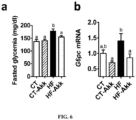
- the administration of Akkermansia muciniphila or a fragment thereof reverses diet-induced fasting hyperglycemia.
- the administration of Akkermansia muciniphila or a fragment thereof induces a reduction of at least 10%, preferably of at least 30%, more preferably of at least 40% of hepatic glucose-6-phosphatase expression.
- the administration of Akkermansia muciniphila or a fragment thereof induces a reduction of the insulin-resistance index.
- said reduction of the insulin-resistance index is of at least 5%, preferably of at least 10%, more preferably of at least 15%.
- the Applicant showed that the administration of Akkermansia muciniphila leads to the normalization of adipose tissue CD11c subpopulation of macrophages.
- the amount of cells of this population of macrophages is increased in metabolic disorders such as, for example, obesity and Type 2 Diabetes, and is a hallmark of inflammation related to these metabolic disorders. Therefore, the present invention also relates to Akkermansia muciniphila or a fragment thereof for treating inflammation, preferably low grade inflammation, associated with or caused by metabolic disorders; and to a method for treating inflammation related to metabolic disorders comprising administering an effective amount or a cosmetically effective amount of Akkermansia muciniphila or a fragment thereof to a subject in need thereof. In one embodiment of the invention, the administration of Akkermansia muciniphila or a fragment thereof decreases the amount of CD11c macrophages in the adipose tissue.
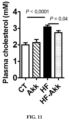
- the Applicant showed that the administration of Akkermansia muciniphila decreases plasma cholesterol in high-fat diet fed mice. Therefore, the present invention also relates to Akkermansia muciniphila or a fragment thereof for decreasing plasma cholesterol; and to a method for decreasing plasma cholesterol comprising administering an effective amount or a cosmetically effective amount of Akkermansia muciniphila or a fragment thereof to a subject in need thereof.
- the administration of Akkermansia muciniphila or a fragment thereof to a subject has no impact on food intake of said subject.
- the administration of Akkermansia muciniphila or a fragment thereof to a subject increases energy expenditure of said subject, preferably without impacting the food intake of said subject.
- the present invention thus also relates to a method of increasing energy expenditure of a subject, comprising administering Akkermansia muciniphila or a fragment thereof, or a composition, pharmaceutical composition, cosmetic composition or medicament of the invention to the subject, preferably in a therapeutically or cosmetically effective amount.
- the method of the invention does not comprise or further comprise modulating the food intake of said subject.
- the method of the invention increases energy expenditure, thereby inducing durable weight loss in the subject, and thereby treating metabolic disorders in said subject, such as, for example, obesity related metabolic disorders.
- the administration of Akkermansia muciniphila or a fragment thereof to a subject increases satiety in said subject. Consequently, according to this embodiment, the method of the invention increases satiety in a subject, thereby inducing durable weight loss in the subject, and thereby treating metabolic disorders in said subject, such as, for example, obesity related metabolic disorders.
- This set of mice has been previously characterized in Everard et al ( Everard et al. Diabetes 60, 2775-2786 (2011 )).
- CT control diet
- HF high-fat diet
- HF-Pre high-fat diet
- CT control diet
- HF high-fat diet
- mice were treated with an oral administration of Akkermansia muciniphila by oral gavage at the dose 2.10 8 cfu/0.2ml suspended in sterile anaerobic phosphate buffer saline (CT-Akk and HF-Akk) and control groups were treated with an oral gavage of an equivalent volume of sterile anaerobic phosphate buffer saline (CT and HF). Treatment continued for 4 weeks.
- muciniphila Muc T (ATTC BAA-835) was grown anaerobically in a mucin-based basal medium as previously described ( Derrien et al Int J Syst Evol Microbiol 54, 1469-1476 (2004 )) and then washed and suspended in anaerobic phosphate buffer saline, including 25% (v/v) glycerol, to an end concentration of 1.10 10 cfu/ml.
- CT control diet
- HF high-fat diet
- mice were treated daily with an oral administration of Akkermansia muciniphila by oral gavage at the dose 2.10 8 cfu/0.2ml suspended in sterile anaerobic phosphate buffer saline
- A. muciniphila was heat-killed/inactivated by autoclaving (15 min, 121°C, 225 kPa).
- a viability check by culturing on mucin-containing medium confirmed the absence of any viable cells.
- Lactobacillus plantarum WCFS1 was grown anaerobically in MRS medium (Difco Lactobacilli MRS broth; BD), washed, concentrated, and manipulated an identical ways as the A. muciniphila preparation.
- the two controls group (CT and HF) were treated daily with an oral gavage of an equivalent volume of sterile anaerobic PBS containing a similar end concentration of glycerol (2.5%) (reduced with one drop of 100 mM titanium citrate) as the treatment groups for 4 weeks.
- TD-NMR time domain-nuclear magnetic resonance
- mice have been anesthetized with isoflurane (Forene ® , Abbott, Queenborough, Kent, England) before exsanguination and tissue sampling, then mice were killed by cervical dislocation.
- Adipose depots epididymal, subcutaneous and mesenteric
- liver were precisely dissected and weighed; the addition of the three adipose tissues corresponds to the adiposity index.
- the intestinal segments ileum, cecum and colon
- the cecal content and the adipose tissues were immersed in liquid nitrogen, and stored at -80 °C, for further analysis.
- Proximal colon segments were immediately removed and fixed in Carnoy's solution (ethanol-acetic acid-chloroform, 6/3/1 v/v/v) for two hours at 4°C. Then the samples were immersed in ethanol 100% for 24 hours prior to processing for paraffin embedding. Paraffin sections of 5 ⁇ m were stained with alcian blue. A minimum of 20 different measurements were made perpendicular to the inner mucus layer per field by an investigator blinded to the experimental groups. 5 to 19 randomly selected fields were analyzed for each colon for a total of 2146 measurements by using an image analyzer (Motic-image Plus 2.0ML, Motic, China).
- cDNA was prepared by reverse transcription of 1 ⁇ g total RNA using a Reverse Transcription System kit (Promega, Leiden, The Netherlands). Real-time PCRs were performed with the StepOnePlus TM real-time PCR system and software (Applied Biosystems, Den Ijssel, The Netherlands) using Mesa Fast qPCR TM (Eurogentec, Seraing, Belgium) for detection according to the manufacturer's instructions. RPL19 was chosen as the housekeeping gene. All samples were run in duplicate in a single 96-well reaction plate, and data were analyzed according to the 2 - ⁇ CT method. The identity and purity of the amplified product was checked through analysis of the melting curve carried out at the end of amplification. Primer sequences for the targeted mouse genes are presented in the Table 1 below.
- Insulin resistance index was determined by multiplying the area under the curve (0 min and 15 min) of both blood glucose and plasma insulin obtained following an oral glucose load (2g of glucose per kg of body weight) performed after 4 weeks (A. muciniphila study) of treatment. Food was removed two-hours after the onset of the daylight cycle and mice were treated after 6-h-fasting period as previously described ( Everard et al. Diabetes 60, 2775-2786 (2011 )).
- LPS concentration was measured by using Endosafe-MCS (Charles River Laboratories, Lyon, France) based on the Limulus amaebocyte Lysate (LAL) kinetic chromogenic methodology that measures color intensity directly related to the endotoxin concentration in a sample.
- Serum were diluted 1/10 with endotoxin free buffer to minimize interferences in the reaction (inhibition or enhancement) and heated 15 min at 70°C.
- Each sample was diluted 1/70 or 1/100 with endotoxin-free LAL reagent water (Charles River Laboratories) and treated in duplicate and two spikes for each sample were included in the determination. All samples have been validated for the recovery and the coefficient variation. The lower limit of detection was 0.005 EU/ml.
- Plasma insulin concentration was determined in 25 ⁇ l of plasma using an ELISA kit (Mercodia, Upssala, Sweden) according to the manufacturer instructions.
- Fecal IgA levels were determined using an ELISA kit (E99-103, Bethyl Laboratories, Montgomery, TX). Freshly collected feces were frozen at -80°C then diluted in 50mM Tris, pH 7.4, 0.14M NaCl, 1% bovine serum albumin, 0.05% Tween 20. A 1/250 dilution was used to measure IgA by ELISA following the manufacturer instructions.
- mice collected post mortem was stored at -80°C.
- Metagenomic DNA was extracted from the cecal content using a QIAamp-DNA stool mini-kit (Qiagen, Hilden, Germany) according to manufacturer's instructions.
- Ileum tissues were homogenised in CHCl 3 (10 ml), and deuterated standards were added. The extraction and the calibration curves were generated as previously described ( Muccioli et al, Mol Syst Biol, 2010, 6, 392 ), and the data were normalised by tissue sample weight.
- the primers and probes used to detect Akkermansia muciniphila were based on 16S rRNA gene sequences: F-Akkermansia muciniphila CCTTGCGGTTGGCTTCAGAT (SEQ ID NO: 29), R-Akkermansia muciniphila CAGCACGTGAAGGTGGGGAC (SEQ ID NO: 30). Detection was achieved with StepOnePlus TM real-time PCR system and software (Applied Biosystems, Den Ijssel, The Netherlands) using Mesa Fast qPCR TM (Eurogentec, Seraing, Belgium) according to the manufacturer's instructions Each assay was performed in duplicate in the same run.
- cycle threshold of each sample was then compared to a standard curve (performed in triplicate) made by diluting genomic DNA (five-fold serial dilution) (DSMZ, Braunshweig, Germany). The data are expressed as Log of bacteria/g of cecal content.
- MITChip PCR primers and conditions
- MITChip Mouse Intestinal Tract Chip
- V1 and V6 regions DNA extracted from cecal contents was analyzed using the Mouse Intestinal Tract Chip (MITChip), a phylogenetic microarray consisting of 3,580 different oligonucleotides probes targeting two hypervariable regions of the 16S rRNA gene (V1 and V6 regions). Analysis of the MITChip were performed as previously described ( Everard et al. Diabetes 60, 2775-2786 (2011 ); Geurts et al. Front Microbiol. 2, 149 (2011 )). Briefly, Microbiota analysis was carried out on level 2 corresponding to genus-like level.
- Multivariate analysis was performed by representational difference analysis (RDA) as implemented in the CANOCO 4.5 software package (Biometris, Wageningen, The Netherlands) on average signal intensities for 99 bacterial groups (levels 2). All environmental variables were transformed as log (1+X). A Monte-Carlo permutation test based on 999 random permutations was used to test the significance. P values ⁇ 0.05 were considered significant.
- RDA representational difference analysis
- Plasma samples were assayed for cholesterol by measuring cholesterol present after enzymatic hydrolysis of ester cholesterol, using a commercial kit (DiaSys, Condom, France).
- Data are expressed as means ⁇ s.e.m. Differences between two groups were assessed using the unpaired two-tailed Student's t-test. Data sets involving more than two groups were assessed by ANOVA followed by Newman-Keuls post hoc tests. Correlations were analyzed using Pearson's correlation. Data with different superscript letters are significantly different P ⁇ 0.05, according to the post-hoc ANOVA statistical analysis. Data were analyzed using GraphPad Prism version 5.00 for windows (GraphPad Software, San Diego, CA, USA). Results were considered statistically significant when P ⁇ 0.05.
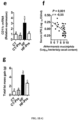
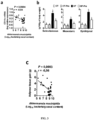
- muciniphila ( Fig. 1f and Fig.3a ,c ). Nevertheless, it remained to demonstrate whether molecular mechanisms underlying the onset of these disorders rely on the lack of A. muciniphila and in contrast if the improvement after prebiotic treatment results from its higher abundance.
- a . muciniphila was orally administered to control or HF-fed mice during four weeks, thereby increasing A . muciniphila ( Fig. 4a ,b ).
- MIMChip phylogenetic-microarray
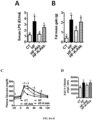
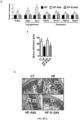
- a . muciniphila treatment normalized diet-induced metabolic endotoxemia, adiposity and adipose tissue CD11c marker ( Fig. 2b,c , e and Fig. 5a ), without any changes in food intake ( Fig. 5b ).
- a . muciniphila treatment reduced body weight and improved body composition (i.e. fat mass/lean mass ratio) ( Fig. 5c and 5d ).
- a . muciniphila would impact on adipose tissue metabolism, and found that under HF-diet, A . muciniphila increased mRNA expression of markers of adipocyte differentiation and lipid oxidation without affecting lipogenesis ( Fig. 2f ).
- a . muciniphila controls fat storage and adipose tissue metabolism.
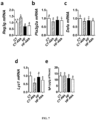
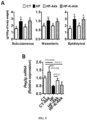
- a . muciniphila colonization affects gut barrier function; we measured the expression of Paneth and epithelial cells antibacterial markers in the ileum. We found that A . muciniphila increased Reg3g (regenerating islet-derived 3-gamma, RegIII ⁇ ) expression under control diet, whereas this effect was not observed in HF-fed mice ( Fig. 7a ). Pla2g2a, Defa expression were similar between groups, whereas Lyz1 expression tends to be lower after bacteria administration ( Fig. 7b,c,d ). IgA are secreted in intestinal lumen and are known to restrict mucosal bacterial penetration ( Vaishnava, S., et al.
- 2-oleoylglycerol has been shown to stimulate glucagon-like peptide-1 (GLP-1) release from intestinal L-cells suggesting that both GLP-1 and GLP-2 might improve gut barrier and glucose homeostasis in this context ( Hansen, et al. J Clin Endocrinol Metab 96, E1409-1417 (2011 )).
- 2-arachidonoylglycerol reduces gut permeability and 2-palmitoylglycerol ( Alhouayek et al FASEB J 25, 2711-2721 (2011 ); Ben-Shabat, et al. Eur.J.Pharmacol.
- muciniphila within mucus layer is a crucial mechanism to control mucus turnover ( Belzer et al, ISME J 6, 1449-1458 (2012 )).
- a . muciniphila also affects Reg3g expression in the colon epithelial cells. Strikingly, Reg3g expression was reduced by about 50% under HF-diet.
- a . muciniphila completely blunted this effect and even more increased Reg3g expression by 400% as compared to HF-fed mice ( Fig. 2i ). Thus this links the colonization of the colon, but not ileum, by A .
- muciniphila with the fundamental immune mechanism by which RegIII ⁇ promotes host-bacterial mutualism and regulates the spatial relationships between microbiota and host ( Vaishnava, S., et al. Science 334, 255-258 (2011 )). It is important to note that in germ-free mice A . muciniphila induces gene expression in the colon rather than the ileum ( Derrien et al. Front Microbiol 2, 166 (2011 )).
- a . muciniphila has to be alive to exert its metabolic effects
- viable A. muciniphila administration (2.10 8 bacterial cells suspended in 200 ⁇ l of sterile anaerobic phosphate-buffered saline (PBS)) to heat-killed/inactivated A. muciniphila (autoclaving, 15 minutes, 121°C, 225 kPa).
- viable and metabolically active A. muciniphila counteracted diet-induced metabolic endotoxemia, fat mass development and altered adipose tissue metabolism ( Fig. 8A , B, D and Fig. 9A ) to a similar extent as observed in the first set of experiments.
- a . muciniphila administration was still efficient during a prolonged high-fat diet treatment (8 weeks) and if the administration of A . muciniphila 3 times a week (instead of daily) was sufficient to protect against diet-induced obesity.
- the preparations as well as the doses of A . muciniphila were similar to those presented in the protocol using daily oral gavage or metabolically inactivated A . muciniphila.
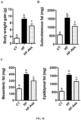
- a . muciniphila treatment reduces body weight gain ( Fig. 10A ) by about 30% although mice were ingesting high-fat diet without any fat lost in their feces and changes in food intake behavior. This was also associated with a reduction of about 45% of the adipose tissue weight (subcutaneous adipose tissue) ( Fig 10 B ) and 35% decrease in visceral fat depots (mesenteric and epididymal) ( Fig 10 C ).
- this set of data support the fact that A . muciniphila administration remains efficient during a prolonged treatment and the treatment is still efficient if A . muciniphila is administered 3 times per week instead of daily.
- Hypercholesterolemia is known as a key factor involved in cardiovascular diseases.
- a . muciniphila treatment significantly decreases (about 15%) plasma cholesterol, thereby contributing with LPS and the other metabolic parameters to an improved cardio-metabolic risk profile.
Landscapes
- Health & Medical Sciences (AREA)
- Life Sciences & Earth Sciences (AREA)
- Animal Behavior & Ethology (AREA)
- Chemical & Material Sciences (AREA)
- Veterinary Medicine (AREA)
- Public Health (AREA)
- Medicinal Chemistry (AREA)
- General Health & Medical Sciences (AREA)
- Pharmacology & Pharmacy (AREA)
- Organic Chemistry (AREA)
- Microbiology (AREA)
- General Chemical & Material Sciences (AREA)
- Chemical Kinetics & Catalysis (AREA)
- Nuclear Medicine, Radiotherapy & Molecular Imaging (AREA)
- Mycology (AREA)
- Engineering & Computer Science (AREA)
- Hematology (AREA)
- Obesity (AREA)
- Diabetes (AREA)
- Bioinformatics & Cheminformatics (AREA)
- Molecular Biology (AREA)
- Epidemiology (AREA)
- Medicines Containing Material From Animals Or Micro-Organisms (AREA)
- Medicines That Contain Protein Lipid Enzymes And Other Medicines (AREA)
Applications Claiming Priority (5)
| Application Number | Priority Date | Filing Date | Title |
|---|---|---|---|
| PCT/EP2012/073011 WO2014075745A1 (fr) | 2012-11-19 | 2012-11-19 | Utilisation d'akkermansia pour le traitement de troubles métaboliques |
| EP21189951.3A EP3967315B1 (fr) | 2012-11-19 | 2013-11-15 | Akkermansia muciniphila pour le traitement du cancer |
| PCT/EP2013/073972 WO2014076246A1 (fr) | 2012-11-19 | 2013-11-15 | Utilisation d'akkermansia pour le traitement de troubles métaboliques |
| EP21154064.6A EP3862010B1 (fr) | 2012-11-19 | 2013-11-15 | Utilisation d'akkermansia muciniphila pour favoriser la perte de poids |
| EP13792006.2A EP2919796B1 (fr) | 2012-11-19 | 2013-11-15 | Utilisation d'akkermansia pour le traitement de troubles métaboliques |
Related Parent Applications (6)
| Application Number | Title | Priority Date | Filing Date |
|---|---|---|---|
| EP21154064.6A Division EP3862010B1 (fr) | 2012-11-19 | 2013-11-15 | Utilisation d'akkermansia muciniphila pour favoriser la perte de poids |
| EP21154064.6A Division-Into EP3862010B1 (fr) | 2012-11-19 | 2013-11-15 | Utilisation d'akkermansia muciniphila pour favoriser la perte de poids |
| EP13792006.2A Division EP2919796B1 (fr) | 2012-11-19 | 2013-11-15 | Utilisation d'akkermansia pour le traitement de troubles métaboliques |
| EP21189951.3A Division-Into EP3967315B1 (fr) | 2012-11-19 | 2013-11-15 | Akkermansia muciniphila pour le traitement du cancer |
| EP21189951.3A Division EP3967315B1 (fr) | 2012-11-19 | 2013-11-15 | Akkermansia muciniphila pour le traitement du cancer |
| EP21189951.3A Previously-Filed-Application EP3967315B1 (fr) | 2012-11-19 | 2013-11-15 | Akkermansia muciniphila pour le traitement du cancer |
Publications (2)
| Publication Number | Publication Date |
|---|---|
| EP4509182A2 true EP4509182A2 (fr) | 2025-02-19 |
| EP4509182A3 EP4509182A3 (fr) | 2025-05-21 |
Family
ID=53835701
Family Applications (6)
| Application Number | Title | Priority Date | Filing Date |
|---|---|---|---|
| EP13792006.2A Revoked EP2919796B1 (fr) | 2012-11-19 | 2013-11-15 | Utilisation d'akkermansia pour le traitement de troubles métaboliques |
| EP24216694.0A Pending EP4512479A3 (fr) | 2012-11-19 | 2013-11-15 | Use of akkermansia for treating metabolic disorders |
| EP24216696.5A Pending EP4509182A3 (fr) | 2012-11-19 | 2013-11-15 | Use of akkermansia for treating metabolic disorders |
| EP24216695.7A Pending EP4509181A3 (fr) | 2012-11-19 | 2013-11-15 | Use of akkermansia for treating metabolic disorders |
| EP21154064.6A Active EP3862010B1 (fr) | 2012-11-19 | 2013-11-15 | Utilisation d'akkermansia muciniphila pour favoriser la perte de poids |
| EP21189951.3A Active EP3967315B1 (fr) | 2012-11-19 | 2013-11-15 | Akkermansia muciniphila pour le traitement du cancer |
Family Applications Before (2)
| Application Number | Title | Priority Date | Filing Date |
|---|---|---|---|
| EP13792006.2A Revoked EP2919796B1 (fr) | 2012-11-19 | 2013-11-15 | Utilisation d'akkermansia pour le traitement de troubles métaboliques |
| EP24216694.0A Pending EP4512479A3 (fr) | 2012-11-19 | 2013-11-15 | Use of akkermansia for treating metabolic disorders |
Family Applications After (3)
| Application Number | Title | Priority Date | Filing Date |
|---|---|---|---|
| EP24216695.7A Pending EP4509181A3 (fr) | 2012-11-19 | 2013-11-15 | Use of akkermansia for treating metabolic disorders |
| EP21154064.6A Active EP3862010B1 (fr) | 2012-11-19 | 2013-11-15 | Utilisation d'akkermansia muciniphila pour favoriser la perte de poids |
| EP21189951.3A Active EP3967315B1 (fr) | 2012-11-19 | 2013-11-15 | Akkermansia muciniphila pour le traitement du cancer |
Country Status (2)
| Country | Link |
|---|---|
| EP (6) | EP2919796B1 (fr) |
| PL (1) | PL2919796T3 (fr) |
Families Citing this family (14)
| Publication number | Priority date | Publication date | Assignee | Title |
|---|---|---|---|---|
| WO2013130773A2 (fr) | 2012-02-29 | 2013-09-06 | Ethicon Endo-Surgery, Inc. | Compositions de microbiota et leurs procédés associés |
| CA2964480A1 (fr) | 2014-10-31 | 2016-05-06 | Whole Biome Inc. | Procedes et compositions se rapportant a un traitement microbien et au diagnostic de troubles |
| PT3292135T (pt) * | 2015-05-06 | 2022-11-15 | Univ Catholique Louvain | Uso de um polipéptido para efetuar a sinalização imunitária e/ou afetar a função de barreira intestinal e/ou regular o estado metabólico |
| WO2019046646A1 (fr) | 2017-08-30 | 2019-03-07 | Whole Biome Inc. | Methodes et compositions pour le traitement de troubles associés au microbiome |
| JP7811843B2 (ja) | 2018-07-19 | 2026-02-06 | ペンデュラム セラピューティクス, インコーポレイテッド | 微生物生着のための方法および組成物 |
| KR102197180B1 (ko) | 2018-10-11 | 2020-12-31 | 주식회사 고바이오랩 | 아커만시아 뮤시니필라 균주 및 이를 포함하는 식욕 억제 및 대사성 질환 예방, 개선, 완화 및 치료용 조성물 |
| CN110960558A (zh) * | 2019-12-25 | 2020-04-07 | 西南大学 | 一种与代谢疾病相关的Akk菌动物用胶囊的制备方法 |
| CN111996267A (zh) * | 2020-08-11 | 2020-11-27 | 康美华大基因技术有限公司 | 一种快速检测akk菌的荧光定量pcr引物组、试剂盒及其应用 |
| CN111713666B (zh) * | 2020-08-12 | 2023-04-07 | 山东省大健康精准医疗产业技术研究院 | 一种减脂组合物及其制备方法 |
| CN114451557A (zh) * | 2020-11-10 | 2022-05-10 | 中国人民解放军南部战区总医院 | Akk益生菌在制备防治中暑药物、食品或保健品中的应用 |
| CN115252651B (zh) * | 2022-06-08 | 2024-06-07 | 广州知易生物科技有限公司 | 嗜粘蛋白阿克曼菌在制备防治高血压的组合物中的应用和含有其的组合物 |
| CN119818541A (zh) * | 2022-06-08 | 2025-04-15 | 广州知易生物科技有限公司 | 嗜粘蛋白阿克曼菌在制备改善血糖水平的保健品组合物中的应用、组合物及其应用 |
| CN114847475B (zh) * | 2022-07-05 | 2022-11-29 | 广东金骏康生物技术有限公司 | 一种促进akk菌生长的发酵槐米粉的应用 |
| CN118267405B (zh) * | 2024-04-12 | 2025-02-11 | 善恩康生物科技(苏州)有限公司 | Akkermansia muciniphila及其产品在调节脂代谢中的应用 |
Citations (3)
| Publication number | Priority date | Publication date | Assignee | Title |
|---|---|---|---|---|
| WO2008076696A2 (fr) | 2006-12-18 | 2008-06-26 | Washington University In St. Louis | Microbiome intestinal en tant que biomarqueur et cible thérapeutique pour traiter l'obésité ou un trouble lié à l'obésité |
| EP2030623A1 (fr) | 2007-08-17 | 2009-03-04 | Nestec S.A. | Prévention et/ou traitement de troubles métaboliques par la modulation de la quantité d'entérobactéries |
| WO2011107481A2 (fr) | 2010-03-01 | 2011-09-09 | Institut National De La Recherche Agronomique | Méthode de diagnostic de maladies intestinales inflammatoires |
Family Cites Families (7)
| Publication number | Priority date | Publication date | Assignee | Title |
|---|---|---|---|---|
| US8192733B2 (en) | 2003-08-29 | 2012-06-05 | Cobb & Associates | Probiotic composition useful for dietary augmentation and/or combating disease states and adverse physiological conditions |
| TW200819540A (en) * | 2006-07-11 | 2008-05-01 | Genelux Corp | Methods and compositions for detection of microorganisms and cells and treatment of diseases and disorders |
| EP2022502A1 (fr) | 2007-08-10 | 2009-02-11 | Nestec S.A. | Lactobacillus rhamnosus et contrôle de poids |
| CA2740434C (fr) | 2007-10-26 | 2017-11-07 | Brenda E. Moore | Compositions probiotiques et procedes pour induire et maintenir une perte de poids |
| EP2308499A1 (fr) | 2009-09-30 | 2011-04-13 | Nestec S.A. | Bifidobacterium longum ATCC BAA-999 (BL999) et contrôle du poids |
| KR102435108B1 (ko) | 2010-08-04 | 2022-08-22 | 핀치 테라퓨틱스 홀딩스 엘엘씨 | 분변 세균총 이식을 위한 조성물, 그의 제조 방법과 사용 방법, 및 그를 전달하기 위한 장치 |
| WO2013130773A2 (fr) | 2012-02-29 | 2013-09-06 | Ethicon Endo-Surgery, Inc. | Compositions de microbiota et leurs procédés associés |
-
2013
- 2013-11-15 PL PL13792006T patent/PL2919796T3/pl unknown
- 2013-11-15 EP EP13792006.2A patent/EP2919796B1/fr not_active Revoked
- 2013-11-15 EP EP24216694.0A patent/EP4512479A3/fr active Pending
- 2013-11-15 EP EP24216696.5A patent/EP4509182A3/fr active Pending
- 2013-11-15 EP EP24216695.7A patent/EP4509181A3/fr active Pending
- 2013-11-15 EP EP21154064.6A patent/EP3862010B1/fr active Active
- 2013-11-15 EP EP21189951.3A patent/EP3967315B1/fr active Active
Patent Citations (3)
| Publication number | Priority date | Publication date | Assignee | Title |
|---|---|---|---|---|
| WO2008076696A2 (fr) | 2006-12-18 | 2008-06-26 | Washington University In St. Louis | Microbiome intestinal en tant que biomarqueur et cible thérapeutique pour traiter l'obésité ou un trouble lié à l'obésité |
| EP2030623A1 (fr) | 2007-08-17 | 2009-03-04 | Nestec S.A. | Prévention et/ou traitement de troubles métaboliques par la modulation de la quantité d'entérobactéries |
| WO2011107481A2 (fr) | 2010-03-01 | 2011-09-09 | Institut National De La Recherche Agronomique | Méthode de diagnostic de maladies intestinales inflammatoires |
Non-Patent Citations (19)
| Title |
|---|
| ALHOUAYEK ET AL., FASEB J, vol. 25, 2011, pages 2711 - 2721 |
| BELZER ET AL., ISME J, vol. 6, 2012, pages 1449 - 1458 |
| BEN-SHABAT ET AL., EUR.J.PHARMACOL., vol. 353, 1998, pages 23 - 31 |
| DELZENNECANI, ANNU. REV. NUTR., vol. 31, 2011, pages 15 - 31 |
| DERRIEN ET AL., APPLIED ENVIRONMENTAL MICROBIOLOGY, vol. 74, 2008, pages 1646 - 1648 |
| DERRIEN ET AL., FRONT MICROBIOL, vol. 2, 2011, pages 166 |
| DERRIEN ET AL., INT J SYST EVOL MICROBIOL, vol. 54, 2004, pages 1469 - 1476 |
| DERRIEN ET AL., INTERNATIONAL JOURNAL OF SYSTEMATIC AND EVOLUTIONARY MICROBIOLOGY, vol. 54, 2004, pages 1469 - 1476 |
| EVERARD ET AL., DIABETES, vol. 60, 2011, pages 2775 - 2786 |
| EVERARD ET AL., DIABETES, vol. 60, no. 11, November 2011 (2011-11-01), pages 2775 - 86 |
| GEURTS ET AL., FRONT MICROBIOL., vol. 2, 2011, pages 149 |
| HANSEN ET AL., DIABETOLOGIA, vol. 55, no. 8, August 2012 (2012-08-01), pages 2285 - 94 |
| HANSEN ET AL., J CLIN ENDOCRINOL METAB, vol. 96, 2011, pages 1409 - 1417 |
| JOHANSSON ET AL., PROC NATL ACAD SCI U S A, vol. 108, 2011, pages 4659 - 4665 |
| MUCCIOLI ET AL., MOL SYST BIOL, vol. 6, 2010, pages 392 |
| POTT ET AL., EMBO REP, 2012 |
| VAISHNAVA, S. ET AL., SCIENCE, vol. 334, 2011, pages 255 - 258 |
| VAN PASSEL ET AL., PLOS ONE, vol. 6, 2011, pages e16876 |
| ZOETENDAL: "Rajilic-Stojanovic and de Vos", GUT, vol. 57, 2008, pages 1605 - 1615 |
Also Published As
| Publication number | Publication date |
|---|---|
| PL2919796T3 (pl) | 2021-09-27 |
| EP3967315B1 (fr) | 2025-05-14 |
| EP2919796A1 (fr) | 2015-09-23 |
| EP4509181A3 (fr) | 2025-05-21 |
| EP4512479A3 (fr) | 2025-05-21 |
| EP4512479A2 (fr) | 2025-02-26 |
| EP4509181A2 (fr) | 2025-02-19 |
| EP3967315C0 (fr) | 2025-05-14 |
| EP2919796B1 (fr) | 2021-04-28 |
| EP3967315A1 (fr) | 2022-03-16 |
| EP4509182A3 (fr) | 2025-05-21 |
| EP3862010B1 (fr) | 2025-05-07 |
| EP3862010A1 (fr) | 2021-08-11 |
| EP3862010C0 (fr) | 2025-05-07 |
Similar Documents
| Publication | Publication Date | Title |
|---|---|---|
| US20250288622A1 (en) | Use of akkermansia for treating metabolic disorders | |
| EP3967315B1 (fr) | Akkermansia muciniphila pour le traitement du cancer | |
| EP3347030B1 (fr) | Utilisation d'akkermansia pasteurisé pour traiter des troubles métaboliques | |
| HK40121312A (en) | Use of akkermansia for treating metabolic disorders | |
| HK1215375B (en) | Use of akkermansia for treating metabolic disorders | |
| EA046559B1 (ru) | ПРИМЕНЕНИЕ КОМПОЗИЦИИ, СОДЕРЖАЩЕЙ Akkermansia muciniphila ИЛИ ЕЁ ФРАГМЕНТЫ, В ФОРМЕ ПИЩЕВОЙ ДОБАВКИ И ДЛЯ УМЕНЬШЕНИЯ ТЯЖЕСТИ МЕТАБОЛИЧЕСКОГО НАРУШЕНИЯ |
Legal Events
| Date | Code | Title | Description |
|---|---|---|---|
| PUAI | Public reference made under article 153(3) epc to a published international application that has entered the european phase |
Free format text: ORIGINAL CODE: 0009012 |
|
| STAA | Information on the status of an ep patent application or granted ep patent |
Free format text: STATUS: THE APPLICATION HAS BEEN PUBLISHED |
|
| AC | Divisional application: reference to earlier application |
Ref document number: 2919796 Country of ref document: EP Kind code of ref document: P Ref document number: 3862010 Country of ref document: EP Kind code of ref document: P Ref document number: 3967315 Country of ref document: EP Kind code of ref document: P |
|
| AK | Designated contracting states |
Kind code of ref document: A2 Designated state(s): AL AT BE BG CH CY CZ DE DK EE ES FI FR GB GR HR HU IE IS IT LI LT LU LV MC MK MT NL NO PL PT RO RS SE SI SK SM TR |
|
| REG | Reference to a national code |
Ref country code: DE Ref legal event code: R079 Free format text: PREVIOUS MAIN CLASS: A61P0035000000 Ipc: A61K0035740000 |
|
| PUAL | Search report despatched |
Free format text: ORIGINAL CODE: 0009013 |
|
| AK | Designated contracting states |
Kind code of ref document: A3 Designated state(s): AL AT BE BG CH CY CZ DE DK EE ES FI FR GB GR HR HU IE IS IT LI LT LU LV MC MK MT NL NO PL PT RO RS SE SI SK SM TR |
|
| RIC1 | Information provided on ipc code assigned before grant |
Ipc: A61P 35/00 20060101ALI20250415BHEP Ipc: A61P 3/00 20060101ALI20250415BHEP Ipc: A61K 35/74 20150101AFI20250415BHEP |
|
| STAA | Information on the status of an ep patent application or granted ep patent |
Free format text: STATUS: REQUEST FOR EXAMINATION WAS MADE |
|
| 17P | Request for examination filed |
Effective date: 20250714 |
|
| REG | Reference to a national code |
Ref country code: HK Ref legal event code: DE Ref document number: 40121312 Country of ref document: HK |
|
| STAA | Information on the status of an ep patent application or granted ep patent |
Free format text: STATUS: EXAMINATION IS IN PROGRESS |
|
| 17Q | First examination report despatched |
Effective date: 20260312 |