EP4509499A1 - Polymorphe de 7,8-dihydroxyflavone et son procédé de préparation - Google Patents
Polymorphe de 7,8-dihydroxyflavone et son procédé de préparation Download PDFInfo
- Publication number
- EP4509499A1 EP4509499A1 EP23787698.2A EP23787698A EP4509499A1 EP 4509499 A1 EP4509499 A1 EP 4509499A1 EP 23787698 A EP23787698 A EP 23787698A EP 4509499 A1 EP4509499 A1 EP 4509499A1
- Authority
- EP
- European Patent Office
- Prior art keywords
- crystal form
- dihydroxyflavone
- diffraction pattern
- ray diffraction
- ray powder
- Prior art date
- Legal status (The legal status is an assumption and is not a legal conclusion. Google has not performed a legal analysis and makes no representation as to the accuracy of the status listed.)
- Pending
Links
Images






Classifications
-
- C—CHEMISTRY; METALLURGY
- C07—ORGANIC CHEMISTRY
- C07D—HETEROCYCLIC COMPOUNDS
- C07D311/00—Heterocyclic compounds containing six-membered rings having one oxygen atom as the only hetero atom, condensed with other rings
- C07D311/02—Heterocyclic compounds containing six-membered rings having one oxygen atom as the only hetero atom, condensed with other rings ortho- or peri-condensed with carbocyclic rings or ring systems
- C07D311/04—Benzo[b]pyrans, not hydrogenated in the carbocyclic ring
- C07D311/22—Benzo[b]pyrans, not hydrogenated in the carbocyclic ring with oxygen or sulfur atoms directly attached in position 4
- C07D311/26—Benzo[b]pyrans, not hydrogenated in the carbocyclic ring with oxygen or sulfur atoms directly attached in position 4 with aromatic rings attached in position 2 or 3
- C07D311/28—Benzo[b]pyrans, not hydrogenated in the carbocyclic ring with oxygen or sulfur atoms directly attached in position 4 with aromatic rings attached in position 2 or 3 with aromatic rings attached in position 2 only
- C07D311/30—Benzo[b]pyrans, not hydrogenated in the carbocyclic ring with oxygen or sulfur atoms directly attached in position 4 with aromatic rings attached in position 2 or 3 with aromatic rings attached in position 2 only not hydrogenated in the hetero ring, e.g. flavones
-
- A—HUMAN NECESSITIES
- A61—MEDICAL OR VETERINARY SCIENCE; HYGIENE
- A61K—PREPARATIONS FOR MEDICAL, DENTAL OR TOILETRY PURPOSES
- A61K31/00—Medicinal preparations containing organic active ingredients
- A61K31/33—Heterocyclic compounds
- A61K31/335—Heterocyclic compounds having oxygen as the only ring hetero atom, e.g. fungichromin
- A61K31/35—Heterocyclic compounds having oxygen as the only ring hetero atom, e.g. fungichromin having six-membered rings with one oxygen as the only ring hetero atom
- A61K31/352—Heterocyclic compounds having oxygen as the only ring hetero atom, e.g. fungichromin having six-membered rings with one oxygen as the only ring hetero atom condensed with carbocyclic rings, e.g. methantheline
-
- A—HUMAN NECESSITIES
- A61—MEDICAL OR VETERINARY SCIENCE; HYGIENE
- A61P—SPECIFIC THERAPEUTIC ACTIVITY OF CHEMICAL COMPOUNDS OR MEDICINAL PREPARATIONS
- A61P25/00—Drugs for disorders of the nervous system
-
- A—HUMAN NECESSITIES
- A61—MEDICAL OR VETERINARY SCIENCE; HYGIENE
- A61P—SPECIFIC THERAPEUTIC ACTIVITY OF CHEMICAL COMPOUNDS OR MEDICINAL PREPARATIONS
- A61P25/00—Drugs for disorders of the nervous system
- A61P25/02—Drugs for disorders of the nervous system for peripheral neuropathies
-
- A—HUMAN NECESSITIES
- A61—MEDICAL OR VETERINARY SCIENCE; HYGIENE
- A61P—SPECIFIC THERAPEUTIC ACTIVITY OF CHEMICAL COMPOUNDS OR MEDICINAL PREPARATIONS
- A61P25/00—Drugs for disorders of the nervous system
- A61P25/04—Centrally acting analgesics, e.g. opioids
-
- A—HUMAN NECESSITIES
- A61—MEDICAL OR VETERINARY SCIENCE; HYGIENE
- A61P—SPECIFIC THERAPEUTIC ACTIVITY OF CHEMICAL COMPOUNDS OR MEDICINAL PREPARATIONS
- A61P25/00—Drugs for disorders of the nervous system
- A61P25/28—Drugs for disorders of the nervous system for treating neurodegenerative disorders of the central nervous system, e.g. nootropic agents, cognition enhancers, drugs for treating Alzheimer's disease or other forms of dementia
-
- A—HUMAN NECESSITIES
- A61—MEDICAL OR VETERINARY SCIENCE; HYGIENE
- A61P—SPECIFIC THERAPEUTIC ACTIVITY OF CHEMICAL COMPOUNDS OR MEDICINAL PREPARATIONS
- A61P27/00—Drugs for disorders of the senses
- A61P27/02—Ophthalmic agents
-
- A—HUMAN NECESSITIES
- A61—MEDICAL OR VETERINARY SCIENCE; HYGIENE
- A61P—SPECIFIC THERAPEUTIC ACTIVITY OF CHEMICAL COMPOUNDS OR MEDICINAL PREPARATIONS
- A61P3/00—Drugs for disorders of the metabolism
-
- A—HUMAN NECESSITIES
- A61—MEDICAL OR VETERINARY SCIENCE; HYGIENE
- A61P—SPECIFIC THERAPEUTIC ACTIVITY OF CHEMICAL COMPOUNDS OR MEDICINAL PREPARATIONS
- A61P35/00—Antineoplastic agents
-
- A—HUMAN NECESSITIES
- A61—MEDICAL OR VETERINARY SCIENCE; HYGIENE
- A61P—SPECIFIC THERAPEUTIC ACTIVITY OF CHEMICAL COMPOUNDS OR MEDICINAL PREPARATIONS
- A61P9/00—Drugs for disorders of the cardiovascular system
-
- C—CHEMISTRY; METALLURGY
- C07—ORGANIC CHEMISTRY
- C07B—GENERAL METHODS OF ORGANIC CHEMISTRY; APPARATUS THEREFOR
- C07B2200/00—Indexing scheme relating to specific properties of organic compounds
- C07B2200/13—Crystalline forms, e.g. polymorphs
Definitions
- the present disclosure relates to a polymorph of 7,8-dihydroxyflavone and a preparation method therefor.
- 7,8-dihydroxyflavone As a special agonist to tyrosine kinase receptor B (TrkB), 7,8-dihydroxyflavone is able to activate TrkB. Numerous in vitro studies have demonstrated that 7,8-dihydroxyflavone has important biological roles that are mainly reflected in its good efficacy in neurodegenerative diseases including Parkinson's disease, Alzheimer's disease, depression, psychiatric disorders, post-traumatic stress disorders, autism spectrum disorders, stroke, Rett syndrome, and other diseases.
- Polymorphism is a common phenomenon occurring in solid substances where the substances have two or more different crystalline structures.
- the polymorphic phenomenon of drugs has been an important cutting-edge topic for the research in pharmaceutical field.
- Different crystal structures of the same solid substance often show different physicochemical properties.
- differences in various crystal forms are mainly reflected in stability, solubility and dissolution rate, thus affecting the efficacy of drugs and even changing their toxic side effects.
- the present disclosure discloses a polymorph of 7,8-dihydroxyflavone and a preparation method therefor.
- the polymorph of 7,8-dihydroxyflavone provided by the present disclosure has more selectable pharmacoeconomic value.
- the present disclosure provides a crystal form P of 7,8-dihydroxyflavone, which has an X-ray powder diffraction pattern comprising characteristic peaks at about 8.3 ⁇ 0.2°, 25.0 ⁇ 0.2°, and 25.9 ⁇ 0.2° expressed in 2 ⁇ angles.
- the X-ray powder diffraction pattern further comprises characteristic peaks at about 27.4 ⁇ 0.2° and/or 31.4 ⁇ 0.2°.
- the X-ray powder diffraction pattern further comprises characteristic peaks at about 12.5 ⁇ 0.2°, 15.8 ⁇ 0.2°, 18.4 ⁇ 0.2°, 18.7 ⁇ 0.2°, 19.4 ⁇ 0.2° and/or 33.7 ⁇ 0.2°.
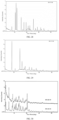
- the crystal form P has an X-ray powder diffraction pattern substantially as shown in FIG. 1 .
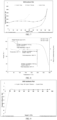
- thermogravimetric analysis curve of the crystal form P does not show obvious weight loss.
- the differential scanning calorimetry curve of the crystal form P does not show heat absorption signal corresponding to weight loss.
- the weight gain is less than 0.1% in the range of 0%-95% relative humidity, wherein "%" is the percentage of mass gain relative to the initial mass of the crystal form P of 7,8-dihydroxyflavone.
- the crystal form P of 7,8-dihydroxyflavone has a thermogravimetric analysis curve and/or a differential scanning calorimetry curve substantially as shown in FIG. 4 .
- the crystal form P of 7,8-dihydroxyflavone has a dynamic vapor sorption graph substantially as shown in FIG. 5 .
- the crystal form P of 7,8-dihydroxyflavone is an anhydrous substance.
- the present disclosure provides a crystal form C of 7,8-dihydroxyflavone, which has an X-ray powder diffraction pattern comprising characteristic peaks at about 11.1 ⁇ 0.2°, 15.6 ⁇ 0.2°, 27.0 ⁇ 0.2°, and 28.3 ⁇ 0.2° expressed in 2 ⁇ angles.
- the X-ray powder diffraction pattern further comprises characteristic peaks at about 5.6 ⁇ 0.2°, 9.5 ⁇ 0.2°, 15.5 ⁇ 0.2°, 21.0 ⁇ 0.2°, 24.3 ⁇ 0.2° and/or 25.5 ⁇ 0.2°.
- the X-ray powder diffraction pattern further comprises characteristic peaks at about 12.7 ⁇ 0.2°, 13.7 ⁇ 0.2°, 18.3 ⁇ 0.2°, 20.4 ⁇ 0.2°, 21.9 ⁇ 0.2°, 23.2 ⁇ 0.2°, 25.2 ⁇ 0.2° and/or 29.7 ⁇ 0.2°.
- the crystal form C has an X-ray powder diffraction pattern substantially as shown in FIG. 2 .
- the mass lost at 110°C to 150°C is about 3.7% of the mass before weight loss, wherein the "%" is a mass percentage.
- the differential scanning calorimetry curve of the crystal form C shows a heat absorption signal corresponding to weight loss at about 100°C to 160°C.
- the weight gain is less than 0.1% in the range of 0%-95% relative humidity, wherein "%" is the percentage of mass gain relative to the initial mass of the crystal form C of 7,8-dihydroxyflavone.
- the crystal form C of 7,8-dihydroxyflavone has a thermogravimetric analysis curve and/or a differential scanning calorimetry curve substantially as shown in FIG. 6 .
- the crystal form C of 7,8-dihydroxyflavone has a dynamic vapor sorption graph substantially as shown in FIG. 7 .
- the crystal form C of 7,8-dihydroxyflavone is a hydrate, for example, a monohydrate.
- the present disclosure provides a crystal form N of 7,8-dihydroxyflavone, which has an X-ray powder diffraction pattern comprising characteristic peaks at about 9.3 ⁇ 0.2°, 23.8 ⁇ 0.2°, 24.6 ⁇ 0.2°, and 26.6 ⁇ 0.2° expressed in 2 ⁇ angles.
- the X-ray powder diffraction pattern further comprises characteristic peaks at about 12.3 ⁇ 0.2° and/or 21.1 ⁇ 0.2°.
- the X-ray powder diffraction pattern further comprises characteristic peaks at about 5.7 ⁇ 0.2°, 11.9 ⁇ 0.2°, 13.1 ⁇ 0.2°, 14.2 ⁇ 0.2°, 15.9 ⁇ 0.2°, 16.8 ⁇ 0.2°, 18.9 ⁇ 0.2°, 20.7 ⁇ 0.2° and/or 30.3 ⁇ 0.2°.
- the crystal form N of 7,8-dihydroxyflavone has an X-ray powder diffraction pattern substantially as shown in FIG. 3 .
- the mass lost at 40°C to 80°C is 6.3% relative to the mass before weight loss, wherein the "%" is a mass percentage.
- the differential scanning calorimetry curve of the crystal form N shows an endothermic peak at about 100°C corresponding to weight loss, and exothermic signals at about 136°C and 169°C, respectively.
- the weight gain is less than 0.1% in the range of 0%-95% relative humidity, wherein the "%" is the percentage of mass gain relative to the initial mass of the crystal form N of 7,8-dihydroxyflavone.
- the crystal form N of 7,8-dihydroxyflavone has a thermogravimetric analysis curve and/or a differential scanning calorimetry curve substantially as shown in FIG. 8 .
- the crystal form N of 7,8-dihydroxyflavone has a dynamic vapor sorption graph substantially as shown in FIG. 9 .
- the crystal form N of 7,8-dihydroxyflavone is a hydrate, for example, a dihydrate.
- the present disclosure provides a method for preparing 7,8-dihydroxyflavones in crystal forms of the present disclosure, which is one of Methods 1 to 5:
- a method for preparing a crystal form P of 7,8-dihydroxyflavone wherein in Method 2, the single solvent is n-heptane, and the binary solvent is a combination of one of 4-methyl-2-pentanone, n-propanol, N,N-dimethylformamide, ethylene glycol dimethyl ether, ethanol, and butyl formate, with one of isopropyl acetate, n-heptane, toluene, isopropanol, ethyl acetate, ethyl ether, and cyclohexane; and/or, in Method 2, a volume ratio of the binary solvent is 1:5-1:10.
- a method for preparing a crystal form P of 7,8-dihydroxyflavone is provided, wherein in Method 2, a temperature of suspension is 20°C to 60°C.
- 7,8-dihydroxyflavone which is prepared according to the methods of the present disclosure and has at least one feature of the crystal form P of the present disclosure is provided.
- a method for preparing a crystal form C of 7,8-dihydroxyflavone wherein in Method 1, the single solvent is one of isopropyl acetate, and N,N-dimethylformamide;
- a method for preparing a crystal form C of 7,8-dihydroxyflavone wherein in Method 1, the single solvent is one of isopropyl acetate, and N,N-dimethylformamide;
- 7,8-dihydroxyflavone which is prepared according to the methods of the present disclosure and has at least one feature of the crystal form C of the present disclosure is provided.
- a method for preparing a crystal form N of 7,8-dihydroxyflavone is provided, wherein in Method 1, the single solvent is methanol;
- a method for preparing a crystal form N of 7,8-dihydroxyflavone is provided, wherein in Method 1, the single solvent is one of isopropyl acetate, and N,N-dimethylformamide;
- 7,8-dihydroxyflavone which is prepared according to the methods of the present disclosure and has at least one feature of the crystal form N of the present disclosure is provided.
- the present disclosure provides a pharmaceutical composition; and the pharmaceutical composition comprises (1) a crystal form P of 7,8-dihydroxyflavone, a crystal form C of 7,8-dihydroxyflavone, and/or a crystal form N of 7,8-dihydroxyflavone according to the present disclosure, and (2) at least one pharmaceutically acceptable excipient.
- the present disclosure provides a method for treating a disease associated with the aberrant TrkB signaling pathway such as central nerve injury, peripheral nerve injury, neurodegenerative diseases, psychiatric diseases, hereditary neurological disorders, ophthalmological diseases, metabolic diseases, pain, cardiovascular diseases, or tumor, or other related diseases, which comprises administering to a subject (1) the crystal form P of 7,8-dihydroxyflavone, the crystal form C of 7,8-dihydroxyflavone, and/or the crystal form N of 7,8-dihydroxyflavone, and (2) at least one pharmaceutically acceptable excipient.
- a disease associated with the aberrant TrkB signaling pathway such as central nerve injury, peripheral nerve injury, neurodegenerative diseases, psychiatric diseases, hereditary neurological disorders, ophthalmological diseases, metabolic diseases, pain, cardiovascular diseases, or tumor, or other related diseases
- administering comprises administering to a subject (1) the crystal form P of 7,8-dihydroxyflavone, the crystal form C of 7,8-dihydroxyflavon
- the 7,8-dihydroxyflavone has a formula as follows:
- 7,8-dihydroxyflavone as used in the present disclosure does not necessarily have any particular physical states, which may be amorphous or in any crystal forms.
- the present disclosure provides a 7,8-dihydroxyflavone at least having crystal form P.
- the crystal form P is characterized by an X-ray diffraction pattern thereof, which is characterized by X-ray diffraction peaks at 2 ⁇ values of about 8.3 ⁇ 0.2°, 25.0 ⁇ 0.2°, and 25.9 ⁇ 0.2°.
- the X-ray diffraction pattern of crystal form P also has X-ray diffraction peaks at 2 ⁇ values of about 27.4 ⁇ 0.2° and/or 31.4 ⁇ 0.2°.
- the crystal form P is an anhydrous substance.
- the X-ray diffraction pattern of crystal form P is shown in FIG. 1 .
- the positions of the characteristic X-ray diffraction peaks of crystal form P are shown in Table 1 along with the positions of the characteristic X-ray diffraction peaks of the other crystal forms of 7,8-dihydroxyflavone.
- the present disclosure relates to a crystal form P of 7,8-dihydroxyflavone which is stable and does not suffer from crystal transformation.
- the present disclosure provides a 7,8-dihydroxyflavone at least having crystal form C.
- the crystal form C is characterized by an X-ray diffraction pattern thereof, which is characterized by X-ray diffraction peaks at 2 ⁇ values of about 5.6 ⁇ 0.2°, 9.5 ⁇ 0.2°, 11.1 ⁇ 0.2°, 15.5 ⁇ 0.2°, 15.6 ⁇ 0.2°, 21.0 ⁇ 0.2°, 24.3 ⁇ 0.2°, 25.5 ⁇ 0.2°, 27.0 ⁇ 0.2°, and 28.3 ⁇ 0.2°.
- the crystal form C is a hydrate, for example, a monohydrate.
- the X-ray diffraction pattern of crystal form C is shown in FIG. 2 .
- the positions of the characteristic X-ray diffraction peaks of crystal form C are shown in Table 1 along with the positions of the characteristic X-ray diffraction peaks of the other crystal forms of 7,8-dihydroxyflavone.
- the present disclosure relates to a crystal form C of 7,8-dihydroxyflavone which is stable and does not suffer from crystal transformation.
- the present disclosure provides a 7,8-dihydroxyflavone at least having crystal form N.
- the crystal form N is characterized by an X-ray diffraction pattern thereof, which is characterized by X-ray diffraction peaks at 2 ⁇ values of about 9.3 ⁇ 0.2°, 23.8 ⁇ 0.2°, 24.6 ⁇ 0.2°, and 26.6 ⁇ 0.2°.
- the X-ray diffraction pattern of crystal form N also has X-ray diffraction peaks at 2 ⁇ values of about 12.3 ⁇ 0.2° and/or 21.1 ⁇ 0.2°.
- the crystal form N is a hydrate, for example, a dihydrate.
- the X-ray diffraction pattern of crystal form N is shown in FIG. 3 .
- the positions of the characteristic X-ray diffraction peaks of crystal form N are shown in Table 1 along with the positions of the characteristic X-ray diffraction peaks of the other crystal forms of 7,8-dihydroxyflavone.
- the present disclosure relates to a crystal form N of 7,8-dihydroxyflavone which is stable and does not suffer from crystal transformation.
- the present disclosure relates to methods for preparing 7,8-dihydroxyflavones in crystal forms comprising Methods 1 to 5:
- the present disclosure relates to a method for preparing a 7,8-dihydroxyflavone at least having crystal form P, in particular a 7,8-dihydroxyflavone of pure crystal form P.
- the method may be, for example:
- the present disclosure relates to a method for preparing a 7,8-dihydroxyflavone at least having crystal form C, in particular a 7,8-dihydroxyflavone of pure crystal form C.
- the method may be, for example:
- the present disclosure relates to a method for preparing a 7,8-dihydroxyflavone at least having crystal form N, in particular a 7,8-dihydroxyflavone of pure crystal form N.
- the method may be, for example:
- the present disclosure provides a 7,8-dihydroxyflavone at least having crystal form A.
- the crystal form A is characterized by an X-ray diffraction pattern thereof, which is characterized by X-ray diffraction peaks at 2 ⁇ values of about 9.1 ⁇ 0.2°, 17.2 ⁇ 0.2°, 20.5 ⁇ 0.2°, and 27.3 ⁇ 0.2°; the crystal form A is a hydrate.
- the X-ray diffraction pattern of the crystal form A is shown in FIG. 19 .
- the positions of the characteristic X-ray diffraction peaks of the crystal form A are shown in Table 1 along with the positions of the characteristic X-ray diffraction peaks of the other crystal forms of 7,8-dihydroxyflavone.
- the crystal form A will convert to the crystal form N under sufficient drying, thus cannot exist for a long period undergo drying conditions; on the other hand, the crystal form A will convert to mixed crystals containing the crystal form F when heated to 130°C, and when heated to 160°C, the crystal form A will convert to mixed crystals containing the crystal form F and the crystal form J.
- the present disclosure provides a 7,8-dihydroxyflavone at least having crystal form B.
- the crystal form B is characterized by an X-ray diffraction pattern thereof, which is characterized by X-ray diffraction peaks at 2 ⁇ values of about 6.4 ⁇ 0.2°, 9.4 ⁇ 0.2°, 10.9 ⁇ 0.2°, 12.8 ⁇ 0.2°, 13.9 ⁇ 0.2°, 17.2 ⁇ 0.2°, 18.8 ⁇ 0.2°, 20.4 ⁇ 0.2°, and 20.7 ⁇ 0.2°.
- the crystal form B is an anhydrous substance containing a little absorbed solvent.
- the X-ray diffraction pattern of the crystal form B is shown in FIG. 20 .
- the positions of the characteristic X-ray diffraction peaks of the crystal form B are shown in Table 1 along with the positions of the characteristic X-ray diffraction peaks of the other crystal forms of 7,8-dihydroxyflavone.
- the crystal form B will tend to convert to the crystal form C under room temperature conditions, thus cannot exist at room temperature for a long period; on the other hand, some characteristic peaks of the crystal form J will appear when the crystal form B is heated to 110°C, and the crystal form B will convert to mixed crystals containing the crystal form F and the crystal form J at 180°C.
- the present disclosure provides a 7,8-dihydroxyflavone at least having crystal form E.
- the crystal form E is characterized by an X-ray diffraction pattern thereof, which is characterized by X-ray diffraction peaks at 2 ⁇ values of about 14.2 ⁇ 0.2°, 16.3 ⁇ 0.2°, 20.3 ⁇ 0.2°, 23.3 ⁇ 0.2°, 24.2 ⁇ 0.2°, and 27.3 ⁇ 0.2°.
- the crystal form E is a hydrate or a dimethyl sulfoxide solvate.
- the X-ray diffraction pattern of the crystal form E is shown in FIG. 21 .
- the positions of the characteristic X-ray diffraction peaks of the crystal form E are shown in Table 1 along with the positions of the characteristic X-ray diffraction peaks of the other crystal forms of 7,8-dihydroxyflavone.
- the crystal form E will convert to the crystal form N at room temperature.
- the present disclosure provides a 7,8-dihydroxyflavone at least having crystal form F.
- the crystal form F is characterized by an X-ray diffraction pattern thereof, which is characterized by X-ray diffraction peaks at 2 ⁇ values of about 6.0 ⁇ 0.2°, 15.9 ⁇ 0.2°, 17.2 ⁇ 0.2°, 19.2 ⁇ 0.2°, and 26.9 ⁇ 0.2°.
- the crystal form F is an anhydrous substance containing a little absorbed solvent.
- the X-ray diffraction pattern of the crystal form F is shown in FIG. 22 .
- the positions of the characteristic X-ray diffraction peaks of the crystal form F are shown in Table 1 along with the positions of the characteristic X-ray diffraction peaks of the other crystal forms of 7,8-dihydroxyflavone.
- the crystal form F will convert to the crystal form B at room temperature, thus cannot exist at room temperature for a long period; on the other hand, the crystal form F will convert to mixed crystals of the crystal form J and the crystal form P when heated to 220°C.
- the present disclosure provides a 7,8-dihydroxyflavone at least having crystal form G.
- the crystal form G is characterized by an X-ray diffraction pattern thereof, which is characterized by X-ray diffraction peaks at 2 ⁇ values of about 11.6 ⁇ 0.2°, 18.5 ⁇ 0.2°, and 35.4 ⁇ 0.2°.
- the crystal form G is a hydrate.
- the X-ray diffraction pattern of the crystal form G is shown in FIG. 23 .
- the positions of the characteristic X-ray diffraction peaks of the crystal form G are shown in Table 1 along with the positions of the characteristic X-ray diffraction peaks of the other crystal forms of 7,8-dihydroxyflavone.
- the crystal form G will convert to the crystal form T which has a small amount of crystal form J when heated to 140°C.
- the present disclosure provides a 7,8-dihydroxyflavone at least having crystal form H.
- the crystal form H is characterized by an X-ray diffraction pattern thereof, which is characterized by X-ray diffraction peaks at 2 ⁇ values of about 8.3 ⁇ 0.2°, 11.2 ⁇ 0.2°, 11.6 ⁇ 0.2°, 16.7 ⁇ 0.2°, and 21.5 ⁇ 0.2°.
- the X-ray diffraction pattern of the crystal form H is shown in FIG. 24 .
- the positions of the characteristic X-ray diffraction peaks of the crystal form H are shown in Table 1 along with the positions of the characteristic X-ray diffraction peaks of the other crystal forms of 7,8-dihydroxyflavone.
- the crystal form H will convert to other crystal forms at room temperature and cannot exist at room temperature for a long period.
- the present disclosure provides a 7,8-dihydroxyflavone at least having crystal form I.
- the crystal form I is characterized by an X-ray diffraction pattern thereof, which is characterized by X-ray diffraction peaks at 2 ⁇ values of about 10.5 ⁇ 0.2°, 17.0 ⁇ 0.2°, and 20.5 ⁇ 0.2°.
- the X-ray diffraction pattern of the crystal form I is shown in FIG. 25 .
- the positions of the characteristic X-ray diffraction peaks of the crystal form I are shown in Table 1 along with the positions of the characteristic X-ray diffraction peaks of the other crystal forms of 7,8-dihydroxyflavone.
- the present disclosure provides a 7,8-dihydroxyflavone at least having crystal form J.
- the crystal form J is characterized by an X-ray diffraction pattern thereof, which is characterized by X-ray diffraction peaks at 2 ⁇ values of about 4.3 ⁇ 0.2°, 5.7 ⁇ 0.2°, 6.8 ⁇ 0.2°, 8.3 ⁇ 0.2°, 12.4 ⁇ 0.2°, 12.8 ⁇ 0.2°, 17.2 ⁇ 0.2°, and 18.0 ⁇ 0.2°.
- the crystal form J is an anhydrous substance.
- the X-ray diffraction pattern of the crystal form J is shown in FIG. 26 .
- the positions of the characteristic X-ray diffraction peaks of the crystal form J are shown in Table 1 along with the positions of the characteristic X-ray diffraction peaks of the other crystal forms of 7,8-dihydroxyflavone.
- the present disclosure provides a 7,8-dihydroxyflavone at least having crystal form K.
- the crystal form K is characterized by an X-ray diffraction pattern thereof, which is characterized by X-ray diffraction peaks at 2 ⁇ values of about 10.8 ⁇ 0.2°, 19.5 ⁇ 0.2°, 22.1 ⁇ 0.2°, 22.4 ⁇ 0.2°, 24.7 ⁇ 0.2°, and 28.2 ⁇ 0.2°.
- the crystal form K is a dioxane solvate.
- the X-ray diffraction pattern of the crystal form K is shown in FIG. 27 .
- the positions of the characteristic X-ray diffraction peaks of the crystal form K are shown in Table 1 along with the positions of the characteristic X-ray diffraction peaks of the other crystal forms of 7,8-dihydroxyflavone.
- the crystal form K will convert to mixed crystals of the crystal form F and the crystal form J when heated to 150°C and then cooled to room temperature.
- the present disclosure provides a 7,8-dihydroxyflavone at least having crystal form L.
- the crystal form L is characterized by an X-ray diffraction pattern thereof, which is characterized by X-ray diffraction peaks at 2 ⁇ values of about 10.6 ⁇ 0.2°, 11.3 ⁇ 0.2°, 12.0 ⁇ 0.2°, 15.5 ⁇ 0.2°, 17.7 ⁇ 0.2°, 19.5 ⁇ 0.2°, and 22.6 ⁇ 0.2°.
- the X-ray diffraction pattern of the crystal form L is shown in FIG. 28 .
- the positions of the characteristic X-ray diffraction peaks of the crystal form L are shown in Table 1 along with the positions of the characteristic X-ray diffraction peaks of the other crystal forms of 7,8-dihydroxyflavone.
- the present disclosure provides a 7,8-dihydroxyflavone at least having crystal form M.
- the crystal form M is characterized by an X-ray diffraction pattern thereof, which is characterized by X-ray diffraction peaks at 2 ⁇ values of about 8.5 ⁇ 0.2°, 14.8 ⁇ 0.2°, 16.5 ⁇ 0.2°, and 19.0 ⁇ 0.2°.
- the crystal form M is an acetone solvate.
- the X-ray diffraction pattern of the crystal form M is shown in FIG. 29 .
- the positions of the characteristic X-ray diffraction peaks of the crystal form M are shown in Table 1 along with the positions of the characteristic X-ray diffraction peaks of the other crystal forms of 7,8-dihydroxyflavone.
- the crystal form M will convert to the crystal form C at room temperature and cannot exist at room temperature for a long period.
- the present disclosure provides a 7,8-dihydroxyflavone at least having crystal form O.
- the crystal form O is characterized by an X-ray diffraction pattern thereof, which is characterized by X-ray diffraction peaks at 2 ⁇ values of about 3.4 ⁇ 0.2°, 5.9 ⁇ 0.2°, 8.9 ⁇ 0.2°, 10.9 ⁇ 0.2°, 11.7 ⁇ 0.2°, 13.6 ⁇ 0.2°, 14.1 ⁇ 0.2°, 15.2 ⁇ 0.2°, 20.4 ⁇ 0.2°, and 20.7 ⁇ 0.2°.
- the crystal form O is an anhydrous substance having a little solvent residue or a chloroform solvate.
- the X-ray diffraction pattern of the crystal form O is shown in FIG. 30 .
- the positions of the characteristic X-ray diffraction peaks of the crystal form O are shown in Table 1 along with the positions of the characteristic X-ray diffraction peaks of the other crystal forms of 7,8-dihydroxyflavone.
- the crystal form O will convert to the crystal form C at room temperature and cannot exist at room temperature for a long period.
- the present disclosure provides a 7,8-dihydroxyflavone at least having crystal form Q.
- the crystal form Q is characterized by an X-ray diffraction pattern thereof, which is characterized by X-ray diffraction peaks at 2 ⁇ values of about 3.6 ⁇ 0.2°, 7.7 ⁇ 0.2°, 12.1 ⁇ 0.2°, 13.0 ⁇ 0.2°, 16.6 ⁇ 0.2°, and 20.2 ⁇ 0.2°.
- the X-ray diffraction pattern of the crystal form Q is shown in FIG. 31 .
- the positions of the characteristic X-ray diffraction peaks of the crystal form Q are shown in Table 1 along with the positions of the characteristic X-ray diffraction peaks of the other crystal forms of 7,8-dihydroxyflavone.
- the crystal form Q will convert to the crystal form C at room temperature and cannot exist at room temperature for a long period.
- the present disclosure provides a 7,8-dihydroxyflavone at least having crystal form R.
- the crystal form R is characterized by an X-ray diffraction pattern thereof, which is characterized by X-ray diffraction peaks at 2 ⁇ values.
- the X-ray diffraction pattern of the crystal form R is shown in FIG. 32 .
- the positions of the characteristic X-ray diffraction peaks of the crystal form R are shown in Table 1 along with the positions of the characteristic X-ray diffraction peaks of the other crystal forms of 7,8-dihydroxyflavone.
- the crystal form R can only be obtained by heating the crystal form N to 100°C and cannot exist at room temperature for a long period.
- the present disclosure provides a 7,8-dihydroxyflavone at least having crystal form S.
- the crystal form S is characterized by an X-ray diffraction pattern thereof, which is characterized by X-ray diffraction peaks at 2 ⁇ values of about 8.6 ⁇ 0.2°, 17.3 ⁇ 0.2°, and 22.6 ⁇ 0.2°.
- the X-ray diffraction pattern of the crystal form S is shown in FIG. 33 .
- the positions of the characteristic X-ray diffraction peaks of the crystal form S are shown in Table 1 along with the positions of the characteristic X-ray diffraction peaks of the other crystal forms of 7,8-dihydroxyflavone.
- the crystal form S will convert to the crystal form C at room temperature and cannot exist at room temperature for a long period.
- the present disclosure provides a 7,8-dihydroxyflavone at least having crystal form T.
- the crystal form T is characterized by an X-ray diffraction pattern thereof, which is characterized by X-ray diffraction peaks at 2 ⁇ values of about 9.3 ⁇ 0.2°, 13.0 ⁇ 0.2°, 15.4 ⁇ 0.2°, and 23.8 ⁇ 0.2°.
- the X-ray diffraction pattern of the crystal form T is shown in FIG. 34 .
- the positions of the characteristic X-ray diffraction peaks of the crystal form T are shown in Table 1 along with the positions of the characteristic X-ray diffraction peaks of the other crystal forms of 7,8-dihydroxyflavone.
- the crystal form T can only be obtained by heating the crystal form G to 140°C and cannot exist at room temperature for a long period.
- Table 1 Crystal Form X-ray diffraction peaks (2 ⁇ degrees) A 9.1 17.2 20.5 27.3 B 6.4 9.4 10.9 12.8 13.9 17.2 18.8 20.4 20.7 C 5.6 9.5 11.1 15.5 15.6 21.0 24.3 25.5 27.0 28.3 E 14.2 16.3 20.3 23.3 24.2 27.3 F 6.0 15.9 17.2 19.2 26.9 G 11.6 18.5 35.4 H 8.3 11.2 11.6 16.7 21.5 I 10.5 17.0 20.5 J 4.3 5.7 6.8 8.3 12.4 12.8 17.2 18.0 K 10.8 19.5 22.1 22.4 24.7 28.2 L 10.6 11.3 12.0 15.5 17.7 19.5 22.6 M 8.5 14.8 16.5 19.0 N 9.3 12.3 21.1 23.8 24.6 26.6 O 3.4 5.9 8.9 10.9 11.7 13.6 14.1 15.2 20.4 20.7 P 8.3 25.0 25.9 27.4 31.4 Q
- the present disclosure provides a pharmaceutical composition.
- the pharmaceutical composition comprises a crystal form P of 7,8-dihydroxyflavone and at least one pharmaceutically acceptable excipient.
- the pharmaceutical composition is in an oral solid dosage form.
- tablets were prepared according to a standard method and it was found that the crystal form P in tablets could exist stably for 6 months under harsh conditions such as illumination, high temperature and high humidity.
- the stability of the crystal form P of 7,8-dihydroxyflavone in tablets is not limited by the specific dosage form.
- tablets were prepared according to a standard method and it was found that the crystal form P in tablets had a better dissolution performance.
- the present disclosure further provides a pharmaceutical composition.
- the pharmaceutical composition comprises a crystal form C of 7,8-dihydroxyflavone and at least one pharmaceutically acceptable excipient.
- the pharmaceutical composition is in an oral solid dosage form.
- tablets were prepared according to a standard method and it was found that the crystal form C in tablets could exist stably for 6 months under harsh conditions such as illumination, high temperature and high humidity.
- the stability of the crystal form C of 7,8-dihydroxyflavone in tablets is not limited by the specific dosage form.
- the present disclosure further provides a pharmaceutical composition.
- the pharmaceutical composition comprises a crystal form N of 7,8-dihydroxyflavone and at least one pharmaceutically acceptable excipient.
- Preferably the pharmaceutical composition is in an oral solid dosage form.
- a pharmaceutical composition provided by the present disclosure contains one or more polymorphs of 7,8-dihydroxyflavone described herein.
- the pharmaceutical composition of the present disclosure may further contain one or more excipients. Various excipients may be added to the composition for different purposes.
- a filler adds volume to the solid pharmaceutical composition and facilitates the use of pharmaceutical formulations containing the composition for patients and caregivers.
- the filler for use in the solid composition comprises, for example, microcrystalline cellulose, superfine cellulose, lactose, starch, pregelatinized starch, calcium carbonate, calcium sulfate, sugar, dextrates, dextrin, glucose, calcium hydrogenphosphate dihydrate, calcium phosphate, kaolin, magnesium carbonate, magnesium oxide, maltodextrin, mannitol, polymethacrylate, potassium chloride, powdered cellulose, sodium chloride, sorbitol, and talc.
- the solid pharmaceutical composition compressed into dosage forms such as tablets may comprise an excipient; the purpose of using the excipient comprises binding the active ingredient with other excipients together after the compression.
- the binder for the solid pharmaceutical composition comprises povidone, gum arabic, alginic acid, carbomer, sodium carboxymethyl cellulose, dextrin, ethylcellulose, gelatin, guar gum, hydrogenated vegetable oil, hydroxyethylcellulose, hydroxypropylcellulose, hydroxypropylmethylcellulose, liquid glucose, magnesium aluminium silicate, maltodextrin, methylcellulose, polymethacrylate, polyvinylpyrrolidone, pregelatinized starch, sodium alginate and starch.
- the addition of a disintegrant can improve the dissolution rate of the compressed solid pharmaceutical composition in the patient's stomach.
- the disintegrant comprises sodium carboxymethyl starch, alginic acid, calcium carboxymethyl cellulose, sodium carboxymethyl cellulose, colloidal silicon dioxide, crosslinked sodium carboxymethyl cellulose, crosslinked polyvinylpyrrolidone, guar gum, magnesium aluminium silicate, methylcellulose, microcrystalline cellulose, Polacrilin potassium, powdered cellulose, pregelatinized starch, sodium alginate, sodium starch glycolate, and starch.
- the powdered composition When the powdered composition is pressed into a dosage form such as tablets, the composition is subjected to pressure from the die and the punch. Some excipients and the active ingredient are prone to adhesion to the die and the punch on the surface. Such adhesion will result in depressions and other surface irregularities in the product. A lubricant may be added to the composition to reduce adhesion and thereby the product is easy to separate from the die.
- the lubricant comprises magnesium stearate, calcium stearate, glycerol monostearate, glyceryl palmitostearate, hydrogenated castor oil, hydrogenated vegetable oil, mineral oil, polyethylene glycol, sodium benzoate, sodium dodecyl sulfate, sodium stearyl fumarate, stearic acid, talc, and zinc stearate.
- the solid dosage form of the pharmaceutical composition provided by the present disclosure may be, for example, tablets, powders, capsules, suppositories, small capsules, pills, ingots, liquid syrups, suspensions, and the like.
- the dosage form of the present disclosure is a tablet.
- the present disclosure also provides a method for treating a disease associated with the aberrant tyrosine kinase receptor B (TrkB) signaling pathway such as central nerve injury, peripheral nerve injury, neurodegenerative diseases, psychiatric diseases, hereditary neurological disorders, ophthalmological diseases, metabolic diseases, pain, cardiovascular diseases, tumor, and the like, comprising administering to a subject 7,8-dihydroxyflavone in the crystal forms provided by the present disclosure and at least one pharmaceutically acceptable excipient.
- the disease associated with the aberrant TrkB signaling pathway is those resulted from low expression or insufficient activation of TrkB. It is known in the art that 7,8-dihydroxyflavones can be used as a small molecule specific agonist to TrkB to activate the downstream signaling pathway of TrkB.
- the present disclosure provides a method for treating or preventing cognitive decline associated with traumatic brain injury or aging, comprising administering to a subject 7,8-dihydroxyflavone in the crystal forms as described.
- the present disclosure provides a crystal form P of 7,8-dihydroxyflavone, a crystal form C of 7,8-dihydroxyflavone, or a crystal form N of 7,8-dihydroxyflavone, which can be used in treating or preventing cognitive decline associated with traumatic brain injury or aging.
- the present disclosure provides use of the crystal form P of 7,8-dihydroxyflavone, the crystal form C of 7,8-dihydroxyflavone, or the crystal form N of 7,8-dihydroxyflavone in treating or preventing cognitive decline associated with traumatic brain injury or aging.
- the peak intensity and/or peak condition of X-ray powder diffraction may varies according to the experimental conditions.
- the measured 2 ⁇ values may have an error of about ⁇ 0.2 degrees due to the different accuracy of the instruments.
- the relative intensity values of the peaks are more obvious than the peak positions to depend on certain properties of the sample, such as crystal size and purity, and therefore the measured peak intensities may show a deviation of about ⁇ 20%.
- a person skilled in the art can obtain sufficient information to identify each crystal form based on the X-ray powder diffraction data provided by the present disclosure.
- the expression "at least having '#' crystal form” refers to that the 7,8-dihydroxyflavone at least has X-ray characteristic peaks of the crystal form '#'.
- the "solvent volatilization” refers to the crystal precipitation method commonly used in the field of crystallization, wherein the solution is volatilized continuously to bring the solution from an unsaturated state to a supersaturated state, resulting in the precipitation of crystals.
- the solid sample obtained from the experiment was analyzed with an X-ray powder diffractometer, Bruker D8 Advance (Bruker, GER).
- the 2 ⁇ scanning angle was from 3° to 45°, the scanning step was 0.02° and the exposure time was 0.08 seconds.
- the tube voltage and current for testing the sample were 40 kV and 40 mA, respectively, and the sample disk was a zero-background sample disk.
- Thermogravimetric analyzer is TA Discovery 55 (TA, US).
- the sample of 2-5 mg was placed in a balanced open aluminum sample pan and weighed automatically in a TGA heated oven.
- the sample was heated to a final temperature at a rate of 10°C/min with a nitrogen purge rate of 60 mL/min at the sample and 40 mL/min at the balance.
- Differential scanning calorimetry analyzer is TA Discovery 2500 (TA, US).
- the sample of 1-2 mg was accurately weighed and placed in a DSC Tzero sample pan with holes pierced, and heated to a final temperature at a rate of 10°C/min with a nitrogen purge rate of 50 mL/min in the oven.
- Dynamic vapor sorption and desorption analysis was measured using DVS Intrinsic (SMS, UK). The test was performed in gradient mode with a humidity change of 50%-95%-0%-50%, with a change of 10% per humidity gradient in the range of 0% to 90%. The gradient endpoint was determined by dm/dt; the gradient endpoint lies where the dm/dt was less than 0.002% and maintained for 10 minutes. After the test was completed, the samples were analyzed by XRPD to confirm whether the solid morphology had changed.
- Table 2 Classification of water sorption behavior Weight gain by water sorption Deliquesce Turn to liquid by absorbing sufficient water Extremely hygroscopic Weight gain of not less than 15% by water sorption Hygroscopic Weight gain of less than 15% but not less than 2% by water sorption Slightly hygroscopic Weight gain of less than 2% but not less than 0.2% by water sorption No goods almost no water sorption Weight gain of less than 0.2% by water sorption
- the polarizing microscope is Nikon Ci-POL (Nikon, JPN). A small amount of sample was placed on a slide and a suitable lens was selected to observe the sample morphology.
- the 20.0 mg of 7,8-dihydroxyflavone was added to 1.0 mL of ethanol and 1.0 mL of ethyl acetate until a suspension was formed, and after the suspension was stirred at 50°C for 7 days, the suspension was centrifuged and a solid obtained was dried in vacuum at room temperature.
- the X-ray powder diffraction had diffraction peaks at 4.1 ⁇ 0.2°, 6.2 ⁇ 0.2°, 7.0 ⁇ 0.2°, 7.3 ⁇ 0.2°, 7.9 ⁇ 0.2°, 8.3 ⁇ 0.2°, 11.0 ⁇ 0.2°, 12.5 ⁇ 0.2°, 13.6 ⁇ 0.2°, 14.0 ⁇ 0.2°, 15.8 ⁇ 0.2°, 16.6 ⁇ 0.2°.
- the crystal form P of 7,8-dihydroxyflavone did not have endothermic signal corresponding to weight loss.
- the DSC curve is shown in FIG. 4 .
- the weight gain was less than 0.1% in the range of 0%-95% relative humidity.
- the DVS plot is shown in FIG. 5 .
- the crystal form P of 7,8-dihydroxyflavone was fine particles with a particle size generally less than 20 ⁇ m.
- the PLM image is shown in FIG. 11 .
- the X-ray powder diffraction had diffraction peaks at 5.6 ⁇ 0.2°, 9.5 ⁇ 0.2°, 11.1 ⁇ 0.2°, 12.7 ⁇ 0.2°, 13.5 ⁇ 0.2°, 13.7 ⁇ 0.2°, 15.5 ⁇ 0.2°, 16.0 ⁇ 0.2°, 16.3 ⁇ 0.2°, 16.6 ⁇ 0.2°, 16.9 ⁇ 0.2°, 17.4 ⁇ 0.2°, 18.3 ⁇ 0.2°, 18.9 ⁇ 0.2°, 19.2 ⁇ 0.2°, 19.4 ⁇ 0.2°, 20.4 ⁇ 0.2°, 20.8 ⁇ 0.2°, 21.0 ⁇ 0.2°, 21.9 ⁇ 0.2°, 22.2 ⁇ 0.2°, 23.2 ⁇ 0.2°, 23.4 ⁇ 0.2°, 24.1 ⁇ 0.2°, 24.3 ⁇ 0.2°, 25.0 ⁇ 0.2°.
- the crystal form C of 7,8-dihydroxyflavone had 3.7% weight loss at 150°C relative to the weight before weight loss; such weight loss was the weight of water in the hydrate crystal.
- the TGA curve is shown in FIG. 6 .
- the crystal form C of 7,8-dihydroxyflavone had endothermic signal at 100°C to 160°C corresponding to weight loss and a melting endothermic peak at 247°C.
- the DSC curve is shown in FIG. 6 .
- the weight gain was less than 0.1% in the range of 0%-95% relative humidity.
- the DVS plot is shown in FIG. 7 .
- the crystal form C of 7,8-dihydroxyflavone was fine particles with a particle size generally less than 5 ⁇ m.
- the PLM image is shown in FIG. 14 .
- the 20.0 mg of 7,8-dihydroxyflavone was added to 1.0 mL of methanol until a suspension was formed, and after the suspension was stirred at 50°C for 7 days, the suspension was centrifuged and a solid obtained was dried in vacuum at room temperature.
- the X-ray powder diffraction had diffraction peaks at 5.7 ⁇ 0.2°, 9.3 ⁇ 0.2°, 11.1 ⁇ 0.2°, 11.4 ⁇ 0.2°, 11.9 ⁇ 0.2°, 12.3 ⁇ 0.2°, 13.1 ⁇ 0.2°, 14.2 ⁇ 0.2°, 14.9 ⁇ 0.2°, 15.9 ⁇ 0.2°, 16.8 ⁇ 0.2°, 17.1 ⁇ 0.2°, 17.7 ⁇ 0.2°, 18.7 ⁇ 0.2°, 18.9 ⁇ 0.2°, 19.2 ⁇ 0.2°, 20.2 ⁇ 0.2°, 20.7 ⁇ 0.2°, 21.1 ⁇ 0.2°, 22.1 ⁇ 0.2°, 22.4 ⁇ 0.2°, 23.1 ⁇ 0.2°, 23.2 ⁇ 0.2°, 23.4 ⁇ 0.2°, 23.8 ⁇ 0.2°, 24.6 ⁇ 0.2°.
- the crystal form N of 7,8-dihydroxyflavone had 6.3% weight loss at 40°C to 80°C relative to the weight before weight loss; such weight loss was the weight of water in the hydrate crystal.
- the TGA curve is shown in FIG. 8 .
- the crystal form N of 7,8-dihydroxyflavone had an endothermic peak at 100°C corresponding to weight loss and exothermic signals at 136°C and 169°C, respectively.
- the DSC curve is shown in FIG. 8 .
- the weight gain was less than 0.1% in the range of 0%-95% relative humidity.
- the DVS plot is shown in FIG. 9 .
- the crystal form N of 7,8-dihydroxyflavone was fine particles with a particle size generally less than 20 ⁇ m.
- the PLM image is shown in FIG. 17 .
- the 20.0 mg of 7,8-dihydroxyflavone was added to 2.0 mL of ethanol until a suspension was formed, and after the suspension was stirred at room temperature for 7 days, the suspension was centrifuged and a solid obtained was dried in vacuum at room temperature.
- the X-ray powder diffraction had diffraction peaks at 5.6 ⁇ 0.2°, 9.1 ⁇ 0.2°, 11.7 ⁇ 0.2°, 12.0 ⁇ 0.2°, 12.2 ⁇ 0.2°, 16.4 ⁇ 0.2°, 17.2 ⁇ 0.2°, 18.2 ⁇ 0.2°, 18.5 ⁇ 0.2°, 20.4 ⁇ 0.2°, 20.5 ⁇ 0.2°, 21.0 ⁇ 0.2°, 23.5 ⁇ 0.2°, 26.1 ⁇ 0.2°, 27.3 ⁇ 0.2°, 27.8 ⁇ 0.2°, 35.3 ⁇ 0.2°, and 41.1 ⁇ 0.2° expressed in 2 ⁇ angles.
- the XRPD pattern is shown in FIG. 19 .
- the 40.0 mg of 7,8-dihydroxyflavone was added to 9.0 mL of ethyl formate until a suspension was formed, and after the suspension was stirred at room temperature for 7 days, the suspension was centrifuged and a solid obtained was dried in vacuum at room temperature.
- the X-ray powder diffraction had diffraction peaks at 3.1 ⁇ 0.2°, 3.4 ⁇ 0.2°, 3.7 ⁇ 0.2°, 5.5 ⁇ 0.2°, 5.9 ⁇ 0.2°, 6.4 ⁇ 0.2°, 7.3 ⁇ 0.2°, 8.2 ⁇ 0.2°, 8.5 ⁇ 0.2°, 9.4 ⁇ 0.2°, 9.8 ⁇ 0.2°, 10.3 ⁇ 0.2°, 10.9 ⁇ 0.2°, 11.2 ⁇ 0.2°, 11.8 ⁇ 0.2°, 12.8 ⁇ 0.2°, 13.4 ⁇ 0.2°, 13.9 ⁇ 0.2°, 14.2 ⁇ 0.2°, 14.8 ⁇ 0.2°, 15.2 ⁇ 0.2°, 15.7 ⁇ 0.2°, 16.3 ⁇ 0.2°, 16.7 ⁇ 0.2°, 17.2 ⁇ 0.2°, 17.9 ⁇ 0.2°, 18.8 ⁇ 0.2°.
- the X-ray powder diffraction had diffraction peaks at 5.6 ⁇ 0.2°, 8.9 ⁇ 0.2°, 11.1 ⁇ 0.2°, 11.6 ⁇ 0.2°, 11.9 ⁇ 0.2°, 12.1 ⁇ 0.2°, 13.5 ⁇ 0.2°, 14.0 ⁇ 0.2°, 14.2 ⁇ 0.2°, 15.8 ⁇ 0.2°, 16.3 ⁇ 0.2°, 16.6 ⁇ 0.2°, 17.0 ⁇ 0.2°, 17.3 ⁇ 0.2°, 17.9 ⁇ 0.2°, 18.3 ⁇ 0.2°, 18.6 ⁇ 0.2°, 18.8 ⁇ 0.2°, 19.0 ⁇ 0.2°, 19.3 ⁇ 0.2°, 20.3 ⁇ 0.2°, 21.2 ⁇ 0.2°, 21.7 ⁇ 0.2°, 22.0 ⁇ 0.2°, 22.3 ⁇ 0.2°, 22.6 ⁇ 0.2°.
- the 20.0 mg of 7,8-dihydroxyflavone was added to 10.0 mL of acetonitrile until a suspension was formed, and after the suspension was stirred at room temperature for 7 days, the suspension was centrifuged and a solid obtained was dried in vacuum at room temperature.
- the X-ray powder diffraction had diffraction peaks at 6.0 ⁇ 0.2°, 10.3 ⁇ 0.2°, 12.0 ⁇ 0.2°, 12.3 ⁇ 0.2°, 13.7 ⁇ 0.2°, 15.0 ⁇ 0.2°, 15.9 ⁇ 0.2°, 17.2 ⁇ 0.2°, 18.2 ⁇ 0.2°, 19.2 ⁇ 0.2°, 20.9 ⁇ 0.2°, 21.9 ⁇ 0.2°, 22.7 ⁇ 0.2°, 24.2 ⁇ 0.2°, 24.7 ⁇ 0.2°, 25.5 ⁇ 0.2°, 26.2 ⁇ 0.2°, 26.9 ⁇ 0.2°, 27.6 ⁇ 0.2°, 28.2 ⁇ 0.2°, 29.5 ⁇ 0.2°, 30.1 ⁇ 0.2°, 31.0 ⁇ 0.2°, 32.0 ⁇ 0.2°, 33.3 ⁇ 0.2°, 33.7 ⁇ 0.2°, 35.5 ⁇ 0.2°, 36.4 ⁇ 0.2°, 36.
- the 160 mg of 7,8-dihydroxyflavone was weighed, and 11 mL of ethylene glycol dimethyl ether was added dropwise at room temperature to dissolve the sample completely; 1.3 mL of the solution was taken, and added dropwise to 6.5 mL of water. After the system was stirred for 15 min to 1 h, a precipitated solid was separated by centrifugation, and the solid was dried in vacuum at room temperature.
- the X-ray powder diffraction had diffraction peaks at 11.6 ⁇ 0.2°, 12.1 ⁇ 0.2°, 13.1 ⁇ 0.2°, 13.5 ⁇ 0.2°, 16.8 ⁇ 0.2°, 18.5 ⁇ 0.2°, 20.3 ⁇ 0.2°, 21.3 ⁇ 0.2°, 21.7 ⁇ 0.2°, 22.9 ⁇ 0.2°, 23.4 ⁇ 0.2°, 24.2 ⁇ 0.2°, 24.7 ⁇ 0.2°, 26.5 ⁇ 0.2°, 26.8 ⁇ 0.2°, 28.2 ⁇ 0.2°, 30.0 ⁇ 0.2°, 31.9 ⁇ 0.2°, 34.2 ⁇ 0.2°, 35.4 ⁇ 0.2°, 38.9 ⁇ 0.2°, and 42.0 ⁇ 0.2° expressed in 2 ⁇ angles.
- the XRPD pattern is shown in FIG. 23 .
- the 160 mg of 7,8-dihydroxyflavone was weighed, and 11 mL of ethylene glycol dimethyl ether was added dropwise at room temperature to dissolve the sample completely; 1.3 mL of the solution was taken, and added dropwise to 1.0 mL of n-heptane. After the system was stirred for 15 min to 1 h at room temperature, a precipitated solid was separated by centrifugation, and the solid was dried in vacuum at room temperature.
- the X-ray powder diffraction had diffraction peaks at 7.2 ⁇ 0.2°, 8.3 ⁇ 0.2°, 8.8 ⁇ 0.2°, 9.5 ⁇ 0.2°, 10.2 ⁇ 0.2°, 11.2 ⁇ 0.2°, 11.6 ⁇ 0.2°, 12.2 ⁇ 0.2°, 12.4 ⁇ 0.2°, 13.4 ⁇ 0.2°, 13.7 ⁇ 0.2°, 14.5 ⁇ 0.2°, 14.9 ⁇ 0.2°, 15.5 ⁇ 0.2°, 16.2 ⁇ 0.2°, 16.7 ⁇ 0.2°, 18.4 ⁇ 0.2°, 19.1 ⁇ 0.2°, 19.2 ⁇ 0.2°, 19.9 ⁇ 0.2°, 20.3 ⁇ 0.2°, 20.9 ⁇ 0.2°, 21.5 ⁇ 0.2°, 21.9 ⁇ 0.2°, 23.1 ⁇ 0.2°, 23.9 ⁇ 0.2°.
- the XRPD pattern is shown in FIG. 24 .
- the 160 mg of 7,8-dihydroxyflavone was weighed, and 11 mL of ethylene glycol dimethyl ether was added dropwise at room temperature to dissolve the sample completely; 1.3 mL of the solution was taken, and added dropwise to 5.0 mL of water. After the system was stirred for 15 min to 1 h at room temperature, a precipitated solid was separated by centrifugation, and the solid was dried in vacuum at room temperature.
- the X-ray powder diffraction had diffraction peaks at 7.0 ⁇ 0.2°, 8.3 ⁇ 0.2°, 10.5 ⁇ 0.2°, 12.3 ⁇ 0.2°, 13.0 ⁇ 0.2°, 14.0 ⁇ 0.2°, 14.8 ⁇ 0.2°, 16.7 ⁇ 0.2°, 17.0 ⁇ 0.2°, 20.5 ⁇ 0.2°, 21.8 ⁇ 0.2°, 22.0 ⁇ 0.2°, 22.1 ⁇ 0.2°, 23.8 ⁇ 0.2°, 25.9 ⁇ 0.2°, 27.1 ⁇ 0.2°, 27.6 ⁇ 0.2°, and 33.7 ⁇ 0.2° expressed in 2 ⁇ angles.
- the XRPD pattern is shown in FIG. 25 .
- the 20.0 mg of 7,8-dihydroxyflavone was added to 10.0 mL of toluene until a suspension was formed, and after the suspension was stirred at room temperature for 7 days, the suspension was centrifuged and a solid obtained was dried in vacuum at room temperature.
- the X-ray powder diffraction had diffraction peaks at 4.3 ⁇ 0.2°, 5.7 ⁇ 0.2°, 6.8 ⁇ 0.2°, 8.3 ⁇ 0.2°, 10.6 ⁇ 0.2°, 10.8 ⁇ 0.2°, 11.4 ⁇ 0.2°, 12.4 ⁇ 0.2°, 12.8 ⁇ 0.2°, 13.9 ⁇ 0.2°, 15.1 ⁇ 0.2°, 16.0 ⁇ 0.2°, 16.7 ⁇ 0.2°, 17.1 ⁇ 0.2°, 18.0 ⁇ 0.2°, 19.2 ⁇ 0.2°, 20.1 ⁇ 0.2°, 20.5 ⁇ 0.2°, 21.2 ⁇ 0.2°, 21.7 ⁇ 0.2°, 22.9 ⁇ 0.2°, 24.0 ⁇ 0.2°, 24.2 ⁇ 0.2°, 25.1 ⁇ 0.2°, 26.3 ⁇ 0.2°, 26.9 ⁇ 0.2°, 28.0 ⁇ 0.2°, 28.6 ⁇ 0.2°, and 3
- the 20.0 mg of 7,8-dihydroxyflavone was added to 2.0 mL of dioxane until a suspension was formed, and after the suspension was stirred at room temperature for 7 days, the suspension was centrifuged and a solid obtained was dried in vacuum at room temperature.
- the X-ray powder diffraction had diffraction peaks at 9.9 ⁇ 0.2°, 10.8 ⁇ 0.2°, 12.0 ⁇ 0.2°, 12.4 ⁇ 0.2°, 13.4 ⁇ 0.2°, 14.3 ⁇ 0.2°, 14.7 ⁇ 0.2°, 15.7 ⁇ 0.2°, 17.5 ⁇ 0.2°, 17.9 ⁇ 0.2°, 19.5 ⁇ 0.2°, 20.4 ⁇ 0.2°, 20.7 ⁇ 0.2°, 20.9 ⁇ 0.2°, 22.1 ⁇ 0.2°, 22.4 ⁇ 0.2°, 23.4 ⁇ 0.2°, 23.9 ⁇ 0.2°, 24.7 ⁇ 0.2°, 25.8 ⁇ 0.2°, 26.3 ⁇ 0.2°, 27.3 ⁇ 0.2°, 27.4 ⁇ 0.2°, 28.1 ⁇ 0.2°, 28.7 ⁇ 0.2°, 29.6 ⁇ 0.2°.
- the 20.0 mg of 7,8-dihydroxyflavone was added to 10.0 mL of methyl formate until a suspension was formed, and after the suspension was stirred at room temperature for 7 days, the suspension was centrifuged and a solid obtained was dried in vacuum at room temperature.
- the X-ray powder diffraction had diffraction peaks at 7.7 ⁇ 0.2°, 10.6 ⁇ 0.2°, 11.3 ⁇ 0.2°, 12.0 ⁇ 0.2°, 12.4 ⁇ 0.2°, 15.5 ⁇ 0.2°, 16.9 ⁇ 0.2°, 17.7 ⁇ 0.2°, 18.9 ⁇ 0.2°, 19.5 ⁇ 0.2°, 20.0 ⁇ 0.2°, 21.0 ⁇ 0.2°, 21.3 ⁇ 0.2°, 22.0 ⁇ 0.2°, 22.2 ⁇ 0.2°, 22.6 ⁇ 0.2°, 23.3 ⁇ 0.2°, 23.7 ⁇ 0.2°, 25.5 ⁇ 0.2°, 25.6 ⁇ 0.2°, 26.3 ⁇ 0.2°, 27.3 ⁇ 0.2°, 27.8 ⁇ 0.2°, 28.9 ⁇ 0.2°, 29.3 ⁇ 0.2°, 30.4 ⁇ 0.2°.
- the 20.0 mg of 7,8-dihydroxyflavone was added to 2.0 mL of acetone until a suspension was formed, and after the suspension was stirred at room temperature for 7 days, the suspension was centrifuged and a solid obtained was dried in vacuum at room temperature.
- the X-ray powder diffraction had diffraction peaks at 8.5 ⁇ 0.2°, 11.1 ⁇ 0.2°, 14.5 ⁇ 0.2°, 14.8 ⁇ 0.2°, 16.5 ⁇ 0.2°, 18.1 ⁇ 0.2°, 18.3 ⁇ 0.2°, 19.0 ⁇ 0.2°, 20.8 ⁇ 0.2°, 22.0 ⁇ 0.2°, 22.3 ⁇ 0.2°, 22.8 ⁇ 0.2°, 14.2 ⁇ 0.2°, 24.4 ⁇ 0.2°, 25.4 ⁇ 0.2°, 25.9 ⁇ 0.2°, 26.4 ⁇ 0.2°, 26.6 ⁇ 0.2°, 27.7 ⁇ 0.2°, 28.3 ⁇ 0.2°, 29.0 ⁇ 0.2°, 30.5 ⁇ 0.2°, 30.9 ⁇ 0.2°, 32.5 ⁇ 0.2°, and 33.3 ⁇ 0.2° expressed in 2 ⁇ angles.
- the XRPD pattern is shown in FIG. 29 .
- the 20.0 mg of 7,8-dihydroxyflavone was added to 1.0 mL of chloroform until a suspension was formed, and after the suspension was stirred at 50°C for 7 days, the suspension was centrifuged and a solid obtained was dried in vacuum at room temperature.
- the X-ray powder diffraction had diffraction peaks at 3.4 ⁇ 0.2°, 5.9 ⁇ 0.2°, 7.0 ⁇ 0.2°, 8.5 ⁇ 0.2°, 8.9 ⁇ 0.2°, 10.3 ⁇ 0.2°, 10.9 ⁇ 0.2°, 11.7 ⁇ 0.2°, 12.8 ⁇ 0.2°, 13.6 ⁇ 0.2°, 14.1 ⁇ 0.2°, 14.7 ⁇ 0.2°.
- the 20.0 mg of 7,8-dihydroxyflavone was added to 0.2 mL of dioxane and 1.0 mL of chloroform until a suspension was formed, and after the suspension was stirred at 50°C for 7 days, the suspension was centrifuged and a solid obtained was dried in vacuum at room temperature.
- the X-ray powder diffraction had diffraction peaks at 3.2 ⁇ 0.2°, 3.6 ⁇ 0.2°, 4.5 ⁇ 0.2°, 5.6 ⁇ 0.2°, 6.1 ⁇ 0.2°, 7.3 ⁇ 0.2°, 7.7 ⁇ 0.2°, 8.8 ⁇ 0.2°, 9.4 ⁇ 0.2°, 9.7 ⁇ 0.2°, 10.9 ⁇ 0.2°, 11.2 ⁇ 0.2°, 12.1 ⁇ 0.2°, 13.0 ⁇ 0.2°, 13.9 ⁇ 0.2°, 14.5 ⁇ 0.2°, 15.3 ⁇ 0.2°, 15.5 ⁇ 0.2°, 16.2 ⁇ 0.2°, 16.6 ⁇ 0.2°, 17.3 ⁇ 0.2°, 17.7 ⁇ 0.2°, 18.1 ⁇ 0.2°, 18.5 ⁇ 0.2°, 19.2 ⁇ 0.2°, 19.6 ⁇ 0.2°, 19.9 ⁇ 0.2°.
- the crystal form N was heated to 100°C by in-situ variable temperature XRPD for the preparation.
- the X-ray powder diffraction had diffraction peaks at 9.7 ⁇ 0.2°, 10.8 ⁇ 0.2°, 11.1 ⁇ 0.2°, 11.7 ⁇ 0.2°, 12.4 ⁇ 0.2°, 12.6 ⁇ 0.2°, 12.8 ⁇ 0.2°, 13.4 ⁇ 0.2°, 13.9 ⁇ 0.2°, 14.1 ⁇ 0.2°, 14.3 ⁇ 0.2°, 14.5 ⁇ 0.2°, 15.6 ⁇ 0.2°, 16.1 ⁇ 0.2°, 16.4 ⁇ 0.2°, 17.5 ⁇ 0.2°, 19.2 ⁇ 0.2°, 19.7 ⁇ 0.2°, 21.4 ⁇ 0.2°, 22.2 ⁇ 0.2°, 23.0 ⁇ 0.2°, 23.2 ⁇ 0.2°, 23.4 ⁇ 0.2°, 24.2 ⁇ 0.2°, 24.4 ⁇ 0.2°, 24.7 ⁇ 0.2°.
- the 160 mg of 7,8-dihydroxyflavone was weighed, and 11 mL of ethylene glycol dimethyl ether was added dropwise at room temperature to dissolve the sample completely; 1.3 mL of the solution was taken, and added dropwise to 8.0 mL of butyl formate. After the system was stirred for 15 min to 1 h at room temperature, a precipitated solid was separated by centrifugation, and the solid was dried in vacuum at room temperature.
- the X-ray powder diffraction had diffraction peaks at 8.6 ⁇ 0.2°, 12.6 ⁇ 0.2°, 17.3 ⁇ 0.2°, 18.4 ⁇ 0.2°, 22.6 ⁇ 0.2°, 26.9 ⁇ 0.2°, 29.1 ⁇ 0.2°, 31.3 ⁇ 0.2°, 33.2 ⁇ 0.2°, 35.1 ⁇ 0.2°, 35.7 ⁇ 0.2°, 41.8 ⁇ 0.2°, and 44.8 ⁇ 0.2° expressed in 2 ⁇ angles.
- the XRPD pattern is shown in FIG. 33 .
- the crystal form G was heated to 140°C by in-situ variable temperature XRPD for the preparation.
- the X-ray powder diffraction had diffraction peaks at 8.3 ⁇ 0.2°, 9.3 ⁇ 0.2°, 10.4 ⁇ 0.2°, 10.9 ⁇ 0.2°, 11.4 ⁇ 0.2°, 12.4 ⁇ 0.2°, 13.0 ⁇ 0.2°, 14.0 ⁇ 0.2°, 15.4 ⁇ 0.2°, 16.2 ⁇ 0.2°, 16.7 ⁇ 0.2°, 17.5 ⁇ 0.2°, 18.5 ⁇ 0.2°, 19.7 ⁇ 0.2°, 20.5 ⁇ 0.2°, 22.0 ⁇ 0.2°, 22.9 ⁇ 0.2°, 23.8 ⁇ 0.2°, 25.2 ⁇ 0.2°, 26.0 ⁇ 0.2°, 26.5 ⁇ 0.2°, 27.5 ⁇ 0.2°, 28.0 ⁇ 0.2°, 29.5 ⁇ 0.2°, 30.0 ⁇ 0.2°, 31.1 ⁇ 0.2°.
- the 80 g of active pharmaceutical ingredient (dihydroxyflavones in the crystal forms prepared by the present disclosure), 80 g of lactose, 13 g of microcrystalline cellulose, 12 g of povidone, and 7 g of sodium carboxymethyl starch were mixed, poured into a 1 L granulation pot, stirred for 6 min, added with 40-50 g of pure water, and subjected to the wet granulation by stirring for 8-10 min. After drying and granulation grading, 7 g of sodium carboxymethyl starch and 1 g of magnesium stearate were added, and the materials were blended totally and then subjected to tableting and demolding to obtain the target tablets.
- the 20 mg of 7,8-dihydroxyflavones in different crystal forms were weighed out separately and added into 4.0 mL of biological medium or water, and shaken at a constant temperature of 37°C for 24 h.
- Samples were taken at 0.5 h, 2 h and 24 h, respectively, and the sampled solutions were filtered through 0.22 ⁇ m aquo-system filter membranes. Signal peak areas of the solutions were measured by HPLC, and finally, concentrations of the compounds in the solutions were calculated based on the peak areas, HPLC standard curves of the raw materials, and the dilution times.
- the supernatant at 24 h was taken to test pH, and the residual solid was subjected to the XRPD test.
- the preparation of the biological medium is shown in Table 4.
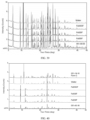
- the experimental results are shown in Table 5, and the results of the XPRD analysis are shown in FIGS. 38-40 .
- Table 4 Biological medium Preparation process FaSSIF Weigh 2.082 g of FaSSIF concentrated solution and 112.4 mg of FaSSIF/FeSSIF/FaSSGF powder, and add pure water to achieve 50 mL volume in total (pH 6.5).
- FaSSGF Weigh 3.676 g of FaSSGF concentrate solution and 6.00 mg of FaSSIF/FeSSIF/FaSSGF powder, and add pure water to achieve 100 mL volume in total (pH 1.6).
- Table 5 Crystal form Medium pH Sample mass (mg) Solubility ( ⁇ g/mL) Final pH Residual solid XRPD 0.5 h 2 h 24 h Crystal form P FaSSIF 6.5 20.2 24.3 25.9 20.5 6.4 Crystal form P FeSSIF 5.0 20.2 74.5 74.3 71.2 5.0 Crystal form P FaSSGF 1.6 20.0 8.6 8.6 5.6 1.6 Crystal form P Water - 19.9 11.2 10.6 10.6 4.6 Crystal form P Crystal form C FaSSIF 6.5 20.5 9.0 10.2 9.8 6.5 Crystal form C FeSSIF 5.0 20.3 33.5 33.9 33.2 5.0 Crystal form C FaSSGF 1.6 20.4 2.5 2.2 2.4 1.6 Crystal form C Water - 20.2 2.6 3.1 3.3 5.5 Crystal form C Crystal form N FaSSIF 6.5
- the present disclosure provides a polymorph of 7,8-dihydroxyflavone and a preparation method therefor.
- the polymorph of 7,8-dihydroxyflavone provided by the present disclosure has more selectable pharmacoeconomic value.
Landscapes
- Health & Medical Sciences (AREA)
- Chemical & Material Sciences (AREA)
- Organic Chemistry (AREA)
- Animal Behavior & Ethology (AREA)
- Medicinal Chemistry (AREA)
- Pharmacology & Pharmacy (AREA)
- Life Sciences & Earth Sciences (AREA)
- General Health & Medical Sciences (AREA)
- Public Health (AREA)
- Veterinary Medicine (AREA)
- Nuclear Medicine, Radiotherapy & Molecular Imaging (AREA)
- General Chemical & Material Sciences (AREA)
- Chemical Kinetics & Catalysis (AREA)
- Bioinformatics & Cheminformatics (AREA)
- Engineering & Computer Science (AREA)
- Neurosurgery (AREA)
- Neurology (AREA)
- Biomedical Technology (AREA)
- Hematology (AREA)
- Obesity (AREA)
- Diabetes (AREA)
- Heart & Thoracic Surgery (AREA)
- Cardiology (AREA)
- Epidemiology (AREA)
- Ophthalmology & Optometry (AREA)
- Hospice & Palliative Care (AREA)
- Psychiatry (AREA)
- Pain & Pain Management (AREA)
- Pharmaceuticals Containing Other Organic And Inorganic Compounds (AREA)
- Pyrane Compounds (AREA)
Applications Claiming Priority (2)
| Application Number | Priority Date | Filing Date | Title |
|---|---|---|---|
| CN202210383296 | 2022-04-12 | ||
| PCT/CN2023/087608 WO2023198055A1 (fr) | 2022-04-12 | 2023-04-11 | Polymorphe de 7,8-dihydroxyflavone et son procédé de préparation |
Publications (1)
| Publication Number | Publication Date |
|---|---|
| EP4509499A1 true EP4509499A1 (fr) | 2025-02-19 |
Family
ID=88328943
Family Applications (1)
| Application Number | Title | Priority Date | Filing Date |
|---|---|---|---|
| EP23787698.2A Pending EP4509499A1 (fr) | 2022-04-12 | 2023-04-11 | Polymorphe de 7,8-dihydroxyflavone et son procédé de préparation |
Country Status (7)
| Country | Link |
|---|---|
| EP (1) | EP4509499A1 (fr) |
| JP (1) | JP2025513893A (fr) |
| KR (1) | KR20250002428A (fr) |
| CN (2) | CN117255783B (fr) |
| AU (1) | AU2023253008A1 (fr) |
| CA (1) | CA3255442A1 (fr) |
| WO (1) | WO2023198055A1 (fr) |
Family Cites Families (5)
| Publication number | Priority date | Publication date | Assignee | Title |
|---|---|---|---|---|
| SK9742002A3 (en) * | 2000-01-07 | 2003-02-04 | Transform Pharmaceuticals Inc | High-throughput formation, identification, and analysis of diverse solid-forms |
| US9668497B2 (en) * | 2015-09-25 | 2017-06-06 | International Flavors & Fragrances Inc. | Flavor-enhancing compounds |
| JP2020063477A (ja) * | 2018-10-17 | 2020-04-23 | 上村工業株式会社 | 電解Sn合金めっき液 |
| CN111303105A (zh) * | 2019-04-19 | 2020-06-19 | 武汉万知化工医药有限公司 | 一种7,8-二羟基黄酮的制备方法 |
| CN114276321A (zh) * | 2021-12-21 | 2022-04-05 | 济南明微医药科技有限公司 | 一种制备7,8-二羟基黄酮的方法 |
-
2023
- 2023-04-11 KR KR1020247037417A patent/KR20250002428A/ko active Pending
- 2023-04-11 EP EP23787698.2A patent/EP4509499A1/fr active Pending
- 2023-04-11 CN CN202380011365.1A patent/CN117255783B/zh active Active
- 2023-04-11 AU AU2023253008A patent/AU2023253008A1/en active Pending
- 2023-04-11 WO PCT/CN2023/087608 patent/WO2023198055A1/fr not_active Ceased
- 2023-04-11 CN CN202511184492.9A patent/CN121064139A/zh active Pending
- 2023-04-11 JP JP2024560752A patent/JP2025513893A/ja active Pending
- 2023-04-11 CA CA3255442A patent/CA3255442A1/fr active Pending
Also Published As
| Publication number | Publication date |
|---|---|
| CN117255783A (zh) | 2023-12-19 |
| JP2025513893A (ja) | 2025-04-30 |
| CN117255783B (zh) | 2025-09-12 |
| KR20250002428A (ko) | 2025-01-07 |
| WO2023198055A1 (fr) | 2023-10-19 |
| AU2023253008A1 (en) | 2024-11-07 |
| CN121064139A (zh) | 2025-12-05 |
| CA3255442A1 (fr) | 2025-07-03 |
Similar Documents
| Publication | Publication Date | Title |
|---|---|---|
| KR102522895B1 (ko) | Jak 키나아제 억제제 바이설페이트의 결정형 및 이의 제조방법 | |
| TW202115093A (zh) | Cftr調節劑之結晶形式 | |
| EP3205653B1 (fr) | Forme cristalline de bisulfate d'inhibiteur de jak et son procédé de préparation | |
| US20220002306A1 (en) | Crystal form of upadacitinib and preparation method and use thereof | |
| KR20210023987A (ko) | Arn-509의 결정형, 그 제조방법 및 그 용도 | |
| JP2020500912A (ja) | ブロモドメインタンパク質阻害薬の結晶形及びその製造方法並びに用途 | |
| US20230039086A1 (en) | Bms-986165 crystal form, preparation method therefor and use thereof | |
| JP2025074350A (ja) | S1p1受容体アゴニストの付加塩およびその結晶形態、ならびに薬学的組成物 | |
| EP3696169B1 (fr) | Procédé de fabrication de phosphate d'amifampridine | |
| JP2025514292A (ja) | 塩酸ブラルカメシンの結晶形、その調製方法およびその使用 | |
| WO2015176591A1 (fr) | Sels de betrixaban, procede de preparation et utilisation de ceux-ci | |
| WO2022206937A1 (fr) | Nouvelle forme cristalline de chlorhydrate de composé nicotinamide à substitution par pyrazole et son procédé de préparation | |
| AU2023253008A1 (en) | Polymorph of 7,8-dihydroxyflavone, and preparation method therefor | |
| WO2019205812A1 (fr) | Nouvelle forme cristalline de l'acalabrutinib, son procédé de préparation et son utilisation | |
| CN113015722B (zh) | 一种低氧诱导因子脯氨酰羟化酶抑制剂晶型 | |
| WO2023165501A1 (fr) | Forme cristalline d'azd5305, son procédé de préparation et son utilisation | |
| EP4056182A1 (fr) | Forme cristalline d'aprocitentan, son procédé de préparation et son utilisation | |
| CN115772166A (zh) | 一种s1p1受体激动剂的加成盐及其晶型和药物组合物 | |
| US9981912B2 (en) | Cocrystal of lorcaserin, preparation methods, pharmaceutical compositions and uses thereof | |
| WO2019105359A1 (fr) | Forme cristalline de l'acalabrutinib, son procédé de préparation et son application | |
| HUE027309T2 (en) | Crystalline solvates of 6- (Piperidin-4-ylix) -2H-isoquinolin-1-one hydrochloride | |
| EP3960742A1 (fr) | Cristaux de composé contenant un alcynyle, sel et solvate de celui-ci, procédé de préparation et utilisations | |
| EP3004101A1 (fr) | Forme cristalline de n,n-dicyclopropyl-4-(1,5-diméthyl-1h-pyrazol-3-ylamino)-6-éthyl-1-méthyl-1,6-dihydro-imidazo[4,5-d]pyrrolo[2,3-b]pyridine-7-carboxamide pour le traitement de troubles myéloprolifératifs | |
| TW202506661A (zh) | 一種酪氨酸激酶抑制劑的可藥用鹽、結晶形式及其製備方法 | |
| WO2021089766A1 (fr) | Procédé de préparation de composés organiques ferriques |
Legal Events
| Date | Code | Title | Description |
|---|---|---|---|
| STAA | Information on the status of an ep patent application or granted ep patent |
Free format text: STATUS: THE INTERNATIONAL PUBLICATION HAS BEEN MADE |
|
| PUAI | Public reference made under article 153(3) epc to a published international application that has entered the european phase |
Free format text: ORIGINAL CODE: 0009012 |
|
| STAA | Information on the status of an ep patent application or granted ep patent |
Free format text: STATUS: REQUEST FOR EXAMINATION WAS MADE |
|
| 17P | Request for examination filed |
Effective date: 20241106 |
|
| AK | Designated contracting states |
Kind code of ref document: A1 Designated state(s): AL AT BE BG CH CY CZ DE DK EE ES FI FR GB GR HR HU IE IS IT LI LT LU LV MC ME MK MT NL NO PL PT RO RS SE SI SK SM TR |
|
| DAV | Request for validation of the european patent (deleted) | ||
| DAX | Request for extension of the european patent (deleted) | ||
| RIC1 | Information provided on ipc code assigned before grant |
Ipc: C07D 311/30 20060101AFI20260213BHEP Ipc: A61K 31/352 20060101ALI20260213BHEP Ipc: A61P 25/00 20060101ALI20260213BHEP Ipc: A61P 25/02 20060101ALI20260213BHEP Ipc: A61P 25/04 20060101ALI20260213BHEP Ipc: A61P 25/28 20060101ALI20260213BHEP Ipc: A61P 3/00 20060101ALI20260213BHEP Ipc: A61P 9/00 20060101ALI20260213BHEP Ipc: A61P 35/00 20060101ALI20260213BHEP |