EP4509985A1 - Behälterplanungsverfahren, elektronische vorrichtung und speichermedium - Google Patents
Behälterplanungsverfahren, elektronische vorrichtung und speichermedium Download PDFInfo
- Publication number
- EP4509985A1 EP4509985A1 EP23787704.8A EP23787704A EP4509985A1 EP 4509985 A1 EP4509985 A1 EP 4509985A1 EP 23787704 A EP23787704 A EP 23787704A EP 4509985 A1 EP4509985 A1 EP 4509985A1
- Authority
- EP
- European Patent Office
- Prior art keywords
- task
- container
- node
- containers
- scheduling
- Prior art date
- Legal status (The legal status is an assumption and is not a legal conclusion. Google has not performed a legal analysis and makes no representation as to the accuracy of the status listed.)
- Pending
Links
Images






Classifications
-
- G—PHYSICS
- G06—COMPUTING OR CALCULATING; COUNTING
- G06F—ELECTRIC DIGITAL DATA PROCESSING
- G06F9/00—Arrangements for program control, e.g. control units
- G06F9/06—Arrangements for program control, e.g. control units using stored programs, i.e. using an internal store of processing equipment to receive or retain programs
- G06F9/46—Multiprogramming arrangements
- G06F9/48—Program initiating; Program switching, e.g. by interrupt
- G06F9/4806—Task transfer initiation or dispatching
- G06F9/4843—Task transfer initiation or dispatching by program, e.g. task dispatcher, supervisor, operating system
- G06F9/4881—Scheduling strategies for dispatcher, e.g. round robin, multi-level priority queues
-
- G—PHYSICS
- G06—COMPUTING OR CALCULATING; COUNTING
- G06F—ELECTRIC DIGITAL DATA PROCESSING
- G06F9/00—Arrangements for program control, e.g. control units
- G06F9/06—Arrangements for program control, e.g. control units using stored programs, i.e. using an internal store of processing equipment to receive or retain programs
- G06F9/44—Arrangements for executing specific programs
- G06F9/455—Emulation; Interpretation; Software simulation, e.g. virtualisation or emulation of application or operating system execution engines
- G06F9/45533—Hypervisors; Virtual machine monitors
- G06F9/45558—Hypervisor-specific management and integration aspects
-
- G—PHYSICS
- G06—COMPUTING OR CALCULATING; COUNTING
- G06F—ELECTRIC DIGITAL DATA PROCESSING
- G06F9/00—Arrangements for program control, e.g. control units
- G06F9/06—Arrangements for program control, e.g. control units using stored programs, i.e. using an internal store of processing equipment to receive or retain programs
- G06F9/46—Multiprogramming arrangements
- G06F9/50—Allocation of resources, e.g. of the central processing unit [CPU]
-
- G—PHYSICS
- G06—COMPUTING OR CALCULATING; COUNTING
- G06F—ELECTRIC DIGITAL DATA PROCESSING
- G06F9/00—Arrangements for program control, e.g. control units
- G06F9/06—Arrangements for program control, e.g. control units using stored programs, i.e. using an internal store of processing equipment to receive or retain programs
- G06F9/46—Multiprogramming arrangements
- G06F9/50—Allocation of resources, e.g. of the central processing unit [CPU]
- G06F9/5005—Allocation of resources, e.g. of the central processing unit [CPU] to service a request
- G06F9/5027—Allocation of resources, e.g. of the central processing unit [CPU] to service a request the resource being a machine, e.g. CPUs, Servers, Terminals
- G06F9/5038—Allocation of resources, e.g. of the central processing unit [CPU] to service a request the resource being a machine, e.g. CPUs, Servers, Terminals considering the execution order of a plurality of tasks, e.g. taking priority or time dependency constraints into consideration
-
- G—PHYSICS
- G06—COMPUTING OR CALCULATING; COUNTING
- G06F—ELECTRIC DIGITAL DATA PROCESSING
- G06F9/00—Arrangements for program control, e.g. control units
- G06F9/06—Arrangements for program control, e.g. control units using stored programs, i.e. using an internal store of processing equipment to receive or retain programs
- G06F9/46—Multiprogramming arrangements
- G06F9/50—Allocation of resources, e.g. of the central processing unit [CPU]
- G06F9/5005—Allocation of resources, e.g. of the central processing unit [CPU] to service a request
- G06F9/5027—Allocation of resources, e.g. of the central processing unit [CPU] to service a request the resource being a machine, e.g. CPUs, Servers, Terminals
- G06F9/505—Allocation of resources, e.g. of the central processing unit [CPU] to service a request the resource being a machine, e.g. CPUs, Servers, Terminals considering the load
-
- G—PHYSICS
- G06—COMPUTING OR CALCULATING; COUNTING
- G06F—ELECTRIC DIGITAL DATA PROCESSING
- G06F9/00—Arrangements for program control, e.g. control units
- G06F9/06—Arrangements for program control, e.g. control units using stored programs, i.e. using an internal store of processing equipment to receive or retain programs
- G06F9/46—Multiprogramming arrangements
- G06F9/50—Allocation of resources, e.g. of the central processing unit [CPU]
- G06F9/5061—Partitioning or combining of resources
-
- G—PHYSICS
- G06—COMPUTING OR CALCULATING; COUNTING
- G06F—ELECTRIC DIGITAL DATA PROCESSING
- G06F9/00—Arrangements for program control, e.g. control units
- G06F9/06—Arrangements for program control, e.g. control units using stored programs, i.e. using an internal store of processing equipment to receive or retain programs
- G06F9/44—Arrangements for executing specific programs
- G06F9/455—Emulation; Interpretation; Software simulation, e.g. virtualisation or emulation of application or operating system execution engines
- G06F9/45533—Hypervisors; Virtual machine monitors
- G06F9/45558—Hypervisor-specific management and integration aspects
- G06F2009/4557—Distribution of virtual machine instances; Migration and load balancing
-
- G—PHYSICS
- G06—COMPUTING OR CALCULATING; COUNTING
- G06F—ELECTRIC DIGITAL DATA PROCESSING
- G06F2209/00—Indexing scheme relating to G06F9/00
- G06F2209/50—Indexing scheme relating to G06F9/50
- G06F2209/503—Resource availability
-
- Y—GENERAL TAGGING OF NEW TECHNOLOGICAL DEVELOPMENTS; GENERAL TAGGING OF CROSS-SECTIONAL TECHNOLOGIES SPANNING OVER SEVERAL SECTIONS OF THE IPC; TECHNICAL SUBJECTS COVERED BY FORMER USPC CROSS-REFERENCE ART COLLECTIONS [XRACs] AND DIGESTS
- Y02—TECHNOLOGIES OR APPLICATIONS FOR MITIGATION OR ADAPTATION AGAINST CLIMATE CHANGE
- Y02D—CLIMATE CHANGE MITIGATION TECHNOLOGIES IN INFORMATION AND COMMUNICATION TECHNOLOGIES [ICT], I.E. INFORMATION AND COMMUNICATION TECHNOLOGIES AIMING AT THE REDUCTION OF THEIR OWN ENERGY USE
- Y02D10/00—Energy efficient computing, e.g. low power processors, power management or thermal management
Definitions
- the present application relates to the field of computer application technologies, for example, a container scheduling method, an electronic device, and a storage medium.
- Embodiments of the present application provide a container scheduling method, an electronic device, and a storage medium, which can not only achieve the batch scheduling of service jobs but also improve the container scheduling efficiency and reduce the waiting time of the service jobs.
- An embodiment of the present application provides a container scheduling method.
- the method includes the following:
- Task containers corresponding to a service job are classified into at least one customized description resource object according to task types of the task containers.
- An adaptability and a capacity of a cluster node to each of the task containers in the at least one customized description resource object are determined.
- a scheduling relationship between the cluster node and the task containers is configured according to the adaptability and the capacity.
- An embodiment of the present application provides an electronic device.
- the electronic device includes at least one processor and a memory configured to store at least one program.
- the at least one program when executed by the at least one processor, causes the at least one processor to perform the method of any embodiment of the present application.
- An embodiment of the present application provides a computer-readable storage medium.
- the computer-readable storage medium has at least one program stored thereon, where the at least one program, when executed by at least one processor, causes the method of any embodiment of the present application to be performed.
- the task containers are classified into different customized description resource objects according to the task types of the service job, the adaptability and the capacity of the cluster node to the task container in each customized description resource object are determined, and the scheduling relationship between the cluster node and the task containers is configured according to the adaptability and the capacity so that when the batch scheduling of the task containers is achieved, the container scheduling efficiency can be improved.
- the task containers are allocated to different cluster nodes according to the adaptability and the capacity so that a degree of matching between a task container and a cluster node can be improved and the problem of resource contention of the cluster node can be solved.
- module In the subsequent description, words for representing elements, such as “module”, “component”, and “unit”, are merely used for facilitating the description of the present application and have no particular meanings in themselves. Therefore, “module”, “component”, and “unit” can be used in a mixed manner.
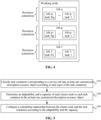
- container scheduling is performed in a pipeline scheduling manner with containers as units, that is, a container corresponding to only one task is scheduled in one scheduling period, as shown in FIG. 1 .
- the pipeline scheduling of containers has the defect of low scheduling efficiency when big data and artificial intelligence jobs are processed.
- FIG. 2 researchers have proposed a batch scheduling manner shown in FIG. 2 .
- the batch scheduling manner is to schedule a big data or artificial intelligence job including different types of tasks as a scheduling unit in each scheduling period. Referring to FIG. 3 , the big data or artificial intelligence job often includes different tasks.
- amounts of required resources of all the tasks in the big data or artificial intelligence job need to be traversed. As a result, the batch scheduling efficiency of service jobs is still relatively low in the related art.
- a batch scheduling manner represented by Volcano is to schedule all tasks included in one big data and artificial intelligence job onto the same node as much as possible. Since these tasks are likely to require the same resource types, the batch scheduling manner easily causes the problem of resource contention to the node.
- the batch scheduling manner in the related art can only improve the scheduling efficiency of the big data and artificial intelligence jobs to a certain extent, and the problems of low scheduling efficiency and resource contention of the node still exist.
- embodiments of the present disclosure provide a container scheduling method to improve the scheduling efficiency of the big data and artificial intelligence jobs and solve the problem of resource contention of the node.
- FIG. 5 is a flowchart of a container scheduling method according to an embodiment of the present application.
- the embodiment of the present application is applicable to the scheduling of a big data or artificial intelligence job.
- the method may be performed by a container scheduling apparatus which may be implemented by software and/or hardware.
- the method according to the embodiment of the present application includes the following operations.
- task containers corresponding to a service job are classified into at least one customized description resource object according to task types of the task containers.
- the task types may be service types corresponding to a specific big data or artificial intelligence service and may represent functions to be implemented by the job or data to be transmitted for the job.
- the service job may be a transaction to be executed by big data or artificial intelligence.
- At least one service job may exist.
- a task container may be an environment for processing a service.
- One resource object may include at least one task container. It is to be understood that the customized description resource object may be a resource object customized by a user as required, and task containers managed in the customized description resource object may correspond to the same task type.
- the task type corresponding to the service job is determined, and task containers corresponding to service jobs may be classified into different customized description resource objects according to the task types.
- a correspondence relationship may be configured between customized description resource objects and service types, and the task containers corresponding to the service jobs may be classified according to the correspondence relationship between service types and customized description resource objects.
- an adaptability and a capacity of each cluster node to each task container in the at least one customized description resource object are determined.
- the cluster node may be a processing node for processing the service job. At least one cluster node may exist. Different cluster nodes may be located at the same position or different positions.
- the adaptability may be a degree of matching between the cluster node and a task container corresponding to a service job in a different customized description resource object, and the degree of matching may be determined by factors such as resources and processing performance.
- the capacity may be an ability of the cluster node to accommodate task containers corresponding to service jobs, and the capacity may be determined by an amount of resources consumed by a task container in the customized description resource object and an amount of available resources of the cluster node.
- the adaptability of each cluster node to each task container in different customized description resource objects and the capacity of each cluster node to accommodate each task container in the different customized description resource objects may be determined.
- a scheduling relationship between the cluster node and the task containers is configured according to the adaptability and the capacity.
- the scheduling relationship may be a configured relationship between the task containers and the cluster node, and the cluster node having the scheduling relationship may process the corresponding task containers.
- the cluster node that best matches the task container may be determined so that the scheduling relationship between the task containers and the cluster node can be built.
- the task containers are classified into the different customized description resource objects according to the task types of the service job, the adaptability and the capacity of the cluster node to the task container in each customized description resource object are determined, and the scheduling relationship between the cluster node and the task containers is configured according to the adaptability and the capacity so that when the batch scheduling of the task containers is achieved, the container scheduling efficiency can be improved.
- the task containers are allocated to different cluster nodes according to the adaptability and the capacity so that a degree of matching between the task container and the cluster node can be improved and the problem of resource contention of the cluster node can be solved.
- FIG. 6 is a flowchart of a container scheduling method according to an embodiment of the present application. This embodiment of the present application is embodied based on the preceding embodiment of the present application. Referring to FIG. 6 , the method according to the embodiment of the present application includes the following operations.
- task containers corresponding to a task included in a service job are created, where each task container includes an image name, a container startup command, a container startup parameter, and a task type label.
- the service job may include multiple tasks which may be transactions to be processed by cluster nodes.
- the corresponding task containers may be created for the tasks included in the service job, where each task container may have the image name, the container startup command, the container startup parameter, and the task type label.
- a container creation module of a Kubernetes API-Server creates a corresponding Kubernetes Pod for each task in a job.
- each customized description resource object includes a name, a job type label, and a scheduling priority label.
- the customized description resource object may be created for the service job, and information such as the name, the job type label, and the scheduling priority label may be set for the customized description resource object.
- each task container is classified according to the task type label of each task container into a customized description resource object with a job type label matching the task type label.
- the task containers may be classified into different customized description resource objects according to task type labels configured for the task containers.
- the specific job type label of the customized description resource object may match the task type label of the task container.
- the matching may include types being the same or types being associated.
- the at least one customized description resource object is screened according to a resource object type.
- a type of the customized description resource object may be extracted. If the extracted type of the customized description resource object is the same as the set resource object type, the customized description resource object is further processed. If the extracted type of the customized description resource object is different from the set resource object type, the customized description resource object is not processed.
- the at least one customized description resource object is sorted according to a task queue.
- the task queue may be a storage space for temporarily storing the task containers.
- the customized description resource object in the task queue may adopt a first-in, first-out output decision.
- the customized description resource objects may be input into the task queue, and the customized description resource objects may be sorted in the task queue to facilitate the subsequent scheduling of the task containers.
- At least one task queue may exist.
- customized description resource objects with the same resource object type may be stored in the same task queue, or different customized description resource objects may be stored in different task queues.
- an adaptability and a capacity of each cluster node to each task container in the at least one customized description resource object are determined.
- a scheduling relationship between the cluster node and the task container is configured according to the adaptability and the capacity.
- the at least one customized description resource object is sorted according to the task queue includes at least one of: sorting the at least one customized description resource object in the task queue according to an entry order of the at least one customized description resource object; or sorting the at least one customized description resource object in the task queue according to a scheduling priority of the at least one customized description resource object.
- the entry order may be a time order in which the at least one customized description resource object reaches the task queue.
- the scheduling priority may be an order in which the at least one customized description resource object is scheduled.
- the customized description resource objects may be sorted in the task queue according to the entry order in which the customized description resource objects reach the task queue, and a customized description resource object that reaches the task queue first may be output first.
- the customized description resource objects may be sorted in the task queue according to scheduling priorities configured for the customized description resource objects, and a task container in the customized description resource object with a high scheduling priority is output first.
- the customized description resource objects may be sorted in conjunction with the entry order and the scheduling priorities. For example, the customized description resource objects are arranged sequentially in the task queue in descending order of the scheduling priorities. For multiple customized description resource objects with the same scheduling priority, the multiple customized description resource objects may be arranged sequentially in the task queue according to an entry order of the multiple customized description resource objects.
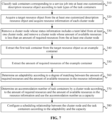
- FIG. 7 is another flowchart of a container scheduling method according to an embodiment of the present application. This embodiment of the present application is embodied based on the preceding embodiment of the present application. Referring to FIG. 7 , the method according to the embodiment of the present application includes the following operations.
- task containers corresponding to a service job are classified into at least one customized description resource object according to task types of the task containers.
- a target resource object is acquired from the at least one customized description resource object and resource information of each cluster node is acquired.
- the target resource object may be a resource object currently processed among multiple customized description resource objects.
- the target resource object may be acquired randomly or selected from a task queue.
- a resource object to be processed currently may be used as the target resource object from the customized description resource objects.
- the resource information of each cluster node may be extracted.
- the resource information may reflect current performance conditions of a different cluster node.
- the resource information may include resource types, total amounts of resources, amounts of available resources, and other information of the cluster node.
- a cluster node whose status information includes a taint label is removed from at least one cluster node; and a cluster node whose amount of available resources is less than an amount of required resources is removed from the at least one cluster node.
- the taint label may be key-value attribute data defined on the cluster node.
- the cluster node refuses to schedule the task containers.
- the amount of required resources may represent an amount of resources required by a task container in the customized description resource object.
- the at least one cluster node may be screened according to the status information.
- a screening process may be described as follows: the status information of each cluster node is extracted; if the extracted status information has the taint label, the cluster node corresponding to the status information refuses to schedule the task containers and may be removed.
- the at least one cluster node may also be screened according to the resource information.
- a specific screening process may be described as follows: the amount of available resources is extracted from the resource information of each cluster node; if the amount of available resources is less than a total amount of resources required by the task container in the customized description resource object, it is determined that the cluster node cannot accommodate the task container to schedule the task container, and the cluster node may be removed.
- the first task container is extracted from the target resource object as an example container.
- the example container may be a reference task container for measuring a resource status of containers in the target resource object.
- the example container may be a task container added first to the target resource object.
- the example container is not limited to the first task container.
- the example container may be a task container randomly selected from the target resource object or a virtual example container constructed according to an average amount of resources of all task containers in the target resource object.
- the first task container may be selected as the example container from a customized description resource object denoted as the target resource object.
- a container list of the example container may be extracted, and amounts of different resources required by each container object in the container list may be determined. For example, amounts of resources, such as a central processing unit (CPU), graphics processing unit (GPU), memory, disk, or network bandwidth, required by different container objects in the container list of the example container may be extracted, and a sum of the same resources may be used as the amount of required resources.
- resources such as a central processing unit (CPU), graphics processing unit (GPU), memory, disk, or network bandwidth
- an adaptability is determined according to a degree of matching between the amount of required resources and the amount of available resources in the resource information.
- the amount of available resources may be an amount of remaining and unoccupied resources of a different type in each cluster node, for example, an available amount of the CPU, an available amount of the GPU, an available memory, an available disk, and an available network bandwidth of the cluster node.
- the degree of matching may be determined based on the amount of required resources of the task container and the amount of available resources of the cluster node. For example, the ratio of the amount of required resources to the amount of available resources may be used as the degree of matching. When the ratio is less than 1, the more the ratio approximates to 1, the higher the degree of matching. A manner of determining the degree of matching by the amount of required resources and the amount of available resources is not limited here.
- an accommodation number of task containers by the cluster node is determined according to the amount of required resources and the amount of available resources in the resource information and used as a capacity.
- the accommodation number may be the number of example containers accommodated in the cluster node.
- the accommodation number may be determined according to a quotient of the amount of available resources and the amount of required resources.
- the corresponding amount of available resources may be extracted for each cluster node, and the quotient of the amount of available resources and the amount of required resources of the example container may be used as the accommodation number.
- the accommodation number may be the capacity of the cluster node to the task container.
- a scheduling relationship between the cluster node and the task containers is configured according to the adaptability and the capacity.
- the adaptability is determined according to the degree of matching between the amount of required resources and the amount of available resources in the resource information includes the following:
- the degree of matching between the amount of required resources and the amount of available resources is determined according to a LeastRequestedPriority policy and a BalancedResourceAllocation policy.
- the degree of matching between each cluster node and the example container may be jointly determined according to the LeastRequestedPriority policy and the BalancedResourceAllocation policy.
- the BalancedResourceAllocation policy may include a higher weight for a cluster node with a smaller variance of utilization of the CPU and memory. After the degree of matching is determined by the LeastRequestedPriority policy, the degree of matching may be adjusted using the weight according to the utilization of the CPU and memory of each cluster node.
- that the accommodation number of task containers by the cluster node is determined according to the amount of required resources and the amount of available resources in the resource information includes the following:
- the amount of required resources of each resource type in the example container and the amount of available resources of each resource type in the resource information are extracted.
- the quotient of the amount of available resources and the amount of required resources is determined to obtain multiple quotients, and a minimum quotient of the multiple quotients is used as the accommodation number.
- amounts of different resources required by the example container may be extracted, for example, required amounts of the CPU, GPU, memory, disk, and network bandwidth are extracted.
- amounts of available resources of the preceding types may be extracted separately.
- the quotient of the amount of available resources and the amount of required resources may be used as a resource accommodation number for the corresponding resource, and a resource accommodation number with a minimum value may be used as the accommodation number of example containers by the cluster node.
- FIG. 8 is another flowchart of a container scheduling method according to an embodiment of the present application. This embodiment of the present application is embodied based on the preceding embodiment of the present application. Referring to FIG. 8 , the method according to the embodiment of the present application includes the following operations.
- task containers corresponding to a service job are classified into at least one customized description resource object according to task types of the task containers.
- an adaptability and a capacity of each cluster node to each task container in the at least one customized description resource object are determined.
- cluster nodes are sorted in descending order of adaptability values of the cluster nodes.
- the adaptability values may be sorted in descending order, and the cluster nodes may be arranged according to the descending order and a correspondence relationship between the adaptability values and the cluster nodes. It is to be understood that each task container may correspond to a sequence of sorted cluster nodes.
- the top 20% of the sorted cluster nodes are used as candidate cluster nodes.
- the top 20% of the sorted cluster nodes may be selected as the candidate cluster nodes, and the candidate cluster nodes may be used for task container scheduling.
- a quotient of a total number of the task containers and a total number of the candidate cluster nodes is determined.
- the total number of the candidate cluster nodes may be a total number of cluster nodes selected as the candidate cluster nodes, and the total number of the task containers may be a total number of the task containers included in the customized description resource object.
- the quotient of the total number of the task containers and the total number of the candidate cluster nodes may be calculated.
- the task containers are allocated to candidate cluster nodes according to the quotient and the capacity.
- the task containers may be allocated to the candidate cluster nodes based on the quotient and the capacity determined in the preceding processes so that the task containers in the customized description resource object can be allocated to the candidate cluster nodes. For example, a number of task containers corresponding to the quotient may be allocated to each candidate cluster node, and the number of task containers allocated to each candidate cluster node should not be greater than the capacity.
- a scheduling relationship between the task containers and the candidate cluster nodes corresponding to the task containers is built.
- Identification information of a candidate cluster node to which the task container is allocated may be stored in the task container.
- the identification information may be used for indicating a scheduling relationship between the task container and the candidate cluster node.
- a node name field may be set for the task container, and the node name field may be used for storing a node name of the candidate cluster node to which the task container is allocated.
- the task containers are allocated to the candidate cluster nodes according to the quotient and the capacity includes the following:
- Whether the capacity of each candidate cluster node is greater than or equal to the quotient is determined in descending order of adaptability values of the candidate cluster nodes. If so, a number of task containers are allocated to each candidate cluster node, the number being the quotient. If not, a number of task containers are allocated to each candidate cluster node, the number being the capacity.
- the candidate cluster nodes may be sorted according to the capacity, the candidate cluster node is selected one by one from the sorted candidate cluster nodes, and whether the capacity of the candidate cluster node is greater than the quotient of the total number of the task containers and the total number of the candidate cluster nodes is determined. If the capacity of the candidate cluster node is greater than or equal to the quotient, a number of task containers are allocated to the current candidate cluster node, the number being the quotient. If the capacity of the candidate cluster node is less than the quotient, a number of task containers are allocated to the current candidate cluster node, the number being the capacity.
- the second 20% of the sorted cluster nodes are used as new candidate cluster nodes and the unallocated task container is allocated to a new candidate cluster node.
- each task container may be determined. Whether all the task containers are allocated to the candidate cluster nodes is determined. For example, whether the node name field for the task container is null is determined. If so, it is determined that the task container is unallocated. In this case, the currently selected candidate cluster nodes cannot satisfy the requirement for scheduling all the task containers. With the currently selected candidate cluster nodes of the sorted cluster nodes as a starting point, 20% of the sorted cluster nodes after the starting point may be re-selected as the new candidate cluster nodes, and the unallocated task container may be allocated to the new candidate cluster node in the preceding allocation manner.
- the scheduling relationship between the task containers and the candidate cluster nodes corresponding to the task containers includes the following:
- the node name field for each task container is set as the identification information of a candidate cluster node corresponding to each task container.
- binding the scheduling relationship may be setting the node name field for the task container as the identification information of the candidate cluster node to which the task container belongs.
- the identification information may include a network address, node name, or node number of the candidate cluster node.
- FIG. 9 is a structural diagram of a container scheduling apparatus according to an embodiment of the present application.
- the apparatus may perform the container scheduling method of any embodiment of the present application and has function modules and beneficial effects corresponding to the method performed.
- the apparatus may be implemented by software and/or hardware.
- the apparatus according to the embodiment of the present application includes a task classification module 501, a cluster parameter module 502, and a scheduling setting module 503.
- the task classification module 501 is configured to classify task containers corresponding to a service job into at least one customized description resource object according to task types of the task containers.
- the cluster parameter module 502 is configured to determine an adaptability and a capacity of each cluster node to each task container in the at least one customized description resource object.
- the scheduling setting module 503 is configured to configure a scheduling relationship between the cluster node and the task containers according to the adaptability and the capacity.
- the task classification module classifies the task containers into different customized description resource objects according to the task types of the service job
- the cluster parameter module determines the adaptability and the capacity of the cluster node to the task container in each customized description resource object
- the scheduling setting module configures the scheduling relationship between the cluster node and the task containers according to the adaptability and the capacity so that when the batch scheduling of the task containers is achieved, the container scheduling efficiency can be improved.
- the task containers are allocated to different cluster nodes according to the adaptability and the capacity so that a degree of matching between a task container and a cluster node can be improved and the problem of resource contention of the cluster node can be solved.
- the apparatus further includes a queue processing module.
- the queue processing module is configured to sort the at least one customized description resource object according to a task queue.
- the apparatus further includes a resource object screening module.
- the resource object screening module is configured to screen the at least one customized description resource object according to a resource object type.
- the task classification module 501 includes a container creation unit, a resource object unit, and a classification unit.
- the container creation unit is configured to create the task containers corresponding to a task included in the service job, where each task container includes an image name, a container startup command, a container startup parameter, and a task type label.
- the resource object unit is configured to create the at least one customized description resource object corresponding to the service job, where each customized description resource object includes a name, a job type label, and a scheduling priority label.
- the classification unit is configured to classify each task container according to the task type label of each task container into a customized description resource object with a job type label matching the task type label.
- the cluster parameter module 502 includes an example determination unit, a resource extraction unit, an adaptability unit, and a capacity unit.
- a target resource object is acquired from the at least one customized description resource object and resource information of each cluster node is acquired.
- the example determination unit is configured to extract the first task container from the target resource object as an example container.
- the resource extraction unit is configured to extract an amount of required resources of the example container.
- the adaptability unit is configured to determine the adaptability according to a degree of matching between the amount of required resources and an amount of available resources in the resource information.
- the capacity unit is configured to determine an accommodation number of task containers by the cluster node according to the amount of required resources and the amount of available resources in the resource information and use the accommodation number as the capacity.
- the cluster parameter module 502 further includes a cluster screening unit.
- the cluster screening unit is configured to remove a cluster node whose status information includes a taint label from at least one cluster node and remove a cluster node whose amount of available resources is less than the amount of required resources from the at least one cluster node.
- the adaptability unit is configured to determine the degree of matching between the amount of required resources and the amount of available resources according to a LeastRequestedPriority policy and a BalancedResourceAllocation policy.
- the capacity unit is configured to extract the amount of required resources of each resource type in the example container and the amount of available resources of each resource type in the resource information; and for each resource type, determine a quotient of the amount of available resources and the amount of required resources to obtain multiple quotients, and use a minimum quotient of the multiple quotients as the accommodation number.
- the scheduling setting module 503 includes a sorting unit, a candidate selection unit, a quotient determination unit, a task allocation unit, and a relationship building unit.
- the sorting unit is configured to, for the same task container, sort cluster nodes in descending order of adaptability values of the cluster nodes.
- the candidate selection unit is configured to use the top 20% of the sorted cluster nodes as candidate cluster nodes.
- the quotient determination unit is configured to determine a quotient of a total number of the task containers and a total number of the candidate cluster nodes.
- the task allocation unit is configured to allocate the task containers to candidate cluster nodes according to the quotient and the capacity.
- the relationship building unit is configured to build a scheduling relationship between the task containers and the candidate cluster nodes corresponding to the task containers.
- the task allocation unit is configured to determine, in descending order of adaptability values of the candidate cluster nodes, whether the capacity of each candidate cluster node is greater than or equal to the quotient; if so, allocate a number of task containers to each candidate cluster node, the number being the quotient; and if not, allocate a number of task containers to each candidate cluster node, the number being the capacity.
- the scheduling setting module 503 further includes an abnormality processing unit.
- the abnormality processing unit is configured to, in response to determining a task container unallocated to any of the candidate cluster nodes, use the second 20% of the sorted cluster nodes as new candidate cluster nodes and allocate the unallocated task container to a new candidate cluster node.
- the relationship building unit is configured to set a node name field for each task container as identification information of a candidate cluster node corresponding to each task container.
- the queue processing module is configured to sort the at least one customized description resource object in the task queue according to an entry order of the at least one customized description resource object; or sort the at least one customized description resource object in the task queue according to a scheduling priority of the at least one customized description resource object.
- a Kubernetes cluster includes one Kubernetes master node and several Kubernetes nodes.
- the Kubernetes master node schedules to-be-scheduled jobs.
- the Kubernetes nodes deploy and execute to-be-scheduled tasks according to a binding result of the Kubernetes master node.
- a container scheduling apparatus is implemented by six components including a container creation module of a Kubernetes API-Server, an event monitoring module of the Kubernetes API-Server, a Kubernetes etcd, a Kubernetes-based batch scheduler, a container scheduling queue in the Kubernetes-based batch scheduler, and a scheduling binding module of the Kubernetes API-Server.
- the container creation module of the Kubernetes API-Server is configured to create a corresponding container for each task in a big data or artificial intelligence job and classify tasks into different to-be-scheduled jobs according to task type labels.
- the event monitoring module of the Kubernetes API-Server is configured to monitor a creation event of the container creation module of the Kubernetes API-Server and check types of the to-be-scheduled jobs.
- the Kubernetes etcd is configured to store running status information of each component in a batch scheduling apparatus of the present application and cluster information.
- the running status information of each component in the batch scheduling apparatus includes a time point of a running error and an error event log of the component.
- the cluster information includes status information and resource information of each node and container in a cluster.
- the container scheduling queue in the Kubernetes-based batch scheduler is configured to sort the to-be-scheduled jobs according to scheduling priorities of the to-be-scheduled jobs and time points at which the to-be-scheduled jobs enter the queue to obtain a scheduling order.
- the Kubernetes-based batch scheduler is configured to schedule a to-be-scheduled job ejected from the container scheduling queue.
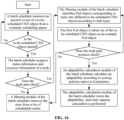
- the Kubernetes-based batch scheduler includes a filtering module, an adaptability calculation module, a capacity calculation module, and a scheduling node selection module.
- the filtering module is configured to filter out a node that does not satisfy status check or resource check.
- the adaptability calculation module is configured to calculate an adaptability of a node passing through the filtering module.
- the capacity calculation module is configured to calculate a capacity of the node passing through the filtering module.
- the scheduling node selection module is configured to select a most appropriate scheduling node for each task in the to-be-scheduled job according to the adaptability and capacity of the node.
- the scheduling binding module of the Kubernetes API-Server is configured to bind each task in the to-be-scheduled job to its scheduling node according to a scheduling result sent by the Kubernetes-based batch scheduler.
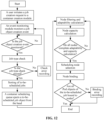
- FIG. 12 is an example flowchart of a container scheduling method according to an embodiment of the present application.
- the method according to the embodiment of the present application includes the following seven operations: job classification, job type check, the sorting of the to-be-scheduled jobs, node filtering and adaptability calculation, node capacity calculation, scheduling node selection, and node binding.
- the container creation module of the Kubernetes API-Server creates the corresponding container according to a job configuration request submitted by a user and classifies the tasks in the job into different to-be-scheduled jobs according to the task type labels.
- the event monitoring module of the Kubernetes API-Server checks the types of the to-be-scheduled jobs.
- the container scheduling queue in the Kubernetes-based batch scheduler sorts scheduling priorities of to-be-scheduled jobs that pass the job type check and ejects the to-be-scheduled job from the head of the queue.
- the filtering module and the adaptability calculation module of the Kubernetes-based batch scheduler perform the node filtering and the adaptability calculation, respectively.
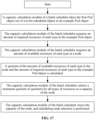
- the capacity calculation module of the Kubernetes-based batch scheduler calculates the capacity of the node.
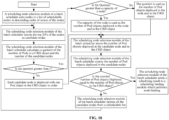
- the scheduling node selection module of the Kubernetes-based batch scheduler selects the most appropriate scheduling node for each task in the to-be-scheduled job according to the adaptability and capacity of the node.
- the scheduling binding module of the Kubernetes API-Server binds each task in the to-be-scheduled job to its scheduling node.
- a batch scheduling method of containers based on the Kubernetes architecture includes the processing operations below.
- the container creation module of the Kubernetes API-Server creates the corresponding container for each task in the big data or artificial intelligence job and classifies the tasks into the different to-be-scheduled jobs according to the task type labels, as shown in FIG. 13 .
- Each to-be-scheduled job after classification has the consistent task type.
- This operation may include the following.
- the event monitoring module of the Kubernetes API-Server checks the types of the to-be-scheduled jobs, as shown in FIG. 14 . Only the to-be-scheduled jobs that pass the type check can be sent to the container scheduling queue.
- This operation may include the following.
- the container scheduling queue in the Kubernetes-based batch scheduler sorts the to-be-scheduled jobs to obtain the scheduling order, as shown in FIG. 15 .
- This operation may include the following.
- the filtering module of the Kubernetes-based batch scheduler filters cluster nodes according to node information in the cluster and resource information of the CRD resource object corresponding to the to-be-scheduled job. Then, the adaptability calculation module of the Kubernetes-based batch scheduler performs node adaptability calculation on nodes that pass the filtering, as shown in FIG. 16 .
- This operation may include the following.
- the capacity calculation module of the Kubernetes-based batch scheduler calculates the number of to-be-scheduled Pod objects that are in the CRD resource object corresponding to the to-be-scheduled job and that can be accommodated by each node in the list of schedulable nodes as the capacity of the node, as shown in FIG. 17 .
- This operation may include the following.
- the scheduling node selection module of the Kubernetes-based batch scheduler selects a most appropriate scheduling node for a Pod object corresponding to each task in the to-be-scheduled CRD resource object according to adaptability and capacity values of the nodes in the list of schedulable nodes, as shown in FIG. 18 .
- This operation may include the following.
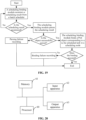
- the scheduling binding module of the Kubernetes API-Server binds the Pod object corresponding to each task in the CRD resource object corresponding to the to-be-scheduled job to its corresponding scheduling node, as shown in FIG. 19 .
- This operation may include the following.
- FIG. 20 is a structural diagram of an electronic device according to an embodiment of the present application.
- the electronic device includes a processor 60, a memory 61, an input apparatus 62, and an output apparatus 63. At least one processor 60 may be included in the electronic device.
- One processor 60 is shown as an example in FIG. 20 .
- the processor 60, the memory 61, the input apparatus 62, and the output apparatus 63 in the electronic device may be connected via a bus or in other manners. The connection via a bus is shown as an example in FIG. 20 .
- the memory 61 may be configured to store software programs, computer-executable programs, and modules, for example, modules (a task classification module 501, a cluster parameter module 502, and a scheduling setting module 503) corresponding to a container scheduling apparatus in an embodiment of the present application.
- the processor 60 executes software programs, instructions, and modules stored in the memory 61 to perform function applications and data processing of the electronic device, that is, to perform the preceding container scheduling method.
- the memory 61 may mainly include a program storage region and a data storage region.
- the program storage region may store an operating system and an application program required by at least one function.
- the data storage region may store data created according to the use of the electronic device.
- the memory 61 may include a high-speed random-access memory and may also include a nonvolatile memory, such as at least one magnetic disk memory, a flash memory, or another nonvolatile solid-state memory.
- the memory 61 may further include memories remotely disposed relative to the processor 60. These remote memories may be connected to the electronic device via a network. Examples of the preceding network include, but are not limited to, the Internet, an intranet, a local area network, a mobile communication network, and a combination thereof.
- the input apparatus 62 may be configured to receive inputted digital or character information and generate key signal input related to user settings and function control of the electronic device.
- the output apparatus 63 may include a display device such as a display screen.
- An embodiment of the present application provides a storage medium including computer-executable instructions.
- a container scheduling method is performed. The method includes the following operations.
- Task containers corresponding to a service job are classified into at least one customized description resource object according to task types of the task containers.
- An adaptability and a capacity of each cluster node to each of the task containers in the at least one customized description resource object are determined.
- a scheduling relationship between the cluster node and the task containers is configured according to the adaptability and the capacity.
- the present application may be implemented by software and necessary general-purpose hardware or may be implemented by hardware. Based on this understanding, the technical solutions of the present application substantially, or the part contributing to the related art, may be embodied in the form of a software product.
- the computer software product may be stored in a computer-readable storage medium such as a floppy disk, a read-only memory (ROM), a random-access memory (RAM), a flash memory, a hard disk, or an optical disk of a computer and includes several instructions for causing a computer device (which may be a personal computer, a server, or a network device) to perform the methods in the embodiments of the present application.
- the division of the preceding function modules/units may not correspond to the division of physical components.
- one physical component may have multiple functions, or one function or operation may be performed jointly by multiple physical components.
- Some or all physical components may be implemented as software executed by a processor such as a CPU, a digital signal processor, or a microprocessor, may be implemented as hardware, or may be implemented as integrated circuits such as application-specific integrated circuits.
- Such software may be distributed on computer-readable media.
- the computer-readable media may include computer storage media (or non-transitory media) and communication media (or transitory media).
- the term computer storage media includes volatile and nonvolatile media as well as removable and non-removable media implemented in any method or technology for storing information (such as computer-readable instructions, data structures, program modules, or other data).
- the computer storage media include, but are not limited to, a RAM, a ROM, an electrically erasable programmable read-only memory (EEPROM), a flash memory, or other memory technologies, a compact disc read-only memory (CD-ROM), a digital versatile disc (DVD), or other optical disk storages, a magnetic cassette, a magnetic tape, a magnetic disk, or other magnetic storage devices, or any other medium that can be used for storing desired information and can be accessed by a computer.
- the communication media generally include computer-readable instructions, data structures, program modules, or other data in carriers or in modulated data signals transported in other transport mechanisms and may include any information delivery medium.
Landscapes
- Engineering & Computer Science (AREA)
- Software Systems (AREA)
- Theoretical Computer Science (AREA)
- Physics & Mathematics (AREA)
- General Engineering & Computer Science (AREA)
- General Physics & Mathematics (AREA)
- Management, Administration, Business Operations System, And Electronic Commerce (AREA)
Applications Claiming Priority (2)
| Application Number | Priority Date | Filing Date | Title |
|---|---|---|---|
| CN202210399975.0A CN114840304B (zh) | 2022-04-15 | 2022-04-15 | 一种容器调度方法、电子设备和存储介质 |
| PCT/CN2023/087625 WO2023198061A1 (zh) | 2022-04-15 | 2023-04-11 | 一种容器调度方法、电子设备和存储介质 |
Publications (2)
| Publication Number | Publication Date |
|---|---|
| EP4509985A1 true EP4509985A1 (de) | 2025-02-19 |
| EP4509985A4 EP4509985A4 (de) | 2026-04-08 |
Family
ID=82566535
Family Applications (1)
| Application Number | Title | Priority Date | Filing Date |
|---|---|---|---|
| EP23787704.8A Pending EP4509985A4 (de) | 2022-04-15 | 2023-04-11 | Behälterplanungsverfahren, elektronische vorrichtung und speichermedium |
Country Status (4)
| Country | Link |
|---|---|
| US (1) | US20250238261A1 (de) |
| EP (1) | EP4509985A4 (de) |
| CN (1) | CN114840304B (de) |
| WO (1) | WO2023198061A1 (de) |
Families Citing this family (14)
| Publication number | Priority date | Publication date | Assignee | Title |
|---|---|---|---|---|
| CN114840304B (zh) * | 2022-04-15 | 2023-03-21 | 中兴通讯股份有限公司 | 一种容器调度方法、电子设备和存储介质 |
| CN116225678A (zh) * | 2022-12-01 | 2023-06-06 | 深圳前海环融联易信息科技服务有限公司 | 一种资源部署方法、装置、存储介质及电子设备 |
| US20240403143A1 (en) * | 2023-06-05 | 2024-12-05 | International Business Machines Corporation | System and method to dynamically add nodes to a container management system cluster for ai workloads |
| CN116501947B (zh) * | 2023-06-21 | 2023-10-27 | 中国传媒大学 | 语义搜索云平台的构建方法、系统及设备和存储介质 |
| CN117170811B (zh) * | 2023-09-07 | 2024-09-13 | 中国人民解放军国防科技大学 | 一种基于volcano的节点分组作业调度方法及系统 |
| CN117240773B (zh) * | 2023-11-15 | 2024-02-02 | 华北电力大学 | 一种电力通信网节点编排方法、装置、设备及介质 |
| CN117435324B (zh) * | 2023-11-28 | 2024-05-28 | 江苏天好富兴数据技术有限公司 | 基于容器化的任务调度方法 |
| CN118860587B (zh) * | 2024-04-26 | 2025-05-13 | 腾讯科技(深圳)有限公司 | 任务处理的方法、装置、电子设备、存储介质及程序产品 |
| CN118093209B (zh) * | 2024-04-26 | 2024-07-30 | 银河麒麟软件(长沙)有限公司 | 在离线混部动态调整应用优先级配置方法及装置 |
| CN118672746B (zh) * | 2024-06-04 | 2025-05-30 | 南威软件股份有限公司 | 一种资源与任务适配的调度方法、装置、设备及介质 |
| CN118276792A (zh) * | 2024-06-04 | 2024-07-02 | 山东未来网络研究院(紫金山实验室工业互联网创新应用基地) | 一种Kubernetes卷资源自动清理方法及系统 |
| CN118349336B (zh) * | 2024-06-18 | 2024-10-18 | 济南浪潮数据技术有限公司 | 云计算平台中任务处理的方法、装置、设备、介质及产品 |
| CN118660055B (zh) * | 2024-08-19 | 2024-12-17 | 江苏博云科技股份有限公司 | 基于计算业务预分析的gpu节点调度方法、系统及存储介质 |
| CN118885302B (zh) * | 2024-09-27 | 2025-03-07 | 济南浪潮数据技术有限公司 | 集群系统的负载均衡方法、装置、设备、存储介质及产品 |
Family Cites Families (13)
| Publication number | Priority date | Publication date | Assignee | Title |
|---|---|---|---|---|
| US9015724B2 (en) * | 2009-09-23 | 2015-04-21 | International Business Machines Corporation | Job dispatching with scheduler record updates containing characteristics combinations of job characteristics |
| US8869164B2 (en) * | 2010-09-02 | 2014-10-21 | International Business Machines Corporation | Scheduling a parallel job in a system of virtual containers |
| CN106325998B (zh) * | 2015-06-30 | 2020-08-25 | 华为技术有限公司 | 一种基于云计算的应用部署的方法和装置 |
| US10783046B2 (en) * | 2016-11-22 | 2020-09-22 | Nutanix, Inc. | Executing resource management operations in distributed computing systems |
| US11243818B2 (en) * | 2017-05-04 | 2022-02-08 | Salesforce.Com, Inc. | Systems, methods, and apparatuses for implementing a scheduler and workload manager that identifies and optimizes horizontally scalable workloads |
| CN108519911A (zh) * | 2018-03-23 | 2018-09-11 | 上饶市中科院云计算中心大数据研究院 | 一种基于容器的集群管理系统中资源的调度方法和装置 |
| CN111538586A (zh) * | 2020-01-23 | 2020-08-14 | 中国银联股份有限公司 | 集群gpu资源管理调度系统、方法以及计算机可读存储介质 |
| CN111522639B (zh) * | 2020-04-16 | 2022-11-01 | 南京邮电大学 | Kubernetes集群架构系统下多维资源调度方法 |
| CN111858069B (zh) * | 2020-08-03 | 2023-06-30 | 网易(杭州)网络有限公司 | 集群资源调度的方法、装置及电子设备 |
| CN113204428B (zh) * | 2021-05-28 | 2023-01-20 | 北京市商汤科技开发有限公司 | 资源调度方法、装置、电子设备以及计算机可读存储介质 |
| CN113342477B (zh) * | 2021-07-08 | 2024-05-10 | 河南星环众志信息科技有限公司 | 一种容器组部署方法、装置、设备及存储介质 |
| CN114035941A (zh) * | 2021-10-18 | 2022-02-11 | 阿里巴巴(中国)有限公司 | 资源调度系统、方法以及计算设备 |
| CN114840304B (zh) * | 2022-04-15 | 2023-03-21 | 中兴通讯股份有限公司 | 一种容器调度方法、电子设备和存储介质 |
-
2022
- 2022-04-15 CN CN202210399975.0A patent/CN114840304B/zh active Active
-
2023
- 2023-04-11 US US18/857,122 patent/US20250238261A1/en active Pending
- 2023-04-11 EP EP23787704.8A patent/EP4509985A4/de active Pending
- 2023-04-11 WO PCT/CN2023/087625 patent/WO2023198061A1/zh not_active Ceased
Also Published As
| Publication number | Publication date |
|---|---|
| CN114840304B (zh) | 2023-03-21 |
| EP4509985A4 (de) | 2026-04-08 |
| CN114840304A (zh) | 2022-08-02 |
| US20250238261A1 (en) | 2025-07-24 |
| WO2023198061A1 (zh) | 2023-10-19 |
Similar Documents
| Publication | Publication Date | Title |
|---|---|---|
| US20250238261A1 (en) | Container scheduling method, electronic device, and storage medium | |
| CN111522639B (zh) | Kubernetes集群架构系统下多维资源调度方法 | |
| CN114968566B (zh) | 一种面向共享式gpu集群下的容器调度方法及装置 | |
| US8434085B2 (en) | Scalable scheduling of tasks in heterogeneous systems | |
| CN105892996A (zh) | 一种批量数据处理的流水线作业方法及装置 | |
| CN106020941A (zh) | 选择资源分配策略和解决资源冲突 | |
| CN112698947B (zh) | 一种基于异构应用平台的gpu资源弹性调度方法 | |
| CN114995971B (zh) | 实现kubernetes中pod批量调度方法及系统 | |
| CN111767145A (zh) | 容器调度系统、方法、装置和设备 | |
| CN114968601A (zh) | 一种按比例预留资源的ai训练作业的调度方法和调度系统 | |
| CN117472557A (zh) | 基于云平台的资源调度方法、装置和计算机可读存储介质 | |
| US20230418667A1 (en) | Computing device for handling tasks in a multi-core processor, and method for operating computing device | |
| CN115391023A (zh) | 多任务容器集群的计算资源优化方法及装置 | |
| CN120371492A (zh) | 图形处理器的资源管理方法、装置、存储介质和计算机设备 | |
| US12541396B2 (en) | Resource allocation method and system after system restart and related component | |
| CN113626173B (zh) | 调度方法、装置及存储介质 | |
| CN114489970A (zh) | Kubernetes中利用Coscheduling插件实现队列排序的方法及系统 | |
| CN120104287A (zh) | 基于Kubernetes的调度方法、装置及介质 | |
| CN115686802B (zh) | 云计算集群调度系统 | |
| CN115665157A (zh) | 一种基于应用资源类型的均衡调度方法和系统 | |
| CN118034878A (zh) | Pod的调度方法和装置、存储介质及电子设备 | |
| CN116126466A (zh) | 基于Kubernetes的资源调度方法、装置、电子设备及介质 | |
| CN107193650A (zh) | 一种在分布式集群中调度显卡资源的方法和装置 | |
| CN113608798A (zh) | 一种对非java的应用、对云原生的应用使用资源进行配置的方法及其装置 | |
| CN118193177B (zh) | 一种任务的调度方法、系统、程序产品、设备和介质 |
Legal Events
| Date | Code | Title | Description |
|---|---|---|---|
| STAA | Information on the status of an ep patent application or granted ep patent |
Free format text: STATUS: THE INTERNATIONAL PUBLICATION HAS BEEN MADE |
|
| PUAI | Public reference made under article 153(3) epc to a published international application that has entered the european phase |
Free format text: ORIGINAL CODE: 0009012 |
|
| STAA | Information on the status of an ep patent application or granted ep patent |
Free format text: STATUS: REQUEST FOR EXAMINATION WAS MADE |
|
| 17P | Request for examination filed |
Effective date: 20241115 |
|
| AK | Designated contracting states |
Kind code of ref document: A1 Designated state(s): AL AT BE BG CH CY CZ DE DK EE ES FI FR GB GR HR HU IE IS IT LI LT LU LV MC ME MK MT NL NO PL PT RO RS SE SI SK SM TR |
|
| DAV | Request for validation of the european patent (deleted) | ||
| DAX | Request for extension of the european patent (deleted) | ||
| A4 | Supplementary search report drawn up and despatched |
Effective date: 20260311 |
|
| RIC1 | Information provided on ipc code assigned before grant |
Ipc: G06F 9/455 20180101AFI20260305BHEP Ipc: G06F 9/48 20060101ALI20260305BHEP Ipc: G06F 9/50 20060101ALI20260305BHEP |