EP4510510A1 - Vernetzungsverfahren, vernetzungsvorrichtung und elektronische vorrichtung und speichermedium - Google Patents
Vernetzungsverfahren, vernetzungsvorrichtung und elektronische vorrichtung und speichermedium Download PDFInfo
- Publication number
- EP4510510A1 EP4510510A1 EP23802850.0A EP23802850A EP4510510A1 EP 4510510 A1 EP4510510 A1 EP 4510510A1 EP 23802850 A EP23802850 A EP 23802850A EP 4510510 A1 EP4510510 A1 EP 4510510A1
- Authority
- EP
- European Patent Office
- Prior art keywords
- networking
- requirement
- model
- layer
- score
- Prior art date
- Legal status (The legal status is an assumption and is not a legal conclusion. Google has not performed a legal analysis and makes no representation as to the accuracy of the status listed.)
- Pending
Links
Images




Classifications
-
- H—ELECTRICITY
- H04—ELECTRIC COMMUNICATION TECHNIQUE
- H04L—TRANSMISSION OF DIGITAL INFORMATION, e.g. TELEGRAPHIC COMMUNICATION
- H04L12/00—Data switching networks
- H04L12/02—Details
- H04L12/12—Arrangements for remote connection or disconnection of substations or of equipment thereof
-
- H—ELECTRICITY
- H04—ELECTRIC COMMUNICATION TECHNIQUE
- H04W—WIRELESS COMMUNICATION NETWORKS
- H04W24/00—Supervisory, monitoring or testing arrangements
- H04W24/02—Arrangements for optimising operational condition
-
- G—PHYSICS
- G06—COMPUTING OR CALCULATING; COUNTING
- G06Q—INFORMATION AND COMMUNICATION TECHNOLOGY [ICT] SPECIALLY ADAPTED FOR ADMINISTRATIVE, COMMERCIAL, FINANCIAL, MANAGERIAL OR SUPERVISORY PURPOSES; SYSTEMS OR METHODS SPECIALLY ADAPTED FOR ADMINISTRATIVE, COMMERCIAL, FINANCIAL, MANAGERIAL OR SUPERVISORY PURPOSES, NOT OTHERWISE PROVIDED FOR
- G06Q10/00—Administration; Management
- G06Q10/06—Resources, workflows, human or project management; Enterprise or organisation planning; Enterprise or organisation modelling
- G06Q10/063—Operations research, analysis or management
- G06Q10/0631—Resource planning, allocation, distributing or scheduling for enterprises or organisations
- G06Q10/06315—Needs-based resource requirements planning or analysis
-
- G—PHYSICS
- G06—COMPUTING OR CALCULATING; COUNTING
- G06Q—INFORMATION AND COMMUNICATION TECHNOLOGY [ICT] SPECIALLY ADAPTED FOR ADMINISTRATIVE, COMMERCIAL, FINANCIAL, MANAGERIAL OR SUPERVISORY PURPOSES; SYSTEMS OR METHODS SPECIALLY ADAPTED FOR ADMINISTRATIVE, COMMERCIAL, FINANCIAL, MANAGERIAL OR SUPERVISORY PURPOSES, NOT OTHERWISE PROVIDED FOR
- G06Q10/00—Administration; Management
- G06Q10/06—Resources, workflows, human or project management; Enterprise or organisation planning; Enterprise or organisation modelling
- G06Q10/063—Operations research, analysis or management
- G06Q10/0639—Performance analysis of employees; Performance analysis of enterprise or organisation operations
- G06Q10/06393—Score-carding, benchmarking or key performance indicator [KPI] analysis
-
- G—PHYSICS
- G06—COMPUTING OR CALCULATING; COUNTING
- G06Q—INFORMATION AND COMMUNICATION TECHNOLOGY [ICT] SPECIALLY ADAPTED FOR ADMINISTRATIVE, COMMERCIAL, FINANCIAL, MANAGERIAL OR SUPERVISORY PURPOSES; SYSTEMS OR METHODS SPECIALLY ADAPTED FOR ADMINISTRATIVE, COMMERCIAL, FINANCIAL, MANAGERIAL OR SUPERVISORY PURPOSES, NOT OTHERWISE PROVIDED FOR
- G06Q30/00—Commerce
- G06Q30/06—Buying, selling or leasing transactions
- G06Q30/0601—Electronic shopping [e-shopping]
- G06Q30/0623—Electronic shopping [e-shopping] by investigating goods or services
- G06Q30/0625—Electronic shopping [e-shopping] by investigating goods or services by formulating product or service queries, e.g. using keywords or predefined options
- G06Q30/0627—Electronic shopping [e-shopping] by investigating goods or services by formulating product or service queries, e.g. using keywords or predefined options by specifying product or service characteristics, e.g. product dimensions
-
- G—PHYSICS
- G06—COMPUTING OR CALCULATING; COUNTING
- G06Q—INFORMATION AND COMMUNICATION TECHNOLOGY [ICT] SPECIALLY ADAPTED FOR ADMINISTRATIVE, COMMERCIAL, FINANCIAL, MANAGERIAL OR SUPERVISORY PURPOSES; SYSTEMS OR METHODS SPECIALLY ADAPTED FOR ADMINISTRATIVE, COMMERCIAL, FINANCIAL, MANAGERIAL OR SUPERVISORY PURPOSES, NOT OTHERWISE PROVIDED FOR
- G06Q30/00—Commerce
- G06Q30/06—Buying, selling or leasing transactions
- G06Q30/0601—Electronic shopping [e-shopping]
- G06Q30/0631—Recommending goods or services
-
- H—ELECTRICITY
- H04—ELECTRIC COMMUNICATION TECHNIQUE
- H04L—TRANSMISSION OF DIGITAL INFORMATION, e.g. TELEGRAPHIC COMMUNICATION
- H04L41/00—Arrangements for maintenance, administration or management of data switching networks, e.g. of packet switching networks
- H04L41/08—Configuration management of networks or network elements
- H04L41/0803—Configuration setting
- H04L41/0806—Configuration setting for initial configuration or provisioning, e.g. plug-and-play
-
- H—ELECTRICITY
- H04—ELECTRIC COMMUNICATION TECHNIQUE
- H04L—TRANSMISSION OF DIGITAL INFORMATION, e.g. TELEGRAPHIC COMMUNICATION
- H04L41/00—Arrangements for maintenance, administration or management of data switching networks, e.g. of packet switching networks
- H04L41/12—Discovery or management of network topologies
-
- H—ELECTRICITY
- H04—ELECTRIC COMMUNICATION TECHNIQUE
- H04L—TRANSMISSION OF DIGITAL INFORMATION, e.g. TELEGRAPHIC COMMUNICATION
- H04L41/00—Arrangements for maintenance, administration or management of data switching networks, e.g. of packet switching networks
- H04L41/22—Arrangements for maintenance, administration or management of data switching networks, e.g. of packet switching networks comprising specially adapted graphical user interfaces [GUI]
-
- H—ELECTRICITY
- H04—ELECTRIC COMMUNICATION TECHNIQUE
- H04L—TRANSMISSION OF DIGITAL INFORMATION, e.g. TELEGRAPHIC COMMUNICATION
- H04L41/00—Arrangements for maintenance, administration or management of data switching networks, e.g. of packet switching networks
- H04L41/04—Network management architectures or arrangements
- H04L41/044—Network management architectures or arrangements comprising hierarchical management structures
-
- H—ELECTRICITY
- H04—ELECTRIC COMMUNICATION TECHNIQUE
- H04L—TRANSMISSION OF DIGITAL INFORMATION, e.g. TELEGRAPHIC COMMUNICATION
- H04L41/00—Arrangements for maintenance, administration or management of data switching networks, e.g. of packet switching networks
- H04L41/14—Network analysis or design
- H04L41/145—Network analysis or design involving simulating, designing, planning or modelling of a network
Definitions
- the present invention relates to the field of network communication technologies, and in particular, to a networking method, a networking apparatus, an electronic device, and a storage medium.
- Network deployment usually includes solution design, material purchase, networking setup, configuration deployment, and other steps.
- the solution design phase includes service planning, wireless network planning, device selection, networking topology, configuration design, design document writing, and other work to be carried out.
- the entire phase of network planning is complex, and each piece of work is labor-consuming. Consequently, the network deployment has low efficiency and high labor costs.
- This application provides a networking method, a networking apparatus, an electronic device, and a storage medium, so that a networking solution may be generated depending on a networking requirement, to improve efficiency of network deployment.
- a first aspect of this application provides a networking method.
- the method may be applied to an electronic device.
- the electronic device obtains a networking requirement.
- the networking requirement includes a scene requirement, a coverage requirement, a device capability requirement, and a matching requirement between upstream and downstream devices.
- the electronic device obtains a networking structure based on the scene requirement, determines, based on the coverage requirement, the device capability requirement, and the matching requirement, a model of a device at each layer in the networking structure and a quantity corresponding to the model, and connects devices at two adjacent layers in the networking structure to generate a networking solution.
- the electronic device may automatically generate the networking solution based on the networking requirement. In this way, less manual intervention is involved in device selection networking topology, and the like in network deployment, so that efficiency of the device selection and networking topology generation is improved, to improve efficiency of the network deployment.
- the networking requirement further includes the matching requirement between the upstream and downstream devices. This helps avoid a problem such as capability mismatching between the upstream and downstream devices that are connected in the networking solution, and can improve a capability of collaboration between the upstream and downstream devices, to help improve overall performance of the networking solution.
- the device capability requirement includes a first device capability subrequirement and a second device capability subrequirement.
- the first device capability subrequirement indicates a capability requirement of a device at a first layer in the networking structure.
- the second device capability subrequirement indicates a capability requirement of a device at another layer other than the device at the first layer in the networking structure.
- the electronic device determines, based on the coverage requirement and the first device capability subrequirement, a model of the device at the first layer and a quantity of devices corresponding to the model of the device at the first layer, and determines, based on the model of the device at the first layer, the quantity of devices corresponding to the model of the device at the first layer, the second device capability subrequirement, and the matching requirement, a model of the device at the another layer and a quantity of devices corresponding to the model of the device at the another layer.
- the electronic device first determines, based on the coverage requirement and the first device capability subrequirement of the device at the first layer, a recommended model of the device at the first layer and a quantity of devices corresponding to each recommended model. Then, the electronic device determines, based on each model of a downstream device (starting from the device at the first layer) and a quantity corresponding to each model, a second device capability subrequirement of an upstream device, and a matching requirement between the upstream device and the downstream device, a recommended model of the upstream device and a quantity of devices corresponding to each recommended model. In this way, a device that is at each layer and that is determined in a manner of layer-by-layer matching has a higher matching degree between upstream and downstream devices. This helps avoid a problem such as capability mismatching between the upstream and downstream devices.
- the electronic device determines a quantity of devices at the first layer based on the coverage requirement, and determines, based on the quantity of devices at the first layer and the first device capability subrequirement of the device at the first layer, one or more models of the device at the first layer and a quantity of devices corresponding to each of the one or more models of the device at the first layer.
- the coverage requirement determines a requirement of a user on the quantity of devices at the first layer.
- One or more recommended models of the device at the first layer and a quantity of devices corresponding to each recommended model may be determined based on the requirement of the user on the quantity of devices at the first layer and the first device capability subrequirement of the device at the first layer, so that a recommended model of the device at the another layer and a quantity of devices corresponding to the recommended model are subsequently determined based on the one or more recommended models of the device at the first layer and the quantity of devices corresponding to each recommended model.
- the electronic device obtains user feedback information and popularity information of a device of each model in a set of available devices, and determines, based on the coverage requirement, the device capability requirement, the matching requirement, the user feedback information, and the popularity information, the model of the device at each layer in the networking structure and the quantity corresponding to the model.
- the electronic device when determining the model of the device at each layer and the quantity corresponding to the model, the electronic device further considers user feedback information and popularity information, that are of each model of the device at each layer, in addition to the networking requirement.
- the user feedback information can represent a preference degree of a historical user for each model of the device at each layer.
- the popularity information can represent a registration status and/or a usage status of each model of the device at each layer. This helps avoid recommending a model of device that is out of stock, unpopular, or out of production to the user. Therefore, the model that is of the device at each layer and that is determined based on the networking requirement, the user feedback information, and the popularity information may be a popular device. This better meets a user requirement.
- the electronic device determines, based on the quantity of devices at the first layer, the first device capability subrequirement, the user feedback information, and the popularity information, the one or more models of the device at the first layer and the quantity of devices corresponding to each of the one or more models of the device at the first layer, and determines, based on the model of the device at the first layer, the quantity of devices corresponding to the model of the device at the first layer, the second device capability subrequirement, the matching requirement, the user feedback information, and the popularity information, one or more models of the device at the another layer and a quantity of devices corresponding to the one or more models of the device at the another layer.
- the electronic device when recommending the device at each layer, in addition to a matching requirement between upstream and downstream devices, the electronic device further considers user feedback information and popularity information of the device at the layer, so that a device model that is popular and that better meets the user requirement may be recommended.
- the electronic device obtains a user feedback score of a historical user for a device of each model in each historical networking solution. For a device of any model in the plurality of historical networking solutions, the electronic device obtains user feedback information of the device of the any model based on user feedback scores of the device of the any model in different historical networking solutions. All devices of models in the plurality of historical networking solutions include the devices of models in the set of available devices.
- a user feedback score of each historical networking solution is used as the user feedback score of the networking device of each model in each historical networking solution.
- the user feedback information of the device of the any model is obtained through calculation based on the user feedback scores of the device of the any model in the different historical networking solutions. In this way, user feedback information of the device of each model in the set of available devices may be obtained, so that a recommended model of the device at each layer and a quantity corresponding to each model are subsequently determined based on the user feedback information of the device of each model in the set of available devices.
- the electronic device filters, based on a device registration time point, a plurality of models registered by the any device within a preset time period.
- the electronic device determines an addition frequency of each of the plurality of models based on a registration quantity of each of the plurality of models within the preset time period.
- the electronic device determines a usage frequency of each of the plurality of models based on a quantity of online times of each of the plurality of models within the preset time period.
- the electronic device obtains the popularity information of each of the plurality of models based on the addition frequency and the usage frequency.
- the electronic device may sort all models based on a registration quantity of each model registered by the any device within the preset time period, to obtain ranking of registration quantities of all the models.
- a score of each model is determined based on the ranking of the registration quantities, and the score is used as the addition frequency of each model.
- all models may be sorted based on a quantity of online times of each model registered by the any device within the preset time period, to obtain ranking of quantities of online times of all the models.
- Another score of each model is obtained based on the ranking of the quantities of online times, and the score is used as the usage frequency of each model.
- the popularity information of each model is determined based on the usage frequency and the addition frequency, so that the recommended model of the device at each layer and the quantity corresponding to each model are subsequently determined based on the popularity information of each model of the any device.
- the networking requirement further includes a verification requirement.
- the electronic device further evaluates the networking solution based on the verification requirement, and displays an evaluation result.
- the electronic device may evaluate (or verify), based on the verification requirement, a generated networking solution, and output the evaluation result.
- the user may determine, based on the evaluation result, whether to adopt the networking solution or determine a requirement to be adjusted.
- the verification requirement includes a verification subrequirement for model requirement matching and a verification subrequirement for connection relationship matching.
- the evaluation result includes a networking score of the networking solution.
- the electronic device evaluates model requirement matching of each device in the networking solution based on the verification subrequirement for model requirement matching, to obtain a model requirement matching score of the networking solution, evaluates a connection relationship matching between devices in the networking solution based on the verification subrequirement for connection relationship matching, to obtain a connection relationship matching score of the networking solution, and obtains the networking score based on the model requirement matching score of the networking solution and the connection relationship matching score of the networking solution.
- evaluation and verification are performed on the networking solution from the model requirement matching, the connection relationship matching, and other aspects.
- the networking score is obtained through calculation based on the model requirement matching score and the connection relationship matching score.
- the networking score can reflect a matching degree between the networking solution and a user requirement and the overall performance. Therefore, the networking score is displayed to the user, so that the user may determine, based on the networking score, whether to adopt the networking solution.
- the evaluation result further includes a model requirement matching score of a device of each model in the networking solution and a connection relationship matching score corresponding to a connection line between every two devices in the networking solution.
- a level may be set for the verification subrequirement for model requirement matching of the device of each model and the verification subrequirement for connection relationship matching of the every two devices.
- the level may represent importance of the verification subrequirement for model requirement matching of the device of each model and the verification subrequirement for connection relationship matching of the every two devices.
- the electronic device may display, based on the level, a model requirement matching score corresponding to each verification subrequirement for model requirement matching and a connection relationship matching score corresponding to each verification subrequirement for connection relationship matching, so that the user intuitively learns that the networking solution meets a poor verification subrequirement, and this triggers the user to adjust the networking requirement of the user.
- the model requirement matching score of the device of each model and/or the connection relationship matching score corresponding to the connection line between the every two devices include/includes a scoring item whose score is less than a preset score.
- the electronic device receives a new networking requirement, and regenerates a networking solution based on the new networking requirement.
- the new networking requirement means information about a networking requirement re-input by the user based on the scoring item whose score is less than the preset score.
- the scoring item whose score is less than the preset score indicates that the networking solution meets a poor verification subrequirement, but an original intention of the user may be that the networking solution is needed to meet the verification subrequirement well. Therefore, displaying the scoring item whose score is less than the preset score may trigger the user to adjust requirement information previously input by the user, so that the electronic device generates a new networking solution based on the re-input networking requirement of the user.
- the electronic device determines a plurality of target historical networking solutions from the plurality of historical networking solutions.
- Application scenes of the plurality of target historical networking solutions are the same as an application scene of the networking solution.
- User feedback scores of a device of each model in the plurality of target historical networking solutions are determined based on user feedback scores of a historical user on the plurality of target historical networking solutions.
- Statistics of the user feedback scores of the device of each model in the plurality of target historical networking solutions are obtained.
- the device of each model in the plurality of target historical networking solutions includes the device of each model in the networking solution.
- a user satisfaction score of the device of each model in the networking solution is determined based on the statistics.
- a user satisfaction score of the networking solution is obtained and displayed based on the user satisfaction score of the device of each model in the networking solution.
- the user satisfaction score of the networking solution may be used as another reference indicator in addition to the networking score. This helps the user determine whether to adopt the networking solution.
- the electronic device obtains a candidate networking score of the networking solution based on the model requirement matching score of the networking solution and the connection relationship matching score of the networking solution, and obtains statistics of a plurality of networking scores of the plurality of target historical networking solutions.
- the electronic device determines the networking score based on the candidate networking score and the statistics according to a preset scoring rule.
- the candidate networking score is compared with the statistics, to reflect a performance level of the networking solution in the plurality of target historical networking solutions in a same application scene.
- the electronic device may determine the networking score of the networking solution based on the performance level according to the preset scoring rule. Therefore, the networking score can intuitively reflect the performance level of the networking solution in historical networking solutions in a same industry/application scene.
- the electronic device generates a unique identifier of the networking solution and an adoption selection of the user on the networking solution, obtains the user feedback score of the user on the networking solution, and associates and stores the unique identifier, the adoption selection of the user on the networking solution, and the user feedback score.
- the adoption selection represents whether the user adopts the networking solution.
- the unique identifier, the user feedback score of the user on the networking solution, and the adoption identifier are associated and stored, to facilitate model recommendation and networking generation that are performed by subsequently using the user feedback score and the adoption identifier of the networking solution.
- a second aspect of this application provides a networking apparatus.
- the apparatus has a function of implementing a behavior in the method embodiment in the first aspect.
- the function may be implemented by hardware, or may be implemented by hardware by executing corresponding software.
- the hardware or the software includes one or more modules corresponding to the foregoing function.
- the apparatus includes an obtaining unit and a processing unit.
- the obtaining unit is configured to obtain a networking requirement, where the networking requirement includes a scene requirement, a coverage requirement, a device capability requirement, and a matching requirement between upstream and downstream devices.
- the processing unit is configured to obtain a networking structure based on the scene requirement.
- the processing unit is further configured to determine, based on the coverage requirement, the device capability requirement, and the matching requirement, a model of a device at each layer in the networking structure and a quantity corresponding to the model.
- the processing unit is further configured to connect devices at two adjacent layers in the networking structure, to generate a networking solution.
- the device capability requirement includes a first device capability subrequirement and a second device capability subrequirement.
- the first device capability subrequirement indicates a capability requirement of a device at the first layer in the networking structure.
- the second device capability subrequirement indicates a capability requirement of a device at another layer other than the device at the first layer in the networking structure.
- the processing unit is specifically configured to determine, based on the coverage requirement and the first device capability subrequirement, a model of the device at the first layer and a quantity of devices corresponding to the model of the device at the first layer; and determine, based on the model of the device at the first layer, the quantity of devices corresponding to the model of the device at the first layer, the second device capability subrequirement, and the matching requirement, a model of the device at the another layer and a quantity of devices corresponding to the model of the device at the another layer.
- the processing unit is specifically configured to determine a quantity of the devices at the first layer based on the coverage requirement; and determine, based on the quantity of the devices at the first layer and the first device capability subrequirement of the device at the first layer, one or more models of the device at the first layer and a quantity of devices corresponding to each of the one or more models of the device at the first layer.
- the processing unit is specifically configured to obtain user feedback information and popularity information of a device of each model in a set of available devices; and determine, based on the coverage requirement, the device capability requirement, the matching requirement, the user feedback information, and the popularity information, a model of a device at each layer in the networking structure and a quantity corresponding to the model.
- the processing unit is specifically configured to: determine, based on the quantity of devices at the first layer, the first device capability subrequirement, the user feedback information, and the popularity information, the one or more models of the device at the first layer and the quantity of devices corresponding to each of the one or more models of the device at the first layer; and determine, based on the model of the device at the first layer, the quantity of devices corresponding to the model of the device at the first layer, the second device capability subrequirement, the matching requirement, the user feedback information, and the popularity information, one or more models of the device at the another layer and a quantity of devices corresponding to the one or more models of the device at the another layer.
- the processing unit is specifically configured to: for each of a plurality of historical networking solutions, obtain a user feedback score of a historical user for a device of each model in each historical networking solution; and for a device of any model in the plurality of historical networking solutions, obtain user feedback information of the device of the any model based on a user feedback score of the device of the any model in different historical networking solutions.
- All devices of models in the plurality of historical networking solutions include the devices of models in the set of available devices.
- the processing unit is specifically configured to: for any device in the set of available devices, filter, based on a device registration time point, a plurality of models registered by the any device within a preset time period; determine an addition frequency of each of the plurality of models based on a registration quantity of each of the plurality of models within the preset time period; determine a usage frequency of each of the plurality of models based on a quantity of online times of each of the plurality of models within the preset time period; and obtain the popularity degree of each of the plurality of models based on the addition frequency and the usage frequency.
- the networking requirement further includes a verification requirement.
- the processing unit is further configured to evaluate the networking solution based on the verification requirement, and display an evaluation result.
- the verification requirement includes a verification subrequirement for model requirement matching and a verification subrequirement for connection relationship matching.
- the evaluation result includes a networking score of the networking solution.
- the processing unit is specifically configured to: evaluate model requirement matching of each device in the networking solution based on the verification subrequirement for model requirement matching, to obtain a model requirement matching score of the networking solution; evaluate a connection relationship matching between devices in the networking solution based on the verification subrequirement for connection relationship matching, to obtain a connection relationship matching score of the networking solution; and obtain the networking score based on the model requirement matching score of the networking solution and the connection relationship matching score of the networking solution.
- the evaluation result further includes the model requirement matching score of a device of each model in the networking solution and the connection relationship matching score corresponding to a connection line between every two devices in the networking solution.
- the model requirement matching score of the device of each model and/or the connection relationship matching score corresponding to the connection line between the every two devices include/includes a scoring item whose score is less than a preset score.
- the processing unit is further configured to receive a new networking requirement, and regenerate a networking solution based on the new networking requirement.
- the processing unit is further configured to: determine a plurality of target historical networking solutions from a plurality of historical networking solutions.
- Application scenes of the plurality of target historical networking solutions are the same as application scenes of the networking solutions; determine user feedback scores of a device of each model in the plurality of target historical networking solutions based on user feedback scores of a historical user on the plurality of target historical networking solutions; obtain statistics of the user feedback score of the device of each model in the plurality of target historical networking solutions.
- the device of each model in the plurality of target historical networking solutions includes a device of each model in the networking solution; determine a user satisfaction score of the device of each model in the networking solution based on the statistics; and obtain and display the user satisfaction score of the networking solution based on a user satisfaction score of the device of each model in the networking solution.
- the processing unit is specifically configured to: obtain a candidate networking score of the networking solution based on the model requirement matching score of the networking solution and the connection relationship matching score of the networking solution; obtain statistics of a plurality of networking scores of the plurality of target historical networking solutions; and determine a networking score according to a preset scoring rule based on the candidate networking score and the statistics.
- the processing unit is further configured to: generate a unique identifier of the networking solution and an adoption selection of a user of the networking solution; obtain a user feedback score of the user on the networking solution; and Associate the unique identifier, the adoption selection of the user of the networking solution with the user feedback score for storage.
- a third aspect of this application provides an electronic device, including a processor and a memory.
- the memory is configured to store a computer program.
- the processor is configured to execute a computer program stored in the memory, to enable the electronic device to perform the method according to any possible implementation of the first aspect.
- a fourth aspect of this application provides a computer-readable storage medium, including a program or instructions.
- the program or the instructions are run on a processor, the method according to any possible implementation of the first aspect is performed.
- a fifth aspect of this application provides a computer program product, including a computer program.
- the computer program When the computer program is run by an electronic device, the electronic device is enabled to perform the method in any possible implementation of the first aspect.
- the networking method may be performed by the electronic device.
- the electronic device may be a computer, a virtual machine, a server, a cloud device, or a mobile terminal.
- the electronic device obtains a networking requirement, and obtains a corresponding networking structure based on a scene requirement in the networking requirement.
- the scene requirement may be an application scene of a networking solution.
- the electronic device may determine a typical (or common) networking structure in the application scene based on the application scene.
- the electronic device determines, based on a coverage requirement, a device capability requirement, and a matching requirement between upstream and downstream devices in the networking requirement, a recommended model of a device at each layer in the networking structure and a quantity corresponding to each model, connects recommended devices at two adjacent layers to generate the networking solution, and recommends the networking solution to a user.
- the scene requirement, the coverage requirement, and the device capability requirement are usually input by the user.
- the matching requirement between the upstream and downstream devices may be input by the user, or may be preset.
- the electronic device automatically generates the networking solution based on the networking requirement. This reduces a labor input in network deployment and improves efficiency of the network deployment.
- the networking requirement further includes the matching requirement between the upstream and downstream devices. This helps avoid a problem such as capability mismatching between the upstream and downstream devices in a recommended networking solution. Upstream and downstream devices with a higher matching degree are connected to generate the networking solution, so that overall performance of the networking solution can be improved.
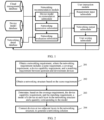
- FIG. 1 is a schematic diagram of a system architecture according to an embodiment of this application.
- the system architecture may include at least a user interaction module, a networking recommendation module, and a database.
- the user interaction module includes a requirement input submodule, a networking output submodule, and a user scoring submodule.
- the networking recommendation module includes a device model recommendation submodule, a networking generation submodule, and a networking evaluation submodule.
- the database includes a cloud management database, a device model database, and a networking detail database.
- the database may be deployed on cloud, and the user interaction module and the networking recommendation module may be deployed on a client such as an application, an applet, software (for example, software that provides a networking recommendation service), or a browser.
- the database, the user interaction module, and the networking recommendation module may all be deployed on cloud.
- a user may use the networking recommendation service via the application program, the applet, the software, and the browser.
- the requirement input submodule is configured to obtain a networking requirement.
- the requirement input submodule provides a man-machine interaction interface, and the user may input the networking requirement on the man-machine interaction interface.
- the networking requirement may include a scene requirement, a coverage requirement, a device capability requirement, and the like.
- the scene requirement may be a network application scene/industry, for example, a supermarket scene, a branch office scene, or a college and university scene.
- the coverage requirement may represent a requirement of a user on a quantity of network devices. For example, in the supermarket scene, the requirement of the user on the quantity of network devices depends on a total area, passenger flows, a quantity of terminals, and the like of a supermarket.
- a requirement of a user on the quantity of network devices depends on a quantity of employees, a total area of offices, offices, conference rooms, servers, and the like of an enterprise. For example, if the user requires five access points (access points, APs) in each office and conference room, a quantity of offices and a quantity of conference rooms determine a total quantity of APs required. For example, a quantity and types of servers determine a model of a switch and a quantity corresponding to each model.
- a requirement of a user on the quantity of network devices depends on a quantity of teachers and students, campus areas, common classrooms, terrace classrooms, laboratories, and the like.
- the device capability requirement may include quality (Quality) of a device and a function requirement of the device, for example, whether the device has a video surveillance function, whether the device needs an agile distributed wireless network communication technology (Wireless Fidelity, WiFi), whether the device has an internet of things (Internet of Things, IoT) function, and whether the device has a power over Ethernet (Power over Ethernet, PoE) capability.
- a requirement input by the user may further include a matching requirement between upstream and downstream devices.
- the matching requirement may include that a PoE power supply capability of the switch is greater than or equal to a PoE power supply requirement of the AP, a downlink port type of the switch and an uplink port type of the AP are both electrical ports, a downlink port speed of the switch matches an uplink port speed of the AP, a forwarding capability of the switch is greater than or equal to a forwarding capability of the AP, and the like.
- the matching requirement between the upstream and downstream devices may alternatively be preset, in other words, does not need to be input by the user.
- the device model recommendation submodule recommends a device model and a quantity of devices corresponding to each model based on the scene requirement, the coverage requirement, the device capability requirement, and the matching requirement between the upstream and downstream devices. Further, the device model recommendation submodule may further obtain popularity information of a device of each model based on device usage data and device registration data that are stored in the cloud management database. The device model recommendation submodule may further obtain user feedback information of a device of each model based on user feedback scores of a plurality of historical networking solutions stored in the networking details database.
- the device model recommendation submodule may recommend, based on the scene requirement, the coverage requirement, the device capability requirement, the matching requirement between the upstream and downstream devices, the popularity information of the device of each model, the user feedback information, and a detailed parameter of the device of each model stored in the device model database, a device model that best meets a user requirement and a quantity of devices corresponding to each model.
- the networking generation submodule is configured to connect devices, of models, that belong to an upstream and downstream relationship and whose models are recommended by the device model recommendation submodule, to generate a networking solution.
- the networking evaluation submodule is configured to perform evaluation and verification on the generated networking solution based on a verification requirement, to obtain a networking score of the networking solution.
- the verification requirement may be input by the user, or may be preset. This is not limited herein.
- the networking evaluation submodule may further perform comprehensive evaluation on the networking solution from a plurality of aspects such as model requirement matching and connection relationship matching. Further, the networking evaluation submodule may further obtain, based on the user feedback scores of the plurality of historical networking solutions, a user satisfaction score of the networking solution generated this time.
- the networking output submodule is configured to output the networking solution. For example, the networking output submodule displays the networking solution generated this time through the man-machine interaction interface.
- the networking output submodule is further configured to output the networking score of the networking solution. For example, the networking score of the networking solution is displayed on the man-machine interaction interface. The user may determine whether to adopt the networking solution based on the networking score. Further, the networking output submodule may further display the user satisfaction score of the networking solution to the user through the man-machine interaction interface. Further, the networking output submodule may further display each verification requirement and a score of each verification requirement to the user, and the user may intuitively learn, based on the score of each verification requirement, that the networking solution generated this time meets a poor requirement item.
- the user may adjust the requirement previously input, so that the device model recommendation submodule and the networking generation submodule regenerate a networking solution based on a new user requirement, to better match the requirement item of the high importance.
- the user scoring submodule is configured to record whether the user adopts the networking solution output by the networking output submodule, and a score (namely, a user feedback score) of the user on the networking solution. Whether the networking solution is adopted and the user score of the networking solution are stored in the networking detail database.
- the cloud management database is configured to store a basic parameter of a device, device online data, device usage data, device registration data, and the like.
- Table 1 shows an example of a data table in the cloud management database.
- Table 1 User ID Project Device role Model Device ID Registration time point Last online time point Wq2ycXE market FW USG6530E XX:XX:XX:XX:XX 2021-10-31 2021-11-31 09:00:00 09:00:00 5cN6WN market
- the basic parameter of the device in Table 1 includes the user identifier (identifier, ID), the project to which the device belongs, the device role (or type), the model, the device ID (for example, a physical address of the device), and the like.
- the device online data may be the last online time point of the device.
- the device registration data may be the registration time point of the device.
- the device role may be a firewall (Firewall, FW), an aggregation switch (Aggregation Switch, AGG), an access switch (Access Switch, ACC), or an AP.
- the device model database stores attribute information of the device of each model.
- Table 2 shows an example of an AP model data table in the device model database.
- Table 2 Model PoE power supply speed Whether agile distributed WiFi is supported Whether an IoT is supported Whether an AP is a plate AP Whether an industry/a scene is a retail industry/scene Whether an industry/a scene is an education industry/scene AirEngine 5760-22W 2.5G N N Y N N AirEngine 5760-51 5G N Y N Y Y Model Whether Required Whether it Quality an industry/a scene is an office industry/s cene minimum PoE power supply level is sold in China AirEngine 5760-22W N PoE+ Y High AirEngine 5760-51 Y PoE+ Y Low
- Attribute information of each model of the AP in Table 2 includes the device model, the PoE power supply speed (which may be obtained based on a quantity of ports that support a PoE power supply, is usually based on a quantity of uplink ports of the AP, and is in a unit of gigabyte (gigabyte, G)), whether the agile distributed WiFi is supported (where for example, N represents no, and Y represents yes), whether the IoT is supported, whether video surveillance is supported, whether the AP is the plate AP, whether the application industry/scene is the retail (retail) industry/scene, whether the application industry/scene is the education industry/scene, whether the application industry/scene is the office industry/scene, the required minimum PoE power supply level, an end of marketing date, an end of service support date, whether it is sold in China, a supported latest software version, the quality (which is, for example, high (High), middle (Middle), or low (Low)), a port quantity, a port speed, a port type, and the like.
- the networking detail database stores a networking requirement of each networking solution.
- Table 3 shows an example of a networking requirement table of the networking solution in the networking detail database.
- Table 3 Networking ID Application scene Quality Quantity of wired terminals Quantity of APs Whether office WiFi is needed Whether visitor WiFi is needed adkHk retail High 100 100 Y Y 6i6XUrk retail High 100 100 Y Y
- the networking ID is used as a primary key.
- the networking requirement of each networking solution includes but is not limited to the application scene, the quality, the quantity of wired terminals, the quantity of APs, whether the office WiFi is needed, and whether the visitor WiFi is needed.
- the networking detail database further stores a device model of each networking solution and a quantity of devices corresponding to each model.
- Table 4 shows an example of a table of a device model of one networking solution and a quantity of devices corresponding to each model.
- Table 4 Networking ID FW model Quantity of FWs ACC model Quantity of ACCs AGG model Quantity of AGGs AP model Quantity of APs adkHk USG65 75E-B 1 S5735S-L24P4S-MA 10 S5735S-L32ST4 X-A 1 AirEngine 5760-22W 100 6i6XUrk USG65 75E-B 1 S5735S-L24P4S-MA 10 S5735S-L32ST4 X-A 1 AirEngine 5760-51 100
- the networking ID is also used as a primary key, and examples of a model of each device and a quantity corresponding to each model in a networking solution including the FW, the ACC, the AGG, and the AP are shown.
- the networking detail database further stores information such as an adoption identifier of the user on the networking solution, the user feedback score, and the networking score of the networking solution.
- Table 5 shows an example of the networking solution adoption identifier, the user feedback score, and the networking score in the networking detail database.
- Table 5 Networking ID Adoption identifier Networking score User feedback score adkHk N 3 3 6i6XUrk Y 4.5 4.5
- the networking ID is also used as a primary key, and the adoption identifier represents whether the user adopts the networking solution (where for example, N represents that the networking solution is not adopted, and Y represents that the networking solution is adopted).
- Table 3 to Table 5 can be associated based on the networking ID to obtain information such as the networking requirement, the device model, the quantity of devices, a networking score, and a user feedback score of each networking.
- this application may implement the networking method described in the following embodiments, to reduce a degree of manual intervention in work of device selection, networking topology generation, and the like during network deployment, so that efficiency of the device selection and the networking topology generation is improved, to improve efficiency of the network deployment.
- FIG. 2 is a schematic flowchart of a networking method according to an embodiment of this application.
- the networking method may be executed by an electronic device, to generate a networking solution (or a networking topology).
- the networking method includes but is not limited to the following steps or operations.
- the scene requirement, the coverage requirement, and the device capability requirement are usually input by a user, and the matching requirement between the upstream and downstream devices may be input by the user, or may be preset.
- An application scene indicated by the scene requirement determines a requirement of the user on a service that can be provided by a network.
- a service that the user may need includes a wired office, office WiFi, visitor WiFi, an electronic price tag, a cashier, an electronic scale, a handheld PDA (Personal Digital Assistant, personal digital assistant), a camera, and the like.
- a service that the user may need includes a wired office, office WiFi, visitor WiFi, reception, an IoT, and a camera.
- the coverage requirement may be a quantity, of network devices, input by the user, for example, a quantity of APs and a quantity of wired terminals.
- the coverage requirement may alternatively be information, such as an area, a quantity of rooms, and a passenger flow, that is input by the user.
- the coverage requirement may include information such as a quantity of employees, a quantity of offices, and a quantity of APs needed by each office.
- the electronic device may determine, based on the quantity of offices and the quantity of APs needed by each office, a quantity of APs needed by the user. For example, if there are 50 offices and each office needs two APs, the quantity of APs needed by the user is 100.
- the electronic device may determine, based on the quantity of employees, a quantity of wired terminals needed by the user. For example, if there are 100 employees, the quantity of wired terminals needed by the user may be 100.
- the device capability requirement includes a first device capability subrequirement and a second device capability subrequirement.
- the first device capability subrequirement indicates a capability requirement of a device at the first layer in the networking structure.
- the second device capability subrequirement indicates a capability requirement of a device at another layer other than the device at the first layer in the networking structure.
- the electronic device determines a quantity of devices at the first layer in the networking structure based on the coverage requirement.
- the electronic device determines, based on the quantity of devices at the first layer and the first device capability subrequirement of the device at the first layer, one or more models of the device at the first layer and a quantity of devices corresponding to each of the one or more models of the device at the first layer.
- the electronic device determines, based on the model of the device at the first layer, the quantity of devices corresponding to the model of the device at the first layer, the second device capability subrequirement, and the matching requirement, a model of the device at the another layer and a quantity of devices corresponding to the model of the device at the another layer in the networking structure.
- the networking structure obtained by the electronic device based on the scene requirement includes four types of devices: an FW, an AGG, an ACC, and an AP.
- the device at the first layer is the AP
- a device at a second layer is the ACC
- a device at a third layer is the AGG
- a device at a fourth layer is the FW.
- the electronic device determines a specific requirement of the user for the network based on a coded networking requirement.
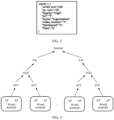
- FIG. 3 is a schematic diagram of a coded networking requirement according to an embodiment of this application. In FIG.
- wired_num represents a quantity of wired terminals required by a user, which is 100 in the example
- ap_num represents a quantity of APs required by the user, which is 100 in the example
- Quality represents quality of a device required by the user, which is “High” in the example
- IoT represents whether the user needs an internet of things function, which is yes (Y) in the example
- Scene represents an application scene, which is a supermarket (Supermarket) in the example
- Video_monitor represents whether the user needs a video surveillance function, which is yes (Y) in the example
- distributed represents whether agile distributed WiFi is needed, which is no (N) in the example
- Platinum represents whether a plate AP is needed, which is no (N) in the example.
- the electronic device constructs, based on the coded networking requirement, an input condition of networking.
- a hard condition of the networking and a soft condition of the networking are constructed.
- the hard condition refers to a condition that the networking needs to meet. If the hard condition is not met, a networking topology cannot normally provide a network service needed by the user.
- the soft condition refers to a condition that is met as much as possible on the basis of meeting the hard condition. The soft condition may enable a network of the networking topology to run better and have better performance.
- the hard condition may include: A quantity of ports of an ACC is greater than or equal to a sum of a quantity of wired terminals and a quantity of APs; an IoT function of the AP matches an IoT function required by the user; a PoE power supply capability of the ACC is greater than or equal to a PoE power supply requirement of the AP; a central AP of agile distributed WiFi matches a remote unit; and the like.
- the soft condition may be: "Quality" of each device matches “Quality” required by the user; “Scene” of each device matches “Scene” required by the user; “Video_monitor” of an ACC matches “Video_monitor” required by the user; “Distributed” of an AP matches “Distributed” required by the user; “Plate” of an AP matches “Plate” required by the user; an uplink port type of an AP is an electrical port; an uplink port type of an ACC is an optical port; a downlink port type of an ACC is an electrical port; an uplink port type of an AGG is an optical port; a downlink port type of an AGG is an optical port; an uplink port type of an FW is an optical port; a downlink port type of an FW is an optical port; an uplink port speed of an AP is greater than or equal to 1 Gigabit per second (Gigabit per second, Gbps); an uplink port speed of an ACC is greater than or
- the hard condition is further classified into a hard equality condition and a hard inequality condition.
- the hard equality condition may be that an "IoT" of the AP is equal to an "IoT” required by the user.
- the hard inequality condition may be that the PoE power supply capability of the ACC is greater than or equal to the PoE power supply requirement of the AP.
- the soft condition is classified into a soft equality condition and a soft inequality condition.
- the soft equality condition may be that "Quality" of the AP is equal to "Quality” required by the user.
- the soft inequality condition may be that the uplink port speed of the AP is greater than or equal to 1 Gbps.
- the electronic device establishes a model recommendation model for a device at each layer by using an input condition related to the device at each layer.
- Variables that respectively define recommended quantities corresponding to the AP, ACC, AGG, and FW models are X AP , X ACC , X AGG , and X FW .
- Step 1 Select a quantity of devices (namely, APs) at the first layer that are used and the first device capability subrequirement from the input condition, and determine, based on the model recommendation model, one or more recommended models of the device at the first layer and a quantity corresponding to each recommended model.
- the model recommendation model is shown in the following.
- An s.t. part represents a condition (which may be referred to as the hard condition) that each recommended model needs to meet, for example, a device quantity requirement (for example, ap_num shown in the following) and a capability requirement of a device (for example, an IoT capability shown in the following).
- a Min part represents a condition (which may be referred to as the soft condition) that is met as much as possible when the hard condition is met, for example, a device quality requirement, a matching requirement of an application scene of a device.
- Min represents minimization.
- w 11 , w 12 , ... each represent a coefficient of a penalty item for a soft equality constraint.
- w 21 ... each represent a coefficient of a penalty item for a soft inequality constraint.
- X AP,Scene represents application scenes of APs of models.
- X AP,up speed represents an uplink port speed of the AP of each model.
- X AP,IoT represents an "IoT" capability of the AP of each model.
- ⁇ represents a dot product between vectors.
- w 21 ⁇ (max( 1 - X AP,up speed , 0) ⁇ X AP ) 2 is not used as a penalty item. If no, w 21 ⁇ (max(1 - X AP,up speed , 0) ⁇ X AP ) 2 is used as a penalty item.
- ⁇ X AP ⁇ 1 - "ap_num" 0 represents that a total quantity of APs of models needs be equal to a quantity of APs " ap_num " required by the user.
- the foregoing 1G may be a default requirement on the uplink port speed of the AP of each model. It may be understood that 1G may alternatively be another value, for example, 0.5G, or another value input by the user.
- One or more recommended models of the AP and a quantity of devices corresponding to each of the one or more recommended models are obtained by solving the model recommendation model of the AP, that is, X AP is solved.
- the electronic device may determine, based on a user requirement on a quantity of devices at the first layer and a first device capability subrequirement of the device at the first layer, one or more recommended models of the device at the first layer and a quantity of devices corresponding to each recommended model. Then, the electronic device may determine, based on the one or more recommended models of the device at the first layer and the quantity of devices corresponding to each recommended model, a recommended model of the device at the another layer and a quantity of devices corresponding to the recommended model.
- Step 2 Select a second device capability subrequirement of a device (namely, the ACC) at a second layer and a matching requirement between the ACC and the AP from the input condition, and determine, based on the recommended model of the AP and the quantity of devices corresponding to each recommended model that are obtained in Step 1, one or more recommended models of the ACC and a quantity corresponding to each model.
- the determining process may be implemented based on a model recommendation model of the ACC.
- the model recommendation model is shown as follows, and includes a hard condition that is represented by an s.t part and that the ACC needs to meet and a soft condition that is represented by a Min part and that the ACC may meet.
- X ACC,Quality represents quality of ACCs of models
- X ACC,Video monitor represents whether the ACC of each model has a video surveillance function
- X Acc,up speed represents an uplink of the ACC of each model
- X ACC,down num represents a quantity of downlink ports of the ACC of each model
- X ACC,PoE num represents a quantity of PoE power supply ports supported by the ACC of each model
- X ACC,Distributed represents whether the ACC of each model supports agile distributed WiFi.
- 10 - X ACC,up speed represents whether the uplink port speed of the ACC of each model is greater than or equal to 10G.
- w 21 ⁇ ( max (10 - X ACC,up speed , 0) ⁇ X ACC ) 2 is not used as a penalty item. If no, w 21 ⁇ (max(10 - X Acc,up speed , 0) ⁇ X ACC ) 2 is used as a penalty item.
- ⁇ X ACC,down num ⁇ X ACC ⁇ 1 - "ap_num" - "wired_num” ⁇ 0 represents a total quantity of downlink ports of all recommended ACCs needs to be greater than or equal to a sum of a quantity of wired terminals and a quantity of APs.
- ⁇ X ACC,PoE num represents a total quantity of downlink ports of all recommended ACCs needs to be greater than or equal to a sum of a quantity of wired terminals and a quantity of APs.
- X ACC ⁇ 1 - "ap_num" ⁇ 0 represents a total quantity of PoE power supply ports supported by all recommended ACCs needs to be greater than or equal to the quantity of APs.
- Step 3 Select a second device capability subrequirement of a device (namely, the AGG) at a third layer and a matching requirement between the AGG and the ACC from the input condition, and determine, based on each model of the ACC and the quantity of devices corresponding to each model, one or more recommended models of the AGG and a quantity corresponding to each model.
- the determining process may be implemented based on a model recommendation model of the AGG.
- the model recommendation model is shown as follows, and includes a hard condition that is represented by an s.t part and that the AGG needs to meet and a soft condition that is represented by a Min part and that the AGG may meet.
- X AGG,Quality represents quality of an AGG of each model.
- X AGG,down type represents a downlink port type of the AGG of each model.
- X AGG,up speed represents an uplink port speed of the AGG of each model.
- X AGG,down num represents a quantity of downlink ports of the AGG of each model.
- w 21 ⁇ ( max (10 - X AGG,up speed , 0) ⁇ X AGG ) 2 is used as a penalty item.
- ⁇ X AGG,down num ⁇ X AGG ⁇ 1 - ⁇ X ACC ⁇ 1 ⁇ 0 represents that a total quantity of downlink ports of all recommended AGGs needs to be greater than or equal to a quantity of ACCs.
- the electronic device solves the model recommendation model of the AGG by using each model of the ACC and the quantity of devices corresponding to each model, to obtain the one or more recommended models of the AGG and the quantity of devices corresponding to each of the one or more recommended models. That is, X AGG is solved.
- the foregoing 10G may be a default requirement on the uplink port speed of the AGG of each model. It may be understood that 10G may alternatively be another value, for example, 5G, or another value input by the user.
- Step 4 Select a second device capability subrequirement of a device (namely, the FW) at a fourth layer and a matching requirement between the FW and the AGG from the input condition, and determine, based on each model of the AGG and the quantity of devices corresponding to each model, a recommended model of the FW and a quantity corresponding to each recommended model.
- the determining process may be implemented based on a model recommendation model of the FW.
- the model recommendation model is shown as follows, and includes a hard condition that is represented by an s.t part and that the FW needs to meet and a soft condition that is represented by a Min part and that the FW may meet.
- X FW,Quality represents quality of an FW of each model.
- X FW,down type represents a downlink port type of the FW of each model.
- X FW,up speed represents an uplink port speed of the FW of each model.
- X FW,down num represents a quantity of downlink ports of the FW of each model.
- 10 - X FW,up speed represents whether the uplink port speed of the FW of each model is greater than or equal to 10G. If yes, w 21 ⁇ (max(10 - X FW,up speed , 0) ⁇ X FW ) 2 is not used as a penalty item.
- the electronic device solves the model recommendation model of the FW by using each model of the AGG and the quantity of devices corresponding to each model, to obtain one or more recommended FW models and the quantity of devices corresponding to each of the one or more recommended models. That is, X FW is solved.
- the foregoing 10G may be a default requirement on the uplink port speed of the FW of each model. It may be understood that 10G may alternatively be another value, for example, 5G, or another value input by the user.
- a method for solving the model recommendation model of the device at each layer may be an interior point method, an exterior point method, a multiplier method, a heuristic method, or the like in operation research optimization.
- the electronic device first determines, based on the coverage requirement and the first device capability subrequirement of the device at the first layer, the recommended model of the device at the first layer and the quantity of devices corresponding to each recommended model.
- the electronic device determines, based on each model of a downstream device (starting from the device at the first layer) and a quantity corresponding to each model, a second device capability subrequirement of an upstream device, and a matching requirement between the upstream device and the downstream device, a recommended model of the upstream device and a quantity of devices corresponding to each recommended model.
- a device that is at each layer and that is determined in a manner of layer-by-layer matching has a higher matching degree between upstream and downstream devices. This helps avoid a problem such as capability mismatching between the upstream and downstream devices.
- the electronic device may further obtain user feedback information and popularity information of a device of each model in a set of available devices.
- the electronic device determines, based on the coverage requirement, the device capability requirement, the matching requirement, the user feedback information, and the popularity information, the model of the device at each layer in the networking structure and the quantity corresponding to the model.
- the set of available devices is a set of all available devices of models in a database.
- the electronic device further considers user feedback information and popularity information, that are of each model of the device at each layer, in addition to the networking requirement. Therefore, when the networking structure is determined, the electronic device needs to obtain user feedback information and popularity information of models of various devices included in the networking structure.
- the electronic device obtains a user feedback score of a historical user for a device of each model in each historical networking solution. For a device of any model in the plurality of historical networking solutions, the electronic device obtains user feedback information of the device of the any model based on user feedback scores of the device of the any model in different historical networking solutions. All devices of models in the plurality of historical networking solutions include the devices of the models in the set of available devices.
- the networking structure includes four types of devices: the FW, the AGG, the ACC, and the AP, and the electronic device may separately obtain user feedback information of the four types of devices.
- Step 1 Obtain user feedback information of an AP of each model.
- the electronic device queries the data table shown in Table 5 in the networking detail database, to obtain user feedback scores of a historical user on the plurality of historical networking solutions such as "adkHk” and "6i6XUrk", and uses a user feedback score of each historical networking solution as the user feedback score on the device of each model in the networking solution. For example, if the user feedback score of the networking solution "adkHk" in Table 5 is 3, user feedback scores of devices of all models in the networking solution are all 3. On this basis, user feedback scores of devices of all models in the plurality of historical networking solutions may be obtained.
- the user feedback information of the AP 1 may be an average value of the five user feedback scores, a sum of the five user feedback scores, a weighted sum of the five user feedback scores, or the like.
- Step 2 Obtain user feedback information of an ACC of each model.
- user feedback scores of the ACC of any model in different historical networking solutions may be obtained based on a manner in step 1, and user feedback information of the ACC of any model may be calculated by using the user feedback scores of the ACC of any model in the different historical networking solutions.
- Step 3 Obtain user feedback information of an AGG of each model.
- user feedback scores of the AGG of any model in different historical networking solutions may be obtained based on the manner in step 1, and user feedback information of the AGG of any model may be calculated by using the user feedback scores of the AGG of any model in the different historical networking solutions.
- Step 4 Obtain user feedback information of an FW of each model.
- user feedback scores of the FW of any model in different historical networking solutions may be obtained based on the manner in step 1, and user feedback information of the FW of any model may be calculated by using the user feedback score of the FW of any model in the different historical networking solutions.
- the user feedback score of each historical networking solution is used as the user feedback score of the networking devices of models in each historical networking solution.
- User feedback information of a device of any model is obtained through calculation based on user feedback scores of the device of any model in the different historical networking solutions.
- the user feedback information of the device of each model in the set of available devices may be obtained, so that a recommended model of the device at each layer and a quantity corresponding to each model are subsequently determined based on the user feedback information of the device of each model in the set of available devices.
- a plurality of models registered by the any device within a preset time period are filtered based on a device registration time point.
- An addition frequency of each of the plurality of models is determined based on a registration quantity of each of the plurality of models within the preset time period.
- a usage frequency of each of the plurality of models is determined based on a quantity of online times of each of the plurality of models within the preset time period.
- the popularity information of each of the plurality of models is obtained based on the addition frequency and the usage frequency.
- All APs are filtered from the set of available devices, APs, of a plurality of models, registered within the preset time period (for example, the last three months) are filtered from the all APs based on the registration time point in Table 1, and statistics on a registration quantity of an AP of each model are counted. For example, a registration quantity of an AP of a model of "AirEngine 5760-22W" in the last three months is 11000.
- the APs of the plurality of models are sorted based on the registration quantity of the AP of each model, to obtain ranking of registration quantities of the APs of the models.
- a sorting manner may be descending or ascending, which is not limited herein.
- the AP of each model is scored based on the ranking of the registration quantities of the APs of the models, and a score of the registration quantity of the AP of each model is determined as an addition frequency of the AP of each model.
- Table 6 shows an example of the addition frequency of the AP of each model.
- the AP of each model in Table 6 statistics on a quantity of online times of the AP of each model within a preset time period (for example, the last three months) are counted based on the last online time point in Table 1. For example, the quantity of online times of the AP of the model of "AirEngine 5760-22W" in the last three months is 11000.
- the APs of the plurality of models are sorted based on the quantity of online times of the AP of each model, to obtain ranking of quantities of online times of the APs of the models.
- a sorting manner may be descending or ascending, which is not limited herein.
- the AP of each model is scored based on the ranking of the quantities of online times of the APs of the models, and a score of the quantity of online times of the AP of each model is determined as a usage frequency of the AP of each model.
- Table 7 shows an example of the usage frequency of the AP of each model.
- popularity information of the AP of each model is obtained through calculation by using the addition frequency of the AP of each model in Table 6 and the usage frequency of the AP of each model in Table 7.
- the popularity information of the AP of each model may be an average value, a weighted sum, a weighted average value, or the like of the addition frequency of the AP of each model and the usage frequency of the AP of each model.
- Table 8 shows an example of the popularity information of the AP of each model.
- the electronic device determines the popularity information of the device of each model based on the usage frequency and the addition frequency of the device of each model, to subsequently determine, based on the popularity information of the device of each model, the recommended model of the device at each layer and the quantity corresponding to each model.
- the electronic device determines, based on the quantity of devices at the first layer, the user feedback information and the popularity information, and the first device capability subrequirement, the one or more models of the device at the first layer and the quantity of devices corresponding to each of the one or more models of the device at the first layer.
- the electronic device determines, based on the model of the device at the first layer, the quantity of devices corresponding to the model of the device at the first layer, the second device capability subrequirement, the user feedback information and the popularity information, and a matching requirement between devices at different layers, one or more models of the device at the another layer and a quantity of devices corresponding to the one or more models of the device at the another layer.
- the user feedback information and the popularity information of the AP of each model are obtained, the user feedback information and the popularity information of the AP of each model are used as an optimization target, and a model of the AP and a quantity corresponding to each model are determined based on the optimization target, a quantity of APs and the first device capability subrequirement of the AP.
- the determining process may be implemented based on the model recommendation model of the AP.
- the model recommendation model is shown as follows, and includes a hard condition that is represented by an s.t part and that the AP needs to meet and a soft condition that is represented by a Min part and that the AP may meet.
- the Min part may include the optimization target for the user feedback information and the popularity information of the AP of each model.
- X AP,Prefer represents the user feedback information of the AP of each model
- X AP,Prefer ⁇ X AP represents a sum of the user feedback information of the AP of each model multiplied by a quantity of APs of the corresponding model
- X AP,Popular represents the popularity information of the AP of each model
- X AP,Popular ⁇ X AP represents a sum of the popularity information of the AP of each model multiplied by a quantity of APs of each model
- w 31 , w 32 , ... each represent a preset weight coefficient of each optimization target.
- the one or more recommended models of the AP and a quantity of devices corresponding to each of the one or more recommended models may also be obtained by solving the model recommendation model of the AP.
- the user feedback information and the popularity information of the ACC of each model are obtained, the user feedback information and the popularity information of the ACC of each model are used as an optimization target, and a model of the ACC and a quantity corresponding to each model are determined with reference to the second device capability subrequirement of the ACC, the matching requirement between the ACC and the AP, and each model of the AP and the quantity of devices corresponding to each model.
- the determining process may be implemented based on the model recommendation model of the ACC.
- the model recommendation model is shown as follows, and includes a hard condition that is represented by an s.t part and that the ACC needs to meet and a soft condition that is represented by a Min part and that the ACC may meet.
- the Min part may include an optimization target for the user feedback information and the popularity information of the ACC of each model.
- X ACC,Prefer represents the user feedback information of the ACC of each model
- X ACC represents a sum of the user feedback information of the ACC of each model multiplied by a quantity of ACCs of the corresponding model
- X ACC,Popular represents the popularity information of the ACC of each model
- X ACC,Popular represents the popularity information of the ACC of each model
- X ACC,Popular .
- X ACC represents a sum of the popularity information of the ACC of each model multiplied by a quantity of ACCs of the corresponding model.
- the one or more recommended models of the ACC and the quantity of devices corresponding to each of the one or more recommended models may also be obtained by solving the model recommendation model of the ACC.
- the user feedback information and the popularity information of the AGG of each model are obtained, the user feedback information and the popularity information of the AGG of each model are used as an optimization target, and a model of the AGG and a quantity corresponding to each model are determined with reference to the second device capability subrequirement of the AGG, the matching requirement between the AGG and the ACC, and each model of the ACC and the quantity of devices corresponding to each model.
- the determining process may be implemented based on the model recommendation model of the AGG.
- the model recommendation model is shown as follows, and includes a hard condition that is represented by an s.t part and that the AGG needs to meet and a soft condition that is represented by a Min part and that the AGG may meet.
- the Min part may include the optimization target for the user feedback information and the popularity information of the AGG of each model.
- X AGG,Prefer represents the user feedback information of the AGG of each model
- X AGG,Prefer ⁇ X AGG represents a sum of the user feedback information of the AGG of each model multiplied by a quantity of AGGs of the corresponding model
- X AGG,Popular represents the popularity information of the AGG of each model
- X AGG,Popular ⁇ X AGG represents a sum of the popularity information of the AGG of each model multiplied by a quantity of AGGs of the corresponding model.
- the one or more recommended models of the AGG and the quantity of devices corresponding to each of the one or more recommended models may also be obtained by solving the model recommendation model of the AGG.
- the user feedback information and the popularity information of the FW of each model are obtained, the user feedback information and the popularity information of the FW of each model are used as an optimization target, and a model of the FW and a quantity corresponding to each model are determined with reference to the second device capability subrequirement of the FW, the matching requirement between the FW and the AGG, and each model of the AGG and the quantity of devices corresponding to each model.
- the determining process may be implemented based on the model recommendation model of the FW.
- the model recommendation model is shown as follows, and includes a hard condition that is represented by an s.t part and that the FW needs to meet and a soft condition that is represented by a Min part and that the FW may meet.
- the Min part may include the optimization target for the user feedback information and the popularity information of the FW of each model.
- X FW,Prefer represents the user feedback information of the FW of each model, X FW,Prefer .
- X FW represents a sum of the user feedback information of the FW of each model multiplied by a quantity of FWs of the corresponding model
- X FW,Popular represents the popularity information of the FW of each model
- X FW,Popular ⁇ X FW represents a sum of the popularity information of the FW of each model multiplied by a quantity of FWs of the corresponding model.
- the one or more recommended models of the AGG and the quantity of devices corresponding to each of the one or more recommended models may also be obtained by solving the model recommendation model of the FW.
- the electronic device when recommending a device, in addition to a matching requirement between upstream and downstream devices, the electronic device further considers user feedback information and popularity information of a device at a layer, so that a model, of a device, that is recommended to the user may be optimized based on a popular model and a model with a good historical feedback.
- the electronic device For the recommended model of the device at each layer and a recommended quantity of devices at each layer in the networking structure, the electronic device connects the devices at the two adjacent layers based on an upstream and downstream relationship between the devices, to generate the networking topology including a connection relationship.
- a bottom-up connection manner is used, to obtain a tree-structured networking topology shown in FIG. 4.
- FIG. 4 shows a networking structure including an AP, an ACC, an AGG, and an FW.
- Step 1 Connect the AP and a wired terminal to the ACC, to form ACC+AP/wired terminal networking. For example, if a quantity of downlink ports of an ACC of a specific model is 20, a next ACC is connected to after the downlink ports of the ACC are fully connected. This is performed in sequence until all APs/wired terminals are connected.
- Step 2 Connect the ACC to the AGG, to form AGG+ACC+AP/wired terminal networking.
- Step 3 Connect the AGG to the FW, to form FW+AGG+ACC+AP/wired terminal networking. Finally, the FW is connected to the internet (Internet).
- a quantity of APs required in the networking requirement is 0 (in other words, the user does not need an AP)
- a quantity of wired terminals is less than a quantity of downlink ports of a single FW
- the networking structure including the AP, the ACC, the AGG, and the FW shown in FIG. 4 is generally used in an industry/a scene such as a supermarket or a branch office.
- a specified networking structure is usually a four-layer structure shown in FIG. 5 , to be specific, includes the internet, a router (access router, AR), an ACC, and an AP/a wired terminal.
- a scene requirement of the user determines a networking structure obtained by the electronic device, and the networking structure determines a scale of the networking solution finally generated, a model of a device in the networking solution, and the like.
- the networking structure shown in FIG. 4 has a larger scale and a more complex structure. Therefore, a more complex network configuration is needed, and a higher requirement is imposed on device performance.
- a network service requirement varies in different industries/scenes. For example, in the supermarket scene, the user has a high requirement on quality of a service such as an electronic price tag, a cashier, an electronic scale, a handheld PDA, and a camera. In the branch office scene, the user has a high requirement on quality of a service such as a wired office, office WiFi, reception, an IoT, and a camera. Therefore, in embodiments of this application, for different industries/scenes, a device model can be targetedly recommended.
- the electronic device may recommend, based on the scene requirement, the coverage requirement, the device capability requirement, and the matching requirement between the upstream and downstream devices, a model of a networking device and a quantity corresponding to each model, and then generate the networking solution based on the recommended device model and the quantity corresponding to each model.
- the electronic device further carries the matching requirement between the upstream and downstream devices in the networking requirement.
- the user only needs to input the networking requirement to obtain the recommended networking solution. This reduces difficulty in performing network planning by the user.
- FIG. 6 is a schematic flowchart of another networking method according to an embodiment of this application.
- the networking method may be performed by an electronic device.
- the networking method includes but is not limited to the following steps or operations.
- the networking requirement includes a scene requirement, a coverage requirement, a device capability requirement, a matching requirement between upstream and downstream devices, and a verification requirement.
- the verification requirement may be input by a user, or may be preset.
- the verification requirement includes a verification subrequirement for model requirement matching and/or a verification subrequirement for connection relationship matching.
- the verification subrequirement for model requirement matching may be whether a device in a networking solution has an IoT capability, whether quality of the device matches quality required by the user, or whether an application scene of the device matches a scene required by the user.
- the verification subrequirement for connection relationship matching may be whether a central AP of agile distributed WiFi matches a remote unit, whether a PoE power supply capability of a connected upstream device meets a PoE power supply requirement of a downstream device, or whether a port type and a port speed of the connected upstream device match a port type and a port speed of the downstream device.
- 603 Determine, based on the coverage requirement, the device capability requirement, and the matching requirement, a model of a device at each layer in the networking structure and a quantity corresponding to the model.
- 604 Connect devices at two adjacent layers in the networking structure, to generate the networking solution.
- steps 602 to 604 refer to related descriptions of steps 202 to 204 in embodiments shown in FIG. 2 , and a same or similar beneficial effect can be achieved.
- the networking solution may be evaluated from two aspects: model requirement matching and connection relationship matching.
- model requirement matching of each device in the networking solution is evaluated based on the verification subrequirement for model requirement matching, to obtain a model requirement matching score of the networking solution.
- the verification subrequirement for model requirement matching is classified into an item that needs to be met and an item that is met as much as possible.
- the item that needs to be met refers to a requirement that the networking solution needs to meet. If the requirement is not met, a network cannot be run normally.
- the item that is met as much as possible is a requirement that the networking solution should meet as much as possible. Meeting the requirement can ensure better network running of the networking solution. Whether the networking solution meets each verification subrequirement for model requirement matching is determined.
- a score of the item is 0. If the networking solution does not meet an item that needs to be met in the verification subrequirement for model requirement matching, a score of the item is - w h .
- a model requirement matching score of each model requirement matching verification subrequirement may be obtained.
- the model requirement matching score of the networking solution is obtained through calculation based on the model requirement matching score of each verification subrequirement for model requirement matching. For example, a sum, a weighted sum, an average value, or the like of model requirement matching scores of the verification subrequirement for model requirement matching is calculated.
- w h may be set based on importance of the verification subrequirement for model requirement matching.
- connection relationship matching between devices in the networking solution is evaluated based on the verification subrequirement for connection relationship matching, to obtain a connection relationship matching score of the networking solution.
- the verification subrequirement for connection relationship matching is also classified into an item that needs to be met and an item that is met as much as possible.
- Whether a connection line between every two devices meets each verification subrequirement for connection relationship matching in the networking solution is determined. For example, whether a connection between an AP 1 and an ACC 1 meets the item whether the PoE power supply capability of the connected upstream device meets the PoE power supply requirement of the downstream device. If the networking solution meets an item that needs to be met in the verification subrequirement for connection relationship matching, a score of the item is w s .
- connection relationship matching score of each verification subrequirement for connection relationship matching may be obtained.
- the connection relationship matching score of the networking solution is obtained through calculation based on the connection relationship matching score of each verification subrequirement for connection relationship matching. For example, a sum, a weighted sum, an average value, or the like of connection relationship matching scores of the verification subrequirement for connection relationship matching is calculated. w s may be set based on importance of the verification subrequirement for connection relationship matching.
- the electronic device may further obtain a networking score based on the model requirement matching score of the networking solution and the connection relationship matching score of the networking solution.
- the electronic device may calculate a sum, a weighted sum, an average value, and the like of the model requirement matching score of the networking solution and the connection relationship matching score of the networking solution, to obtain the networking score of the networking solution, and display the networking score to the user as one of evaluation results.
- evaluation and verification are performed on the networking solution from the model requirement matching, the connection relationship matching, and other aspects.
- the networking score is obtained through calculation based on the model requirement matching score and the connection relationship matching score.
- the networking score can reflect a matching degree between the networking solution and a user requirement and overall performance. Therefore, the networking score is displayed to the user, so that the user may determine, based on the networking score, whether to adopt the networking solution.
- evaluation and verification on the networking solution help detect a possible problem, such as capability mismatching between upstream and downstream devices, in the networking solution, so that the user adjusts the networking requirement previously input, to generate a networking solution with higher overall performance.
- the electronic device for the generated networking solution, the electronic device generates a networking ID of the networking solution, and displays the networking solution and the networking score of the networking solution to the user.
- the user may determine whether to adopt the networking solution based on the networking score and perform a related operation on a man-machine interaction interface. For example, the user clicks a button of "adopt" or “not adopt” and inputs a user feedback score of the networking solution.
- the electronic device may generate an adoption identifier indicating whether the user adopts the networking solution.
- the adoption identifier, the user feedback score, and the networking ID are associated and stored in a networking detail database.
- the networking requirement of the networking solution, a device model in the networking solution, and a quantity of devices corresponding to each model are stored in the networking detail database.
- the electronic device determines the networking score of the networking solution based on a plurality of networking scores of a plurality of target historical networking solutions according to a preset scoring rule.
- the electronic device may use a weighted sum of the model requirement matching score of the networking solution and the connection relationship matching score of the networking solution as a candidate networking score of the networking solution.
- a plurality of target historical networking solutions that belong to a same application scene as the generated networking solution are determined from the plurality of historical networking solutions in the database. For example, if an application scene of the generated networking solution is a supermarket, all historical networking solutions whose application scenes are the supermarket are determined.
- a networking score of each of the plurality of target historical networking solutions is obtained, and statistics of a plurality of networking scores of the plurality of target historical networking solutions are calculated, where an example of the statistics is an average value or a percentile. Table 9 shows an example of the preset scoring rule.
- statistics of the plurality of networking scores of the plurality of target historical networking solutions are percentiles. For example, ⁇ 99% represents a 99 th percentile of the plurality of networking scores of the plurality of target historical networking solutions, and ⁇ 90% represents a 90 th percentile of the plurality of networking scores of the plurality of target historical networking solutions.
- score 0 represents a candidate networking score that is of the networking solution and that is obtained through calculation.
- a plurality of conditions are set based on the statistics of the plurality of networking scores of the plurality of target historical networking solutions.
- a networking score corresponding to the condition is used as a networking score of the networking solution, to normalize the networking score of the networking solution to a preset interval. For example, if score 0 ⁇ ⁇ 99% , the networking score of the networking solution is 5.0; if ⁇ 99% > score 0 ⁇ ⁇ 95% , the networking score of the networking solution is 4.5. In Table 9, the preset interval is [0,5].
- whether the candidate networking score meets a condition set based on the statistics can reflect a performance level of the networking solution in the plurality of target historical networking solutions in a same application scene.
- the electronic device may determine the networking score of the networking solution based on the performance level according to the preset scoring rule. Therefore, the networking score can intuitively reflect the performance level of the networking solution in historical networking solutions in a same industry/application scene.
- the electronic device may further determine a user satisfaction score of the generated networking solution based on a plurality of user feedback scores respectively corresponding to the plurality of determined target historical networking solutions, and display the user satisfaction score of the networking solution.
- a user feedback score of each target historical networking solution is used as a user feedback score of a device of each model in each target historical networking solution. For example, if a user feedback score of the target historical networking solution "adkHk" in Table 5 is 3, user feedback scores of devices of all models in the target historical networking solution are 3. It is assumed that the target historical networking solution "adkHk" includes an AP 1, and the AP 1 is further used in other nine target historical networking solutions.
- a user satisfaction score of a device of each model in the plurality of target historical networking solutions may be obtained. If the networking solution includes devices of models such as the AP 1, an ACC 1, an ACC 2, an AGG 1, and an FW 2, the user satisfaction score of the networking solution is obtained through calculation based on user satisfaction scores of these devices. For example, an average value, a weighted sum, or the like of the user satisfaction scores of these devices is calculated. In this implementation, the user satisfaction score may be used as a word of mouth of a historical user for a device of each model in the networking solution. The user satisfaction score of the networking solution is displayed to the user. The user satisfaction score of the networking solution may be used as another reference indicator in addition to the networking score. This helps the user determine whether to adopt the networking solution.
- the electronic device may further display, as an evaluation result, a model requirement matching score of a device of each model in the networking solution and a connection relationship matching score corresponding to a connection line between every two devices in the networking solution. For example, each verification subrequirement for model requirement matching such as whether a device has an IoT capability and a score corresponding to each verification subrequirement for model requirement matching are displayed, and each verification subrequirement for connection relationship matching such as whether a PoE power supply capability of a connected upstream device meets a PoE power supply requirement of a downstream device and a score corresponding to each verification subrequirement for connection relationship matching are displayed.
- each verification subrequirement for model requirement matching such as whether a device has an IoT capability and a score corresponding to each verification subrequirement for model requirement matching are displayed
- each verification subrequirement for connection relationship matching such as whether a PoE power supply capability of a connected upstream device meets a PoE power supply requirement of a downstream device and a score
- a level may be set for each verification subrequirement for model requirement matching and each verification subrequirement for connection relationship matching.
- the level may represent importance of a verification subrequirement for model requirement matching of a device of each model and a verification subrequirement for connection relationship matching of every two devices (or represent attention degrees of a user on the verification subrequirement for model requirement matching of the device of each model and the verification subrequirement for connection relationship matching of every two devices).
- the electronic device may display, based on the level, each verification subrequirement for model requirement matching and a model requirement matching score corresponding to the verification subrequirement for model requirement matching, and each verification subrequirement for connection relationship matching and a connection relationship matching score corresponding to the verification subrequirement for connection relationship matching, so that the user intuitively learns that the networking solution meets a poor verification subrequirement, and this triggers the user to adjust the networking requirement of the user.
- the electronic device may display, in a descending sorting manner of the level, each verification subrequirement for model requirement matching and the model requirement matching score corresponding to the verification subrequirement for model requirement matching, and each verification subrequirement for connection relationship matching and the connection relationship matching score corresponding to the verification subrequirement for connection relationship matching.
- the model requirement matching score of the device of each model and/or the connection relationship matching score corresponding to the connection line between the every two devices include/includes a scoring item whose score is less than a preset score.
- the preset score may be added to the model requirement matching score of the device of each model and the connection relationship matching score corresponding to the connection line between the every two devices.
- a connection relationship matching score of the item whether the PoE power supply capability of the connected upstream device meets the PoE power supply requirement of the downstream device is 3.5, which is less than the preset score of 5, the item may be highlighted. In this way, the user can intuitively obtain a requirement item with a low matching degree, and then the user may adjust, based on the scoring item whose score is less than the preset score, requirement information previously input. For example, a PoE power supply speed requirement of the AP is added in addition to the requirement information previously input.
- the electronic device may receive a new networking requirement input by the user, and regenerate a networking solution based on the new networking requirement.
- a scoring item that is about a power supply speed and that is less than the preset score indicates that the networking solution meets a poor verification subrequirement. Therefore, displaying the scoring item whose score is less than the preset score may trigger the user to adjust the requirement information previously input by the user, so that the networking solution regenerated by the electronic device can better meet the scoring item whose score is less than the preset score.
- the following shows an example of recommended networking in a supermarket scene.
- FIG. 9 is a schematic diagram of a structure of a networking apparatus 900 according to an embodiment of this application.
- the apparatus 900 has a function of implementing the networking method shown in FIG. 2 or FIG. 6 .
- the function may be implemented by hardware, or may be implemented by hardware by executing corresponding software.
- the hardware or the software includes one or more modules corresponding to the foregoing function.
- the apparatus 900 includes an obtaining unit 901 and a processing unit 902.
- the obtaining unit 901 is configured to obtain a networking requirement, where the networking requirement includes a scene requirement, a coverage requirement, a device capability requirement, and a matching requirement between upstream and downstream devices.
- the processing unit 902 is configured to obtain a networking structure based on the scene requirement.
- the processing unit 902 is further configured to determine, based on the coverage requirement, the device capability requirement, and the matching requirement, a model of a device at each layer in the networking structure and a quantity corresponding to the model.
- the processing unit 902 is further configured to connect devices at two adjacent layers in the networking structure, to generate a networking solution.
- the device capability requirement includes a first device capability subrequirement and a second device capability subrequirement.
- the first device capability subrequirement indicates a capability requirement of a device at the first layer in the networking structure.
- the second device capability subrequirement indicates a capability requirement of a device at another layer other than the device at the first layer in the networking structure.
- the processing unit 902 is specifically configured to: determine, based on the coverage requirement and the first device capability subrequirement, a model of the device at the first layer and a quantity of devices corresponding to the model of the device at the first layer, and determine, based on the model of the device at the first layer, the quantity of devices corresponding to the model of the device at the first layer, the second device capability subrequirement, and the matching requirement, a model of the device at another layer and a quantity of devices corresponding to the model of the device at the another layer.
- the processing unit 902 is specifically configured to: determine a quantity of the devices at the first layer based on the coverage requirement, and determine, based on the quantity of the devices at the first layer and the first device capability subrequirement, one or more models of the device at the first layer and a quantity of devices corresponding to each of the one or more models of the device at the first layer.
- the processing unit 902 is specifically configured to: obtain user feedback information and popularity information of a device of each model in a set of available devices, and determine, based on the coverage requirement, the device capability requirement, the matching requirement, the user feedback information, and the popularity information, the model of the device at each layer in the networking structure and the quantity corresponding to the model.
- the processing unit 902 is specifically configured to: determine, based on the quantity of the devices at the first layer, the first device capability subrequirement, the user feedback information, and the popularity degree, one or more models of the device at the first layer and the quantity of devices corresponding to each of the one or more models of the device at the first layer, and determine, based on the model of the device at the first layer, the quantity of devices corresponding to the model of the device at the first layer, the second device capability subrequirement, the matching requirement, the user feedback information, and the popularity information, one or more models of the device at another layer and a quantity of devices corresponding to the one or more models of the device at another layer.
- the processing unit 902 is specifically configured to: for each of the plurality of historical networking solutions, obtain a user feedback score of a historical user for a device of each model in each historical networking solution, and for a device of any model in the plurality of historical networking solutions, obtain user feedback information of the device of any model based on a user feedback score of the device of any model in different historical networking solutions.
- All devices of models in the plurality of historical networking solutions include devices of models in a set of available devices.
- the processing unit 902 is specifically configured to: for any device in the set of available devices, filter, based on a device registration time point, a plurality of models registered by the any device within a preset time period, determine, based on a registration quantity of each of the plurality of models within the preset time period, an addition frequency of each of the plurality of models, determine, based on a quantity of online times of each of the plurality of models within the preset time period, a usage frequency of each of the plurality of models, and obtain, based on the addition frequency and the usage frequency, a popularity degree of each of the plurality of models.
- the networking requirement further includes a verification requirement.
- the processing unit 902 is further configured to evaluate the networking solution based on the verification requirement, and display an evaluation result.
- the verification requirement includes a verification subrequirement for model requirement matching and a verification subrequirement for connection relationship matching.
- the evaluation result includes a networking score of the networking solution.
- the processing unit 902 is specifically configured to: evaluate model requirement matching of each device in the networking solution based on the verification subrequirement for model requirement matching, to obtain a model requirement matching score of the networking solution, evaluate a connection relationship matching between devices in the networking solution based on the verification subrequirement for connection relationship matching, to obtain a connection relationship matching score of the networking solution, and obtain the networking score based on the model requirement matching score of the networking solution and the connection relationship matching score of the networking solution.
- the evaluation result further includes a model requirement matching score of a device of each model in the networking solution and a connection relationship matching score corresponding to a connection line between every two devices in the networking solution.
- the model requirement matching score of the device of each model and/or the connection relationship matching score corresponding to the connection line between the every two devices include/includes a scoring item whose score is less than a preset score.
- the processing unit 902 is further configured to receive a new networking requirement, and regenerate a networking solution based on the new networking requirement.
- the new networking requirement is a networking requirement adjusted based on a scoring item whose score is less than the preset score.
- the processing unit 902 is further configured to: determine a plurality of target historical networking solutions from the plurality of historical networking solutions, where application scenes of the plurality of target historical networking solutions are the same as application scenes of the networking solutions; determine user feedback scores of a device of each model in the plurality of target historical networking solutions based on user feedback scores of a historical user on the plurality of target historical networking solutions; obtain statistics of the user feedback score of the device of each model in the plurality of target historical networking solutions, where the device of each model in the plurality of target historical networking solutions includes a device of each model in the networking solution, determine a user satisfaction score of the device of each model in the networking solution based on the statistics; and obtain a user satisfaction score of the networking solution based on the user satisfaction score of the device of each model in the networking solution, and display the user satisfaction score of the networking solution.
- the processing unit 902 is specifically configured to: obtain a candidate networking score of the networking solution based on the model requirement matching score of the networking solution and the connection relationship matching score of the networking solution; obtain the statistics of the plurality of networking scores of the plurality of target historical networking solutions; and determine a networking score based on the candidate networking score and the statistics and according to a preset scoring rule.
- the processing unit 902 is further configured to: generate a unique identifier of the networking solution and an adoption identifier of the user on the networking solution, obtain a user feedback score of the user on the networking solution, and associate and store the unique identifier, the adoption identifier of the user of the networking solution, and the user feedback score.
- FIG. 10 is a schematic diagram of a structure of an electronic device 1000 according to an embodiment of this application.
- the electronic device 1000 includes a processor 1001, a memory 1002, and a communication interface 1003.
- the processor 1001, the memory 1002, and the communication interface 1003 are connected to each other via a bus 1004.
- the memory 1002 includes but is not limited to a random access memory (random access memory, RAM), a read-only memory (read-only memory, ROM), an erasable programmable read-only memory (erasable programmable read-only memory, EPROM), or a portable read-only memory (compact disc read-only memory, CD-ROM).
- the memory 1002 is configured to store a related computer program and data.
- the communication interface 1003 is configured to receive and send data.
- the processor 1001 may be one or more central processing units (central processing units, CPUs). When the processor 1001 is one CPU, the CPU may be a single-core CPU, or may be a multi-core CPU.
- CPUs central processing units
- the electronic device may be a computer, a virtual machine, a server, a cloud device, or the like.
- the processor 1001 in the electronic device 1000 is configured to read computer program code stored in the memory 1002, to perform the method in any one of embodiments shown in FIG. 2 to FIG. 6 .
- Embodiments of this application further provide a chip, including a processor, configured to invoke a computer program from a memory and run the computer program, so that a device in which the chip is installed performs the method in any one of embodiments shown in FIG. 2 to FIG. 6 .
- Embodiments of this application further provide a computer-readable storage medium.
- the computer-readable storage medium stores a program and instructions that are executed by a device. When the program and the instructions are run on the electronic device, the method procedures shown in FIG. 2 to FIG. 6 are implemented.
- Embodiments of this application further provide a computer program product, including a computer program.
- a computer program product including a computer program.
- the processor mentioned in embodiments of this application may be a central processing unit (Central Processing Unit, CPU), or may be another general purpose processor, a digital signal processor (Digital Signal Processor, DSP), an application specific integrated circuit (Application Specific Integrated Circuit, ASIC), a field programmable gate array (Field Programmable Gate Array, FPGA), or another programmable logic device, discrete gate or transistor logic device, discrete hardware component, or the like.
- the general purpose processor may be a microprocessor, or the processor may be any conventional processor or the like.
- the memory mentioned in embodiments of this application may be a volatile memory or a nonvolatile memory, or may include a volatile memory and a nonvolatile memory.
- the nonvolatile memory may be a read-only memory (Read-Only Memory, ROM), a programmable read-only memory (Programmable ROM, PROM), an erasable programmable read-only memory (Erasable PROM, EPROM), an electrically erasable programmable read-only memory (Electrically EPROM, EEPROM), or a flash memory.
- the volatile memory may be a random access memory (Random Access Memory, RAM), used as an external cache.
- RAMs may be used, for example, a static random access memory (Static RAM, SRAM), a dynamic random access memory (Dynamic RAM, DRAM), a synchronous dynamic random access memory (Synchronous DRAM, SDRAM), a double data rate synchronous dynamic random access memory (Double Data Rate SDRAM, DDR SDRAM), an enhanced synchronous dynamic random access memory (Enhanced SDRAM, ESDRAM), a synchlink dynamic random access memory (Synchlink DRAM, SLDRAM), and a direct rambus random access memory (Direct Rambus RAM, DR RAM).
- Static RAM static random access memory
- DRAM dynamic random access memory
- DRAM synchronous dynamic random access memory
- SDRAM synchronous dynamic random access memory
- DDR SDRAM double data rate synchronous dynamic random access memory
- Enhanced SDRAM, ESDRAM enhanced synchronous dynamic random access memory
- Synchlink dynamic random access memory Synchlink dynamic random access memory
- SLDRAM direct rambus random access memory
- Direct Rambus RAM Direct Rambus RAM
- the processor is a general-purpose processor, a DSP, an ASIC, an FPGA, or another programmable logic device, a discrete gate or a transistor logic device, or a discrete hardware component
- the memory storage module
- the memory described in this specification aims to include but is not limited to these memories and any memory of another proper model.
- sequence numbers of the foregoing processes do not mean execution sequences in various embodiments of this application.
- the execution sequences of the processes should be determined based on functions and internal logic of the processes, and should not be construed as any limitation on the implementation processes of embodiments of this application.
- the disclosed system, apparatus, and method may be implemented in another manner.
- the described apparatus embodiment is merely an example.
- division into the units is merely logical function division and may be other division during actual implementation.
- a plurality of units or components may be combined or integrated into another system, or some features may be ignored or not performed.
- the displayed or discussed mutual couplings or direct couplings or communication connections may be implemented by using some interfaces.
- the indirect couplings or communication connections between the apparatuses or units may be implemented in an electronic form, a mechanical form, or another form.
- the units described as separate parts may or may not be physically separate, and parts displayed as units may or may not be physical units, and may be located at one location, or may be distributed on a plurality of network units. Some or all of the units may be selected based on actual requirements to achieve the objectives of the solutions of embodiments.
- all functional units in embodiments of this application may be integrated into one processing unit, or each of the units may exist alone physically, or two or more units are integrated into one unit.
- “at least one” means one or more, and "a plurality of” means two or more.
- “And/or” describes an association relationship between associated objects, and represents that three relationships may exist. For example, A and/or B may represent the following cases: A exists alone, both A and B exist, and B exists alone, where A and B may be singular or plural. In text descriptions of this application, the character “/" generally represents an “or” relationship between the associated objects.
- a sequence of steps of the method in embodiments of this application may be adjusted, combined, or removed based on an actual requirement.
- Modules in the apparatus in embodiments of this application may be combined, divided, and deleted based on an actual requirement.
Landscapes
- Business, Economics & Management (AREA)
- Engineering & Computer Science (AREA)
- Human Resources & Organizations (AREA)
- Economics (AREA)
- Strategic Management (AREA)
- Computer Networks & Wireless Communication (AREA)
- Signal Processing (AREA)
- Entrepreneurship & Innovation (AREA)
- Development Economics (AREA)
- Marketing (AREA)
- Theoretical Computer Science (AREA)
- General Physics & Mathematics (AREA)
- General Business, Economics & Management (AREA)
- Physics & Mathematics (AREA)
- Educational Administration (AREA)
- Accounting & Taxation (AREA)
- Finance (AREA)
- Quality & Reliability (AREA)
- Tourism & Hospitality (AREA)
- Operations Research (AREA)
- Game Theory and Decision Science (AREA)
- Human Computer Interaction (AREA)
- Information Transfer Between Computers (AREA)
- Telephonic Communication Services (AREA)
Applications Claiming Priority (2)
| Application Number | Priority Date | Filing Date | Title |
|---|---|---|---|
| CN202210509866.XA CN117118829A (zh) | 2022-05-11 | 2022-05-11 | 一种组网方法、组网装置、电子设备及存储介质 |
| PCT/CN2023/092748 WO2023217080A1 (zh) | 2022-05-11 | 2023-05-08 | 一种组网方法、组网装置、电子设备及存储介质 |
Publications (2)
| Publication Number | Publication Date |
|---|---|
| EP4510510A1 true EP4510510A1 (de) | 2025-02-19 |
| EP4510510A4 EP4510510A4 (de) | 2025-07-30 |
Family
ID=88729766
Family Applications (1)
| Application Number | Title | Priority Date | Filing Date |
|---|---|---|---|
| EP23802850.0A Pending EP4510510A4 (de) | 2022-05-11 | 2023-05-08 | Vernetzungsverfahren, vernetzungsvorrichtung und elektronische vorrichtung und speichermedium |
Country Status (4)
| Country | Link |
|---|---|
| US (1) | US20250071578A1 (de) |
| EP (1) | EP4510510A4 (de) |
| CN (1) | CN117118829A (de) |
| WO (1) | WO2023217080A1 (de) |
Families Citing this family (3)
| Publication number | Priority date | Publication date | Assignee | Title |
|---|---|---|---|---|
| US12531788B2 (en) * | 2024-03-27 | 2026-01-20 | Infosys Limited | Method and system for automatically generating network design documents using generative artificial intelligence (AI) models |
| CN119155197B (zh) * | 2024-11-07 | 2025-01-24 | 阿里云计算有限公司 | 信息处理方法、组网推荐方法以及模型训练方法 |
| CN119743387B (zh) * | 2024-12-11 | 2025-11-14 | 广州视声智能科技有限公司 | 基于动态规划算法的家居设备组网方法及系统 |
Family Cites Families (7)
| Publication number | Priority date | Publication date | Assignee | Title |
|---|---|---|---|---|
| AU2015201542A1 (en) * | 2012-01-04 | 2015-04-16 | Accenture Global Services Limited | Smart grid deployment simulator |
| US9848337B2 (en) * | 2012-11-20 | 2017-12-19 | At&T Intellectual Property I, L.P. | Metro cell planning |
| US9621428B1 (en) * | 2014-04-09 | 2017-04-11 | Cisco Technology, Inc. | Multi-tiered cloud application topology modeling tool |
| CN110875861B (zh) * | 2018-08-29 | 2022-07-01 | 中移(杭州)信息技术有限公司 | 家庭网络智能组网方法、装置和存储介质 |
| US11398948B2 (en) * | 2020-06-29 | 2022-07-26 | Cisco Technology, Inc. | Generation and deployment of inherited network topology models |
| CN111917591B (zh) * | 2020-08-11 | 2023-04-28 | 深圳市欧瑞博科技股份有限公司 | 智能设备组网方案生成方法、装置及电子设备 |
| CN113453238B (zh) * | 2021-06-03 | 2022-08-12 | 中国联合网络通信集团有限公司 | 5g专网的配置方法及装置 |
-
2022
- 2022-05-11 CN CN202210509866.XA patent/CN117118829A/zh active Pending
-
2023
- 2023-05-08 WO PCT/CN2023/092748 patent/WO2023217080A1/zh not_active Ceased
- 2023-05-08 EP EP23802850.0A patent/EP4510510A4/de active Pending
-
2024
- 2024-11-08 US US18/940,969 patent/US20250071578A1/en active Pending
Also Published As
| Publication number | Publication date |
|---|---|
| EP4510510A4 (de) | 2025-07-30 |
| CN117118829A (zh) | 2023-11-24 |
| WO2023217080A1 (zh) | 2023-11-16 |
| US20250071578A1 (en) | 2025-02-27 |
Similar Documents
| Publication | Publication Date | Title |
|---|---|---|
| EP4510510A1 (de) | Vernetzungsverfahren, vernetzungsvorrichtung und elektronische vorrichtung und speichermedium | |
| US12231809B2 (en) | Optimizing video conferencing using contextual information | |
| CN109034398B (zh) | 基于联邦训练的梯度提升树模型构建方法、装置及存储介质 | |
| US10409367B2 (en) | Predictive graph selection | |
| US10346762B2 (en) | Collaborative data analytics application | |
| US9203926B2 (en) | System and method of creating unique profiles on a social networking site | |
| US9875277B1 (en) | Joining database tables | |
| AU2017213575A1 (en) | Clustering a user's connections in a social networking system | |
| DE102020119588A1 (de) | Erzeugen von individualisierten, personalisierten reaktionen auf social-media-inhalt | |
| CN109741118A (zh) | 发票开具方法、装置、设备及计算机可读存储介质 | |
| CN110377555A (zh) | 确定在用户联系人之间的关联强度 | |
| US9942516B1 (en) | Optimizing video conferencing using contextual information | |
| US12561305B2 (en) | Data harmonization across multiple sources | |
| DE112017000811T5 (de) | Grafische Benutzerschnittstelle einer Produktanzeige | |
| CN109376310A (zh) | 用户推荐方法、装置、电子设备和计算机可读存储介质 | |
| JP6122270B2 (ja) | 情報処理装置並びにその制御方法及び制御プログラム | |
| US10742627B2 (en) | System and method for dynamic network data validation | |
| CN113592306A (zh) | 基于全流程用户画像的智能匹配方法、装置、设备及介质 | |
| US9946736B2 (en) | Constructing a database of verified individuals | |
| CN107368499B (zh) | 一种客户标签建模及推荐方法及装置 | |
| US11470032B2 (en) | Method for recommending groups and related electronic device | |
| CN109299241A (zh) | 聊天机器人的知识库生成方法及装置 | |
| CN104391887B (zh) | 一种基于网络结构优化的节点属性划分朋友圈的方法 | |
| CN114611022A (zh) | 推送展示信息的方法、装置、设备和存储介质 | |
| Gerlitz | Acting on data. Temporality and self-evaluation in social media |
Legal Events
| Date | Code | Title | Description |
|---|---|---|---|
| STAA | Information on the status of an ep patent application or granted ep patent |
Free format text: STATUS: THE INTERNATIONAL PUBLICATION HAS BEEN MADE |
|
| PUAI | Public reference made under article 153(3) epc to a published international application that has entered the european phase |
Free format text: ORIGINAL CODE: 0009012 |
|
| STAA | Information on the status of an ep patent application or granted ep patent |
Free format text: STATUS: REQUEST FOR EXAMINATION WAS MADE |
|
| 17P | Request for examination filed |
Effective date: 20241114 |
|
| AK | Designated contracting states |
Kind code of ref document: A1 Designated state(s): AL AT BE BG CH CY CZ DE DK EE ES FI FR GB GR HR HU IE IS IT LI LT LU LV MC ME MK MT NL NO PL PT RO RS SE SI SK SM TR |
|
| REG | Reference to a national code |
Ref country code: DE Ref legal event code: R079 Free format text: PREVIOUS MAIN CLASS: H04L0012280000 Ipc: H04L0041120000 |
|
| A4 | Supplementary search report drawn up and despatched |
Effective date: 20250627 |
|
| RIC1 | Information provided on ipc code assigned before grant |
Ipc: H04L 41/12 20220101AFI20250623BHEP Ipc: H04L 41/22 20220101ALI20250623BHEP Ipc: H04L 41/0806 20220101ALI20250623BHEP Ipc: H04L 41/044 20220101ALI20250623BHEP Ipc: H04L 12/28 20060101ALI20250623BHEP Ipc: H04L 41/14 20220101ALI20250623BHEP Ipc: G06Q 10/0631 20230101ALI20250623BHEP Ipc: G06Q 30/0601 20230101ALI20250623BHEP Ipc: H04L 12/12 20060101ALI20250623BHEP |
|
| DAV | Request for validation of the european patent (deleted) | ||
| DAX | Request for extension of the european patent (deleted) |