EP4512404A1 - Zusammensetzung zur ophthalmischen verwendung mit sepetaprost - Google Patents
Zusammensetzung zur ophthalmischen verwendung mit sepetaprost Download PDFInfo
- Publication number
- EP4512404A1 EP4512404A1 EP23791945.1A EP23791945A EP4512404A1 EP 4512404 A1 EP4512404 A1 EP 4512404A1 EP 23791945 A EP23791945 A EP 23791945A EP 4512404 A1 EP4512404 A1 EP 4512404A1
- Authority
- EP
- European Patent Office
- Prior art keywords
- ophthalmic composition
- concentration
- sepetaprost
- composition according
- tonicity agent
- Prior art date
- Legal status (The legal status is an assumption and is not a legal conclusion. Google has not performed a legal analysis and makes no representation as to the accuracy of the status listed.)
- Pending
Links
Images

Classifications
-
- A—HUMAN NECESSITIES
- A61—MEDICAL OR VETERINARY SCIENCE; HYGIENE
- A61P—SPECIFIC THERAPEUTIC ACTIVITY OF CHEMICAL COMPOUNDS OR MEDICINAL PREPARATIONS
- A61P27/00—Drugs for disorders of the senses
- A61P27/02—Ophthalmic agents
-
- A—HUMAN NECESSITIES
- A61—MEDICAL OR VETERINARY SCIENCE; HYGIENE
- A61K—PREPARATIONS FOR MEDICAL, DENTAL OR TOILETRY PURPOSES
- A61K31/00—Medicinal preparations containing organic active ingredients
- A61K31/557—Eicosanoids, e.g. leukotrienes or prostaglandins
- A61K31/558—Eicosanoids, e.g. leukotrienes or prostaglandins having heterocyclic rings containing oxygen as the only ring hetero atom, e.g. thromboxanes
-
- A—HUMAN NECESSITIES
- A61—MEDICAL OR VETERINARY SCIENCE; HYGIENE
- A61K—PREPARATIONS FOR MEDICAL, DENTAL OR TOILETRY PURPOSES
- A61K47/00—Medicinal preparations characterised by the non-active ingredients used, e.g. carriers or inert additives; Targeting or modifying agents chemically bound to the active ingredient
- A61K47/02—Inorganic compounds
-
- A—HUMAN NECESSITIES
- A61—MEDICAL OR VETERINARY SCIENCE; HYGIENE
- A61K—PREPARATIONS FOR MEDICAL, DENTAL OR TOILETRY PURPOSES
- A61K47/00—Medicinal preparations characterised by the non-active ingredients used, e.g. carriers or inert additives; Targeting or modifying agents chemically bound to the active ingredient
- A61K47/06—Organic compounds, e.g. natural or synthetic hydrocarbons, polyolefins, mineral oil, petrolatum or ozokerite
- A61K47/08—Organic compounds, e.g. natural or synthetic hydrocarbons, polyolefins, mineral oil, petrolatum or ozokerite containing oxygen, e.g. ethers, acetals, ketones, quinones, aldehydes, peroxides
- A61K47/10—Alcohols; Phenols; Salts thereof, e.g. glycerol; Polyethylene glycols [PEG]; Poloxamers; PEG/POE alkyl ethers
-
- A—HUMAN NECESSITIES
- A61—MEDICAL OR VETERINARY SCIENCE; HYGIENE
- A61K—PREPARATIONS FOR MEDICAL, DENTAL OR TOILETRY PURPOSES
- A61K47/00—Medicinal preparations characterised by the non-active ingredients used, e.g. carriers or inert additives; Targeting or modifying agents chemically bound to the active ingredient
- A61K47/06—Organic compounds, e.g. natural or synthetic hydrocarbons, polyolefins, mineral oil, petrolatum or ozokerite
- A61K47/08—Organic compounds, e.g. natural or synthetic hydrocarbons, polyolefins, mineral oil, petrolatum or ozokerite containing oxygen, e.g. ethers, acetals, ketones, quinones, aldehydes, peroxides
- A61K47/12—Carboxylic acids; Salts or anhydrides thereof
-
- A—HUMAN NECESSITIES
- A61—MEDICAL OR VETERINARY SCIENCE; HYGIENE
- A61K—PREPARATIONS FOR MEDICAL, DENTAL OR TOILETRY PURPOSES
- A61K47/00—Medicinal preparations characterised by the non-active ingredients used, e.g. carriers or inert additives; Targeting or modifying agents chemically bound to the active ingredient
- A61K47/06—Organic compounds, e.g. natural or synthetic hydrocarbons, polyolefins, mineral oil, petrolatum or ozokerite
- A61K47/16—Organic compounds, e.g. natural or synthetic hydrocarbons, polyolefins, mineral oil, petrolatum or ozokerite containing nitrogen, e.g. nitro-, nitroso-, azo-compounds, nitriles, cyanates
- A61K47/18—Amines; Amides; Ureas; Quaternary ammonium compounds; Amino acids; Oligopeptides having up to five amino acids
- A61K47/183—Amino acids, e.g. glycine, EDTA or aspartame
-
- A—HUMAN NECESSITIES
- A61—MEDICAL OR VETERINARY SCIENCE; HYGIENE
- A61K—PREPARATIONS FOR MEDICAL, DENTAL OR TOILETRY PURPOSES
- A61K47/00—Medicinal preparations characterised by the non-active ingredients used, e.g. carriers or inert additives; Targeting or modifying agents chemically bound to the active ingredient
- A61K47/06—Organic compounds, e.g. natural or synthetic hydrocarbons, polyolefins, mineral oil, petrolatum or ozokerite
- A61K47/16—Organic compounds, e.g. natural or synthetic hydrocarbons, polyolefins, mineral oil, petrolatum or ozokerite containing nitrogen, e.g. nitro-, nitroso-, azo-compounds, nitriles, cyanates
- A61K47/18—Amines; Amides; Ureas; Quaternary ammonium compounds; Amino acids; Oligopeptides having up to five amino acids
- A61K47/186—Quaternary ammonium compounds, e.g. benzalkonium chloride or cetrimide
-
- A—HUMAN NECESSITIES
- A61—MEDICAL OR VETERINARY SCIENCE; HYGIENE
- A61K—PREPARATIONS FOR MEDICAL, DENTAL OR TOILETRY PURPOSES
- A61K47/00—Medicinal preparations characterised by the non-active ingredients used, e.g. carriers or inert additives; Targeting or modifying agents chemically bound to the active ingredient
- A61K47/06—Organic compounds, e.g. natural or synthetic hydrocarbons, polyolefins, mineral oil, petrolatum or ozokerite
- A61K47/26—Carbohydrates, e.g. sugar alcohols, amino sugars, nucleic acids, mono-, di- or oligo-saccharides; Derivatives thereof, e.g. polysorbates, sorbitan fatty acid esters or glycyrrhizin
-
- A—HUMAN NECESSITIES
- A61—MEDICAL OR VETERINARY SCIENCE; HYGIENE
- A61K—PREPARATIONS FOR MEDICAL, DENTAL OR TOILETRY PURPOSES
- A61K9/00—Medicinal preparations characterised by special physical form
- A61K9/0012—Galenical forms characterised by the site of application
- A61K9/0048—Eye, e.g. artificial tears
-
- A—HUMAN NECESSITIES
- A61—MEDICAL OR VETERINARY SCIENCE; HYGIENE
- A61K—PREPARATIONS FOR MEDICAL, DENTAL OR TOILETRY PURPOSES
- A61K9/00—Medicinal preparations characterised by special physical form
- A61K9/08—Solutions
-
- A—HUMAN NECESSITIES
- A61—MEDICAL OR VETERINARY SCIENCE; HYGIENE
- A61P—SPECIFIC THERAPEUTIC ACTIVITY OF CHEMICAL COMPOUNDS OR MEDICINAL PREPARATIONS
- A61P27/00—Drugs for disorders of the senses
- A61P27/02—Ophthalmic agents
- A61P27/06—Antiglaucoma agents or miotics
Definitions
- the present invention relates to an ophthalmic composition comprising sepetaprost (hereinafter also referred to as an ophthalmic composition of the present invention).
- Glaucoma is an intractable ophthalmopathy in which an increase in intraocular pressure due to various causes of the disease damages ocular internal tissues (retinae, optic nerves, and the like) to pose a risk of blindness.
- therapies for lowering intraocular pressure are common and represented by pharmacotherapy, laser therapy, surgical therapy, and the like.
- a problem to be solved by the present invention is to find a method for stabilizing the ophthalmic composition containing sepetaprost, more specifically to find a method for maintaining the stability of sepetaprost even at high temperatures (for example, at 70°C), and furthermore, a problem to be solved is to find a method enabling maintaining the preservative effectiveness of the ophthalmic composition.
- the present inventors have found that the blending of an ionic tonicity agent into the ophthalmic composition unexpectedly enables enhancing the preservative effectiveness. Meanwhile, the present inventors have found that, in the presence of benzalkonium chloride, the blending of an ionic tonicity agent reduces the preservative effectiveness, and the blending of a nonionic tonicity agent enables maintaining the preservative effectiveness. The present inventors have found that the selection of a method for sterilizing the ophthalmic composition containing sepetaprost enables maintaining high storage stability of sepetaprost in the ophthalmic composition.
- Sepetaprost can be produced in accordance with the method described in International Publication No. WO2011/013651 (Patent Document 1), International Publication No. WO2018/003945 , a common method in the art, or the like.
- the above-mentioned content can be in a range specified by combining any lower limit and any upper limit among the above-mentioned lower limits and upper limits.
- Examples of the range of the content include 0.0001 to 0.003% (w/v), 0.0003 to 0.003% (w/v), 0.0015% to 0.003% (w/v), 0.001 to 0.003% (w/v), 0.002 to 0.003% (w/v), 0.0001 to 0.025% (w/v), 0.0003 to 0.025% (w/v), 0.0015 to 0.025% (w/v), 0.001 to 0.025% (w/v), 0.0001 to 0.002% (w/v), 0.0003 to 0.002% (w/v), and 0.001 to 0.002% (w/v).
- the ophthalmic composition of the present invention has a pH in the range of 5 to 8.
- a more preferable range of pH is 5.5 to 7.5, and a further preferable range of pH is 6 to 7.
- examples of a preferable pH include 6.0, 6.1, 6.2, 6.3, 6.4, 6.5, 6.6, 6.7, 6.8, 6.9, and 7.0.
- the pH is preferably 6.5.
- the addition of a suitable amount of the pH adjuster described below enables adjusting the pH of the ophthalmic composition.
- Examples of the tonicity agent that can be blended into the ophthalmic composition of the present invention include an ionic tonicity agent and a nonionic tonicity agent.
- Examples of the ionic tonicity agent include sodium chloride, potassium chloride, calcium chloride, and magnesium chloride. Among others, sodium chloride is preferable.
- nonionic tonicity agent examples include mannitol, glycerin, propylene glycol, polyethylene glycol, sorbitol, trehalose, maltose, and sucrose.
- mannitol preferably D-mannitol is preferable.
- the tonicity agents may be used alone or in combination of two or more.
- the ophthalmic composition of the present invention contains an ionic tonicity agent
- the ophthalmic composition can contain no nonionic tonicity agent, and can also contain only an ionic tonicity agent as the tonicity agent.
- the ophthalmic composition of the present invention contains a nonionic tonicity agent
- the ophthalmic composition can contain no ionic tonicity agent, and can contain only a nonionic tonicity agent as the tonicity agent.
- the ionic tonicity agent when the ionic tonicity agent is blended into the ophthalmic composition, the ionic tonicity agent enables imparting preservative effectiveness to the ophthalmic composition as shown in Examples, described below.
- the ionic tonicity agent is therefore preferably blended into the ophthalmic composition of the present invention.
- the ophthalmic composition of the present invention can contain a preservative such as benzalkonium chloride arbitrarily, it is preferable that a preservative such as benzalkonium chloride be not blended in the case where the ophthalmic composition contains an ionic tonicity agent.
- the content of the tonicity agents can be suitably adjusted depending on the type of the tonicity agent and the like, and is preferably 0.001 to 20% (w/v), more preferably 0.01 to 15% (w/v), and further preferably 0.1 to 10% (w/v).
- the content of the ionic tonicity agents is preferably 0.001 to 10% (w/v), more preferably 0.01 to 5% (w/v), and further preferably 0.5 to 1% (w/v). Further specific preferable examples of the content include 0.5% (w/v), 0.55% (w/v), 0.6% (w/v), 0.65% (w/v), 0.7% (w/v), 0.75% (w/v), 0.8% (w/v), 0.85% (w/v), 0.9% (w/v), 0.95% (w/v), and 1% (w/v).
- the content of the nonionic tonicity agents is preferably 0.01 to 20% (w/v), more preferably 0.5 to 10% (w/v), and further preferably 1 to 6% (w/v).
- a further specific preferable content include 1% (w/v), 2% (w/v), 3% (w/v), 4% (w/v), 5% (w/v), and 6% (w/v).
- Examples of the preservative that can be blended into the ophthalmic composition of the present invention include invert soaps, parabens, alcohols, and organic acids or salts thereof.
- the invert soaps include benzalkonium chloride, benzalkonium bromide, benzethonium chloride, benzethonium bromide, and chlorhexidine or a salt thereof.
- the ophthalmic composition of the present invention contains benzalkonium chloride as the preservative, the blending of the ionic tonicity agent reduces the preservative effectiveness as shown in Examples, described below. Accordingly, when the ophthalmic composition of the present invention contains benzalkonium chloride, it is preferable that the ophthalmic composition contain no ionic tonicity agent.
- a nonionic tonicity agent is preferably blended as the tonicity agent.
- parabens examples include methyl para-oxybenzoate, ethyl para-oxybenzoate, propyl para-oxybenzoate, and butyl para-oxybenzoate.
- Examples of the alcohols include chlorobutanol.
- organic acids or the salts thereof examples include sorbic acid or a salt thereof.
- examples of sorbic acid or a salt thereof include sodium sorbate and potassium sorbate.
- the preservative When the preservative is blended into the ophthalmic composition of the present invention, the preservative may be used alone or in combination of two or more.
- the ophthalmic composition of the present invention may not contain any preservative. In this case, it is preferable that the ophthalmic composition contain an ionic tonicity agent as the tonicity agent, and contain no nonionic tonicity agent.
- the content of the preservatives can be suitably adjusted depending on the type of the preservative and the like.
- the content is preferably 0.00001 to 1% (w/v), more preferably 0.0001 to 0.1% (w/v), more preferably 0.0005 to 0.01% (w/v), and the most preferably 0.001 to 0.0075% (w/v). More specifically, for example, the content is preferably 0.001% (w/v), 0.002% (w/v), 0.003% (w/v), 0.004% (w/v), 0.005% (w/v), 0.006% (w/v), 0.007% (w/v), or 0.0075% (w/v).
- Examples of the buffer agent that can be blended into the ophthalmic composition of the present invention include phosphoric acid or a salt thereof, boric acid or a salt thereof, citric acid or a salt thereof, acetic acid or a salt thereof, carbonic acid or a salt thereof, tartaric acid or a salt thereof, ⁇ -aminocaproic acid, and trometamol.
- phosphoric acid or a salt thereof, and citric acid or a salt thereof are preferable, and citric acid or a salt thereof is more preferable. These include a hydrate thereof.
- Examples of phosphoric acid or a salt thereof include phosphoric acid, sodium phosphate, sodium dihydrogen phosphate, disodium hydrogen phosphate, potassium phosphate, potassium dihydrogen phosphate, and dipotassium hydrogen phosphate.
- boric acid or a salt thereof examples include boric acid, sodium borate, and potassium borate.
- citric acid or a salt thereof examples include citric acid, sodium citrate, and disodium citrate.
- sodium citrate can be preferably used.
- acetic acid or a salt thereof examples include acetic acid, sodium acetate, and potassium acetate.
- Examples of carbonic acid or a salt thereof include sodium carbonate, and sodium hydrogen carbonate.
- tartaric acid or a salt thereof examples include tartaric acid, sodium tartrate, and potassium tartrate.
- the buffer agent When the buffer agent is blended into the ophthalmic composition of the present invention, the buffer agent is used alone or in combination of two or more.
- the content of the buffer agents can be suitably adjusted depending on the type of the buffer agent and the like, and is preferably 0.001 to 10% (w/v), more preferably 0.01 to 5% (w/v), and further preferably 0.1 to 0.5% (w/v). More specifically, for example, the content is preferably 0.1% (w/v), 0.2% (w/v), 0.3% (w/v), 0.4% (w/v), or 0.5% (w/v).
- surfactant examples include cationic surfactants, anionic surfactants, and nonionic surfactants. Among others, the nonionic surfactants are preferable.
- cationic surfactants examples include alkylamine salts, alkylamine polyoxyethylene adducts, fatty acid triethanolamine monoester salts, acylaminoethyldiethylamine salts, fatty acid polyamine condensates, alkylimidazolines, 1-acylaminoethyl-2-alkylimidazolines, and 1-hydroxylethyl-2-alkylimidazolines.
- anionic surfactants examples include phospholipids such as lecithin.
- nonionic surfactants include polyoxyethylene fatty acid esters such as polyoxyl 40 stearate; polyoxyethylenesorbitan fatty acid esters such as polysorbate 80, polysorbate 60, polysorbate 40, polyoxyethylenesorbitan monolaurate, polyoxyethylenesorbitan trioleate, and polysorbate 65; polyoxyethylene hardened castor oil such as polyoxyethylene hardened castor oil 10, polyoxyethylene hardened castor oil 40, polyoxyethylene hardened castor oil 50, and polyoxyethylene hardened castor oil 60; polyoxyl castor oils such as polyoxyl 5 castor oil, polyoxyl 9 castor oil, polyoxyl 15 castor oil, polyoxyl 35 castor oil, and polyoxyl 40 castor oil; polyoxyethylene polyoxypropylene glycols such as polyoxyethylene (160) polyoxypropylene (30) glycol, polyoxyethylene (42) polyoxypropylene (67) glycol, polyoxyethylene (54) polyoxypropylene (39) glycol, polyoxyethylene (196) polyoxypropylene (67
- the surfactant When the surfactant is blended into the ophthalmic composition of the present invention, the surfactant may be used alone or in combination of two or more.
- the contents of the surfactant can be suitably adjusted depending on the type of the surfactant and the like, and is preferably 0.001 to 10% (w/v), more preferably 0.01 to 5% (w/v), further preferably 0.02 to 1% (w/v), and particularly preferably 0.05 to 0.3% (w/v). More specifically, for example, the content is preferably 0.05% (w/v), 0.1% (w/v), 0.2% (w/v), or 0.3% (w/v).
- Examples of the stabilizer that can be blended into the ophthalmic composition of the present invention include sulfites, monoethanolamine, cyclodextrins, dextran, and taurine besides the above-mentioned edetic acid or a salt thereof.
- the stabilizer When the stabilizer is blended into the ophthalmic composition of the present invention, the stabilizer is used alone or in combination of two or more.
- the content of the stabilizer can be suitably adjusted depending on the type of the stabilizer and the like, and is preferably 0.001 to 5% (w/v), more preferably 0.005 to 1% (w/v), and further preferably 0.01 to 0.5% (w/v).
- antioxidants examples include ascorbic acid, tocopherol, dibutylhydroxytoluene, sodium sulfite, and 2-mercaptobenzimidazole.
- the antioxidant When the antioxidant is blended into the ophthalmic composition of the present invention, the antioxidant may be used alone or in combination of two or more.
- the content of the antioxidants can be suitably adjusted depending on the type of the antioxidant and the like, and is preferably 0.001 to 5% (w/v), more preferably 0.01 to 3% (w/v), and further preferably 0.1 to 2% (w/v).
- the pH adjuster that can be blended into the ophthalmic composition of the present invention includes acids and bases.
- the acids include hydrochloric acid, phosphoric acid, citric acid, and acetic acid.
- the bases include sodium hydroxide, potassium hydroxide, sodium carbonate, and sodium hydrogen carbonate. Suitable addition of these pH adjusters enables adjusting the pH of the ophthalmic composition of the present invention. Specifically, the addition of suitable amounts of hydrochloric acid and sodium hydroxide enables adjusting the pH of the ophthalmic composition.
- the pH adjuster When the pH adjuster is blended into the ophthalmic composition of the present invention, the pH adjuster may be used alone or in combination of two or more.
- the base is preferably water.
- the osmotic pressure ratio of the ophthalmic composition of the present invention only has to be in a range acceptable in an ophthalmic formulation, and is, for example, 0.5 to 2.0, preferably 0.6 to 1.5, more preferably 0.7 to 1.2, and further preferably 0.9 to 1.1.
- the osmotic pressure ratio is defined as the ratio of the osmotic pressure of a sample to 286 mOsm (the osmotic pressure of 0.9% (w/v) aqueous sodium chloride solution).
- the osmotic pressure can be measured with reference to the method for measuring the osmotic pressure described in the Japanese Pharmacopoeia (freezing point depression).
- Sodium chloride (standard reagent prescribed in the Japanese Pharmacopoeia) is dried at 500 to 650°C for 40 to 50 minutes and then cooled in a desiccator (silica gel), 0.900 g thereof is accurately weighed and dissolved in purified water, and the solution is accurately diluted to 100 mL to prepare the standard solution for measuring the osmotic pressure ratio (0.9% (w/v) aqueous sodium chloride solution).
- a commercial standard solution for measuring the osmotic pressure ratio (0.9% (w/v) aqueous sodium chloride solution) can be used as the standard solution for measuring the osmotic pressure ratio.
- the ophthalmic composition of the present invention contains sepetaprost as the active ingredient, and is useful for preventing or treating glaucoma or ocular hypertension or for lowering the intraocular pressure.
- glaucoma of the types mentioned in the present invention include primary open-angle glaucoma, secondary open-angle glaucoma, normal tension glaucoma, hypersecretion glaucoma, primary angle-closure glaucoma, secondary angle-closure glaucoma, plateau iris glaucoma, mixed glaucoma, developmental glaucoma, steroid-induced glaucoma, exfoliation glaucoma, amyloid glaucoma, neovascular glaucoma, malignant glaucoma, capsular glaucoma of crystalline lens, and plateau iris syndrome.
- glaucoma Preferable examples of glaucoma include primary open-angle glaucoma, normal tension glaucoma, and primary angle-closure glaucoma.
- the ophthalmic composition of the present invention may contain other active ingredients besides sepetaprost, or may contain sepetaprost alone as the only active ingredient.
- the ophthalmic composition of the present invention can be orally or parenterally administered.
- the administration method may be eye drop administration, intravitreal administration, administration into conjunctival sac, intracameral administration, subconjunctival administration, sub-Tenon's capsule administration, or punctal plug administration.
- Examples of the dosage form of the ophthalmic composition of the present invention include eye drops, ophthalmic ointment, injections, punctal plugs, tablets, capsules, granules, and powders. Especially eye drops are preferable.
- the dosage and administration of the ophthalmic composition of the present invention is sufficient to enable the ophthalmic composition to exhibit desired drug efficacy
- the dosage and administration may be any dosage and administration, and can be suitably selected depending on symptoms of disease, the age and the body weight of a patient, the dosage form of the ophthalmic composition, and the like.
- An aspect of the present invention is an ophthalmic pharmaceutical product, characterized in that the ophthalmic composition of the present invention is contained in a unit dose eye drop container or a multi-dose eye drop container.
- This ophthalmic composition of the present invention is characterized in that the ophthalmic composition of the present invention is contained in the unit dose eye drop container or the multi-dose eye drop container.
- the detailed description of the above-mentioned ophthalmic composition of the present invention is also applied to this ophthalmic pharmaceutical product.
- An aspect of the present invention is an ophthalmic pharmaceutical product, characterized in that the ophthalmic composition of the present invention is contained in a plastic eye drop container.
- This ophthalmic pharmaceutical product of the present invention is characterized in that the ophthalmic composition of the present invention is contained in the plastic eye drop container.
- the detailed description of the above-mentioned ophthalmic composition of the present invention is also applied to this ophthalmic pharmaceutical product.
- Test Formulations 5 to 9 were prepared as shown in Table 2 in accordance with the same method as Test Formulation 1.
- Test Formulations 5 to 9 were spiked with 0.000001% (w/v) iron nitrate (III). [Table 2] Composition [% (w/v)] Test Formulation 5
- Test Formulation 6 Test Formulation 7
- Test Formulation 8 Test Formulation 9 Sepetaprost 0.002 0.002 0.002 0.002 0.002 Sodium citrate hydrate 0.3 0.3 0.3 0.3 0.3 0.3 0.3 0.3 0.3 Polysorbate 80 0.1 0.1 0.1 0.1 0.1 0.1 0.1 0.1 Glycerin 2.3 2.3 2.3 2.3 2.3 2.3 Sodium edetate 0 0.001 0.01 0.05 0.1 Iron nitrate (III) 0.000001 0.000001 0.000001 0.000001 0.000001 0.000001 0.000001 Sodium hydroxide / diluted hydrochloric acid q.s. q.s. q.s. q.s. Water
- Test Formulations 5 to 9 were individually filled into polyethylene containers, these Test Formulations was stored at 70°C for 4 weeks.
- the concentration of sepetaprost, the concentration of the total related substances of sepetaprost, and the concentration of the hydrolysate of sepetaprost in the Test Formulation were measured by high performance liquid chromatography 4 weeks after the start of the storage.
- the amount of the total related substances (%) and the amount of the hydrolysate (%) were calculated based on the mass of sepetaprost contained in the Test Formulation defined as 100%.
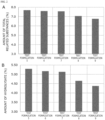
- Fig. 2 shows the test results.
- Fig. 2A is a bar graph showing the amounts of the total related substances (%) of Test Formulations after the storage for 4 weeks.
- Fig. 2B is a bar graph showing the amounts of the hydrolysate (%) of Test Formulations after the storage for 4 weeks.
- the generation of the related substances and the hydrolysate of sepetaprost was suppressed in Test Formulations 8 and 9 containing sodium edetate at 0.05% (w/v) or more, as compared with the generation in Test Formulation 5 containing no sodium edetate.
- Test Formulations 10 to 13 were prepared as shown in Table 3 in accordance with the same method as Test Formulation 1. [Table 3] Composition [% (w/v)] Test Formulation 10 Test Formulation 11 Test Formulation 12 Test Formulation 13 Sepetaprost 0.003 0.003 0.003 0.003 Sodium citrate hydrate 0.3 0.3 0.3 0.3 Polysorbate 80 0.1 0.1 0.1 0.1 0.1 D-Mannitol 4 4 4 4 Benzalkonium chloride 0.004 0.004 0.004 0.004 Sodium edetate 0.06 0.096 0.096 0.096 0.096 Sodium hydroxide / diluted hydrochloric acid q.s. q.s. q.s. Water for injection q.s. q.s. q.s. q.s. pH 6.5 6.0 6.5 7.0
- E. coli Escherichia coli
- Pseudomonas aeruginosa P. aeruginosa
- Staphylococcus aureus S. aureus
- Candida albicans C . albicans
- Aspergillus brasiliensis A. brasiliensis
- Bacterial inoculum suspension was inoculated into each test sample, consisting of each Test Formulation, at a bacterial concentration of 10 5 to 10 6 cfu/mL in the test sample (for all the five species). Specifically, the bacterial inoculum suspensions were prepared at 10 7 to 10 8 cfu/mL, and these bacterial inoculum suspensions were inoculated into the test samples at 10 5 to 10 6 cfu/mL, and the mixtures were uniformly mixed to prepare samples.
- Table 4 shows the test results.
- the test results in Table 4 are shown as the common logarithm of the ratio (B/A) of the number of bacteria measured at the time of the inoculation (B) to the number of bacteria measured at the time of the sampling (A). For example, when it is indicated as "1", it means that the number of viable bacteria at the time of the sampling has decreased to 10% of the number of bacteria inoculated.
- Test Formulations 10 to 13 all conformed to the preservative effectiveness test in accordance with the Japanese Pharmacopoeia and the European Pharmacopoeia, and had sufficient preservative effectiveness.
- Test Formulations 14 to 16 were prepared as shown in Table 5 in accordance with the same method as Test Formulation 1. [Table 5] Composition [% (w/v)] Test Formulation 14 Test Formulation 15 Test Formulation 16 Sepetaprost 0.003 0.003 0.003 Polysorbate 80 0.1 0.1 0.1 0.1 Sodium citrate hydrate 0.3 0.3 0.3 Sodium chloride 0.8 - - D-Mannitol - 4 - Glycerin - - 2.3 Sodium hydroxide / diluted hydrochloric acid q.s. q.s. q.s. Water for injection q.s. q.s. q.s. pH 6.5 6.5 6.5
- test Formulations 14 to 16 were placed in test tubes and used as test samples.
- the bacterial inoculum suspension was inoculated into each test sample, consisting of each Test Formulation, at a bacterial concentration of 2.5 ⁇ 10 5 cfu/mL in the test sample.
- the bacterial inoculum suspension was prepared at 2.5 ⁇ 10 7 cfu/mL and inoculated into the test samples at 2.5 ⁇ 10 5 cfu/mL, followed by uniform mixing to prepare samples. These samples were stored at 20 to 25°C under the light-shielded condition. Photographs showing the appearances of the test samples 21 days after the seeding of the test bacterium were taken.
- Fig. 3 shows the test results.
- Fig. 3 is the photographs showing the appearances of the test samples 21 days after the seeding of the test bacterium.
- the appearance of Test Formulation 14 containing sodium chloride as the tonicity agent remained clear even 21 days after the seeding of the test bacterium, and it was not able to be confirmed that the test bacterium ( A . brasiliensis ) proliferated therein.
- Test Formulation 15 containing mannitol as the tonicity agent and Test Formulation 16 containing glycerin as the tonicity agent, white floating matter was meanwhile observed in the liquids thereof 21 days after the seeding of the test bacterium, and it was confirmed that the test bacterium ( A . brasiliensis ) proliferated. This suggested that the ionic tonicity agent enabled imparting preservative effectiveness to the ophthalmic composition.
- Test Formulations 17 to 23 were prepared as shown in Table 6 in accordance with the same method as Test Formulation 1. [Table 6] Composition [% (w/v)] Test Formulation 17 Test Formulation 18 Test Formulation 19 Test Formulation 20 Test Formulation 21 Test Formulation 22 Test Formula -tion 23 Sepetaprost 0.0003 0.0003 0.0003 0.0003 0.0003 0.0003 Sodium citrate hydrate 0.3 0.3 0.3 0.3 0.3 0.3 0.3 0.3 0.3 0.3 0.3 0.3 Polysorbate 80 0.1 0.1 0.1 0.1 0.1 0.05 0.05 Sodium chloride 0.8 - - - - - - - D-Mannitol - 4 4 4 4 4 4 4 4 4 4 4 4 4 4 4 Benzalkonium chloride 0.005 0.0075 0.005 0.0075 0.005 0.0075 0.005 0.0075 0.005 0.005 0.0075 0.005 Sodium edetate 0.3 0.3 0.3 0.12 0.12 0.12 0.12 Sodium hydroxide /
- the preservative effectiveness test was performed in accordance with the Japanese Pharmacopoeia 15th edition, the United States Pharmacopoeia 33rd edition, and the European Pharmacopoeia 7th edition.
- Escherichia coli E. coli
- Pseudomonas aeruginosa P. aeruginosa
- Staphylococcus aureus S. aureus
- Candida albicans C . albicans
- Aspergillus brasiliensis A. brasiliensis
- Bacterial inoculum suspension was inoculated into each test sample, consisting of each Test Formulation, at a bacterial concentration of 10 5 to 10 6 cfu/mL in the test sample (for all the five species). Specifically, the bacterial inoculum suspensions were prepared at 10 7 to 10 8 cfu/mL, and these bacterial inoculum suspensions were inoculated into the test samples at 10 5 to 10 6 cfu/mL, followed by uniform mixing to prepare samples.
- Table 7 shows the test results. Table 7 is the results of conformance/nonconformance determination in preservative effectiveness tests in accordance with criteria of the Japanese Pharmacopoeia 15th edition, the United States Pharmacopoeia 33rd edition, and the European Pharmacopoeia 7th edition. [Table 7] Determination Test Formulation 17 Test Formulation 18 Test Formulation 19 Test Formulation 20 Test Formulation 21 Test Formulation 22 Test Formulation 23 JP Nonconformance Conformance Conformance Conformance Conformance Conformance Conformance Conformance Conformance Conformance Conformance Conformance Conformance USP Nonconformance Conformance Conformance Conformance Conformance Conformance Conformance Conformance Conformance Conformance Conformance Conformance Conformance Conformance Conformance Conformance USP Nonconformance Conformance Conformance Conformance Conformance Conformance Conformance Conformance Conformance Conformance Conformance Conformance Conformance Conformance Conformance Conformance USP Nonconformance Conformance Conformance Conformance Conformance Conformance Conformance Conformance Conformance Conformance Conformance Conformance Conformance Conformance Conformance Conformance Conformance Conformance Conformance USP
- Test Formulations 18 to 23 conformed to the preservative effectiveness tests in accordance with the Japanese Pharmacopoeia, the United States Pharmacopoeia, and the European Pharmacopoeia, and had sufficient preservative effectiveness. Meanwhile, Test Formulation 17 conformed to none of the preservative effectiveness tests in accordance with the Japanese Pharmacopoeia, the United States Pharmacopoeia, and the European Pharmacopoeia.
- test results of Test Formulations 17 and 19 showed that while the sample containing benzalkonium chloride as a preservative and the nonionic tonicity agent as the tonicity agent had sufficient preservative effectiveness, the sample containing the ionic tonicity agent instead of the nonionic tonicity agent had insufficient preservative effectiveness. That is, it was revealed that in the case where the ionic tonicity agent was blended in the presence of benzalkonium chloride, the preservative effectiveness was reduced, and that the blending the nonionic tonicity agent enabled maintaining the preservative effectiveness.
- Test Formulation (total volume: 100 mL, pH: 6.5, components: 0.002 g of sepetaprost, 0.3 g of sodium citrate hydrate, 0.1 g of polysorbate 80, 0.75 g of sodium chloride, 0.12 g of sodium edetate hydrate, a suitable amount of a pH adjuster (sodium hydroxide or diluted hydrochloric acid), and a suitable amount of water for injection) was prepared in accordance with a common method in the art.
- a pH adjuster sodium hydroxide or diluted hydrochloric acid
- the prepared Test Formulation was subjected to filtration sterilization, or was filled into a unit dose eye drop container or a PFMD container (OSD bottle available from Aptar Group, Inc.), followed by gamma ray sterilization to provide an aseptic formulation.
- the content of sepetaprost in the Test Formulation subjected to the sterilization processing was quantified by high performance liquid chromatography, and the ratio thereof to the label claim (%) was calculated.
- Table 8 shows the contents of sepetaprost in the Test Formulations subjected to the types of sterilization (the ratio thereof to the label claim %).
- Sepetaprost content (ratio of content to label claim %) Filtration sterilization 99.5
- Gamma ray sterilization at 25 kGy (unit dose eye drop container) 5.9
- Gamma ray sterilization at 25 kGy (PFMD container) 6.4
- the present invention enables enhancing the stability of sepetaprost in an ophthalmic composition and providing an ophthalmic composition wherein its stability can be maintained even on exposure to high temperatures in the distribution process or the storage process.
- the present invention enables providing an ophthalmic composition wherein the preservative effectiveness is maintained by the use of a suitable type of tonicity agent, in addition to maintaining the stability of sepetaprost.
- the present invention enables providing an ophthalmic composition wherein high stability of sepetaprost in the ophthalmic composition is maintained by the selection of a method for sterilizing the ophthalmic composition containing sepetaprost.
Landscapes
- Health & Medical Sciences (AREA)
- Chemical & Material Sciences (AREA)
- Life Sciences & Earth Sciences (AREA)
- Medicinal Chemistry (AREA)
- Pharmacology & Pharmacy (AREA)
- Animal Behavior & Ethology (AREA)
- General Health & Medical Sciences (AREA)
- Public Health (AREA)
- Veterinary Medicine (AREA)
- Epidemiology (AREA)
- Chemical Kinetics & Catalysis (AREA)
- Engineering & Computer Science (AREA)
- General Chemical & Material Sciences (AREA)
- Ophthalmology & Optometry (AREA)
- Oil, Petroleum & Natural Gas (AREA)
- Nuclear Medicine, Radiotherapy & Molecular Imaging (AREA)
- Bioinformatics & Cheminformatics (AREA)
- Organic Chemistry (AREA)
- Proteomics, Peptides & Aminoacids (AREA)
- Biochemistry (AREA)
- Molecular Biology (AREA)
- Inorganic Chemistry (AREA)
- Medicinal Preparation (AREA)
- Pharmaceuticals Containing Other Organic And Inorganic Compounds (AREA)
Applications Claiming Priority (2)
| Application Number | Priority Date | Filing Date | Title |
|---|---|---|---|
| JP2022071175 | 2022-04-22 | ||
| PCT/JP2023/015885 WO2023204297A1 (ja) | 2022-04-22 | 2023-04-21 | セペタプロストを含有する眼科用組成物 |
Publications (2)
| Publication Number | Publication Date |
|---|---|
| EP4512404A1 true EP4512404A1 (de) | 2025-02-26 |
| EP4512404A4 EP4512404A4 (de) | 2026-04-29 |
Family
ID=88419962
Family Applications (1)
| Application Number | Title | Priority Date | Filing Date |
|---|---|---|---|
| EP23791945.1A Pending EP4512404A4 (de) | 2022-04-22 | 2023-04-21 | Zusammensetzung zur ophthalmischen verwendung mit sepetaprost |
Country Status (8)
| Country | Link |
|---|---|
| EP (1) | EP4512404A4 (de) |
| JP (1) | JPWO2023204297A1 (de) |
| KR (1) | KR20250005311A (de) |
| CN (1) | CN119072313A (de) |
| AU (1) | AU2023257781A1 (de) |
| MX (1) | MX2024012905A (de) |
| TW (1) | TW202404569A (de) |
| WO (1) | WO2023204297A1 (de) |
Family Cites Families (10)
| Publication number | Priority date | Publication date | Assignee | Title |
|---|---|---|---|---|
| JP2011013651A (ja) | 2009-07-03 | 2011-01-20 | Mitsumasa Maeda | フレキシブルディスプレイのれん |
| DK2653468T3 (en) | 2009-07-28 | 2016-06-06 | Ono Pharmaceutical Co | Bicyclic compound AND USE THEREOF FOR MEDICAL PURPOSES |
| JP5463262B2 (ja) | 2010-11-09 | 2014-04-09 | 品川リフラクトリーズ株式会社 | 高炉主樋 |
| US9029574B2 (en) | 2011-01-27 | 2015-05-12 | Ono Pharmaceutical Co., Ltd. | Bicyclic compound and use thereof for medical purposes |
| EP3480191B1 (de) | 2016-06-30 | 2021-09-01 | ONO Pharmaceutical Co., Ltd. | Verfahren zur herstellung einer bicyclischen verbindung |
| WO2019124489A1 (ja) | 2017-12-21 | 2019-06-27 | 参天製薬株式会社 | セペタプロストとep2アゴニストとの組み合わせ医薬 |
| EP4338751B1 (de) | 2017-12-21 | 2025-09-03 | Santen Pharmaceutical Co., Ltd. | Kombination von sepetaprost und netarsudil zur verwendung in der prophylaxe oder behandlung von glaukom oder augenhochdruck |
| SG11202005620QA (en) | 2017-12-21 | 2020-07-29 | Ono Pharmaceutical Co | THERAPEUTIC AGENT FOR GLAUCOMA COMPRISING FP AGONIST AND ß BLOCKER |
| WO2021145356A1 (ja) * | 2020-01-15 | 2021-07-22 | 参天製薬株式会社 | 近視の治療、近視の予防および/または近視の進行抑制のための医薬組成物 |
| KR20230051199A (ko) | 2020-08-13 | 2023-04-17 | 산텐 세이야꾸 가부시키가이샤 | 세페타프로스트를 함유하는 의약 제제 |
-
2023
- 2023-04-21 EP EP23791945.1A patent/EP4512404A4/de active Pending
- 2023-04-21 AU AU2023257781A patent/AU2023257781A1/en active Pending
- 2023-04-21 JP JP2024516328A patent/JPWO2023204297A1/ja active Pending
- 2023-04-21 KR KR1020247038121A patent/KR20250005311A/ko active Pending
- 2023-04-21 WO PCT/JP2023/015885 patent/WO2023204297A1/ja not_active Ceased
- 2023-04-21 TW TW112114923A patent/TW202404569A/zh unknown
- 2023-04-21 CN CN202380035554.2A patent/CN119072313A/zh active Pending
-
2024
- 2024-10-18 MX MX2024012905A patent/MX2024012905A/es unknown
Also Published As
| Publication number | Publication date |
|---|---|
| KR20250005311A (ko) | 2025-01-09 |
| WO2023204297A1 (ja) | 2023-10-26 |
| MX2024012905A (es) | 2024-11-08 |
| JPWO2023204297A1 (de) | 2023-10-26 |
| TW202404569A (zh) | 2024-02-01 |
| AU2023257781A1 (en) | 2024-12-12 |
| CN119072313A (zh) | 2024-12-03 |
| EP4512404A4 (de) | 2026-04-29 |
Similar Documents
| Publication | Publication Date | Title |
|---|---|---|
| US10864159B2 (en) | Method and composition for treating ocular hypertension and glaucoma | |
| US6576649B1 (en) | Method for treating pharmaceutical compositions | |
| RU2745317C2 (ru) | Фармацевтическая композиция, включающая дорзоламид и бримонидин | |
| JP2023093601A (ja) | 眼科用製品 | |
| US20220125801A1 (en) | Ophthalmic composition of bimatoprost | |
| EP4501329A1 (de) | Sterilisationsverfahren für pharmazeutische zubereitung und verpackung | |
| AU2023257781A1 (en) | Composition for ophthalmic use containing sepetaprost | |
| WO2025079591A1 (ja) | セペタプロストを含有する点眼液 | |
| JP2022123792A (ja) | 水性医薬組成物 | |
| US11324829B2 (en) | Antiseptic agent comprising meglumine or salt thereof | |
| JP2024090829A (ja) | 滅菌容器に収容されるエピナスチン含有水性医薬組成物 |
Legal Events
| Date | Code | Title | Description |
|---|---|---|---|
| STAA | Information on the status of an ep patent application or granted ep patent |
Free format text: STATUS: THE INTERNATIONAL PUBLICATION HAS BEEN MADE |
|
| PUAI | Public reference made under article 153(3) epc to a published international application that has entered the european phase |
Free format text: ORIGINAL CODE: 0009012 |
|
| STAA | Information on the status of an ep patent application or granted ep patent |
Free format text: STATUS: REQUEST FOR EXAMINATION WAS MADE |
|
| 17P | Request for examination filed |
Effective date: 20241118 |
|
| AK | Designated contracting states |
Kind code of ref document: A1 Designated state(s): AL AT BE BG CH CY CZ DE DK EE ES FI FR GB GR HR HU IE IS IT LI LT LU LV MC ME MK MT NL NO PL PT RO RS SE SI SK SM TR |
|
| DAV | Request for validation of the european patent (deleted) | ||
| DAX | Request for extension of the european patent (deleted) | ||
| REG | Reference to a national code |
Ref country code: DE Ref legal event code: R079 Free format text: PREVIOUS MAIN CLASS: A61K0031558000 Ipc: A61K0009080000 |
|
| A4 | Supplementary search report drawn up and despatched |
Effective date: 20260330 |
|
| RIC1 | Information provided on ipc code assigned before grant |
Ipc: A61K 9/08 20060101AFI20260324BHEP Ipc: A61K 47/18 20170101ALI20260324BHEP Ipc: A61K 47/02 20060101ALI20260324BHEP Ipc: A61K 47/10 20170101ALI20260324BHEP Ipc: A61K 47/26 20060101ALI20260324BHEP Ipc: A61K 31/558 20060101ALI20260324BHEP Ipc: A61P 27/02 20060101ALI20260324BHEP Ipc: A61P 27/06 20060101ALI20260324BHEP |