EP4512510A1 - Abgasdenitrierungsverfahren - Google Patents
Abgasdenitrierungsverfahren Download PDFInfo
- Publication number
- EP4512510A1 EP4512510A1 EP22938406.0A EP22938406A EP4512510A1 EP 4512510 A1 EP4512510 A1 EP 4512510A1 EP 22938406 A EP22938406 A EP 22938406A EP 4512510 A1 EP4512510 A1 EP 4512510A1
- Authority
- EP
- European Patent Office
- Prior art keywords
- denitration
- exhaust gas
- denitration catalyst
- catalyst
- metal
- Prior art date
- Legal status (The legal status is an assumption and is not a legal conclusion. Google has not performed a legal analysis and makes no representation as to the accuracy of the status listed.)
- Pending
Links
Images



Classifications
-
- B—PERFORMING OPERATIONS; TRANSPORTING
- B01—PHYSICAL OR CHEMICAL PROCESSES OR APPARATUS IN GENERAL
- B01D—SEPARATION
- B01D53/00—Separation of gases or vapours; Recovering vapours of volatile solvents from gases; Chemical or biological purification of waste gases, e.g. engine exhaust gases, smoke, fumes, flue gases, aerosols
- B01D53/34—Chemical or biological purification of waste gases
- B01D53/74—General processes for purification of waste gases; Apparatus or devices specially adapted therefor
- B01D53/86—Catalytic processes
- B01D53/8621—Removing nitrogen compounds
- B01D53/8625—Nitrogen oxides
- B01D53/8628—Processes characterised by a specific catalyst
-
- B—PERFORMING OPERATIONS; TRANSPORTING
- B01—PHYSICAL OR CHEMICAL PROCESSES OR APPARATUS IN GENERAL
- B01J—CHEMICAL OR PHYSICAL PROCESSES, e.g. CATALYSIS OR COLLOID CHEMISTRY; THEIR RELEVANT APPARATUS
- B01J23/00—Catalysts comprising metals or metal oxides or hydroxides, not provided for in group B01J21/00
- B01J23/16—Catalysts comprising metals or metal oxides or hydroxides, not provided for in group B01J21/00 of arsenic, antimony, bismuth, vanadium, niobium, tantalum, polonium, chromium, molybdenum, tungsten, manganese, technetium or rhenium
- B01J23/24—Chromium, molybdenum or tungsten
- B01J23/28—Molybdenum
-
- B—PERFORMING OPERATIONS; TRANSPORTING
- B01—PHYSICAL OR CHEMICAL PROCESSES OR APPARATUS IN GENERAL
- B01J—CHEMICAL OR PHYSICAL PROCESSES, e.g. CATALYSIS OR COLLOID CHEMISTRY; THEIR RELEVANT APPARATUS
- B01J23/00—Catalysts comprising metals or metal oxides or hydroxides, not provided for in group B01J21/00
- B01J23/16—Catalysts comprising metals or metal oxides or hydroxides, not provided for in group B01J21/00 of arsenic, antimony, bismuth, vanadium, niobium, tantalum, polonium, chromium, molybdenum, tungsten, manganese, technetium or rhenium
- B01J23/24—Chromium, molybdenum or tungsten
- B01J23/30—Tungsten
-
- B—PERFORMING OPERATIONS; TRANSPORTING
- B01—PHYSICAL OR CHEMICAL PROCESSES OR APPARATUS IN GENERAL
- B01J—CHEMICAL OR PHYSICAL PROCESSES, e.g. CATALYSIS OR COLLOID CHEMISTRY; THEIR RELEVANT APPARATUS
- B01J37/00—Processes, in general, for preparing catalysts; Processes, in general, for activation of catalysts
- B01J37/02—Impregnation, coating or precipitation
- B01J37/03—Precipitation; Co-precipitation
- B01J37/031—Precipitation
-
- B—PERFORMING OPERATIONS; TRANSPORTING
- B01—PHYSICAL OR CHEMICAL PROCESSES OR APPARATUS IN GENERAL
- B01J—CHEMICAL OR PHYSICAL PROCESSES, e.g. CATALYSIS OR COLLOID CHEMISTRY; THEIR RELEVANT APPARATUS
- B01J37/00—Processes, in general, for preparing catalysts; Processes, in general, for activation of catalysts
- B01J37/08—Heat treatment
-
- B—PERFORMING OPERATIONS; TRANSPORTING
- B01—PHYSICAL OR CHEMICAL PROCESSES OR APPARATUS IN GENERAL
- B01D—SEPARATION
- B01D2251/00—Reactants
- B01D2251/20—Reductants
- B01D2251/206—Ammonium compounds
- B01D2251/2062—Ammonia
-
- B—PERFORMING OPERATIONS; TRANSPORTING
- B01—PHYSICAL OR CHEMICAL PROCESSES OR APPARATUS IN GENERAL
- B01D—SEPARATION
- B01D2251/00—Reactants
- B01D2251/20—Reductants
- B01D2251/206—Ammonium compounds
- B01D2251/2067—Urea
-
- B—PERFORMING OPERATIONS; TRANSPORTING
- B01—PHYSICAL OR CHEMICAL PROCESSES OR APPARATUS IN GENERAL
- B01D—SEPARATION
- B01D2255/00—Catalysts
- B01D2255/20—Metals or compounds thereof
- B01D2255/207—Transition metals
- B01D2255/20723—Vanadium
-
- B—PERFORMING OPERATIONS; TRANSPORTING
- B01—PHYSICAL OR CHEMICAL PROCESSES OR APPARATUS IN GENERAL
- B01D—SEPARATION
- B01D2255/00—Catalysts
- B01D2255/20—Metals or compounds thereof
- B01D2255/207—Transition metals
- B01D2255/20769—Molybdenum
-
- B—PERFORMING OPERATIONS; TRANSPORTING
- B01—PHYSICAL OR CHEMICAL PROCESSES OR APPARATUS IN GENERAL
- B01D—SEPARATION
- B01D2255/00—Catalysts
- B01D2255/20—Metals or compounds thereof
- B01D2255/207—Transition metals
- B01D2255/20776—Tungsten
-
- B—PERFORMING OPERATIONS; TRANSPORTING
- B01—PHYSICAL OR CHEMICAL PROCESSES OR APPARATUS IN GENERAL
- B01J—CHEMICAL OR PHYSICAL PROCESSES, e.g. CATALYSIS OR COLLOID CHEMISTRY; THEIR RELEVANT APPARATUS
- B01J23/00—Catalysts comprising metals or metal oxides or hydroxides, not provided for in group B01J21/00
- B01J23/16—Catalysts comprising metals or metal oxides or hydroxides, not provided for in group B01J21/00 of arsenic, antimony, bismuth, vanadium, niobium, tantalum, polonium, chromium, molybdenum, tungsten, manganese, technetium or rhenium
- B01J23/24—Chromium, molybdenum or tungsten
Definitions
- the present invention relates to an exhaust gas denitration method.
- nitrogen oxides As one class of the pollutants exhausted to the atmosphere by combustion of fuel, nitrogen oxides (NO, NO 2 , NO 3 , N 2 O, N 2 O 3 , N 2 O 4 , and N 2 O 5 ) can be exemplified. Nitrogen oxides cause acid rain, ozone layer destruction, photochemical smog, and the like, and have serious influences on the environment and human body, and therefore, the treatment thereof has become an important problem.
- a selective catalytic reduction (NH 3 -SCR) using ammonia (NH 3 ) as a reducing agent is known.
- catalysts including titanium oxide as a carrier and a vanadium oxide supported thereon are widely used as the catalyst in the selective catalytic reduction. Titanium oxide is the best carrier due to low activity thereof against sulfur oxides and high stability.
- a vanadium oxide plays a major role in NH 3 -SCR
- the vanadium oxide oxidizes SO 2 to SO 3 , and thus could not be supported on the catalyst in a content of about 1 wt% or more.
- a catalyst in which vanadium oxide is supported on a titanium oxide carrier hardly reacts at a low temperature, it was unavoidable to use the catalyst at a high temperature of 350 to 400°C.
- the present inventors found a denitration catalyst containing vanadium pentoxide in an amount of 43 wt% or more, having a BET specific surface area of 30 m 2 /g or more, and being used for denitration at 200°C or less (Patent Document 2).
- the denitration catalyst described in Patent Document 2 can achieve a preferable denitration ratio at 200°C or lower, since in many cases, water vapor and SO 2 coexist under the situation where the denitration catalyst is actually used, there was still room for improvement in the denitration ratio in the presence of water vapor and SO 2 .
- the present inventors have found a denitration method capable of achieving a preferable denitration ratio particularly at 200°C or lower in the presence of water vapor and SO 2 .
- An object of the present invention is to provide a denitration method having an excellent denitration ratio at a low temperature in the presence of water vapor and SO 2 in the selective catalytic reduction using ammonia as a reducing agent.
- the present invention can provide an exhaust gas denitration method excellent in the denitration ratio at a low temperature in the presence of water vapor and SO 2 in a selective catalytic reduction using ammonia as a reducing agent.
- the exhaust gas denitration method includes bringing a denitration catalyst including a vanadium oxide and a second metal into contact with an exhaust gas containing SO 2 .
- a method known as a selective reduction catalytic reaction using anhydrous ammonia, ammonia water, or urea as the reducing agent can be used.
- the exhaust gas denitration method according to the present embodiment can achieve a high denitration ratio even when the denitration reaction is performed under a water vapor atmosphere and a SO 2 atmosphere.
- the concentration of SO 2 in the denitration reaction may be, for example, 1 ppm or more, 2 ppm or more, 5 ppm or more, 15 ppm or more, 100 ppm or more, or 1,000 ppm or more.
- the denitration catalyst according to the present embodiment includes 50 mass% or more of a vanadium oxide in the denitration catalyst, in terms of vanadium pentoxide, and includes a second metal.
- the second metal is at least one of W or Mo.
- the denitration catalyst according to the present embodiment exhibits a high denitration ratio even in a low temperature environment, in the presence of water vapor, and in the presence of SO 2 , as compared with conventionally used denitration catalysts.
- the denitration ratio may be expressed as a NO conversion ratio.
- the NO conversion ratio is represented by the following Formula (1). NO conversion ratio (%) - (NO concentration before denitration reaction - NO concentration after denitration reaction)/(NO concentration before denitration reaction) ⁇ 100 (1)
- vanadium oxide used in the denitration catalyst according to the present embodiment examples include vanadium(II) oxide (VO), vanadium(III) trioxide (V 2 O 3 ), vanadium(IV) tetraoxide (V 2 O 4 ), and vanadium(V) pentoxide (V 2 O 5 ).
- vanadium oxide vanadium pentoxide is preferable.
- Atom V of vanadium pentoxide may have a valence of 5, 4, 3, or 2 during the denitration reaction.
- the vanadium oxide is contained in the denitration catalyst in an amount of 50 wt% or more, and more preferably, 60 wt% or more, in terms of vanadium pentoxide.
- the second metal used in the denitration catalyst according to the present embodiment is at least one of W or Mo.
- the denitration catalyst containing a vanadium oxide as a main component can achieve a high denitration ratio even in a low temperature environment, in the presence of water vapor, and in the presence of SO 2 , as compared with conventional denitration catalysts.
- the content of the second metal may be 1 wt% or more and 40 wt% or less, and is preferably 2 wt% or more and 38 wt% or less.
- the content of the second metal is more preferably 2 wt% or more and 10 wt% or less.
- the content of the second metal is more preferably 2 wt% or more and 7 wt% or less.
- the content of the second metal is more preferably 3 wt% or more and 7 wt% or less.
- the content of the second metal is more preferably 3 wt% or more and 5 wt% or less.
- the content of the second metal is more preferably 3 wt% or more and 4 wt% or less.
- the denitration catalyst is obtained by, for example, calcining a precursor containing a vanadium oxide and a second metal.
- the temperature during the calcining is preferably 260 to 400°C, more preferably 260 to 350°C, and still more preferably 260 to 320°C.
- the denitration catalyst according to the present embodiment may contain other substances as long as the effects of the present invention are not impaired.
- the denitration catalyst according to the present embodiment preferably further contains carbon in addition to the above. It is considered that when the denitration catalyst contains carbon as an impurity, strain occurs in lines or planes in the crystal lattice in the above-described vanadium oxide crystal structure, which attains a high denitration ratio in a low-temperature environment.
- the content of carbon is preferably 0.05 wt% or more and 3.21 wt% or less in the denitration catalyst.
- the carbon content is more preferably 0.07 wt% or more and 3.21 wt% or less.
- the carbon content is more preferably 0.11 wt% or more and 3.21 wt% or less.
- the carbon content is more preferably 0.12 wt% or more and 3.21 wt% or less.
- the carbon content is more preferably 0.14 wt% or more and 3.21 wt% or less.
- the carbon content is more preferably 0.16 wt% or more and 3.21 wt% or less.
- the carbon content is more preferably 0.17 wt% or more and 3.21 wt% or less.
- the carbon content is more preferably 0.70 wt% or more and 3.21 wt% or less.
- the nitration catalyst according to the present embodiment is preferably used in the denitration reaction at 350°C or lower.
- the present denitration reaction is preferable, because a high denitration ratio can be obtained even at a reaction temperature of 300°C or less.
- the present denitration reaction is preferable, because oxidation of SO 2 to SO 3 does not occur, when the reaction is carried out at a reaction temperature of 200°C or lower.
- the reaction temperature is more preferably 100 to 250°C, and still more preferably 160 to 200°C.
- the reaction temperature may be 80 to 150°C.
- the denitration catalyst consisting of vanadium(V) pentoxide (V 2 O 5 ) alone as the denitration catalyst is used at a reaction temperature of 300°C or more, the catalyst itself is changed, that is, for example, the specific surface area is decreased, and thus the reaction temperature cannot be set to 300°C or more.
- the denitration catalyst according to the present embodiment including the second metal can maintain a high denitration ratio, even when the reaction temperature is set to 300°C or higher.
- the denitration catalyst according to the present embodiment can be produced, for example, as follows. First, a precursor containing each component contained in the denitration catalyst is prepared. Vanadium oxide contained in the denitration catalyst is contained in the precursor as, for example, an aqueous solution of a vanadate. As the vanadate, ammonium metavanadate, magnesium vanadate, strontium vanadate, barium vanadate, zinc vanadate, lead vanadate, lithium vanadate, etc. may be used.
- the second metal in the denitration catalyst is contained in the precursor by, for example, mixing a nitrate, a chloride, a sulfate, a chelate complex, a hydrate, an ammonium compound, a phosphate compound, or the like of the respective metals with the aqueous solution of vanadic acid.
- the chelate complex include complexes of oxalic acid, citric acid, or the like.
- the prepared precursor solution of the denitration catalyst is evaporated to dryness to obtain a powder of the precursor of the denitration catalyst.
- the powder of the denitration catalyst is obtained by a calcining step of calcining the powder of the precursor at a predetermined temperature for a predetermined time.
- a honeycomb catalyst can be obtained by preparing a catalyst dispersion liquid in which the powder of the denitration catalyst obtained as described above is dispersed in a solvent containing a component such as a binder, repeating a step of immersing a known honeycomb molded body in the catalyst dispersion liquid and drying the dispersion liquid once or plural times, and then carrying out a calcining step of calcining the honeycomb molded body at a predetermined temperature for a predetermined time.
- the honeycomb catalyst also can be obtained by preparing a concentrated solution obtained by concentrating the precursor solution of the denitration catalyst, repeating immersing a known honeycomb molded body in the concentrated solution and drying the solution once or plural times, and then carrying out a calcining step of calcining the obtained honeycomb molded body at a predetermined temperature for a predetermined time.
- the calcining temperature in the calcining step is preferably 260 to 400°C, more preferably 260 to 350°C, and still more preferably 260 to 320°C.
- a precursor complex was synthesized by dissolving 4.96 g (42.4 mmol) of ammonium vanadate (NH 4 VO 3 ) and 11.5 g (127.8 mmol) of oxalic acid ((COOH) 2 ) in pure water. Hexaammonium heptamolybdate tetrahydrate having a molar amount of 2.245 mmol with respect to Mo atom was added to the precursor complex.
- the obtained vanadium-heterometallic complex mixture was calcined twice at a temperature of 300°C for 4 hours in an electric furnace to obtain a denitration catalyst of Example 2.
- the amount of ammonium vanadate as a raw material was adjusted so that a total weight ratio of MoO 3 in terms of metal oxide (MoO 3 ) was 7.7 wt% (5.0 mol%) per Mo atom in the produced denitration catalyst.
- a denitration catalyst of Comparative Example 1 was prepared in the same manner as in Examples 1 and 2, except that the amounts of ammonium vanadate (NH 4 VO 3 ) and oxalic acid ((COOH) 2 ) used were as shown in Table 1.
- Table 1 Vanadium oxide Second metal Amount charged NH 4 VO 3 (mmol) Blending Total amount in terms of metal oxide (mol%) Substance name blended Amount charged (mmol)
- Example 1 42.31 (NH 4 ) 6 H 2 W 12 O 40 ⁇ nH 2 O 1.535 3.5
- FIG. 1 is a graph comparing the NO conversion ratio of the denitration catalyst of Example 1 and the NO conversion ratio of the denitration catalyst of Comparative Example 1.
- the reaction temperature was set to 150°C, Ar gas containing NO (250 ppm), NH 3 (250 ppm), SO 2 (100 ppm), and 4 vol% of O 2 was used, and the gas flow rate was set to 250 mL/min -1 .
- FIG. 1 it was confirmed that with the denitration catalyst of Example 1, a high NO conversion ratio was obtained as compared with the denitration catalyst of Comparative Example 1.
- FIG. 2 is a graph showing a relationship between the reaction temperature and the NO conversion ratio of the denitration catalysts according to Examples and a Comparative Example.
- the vertical axis of FIG. 2 represents the NO conversion ratio
- the horizontal axis of FIG. 2 represents the reaction temperature (°C).
- the conditions of the reaction gas were such that a reaction gas containing 10 vol% of H 2 O relative to the reaction gas of FIG. 1 was used.
- FIG. 2 it was confirmed that with the denitration catalyst of each Example, a high NO conversion ratio was obtained in the presence of water vapor and in the presence of SO 2 as compared with the denitration catalyst of Comparative Example 1.
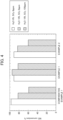
- FIG. 3 is a graph comparing denitration ratios of denitration catalysts of Examples and a Comparative Example when the reaction temperature was set to 150°C.
- "0% H 2 O” in FIG. 3 was the same as the reaction gas in FIG. 1 , except that SO 2 (100 ppm) was not contained.
- "10% H 2 O” was the same as the reaction gas in FIG. 1 , except that SO 2 (100 ppm) was not contained and instead 10% by volume of H 2 O was contained.
- “10% H 2 O, SO 2 100 ppm” was a condition in which a reaction gas containing 10% by volume of H 2 O relative to the reaction gas in FIG. 1 was used.
- the conditions in FIG. 4 were the same as those in FIG.
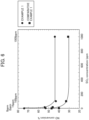
- FIG. 6 is a graph comparing NO conversion rates of the denitration catalysts of Example 1 and Comparative Example 1 when the SO 2 concentration in the reaction gas was changed.
- a test was conducted at a reaction temperature of 150°C by further adding 0 ppm, 2 ppm, 15 ppm, 100 ppm, or 1,000 ppm of SO 2 to the reaction gas of "10% H 2 O" in FIG. 3 .
- the vertical axis of FIG. 6 represents the NO conversion ratio
- the horizontal axis of FIG. 6 represents the SO 2 concentration in the reaction gas.
- FIG. 6 it was confirmed that the denitration catalyst of Example 1 achieves a higher NO conversion ratio than the denitration catalyst of Comparative Example 1 even when the SO 2 concentration increased.
Landscapes
- Chemical & Material Sciences (AREA)
- Engineering & Computer Science (AREA)
- Chemical Kinetics & Catalysis (AREA)
- Materials Engineering (AREA)
- Organic Chemistry (AREA)
- Environmental & Geological Engineering (AREA)
- Thermal Sciences (AREA)
- Physics & Mathematics (AREA)
- Health & Medical Sciences (AREA)
- Biomedical Technology (AREA)
- Analytical Chemistry (AREA)
- General Chemical & Material Sciences (AREA)
- Oil, Petroleum & Natural Gas (AREA)
- Exhaust Gas Treatment By Means Of Catalyst (AREA)
- Catalysts (AREA)
Applications Claiming Priority (1)
| Application Number | Priority Date | Filing Date | Title |
|---|---|---|---|
| PCT/JP2022/018036 WO2023203603A1 (ja) | 2022-04-18 | 2022-04-18 | 排ガスの脱硝方法 |
Publications (2)
| Publication Number | Publication Date |
|---|---|
| EP4512510A1 true EP4512510A1 (de) | 2025-02-26 |
| EP4512510A4 EP4512510A4 (de) | 2026-03-04 |
Family
ID=86395822
Family Applications (1)
| Application Number | Title | Priority Date | Filing Date |
|---|---|---|---|
| EP22938406.0A Pending EP4512510A4 (de) | 2022-04-18 | 2022-04-18 | Abgasdenitrierungsverfahren |
Country Status (3)
| Country | Link |
|---|---|
| EP (1) | EP4512510A4 (de) |
| JP (1) | JP7278555B1 (de) |
| WO (1) | WO2023203603A1 (de) |
Family Cites Families (6)
| Publication number | Priority date | Publication date | Assignee | Title |
|---|---|---|---|---|
| JP2004275852A (ja) | 2003-03-14 | 2004-10-07 | Mitsubishi Heavy Ind Ltd | 排煙脱硝触媒及びその製造方法 |
| CN108367275B (zh) | 2016-09-12 | 2021-09-21 | 中国电力株式会社 | 脱硝催化剂及其制造方法 |
| SG11202109743TA (en) * | 2019-03-07 | 2021-10-28 | The Chugoku Electric Power Co Inc | Combustion system |
| JP7388653B2 (ja) * | 2019-03-07 | 2023-11-29 | 中国電力株式会社 | 脱硝触媒、及びその製造方法 |
| EP4212233B1 (de) * | 2020-09-08 | 2026-04-08 | The Chugoku Electric Power Co., Inc. | Denitrierungskatalysatorformkörper und verfahren zur herstellung eines denitrierungskatalysatorformkörpers |
| WO2022157971A1 (ja) * | 2021-01-25 | 2022-07-28 | 中国電力株式会社 | 脱硝触媒及びその製造方法 |
-
2022
- 2022-04-18 EP EP22938406.0A patent/EP4512510A4/de active Pending
- 2022-04-18 WO PCT/JP2022/018036 patent/WO2023203603A1/ja not_active Ceased
- 2022-04-18 JP JP2022550220A patent/JP7278555B1/ja active Active
Also Published As
| Publication number | Publication date |
|---|---|
| WO2023203603A1 (ja) | 2023-10-26 |
| EP4512510A4 (de) | 2026-03-04 |
| JPWO2023203603A1 (de) | 2023-10-26 |
| JP7278555B1 (ja) | 2023-05-22 |
Similar Documents
| Publication | Publication Date | Title |
|---|---|---|
| EP3511071B1 (de) | Verwendung eines denitrierungskatalysators und herstellungsverfahren dafür | |
| EP2558196B1 (de) | Verwendung einer katalysatorzusammensetzung für die selektive katalytische reduktion von abgasen | |
| EP3074126B1 (de) | Scr-katalysator und verfahren zur verminderung von stickoxiden in abgasen | |
| CN101600499B (zh) | 废气处理催化剂和废气处理系统 | |
| CN1917955B (zh) | 尾气催化剂 | |
| US4138469A (en) | Process for catalytically treating exhaust gas containing NOx in the presence of ammonia gas | |
| KR101798713B1 (ko) | 질소산화물 제거용 scr 촉매 및 그의 제조방법 | |
| DE2450659B2 (de) | Verfahren zum entfernen von ammoniak aus ammoniak enthaltenden gasen | |
| EP3936230B1 (de) | Denitrierungskatalysator und verfahren zur herstellung davon | |
| WO2016188989A1 (en) | Process for the preparation of titania/metal vanadate based catalyst compositions | |
| EP2484441A1 (de) | Quecksilber-oxidationskatalysator und verfahren zu seiner herstellung | |
| EP3075437B1 (de) | Abgasbehandlungssystem | |
| JP7388653B2 (ja) | 脱硝触媒、及びその製造方法 | |
| CN117019143A (zh) | 一种脱硝、脱碳、脱氨三效复合催化剂及其制备方法 | |
| EP4512510A1 (de) | Abgasdenitrierungsverfahren | |
| EP4282523A1 (de) | Denitrierungskatalysator und verfahren zur herstellung davon | |
| EP4512522A1 (de) | Denitrierungskatalysator und verfahren zur herstellung davon sowie denitrierungsverfahren | |
| CN117718038A (zh) | 一种nh3-scr低温抗硫脱硝催化剂及其制备方法与应用 | |
| CN103252232A (zh) | 一种锆掺杂的钒基氧化物催化剂、制备方法及其用途 | |
| KR102634719B1 (ko) | 표면처리층을 포함하는 선택적 환원 촉매 및 그의 제조방법 | |
| TWI835554B (zh) | 寬溫釩基脫硝觸媒的製造方法 | |
| KR102579933B1 (ko) | 실란 열처리를 통한 작용기층을 포함하는 선택적 환원 촉매 및 그의 제조방법 | |
| EP4212244B1 (de) | Beschichtungsflüssigkeit für nox-reduktionskatalysator | |
| KR20240085601A (ko) | 이트륨 황산화물을 포함한 바나듐 촉매 및 이의 제조 방법 | |
| KR20230091060A (ko) | 금속지지체 및 질산암모늄을 이용한 선택적 촉매환원방법 |
Legal Events
| Date | Code | Title | Description |
|---|---|---|---|
| STAA | Information on the status of an ep patent application or granted ep patent |
Free format text: STATUS: THE INTERNATIONAL PUBLICATION HAS BEEN MADE |
|
| PUAI | Public reference made under article 153(3) epc to a published international application that has entered the european phase |
Free format text: ORIGINAL CODE: 0009012 |
|
| STAA | Information on the status of an ep patent application or granted ep patent |
Free format text: STATUS: REQUEST FOR EXAMINATION WAS MADE |
|
| 17P | Request for examination filed |
Effective date: 20241028 |
|
| AK | Designated contracting states |
Kind code of ref document: A1 Designated state(s): AL AT BE BG CH CY CZ DE DK EE ES FI FR GB GR HR HU IE IS IT LI LT LU LV MC MK MT NL NO PL PT RO RS SE SI SK SM TR |
|
| DAV | Request for validation of the european patent (deleted) | ||
| DAX | Request for extension of the european patent (deleted) | ||
| A4 | Supplementary search report drawn up and despatched |
Effective date: 20260130 |
|
| RIC1 | Information provided on ipc code assigned before grant |
Ipc: B01D 53/86 20060101AFI20260126BHEP Ipc: B01J 23/30 20060101ALI20260126BHEP Ipc: B01J 23/28 20060101ALI20260126BHEP Ipc: B01J 37/03 20060101ALI20260126BHEP Ipc: B01J 37/08 20060101ALI20260126BHEP Ipc: B01J 23/24 20060101ALN20260126BHEP |