EP4513367A2 - Semi-aktiver sondierungsrahmen zur sammlung von bedrohungsintelligenz für verschlüsselten verkehr und lernen über vorrichtungen - Google Patents
Semi-aktiver sondierungsrahmen zur sammlung von bedrohungsintelligenz für verschlüsselten verkehr und lernen über vorrichtungen Download PDFInfo
- Publication number
- EP4513367A2 EP4513367A2 EP25150758.8A EP25150758A EP4513367A2 EP 4513367 A2 EP4513367 A2 EP 4513367A2 EP 25150758 A EP25150758 A EP 25150758A EP 4513367 A2 EP4513367 A2 EP 4513367A2
- Authority
- EP
- European Patent Office
- Prior art keywords
- server
- traffic
- client
- handshake
- certificate information
- Prior art date
- Legal status (The legal status is an assumption and is not a legal conclusion. Google has not performed a legal analysis and makes no representation as to the accuracy of the status listed.)
- Pending
Links
Images






Classifications
-
- H—ELECTRICITY
- H04—ELECTRIC COMMUNICATION TECHNIQUE
- H04L—TRANSMISSION OF DIGITAL INFORMATION, e.g. TELEGRAPHIC COMMUNICATION
- H04L63/00—Network architectures or network communication protocols for network security
- H04L63/08—Network architectures or network communication protocols for network security for authentication of entities
- H04L63/0823—Network architectures or network communication protocols for network security for authentication of entities using certificates
-
- G—PHYSICS
- G06—COMPUTING OR CALCULATING; COUNTING
- G06F—ELECTRIC DIGITAL DATA PROCESSING
- G06F21/00—Security arrangements for protecting computers, components thereof, programs or data against unauthorised activity
- G06F21/50—Monitoring users, programs or devices to maintain the integrity of platforms, e.g. of processors, firmware or operating systems
- G06F21/55—Detecting local intrusion or implementing counter-measures
- G06F21/552—Detecting local intrusion or implementing counter-measures involving long-term monitoring or reporting
-
- G—PHYSICS
- G06—COMPUTING OR CALCULATING; COUNTING
- G06F—ELECTRIC DIGITAL DATA PROCESSING
- G06F21/00—Security arrangements for protecting computers, components thereof, programs or data against unauthorised activity
- G06F21/50—Monitoring users, programs or devices to maintain the integrity of platforms, e.g. of processors, firmware or operating systems
- G06F21/55—Detecting local intrusion or implementing counter-measures
- G06F21/554—Detecting local intrusion or implementing counter-measures involving event detection and direct action
-
- H—ELECTRICITY
- H04—ELECTRIC COMMUNICATION TECHNIQUE
- H04L—TRANSMISSION OF DIGITAL INFORMATION, e.g. TELEGRAPHIC COMMUNICATION
- H04L63/00—Network architectures or network communication protocols for network security
- H04L63/02—Network architectures or network communication protocols for network security for separating internal from external traffic, e.g. firewalls
-
- H—ELECTRICITY
- H04—ELECTRIC COMMUNICATION TECHNIQUE
- H04L—TRANSMISSION OF DIGITAL INFORMATION, e.g. TELEGRAPHIC COMMUNICATION
- H04L63/00—Network architectures or network communication protocols for network security
- H04L63/04—Network architectures or network communication protocols for network security for providing a confidential data exchange among entities communicating through data packet networks
- H04L63/0428—Network architectures or network communication protocols for network security for providing a confidential data exchange among entities communicating through data packet networks wherein the data content is protected, e.g. by encrypting or encapsulating the payload
-
- H—ELECTRICITY
- H04—ELECTRIC COMMUNICATION TECHNIQUE
- H04L—TRANSMISSION OF DIGITAL INFORMATION, e.g. TELEGRAPHIC COMMUNICATION
- H04L63/00—Network architectures or network communication protocols for network security
- H04L63/14—Network architectures or network communication protocols for network security for detecting or protecting against malicious traffic
- H04L63/1408—Network architectures or network communication protocols for network security for detecting or protecting against malicious traffic by monitoring network traffic
-
- H—ELECTRICITY
- H04—ELECTRIC COMMUNICATION TECHNIQUE
- H04L—TRANSMISSION OF DIGITAL INFORMATION, e.g. TELEGRAPHIC COMMUNICATION
- H04L63/00—Network architectures or network communication protocols for network security
- H04L63/14—Network architectures or network communication protocols for network security for detecting or protecting against malicious traffic
- H04L63/1408—Network architectures or network communication protocols for network security for detecting or protecting against malicious traffic by monitoring network traffic
- H04L63/1416—Event detection, e.g. attack signature detection
-
- H—ELECTRICITY
- H04—ELECTRIC COMMUNICATION TECHNIQUE
- H04L—TRANSMISSION OF DIGITAL INFORMATION, e.g. TELEGRAPHIC COMMUNICATION
- H04L63/00—Network architectures or network communication protocols for network security
- H04L63/14—Network architectures or network communication protocols for network security for detecting or protecting against malicious traffic
- H04L63/1408—Network architectures or network communication protocols for network security for detecting or protecting against malicious traffic by monitoring network traffic
- H04L63/1425—Traffic logging, e.g. anomaly detection
-
- H—ELECTRICITY
- H04—ELECTRIC COMMUNICATION TECHNIQUE
- H04L—TRANSMISSION OF DIGITAL INFORMATION, e.g. TELEGRAPHIC COMMUNICATION
- H04L63/00—Network architectures or network communication protocols for network security
- H04L63/30—Network architectures or network communication protocols for network security for supporting lawful interception, monitoring or retaining of communications or communication related information
- H04L63/306—Network architectures or network communication protocols for network security for supporting lawful interception, monitoring or retaining of communications or communication related information intercepting packet switched data communications, e.g. Web, Internet or IMS communications
-
- H—ELECTRICITY
- H04—ELECTRIC COMMUNICATION TECHNIQUE
- H04L—TRANSMISSION OF DIGITAL INFORMATION, e.g. TELEGRAPHIC COMMUNICATION
- H04L67/00—Network arrangements or protocols for supporting network services or applications
- H04L67/14—Session management
- H04L67/141—Setup of application sessions
-
- H—ELECTRICITY
- H04—ELECTRIC COMMUNICATION TECHNIQUE
- H04L—TRANSMISSION OF DIGITAL INFORMATION, e.g. TELEGRAPHIC COMMUNICATION
- H04L9/00—Cryptographic mechanisms or cryptographic arrangements for secret or secure communications; Network security protocols
- H04L9/32—Cryptographic mechanisms or cryptographic arrangements for secret or secure communications; Network security protocols including means for verifying the identity or authority of a user of the system or for message authentication, e.g. authorization, entity authentication, data integrity or data verification, non-repudiation, key authentication or verification of credentials
- H04L9/321—Cryptographic mechanisms or cryptographic arrangements for secret or secure communications; Network security protocols including means for verifying the identity or authority of a user of the system or for message authentication, e.g. authorization, entity authentication, data integrity or data verification, non-repudiation, key authentication or verification of credentials involving a third party or a trusted authority
-
- H—ELECTRICITY
- H04—ELECTRIC COMMUNICATION TECHNIQUE
- H04L—TRANSMISSION OF DIGITAL INFORMATION, e.g. TELEGRAPHIC COMMUNICATION
- H04L63/00—Network architectures or network communication protocols for network security
- H04L63/16—Implementing security features at a particular protocol layer
- H04L63/166—Implementing security features at a particular protocol layer at the transport layer
Definitions
- Enterprise networks are carrying a very fast growing volume of both business and non-business critical traffic.
- business applications such as video collaboration, cloud applications, etc.
- HTTP hypertext transfer protocol
- HTTPS HTTP secure
- the Internet is an example of a WAN that connects disparate networks throughout the world, providing global communication between nodes on various networks.
- the nodes typically communicate over the network by exchanging discrete frames or packets of data according to predefined protocols, such as the Transmission Control Protocol/Internet Protocol (TCP/IP).
- TCP/IP Transmission Control Protocol/Internet Protocol
- a protocol consists of a set of rules defining how the nodes interact with each other.
- Computer networks may further be interconnected by an intermediate network node, such as a router, to extend the effective "size" of each network.
- Smart object networks such as sensor networks, in particular, are a specific type of network having spatially distributed autonomous devices such as sensors, actuators, etc., that cooperatively monitor physical or environmental conditions at different locations, such as, e.g., energy/power consumption, resource consumption (e.g., watcr/gas/ctc. for advanced metering infrastructure or "AMI" applications) temperature, pressure, vibration, sound, radiation, motion, pollutants, etc.
- resource consumption e.g., watcr/gas/ctc. for advanced metering infrastructure or "AMI” applications
- Other types of smart objects include actuators, e.g., responsible for turning on/off an engine or perform any other actions.
- Sensor networks a type of smart object network, are typically shared-media networks, such as wireless networks.
- each sensor device (node) in a sensor network may generally be equipped with a radio transceiver or other communication port, a microcontroller, and an energy source, such as a battery.
- smart object networks are considered field area networks (FANs), neighborhood area networks (NANs), personal area networks (PANs), etc.
- FANs field area networks
- NANs neighborhood area networks
- PANs personal area networks
- size and cost constraints on smart object nodes result in corresponding constraints on resources such as energy, memory, computational speed and bandwidth.
- FIG. 1A is a schematic block diagram of an example computer network 100 illustratively comprising nodes/devices, such as a plurality of routers/devices interconnected by links or networks, as shown.
- customer edge (CE) routers 110 may be interconnected with provider edge (PE) routers 120 (e.g., PE-1, PE-2, and PE-3) in order to communicate across a core network, such as an illustrative network backbone 130.
- PE provider edge
- routers 110, 120 may be interconnected by the public Internet, a multiprotocol label switching (MPLS) virtual private network (VPN), or the like.
- MPLS multiprotocol label switching
- VPN virtual private network
- Data packets 140 may be exchanged among the nodes/devices of the computer network 100 over links using predefined network communication protocols such as the Transmission Control Protocol/Internet Protocol (TCP/IP), User Datagram Protocol (UDP), Asynchronous Transfer Mode (ATM) protocol, Frame Relay protocol, or any other suitable protocol.
- TCP/IP Transmission Control Protocol/Internet Protocol
- UDP User Datagram Protocol
- ATM Asynchronous Transfer Mode
- Frame Relay protocol or any other suitable protocol.
- a router or a set of routers may be connected to a private network (e.g., dedicated leased lines, an optical network, etc.) or a virtual private network (VPN), such as an MPLS VPN, thanks to a carrier network, via one or more links exhibiting very different network and service level agreement characteristics.
- a private network e.g., dedicated leased lines, an optical network, etc.
- VPN virtual private network
- MPLS VPN MPLS VPN
- FIG. 1B illustrates an example of network 100 in greater detail, according to various embodiments.
- network backbone 130 may provide connectivity between devices located in different geographical areas and/or different types of local networks.
- network 100 may comprise local networks 160, 162 that include devices/nodes 10-16 and devices/nodes 18-20, respectively, as well as a data center/cloud environment 150 that includes servers 152-154.
- local networks 160-162 and data center/cloud environment 150 may be located in different geographic locations.
- Servers 152-154 may include, in various embodiments, a network management server (NMS), a dynamic host configuration protocol (DHCP) server, a constrained application protocol (CoAP) server, an outage management system (OMS), an application policy infrastructure controller (APIC), an application server, etc.
- NMS network management server
- DHCP dynamic host configuration protocol
- CoAP constrained application protocol
- OMS outage management system
- APIC application policy infrastructure controller
- network 100 may include any number of local networks, data centers, cloud environments, devices/nodes, servers, etc.
- network 100 may include one or more mesh networks, such as an Internet of Things network.
- Internet of Things or “IoT” refers to uniquely identifiable objects/things and their virtual representations in a network-based architecture.
- IoT Internet of Things
- the next frontier in the evolution of the Internet is the ability to connect more than just computers and communications devices, but rather the ability to connect "objects” in general, such as lights, appliances, vehicles, heating, ventilating, and air-conditioning (HVAC), windows and window shades and blinds, doors, locks, etc.
- HVAC heating, ventilating, and air-conditioning
- the "Internet of Things” thus generally refers to the interconnection of objects (e.g., smart objects), such as sensors and actuators, over a computer network (e.g., via IP), which may be the public Internet or a private network.
- LLCs Low-Power and Lossy Networks
- shared-media mesh networks such as wireless networks, etc.
- LLNs Low-Power and Lossy Networks
- LLN routers typically operate with highly constrained resources, e.g., processing power, memory, and/or energy (battery), and their interconnections are characterized by, illustratively, high loss rates, low data rates, and/or instability.
- LLNs are comprised of anything from a few dozen to thousands or even millions of LLN routers, and support point-to-point traffic (e.g., between devices inside the LLN), point-to-multipoint traffic (e.g., from a central control point such at the root node to a subset of devices inside the LLN), and multipoint-to-point traffic (e.g., from devices inside the LLN towards a central control point).
- an IoT network is implemented with an LLN-like architecture.
- local network 160 may be an LLN in which CE-2 operates as a root node for nodes/devices 10-16 in the local mesh, in some embodiments.
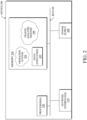
- FIG. 2 is a schematic block diagram of an example node/device 200 that may be used with one or more embodiments described herein, e.g., as any of the computing devices shown in FIGS. 1A-1B , particularly the PE routers 120, CE routers 110, nodes/device 10-20, servers 152-154 (e.g., a network controller located in a data center, etc.), any other computing device that supports the operations of network 100 (e.g., switches, etc.), or any of the other devices referenced below.
- the device 200 may also be any other suitable type of device depending upon the type of network architecture in place, such as IoT nodes, etc.
- Device 200 comprises one or more network interfaces 210, one or more processors 220, and a memory 240 interconnected by a system bus 250, and is powered by a power supply 260.
- the network interfaces 210 include the mechanical, electrical, and signaling circuitry for communicating data over physical links coupled to the network 100.
- the network interfaces may be configured to transmit and/or receive data using a variety of different communication protocols.
- a physical network interface 210 may also be used to implement one or more virtual network interfaces, such as for virtual private network (VPN) access, known to those skilled in the art.
- VPN virtual private network
- the memory 240 comprises a plurality of storage locations that are addressable by the processor(s) 220 and the network interfaces 210 for storing software programs and data structures associated with the embodiments described herein.
- the processor 220 may comprise necessary elements or logic adapted to execute the software programs and manipulate the data structures 245.
- An operating system 242 e.g., the Internetworking Operating System, or IOS ® , of Cisco Systems, Inc., another operating system, etc.
- portions of which are typically resident in memory 240 and executed by the processor(s) functionally organizes the node by, inter alia, invoking network operations in support of software processors and/or services executing on the device.
- These software processors and/or services may comprise a traffic analysis process 248.
- processor and memory types including various computer-readable media, may be used to store and execute program instructions pertaining to the techniques described herein.
- description illustrates various processes, it is expressly contemplated that various processes may be embodied as modules configured to operate in accordance with the techniques herein (e.g., according to the functionality of a similar process). Further, while processes may be shown and/or described separately, those skilled in the art will appreciate that processes may be routines or modules within other processes.
- traffic analysis process 248 may execute one or more machine learning-based classifiers to classify encrypted traffic in the network (and its originating application) for any number of purposes.
- traffic analysis process 248 may assess captured telemetry data regarding one or more traffic flows, to determine whether a given traffic flow or set of flows are caused by malware in the network, such as a particular family of malware applications.
- Example forms of traffic that can be caused by malware may include, but are not limited to, traffic flows reporting exfiltrated data to a remote entity, spyware or ransomware-related flows, command and control (C2) traffic that oversees the operation of the deployed malware, traffic that is part of a network attack, such as a zero day attack or denial of service (DoS) attack, combinations thereof, or the like.
- C2 command and control
- traffic analysis process 248 may classify the gathered telemetry data to detect other anomalous behaviors (e.g., malfunctioning devices, misconfigured devices, etc.), traffic pattern changes (e.g., a group of hosts begin sending significantly more or less traffic), or the like.
- anomalous behaviors e.g., malfunctioning devices, misconfigured devices, etc.
- traffic pattern changes e.g., a group of hosts begin sending significantly more or less traffic
- Traffic analysis process 248 may employ any number of machine learning techniques, to classify the gathered telemetry data.
- machine learning is concerned with the design and the development of techniques that receive empirical data as input (e.g., telemetry data regarding traffic in the network) and recognize complex patterns in the input data.
- some machine learning techniques use an underlying model M, whose parameters are optimized for minimizing the cost function associated to M, given the input data.
- the learning process then operates by adjusting the parameters a,b,c such that the number of misclassified points is minimal.
- traffic analysis 248 can use the model M to classify new data points, such as information regarding new traffic flows in the network.
- M is a statistical model, and the cost function is inversely proportional to the likelihood of M, given the input data.
- traffic analysis process 248 may employ one or more supervised, unsupervised, or semi-supervised machine learning models.
- supervised learning entails the use of a training set of data, as noted above, that is used to train the model to apply labels to the input data.
- the training data may include sample telemetry data that is "normal,” or "malware-generated.”
- unsupervised techniques that do not require a training set of labels.
- a supervised learning model may look for previously seen attack patterns that have been labeled as such, an unsupervised model may instead look to whether there are sudden changes in the behavior of the network traffic.
- Semi-supervised learning models take a middle ground approach that uses a greatly reduced set of labeled training data.
- Example machine learning techniques that traffic analysis process 248 can employ may include, but are not limited to, nearest neighbor (NN) techniques (e.g., k-NN models, replicator NN models, etc.), statistical techniques (e.g., Bayesian networks, etc.), clustering techniques (e.g., k-means, mean-shift, etc.), neural networks (e.g., reservoir networks, artificial neural networks, etc.), support vector machines (SVMs), logistic or other regression, Markov models or chains, principal component analysis (PCA) (e.g., for linear models), multi-layer perceptron (MLP) ANNs (e.g., for non-linear models), replicating reservoir networks (e.g., for non-linear models, typically for time series), random forest classification, or the like.
- PCA principal component analysis
- MLP multi-layer perceptron
- ANNs e.g., for non-linear models
- replicating reservoir networks e.g., for non-linear models, typically for
- the performance of a machine learning model can be evaluated in a number of ways based on the number of true positives, false positives, true negatives, and/or false negatives of the model.
- the false positives of the model may refer to the number of traffic flows that are incorrectly classified as malware-generated, anomalous, etc.
- the false negatives of the model may refer to the number of traffic flows that the model incorrectly classifies as normal, when actually malware-generated, anomalous, etc.
- True negatives and positives may refer to the number of traffic flows that the model correctly classifies as normal or malware-generated, etc., respectively.
- recall refers to the ratio of true positives to the sum of true positives and false negatives, which quantifies the sensitivity of the model.
- precision refers to the ratio of true positives the sum of true and false positives.
- traffic analysis process 248 may assess the captured telemetry data on a per-flow basis. In other embodiments, traffic analysis 248 may assess telemetry data for a plurality of traffic flows based on any number of different conditions. For example, traffic flows may be grouped based on their sources, destinations, temporal characteristics (e.g., flows that occur around the same time, etc.), combinations thereof, or based on any other set of flow characteristics.
- various mechanisms can be leveraged to capture information about traffic in a network, such as telemetry data regarding a traffic flow.
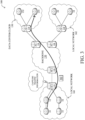
- client node 10 initiates a traffic flow with remote server 154 that includes any number of packets 302.
- Any number of networking devices along the path of the flow may analyze and assess packet 302, to capture telemetry data regarding the traffic flow.
- edge router CE-2 through which the traffic between node 10 and server 154 flows.
- a networking device may analyze packet headers, to capture feature information about the traffic flow.
- router CE-2 may capture the source address and/or port of host node 10, the destination address and/or port of server 154, the protocol(s) used by packet 302, or other header information by analyzing the header of a packet 302.
- Example captured features may include, but are not limited to, Transport Layer Security (TLS) information (e.g., from a TLS handshake), such as the ciphersuite offered, user agent, TLS extensions, etc., HTTP information (e.g., URI, etc.), Domain Name System (DNS) information, or any other data features that can be extracted from the observed traffic flow(s).
- TLS Transport Layer Security
- DNS Domain Name System
- the device may also assess the payload of the packet to capture information about the traffic flow.
- router CE-2 or another device may perform deep packet inspection (DPI) on one or more of packets 302, to assess the contents of the packet. Doing so may, for example, yield additional information that can be used to determine the application associated with the traffic flow (e.g., packets 302 were sent by a web browser of node 10, packets 302 were sent by a videoconferencing application, etc.).
- DPI deep packet inspection
- a traffic flow may also be encrypted, thus preventing the device from assessing the actual payload of the packet.
- the networking device that captures the flow telemetry data may also compute any number of statistics or metrics regarding the traffic flow. For example, CE-2 may determine the start time, end time, duration, packet size(s), the distribution of bytes within a flow, etc., associated with the traffic flow by observing packets 302.
- the capturing device may capture sequence of packet lengths and time (SPLT) data regarding the traffic flow, sequence of application lengths and time (SALT) data regarding the traffic flow, or byte distribution (BD) data regarding the traffic flow.
- SPLT packet lengths and time
- SALT application lengths and time
- BD byte distribution
- TLS information provides a rich set of data that can be used for purposes of assessing network traffic.
- a malware classifier can be trained on this information to detect malicious traffic, even if the traffic is encrypted, with high recall, but sometimes at the cost of high precision.
- information about a client device can be discerned from analysis of its traffic, such as the operating system of the client, and the like.
- the techniques herein introduce a probing approach that can be used to obtain certain information that can be used to analyze network traffic, even in the case in which the traffic is part of an encrypted session.
- the probing can be performed to obtain information about the encryption mechanism itself (e.g., the server certificate used, etc.), which can be included as input to a traffic classifier, to determine whether the encrypted traffic between a client and server is malicious or to infer properties of the client, such as its operating system.
- the probing may be semi-active (e.g., conditional), thus allowing resources to be conserved in the network.
- a device in a network observes traffic between a client and a server for an encrypted session.
- the device makes a determination that a server certificate should be obtained from the server.
- the device based on the determination, sends a handshake probe to the server.
- the device extracts server certificate information from a handshake response from the server that the server sent in response to the handshake probe.
- the device uses the extracted server certificate information to analyze the traffic between the client and the server.
- the techniques described herein may be performed by hardware, software, and/or firmware, such as in accordance with the traffic analysis process 248, which may include computer executable instructions executed by the processor 220 (or independent processor of interfaces 210) to perform functions relating to the techniques described herein.
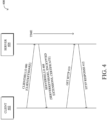
- FIG. 4 illustrates an example encrypted session 400 between a client 402 and a server 404.
- client 402 may begin by initiating a handshake with server 404 in which cryptographic information is first exchanged. This cryptographic information can then be used by client 402 and server 404, to encrypt subsequent messages between the two.
- client 402 may send a ClientHello message 406 to server 404, thereby signifying that client 402 wishes to establish an encrypted session with server 404.
- client 402 and server 404 may first perform a SYN-ACK, to establish the TCP/IP connection via which ClientHello message 406 may be sent.
- ClientHello message 406 may include cryptographic keys for client 402 that can be used by server 404 to immediately begin encrypting the messages sent by server 404 back to client 402. This is the approach taken by some encryption mechanisms, such as TLS version 1.3. In prior versions of TLS, and in other schemes, the key exchange is performed only after an exchange of Hello messages.
- server 404 may generate and send a ServerHello message 408 back to client 402.
- a ServerHello message 408 may include the server key information for server 404, extensions, and the server certificate of server 404, which may be encrypted using the client keys sent by client 402 as part of ClientHello message 406.
- Client 402 can then use its own keys to decrypt ClientHello message 406 and begin encrypting its subsequent messages based on the information included in ServerHello message 408.
- client 402 may use the server certificate included in ServerHello message 408 to authenticate server 404 and the server keys and extensions included in ServerHello message 408 to control the encryption of a GET HTTP message 410 sent by client 402 to server 404.
- server 404 can use the information that it obtained from the handshake, to encrypt an HTTP response message 412 sent to client 402 in response to message 410.
- the information that would otherwise be available to an intermediate device between client 402 and server 404 is now protected from access by that intermediate device.
- information such as the server certificate information from server 404 would be protected from access by the device. In doing so, this prevents the traffic analyzer device from leveraging this information to classify the traffic exchanged between client 402 and server 404, such as by making a malware assessment.
- FIG. 5 illustrates an example architecture 500 for performing traffic analysis with semi-active probing of server certificate information, according to various embodiments.
- traffic analysis process 248 may include any number of sub-processes and/or may access any number of memory locations. As would be appreciated, these sub-processes and/or memory locations may be located on the same device or implemented in a distributed manner across multiple devices, the combination of which may be viewed as a single system/device that executes traffic analysis process 248. Further, while certain functionalities are described with respect to the sub-processes and memory locations, these functions can be added, removed, or combined as desire, in further implementations.
- traffic analysis process 248 may observe the traffic in the monitored network through review of telemetry data 512 regarding the traffic.
- the device hosting traffic analysis process 248 may collect telemetry data 512 directly, such as in the case of the traffic flowing through the hosting device.
- the device hosting traffic analysis process 248 may observe the traffic in the network through collection of telemetry data 512 from any number of data collection nodes in the network, such as NetFlow or IPFIX exporters.
- IPFIX information element is equivalent to a data feature, as described herein, with the former term being used typically in the field of network telemetry and the latter term being used typically in the field of data science.
- one or more of the features in telemetry data 512 may also be in a compressed form.
- traffic analysis process 248 may include a telemetry preprocessor 502 that preprocesses the incoming telemetry data 512 regarding the network traffic.
- telemetry preprocessor 502 may convert telemetry data 512 into proper form for analysis, such as by converting telemetry data 512 into feature vectors. In the case in which telemetry data 512 is compressed, telemetry preprocessor 502 may first decompress the data.
- Traffic analysis process 248 may also include a traffic classifier 510 that is configured to classify the traffic data from telemetry preprocessor 502 and output resulting traffic classification 514.
- traffic classifier 510 may be a machine learning-based classifier configured to discern between "malicious" and "benign" traffic, based on the observed characteristics of the traffic.
- traffic classifier 510 may be configured to assess whether the observed traffic is associated with a particular type of malware or family of malware.
- traffic classifier 510 may be configured to infer information about a client or server involved in a communication, by classifying the traffic between the client and server. For example, the operating system of a client can be inferred through analysis of its network traffic.
- traffic classifier 510 may comprise a number of classifiers configured to make different determinations based on the observed traffic.
- Traffic analysis process 248 may include a handshake detector 504 that is configured to identify messages in the observed traffic that are involved in a cryptographic handshake. For example, handshake detector 504 may assess telemetry data 512, to identify when a client sends a ClientHello message to a server, as well as the ServerHello message sent back in response. Such information can be used by traffic analysis process 248 to control which classification is performed on the traffic data by traffic classifier 510 and, as detailed below, help trigger probing of the server, in some cases.
- traffic analysis process 248 may include a probing engine 506 configured to generate and send probes to servers, to capture information about the servers, such as their certificate information. More specifically, probing by probing engine 506 may entail initiating a handshake between the target server and the device executing probing engine 506. For example, in the case of TLS, probing engine 506 may send a ClientHello message to the target server, to capture the information sent by the server in its corresponding ServerHello message, such as its server certificate information. In turn, the information obtained by probing engine 506 (e.g., the handshake response data, etc.) can then be used as input to traffic classifier 510, to enhance the analysis of the network traffic.
- probing engine 506 e.g., the handshake response data, etc.
- probing engine 506 may cache the information that it obtains from its probing in an address database 508.
- traffic analysis process 248 may use address database 508 to reduce the number of probes that probing engine 506 sends.
- this information can be used by traffic classifier 510 to classify traffic between a given client and the server and without necessitating probing engine 506 sending a probe.
- Example information that may be stored in address database 508 may include, but is not limited to, handshake message lengths or sizes, server certificate information, extensions, and the like.
- Various cases may trigger probing engine 506 to determine that it should send a probe to a server.
- these cases may include any or all of the following:
- traffic classifier 510 can use the information obtained by probing engine 506 to assess the observed traffic in the network and output a traffic classification 514. Based on the resulting classification, the system can take any number of actions. For example, in the case of traffic classification 514 indicating the presence of malicious traffic, classification 514 can be used to cause the performance of a mitigation action, such as sending an alert to an administrator or security expert, sending an alert to the user of the client, blocking the malicious traffic, subjecting the traffic to additional scrutiny, or the like.
- a mitigation action such as sending an alert to an administrator or security expert, sending an alert to the user of the client, blocking the malicious traffic, subjecting the traffic to additional scrutiny, or the like.
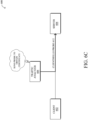
- FIGS. 6A-6D illustrate examples of a traffic analyzer 604 performing semi-active probing of server certificate information, according to various embodiments.
- traffic analyzer 604 may be any device or service configured to analyze traffic between a client 602 and a server 606.
- traffic analyzer 604 may implement architecture 500 described previously.
- traffic analyzer 604 may be an intermediary device or service via which traffic between client 602 and server 606 flows.
- traffic analyzer 604 may observe this traffic indirectly by receiving telemetry data regarding the traffic from one or more intermediary devices located along the path between client 602 and server 606.
Landscapes
- Engineering & Computer Science (AREA)
- Computer Security & Cryptography (AREA)
- Computer Hardware Design (AREA)
- General Engineering & Computer Science (AREA)
- Signal Processing (AREA)
- Computer Networks & Wireless Communication (AREA)
- Computing Systems (AREA)
- Software Systems (AREA)
- Theoretical Computer Science (AREA)
- Physics & Mathematics (AREA)
- General Physics & Mathematics (AREA)
- Technology Law (AREA)
- Data Exchanges In Wide-Area Networks (AREA)
- Computer And Data Communications (AREA)
- Management, Administration, Business Operations System, And Electronic Commerce (AREA)
Applications Claiming Priority (3)
| Application Number | Priority Date | Filing Date | Title |
|---|---|---|---|
| US15/848,645 US10666640B2 (en) | 2017-12-20 | 2017-12-20 | Semi-active probing framework to gather threat intelligence for encrypted traffic and learn about devices |
| PCT/US2018/064214 WO2019125776A1 (en) | 2017-12-20 | 2018-12-06 | Semi-active probing framework to gather threat intelligence for encrypted traffic and learn about devices |
| EP18829603.2A EP3679505B1 (de) | 2017-12-20 | 2018-12-06 | Halbaktiver probing-rahmen, um die intelligenz der gefahren für verschlüsseltes verkehr zu entwickeln und geräte zu lernen |
Related Parent Applications (1)
| Application Number | Title | Priority Date | Filing Date |
|---|---|---|---|
| EP18829603.2A Division EP3679505B1 (de) | 2017-12-20 | 2018-12-06 | Halbaktiver probing-rahmen, um die intelligenz der gefahren für verschlüsseltes verkehr zu entwickeln und geräte zu lernen |
Publications (2)
| Publication Number | Publication Date |
|---|---|
| EP4513367A2 true EP4513367A2 (de) | 2025-02-26 |
| EP4513367A3 EP4513367A3 (de) | 2025-04-09 |
Family
ID=64902440
Family Applications (2)
| Application Number | Title | Priority Date | Filing Date |
|---|---|---|---|
| EP25150758.8A Pending EP4513367A3 (de) | 2017-12-20 | 2018-12-06 | Semi-aktiver sondierungsrahmen zur sammlung von bedrohungsintelligenz für verschlüsselten verkehr und lernen über vorrichtungen |
| EP18829603.2A Active EP3679505B1 (de) | 2017-12-20 | 2018-12-06 | Halbaktiver probing-rahmen, um die intelligenz der gefahren für verschlüsseltes verkehr zu entwickeln und geräte zu lernen |
Family Applications After (1)
| Application Number | Title | Priority Date | Filing Date |
|---|---|---|---|
| EP18829603.2A Active EP3679505B1 (de) | 2017-12-20 | 2018-12-06 | Halbaktiver probing-rahmen, um die intelligenz der gefahren für verschlüsseltes verkehr zu entwickeln und geräte zu lernen |
Country Status (3)
| Country | Link |
|---|---|
| US (2) | US10666640B2 (de) |
| EP (2) | EP4513367A3 (de) |
| WO (1) | WO2019125776A1 (de) |
Families Citing this family (16)
| Publication number | Priority date | Publication date | Assignee | Title |
|---|---|---|---|---|
| US10454961B2 (en) * | 2016-11-02 | 2019-10-22 | Cujo LLC | Extracting encryption metadata and terminating malicious connections using machine learning |
| US10666640B2 (en) * | 2017-12-20 | 2020-05-26 | Cisco Technology, Inc. | Semi-active probing framework to gather threat intelligence for encrypted traffic and learn about devices |
| US11818151B2 (en) | 2018-01-26 | 2023-11-14 | Palo Alto Networks, Inc. | Identification of malicious domain campaigns using unsupervised clustering |
| US10547458B2 (en) * | 2018-02-06 | 2020-01-28 | Adobe Inc. | Managing and negotiating certificates |
| US10848481B1 (en) * | 2019-05-17 | 2020-11-24 | The Florida International University Board Of Trustees | Systems and methods for revocation management in an AMI network |
| CN112422474B (zh) * | 2019-08-20 | 2023-07-18 | 中移(苏州)软件技术有限公司 | 一种加密数据流的监测方法、第一电子设备和存储介质 |
| CN112751802B (zh) * | 2019-10-30 | 2023-04-18 | 北京观成科技有限公司 | 一种加密流量的应用识别方法、系统和设备 |
| CN112422590B (zh) * | 2021-01-25 | 2021-04-27 | 中国人民解放军国防科技大学 | 基于主动学习的网络流量分类方法及装置 |
| US12063207B2 (en) | 2021-09-28 | 2024-08-13 | Fortinet, Inc. | Non-interfering access layer end-to-end encryption for IOT devices over a data communication network |
| US12267299B2 (en) * | 2022-01-12 | 2025-04-01 | Bank Of America Corporation | Preemptive threat detection for an information system |
| CN114531489A (zh) * | 2022-01-14 | 2022-05-24 | 北京字节跳动网络技术有限公司 | 一种请求响应方法及装置 |
| US12095754B2 (en) * | 2022-04-20 | 2024-09-17 | Bank Of America Corporation | System and method for establishing a secure session to authenticate DNS requests via dynamically configurable trusted network interface controllers |
| CN115102709B (zh) * | 2022-05-06 | 2024-12-24 | 东信和平科技股份有限公司 | 认证加解密方法、系统、设备及存储介质 |
| US20220329522A1 (en) * | 2022-06-29 | 2022-10-13 | Christian Maciocco | Adaptive resilient network communication |
| US12278824B2 (en) * | 2022-09-14 | 2025-04-15 | Uab 360 It | Detecting malicious behavior from handshake protocols using machine learning |
| CN117220991A (zh) * | 2023-10-12 | 2023-12-12 | 中国信息通信研究院 | 一种网络风险检测方法、装置、电子设备及存储介质 |
Family Cites Families (37)
| Publication number | Priority date | Publication date | Assignee | Title |
|---|---|---|---|---|
| US7778194B1 (en) | 2004-08-13 | 2010-08-17 | Packeteer, Inc. | Examination of connection handshake to enhance classification of encrypted network traffic |
| EP1834466B1 (de) * | 2004-12-30 | 2009-05-06 | Telecom Italia S.p.A. | Verfahren und system zur erkennung von attacken in drahtlosen datenkommunikationsnetzen |
| WO2006074201A2 (en) * | 2005-01-04 | 2006-07-13 | Breach Security | A system to enable detecting attacks within encrypted traffic |
| US20070180225A1 (en) * | 2005-02-24 | 2007-08-02 | Schmidt Jeffrey A | Method and system for performing authentication and traffic control in a certificate-capable session |
| US20090083537A1 (en) * | 2005-08-10 | 2009-03-26 | Riverbed Technology, Inc. | Server configuration selection for ssl interception |
| US8145768B1 (en) | 2008-02-26 | 2012-03-27 | F5 Networks, Inc. | Tuning of SSL session caches based on SSL session IDS |
| US8566580B2 (en) * | 2008-07-23 | 2013-10-22 | Finjan, Inc. | Splitting an SSL connection between gateways |
| US8856869B1 (en) | 2009-06-22 | 2014-10-07 | NexWavSec Software Inc. | Enforcement of same origin policy for sensitive data |
| US20130081129A1 (en) * | 2011-09-23 | 2013-03-28 | F-Secure Corporation | Outbound Connection Detection and Blocking at a Client Computer |
| US9124628B2 (en) | 2012-09-20 | 2015-09-01 | Cisco Technology, Inc. | Seamless engagement and disengagement of transport layer security proxy services |
| US9203832B2 (en) * | 2013-03-12 | 2015-12-01 | Cable Television Laboratories, Inc. | DTCP certificate authentication over TLS protocol |
| US9077754B2 (en) | 2013-04-06 | 2015-07-07 | Citrix Systems, Inc. | Systems and methods for nextproto negotiation extension handling using mixed mode |
| US9553730B2 (en) * | 2013-06-02 | 2017-01-24 | Microsoft Technology Licensing, Llc | Certificating authority trust evaluation |
| US9602498B2 (en) * | 2013-10-17 | 2017-03-21 | Fortinet, Inc. | Inline inspection of security protocols |
| US9407644B1 (en) * | 2013-11-26 | 2016-08-02 | Symantec Corporation | Systems and methods for detecting malicious use of digital certificates |
| US11102192B2 (en) * | 2018-02-14 | 2021-08-24 | Zixcorp Systems, Inc. | Harvesting and distributing a certificate based on a DNS name |
| WO2015134034A1 (en) * | 2014-03-07 | 2015-09-11 | Hewlett-Packard Development Company, L.P. | Network security for encrypted channel based on reputation |
| US9774631B2 (en) * | 2014-10-29 | 2017-09-26 | International Business Machines Corporation | TLS connection abandoning |
| US9854000B2 (en) | 2014-11-06 | 2017-12-26 | Cisco Technology, Inc. | Method and apparatus for detecting malicious software using handshake information |
| US9628455B2 (en) * | 2014-12-09 | 2017-04-18 | Akamai Technologies, Inc. | Filtering TLS connection requests using TLS extension and federated TLS tickets |
| US10063591B1 (en) * | 2015-02-14 | 2018-08-28 | A10 Networks, Inc. | Implementing and optimizing secure socket layer intercept |
| EP3295644B1 (de) * | 2015-05-08 | 2021-06-30 | Citrix Systems Inc. | Systeme und verfahren zur verbesserung der sicherheit von ssl-kommunikation |
| EP3311285B1 (de) * | 2015-06-22 | 2023-12-27 | Cyphre, LLC | Erzeugung und verwendung von schwarzen schlüsseln für das handshake-protokoll für transortschichtsicherheit (tls) und verfahren dafür |
| GB2542175B (en) * | 2015-09-10 | 2019-12-04 | Openwave Mobility Inc | Intermediate network entity |
| US10469594B2 (en) * | 2015-12-08 | 2019-11-05 | A10 Networks, Inc. | Implementation of secure socket layer intercept |
| US20170223054A1 (en) | 2016-02-02 | 2017-08-03 | Cisco Technology, Inc. | Methods and Apparatus for Verifying Transport Layer Security Server by Proxy |
| US20170317837A1 (en) * | 2016-04-29 | 2017-11-02 | Arwa Alrawais | Systems and methodologies for certificate validation |
| US10454961B2 (en) * | 2016-11-02 | 2019-10-22 | Cujo LLC | Extracting encryption metadata and terminating malicious connections using machine learning |
| US10397006B2 (en) * | 2017-02-13 | 2019-08-27 | Amazon Technologies, Inc. | Network security with surrogate digital certificates |
| US10615987B2 (en) * | 2017-03-08 | 2020-04-07 | Amazon Technologies, Inc. | Digital certificate usage monitoring systems |
| US20190044950A1 (en) * | 2017-08-02 | 2019-02-07 | Qualcomm Incorporated | Detection of Compromised Access Points |
| US11032294B2 (en) * | 2017-08-15 | 2021-06-08 | Gigamon Inc. | Dynamic decryption of suspicious network traffic based on certificate validation |
| US10834131B2 (en) * | 2017-11-28 | 2020-11-10 | Forcepoint Llc | Proactive transport layer security identity verification |
| US10812468B2 (en) * | 2017-12-07 | 2020-10-20 | Sonicwall Inc. | Dynamic bypass |
| US10666640B2 (en) * | 2017-12-20 | 2020-05-26 | Cisco Technology, Inc. | Semi-active probing framework to gather threat intelligence for encrypted traffic and learn about devices |
| US11411997B2 (en) * | 2020-08-13 | 2022-08-09 | Salesforce, Inc. | Active fingerprinting for transport layer security (TLS) servers |
| US11968293B2 (en) * | 2020-11-18 | 2024-04-23 | International Business Machines Corporation | Private key management |
-
2017
- 2017-12-20 US US15/848,645 patent/US10666640B2/en active Active
-
2018
- 2018-12-06 EP EP25150758.8A patent/EP4513367A3/de active Pending
- 2018-12-06 EP EP18829603.2A patent/EP3679505B1/de active Active
- 2018-12-06 WO PCT/US2018/064214 patent/WO2019125776A1/en not_active Ceased
-
2020
- 2020-04-17 US US16/851,674 patent/US11570166B2/en active Active
Also Published As
| Publication number | Publication date |
|---|---|
| US10666640B2 (en) | 2020-05-26 |
| EP4513367A3 (de) | 2025-04-09 |
| US20190190961A1 (en) | 2019-06-20 |
| US11570166B2 (en) | 2023-01-31 |
| WO2019125776A1 (en) | 2019-06-27 |
| EP3679505B1 (de) | 2025-01-29 |
| EP3679505A1 (de) | 2020-07-15 |
| US20200244648A1 (en) | 2020-07-30 |
Similar Documents
| Publication | Publication Date | Title |
|---|---|---|
| US11570166B2 (en) | Semi-active probing framework to gather threat intelligence for encrypted traffic and learn about devices | |
| US11909760B2 (en) | Malware classification and attribution through server fingerprinting using server certificate data | |
| US12438892B2 (en) | Correlating endpoint and network views to identify evasive applications | |
| EP3682612B1 (de) | Nutzung von rückschlüssen auf endpunkte und netzwerkumgebungen zur klassifizierung von malware-verkehr | |
| EP3573308B1 (de) | Erzeugung von proben synthetischer verkehrsdaten zum flow-classifier-training | |
| US20200236131A1 (en) | Protecting endpoints with patterns from encrypted traffic analytics | |
| US10785247B2 (en) | Service usage model for traffic analysis | |
| US11201877B2 (en) | Detecting encrypted malware with SPLT-based deep networks | |
| US11310205B2 (en) | Detecting evasive network behaviors using machine learning | |
| US11936533B2 (en) | Automatically detecting authorized remote administration sessions in a network monitoring system |
Legal Events
| Date | Code | Title | Description |
|---|---|---|---|
| PUAI | Public reference made under article 153(3) epc to a published international application that has entered the european phase |
Free format text: ORIGINAL CODE: 0009012 |
|
| STAA | Information on the status of an ep patent application or granted ep patent |
Free format text: STATUS: THE APPLICATION HAS BEEN PUBLISHED |
|
| AC | Divisional application: reference to earlier application |
Ref document number: 3679505 Country of ref document: EP Kind code of ref document: P |
|
| AK | Designated contracting states |
Kind code of ref document: A2 Designated state(s): AL AT BE BG CH CY CZ DE DK EE ES FI FR GB GR HR HU IE IS IT LI LT LU LV MC MK MT NL NO PL PT RO RS SE SI SK SM TR |
|
| PUAL | Search report despatched |
Free format text: ORIGINAL CODE: 0009013 |
|
| AK | Designated contracting states |
Kind code of ref document: A3 Designated state(s): AL AT BE BG CH CY CZ DE DK EE ES FI FR GB GR HR HU IE IS IT LI LT LU LV MC MK MT NL NO PL PT RO RS SE SI SK SM TR |
|
| RIC1 | Information provided on ipc code assigned before grant |
Ipc: H04L 9/40 20220101ALI20250306BHEP Ipc: G06F 21/55 20130101AFI20250306BHEP |
|
| STAA | Information on the status of an ep patent application or granted ep patent |
Free format text: STATUS: REQUEST FOR EXAMINATION WAS MADE |
|
| 17P | Request for examination filed |
Effective date: 20251008 |
|
| GRAP | Despatch of communication of intention to grant a patent |
Free format text: ORIGINAL CODE: EPIDOSNIGR1 |
|
| STAA | Information on the status of an ep patent application or granted ep patent |
Free format text: STATUS: GRANT OF PATENT IS INTENDED |