EP4513501A1 - Procédés et systèmes pour fournir un résumé de texte pour un ensemble de données d'image médicale - Google Patents
Procédés et systèmes pour fournir un résumé de texte pour un ensemble de données d'image médicale Download PDFInfo
- Publication number
- EP4513501A1 EP4513501A1 EP23192440.8A EP23192440A EP4513501A1 EP 4513501 A1 EP4513501 A1 EP 4513501A1 EP 23192440 A EP23192440 A EP 23192440A EP 4513501 A1 EP4513501 A1 EP 4513501A1
- Authority
- EP
- European Patent Office
- Prior art keywords
- text
- user
- image data
- compartment
- data set
- Prior art date
- Legal status (The legal status is an assumption and is not a legal conclusion. Google has not performed a legal analysis and makes no representation as to the accuracy of the status listed.)
- Pending
Links
Images
Classifications
-
- G—PHYSICS
- G16—INFORMATION AND COMMUNICATION TECHNOLOGY [ICT] SPECIALLY ADAPTED FOR SPECIFIC APPLICATION FIELDS
- G16H—HEALTHCARE INFORMATICS, i.e. INFORMATION AND COMMUNICATION TECHNOLOGY [ICT] SPECIALLY ADAPTED FOR THE HANDLING OR PROCESSING OF MEDICAL OR HEALTHCARE DATA
- G16H15/00—ICT specially adapted for medical reports, e.g. generation or transmission thereof
-
- G—PHYSICS
- G16—INFORMATION AND COMMUNICATION TECHNOLOGY [ICT] SPECIALLY ADAPTED FOR SPECIFIC APPLICATION FIELDS
- G16H—HEALTHCARE INFORMATICS, i.e. INFORMATION AND COMMUNICATION TECHNOLOGY [ICT] SPECIALLY ADAPTED FOR THE HANDLING OR PROCESSING OF MEDICAL OR HEALTHCARE DATA
- G16H30/00—ICT specially adapted for the handling or processing of medical images
- G16H30/40—ICT specially adapted for the handling or processing of medical images for processing medical images, e.g. editing
-
- G—PHYSICS
- G06—COMPUTING OR CALCULATING; COUNTING
- G06V—IMAGE OR VIDEO RECOGNITION OR UNDERSTANDING
- G06V10/00—Arrangements for image or video recognition or understanding
- G06V10/70—Arrangements for image or video recognition or understanding using pattern recognition or machine learning
- G06V10/77—Processing image or video features in feature spaces; using data integration or data reduction, e.g. principal component analysis [PCA] or independent component analysis [ICA] or self-organising maps [SOM]; Blind source separation
- G06V10/774—Generating sets of training patterns; Bootstrap methods, e.g. bagging or boosting
-
- G—PHYSICS
- G06—COMPUTING OR CALCULATING; COUNTING
- G06F—ELECTRIC DIGITAL DATA PROCESSING
- G06F16/00—Information retrieval; Database structures therefor; File system structures therefor
- G06F16/30—Information retrieval; Database structures therefor; File system structures therefor of unstructured textual data
- G06F16/34—Browsing; Visualisation therefor
- G06F16/345—Summarisation for human users
-
- G—PHYSICS
- G06—COMPUTING OR CALCULATING; COUNTING
- G06F—ELECTRIC DIGITAL DATA PROCESSING
- G06F18/00—Pattern recognition
- G06F18/20—Analysing
- G06F18/21—Design or setup of recognition systems or techniques; Extraction of features in feature space; Blind source separation
- G06F18/214—Generating training patterns; Bootstrap methods, e.g. bagging or boosting
-
- G—PHYSICS
- G06—COMPUTING OR CALCULATING; COUNTING
- G06F—ELECTRIC DIGITAL DATA PROCESSING
- G06F40/00—Handling natural language data
- G06F40/40—Processing or translation of natural language
-
- G—PHYSICS
- G16—INFORMATION AND COMMUNICATION TECHNOLOGY [ICT] SPECIALLY ADAPTED FOR SPECIFIC APPLICATION FIELDS
- G16H—HEALTHCARE INFORMATICS, i.e. INFORMATION AND COMMUNICATION TECHNOLOGY [ICT] SPECIALLY ADAPTED FOR THE HANDLING OR PROCESSING OF MEDICAL OR HEALTHCARE DATA
- G16H10/00—ICT specially adapted for the handling or processing of patient-related medical or healthcare data
- G16H10/60—ICT specially adapted for the handling or processing of patient-related medical or healthcare data for patient-specific data, e.g. for electronic patient records
-
- G—PHYSICS
- G16—INFORMATION AND COMMUNICATION TECHNOLOGY [ICT] SPECIALLY ADAPTED FOR SPECIFIC APPLICATION FIELDS
- G16H—HEALTHCARE INFORMATICS, i.e. INFORMATION AND COMMUNICATION TECHNOLOGY [ICT] SPECIALLY ADAPTED FOR THE HANDLING OR PROCESSING OF MEDICAL OR HEALTHCARE DATA
- G16H30/00—ICT specially adapted for the handling or processing of medical images
- G16H30/20—ICT specially adapted for the handling or processing of medical images for handling medical images, e.g. DICOM, HL7 or PACS
-
- G—PHYSICS
- G16—INFORMATION AND COMMUNICATION TECHNOLOGY [ICT] SPECIALLY ADAPTED FOR SPECIFIC APPLICATION FIELDS
- G16H—HEALTHCARE INFORMATICS, i.e. INFORMATION AND COMMUNICATION TECHNOLOGY [ICT] SPECIALLY ADAPTED FOR THE HANDLING OR PROCESSING OF MEDICAL OR HEALTHCARE DATA
- G16H50/00—ICT specially adapted for medical diagnosis, medical simulation or medical data mining; ICT specially adapted for detecting, monitoring or modelling epidemics or pandemics
- G16H50/20—ICT specially adapted for medical diagnosis, medical simulation or medical data mining; ICT specially adapted for detecting, monitoring or modelling epidemics or pandemics for computer-aided diagnosis, e.g. based on medical expert systems
-
- G—PHYSICS
- G16—INFORMATION AND COMMUNICATION TECHNOLOGY [ICT] SPECIALLY ADAPTED FOR SPECIFIC APPLICATION FIELDS
- G16H—HEALTHCARE INFORMATICS, i.e. INFORMATION AND COMMUNICATION TECHNOLOGY [ICT] SPECIALLY ADAPTED FOR THE HANDLING OR PROCESSING OF MEDICAL OR HEALTHCARE DATA
- G16H50/00—ICT specially adapted for medical diagnosis, medical simulation or medical data mining; ICT specially adapted for detecting, monitoring or modelling epidemics or pandemics
- G16H50/70—ICT specially adapted for medical diagnosis, medical simulation or medical data mining; ICT specially adapted for detecting, monitoring or modelling epidemics or pandemics for mining of medical data, e.g. analysing previous cases of other patients
Definitions
- Analogous data structures can, in particular, be identified by using the prefix "training”.
- the trained functions used in methods and system for providing a text summary can, in particular, have been adjusted and/or trained and/or provided by methods and systems for adjustment of trained functions.
- a computer-implemented method for providing a text summary for a medical image data set comprises a plurality of steps.
- One step is directed to receive the medical image data set of a patient.
- Another step is directed to identify at least one compartment in the medical image data set.
- Another step is directed to access ⁇ information associated to the patient in a medical information system.
- Another step is directed to provide a text generation function configured to provide, for a specific compartment, a natural language text summary summarizing medical information pertaining to the specific compartment.
- Another step is directed to apply the text generation function to the supplementary information so as to generate a text summary for the at least one compartment.
- Another step is directed to provide the text summary to a user via a user interface.
- the medical image data set may be a two-dimensional image. Further, the medical image data set may be a three-dimensional image. Further, the medical image may be a four-dimensional image, where there are three spatial and one time-like dimensions. Further, the medical image data set may comprise a plurality of individual medical images.
- the medical image data set comprises image data, for example, in the form of a two- or three-dimensional array of pixels or voxels.
- Such arrays of pixels or voxels may be representative of color, intensity, absorption or other parameters as a function of two or three-dimensional position, and may, for example, be obtained by suitable processing of measurement signals obtained by a medical imaging modality or image scanning facility.
- the medical image data set may be a radiology image data set depicting a body part of a patient. Accordingly, it may contain two or three-dimensional image data of the patient's body part.
- the medical image may be representative of an image volume or a cross-section through the image volume.
- the patient's body part may be comprised in the image volume.
- a medical imaging modality corresponds to a system used to generate or produce medical image data.
- a medical imaging modality may be a computed tomography system (CT system), a magnetic resonance system (MR system), an angiography (or C-arm X-ray) system, a positron-emission tomography system (PET system) or the like.
- CT system computed tomography
- MR system magnetic resonance system
- angiography or C-arm X-ray
- PET system positron-emission tomography
- computed tomography is a widely used imaging method and makes use of X-rays produced and detected by a spatially rotating instrument.
- the resulting attenuation data (also referred to as raw data) is processed by a computed analytic software producing detailed images of the internal structure of the patient's body parts.
- CT-scans which may constitute multiple series of sequential images to present the internal anatomical structures in cross sections perpendicular to the axis of the human body.
- Magnetic Resonance Imaging MRI
- the detectors are antennas, and the signals are analyzed by a computer creating detailed images of the internal structures in any section of the human body.
- the depicted body part of the patient in general will comprise a plurality of anatomies and/or organs.
- the medical image may show lung tissue, the rib cage, lymph nodes and others.
- the supplementary information may be non-image data of the patient.
- the supplementary information comprises structured and/or un-structured natural language text.
- the supplementary information comprises one or more of the following elements:
- the electronic health record may comprise the patient history of the patient including any pre-existing illnesses, comorbidities, risk factors, referral letters, demographic information such as age or gender, and the like.
- a compartment may generally relate to an entity of the patient's organism.
- a compartment may relate to an organ, an organ part, an organ function, an anatomic structure, an anatomy, a functional unit of the patient's organism and so forth.
- the text generation function may be configured to recognize and/or understand natural language and, in particular, individual items such as words in input containing natural language, and to transfer the items into a text output.
- the natural language processing algorithm may be based on a trained or machine-learned function. As an alternative, the natural language processing algorithm may be rule-based.
- the text generation function is configured to identify data elements (also denoted as excerpts) in the supplementary information relating to the specific compartment, and to generate the text summary for the specific compartment based on the identified data elements. According to some examples, the text generation function is configured to filter the data elements for relevant information, and to generate the text summary for the specific compartment based on the relevant information.
- the text generation function is configured to process or alter the data elements and generate the text summary based on the altered data elements.
- altering may comprise linguistic processing such as rewording, translating, shorten, and the like.
- Providing the text generation function may comprise holding the function available in a suitable storge accessible by a computing unit executing the method. Further, providing the function may comprise downloading it by said computing unit.
- the text summary may be displayed to the user in the user interface.
- the text summary may be displayed in a manner that it is attributable to the underlying compartment by the user.
- the text summary may be shown as an overlay over the compartment in a visualization (or representation) of the medical image data set in the user interface.
- the displaying of the text summary may be activated/initiated by the user, for instance, by hovering over the compartment with a mouse cursor in the visualization of the medical image data set.
- providing may comprise highlighting that a text summary is available for the identified compartment in a visualization (or representation) of the medical image data set showing the identified compartment.
- the user By generating a text summary for a specific compartment, the user is provided with a quick overview about clinically relevant information regarding the compartment.
- the generation of the text summary can be conceived as deriving a medical diagnosis based on the automated processing of medical information (i.e., the supplementary information). This spares the user from having to search the patient file for relevant information.
- the processing optimally complements the diagnostic task a user has to perform based on the medical image data set.
- the step of identifying the compartment may comprise subjecting the medical image data set to an image processing step configured to identify one or more compartments in medical image data.
- the image processing step may comprise an image segmentation step.
- any depicted body part will comprise a plurality of compartments such as, taking a chest image as an example, lung lobes, the bone compartment (e.g., comprising the rib structure or the spine), the heart, hardware such as implants, pacemakers, or catheters, and so forth.
- the step of segmenting may comprise segmenting a plurality of (different) compartments so as to provide image data respectively pertaining to the segmented compartments.
- the image processing step may comprise an image recognition or classification step configured to classify image data according to its affiliation to a certain compartment. For instance, image classifiers may be extracted and compared to signatures of different compartments. For instance, reference is made to US 2023 / 0 041 553 A1 the contents of which are incorporated herein in their entirety by reference.
- the supplementary information comprises at least one medical report of the patient comprising structured and/or unstructured text.
- the supplementary information comprises a plurality of different medical reports of the patient comprising structured and/or unstructured text and the text summary summarizes the plurality of different medical reports.
- the text summary may be conceived as a compartment-specific text summary of one or more medical reports of the patient. Accordingly, the user does not have to read the individual reports but is automatically provided with summaries which are structured according to the contents of the medical image data set.
- the step of identifying the at least one compartment comprises: obtaining an indication of a disease pattern for the patient, performing a lookup operation in an association linking compartments to specific disease patters so as to determine the at least one compartment.
- the step of identifying may also comprise identifying the determined compartment in the medical image data set (e.g., by applying a corresponding segmentation algorithm).
- the indication may comprise one or more of the following: a reason for the medical image data set having been acquired, a diagnostic task to be performed based on the medical image data set, one or more suspected diagnoses, one or more proven diagnoses, and the like.
- the indication may be obtained based on a direct input by the user. According to other examples, the indication may be automatically identified in the supplementary information and/or the medical image data set. According to some examples, this may comprise applying the text generation function to the supplementary information and/or the medical image data set which text generation function may then be additionally configured to extract indications of a disease pattern from supplementary information and/or the medical image data set.
- the (electronic) association may comprise one or more potentially affected compartments for at least one disease pattern.
- the association links disease patterns to potentially affected organs. This may be based on clinical experience, e.g., outlining metastasis pathways. Accordingly, potentially relevant compartments may be automatically identified which allows for the targeted generation of text summaries.
- the acquisition time of a certain piece of information may be used as a parameter for retrieving relevant information from the supplementary information. With that, outdated information may automatically be discarded.
- the text generation function comprises a transformer network and/or a large language model.
- a transformer network is a neural network architecture generally comprising an encoder, a decoder or both an encoder and decoder.
- the encoders and/or decoders are composed of several corresponding encoding layers and decoding layers, respectively.
- an attention mechanism Within each encoding and decoding layer is an attention mechanism.
- the attention mechanism sometimes called self-attention, relates data items (such as words) within a series of data items to other data items within the series.
- the self-attention mechanism for instance allows the model to examine a group of words within a sentence and determine the relative importance other groups of words within that sentence have to the word being examined.
- the present invention is directed to a computer-readable medium on which program elements are stored that are readable and executable by a computing unit of a system for providing a text summary for a medical image data set according to one or more method aspects, when the program elements are executed by the computing unit.
- the realization of the invention by a computer program product and/or a computer-readable medium has the advantage that already existing providing systems can be easily adapted by software updates in order to work as proposed by the invention.
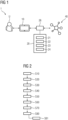
- System 1 comprises a user interface 10 (as part of the interface unit) and a processing system 20 (as part of the computing unit). Further, system 1 may comprise or be connected to a medical information system 40.
- the medical information system 40 may generally be configured for acquiring and/or storing and/or forwarding medical image data sets MIDS and supplementary information SI.
- medical information system 40 may comprise one or more archive/review station (not shown) for medical image data sets MIDS.
- the archive/review stations may be embodied by one or more databases. In particular, the archive/review stations may be realized in the form of one or more cloud storage modules.
- Medical image data sets MIDS may be three-dimensional image data sets acquired, for instance, using an X-ray system, a computed tomography system or a magnetic resonance imaging system or other systems.
- the image information may be encoded in a three-dimensional array of m times n times p voxels.
- Medical image data sets MIDS may include a plurality of image slices which are stacked in a stacking direction to span the image volume covered by the medical image data sets MIDS.
- the supplementary information SI may be available in the form of one or more electronic medical records (EMR) of the patient.
- EMR electronic medical records
- the supplementary information SI may be stored in the healthcare information system 40.
- the supplementary information SI may be stored in dedicated databases of the healthcare information system 40 such as laboratory information system (LIS) or an electronic health/medical record database.
- Processing system 20 may comprise sub-units 21-24 configured to process the medical image data sets MIDS and supplementary information SI in order to provide text summaries TS for specific compartments CP shown in the medical image data sets MIDS.
- the tool may be evaluated to derive the compartment of interest COI the user U is currently reviewing.
- a user input INP may designate a point or group of points in the representation R which is then further processed to define the corresponding compartment of interest COI.
- the tool may be a measurement tool with which the user U may obtain a measurement from the representation R. The measurement may relate to a volume, surface, angle, distance, etc.
- sub-unit 23 may be configured to provide text summaries TS corresponding to the identified compartments CP - and in particular, corresponding to the compartment(s) of interest COI - to the user U, e.g., in the form of a pup-up window over the representation R at the location of the respective compartment CP.
- Sub-unit 24 may be conceived as a text generation module or unit. It is configured to filter the supplementary information SI for information relevant for a certain compartment CP and generate a text summary TS for that certain compartment on that basis. In other words, sub-unit 24 may be configured to extract information from the supplementary information SI and transfer this information into text suited for a concise text summary TS in a compartment-specific manner. To this end, submodule 24 may run a correspondingly configured text generation function LLM.
- Processing system 20 and the interface computing unit(s) together may constitute the computing unit of the system 1.
- the layout of this computing unit i.e., the physical distribution of the interface computing unit and sub-units 21-24 is, in principle, arbitrary.
- processing system 20 may also be integrated in user interface 10.
- processing system 20 may alternatively be embodied as a server system, e.g., a cloud server, or a local server, e.g., located on a hospital or radiology site.
- user interface 10 could be designated as a "frontend” or "client” facing the user U, while processing system 20 could then be conceived as a "backend” or server.
- Individual components of system 1 may be at least temporarily connected to each other for data transfer and/or exchange.
- User interface 10 communicates with processing system 20 via (data) interface 26 to exchange, e.g., medical image data sets MIDS, representations R, text summaries TS, or any user input INP made.
- processing system 20 may be activated on a request-base, wherein the request is sent by user interface 10.
- processing system 20 may communicate with medical information system 40 in order to retrieve a target patient's case.
- user interface 10 may communicate with medical information system 40 directly.
- Medical information system 40 may likewise be activated on a request-base, wherein the request is sent by processing system 20 and/or user interface 10.
- Data interface 26 for data exchange may be realized as hardware- or software-interface, e.g., a PCI-bus, USB or fire-wire. Data transfer may be realized using a network connection.
- the network may be realized as local area network (LAN), e.g., an intranet or a wide area network (WAN).
- Network connection is preferably wireless, e.g., as wireless LAN (WLAN or Wi-Fi).
- WLAN wireless LAN
- Wi-Fi wireless LAN
- the network may comprise a combination of different network examples.
- Interface 26 for data exchange together with the components for interfacing with the user U be regarded as constituting an interface unit of system 1.
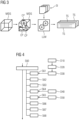
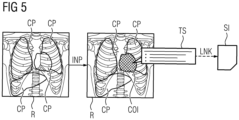
- Figure 2 depicts a method for providing a text summary TS according to an embodiment. Corresponding data streams are illustrated in Figure 3 .
- the method comprises several steps. The order of the steps does not necessarily correspond to the numbering of the steps but may also vary between different embodiments of the present invention. Further, individual steps or a sequence of steps may be repeated.
- the medical image data set MIDS is received. This may involve selecting the medical image data set MIDS from a plurality of cases, e.g., stored in the medical information system 40. The selection may be performed manually by the user U, e.g., by selecting appropriate image data in a graphical user interface running in the user interface 10. Alternatively, the medical image data set MIDS may be provided to the computing unit by the user U by way of uploading the medical image data set MIDS to the computing unit.
- one or more compartments CP are identified in the medical image data set MIDS.
- the compartments CP identified may be organs, anatomical structures or functional units of the patient's body which are at least partially shown in the medical image data set MIDS. According to some examples, all or at least all relevant compartments CP shown in the medical image data set MIDS may be identified at step S20.
- step S20 may involve applying one or more appropriately configured detection algorithm to the medical image data set MIDS.
- the detection algorithms may comprise medical image segmentation algorithms configured to identify and segment particular compartments in medical image data. Further, the detection algorithms may comprise image classification algorithms configured to identify certain compartments based on image features extracted from the medical image data set MIDS. Thereby, step S20 may comprise applying a plurality of different detection algorithms to the medical image data set MIDS. Further, step S20 may comprise selecting one or more detection algorithms from a plurality of available detection algorithms and applying the selected detection algorithms to the medical image data set MIDS.
- the selection may be based on a body region shown in the medical image data set MIDS or an indication of which compartments CP could be of particular interest. The latter may be based on user inputs in the system 1 or on a notion of a reason for the exam (i.e., the medical image data set MIDS).
- supplementary information SI is accessed for the patient.
- the supplementary information SI may be the entirety of information available for the patient in the medical information system 40.
- the supplementary information SI may comprise non-image data and, in particular, one or more structured or un-structured (text-)documents which were generated at different points in time in the past.
- the supplementary information SI may be obtained by querying the medical information system 40, e.g., based on an electronic patient identifier of the patient in the medical information system 40.
- the text generation function LLM is provided.
- the text generation function LLM may be provided by holding it available in a memory of the processing system 20, for instance, as executable computer code.
- the text generation function LLM is configured to parse patient information (such as the supplementary information SI) for information related to a particular compartment CP. Further, the text generation function LLM is configured to condensate the information thus retrieved in a text summary text TS which may have a pre-defined maximal text length, e.g., a certain number of bullet points.
- the text generation function LLM may be a trained function which was configured for the task to generate text summaries TS in a dedicated training process.
- the text generation function LLM may have been trained using compartment-specific text summaries TS generated by experts. Specifically, in the training process, text summaries TS generated by the text generation function LLM may be compared to the expert text summaries TS. Based on the comparison, parameters of the text generation function LLM may be adapted so that the text generation function LLM better reflects the desired behavior as specified by the expert text summaries TS. That way, the text generation function LLM may learn which data items in the supplementary information SI are relevant for which compartment CP and which data items are more important than others and should be prioritized for the text summary TS.
- a more concrete example of the text generation function LLM is provided in connection with Figure 6 .
- a prioritization of information for a text summary TS may be based on the point in time the data was generated (new data over old data) and/or the medical criticality of the data (more critical findings over less critical findings).
- the compartments CP identified at step S20 and the supplementary information SI are provided to the text generation function LLM and the text generation function LLM is induced to generate a text summary TS per the identified compartment CP.
- orders for the text generation function LLM may be formulated as prompts.
- the contents of text summaries TS are not based on actual image data of the medical image data set MIDS, but rather on supplementary information SI outside of the medical image data set MIDS.
- the image data of a medical image data set MIDS is, by virtue of the compartments shown, only used as a pointer for what to look for in the (typically vast) supplementary information SI.
- the thus generated text summaries TS may be provided. This may involve showing the text summaries TS in the user interface 10, e.g., in a suitable graphical user interface.
- text summaries TS may be shown as an overlay over a representation R rendered from the medical image data set MIDS.
- individual text summaries TS may be shown on a request base, i.e., reactive to a corresponding request by the user U. For instance, a text summary TS may be automatically shown if the user U hovers over a compartment CP in the representation R with a mouse cursor or the like.
- a holistic text summary may be generated.
- the holistic text summary may be configured so as to summarize individual compartment-specific text summaries TS. With that, the main findings relevant for a medical image data set MIDS can be concentrated in one summary.
- the holistic text summary may be generated by applying the text generation function LLM (or a further text generation function) to the individual text summaries TS. For deciding which aspects are relevant enough to be adopted for the holistic summary, in principle the same prioritization concepts as discussed in connection with steps S40 and S50 may be relied upon.
- the holistic text summary may be generated based on a request from the user U.
- the text summaries TS may be classified according to at least two relevance levels.
- a classification result for each of the plurality of compartments CP based on the text summaries TS may be provided which indicates how pertinent the previously gathered information is for the respective compartment CP.
- a healed fracture may be attributed a lower criticality level as the classification result as compared to a previously reported lung nodule.
- the classification result may be provided.
- the text summaries TS displayed in the user interface 10 may be color coded according to the classification result and/or provided with a visual marker indicating the classification result.
- the classification result may also be provided in a way that only text summaries TS of/above a certain relevance level are automatically provided to the user U and, therewith, brought to the user's attention.
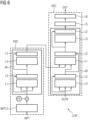
- Figure 4 depicts optional method steps in connection with the provision of a text summary TS. Corresponding data streams are illustrated in Figure 5 .
- the method comprises several steps. The order of the steps does not necessarily correspond to the numbering of the steps but may also vary between different embodiments of the present invention. Further, individual steps or a sequence of steps may be repeated.
- a compartment of interest COI is obtained, for which a text summary TS is deliberately being generated and/or provided to the user U.
- the step of obtaining a compartment of interest COI is part of step S60, i.e., carried out for deciding which one(s) of the generated text summaries TS are actually provided to the user U.
- step S61 may also carried out independently of the step S60.
- the compartment of interest COI may be determined based on interactions of the user U with the medial image data set MIDS.
- An example for such like process is described in the following in connection with optional steps D10-D30.
- a representation R of the medical image data set MIDS is rendered.
- the representation R may relate to the slice of the medical image data set MIDS the user U is currently reviewing. Further, the representation R may be a rendering of a three-dimensional view of the medical image data set MIDS. The rendering of the representation R may be based on one or more imaging parameters set by the user U, such as viewing angles, filters, contrast and image enhancement settings.
- the representation R is displayed to the user U, for instance in a graphical user interface running in user interface 10.
- a user input INP with respect to the representation R is received and analyzed if it is directed to a particular compartment CP within the medical image data set MIDS.
- This particular compartment may then be identified as the compartment of interest COI.
- the user input INP may comprise a moving an input device such as a mouse cursor to a compartment CP shown in the representation R, an activation of a measurement tool specific for a compartment CP, clicking on a compartment CP shown in the representation R, and the like.
- the text summary TS corresponding to the compartment of interest COI may be selected from the available text summaries TS as generated in step S50.
- the text summary TS may be deliberately requested for the compartment of interest COI.
- the text summary TS of the compartment of interest COI may be provided. This may be done in roughly the same way as in described in connection with step S60.
- the text summaries TS are intended to have concise format focused on the most valuable information for the user U. However, if the user U wants to get more information for a particular compartment, the user U may request an expanded version of the text summary TS according to an optional modification.
- the text generation function LLM may be used to generate an expanded version of original text summary TS.
- the expanded version may comprise further information from the supplementary information SI which was not considered relevant enough for the initial text summary TS.
- the expanded text summary may comprise additional explanations and/or background information relating to those pieces of information already comprised in the initial text summary TS.
- the user U may input natural language queries which are then answered based on the text summaries TS and/or the supplementary information SI or even general information not specifically related to the patient.
- queries may be received at optional step D50. They may be directly related to the text summaries TS (e.g., “only show information added to the file after the last radiological exam”, “only show text summaries related to disease XY", etc.). Additionally, or as an alternative, queries may also more generally relate to the supplementary information SI (e.g., "when was the last blood test", “is the patient a smoker", etc.) or more general aspects (e.g., "which kind of examination is suggested to safeguard the diagnosis of disease XY according to our inhouse guidelines").
- supplementary information SI e.g., "when was the last blood test", “is the patient a smoker”, etc.
- general aspects e.g., "which kind of examination is suggested to safeguard the diagnosis of disease XY according to our inhouse guidelines”).
- step S65 an answer to those queries is obtained.
- LLM natural language understanding capabilities of text generation functions LLM may be leveraged to first understand the query and, secondly, translate the query to machine-understandable instructions to adapt the text summaries TS or look for additional information.
- the link LNK may be an electronic link to that item of the supplementary information SI with which the item can be directly retrieved from the medical information system 40.
- Another optional extension deals with an automated change assessment based on the generated text summaries TS in optional step S68. For instance, changes may be systematically assessed by time filtering the supplementary information SI. With that, more recent developments may be contrasted with the status quo at an earlier point in time. This enables, to bring recent changes to the attention of the user U.
- the text generation function LLM comprises a transformer architecture.
- the transformer architecture follows an encoder-decoder structure and comprises an encoder ENC and a decoder DEC.
- the task of the encoder ENC is to map an input INPT to a sequence of continuous representations, which is then fed into a decoder DEC.
- the decoder DEC receives the output of the encoder ENC together with the decoder output OUTR at a previous iteration to generate an output OUT.
- the input INPT may be the supplementary information SI and an indication of a compartment CP for which the text summary TS is to be generated.
- the output OUT is the text summary TS for that compartment CP based on the supplementary information SI.
- Each layer xN of the encoder ENC comprises two sublayers L1 and L3.
- the first sublayer L1 implements a so-called multi-head self-attention mechanism. Specifically, the first sublayer L1 may be configured to determine how relevant a particular word is with regard to other words in the input INPT. This may be represented as an attention vector. With that, it may be decided, if a certain passage in the supplementary information is related to compartment CP for which the text summary TS is to be generated.
- the second sublayer L3 is a fully connected feed-forward network which may, for example, comprise two linear transformations with Rectified Linear Unit (ReLU) activation in between.
- Each sublayer L1, L3 is succeeded by a normalization layer L2, which normalizes the sum computed between the input fed into the respective sublayer L1, L3, and the output generated by the respective sublayer L1, L3 itself.
- positional encodings PE are generated based on input embeddings INPT-E prior to being fed into the layers xN.
- the positional encodings PE are of the same dimension as the input embeddings INPT-E and may be generated using sine and cosine functions of different frequencies. Then, the positional encodings PE may be simply summed to the input embeddings INPT-E in order to inject the positional information PE.
- Input embeddings INPT-E may be, as usual, a representation of each word in the input INPT, typically in the form of a real-valued vector that encodes the meaning of the word such that the words that are closer in the vector space are expected to be similar in meaning.
- a neural network may be used to generate the input embeddings INPT-E.
- sublayer L4 receives the previous output OUTR of the decoder DEC (optionally transformed into corresponding embeddings and augmented with positional information if the output is a sequence of words), and implements multi-head self-attention over it weighing how important individual elements of the previous output vector OUTR are. That followed, the values from the first sublayer L4 of the decoder DEC are input in the L1-sublayer of the decoder DEC.
- This sublayer L1 of the de-coder DEC implements a multi-head self-attention mechanism similar to the one implemented in the first sublayer L1 of the encoder ENC.
- this multi-head mechanism receives the values from the previous decoder sublayer L4 and the output of the encoder ENC. This allows the decoder to attend to all the words in parallel.
- the output of the L1 sublayers is passed into a feed-forward layer L2, which will make the output vectors form into something which is easily acceptable by another decoder block or a linear layer.
- the intermediate result is fed into a linear layer L5 which may be another feed-forward layer. It is used to expand the dimensions into a format expected for computing the output vector OUT, in this case a pre-cursor for the text summary TS. That followed, the result is passed through a Softmax Layer L6, which transforms the result into the text summary TS.
Landscapes
- Engineering & Computer Science (AREA)
- Health & Medical Sciences (AREA)
- General Health & Medical Sciences (AREA)
- Theoretical Computer Science (AREA)
- Medical Informatics (AREA)
- Epidemiology (AREA)
- Primary Health Care (AREA)
- Public Health (AREA)
- Physics & Mathematics (AREA)
- General Physics & Mathematics (AREA)
- Radiology & Medical Imaging (AREA)
- Artificial Intelligence (AREA)
- General Engineering & Computer Science (AREA)
- Nuclear Medicine, Radiotherapy & Molecular Imaging (AREA)
- Data Mining & Analysis (AREA)
- Computer Vision & Pattern Recognition (AREA)
- Databases & Information Systems (AREA)
- Evolutionary Computation (AREA)
- Audiology, Speech & Language Pathology (AREA)
- Computational Linguistics (AREA)
- Bioinformatics & Cheminformatics (AREA)
- Life Sciences & Earth Sciences (AREA)
- Computing Systems (AREA)
- Bioinformatics & Computational Biology (AREA)
- Software Systems (AREA)
- Multimedia (AREA)
- Evolutionary Biology (AREA)
- Medical Treatment And Welfare Office Work (AREA)
- Measuring And Recording Apparatus For Diagnosis (AREA)
Priority Applications (3)
| Application Number | Priority Date | Filing Date | Title |
|---|---|---|---|
| EP23192440.8A EP4513501A1 (fr) | 2023-08-21 | 2023-08-21 | Procédés et systèmes pour fournir un résumé de texte pour un ensemble de données d'image médicale |
| US18/806,889 US20250069727A1 (en) | 2023-08-21 | 2024-08-16 | Methods and systems for providing a text summary for a medical image data set |
| CN202411144646.7A CN119494997A (zh) | 2023-08-21 | 2024-08-20 | 用于提供针对医学图像数据集的文本摘要的方法和系统 |
Applications Claiming Priority (1)
| Application Number | Priority Date | Filing Date | Title |
|---|---|---|---|
| EP23192440.8A EP4513501A1 (fr) | 2023-08-21 | 2023-08-21 | Procédés et systèmes pour fournir un résumé de texte pour un ensemble de données d'image médicale |
Publications (1)
| Publication Number | Publication Date |
|---|---|
| EP4513501A1 true EP4513501A1 (fr) | 2025-02-26 |
Family
ID=87760600
Family Applications (1)
| Application Number | Title | Priority Date | Filing Date |
|---|---|---|---|
| EP23192440.8A Pending EP4513501A1 (fr) | 2023-08-21 | 2023-08-21 | Procédés et systèmes pour fournir un résumé de texte pour un ensemble de données d'image médicale |
Country Status (3)
| Country | Link |
|---|---|
| US (1) | US20250069727A1 (fr) |
| EP (1) | EP4513501A1 (fr) |
| CN (1) | CN119494997A (fr) |
Citations (6)
| Publication number | Priority date | Publication date | Assignee | Title |
|---|---|---|---|---|
| US7822274B2 (en) | 2006-01-17 | 2010-10-26 | Siemens Medical Solutions Usa, Inc. | Banded graph cut segmentation algorithms with laplacian pyramids |
| US9760807B2 (en) | 2016-01-08 | 2017-09-12 | Siemens Healthcare Gmbh | Deep image-to-image network learning for medical image analysis |
| US20220059200A1 (en) * | 2020-08-21 | 2022-02-24 | Washington University | Deep-learning systems and methods for medical report generation and anomaly detection |
| US11393229B2 (en) | 2016-07-21 | 2022-07-19 | Siemens Healthcare Gmbh | Method and system for artificial intelligence based medical image segmentation |
| US20230041553A1 (en) | 2021-08-05 | 2023-02-09 | Siemens Healthcare Gmbh | Determining a body region represented by medical imaging data |
| EP4227960A1 (fr) * | 2022-02-14 | 2023-08-16 | Siemens Healthcare GmbH | Génération de résultats dans des rapports de radiologie par apprentissage automatique sur la base d'impressions |
-
2023
- 2023-08-21 EP EP23192440.8A patent/EP4513501A1/fr active Pending
-
2024
- 2024-08-16 US US18/806,889 patent/US20250069727A1/en active Pending
- 2024-08-20 CN CN202411144646.7A patent/CN119494997A/zh active Pending
Patent Citations (6)
| Publication number | Priority date | Publication date | Assignee | Title |
|---|---|---|---|---|
| US7822274B2 (en) | 2006-01-17 | 2010-10-26 | Siemens Medical Solutions Usa, Inc. | Banded graph cut segmentation algorithms with laplacian pyramids |
| US9760807B2 (en) | 2016-01-08 | 2017-09-12 | Siemens Healthcare Gmbh | Deep image-to-image network learning for medical image analysis |
| US11393229B2 (en) | 2016-07-21 | 2022-07-19 | Siemens Healthcare Gmbh | Method and system for artificial intelligence based medical image segmentation |
| US20220059200A1 (en) * | 2020-08-21 | 2022-02-24 | Washington University | Deep-learning systems and methods for medical report generation and anomaly detection |
| US20230041553A1 (en) | 2021-08-05 | 2023-02-09 | Siemens Healthcare Gmbh | Determining a body region represented by medical imaging data |
| EP4227960A1 (fr) * | 2022-02-14 | 2023-08-16 | Siemens Healthcare GmbH | Génération de résultats dans des rapports de radiologie par apprentissage automatique sur la base d'impressions |
Non-Patent Citations (5)
| Title |
|---|
| ALZAHEM AYYUB ET AL: "Unlocking the Potential of Medical Imaging with ChatGPT's Intelligent Diagnostics", PROCEDIA COMPUTER SCIENCE, ELSEVIER, AMSTERDAM, NL, vol. 225, 1 January 2023 (2023-01-01), pages 3583 - 3592, XP087438411, ISSN: 1877-0509, DOI: 10.1016/J.PROCS.2023.10.496 * |
| JEBLICK KATHARINA ET AL: "ChatGPT makes medicine easy to swallow: an exploratory case study on simplified radiology reports", EUROPEAN RADIOLOGY ;, 30 December 2022 (2022-12-30), Berlin, DE, XP093121247, ISSN: 1432-1084, DOI: 10.1007/s00330-023-10213-1 * |
| MINGZHE HU ET AL: "Advancing Medical Imaging with Language Models: A Journey from N-grams to ChatGPT", ARXIV.ORG, CORNELL UNIVERSITY LIBRARY, 201 OLIN LIBRARY CORNELL UNIVERSITY ITHACA, NY 14853, 11 April 2023 (2023-04-11), XP091481698 * |
| SUBHASH NERELLA ET AL: "Transformers in Healthcare: A Survey", ARXIV.ORG, CORNELL UNIVERSITY LIBRARY, 201 OLIN LIBRARY CORNELL UNIVERSITY ITHACA, NY 14853, 30 June 2023 (2023-06-30), XP091552064 * |
| VASWANI ET AL.: "Attention Is All You Need", ARXIV: 1706.03762, 12 June 2017 (2017-06-12) |
Also Published As
| Publication number | Publication date |
|---|---|
| CN119494997A (zh) | 2025-02-21 |
| US20250069727A1 (en) | 2025-02-27 |
Similar Documents
| Publication | Publication Date | Title |
|---|---|---|
| Sorantin et al. | The augmented radiologist: artificial intelligence in the practice of radiology | |
| Müller et al. | Retrieval from and understanding of large-scale multi-modal medical datasets: a review | |
| KR20240008838A (ko) | 인공 지능-보조 이미지 분석을 위한 시스템 및 방법 | |
| Barakat et al. | A machine learning approach on chest X-rays for pediatric pneumonia detection | |
| CN109460756B (zh) | 医学影像处理方法、装置、电子设备及计算机可读介质 | |
| KR20100096224A (ko) | 효과적인 영상을 위한 시스템 및 방법 | |
| JP2014505950A (ja) | 撮像プロトコルの更新及び/又はリコメンダ | |
| US20250322641A1 (en) | Methods and systems for automated follow-up reading of medical image data | |
| US20170154167A1 (en) | A system and a related method for automatically selecting a hanging protocol for a medical study | |
| EP3955260A1 (fr) | Support de décision clinique | |
| US12586676B2 (en) | Image interpretation model development | |
| WO2025111245A1 (fr) | Système et procédé d'affichage automatique d'informations au niveau d'un tableau de bord de radiologue | |
| US12500001B2 (en) | System and method for medical imaging using virtual reality | |
| US20240087697A1 (en) | Methods and systems for providing a template data structure for a medical report | |
| CN120046714A (zh) | 用于从数据语料库提供数据元素的方法和系统 | |
| WO2025155564A1 (fr) | Catégorisation d'élément de recherche cohérente | |
| Sharma et al. | XAI-based data visualization in multimodal medical data | |
| EP4513501A1 (fr) | Procédés et systèmes pour fournir un résumé de texte pour un ensemble de données d'image médicale | |
| Jat et al. | Review of deep learning models for remote healthcare | |
| WO2020099941A1 (fr) | Application d'apprentissage profond pour évaluation d'imagerie médicale | |
| EP4495939A1 (fr) | Procédés et systèmes pour fournir un rapport vidéo médical | |
| EP4379672A1 (fr) | Procédés et systèmes de classification d'un ensemble de données d'images médicales | |
| EP4704102A1 (fr) | Procédés et systèmes pour fournir des informations d'acquisition d'image d'une image médicale | |
| US20120191720A1 (en) | Retrieving radiological studies using an image-based query | |
| US20240070860A1 (en) | Methods and systems for identifying a candidate medical finding in a medical image and providing the candidate medical finding |
Legal Events
| Date | Code | Title | Description |
|---|---|---|---|
| PUAI | Public reference made under article 153(3) epc to a published international application that has entered the european phase |
Free format text: ORIGINAL CODE: 0009012 |
|
| STAA | Information on the status of an ep patent application or granted ep patent |
Free format text: STATUS: THE APPLICATION HAS BEEN PUBLISHED |
|
| AK | Designated contracting states |
Kind code of ref document: A1 Designated state(s): AL AT BE BG CH CY CZ DE DK EE ES FI FR GB GR HR HU IE IS IT LI LT LU LV MC ME MK MT NL NO PL PT RO RS SE SI SK SM TR |
|
| STAA | Information on the status of an ep patent application or granted ep patent |
Free format text: STATUS: REQUEST FOR EXAMINATION WAS MADE |
|
| 17P | Request for examination filed |
Effective date: 20250826 |