EP4513952A1 - Procédé et dispositif de traitement d'un trafic multimodal xr dans un système de communication sans fil - Google Patents
Procédé et dispositif de traitement d'un trafic multimodal xr dans un système de communication sans fil Download PDFInfo
- Publication number
- EP4513952A1 EP4513952A1 EP23796716.1A EP23796716A EP4513952A1 EP 4513952 A1 EP4513952 A1 EP 4513952A1 EP 23796716 A EP23796716 A EP 23796716A EP 4513952 A1 EP4513952 A1 EP 4513952A1
- Authority
- EP
- European Patent Office
- Prior art keywords
- information
- base station
- configuration information
- terminal
- modal
- Prior art date
- Legal status (The legal status is an assumption and is not a legal conclusion. Google has not performed a legal analysis and makes no representation as to the accuracy of the status listed.)
- Pending
Links
Images




Classifications
-
- H—ELECTRICITY
- H04—ELECTRIC COMMUNICATION TECHNIQUE
- H04W—WIRELESS COMMUNICATION NETWORKS
- H04W28/00—Network traffic management; Network resource management
- H04W28/02—Traffic management, e.g. flow control or congestion control
-
- H—ELECTRICITY
- H04—ELECTRIC COMMUNICATION TECHNIQUE
- H04W—WIRELESS COMMUNICATION NETWORKS
- H04W28/00—Network traffic management; Network resource management
- H04W28/02—Traffic management, e.g. flow control or congestion control
- H04W28/0252—Traffic management, e.g. flow control or congestion control per individual bearer or channel
-
- H—ELECTRICITY
- H04—ELECTRIC COMMUNICATION TECHNIQUE
- H04W—WIRELESS COMMUNICATION NETWORKS
- H04W28/00—Network traffic management; Network resource management
- H04W28/02—Traffic management, e.g. flow control or congestion control
- H04W28/0252—Traffic management, e.g. flow control or congestion control per individual bearer or channel
- H04W28/0263—Traffic management, e.g. flow control or congestion control per individual bearer or channel involving mapping traffic to individual bearers or channels, e.g. traffic flow template [TFT]
-
- H—ELECTRICITY
- H04—ELECTRIC COMMUNICATION TECHNIQUE
- H04W—WIRELESS COMMUNICATION NETWORKS
- H04W28/00—Network traffic management; Network resource management
- H04W28/02—Traffic management, e.g. flow control or congestion control
- H04W28/0268—Traffic management, e.g. flow control or congestion control using specific QoS parameters for wireless networks, e.g. QoS class identifier [QCI] or guaranteed bit rate [GBR]
-
- H—ELECTRICITY
- H04—ELECTRIC COMMUNICATION TECHNIQUE
- H04W—WIRELESS COMMUNICATION NETWORKS
- H04W72/00—Local resource management
- H04W72/12—Wireless traffic scheduling
-
- H—ELECTRICITY
- H04—ELECTRIC COMMUNICATION TECHNIQUE
- H04W—WIRELESS COMMUNICATION NETWORKS
- H04W76/00—Connection management
- H04W76/20—Manipulation of established connections
-
- H—ELECTRICITY
- H04—ELECTRIC COMMUNICATION TECHNIQUE
- H04W—WIRELESS COMMUNICATION NETWORKS
- H04W76/00—Connection management
- H04W76/20—Manipulation of established connections
- H04W76/22—Manipulation of transport tunnels
-
- H—ELECTRICITY
- H04—ELECTRIC COMMUNICATION TECHNIQUE
- H04W—WIRELESS COMMUNICATION NETWORKS
- H04W8/00—Network data management
- H04W8/22—Processing or transfer of terminal data, e.g. status or physical capabilities
- H04W8/24—Transfer of terminal data
Definitions
- the disclosure relates to a method and a device for servicing extended reality (XR) multi-modal traffic in a wireless communication system.
- XR extended reality
- the disclosure relates to a method and a device for, when XR multi-modal traffic is serviced in a wireless communication system, adjusting a connection configuration of XR terminals by a base station to satisfy an XR service-related requirement.
- 5G mobile communication technologies define broad frequency bands such that high transmission rates and new services are possible, and can be implemented not only in “Sub 6GHz” bands such as 3.5GHz, but also in “Above 6GHz” bands referred to as mmWave such as 28GHz and 39GHz.
- 6G mobile communication technologies referred to as Beyond 5G systems
- terahertz bands e.g., 95GHz to 3THz bands
- V2X Vehicle-to-everything
- NR-U New Radio Unlicensed
- NTN Non-Terrestrial Network
- IIoT Industrial Internet of Things
- IAB Integrated Access and Backhaul
- DAPS Dual Active Protocol Stack
- a method for adjusting a connection configuration of XR terminals by a base station to process traffic of a service capable of improving users' sense of experience in an XR service, that is, a multi-modality service, and to satisfy an XR service-related requirement is required.
- the disclosure is to provide a device and a method enabling effective provision of a service in a wireless communication system.
- a method performed by a terminal in a wireless communication system may include, in case that first information related to a service for extended reality (XR) multi-modal traffic is added or changed, receiving, from a base station, configuration information instructing to report second information related to the first information, based on the configuration information, transmitting, to the base station, the second information including at least one of traffic characteristic information on each of at least one data radio bearer (DRB) servicing the multi-modal traffic, or new configuration information preferred by each of the at least one DRB, and receiving, from the base station, a first radio resource control (RRC) reconfiguration message including changed information on each of the at least one DRB.
- XR extended reality
- a method performed by a base station in a wireless communication system may include, in case that first information related to a service for extended reality (XR) multi-modal traffic is added or changed, transmitting, to a terminal, configuration information instructing to report second information related to the first information, based on the configuration information, receiving, from the terminal, the second information including at least one of traffic characteristic information on each of at least one data radio bearer (DRB) servicing the multi-modal traffic, or new configuration information preferred by each of the at least one DRB, and transmitting, to the terminal, a first radio resource control (RRC) reconfiguration message including changed information on each of the at least one DRB.
- XR extended reality
- the computer program instructions may also be loaded onto a computer or any other programmable data processing apparatus.
- the instructions which execute on a computer or other programmable apparatus to cause a series of operational steps to be performed on the computer or other programmable apparatus to produce a computer implemented process may provide steps for implementing the functions specified in the flowchart block(s).
- each block in the flowchart illustrations may represent a module, segment, or portion of code, which includes one or more executable instructions for implementing the specified logical function(s). It should also be noted that in some alternative implementations, the functions noted in the blocks may occur out of the order. For example, two blocks shown in succession may in fact be executed substantially concurrently or the blocks may sometimes be executed in the reverse order, depending upon the functionality involved.
- the term “unit” refers to a software element or a hardware element, such as a field programmable gate array (FPGA) or an application specific integrated circuit (ASIC), and the “unit” may perform certain functions.
- the “unit” does not always have a meaning limited to software or hardware.
- the “unit” may be constructed either to be stored in an addressable storage medium or to execute one or more processors. Therefore, the “unit” includes, for example, software elements, object-oriented software elements, class elements or task elements, processes, functions, properties, procedures, sub-routines, segments of a program code, drivers, firmware, micro-codes, circuits, data, database, data structures, tables, arrays, and parameters.
- the elements and functions provided by the "unit” may be either combined into a smaller number of elements, or a “unit”, or divided into a larger number of elements, or a “unit”. Moreover, the elements and “units” may be implemented to reproduce one or more CPUs within a device or a security multimedia card. Furthermore, the "unit” in an embodiment of the disclosure may include one or more processors.
- the terms “physical channel” and “signal” may be interchangeably used with the term “data” or “control signal”.
- the term “physical downlink shared channel (PDSCH)” refers to a physical channel over which data is transmitted, but the PDSCH may also be used to refer to the "data”. That is, in the disclosure, the expression “transmit ting a physical channel” may be construed as having the same meaning as the expression “transmitting data or a signal over a physical channel”.
- upper signaling refers to a signal transfer scheme from a base station to a terminal via a downlink data channel of a physical layer, or from a terminal to a base station via an uplink data channel of a physical layer.
- the upper signaling may also be understood as radio resource control (RRC) signaling or a media access control (MAC) control element (CE).
- RRC radio resource control
- MAC media access control
- a base station is an entity that allocates resources to terminals, and may be at least one of a gNode B (gNB), an eNode B (eNB), a Node B, a base station (BS), a wireless access unit, a base station controller, and a node on a network.
- a terminal may include a user equipment (UE), a mobile station (MS), a cellular phone, a smartphone, a computer, or a multimedia system capable of performing a communication function.
- UE user equipment
- MS mobile station
- cellular phone a smartphone
- a computer or a multimedia system capable of performing a communication function.
- examples of the base station and the terminal are not limited to those mentioned above.
- a method in which a new requirement and assistance information for an XR multi-modal traffic service are defined, and a gNB adjusts a connection configuration of XR terminals to satisfy an XR service-related requirement, based on the defined requirement and information is described.
- an XR multi-modal traffic service scenario an XR multi-modal traffic-related new requirement (e.g., time synchronization between multi-modal traffic), a method of transferring an XR multi-modal traffic-related requirement and assistance information to a gNB by a terminal and a core network (CN), and a method of reconfiguring connection of an XR terminal to satisfy an XR service requirement by a gNB, based on the transferred requirement and information are described.
- an XR multi-modal traffic-related new requirement e.g., time synchronization between multi-modal traffic
- CN core network
- a terminal and a CN may transfer an XR multi-modal traffic-related requirement and assistance information to a gNB.
- the terminal may report whether reporting of XR-related information is supported, to the gNB through terminal capability information (UE capability information).
- the gNB may instruct the terminal to report XR-related information by referring to terminal capability information reported by the terminal, and reconfigure connection of XR terminals to satisfy an XR service requirement, based on the information reported by the terminal.
- FIG. 1 illustrates a structure of a wireless communication system according to various embodiments of the disclosure.
- a wireless communication system may be configured by several base stations (e.g., a gNB 105, an ng-eNB 110, an ng-eNB 115, and a gNB 120), an access and mobility management function (AMF) 125, and a user plan function (UPF) 130.
- a user equipment (UE) 135 may access an external network through the base stations (e.g., the gNB 105, the ng-eNB 110, the ng-eNB 115, and the gNB 120) and the UPF 130.
- the base stations e.g., the gNB 105, the ng-eNB 110, the ng-eNB 115, and the gNB 120
- a radio resource control (RRC) layer may exist above each of the PDCP layers of the UE and the base station.
- the RRC layer may transmit or receive an access and measurement-related configuration control message for wireless resource control.
- FIG. 3 illustrates an example of an extended reality (XR) multi-modal traffic service scenario according to various embodiments of the disclosure.
- XR extended reality
- one or more UEs 300 and 301 may perform an XR multi-modal traffic service together for the same XR service.
- the UEs 300 and 301 may correspond to XR devices having NR modems.
- the one or more UEs 300 and 301 may establish separate RRC connections to a gNB 310 for XR multi-modal traffic transmission or reception, and may establish separate PDU sessions for an XR service.
- Each UE 300 or 301 and an XR server 330 may transmit or receive XR multi-modal traffic through the gNB 310 and a UPF 320.
- Each UE 300 or 301 may transmit or receive one or more multi-modal traffics through one or more quality-of-service (QoS) flows, respectively.
- QoS quality-of-service
- FIG. 4 illustrates another example of an extended reality (XR) multi-modal traffic service scenario according to various embodiments of the disclosure.
- XR extended reality
- a UE 400 may be an anchor device of one or multiple UEs 405, 406, and 407 performing an XR multi-modal traffic service.
- the one or multiple UEs 405 and 406 may be XR devices not having NR modems, and may be connected to the XR anchor device by using different communication interfaces, so as to transmit or receive multi-modal traffic to or from an XR server 430.
- the different communication interfaces may include Bluetooth (BT), a wireless local area network (WLAN), etc.
- the UE 407 has an NR modem, but does not transmit XR multi-modal traffic to a gNB 410 through direct connection, and may establish an NR side link with the UE 400 functioning as an anchor device and transmit or receive XR multi-modal traffic through an NR PC5 interface.
- the UEs 405, 406, and 407 may transfer XR multi-modal traffic of an IP packet type to the UE 400 functioning as an anchor device.
- An internet protocol (IP) layer 401 of the UE 400 may use an NR UU interface 409 to transfer, to the XR server 430, multi-modal traffic transferred from the other XR UEs 405, 406, and 407 or multi-modal traffic generated in an internal XR application layer 402 of the UE.
- the IP layer 401 of the UE 400 may transfer multi-modal traffic received through the NR UU interface 109 to the internal XR application layer 402 or the other XR UEs 405, 406, and 407.
- the XR anchor device UE 400 may generate an RRC connection with the gNB 410 for XR multi-modal traffic transmission or reception, and establish a separate PDU session for an XR service.
- the UE 400 and the XR server 430 may transmit or receive XR multi-modal traffic through the gNB 410 and a UPF 420.
- the XR anchor device UE 400 may transmit or receive one or multiple multi-modal traffics through one or multiple QoS flows.
- the multi-modal traffics may be serviced through separate QoS flows, respectively.
- Multi-modal traffics having similar QoS requirements may be transmitted or received together through one QoS flow.
- Multi-modal traffics serviced by other UEs 405, 406, and 407 may be transferred through the same QoS flow or be transferred through different QoS flows, respectively.
- FIG. 5 illustrates a characteristic and a synchronization requirement of extended reality (XR) multi-modal traffic according to various embodiments of the disclosure.
- XR extended reality
- an XR service user 500 may simultaneously use one or multiple XR device UEs 510 and 520 for a particular XR service.
- the XR device UEs 510 and 520 may service multi-modal traffic of various types (e.g., audio, video, haptic data, etc.).
- the XR device UEs 510 and 520 may generate multi-modal traffics 511 and 521 associated with particular time point t1 501, and then transmit the traffics to an XR server 560. Traffic transmitted by the XR device UEs 510 and 520 to a gNB 530 through NR connection may be transferred to the XR server 560 via a UPF 540.
- the multi-modal traffics 511 and 521 associated with t1 501 may arrive at the XR server 560 at different times t2 502 and t3 503, respectively. If an occurred arrival time difference (sync gap) 504 exceeds a particular threshold (sync gap threshold), the XR server 560 may have a problem with processing the multi-modal traffic. The occurred problem may eventually cause degradation of a service quality of experience (QoE) experienced by the XR service user 500. Therefore, when XR multi-modal traffic is serviced in a 5G communication network, a QoS requirement for synchronization of transmission times of multi-modal traffics simultaneously generated at a particular time point may be newly defined.
- QoE service quality of experience
- a new QoS requirement 561 for XR multi-modal traffic may include a maximum allowable threshold (sync gap threshold) for the difference (sync gap) between times required for transmitting multi-modal traffics generated together at a particular time point, and a maximum allowable threshold (sync failure rate threshold) for a ratio of packets having arrived to exceed the sync gap threshold.
- a QoS-related requirement e.g., packet delay budget, packet error rate, maximum data burst volume, etc.
- the XR server 560 may transfer the requirement 561 for multi-modal traffic to a 5G core control plane (5GC CP) 550.
- 5GC CP 5G core control plane
- the 5GC CP 550 may transfer, to the gNB 530, QoS requirement and traffic characteristic information 551, configured by a network service provider or provided by the XR server 560, for an XR multi-modal traffic service.
- the QoS requirement and the traffic characteristic information may be provided in a unit of an individual QoS flow or in a unit of a group (XR flow group) of multiple QoS flows used for transmitting multi-modal traffic of the same XR service.
- the gNB 530 may adjust resource allocation and a connection configuration of the XR device UEs 510 and 520, based on the XR multi-modal traffic-related requirement and information 551 received from the 5GC CP 550, so as to satisfy an XR multi-modal traffic service-related QoS requirement (e.g., time synchronization between multi-modal traffic).
- the XR multi-modal traffic service-related QoS requirement and traffic information 551 and 561 may also be generated in the XR device UEs 510 and 520 other than the XR server 560, and the XR device UEs 510 and 520 may provide the generated QoS requirement and traffic information to the gNB 530 and the 5GC CP 550.
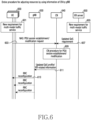
- the XR server 650 may transfer a new QoS requirement or a QoS requirement to be changed to the CN entity 640.
- a procedure of operation 601 to operation 603 and a procedure of operation 605 to operation 607 may be independently generated.
- a procedure of operation 605 to operation 607 of the XR server 650 may be generated by a procedure of operation 601 to operation 603 of the UE 600.
- a procedure of operation 601 to operation 603 of the UE 600 may be generated by a procedure of operation 605 to operation 607 of the XR server 650.
- the CN entity 640 may determine whether to configure a new PDU session for a new QoS flow or whether to change a PDU session in order to change an existing QoS flow, based on information on the XR multi-modal traffic service obtained from the UE 600 in operation 603 and information on the XR multi-modal traffic service obtained from the XR server 650 in operation 607.
- the CN entity 640 may perform a new PDU session configuration procedure with the UE 600 or perform an existing PDU session modification procedure with the UE 600.
- the CN entity 640 may provide an updated QoS profile to a gNB 630. If it is determined that an XR device group and/or an XR flow group is changed in relation to the XR multi-modal service to which QoS flow creation/change is applied, the CN entity 640 may transmit updated XR device group and/or XR flow group information to the gNB 630.
- the CN entity 640 may transmit, to the gNB 630, traffic characteristic information (e.g., at least one of a period (periodicity), an estimated packet arrival time, a packet size, or an allowable PER) for XR multi-modal traffic with information of a newly created/changed QoS flow for the XR multi-modal traffic service.
- traffic characteristic information e.g., at least one of a period (periodicity), an estimated packet arrival time, a packet size, or an allowable PER
- the CN entity 640 may transmit, to the gNB 630, at least one of a 5 QoS identifier (5QI) of the new/changed QoS flow, a reflective QoS attribute (RQA), a flow bit rate, an aggregate bit rate, a maximum packet loss rate, a resource type (e.g., non-GBR, GBR, or delay-critical GBR), a packet delay budget (PDB), a packet error rate (PER), and a maximum data burst volume.
- 5QI 5 QoS identifier
- RQA reflective QoS attribute
- PDB packet delay budget
- PER packet error rate
- the gNB 630 may transmit an RRC reconfiguration (RRCReconfiguration) message that updates a configuration of the UE 600, based on QoS requirement information of a QoS flow for the XR multi-modal traffic service and the QoS profile obtained from the CN entity 140 in operation 611.
- the UE 600 may transmit, to the gNB 630, assistance information including at least one of a QoS requirement for a new QoS flow or a changed QoS flow, a synchronization requirement, or traffic characteristic information.
- the gNB 630 may transmit an RRCReconfiguration message that updates a configuration of the UE 600, based on the assistance information of the UE 600.
- the gNB 630 may update a configuration of DRBs, logical channels, etc. of several UEs belonging to the XR device group and/or XR flow group together.
- the gNB 630 may transmit an RRCReconfiguration message to each of the UEs belonging to the XR device group and/or XR flow group.
- the gNB 630 may transmit an RRCReconfiguration message to a UE corresponding to an anchor device of several UEs belonging to the XR device group and/or XR flow group.
- the gNB 630 may transmit, based on the changed information and to the UE 600, an RRCReconfiguration message that updates at least one of a configured grant (CG) parameter for the UE 600, and a UL/DL grant scheduling or semi-persistent scheduling (SPS) parameter configuration.
- CG configured grant
- SPS semi-persistent scheduling
- the UE 600 may obtain updated configuration information for the XR multi-modal traffic service through the gNB 630 to process at least one of downlink/uplink DRB and logical channel configuration information corresponding to the XR multi-modal traffic service, uplink transmission resource scheduling information, or downlink/uplink traffic transmission or reception.
- the configuration information transmitted by the gNB to the UE may be obtained through a corresponding gNB to which each UE is connected.
- At least one of synchronization requirement information for the XR device group and/or XR flow group corresponding to the multi-modal traffic service, traffic characteristic information, configured grant (CG) parameter information, or uplink and downlink traffic resource scheduling information may be exchanged in at least one signaling among signaling between a gNB and another gNB, signaling between a CU and a CU, signaling between a CU and a DU, or signaling between a DU and a DU.
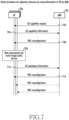
- FIG. 7 illustrates a signal flowchart for adjusting resource allocation of XR service-related UEs, based on XR multi-modal traffic information according to various embodiments of the disclosure.
- a UE 700 may correspond to an anchor device of one or multiple UEs performing an XR multi-modal traffic service, or a single device performing the XR multi-modal traffic service.
- a gNB 730 may transfer a UE capability request (UECapabilityEnquiry ) message that requests capability reporting from the UE 700 being in a connected state.
- the UECapabilityEnquiry message transmitted by the gNB 730 may include a UE capability request for each RAT type.
- the request for each RAT type may include requested frequency band information.
- a transmitted request message may include filtering information that is able to indicate a condition and a limitation.
- the gNB 730 may indicate, through the filtering information, whether the UE 700 needs to report a capability capable of reporting information related to the XR multi-modal traffic service (e.g., at least one of a QoS requirement, a multi-modal traffic characteristic, an XR flow group, an XR device group, or configuration information preferred for each DRB and logical channel).
- a capability capable of reporting information related to the XR multi-modal traffic service e.g., at least one of a QoS requirement, a multi-modal traffic characteristic, an XR flow group, an XR device group, or configuration information preferred for each DRB and logical channel.
- the UE 700 may configure a UE capability information (UECapabilityInformation ) message corresponding to the UECapabilityEnquiry message, to report a response for the request to the gNB 730.
- the UECapabilityInformation message may include a parameter indicating whether the UE 700 is able to report information related to the XR multi-modal traffic service.
- the gNB 730 may determine, based on the received UECapabilityInformation message, whether the UE 700 is able to report information related to the XR multi-modal traffic service.
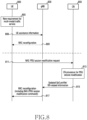
- the gNB 730 may instruct, through an RRCReconfiguration message, the UE 700 to report the added and changed information.
- the UE 700 may determine whether there is a need to create a new QoS flow, or whether there is a need to change an existing QoS flow having been created for the usage of the XR multi-modal traffic service.
- the UE 700 may perform a procedure described with reference to FIG. 7 .
- the UE 700 may reuse, without change, an existing QoS flow having been created for the usage of the XR multi-modal traffic service.
- the UE 700 may determine whether a configuration of a DRB and a logical channel being used for an existing QoS flow service needs to be changed, based on a new QoS requirement of a newly added XR multi-modal traffic service.
- the UE 100 may transfer, to the gNB 730, information on change of the configuration of the DRB and the logical channel required for the new XR multi-modal traffic service.
- the UE 700 may transmit updated XR device group and/or XR flow group information to the gNB 730.
- the UE 700 may transmit, to the gNB 730, updated synchronization requirement information for the XR device group and/or XR flow group (e.g., at least one of a sync gap threshold (a maximum allowable sync gap between multi-modal traffics for the same XR service), or a sync failure rate threshold (a maximum allowable percentage of sync failed packets within the XR flow group).
- a sync gap threshold a maximum allowable sync gap between multi-modal traffics for the same XR service
- a sync failure rate threshold a maximum allowable percentage of sync failed packets within the XR flow group.
- a base station in a wireless communication system may include at least one transceiver and at least one processor functionally coupled to the at least one transceiver, wherein the at least one processor is configured to receive, from a terminal, information on an extended reality (XR) multi-modal traffic service, transmit, to the terminal, a first radio resource control (RRC) configuration message including connection configuration information, based on the received information on the multi-modal traffic service, receive, from a core network (CN) entity, information on a quality of service (QoS) related to a changed protocol data unit (PDU) session, based on a PDU session modification request message transmitted by the terminal, based on the first RRC configuration message, and transmit a second RRC configuration message including new connection configuration information to the terminal, based on the received information on the QoS.
- XR extended reality
- RRC radio resource control
- a computer-readable storage medium for storing one or more programs (software modules) may be provided.
- the one or more programs stored in the computer-readable storage medium may be configured for execution by one or more processors within the electronic device.
- the at least one program includes instructions that cause the electronic device to perform the methods according to various embodiments of the disclosure as defined by the appended claims and/or disclosed herein.
- the programs may be stored in an attachable storage device which can access the electronic device through communication networks such as the Internet, Intranet, Local Area Network (LAN), Wide LAN (WLAN), and Storage Area Network (SAN) or a combination thereof.
- a storage device may access the electronic device via an external port.
- a separate storage device on the communication network may access a portable electronic device.
- an element included in the disclosure is expressed in the singular or the plural according to presented detailed embodiments.
- the singular form or plural form is selected appropriately to the presented situation for the convenience of description, and the disclosure is not limited by elements expressed in the singular or the plural. Therefore, either an element expressed in the plural may also include a single element or an element expressed in the singular may also include multiple elements.
Landscapes
- Engineering & Computer Science (AREA)
- Computer Networks & Wireless Communication (AREA)
- Signal Processing (AREA)
- Databases & Information Systems (AREA)
- Mobile Radio Communication Systems (AREA)
- Traffic Control Systems (AREA)
Applications Claiming Priority (2)
| Application Number | Priority Date | Filing Date | Title |
|---|---|---|---|
| KR1020220052080A KR20230152390A (ko) | 2022-04-27 | 2022-04-27 | 무선 통신 시스템에서 xr 멀티-모달 트래픽 처리를 위한 방법 및 장치 |
| PCT/KR2023/005483 WO2023211069A1 (fr) | 2022-04-27 | 2023-04-21 | Procédé et dispositif de traitement d'un trafic multimodal xr dans un système de communication sans fil |
Publications (2)
| Publication Number | Publication Date |
|---|---|
| EP4513952A1 true EP4513952A1 (fr) | 2025-02-26 |
| EP4513952A4 EP4513952A4 (fr) | 2025-07-30 |
Family
ID=88519333
Family Applications (1)
| Application Number | Title | Priority Date | Filing Date |
|---|---|---|---|
| EP23796716.1A Pending EP4513952A4 (fr) | 2022-04-27 | 2023-04-21 | Procédé et dispositif de traitement d'un trafic multimodal xr dans un système de communication sans fil |
Country Status (3)
| Country | Link |
|---|---|
| EP (1) | EP4513952A4 (fr) |
| KR (1) | KR20230152390A (fr) |
| WO (1) | WO2023211069A1 (fr) |
Cited By (1)
| Publication number | Priority date | Publication date | Assignee | Title |
|---|---|---|---|---|
| WO2025168664A1 (fr) * | 2024-02-07 | 2025-08-14 | Telefonaktiebolaget Lm Ericsson (Publ) | Technique de gestion d'ensembles de pdu multimodales |
Families Citing this family (10)
| Publication number | Priority date | Publication date | Assignee | Title |
|---|---|---|---|---|
| US20240049039A1 (en) * | 2022-08-04 | 2024-02-08 | At&T Intellectual Property I, L.P. | 5g air interface-based traffic classification for extended reality (xr) |
| WO2025145365A1 (fr) * | 2024-01-04 | 2025-07-10 | Zte Corporation | Rapport d'informations de trafic à modalités multiples |
| WO2025162882A1 (fr) * | 2024-01-31 | 2025-08-07 | Telefonaktiebolaget Lm Ericsson (Publ) | Technique de gestion d'ensembles de pdu dans ul |
| WO2025166490A1 (fr) * | 2024-02-05 | 2025-08-14 | 富士通株式会社 | Procédé et appareil de configuration ou d'indication d'informations multimodales relatives à un service, et système de communication |
| CN120456211A (zh) * | 2024-02-06 | 2025-08-08 | 维沃移动通信有限公司 | 同步状态信息的传输方法、终端及网络侧设备 |
| KR20250147585A (ko) * | 2024-04-04 | 2025-10-13 | 삼성전자주식회사 | 모달리티 트래픽 정보를 전달하는 방법 및 장치 |
| CN118804264A (zh) * | 2024-05-20 | 2024-10-18 | 中国移动通信有限公司研究院 | 数据处理方法、装置、设备、存储介质及程序产品 |
| CN121692438A (zh) * | 2024-09-14 | 2026-03-17 | 大唐移动通信设备有限公司 | 传输控制方法、装置、终端及接入网设备 |
| CN120475462A (zh) * | 2024-09-20 | 2025-08-12 | 荣耀终端股份有限公司 | 一种通信方法、设备及存储介质 |
| WO2026075762A1 (fr) * | 2024-10-03 | 2026-04-09 | Qualcomm Incorporated | Informations de configuration multimodales pour groupes de flux multimodaux |
Family Cites Families (4)
| Publication number | Priority date | Publication date | Assignee | Title |
|---|---|---|---|---|
| US10517110B2 (en) * | 2016-08-10 | 2019-12-24 | Ofinno, Llc | Cell configuration for V2X communications in a wireless network |
| EP3435700B1 (fr) * | 2017-07-24 | 2020-09-16 | ASUSTek Computer Inc. | Procédé et appareil permettant de fournir une qualité de service (qos) d'écoulement dans un système de communication sans fil |
| EP3998823B1 (fr) * | 2018-02-02 | 2025-05-28 | Comcast Cable Communications, LLC | Communications sans fil utilisant des informations de trafic |
| US20190313311A1 (en) * | 2018-04-09 | 2019-10-10 | Mediatek Inc. | Apparatuses, service networks, and methods for handling plmn-specific parameters for an inter-plmn handover |
-
2022
- 2022-04-27 KR KR1020220052080A patent/KR20230152390A/ko active Pending
-
2023
- 2023-04-21 WO PCT/KR2023/005483 patent/WO2023211069A1/fr not_active Ceased
- 2023-04-21 EP EP23796716.1A patent/EP4513952A4/fr active Pending
Cited By (1)
| Publication number | Priority date | Publication date | Assignee | Title |
|---|---|---|---|---|
| WO2025168664A1 (fr) * | 2024-02-07 | 2025-08-14 | Telefonaktiebolaget Lm Ericsson (Publ) | Technique de gestion d'ensembles de pdu multimodales |
Also Published As
| Publication number | Publication date |
|---|---|
| WO2023211069A1 (fr) | 2023-11-02 |
| EP4513952A4 (fr) | 2025-07-30 |
| KR20230152390A (ko) | 2023-11-03 |
Similar Documents
| Publication | Publication Date | Title |
|---|---|---|
| EP4513952A1 (fr) | Procédé et dispositif de traitement d'un trafic multimodal xr dans un système de communication sans fil | |
| US20230217398A1 (en) | Method and apparatus for activating or deactivating cell group in next-generation wireless communication system | |
| US12604360B2 (en) | Method and device for managing long-time switching timer in wireless communication system | |
| US20240284280A1 (en) | Method and device for supporting inter-cell movement based on l1 and l2 in wireless communication system | |
| US20240188176A1 (en) | Method and apparatus by which user equipment manages short-time switching gap configuration information in mobile communication system | |
| US20230124607A1 (en) | Apparatus and method for conditional mobility on secondary node initiated by master node in wireless communication systems | |
| US12520121B2 (en) | Method and apparatus in which UE supporting multiple USIMS transmits UE assistance information in wireless communication system | |
| US20230362749A1 (en) | Method and apparatus to optimize conditional pscell addition and change (cpac) in wireless communication system | |
| US20240154880A1 (en) | Method and apparatus for qoe measurement of ue in dual connectivity in a wireless communication system | |
| US20260089716A1 (en) | Method and device for split bearer operation in wireless communication system | |
| EP4633233A1 (fr) | Procédé et dispositif de rapport d'état de tampon tenant compte des informations temporelles restantes dans un système de communication | |
| US20240096223A1 (en) | Method and apparatus for reporting flight path of terminal in mobile communication system | |
| US12376036B2 (en) | Method and apparatus for reporting terminal assistance information associated with overheating and power saving mode operation in next generation wireless communication system | |
| US20240121770A1 (en) | Method and device for scheduling in wireless communication system | |
| CN116762420A (zh) | 下一代无线通信系统中通过多个发送和接收点应用pucch重复发送时执行功率控制的方法 | |
| EP4651460A1 (fr) | Procédé et appareil pour une opération de rejet de sdu pdcp basée sur qos dans un système de communication sans fil | |
| US20240380681A1 (en) | Method and apparatus for reporting uplink traffic jitter in wireless communication system | |
| EP4557696A1 (fr) | Procédé et appareil permettant de rejeter une unité sdu de protocole pdcp dans un système de communication sans fil | |
| EP4651577A1 (fr) | Procédé et appareil de réglage de temporisateur rlc en tenant compte d'opérations dtx/drx d'une station de base dans un système de communication sans fil | |
| US12604243B2 (en) | Method and apparatus for performing conditional PSCell addition and change continuously in wireless communication system | |
| CN121866793A (zh) | 下一代移动通信系统中的多sim ue管理冲突间隙的方法和设备 | |
| US20250324240A1 (en) | Method and apparatus for reporting ue capability in next generation wireless communication system | |
| US20230262825A1 (en) | Method and apparatus for the conditional pscell change in next generation mobile communication system | |
| EP4525494A1 (fr) | Procédé et dispositif de gestion de priorité d'espace pour terminal musim dans un système de communication sans fil | |
| US12348994B2 (en) | Method and apparatus for configuring measurement of channel pathloss for plurality of TRPs in wireless communication system |
Legal Events
| Date | Code | Title | Description |
|---|---|---|---|
| STAA | Information on the status of an ep patent application or granted ep patent |
Free format text: STATUS: THE INTERNATIONAL PUBLICATION HAS BEEN MADE |
|
| PUAI | Public reference made under article 153(3) epc to a published international application that has entered the european phase |
Free format text: ORIGINAL CODE: 0009012 |
|
| STAA | Information on the status of an ep patent application or granted ep patent |
Free format text: STATUS: REQUEST FOR EXAMINATION WAS MADE |
|
| 17P | Request for examination filed |
Effective date: 20241119 |
|
| AK | Designated contracting states |
Kind code of ref document: A1 Designated state(s): AL AT BE BG CH CY CZ DE DK EE ES FI FR GB GR HR HU IE IS IT LI LT LU LV MC ME MK MT NL NO PL PT RO RS SE SI SK SM TR |
|
| A4 | Supplementary search report drawn up and despatched |
Effective date: 20250702 |
|
| RIC1 | Information provided on ipc code assigned before grant |
Ipc: H04W 28/02 20090101AFI20250626BHEP Ipc: H04W 8/24 20090101ALI20250626BHEP Ipc: H04W 76/20 20180101ALI20250626BHEP Ipc: H04W 72/12 20230101ALI20250626BHEP Ipc: H04W 76/10 20180101ALI20250626BHEP Ipc: H04W 76/15 20180101ALI20250626BHEP |
|
| DAV | Request for validation of the european patent (deleted) | ||
| DAX | Request for extension of the european patent (deleted) |