EP4514010A2 - Ressourcenbestimmungsverfahren und kommunikationsvorrichtung - Google Patents
Ressourcenbestimmungsverfahren und kommunikationsvorrichtung Download PDFInfo
- Publication number
- EP4514010A2 EP4514010A2 EP23802699.1A EP23802699A EP4514010A2 EP 4514010 A2 EP4514010 A2 EP 4514010A2 EP 23802699 A EP23802699 A EP 23802699A EP 4514010 A2 EP4514010 A2 EP 4514010A2
- Authority
- EP
- European Patent Office
- Prior art keywords
- communication
- resource
- group
- communication group
- groups
- Prior art date
- Legal status (The legal status is an assumption and is not a legal conclusion. Google has not performed a legal analysis and makes no representation as to the accuracy of the status listed.)
- Pending
Links
Images






Classifications
-
- H—ELECTRICITY
- H04—ELECTRIC COMMUNICATION TECHNIQUE
- H04W—WIRELESS COMMUNICATION NETWORKS
- H04W72/00—Local resource management
- H04W72/12—Wireless traffic scheduling
- H04W72/121—Wireless traffic scheduling for groups of terminals or users
-
- H—ELECTRICITY
- H04—ELECTRIC COMMUNICATION TECHNIQUE
- H04W—WIRELESS COMMUNICATION NETWORKS
- H04W16/00—Network planning, e.g. coverage or traffic planning tools; Network deployment, e.g. resource partitioning or cells structures
- H04W16/02—Resource partitioning among network components, e.g. reuse partitioning
- H04W16/10—Dynamic resource partitioning
-
- H—ELECTRICITY
- H04—ELECTRIC COMMUNICATION TECHNIQUE
- H04W—WIRELESS COMMUNICATION NETWORKS
- H04W72/00—Local resource management
- H04W72/04—Wireless resource allocation
- H04W72/044—Wireless resource allocation based on the type of the allocated resource
- H04W72/0453—Resources in frequency domain, e.g. a carrier in FDMA
-
- H—ELECTRICITY
- H04—ELECTRIC COMMUNICATION TECHNIQUE
- H04W—WIRELESS COMMUNICATION NETWORKS
- H04W72/00—Local resource management
- H04W72/20—Control channels or signalling for resource management
-
- H—ELECTRICITY
- H04—ELECTRIC COMMUNICATION TECHNIQUE
- H04W—WIRELESS COMMUNICATION NETWORKS
- H04W72/00—Local resource management
- H04W72/20—Control channels or signalling for resource management
- H04W72/23—Control channels or signalling for resource management in the downlink direction of a wireless link, i.e. towards a terminal
- H04W72/232—Control channels or signalling for resource management in the downlink direction of a wireless link, i.e. towards a terminal the control data signalling from the physical layer, e.g. DCI signalling
Definitions
- This application relates to the communication field, and more specifically, to a resource determining method and a communication apparatus.
- the network device may schedule, by using one piece of control information, one terminal to communicate with the network device.
- the network device may allocate a transmission resource to the communication terminal.
- a base station sends control information to a transmit end terminal, and the transmit end terminal sends sidelink data on an allocated transmission resource based on the control information.
- Embodiments of this application provide a resource determining method and a communication apparatus, to reduce information overheads and improve resource utilization.
- a resource determining method includes: A first communication apparatus receives first information, where the first information is used to schedule communication of Q communication groups, Q is an integer greater than 1, one communication group includes a sending communication apparatus and a receiving communication apparatus, the first information includes N pieces of communication group indication information and first resource allocation information, N is an integer greater than 1, N is less than or equal to Q, the N pieces of communication group indication information indicate N scheduled communication groups, the first resource allocation information indicates a first resource, and the first resource is used to determine communication resources of the N communication groups.
- the first communication apparatus determines a communication resource of a first communication group based on the first resource, where the first communication group includes the first communication apparatus, and the N pieces of communication group indication information include first communication group indication information indicating the first communication group.
- the first communication apparatus performs communication on the communication resource of the first communication group.
- a second communication apparatus may schedule, by using the first information, a plurality of communication groups to separately perform intra-group communication. In comparison with scheduling one communication group by using one piece of control information, a scheduling latency can be reduced.
- the N communication groups share one piece of resource allocation information in the first information, that is, the first resource allocation information, and may determine, based on the first resource indicated by the first resource allocation information, a communication resource of a communication group to which each of the N communication groups belongs. In comparison with that the second communication apparatus indicates a communication resource of each communication group in the first information, information overheads can be reduced, and resource utilization can be improved.
- the first resource includes the communication resources of the N communication groups.
- the second communication apparatus may indicate, by using the first resource allocation information, that the first resource may specifically include the communication resources of the N communication groups.
- the second communication apparatus and communication apparatuses in the N communication groups reach a consensus on the first resource.
- the communication apparatuses in the N communication groups may determine, from the first resource, a communication resource of a communication group to which each of the communication apparatuses belongs, so that a communication apparatus in each communication group can communicate with a communication apparatus in the communication group on a communication resource of each communication apparatus.
- the first resource is a communication resource of a second target communication group in the N communication groups.
- the second target communication group is a communication group indicated by the 1 st or last piece of communication group indication information in the N pieces of communication group indication information.
- the second communication apparatus may indicate, by using the first resource allocation information, that the first resource is specifically the communication resource of the second target communication group in the N communication groups.
- the second communication apparatus and communication apparatuses in the N communication groups reach a consensus on the first resource.
- the communication apparatuses in the N communication groups may determine, based on the first resource, a communication resource of a communication group to which each of the communication apparatuses belongs, so that a communication apparatus in each communication group can communicate with a communication apparatus in the communication group on a communication resource of each communication apparatus.
- the first communication group indication information there is an association relationship between the first communication group indication information and the communication resource of the first communication group.
- a communication apparatus in the first communication group can determine the communication resource of the first communication group based on the first communication group indication information and the association relationship, so that the communication apparatus in the first communication group can communicate with a communication apparatus in the first communication group on the communication resource of the first communication group.
- the first communication apparatus determines a communication resource of a first communication group based on the first resource includes: The first communication apparatus determines the communication resource of the first communication group based on the first resource and a ranking of the first communication group indication information in the N pieces of communication group indication information.
- the communication resources of the N communication groups are sequentially arranged based on an arrangement order of the N pieces of communication group indication information in the first information.
- the ranking of the first communication group indication information in the N pieces of communication group indication information may be associated with the communication resource of the first communication group.
- the first communication apparatus may determine the communication resource of the first communication group based on the ranking of the first communication group indication information in the N pieces of communication group indication information and the first resource, so that the communication apparatus in the first communication group can communicate with a communication apparatus in the first communication group on the communication resource of the first communication group.
- sizes of the communication resources of the N communication groups in the first resource are the same; or sizes of communication resources of communication groups other than a first target communication group in the N communication groups are the same, and a size of a communication resource of the first target communication group is different from that of a communication resource of one communication group other than the first target communication group.
- the first target communication group is a communication group indicated by the 1 st or last piece of communication group indication information in the N pieces of communication group indication information.
- the sizes of the communication resources of the N communication groups may be the same.
- the first communication apparatus may determine the communication resource of the first communication group based on the same size of the communication resources of the N communication groups, the association relationship between the first communication group indication information and the communication resource of the first communication group, and the first resource, so that the communication apparatus in the first communication group can communicate with a communication apparatus in the first communication group on the communication resource of the first communication group.
- the first resource cannot be equally divided by N, it may be stipulated that the size of the communication resource of the first target communication group is different from that of a communication resource of another communication group, so that communication groups can reach a consensus, and accurately determine respective communication resources when the first resource cannot be equally divided by N.
- the first communication apparatus determines a communication resource of a first communication group based on the first resource includes: The first communication apparatus determines the communication resource of the first communication group in a resource other than a first non-candidate resource based on the first resource, where the first non-candidate resource is a resource that is not used for communication of the N communication groups.
- the second communication apparatus determines the communication resources of the N communication groups after excluding a common unavailable resource (that is, the first non-candidate resource) of the N communication groups.
- the N communication groups determine the communication resources of the communication groups in a resource other than the first non-candidate resource based on the first resource. In this way, the second communication apparatus and the communication apparatuses in the N communication groups reach a consensus on a resource determining manner, and the N communication groups can accurately determine respective communication resources.
- the first non-candidate resource may be configured by using common signaling (or information), for example, cell common signaling or group common signaling.
- the communication resource of the first communication group includes a second non-candidate resource, the second non-candidate resource is not used for communication of the first communication group, and that the first communication apparatus performs communication on the communication resource of the first communication group includes: The first communication apparatus performs communication on a resource other than the second non-candidate resource in the communication resource of the first communication group.
- the first communication apparatus performs communication on the resource other than the second non-candidate resource in the communication resource of the first communication group. If the first communication apparatus is a sending communication apparatus, the first communication apparatus does not send a signal on the second non-candidate resource, and correspondingly, a receiving communication apparatus in the first communication group does not receive a signal on the second non-candidate resource.
- the first communication apparatus is a receiving communication apparatus, the first communication apparatus does not receive a signal on the second non-candidate resource, and correspondingly, a sending communication apparatus in the first communication group does not send a signal on the second non-candidate resource. In this way, communication apparatuses in the first communication group can accurately receive and send a signal, to implement mutual communication.
- the second non-candidate resource may be configured by using dedicated signaling (or information), for example, signaling of the first communication apparatus or signaling of the first communication group.
- the first non-candidate resource is the resource that cannot be used for the communication of the N communication groups, and may be referred to as the unavailable resource of the N communication groups.
- the second non-candidate resource is a resource that cannot be used for the communication of the first communication group, and may be referred to as the unavailable resource of the first communication group.
- the unavailable resource may be a resource pre-allocated for another purpose.
- the unavailable resource may include a resource occupied by a conventional communication system (for example, a communication apparatus in an NR system cannot use a resource occupied by a cell reference signal (cell reference signal, CRS), a synchronization signal, or the like of an LTE system), to ensure compatibility between communication systems.
- the unavailable resource may be a reserved resource, for example, a reserved resource used for transmission of another signal, or a resource reserved for another reason, for example, a reserved channel state information reference signal CSI-RS resource, a reserved synchronization signal resource, or a reserved transmission resource of a special service.
- the unavailable resource may include a periodic resource, a semi-persistent resource, or the like that has been allocated to another communication apparatus. However, this application is not limited thereto.
- that the first communication apparatus performs communication on the communication resource of the first communication group includes: When a proportion of the second non-candidate resource in the communication resource of the first communication group is less than or equal to a resource threshold, the first communication apparatus performs communication on the resource other than the second non-candidate resource in the communication resource of the first communication group, where the second non-candidate resource is not used for the communication of the first communication group.
- the first communication apparatus may not perform communication on the communication resource when the proportion of the unavailable resource in the communication resource is greater than the resource threshold, to reduce a resource waste.
- the first information further includes M pieces of communication group indication information and second resource allocation information, M is a positive integer, M+N is less than or equal to Q, the M pieces of communication group indication information indicate M scheduled communication groups, the second resource allocation information indicates a second resource, and the second resource includes communication resources of the M communication groups, or the second resource is a communication resource of one of the M communication groups.
- the second communication apparatus may schedule a plurality of communication group sets, and a communication apparatus in each communication group set determines a communication resource of a communication group based on a same piece of resource allocation information.
- one communication group set includes the N communication groups, and the N communication groups determine the respective communication resources based on the first resource allocation information.
- Another communication group set includes the M communication groups, and the M communication groups determine respective communication resources based on the first resource allocation information. This improves scheduling flexibility of the second communication apparatus.
- a resource determining method includes: A second communication apparatus determines communication resources of N communication apparatuses.
- the second communication apparatus sends first information, where the first information is used to schedule communication of Q communication groups, Q is an integer greater than 1, one communication group includes a sending communication apparatus and a receiving communication apparatus, the first information includes N pieces of communication group indication information and first resource allocation information, N is an integer greater than 1, N is less than or equal to Q, the N pieces of communication group indication information indicate N scheduled communication groups, the first resource allocation information indicates a first resource, and the first resource is used to determine communication resources of the N communication groups.
- the first resource includes the communication resources of the N communication groups, or the first resource is a communication resource of a second target communication group in the N communication groups.
- first communication group indication information there is an association relationship between first communication group indication information and a communication resource of a first communication group.
- the method includes: The second communication apparatus determines a ranking of the first communication group indication information in the N pieces of communication group indication information based on a ranking of the communication resource of the first communication group in the communication resources of the N communication groups, where the first communication group indication information indicates the first communication group.
- the communication resources of the N communication groups are sequentially arranged based on an arrangement order of the N pieces of communication group indication information in the first information.
- sizes of the communication resources of the N communication groups in the first resource are the same; or sizes of communication resources of communication groups other than a first target communication group in the N communication groups are the same, and a size of a communication resource of the first target communication group is different from that of a communication resource of one communication group other than the first target communication group.
- the first target communication group is a communication group indicated by the 1 st or last piece of communication group indication information in the N pieces of communication group indication information.
- a second communication apparatus determines communication resources of N communication apparatuses includes: determining the communication resources of the N communication groups in a resource other than a first non-candidate resource.
- the first non-candidate resource is a resource that is not used for communication of the N communication groups.
- the first information further includes M pieces of communication group indication information and second resource allocation information, M is a positive integer, M+N is less than or equal to Q, the M pieces of communication group indication information indicate M scheduled communication groups, and the second resource allocation information indicates a second resource.
- the second resource includes communication resources of the M communication groups, or the second resource is a communication resource of one of the M communication groups.
- a communication apparatus may include a one-to-one corresponding module for performing the method/operation/step/action described in the first aspect.
- the module may be implemented by using a hardware circuit, software, or a combination of a hardware circuit and software.
- the apparatus includes: a transceiver unit, configured to receive first information, where the first information is used to schedule communication of Q communication groups, Q is an integer greater than 1, one communication group includes a sending communication apparatus and a receiving communication apparatus, the first information includes N pieces of communication group indication information and first resource allocation information, N is an integer greater than 1, N is less than or equal to Q, the N pieces of communication group indication information indicate N scheduled communication groups, the first resource allocation information indicates a first resource, and the first resource is used to determine communication resources of the N communication groups; and a processing unit, configured to determine a communication resource of a first communication group based on the first resource, where the first communication group includes a first communication apparatus, and the N pieces of communication group indication information include first communication group indication information indicating the first communication group.
- the transceiver unit is further configured to perform communication on the communication resource of the first communication group.
- the first resource includes the communication resources of the N communication groups, or the first resource is a communication resource of a second target communication group in the N communication groups.
- the processing unit is specifically configured to determine the communication resource of the first communication group based on the first resource and a ranking of the first communication group indication information in the N pieces of communication group indication information.
- the processing unit is specifically configured to determine the communication resource of the first communication group in a resource other than a first non-candidate resource based on the first resource.
- the first non-candidate resource is a resource that is not used for communication of the N communication groups.
- the communication resource of the first communication group includes a second non-candidate resource
- the second non-candidate resource is not used for communication of the first communication group
- the transceiver unit is specifically configured to perform communication on a resource other than the second non-candidate resource in the communication resource of the first communication group.
- the transceiver unit is specifically configured to: when a proportion of the second non-candidate resource in the communication resource of the first communication group is less than or equal to a resource threshold, perform communication on the resource other than the second non-candidate resource in the communication resource of the first communication group.
- the second non-candidate resource is not used for the communication of the first communication group.
- the first information further includes M pieces of communication group indication information and second resource allocation information, M is a positive integer, M+N is less than or equal to Q, the M pieces of communication group indication information indicate M scheduled communication groups, the second resource allocation information indicates a second resource, and the second resource includes communication resources of the M communication groups, or the second resource is a communication resource of one of the M communication groups.
- a communication apparatus may include a one-to-one corresponding module for performing the method/operation/step/action described in the second aspect.
- the module may be implemented by using a hardware circuit, software, or a combination of a hardware circuit and software.
- the apparatus includes: a processing unit, configured to determine communication resources of N communication apparatuses; and a transceiver unit, configured to send first information, where the first information is used to schedule communication of Q communication groups, Q is an integer greater than 1, one communication group includes a sending communication apparatus and a receiving communication apparatus, the first information includes N pieces of communication group indication information and first resource allocation information, N is an integer greater than 1, N is less than or equal to Q, the N pieces of communication group indication information indicate N scheduled communication groups, the first resource allocation information indicates a first resource, and the first resource is used to determine communication resources of the N communication groups.
- the first resource includes the communication resources of the N communication groups, or the first resource is a communication resource of a second target communication group in the N communication groups.
- the processing unit is further configured to determine a ranking of the first communication group indication information in the N pieces of communication group indication information based on a ranking of the communication resource of the first communication group in the communication resources of the N communication groups, where the first communication group indication information indicates the first communication group.
- the processing unit is specifically configured to determine the communication resources of the N communication groups in a resource other than a first non-candidate resource.
- the first non-candidate resource is a resource that is not used for communication of the N communication groups.
- the first information further includes M pieces of communication group indication information and second resource allocation information, M is a positive integer, M+N is less than or equal to Q, the M pieces of communication group indication information indicate M scheduled communication groups, the second resource allocation information indicates a second resource, and the second resource includes communication resources of the M communication groups, or the second resource is a communication resource of one of the M communication groups.
- a communication apparatus includes a processor.
- the processor may implement the method in any one of the first aspect and the possible implementations of the first aspect.
- the communication apparatus further includes a memory.
- the processor is coupled to the memory, and may be configured to execute instructions in the memory, to implement the method in any one of the first aspect and the possible implementations of the first aspect.
- the communication apparatus further includes a communication interface, and the processor is coupled to the communication interface.
- the communication interface may be a transceiver, a pin, a circuit, a bus, a module, or another type of communication interface. This is not limited.
- a communication apparatus includes a processor.
- the processor may implement the method in any one of the second aspect and the possible implementations of the second aspect.
- the communication apparatus further includes a memory.
- the processor is coupled to the memory, and may be configured to execute instructions in the memory, to implement the method in any one of the second aspect and the possible implementations of the second aspect.
- the communication apparatus further includes a communication interface, and the processor is coupled to the communication interface.
- the communication apparatuses/communication apparatus provided in the fifth aspect and/or the sixth aspect each are/is a communication device.
- the communication interface may be a transceiver or an input/output interface.
- the transceiver may be a transceiver circuit.
- the input/output interface may be an input/output circuit.
- a processor includes an input circuit, an output circuit, and a processing circuit.
- the processing circuit is configured to: receive a signal through the input circuit, and transmit a signal through the output circuit, to enable the processor to perform the method in any one of the first aspect or the second aspect and the possible implementations of the first aspect or the second aspect.
- the processor may be one or more chips
- the input circuit may be an input pin
- the output circuit may be an output pin
- the processing circuit may be a transistor, a gate circuit, a trigger, any type of logic circuit, or the like.
- An input signal received by the input circuit may be received and input by, for example, but not limited to, a receiver
- a signal output by the output circuit may be output to, for example, but not limited to, a transmitter and transmitted by the transmitter
- the input circuit and the output circuit may be a same circuit, where the circuit is used as the input circuit and the output circuit at different moments.
- Specific implementations of the processor and various circuits are not limited in this embodiment of this application.
- a word such as “example” or “for example” is used to represent giving an example, an illustration, or a description. Any embodiment or design scheme described as “example” or “for example” should not be explained as being more preferred or having more advantages than another embodiment or design scheme.
- the word such as “example” or “for example” is used to present a related concept in a specific manner for ease of understanding.
- at least one (type) may alternatively be described as one (type) or a plurality of (types), and the plurality of (types) may be two (types), three (types), four (types), or more (types). This is not limited in this application.
- the technical solutions in embodiments of this application may be applied to various communication systems, for example, a long term evolution (long term evolution, LTE) system, an LTE frequency division duplex (frequency division duplex, FDD) system, an LTE time division duplex (time division duplex, TDD) system, a 5th generation (5th generation, 5G) communication system, and a wireless fidelity (wireless fidelity, Wi-Fi) system.
- LTE long term evolution
- FDD frequency division duplex
- TDD time division duplex
- 5th generation 5th generation
- a wireless fidelity wireless fidelity
- a communication method provided in this application may be further applied to a communication system evolved after 5G, for example, a 6th generation (6th generation, 6G) communication system, a future communication system, another communication system, or the like. This is not limited in this application.
- the access network device may be a base station (base station), a NodeB (NodeB), an evolved NodeB (evolved NodeB, eNodeB or eNB), a transmission reception point (transmission reception point, TRP), a next generation NodeB (next generation NodeB, gNB) in a 5th generation (5th generation, 5G) mobile communication system, an access network device in an open radio access network (open radio access network, O-RAN or open RAN), a next-generation base station in a 6th generation (6th generation, 6G) mobile communication system, a base station in a future mobile communication system, an access node in a wireless fidelity (wireless fidelity, Wi-Fi) system, or the like.
- the access network device may be a module or unit that implements a part of functions of a base station, for example, may be a central unit (central unit, CU), a distributed unit (distributed unit, DU), a central unit-control plane (CU control plane, CU-CP) module, or a central unit-user plane (CU user plane, CU-UP) module.
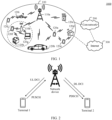
- the access network device may be a macro base station (for example, 110a in FIG. 1 ), may be a micro base station or an indoor base station (for example, 110b in FIG.
- the 5G system may also be referred to as a new radio (new radio, NR) system.
- new radio new radio
- the terminal may also be referred to as a terminal device, user equipment (user equipment, UE), a mobile station, a mobile terminal, or the like.
- the terminal may be widely used in various scenarios for communication.
- the scenarios include, for example, but are not limited to, at least one of the following scenarios: enhanced mobile broadband (enhanced mobile broadband, eMBB), ultra-reliable low-latency communication (ultra-reliable low-latency communication, URLLC), massive machine-type communications (massive machine-type communications, mMTC), D2D, V2X, machine-type communication (machine-type communication, MTC), internet of things (internet of things, IOT), virtual reality, augmented reality, industrial control, self-driving, telemedicine, a smart grid, smart furniture, smart office, a smart wearable, smart transportation, a sensing terminal, a terminal with integrated sensing and communication, or a smart city.
- enhanced mobile broadband enhanced mobile broadband
- eMBB ultra-reliable low-latency communication
- the terminal may be a mobile phone (for example, 120a, 120j, and 120e in FIG. 1 ), a tablet computer, a computer with a wireless transceiver function (for example, 120g in FIG. 1 ), customer-premises equipment (customer-premises equipment, CPE), a smart point of sale (point of sale, POS) machine, a wearable device, a vehicle (for example, 120b in FIG. 1 ), an uncrewed aerial vehicle, a helicopter, an airplane (for example, 120i in FIG. 1 ), a ship, a robot, a robot arm, a sensor, a perceptron, a smart home device (for example, 120h in FIG. 1 ), or the like.
- a specific technology and a specific device form that are used by the terminal are not limited in this application.
- the access network device and/or the terminal may be deployed on land, including an indoor device, an outdoor device, a handheld device, or a vehicle-mounted device; may be deployed on water; or may be deployed on an airplane, a balloon, and an artificial satellite in the air.
- An environment/scenario in which the access network device and the terminal are located is not limited in this application.
- the access network device and the terminal may be deployed in a same environment/scenario or different environments/scenarios. For example, the access network device and the terminal are both deployed on the land; or the access network device is deployed on the land, and the terminal is deployed on the water. Examples are not provided one by one.
- Roles of the access network device and terminal may be relative.
- the helicopter or the uncrewed aerial vehicle 120i in FIG. 1 may be configured as a mobile access network device.
- the terminal 120i is an access network device.
- the access network device 110a, 120i may be a terminal, that is, 110a and 120i may communicate with each other by using a radio air interface protocol.
- 110a and 120i communicate with each other by using an interface protocol between the access network devices.
- 110a, 120i is also an access network device. Therefore, the access network device and the terminal may be collectively referred to as communication apparatuses (or communication devices).
- 110a and 110b in FIG. 1 may be referred to as communication apparatuses having a function of the access network device
- 120a to 120j in FIG. 1 may be referred to as communication apparatuses having a function of the terminal.
- the control information used to schedule the data channel includes but is not limited to downlink control information (downlink control information, DCI) that is sent by a network device and that is used to schedule a physical downlink shared channel (physical downlink shared channel, PDSCH), DCI that is used to schedule a physical uplink shared channel (physical uplink shared channel, PUSCH), DCI that is sent by the network device and that is used to schedule a physical sidelink control channel (physical sidelink control channel, PSCCH) on which (sidelink control information, SCI) is carried and a physical sidelink shared channel (physical sidelink shared channel, PSSCH), SCI that is sent by a transmit end terminal and that is used to schedule the PSSCH, and the like.
- DCI downlink control information
- PDSCH physical downlink shared channel
- PUSCH physical uplink shared channel
- PSCCH physical sidelink control channel
- PSSCH physical sidelink shared channel
- SCI physical sidelink shared channel
- the control information indicates a plurality of scheduling parameters by using a plurality of pieces of indication information, for example, time domain resource allocation information and frequency domain resource allocation information.
- the time domain resource allocation information indicates a time domain position of a communication resource
- the frequency domain resource allocation information indicates a frequency domain position of the communication resource.
- the control information may further include MCS indication information indicating a modulation and coding scheme (modulation and coding scheme, MCS), redundancy version (redundancy version, RV) indication information, a new data indicator (new data indicator, NDI) field, precoding indication information, indication information indicating a hybrid automatic repeat request (hybrid automatic repeat request, HARQ) process, and the like.
- MCS modulation and coding scheme
- RV redundancy version
- NDI new data indicator
- precoding indication information indication information indicating a hybrid automatic repeat request (hybrid automatic repeat request, HARQ) process, and the like.
- a control information receive end sends or receives data based on scheduling information indicated by
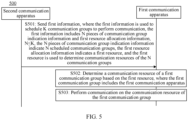
- the terminal and the network device may communicate with each other through a user equipment-universal mobile telecommunications system terrestrial radio access network (UE-UTRAN, Uu) interface.
- the network device may send DCI to the terminal device to schedule the data channel to communicate with the terminal device.
- the network device may send uplink (uplink, UL) DCI to the terminal, to schedule the terminal to send uplink data on the PUSCH.
- the network device may send UL DCI to a terminal 1, and the terminal 1 sends uplink data to the network device on the PUSCH based on the received UL DCI.
- the network device may send downlink (downlink, DL) DCI to the terminal, to schedule the PUSCH to send downlink data to the terminal.
- the network device may send DL DCI to a terminal 2, and the terminal 2 receives downlink data from the network device on the PDSCH based on the received DL DCI.
- the terminals may communicate with each other through a proximity-based service communication (interface) 5 (proximity-based service communication (interface) 5, PC5) interface.
- PC5 interface communication may also be referred to as sidelink (sidelink, SL) communication.
- sidelink sidelink
- the network device sends SL DCI to a transmit end terminal, where the SL DCI is used to schedule the transmit end terminal to perform sidelink communication, and the transmit end terminal sends SCI and data to a receive end terminal based on the SL DCI.
- the receive end terminal receives the SCI, and receives the data based on the SCI.
- the other is a communication mode in which the terminal autonomously selects a communication resource.
- the network device configures a semi-persistent available communication resource for the terminal.
- the transmit end terminal may determine, by sensing (for example, receiving SCI sent by another terminal), a resource that can be used by the transmit end to send data and that is in the semi-persistent resource, and send SCI and the data on the resource.
- the receive end terminal performs blind detection on the SCI, and receives, based on the detected SCI, the data sent by the transmit end terminal.
- the URLLC is critical for wide application of self-driving, industrial manufacturing, internet of vehicles, a smart grid, and other fields. Smart industrial manufacturing has high requirements on a communication latency and stability of a device. For example, in a service area, 50 terminals can be supported. In an end-to-end latency of 1 ms, communication service availability (communication system available, CSA) of a 40-byte data packet is required to be between 99.9999% and 99.999999%.
- the CSA is defined as follows: If a packet received by the receive end is damaged or is not transmitted to the receive end in time (exceeding an allowed maximum end-to-end latency), the service is considered unavailable.
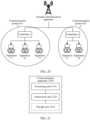
- a two-layer structure is usually used for deployment.
- a base station there is a base station, a controller, and a bottom device.
- the controller 1 needs to first communicate with a base station, and then the base station communicates with the bottom device 1-1.
- a large latency is caused, and the manner can be implemented only with assistance of the base station in the first and second steps.
- a communication latency is large because a control resource is limited. Therefore, currently, communication that supports 50 terminals and meets the CSA requirement cannot be implemented.
- this application proposes that a plurality of communication groups may be scheduled by using one piece of information (for example, control information) to perform communication.
- control information separately indicates a scheduling parameter of each scheduled communication group, overheads of the control information is large.
- some scheduling parameters of the plurality of communication groups may be the same. For example, channel states of the plurality of communication groups scheduled by using the control information are close, and modulation and coding schemes of the plurality of communication groups may be the same.
- the access network device schedules a plurality of terminals to report channel state information to the controller, the channel state information of the plurality of terminals is similar, and sizes of resources that are allocated by the network device to the plurality of terminals for carrying the state information may be the same. Therefore, this application proposes that the control information may include common indication information, the common indication information indicates one scheduling parameter (for example, a resource size or an MCS), and the plurality of communication groups scheduled by using the control information may determine respective scheduling parameters based on the scheduling parameter indicated by the common indication information.
- the control information may include common indication information
- the common indication information indicates one scheduling parameter (for example, a resource size or an MCS)
- the plurality of communication groups scheduled by using the control information may determine respective scheduling parameters based on the scheduling parameter indicated by the common indication information.
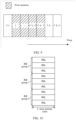
- FIG. 5 is a schematic flowchart of a resource determining method 500 according to an embodiment of this application.
- a second communication apparatus sends first information for scheduling Q communication groups, and communication apparatuses in the Q communication groups may receive the first information, and perform communication based on the first information.
- the Q communication groups include a first communication group, and the first communication group includes a first communication apparatus.
- the first communication apparatus is used as an example for description. For a manner in which another apparatus in the Q communication groups performs communication based on the received first information, refer to the first communication apparatus for implementation. For brevity, details are not described herein again.
- the second communication apparatus sends the first information, where the first information is used to schedule the Q communication groups to perform communication, the first information includes N pieces of communication group indication information and first resource allocation information, N is less than or equal to Q, the N pieces of communication group indication information indicate N scheduled communication groups, the first resource allocation information indicates a first resource, and the first resource is used to determine communication resources of the N communication groups.
- the first information may be scheduling information or control information.
- the first information may be referred to as receiving control information (receiving control information, RxCI).
- the RxCI may be carried on a physical reception link control channel (physical reception link control channel, PRxCCH).
- PRxCCH is a channel on which a terminal device receives the control information.
- the second communication apparatus may be a network device, or the second communication apparatus is configured in the network device, and the first information may be DCI.
- the second communication apparatus may be a terminal device, or the second communication apparatus is configured in the terminal device, and the first information may be SCI.
- One communication group includes a sending communication apparatus and a receiving communication apparatus. That the second communication apparatus schedules the Q communication groups to perform communication includes: Each communication group scheduled by the second communication apparatus performs communication in the communication group, and the second communication apparatus may schedule, by using the first information, a plurality of communication groups to separately perform communication in the groups. This can improve scheduling efficiency and resource utilization, and reduce scheduling overheads.
- the performing communication in the communication group may include but is not limited to: A sending communication apparatus in the communication group sends data, a reference signal, and/or the like to a receiving communication apparatus in the communication group.
- the Q communication groups include the first communication group, and the first communication group includes the first communication apparatus and a third communication apparatus.
- Communication apparatuses in the first communication group may perform communication in the group.
- the first communication apparatus and the third communication apparatus may perform data and/or reference signal communication.
- the first communication apparatus may be a sending communication apparatus
- the third communication apparatus may be a receiving communication apparatus.
- the first communication apparatus sends data and/or a reference signal to the third communication apparatus, and the third communication apparatus receives the data and/or the reference signal from the first communication apparatus.
- the third communication apparatus may be a sending communication apparatus, and the first communication apparatus may be a receiving communication apparatus.
- the third communication apparatus sends data and/or a reference signal to the first communication apparatus, and the first communication apparatus receives the data and/or the reference signal from the third communication apparatus.
- the reference signal may include but is not limited to a sounding reference signal (sounding reference signal, SRS), a channel state information reference signal (channel state information reference signal, CSI-RS), a sensing reference signal, another reference signal, and the like.
- one or more of the Q communication groups may include the second communication apparatus.
- the second communication apparatus may schedule another communication apparatus in a communication group including the second communication apparatus to communicate with the second communication apparatus.
- the second communication apparatus may be the network device.
- the network device and one terminal device may form one communication group, and the communication group is denoted as a communication group 1.
- the Q communication groups scheduled by the network device by using the first information may include the communication group 1. It indicates that the network device schedules the terminal device to communicate with the network device.
- a manner in which the communication group indication information in the first information indicates the communication group includes but is not limited to the following implementations:
- one piece of communication group indication information in the first information includes a plurality of pieces of apparatus identification information, and a plurality of communication apparatuses identified by the plurality of pieces of apparatus identification information are one of the Q communication groups.
- One communication apparatus may determine, based on identification information of the communication apparatus included in the communication group indication information in the first information, that the communication apparatus is scheduled by using the first information to perform communication, and determine, based on identification information of another communication apparatus included in the communication group indication information, the another communication apparatus in a communication group to which the communication apparatus belongs.
- the communication group indication information includes identification information of the sending communication apparatus and identification information of the receiving communication apparatus.
- An apparatus corresponding to the identification information of the sending communication apparatus may determine to send a signal after receiving the first information, and an apparatus corresponding to the identification information of the receiving communication apparatus may determine to receive a signal after receiving the first information.
- a communication group to which the communication apparatus belongs is preconfigured before a communication apparatus receives the first information.
- One piece of communication group indication information in the first information includes one piece of group identification information, and a communication group identified by the group identification information is scheduled.
- the communication apparatus determines, based on group identification information that is of the communication group to which the communication apparatus belongs and that is included in the communication group indication information, that the communication group to which the communication apparatus belongs is scheduled.
- group identification information of the communication group 1 is preconfigured as a group identifier 1
- a sending communication apparatus in the communication group 1 is a communication apparatus A
- a receiving communication apparatus is a communication apparatus B. If the communication group indication information in the first information indicates the group identifier 1, the communication apparatus A and the communication apparatus B corresponding to the group identifier 1 may perform communication after receiving the first information.
- the communication apparatus A serves as the sending communication apparatus to send a signal to the communication apparatus B serving as the receiving communication apparatus.
- the communication apparatus B receives the signal from the communication apparatus A.
- the first information includes the first resource allocation information, and the first resource allocation information is common information of the N communication groups.
- the first resource indicated by the first resource allocation information may be a time domain resource and/or a frequency domain resource.
- Communication apparatuses in the N communication groups may determine, based on the first resource, a communication resource of a communication group to which each of the communication apparatuses belongs. In comparison with that the second communication apparatus indicates a communication resource of each communication group in the first information, information overheads can be reduced, and resource utilization can be improved.
- the first resource allocation information may be frequency domain resource allocation information, may be time domain resource allocation information, or may be time domain resource allocation information and frequency domain resource allocation information.
- the first resource allocation information may alternatively be at least one of space domain resource allocation information, code resource allocation information, sequence resource allocation information, or antenna port resource allocation information.
- N communication apparatuses may share one piece of resource allocation information in the first information to determine at least one of a space domain resource, a code domain resource, a sequence resource, or an antenna port resource.
- the following uses an example in which the first resource allocation information is the time domain resource and/or frequency domain resource allocation information for description.
- the communication apparatus may determine the frequency domain resource of the first resource based on the first resource allocation information.
- time domain resources of the first resource may be the same, or may be respectively configured for the N communication groups. This is not limited in this application.
- the communication apparatus may determine the time domain resource of the first resource based on the first resource allocation information.
- frequency domain resources of the first resource may be the same, or may be respectively configured for the N communication groups. This is not limited in this application.
- the communication apparatus may determine the time domain resource and the frequency domain resource of the first resource based on the first resource allocation information.
- the first information further includes a plurality of pieces of time domain resource indication information corresponding to the N communication groups.
- the first communication apparatus determines a time domain resource of the communication resource of the first communication group based on time domain resource indication information corresponding to the first communication group.
- Time units included in the communication group 0 are the time unit l to a time unit l + L ⁇ N ⁇ 1 ⁇ L/N ⁇ 1 ; ...;
- the first target communication group is the communication group N-1 indicated by the last piece of communication group indication information in the N pieces of communication group indication information.
- the N communication groups perform frequency division multiplexing on the first resource in frequency domain, and the resource unit is the time unit.
- a communication resource of the communication group N-1 includes L - N ⁇ 1 ⁇ L/N time units
- a communication resource of another communication group includes L/N time units.
- the first resource is the L consecutive time units whose start time unit is the time unit l .
- time units included in the communication resources of the N communication groups are respectively as follows:
- a quantity of frequency domain units included in the communication resource of the first target communication group is K ⁇ N ⁇ 1 ⁇ K/N .
- a communication resource of each of the N communication groups except the first target communication group includes K/N frequency domain units.
- communication groups indicated by the N pieces of communication group indication information are the communication group 0, the communication group 1, ..., and the communication group N-1 sequentially.
- the first target communication group is the communication group 0 indicated by the 1 st piece of communication group indication information in the N pieces of communication group indication information.
- the N communication groups perform frequency division multiplexing on the first resource in frequency domain, and the resource unit is the frequency domain unit.
- the communication resource of the communication group 0 includes K ⁇ N ⁇ 1 ⁇ K/N frequency domain units, and a communication resource of another communication group includes K/N frequency domain units.
- the first resource is the K consecutive frequency domain units whose start frequency domain unit is the frequency domain unit k.
- frequency domain units included in the communication resources of the N communication groups are respectively as follows:
- Frequency domain units included in the communication group 0 are the frequency domain unit k to a frequency domain unit k + K ⁇ N ⁇ 1 ⁇ K/N ⁇ 1 ; ...;
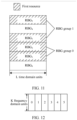
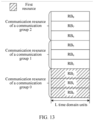
- the first target communication group is the communication group 0 indicated by the 1 st piece of communication group indication information in four pieces of communication group indication information.
- the communication resource of the communication group 1 indicated by the 2 nd piece of communication group indication information includes four RBs in total: the 3 rd RB to the 6 th RB in the 14 RBs.
- the communication resource of the communication group 2 indicated by the 3 rd piece of communication group indication information includes four RBs in total: the 7 th RB to the 10 th RB in the 14 RBs, and the last three RBs: the 11 th RB to the 14 th RB are a communication resource of a communication group 3.
- the first target communication group is the communication group N-1 indicated by the last piece of communication group indication information in the N pieces of communication group indication information.
- the N communication groups perform frequency division multiplexing on the first resource in frequency domain
- the resource unit is the frequency domain unit.
- the communication group N-1 includes K ⁇ N ⁇ 1 ⁇ K/N frequency domain units
- a communication resource of another communication group includes K/N frequency domain units.
- the first resource is the K consecutive frequency domain units whose start frequency domain unit is the frequency domain unit k.
- frequency domain units included in the communication resources of the N communication groups are respectively as follows:
- a quantity of time units included in the communication resource of the first target communication group is L ⁇ N ⁇ 1 ⁇ L/N , where ⁇ represents rounding up to the nearest integer.
- a communication resource of each of the N communication groups except the first target communication group includes L/N time units.
- communication groups indicated by the N pieces of communication group indication information are the communication group 0, the communication group 1, ..., and the communication group N-1 sequentially.
- the first target communication group is the communication group 0 indicated by the 1 st piece of communication group indication information in the N pieces of communication group indication information.
- the N communication groups perform time division multiplexing on the first resource in time domain, and the resource unit is the time unit.
- the communication resource of the communication group 0 includes L ⁇ N ⁇ 1 ⁇ L/N time units
- a communication resource of another communication group includes L/N time units.
- the first resource is the L consecutive time units whose start time unit is the time unit l .
- time units included in the communication resources of the N communication groups are respectively as follows:
- Time units included in the communication group 0 are the time unit l to a time unit l + L ⁇ N ⁇ 1 ⁇ L/N ⁇ 1 ; ...;
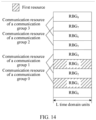
- the first target communication group is the communication group 0 indicated by the 1 st piece of communication group indication information in four pieces of communication group indication information.
- the communication resource of the communication group 1 indicated by the 2 nd piece of communication group indication information includes three symbols in total: the 3 rd symbol to the 5 th symbol in the 11 symbols.
- the communication resource of the communication group 2 indicated by the 3 rd piece of communication group indication information includes three symbols in total: the 6 th symbol to the 8 th symbol in the 11 symbols, and the last three symbols are a communication resource of a communication group 3.
- the first target communication group is the communication group N-1 indicated by the last piece of communication group indication information in the N pieces of communication group indication information.
- the N communication groups perform time division multiplexing on the first resource in time domain, and the resource unit is the time unit.
- the communication group N-1 includes L ⁇ N ⁇ 1 ⁇ L/N time units
- a communication resource of another communication group includes L/N time units.
- the first resource is the L consecutive time units whose start time unit is the time unit l .
- time units included in the communication resources of the N communication groups are respectively as follows:
- Time units included in the communication group 0 are the time unit l to a time unit L + L/N ⁇ 1 ; ...;
- That there is an association relationship between the first communication group indication information and the communication resource of the first communication group includes: The first communication group indication information corresponds to the communication resource of the first communication group.
- the association relationship may be configured by the network device for the first communication apparatus by using signaling.
- association relationship between identification information of a communication group indicated by communication group indication information and a communication resource of the communication group indicated by the communication group indication information.
- the association relationship may be at least one row shown in Table 1-1.
- Table 1-1 Identification information of the communication group Communication resource Communication group identifier 0 Resource group x 0 Communication group identifier 1 Resource group x 1 ... ... Communication group identifier P1-1 Resource group x P1-1
- the resource group x 0 to the resource group x P1-1 are determined based on the first resource.
- the first resource includes P1 resource groups: the resource group x 0 to the resource group x P1-1 , where P1 is an integer.
- the first communication apparatus determines the communication resource of the first communication group based on a communication group identifier indicated by the first communication group identification information and an association relationship between the communication group identifier and the communication resource.
- Table 1-2 Identification information of the communication group Communication resource Communication group identifier 0 Resource group 1 Communication group identifier 1 Resource group 3 Communication group identifier 2 Resource group 2 Communication group identifier 3 Resource group 4
- a resource group that is of the first resource and that is included in the communication resource of the first communication group is the resource group 3 corresponding to the communication group identifier 1 shown in Table 1-2.
- the communication apparatus in the first communication group determines, based on the communication group identifier 1 indicated by the first communication group indication information included in the first information, that the first communication group is scheduled.
- the first communication apparatus determines, based on the association relationship shown in Table 1-2, that the communication resource of the first communication group is the resource group 3.
- That there is an association relationship between the first communication group indication information and the communication resource of the first communication group includes:
- the communication resource of the first communication group is related to a ranking of an information block of the first communication group in N information blocks or the ranking of the first communication group indication information in the N pieces of communication group indication information.
- the first communication apparatus determines the communication resource of the first communication group based on the ranking of the information block of the first communication group in the N information blocks. For a specific implementation, refer to the implementation performed by the first communication apparatus based on the ranking of the first communication group indication information in the N pieces of communication group indication information. For brevity, details are not described herein again.
- the first resource includes the communication resources of the N communication groups.
- the following provides descriptions in which the first resource is the communication resource of the second target communication group in the N communication groups.
- the N communication groups may determine the respective communication resources based on the first resource.
- the first resource allocation information includes the frequency domain resource allocation information
- that the first resource is the communication resource of the second target communication group in the N communication groups means that, in terms of frequency domain, the frequency domain resource of the first resource is a frequency domain resource of the communication resource of the second target communication group in the N communication groups.
- the first resource allocation information includes the time domain resource allocation information
- that the first resource is the communication resource of the second target communication group in the N communication groups means that, in terms of time domain, the time domain resource of the first resource is a time domain resource of the communication resource of the second target communication group in the N communication groups.
- the first resource allocation information includes the frequency domain resource allocation information and the time domain resource allocation information
- that the first resource is the communication resource of the second target communication group in the N communication groups means that, in terms of time-frequency domain, a time-frequency domain resource of the first resource is a time-frequency domain resource of the communication resource of the second target communication group in the N communication groups.
- That there is an association relationship between the first communication group indication information and the communication resource of the first communication group includes: A position of the communication resource of the first communication group is related to a ranking of the first communication group indication information in the N pieces of communication group indication information.
- the first communication apparatus determines the communication resource of the first communication group based on the first resource and the ranking of the first communication group indication information in the N pieces of communication group indication information.
- the communication resources of the N communication groups have different frequency domain positions in the first resource, and/or the communication resources of the N communication groups have different time domain positions in the first resource.
- a multiplexing manner of the communication resources of the N communication groups in frequency domain may be predefined, preconfigured, or indicated by the first information as frequency division multiplexing.
- the communication resources of the N communication groups have a same size and different frequency domain positions.
- the time domain resources of the communication resources of the N communication groups are all the time domain resource of the first resource, that is, each include L time units in time domain.
- the communication resources of the N communication groups each include K frequency domain units.
- the first communication apparatus determines the communication resource of the first communication group based on the first resource and a ranking n of the first communication group indication information in the N pieces of communication group indication information.
- the communication resources of the N communication groups are sequentially arranged in frequency domain, and a ranking of communication group indication information of the second target communication group in the N pieces of communication group indication information is m.
- the first communication apparatus may determine the communication resource of the first communication group based on n, m, and the first resource.
- frequency domain units included in the communication resource of the first communication group are a frequency domain unit k+(n-m)*K to a frequency domain unit k+(n-m+1)*K-1.
- the first communication apparatus may determine the communication resource of the first communication group based on the ranking n of the first communication group indication information in the N pieces of communication group indication information and the first resource.
- frequency domain units included in the communication resource of the first communication group are a frequency domain unit k+n*K to a frequency domain unit k+(n+1)*K-1.
- the first communication apparatus may determine the communication resource of the first communication group based on the ranking n of the first communication group indication information in the N pieces of communication group indication information and the first resource.
- frequency domain units included in the communication resource of the first communication group are a frequency domain unit k+(n-1)*K to a frequency domain unit k+n*K-1.
- the first communication apparatus may determine a communication resource of the communication group 0 based on the first resource allocation information.
- the ranking may start from 0.
- the determined communication resource of the first communication group is the same as the foregoing, that is, includes the RB 3 to the RB 5. This is not limited in this application.
- the first communication apparatus may determine the communication resource of the communication group 1 based on the first resource allocation information.
- the first resource may include K inconsecutive frequency domain units.
- the communication resources of the N communication groups each include K frequency domain units, and a spacing between inconsecutive frequency domain units is the same as that between the inconsecutive frequency domain units in the first resource.
- the first communication group may determine the communication resource of the first communication group based on the first resource and according to a preset rule and the ranking of the first communication group indication information.
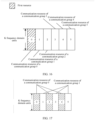
- the first resource allocation information indicates that the first resource includes two inconsecutive RBGs: an RBG 1 and an RBG 3 in frequency domain, and the two RBGs are separated by one RBG.
- the communication resources of the communication apparatuses in the N communication groups each include two RBGs, the two RBGs are separated by one RBG, and time units included in time domain are L time units the same as those of the first resource.
- the first resource is a communication resource of the 1 st communication group
- a communication resource of the 2 nd communication group that is, the communication group 1
- the communication apparatus in the communication group 1 may determine, based on a frequency domain order, two RBGs that meet a requirement, that is, an RBG 2 and an RBG 4 are the communication resource of the communication group 1.
- a communication apparatus in the 3 rd communication group, that is, the communication group 2 may determine, based on a frequency domain order, that the communication resource of the communication group 2 includes an RBG 5 and an RBG 7 that meet a requirement.
- a communication resource of a communication group 3 includes an RBG 6 and an RBG 8.
- this application is not limited thereto.
- the first resource allocation information indicates that the first resource includes three inconsecutive RBs: the RB 1, an RB 3, and an RB 5 in frequency domain, and every two adjacent RBs are separated by one RB.
- the communication resources of the communication apparatuses in the N communication groups each include three RBs, every two adjacent RBs are separated by one RB, and time units included in time domain are L time units the same as those of the first resource.
- the first resource is a communication resource of the 1 st communication group
- a communication resource of the 2 nd communication group that is, the communication group 1
- the communication apparatus in the communication group 1 may determine, based on a frequency domain order, that three RBs that meet a requirement are an RB 2, an RB 4, and an RB 6, and are the communication resource of the communication group 1.
- this application is not limited thereto.
- a multiplexing manner of the communication resources of the N communication groups in time domain may be predefined, preconfigured, or indicated by the first information as time division multiplexing.
- the communication resources of the N communication groups have a same size and different time domain positions.
- the frequency domain resources of the communication resources of the N communication groups are all the frequency domain resource of the first resource, that is, each include K frequency domain units in frequency domain.
- quantities of time units included in the time domain resources of the communication resources of the N communication groups are the same as that of time units included in the first resource, that is, L.
- the first communication apparatus may determine the communication resource of the first communication group based on the ranking n of the first communication group indication information in the N pieces of communication group indication information and the first resource.
- time units included in the communication resource of the first communication group are a time unit l +n*L to a time unit l +(n+1)*L-1.
- the first communication apparatus may determine the communication resource of the first communication group based on the ranking n of the first communication group indication information in the N pieces of communication group indication information and the first resource.
- time units included in the communication resource of the first communication group are a time unit l +(n-1)*L to a time unit l +n*L-1.
- the first communication apparatus may determine a communication resource of the communication group 0 based on the first resource allocation information.
- the ranking may start from 0.
- the determined communication resource of the first communication group is the same as the foregoing, that is, includes the symbol 1. This is not limited in this application.
- this application is not limited thereto.
- the first resource may include L inconsecutive time units.
- the communication resources of the N communication groups each include L time units, and a spacing between inconsecutive time units is the same as that between the inconsecutive time units in the first resource.
- the first communication group may determine the communication resource of the first communication group based on the first resource and according to a preset rule and the ranking of the first communication group indication information.
- the first resource allocation information indicates that the first resource includes three inconsecutive OFDM symbols: a symbol 0, the symbol 2, and a symbol 4 in time domain, and every two adjacent symbols are separated by one symbol.
- the communication resources of the communication apparatuses in the N communication groups each include three symbols, every two adjacent symbols are separated by one symbol, and frequency domain units included in frequency domain are K frequency domain units the same as those of the first resource.
- the first resource is a communication resource of the 1 st communication group
- a communication resource of the 2 nd communication group that is, the communication group 1
- the communication apparatus in the communication group 1 may determine, based on a frequency domain order, that three symbols that meet a requirement are the symbol 1, a symbol 3, and a symbol 5, and are the communication resource of the communication group 1.
- this application is not limited thereto.
- sizes of communication resources of communication apparatuses other than a communication apparatus in a first target communication group in the N communication groups are the same, and a size of a communication resource of the first target communication group is different from that of a communication resource of one communication group other than the first target communication group.
- the communication resource (that is, the first resource) of the second target communication group includes the L consecutive time units whose start time unit is l , a maximum identifier of the time unit in one resource allocation time interval (for example, the time unit is a symbol, and the resource allocation time interval is a frame, a subframe, or a slot, but this application is not limited thereto) is r, and L*(N-1) ⁇ r - l +1 ⁇ L*N.
- a quantity of time units included from the time unit l to the time unit r is insufficient to enable a communication resource of each of the N communication groups to include L time units.
- the size of the communication resource of the first target communication group in the N communication groups is different from that of a communication resource of another communication group.
- the first target communication group is the last communication group in the N communication groups, and the communication resource of the first target communication group may be less than that of the communication group other than the first target communication group in the N communication groups.
- the time domain resource of the first resource is L time units
- the frequency domain resource is the K consecutive frequency domain units whose start frequency domain unit is k
- the time domain resources of the communication resources of the N communication groups are all the L time units
- the N communication groups determine the frequency domain resources of the respective communication resources based on the frequency domain resource of the first resource.
- the maximum identifier of the frequency domain unit is q, K*(N-1) ⁇ q-k+1 ⁇ K*N
- a quantity of frequency domain units included in the communication resource of the first target communication group is (q - k + 1) - (N - 1) * K.
- a communication resource of each of the N communication groups except the first target communication group includes K frequency domain units. Frequency domain units included in the communication resources of the N communication groups are respectively as follows:
- Frequency domain units included in the communication group 0 are the frequency domain unit k to a frequency domain unit k+K-1; ...;
- the frequency domain resource of the first resource is K frequency domain units
- the time domain resource is the L consecutive time units whose start time unit is l
- the frequency domain resources of the communication resources of the N communication groups are all the K frequency domain units
- the N communication groups determine the time domain resources of the respective communication resources based on the time domain resource of the first resource.
- the maximum identifier of the time unit in the resource allocation time interval is r, L*(N-1) ⁇ r-l +1 ⁇ L*N
- a quantity of time units included in the communication resource of the first target communication group is ( r - l + 1) - (N - 1) * L.
- a communication resource of each of the N communication groups except the first target communication group includes L time units. Time units included in the communication resources of the N communication groups are respectively as follows:
- Time units included in the communication group 0 are the time unit l to a time unit l +L-1; ...;
- That there is an association relationship between the first communication group indication information and the communication resource of the first communication group includes: The first communication group indication information corresponds to the communication resource of the first communication group.
- the association relationship may be configured by the network device for the first communication apparatus by using signaling.
- association relationship between a communication group identifier indicated by the first communication group indication information and the communication resource of the first communication group.
- the association relationship may be at least one row shown in Table 2.
- the resource group y0 to the resource group y P2-1 are determined based on the first resource.
- the communication apparatus may deduce P2 resource groups: the resource group y 0 to the resource group y P2-1 based on the first resource, where P2 is an integer.
- the first communication apparatus determines the communication resource of the first communication group based on the communication group identifier indicated by the first communication group identification information and the correspondence between the communication group identifier and the communication resource.
- Table 2-2 Identification information of the communication group Communication resource Communication group identifier 0 Resource group 2 Communication group identifier 1 Resource group 4 Communication group identifier 2 Resource group 1 Communication group identifier 3 Resource group 3
- the four resource groups are sequentially arranged and include a same quantity of resource units.
- the first resource indicated by the first resource allocation information is a resource group of the communication group 0, that is, the resource group 2 corresponding to the communication group identifier 0 shown in Table 2-1.
- One of the N pieces of communication group indication information indicates the communication group identifier 1, that is, an identifier of the communication group 1.
- the communication apparatus in the communication group 1 may determine, based on the first resource allocation information, that the first resource is the resource group 2 of the communication group 0, and then determine, based on that the resource group 1 to the resource group 4 are sequentially arranged and include the same quantity of resource units, that the resource group 4 corresponding to the communication group identifier 1 is the communication resource of the communication group 1. In this way, the communication apparatus may determine, based on the communication group identifier, the first resource, and the preconfigured association relationship, the communication resource of the communication group to which the communication apparatus belongs.
- That there is an association relationship between the first communication group indication information and the communication resource of the first communication group includes:
- the communication resource of the first communication group is related to a ranking of an information block of the first communication group in N information blocks or the ranking of the first communication group indication information in the N pieces of communication group indication information.
- the first communication apparatus determines the communication resource of the first communication group based on the ranking of the information block of the first communication group in the N information blocks. For a specific implementation, refer to the implementation performed by the first communication apparatus based on the ranking of the first communication group indication information in the N pieces of communication group indication information. For brevity, details are not described herein again.
- the time-frequency resource may include some unavailable resources of one or more of the N communication groups.
- the unavailable resources of the one or more communication groups are not used for communication of the one or more communication groups.
- the unavailable resource may be a resource pre-allocated for another purpose.
- the unavailable resource may include a resource occupied by a conventional communication system (for example, a communication apparatus in an NR system cannot use a resource occupied by a CRS, a synchronization signal, or the like of an LTE system), to ensure compatibility between communication systems.
- the unavailable resource may be a reserved resource, for example, a reserved resource used for transmission of another signal, or a resource reserved for another reason or a conflict resource, for example, a reserved CSI-RS resource, a reserved synchronization signal resource, or a reserved transmission resource of a special service.
- the unavailable resource may include a periodic resource, a semi-persistent resource, or the like that has been allocated to another communication apparatus. However, this application is not limited thereto.
- the time-frequency resource may include a common unavailable resource of the N communication groups, denoted as a first non-candidate resource.
- the first non-candidate resource is a resource that is not used for communication of any one of the N communication groups.
- the first non-candidate resource may also be referred to as the common unavailable resource of the N communication groups.
- the time-frequency resource may include an unavailable resource of a part of the N communication groups, which may be referred to as a non-common unavailable resource of the N communication groups.
- a second non-candidate resource is an unavailable resource of the first communication group, and the second non-candidate resource is a resource that is not used for communication of the first communication group.
- the communication apparatus determines the communication resource based on the first resource, there may be an unavailable resource in the time-frequency resource.
- communication apparatuses need to reach a consensus on a manner of determining the communication resource when the time-frequency resource includes the unavailable resource, so that communication apparatuses that perform communication on the communication resource determine a same communication resource, to reduce a probability that communication reliability is reduced due to inconsistent determined resources.
- the first communication apparatus determines the communication resource of the first communication group without considering the unavailable resource.
- the first communication apparatus After determining the communication resource of the first communication group, determines, from the communication resource of the first communication group based on the unavailable resource of the first communication group, a resource that can be used for communication, to perform communication on the resource that can be used for the communication.
- the first resource allocation information indicates that the first resource is eight consecutive RBs: the RB 0 to the RB 7.
- the first communication apparatus determines the first resource based on the first resource allocation information.
- the first resource includes the eight RBs. If N is 3, the first communication apparatus may determine that communication resources of three communication groups respectively include two RBs, three RBs, and three RBs.
- a ranking of the first communication group indication information in three pieces of communication group indication information is 2, that is, the first communication group is the communication group 1.
- the first communication apparatus may determine that the communication resource of the first communication group includes the RB 2 to the RB 4.
- the first communication apparatus may determine, based on preconfigured information, that the RB 3 and the RB 4 in the first resource are unavailable resources of the first communication group.
- the communication resource of the first communication group obtained by the first communication apparatus by excluding the RB 3 and the RB 4 from the communication resource of the first communication group is the RB 2.
- the communication apparatus in the communication group 0 may determine that the communication resource of the communication group 0 includes the RB 0 and the RB 1
- the communication apparatus in the communication group 2 may determine that the communication resource of the communication group 2 includes the RB 5, the RB 6, and the RB 7.
- the first communication apparatus determines the communication resource of the first communication group in a resource other than the first non-candidate resource based on the first resource.
- the first non-candidate resource may be configured by using common signaling (or information), for example, cell common signaling or group common signaling.
- the first resource includes the communication resources of the N communication groups.
- the first communication apparatus excludes the first non-candidate resource from the first resource to obtain candidate resources of the N communication groups. Then, the first communication apparatus determines the communication resource of the first communication apparatus in the candidate resources based on the foregoing association relationship between the communication resource of the first communication group and the first communication group indication information.
- the first resource allocation information indicates that the first resource is eight consecutive RBs: the RB 0 to the RB 7.
- the first communication apparatus determines the first resource based on the first resource allocation information, and the first communication apparatus may determine, based on preconfigured information, that the RB 3 and the RB 4 in the first resource are unavailable resources of the N communication groups, that is, the first non-candidate resource.
- the candidate resources of the N communication groups obtained by the first communication apparatus by excluding the RB 3 and the RB 4 from the first resource are six RBs in total: the RB 0 to the RB 2 and the RB 5 to the RB 7.
- the first communication apparatus may determine that a communication resource of each communication group includes two RBs. A ranking of the first communication group indication information in three pieces of communication group indication information is 2, that is, the first communication group is the communication group 1.
- the first communication apparatus may determine that the communication resource of the first communication group includes the RB 2 and the RB 5.
- the communication apparatus in the communication group 0 may determine that the communication resource of the communication group 0 includes the RB 0 and the RB 1
- the communication apparatus in the communication group 2 may determine that the communication resource of the communication group 2 includes the RB 6 and the RB 7.
- the first resource is the communication resource of the second target communication group.
- the first communication apparatus determines a quantity of resource units included in a resource other than the first non-candidate resource in the first resource, and the quantity of resource units is a quantity of resource units included in the communication resource of each communication group.
- the first communication apparatus determines the communication resource of the first communication group based on the quantity of resource units and the foregoing association relationship between the communication resource of the first communication group and the first communication group indication information.
- the first resource allocation information indicates that the first resource is four consecutive RBs: the RB 0 to the RB 3.
- the first communication apparatus determines the first resource based on the first resource allocation information, and the first communication apparatus may determine, based on preconfigured information, that the RB 1 in the first resource is an unavailable resource of the N communication groups, that is, the first non-candidate resource.
- the first communication apparatus determines that the communication resource of the communication group 0 is three RBs in total: the RB 0, the RB 2, and the RB 3.
- the communication apparatus in the communication group 2 determines that the communication resource of each communication group includes three RBs, and then may determine, based on a ranking 2, that the communication resource of the communication group 2 includes three RBs: the RB7, the RB8, and the RB9.
- the communication resource of the first communication group includes the second non-candidate resource
- the second non-candidate resource is the resource that is not used for the communication of the first communication group
- the first communication apparatus performs communication on a resource other than the second non-candidate resource in the communication resource of the first communication group.
- the second non-candidate resource may be configured by using dedicated signaling (or information), for example, signaling of the first communication apparatus or signaling of the first communication group.
- the second non-candidate resource is the unavailable resource of the first communication group.
- the second non-candidate resource is an available resource for the communication group other than the first communication group in the N communication groups.
- the communication resource of the first communication group may further include the second non-candidate resource. Therefore, the first communication apparatus excludes the second non-candidate resource from the communication resource of the first communication group to determine a resource that can be used for communication, that is, the resource used for the communication does not include the second non-candidate resource.
- the first communication apparatus determines that the communication resource of the first communication group includes the RB 2 and the RB 5, and the first communication apparatus may determine, based on the preconfigured information, that the RB 2 is an unavailable resource of the first communication group, that is, the second non-candidate resource. In this case, the first communication apparatus may determine that the first communication group can perform communication only on the RB 5.
- the non-candidate resource (including the first non-candidate resource and/or the second non-candidate resource) may be indicated by the network device to the first communication apparatus.
- the network device may indicate the non-candidate resource to the first communication apparatus by using one or more of a (radio resource control, RRC) message, a medium access control (medium access control, MAC) control element (control element, CE), or physical layer signaling.
- RRC radio resource control
- MAC medium access control element
- CE physical layer signaling
- indication information used by the network device to indicate the non-candidate resource to the communication apparatus may be referred to as data unmappable resource indication information, rate matching indication information, or reserved resource indication information. This is not limited in this application.
- the foregoing describes a manner in which the first information includes the N pieces of communication group indication information and the first resource allocation information, and the first resource allocation information is used by the communication apparatuses in the N communication groups to determine the communication resources of the respective communication groups.
- the first information further includes M pieces of communication group indication information and second resource allocation information, M is a positive integer, M+N is less than or equal to Q, the M pieces of communication group indication information indicate M scheduled communication groups, the second resource allocation information indicates a second resource, and the second resource includes communication resources of the M communication groups, or the second resource is a communication resource of one of the M communication groups.
- the correspondence between the communication group indication information and the resource allocation information in the first information may be predefined, preconfigured, or indicated by the first information.
- the N pieces of communication group indication information correspond to the first resource allocation information
- the M pieces of communication group indication information correspond to the second resource allocation information. This is not limited in this application.
- the first information further includes an information block corresponding to each communication group, the information block corresponding to each communication group includes indication information, the indication information indicates one piece of resource allocation information corresponding to a corresponding communication group, and the communication group determines, based on the indication information in a corresponding information block, the resource allocation information used to determine a communication resource.
- the first information includes two pieces of resource allocation information
- the information block corresponding to the communication group in the first information may include 1-bit indication information. If the 1 bit indicates "0", it indicates that the communication group determines the communication resource based on the 1 st piece of resource allocation information in the first information, or if the 1 bit indicates "1", it indicates that the communication group determines the communication resource based on the 2 nd piece of resource allocation information in the first information, or vice versa.
- the Q communication groups scheduled by using the first information include the communication group 1, the communication group 2, and the communication group 3. After receiving the first information, the communication apparatus in the communication group 1 reads an information block 1 corresponding to the communication group 1.
- the communication apparatus in the communication group 1 may determine to determine the communication resource of the communication group 1 based on the 2 nd piece of resource allocation information. After receiving the first information, the communication apparatus in the communication group 2 reads an information block 2 corresponding to the communication group 2. If indication information in the information block 2 indicates "0", the communication apparatus in the communication group 2 may determine to determine the communication resource of the communication group 2 based on the 1 st piece of resource allocation information. In addition, if indication information in an information block 3 of the communication group 3 indicates "1", the communication apparatus in the communication group 3 determines to determine the communication resource of the communication group 2 based on the 1 st piece of resource allocation information.
- this application is not limited thereto.
- the first information further includes an information block corresponding to each communication group, the information block corresponding to each communication group includes identification information of a communication group set, the identification information of the communication group set indicates one communication group set corresponding to a corresponding communication group, and the communication group determines, based on the identification information of the communication group set in a corresponding information block, resource allocation information used to determine a communication resource.
- the second communication apparatus schedules a communication group set 1 and a communication group set 2 by using the first information.
- the communication group set 1 includes three communication groups: a communication group 11 including a controller 1 and an apparatus 11, a communication group 12 including the controller 1 and an apparatus 12, and a communication group 13 including the controller 1 and an apparatus 13.
- the communication group set 2 includes two communication groups: a communication group 21 including a controller 2 and an apparatus 21, and a communication group 22 including the controller 2 and an apparatus 22.
- the second communication apparatus sends the first information, and the first information may be received by communication apparatuses in the communication group set 1 and the communication group set 2.
- the first information includes two pieces of resource allocation information
- the information block corresponding to the communication group in the first information may include 1-bit identification information of a communication group set. If the 1 bit indicates "0", it indicates that the communication group belongs to the 1 st communication group set and determines the communication resource based on the 1 st piece of resource allocation information in the first information. For example, if 1 bit in an information block corresponding to each of the communication group 11, the communication group 12, and the communication group 13 indicates "0", communication devices in the three communication groups determine the communication resource based on the 1 st piece of resource allocation information. If the 1 bit indicates "1", it indicates that the communication group belongs to the 2 nd communication group set and determines the communication resource based on the 2 nd piece of resource allocation information in the first information. For example, if 1 bit in an information block corresponding to each of the communication group 21 and the communication group 22 indicates "0", communication devices in the two communication groups determine the communication resource based on the 2 nd piece of resource allocation information.
- this application is not limited thereto.
- the communication apparatus may determine a quantity of sets of S communication groups based on a quantity of pieces of resource allocation information included in the first information. For example, if the first information includes two pieces of resource allocation information, the communication apparatus may determine that the S communication groups include two communication group sets. A resource indicated by the 1 st piece of resource allocation information is used by the 1 st communication group set (that is, a communication group set 0) to determine a communication resource, and a resource indicated by the 2 nd piece of resource allocation information is used by the 2 nd communication group set (that is, the communication group set 1) to determine a communication resource. In this case, the S communication groups determine, based on indication information in information blocks, whether the communication groups belong to the communication group set 0 or the communication group set 1, to determine corresponding resource allocation information.
- the communication apparatus may determine a quantity of communication group sets and/or the quantity of pieces of resource allocation information based on configuration information.
- the network device sends signaling to indicate the quantity of communication group sets or the quantity of pieces of resource allocation information.
- the communication apparatus may determine the corresponding resource allocation information according to a preset rule. For example, the communication apparatus may determine the corresponding resource allocation information according to an equal allocation rule. If the first information includes two pieces of resource allocation information, the communication apparatus may determine that communication groups indicated by the first S/2 pieces of communication group indication information in the first information determine a communication resource based on the first resource allocation information. In addition, communication groups indicated by the last S/2 pieces of communication group indication information in the first information determine a communication resource based on the first resource allocation information. Optionally, when S cannot be divided by a quantity of pieces of communication group resource allocation information, a manner of rounding up or down to the nearest integer may be used.
- the communication apparatus may determine that three communication group sets are included.
- the 1 st communication group set and the 2 nd communication group set each may include three communication groups, and the 3 rd communication group set may include one communication group; or the 1 st communication group set may include one communication group, and the 2 nd communication group set and the 3 rd communication group set each may include three communication groups.
- the 1 st communication group set and the 2 nd communication group set each may include two communication groups, and the 3 rd communication group set may include four communication groups; or the 1 st communication group set may include four communication groups, and the 2 nd communication group set and the 3 rd communication group set each may include two communication groups.
- this application is not limited thereto.
- the first communication apparatus performs communication on the communication resource of the first communication group.
- the first communication apparatus After receiving the first information and determining the communication resource of the first communication group, the first communication apparatus communicates with the communication apparatus in the first communication group on the communication resource of the first communication group.
- the first communication apparatus may be the sending communication apparatus.
- the first communication apparatus sends a signal (for example, one or more of control information, a reference signal, or data) on the communication resource.
- the first communication apparatus may be the receiving communication apparatus. In this case, the first communication apparatus receives a signal on the communication resource.
- the resource threshold may be predefined in a protocol, or may be configured by the network device by using signaling. This is not limited in this application.
- the first communication apparatus may not perform communication on the communication resource when the proportion of the unavailable resource in the communication resource is greater than the resource threshold, to reduce a resource waste.
- the second communication apparatus may schedule, by using the first information, the plurality of communication groups to perform communication.
- the first information includes common indication information, which may be used by communication apparatuses in the plurality of communication groups to determine scheduling parameters. This can improve resource utilization, and reduce scheduling and transmission latencies.
- network elements may include a hardware structure and/or a software module, and the foregoing functions are implemented in a form of the hardware structure, the software module, or a combination of the hardware structure and the software module. Whether a specific function in the foregoing functions is performed by the hardware structure, the software module, or the combination of the hardware structure and the software module depends on a particular application and a design constraint condition of the technical solutions.
- FIG. 21 is a block diagram of a communication apparatus according to this application. As shown in FIG. 21 , the communication apparatus 2100 may include a transceiver unit 2120.
- the communication apparatus 2100 may correspond to the first communication apparatus in the foregoing method.
- the communication apparatus 2100 may be a communication device, or the communication apparatus 2100 is a chip configured in (or used for) the communication device (for example, a terminal device), or another apparatus, module, circuit, unit, or the like that can implement the method of the first communication apparatus.
- the communication apparatus 2100 may include a unit configured to perform the method performed by the first communication apparatus in the foregoing method embodiment.
- units in the communication apparatus 2100 and the foregoing other operations and/or functions are respectively used to implement corresponding procedures in the foregoing method embodiment.
- the communication apparatus 2100 may further include a processing unit 2110.
- the processing unit 2110 may be configured to process instructions or data, to implement a corresponding operation.
- the transceiver unit 2120 in the communication apparatus 2100 may be an input/output interface or a circuit in the chip, and the processing unit 2110 in the communication apparatus 2100 may be a processor in the chip.
- the communication apparatus 2100 may further include a storage unit 2130.
- the storage unit 2130 may be configured to store the instructions or the data.
- the processing unit 2110 may execute the instructions or the data stored in the storage unit, to enable the communication apparatus to implement the corresponding operation.
- the transceiver unit 2120 in the communication apparatus 2100 may be implemented by a communication interface (for example, a transceiver, a transceiver circuit, an input/output interface, or a pin), for example, may correspond to a transceiver 2210 in a communication apparatus 2200 shown in FIG. 22 .
- the processing unit 2110 in the communication apparatus 2100 may be implemented by at least one processor, for example, may correspond to a processor 2220 in the communication apparatus 2200 shown in FIG. 22 .
- the processing unit 2110 in the communication apparatus 2100 may alternatively be implemented by at least one logic circuit.
- the storage unit 2130 in the communication apparatus 2100 may correspond to a memory 2230 in the first communication apparatus 2200 shown in FIG. 22 .
- the communication apparatus 2100 may correspond to the second communication apparatus in the foregoing method.
- the communication apparatus 2100 may be a communication device, or the communication apparatus 2100 is a chip configured in (or used for) the communication device (for example, an access network device or a terminal device), or another apparatus, module, circuit, unit, or the like that can implement the method of the second communication apparatus.
- the communication apparatus 2100 may include a unit configured to perform the method performed by the second communication apparatus in the foregoing method embodiment.
- units in the communication apparatus 2100 and the foregoing other operations and/or functions are respectively used to implement corresponding procedures in the foregoing method embodiment.
- the communication apparatus 2100 may further include a processing unit 2110.
- the processing unit 2110 may be configured to process instructions or data, to implement a corresponding operation.
- the transceiver unit 2120 in the communication apparatus 2100 may be an input/output interface or a circuit in the chip, and the processing unit 2110 in the communication apparatus 2100 may be a processor in the chip.
- the communication apparatus 2100 may further include a storage unit 2130.
- the storage unit 2130 may be configured to store the instructions or the data.
- the processing unit 2110 may execute the instructions or the data stored in the storage unit, to enable the communication apparatus to implement the corresponding operation.
- the transceiver unit 2120 in the communication apparatus 2100 may be implemented by a communication interface (for example, a transceiver, a transceiver circuit, an input/output interface, or a pin), for example, may correspond to a transceiver 2310 in a communication apparatus 2300 shown in FIG. 23 .
- the processing unit 2310 in the communication apparatus 2300 may be implemented by at least one processor, for example, may correspond to a processor 2320 in the communication apparatus 2300 shown in FIG. 23 .
- the processing unit 2110 in the communication apparatus 2100 may be implemented by at least one logic circuit.
- the storage unit 2130 in the communication apparatus 2100 may correspond to a memory 2330 in the network device 2300 shown in FIG. 23 .
- FIG. 22 is a diagram of a structure of a communication apparatus 2200 according to this application.
- the communication apparatus 2200 may be used in the system shown in FIG. 1 , to perform a function of the first communication apparatus in the foregoing method.
- the communication apparatus 2200 includes a processor 2220 and a transceiver 2210.
- the communication apparatus 2200 further includes a memory 2230.
- the processor 2220, the transceiver 2210, and the memory may communicate with each other through an internal connection path, to transfer a control signal and/or a data signal.
- the memory 2230 is configured to store a computer program.
- the processor 2220 is configured to execute the computer program in the memory 2230, to control the transceiver 2210 to receive and send a signal.
- the processor 2220 may be configured to perform an action that is internally implemented by the first communication apparatus and that is described in the foregoing method, and the transceiver 2210 may be configured to perform a sending or receiving action of the first communication apparatus described in the foregoing method.
- the transceiver 2210 may be configured to perform a sending or receiving action of the first communication apparatus described in the foregoing method.
- the communication apparatus 2200 may further include a power supply, configured to supply power to various devices or circuits in the communication apparatus.
- FIG. 23 is a diagram of a structure of a communication apparatus 2300 according to this application.
- the communication apparatus 2300 may be used in the system shown in FIG. 1 , to perform a function of the second communication apparatus in the foregoing method.
- the communication apparatus 2300 includes a processor 2320 and a transceiver 2310.
- the communication apparatus 2300 further includes a memory 2330.
- the processor 2320, the transceiver 2310, and the memory may communicate with each other through an internal connection path, to transfer a control signal and/or a data signal.
- the memory 2330 is configured to store a computer program.
- the processor 2320 is configured to execute the computer program in the memory 2330, to control the transceiver 2310 to receive and send a signal.
- the processor 2320 may be configured to perform an action that is internally implemented by the second communication apparatus and that is described in the foregoing method, and the transceiver 2310 may be configured to perform a sending or receiving action of the second communication apparatus described in the foregoing method.
- the transceiver 2310 may be configured to perform a sending or receiving action of the second communication apparatus described in the foregoing method.
- the communication apparatus 2300 may further include a power supply, configured to supply power to various devices or circuits in the communication apparatus.
- the processor and the memory may be combined into one processing apparatus, and the processor is configured to execute program code stored in the memory to implement the foregoing functions.
- the memory may alternatively be integrated into the processor, or independent of the processor.
- the processor may correspond to the processing unit in FIG. 21 .
- the transceiver 2210 may correspond to the transceiver unit in FIG. 21 .
- the transceiver 2210 may include a receiver (or referred to as a receiver machine or a receiver circuit) and a transmitter (or referred to as a transmitter machine or a transmitter circuit). The receiver is configured to receive a signal, and the transmitter is configured to transmit a signal.
- the processor may be a general-purpose processor, a digital signal processor, an application-specific integrated circuit, a field programmable gate array or another programmable logic device, a discrete gate or transistor logic device, or a discrete hardware component, and may implement or perform the methods, steps, and logic block diagrams in this application.
- the general-purpose processor may be a microprocessor, any conventional processor, or the like. The steps of the method with reference to this application may be directly implemented by a hardware processor, or may be implemented by a combination of hardware and a software module in the processor.
- the memory may be a non-volatile memory, for example, a hard disk drive (hard disk drive, HDD) or a solid-state drive (solid-state drive, SSD), or may be a volatile memory (volatile memory), for example, a random-access memory (random-access memory, RAM).
- the memory is any other medium that can carry or store expected program code in a form of an instruction or a data structure and that can be accessed by a computer, but is not limited thereto.
- the memory in this application may alternatively be a circuit or any other apparatus that can implement a storage function, and is configured to store program instructions and/or data.
- This application further provides a processing apparatus, including a processor and a (communication) interface.
- the processor is configured to perform the method provided in the foregoing method embodiment.
- the processing apparatus may be one or more chips.
- the processing apparatus may be a field programmable gate array (field programmable gate array, FPGA), an application-specific integrated chip (application-specific integrated circuit, ASIC), a system on chip (system on chip, SoC), a central processing unit (central processing unit, CPU), a network processor (network processor, NP), a digital signal processing circuit (digital signal processor, DSP), a microcontroller (micro controller unit, MCU), a programmable controller (programmable logic device, PLD), or another integrated chip.
- field programmable gate array field programmable gate array
- ASIC application-specific integrated circuit
- SoC system on chip
- CPU central processing unit
- network processor network processor
- NP digital signal processing circuit
- DSP digital signal processor
- microcontroller micro controller unit, MCU
- programmable controller programmable logic device, PLD
- this application further provides a computer program product.
- the computer program product includes computer program code.
- an apparatus including the processor is enabled to perform the method provided in the foregoing method embodiment.
- All or some of the technical solutions provided in this application may be implemented by using software, hardware, firmware, or any combination thereof.
- the software is used to implement the technical solutions, all or some of the technical solutions may be implemented in a form of a computer program product.
- the computer program product includes one or more computer instructions.
- the computer instructions may be stored in a computer-readable storage medium, or transmitted from a computer-readable storage medium to another computer-readable storage medium.
- the computer-readable storage medium may be any usable medium accessible to the computer, or a data storage device, for example, a server or a data center, integrating one or more usable media.
- the usable medium may be a magnetic medium (for example, a floppy disk, a hard disk drive, or a magnetic tape), an optical medium (for example, a digital video disc (digital video disc, DVD)), a semiconductor medium, or the like.
- this application further provides a computer-readable storage medium.
- the computer-readable storage medium stores program code.
- an apparatus including the processor is enabled to perform the method provided in the foregoing method embodiment.
- this application further provides a system.
- the system includes the foregoing one or more first communication apparatuses.
- the system may further include the foregoing one or more second communication apparatuses.
- the disclosed system, apparatus, and method may be implemented in another manner.
- the foregoing described apparatuses are merely examples.
- division into the units is merely logic function division and may be other division in actual implementation.
- a plurality of units or components may be combined or integrated into another system, or some features may be ignored or not performed.
- the displayed or discussed mutual couplings or direct couplings or communication connections may be implemented through some interfaces.
- the indirect couplings or communication connections between the apparatuses or units may be implemented in electrical, mechanical, or another form.
- the units described as separate parts may or may not be physically separate, and parts displayed as units may or may not be physical units, that is, may be located in one position, or may be distributed on a plurality of network units. Some or all of the units may be selected based on actual needs to achieve the objectives of the solutions.
Landscapes
- Engineering & Computer Science (AREA)
- Computer Networks & Wireless Communication (AREA)
- Signal Processing (AREA)
- Mobile Radio Communication Systems (AREA)
- Data Exchanges In Wide-Area Networks (AREA)
Applications Claiming Priority (2)
| Application Number | Priority Date | Filing Date | Title |
|---|---|---|---|
| CN202210521171.3A CN117119464A (zh) | 2022-05-13 | 2022-05-13 | 资源确定方法和通信装置 |
| PCT/CN2023/091650 WO2023216927A2 (zh) | 2022-05-13 | 2023-04-28 | 资源确定方法和通信装置 |
Publications (2)
| Publication Number | Publication Date |
|---|---|
| EP4514010A2 true EP4514010A2 (de) | 2025-02-26 |
| EP4514010A4 EP4514010A4 (de) | 2025-08-20 |
Family
ID=88729650
Family Applications (1)
| Application Number | Title | Priority Date | Filing Date |
|---|---|---|---|
| EP23802699.1A Pending EP4514010A4 (de) | 2022-05-13 | 2023-04-28 | Ressourcenbestimmungsverfahren und kommunikationsvorrichtung |
Country Status (3)
| Country | Link |
|---|---|
| EP (1) | EP4514010A4 (de) |
| CN (1) | CN117119464A (de) |
| WO (1) | WO2023216927A2 (de) |
Family Cites Families (9)
| Publication number | Priority date | Publication date | Assignee | Title |
|---|---|---|---|---|
| KR20130049582A (ko) * | 2011-11-04 | 2013-05-14 | 삼성전자주식회사 | 무선 다중 캐리어 시스템에서 자원 할당 방법 및 장치 |
| US20190174530A1 (en) * | 2016-07-01 | 2019-06-06 | Lg Electronics Inc. | Method for transmitting and receiving data in wireless communication system and apparatus therefor |
| US10673593B2 (en) * | 2016-11-03 | 2020-06-02 | Huawei Technologies Co., Ltd. | HARQ signaling for grant-free uplink transmissions |
| US20190140796A1 (en) * | 2017-11-09 | 2019-05-09 | Qualcomm Incorporated | Intra-cell interference management for device-to-device communication using grant-free resource |
| US10999858B2 (en) * | 2018-05-17 | 2021-05-04 | Qualcomm Incorporated | Multiple groupings for group control channel |
| US11129174B2 (en) * | 2018-09-26 | 2021-09-21 | Qualcomm Incorporated | User equipment groups for group physical downlink control channel communications |
| US11540310B2 (en) * | 2019-08-12 | 2022-12-27 | Qualcomm Incorporated | Group scheduling applications |
| KR102892809B1 (ko) * | 2019-08-14 | 2025-11-28 | 삼성전자주식회사 | 무선 통신 시스템에서 harq 피드백 방법 및 장치 |
| EP4192152B1 (de) * | 2020-07-29 | 2025-09-17 | Guangdong Oppo Mobile Telecommunications Corp., Ltd. | Verfahren und vorrichtung zur kommunikation |
-
2022
- 2022-05-13 CN CN202210521171.3A patent/CN117119464A/zh active Pending
-
2023
- 2023-04-28 EP EP23802699.1A patent/EP4514010A4/de active Pending
- 2023-04-28 WO PCT/CN2023/091650 patent/WO2023216927A2/zh not_active Ceased
Also Published As
| Publication number | Publication date |
|---|---|
| CN117119464A (zh) | 2023-11-24 |
| EP4514010A4 (de) | 2025-08-20 |
| WO2023216927A3 (zh) | 2024-01-25 |
| WO2023216927A2 (zh) | 2023-11-16 |
Similar Documents
| Publication | Publication Date | Title |
|---|---|---|
| US11070951B2 (en) | Systems and methods for multicast resource allocation | |
| US12446049B2 (en) | Control information transmission method | |
| CN113517946B (zh) | 一种通信方法及装置 | |
| US11363499B2 (en) | Resource configuration method, apparatus, and system | |
| WO2019192345A1 (zh) | 一种时域资源分配方法及装置 | |
| US11147047B2 (en) | Uplink transmission method, terminal, and network side device | |
| US12016044B2 (en) | Data transmission method and communications apparatus | |
| CN107071905A (zh) | 设备间通信方法、用户设备和基站 | |
| US20200178248A1 (en) | Method and device for receiving and sending control information | |
| WO2020169063A1 (zh) | 一种数据传输方法及通信装置 | |
| EP4429371A1 (de) | Ressourcenanzeigeverfahren und kommunikationsvorrichtung | |
| US12003466B2 (en) | Resource allocation method and device in TDD system | |
| EP4021102A1 (de) | Verfahren, vorrichtung und system zum empfangen und senden von steuerungsinformationen | |
| CN114826537A (zh) | 一种通信方法及装置 | |
| JP2019514258A (ja) | アンテナポート指示方法および装置 | |
| WO2023185433A1 (zh) | 通信方法和通信装置 | |
| US20230309154A1 (en) | Radio communication node | |
| WO2022027508A1 (zh) | 一种资源调度方法及通信装置 | |
| CN108631907A (zh) | 无授权传输方法、用户终端和基站 | |
| EP4514010A2 (de) | Ressourcenbestimmungsverfahren und kommunikationsvorrichtung | |
| CN116195289A (zh) | 无线通信节点 | |
| US11477793B2 (en) | Information transmission method and device | |
| KR20250005399A (ko) | 통신 방법 및 장치 | |
| CN117858252A (zh) | 通信方法和相关产品 | |
| EP4626109A1 (de) | Kommunikationsverfahren und kommunikationsvorrichtung |
Legal Events
| Date | Code | Title | Description |
|---|---|---|---|
| STAA | Information on the status of an ep patent application or granted ep patent |
Free format text: STATUS: THE INTERNATIONAL PUBLICATION HAS BEEN MADE |
|
| PUAI | Public reference made under article 153(3) epc to a published international application that has entered the european phase |
Free format text: ORIGINAL CODE: 0009012 |
|
| STAA | Information on the status of an ep patent application or granted ep patent |
Free format text: STATUS: REQUEST FOR EXAMINATION WAS MADE |
|
| 17P | Request for examination filed |
Effective date: 20241122 |
|
| AK | Designated contracting states |
Kind code of ref document: A2 Designated state(s): AL AT BE BG CH CY CZ DE DK EE ES FI FR GB GR HR HU IE IS IT LI LT LU LV MC ME MK MT NL NO PL PT RO RS SE SI SK SM TR |
|
| A4 | Supplementary search report drawn up and despatched |
Effective date: 20250723 |
|
| DAV | Request for validation of the european patent (deleted) | ||
| DAX | Request for extension of the european patent (deleted) | ||
| RIC1 | Information provided on ipc code assigned before grant |
Ipc: H04W 72/04 20230101AFI20250717BHEP Ipc: H04W 72/121 20230101ALI20250717BHEP Ipc: H04W 16/10 20090101ALI20250717BHEP Ipc: H04W 72/20 20230101ALN20250717BHEP Ipc: H04W 72/0453 20230101ALN20250717BHEP |