EP4516529A1 - Liquide de neutralisation pulvérisable pour empêcher une interaction de sel d'apprêt avec une application de vernis - Google Patents
Liquide de neutralisation pulvérisable pour empêcher une interaction de sel d'apprêt avec une application de vernis Download PDFInfo
- Publication number
- EP4516529A1 EP4516529A1 EP23194899.3A EP23194899A EP4516529A1 EP 4516529 A1 EP4516529 A1 EP 4516529A1 EP 23194899 A EP23194899 A EP 23194899A EP 4516529 A1 EP4516529 A1 EP 4516529A1
- Authority
- EP
- European Patent Office
- Prior art keywords
- ink
- primer
- pigment
- neutralizing liquid
- salt
- Prior art date
- Legal status (The legal status is an assumption and is not a legal conclusion. Google has not performed a legal analysis and makes no representation as to the accuracy of the status listed.)
- Pending
Links
Images

Classifications
-
- B—PERFORMING OPERATIONS; TRANSPORTING
- B41—PRINTING; LINING MACHINES; TYPEWRITERS; STAMPS
- B41M—PRINTING, DUPLICATING, MARKING, OR COPYING PROCESSES; COLOUR PRINTING
- B41M5/00—Duplicating or marking methods; Sheet materials for use therein
- B41M5/0011—Pre-treatment or treatment during printing of the recording material, e.g. heating, irradiating
- B41M5/0017—Application of ink-fixing material, e.g. mordant, precipitating agent, on the substrate prior to printing, e.g. by ink-jet printing, coating or spraying
-
- C—CHEMISTRY; METALLURGY
- C09—DYES; PAINTS; POLISHES; NATURAL RESINS; ADHESIVES; COMPOSITIONS NOT OTHERWISE PROVIDED FOR; APPLICATIONS OF MATERIALS NOT OTHERWISE PROVIDED FOR
- C09D—COATING COMPOSITIONS, e.g. PAINTS, VARNISHES OR LACQUERS; FILLING PASTES; CHEMICAL PAINT OR INK REMOVERS; INKS; CORRECTING FLUIDS; WOODSTAINS; PASTES OR SOLIDS FOR COLOURING OR PRINTING; USE OF MATERIALS THEREFOR
- C09D11/00—Inks
- C09D11/54—Inks based on two liquids, one liquid being the ink, the other liquid being a reaction solution, a fixer or a treatment solution for the ink
-
- B—PERFORMING OPERATIONS; TRANSPORTING
- B41—PRINTING; LINING MACHINES; TYPEWRITERS; STAMPS
- B41M—PRINTING, DUPLICATING, MARKING, OR COPYING PROCESSES; COLOUR PRINTING
- B41M7/00—After-treatment of prints, e.g. heating, irradiating, setting of the ink, protection of the printed stock
-
- C—CHEMISTRY; METALLURGY
- C09—DYES; PAINTS; POLISHES; NATURAL RESINS; ADHESIVES; COMPOSITIONS NOT OTHERWISE PROVIDED FOR; APPLICATIONS OF MATERIALS NOT OTHERWISE PROVIDED FOR
- C09D—COATING COMPOSITIONS, e.g. PAINTS, VARNISHES OR LACQUERS; FILLING PASTES; CHEMICAL PAINT OR INK REMOVERS; INKS; CORRECTING FLUIDS; WOODSTAINS; PASTES OR SOLIDS FOR COLOURING OR PRINTING; USE OF MATERIALS THEREFOR
- C09D11/00—Inks
- C09D11/02—Printing inks
- C09D11/10—Printing inks based on artificial resins
-
- C—CHEMISTRY; METALLURGY
- C09—DYES; PAINTS; POLISHES; NATURAL RESINS; ADHESIVES; COMPOSITIONS NOT OTHERWISE PROVIDED FOR; APPLICATIONS OF MATERIALS NOT OTHERWISE PROVIDED FOR
- C09D—COATING COMPOSITIONS, e.g. PAINTS, VARNISHES OR LACQUERS; FILLING PASTES; CHEMICAL PAINT OR INK REMOVERS; INKS; CORRECTING FLUIDS; WOODSTAINS; PASTES OR SOLIDS FOR COLOURING OR PRINTING; USE OF MATERIALS THEREFOR
- C09D11/00—Inks
- C09D11/30—Inkjet printing inks
- C09D11/32—Inkjet printing inks characterised by colouring agents
- C09D11/322—Pigment inks
-
- C—CHEMISTRY; METALLURGY
- C09—DYES; PAINTS; POLISHES; NATURAL RESINS; ADHESIVES; COMPOSITIONS NOT OTHERWISE PROVIDED FOR; APPLICATIONS OF MATERIALS NOT OTHERWISE PROVIDED FOR
- C09D—COATING COMPOSITIONS, e.g. PAINTS, VARNISHES OR LACQUERS; FILLING PASTES; CHEMICAL PAINT OR INK REMOVERS; INKS; CORRECTING FLUIDS; WOODSTAINS; PASTES OR SOLIDS FOR COLOURING OR PRINTING; USE OF MATERIALS THEREFOR
- C09D11/00—Inks
- C09D11/30—Inkjet printing inks
- C09D11/38—Inkjet printing inks characterised by non-macromolecular additives other than solvents, pigments or dyes
-
- C—CHEMISTRY; METALLURGY
- C09—DYES; PAINTS; POLISHES; NATURAL RESINS; ADHESIVES; COMPOSITIONS NOT OTHERWISE PROVIDED FOR; APPLICATIONS OF MATERIALS NOT OTHERWISE PROVIDED FOR
- C09D—COATING COMPOSITIONS, e.g. PAINTS, VARNISHES OR LACQUERS; FILLING PASTES; CHEMICAL PAINT OR INK REMOVERS; INKS; CORRECTING FLUIDS; WOODSTAINS; PASTES OR SOLIDS FOR COLOURING OR PRINTING; USE OF MATERIALS THEREFOR
- C09D11/00—Inks
- C09D11/30—Inkjet printing inks
- C09D11/40—Ink-sets specially adapted for multi-colour inkjet printing
-
- B—PERFORMING OPERATIONS; TRANSPORTING
- B41—PRINTING; LINING MACHINES; TYPEWRITERS; STAMPS
- B41M—PRINTING, DUPLICATING, MARKING, OR COPYING PROCESSES; COLOUR PRINTING
- B41M5/00—Duplicating or marking methods; Sheet materials for use therein
- B41M5/0011—Pre-treatment or treatment during printing of the recording material, e.g. heating, irradiating
-
- B—PERFORMING OPERATIONS; TRANSPORTING
- B41—PRINTING; LINING MACHINES; TYPEWRITERS; STAMPS
- B41M—PRINTING, DUPLICATING, MARKING, OR COPYING PROCESSES; COLOUR PRINTING
- B41M7/00—After-treatment of prints, e.g. heating, irradiating, setting of the ink, protection of the printed stock
- B41M7/0018—After-treatment of prints, e.g. heating, irradiating, setting of the ink, protection of the printed stock using ink-fixing material, e.g. mordant, precipitating agent, after printing, e.g. by ink-jet printing, coating or spraying
Definitions
- the present invention relates to an ink-jet printing method, wherein a neutralizing liquid is applied before a varnish is applied on a printed image to neutralize salt ions in a primer, as well as an ink set and a kit of parts comprising such a neutralizing liquid and primer.
- a primer is applied.
- Primer is applied (e.g. jetted) on paper to destabilize ink to obtain good IQ (image quality)-aspects, such as bleeding, gamut, etc.
- the primer usually includes a salt that destabilizes the ink.
- WO2022/128573 discloses a primer comprising a magnesium sulfate salt. This surface salt, however, also interacts with and destabilizes varnish, which is often applied on the primer and the ink layers afterwards for increased gloss. As a result, gloss of the printed product can be reduced.
- cations present from the salt of the primer can be at least partly bound by a polyanion, such as polystyrene sulfonate.
- the bonding of cations e.g. Mg 2+ -cations, can ensure low transfer to the varnish and prevents destabilization of the varnish.
- the gloss values of a varnish layer can be kept similar to parts where no salt is present. Therefore, gloss uniformity can be gained.
- the amount of neutralizing liquid can be steered, and therefore the amount on low ink parts can be lowered and at low ink coverage the amount can be increased to compensate for surface salt amounts.
- a choice of varnish becomes independent of the presence of salt residues on the surface of the printed image. This way, the use of expensive ink and/or recording medium and/or primer and/or varnish can be avoided, and standard inks, recording media, primers and/or varnishes can be applied.
- the present invention relates to an ink-jet printing method, comprising applying a primer comprising at least one salt on at least one surface of a recording medium; printing an image with at least one ink on the surface of the recording medium on which the primer has been applied; and
- a second aspect of the invention relates to an ink set, comprising a primer comprising at least one salt; at least one ink; a neutralizing liquid; and a varnish, wherein the neutralizing liquid comprises at least one polyanion.
- kit of parts comprising a primer comprising at least one salt; and a neutralizing liquid; wherein the neutralizing liquid comprises at least one polyanion.
- the terms “comprises”, “comprising”, “contains”, “containing”, “includes”, “including”, “has”, “having” or any other variation thereof, are intended to cover a non-exclusive inclusion.
- a process, method, article, or apparatus that comprises a list of elements is not necessarily limited to only those elements, but may include other elements not expressly listed or inherent to such process, method, article, or apparatus.
- "or” refers to an inclusive or and not to an exclusive or. For example, a condition A or B is satisfied by any one of the following: A is true (or present) and B is false (or not present), A is false (or not present) and B is true (or present), and both A and B are true (or present).
- the primer is applied before the image is printed, and thereafter the neutralizing liquid is applied before the varnish is applied. While the order of these four steps in the ink-jet printing method is determined, it is not excluded that further steps are included in the ink-jet printing method before or after these steps and/or between two of these steps. Also, it is not excluded that one of these steps involves partial steps, like printing with several inks in order to make a color image.
- applying a primer comprising at least one salt on at least one surface of a recording medium is not particularly restricted.
- the recording medium is pre-treated, i.e. treated prior to printing an image on the medium, with the primer.
- the pre-treatment step comprises the application of the primer and may further comprise one or more of the following:
- any conventionally known methods can be used.
- Specific examples of an application way include: a roller coating, an ink-jet application, a curtain coating and a spray coating.
- a roller coating method can be used because this coating method does not need to take into consideration ejection properties and it can apply the primer homogeneously to a recording medium.
- the amount of the applied primer with a roller or with other means to a recording medium can be suitably adjusted by controlling: the physical properties of the primer; and the contact pressure of a roller in a roller coater to the recording medium and the rotational speed of a roller in a roller coater which is used for a coater of the primer.
- As an application area of the primer it may be possible to apply only to the printed portion, or to the entire surface of both the printed portion and the non-printed portion.
- the primer when the primer is applied only to the printed portion, unevenness may occur between the application area and a non-application area caused by swelling of cellulose contained in the coated printing paper with water in the primer followed by drying. Then, from the viewpoint of drying uniformly, it is preferable to apply the primer to the entire surface of a recording medium, and roller coating can be preferably used as a coating method to the whole surface.
- the primer may be an aqueous primer, as described further below.
- Image-wise primer is advantageous since the ink already can neutralize salt from the primer. Especially in low coverages of ink the neutralizing liquid is advantageous
- Corona or plasma treatment may be used as a pre-treatment step by exposing a sheet of a recording medium to corona discharge or plasma treatment.
- media like polyethylene (PE) films, polypropylene (PP) films, polyetyleneterephtalate (PET) films and machine coated media
- the adhesion and spreading of the ink can be improved by increasing the surface energy of the media.
- machine coated media the absorption of water can be promoted which may induce faster fixation of the image and less puddling on the receiving medium.
- Surface properties of the receiving medium may be tuned by using different gases or gas mixtures as medium in the corona or plasma treatment. Examples are air, oxygen, nitrogen, carbondioxide, methane, fluorine gas, argon, neon and mixtures thereof. Corona treatment in air is most preferred.
- the primer is essentially dried on the recording medium before the image is printed.
- An essential drying can be achieved if less than 5 wt.% of the solvents, e.g. water and/or cosolvents, of the primer remain on the recording medium after drying and prior to printing the printing image, e.g. less than wt.% or less than 1 wt.% of the solvents.
- the primer is dried on the recording medium before the (first) ink for printing the printing image is applied.
- the drying can be carried out in any way and is not particularly limited. For example, drying can be achieved by heaters and/or radiators, e.g. IR radiators, applied in a printing apparatus at and/or after an application unit for the primer.
- Suitable recording media for use in a printing process using an ink or set of inks are not particularly limited to any type.
- the receiving medium may be suitably selected depending on the intended application.
- Suitable receiving media may range from strongly water absorbing media such as plain paper to non-water-absorbing media such as plastic sheets (for example PE, PP, PVC and PET films).
- strongly water absorbing media such as plain paper
- non-water-absorbing media such as plastic sheets (for example PE, PP, PVC and PET films).
- inkjet coated media are known, which media comprise a highly water absorbing coating.
- MC media also known as offset coated media
- glossy (coated) media are Machine Coated (MC) media
- MC media are designed for use in conventional printing processes, for example offset printing and show good absorption characteristics with respect to solvents used in inks used in such printing processes, which are usually organic solvents.
- MC and glossy media show inferior absorption behavior with respect to water (worse than plain paper, better than plastic sheets), and hence aqueous inks.
- Machine coated or offset coated media comprise a base layer and a coating layer.
- the base layer may be a sheet of paper mainly made of wood fibers or a non-woven fabric material comprising wood fibers combined with synthetic fibers.
- the base layer may be made of wood pulp or recycled paper pulp and may be bleached.
- a conventional white pigment may be used as an internal filler for the base.
- the following substances may be used as a white pigment: an inorganic pigment such as precipitated calcium carbonate, heavy calcium carbonate, kaolin, clay, talc, calcium sulfate, barium sulfate, titanium dioxide, zinc oxide, zinc sulfide, zinc carbonate, satin white, aluminum silicate, diatomaceous earth, calcium silicate, magnesium silicate, synthetic silica, aluminum hydroxide, alumina, lithophone, zeolite, magnesium carbonate, or magnesium hydrate; and an organic pigment such as styrene plastic pigment, acrylic plastic pigment, polyethylene, microcapsule, urea resin, or melamine resin. These may be used alone or in combination.
- a neutral rosin size used for neutral papermaking alkenyl succinic anhydride (ASA), alkyl ketene dimer (AKD), or a petroleum resin size may be used.
- ASA alkenyl succinic anhydride
- ALD alkyl ketene dimer
- a petroleum resin size Especially, a neutral rosin size and alkenyl succinic anhydride are preferable.
- Alkyl ketene dimer has a high sizing effect and therefore provides an enough sizing effect with a small amount. However, since alkyl ketene dimer reduces the friction coefficient of the surface of recording paper (medium), recording paper made using alkyl ketene dimer may cause a slip when being conveyed in an ink jet recording apparatus.
- the thickness of the base is not particularly limited and may be suitably selected in accordance with the intended use. It is, however, preferably 50 ⁇ m to 300 ⁇ m.
- the basis weight of the base is preferably 45 g/m 2 to 290 g/m 2 .
- the coating layer may comprise a (white) pigment, a binder and may further contain a surfactant and other components as required.
- An inorganic pigment or a combination of an inorganic pigment and an organic pigment can be used as the pigment.
- the inorganic pigment examples include kaolin, talc, calcium bicarbonate, light calcium carbonate, calcium sulfite, amorphous silica, titanium white, magnesium carbonate, titanium dioxide, aluminum hydroxide, calcium hydroxide, magnesium hydroxide, zinc hydroxide and chlorite.
- kaolin is particularly preferable due to its superior glossability.
- the addition amount of the kaolin is preferably 50 parts by mass or more with respect to 100 parts of the binder in the coating layer. When the amount of kaolin is less than 50 parts by mass, adequate effects are unable to be obtained with respect to glossiness.
- organic pigment examples include (aqueous) dispersions of, for example, styrene-acrylic copolymer particles, styrene-butadiene copolymer particles, polystyrene particles or polyethylene particles. These organic pigments may be used in combination.
- the addition amount of the organic pigment is preferably 2 parts by mass to 20 parts by mass with respect to 100 parts by mass of the total amount of the pigment in the coating layer. Since the organic pigment has superior glossability and the specific gravity thereof is small in comparison with inorganic pigment, it allows the obtaining of a coating layer having high bulk, high gloss and satisfactory surface coatability.
- An aqueous resin may be used for the binder. At least one of a water-soluble resin and a water-dispersible resin may be used for the aqueous resin.
- the water-soluble resin can be suitably selected according to the intended use.
- examples thereof include polyvinyl alcohol and polyvinyl alcohol modification products such as anion-modified polyvinyl alcohol, cation-modified polyvinyl alcohol or acetal-modified polyvinyl alcohol; polyurethane; polyvinyl pyrrolidone and polyvinyl pyrrolidone modification products such as copolymers of polyvinyl pyrrolidone and vinyl acetate, copolymers of vinyl pyrrolidone and dimethylaminoethyl methacrylate, copolymers of quaternized vinyl pyrrolidone and dimethylaminoethyl methacrylate or copolymers of vinyl pyrrolidone and methacrylamide propyl trimethyl ammonium chloride; celluloses such as carboxymethyl cellulose, hydroxyethyl cellulose or hydroxypropyl cellulose; cellulose modification products such as cation
- a water-dispersible resin can be suitably selected in accordance with the intended use, and examples thereof include polyvinyl acetate, ethylene-vinyl acetate copolymers, polystyrene, styrene-(meth)acrylic acid ester copolymers, (meth)acrylic acid ester copolymers, vinyl acetate-(meth)acrylic acid (ester) copolymers, styrene-butadiene copolymers, ethylene-propylene copolymers, polyvinyl ether and silicone-acrylic copolymers.
- a crosslinking agent such as methylolated melamine, methylolated urea, methylolated hydroxypropylene urea or isocyanate may also be contained, and the water-dispersible resin may self-crosslink with a copolymer containing a unit such as N-methylolacrylamide. A plurality of these aqueous resins can also be used simultaneously.
- the addition amount of the aqueous resin is preferably 2 parts by mass to 100 parts by mass and more preferably 3 parts by mass to 50 parts by mass with respect to 100 parts by mass of the pigment.
- the amount of the aqueous resin is determined so that the liquid absorption properties of the recording media are within a desired range.
- Primer also called pre-treatment liquid
- the primer is not particularly restricted as long as it contains at least one salt, preferably at least one multivalent cationic salt.
- the primer is particularly an aqueous primer, i.e. contains water, and may further contain at least one organic acid, e.g. dissolved in the water, one or more cosolvents, one or more surfactants, etc.
- the at least one salt comprised in the primer is not particularly restricted. Furthermore, it is also not excluded that more than one salt is contained. However, according to certain embodiments only one salt is contained in the primer.
- the at least one salt, particularly multivalent cationic salt is present to destabilize color pigments (normally having a negative charge at the pH of usual inks) during the printing process, thus leading to good printing properties.
- the at least one multivalent cationic salt is not particularly limited, and those usually used in primers for ink-jet printing can usually be applied.
- useful cationic salts include water-soluble salts of magnesium, calcium, strontium, barium aluminum, copper, iron, nickel and zinc, particularly magnesium and calcium, particularly magnesium.
- the primer comprises at least one multivalent cationic salt, particularly of magnesium, like magnesium sulfate, e.g. as heptahydrate.
- the at least one salt is a magnesium salt.
- organic acids examples include acetic acid, malonic acid, arginic acid, citric acid, amino acids like glycine and glutamic acid, succinic acid, tartaric acid, oxalic acid, fumaric acid, phthalic acid, maleic acid, and malic acid.
- At least one, e.g. one, salt, particularly multivalent cationic salt is contained in a concentration of 20 to 40 wt.%, e.g. 23 to 37 wt.%, e.g. 24 to 33 wt.%, with regard to the primer, i.e. 100 wt.% primer.
- the neutralizing liquid makes it possible that the printing process can withstand high salt concentrations due to the cations being at least partially neutralized before application of the varnish, making it possible to include the salt, e.g. multivalent cationic salt, in an amount that leads to particular improvement in the pre-treatment, leading to improved printing quality when printing an image.
- the primer can further comprise at least one cosolvent and/or at least one surfactant, e.g. for facilitating jetting.
- co-solvent is compatible and miscible with water.
- surfactant is preferably water-soluble.
- the co-solvent and/or surfactant can comprise those that are usually used in ink-jet printing inks, like the ones described below with regard to the ink used in the present printing method.
- An exemplary useful co-solvent comprises for example glycerol or other solvents that can help provide sufficient viscosity and/or surface tension to the primer so that it can spread evenly on the recording medium.
- the one or more surfactant(s) can further help adjust the viscosity and/or surface tension of the primer.
- additives that are usually used in pre-treatment, respectively priming, liquids in ink-jet printing, for example pH regulators to prevent corrosion of the printing equipment, amine additive, biocides, etc.
- the primer is separated into two or more different portions.
- the step of printing an image with at least one ink on the surface of the recording medium on which the primer has been applied is also not particularly restricted. As stated above, it is preferred that the recording medium on which the primer is applied is dried before the at least one ink is applied. While only an image with one ink may be applied, an image with at least two inks, e.g. two, three, and/or four inks can be printed on the recording medium. Suitable inks are described after possible embodiments of the printing step are described in detail.
- Image formation is performed in such a manner that, employing an inkjet printer loaded with inkjet inks, ink droplets are ejected from inkjet heads based on the digital signals onto a recording medium.
- single pass inkjet printing is an inkjet recording method with which ink droplets are deposited onto the receiving medium to form all pixels of the image by a single passage of a recording medium underneath an inkjet marking module.
- an inkjet head i.e. printhead
- an inkjet head employed may be either an on-demand type or a continuous type inkjet head.
- the image formation may be carried out while the recording medium is temperature controlled.
- a temperature control device may be arranged to control the temperature of the surface of a transportation mechanism (e.g. belt or drum).
- the temperature control device may be used to control the surface temperature of the recording medium, for example in the range of 30°C to 60°C.
- the temperature control device may comprise heaters, such as radiation heaters, and a cooling means, for example a cold blast, in order to control the surface temperature of the receiving medium within said range.
- Drying comprises generally the evaporation of solvents, in particular those solvents that have poor absorption characteristics with respect to the selected recording medium.
- a drying and fixing unit for this purpose may comprise a heater, for example a radiation heater. After an image has been formed, the print is heated such that solvents present in the printed image, to a large extent water, evaporate. The speed of evaporation and hence drying may be enhanced by increasing the air refresh rate in the drying and fixing. Simultaneously, film formation of the ink occurs, because the prints are heated to a temperature above the minimum film formation temperature (MFT).
- MFT minimum film formation temperature
- An ink composition used in the ink in the present method is not particularly limited and can e.g. comprise a water-dispersible resin, a water-dispersible colorant, water, a cosolvent, a surfactant and optionally other additives.
- the ink is water-based.
- the amount of each component is not particularly limited as long as a printing ink is obtained.
- the ink comprises a latex resin and/or a pigment.
- water-dispersible resin examples include synthetic resins and natural polymer compounds.
- the synthetic resins include polyester resins, polyurethane resins, polyepoxy resins, polyamide resins, polyether resins, poly(meth)acrylic resins, acryl-silicone resins, fluorine-based resins, polyolefin resins, polystyrene-based resins, polybutadiene-based resins, polyvinyl acetate-based resins, polyvinyl alcohol-based resins, polyvinyl ester-based resins, polyvinyl chloride-based resins, polyacrylic acid-based resins, unsaturated carboxylic acid-based resins and copolymers such as styrene - acrylate copolymer resins, styrene-butadiene copolymer resins.
- the natural polymer compounds include celluloses, rosins, and natural rubbers.
- Examples of commercially available water-dispersible resin emulsions include: Joncryl 537 and 7640 (styrene-acrylic resin emulsion, made by Johnson Polymer Co., Ltd.), Microgel E-1002 and E-5002 (styrene-acrylic resin emulsion, made by Nippon Paint Co., Ltd.), Voncoat 4001 (acrylic resin emulsion, made by Dainippon Ink and Chemicals Co., Ltd.), Voncoat 5454 (styrene-acrylic resin emulsion, made by Dainippon Ink and Chemicals Co., Ltd.), SAE-1014 (styrene-acrylic resin emulsion, made by Zeon Japan Co., Ltd.), Jurymer ET-410 (acrylic resin emulsion, made by Nihon Junyaku Co., Ltd.), Aron HD-5 and A-104 (acrylic resin emulsion, made by Toa Gosei Co., Ltd.), Saibinol SK-200 (
- NeoCryl product line in particular acrylic styrene copolymer emulsions NeoCryl A-662, NeoCryl A-1131, NeoCryl A-2091, NeoCryl A-550, NeoCryl BT-101, NeoCryl SR-270, NeoCryl XK-52, NeoCryl XK-39, NeoCryl A-1044, NeoCryl A-1049, NeoCryl A-1110, NeoCryl A-1120, NeoCryl A-1127, NeoCryl A-2092, NeoCryl A-2099, NeoCryl A-308, NeoCryl A-45, NeoCryl A-615, NeoCryl BT-24, NeoCryl BT-26, NeoCryl BT-26, NeoCryl XK-15, NeoCryl X-151, NeoCryl XK-232, NeoCryl XK-234, NeoCryl XK-237, NeoCryl XK-238-NeoCryl XK-86, NeoCryl XK-90 and NeoCryl
- the water-dispersible resin may be used in the form of a homopolymer, a copolymer or a composite resin, and all of water-dispersible resins having a monophase structure or core-shell structure and those prepared by power-feed emulsion polymerization may be used.
- a water-dispersible colorant may be a pigment or a mixture of pigments, a dye or a mixture of dyes or a mixture comprising pigments and dyes, as long as the colorant is water-dispersible.
- the pigment is not particularly limited and may be suitably selected in accordance with the intended use.
- the pigment usable examples include those commonly known without any limitation, and either a water-dispersible pigment or an oil-dispersible pigment is usable.
- a water-dispersible pigment or an oil-dispersible pigment is usable.
- an organic pigment such as an insoluble pigment or a lake pigment, as well as an inorganic pigment such as carbon black, is preferably usable.
- insoluble pigments are not particularly limited, but preferred are an azo, azomethine, methine, diphenylmethane, triphenylmethane, quinacridone, anthraquinone, perylene, indigo, quinophthalone, isoindolinone, isoindoline, azine, oxazine, thiazine, dioxazine, thiazole, phthalocyanine, or diketopyrrolopyrrole dye.
- an azo azomethine, methine, diphenylmethane, triphenylmethane, quinacridone, anthraquinone, perylene, indigo, quinophthalone, isoindolinone, isoindoline, azine, oxazine, thiazine, dioxazine, thiazole, phthalocyanine, or diketopyrrolopyrrole dye.
- inorganic pigments and organic pigments for black and color inks are exemplified. These pigments may be used alone or in combination.
- the inorganic pigments it is possible to use carbon blacks produced by a known method such as a contact method, furnace method and thermal method, in addition to titanium oxide, iron oxide, calcium carbonate, barium sulfate, aluminum hydroxide, barium yellow, cadmium red and chrome yellow.
- azo pigments including azo lake, insoluble azo pigments, condensed pigments, chelate azo pigments and the like
- polycyclic pigments e.g., phthalocyanine pigments, perylene pigments, perynone pigments, anthraquinone pigments, quinacridone pigments, dioxazine pigments, indigo pigments, thioindigo pigments, isoindolinone pigments, and quinophthalone pigments
- dye chelates e.g., basic dye type chelates, and acidic dye type chelates
- nitro pigments nitroso pigments, aniline black.
- pigments having high affinity with water are preferably used.
- pigments for magenta or red examples include: C.I. Pigment Red 1, C.I. Pigment Red 2, C.I. Pigment Red 3, C.I. Pigment Red 5, C.I. Pigment Red 6, C.I. Pigment Red 7, C.I. Pigment Red 15, C.I. Pigment Red 16, C.I. Pigment Red 17, C.I. Pigment Red 22, C.I. Pigment Red 23, C.I. Pigment Red 31, C.I. Pigment Red 38, C.I. Pigment Red 48:1, C.I. Pigment Red 48:2 (Permanent Red 2B(Ca)), C.I.Pigment Red 48:3, C.I.Pigment Red 48:4, C.I. Pigment Red 49:1, C.I.
- pigments for orange or yellow examples include: C.I. Pigment Yellow 1, C.I. Pigment Yellow 3, C.I. Pigment Yellow 12, C.I. Pigment Yellow 13, C.I. Pigment Yellow 14, C.I. Pigment Yellow 15, C.I. Pigment Yellow 15:3, C.I. Pigment Yellow 17, C.I. Pigment Yellow 24, C.I. Pigment Yellow 34, C.I. Pigment Yellow 35, C.I. Pigment Yellow 37, C.I. Pigment Yellow 42 (yellow iron oxides), C.I. Pigment Yellow 53, C.I. Pigment Yellow 55, C.I. Pigment Yellow 74, C.I. Pigment Yellow 81, C.I. Pigment Yellow 83, C.I. Pigment Yellow 93, C.I.
- Pigment Yellow 94 C.I. Pigment Yellow 95, C.I. Pigment Yellow 97, C.I. Pigment Yellow 98, C.I. Pigment Yellow 100, C.I. Pigment Yellow 101, C.I. Pigment Yellow 104, C.I. Pigment Yellow 408, C.I. Pigment Yellow 109, C.I. Pigment Yellow 110, C.I. Pigment Yellow 117, C.I. Pigment Yellow 120, C.I. Pigment Yellow 128, C.I. Pigment Yellow 138, C.I. Pigment Yellow 150, C.I. Pigment Yellow 151, C.I. Pigment Yellow 153 and C.I. Pigment Yellow 183; C.I. Pigment Orange 5, C.I. Pigment Orange 13, C.I. Pigment Orange 16, C.I. Pigment Orange 17, C.I. Pigment Orange 31, C.I. Pigment Orange 34, C.I. Pigment Orange 36, C.I. Pigment Orange 43, and C.I. Pigment Orange 51.
- pigments for green or cyan examples include: C.I. Pigment Blue 1, C.I. Pigment Blue 2, C.I. Pigment Blue 15, C.I. Pigment Blue 15:1, C.I. Pigment Blue 15:2, C.I. Pigment Blue 15:3 (Phthalocyanine Blue), C.I. Pigment Blue 16, C.I. Pigment Blue 17:1, C.I. Pigment Blue 56, C.I. Pigment Blue 60, C.I. Pigment Blue 63, C.I. Pigment Green 1, C.I. Pigment Green 4, C.I. Pigment Green 7, C.I. Pigment Green 8, C.I. Pigment Green 10, C.I. Pigment Green 17, C.I. Pigment Green 18 and C.I. Pigment Green 36.
- pigments when red, green, blue or intermediate colors are required, it is preferable that the following pigments are employed individually or in combination thereof.
- employable pigments include: C.I. Pigment Red 209, 224, 177, and 194, C.I. Pigment Orange 43, C.I. Vat Violet 3, C.I. Pigment Violet 19, 23, and 37, C.I. Pigment Green 36, and 7, C.I. Pigment Blue 15:6.
- pigments for black examples include: C.I. Pigment Black 1, C.I. Pigment Black 6, C.I. Pigment Black 7 and C.I. Pigment Black 11.
- pigments for black color ink usable in the present invention include carbon blacks (e.g., furnace black, lamp black, acetylene black, and channel black); (C.I. Pigment Black 7) or metal-based pigments (e.g., copper, iron (C.I. Pigment Black 11), and titanium oxide; and organic pigments (e.g., aniline black (C.I. Pigment Black 1).
- Water is cited as an environmentally friendly and hence desirable solvent.
- the ink preferably contains a water soluble organic solvent in addition to water.
- a water soluble organic solvent there is no restriction in particular in the type of the water soluble organic solvent.
- more than one cosolvent can be used in the ink used in the present invention.
- water-soluble organic solvent examples include polyhydric alcohols, polyhydric alcohol alkyl ethers, polyhydric alcohol aryl ethers, nitrogen-containing heterocyclic compounds, amides, amines, ammonium compounds, sulfur-containing compounds, propylene carbonate, and ethylene carbonate.
- solvent examples include: glycerin (also termed glycerol), propylene glycol, dipropylene glycol, tripropylene glycol, tetrapropylene glycol, polypropylene glycol, ethylene glycol, diethylene glycol, triethylene glycol, tetraethylene glycol, polyethylene glycols preferably having a molecular weight of between 200 gram/mol and 1000 gram/mol (e.g.
- the ink contains at least one surfactant in order to improve an ink ejection property and/or the wettability of the surface of a recording medium, and the image density and color saturation of the image formed and reducing white spots therein.
- surfactants the surface tension, i.e. the dynamic surface tension as well as the static surface tension, can be adjusted.
- surfactants are not specifically limited. The following can be cited.
- an anionic surfactant examples include: polyoxyethylene alkylether acetic acid salts, dodecylbenzene sulfonic acid salts, lauric acid salts, and salts of polyoxyethylene alkylether sulfate, an aliphatic acid soap, an N-acyl-N-methyl glycin salt, an N-acyl-N-methyl- ⁇ -alanine salt, an N-acylglutamate, an acylated peptide, an alkylsulfonic acid salt, an alkylbezenesulfonic acid salt, an alkylnaphthalenesulfonic acid salt, a dialkylsulfo succinate (e.g.
- DSS sodium dioctyl sulfosuccinate
- DSS sodium dioctyl sulfosuccinate
- AOT docusate sodium, Aerosol OT and AOT
- alkylsulfo acetate ⁇ -olefin sulfonate
- N-acyl-methyl taurine a sulfonated oil
- a higher alcohol sulfate salt a secondary higher alcohol sulfate salt
- an alkyl ether sulfate, a secondary higher alcohol ethoxysulfate a polyoxyethylene alkylphenyl ether sulfate, a monoglysulfate, an aliphatic acid alkylolamido sulfate salt, an alkyl ether phosphate salt and an alkyl phosphate salt.
- amphoteric surfactant examples include: a carboxybetaine type, a sulfobetaine type, an aminocarboxylate salt and an imidazolium betaine.
- nonionic surfactant examples include: polyoxyethylene alkylether, polyoxypropylene polyoxyethylene alkylether, a polyoxyethylene secondary alcohol ether, a polyoxyethylene alkylphenyl ether, a polyoxyethylene sterol ether, a polyoxyethylenelanolin derivative polyoxyethylene polyoxypropylene alkyl ether, polyoxyethylene alkylester, a polyoxyethyleneglycerine aliphatic acid ester, a polyoxyethylene castor oil, a hydrogenated castor oil, a polyoxyethylene sorbitol aliphatic acid ester, a polyethylene glycols aliphatic acid ester, an aliphatic acid monoglyceride, a polyglycerine aliphatic acid ester, a sorbitan aliphatic acid ester, polyoxyethylene sorbitan aliphatic ester, a propylene glycol aliphatic acid ester, a cane sugar aliphatic acid ester, an aliphatic acid alphatic
- the polyether-modified silicone surfactant is not particularly limited and may be suitably selected in accordance with the intended use.
- commercial products may be used. Examples of the commercial products include KF-618, KF-642 and KF-643 (produced by Shin-Etsu Chemical Co., Ltd.); EMALEX-SS-5602 and SS-1906EX (produced by Nihon Emulsion Co., Ltd.); FZ-2105, FZ-2118, FZ-2154, FZ-2161, FZ-2162, FZ-2163 and FZ-2164 (produced by TORAY Dow Corning Silicone Co., Ltd.); and BYK-33, BYK 331, BYK 341, BYK 348, BYK 349, BYK 3455, BYK-387 (produced by BYK Chemie GmbH); Tegowet 240, Tegowet 245, Tegowet 250, Tegowet 260 (produced by Evonik); Silwet L-77 (produced by
- the ink composition may optionally further contain additives like biocides or a penetrant, which is a compound that promotes absorption of the ink composition in the print medium, and the additives are not particularly limited and comprise those usually used in inks.
- additives like biocides or a penetrant, which is a compound that promotes absorption of the ink composition in the print medium, and the additives are not particularly limited and comprise those usually used in inks.
- a neutralizing liquid is applied on the recording medium with the printed image before the varnish is applied.
- the neutralizing liquid can also be applied without drying, i.e. in a wet-in-wet application.
- the neutralizing liquid comprising at least one polyanion.
- the application of the neutralizing liquid is not particularly restricted. According to certain embodiments, it is jetted onto the recording medium with the printed image at least in the area with the printed image, but can also be jetted onto the whole recording medium so that an even gloss with the varnish can be obtained afterwards. If primer is only applied to regions that are printed on, it is also possible to only apply the neutralizing liquid on the printed areas.
- the means for jetting are not particularly restricted.
- the neutralizing liquid is a liquid comprising at least a solvent and at least one polyanion. However, it can also contain further additives, e.g. at least one surfactant, the surfactant being not particularly restricted. Suitable surfactants can be chosen and used as in the primer and/or ink.
- the solvent is not particularly restricted, and also a mixture of two or more solvents may be used.
- the solvent is aqueous, i.e. the neutralizing liquid comprises water as solvent.
- co-solvents like glycerol can be obtained, e.g. for good jetting properties.
- water is the sole solvent of the neutralizing liquid.
- one polyanion or more than one polyanions e.g. two, three, four or more polyanions can be contained. However, preferably only one polyanion is contained for homogeneous coverage.
- the polyanion is not particularly restricted as long as it contains a polymeric group and an anionic group, i.e. has a negative charge.
- the polyanion here is a polyelectrolyte, i.e. a polymer that bears an electrolyte group, here a negative charge.
- the anionic group of the polyanion is not particularly restricted.
- the anionic group is a carboxylate, carbonate, phosphonate, phosphate, sulfonate and/or sulfate group.
- the at least one polyanion is a sulfonate polyanion and/or carboxylate polyanion, preferably a sulfonate polyanion.
- the polymeric part is not particularly restricted and can be based on a homopolymer or copolymer. Suitable polymer parts are preferably soluble or at least dispersible in water, and are based on e.g. poly(meth)acrylate, polystyrene, polyterephthalate, polyvinylalcohol, polyvinylacetate, polyacrylamide, etc. Suitable polyanions thus include, for example, polystyrene sulfonate (PSS).
- PSS polystyrene sulfonate
- the polyanion is polystyrene sulfonate.
- the molecular weight of the polyanion is not restricted. For jetting purposes, a not too high molecular weight is preferred.
- a preferred counterion for the polyanion is an alkali metal cation like Li + , Na + , K + , etc.; H + ; or mixtures thereof.
- the amount of the polyanion in the neutralizing liquid is not particularly restricted as long as it does not affect the application of the liquid, particularly a jettability thereof.
- the polyanion is contained in an amount of 1 to 20 wt.%, e.g. between 2 and 15 wt.%, preferably between and including 4 and 9 wt.% based on the total weight of the neutralizing liquid.
- the amount of the polyanion is too low, a sufficient neutralizing effect may not be obtained.
- the amount of the polyanion is too high, application of the neutralizing liquid may be not sufficient.
- Preparation of the neutralizing liquid is not particularly limited, and may include mixing of the at least one polyanion, the at least one solvent and optionally one or more additives like a detergent, or mixing a suspension or solution of the at least one solvent in a suitable further solvent - that may be the same as the at least one solvent of the neutralizing liquid or different but is preferably the same, (further) solvent, i.e. for thinning, and optionally one or more additives.
- the polyanion is applied with a coverage of between 2 and 12 ml/m 2 , preferably between and including 2.5 and 10 ml/m 2 . If the coverage is too low, an insufficient neutralization of the cation of the salt may occur, leading to reduced gloss. If the coverage is too high, this might lead to increased roughness and also a reduced gloss.
- the surface coverage can be calculated based on the weight of the neutralizing liquid.
- the step of applying a varnish on the image is not particularly restricted. Like the neutralizing liquid, it can be jetted onto the recording medium with the printed image and the neutralized cations of the primer at least in the area with the printed image, but can also be jetted onto the whole recording medium so that an even gloss can be obtained. If primer is only applied to regions that are printed on, it is also possible to only apply the varnish on the printed areas.
- the means for applying e.g. rod coating, roller coating, jetting, etc., are not particularly restricted.
- the varnish is not restricted, and any varnish for increasing gloss and/or robustness may be used, particularly for increasing gloss.
- the varnish particularly forms a transparent layer on the printed recording medium.
- an aqueous solution comprising components capable of forming a transparent protective layer over a recording medium (e.g. a water-dispersible resin, a surfactant, water, and additives as required) is preferably used.
- the varnish thus is preferably water-based, and preferably contains a latex emulsion/water-dispersible resin emulsion, an alkali soluble polymer, or a combination of both. Preferably, these carry carboxylic acid groups.
- the water-dispersible resin comprised in the varnish preferably has a glass transition temperature (T g ) of -30°C or higher, and more preferably in the range of -20°C to 100°C.
- the minimum film forming temperature (MFT) of the water-dispersible resin is preferably 50°C or lower, and more preferably 35°C or lower.
- the water-dispersible resin may be radiation curable to improve the glossiness and fixability of the image.
- the water-dispersible resin and/or alkali soluble polymer can react with residual primer salt components, particularly when they carry acid groups, particularly carboxylic acid groups, which can lead to destabilizing these particles or creating a gel of the soluble polymer part, leading to roughness differences and/or reduced film-forming properties, causing gloss level reduction.
- reaction of salt components of the primer with varnish components can be reduced or even prevented. This provides an improved freedom of choice of a varnish composition.
- the water-dispersible resin for example, an acrylic resin, a styrene-acrylic resin, a urethane resin, an acryl-silicone resin, a fluorine resin and the like may be used.
- the water-dispersible resin can be suitably selected from the same materials as that used for the inkjet ink.
- the amount of the water-dispersible resin contained, as a solid content, in the protective layer is preferably 1 wt.% to 50 wt.%.
- the surfactant comprised in the post-treatment liquid is not particularly limited and may be suitably selected from those used in the inkjet ink. Examples of the other components of the post-treatment liquid include antifungal agents, antifoaming agents, and pH adjustors.
- the present ink-jet printing method at least comprises the four steps of applying a primer, printing an image, applying a neutralizing liquid, and applying a varnish, further steps can be carried out in the present ink-jet printing method.
- a drying step is carried out after the neutralizing liquid is applied and before the varnish is applied. This enables faster application of the varnish.
- the drying is not particularly restricted and can be carried out like drying of the primer and/or ink.
- a drying step may be carried out similarly after varnish application. While drying steps may be implemented between each application step (primer - ink - neutralizing liquid - varnish), wet-in-wet processes are also covered in the present method, e.g. no drying takes place between primer and ink application and/or between ink and neutralizing liquid application. According to certain embodiments, a drying step is carried out at least before application of the varnish.
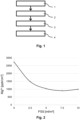
- FIG. 1 An exemplary ink-jet printing method of the invention is schematically shown in Fig. 1 .
- a step 1 of applying a primer comprising at least one salt on at least one surface of a recording medium a step 2 of printing an image with at least one ink on the surface of the recording medium on which the primer has been applied is carried out, followed by a step 3 of applying a neutralizing liquid on the recording medium with the printed image, wherein the neutralizing liquid comprises at least one polyanion. Thereafter a step 4 of applying a varnish on the image is carried out.
- a second aspect of the invention relates to an ink set, comprising:
- the ink set can be particularly used in the present ink-jet printing method.
- the primer, the at least one ink, the neutralizing liquid and the varnish particularly are those described with regard to the present ink-jet printing method, and reference is made to the above description of the respective components in the specification of the printing method.
- kit of parts comprising:
- the primer and the neutralizing liquid are particularly the ones used in the ink set of the present invention, respectively in the present ink-jet printing method.
- the primer recipe is shown in Table 1: Table 1: Primer recipe ingredient Amount [% w/w] Demiwater 69.5 (balance) MgSO 4 *7H 2 O 25 Glycerol 5 Surfactant 0.5
- a water based Canon CMYK ink has been used to print on top of the primer.
- a neutralizing liquid is prepared by choosing a suitable polyanion, here polystyrene sulfonate, and jetted onto the printed and dried image.
- the mixture is prepared as described in Table 2: Table 2: Neutralizing liquid recipe ingredient Amount [% w/w] Demiwater balance Polystyrene sulfonate (PSS), M w ⁇ 75 kDa 6 or 9 Surfactant 0.5
- a goal is to decrease the surface salt of the prints, and it is measured with an extraction method to simulate varnish behavior.
- a tube with demiwater is sealed with the top of a print. 10 very short extractions are performed by shaking the demiwater to the surface of the print. The demiwater is analysed for Mg 2+ -content using ion chromatography and is a measure of the surface salt content.
- the surface salt content was analysed with jetting various amounts of neutralizing liquid on top of the primer + ink prints. As can be seen from Fig. 2 , the surface salt Mg 2+ decreases with increasing amount of neutralizing liquid, respectively the PSS therein.
- a varnish (Actega AQ-440221) is applied on top of the resulting print with the neutralized Mg 2+ ions from the primer. Varnish is applied via rod coating after printing on the printed paper (primer + ink + neutralizing liquid).
Landscapes
- Chemical & Material Sciences (AREA)
- Life Sciences & Earth Sciences (AREA)
- Engineering & Computer Science (AREA)
- Materials Engineering (AREA)
- Wood Science & Technology (AREA)
- Organic Chemistry (AREA)
- Chemical Kinetics & Catalysis (AREA)
- Inks, Pencil-Leads, Or Crayons (AREA)
Priority Applications (2)
| Application Number | Priority Date | Filing Date | Title |
|---|---|---|---|
| EP23194899.3A EP4516529A1 (fr) | 2023-09-01 | 2023-09-01 | Liquide de neutralisation pulvérisable pour empêcher une interaction de sel d'apprêt avec une application de vernis |
| US18/821,506 US20250075092A1 (en) | 2023-09-01 | 2024-08-30 | Jetable neutralizing liquid to prevent primer salt interaction with varnish application |
Applications Claiming Priority (1)
| Application Number | Priority Date | Filing Date | Title |
|---|---|---|---|
| EP23194899.3A EP4516529A1 (fr) | 2023-09-01 | 2023-09-01 | Liquide de neutralisation pulvérisable pour empêcher une interaction de sel d'apprêt avec une application de vernis |
Publications (1)
| Publication Number | Publication Date |
|---|---|
| EP4516529A1 true EP4516529A1 (fr) | 2025-03-05 |
Family
ID=87929231
Family Applications (1)
| Application Number | Title | Priority Date | Filing Date |
|---|---|---|---|
| EP23194899.3A Pending EP4516529A1 (fr) | 2023-09-01 | 2023-09-01 | Liquide de neutralisation pulvérisable pour empêcher une interaction de sel d'apprêt avec une application de vernis |
Country Status (2)
| Country | Link |
|---|---|
| US (1) | US20250075092A1 (fr) |
| EP (1) | EP4516529A1 (fr) |
Citations (4)
| Publication number | Priority date | Publication date | Assignee | Title |
|---|---|---|---|---|
| JP2010070693A (ja) * | 2008-09-19 | 2010-04-02 | Fujifilm Corp | インクセット及びインクジェット記録方法 |
| JP2014073672A (ja) * | 2012-09-13 | 2014-04-24 | Ricoh Co Ltd | 画像形成方法 |
| US20170341418A1 (en) * | 2016-05-25 | 2017-11-30 | Heidelberger Druckmaschinen Ag | Method for manufacturing printed products |
| WO2022128573A1 (fr) | 2020-12-14 | 2022-06-23 | Canon Production Printing Holding B.V. | Liquide de prétraitement destiné à être utilisé dans l'impression à jet d'encre |
-
2023
- 2023-09-01 EP EP23194899.3A patent/EP4516529A1/fr active Pending
-
2024
- 2024-08-30 US US18/821,506 patent/US20250075092A1/en active Pending
Patent Citations (4)
| Publication number | Priority date | Publication date | Assignee | Title |
|---|---|---|---|---|
| JP2010070693A (ja) * | 2008-09-19 | 2010-04-02 | Fujifilm Corp | インクセット及びインクジェット記録方法 |
| JP2014073672A (ja) * | 2012-09-13 | 2014-04-24 | Ricoh Co Ltd | 画像形成方法 |
| US20170341418A1 (en) * | 2016-05-25 | 2017-11-30 | Heidelberger Druckmaschinen Ag | Method for manufacturing printed products |
| WO2022128573A1 (fr) | 2020-12-14 | 2022-06-23 | Canon Production Printing Holding B.V. | Liquide de prétraitement destiné à être utilisé dans l'impression à jet d'encre |
Also Published As
| Publication number | Publication date |
|---|---|
| US20250075092A1 (en) | 2025-03-06 |
Similar Documents
| Publication | Publication Date | Title |
|---|---|---|
| US9950544B2 (en) | Preventing bleeding of multi-color print by in-line jetting | |
| EP2864429B1 (fr) | Composition d'encre | |
| EP2988946B1 (fr) | Procédé d'impression | |
| JP3799995B2 (ja) | インクジェット記録方法 | |
| US10358566B2 (en) | Ink composition | |
| US10471753B2 (en) | Pre-treatment composition | |
| US20170050456A1 (en) | Method of printing | |
| US10603940B2 (en) | Aqueous inkjet primering composition providing both pinning and ink spreading functionality | |
| EP4516529A1 (fr) | Liquide de neutralisation pulvérisable pour empêcher une interaction de sel d'apprêt avec une application de vernis | |
| US11738585B2 (en) | Method for applying an image onto the recording medium and corresponding printing apparatus | |
| EP3099750B1 (fr) | Composition d'encre | |
| EP3129438B1 (fr) | Composition d'encre | |
| WO2026087353A1 (fr) | Utilisation de contre-ions non volatils et faiblement sensibles à l'eau dans des latex | |
| EP4538339A1 (fr) | Compositions aqueuses pour jet d'encre sans danger pour les aliments | |
| US20250122397A1 (en) | Food safe aqueous inkjet compositions | |
| WO2026073782A1 (fr) | Préparation d'un latex à l'aide d'un système de mélange de solvants ternaires | |
| WO2025078257A1 (fr) | Compositions aqueuses pour jet d'encre aptes au contact alimentaire | |
| EP2964710B1 (fr) | Composition dýencre |
Legal Events
| Date | Code | Title | Description |
|---|---|---|---|
| PUAI | Public reference made under article 153(3) epc to a published international application that has entered the european phase |
Free format text: ORIGINAL CODE: 0009012 |
|
| STAA | Information on the status of an ep patent application or granted ep patent |
Free format text: STATUS: THE APPLICATION HAS BEEN PUBLISHED |
|
| AK | Designated contracting states |
Kind code of ref document: A1 Designated state(s): AL AT BE BG CH CY CZ DE DK EE ES FI FR GB GR HR HU IE IS IT LI LT LU LV MC ME MK MT NL NO PL PT RO RS SE SI SK SM TR |
|
| STAA | Information on the status of an ep patent application or granted ep patent |
Free format text: STATUS: REQUEST FOR EXAMINATION WAS MADE |
|
| 17P | Request for examination filed |
Effective date: 20250905 |