EP4516745A1 - Matériau d'électrode positive ternaire, précurseur de celui-ci et batterie au lithium-ion - Google Patents
Matériau d'électrode positive ternaire, précurseur de celui-ci et batterie au lithium-ion Download PDFInfo
- Publication number
- EP4516745A1 EP4516745A1 EP23795670.1A EP23795670A EP4516745A1 EP 4516745 A1 EP4516745 A1 EP 4516745A1 EP 23795670 A EP23795670 A EP 23795670A EP 4516745 A1 EP4516745 A1 EP 4516745A1
- Authority
- EP
- European Patent Office
- Prior art keywords
- positive electrode
- electrode material
- ternary
- precursor
- ternary positive
- Prior art date
- Legal status (The legal status is an assumption and is not a legal conclusion. Google has not performed a legal analysis and makes no representation as to the accuracy of the status listed.)
- Pending
Links
Images



Classifications
-
- C—CHEMISTRY; METALLURGY
- C01—INORGANIC CHEMISTRY
- C01G—COMPOUNDS CONTAINING METALS NOT COVERED BY SUBCLASSES C01D OR C01F
- C01G53/00—Compounds of nickel
- C01G53/80—Compounds containing nickel, with or without oxygen or hydrogen, and containing one or more other elements
- C01G53/84—Hydroxides
-
- C—CHEMISTRY; METALLURGY
- C01—INORGANIC CHEMISTRY
- C01G—COMPOUNDS CONTAINING METALS NOT COVERED BY SUBCLASSES C01D OR C01F
- C01G53/00—Compounds of nickel
- C01G53/40—Complex oxides containing nickel and at least one other metal element
- C01G53/42—Complex oxides containing nickel and at least one other metal element containing alkali metals, e.g. LiNiO2
-
- C—CHEMISTRY; METALLURGY
- C01—INORGANIC CHEMISTRY
- C01G—COMPOUNDS CONTAINING METALS NOT COVERED BY SUBCLASSES C01D OR C01F
- C01G53/00—Compounds of nickel
- C01G53/40—Complex oxides containing nickel and at least one other metal element
- C01G53/42—Complex oxides containing nickel and at least one other metal element containing alkali metals, e.g. LiNiO2
- C01G53/44—Complex oxides containing nickel and at least one other metal element containing alkali metals, e.g. LiNiO2 containing manganese
- C01G53/50—Complex oxides containing nickel and at least one other metal element containing alkali metals, e.g. LiNiO2 containing manganese of the type (MnO2)n-, e.g. Li(NixMn1-x)O2 or Li(MyNixMn1-x-y)O2
-
- C—CHEMISTRY; METALLURGY
- C01—INORGANIC CHEMISTRY
- C01G—COMPOUNDS CONTAINING METALS NOT COVERED BY SUBCLASSES C01D OR C01F
- C01G53/00—Compounds of nickel
- C01G53/40—Complex oxides containing nickel and at least one other metal element
- C01G53/42—Complex oxides containing nickel and at least one other metal element containing alkali metals, e.g. LiNiO2
- C01G53/44—Complex oxides containing nickel and at least one other metal element containing alkali metals, e.g. LiNiO2 containing manganese
- C01G53/50—Complex oxides containing nickel and at least one other metal element containing alkali metals, e.g. LiNiO2 containing manganese of the type (MnO2)n-, e.g. Li(NixMn1-x)O2 or Li(MyNixMn1-x-y)O2
- C01G53/502—Complex oxides containing nickel and at least one other metal element containing alkali metals, e.g. LiNiO2 containing manganese of the type (MnO2)n-, e.g. Li(NixMn1-x)O2 or Li(MyNixMn1-x-y)O2 containing lithium and cobalt
- C01G53/504—Complex oxides containing nickel and at least one other metal element containing alkali metals, e.g. LiNiO2 containing manganese of the type (MnO2)n-, e.g. Li(NixMn1-x)O2 or Li(MyNixMn1-x-y)O2 containing lithium and cobalt with the molar ratio of nickel with respect to all the metals other than alkali metals higher than or equal to 0.5, e.g. Li(MzNixCoyMn1-x-y-z)O2 with x ≥ 0.5
-
- C—CHEMISTRY; METALLURGY
- C01—INORGANIC CHEMISTRY
- C01G—COMPOUNDS CONTAINING METALS NOT COVERED BY SUBCLASSES C01D OR C01F
- C01G53/00—Compounds of nickel
- C01G53/40—Complex oxides containing nickel and at least one other metal element
- C01G53/42—Complex oxides containing nickel and at least one other metal element containing alkali metals, e.g. LiNiO2
- C01G53/44—Complex oxides containing nickel and at least one other metal element containing alkali metals, e.g. LiNiO2 containing manganese
- C01G53/50—Complex oxides containing nickel and at least one other metal element containing alkali metals, e.g. LiNiO2 containing manganese of the type (MnO2)n-, e.g. Li(NixMn1-x)O2 or Li(MyNixMn1-x-y)O2
- C01G53/502—Complex oxides containing nickel and at least one other metal element containing alkali metals, e.g. LiNiO2 containing manganese of the type (MnO2)n-, e.g. Li(NixMn1-x)O2 or Li(MyNixMn1-x-y)O2 containing lithium and cobalt
- C01G53/504—Complex oxides containing nickel and at least one other metal element containing alkali metals, e.g. LiNiO2 containing manganese of the type (MnO2)n-, e.g. Li(NixMn1-x)O2 or Li(MyNixMn1-x-y)O2 containing lithium and cobalt with the molar ratio of nickel with respect to all the metals other than alkali metals higher than or equal to 0.5, e.g. Li(MzNixCoyMn1-x-y-z)O2 with x ≥ 0.5
- C01G53/506—Complex oxides containing nickel and at least one other metal element containing alkali metals, e.g. LiNiO2 containing manganese of the type (MnO2)n-, e.g. Li(NixMn1-x)O2 or Li(MyNixMn1-x-y)O2 containing lithium and cobalt with the molar ratio of nickel with respect to all the metals other than alkali metals higher than or equal to 0.5, e.g. Li(MzNixCoyMn1-x-y-z)O2 with x ≥ 0.5 with the molar ratio of nickel with respect to all the metals other than alkali metals higher than or equal to 0.8, e.g. Li(MzNixCoyMn1-x-y-z)O2 with x ≥ 0.8
-
- C—CHEMISTRY; METALLURGY
- C01—INORGANIC CHEMISTRY
- C01G—COMPOUNDS CONTAINING METALS NOT COVERED BY SUBCLASSES C01D OR C01F
- C01G53/00—Compounds of nickel
- C01G53/80—Compounds containing nickel, with or without oxygen or hydrogen, and containing one or more other elements
- C01G53/82—Compounds containing nickel, with or without oxygen or hydrogen, and containing two or more other elements
-
- H—ELECTRICITY
- H01—ELECTRIC ELEMENTS
- H01M—PROCESSES OR MEANS, e.g. BATTERIES, FOR THE DIRECT CONVERSION OF CHEMICAL ENERGY INTO ELECTRICAL ENERGY
- H01M10/00—Secondary cells; Manufacture thereof
- H01M10/05—Accumulators with non-aqueous electrolyte
- H01M10/052—Li-accumulators
- H01M10/0525—Rocking-chair batteries, i.e. batteries with lithium insertion or intercalation in both electrodes; Lithium-ion batteries
-
- H—ELECTRICITY
- H01—ELECTRIC ELEMENTS
- H01M—PROCESSES OR MEANS, e.g. BATTERIES, FOR THE DIRECT CONVERSION OF CHEMICAL ENERGY INTO ELECTRICAL ENERGY
- H01M4/00—Electrodes
- H01M4/02—Electrodes composed of, or comprising, active material
- H01M4/36—Selection of substances as active materials, active masses, active liquids
-
- H—ELECTRICITY
- H01—ELECTRIC ELEMENTS
- H01M—PROCESSES OR MEANS, e.g. BATTERIES, FOR THE DIRECT CONVERSION OF CHEMICAL ENERGY INTO ELECTRICAL ENERGY
- H01M4/00—Electrodes
- H01M4/02—Electrodes composed of, or comprising, active material
- H01M4/36—Selection of substances as active materials, active masses, active liquids
- H01M4/48—Selection of substances as active materials, active masses, active liquids of inorganic oxides or hydroxides
- H01M4/50—Selection of substances as active materials, active masses, active liquids of inorganic oxides or hydroxides of manganese
- H01M4/505—Selection of substances as active materials, active masses, active liquids of inorganic oxides or hydroxides of manganese of mixed oxides or hydroxides containing manganese for inserting or intercalating light metals, e.g. LiMn2O4 or LiMn2OxFy
-
- H—ELECTRICITY
- H01—ELECTRIC ELEMENTS
- H01M—PROCESSES OR MEANS, e.g. BATTERIES, FOR THE DIRECT CONVERSION OF CHEMICAL ENERGY INTO ELECTRICAL ENERGY
- H01M4/00—Electrodes
- H01M4/02—Electrodes composed of, or comprising, active material
- H01M4/36—Selection of substances as active materials, active masses, active liquids
- H01M4/48—Selection of substances as active materials, active masses, active liquids of inorganic oxides or hydroxides
- H01M4/52—Selection of substances as active materials, active masses, active liquids of inorganic oxides or hydroxides of nickel, cobalt or iron
- H01M4/525—Selection of substances as active materials, active masses, active liquids of inorganic oxides or hydroxides of nickel, cobalt or iron of mixed oxides or hydroxides containing iron, cobalt or nickel for inserting or intercalating light metals, e.g. LiNiO2, LiCoO2 or LiCoOxFy
-
- B—PERFORMING OPERATIONS; TRANSPORTING
- B82—NANOTECHNOLOGY
- B82Y—SPECIFIC USES OR APPLICATIONS OF NANOSTRUCTURES; MEASUREMENT OR ANALYSIS OF NANOSTRUCTURES; MANUFACTURE OR TREATMENT OF NANOSTRUCTURES
- B82Y30/00—Nanotechnology for materials or surface science, e.g. nanocomposites
-
- B—PERFORMING OPERATIONS; TRANSPORTING
- B82—NANOTECHNOLOGY
- B82Y—SPECIFIC USES OR APPLICATIONS OF NANOSTRUCTURES; MEASUREMENT OR ANALYSIS OF NANOSTRUCTURES; MANUFACTURE OR TREATMENT OF NANOSTRUCTURES
- B82Y40/00—Manufacture or treatment of nanostructures
-
- C—CHEMISTRY; METALLURGY
- C01—INORGANIC CHEMISTRY
- C01P—INDEXING SCHEME RELATING TO STRUCTURAL AND PHYSICAL ASPECTS OF SOLID INORGANIC COMPOUNDS
- C01P2004/00—Particle morphology
- C01P2004/10—Particle morphology extending in one dimension, e.g. needle-like
-
- C—CHEMISTRY; METALLURGY
- C01—INORGANIC CHEMISTRY
- C01P—INDEXING SCHEME RELATING TO STRUCTURAL AND PHYSICAL ASPECTS OF SOLID INORGANIC COMPOUNDS
- C01P2004/00—Particle morphology
- C01P2004/30—Particle morphology extending in three dimensions
- C01P2004/40—Particle morphology extending in three dimensions prism-like
-
- C—CHEMISTRY; METALLURGY
- C01—INORGANIC CHEMISTRY
- C01P—INDEXING SCHEME RELATING TO STRUCTURAL AND PHYSICAL ASPECTS OF SOLID INORGANIC COMPOUNDS
- C01P2004/00—Particle morphology
- C01P2004/30—Particle morphology extending in three dimensions
- C01P2004/45—Aggregated particles or particles with an intergrown morphology
-
- C—CHEMISTRY; METALLURGY
- C01—INORGANIC CHEMISTRY
- C01P—INDEXING SCHEME RELATING TO STRUCTURAL AND PHYSICAL ASPECTS OF SOLID INORGANIC COMPOUNDS
- C01P2004/00—Particle morphology
- C01P2004/50—Agglomerated particles
-
- C—CHEMISTRY; METALLURGY
- C01—INORGANIC CHEMISTRY
- C01P—INDEXING SCHEME RELATING TO STRUCTURAL AND PHYSICAL ASPECTS OF SOLID INORGANIC COMPOUNDS
- C01P2004/00—Particle morphology
- C01P2004/51—Particles with a specific particle size distribution
-
- C—CHEMISTRY; METALLURGY
- C01—INORGANIC CHEMISTRY
- C01P—INDEXING SCHEME RELATING TO STRUCTURAL AND PHYSICAL ASPECTS OF SOLID INORGANIC COMPOUNDS
- C01P2004/00—Particle morphology
- C01P2004/54—Particles characterised by their aspect ratio, i.e. the ratio of sizes in the longest to the shortest dimension
-
- C—CHEMISTRY; METALLURGY
- C01—INORGANIC CHEMISTRY
- C01P—INDEXING SCHEME RELATING TO STRUCTURAL AND PHYSICAL ASPECTS OF SOLID INORGANIC COMPOUNDS
- C01P2004/00—Particle morphology
- C01P2004/60—Particles characterised by their size
- C01P2004/61—Micrometer sized, i.e. from 1-100 micrometer
-
- C—CHEMISTRY; METALLURGY
- C01—INORGANIC CHEMISTRY
- C01P—INDEXING SCHEME RELATING TO STRUCTURAL AND PHYSICAL ASPECTS OF SOLID INORGANIC COMPOUNDS
- C01P2004/00—Particle morphology
- C01P2004/60—Particles characterised by their size
- C01P2004/62—Submicrometer sized, i.e. from 0.1-1 micrometer
-
- C—CHEMISTRY; METALLURGY
- C01—INORGANIC CHEMISTRY
- C01P—INDEXING SCHEME RELATING TO STRUCTURAL AND PHYSICAL ASPECTS OF SOLID INORGANIC COMPOUNDS
- C01P2004/00—Particle morphology
- C01P2004/60—Particles characterised by their size
- C01P2004/64—Nanometer sized, i.e. from 1-100 nanometer
-
- C—CHEMISTRY; METALLURGY
- C01—INORGANIC CHEMISTRY
- C01P—INDEXING SCHEME RELATING TO STRUCTURAL AND PHYSICAL ASPECTS OF SOLID INORGANIC COMPOUNDS
- C01P2006/00—Physical properties of inorganic compounds
- C01P2006/12—Surface area
-
- C—CHEMISTRY; METALLURGY
- C01—INORGANIC CHEMISTRY
- C01P—INDEXING SCHEME RELATING TO STRUCTURAL AND PHYSICAL ASPECTS OF SOLID INORGANIC COMPOUNDS
- C01P2006/00—Physical properties of inorganic compounds
- C01P2006/14—Pore volume
-
- C—CHEMISTRY; METALLURGY
- C01—INORGANIC CHEMISTRY
- C01P—INDEXING SCHEME RELATING TO STRUCTURAL AND PHYSICAL ASPECTS OF SOLID INORGANIC COMPOUNDS
- C01P2006/00—Physical properties of inorganic compounds
- C01P2006/16—Pore diameter
-
- C—CHEMISTRY; METALLURGY
- C01—INORGANIC CHEMISTRY
- C01P—INDEXING SCHEME RELATING TO STRUCTURAL AND PHYSICAL ASPECTS OF SOLID INORGANIC COMPOUNDS
- C01P2006/00—Physical properties of inorganic compounds
- C01P2006/40—Electric properties
-
- C—CHEMISTRY; METALLURGY
- C01—INORGANIC CHEMISTRY
- C01P—INDEXING SCHEME RELATING TO STRUCTURAL AND PHYSICAL ASPECTS OF SOLID INORGANIC COMPOUNDS
- C01P2006/00—Physical properties of inorganic compounds
- C01P2006/90—Other properties not specified above
-
- H—ELECTRICITY
- H01—ELECTRIC ELEMENTS
- H01M—PROCESSES OR MEANS, e.g. BATTERIES, FOR THE DIRECT CONVERSION OF CHEMICAL ENERGY INTO ELECTRICAL ENERGY
- H01M4/00—Electrodes
- H01M4/02—Electrodes composed of, or comprising, active material
- H01M2004/026—Electrodes composed of, or comprising, active material characterised by the polarity
- H01M2004/028—Positive electrodes
-
- Y—GENERAL TAGGING OF NEW TECHNOLOGICAL DEVELOPMENTS; GENERAL TAGGING OF CROSS-SECTIONAL TECHNOLOGIES SPANNING OVER SEVERAL SECTIONS OF THE IPC; TECHNICAL SUBJECTS COVERED BY FORMER USPC CROSS-REFERENCE ART COLLECTIONS [XRACs] AND DIGESTS
- Y02—TECHNOLOGIES OR APPLICATIONS FOR MITIGATION OR ADAPTATION AGAINST CLIMATE CHANGE
- Y02E—REDUCTION OF GREENHOUSE GAS [GHG] EMISSIONS, RELATED TO ENERGY GENERATION, TRANSMISSION OR DISTRIBUTION
- Y02E60/00—Enabling technologies; Technologies with a potential or indirect contribution to GHG emissions mitigation
- Y02E60/10—Energy storage using batteries
Definitions
- the positive electrode material with a higher specific capacity, a good rate performance, and a good cycling performance can be obtained by designing the structure of the precursor of the positive electrode material, such as improving the porosity of the precursor, increasing the specific surface area of the precursor, and changing the morphology of primary particles.
- the too high porosity and specific surface area will cause a decrease in a structural strength of the material, which easily leads to a crack or even rupture in the material, and ultimately leads to a reduction in the cycling performance. Therefore, the porosity and structural strength need to be well balanced.
- the present application provides a ternary positive electrode material and a precursor thereof with excellent performances. It can obtain a positive electrode material with a balanced electrochemical performance and structural strength performance by improving the structure of the precursor of the positive electrode material.
- a specific surface area of the ternary precursor is 15 ⁇ 35m 2 /g; and preferably, primary particles of the ternary precursor are in short-needle shape or short-filament shape, wherein length is 200 ⁇ 400nm, and length-width ratio is 8 ⁇ 12.
- a second aspect of the present application further provides a preparation method of the ternary precursor described above, including:
- a D50 of the ternary positive electrode material is 7 ⁇ 15 ⁇ m, and a particle size distribution span of the ternary positive electrode material is 1.1 ⁇ 1.4; and preferably, a macropore ratio in pores of the ternary positive electrode material is larger than or equal to 50%.
- a fourth aspect of the present application further provides a preparation method of the ternary positive electrode material described above, including:
- the step of heating up the mixture to 700°C ⁇ 1000°C at a rate of 1 ⁇ 10°C/min, and holding for 8 ⁇ 15h specifically includes: heating up to 400 ⁇ 650°C at a rate of 2 ⁇ 10°C/min firstly and holding for 2 ⁇ 6h; and heating up to 700 ⁇ 1000°C at a rate of 1 ⁇ 5°C/min next and holding for 10 ⁇ 15h.
- a fifth aspect of the present application further provides a lithium-ion battery, including the ternary positive electrode material described above.
- the ternary precursor provided by the present application has a good pore structure, wherein the pores are abundant and distributed highly uniformly, and the primary particles are tiny.
- the ternary positive electrode material inherits the excellent structure of the precursor.
- the structure with rich pores of the ternary positive electrode material provides a penetration pathway for the electrolyte, which greatly improves the penetration efficiency of the electrolyte, so as to facilitate the rapid penetration of the electrolyte into the internal structure of the material.
- the appropriate porosity improves the electrochemical performance of the material, and at the same time avoids a significant decrease in the tap density and the compaction density, so that the material has a better volume energy density.
- the primary particle of the ternary positive electrode material provided by the present application is tiny, and is of a brick structure with a regular shape and smaller size, so that the specific surface area and the porosity of the material are greatly improved.
- the abundant pores can increase a contact area with the electrolyte to a greater extent, which is beneficial to maximize the material capacity.
- the primary particles are arranged radially, which provides a structural basis for a rapid de-intercalation of the lithium ion under a large current condition, and at the same time is beneficial to reduce the stress expansion between the primary particles, so as to reduce the generation of microcracks of the secondary particle which is aggregated by the primary particles in the cycling process, thus improving the cycling life of the material.
- the present application provides a ternary positive electrode material with the excellent performance and the precursor thereof.
- the precursor has high porosity and uniformly distributed pores, so that the obtained positive electrode material not only has a higher specific capacity, but also has a good rate performance. It has a higher capacity and retention rate even under a large current, which can realize a rapid charging and discharging under a large current condition and thus has a very good application prospect.
- compositions, step, method, production, or device including the listed elements need not be limited to those elements, but may include other elements not expressly listed or inherent in this composition, step, method, production, or device.
- the precursor impurity will be brought into the positive electrode material, which affects an impurity content of the positive electrode; 2) a particle size, and particle size distribution of the precursor particles directly determines a particle size, and particle size distribution of the ternary positive electrode particles; 3) a specific surface area, and morphology of the ternary precursor directly determines a specific surface area, and morphology of the ternary positive electrode material; and 4) an elemental ratio of the ternary precursor directly determines an elemental ratio of the ternary positive electrode material, etc.
- the internal porosity of the ternary precursor (an area of the pore region of the internal section of the secondary particle/an area of the section region of the secondary particle) * 100%, the secondary particle is aggregated by primary particles of the ternary precursor, wherein the internal porosity of the ternary precursor is a range value, and is not limited to a specific value.
- the porosity of different parts of the ternary precursor may be different, for example, it may be 5%, 5.5%, 6%, 6.14%, 6.36%, 7%, 7.38%, 7.59%, or 8%, or any value between 5 ⁇ 8%.
- Step 1 Regarding a single ternary precursor particle as a sphere, dividing equally the circle into n (n ⁇ 3) concentric circles according to the calculation for the circle of the sphere section.
- Step 2 Calculating areas of each concentric circle and the pore.
- Step 3 Calculating a change x of the concentric circle area in different regions and a change y of the pore area of the corresponding region.
- Step 4 Establishing a linear equation of x and y, and calculating a correlation coefficient R 2 .
- the pore distribution is considered to be uniform, wherein when R 2 is between 0.9 ⁇ 0.95, the pore distribution is considered to be more uniform, and when R 2 ⁇ 0.95, the pore distribution is considered to be highly uniform; and when R 2 ⁇ 0.9, the pore distribution is considered to be nonuniform.
- a mesopore ratio in the pores of the ternary precursor is 50% ⁇ 70%.
- the mesopore is defined as a pore with a pore size of 2 ⁇ 50nm, also called a middle pore. Therefore, the pore size of the mesopore may be, for example, 2 ⁇ 10nm, or 10 ⁇ 20nm, or 20 ⁇ 50nm.
- the mesopore ratio in the pores of the ternary precursor is 50% ⁇ 70%, for example, it may be (50, 51, 52, 53, 54, 55, 56, 57, 58, 59, 60, 61, 62, 63, 64, 65, 66, 67, 68, 69, or 70) %, or any value between 50% ⁇ 70%.
- the mesopore will increase an internal contact area of the material compared to macropores, and has a larger pore size compared to micropores and is not easy to be blocked.
- the primary particle of the ternary precursor is in a short-needle shape or a short-filament shape, wherein a length is 200 ⁇ 400nm, for example, it may be (200, 210, 220, 230, 240, 250, 260, 270, 280, 290, 300, 310, 320, 330, 340, 350, 360, 370, 380, 390, or 400)nm; and a length-width ratio is 8 ⁇ 12, for example, it may be 8, 8.5, 9, 9.5, 10, 10.5, 11, 11.5, or 12.
- the primary particle of the ternary precursor provided by the present application is tiny, so that the specific surface area and the porosity of the ternary precursor are greatly improved.
- the abundant pores can increase a contact area with the electrolyte to a greater extent, which is beneficial to maximize the material capacity.
- the specific surface area of the ternary precursor is 15 ⁇ 35m 2 /g.
- the specific surface area is a total area per unit mass of material, and can be measured by a fully automatic nitrogen adsorption specific surface meter (3H-2000A).
- the specific surface area of the ternary precursor may be, for example, (15, 16, 17, 18, 19, 20, 21, 22, 23, 24, 25, 26, 27, 28, 29, 30, 31, 32, 33, 34, or 35) m 2 /g. More preferably, the specific surface area of the ternary precursor is 25 ⁇ 35m 2 /g.
- a D50 of the ternary precursor is 7.0 ⁇ 11.0 ⁇ m; and a particle size distribution span of the ternary precursor is 1.10 ⁇ 1.30.
- the physical meaning of D50 is that 50% of the particles are smaller than it, and can be measured by Malvern 3000 Laser Particle Sizing Tester; and the meaning of the particle size distribution span is a width of the particle size distribution, which is a value for indicating the particle size uniformity of the material, wherein the calculation method is: (D90-D10)/ D50.
- a second aspect of the present application further provides a preparation method of the ternary precursor described above, including:
- the nickel-cobalt-manganese metal mixed solution may be obtained by mixing soluble salts of the nickel, cobalt, and manganese, wherein the soluble salt may be at least one of nitrate, chloride, and sulfate.
- the total concentration of the nickel, cobalt, and manganese in the nickel-cobalt-manganese metal mixed solution may be 0.8 ⁇ 4.0mol/L, for example, it may be (0.8, 1.0, 1.5, 2.0, 2.5, 3.0, 3.5, or 4.0) mol/L.
- the concentration of the complexing agent in the base liquid is 0.1 ⁇ 0.8mol/L, for example, it may be (0.15, 0.2, 0.3, 0.4, 0.45, 0.5, 0.55, 0.6, 0.65, 0.7, or 0.8) mol/L.
- the precipitant includes sodium hydroxide, and the concentration of the sodium hydroxide solution is 5 ⁇ 12mol/L.
- the complexing agent included ammonium hydroxide, and the concentration of the ammonium hydroxide is 1.0 ⁇ 10mol/L.
- the flow rate of the nickel-cobalt-manganese metal mixed solution may be, for example, (10, 10.5, 11, 11.5, 12, 12.5, 13, 13.5, 14, 14.5, 15, 16, 17, 18, 19, 20, 21, 22, 23, 24, 25, 26, 27, 28, 29, or 30) L/h.
- the pH value of the reaction system is 9.00 ⁇ 11.00, for example, it may be (9.00, 9.10, 9.20, 9.30, 9.40, 9.50, 9.60, 9.70, 9.80, 9.90, 10.0, 10.05, 10.1, 10.15, 10.2, 10.25, 10.3, 10.35, 10.4, 10.45, 10.50, 10.60, 10.70, 10.80, or 10.90), or it fluctuates in any small range between 9.00 ⁇ 11.00.
- the reaction temperature is controlled to be 50 ⁇ 70°C, and the solid content in the reactor is 80 ⁇ 110g/L.
- the porosity of the ternary positive electrode material is 10% ⁇ 15%, and the pore uniformity coefficient R 2 ⁇ 0.9.
- the porosity, and pore uniformity coefficient R 2 of the ternary positive electrode material are defined in the same way as the porosity, and pore uniformity coefficient R 2 of the ternary precursor, and are not repeated herein.
- the ternary positive electrode material has a pore uniformity coefficient R 2 ⁇ 0.95.
- the ternary positive electrode material provided by the present application inherits the excellent structure of the precursor, which is porous and the pore distribution is highly uniform, so as to provide a penetration pathway for the electrolyte, which greatly improves the penetration efficiency of the electrolyte, and is beneficial for the rapid penetration of the electrolyte into the internal structure of the material.
- the appropriate porosity improves the electrochemical performance of the material, and at the same time avoids a significant decrease in the tap density and the compaction density, so that the material has a better volume energy density.
- 0.4 ⁇ x ⁇ 1, 0 ⁇ y ⁇ 0.4, and 0 ⁇ z ⁇ 0.4 wherein x may be, for example, 0.4, 0.44, 0.45, 0.50, 0.55, 0.56, 0.6, 0.7, 0.8, 0.9, 0.95; y may be, for example, 0.02, 0.05, 0.1, 0.15, 0.2, 0.25, 0.3, 0.35, or 0.4; and z may be, for example, 0.03, 0.05, 0.1, 0.15, 0.2, 0.25, 0.3, 0.35, or 0.4.
- 0.4 ⁇ x ⁇ 0.6, 0.1 ⁇ y ⁇ 0.4, and 0.1 ⁇ z ⁇ 0.4 wherein x may be, for example, 0.4, 0.44, 0.45, 0.50, 0.55, 0.56, 0.6; y may be, for example, 0.1, 0.15, 0.2, 0.25, 0.3, 0.35, or 0.4; and z may be, for example, 0.1, 0.15, 0.2, 0.25, 0.3, 0.35, or 0.4.
- a macropore ratio in pores of the ternary positive electrode material is larger than or equal to 50%, wherein the macropore is defined as the pore with a pore size larger than 50nm. Since the mesopore ratio in the pores of the ternary precursor is larger, and the primary particle will grow in the later sintering process, the pores will merge and become bigger. Therefore, the pore size of the pore of the ternary positive electrode material will become larger.
- the primary particle of the ternary positive electrode material is in the brick shape; the core of the ternary positive electrode material is arranged by the primary particles in a chaotic order to form a loose and porous structure; and the primary particles are arranged radially and outwardly with the core as a center of the circle.
- the primary particle of the ternary positive electrode material is arranged radially, which provides a structural basis for a rapid de-intercalation of the lithium ion under a large current condition, and at the same time is beneficial to reduce the stress expansion between the primary particles, so as to reduce the generation of microcracks of the secondary particle aggregated by the primary particles in the cycling process, thus improving the cycling life of the material.
- the primary particle of the ternary positive electrode material has the length of 200 ⁇ 500nm, the width of 50 ⁇ 150nm, and the length-width ratio more than 3.
- the primary particle of the ternary positive electrode material has the length of 300 ⁇ 400nm, the width of 70 ⁇ 90nm, and the length-width ratio of 3 ⁇ 6.
- the primary particle of the ternary positive electrode material is tiny, and is the brick structure with a regular shape and smaller size, so that the specific surface area and the porosity of the material are greatly improved.
- the abundant pores can increase the contact area with the electrolyte to a greater extent, which is beneficial to maximize the material capacity.
- the specific surface area of the ternary positive electrode material is 1.5 ⁇ 3.0m 2 /g.
- the D50 of the ternary positive electrode material is 7 ⁇ 15 ⁇ m; and the particle size distribution span of the ternary positive electrode material is 1.1 ⁇ 1.4.
- a fourth aspect of the present application further provides a preparation method of the ternary positive electrode material described above, including:
- the sintering temperature is determined by the Ni content, and different Ni contents will lead to different sintering temperatures.
- low nickel requires high temperature
- high nickel requires low temperature.
- the sintering temperature can be adjusted in the range between 700°C ⁇ 1000°C with a change of the chemical formula of the ternary positive electrode material.
- the sintering temperature may be, for example, (700, 710, 720, 750, 760, 770, 780, 790, 800, 810, 820, 830, 840, 850, 860, 870, 880, 890, 900, 910, 920, 930, 940, 950, 960, 970, 980, 990, or 1000) °C.
- the sintering temperature of the present application is lower compared to the prior art.
- a ratio of a molar amount of Li in the lithium source to a total molar amount of Ni, Co, and Mn in the ternary precursor is 1 ⁇ 1.1:1.
- the step of heating up the mixture to 700°C ⁇ 1000°C at a rate of 1 ⁇ 10°C/min and holding for 8 ⁇ 15h specifically includes:
- a fifth aspect of the present application further provides a lithium-ion battery including the ternary positive electrode material described above.
- the present application provides a ternary positive electrode material and precursor thereof with excellent performances.
- the positive electrode material obtained not only has a higher specific capacity, but also has good rate performance; has a higher capacity and retention rate even under a large current; can realize a rapid charging and discharging under a large current condition; and has thus a very good application prospect in the lithium-ion battery.
- Step 1 The sulfate crystals of nickel, cobalt, and manganese (a molar ratio of the nickel, cobalt, and manganese was 0.5:0.2:0.3) were prepared into a homogeneous ternary metal salt mixture solution of 2mol/L.
- Step 2 The preparation of the base liquid condition: the water of 60L was added to a reactor of 100L, and then it was stirred, wherein the rotary speed was 510r/min; the ammonium hydroxide was added, and the ammonium concentration in the water was adjusted to be 0.15mol/L; the sodium hydroxide solution was added, and the pH was adjusted to be 10.00 ⁇ 10.50; and the temperature was heated up to 60°C with the nitrogen protection.
- the coprecipitation reaction the nickel-cobalt-manganese mixed sulfate of 2mol/L, ammonium hydroxide of 2mol/L, and sodium hydroxide solution of 6mol/L were added to the reactor where the base liquid had been prepared in a parallel flow at a uniform speed by the peristaltic pump; and the flow rate of the nickel-cobalt-manganese mixed sulfate was controlled to be 25 L/h, the reaction temperature was controlled to be 60 °C, the solid content of the reactor was 105g/L, and the pH of the reaction system was controlled to be 10.00 ⁇ 10.50, so as to achieve a particle size stabilization.
- Step 3 The resultant of the coprecipitation reaction in Step 2 was centrifugally washed, wherein the temperature of the washing hot alkali tank was controlled to be 70 ⁇ 5°C, and the hot alkali concentration was 1.3mol/L.
- S content in the material was washed to be ⁇ 0.27%, then it was washed by pure water, wherein the temperature for washing in the hot pure water tank was controlled to be 75°C ⁇ 5°C.
- the Na content in the material was washed to be ⁇ 0.030%, the washing was stopped, and the material was dehydrated by a centrifuge. The material was dried in an oven and sieved by a 400-mesh screen, so as to obtain the ternary precursor in Example 1.
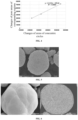
- the uniformity coefficient R 2 is 0.9898, so that the pore distribution of the ternary precursor in Example 1 is highly uniform.
- Table 1 Verification Calculation Table for Pore Distribution Uniformity of Ternary Precursor in Example 1 Region Region Area Pore Area Porosity Difference between Areas of Concentric Circles of Two Regions Difference between Corresponding Pore Areas of Two Regions Corresponding Rate of Change A 723134 44416 6.14% / / / B 416126 26464 6.36% / / / C 230205 16985 7.38% / / / D 112679 8550 7.59% / / / A-B / / / 307008 17952 5.85% B-C / / 185921 9479 5.10% C-D / / / 117526 8435 7.18% A-C / / / 492929 27431 5.56% A-D / / / 610455 35866 5.88% B-D / /
- the pore volume rate of the ternary precursor was calculated by using the nitrogen isothermal adsorption and desorption method, and the result is shown in Table 2. It is known according to Table 2 that the mesopore ratio in the pores of the ternary precursor in Example 1 is 64.88%.
- Step 5 The mixture from Step 4 was put into a box-type atmosphere furnace for sintering.
- the ternary positive electrode material LiNi 0.5 Co 0.2 Mn 0.3 O 2 in Example 1 was obtained by first heating up to 650°C at a heating rate of 3°C/min and sintering for 2h; then heating up to 840°C at a heating rate of 1°C/min and sintering for 10h; and cooling to room temperature.
- the morphology result diagram of the ternary positive electrode material under the scanning electron microscope in Example 1 is shown in FIG. 3 (left side), and the CP diagram is shown in FIG. 3 (right side).
- the shape of the secondary particle is spherical or spheroidal, wherein the abundant pores are inside the sphere and the distribution is highly homogeneous.
- the primary particle is in brick shape and arranged radially.
- the primary particle has a length of 300nm, a width of 70nm, a length-width ratio of 4.28, a specific surface area of 2.61m 2 /g, a span of 1.27, and a D50 of 9.868 ⁇ m.
- the region areas and the pore areas of the different regions of A, B, and C were separately calculated by using the imageJ greyscale analysis method, and the porosities were calculated.
- the A, B, and C are concentric circles, wherein A represents the whole section of the ternary positive electrode material, and the porosity of A is the porosity of the whole particle.
- the porosity of the ternary positive electrode material in Example 1 is 13.38%.
- the verification calculation table for the pore distribution uniformity of the ternary positive electrode material in Example 1 is shown in Table 3, and a linear relationship diagram of the pore distribution uniformity as shown in FIG. 4 is obtained according to the data in Table 3.
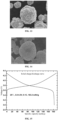
- the ternary positive electrode material obtained in Example 1 was used to prepare a button battery, wherein the charge/discharge curve result at 0.1C is shown in FIG. 15 , and the 50-cycle performance curve at 1C is shown in FIG. 16 .
- the first charge specific capacity at 0.1C was 192.1mAh/g; the first discharge efficiency at 1C was 95.39%; and the rate performance at 5C/1C is 92.32%.
- Example 2 differed from Example 1 in that the precursor selected for Example 2 was the same as that in Example 1, but was sintered in the different sintering condition.
- Step 5 The mixture was put into the box-type atmosphere furnace for sintering.
- the ternary positive electrode material of LiNi 0.5 Co 0.2 Mn 0.3 O 2 in Example 2 was obtained by first heating up to 650°C at a heating rate of 5°C/min and sintering for 4h; then heating up to 860°C at a heating rate of 2°C/min and sintering for 12h; and cooling to room temperature.
- the porosity of the ternary positive electrode material in Example 2 is 12.71%, and the pore uniformity coefficient R 2 is 0.9975.
- Example 3 differed from Example 1 in that the precursor selected for Example 3 was different from that in Example 1, but was sintered in the same sintering condition.
- Step 1 The sulfate crystals of nickel, cobalt, and manganese (the molar ratio of the nickel, cobalt, and manganese was 0.55:0.1:0.35) were prepared into the homogeneous ternary metal salt mixture solution of 2mol/L.
- Step 2 The preparation of the base liquid condition: the water of 60L was added to the reactor of 100L, and then it was stirred, wherein the rotary speed was 650r/min; the ammonium hydroxide was added, and the ammonium concentration in the water was adjusted to be 0.45mol/L; the sodium hydroxide solution was added, and the pH was adjusted to be 9.5 ⁇ 10.0; and the temperature was heated up to 65°C with the nitrogen protection.
- the coprecipitation reaction the nickel-cobalt-manganese mixed sulfate of 2mol/L, ammonium hydroxide of 2mol/L, and sodium hydroxide solution of 6mol/L were added to the reactor in the parallel flow at the uniform speed by the peristaltic pump, wherein the flow rate of the nickel-cobalt-manganese mixed sulfate was controlled to be 20 L/h; the reaction temperature was controlled to be 65 °C; the solid content of the reactor was 95g/L; and the pH of the reaction system was controlled to be 9.5 ⁇ 10.0, so as to achieve the particle size stabilization.
- Step 3 The product of the coprecipitation reaction in Step 2 was centrifugally washed, wherein the temperature of the washing hot alkali tank was controlled to be 70 ⁇ 5°C, and the hot alkali concentration was 1.3mol/L.
- the temperature of the washing hot alkali tank was controlled to be 70 ⁇ 5°C, and the hot alkali concentration was 1.3mol/L.
- the S content in the material was washed to be ⁇ 0.27%, then it was washed by pure water, wherein the temperature for washing in the hot pure water tank was controlled to be 75°C ⁇ 5°C.
- the Na content in the material was washed to be ⁇ 0.030%, the washing was stopped, and the material was dehydrated by the centrifuge. The material was dried in the oven and sieved by the 400-mesh screen, so as to finally obtain the nickel-cobalt-manganese ternary precursor with a high porosity in Example 3.
- the morphology result diagram of the ternary precursor under the scanning electron microscope in Example 3 is shown in FIG. 6 (left side), and the sectional diagram is shown in FIG. 6 (right side).
- the shape of the secondary particle is spherical or spheroidal, wherein the abundant pores are inside the sphere and the distribution is highly homogeneous.
- the primary particle is in short-filament shape.
- the porosity of the ternary precursor in Example 3 is 5.93%, and the uniformity coefficient R 2 is 0.9801.
- Step 4 to Step 5 were the same as that in Example 1, so as to obtain the ternary positive electrode material LiNi 0.55 Co 0.1 Mn 0.35 O 2 in Example 3.
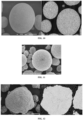
- the SEM diagram of the ternary positive electrode material in Example 3 is shown in FIG. 7 .
- the shape is spherical or spheroidal, and the primary particle is of brick shape.
- the abundant pores are inside the sphere and are highly homogeneous.
- the specific surface area is 2.45m 2 /g; the primary particle is 350nm in length and 70nm in width; the length-width ratio is 5; the span is 1.21; and D50 is 10.058 ⁇ m.
- the porosity of the ternary positive electrode material in Example 3 is 11.81%, and the pore uniformity coefficient R 2 is 0.9836.
- the ternary positive electrode material obtained in Example 3 was used to prepare the button battery. Under the condition of 0.1C, the first charge specific capacity was 192.8mAh/g; the first discharge efficiency was 95.42%; and the rate performance at 5C/1C was 91.02%.
- Step 1 The sulfate crystals of nickel, cobalt, and manganese (the molar ratio of the nickel, cobalt, and manganese was 0.9:0.05:0.05) were prepared into the homogeneous ternary metal salt mixture solution of 1.5mol/L.
- Step 2 The preparation of the base liquid condition: the water of 60L was added to the reactor of 100L, and then it was stirred, wherein the rotary speed was 650r/min; the ammonium hydroxide was added, and the ammonium concentration in the water was adjusted to be 0.8mol/L; the sodium hydroxide solution was added, and the pH was adjusted to be 10.0 ⁇ 10.5; and the temperature was heated up to 70°C with the nitrogen protection.
- the coprecipitation reaction the nickel-cobalt-manganese mixed sulfate of 2mol/L, ammonium hydroxide of 2mol/L and sodium hydroxide solution of 6mol/L were added to the reactor in the parallel flow at the uniform rate by the peristaltic pump, wherein the flow rate of the nickel-cobalt-manganese mixed sulfate was controlled to be 25 L/h; the reaction temperature was controlled to be 70 °C; the solid content of the reactor was 110g/L; and the pH of the reaction system was controlled to be 10.0 ⁇ 10.5.
- Step 3 The product of the coprecipitation reaction in Step 2 was centrifugally washed, wherein the temperature of the washing hot alkali tank was controlled to be 65 ⁇ 5°C, and the hot alkali concentration was 1.3mol/L.
- the temperature of the washing hot alkali tank was controlled to be 65 ⁇ 5°C, and the hot alkali concentration was 1.3mol/L.
- the S content in the material was washed to be ⁇ 0.27%, then it was washed by pure water, wherein the temperature for washing in the hot pure water tank was controlled to be 75°C ⁇ 5°C.
- the Na content in the material was washed to be ⁇ 0.030%, the washing was stopped, and the material was dehydrated by the centrifuge. The material was dried in the oven and sieved by the 400-mesh screen, so as to obtain the nickel-cobalt-manganese ternary precursor with the high porosity in Example 4.
- the morphology result diagram of the ternary precursor under the scanning electron microscope in Example 4 is shown in FIG. 8 (left side), and the sectional diagram is shown in FIG. 8 (right side).
- the shape of the secondary particle is spherical or spheroidal, wherein the abundant pores are inside the sphere and the distribution is highly homogeneous.
- the primary particle is in the short-filament shape.
- the porosity of the ternary precursor in Example 4 is 6.52%, and the uniformity coefficient R 2 is 0.9855.
- Step 4 The precursor obtained in Step 3 and Li 2 CO 3 were mixed well in a high-speed mixer according to the molar ratio of 1:1.05.
- Step 5 The mixture from Step 4 was put into the box-type atmosphere furnace for sintering.
- the ternary positive electrode material of LiNi 0.9 Co 0.05 Mn 0.05 O 2 in Example 4 was obtained by first heating up to 550°C at a heating rate of 3°C/min and sintering for 2h; then heating up to 700°C at a heating rate of 1°C/min and sintering for 10h; and cooling to room temperature.
- the SEM diagram of the ternary positive electrode material in Example 4 is shown in FIG. 9 .
- the shape is spherical or spheroidal, and the primary particle is in brick shape.
- the abundant pores are inside the sphere and are highly homogeneous.
- the specific surface area is 2.65m 2 /g; the primary particle is 315nm in length and 68.9nm in width; the length-width ratio is 4.57; the span is 1.35; and the D50 is 10.3504 ⁇ m.
- the porosity of the ternary positive electrode material in Example 4 is 12.45%, and the pore uniformity coefficient R 2 is 0.9733.
- the ternary positive electrode material obtained in Example 4 was used to prepare the button battery. Under the condition of 0.1C, the first charge specific capacity was 240.9mAh/g; the first discharge efficiency was 90.96%; and the rate performance at 5C/1C was 91.79%.
- Example 5 differed from Example 4 in that the precursor selected for Example 5 was different from that in Example 4, but was sintered in the same sintering condition.
- Step 1 The sulfate crystals of nickel, cobalt, and manganese (the molar ratio of the nickel, cobalt, and manganese was 0.95:0.02:0.03) were prepared into the homogeneous ternary metal salt mixture solution of 1.5mol/L.
- Step 3 The product of the coprecipitation reaction in Step 2 was centrifugally washed, wherein the temperature of the washing hot alkali tank was controlled to be 65 ⁇ 5°C, and the hot alkali concentration was 1.3mol/L.
- the temperature of the washing hot alkali tank was controlled to be 65 ⁇ 5°C, and the hot alkali concentration was 1.3mol/L.
- the S content in the material was washed to be ⁇ 0.27%, then it was washed by pure water, wherein the temperature for washing in the hot pure water tank was controlled to be 70°C ⁇ 5°C.
- the Na content in the material was washed to be ⁇ 0.030%, the washing was stopped, and the material was dehydrated by the centrifuge. The material was dried in the oven and sieved by the 400-mesh screen, so as to obtain the nickel-cobalt-manganese ternary precursor with the high porosity in Example 5.
- the coprecipitation reaction the nickel-cobalt-manganese mixed sulfate of 2mol/L, ammonium hydroxide of 2mol/L, and sodium hydroxide solution of 6mol/L were added to the reactor in the parallel flow at the uniform speed by the peristaltic pump, wherein the flow rate of the nickel-cobalt-manganese mixed sulfate was controlled to be 6 L/h; the reaction temperature was controlled to be 60 °C; the solid content of the reactor was 125g/L; and the pH of the reaction system was controlled to be 11.10 ⁇ 11.50, so as to achieve the particle size stabilization.
- the morphology result diagram of the ternary precursor under the 5000-time scanning electron microscope in Comparative Example 1 is shown in FIG. 12 (left side), and the morphology of the sectional diagram under an 8000-time scanning electron microscope is shown in FIG. 12 (right side).
- the shape of the secondary particle is spherical or spheroidal, wherein the sphere is relatively dense inside and has fewer pores.
- the primary particle is of lamination shape.
- the ternary positive electrode material obtained in Comparative Example 1 was used to prepare the button battery. Under the condition of 0.1C, the first charge specific capacity was 188.6mAh/g; the first discharge efficiency was 86.23%; and the rate performance at 5C/1C was 76.6%.
- Step 1 to Step 3 were the same as in Example 1.
- Step 5 The mixture was put into the box-type atmosphere furnace for sintering.
- the positive electrode material of LiNi 0.5 Co 0.2 Mn 0.3 O 2 was obtained by first heating up to 650°C at the heating rate of 5°C/min and sintering for 2h; then heating up to 910°C at the heating rate of 3°C/min and sintering for 10h; and cooling to room temperature.
- the porosity of the ternary positive electrode material in Comparative Example 2 is 6.58%, and the pore uniformity coefficient R 2 is 0.9814.
- the prepared primary particle of the positive electrode material is significantly enlarged, and the porosity is significantly reduced, which results in a decrease in the rate performance. Therefore, the arrangement of sintering conditions has a large influence on the pore structure of the material, thus affecting the rate performance of the material.
- the ternary positive electrode material obtained in Comparative Example 2 was used to prepare the button battery. Under the condition of 0.1C, the first charge specific capacity was 190.9mAh/g; the first discharge efficiency was 91.31%; and the rate performance was 82.7%.
- Example 1 The performance parameters of the precursors in Example 1 to Example 5, Comparative Example 1, and Comparative Example 2 are shown in Table 5.
- Table 5 Performance Parameters of Precursors in Each Example and Comparative Example Precursor Porosity (%) Pore Uniformity Coefficient R 2 Specific Surface Area (m 2 /g) Primary Particle Length (nm) Primary Particle Length-width ratio
- Example 1 6.14 0.9898 29.92 300 10
- Example 3 5.93 0.9801 26.3 350 8.75
- Example 4 6.52 0.9855 21.03 300
- Example 5 6.13 0.9785 25.3 310 10.3 Comparative Example 1 3.30 0.8785 9.63 / / Comparative Example 2 6.14 0.9898 29.92 300 10
- the positive electrode materials prepared by Example 1 to Example 5 have the characteristics of high porosity and uniform pore distribution. These two characteristics determine that the batteries prepared by the positive electrode materials in Example 1 to Example 5 have very high rate performances. The rate performance can still reach more than 90% even under the condition of large current of 5C/1C, and the first discharge efficiency at 0.1C reaches more than 90%.
- the positive electrode material prepared in Example 1 has the best rate performance in Example 1 to Example 3, and the electrochemical performance is excellent, wherein the first discharge efficiency at 0.1C can be as high as more than 95%, and the first charge specific capacity at 0.1C can be as high as 192.1mAh/g.
- the Example 4 to Example 5 have higher nickel contents compared to Example 1 to Example 3.
- the first charge specific capacity at 0.1C of the positive electrode materials prepared in Example 4 to Example 5 can be as high as more than 240mAh/g; the rate performance can be more than 90%; and the first discharge efficiency at 0.1C can be more than 90%. Therefore, the high capacity, high first efficiency, and high rate performance are the outstanding characteristics of its electrochemical performance.
- the precursor primary particle prepared in Comparative Example 1 is in lamination shape, and has a smaller specific surface area.
- the interior is relatively dense, so that the pore distribution is uneven and less; and the porosity is only 3.30%.
- the rate performance of the battery in Comparative Example 1 is worse and only 76.6%.
- the prepared primary particle of the positive electrode material is significantly enlarged, and the porosity is significantly reduced, which results in the lower rate performance. Therefore, the setting of the sintering condition has the great influence on the pore structure of the positive electrode material, thus affecting the rate performance of the material.
Landscapes
- Chemical & Material Sciences (AREA)
- Organic Chemistry (AREA)
- Inorganic Chemistry (AREA)
- Chemical Kinetics & Catalysis (AREA)
- Electrochemistry (AREA)
- General Chemical & Material Sciences (AREA)
- Engineering & Computer Science (AREA)
- Manufacturing & Machinery (AREA)
- Materials Engineering (AREA)
- Nanotechnology (AREA)
- Physics & Mathematics (AREA)
- Condensed Matter Physics & Semiconductors (AREA)
- General Physics & Mathematics (AREA)
- Crystallography & Structural Chemistry (AREA)
- Battery Electrode And Active Subsutance (AREA)
- Secondary Cells (AREA)
Applications Claiming Priority (2)
| Application Number | Priority Date | Filing Date | Title |
|---|---|---|---|
| CN202210473550.XA CN117003295B (zh) | 2022-04-29 | 2022-04-29 | 一种三元正极材料及其前驱体、锂离子电池 |
| PCT/CN2023/091905 WO2023208238A1 (fr) | 2022-04-29 | 2023-04-28 | Matériau d'électrode positive ternaire, précurseur de celui-ci et batterie au lithium-ion |
Publications (2)
| Publication Number | Publication Date |
|---|---|
| EP4516745A1 true EP4516745A1 (fr) | 2025-03-05 |
| EP4516745A4 EP4516745A4 (fr) | 2026-04-29 |
Family
ID=88517950
Family Applications (1)
| Application Number | Title | Priority Date | Filing Date |
|---|---|---|---|
| EP23795670.1A Pending EP4516745A4 (fr) | 2022-04-29 | 2023-04-28 | Matériau d'électrode positive ternaire, précurseur de celui-ci et batterie au lithium-ion |
Country Status (4)
| Country | Link |
|---|---|
| EP (1) | EP4516745A4 (fr) |
| KR (1) | KR20240167706A (fr) |
| CN (1) | CN117003295B (fr) |
| WO (1) | WO2023208238A1 (fr) |
Families Citing this family (1)
| Publication number | Priority date | Publication date | Assignee | Title |
|---|---|---|---|---|
| CN117923566A (zh) * | 2024-01-30 | 2024-04-26 | 中伟新材料股份有限公司 | 正极材料前驱体及其制备方法、正极材料、电池及涉电设备 |
Family Cites Families (15)
| Publication number | Priority date | Publication date | Assignee | Title |
|---|---|---|---|---|
| EP2144314B1 (fr) * | 2001-04-20 | 2015-01-28 | GS Yuasa International Ltd. | Matériaux actifs positifs et leur procédé de production, électrode positive pour batterie secondaire électrolyte non aqueuse, et batterie secondaire électrolyte non aqueuse |
| KR102556588B1 (ko) * | 2015-11-11 | 2023-07-17 | 스미또모 가가꾸 가부시끼가이샤 | 정극 활물질의 제조 방법, 정극 활물질, 정극 및 리튬 이온 2 차 전지 |
| CN107324405B (zh) * | 2017-07-07 | 2019-08-09 | 金驰能源材料有限公司 | 一种镍钴锰酸锂材料前驱体及其制备方法、以及由该前驱体制备的锂离子电池 |
| KR102244955B1 (ko) * | 2017-09-19 | 2021-04-27 | 주식회사 엘지화학 | 리튬 이차전지용 양극재, 이의 제조방법, 이를 포함하는 리튬 이차전지용 양극 및 리튬 이차전지 |
| JP7124305B2 (ja) * | 2017-12-08 | 2022-08-24 | 住友金属鉱山株式会社 | ニッケルマンガンコバルト複合水酸化物の製造方法 |
| KR102521605B1 (ko) * | 2018-03-02 | 2023-04-12 | 유미코아 | 재충전가능 리튬 이온 배터리용 양극 물질 |
| CN110265631B (zh) * | 2018-06-27 | 2021-12-07 | 宁德时代新能源科技股份有限公司 | 一种三元正极材料及其制备方法和锂离子电池 |
| CN111463425A (zh) * | 2020-04-03 | 2020-07-28 | 宁波容百新能源科技股份有限公司 | 一种三元正极材料前驱体及其制备方法 |
| CN111732132B (zh) * | 2020-07-06 | 2020-11-27 | 金驰能源材料有限公司 | 一种镍钴锰核壳结构前驱体及其制备方法、一种正极材料 |
| PL4229008T3 (pl) * | 2020-10-13 | 2024-11-25 | Basf Se | Sposób wytwarzania (tleno)wodorotlenku w postaci cząstek i (tleno)wodorotlenek i jego zastosowanie |
| CN112811477A (zh) * | 2021-01-06 | 2021-05-18 | 北京化工大学 | 一种通过前驱体控制单晶三元正极材料合成的方法 |
| CN113651369A (zh) * | 2021-08-18 | 2021-11-16 | 宁波容百新能源科技股份有限公司 | 球形高镍三元前驱体材料、其制备方法与高镍三元正极材料 |
| CN113896255B (zh) * | 2021-09-30 | 2023-10-13 | 宁波容百新能源科技股份有限公司 | 一种环状孔隙三元正极前驱体及其制备方法 |
| CN113651373A (zh) * | 2021-10-19 | 2021-11-16 | 河南科隆新能源股份有限公司 | 一种均匀多孔结构的正极材料及其制备方法 |
| CN114105222A (zh) * | 2021-11-30 | 2022-03-01 | 骆驼集团资源循环襄阳有限公司 | 一种具有多孔隙结构的镍钴锰氢氧化物及其制备方法 |
-
2022
- 2022-04-29 CN CN202210473550.XA patent/CN117003295B/zh active Active
-
2023
- 2023-04-28 KR KR1020247036953A patent/KR20240167706A/ko active Pending
- 2023-04-28 WO PCT/CN2023/091905 patent/WO2023208238A1/fr not_active Ceased
- 2023-04-28 EP EP23795670.1A patent/EP4516745A4/fr active Pending
Also Published As
| Publication number | Publication date |
|---|---|
| CN117003295A (zh) | 2023-11-07 |
| KR20240167706A (ko) | 2024-11-27 |
| EP4516745A4 (fr) | 2026-04-29 |
| CN117003295B (zh) | 2025-12-12 |
| WO2023208238A1 (fr) | 2023-11-02 |
Similar Documents
| Publication | Publication Date | Title |
|---|---|---|
| EP4458774A1 (fr) | Précurseur de matériau d'électrode positive ternaire et procédé de préparation associé, matériau d'électrode positive, suspension d'électrode positive, batterie au lithium-ion, électrode positive et dispositif électrique | |
| US11345609B2 (en) | High voltage lithium nickel cobalt manganese oxide precursor, method for making the same, and high voltage lithium nickel cobalt manganese oxide cathode material | |
| US12244004B2 (en) | Composite cathode material for lithium-ion battery, and vehicle | |
| WO2023169591A1 (fr) | Matériau d'électrode positive d'oxyde contenant du sodium, son procédé de préparation et son utilisation, et plaque d'électrode positive et son utilisation | |
| CN108217753B (zh) | 一种梯度掺杂四氧化三钴材料及其制备方法 | |
| CN110534733A (zh) | 一种大单晶锂离子电池镍钴锰酸锂正极材料制备方法 | |
| CN116282207B (zh) | 枝晶状正极材料前驱体及其制备方法、锂离子电池正极材料、锂离子电池和用电设备 | |
| KR20190035716A (ko) | 니켈망간 복합 수산화물과 그 제조 방법, 비수계 전해질 이차 전지용 정극 활물질과 그 제조 방법, 및 비수계 전해질 이차 전지 | |
| CN109659542A (zh) | 一种核壳结构的高电压钴酸锂正极材料及其制备方法 | |
| KR20170102293A (ko) | 리튬 이온 배터리용 분급 구조를 갖는 다성분 재료, 이의 제조 방법, 리튬 이온 배터리 및 리튬 이온 배터리의 양극 | |
| CN116375111B (zh) | 一种钠离子电池及其正极材料与前驱体和制备方法 | |
| CN114068911B (zh) | 一种改性高镍正极材料及其制备方法 | |
| EP4306687A1 (fr) | Matériau d'électrode positive à éléments multiples monocristallin, procédé de préparation associé et batterie aux ions de lithium | |
| CN116282225A (zh) | 表面一次颗粒非径向生长的前驱体及其制备方法、锂离子电池及其正极材料和涉电设备 | |
| CN113860394B (zh) | 一种富锰碳酸盐二元前驱体及其制备方法、正极材料和锂电池 | |
| WO2025026320A1 (fr) | Précurseur de matériau de cathode de batterie sodium-ion et son procédé de préparation, et matériau de cathode de batterie sodium-ion, batterie sodium-ion et dispositif électrique | |
| CN109216697A (zh) | 一种高镍大晶粒三元材料及其制备方法 | |
| KR20260018110A (ko) | 단결정 삼원계 양극 재료 및 그 제조 방법과 응용 | |
| EP4516745A1 (fr) | Matériau d'électrode positive ternaire, précurseur de celui-ci et batterie au lithium-ion | |
| KR20240158926A (ko) | 리튬 함유 산화물 양극재 전구체, 리튬 함유 산화물 양극재 및 그 제조방법과 응용, 양극시트 및 그 응용 | |
| EP4723236A1 (fr) | Matériau actif d'électrode positive et son procédé de préparation, feuille d'électrode positive, batterie et dispositif électrique | |
| CN119092710A (zh) | 镍氢电池正极材料及其制备方法、镍氢电池和涉电设备 | |
| CN118572055A (zh) | 一种核壳结构三元正极材料及其制备方法和锂离子电池 | |
| CN116014103A (zh) | 一种高镍三元正极材料及其制备方法和应用 | |
| CN116111079B (zh) | 一种放射状多孔结构的镍钴锰氢氧化物前驱体及其制备方法 |
Legal Events
| Date | Code | Title | Description |
|---|---|---|---|
| STAA | Information on the status of an ep patent application or granted ep patent |
Free format text: STATUS: THE INTERNATIONAL PUBLICATION HAS BEEN MADE |
|
| PUAI | Public reference made under article 153(3) epc to a published international application that has entered the european phase |
Free format text: ORIGINAL CODE: 0009012 |
|
| STAA | Information on the status of an ep patent application or granted ep patent |
Free format text: STATUS: REQUEST FOR EXAMINATION WAS MADE |
|
| 17P | Request for examination filed |
Effective date: 20241007 |
|
| AK | Designated contracting states |
Kind code of ref document: A1 Designated state(s): AL AT BE BG CH CY CZ DE DK EE ES FI FR GB GR HR HU IE IS IT LI LT LU LV MC ME MK MT NL NO PL PT RO RS SE SI SK SM TR |
|
| DAX | Request for extension of the european patent (deleted) | ||
| RAV | Requested validation state of the european patent: fee paid |
Extension state: MA Effective date: 20241128 |
|
| REG | Reference to a national code |
Ref country code: DE Ref legal event code: R079 Free format text: PREVIOUS MAIN CLASS: C01G0053000000 Ipc: C01G0053500000 |
|
| STAA | Information on the status of an ep patent application or granted ep patent |
Free format text: STATUS: EXAMINATION IS IN PROGRESS |
|
| A4 | Supplementary search report drawn up and despatched |
Effective date: 20260401 |
|
| RIC1 | Information provided on ipc code assigned before grant |
Ipc: C01G 53/50 20250101AFI20260326BHEP Ipc: C01G 53/504 20250101ALI20260326BHEP Ipc: C01G 53/506 20250101ALI20260326BHEP Ipc: H01M 4/525 20100101ALI20260326BHEP Ipc: H01M 4/36 20060101ALI20260326BHEP Ipc: H01M 4/505 20100101ALI20260326BHEP Ipc: H01M 10/0525 20100101ALI20260326BHEP |