EP4516916A1 - Koji-formfermentationsprodukt mit hohem vitamin-b-gehalt - Google Patents
Koji-formfermentationsprodukt mit hohem vitamin-b-gehalt Download PDFInfo
- Publication number
- EP4516916A1 EP4516916A1 EP23811859.0A EP23811859A EP4516916A1 EP 4516916 A1 EP4516916 A1 EP 4516916A1 EP 23811859 A EP23811859 A EP 23811859A EP 4516916 A1 EP4516916 A1 EP 4516916A1
- Authority
- EP
- European Patent Office
- Prior art keywords
- koji mold
- raw material
- grain
- fermented
- derived raw
- Prior art date
- Legal status (The legal status is an assumption and is not a legal conclusion. Google has not performed a legal analysis and makes no representation as to the accuracy of the status listed.)
- Pending
Links
Images






Classifications
-
- A—HUMAN NECESSITIES
- A23—FOODS OR FOODSTUFFS; TREATMENT THEREOF, NOT COVERED BY OTHER CLASSES
- A23L—FOODS, FOODSTUFFS OR NON-ALCOHOLIC BEVERAGES, NOT OTHERWISE PROVIDED FOR; PREPARATION OR TREATMENT THEREOF
- A23L33/00—Modifying nutritive qualities of foods; Dietetic products; Preparation or treatment thereof
- A23L33/10—Modifying nutritive qualities of foods; Dietetic products; Preparation or treatment thereof using additives
- A23L33/15—Vitamins
-
- A—HUMAN NECESSITIES
- A23—FOODS OR FOODSTUFFS; TREATMENT THEREOF, NOT COVERED BY OTHER CLASSES
- A23J—PROTEIN COMPOSITIONS FOR FOODSTUFFS; WORKING-UP PROTEINS FOR FOODSTUFFS; PHOSPHATIDE COMPOSITIONS FOR FOODSTUFFS
- A23J3/00—Working-up of proteins for foodstuffs
- A23J3/22—Working-up of proteins for foodstuffs by texturising
- A23J3/225—Texturised simulated foods with high protein content
- A23J3/227—Meat-like textured foods
-
- A—HUMAN NECESSITIES
- A23—FOODS OR FOODSTUFFS; TREATMENT THEREOF, NOT COVERED BY OTHER CLASSES
- A23L—FOODS, FOODSTUFFS OR NON-ALCOHOLIC BEVERAGES, NOT OTHERWISE PROVIDED FOR; PREPARATION OR TREATMENT THEREOF
- A23L11/00—Pulses, i.e. fruits of leguminous plants, for production of food; Products from legumes; Preparation or treatment thereof
- A23L11/50—Fermented pulses or legumes; Fermentation of pulses or legumes based on the addition of microorganisms
-
- A—HUMAN NECESSITIES
- A23—FOODS OR FOODSTUFFS; TREATMENT THEREOF, NOT COVERED BY OTHER CLASSES
- A23L—FOODS, FOODSTUFFS OR NON-ALCOHOLIC BEVERAGES, NOT OTHERWISE PROVIDED FOR; PREPARATION OR TREATMENT THEREOF
- A23L7/00—Cereal-derived products; Malt products; Preparation or treatment thereof
- A23L7/10—Cereal-derived products
- A23L7/104—Fermentation of farinaceous cereal or cereal material; Addition of enzymes or microorganisms
-
- C—CHEMISTRY; METALLURGY
- C12—BIOCHEMISTRY; BEER; SPIRITS; WINE; VINEGAR; MICROBIOLOGY; ENZYMOLOGY; MUTATION OR GENETIC ENGINEERING
- C12N—MICROORGANISMS OR ENZYMES; COMPOSITIONS THEREOF; PROPAGATING, PRESERVING, OR MAINTAINING MICROORGANISMS; MUTATION OR GENETIC ENGINEERING; CULTURE MEDIA
- C12N9/00—Enzymes; Proenzymes; Compositions thereof; Processes for preparing, activating, inhibiting, separating or purifying enzymes
- C12N9/14—Hydrolases (3)
- C12N9/24—Hydrolases (3) acting on glycosyl compounds (3.2)
- C12N9/2402—Hydrolases (3) acting on glycosyl compounds (3.2) hydrolysing O- and S- glycosyl compounds (3.2.1)
- C12N9/2405—Glucanases
- C12N9/2434—Glucanases acting on beta-1,4-glucosidic bonds
-
- C—CHEMISTRY; METALLURGY
- C12—BIOCHEMISTRY; BEER; SPIRITS; WINE; VINEGAR; MICROBIOLOGY; ENZYMOLOGY; MUTATION OR GENETIC ENGINEERING
- C12P—FERMENTATION OR ENZYME-USING PROCESSES TO SYNTHESISE A DESIRED CHEMICAL COMPOUND OR COMPOSITION OR TO SEPARATE OPTICAL ISOMERS FROM A RACEMIC MIXTURE
- C12P1/00—Preparation of compounds or compositions, not provided for in groups C12P3/00 - C12P39/00, by using microorganisms or enzymes
- C12P1/02—Preparation of compounds or compositions, not provided for in groups C12P3/00 - C12P39/00, by using microorganisms or enzymes by using fungi
-
- C—CHEMISTRY; METALLURGY
- C12—BIOCHEMISTRY; BEER; SPIRITS; WINE; VINEGAR; MICROBIOLOGY; ENZYMOLOGY; MUTATION OR GENETIC ENGINEERING
- C12Y—ENZYMES
- C12Y302/00—Hydrolases acting on glycosyl compounds, i.e. glycosylases (3.2)
- C12Y302/01—Glycosidases, i.e. enzymes hydrolysing O- and S-glycosyl compounds (3.2.1)
- C12Y302/01004—Cellulase (3.2.1.4), i.e. endo-1,4-beta-glucanase
-
- C—CHEMISTRY; METALLURGY
- C12—BIOCHEMISTRY; BEER; SPIRITS; WINE; VINEGAR; MICROBIOLOGY; ENZYMOLOGY; MUTATION OR GENETIC ENGINEERING
- C12Y—ENZYMES
- C12Y302/00—Hydrolases acting on glycosyl compounds, i.e. glycosylases (3.2)
- C12Y302/01—Glycosidases, i.e. enzymes hydrolysing O- and S-glycosyl compounds (3.2.1)
- C12Y302/01055—Alpha-N-arabinofuranosidase (3.2.1.55)
-
- C—CHEMISTRY; METALLURGY
- C12—BIOCHEMISTRY; BEER; SPIRITS; WINE; VINEGAR; MICROBIOLOGY; ENZYMOLOGY; MUTATION OR GENETIC ENGINEERING
- C12Y—ENZYMES
- C12Y302/00—Hydrolases acting on glycosyl compounds, i.e. glycosylases (3.2)
- C12Y302/01—Glycosidases, i.e. enzymes hydrolysing O- and S-glycosyl compounds (3.2.1)
- C12Y302/01074—Glucan 1,4-beta-glucosidase (3.2.1.74)
-
- C—CHEMISTRY; METALLURGY
- C12—BIOCHEMISTRY; BEER; SPIRITS; WINE; VINEGAR; MICROBIOLOGY; ENZYMOLOGY; MUTATION OR GENETIC ENGINEERING
- C12Y—ENZYMES
- C12Y302/00—Hydrolases acting on glycosyl compounds, i.e. glycosylases (3.2)
- C12Y302/01—Glycosidases, i.e. enzymes hydrolysing O- and S-glycosyl compounds (3.2.1)
- C12Y302/01091—Cellulose 1,4-beta-cellobiosidase (3.2.1.91)
-
- C—CHEMISTRY; METALLURGY
- C12—BIOCHEMISTRY; BEER; SPIRITS; WINE; VINEGAR; MICROBIOLOGY; ENZYMOLOGY; MUTATION OR GENETIC ENGINEERING
- C12Y—ENZYMES
- C12Y302/00—Hydrolases acting on glycosyl compounds, i.e. glycosylases (3.2)
- C12Y302/01—Glycosidases, i.e. enzymes hydrolysing O- and S-glycosyl compounds (3.2.1)
- C12Y302/01099—Arabinan endo-1,5-alpha-L-arabinosidase (3.2.1.99)
-
- C—CHEMISTRY; METALLURGY
- C12—BIOCHEMISTRY; BEER; SPIRITS; WINE; VINEGAR; MICROBIOLOGY; ENZYMOLOGY; MUTATION OR GENETIC ENGINEERING
- C12N—MICROORGANISMS OR ENZYMES; COMPOSITIONS THEREOF; PROPAGATING, PRESERVING, OR MAINTAINING MICROORGANISMS; MUTATION OR GENETIC ENGINEERING; CULTURE MEDIA
- C12N1/00—Microorganisms; Compositions thereof; Processes of propagating, maintaining or preserving microorganisms or compositions thereof; Processes of preparing or isolating a composition containing a microorganism; Culture media therefor
- C12N1/14—Fungi; Culture media therefor
-
- C—CHEMISTRY; METALLURGY
- C12—BIOCHEMISTRY; BEER; SPIRITS; WINE; VINEGAR; MICROBIOLOGY; ENZYMOLOGY; MUTATION OR GENETIC ENGINEERING
- C12R—INDEXING SCHEME ASSOCIATED WITH SUBCLASSES C12C - C12Q, RELATING TO MICROORGANISMS
- C12R2001/00—Microorganisms ; Processes using microorganisms
- C12R2001/645—Fungi ; Processes using fungi
Definitions
- the present invention relates to a koji mold-fermented material and a production method thereof.
- Vitamins are organic compounds which are necessary for keeping the human body functions normal but have to be taken from foods because the vitamins are hardly synthesized in the body.
- vitamin B is a generic term for eight kinds of nutrients including vitamin B1, vitamin B2, vitamin B6, vitamin B12, niacin, pantothenic acid, folate and biotin.
- folate which is a kind of vitamin B
- folate contained in foods is natural type polyglutamic acid form
- folate used as an additive or the like is synthetic type monoglutamic acid form. It has been reported that continuous intake of supplements containing folate of synthetic type monoglutamic acid form during pregnancy has health concerns, such as an increase in the incidence rate of asthma of the child to be born (NPL 1).
- Meat is abundant in vitamins and nutrients such as protein and minerals and is a nutritionally important food material.
- meat contains a large amount of lipids, in particular saturated fatty acids, and because the energy thereof is excessive also compared to other food materials, excessive intake of meat can cause various chronic diseases including metabolic syndrome.
- a meat-like food which appears just like a processed meat food, has been attracting attention. While a meat-like food contains less saturated fatty acids and has lower energy than meat, the meat-like food is a food using a food material containing a similar amount of protein to that of meat. Intake of a meat-like food as an alternative to a meat food can lead to prevention, improvement or the like of a lifestyle-related disease such as metabolic syndrome.
- a food using grains such as soybeans is processed for various applications and used for a food composition and a food.
- PTL 1 discloses a method for producing koji or miso using a koji mold having high productivity of vitamin B2 or the like.
- PTL 2 discloses a method of treating soy pulp with cellulase for advancing liquefaction or gelation of the bean pulp.
- NPL 1 Melissa J. Whitrow et al., "Effect of Supplemental Folic Acid in Pregnancy on Childhood Asthma: A Prospective Birth Cohort Study", American Journal of Epidemiology, 2009, Vol. 170, No. 12, pages 1486-1493 .
- an object of the invention is to obtain a koji mold-fermented material having a high vitamin B concentration.
- the present inventors have found that the vitamin B concentration of a koji mold-fermented material obtained by treating a grain-derived raw material with arabinase and cellulase and then fermenting with a koji mold is increased compared to that of a koji mold-fermented material obtained without treating a grain-derived raw material with arabinase and cellulase.
- the invention is as follows.
- a koji mold-fermented material of a grain-derived raw material including treating a grain-derived raw material with arabinase and cellulase and fermenting the treated raw material using a koji mold
- a koji mold-fermented material having an increased vitamin B concentration compared to that of a koji mold-fermented material obtained without treating a grain-derived raw material with arabinase and cellulase, can be obtained by treating a grain-derived raw material with arabinase and cellulase and then fermenting with a koji mold.
- a to B indicating a range means “A or more and B or less”.
- weight and “mass” and “weight%” and “mass%” are each regarded as synonyms.
- the method for producing a koji mold-fermented material of a grain-derived raw material of this embodiment is a method for producing a koji mold-fermented material of a grain-derived raw material including treating a grain-derived raw material with arabinase and cellulase and fermenting the treated raw material using a koji mold.
- grain-derived raw material is a material containing at least either of carbon and nitrogen.
- a koji mold can assimilate arabinose, which is a component of arabinan, efficiently, and thus the grain-derived raw material preferably contains arabinan.
- grain-derived raw material examples include protein-derived raw materials derived from whole soybeans, defatted soybeans, soybean protein, wheat gluten, peas, broad beans, adzuki beans and the like and starch-derived raw materials derived from wheat, barley, rye, bran, rice, rice bran, corn, starch pulp and the like.
- the grain-derived raw material may also be bean pulp, wheat bran, draff or corn powder.
- the wheat bran is the outer layer part of wheat grains.
- the draff is a residue remaining after the manufacture of beer and refers to a solid remaining after mixing and stirring crushed malt and hot water and removing wort by filtration. A kind thereof or a combination thereof can be used.
- the grain-derived raw material is preferably bean pulp, further preferably soy pulp.
- the soy pulp is pulp of soybeans.
- the grain-derived raw material is treated with arabinase and cellulase.
- the vitamin B content increases.
- speculated causes are high expression of a gene related to the metabolism of vitamin B due to a change in the balance of saccharides that the koji mold can assimilate, an increase in the amount of the primary metabolite as the substrate of vitamin B and the like.
- the cellulase is specifically a hemicellulase, a glucanase, a glucosidase or the like, and examples of the hemicellulase include xylanase and the like.
- the grain-derived raw material Before the treatment with arabinase and cellulase, the grain-derived raw material may be subjected to a heating and pressurizing process.
- the heating and pressurizing process is preferably conducted using an autoclave, an extruder or a high-pressure heating tube reactor. By such a heating and pressurizing process, the enzymes can efficiently act on the grain-derived raw material.
- the ratio of arabinase and cellulase for treating the grain-derived raw material is preferably 1:3 to 9:1, further preferably 1:3 to 3:1, on enzyme unit (also referred to as "unit” or "U” below) basis.
- a ratio of arabinase and cellulase of (1 or more):3 on unit basis has an advantage of a further increase in the vitamin B amount.
- the grain-derived raw material is preferably treated with 4 U or more of arabinase and 1.6 U or more of cellulase per 1 g of the grain-derived raw material.
- the concentration of arabinase and the concentration of cellulase per 1 g of the grain-derived raw material are further preferably 4 to 15 U and 10 to 12.5 U, respectively.
- arabinase and cellulase in the medium substrate containing the grain-derived raw material are preferably at 250 to 900 mU/ml and 100 to 750 mU/ml, respectively.
- the temperature, the pH, the treatment time and the like of the treatment of the grain-derived raw material with arabinase and cellulase can be appropriately determined considering the concentrations of arabinase and cellulase and the like.
- the temperature is preferably 0 to 80°C, more preferably 20 to 70°C, further preferably 30 to 60°C. Temperature in the range has an advantage because the enzymes exhibit high activities and because the raw material is decomposed efficiently.
- the pH is preferably 2 to 8, more preferably 3 to 7, further preferably 4 to 6. pH in the range has an advantage because the enzymes exhibit high activities and because the raw material is decomposed efficiently.
- the treatment time is preferably one to 72 hours, more preferably three to 24 hours, further preferably five to 20 hours.
- Treatment time of 72 hours or less has an advantage because the production period can be shortened. Moreover, treatment time of one hour or more has an advantage because the raw material can be decomposed sufficiently.
- the raw material and the enzymes are preferably stirred because the hydrolysis is promoted due to an increase in the contact faces of the raw material and the enzymes, for example.
- the order of treatment may be any order.
- the grain-derived raw material which has been treated with arabinase may be treated with cellulase, or the grain-derived raw material which has been treated with cellulase may be treated with arabinase.
- both arabinase and cellulase may be added to the grain-derived raw material to treat with the enzymes simultaneously.
- the arabinan amount contained in the grain-derived raw material which has been treated with arabinase and cellulase is decreased preferably by 80 mass% or more, further preferably by 90 mass% or more, from the arabinan amount of the grain-derived raw material before the treatment with arabinase and cellulase.
- the arabinan amount contained in the grain-derived raw material which has been treated with arabinase and cellulase is decreased by 80 mass% or more from the arabinan amount of the grain-derived raw material before the treatment with arabinase and cellulase, there is an advantage because the arabinose amount of the medium increases and because the vitamin B amount increases due to a change in the balance of saccharides that the koji mold can assimilate.
- the grain-derived raw material which has been treated with the enzymes is fermented using a koji mold, and thus a koji mold-fermented material is produced.
- Another C source or N source metal ions or a defoaming agent for removing foams during culture may be added to the grain-derived raw material which has been treated with the enzymes.
- the pH may be adjusted to pH 3 to 7.
- koji molds of Aspergillus are preferable because the koji molds are used for food production.
- Aspergillus oryzae Aspergillus awamori, Aspergillus inuii, Aspergillus usamii, Aspergillus saitoi and the like are preferable.
- strain ATCC1011, strain ATCC22788, strain NISL1365, strain NISL2074, strain NISL1018 and the like are preferable, and strain ATCC1011 and strain ATCC22788 are more preferable.
- strain JCM22312 is preferable.
- strain NISL1608 is preferable.
- strain ATCC11364 is preferable.
- strain NISL1541 is preferable.
- Strain ATCC1011, strain ATCC22788 and strain ATCC11364 can be acquired from The Global Bioresource Center.
- Strain JCM22312 can be acquired from Riken.
- the spores of the koji mold are preferably added at 1 ⁇ 10 4 spores or more, preferably at 1 ⁇ 10 6 to 1 ⁇ 10 8 spores, per 1 g of the grain-derived raw material which has been treated with the enzymes.
- the grain-derived raw material which has been treated with the enzymes may be put into a container which can prevent contamination with harmful microorganisms and fermented with the koji mold in the container.
- the container which can prevent contamination with harmful microorganisms may be a container having a structure which can disconnect the inside of the container and the external atmosphere.
- a sterilized polypropylene jar, a glass medium bottle or the like can be used for experimental application, and a jar fermenter having a function capable of supplying sterile air into the container, a pressure type fermentation tank or the like can be used for industrial application.
- a filter which can collect 99.97% or more of dust of 0.3 ⁇ m or more, such as a HEPA filter can be used.
- the mixture is preferably stirred.
- the fermentation with the koji mold may be conducted at 10 to 40°C, preferably at 25 to 37°C, for one to five days, preferably for two to three days. Fermentation temperature in the range has an advantage because the koji mold grows actively. Moreover, fermentation time of five days or less has an advantage because the cost of fermentation and the environmental burden are reduced. Moreover, fermentation time of one day or more has an advantage because the koji mold grows sufficiently.
- the amount of vitamin B contained in the koji mold-fermented material is preferably 150% or more on mass basis, further preferably 200% or more, of the amount of vitamin B in the grain-derived raw material before the arabinase and cellulase treatment.
- the amount of vitamin B contained in the koji mold-fermented material which has been treated with arabinase and cellulase per dry koji mold-fermented material is preferably 110% or more on mass basis, further preferably 120% or more, particularly preferably 150% or more, of the amount of vitamin B contained in the koji mold-fermented material without treatment with enzymes such as arabinase and cellulase per dry koji mold-fermented material.
- vitamin B is preferably not added from outside. This is because consumers generally tend to dislike food additives. Moreover, practically, there are problems such as an increase in the operation steps due to vitamin B preparation and an increase in the production cost for the addition.
- treatment such as pulverization, pasteurization, removal of bacteria, concentration, membrane separation and drying may be conducted as post-treatment.
- drying include methods such as freeze drying, drying under reduced pressure and heat drying.
- the post-treatment may be conducted at either stage of after the enzymatic treatment and after the fermentation treatment, for example. Moreover, the post-treatment may be single treatment or a combination of treatments.
- the koji mold-fermented material of this embodiment is a koji mold-fermented material of a grain-derived raw material which has an arabinan concentration of 5 mg/g or less.
- the koji mold-fermented material refers to a material fermented with a koji mold.
- the arabinan in the koji mold-fermented material of this embodiment has a polymer of arabinose as the main chain and may have another constituting sugar at a side chain or the main chain.
- the arabinan concentration of the koji mold-fermented material of this embodiment is 5 mg/g or less.
- a concentration of 5 mg/g or less has an advantage of an increase in the vitamin B amount.
- the vitamin B content increases.
- the metabolism of vitamin B by the koji mold changes because the balance of saccharides that the koji mold can assimilate, such as arabinose and glucose, changes due to the treatment with the enzymes.
- the carbohydrate metabolism is promoted and that the fungal growth amount increases due to an increase in vitamin B, which is a coenzyme required for the glycolysis system.
- the arabinan concentration can be measured, for example, using an arabinan assay kit (manufactured by Megazyme) or the like.
- the koji mold-fermented material of this embodiment preferably has an arabinan amount of 5 mg or less per 1 g of dry fermented material.
- the vitamin B in the koji mold-fermented material of this embodiment may be any of vitamin B1, vitamin B2, vitamin B6, vitamin B12, niacin, pantothenic acid, folate and biotin and may be a kind thereof or a combination thereof.
- the vitamin B in the koji mold-fermented material of this embodiment is particularly preferably folate.
- the vitamin B concentration of the koji mold-fermented material of this embodiment is preferably 40 ⁇ g/100 g or more, further preferably 100 ⁇ g/100 g or more, particularly preferably 120 ⁇ g/100 g or more.
- the vitamin B in the koji mold-fermented material of this embodiment above does not preferably contain added vitamin B.
- Added folate is the monoglutamic acid form, which is different from the polyglutamic acid form that is naturally derived folate.
- the vitamin B amount of the koji mold-fermented material of this embodiment per 100 g of dry fermented material is preferably 40 ⁇ g or more, further preferably 100 ⁇ g or more, particularly preferably 120 ⁇ g or more.
- the koji mold-fermented material of this embodiment is a koji mold-fermented material of a grain-derived raw material obtainable by treating a grain-derived raw material with arabinase and cellulase and fermenting the treated raw material with a koji mold
- the amount of vitamin B contained in the koji mold-fermented material is increased preferably by 150% or more on mass basis, further preferably by 200% or more, from the amount of vitamin B in the grain-derived raw material before the treatment with arabinase and cellulase.
- the vitamin B content can be measured, for example, using a folate assay kit (manufactured by VitaFast) or the like.
- N-acetylglucosamine is formed from chitin, which is a component of cell walls of koji molds.
- the production amount of N-acetylglucosamine in a certain period is in proportion to the substrate fungal concentration, and thus the koji mold amount of the koji mold-fermented material of this embodiment can be estimated by measuring N-acetylglucosamine.
- the ratio of vitamin B and N-acetylglucosamine is preferably 1:1 ⁇ 10 -5 to 1:1 ⁇ 10 -3 on mass basis, more preferably 1:1 ⁇ 10 -5 to 1:5 ⁇ 10 -4 , further preferably 1:1 ⁇ 10 -5 to 1:3 ⁇ 10 4 .
- a ratio of 1:(1 ⁇ 10 -3 or less) has an advantage because a fermented material highly containing vitamin B is obtained.
- the N-acetylglucosamine content can be measured, for example, using hydrochloric acid hydrolysis, a method using a koji mold-solubilizing enzyme (also called “koji mold hydrolase”), near-infrared spectroscopy or the like.
- a method by hydrolyzing the fermented material with a koji mold hydrolase and measuring free N-acetylglucosamine by the method of JL Reissing et al. Jose L. Reissing et al., "A MODIFIED COLORIMETRIC METHOD FOR THE ESTIMATION OF N-ACETYLAMINO SUGARS", Journal of Biological Chemistry, 1955, Volume 217, Issue 2, Pages 959-966 ) is generally used.
- the koji mold-fermented material of this embodiment may contain salt, an umami component or the like.
- the koji mold-fermented material of this embodiment can be used as a meat alternative.
- the koji mold-fermented material of this embodiment may be subjected to a cutting process such as chopping or cutting into large pieces in advance.
- a cutting process such as chopping or cutting into large pieces in advance.
- a cooked material having a meat-like flavor in the form of fried chicken, Shigureni (food boiled down in soy sauce and ginger), Hamburg steak, meatballs, meatloaf, Menchi-katsu (fried cutlet of minced meat), gyoza, shumai, wontons, spring rolls, steamed pork buns or the like is obtained.
- meat may be added as another food material.
- the cooked material is not limited to those listed above, and examples thereof include a cooked material generally using soy sauce as a
- the koji mold-fermented material of this embodiment does not preferably contain meat.
- the gist of the invention is as follows.
- soy pulp a byproduct generated in the tofu or soy milk manufacture was used.
- wheat bran a byproduct generated in the wheat flour manufacture was used.
- corn powder POLENTA (manufactured by NUVITALITY) was used.
- media suitable for the growth of koji molds were prepared by treating grain-derived raw materials with enzymes by the following procedures.
- Distilled water (100 mL) was added to 6 g of a dry grain-derived raw material, and the mixture was autoclaved at 121°C for 30 minutes.
- An enzyme solution which was filtered with a 0.22- ⁇ m filter was added to the grain-derived raw material solution at a final concentration of 1 U/ml, and the reaction was conducted with stirring at 55°C overnight. After the reaction, pasteurization was conducted at 121°C for 30 minutes, and thus a medium substrate was obtained.
- the grain-derived raw material and the kinds of enzymes used are as shown in each Example.
- fermented materials were prepared by the following procedures.
- any of the koji molds shown in Table 1 was inoculated in maltodextrin agar medium (manufactured by Sigma), and spores were obtained.
- the spores were suspended in a surfactant-containing solution (Tween20 0.01%), inoculated in the medium substrate to a final concentration of 5.0 ⁇ 10 5 spores/ml and cultured with shaking for two days (30°C, 180 rpm). After the culture, the fermented material was pasteurized by heating (80°C, 20 minutes). Then, the fermented material was homogenized with a homogenizer (manufactured by VIOLAMO) and freeze-dried.
- the kind of koji mold used is as shown in each Example.
- N-acetylglucosamine amounts were measured by the following procedures.
- the dry fermented material in an amount of 40 mg was suspended in 5 mL of 20 mM phosphate buffer (pH 7.0), and the supernatant was removed by centrifugation (3500 rpm, 10 minutes). After the washing operation was repeated three times, the material was suspended in a 2 mg/ml Yatalase (manufactured by Takara Bio Inc.) solution, and the reaction was conducted at 37°C for three hours. After the reaction, the supernatant was collected by centrifugation (3500 rpm, 10 minutes) and used for measuring the N-acetylglucosamine amount.
- the N-acetylglucosamine was measured in accordance with the method of JL Reissing et al.
- solutions of 10, 50, 100 and 250 ⁇ g/ml were prepared.
- 20 ⁇ l of a 0.8 M boric acid solution (pH 9.1) was added, and after mixing, the reaction was conducted in a boiling bath for three minutes.
- the folate amount was measured by microbiological determination. Preparation was in accordance with the method of a folate assay kit (manufactured by VitaFast), and after reaction at 37°C for two days, the absorbance at 340 nm was measured.
- a medium prepared using soy pulp as the grain-derived raw material was used as the substrate, and Test Examples 5 to 9 were treated with the saccharolytic enzymes shown in Table 3.
- the concentrations of the enzymes are the final concentrations after adding the enzyme solutions to the grain-derived raw material solutions. Then, strain NISL1018 was inoculated and cultured.
- the N-acetylglucosamine amounts and the folate amounts of the obtained koji mold-fermented materials were assessed. The results are shown in FIG. 1A and FIG. 1B , respectively.
- the fungal amount and the folate amount of the fermented material are increased by treating the grain-derived raw material with arabinase and cellulase.
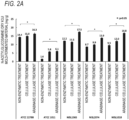
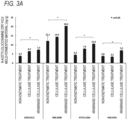
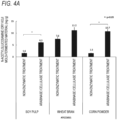
- a medium prepared using soy pulp as the grain-derived raw material was used as the substrate, and Test Examples 11, 12, 14, 15, 17, 18, 20, 21, 23, 24, 26, 27, 29, 30, 32, 33, 35 and 36 were treated with the saccharolytic enzymes shown in Table 4 and Table 5.
- the concentrations of the enzymes are the final concentrations after adding the enzyme solutions to the grain-derived raw material solutions. Then, the koji molds shown in Table 4 and Table 5 were inoculated and cultured.
- the results of assessment of the N-acetylglucosamine amounts and the folate amounts of the koji mold-fermented materials are shown in FIG. 4A and FIG. 4B , respectively.
- the N-acetylglucosamine amounts per dry koji mold-fermented material increased in the koji mold-fermented materials using all the grain-derived raw materials by treating with arabinase and cellulase, compared to those under the conditions without the enzymatic treatment. It was also found that the folate amounts increased in the koji mold-fermented materials using all the grain-derived raw materials by arabinase and cellulase treatment, compared to those under the conditions without the enzymatic treatment.
- the results of assessment of the folate amounts of the koji mold-fermented materials which were fermented with strain ATCC1011 are shown in FIG. 5A
- the results of assessment of the folate amounts of the koji mold-fermented materials which were fermented with strain ATCC22788 are shown in FIG. 5B .
- the values of folate in the koji mold-fermented materials which were treated with arabinase alone were regarded as 1, and the values of the other Test Examples were shown with the relative values.
- the folate amounts increased compared to those of the Test Examples which were treated with arabinase alone or cellulase alone. It was thus found that the folate amount of the koji mold-fermented material is increased by treating with enzymes having a ratio of arabinase and cellulase of 1:3 to 9:1 on unit basis.
- a medium prepared using soy pulp as the grain-derived raw material was used as the substrate, and Test Examples 56 to 60 were treated with the enzymes shown in Table 8.
- the concentrations of the enzymes are the final concentrations after adding the enzyme solutions to the grain-derived raw material solutions.
- the enzymatically treated solutions in a volume of 0.2 ml were taken and centrifuged at 14,000 rpm for 10 minutes, and the supernatants were collected.
- the glucose concentrations of the obtained supernatants were measured using YSI Biochemistry Analyzer (manufactured by YSI Life Science).
- the glucose concentrations of the Test Examples are shown in FIG. 6 . It was found that the glucose concentration increased by enzymatically treating with arabinase and cellulase compared to the case with arabinase treatment alone. It was thus suggested that the glucose concentration of the medium rises with arabinase and cellulase treatment.
- Glucose is a saccharide which a koji mold can assimilate, and it is speculated that the metabolism of vitamin B by the koji mold changes because the balance of saccharides that the koji mold can assimilate changes and that vitamin B in the koji mold-fermented material increases.
- Test Examples 62 to 67 were treated with the enzymes shown in Table 9. The concentrations of the enzymes are the final concentrations after adding the enzyme solutions to the grain-derived raw material solutions. Then, Test Examples 65 to 67 were cultured using strain ATCC22788.
- the arabinan amounts of Test Examples 61 to 67 were measured.
- An arabinan assay kit (manufactured by Megazyme) was used for measuring the arabinan amounts.
- Test Examples 61 to 64 the medium supernatants were collected as unfermented samples, and the arabinan-containing filtrates from which free arabinose was removed by passing through the attached PD-10 column were used as the samples.
- Test Examples 65 to 67 the samples obtained by freeze-drying the fermented materials were suspended in distilled water and used after similarly passing through the PD-10 column.
- the kit contains endoarabinase, ⁇ -L-arabinofuranosidase and galactose mutarotase.
- Arabinan is converted into ⁇ -L-arabinose by the enzymes.
- L-arabinonic acid and NADH are generated from ⁇ -L-arabinose by ⁇ -galactose dehydrogenase.
- the free NADH amounts were measured, and the arabinan concentrations were determined.
- the measured arabinan concentrations are shown in Table 9.
- the arabinan concentrations in Table 9 the arabinan weights per dried raw material weight are shown for Test Examples 61 to 64, and the arabinan weights per dried koji mold-fermented material weight are shown in Test Examples 65 to 67.
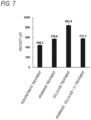
- a medium prepared using soy pulp as the grain-derived raw material was used as the substrate and treated with the enzymes shown in Table 10.
- the concentrations of the enzymes are the final concentrations after adding the enzyme solutions to the grain-derived raw material solutions. Then, culture was conducted using strain ATCC22788.
- the viscosities of the samples after the culture were measured.
- 50 ml of the cultures after culturing in a 100-ml flask were collected, and a viscometer (TVB-10M, manufactured by Toki Sangyo Co., Ltd) was used.
- the rotor used was M3, and the stirring rate used was 60 rpm.
- the results are shown in Fig. 7 .
- the koji mold-fermented material of this embodiment can be used as a meat alternative or another food material.
Landscapes
- Life Sciences & Earth Sciences (AREA)
- Chemical & Material Sciences (AREA)
- Engineering & Computer Science (AREA)
- Organic Chemistry (AREA)
- Health & Medical Sciences (AREA)
- Wood Science & Technology (AREA)
- Zoology (AREA)
- Biochemistry (AREA)
- Bioinformatics & Cheminformatics (AREA)
- Genetics & Genomics (AREA)
- General Engineering & Computer Science (AREA)
- General Health & Medical Sciences (AREA)
- Biotechnology (AREA)
- Food Science & Technology (AREA)
- Microbiology (AREA)
- Polymers & Plastics (AREA)
- Nutrition Science (AREA)
- Mycology (AREA)
- Molecular Biology (AREA)
- Botany (AREA)
- Medicinal Chemistry (AREA)
- Biomedical Technology (AREA)
- Agronomy & Crop Science (AREA)
- Chemical Kinetics & Catalysis (AREA)
- General Chemical & Material Sciences (AREA)
- Micro-Organisms Or Cultivation Processes Thereof (AREA)
Applications Claiming Priority (2)
| Application Number | Priority Date | Filing Date | Title |
|---|---|---|---|
| JP2022085521 | 2022-05-25 | ||
| PCT/JP2023/019411 WO2023228987A1 (ja) | 2022-05-25 | 2023-05-24 | ビタミンbを高含有する麹菌発酵物 |
Publications (2)
| Publication Number | Publication Date |
|---|---|
| EP4516916A1 true EP4516916A1 (de) | 2025-03-05 |
| EP4516916A4 EP4516916A4 (de) | 2026-04-01 |
Family
ID=88919471
Family Applications (1)
| Application Number | Title | Priority Date | Filing Date |
|---|---|---|---|
| EP23811859.0A Pending EP4516916A4 (de) | 2022-05-25 | 2023-05-24 | Koji-formfermentationsprodukt mit hohem vitamin-b-gehalt |
Country Status (3)
| Country | Link |
|---|---|
| EP (1) | EP4516916A4 (de) |
| JP (2) | JPWO2023228987A1 (de) |
| WO (1) | WO2023228987A1 (de) |
Family Cites Families (6)
| Publication number | Priority date | Publication date | Assignee | Title |
|---|---|---|---|---|
| BRPI0910812A2 (pt) * | 2008-03-07 | 2019-02-26 | Dsm Ip Assets Bv | célula de fermentação de açúcar pentose |
| UA108853C2 (uk) * | 2009-07-10 | 2015-06-25 | Спосіб ферментації галактози | |
| JP5589871B2 (ja) * | 2011-01-27 | 2014-09-17 | トヨタ自動車株式会社 | セルロース系バイオマスの処理方法、セルロース系バイオマスからの糖又はアルコール又は有機酸の製造方法 |
| JP5974254B2 (ja) * | 2012-03-05 | 2016-08-23 | 長野県 | 味噌用麹の製造方法及び味噌の製造方法 |
| JP2019129802A (ja) * | 2018-02-02 | 2019-08-08 | キッコーマン株式会社 | 豆ボディ構造体の可溶化物を含有する食品組成物及びその製造方法 |
| CN109370924B (zh) * | 2018-12-19 | 2019-07-26 | 佛山市海天(高明)调味食品有限公司 | 一株米曲霉za112及其应用 |
-
2023
- 2023-05-24 JP JP2024523331A patent/JPWO2023228987A1/ja active Pending
- 2023-05-24 EP EP23811859.0A patent/EP4516916A4/de active Pending
- 2023-05-24 WO PCT/JP2023/019411 patent/WO2023228987A1/ja not_active Ceased
-
2026
- 2026-01-07 JP JP2026001616A patent/JP2026053741A/ja active Pending
Also Published As
| Publication number | Publication date |
|---|---|
| JP2026053741A (ja) | 2026-03-25 |
| JPWO2023228987A1 (de) | 2023-11-30 |
| WO2023228987A1 (ja) | 2023-11-30 |
| EP4516916A4 (de) | 2026-04-01 |
Similar Documents
| Publication | Publication Date | Title |
|---|---|---|
| JP4966346B2 (ja) | 糸状菌培養物の製造方法 | |
| JP2019524142A (ja) | 飲料または飲料成分を製造するプロセス、かかるプロセスによって製造される飲料または飲料成分、ならびにかかる飲料または飲料成分を製造するためのビール粕の使用 | |
| CN111961615B (zh) | 一株降低生物胺的糖多孢菌及其应用 | |
| CN1662655A (zh) | 含有β-葡聚糖的油脂组合物以及生产β-葡聚糖的新型微生物 | |
| EA030063B1 (ru) | Способ производства биопродуктов с измененным углеводным профилем | |
| CN105285700A (zh) | 用于全麦粉生产的麸皮的生物改性方法 | |
| Adeyemo et al. | Reduction of Anti-nutritional factors of sorghum by lactic acid bacteria isolated from Abacha-an African fermented staple | |
| WO2014098277A1 (ko) | 주박으로부터 효소분해와 유산균발효의 연속 공정에 의한 조미 소재의 제조 방법 | |
| EP4516916A1 (de) | Koji-formfermentationsprodukt mit hohem vitamin-b-gehalt | |
| JP4113252B2 (ja) | 植物繊維溶解酵素が増強された液体麹の製造方法、該方法により得られた液体麹およびその用途 | |
| CN101218338B (zh) | 生产液体曲的方法 | |
| Sun et al. | Increasing production of truffle polysaccharides in the solid-state fermentation of Tuber melanosporum by diosgenin based on orthogonal matrix and nonlinear regression analysis | |
| CN112586596A (zh) | 一种提高茶渣营养价值的固态发酵方法 | |
| JP4906648B2 (ja) | 糸状菌培養物の製造方法 | |
| CN102048165A (zh) | 用于生产具有一被降低的嘌呤化合物含量的食品产品的方法及该食品产品 | |
| CN116172163A (zh) | 一种酶解大豆蛋白饮品的制备工艺 | |
| JP4083194B2 (ja) | 液体麹の製造方法 | |
| Romero et al. | Yeast and yeast products, past present and future: from flavors to nutrition and health. | |
| JP5069576B2 (ja) | 高濃度のセロビオースを蓄積できる酵素組成物、及びそれを用いたセロオリゴ糖の製造方法 | |
| CN117770317B (zh) | 基于复合酶解-发酵联用技术富集多酚的燕麦植物基发酵乳的制备方法 | |
| WO2012049737A1 (ja) | デンプン分解酵素活性及び食物繊維分解酵素活性が増強された液体麹の製造方法 | |
| JP2013172711A (ja) | 抗酸化組成物、二糖類水解酵素活性阻害組成物、整腸組成物、ダイエット組成物、飲食品、及びアラビノースの選択的製造方法 | |
| Hasan et al. | Enzyme Technology in the Food Industry: Molecular Mechanisms, Applications, and Sustainable Innovations | |
| Olubiyo et al. | Use of Cereals and Other Starch‑Rich By‑Products in Fungal Protein Production: Opportunities and Challenges | |
| CN121587389A (zh) | 动物双歧杆菌乳亚种ba-c9在制备高发酵特性的面团中的应用 |
Legal Events
| Date | Code | Title | Description |
|---|---|---|---|
| STAA | Information on the status of an ep patent application or granted ep patent |
Free format text: STATUS: THE INTERNATIONAL PUBLICATION HAS BEEN MADE |
|
| PUAI | Public reference made under article 153(3) epc to a published international application that has entered the european phase |
Free format text: ORIGINAL CODE: 0009012 |
|
| STAA | Information on the status of an ep patent application or granted ep patent |
Free format text: STATUS: REQUEST FOR EXAMINATION WAS MADE |
|
| 17P | Request for examination filed |
Effective date: 20241125 |
|
| AK | Designated contracting states |
Kind code of ref document: A1 Designated state(s): AL AT BE BG CH CY CZ DE DK EE ES FI FR GB GR HR HU IE IS IT LI LT LU LV MC ME MK MT NL NO PL PT RO RS SE SI SK SM TR |
|
| DAV | Request for validation of the european patent (deleted) | ||
| DAX | Request for extension of the european patent (deleted) | ||
| REG | Reference to a national code |
Ref country code: DE Ref legal event code: R079 Free format text: PREVIOUS MAIN CLASS: C12P0001020000 Ipc: A23L0033135000 |
|
| A4 | Supplementary search report drawn up and despatched |
Effective date: 20260302 |
|
| RIC1 | Information provided on ipc code assigned before grant |
Ipc: A23L 33/135 20160101AFI20260224BHEP Ipc: A23L 33/15 20160101ALI20260224BHEP Ipc: A23L 11/50 20210101ALI20260224BHEP Ipc: A23L 7/104 20160101ALI20260224BHEP Ipc: A23J 3/22 20060101ALI20260224BHEP Ipc: C12P 1/02 20060101ALI20260224BHEP Ipc: C12N 1/14 20060101ALI20260224BHEP Ipc: C12N 9/42 20060101ALI20260224BHEP |