EP4518538A1 - Verfahren und vorrichtung zur durchführung von sidelink-kommunikation in einem drahtloskommunikationssystem - Google Patents
Verfahren und vorrichtung zur durchführung von sidelink-kommunikation in einem drahtloskommunikationssystem Download PDFInfo
- Publication number
- EP4518538A1 EP4518538A1 EP23796860.7A EP23796860A EP4518538A1 EP 4518538 A1 EP4518538 A1 EP 4518538A1 EP 23796860 A EP23796860 A EP 23796860A EP 4518538 A1 EP4518538 A1 EP 4518538A1
- Authority
- EP
- European Patent Office
- Prior art keywords
- transmission
- resource
- cot
- base station
- dci
- Prior art date
- Legal status (The legal status is an assumption and is not a legal conclusion. Google has not performed a legal analysis and makes no representation as to the accuracy of the status listed.)
- Pending
Links
Images






Classifications
-
- H—ELECTRICITY
- H04—ELECTRIC COMMUNICATION TECHNIQUE
- H04W—WIRELESS COMMUNICATION NETWORKS
- H04W72/00—Local resource management
- H04W72/40—Resource management for direct mode communication, e.g. D2D or sidelink
-
- H—ELECTRICITY
- H04—ELECTRIC COMMUNICATION TECHNIQUE
- H04L—TRANSMISSION OF DIGITAL INFORMATION, e.g. TELEGRAPHIC COMMUNICATION
- H04L1/00—Arrangements for detecting or preventing errors in the information received
- H04L1/12—Arrangements for detecting or preventing errors in the information received by using return channel
- H04L1/16—Arrangements for detecting or preventing errors in the information received by using return channel in which the return channel carries supervisory signals, e.g. repetition request signals
- H04L1/18—Automatic repetition systems, e.g. Van Duuren systems
- H04L1/1822—Automatic repetition systems, e.g. Van Duuren systems involving configuration of automatic repeat request [ARQ] with parallel processes
-
- H—ELECTRICITY
- H04—ELECTRIC COMMUNICATION TECHNIQUE
- H04L—TRANSMISSION OF DIGITAL INFORMATION, e.g. TELEGRAPHIC COMMUNICATION
- H04L1/00—Arrangements for detecting or preventing errors in the information received
- H04L1/12—Arrangements for detecting or preventing errors in the information received by using return channel
- H04L1/16—Arrangements for detecting or preventing errors in the information received by using return channel in which the return channel carries supervisory signals, e.g. repetition request signals
- H04L1/18—Automatic repetition systems, e.g. Van Duuren systems
- H04L1/1829—Arrangements specially adapted for the receiver end
- H04L1/1854—Scheduling and prioritising arrangements
-
- H—ELECTRICITY
- H04—ELECTRIC COMMUNICATION TECHNIQUE
- H04L—TRANSMISSION OF DIGITAL INFORMATION, e.g. TELEGRAPHIC COMMUNICATION
- H04L1/00—Arrangements for detecting or preventing errors in the information received
- H04L1/12—Arrangements for detecting or preventing errors in the information received by using return channel
- H04L1/16—Arrangements for detecting or preventing errors in the information received by using return channel in which the return channel carries supervisory signals, e.g. repetition request signals
- H04L1/18—Automatic repetition systems, e.g. Van Duuren systems
- H04L1/1867—Arrangements specially adapted for the transmitter end
- H04L1/1887—Scheduling and prioritising arrangements
-
- H—ELECTRICITY
- H04—ELECTRIC COMMUNICATION TECHNIQUE
- H04W—WIRELESS COMMUNICATION NETWORKS
- H04W72/00—Local resource management
- H04W72/02—Selection of wireless resources by user or terminal
-
- H—ELECTRICITY
- H04—ELECTRIC COMMUNICATION TECHNIQUE
- H04W—WIRELESS COMMUNICATION NETWORKS
- H04W72/00—Local resource management
- H04W72/20—Control channels or signalling for resource management
- H04W72/23—Control channels or signalling for resource management in the downlink direction of a wireless link, i.e. towards a terminal
- H04W72/232—Control channels or signalling for resource management in the downlink direction of a wireless link, i.e. towards a terminal the control data signalling from the physical layer, e.g. DCI signalling
-
- H—ELECTRICITY
- H04—ELECTRIC COMMUNICATION TECHNIQUE
- H04L—TRANSMISSION OF DIGITAL INFORMATION, e.g. TELEGRAPHIC COMMUNICATION
- H04L1/00—Arrangements for detecting or preventing errors in the information received
- H04L2001/0092—Error control systems characterised by the topology of the transmission link
- H04L2001/0093—Point-to-multipoint
-
- H—ELECTRICITY
- H04—ELECTRIC COMMUNICATION TECHNIQUE
- H04L—TRANSMISSION OF DIGITAL INFORMATION, e.g. TELEGRAPHIC COMMUNICATION
- H04L1/00—Arrangements for detecting or preventing errors in the information received
- H04L2001/0092—Error control systems characterised by the topology of the transmission link
- H04L2001/0095—Ring
-
- H—ELECTRICITY
- H04—ELECTRIC COMMUNICATION TECHNIQUE
- H04W—WIRELESS COMMUNICATION NETWORKS
- H04W92/00—Interfaces specially adapted for wireless communication networks
- H04W92/16—Interfaces between hierarchically similar devices
- H04W92/18—Interfaces between hierarchically similar devices between terminal devices
Definitions
- a technical object of the present disclosure is to provide a method and device for performing sidelink (SL) communication in a wireless communication system.
- a technical object of the present disclosure is to provide a method and device for switching SL modes within a channel occupancy time (COT) period.
- COT channel occupancy time
- a method performed by a user equipment (UE) in a wireless communication system may comprise: receiving, from a base station, downlink control information (DCI) related to resource allocation for a sidelink (SL); identifying a first transmission resource within a channel occupancy time (COT) interval based on the DCI; performing a first SL-based transmission on the first transmission resource; selecting and reserving a second transmission resource within the COT interval based on that the COT interval is valid after the first transmission resource; and performing a second SL-based transmission before an end of the COT interval after the first SL-based transmission.
- the second SL-based transmission may be performed on a second transmission resource reserved by the UE.
- a method performed by a base station in a wireless communication system may comprise: transmitting, to a UE, downlink control information (DCI) related to resource allocation for a sidelink (SL); and receiving, from the UE, feedback information for at least one of a first SL-based transmission in a first transmission resource based on the DCI or a second SL-based transmission in a second transmission resource reserved by the UE.
- DCI downlink control information
- the second SL-based transmission may exist after the first SL-based transmission within a channel occupancy time (COT) interval of the UE and before the end of the COT interval.
- COT channel occupancy time
- a method and device for performing sidelink (SL) communication in a wireless communication system may be provided.
- a method and device for switching an SL mode within a channel occupancy time (COT) period may be provided.
- a technical effect may be provided that can efficiently utilize a COT section remaining after performing an operation based on a specific SL mode.
- known structures and devices may be omitted or may be shown in a form of a block diagram based on a core function of each structure and device in order to prevent a concept of the present disclosure from being ambiguous.
- an element when referred to as being “connected”, “combined” or “linked” to another element, it may include an indirect connection relation that yet another element presents therebetween as well as a direct connection relation.
- a term, “include” or “have”, specifies the presence of a mentioned feature, step, operation, component and/or element, but it does not exclude the presence or addition of one or more other features, stages, operations, components, elements and/or their groups.
- a term such as “first”, “second”, etc. is used only to distinguish one element from other element and is not used to limit elements, and unless otherwise specified, it does not limit an order or importance, etc. between elements. Accordingly, within a scope of the present disclosure, a first element in an embodiment may be referred to as a second element in another embodiment and likewise, a second element in an embodiment may be referred to as a first element in another embodiment.
- a term used in the present disclosure is to describe a specific embodiment, and is not to limit a claim. As used in a described and attached claim of an embodiment, a singular form is intended to include a plural form, unless the context clearly indicates otherwise.
- a term used in the present disclosure, "and/or”, may refer to one of related enumerated items or it means that it refers to and includes any and all possible combinations of two or more of them.
- "/" between words in the present disclosure has the same meaning as “and/or”, unless otherwise described.
- transmitting or receiving a channel includes a meaning of transmitting or receiving information or a signal through a corresponding channel.
- transmitting a control channel means that control information or a control signal is transmitted through a control channel.
- transmitting a data channel means that data information or a data signal is transmitted through a data channel.
- a downlink means a communication from a base station to a terminal
- an uplink means a communication from a terminal to a base station.
- a transmitter may be part of a base station and a receiver may be part of a terminal.
- a transmitter may be part of a terminal and a receiver may be part of a base station.
- a base station may be expressed as a first communication device and a terminal may be expressed as a second communication device.
- LTE/NR may be commonly referred to as a 3GPP system.
- a term, an abbreviation, etc. used to describe the present disclosure matters described in a standard document disclosed before the present disclosure may be referred to.
- the following document may be referred to.
- a numerology corresponds to one subcarrier spacing in a frequency domain.
- a reference subcarrier spacing is scaled by an integer N, a different numerology may be defined.
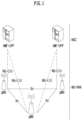
- FIG. 1 illustrates a structure of a wireless communication system to which the present disclosure may be applied.
- NG-RAN is configured with gNBs which provide a control plane (RRC) protocol end for a NG-RA(NG-Radio Access) user plane (i.e., a new AS(access stratum) sublayer/PDCP(Packet Data Convergence Protocol)/RLC(Radio Link Control)/MAC/PHY) and UE.
- RRC control plane
- the gNBs are interconnected through a Xn interface.
- the gNB in addition, is connected to an NGC(New Generation Core) through an NG interface.
- the gNB is connected to an AMF(Access and Mobility Management Function) through an N2 interface, and is connected to a UPF(User Plane Function) through an N3 interface.
- a NR system may support a plurality of numerologies.
- a numerology may be defined by a subcarrier spacing and a cyclic prefix (CP) overhead.
- CP cyclic prefix
- a plurality of subcarrier spacings may be derived by scaling a basic (reference) subcarrier spacing by an integer N (or, ⁇ ).
- N or, ⁇
- a used numerology may be selected independently from a frequency band.
- a variety of frame structures according to a plurality of numerologies may be supported in a NR system.
- a plurality of OFDM numerologies supported in a NR system may be defined as in the following Table 1.
- CP 0 15 Normal 1 30 Normal 2 60 Normal, Extended 3 120 Normal 4 240 Normal
- One slot is configured with N symb slot consecutive OFDM symbols and N symb slot is determined according to CP.
- a start of a slot n s ⁇ in a subframe is temporally arranged with a start of an OFDM symbol n s ⁇ N symb slot in the same subframe. All terminals may not perform transmission and reception at the same time, which means that all OFDM symbols of a downlink slot or an uplink slot may not be used.
- Table 3 represents the number of OFDM symbols per slot (N symb slot ), the number of slots per radio frame (N slot frame, ⁇ ) and the number of slots per subframe (N slot subframe, ⁇ ) in a normal CP and Table 4 represents the number of OFDM symbols per slot, the number of slots per radio frame and the number of slots per subframe in an extended CP.
- Table 3 ⁇ N symb slot N slot frame, ⁇ N slot subframe, ⁇ 0 14 10 1 1 14 20 2 2 14 40 4 3 14 80 8 4 14 160 16
- Table 4 ⁇ N symb slot N slot frame, ⁇ N slot subframe, ⁇ 2 12 40 4
- an antenna port in relation to an antenna port, is defined so that a channel where a symbol in an antenna port is carried can be inferred from a channel where other symbol in the same antenna port is carried.
- a large-scale property of a channel where a symbol in one antenna port is carried may be inferred from a channel where a symbol in other antenna port is carried, it may be said that 2 antenna ports are in a QC/QCL(quasi co-located or quasi co-location) relationship.
- the large-scale property includes at least one of delay spread, doppler spread, frequency shift, average received power, received timing.
- Each element of a resource grid for ⁇ and an antenna port p is referred to as a resource element and is uniquely identified by an index pair (k,l').
- an index pair (k,l) is used.
- l 0,...,N symb ⁇ -1.
- a resource element (k,l') for ⁇ and an antenna port p corresponds to a complex value, a k,l' (p, ⁇ ) .
- indexes p and ⁇ may be dropped, whereupon a complex value may be a k,l' (p) or a k,l' .
- Point A plays a role as a common reference point of a resource block grid and is obtained as follows.
- Common resource blocks are numbered from 0 to the top in a frequency domain for a subcarrier spacing configuration ⁇ .
- the center of subcarrier 0 of common resource block 0 for a subcarrier spacing configuration ⁇ is identical to 'point A'.
- a relationship between a common resource block number n CRB ⁇ and a resource element (k,l) for a subcarrier spacing configuration ⁇ in a frequency domain is given as in the following Equation 1.
- n CRB ⁇ k N sc RB
- Physical resource blocks are numbered from 0 to N BWP,i size, ⁇ -1 in a bandwidth part (BWP) and i is a number of a BWP.
- a relationship between a physical resource block n PRB and a common resource block n CRB in BWP i is given by the following Equation 2.
- n CRB ⁇ n PRB ⁇ + N BWP , i start , ⁇ N BWP,i start, ⁇ is a common resource block that a BWP starts relatively to common resource block 0.
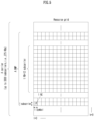
- FIG. 4 illustrates a physical resource block in a wireless communication system to which the present disclosure may be applied.
- FIG. 5 illustrates a slot structure in a wireless communication system to which the present disclosure may be applied.
- a slot includes a plurality of symbols in a time domain. For example, for a normal CP, one slot includes 7 symbols, but for an extended CP, one slot includes 6 symbols.
- a carrier includes a plurality of subcarriers in a frequency domain.
- An RB Resource Block
- a BWP(Bandwidth Part) is defined as a plurality of consecutive (physical) resource blocks in a frequency domain and may correspond to one numerology (e.g., an SCS, a CP length, etc.).
- a carrier may include a maximum N (e.g., 5) BWPs.
- a data communication may be performed through an activated BWP and only one BWP may be activated for one terminal.
- each element is referred to as a resource element (RE) and one complex symbol may be mapped.
- RE resource element
- a terminal operating in such a wideband CC may always operate turning on a radio frequency (FR) chip for the whole CC, terminal battery consumption may increase.
- FR radio frequency
- a different numerology e.g., a subcarrier spacing, etc.
- each terminal may have a different capability for the maximum bandwidth.
- a base station may indicate a terminal to operate only in a partial bandwidth, not in a full bandwidth of a wideband CC, and a corresponding partial bandwidth is defined as a bandwidth part (BWP) for convenience.
- a BWP may be configured with consecutive RBs on a frequency axis and may correspond to one numerology (e.g., a subcarrier spacing, a CP length, a slot/a mini-slot duration).
- FIG. 6 illustrates physical channels used in a wireless communication system to which the present disclosure may be applied and a general signal transmission and reception method using them.
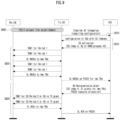
- the first UE may transmit/report HARQ feedback information to the base station via PUCCH or PUSCH (S8040).
- the HARQ feedback information reported to the base station may be information generated by the first UE based on HARQ feedback information received from the second UE.
- the HARQ feedback information reported to the base station may be information generated by the first UE based on a rule set in advance.
- the DCI may be DCI for scheduling of SL.
- the format of the DCI may be DCI format 3_0 or DCI format 3_1.
- a first UE may transmit an SCI to a second UE on a PSCCH.
- the first UE may transmit two consecutive SCIs (e.g., 2-stage SCIs) to the second UE on the PSCCH and/or the PSSCH.
- the second UE may decode the two consecutive SCIs (e.g., 2-stage SCIs) to receive the PSSCH from the first UE.
- the first UE may receive the PSFCH based on the description to be described below.
- the first UE and the second UE may determine the PSFCH resource based on the description to be described below, and the second UE may transmit the HARQ feedback to the first UE using the PSFCH resource.
- the UE may be indicated to transmit a PSFCH including HARQ-ACK information in response to the PSSCH reception by the SCI format scheduling the PSSCH reception.
- the UE provides HARQ-ACK information including ACK or NACK or only NACK.
- the UE may be provided with a number of slots within the resource pool during a period of PSFCH transmission occasion resources by sl-PSFCH-Period. If the number of slots is 0, the PSFCH transmission of the UE within the resource pool is disabled.
- the UE may be indicated by higher layers not to transmit a PSFCH containing HARQ-ACK information in response to receiving a PSSCH.
- the UE When a UE receives a PSSCH from a resource pool and the HARQ feedback enabled/disabled indicator field of the associated SCI format 2-A/2-B/2-C has value 1, the UE provides HARQ-ACK information in a PSFCH transmission from the resource pool.
- the UE transmits the PSFCH in the first slot that includes PSFCH resources and that corresponds to at least a number of slots provided by sl-MinTimeGapPSFCH of the resource pool after the last slot of the PSSCH reception.
- the UE may be provided with a set of M PRB,set PSFCH PRBs in the resource pool for PSFCH transmission including HARQ-ACK information in the physical resource block (PRB) of the resource pool by sl-PSFCH-RB-Set.
- the UE may be provided with a set of M PRB,set PSFCH PRBs in the resource pool by sl-RB-SetPSFCH for PSFCH transmission including conflict information in the PRB of the resource pool.
- the UE expects that different PRBs are (pre-)set for conflict information and HARQ-ACK information.
- the UE determines the index of the PSFCH resource for transmitting the PSFCH including HARQ-ACK information or conflict information in response to the PSSCH reception, which corresponds to the reserved resource, as (P ID +M ID ) mod RPRB,CS PSFCH .
- P ID is a physical layer source identifier provided by SCI format 2-A/2-B/2-C that schedules PSSCH reception or SCI format 2-A/2-B/2-C that reserves resources for conflict information to be provided from other UEs.
- M ID is an identifier of the UE that receives the PSSCH indicated by the upper layer, otherwise M ID is 0.
- M ID is 0.
- the UE determines the value m 0 from the cyclic shift pair index corresponding to the PSFCH resource index and from N CS PSFCH using Table 6 below to calculate the value ⁇ of the cyclic shift.
- Table 6 illustrates a set of cyclic shift pairs.
- N CS PSFCH m 0 Cyclic shift pair index 0 Cyclic shift pair index 1 Cyclic shift pair index 2 Cyclic shift pair index 3 Cyclic shift pair index 4 Cyclic shift pair index 5 1 0 - - - - - 2 0 3 - - - - 3 0 2 4 - - 6 0 1 2 3 4 5
- the UE determines a m cs value as shown in Table 7 below if the UE detects an SCI format 2-A or SCI format 2-C having a cast type indicator field value of "01" or "10" to calculate the value ⁇ of the cyclic shift, and determines an m cs value as shown in Table 8 below if the UE detects an SCI format 2-B or 2-A having a cast type indicator field value of "11".
- the UE determines an m cs value as shown in Table 9 below to calculate the value ⁇ of the cyclic shift.
- the UE applies one cyclic shift from a cyclic shift pair to a sequence used for PSFCH transmission.
- Table 7 illustrates the mapping of cyclic shifts of a sequence for PSFCH transmission from a cyclic shift pair and HARQ-ACK information bit values when the HARQ-ACK information includes ACK or NACK.
- Table 8 illustrates the mapping of cyclic shifts of a sequence for PSFCH transmission from a cyclic shift pair and HARQ-ACK information bit values when HARQ-ACK information contains only NACK.
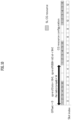
- Table 9 illustrates the mapping of the cyclic shift of a sequence for PSFCH transmission and the value of the conflict information bit from a cyclic shift pair. [Table 9] Conflict information Conflict information for the next time-reserved resource within SCI Sequence cyclic shift 0
- FIG. 8 illustrates a cast type for V2X or SL communication in a wireless communication system to which the present disclosure may be applied.
- FIG. 8 may be combined with various embodiments of the present disclosure.
- FIG. 8(a) represents a broadcast type SL communication
- FIG. 8(b) represents a unicast type SL communication
- FIG. 8(c) represents a group-cast type SL communication.
- a UE can perform one-to-one communication with another UE.
- a UE may perform SL communication with one or more UEs within the group to which it belongs.
- SL group-cast communication may be referred to as SL multicast communication, SL one-to-many communication, etc.
- SL HARQ feedback may be enabled for unicast.
- CBG non-Code Block Group
- the receiving UE may generate an ACK. Then, the receiving UE may transmit the HARQ-ACK to the transmitting UE.
- the receiving UE may generate a NACK. Then, the receiving UE may transmit the NACK to the transmitting UE.
- SL HARQ feedback may be enabled for group-cast.
- two HARQ feedback options may be supported for group-cast.
- all UEs performing group-cast communication may share PSFCH resources.
- UEs belonging to the same group may transmit HARQ feedback using the same PSFCH resources.
- each UE performing group-cast communication may use different PSFCH resources for HARQ feedback transmission.
- UEs belonging to the same group may transmit HARQ feedback using different PSFCH resources.
- ACK may be referred to as HARQ-ACK, ACK information, or positive-ACK information
- NACK may be referred to as HARQ-NACK, NACK information, or negative-ACK information.
- Sidelink grants may be semi-persistently configured by RRC or received dynamically on the PDCCH, which is autonomously selected by the MAC entity.
- the MAC entity may have a sidelink grant on the active SL BWP to determine the set of PSCCH periods in which SCI transmissions occur and the set of PSSCH periods in which SL-SCH transmissions associated with SCI occur.
- the MAC entity may perform actions based on each PDCCH occasion and each grant received for that PDCCH occasion.
- NR Unlicensed Spectrum refers to a mode that provides the technology necessary for cellular operators to integrate unlicensed spectrum into their wireless communication systems.
- NR-U may enable both uplink and downlink operations in unlicensed spectrum.
- channel access for uplink and downlink relies on LBT functionality.
- the UE and/or base station may first sense the communication channel to determine if there is no communication before transmission. If the communication channel is a wideband unlicensed carrier, the channel sensing procedure of NR-U may rely on sensing energy levels in multiple subbands of the communication channel.
- the base station may configure/provide LBT parameters (e.g., type/period, clear channel evaluation parameters, etc.) to the UE.
- a UE may determine when and where to transmit and receive based on an indication of a channel occupancy time (COT) structure.
- the COT may comprise multiple slots and each slot may comprise downlink resources, uplink resources, or flexible resources.
- the NR-U system supports both contiguous and interlaced uplink resource allocations while complying with regulations.
- the basic unit of resource allocation for the NR unlicensed channels is an interlace.
- a single interlace may be composed of ten equally spaced resource blocks within a 20MHz frequency bandwidth for 15KHz sub-carrier spacing.
- the physical layer may perform an LBT procedure.
- the LBT procedure is a procedure in which transmission is not performed when the channel is determined to be occupied. If the channel is identified as occupied according to the LBT procedure, transmission may not be performed by the physical layer. If the physical layer performs the LBT procedure before transmission and the transmission is not performed, an LBT failure indication may be transmitted from the physical layer to the MAC entity.
- LBT procedure when LBT procedure is performed for a transmission, action(s) as specified in the present disclosure may be performed regardless of if an LBT failure indication is received from the physical layer.
- LBT failure indication When LBT is not performed by the physical layer, LBT failure indication may not be received from the physical layer.
- the UE may allocate a plurality of CG resources in a CG period for the SL.
- the method may be for the PUCCH method in SL-U.
- FIG. 12 is a diagram illustrating the operation of a terminal for a method of switching SL modes within a COT section according to one embodiment of the present disclosure.
- FIG. 12 illustrates an operation of a UE based on a previously proposed method (e.g., one or a combination of the procedure in FIG. 9 , methods and detailed embodiments thereof).
- the example in FIG. 12 is for convenience of explanation and does not limit the scope of the present disclosure. Some of the step(s) illustrated in FIG. 12 may be omitted depending on the situation and/or setting.
- the UE in FIG. 12 is only an example and may be implemented as a device illustrated in FIG. 14 below.
- the processor (102/202) of FIG. 14 may control the transceiver (106/206) to transmit and receive channels/signals/data/information, etc.
- RRC signaling e.g., RRC signaling, MAC CE, DCI for UL/DL scheduling, SRS, PDCCH, PDSCH, PUSCH, PUCCH, etc.
- processor may also control the processor to store transmitted or received channels/signals/data/information, etc. in the memory (104/204).
- the COT interval may correspond to a COT interval initiated by the UE and shared with the base station.
- the COT interval may correspond to a COT interval initiated by the base station and shared with the UE.
- the UE may perform a first SL-based transmission (with another UE) on the first transmission resource.
- the first SL-based transmission may be based on the first SL mode by resource allocation according to the indication of the base station.
- the resources reserved by the UE may be selected from a pre-configured resource pool.
- FIG. 13 illustrates an operation of a UE based on a previously proposed method (e.g., one or a combination of the procedure in FIG. 9 , methods and detailed embodiments thereof).
- the example in FIG. 13 is for convenience of explanation and does not limit the scope of the present disclosure. Some of the step(s) illustrated in FIG. 13 may be omitted depending on the situation and/or setting.
- the base station in FIG. 13 is only an example and may be implemented as a device illustrated in FIG. 14 below.
- the processor (102/202) of FIG. 14 may control the transceiver (106/206) to transmit and receive channels/signals/data/information, etc.
- RRC signaling e.g., RRC signaling, MAC CE, DCI for UL/DL scheduling, SRS, PDCCH, PDSCH, PUSCH, PUCCH, etc.
- processor may also control the processor to store transmitted or received channels/signals/data/information, etc. in the memory (104/204).
- the base station may transmit downlink control information (DCI) related to resource allocation for sidelink (SL) to the UE.
- DCI downlink control information
- the base station may receive feedback information (e.g., HARQ-ACK information) from the UE for at least one of a first SL-based transmission in a first transmission resource based on the DCI or a second SL-based transmission in a second transmission resource reserved by the UE.
- feedback information e.g., HARQ-ACK information
- the second SL-based transmission may exist after the first SL-based transmission within the channel occupancy time (COT) interval of the UE and before the end of the COT interval.
- COT channel occupancy time
- a method and device for performing sidelink (SL) communication in a wireless communication system may be provided.
- a method and device for switching SL modes within a channel occupancy time (COT) period may be provided.
- a technical effect may be provided that may efficiently utilize a COT section remaining after performing an operation based on a specific SL mode (e.g., SL mode 1).
- a specific SL mode e.g., SL mode 1).
- FIG. 14 illustrates a block diagram of a wireless communication device according to an embodiment of the present disclosure.
- a first wireless device 100 and a second wireless device 200 may transmit and receive a wireless signal through a variety of radio access technologies (e.g., LTE, NR).
- radio access technologies e.g., LTE, NR.
- a first wireless device 100 may include one or more processors 102 and one or more memories 104 and may additionally include one or more transceivers 106 and/or one or more antennas 108.
- a processor 102 may control a memory 104 and/or a transceiver 106 and may be configured to implement description, functions, procedures, proposals, methods and/or operation flow charts disclosed in the present disclosure. For example, the processor 102 may process the information in the memory 104 to generate first information/signal and then transmit a wireless signal including the first information/signal through the transceiver 106. Additionally, the processor 102 may receive a wireless signal including the second information/signal through the transceiver 106 and then store information obtained from signal processing of the second information/signal in the memory 104.
- a memory 104 may be connected to a processor 102 and may store a variety of information related to an operation of a processor 102.
- a memory 104 may store a software code including commands for performing all or part of processes controlled by a processor 102 or for performing description, functions, procedures, proposals, methods and/or operation flow charts disclosed in the present disclosure.
- a processor 102 and a memory 104 may be part of a communication modem/circuit/chip designed to implement a wireless communication technology (e.g., LTE, NR).
- a transceiver 106 may be connected to a processor 102 and may transmit and/or receive a wireless signal through one or more antennas 108.
- a transceiver 106 may include a transmitter and/or a receiver.
- a transceiver 106 may be used together with a RF (Radio Frequency) unit.
- a wireless device may mean a communication modem/circuit/chip.
- a second wireless device 200 may include one or more processors 202 and one or more memories 204 and may additionally include one or more transceivers 206 and/or one or more antennas 208.
- a processor 202 may control a memory 204 and/or a transceiver 206 and may be configured to implement description, functions, procedures, proposals, methods and/or operation flows charts disclosed in the present disclosure.
- a processor 202 may generate third information/signal by processing information in a memory 204, and then transmit a wireless signal including third information/signal through a transceiver 206.
- a processor 202 may receive a wireless signal including fourth information/signal through a transceiver 206, and then store information obtained by signal processing of fourth information/signal in a memory 204.
- a memory 204 may be connected to a processor 202 and may store a variety of information related to an operation of a processor 202.
- a memory 204 may store a software code including commands for performing all or part of processes controlled by a processor 202 or for performing description, functions, procedures, proposals, methods and/or operation flow charts disclosed in the present disclosure.
- a processor 202 and a memory 204 may be part of a communication modem/circuit/chip designed to implement a wireless communication technology (e.g., LTE, NR).
- a transceiver 206 may be connected to a processor 202 and may transmit and/or receive a wireless signal through one or more antennas 208.
- a transceiver 206 may include a transmitter and/or a receiver.
- a transceiver 206 may be used together with a RF unit.
- a wireless device may mean a communication modem/circuit/chip.
- one or more protocol layers may be implemented by one or more processors 102, 202.
- one or more processors 102, 202 may implement one or more layers (e.g., a functional layer such as PHY, MAC, RLC, PDCP, RRC, SDAP).
- One or more processors 102, 202 may generate one or more PDUs (Protocol Data Unit) and/or one or more SDUs (Service Data Unit) according to description, functions, procedures, proposals, methods and/or operation flow charts included in the present disclosure.
- PDUs Protocol Data Unit
- SDUs Service Data Unit
- One or more processors 102, 202 may generate a message, control information, data or information according to description, functions, procedures, proposals, methods and/or operation flow charts disclosed in the present disclosure.
- One or more processors 102, 202 may generate a signal (e.g., a baseband signal) including a PDU, a SDU, a message, control information, data or information according to functions, procedures, proposals and/or methods disclosed in the present disclosure to provide it to one or more transceivers 106, 206.
- a signal e.g., a baseband signal
- One or more processors 102, 202 may receive a signal (e.g., a baseband signal) from one or more transceivers 106, 206 and obtain a PDU, a SDU, a message, control information, data or information according to description, functions, procedures, proposals, methods and/or operation flow charts disclosed in the present disclosure.
- a signal e.g., a baseband signal
- One or more processors 102, 202 may be referred to as a controller, a micro controller, a micro processor or a micro computer.
- One or more processors 102, 202 may be implemented by a hardware, a firmware, a software, or their combination.
- one or more ASICs Application Specific Integrated Circuit
- one or more DSPs Digital Signal Processor
- one or more DSPDs Digital Signal Processing Device
- one or more PLDs PROgrammable Logic Device
- FPGAs Field Programmable Gate Arrays
- Description, functions, procedures, proposals, methods and/or operation flow charts disclosed in the present disclosure may be implemented by using a firmware or a software and a firmware or a software may be implemented to include a module, a procedure, a function, etc.
- a firmware or a software configured to perform description, functions, procedures, proposals, methods and/or operation flow charts disclosed in the present disclosure may be included in one or more processors 102, 202 or may be stored in one or more memories 104, 204 and driven by one or more processors 102, 202.
- Description, functions, procedures, proposals, methods and/or operation flow charts disclosed in the present disclosure may be implemented by using a firmware or a software in a form of a code, a command and/or a set of commands.
- One or more memories 104, 204 may be connected to one or more processors 102, 202 and may store data, a signal, a message, information, a program, a code, an instruction and/or a command in various forms.
- One or more memories 104, 204 may be configured with ROM, RAM, EPROM, a flash memory, a hard drive, a register, a cash memory, a computer readable storage medium and/or their combination.
- One or more memories 104, 204 may be positioned inside and/or outside one or more processors 102, 202.
- one or more memories 104, 204 may be connected to one or more processors 102, 202 through a variety of technologies such as a wire or wireless connection.
- One or more transceivers 106, 206 may transmit user data, control information, a wireless signal/channel, etc. mentioned in methods and/or operation flow charts, etc. of the present disclosure to one or more other devices.
- One or more transceivers 106, 206 may receiver user data, control information, a wireless signal/channel, etc. mentioned in description, functions, procedures, proposals, methods and/or operation flow charts, etc. disclosed in the present disclosure from one or more other devices.
- one or more transceivers 106, 206 may be connected to one or more processors 102, 202 and may transmit and receive a wireless signal.
- one or more processors 102, 202 may control one or more transceivers 106, 206 to transmit user data, control information or a wireless signal to one or more other devices.
- one or more processors 102, 202 may control one or more transceivers 106, 206 to receive user data, control information or a wireless signal from one or more other devices.
- one or more transceivers 106, 206 may be connected to one or more antennas 108, 208 and one or more transceivers 106, 206 may be configured to transmit and receive user data, control information, a wireless signal/channel, etc. mentioned in description, functions, procedures, proposals, methods and/or operation flow charts, etc.
- one or more antennas may be a plurality of physical antennas or a plurality of logical antennas (e.g., an antenna port).
- One or more transceivers 106, 206 may convert a received wireless signal/channel, etc. into a baseband signal from a RF band signal to process received user data, control information, wireless signal/channel, etc. by using one or more processors 102, 202.
- One or more transceivers 106, 206 may convert user data, control information, a wireless signal/channel, etc. which are processed by using one or more processors 102, 202 from a baseband signal to a RF band signal. Therefore, one or more transceivers 106, 206 may include an (analogue) oscillator and/or a filter.
- Embodiments described above are that elements and features of the present disclosure are combined in a predetermined form. Each element or feature should be considered to be optional unless otherwise explicitly mentioned. Each element or feature may be implemented in a form that it is not combined with other element or feature.
- an embodiment of the present disclosure may include combining a part of elements and/or features. An order of operations described in embodiments of the present disclosure may be changed. Some elements or features of one embodiment may be included in other embodiment or may be substituted with a corresponding element or a feature of other embodiment. It is clear that an embodiment may include combining claims without an explicit dependency relationship in claims or may be included as a new claim by amendment after application.
- a scope of the present disclosure includes software or machine-executable commands (e.g., an operating system, an application, a firmware, a program, etc.) which execute an operation according to a method of various embodiments in a device or a computer and a non-transitory computer-readable medium that such a software or a command, etc. are stored and are executable in a device or a computer.
- a command which may be used to program a processing system performing a feature described in the present disclosure may be stored in a storage medium or a computer-readable storage medium and a feature described in the present disclosure may be implemented by using a computer program product including such a storage medium.
- a storage medium may include a high-speed random-access memory such as DRAM, SRAM, DDR RAM or other random-access solid state memory device, but it is not limited thereto, and it may include a nonvolatile memory such as one or more magnetic disk storage devices, optical disk storage devices, flash memory devices or other nonvolatile solid state storage devices.
- a memory optionally includes one or more storage devices positioned remotely from processor(s).
- a memory or alternatively, nonvolatile memory device(s) in a memory include a non-transitory computer-readable storage medium.
- a feature described in the present disclosure may be stored in any one of machine-readable mediums to control a hardware of a processing system and may be integrated into a software and/or a firmware which allows a processing system to interact with other mechanism utilizing a result from an embodiment of the present disclosure.
- a software or a firmware may include an application code, a device driver, an operating system and an execution environment/container, but it is not limited thereto.
- a wireless communication technology implemented in a wireless device 100, 200 of the present disclosure may include Narrowband Internet of Things for a low-power communication as well as LTE, NR and 6G.
- an NB-IoT technology may be an example of a LPWAN(Low Power Wide Area Network) technology, may be implemented in a standard of LTE Cat NB1 and/or LTE Cat NB2, etc. and is not limited to the above-described name.
- a wireless communication technology implemented in a wireless device 100, 200 of the present disclosure may perform a communication based on a LTE-M technology.
Landscapes
- Engineering & Computer Science (AREA)
- Computer Networks & Wireless Communication (AREA)
- Signal Processing (AREA)
- Mobile Radio Communication Systems (AREA)
Applications Claiming Priority (2)
| Application Number | Priority Date | Filing Date | Title |
|---|---|---|---|
| US202263335674P | 2022-04-27 | 2022-04-27 | |
| PCT/KR2023/005803 WO2023211218A1 (ko) | 2022-04-27 | 2023-04-27 | 무선 통신 시스템에서 사이드링크 통신을 수행하는 방법 및 장치 |
Publications (2)
| Publication Number | Publication Date |
|---|---|
| EP4518538A1 true EP4518538A1 (de) | 2025-03-05 |
| EP4518538A4 EP4518538A4 (de) | 2026-04-29 |
Family
ID=88519243
Family Applications (1)
| Application Number | Title | Priority Date | Filing Date |
|---|---|---|---|
| EP23796860.7A Pending EP4518538A4 (de) | 2022-04-27 | 2023-04-27 | Verfahren und vorrichtung zur durchführung von sidelink-kommunikation in einem drahtloskommunikationssystem |
Country Status (4)
| Country | Link |
|---|---|
| US (1) | US20250280429A1 (de) |
| EP (1) | EP4518538A4 (de) |
| CN (1) | CN119032625A (de) |
| WO (1) | WO2023211218A1 (de) |
Cited By (1)
| Publication number | Priority date | Publication date | Assignee | Title |
|---|---|---|---|---|
| WO2025259412A1 (en) * | 2024-06-11 | 2025-12-18 | Qualcomm Incorporated | Increased sidelink transmission capacity |
Families Citing this family (1)
| Publication number | Priority date | Publication date | Assignee | Title |
|---|---|---|---|---|
| CN117981446B (zh) * | 2023-11-29 | 2024-12-27 | 上海移远通信技术股份有限公司 | 用于侧行通信的方法及装置 |
Family Cites Families (5)
| Publication number | Priority date | Publication date | Assignee | Title |
|---|---|---|---|---|
| CN113366786B (zh) * | 2019-01-21 | 2023-12-29 | Lg电子株式会社 | 在无线通信系统中发送侧链路harq反馈的方法 |
| JP7404388B2 (ja) * | 2019-04-05 | 2023-12-25 | コーニンクレッカ フィリップス エヌ ヴェ | Nr-u広帯域強化 |
| US11665671B2 (en) * | 2019-11-01 | 2023-05-30 | Qualcomm Incorporated | Resource configuration and reservation for sidelink communications |
| CN115443705B (zh) * | 2020-04-22 | 2025-12-02 | 联想(北京)有限公司 | 用于共享信道占用时间的方法及设备 |
| CN115836563B (zh) * | 2020-06-24 | 2026-04-03 | 高通股份有限公司 | 用于非授权频谱中的侧行链路通信的共享信道占用时间中的不连续传输 |
-
2023
- 2023-04-27 EP EP23796860.7A patent/EP4518538A4/de active Pending
- 2023-04-27 WO PCT/KR2023/005803 patent/WO2023211218A1/ko not_active Ceased
- 2023-04-27 US US18/857,672 patent/US20250280429A1/en active Pending
- 2023-04-27 CN CN202380036387.3A patent/CN119032625A/zh active Pending
Cited By (1)
| Publication number | Priority date | Publication date | Assignee | Title |
|---|---|---|---|---|
| WO2025259412A1 (en) * | 2024-06-11 | 2025-12-18 | Qualcomm Incorporated | Increased sidelink transmission capacity |
Also Published As
| Publication number | Publication date |
|---|---|
| EP4518538A4 (de) | 2026-04-29 |
| US20250280429A1 (en) | 2025-09-04 |
| CN119032625A (zh) | 2024-11-26 |
| WO2023211218A1 (ko) | 2023-11-02 |
Similar Documents
| Publication | Publication Date | Title |
|---|---|---|
| US11824666B2 (en) | Method and apparatus for transmitting and receiving control information in wireless communication system | |
| EP4106249A1 (de) | Verfahren und vorrichtung zum senden/empfangen von downlink-kanälen von mehreren sende-/empfängungspunkten in einem drahtlosen kommunikationssystem | |
| EP4373186A2 (de) | Verfahren und vorrichtung für drahtlose signalübertragung oder -empfang auf basis einer frequenzressourcenkonfiguration in einem drahtloskommunikationssystem | |
| EP4686289A2 (de) | Verfahren und vorrichtung zum senden oder empfangen eines uplink-kanals auf basis von demodulationsreferenzsignalbündelung in einem drahtloskommunikationssystem | |
| EP4373192A1 (de) | Verfahren und vorrichtung zur dynamischen änderung der uplink-übertragungskonfiguration in einem drahtlosen kommunikationssystem | |
| EP4513800A1 (de) | Verfahren und vorrichtung zum senden und empfangen von uplink-steuerinformationen in einem drahtloskommunikationssystem | |
| EP4383613A1 (de) | Verfahren und vorrichtung zum senden/empfangen von steuerinformationen in einem drahtloskommunikationssystem | |
| EP4383614A1 (de) | Verfahren und vorrichtung zum senden und empfangen von pucch in einem drahtloskommunikationssystem | |
| EP4465566A1 (de) | Verfahren und vorrichtung zum senden und empfangen von signalen und kanälen in einem drahtloskommunikationssystem | |
| EP4210265A1 (de) | Verfahren und vorrichtung zur durchführung von kommunikation in einem drahtloskommunikationssystem | |
| US20230328753A1 (en) | Method and device for uplink transmission or downlink reception in wireless communication system | |
| EP4460131A1 (de) | Verfahren und vorrichtung zur durchführung von uplink- oder downlink-übertragung und -empfang in einem drahtloskommunikationssystem | |
| EP4383615A1 (de) | Verfahren und vorrichtung zum senden oder empfangen von steuerinformationen in einem drahtloskommunikationssystem | |
| EP4383608A1 (de) | Verfahren und vorrichtung zum senden/empfangen von steuerinformationen in einem drahtloskommunikationssystem | |
| EP4280769A1 (de) | Verfahren und vorrichtung zum senden/empfangen eines drahtlossignals in einem drahtloskommunikationssystem | |
| EP4518538A1 (de) | Verfahren und vorrichtung zur durchführung von sidelink-kommunikation in einem drahtloskommunikationssystem | |
| EP4161165A1 (de) | Verfahren und vorrichtung zur leistungssteuerung eines pucch in einer harq-ack-rückkopplung | |
| EP4373023A1 (de) | Verfahren und vorrichtung zum senden/empfangen eines demodulationsreferenzsignals in einem drahtloskommunikationssystem | |
| US20250294584A1 (en) | Method and device for sidelink transmission or reception in wireless communication system | |
| EP4518532A1 (de) | Verfahren und vorrichtung zur durchführung von sidelink-kommunikation in einem drahtloskommunikationssystem | |
| EP4518530A1 (de) | Verfahren und vorrichtung zur durchführung von sidelink-kommunikation in einem drahtloskommunikationssystem | |
| EP4518555A1 (de) | Verfahren und vorrichtung zur durchführung von sidelink-kommunikation in einem drahtloskommunikationssystem | |
| EP4518529A1 (de) | Verfahren und vorrichtung zur durchführung von sidelink-kommunikation in einem drahtloskommunikationssystem | |
| EP4518536A1 (de) | Verfahren und vorrichtung zur durchführung von sidelink-kommunikation in einem drahtloskommunikationssystem | |
| EP4518473A1 (de) | Verfahren und vorrichtung zur durchführung von sidelink-kommunikation in einem drahtloskommunikationssystem |
Legal Events
| Date | Code | Title | Description |
|---|---|---|---|
| STAA | Information on the status of an ep patent application or granted ep patent |
Free format text: STATUS: THE INTERNATIONAL PUBLICATION HAS BEEN MADE |
|
| PUAI | Public reference made under article 153(3) epc to a published international application that has entered the european phase |
Free format text: ORIGINAL CODE: 0009012 |
|
| STAA | Information on the status of an ep patent application or granted ep patent |
Free format text: STATUS: REQUEST FOR EXAMINATION WAS MADE |
|
| 17P | Request for examination filed |
Effective date: 20241031 |
|
| AK | Designated contracting states |
Kind code of ref document: A1 Designated state(s): AL AT BE BG CH CY CZ DE DK EE ES FI FR GB GR HR HU IE IS IT LI LT LU LV MC ME MK MT NL NO PL PT RO RS SE SI SK SM TR |
|
| DAV | Request for validation of the european patent (deleted) | ||
| DAX | Request for extension of the european patent (deleted) |